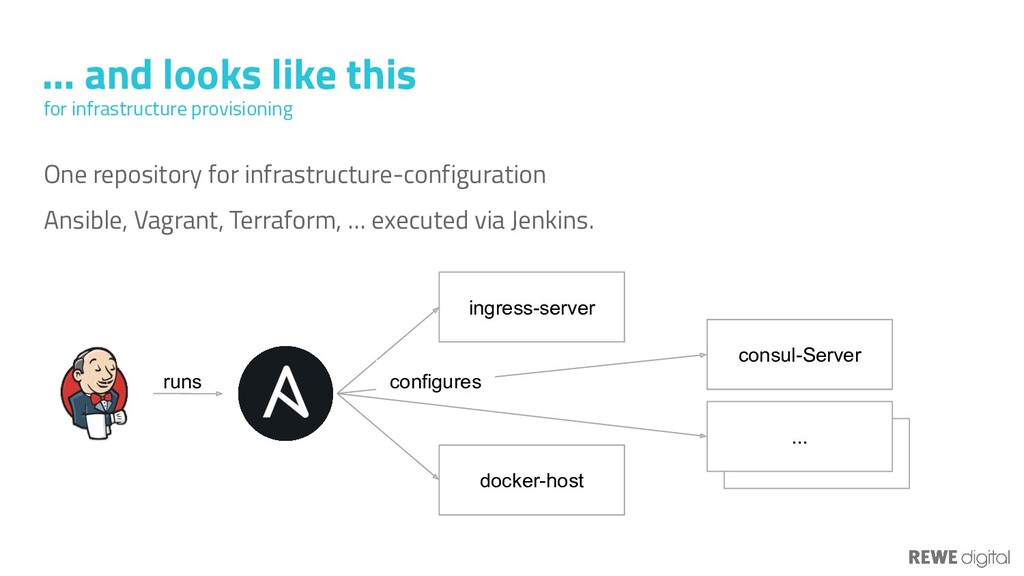
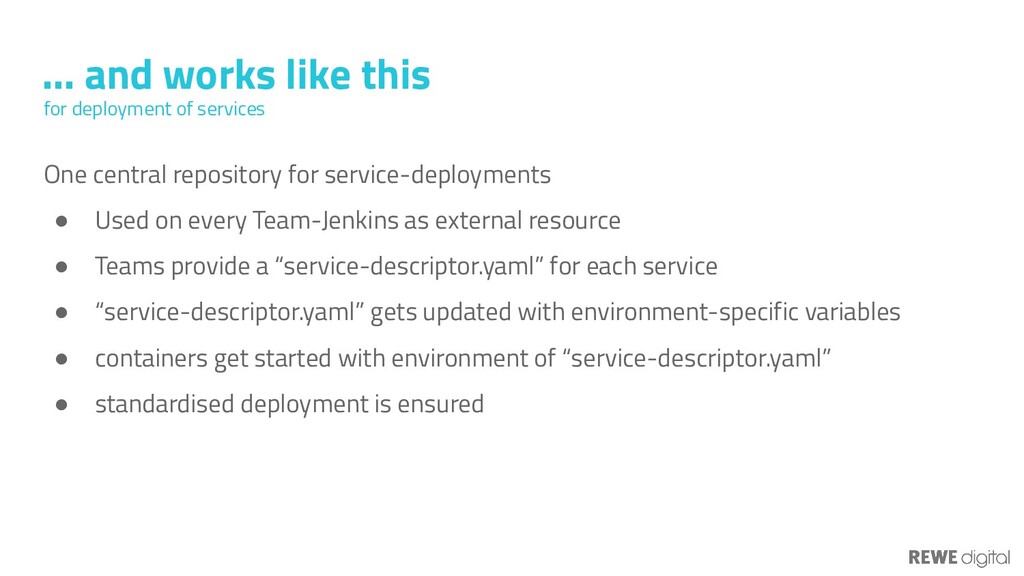
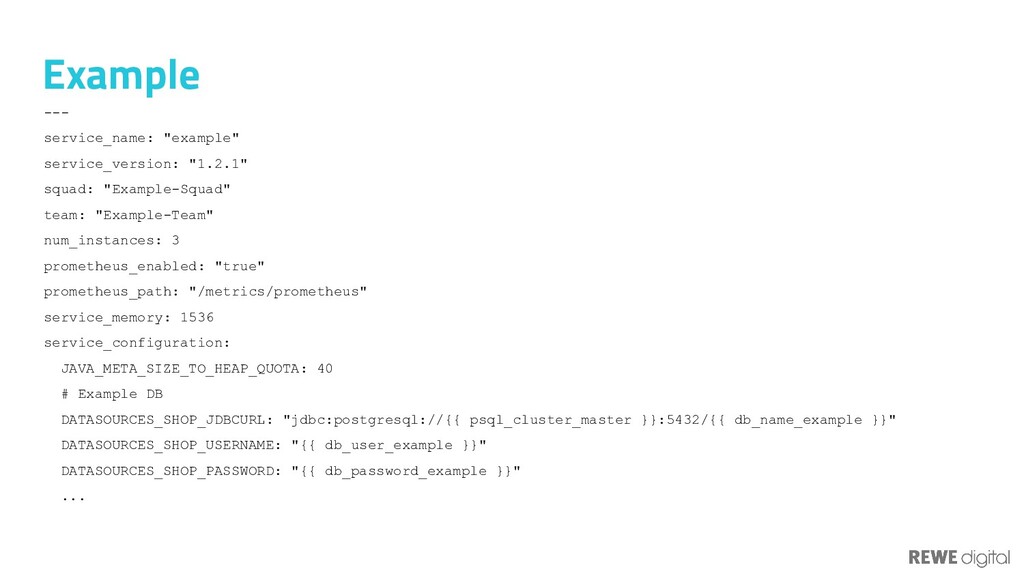
central repository for service-deployments • Used on every Team-Jenkins as external resource • Teams provide a “service-descriptor.yaml” for each service • “service-descriptor.yaml” gets updated with environment-specific variables • containers get started with environment of “service-descriptor.yaml” • standardised deployment is ensured
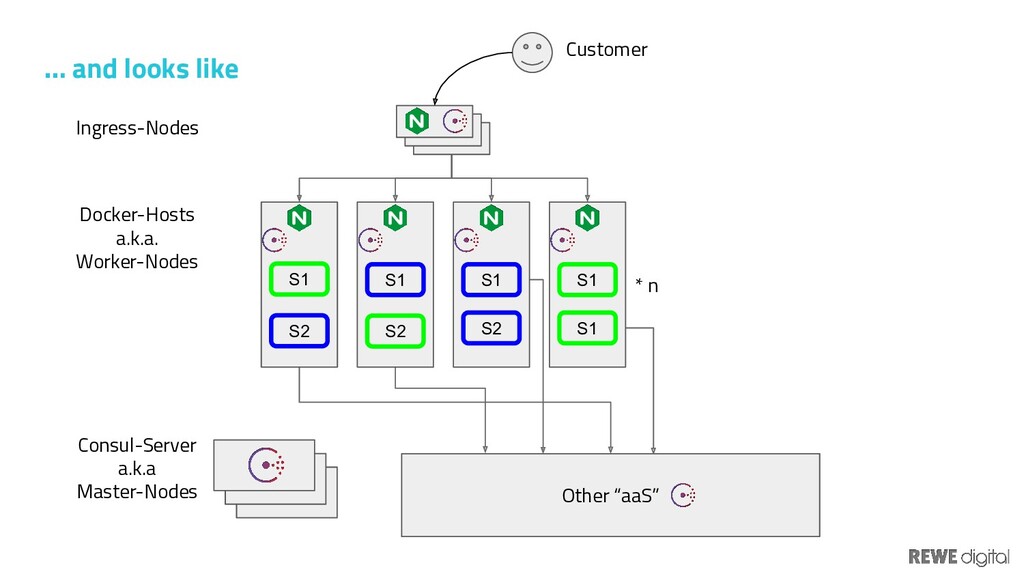
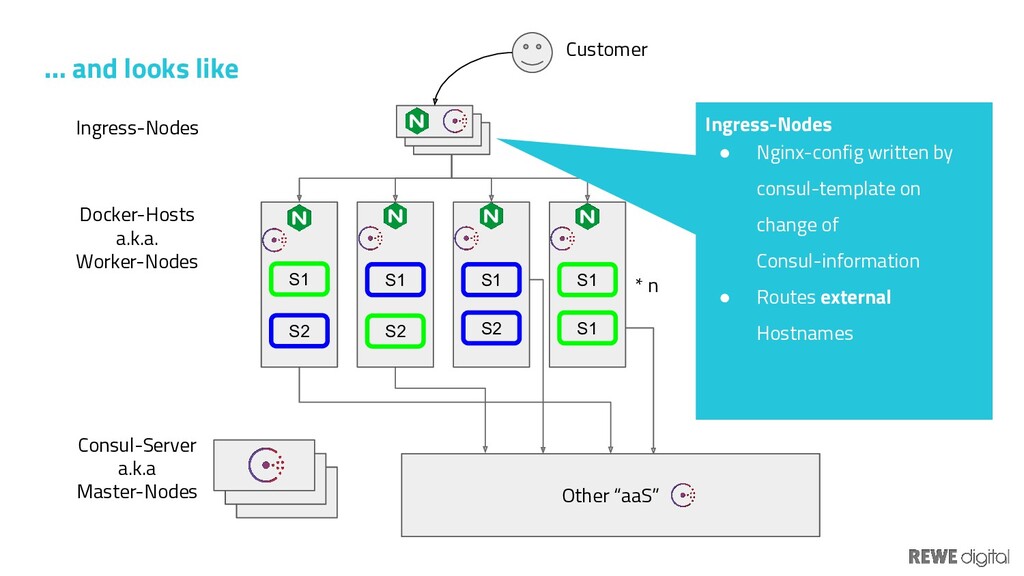
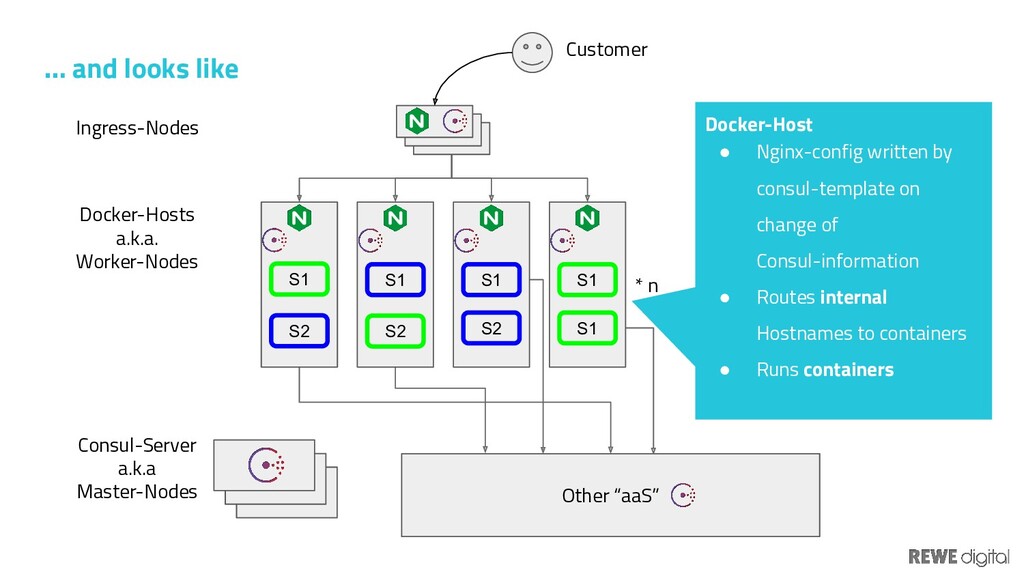
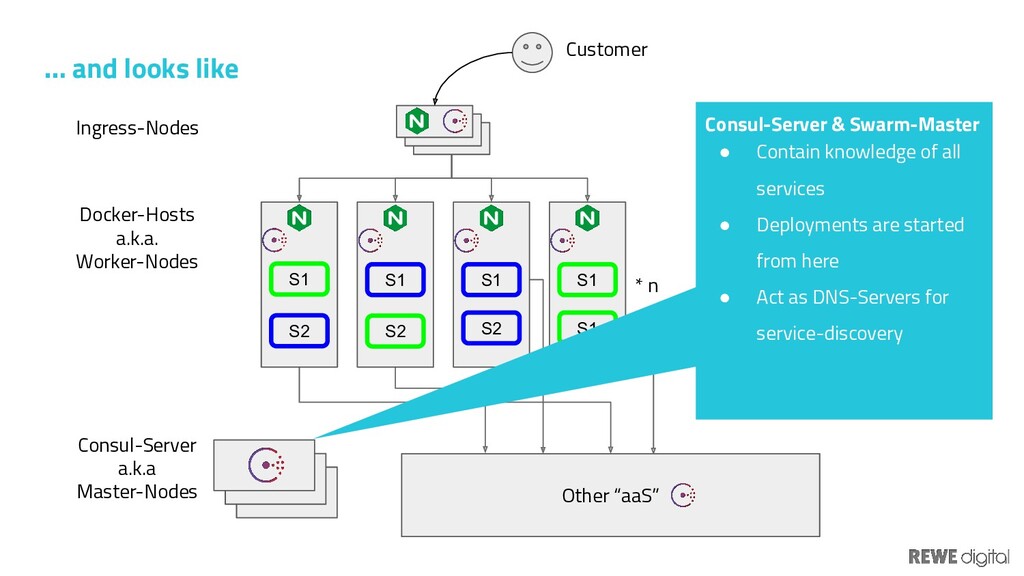
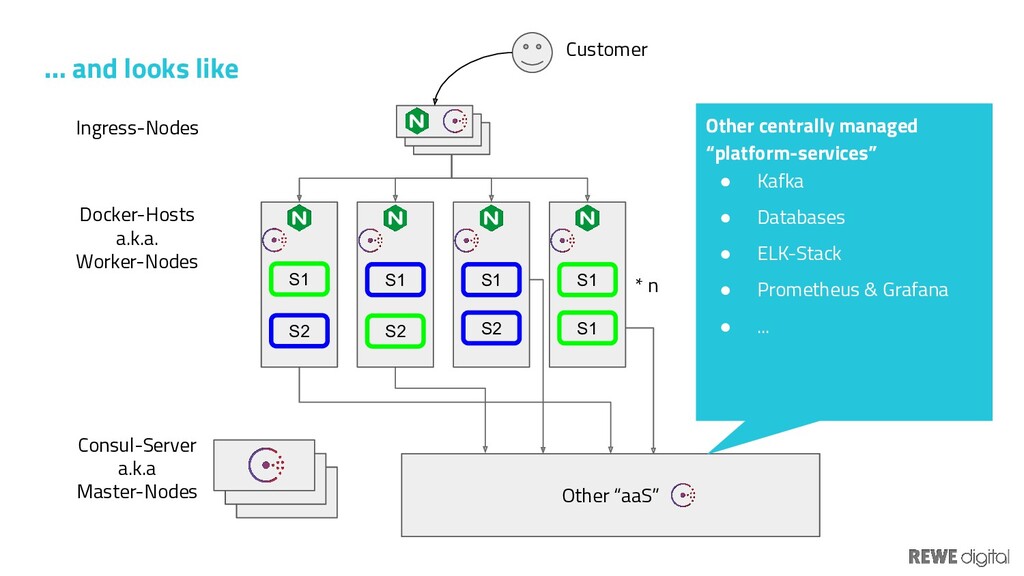
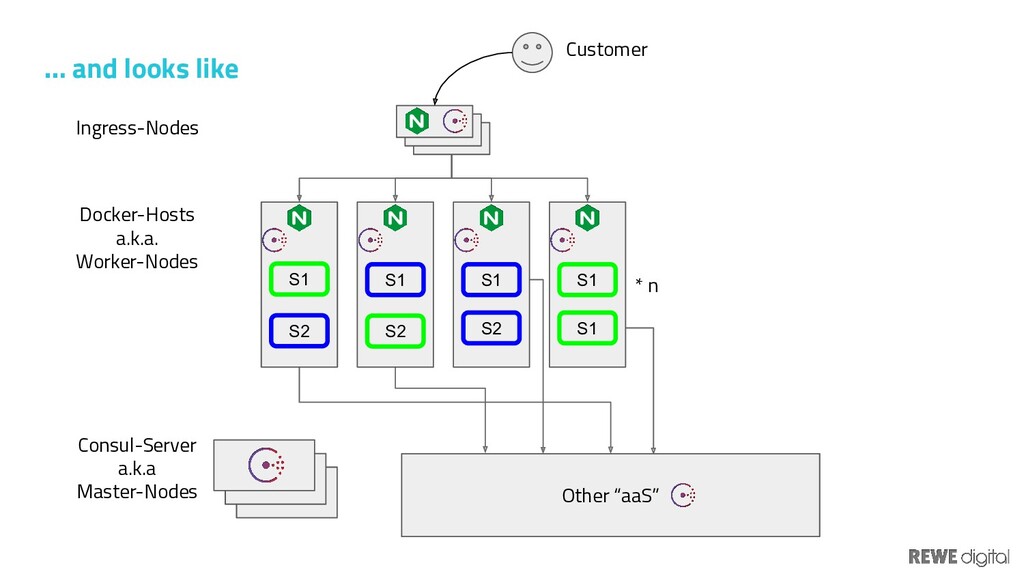
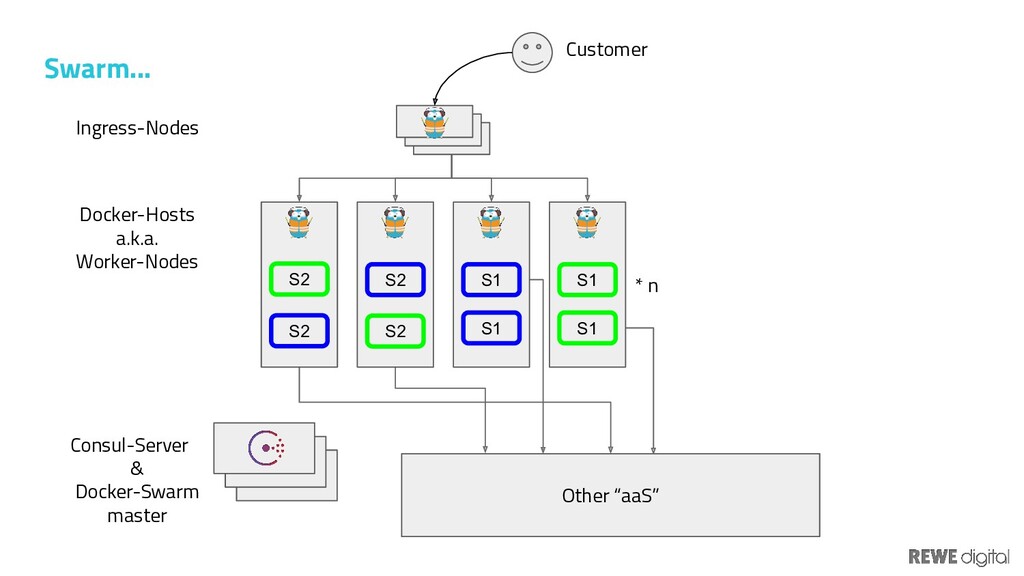
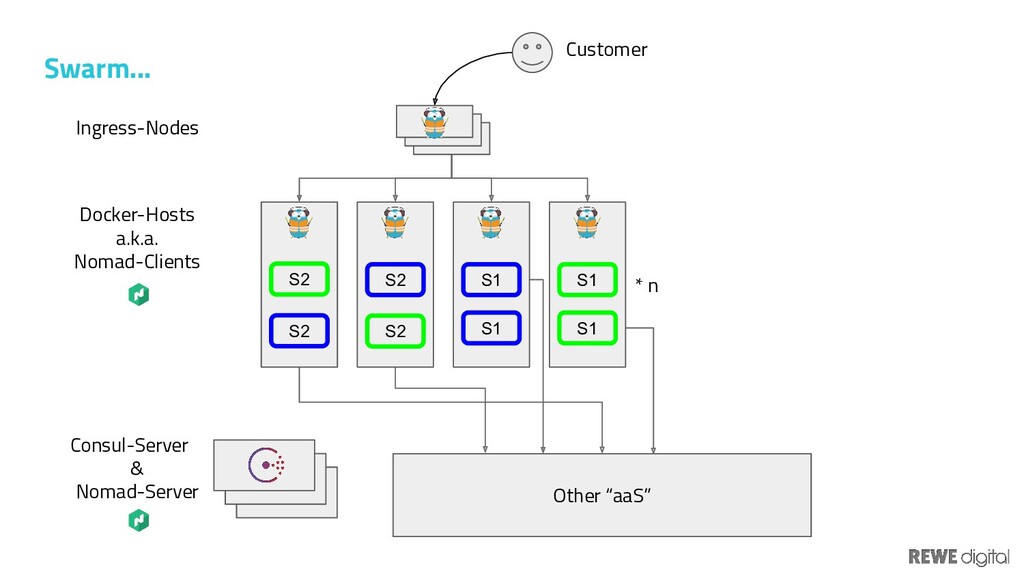
S2 S2 S1 S1 S1 S2 Consul-Server & Swarm-Master • Contain knowledge of all services • Deployments are started from here • Act as DNS-Servers for service-discovery Customer Ingress-Nodes Consul-Server a.k.a Master-Nodes Docker-Hosts a.k.a. Worker-Nodes
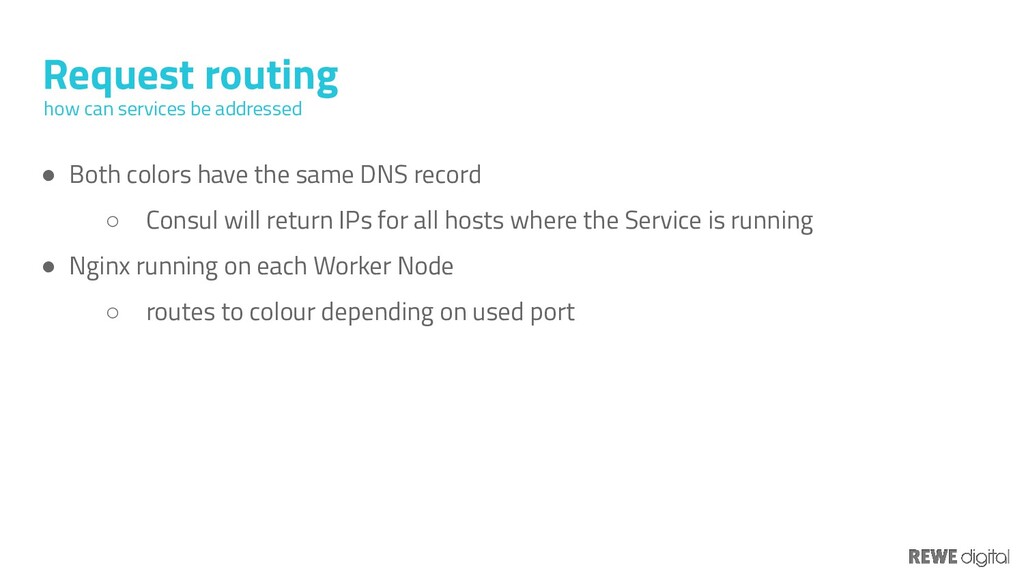
will return IPs for all hosts where the Service is running • Nginx running on each Worker Node ◦ routes to colour depending on used port Request routing how can services be addressed
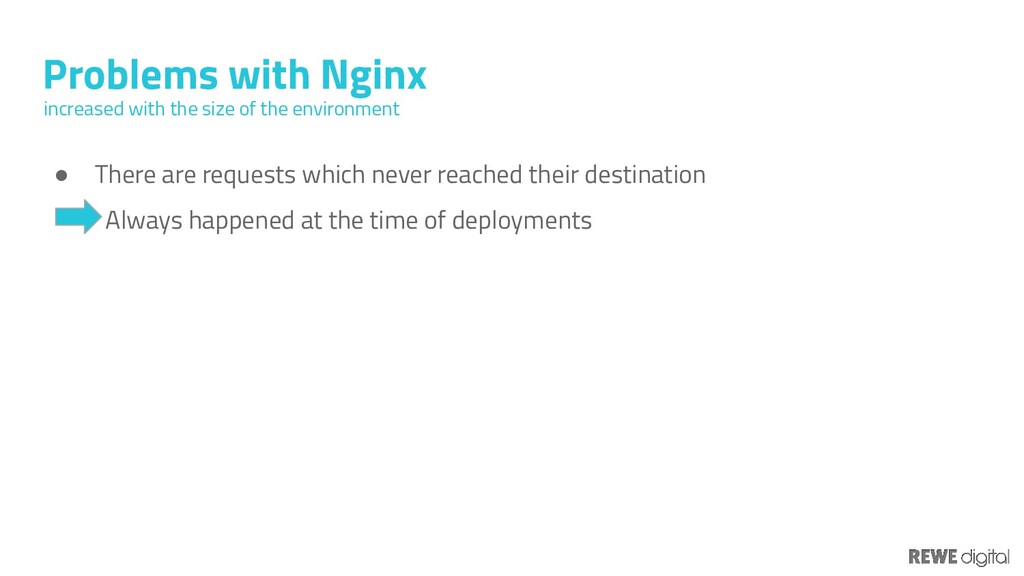
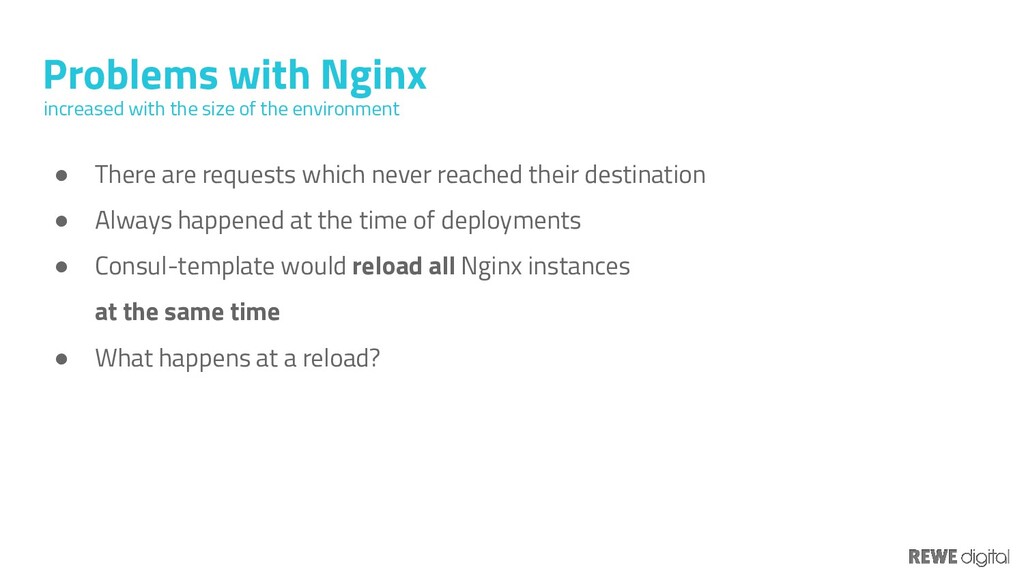
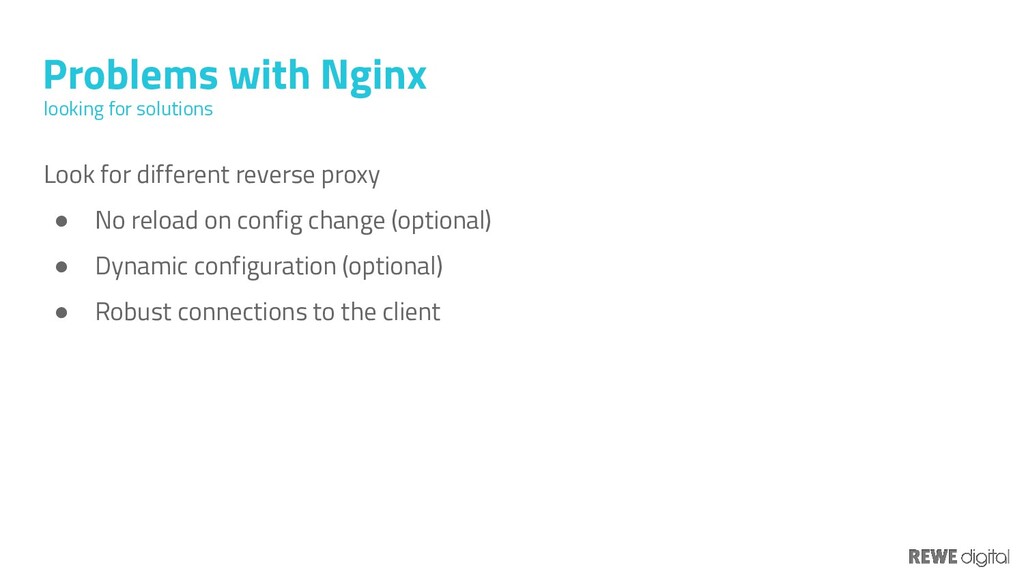
Always happened at the time of deployments • Consul-template would reload all Nginx instances at the same time • What happens at a reload? Problems with Nginx increased with the size of the environment
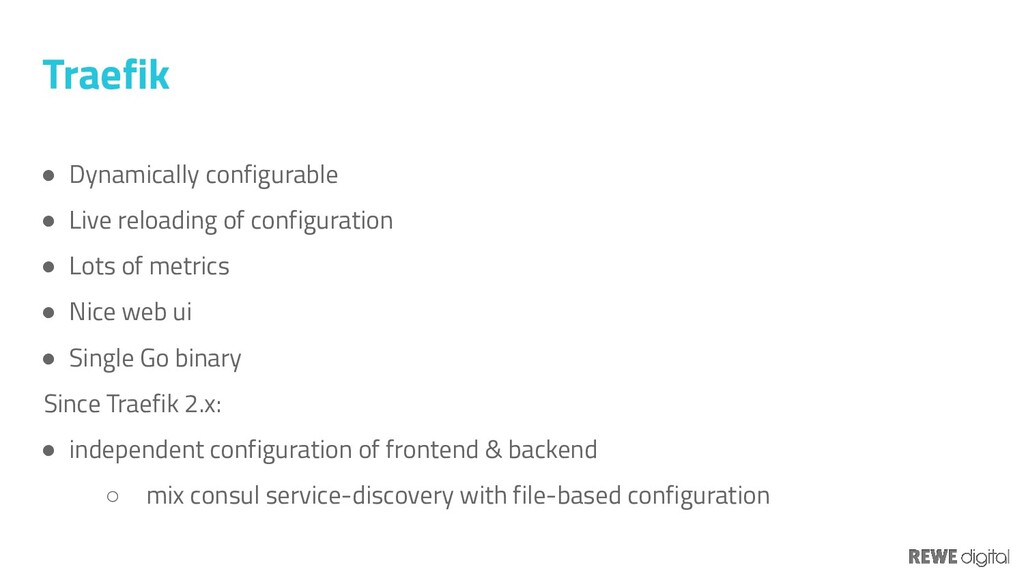
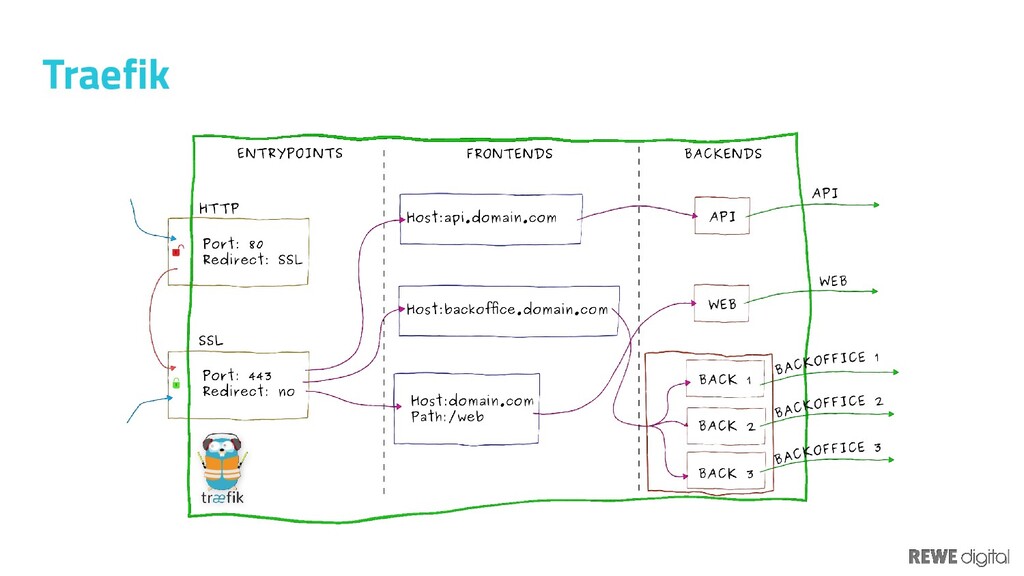
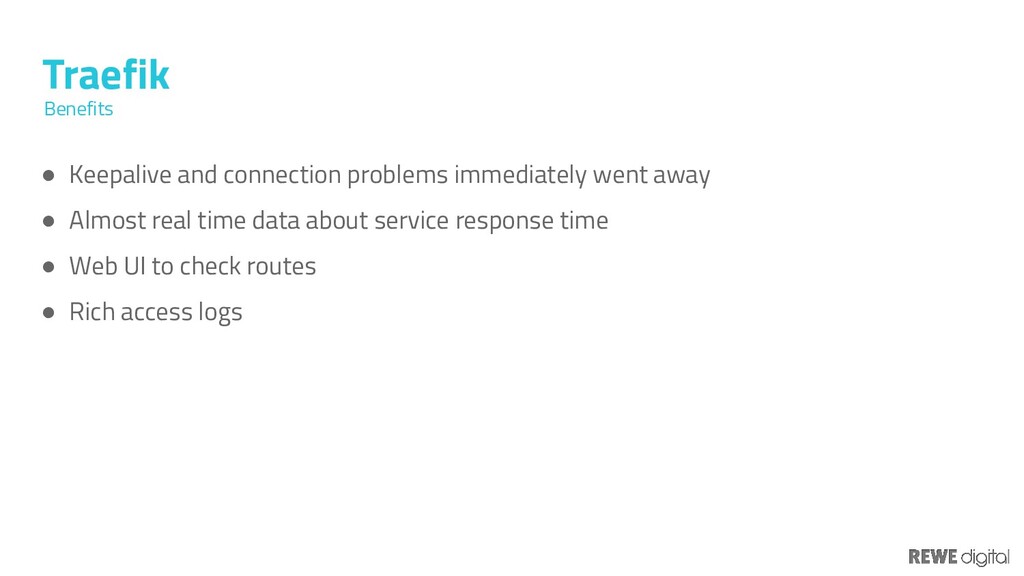
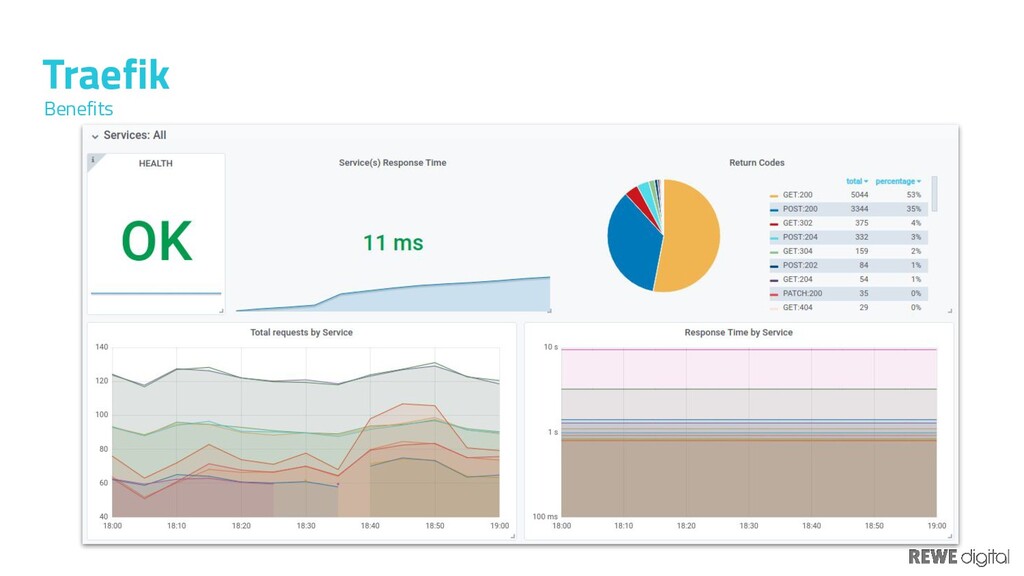
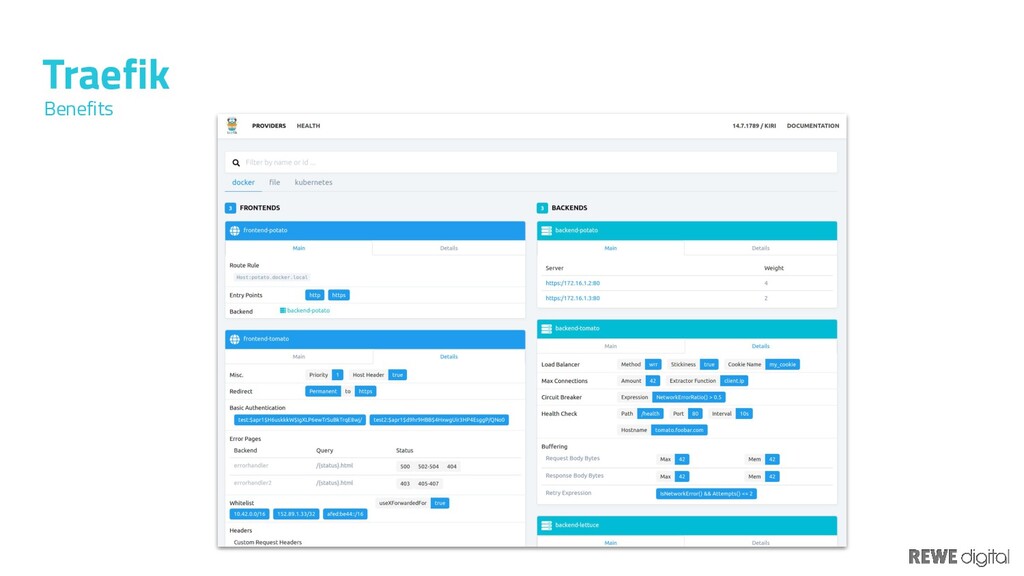
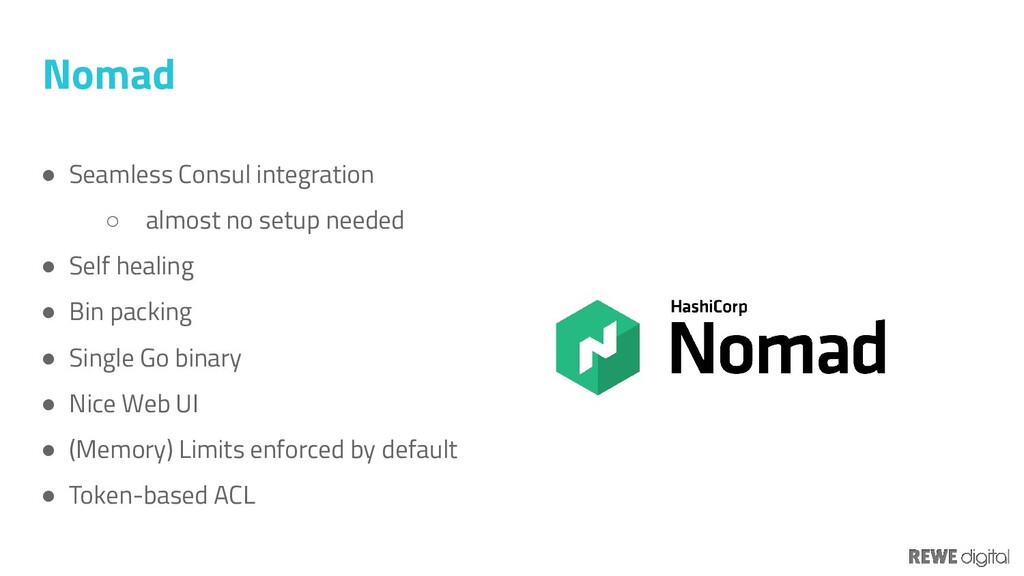
of metrics • Nice web ui • Single Go binary Since Traefik 2.x: • independent configuration of frontend & backend ◦ mix consul service-discovery with file-based configuration Traefik
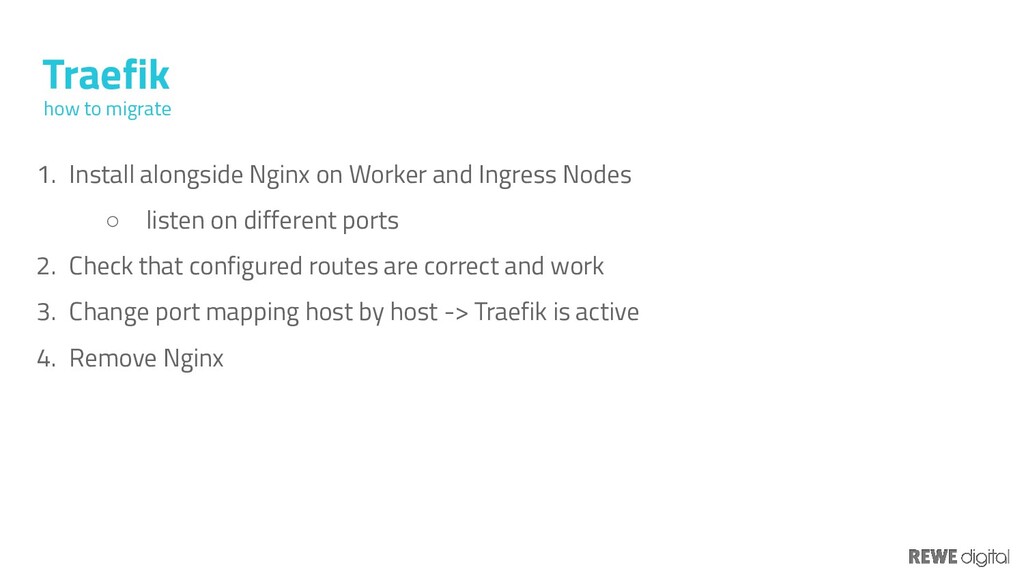
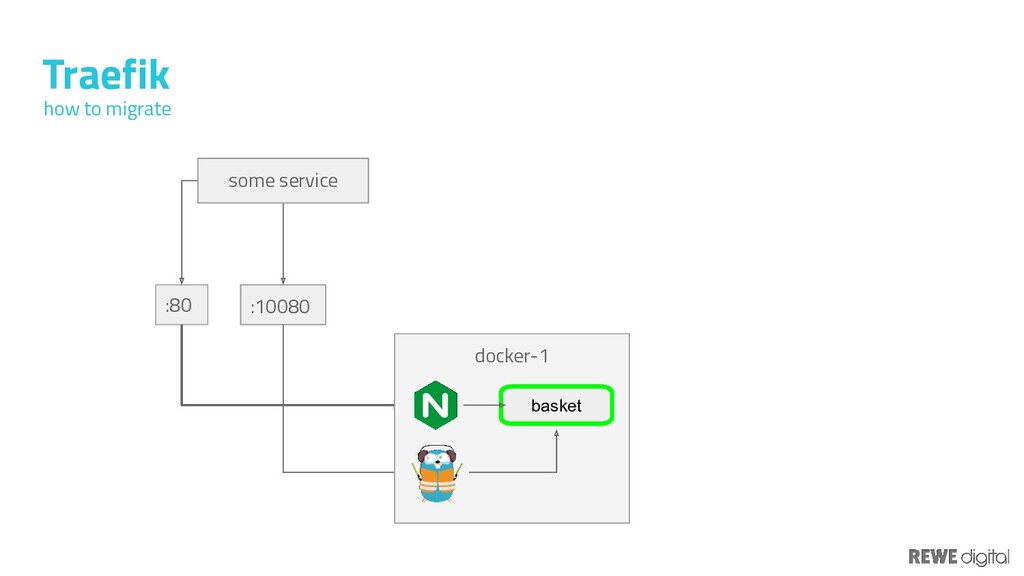
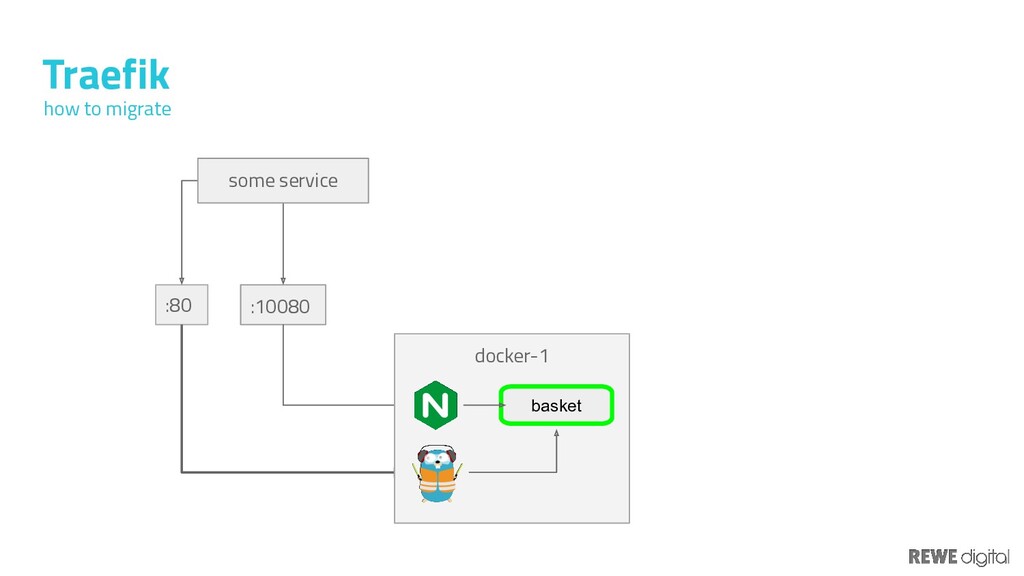
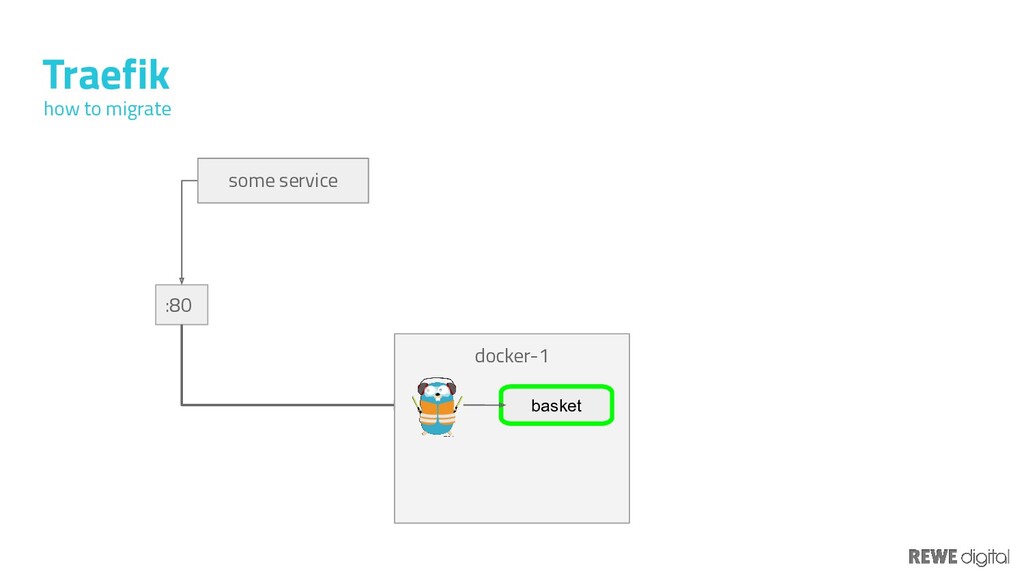
listen on different ports 2. Check that configured routes are correct and work 3. Change port mapping host by host -> Traefik is active 4. Remove Nginx Traefik how to migrate
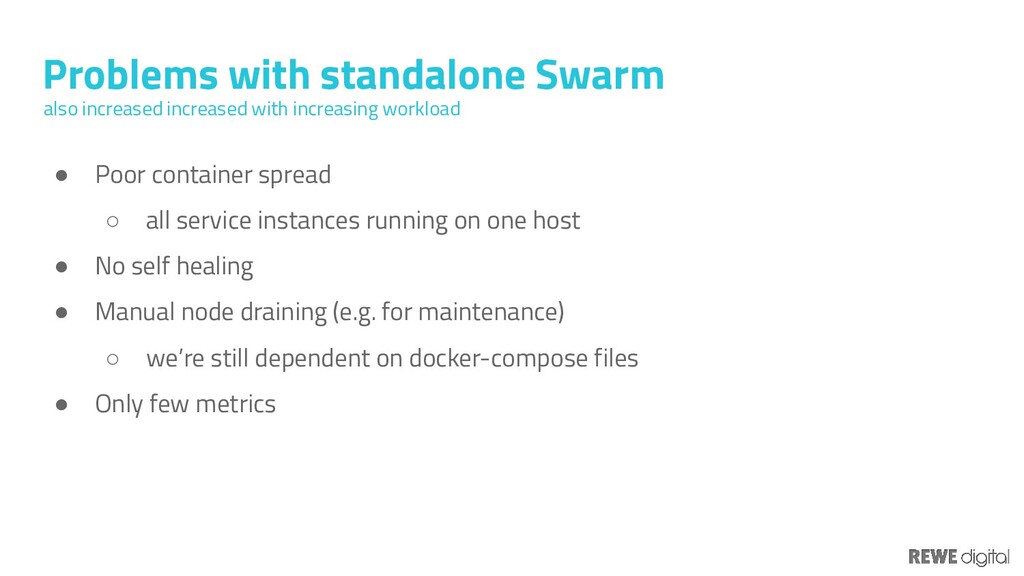
one host • No self healing • Manual node draining (e.g. for maintenance) ◦ we’re still dependent on docker-compose files • Only few metrics Problems with standalone Swarm also increased increased with increasing workload
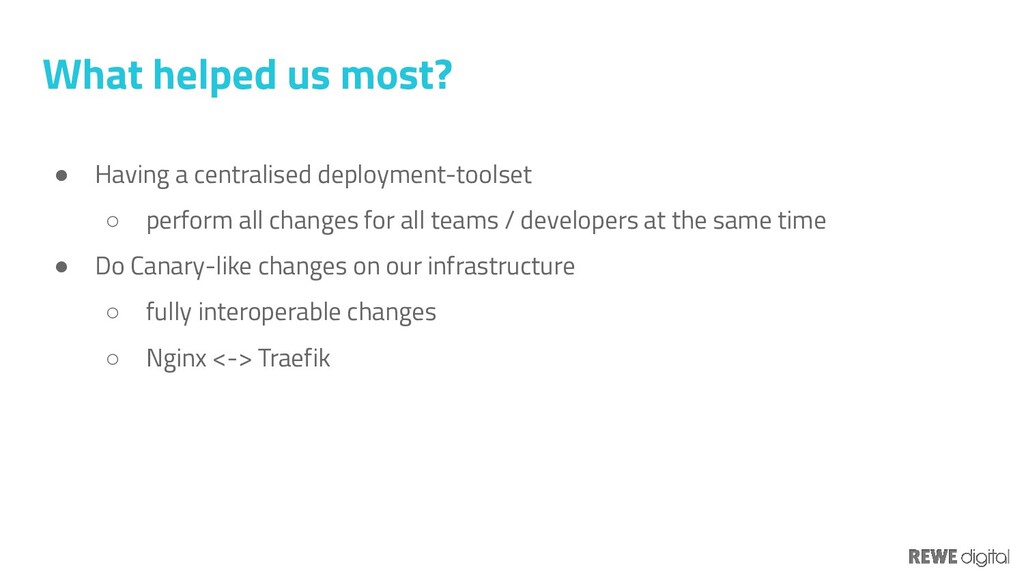
all teams / developers at the same time • Do Canary-like changes on our infrastructure ◦ fully interoperable changes ◦ Nginx <-> Traefik What helped us most?
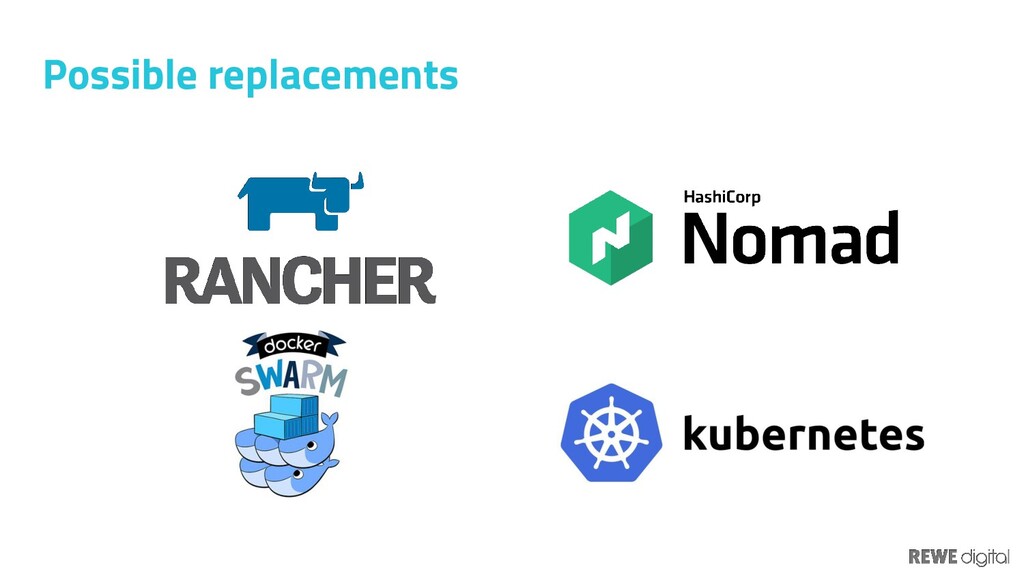
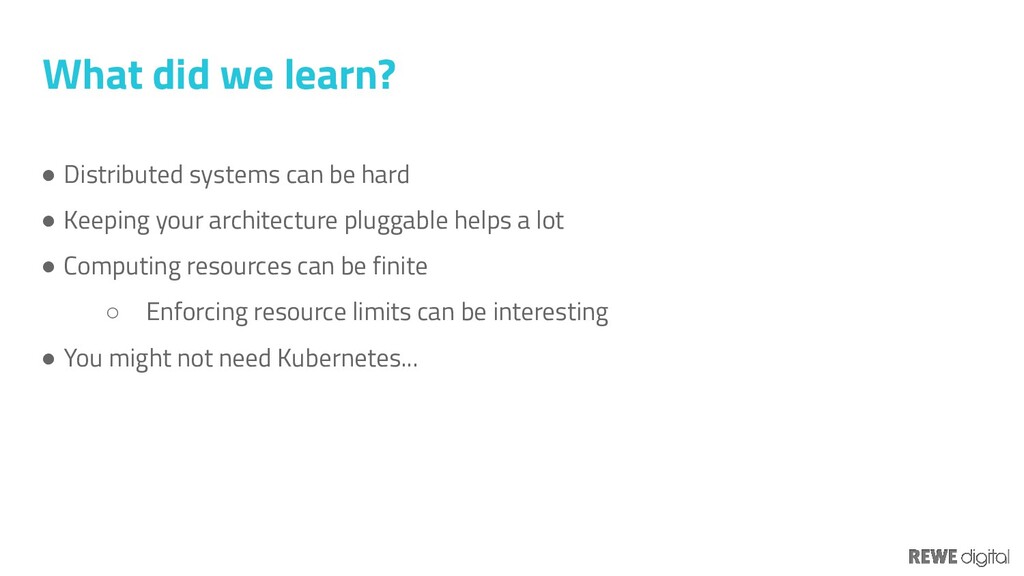
pluggable helps a lot • Computing resources can be finite ◦ Enforcing resource limits can be interesting • You might not need Kubernetes... What did we learn?


 ppuschmann
 codmoninc
 koukihosaka
 odashi
 ishikawa_satoru
 tomokusaba
 ivry_presentationmaterials
 y0hgi
 sansantech
 akhino
 kenichiodo
 hiracky16
 sarafernandez
 codingconduct
 konakalab
 rkendrick25
 sstephenson
 cassininazir
 kimpetersen
 mfonobong
 mkilby
 cromwellryan
 andyhume
 jct