Upgrade to Pro — share decks privately, control downloads, hide ads and more …

stock management for ecommerce

Sponsored · Ship Features Fearlessly Turn features on and off without deploys. Used by thousands of Ruby developers. →
Avatar for prateek prateek
April 21, 2023

stock management for ecommerce

The process of maintaining and controlling the inventory of an ecommerce business is referred to as stock management for ecommerce. It entails minimising excess inventory to cut expenses while simultaneously keeping the proper quantity of inventory to meet customer demands and prevent stockouts. For ecommerce firms to retain customer satisfaction, enhance operational effectiveness, and boost profitability, effective stock management is essential. In e-commerce, there are different kinds of inventory, including finished goods, raw materials, work-in-progress, and safety stock, and each one necessitates a different management strategy.

Avatar for prateek

prateek

April 21, 2023

Other Decks in Technology

Transcript

  1. 21/04/2023 BEST PRACTICES FOR STOCK MANAGEMENT IN ECOMMERCE 2 Introduction

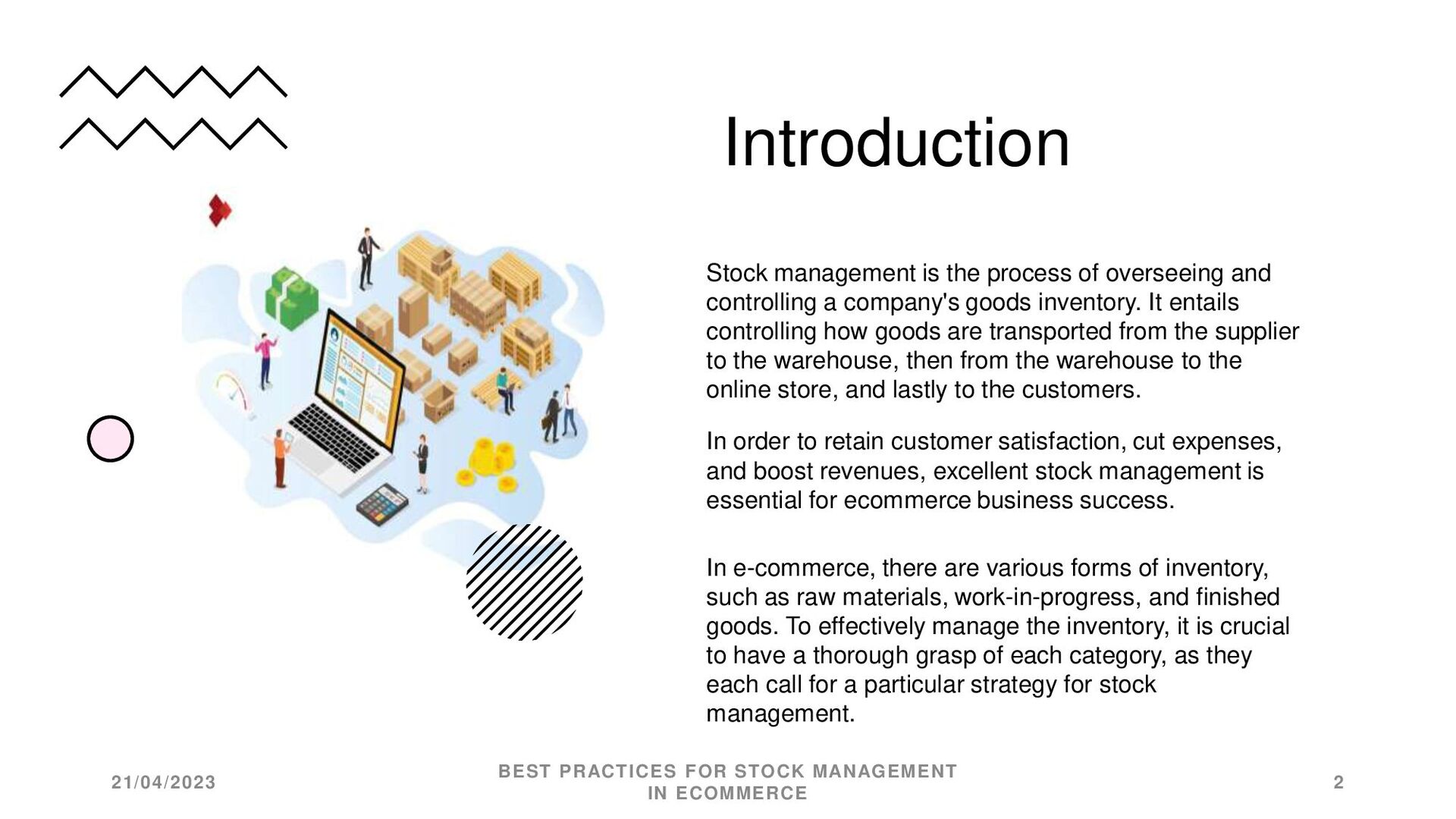
    Stock management is the process of overseeing and controlling a company's goods inventory. It entails controlling how goods are transported from the supplier to the warehouse, then from the warehouse to the online store, and lastly to the customers. In order to retain customer satisfaction, cut expenses, and boost revenues, excellent stock management is essential for ecommerce business success. In e-commerce, there are various forms of inventory, such as raw materials, work-in-progress, and finished goods. To effectively manage the inventory, it is crucial to have a thorough grasp of each category, as they each call for a particular strategy for stock management.
  2. Benefits of Setting Up Inventory Tracking • Avoid Stockouts: You

    can prevent stockouts by keeping track of your inventory levels in real-time and making sure you always have adequate stock on hand to fulfil orders. This enables you to maintain client satisfaction and prevent stockouts. • Reduce Overstocking: On the other hand, keeping track of your inventory levels will also assist you in staying away from overstocking products that aren't moving as quickly. By doing so, you can improve cash flow and lower the possibility of inventory becoming out of date. • Accurate Financial Reporting: Monitoring your inventory levels will assist you in producing accurate financial reports, such as your balance sheet and profit and loss statement. 21/04/2023 BEST PRACTICES FOR STOCK MANAGEMENT IN ECOMMERCE 3
  3. 21/04/2023 BEST PRACTICES FOR STOCK MANAGEMENT IN ECOMMERCE 5 1.

    Set Par Levels: Determine the minimum and maximum inventory levels for each item and set par levels to trigger reorder alerts. 2. Use Barcode Scanners: Barcode scanners can save time and reduce human error when updating inventory levels. 3. Organize Your Warehouse: Keep your warehouse organized to make it easier to track inventory levels and find items quickly.
  4. Popular Inventory Management Tools for Ecommerce 21/04/2023 BEST PRACTICES FOR

    STOCK MANAGEMENT IN ECOMMERCE 6 1. TradeGecko: A cloud-based inventory management platform that offers features like order management, shipping management, and automated stock control. 2. Zoho Inventory: A comprehensive inventory management software that integrates with popular ecommerce platforms like Shopify and WooCommerce. 3. QuickBooks Commerce: A multichannel inventory management system that helps businesses manage orders, inventory, and shipping from a single platform.
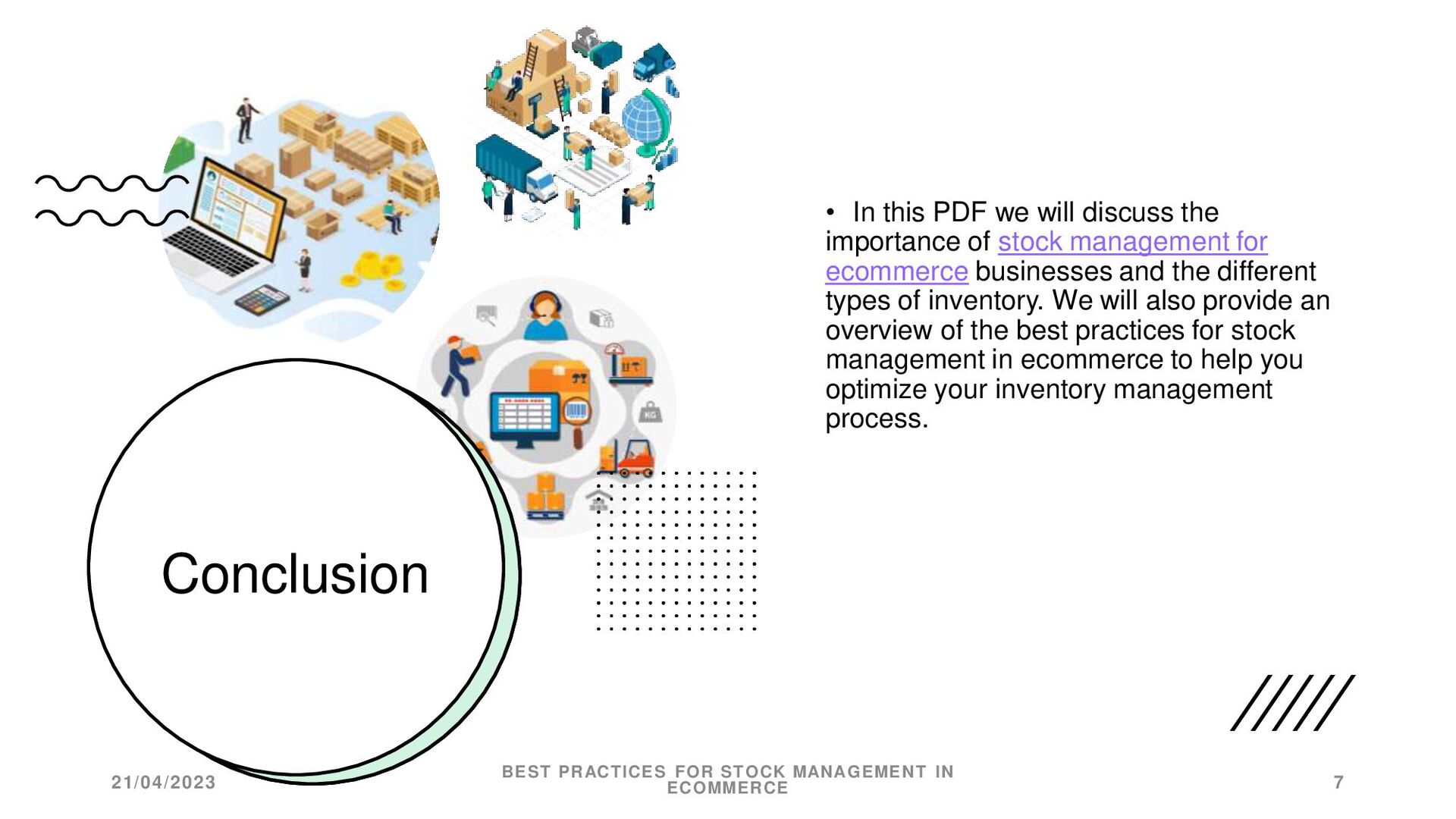
  5. Conclusion • In this PDF we will discuss the importance

    of stock management for ecommerce businesses and the different types of inventory. We will also provide an overview of the best practices for stock management in ecommerce to help you optimize your inventory management process. 21/04/2023 BEST PRACTICES FOR STOCK MANAGEMENT IN ECOMMERCE 7
  6. T H A N K Y O U P R

    E S E N T E R N A M E E M A I L W E B S I T E 21/04/2023 BEST PRACTICES FOR STOCK MANAGEMENT IN ECOMMERCE 8