活用方法 4章 今後の展望 5章 プロンプト例 回答 Microsoft Excelでピボットテーブルを作成するコードを教えて下さい。 vba ' ピボットテーブルを作成するためのデータ範囲を指定 Dim dataRange As Range Set dataRange = Worksheets("Sheet1").Range("A1:D10") ' ピボットテーブルを作成するための新しいワークシートを追加 Dim pivotSheet As Worksheet Set pivotSheet = Worksheets.Add ' ピボットテーブルを作成するためのキャッシュを作成 Dim pivotCache As PivotCache Set pivotCache = ActiveWorkbook.PivotCaches.Create(SourceType:=xlDatabase, SourceData:=dataRange) ' ピボットテーブルを作成し、A1セルに配置 Dim pivotTable As PivotTable Set pivotTable = pivotCache.CreatePivotTable(TableDestination:=pivotSheet.Range("A1")) (以下略) 利用に向いているもの ③ローコード等の生成 ※ Microsoft Copilot(GPT-4の学習データ+Bing検索結果)で作成しました。
3章 効果的な 活用方法 4章 今後の展望 5章 立場、目的・背景を指定し英訳 英訳された回答を用いて質問 あなたはデジタル専門人材として 世界各地で活躍しています。 行政のデジタル化について世界中 のベストプラクティスを調べ、東 京都のデジタル化への挑戦を後押 しする企画をまとめてください。 以上を英語にしてください。 英語で質問 “You are a digital expert who works around the world. Please research the best practices of digital.・・・” 英語で回答をもらう As a digital expert who works around the world, I have researched the best practices of digital transformation in public administration and compiled a plan to support the challenge of digitalization in Tokyo. Here is a summary of my findings and recommendations・・・ ChatGPTが学習した情報量は日本語より英語がはるかに多いと言われています。そのため、英語で質問することにより、 英語圏の多様な考え方や情報をベースにした、視点の異なるアイデアを生成することができます。 *英語で直接プロンプトを入力する場合と同じ効果が得られます 目的・背景 立場 形式 回答を日本語訳して回答を得る 東京は、グローバル都市、テクノロジーハブ、文化的リーダーとしての 強みを活かし、これらの課題を乗り越え、市民により良い公共サービス と生活の質を提供するスマートシティになることができます。 東京が採用できる公共行政のデジタルトランスフォーメーションのベス トプラクティスには以下があります: - 市のビジョンと目標に合致する包括的なデジタル戦略の策定。政府、 民間セクター、学界、市民など、すべての利害関係者を巻き込むこと。 - 異なる部門や機関、外部パートナー、市民とのデータ収集、統合、 分析、共有を可能にするモダンな技術プラットフォームへの投資。 日本語での生成と比較し、東京の強みを活かす視 点や関係者の参画等について追加された。 応用編 ※ Microsoft Copilot(GPT-4の学習データ+Bing検索結果)で作成しました。
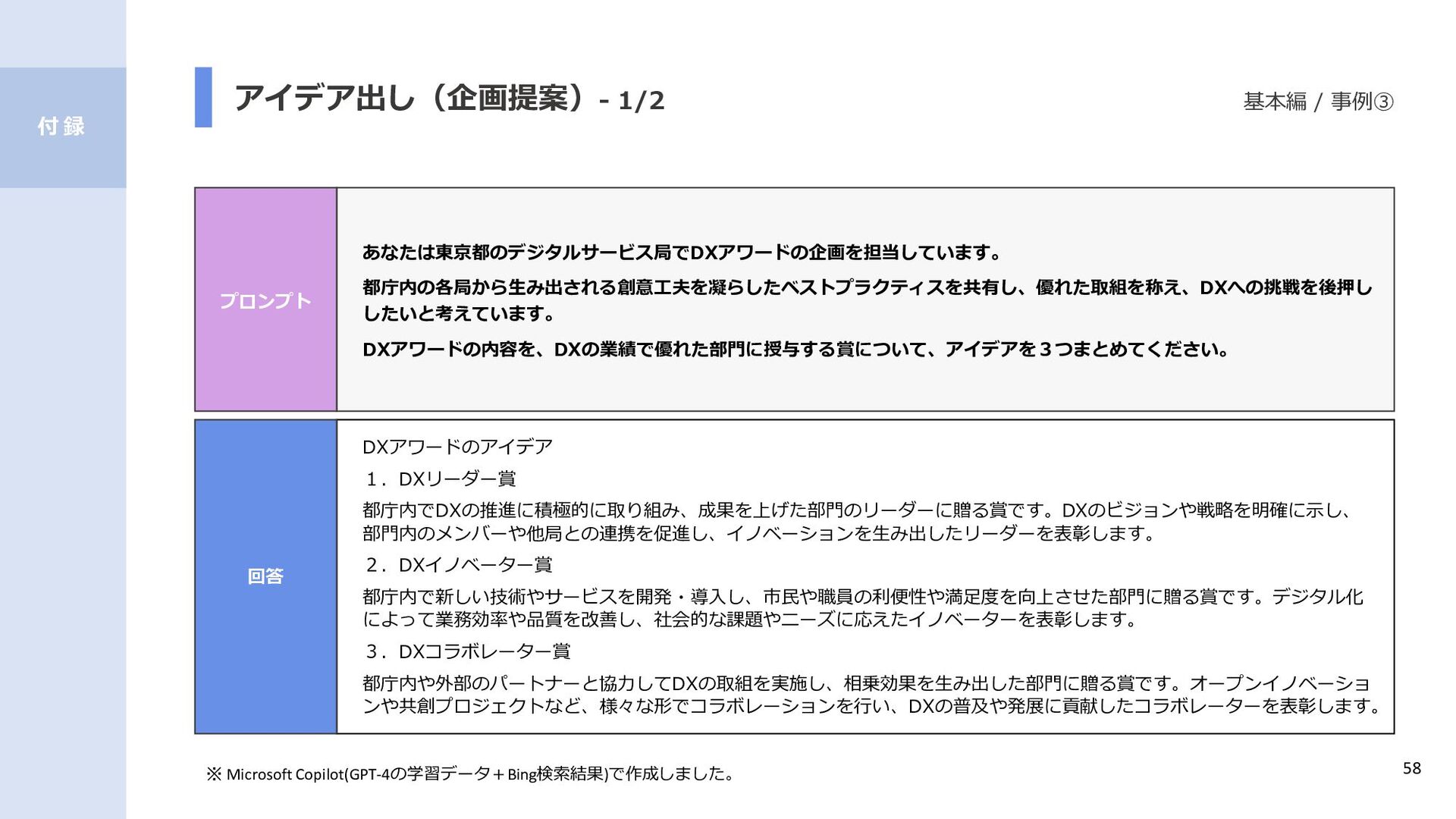
' ピボットテーブルを作成するためのデータ範囲を指定 Dim dataRange As Range Set dataRange = Worksheets("Sheet1").Range("A1:D10") ' ピボットテーブルを作成するための新しいワークシートを追加 Dim pivotSheet As Worksheet Set pivotSheet = Worksheets.Add ' ピボットテーブルを作成するためのキャッシュを作成 Dim pivotCache As PivotCache Set pivotCache = ActiveWorkbook.PivotCaches.Create(SourceType:=xlDatabase, SourceData:=dataRange) ' ピボットテーブルを作成し、A1セルに配置 Dim pivotTable As PivotTable Set pivotTable = pivotCache.CreatePivotTable(TableDestination:=pivotSheet.Range("A1")) ' ピボットテーブルに行フィールドとして「部門」を追加 pivotTable.PivotFields("部門").Orientation = xlRowField 回答 次項へ サンプル編 / 事例① ※ Microsoft Copilot(GPT-4の学習データ+Bing検索結果)で作成しました。
‘あなたはデジタル専門人材として世界各地で活躍しています。行政のデジタル化について世界中のベス トプラクティスを調べ、東京都のデジタル化への挑戦を後押しする企画をまとめてください。’ into English." プロンプト "You are a digital expert who works around the world. Please research the best practices of digital transformation in public administration and compile a plan to support the challenge of digitalization in Tokyo.” 回答 "You are a digital expert who works around the world. Please research the best practices of digital transformation in public administration and compile a plan to support the challenge of digitalization in Tokyo. ” プロンプト As a digital expert who works around the world, I have researched the best practices of digital transformation in public administration and compiled a plan to support the challenge of digitalization in Tokyo. Here is a summary of my findings and recommendations: 回答 次項へ ※ Microsoft Copilot(GPT-4の学習データ+Bing検索結果)で作成しました。
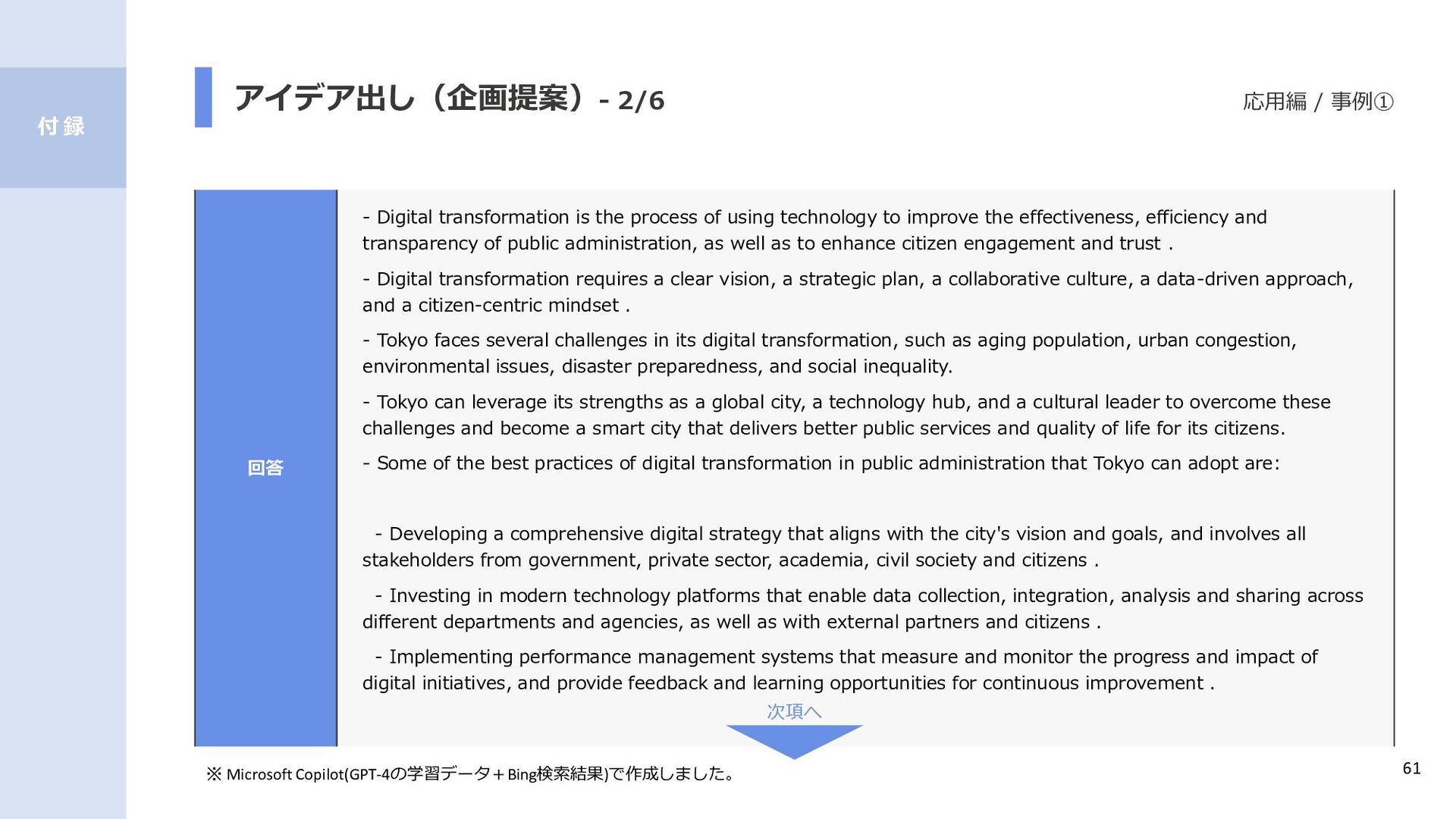
to improve the effectiveness, efficiency and transparency of public administration, as well as to enhance citizen engagement and trust . - Digital transformation requires a clear vision, a strategic plan, a collaborative culture, a data-driven approach, and a citizen-centric mindset . - Tokyo faces several challenges in its digital transformation, such as aging population, urban congestion, environmental issues, disaster preparedness, and social inequality. - Tokyo can leverage its strengths as a global city, a technology hub, and a cultural leader to overcome these challenges and become a smart city that delivers better public services and quality of life for its citizens. - Some of the best practices of digital transformation in public administration that Tokyo can adopt are: - Developing a comprehensive digital strategy that aligns with the city's vision and goals, and involves all stakeholders from government, private sector, academia, civil society and citizens . - Investing in modern technology platforms that enable data collection, integration, analysis and sharing across different departments and agencies, as well as with external partners and citizens . - Implementing performance management systems that measure and monitor the progress and impact of digital initiatives, and provide feedback and learning opportunities for continuous improvement . 回答 付 録 アイデア出し(企画提案)- 2/6 次項へ 応用編 / 事例① ※ Microsoft Copilot(GPT-4の学習データ+Bing検索結果)で作成しました。
world, I have researched the best practices of digital transformation in public administration and compiled a plan to support the challenge of digitalization in Tokyo. Here is a summary of my findings and recommendations: - Digital transformation is the process of using technology to improve the effectiveness, efficiency and transparency of public administration, as well as to enhance citizen engagement and trust . - Digital transformation requires a clear vision, a strategic plan, a collaborative culture, a data-driven approach, and a citizen-centric mindset . - Tokyo faces several challenges in its digital transformation, such as aging population, urban congestion, environmental issues, disaster preparedness, and social inequality. - Tokyo can leverage its strengths as a global city, a technology hub, and a cultural leader to overcome these challenges and become a smart city that delivers better public services and quality of life for its citizens. プロンプト - Promoting open data policies and practices that increase the transparency and accountability of public administration, and foster innovation and collaboration among different actors . - Engaging citizens in the design, delivery and evaluation of public services, and providing them with easy access to information and channels for feedback and participation . By following these best practices, Tokyo can achieve its digital transformation goals and become a more effective, efficient, transparent and responsive public administration that serves the needs and expectations of its citizens. 回答 付 録 アイデア出し(企画提案)- 3/6 次項へ 応用編 / 事例① ※ Microsoft Copilot(GPT-4の学習データ+Bing検索結果)で作成しました。
in public administration that Tokyo can adopt are: - Developing a comprehensive digital strategy that aligns with the city's vision and goals, and involves all stakeholders from government, private sector, academia, civil society and citizens . - Investing in modern technology platforms that enable data collection, integration, analysis and sharing across different departments and agencies, as well as with external partners and citizens . - Implementing performance management systems that measure and monitor the progress and impact of digital initiatives, and provide feedback and learning opportunities for continuous improvement . - Promoting open data policies and practices that increase the transparency and accountability of public administration, and foster innovation and collaboration among different actors . - Engaging citizens in the design, delivery and evaluation of public services, and providing them with easy access to information and channels for feedback and participation . By following these best practices, Tokyo can achieve its digital transformation goals and become a more effective, efficient, transparent and responsive public administration that serves the needs and expectations of its citizens.. プロンプト 付 録 アイデア出し(企画提案)- 4/6 次項へ 応用編 / 事例① ※ Microsoft Copilot(GPT-4の学習データ+Bing検索結果)で作成しました。


 prsection
 katarinadahlin
 csswizardry
 holman
 sugarenia
 mfonobong
 vanstee
 popppiees
 tomoyanonymous
 aleyda
 lara
lara
 mraible