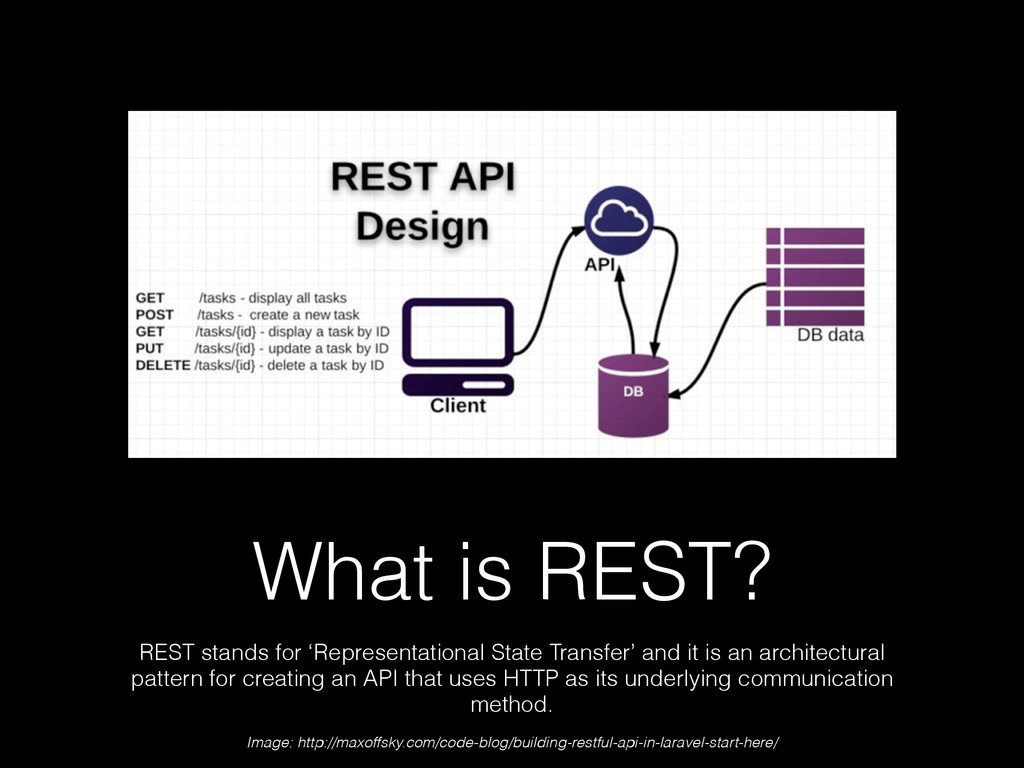
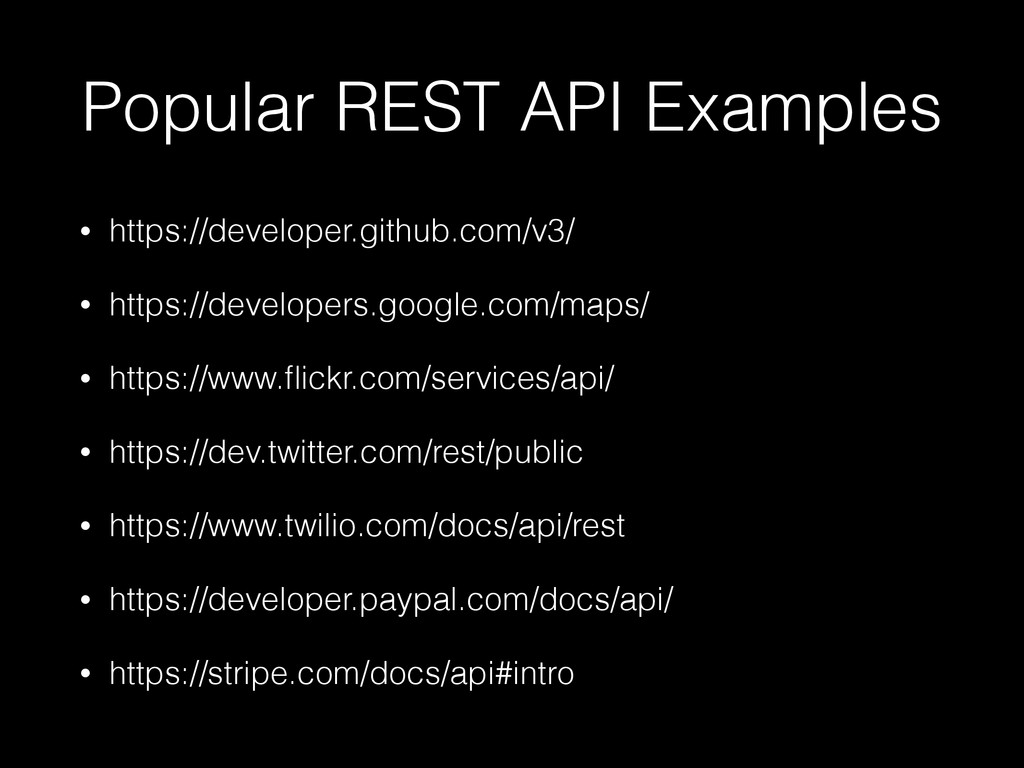
it is an architectural pattern for creating an API that uses HTTP as its underlying communication method. Image: http://maxoffsky.com/code-blog/building-restful-api-in-laravel-start-here/
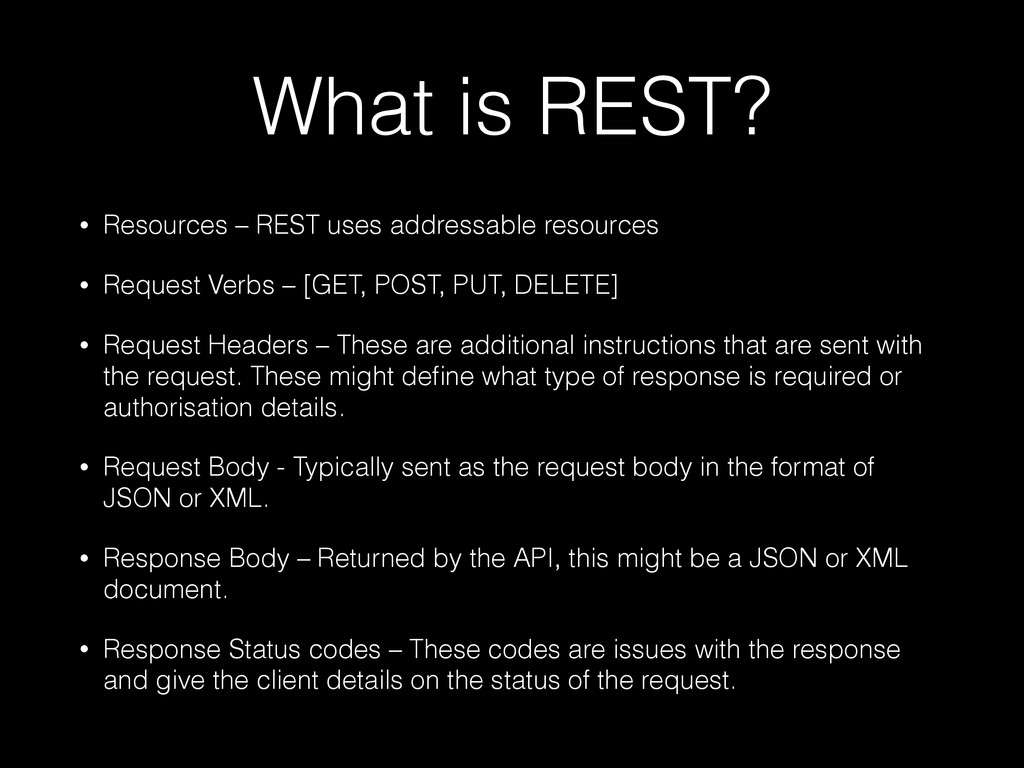
• Request Verbs – [GET, POST, PUT, DELETE] • Request Headers – These are additional instructions that are sent with the request. These might define what type of response is required or authorisation details. • Request Body - Typically sent as the request body in the format of JSON or XML. • Response Body – Returned by the API, this might be a JSON or XML document. • Response Status codes – These codes are issues with the response and give the client details on the status of the request.
on Chrome's V8 JavaScript engine. • Node.js uses an event-driven, non-blocking I/O model that makes it lightweight and efficient. • Node.js' package ecosystem, npm, is the largest ecosystem of open source libraries in the world.
/ JSON api's is something where node.js really shines. • Its non-blocking I/O model combined with JavaScript make it a great choice for wrapping other data sources such as databases or web services and exposing them via a JSON interface.
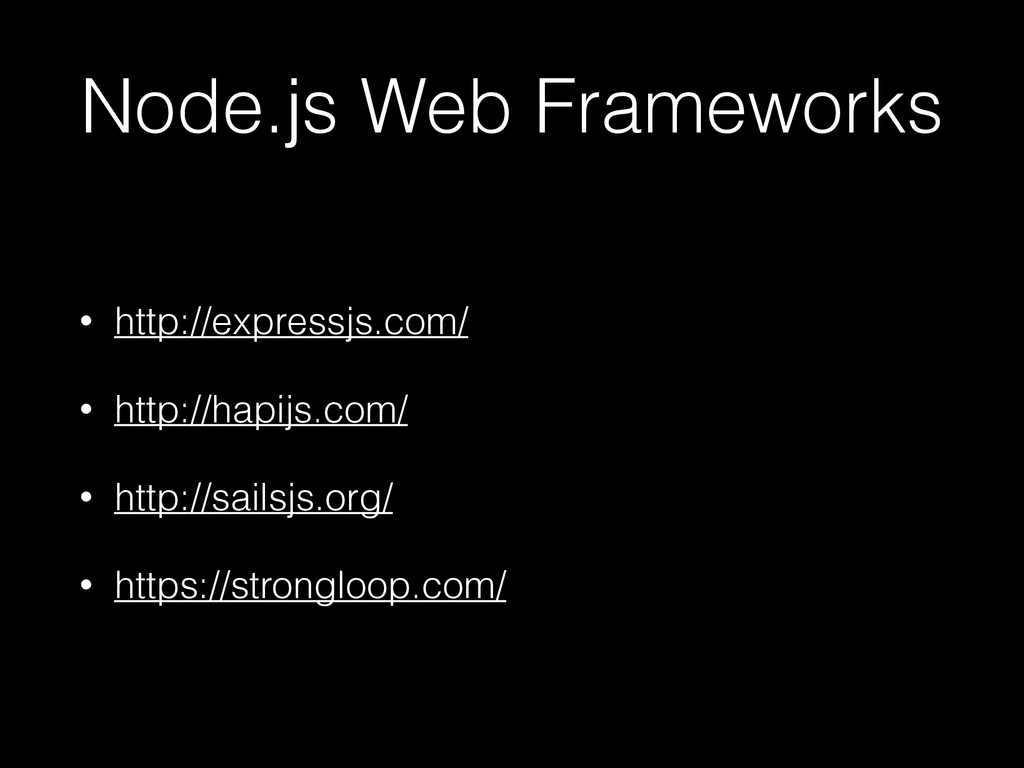
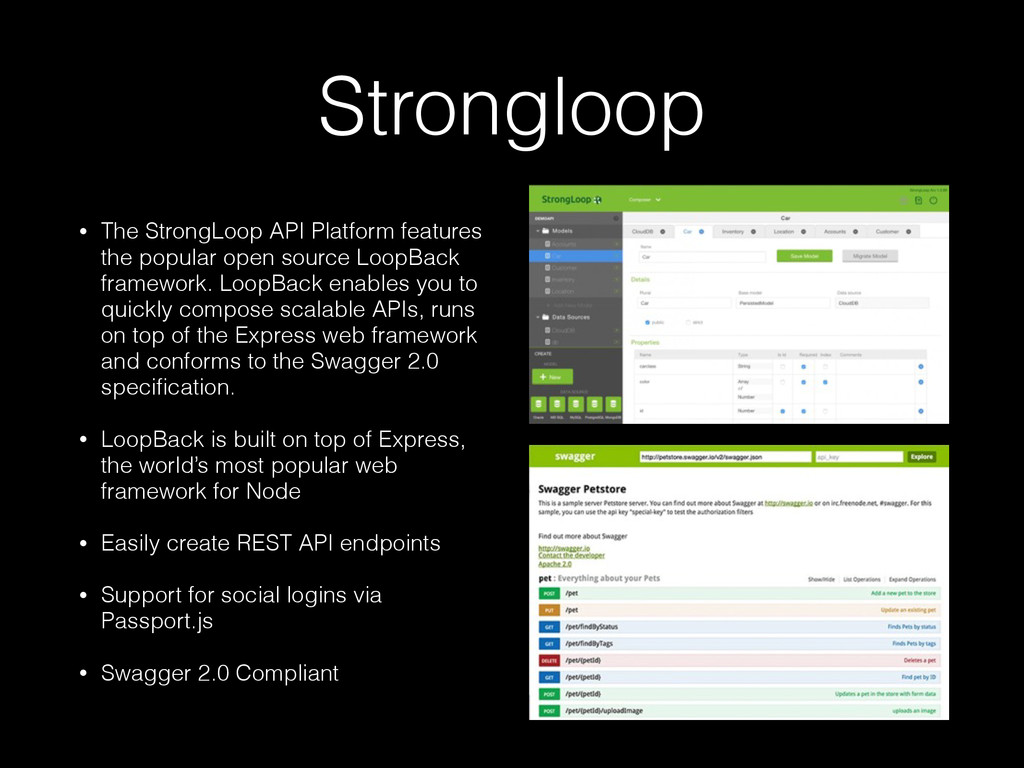
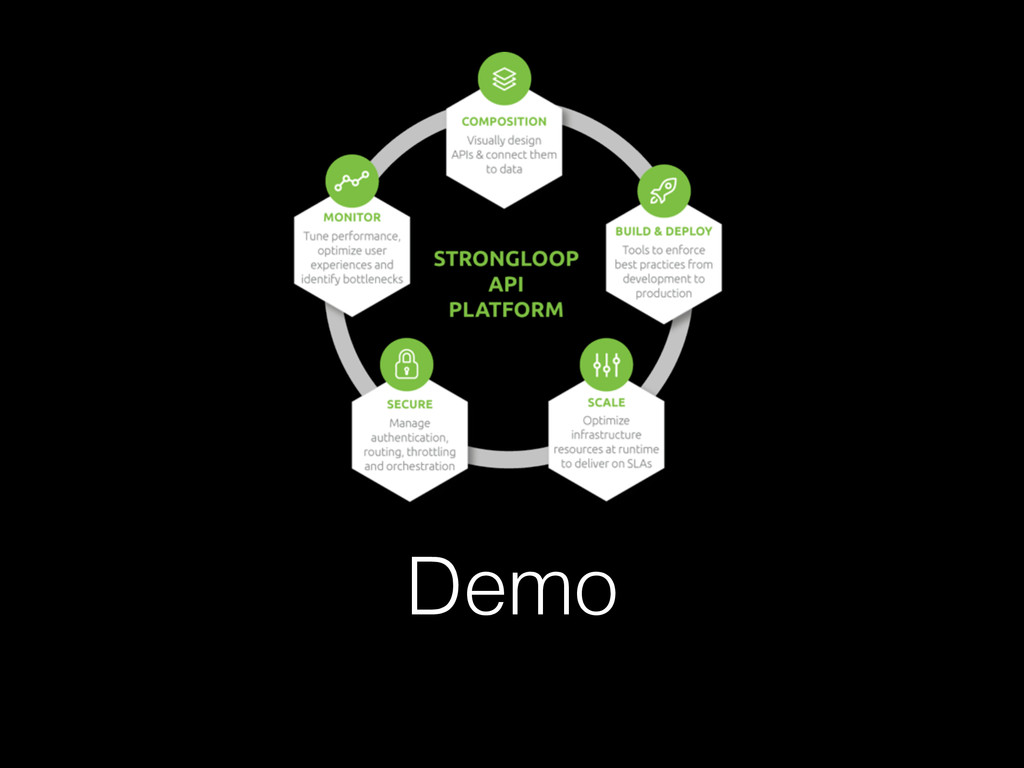
source LoopBack framework. LoopBack enables you to quickly compose scalable APIs, runs on top of the Express web framework and conforms to the Swagger 2.0 specification. • LoopBack is built on top of Express, the world’s most popular web framework for Node • Easily create REST API endpoints • Support for social logins via Passport.js • Swagger 2.0 Compliant


 rahult
 satoshi7
 gree_tech
 oasis1994liveforever
 yoshida0129
 kenichinakamura
 snoozer05
 masa_my
.jpg) lamaglama39
lamaglama39
 yamaguchitk333
 emiki
emiki
 iktakahiro
 keio_smilab
 codingconduct
 akashhashmi
 stephenakadiri
 chikuwait
 jonoalderson
 joshbly
 rasmusluckow
 emna__ayadi
 aleyda
 sstephenson
 maltzj