Upgrade to Pro — share decks privately, control downloads, hide ads and more …

Your Platform Is Probably Working - You Just Ca...

Your Platform Is Probably Working - You Just Can't Prove It

Here's what platform engineers won't say out loud: very few can answer the question "Was it worth it?". This talk tries to help you answer that.

Everyone knows that to call the win you first need to measure success; the hard part: knowing what to measure. This is where people start shopping: DORA, SPACE, DevEx, MONK/MOCK, Scorecards, OKRs and more. So many frameworks, yet 30% of organizations still don't measure anything at all (I guess they didn't know what to pick), while others pick one or two and hope they work.

After building multiple platforms with tools such as Kubernetes Operators, Terraform, Crossplane, pipelines and good old Java, let me tell you what we measured and what really mattered. In every journey, the real challenge wasn't picking a framework: it was figuring out what success actually meant, and then measuring it without losing sight of what we were aiming for.

Let's walk through these frameworks so that you can bring home a "slightly" opinionated approach on how to measure platform initiatives at Day 0 (still building), Day 1 (we got there), and Day 2 (it worked - now scale it, please).

Avatar for Riccardo Capraro

Riccardo Capraro

September 30, 2026

More Decks by Riccardo Capraro

Other Decks in Programming

Transcript

  1. Cloud Native Days Austria 2026 Your platform is probably working

    PRESENTER Riccardo Capraro You just can’t prove it ❏ ❏ ❏ Platform Engineer Cloud Native Trento Organizer Freelancer
  2. Cloud Native Days Austria 2026 Your platform is probably working

    failing You just can’t prove it don’t know it yet
  3. Questions… ❏ What did success mean for your platform initiative?

    ❏ How did you measure it? ❏ Did what you measure change as the platform matured? 12
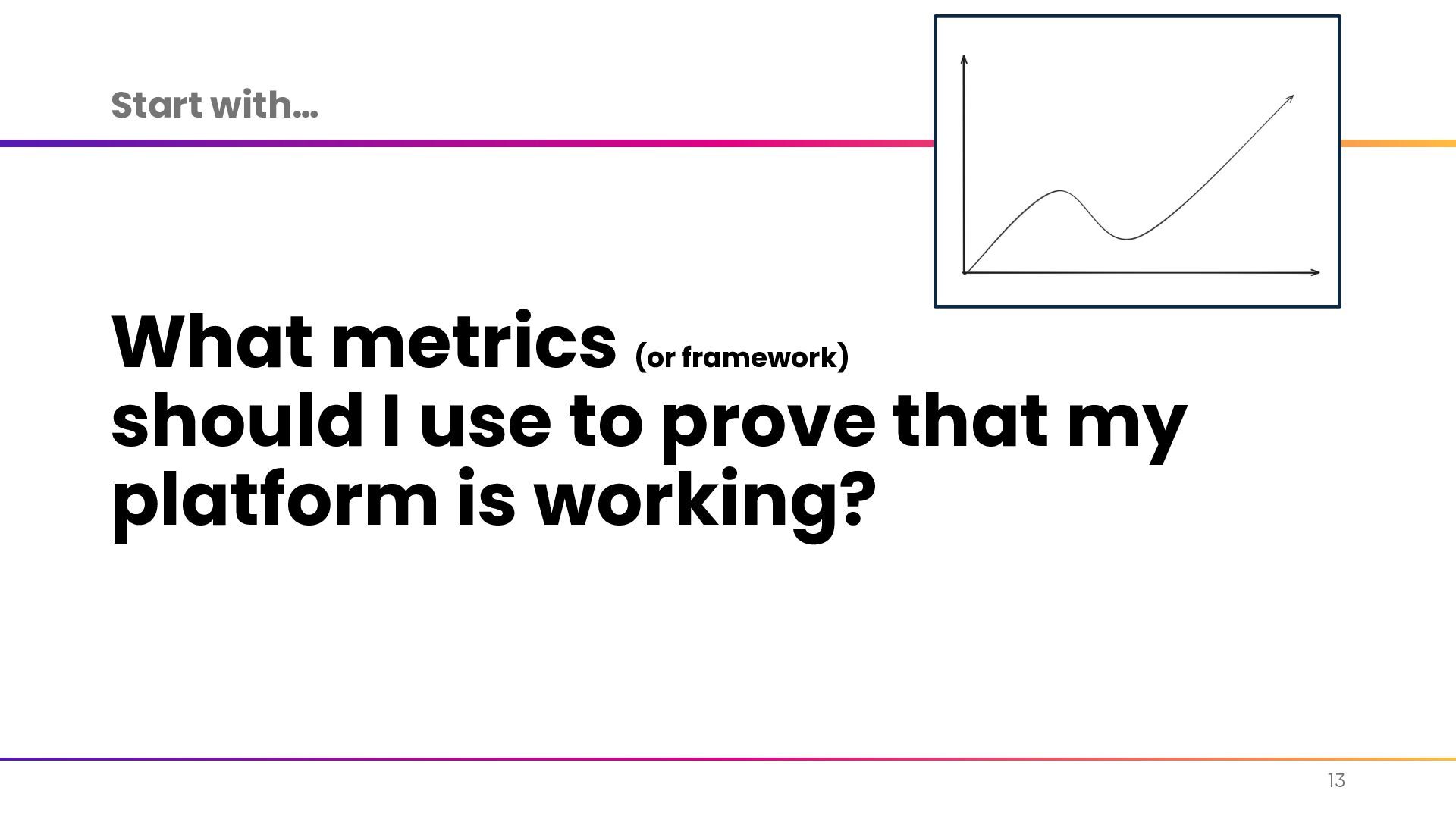
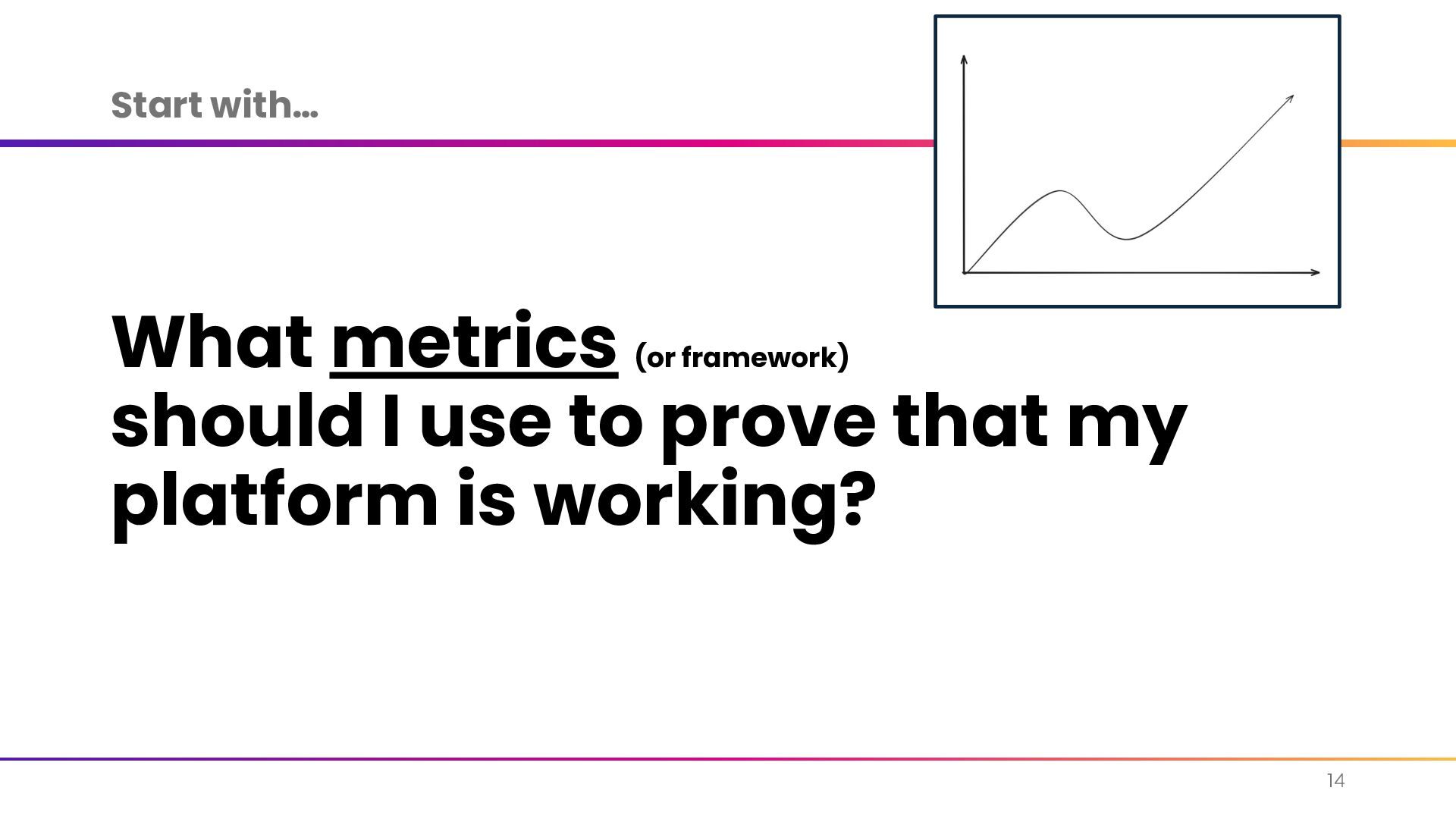
  4. Start with… What metrics should I use to prove that

    my platform is working? (or framework) 13
  5. Start with… What metrics should I use to prove that

    my platform is working? (or framework) 14
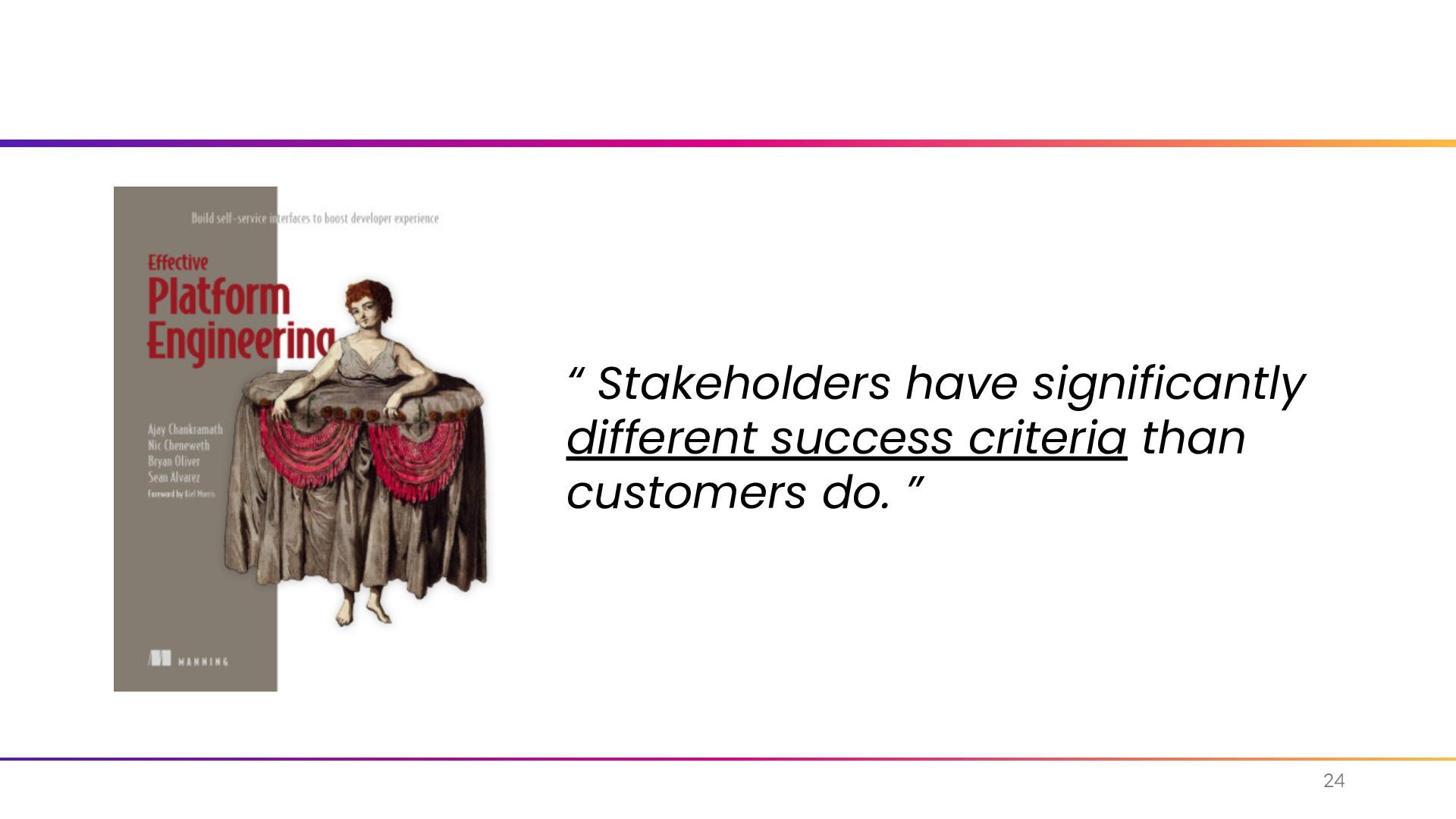
  6. Fallacy #2: They don’t get it Let me find another

    metric to make them understand 17
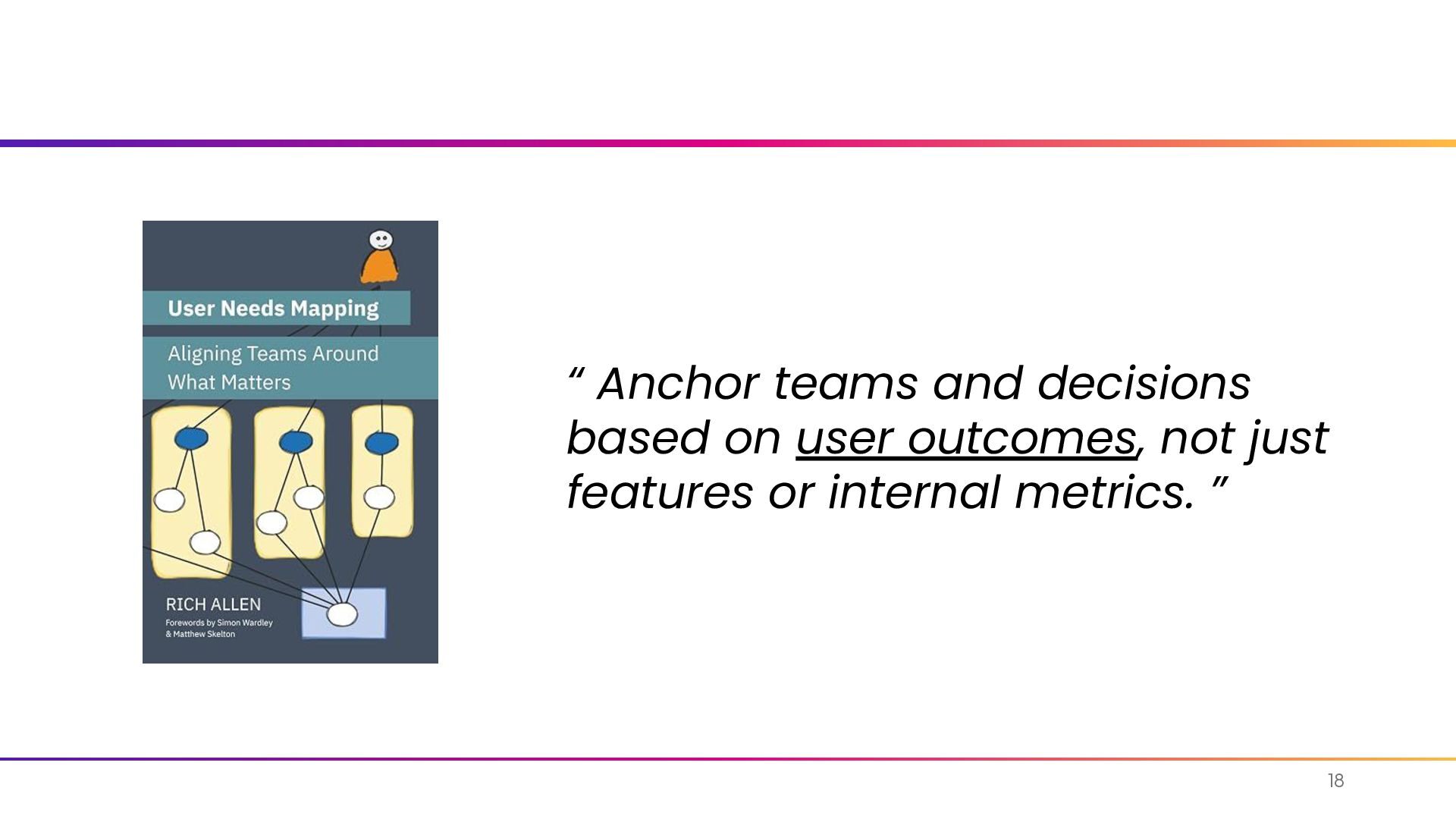
  7. “ Anchor teams and decisions based on user outcomes, not

    just features or internal metrics. ” 18
  8. “ Avoid vanity metrics that look impressive but do not

    inform real decisions. [..] Ensure that every metric can be acted upon and ties back to user outcomes.” 19
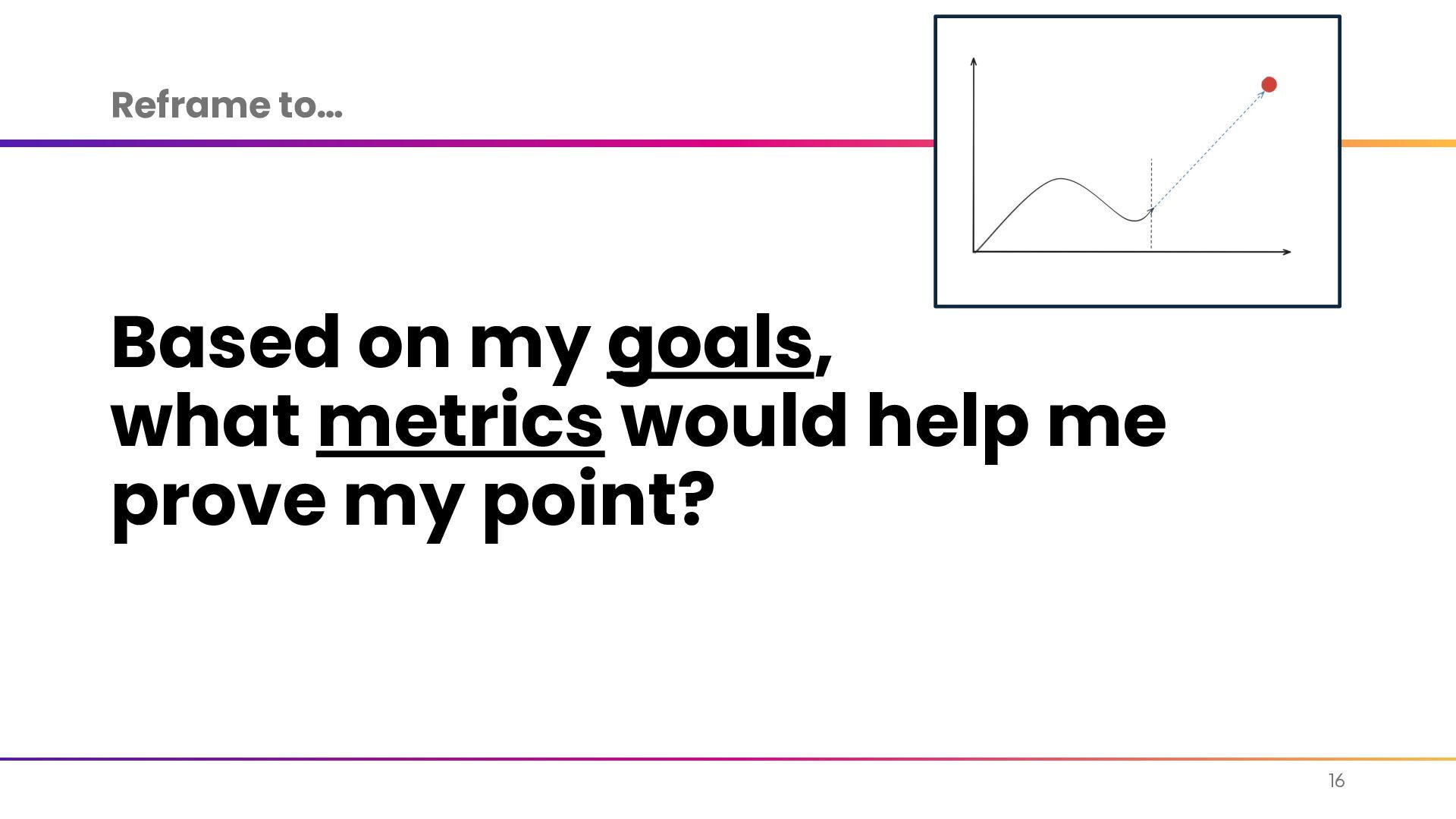
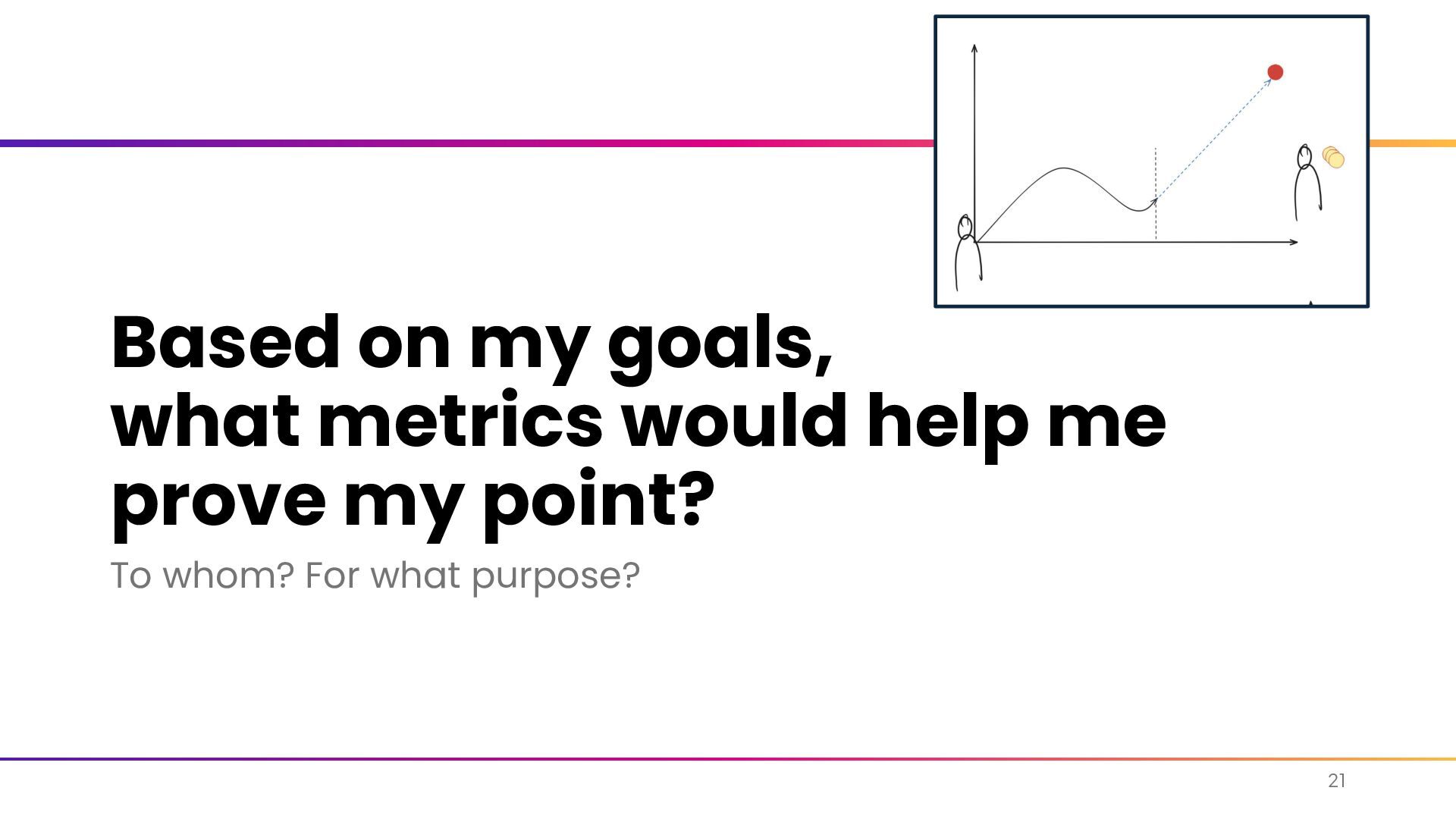
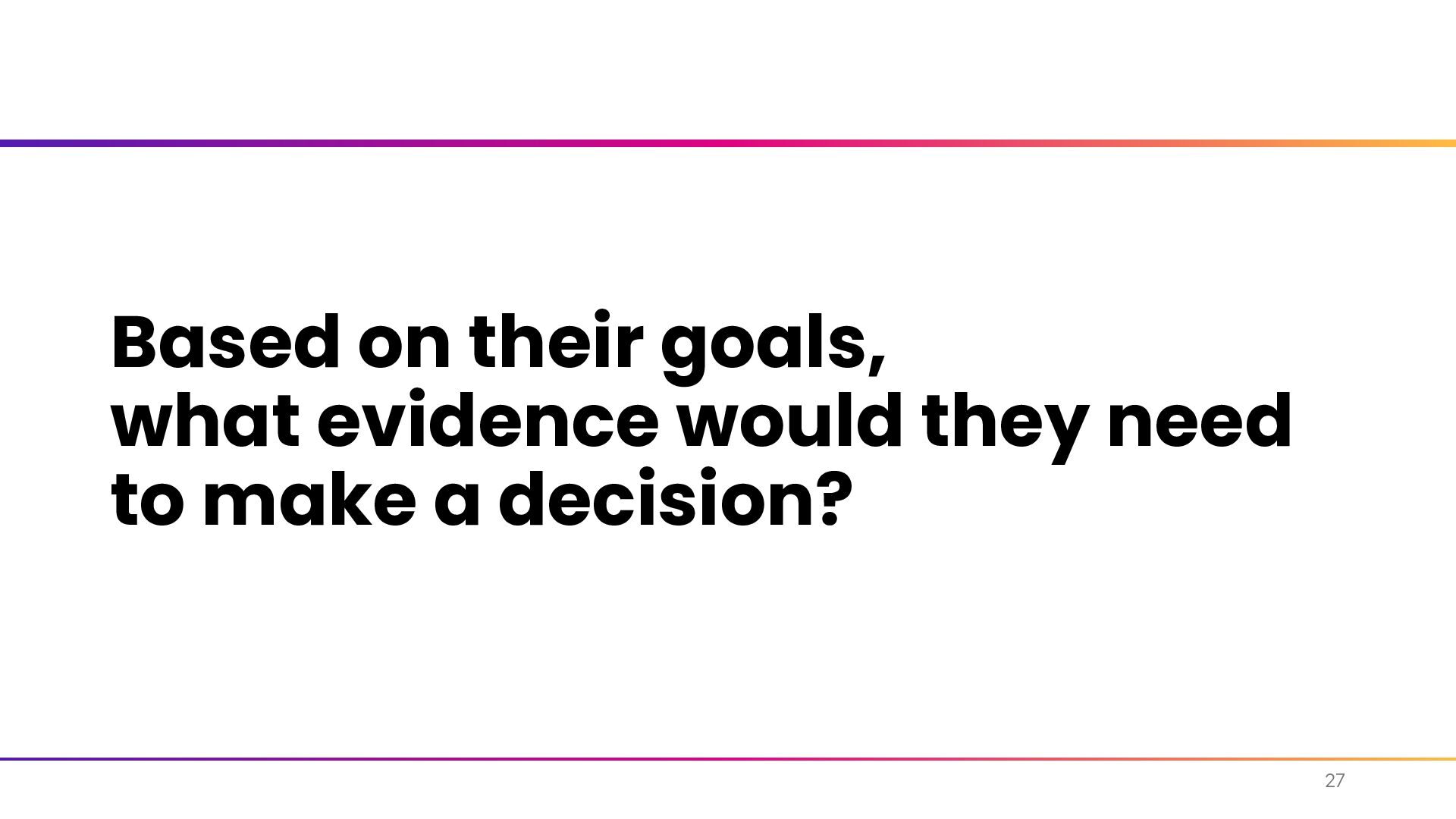
  9. Based on my goals, what metrics would help me prove

    my point? To whom? For what purpose? 21
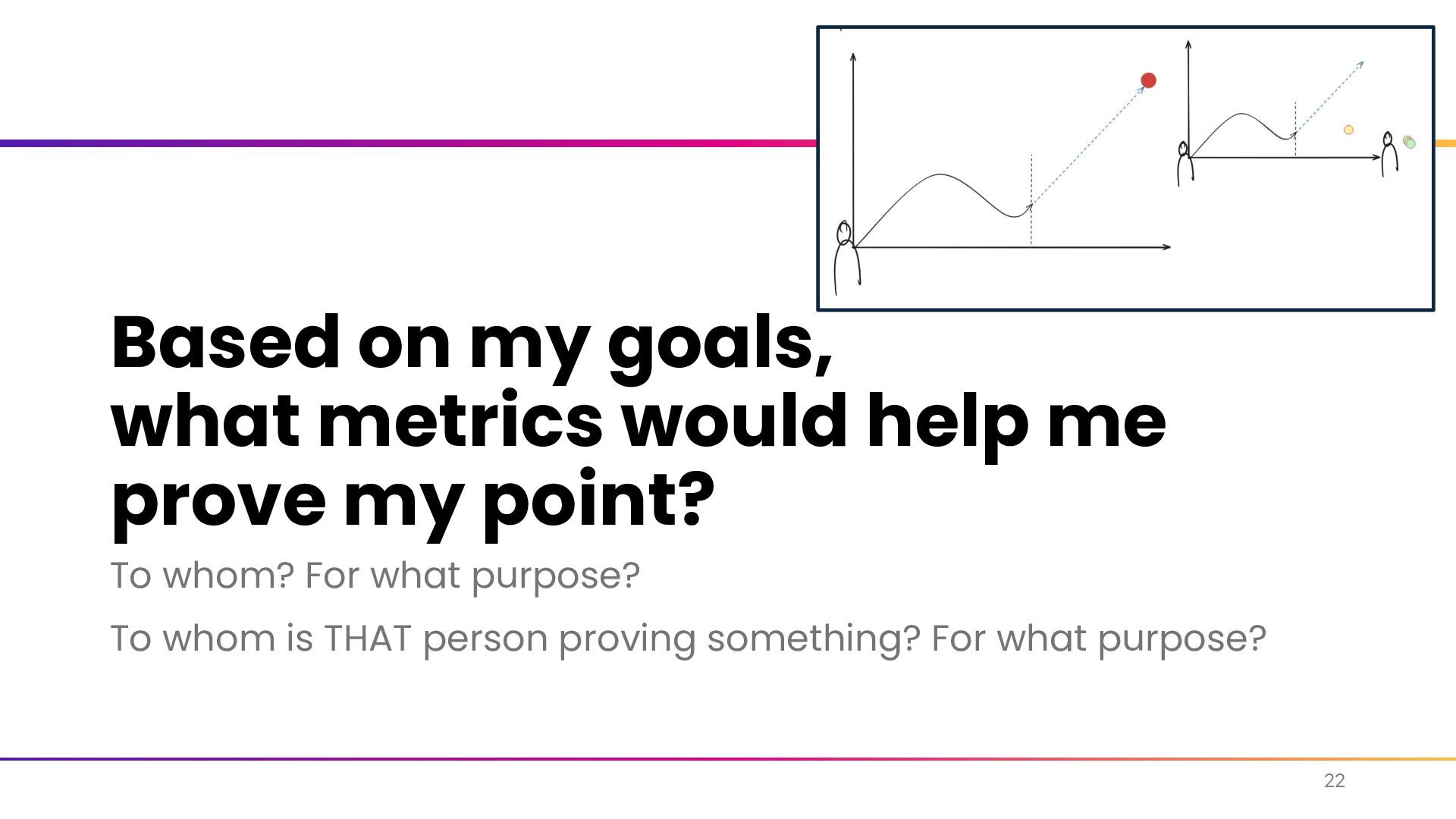
  10. Based on my goals, what metrics would help me prove

    my point? To whom? For what purpose? To whom is THAT person proving something? For what purpose? 22
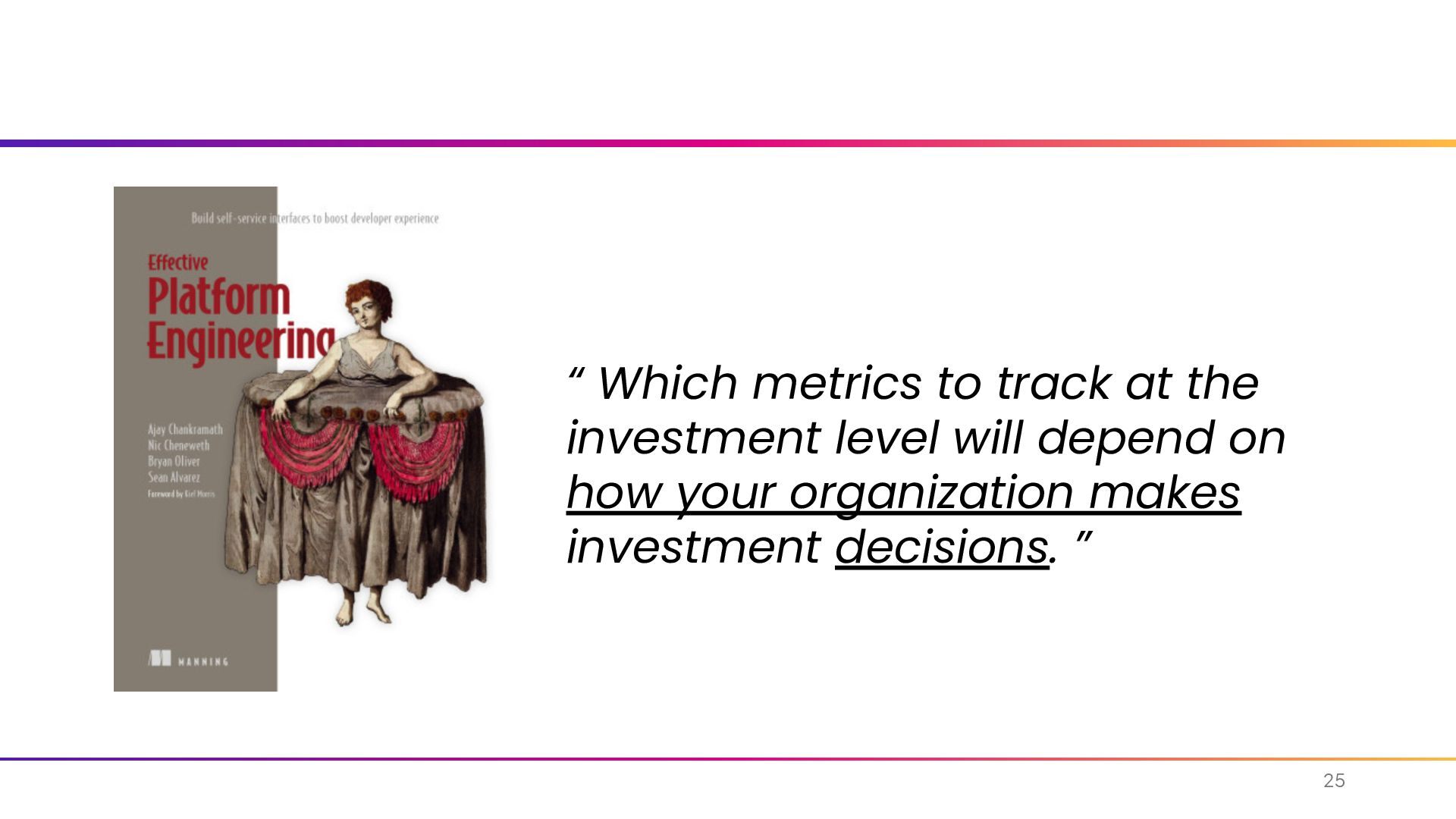
  11. “ Which metrics to track at the investment level will

    depend on how your organization makes investment decisions. ” 25
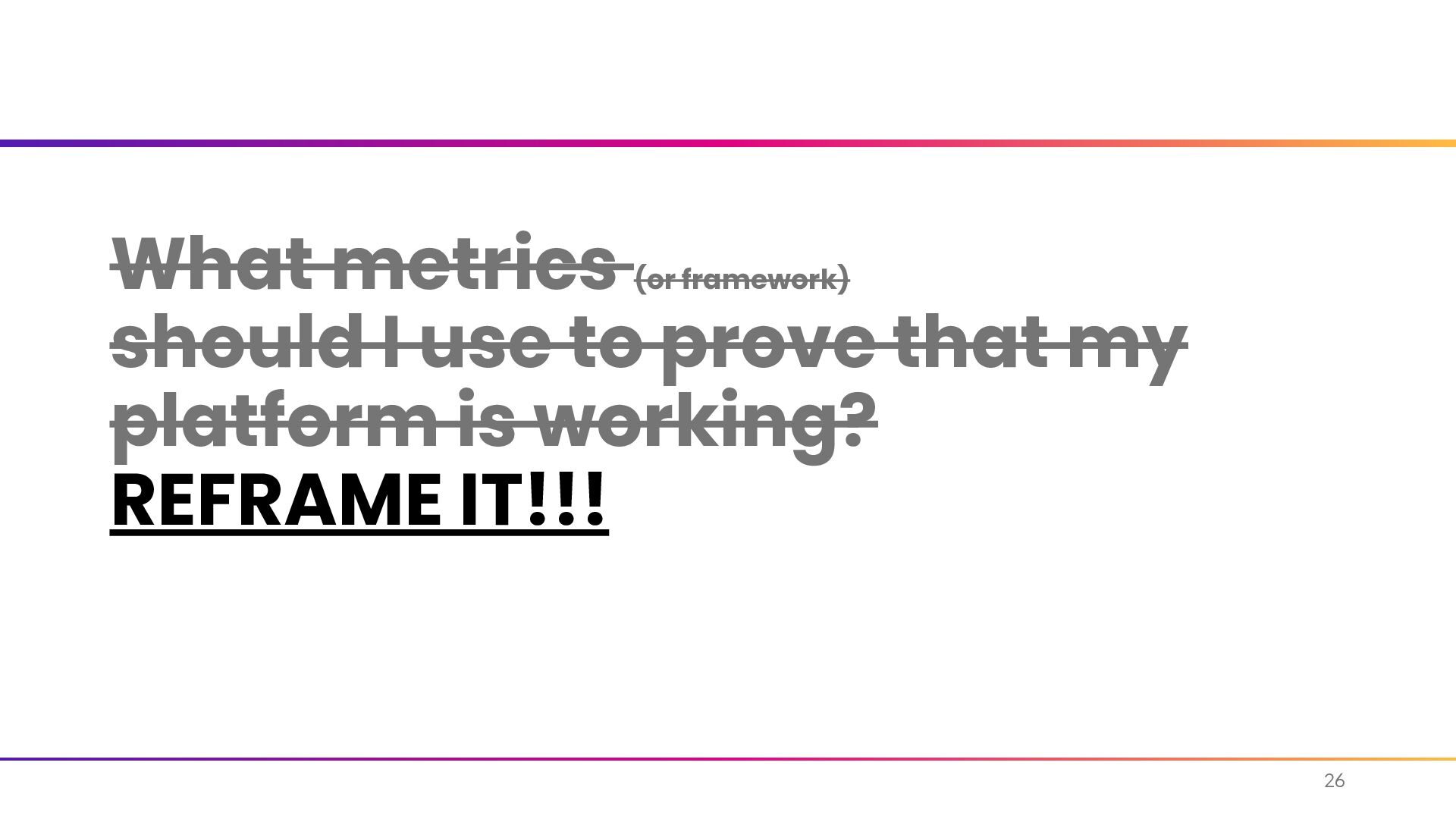
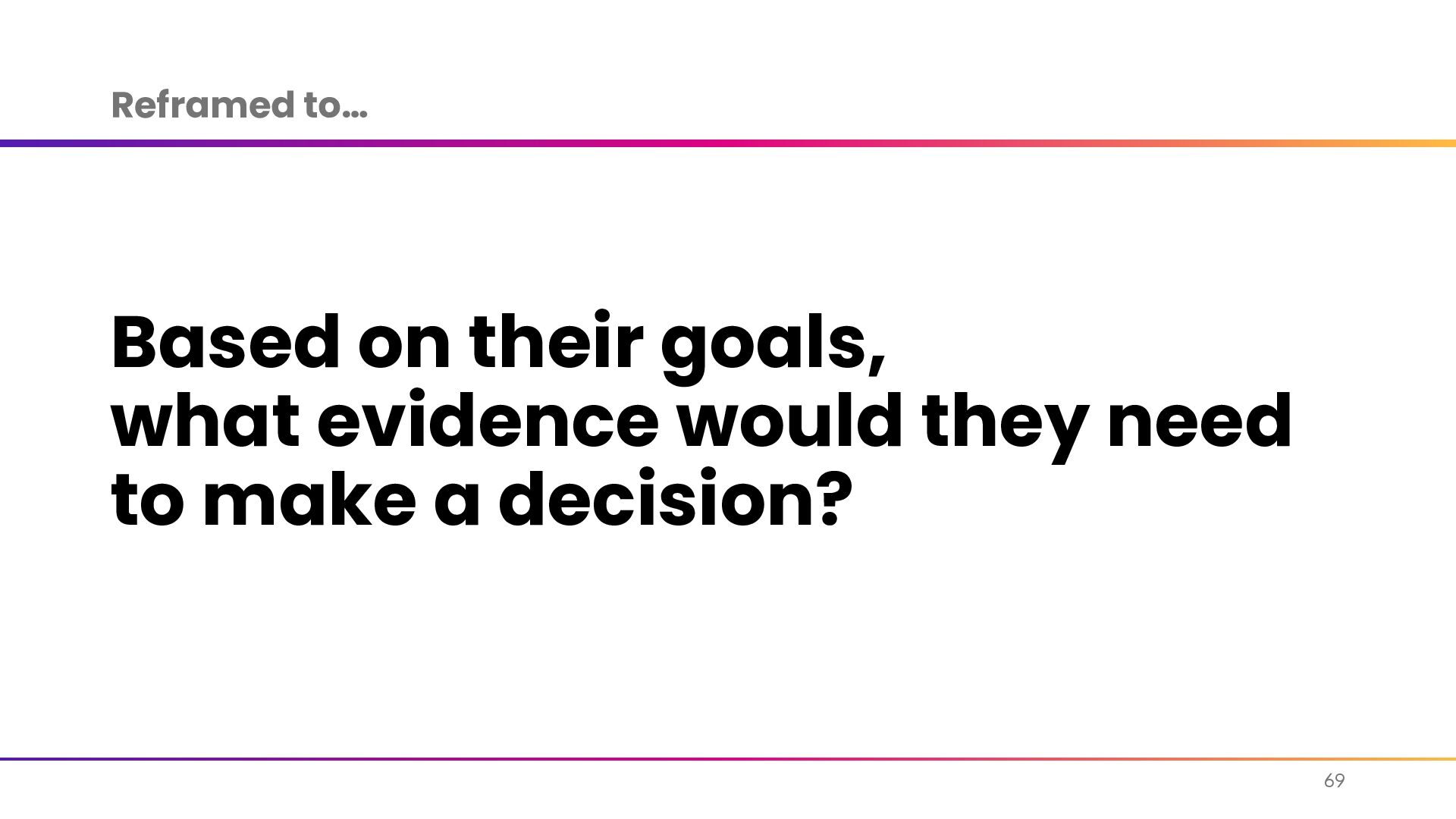
  12. What metrics should I use to prove that my platform

    is working? REFRAME IT!!! (or framework) 26
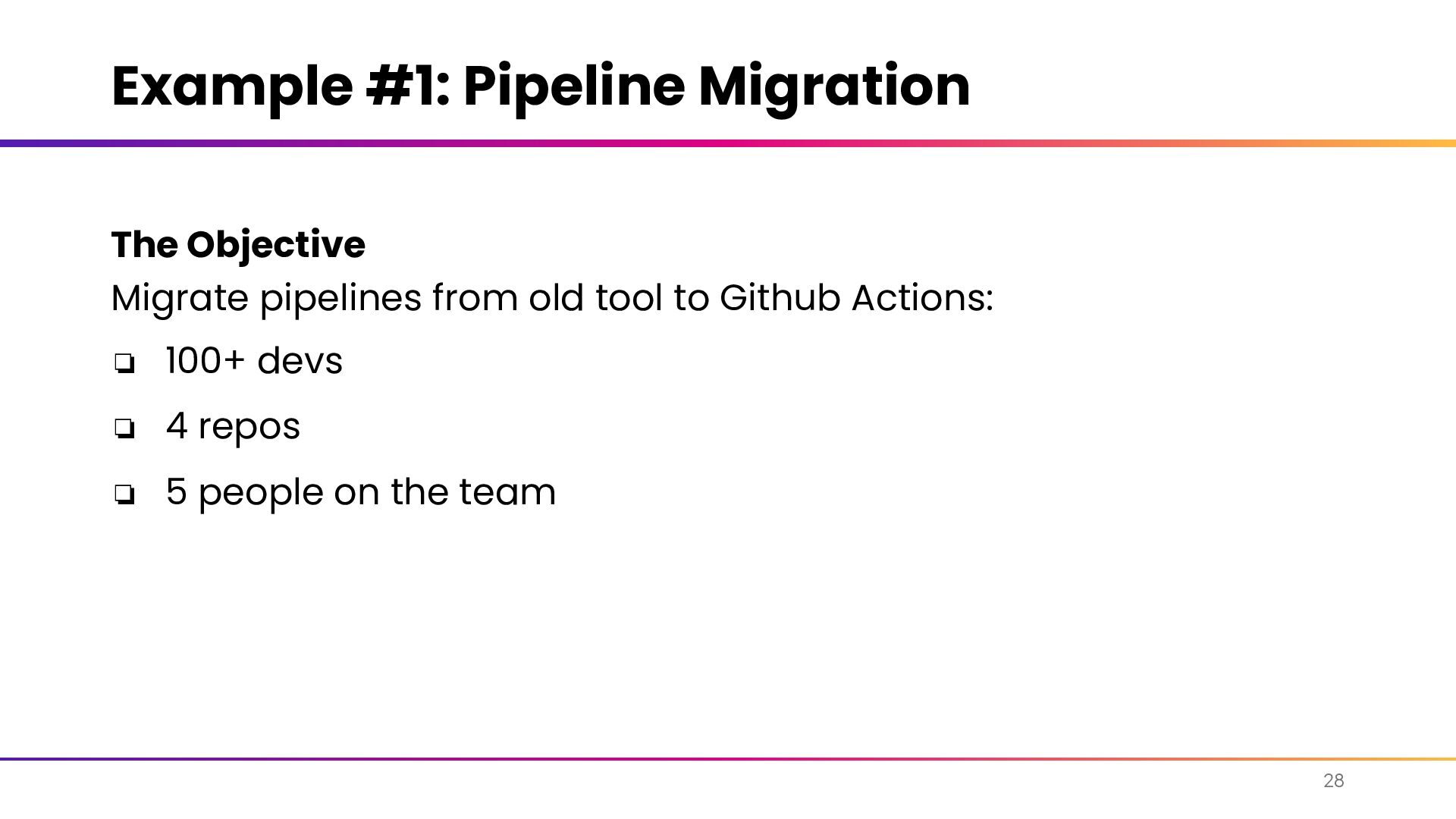
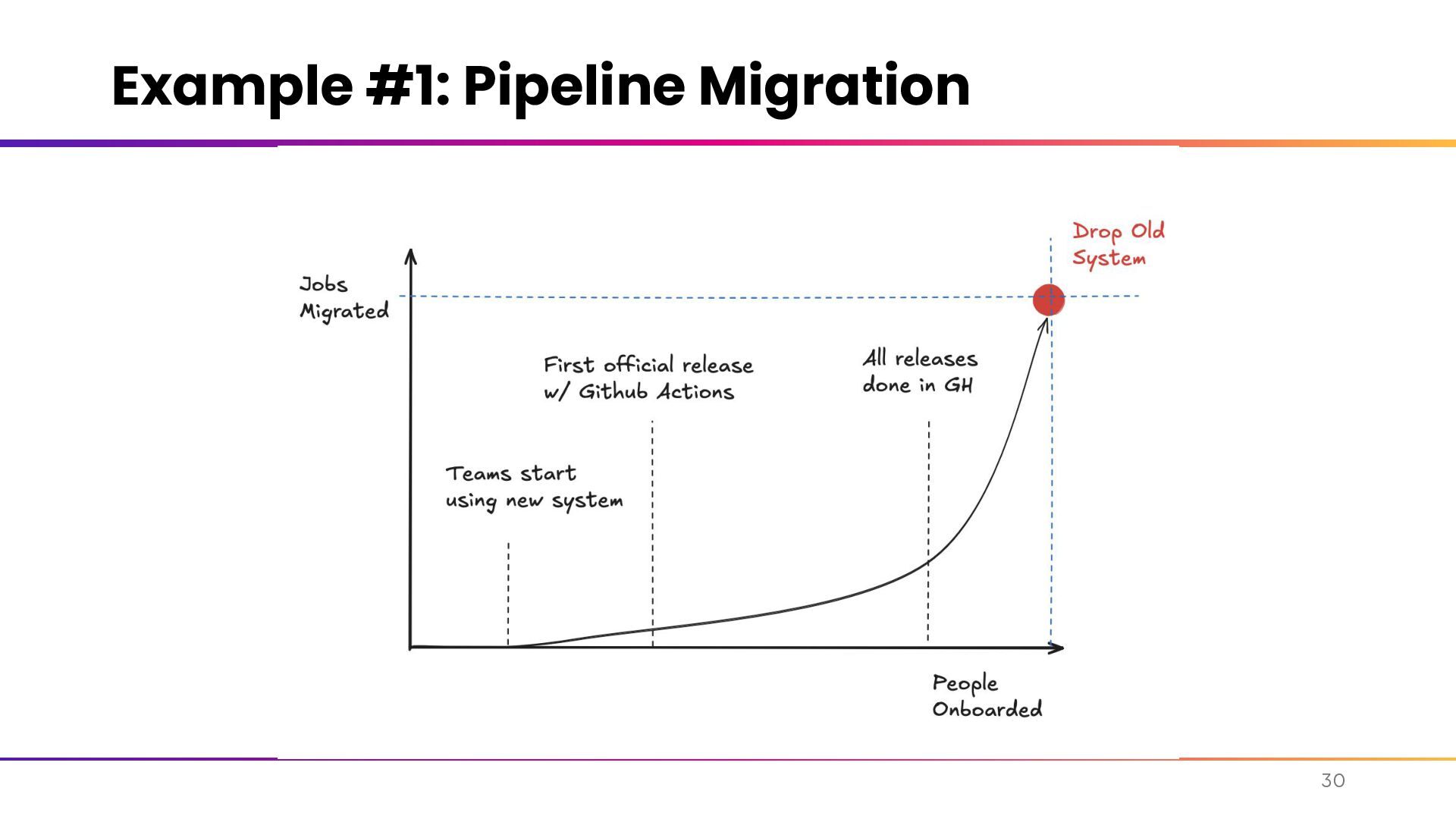
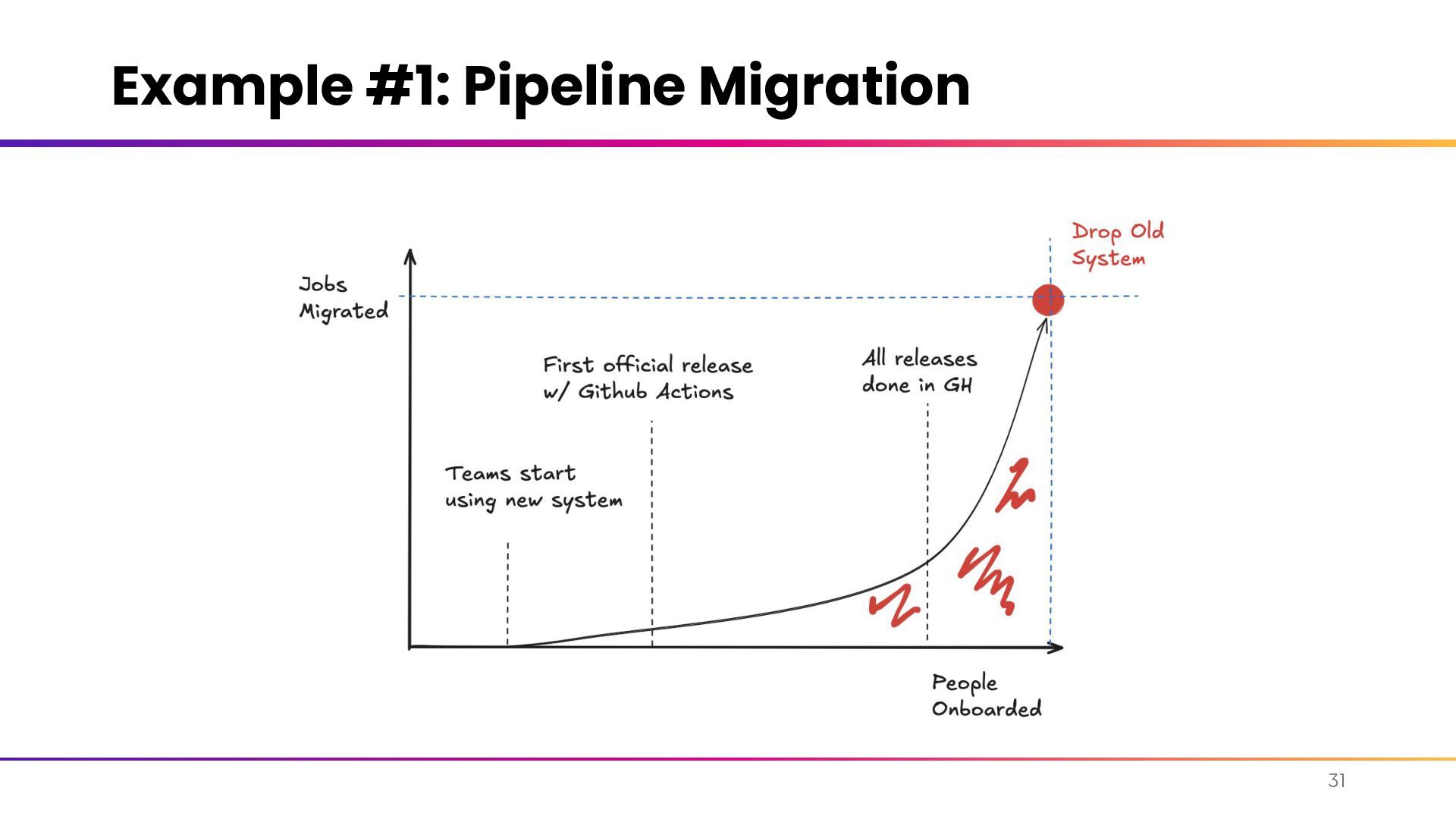
  13. Example #1: Pipeline Migration The Objective Migrate pipelines from old

    tool to Github Actions: ❏ 100+ devs ❏ 4 repos ❏ 5 people on the team 28
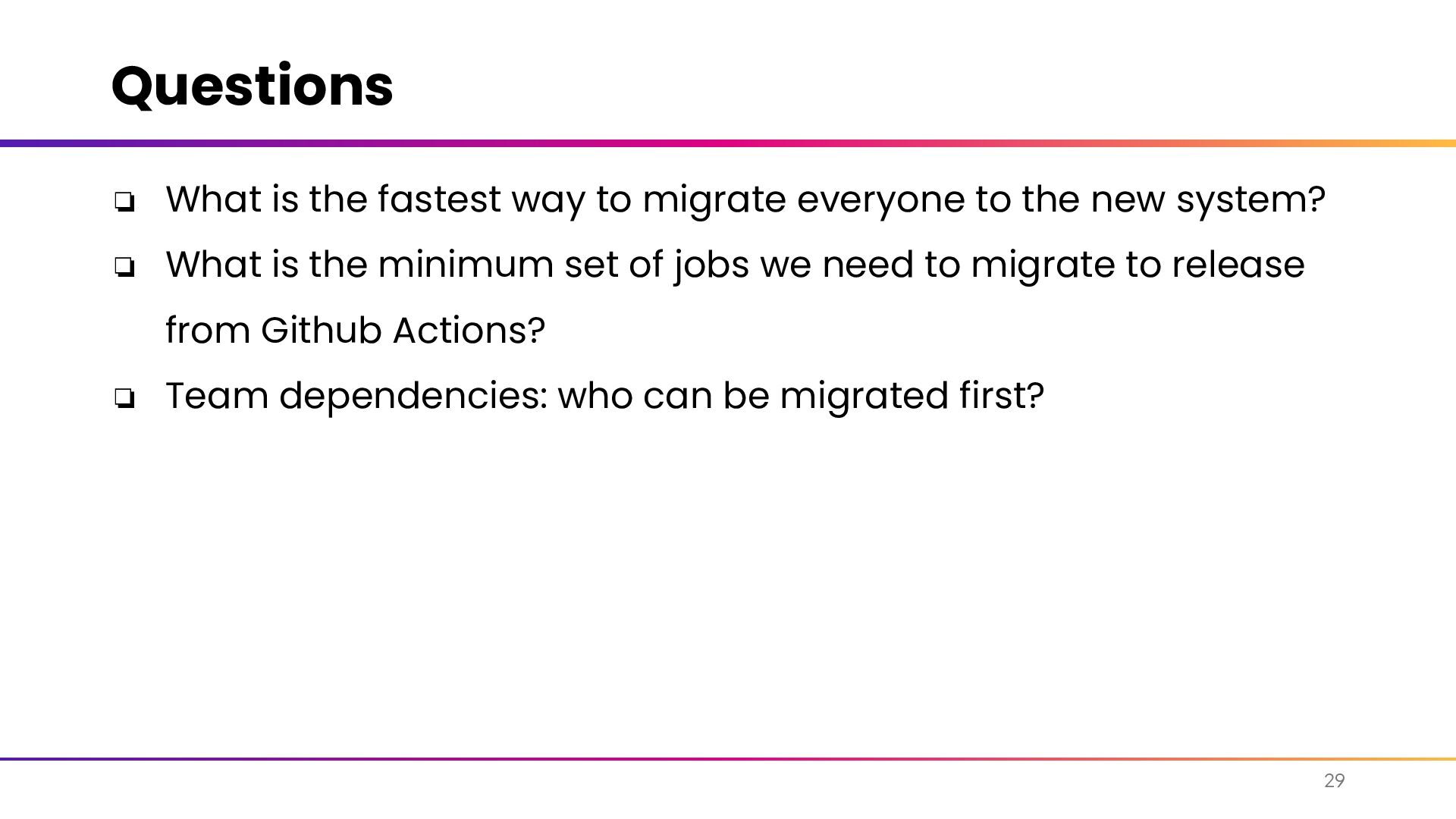
  14. Questions ❏ What is the fastest way to migrate everyone

    to the new system? ❏ What is the minimum set of jobs we need to migrate to release from Github Actions? ❏ Team dependencies: who can be migrated first? 29
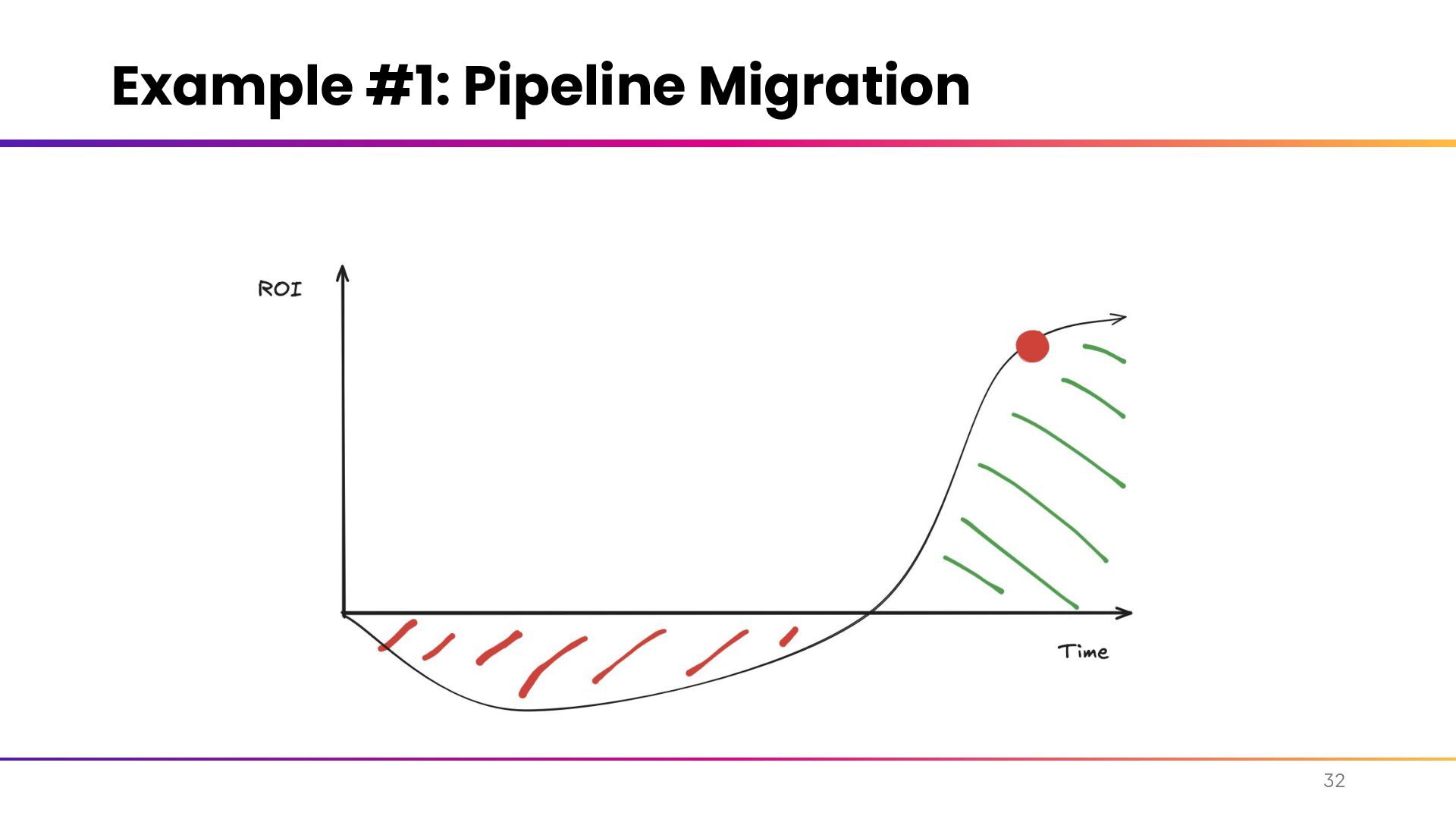
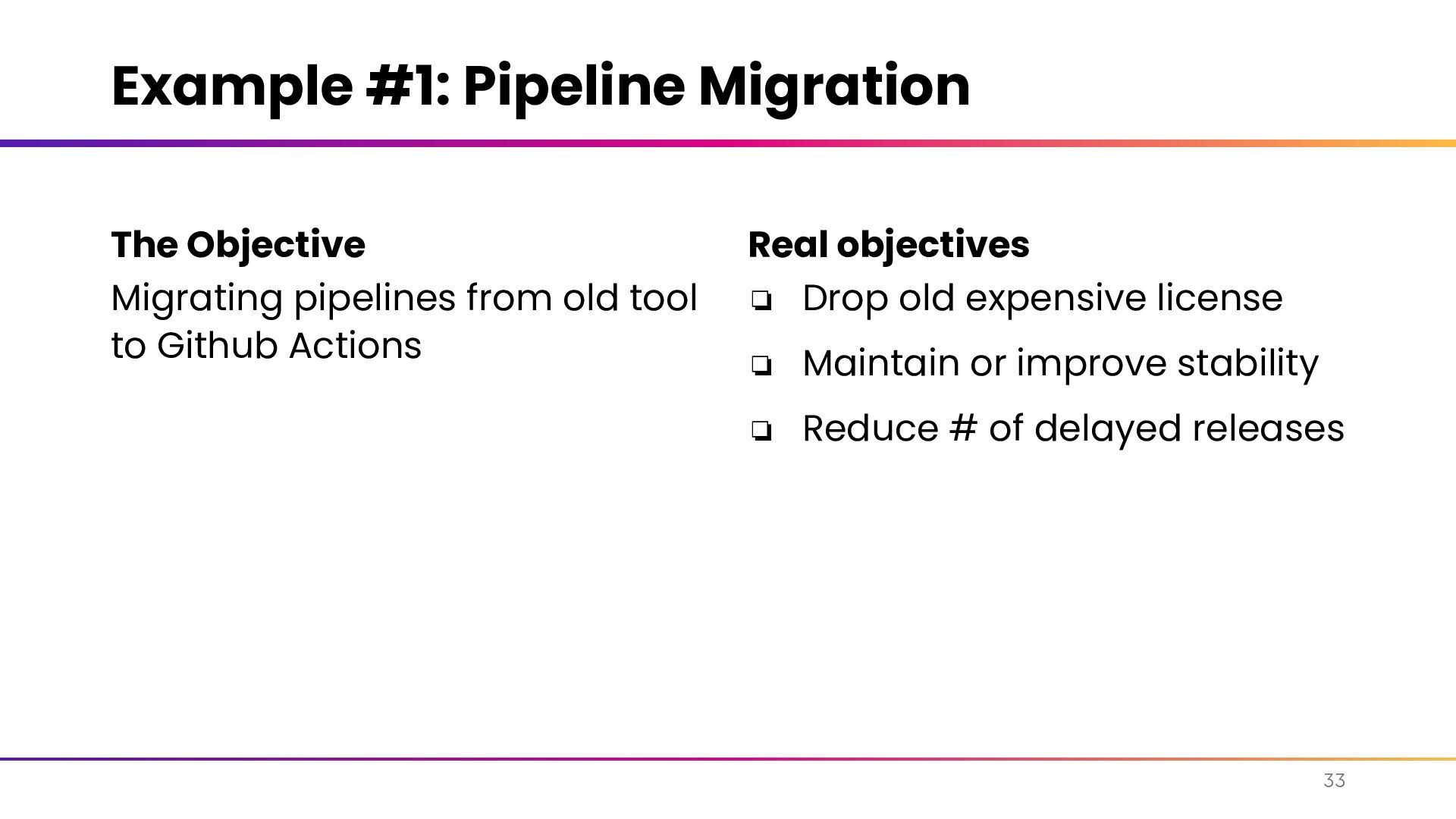
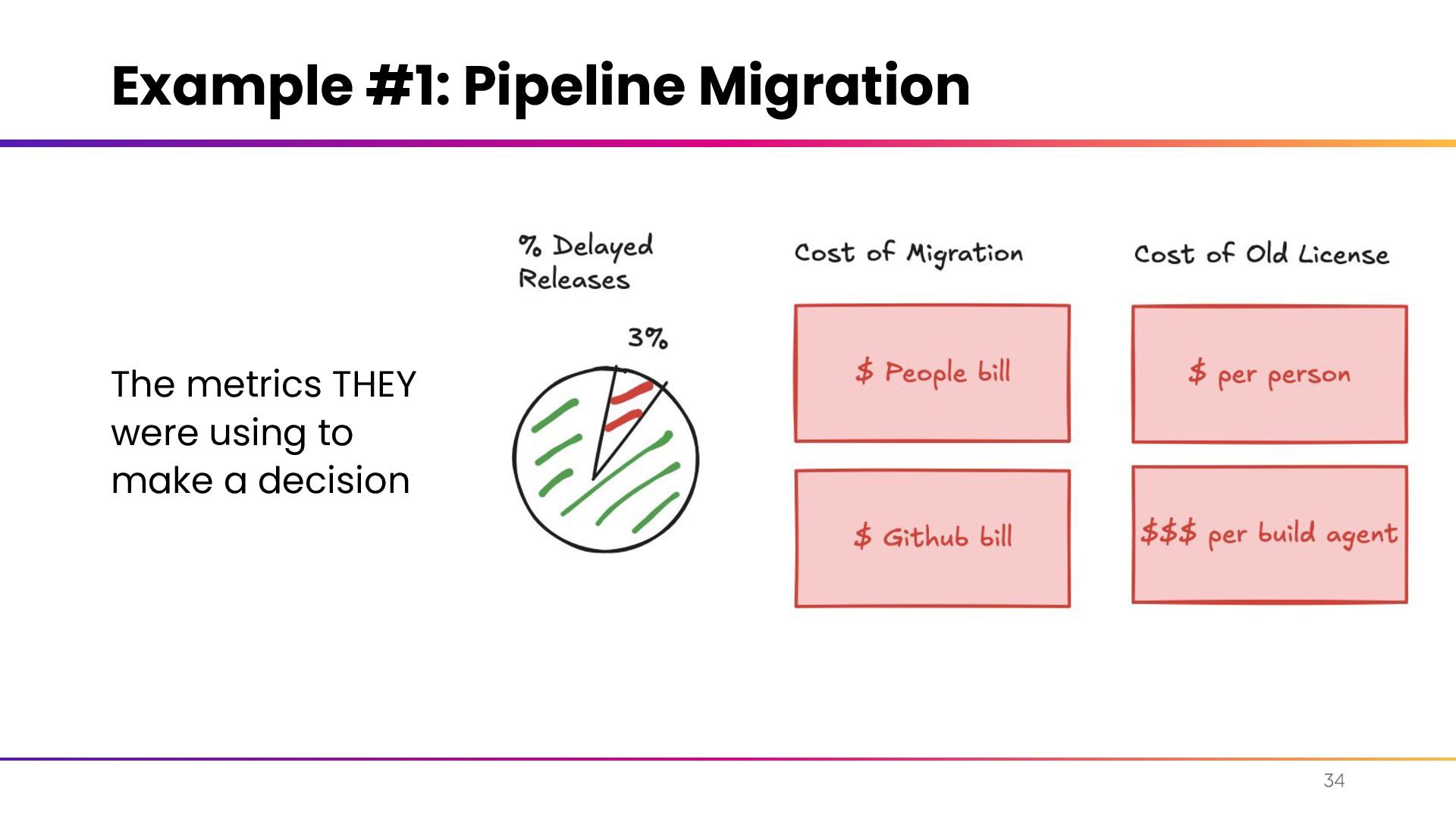
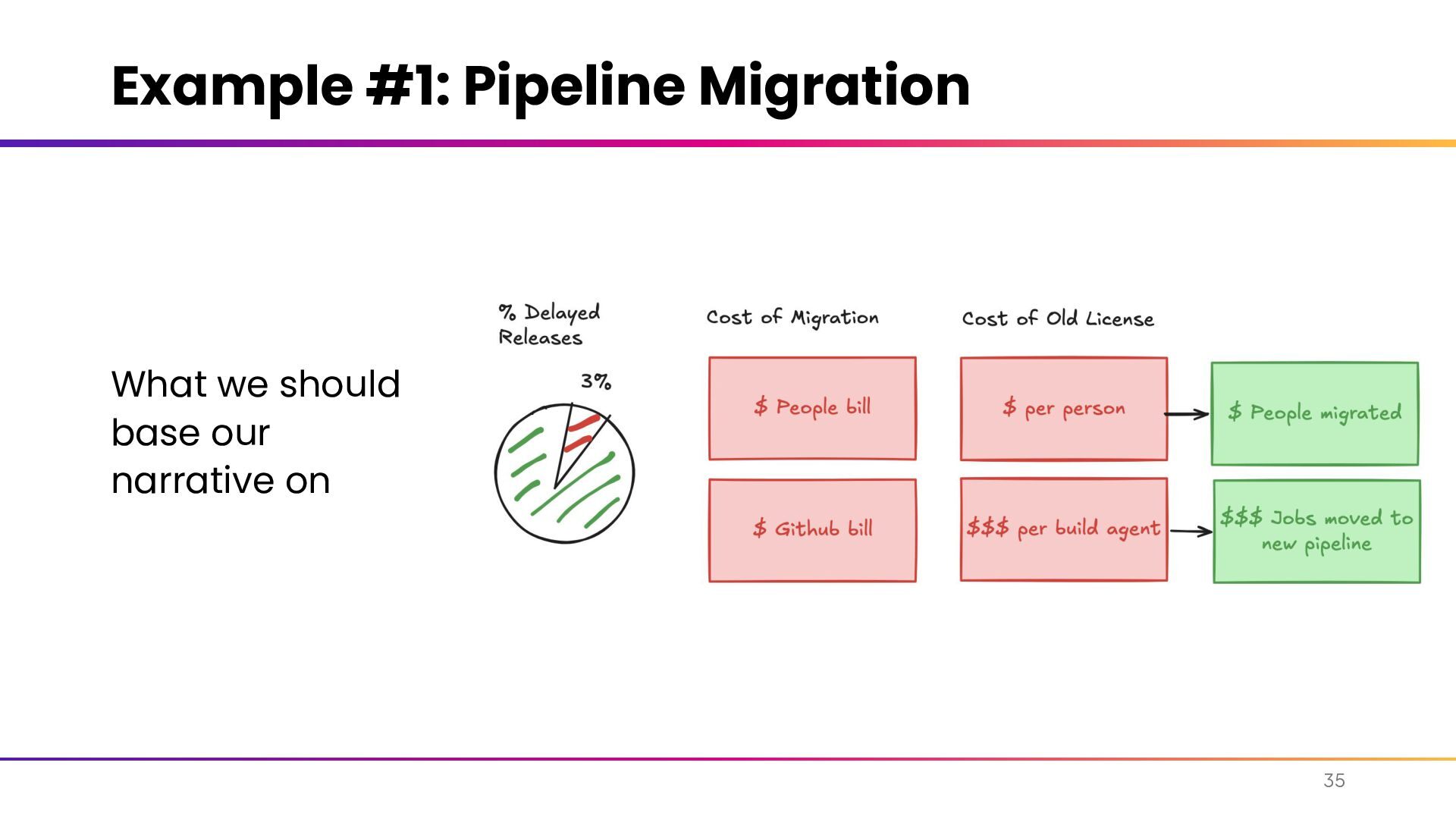
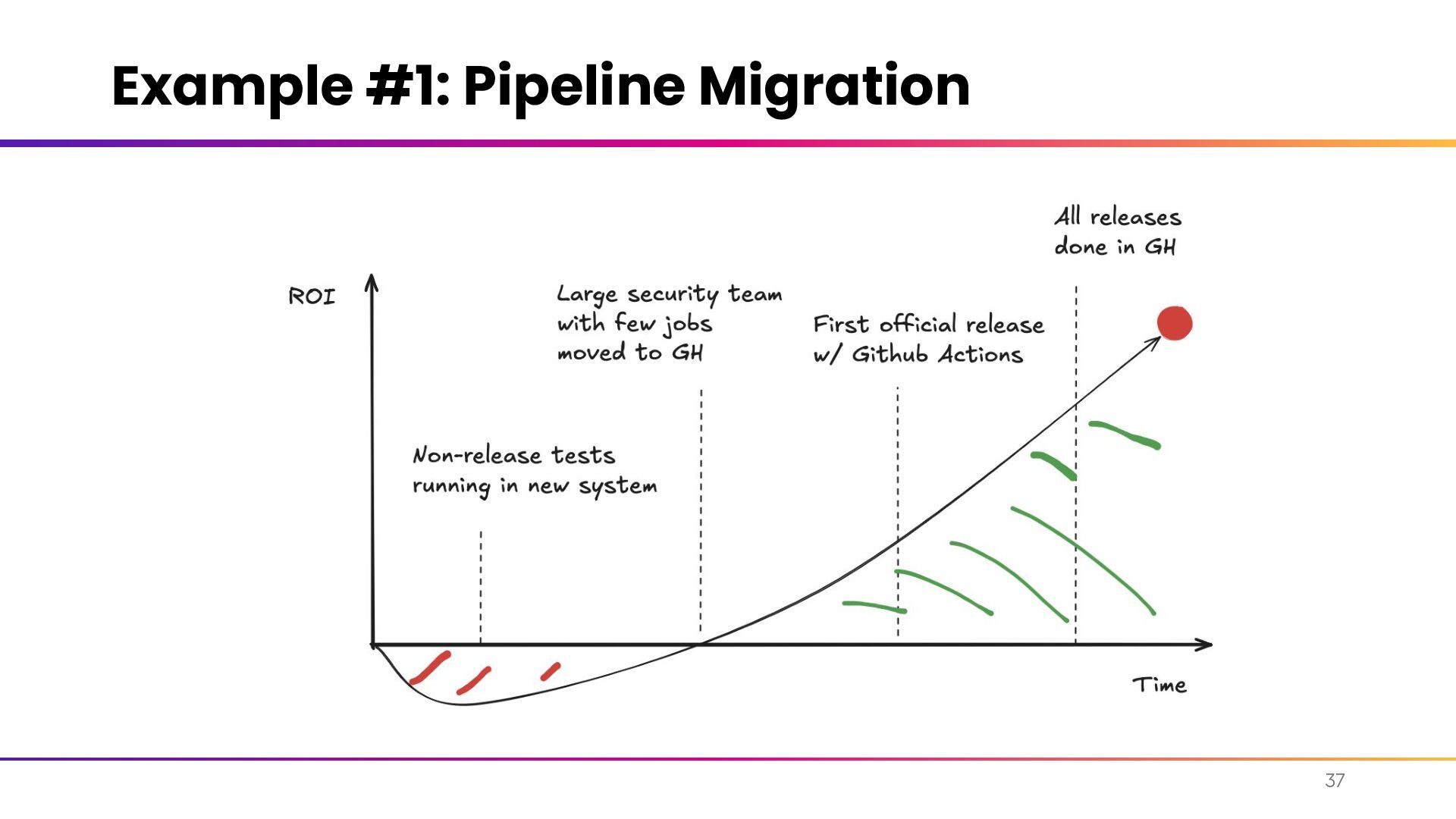
  15. Example #1: Pipeline Migration The Objective Migrating pipelines from old

    tool to Github Actions Real objectives ❏ Drop old expensive license ❏ Maintain or improve stability ❏ Reduce # of delayed releases 33
  16. Questions… ❏ What is the fastest way to reduce the

    number of agents running on the old system ❏ What is the fastest way to reduce the number of seats in the old license 36
  17. “ In business terms, the value of a platform [..]

    lies in its enablement of time to market, or optimizing flexibility in the cost of delay” 38
  18. Example #2 Goal Migrate dev environments from Docker Compose to

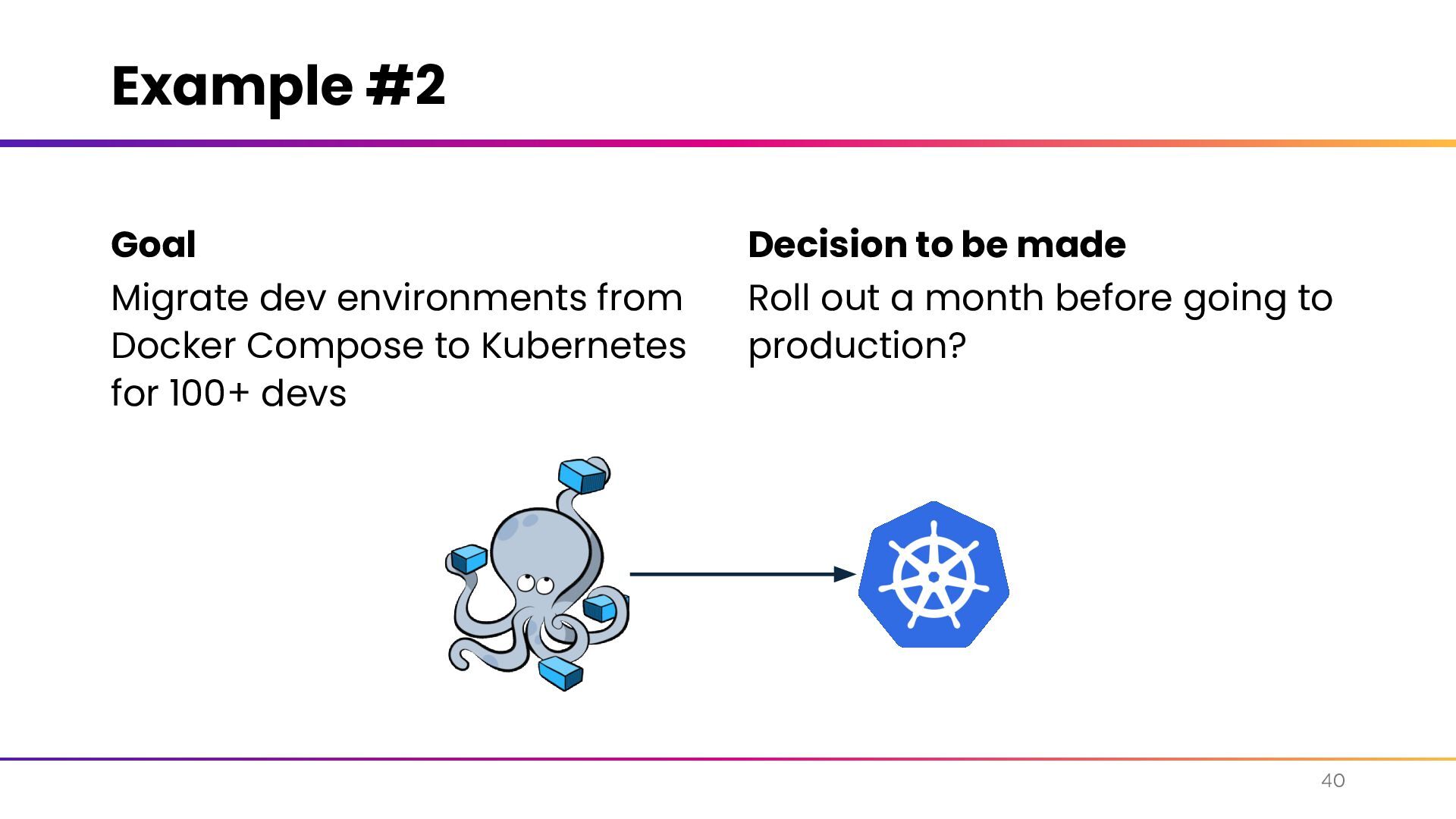
    Kubernetes for 100+ devs Decision to be made Roll out a month before going to production? 40
  19. Example #2 What we needed to prove ❏ Better than

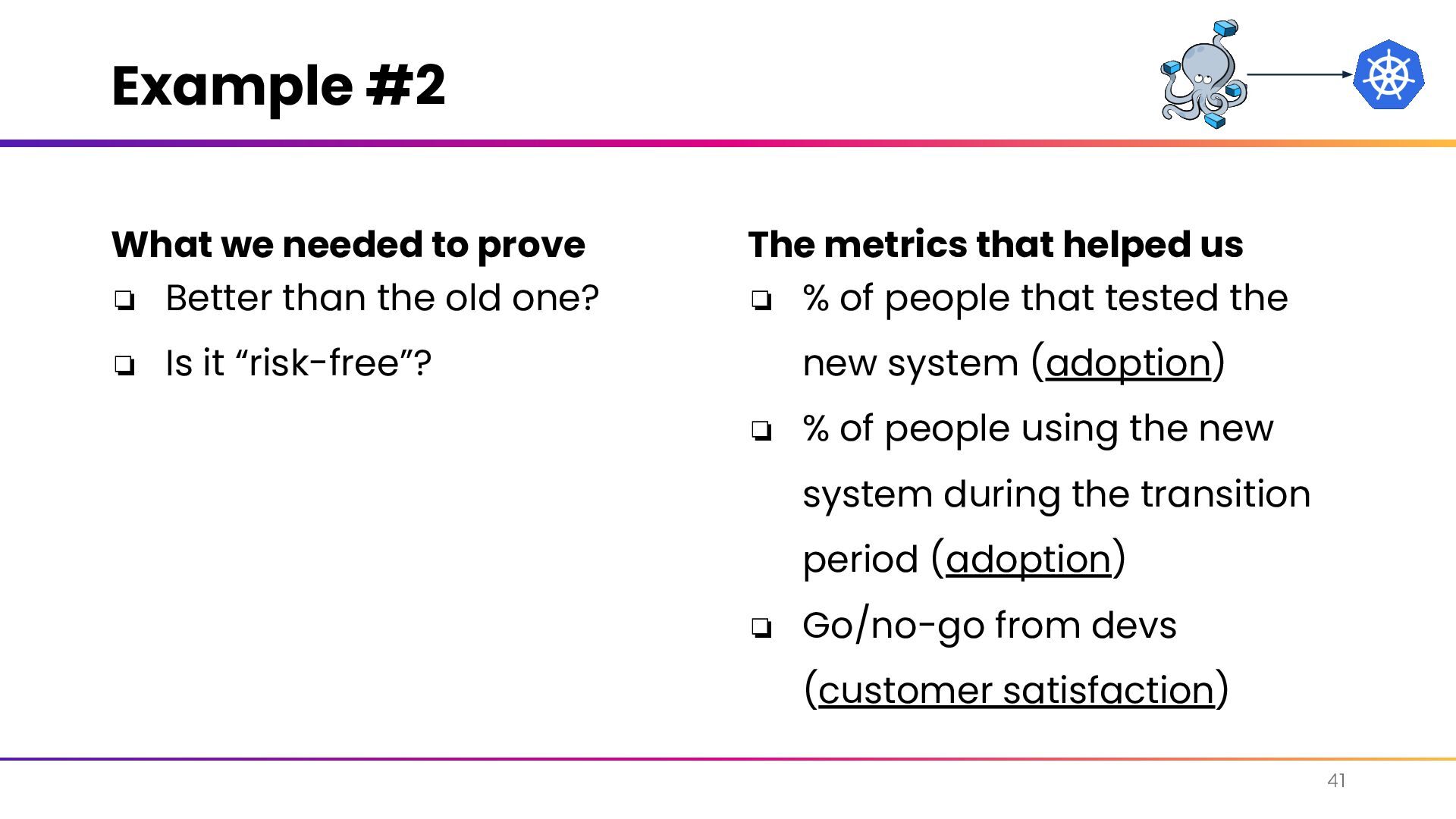
    the old one? ❏ The metrics that helped us ❏ % of people that tested the Is it “risk-free”? new system (adoption) ❏ % of people using the new system during the transition period (adoption) ❏ Go/no-go from devs (customer satisfaction) 41
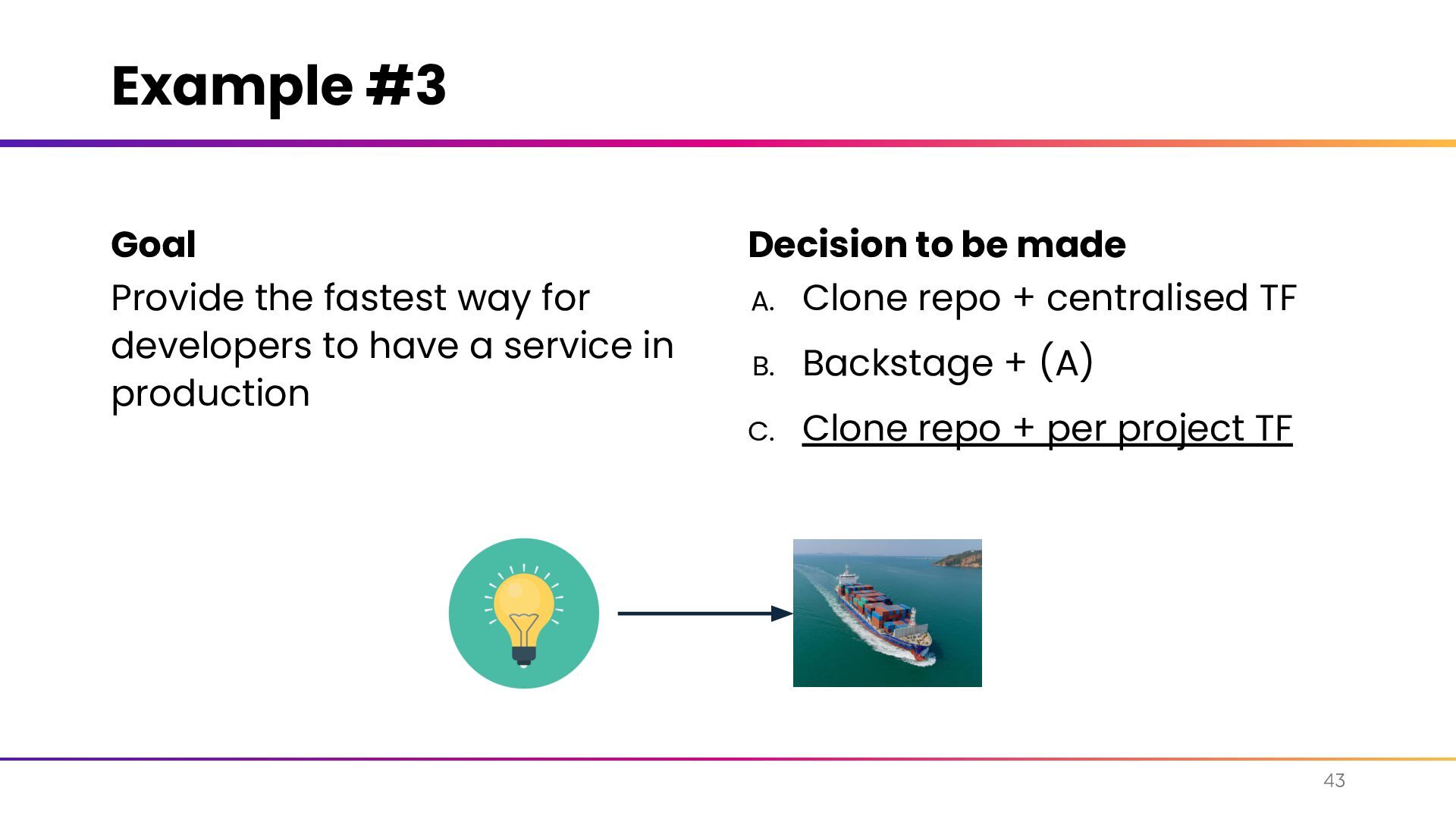
  20. Example #3 Goal Provide the fastest way for developers to

    have a service in production Decision to be made A. Clone repo + centralised TF B. Backstage + (A) C. Clone repo + per project TF 43
  21. Example #3 What we needed to prove ❏ Number of

    teams did not ❏ The metrics that helped us ❏ Number of failed setups justify complexity, flexibility is based on provisioning not needed. method (self-service) Devs also just cared about speed to production and ❏ Developer feedback (happiness) ease of use. 44
  22. 45

  23. 1. Why platforms? 2. What is a platform CNCF Platforms

    White Paper 3. Attributes of successful platforms 4. Attributes of successful platform teams 5. Challenges when implementing platforms 6. How to measure the success of platforms 7. Capabilities of platforms 48
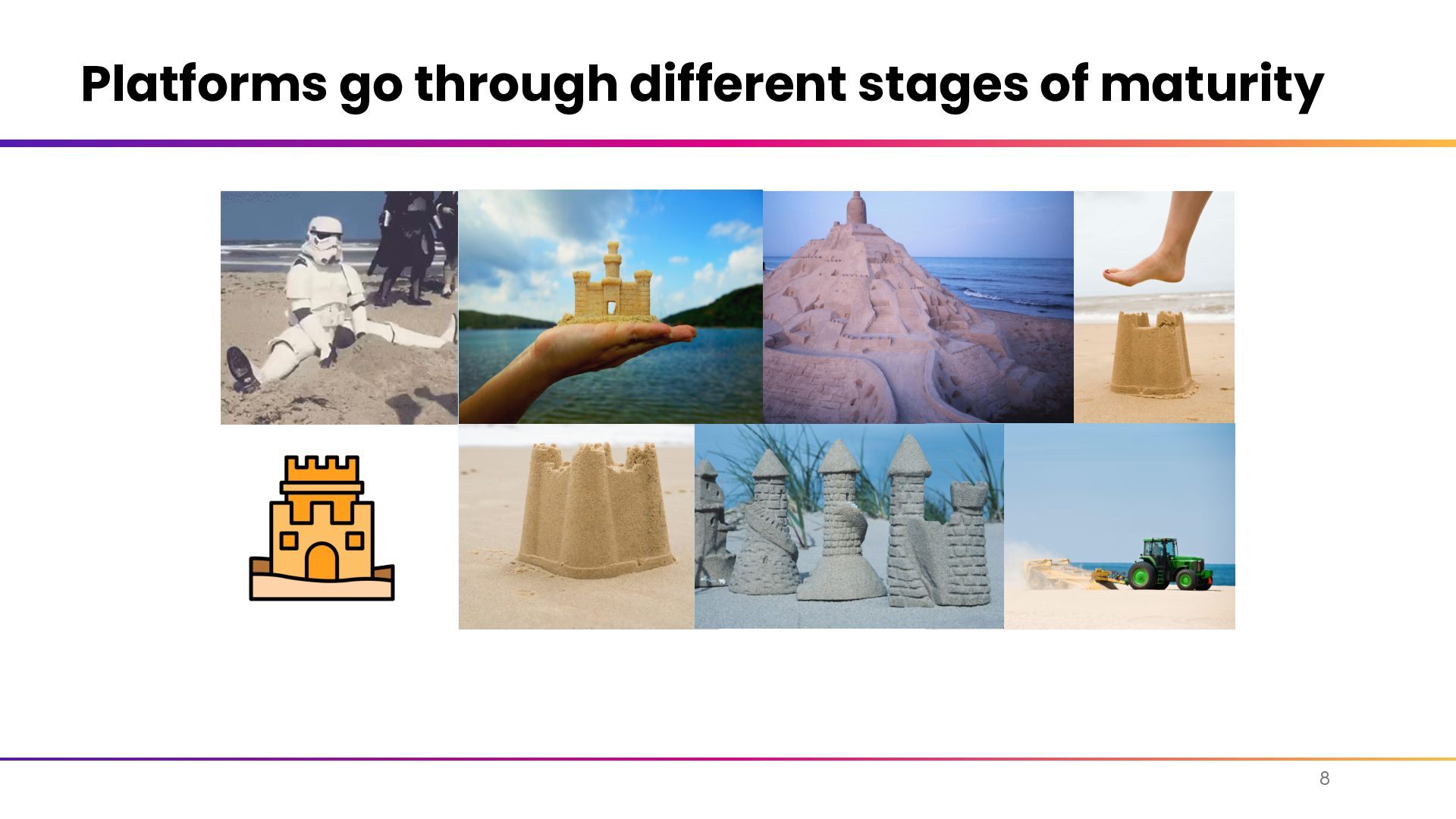
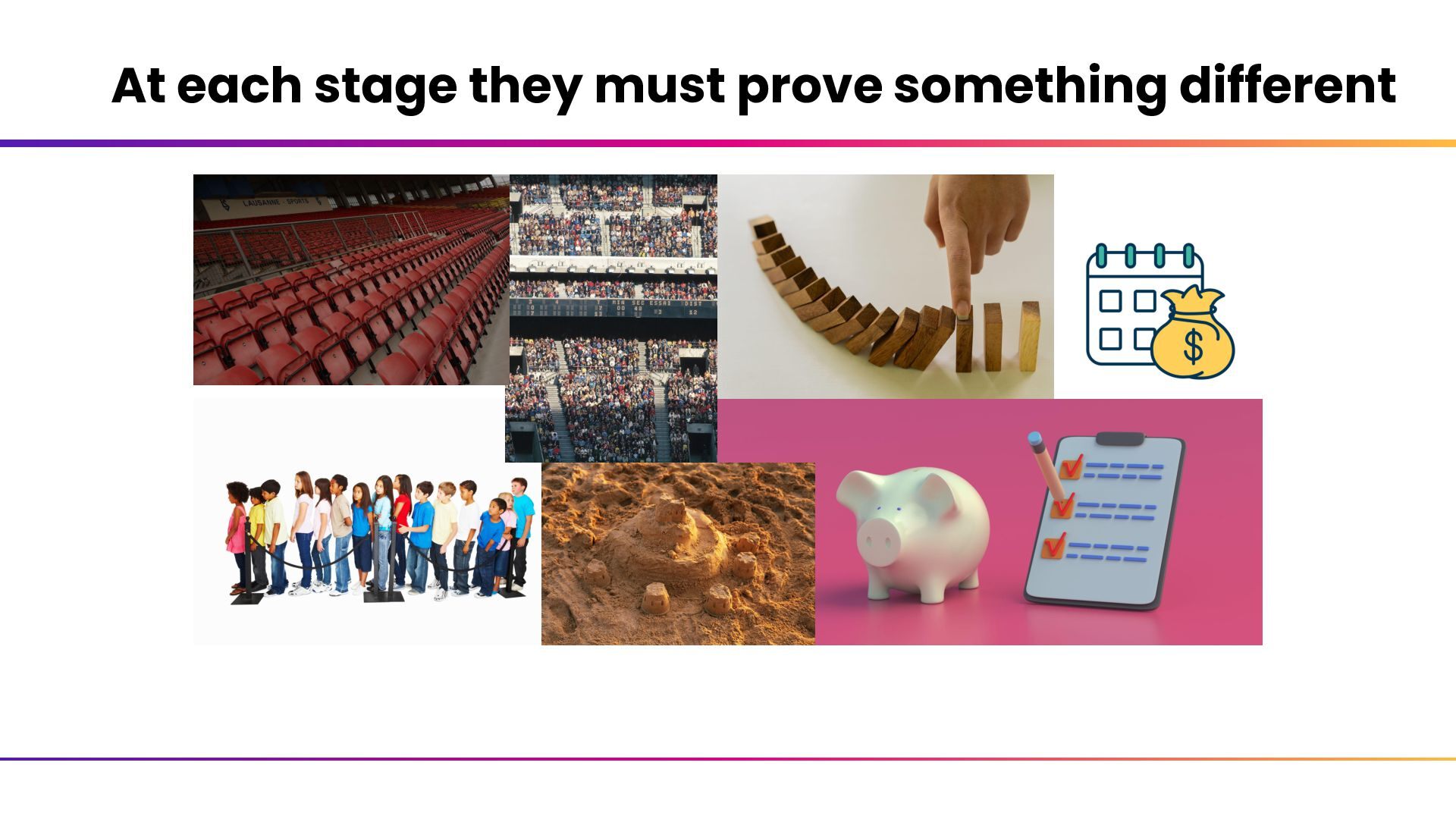
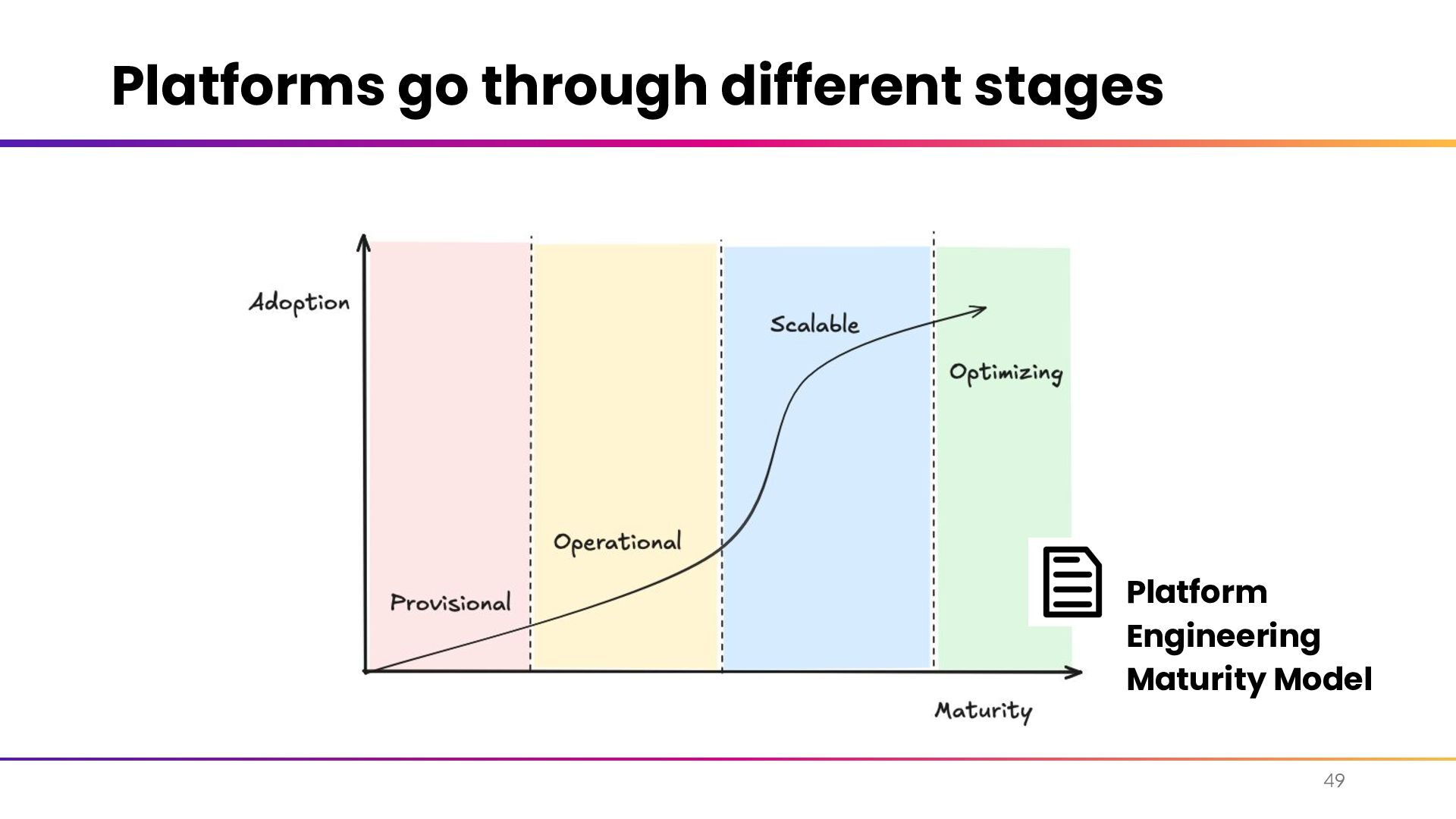
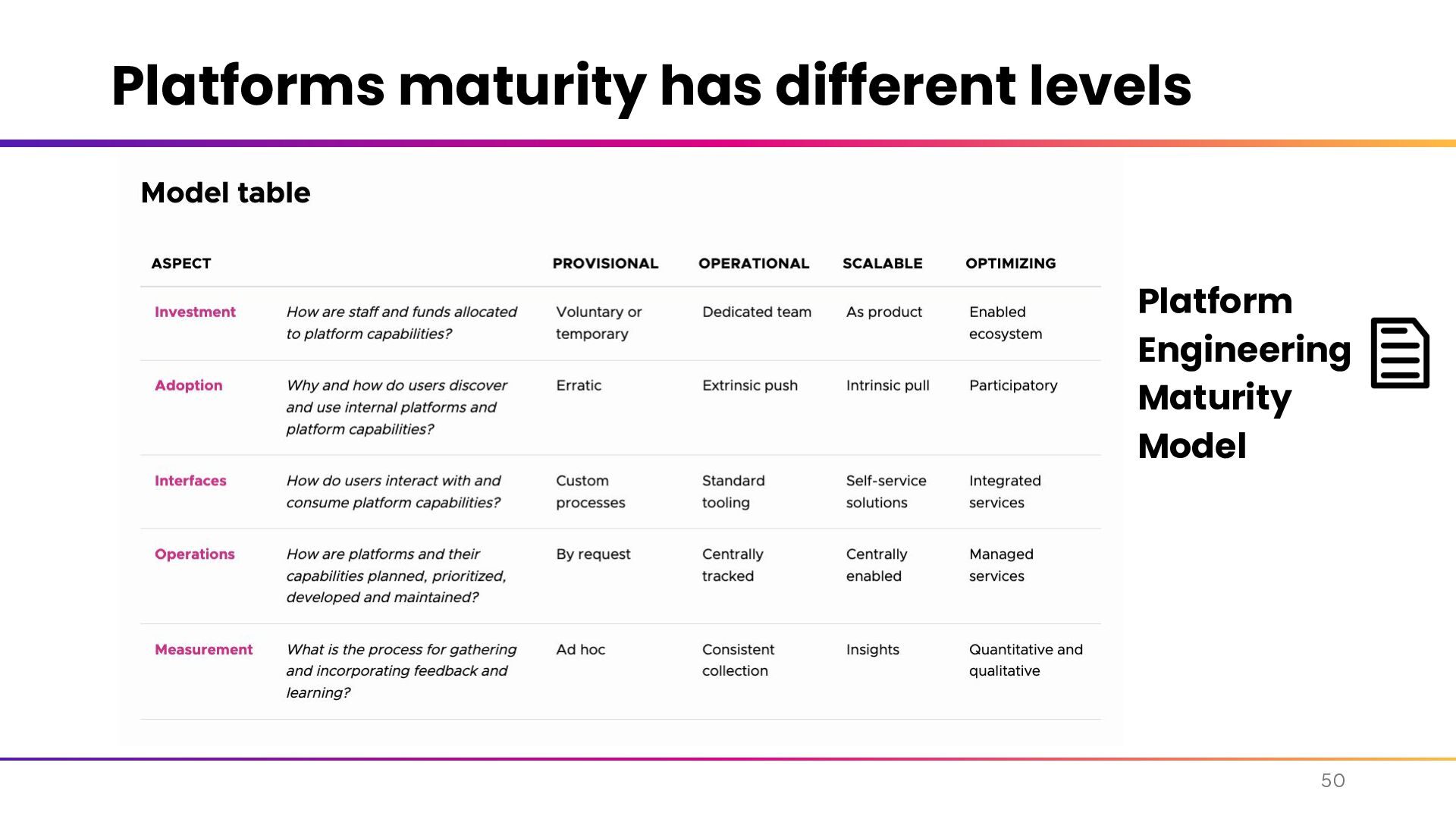
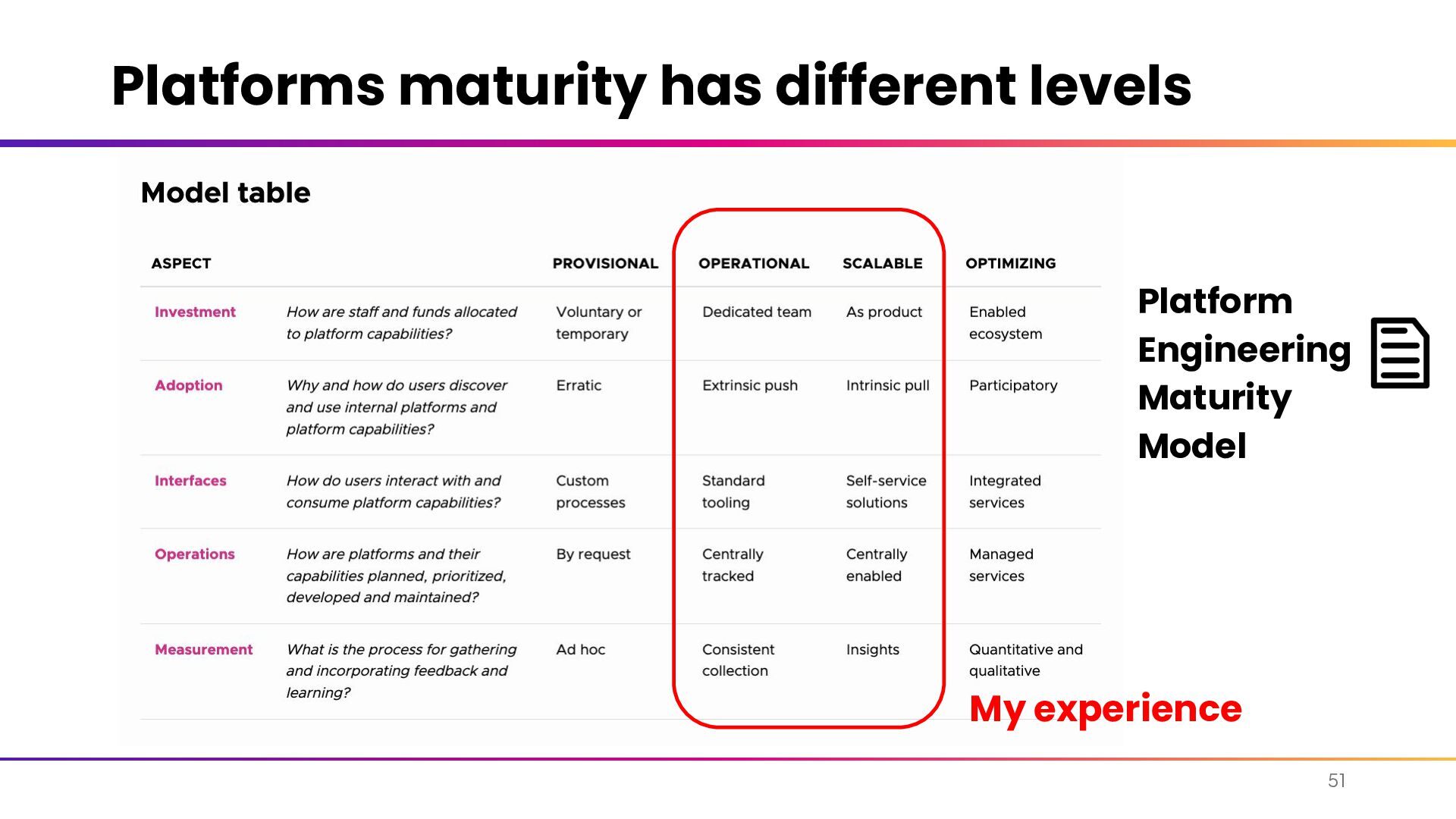
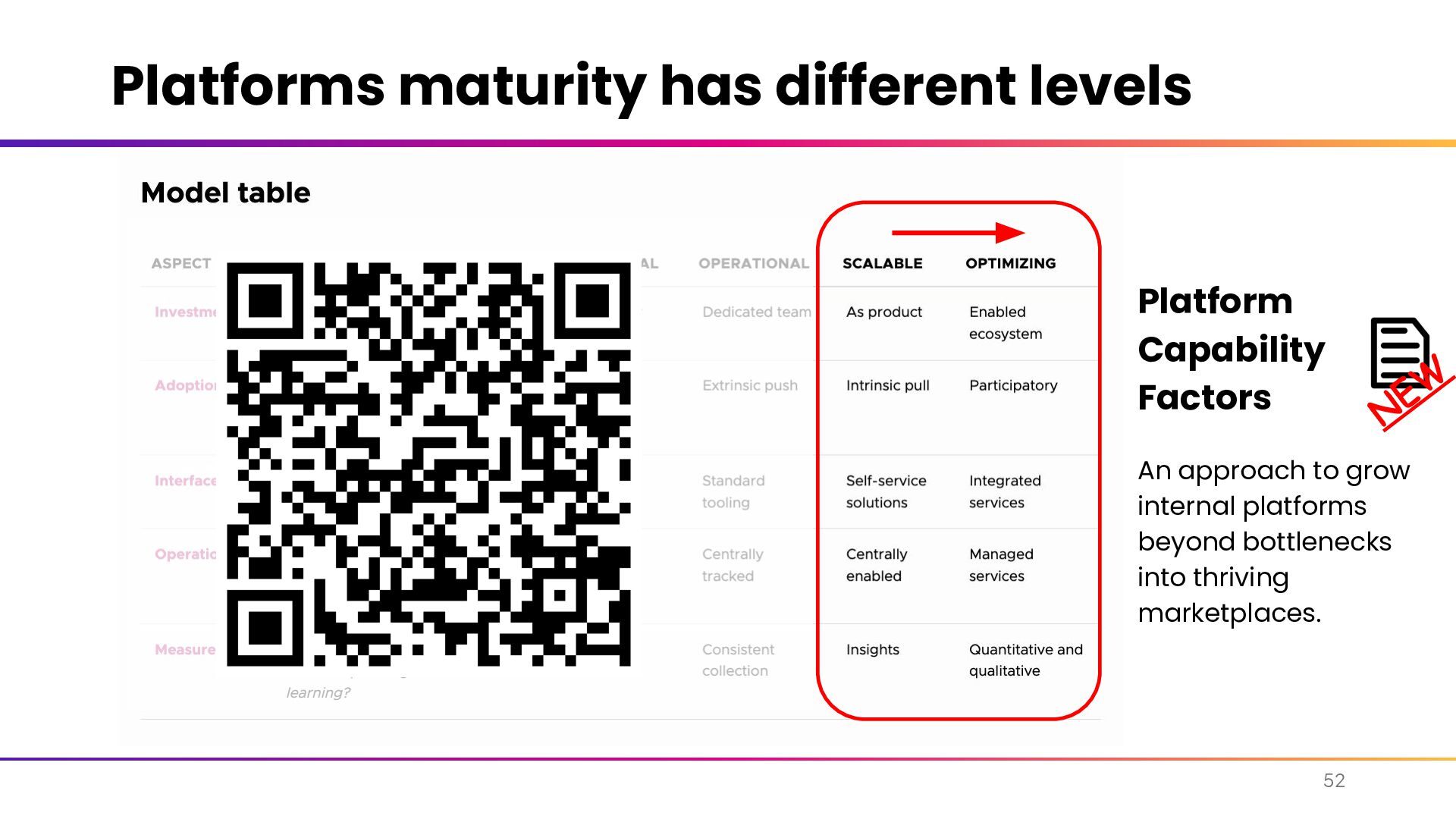
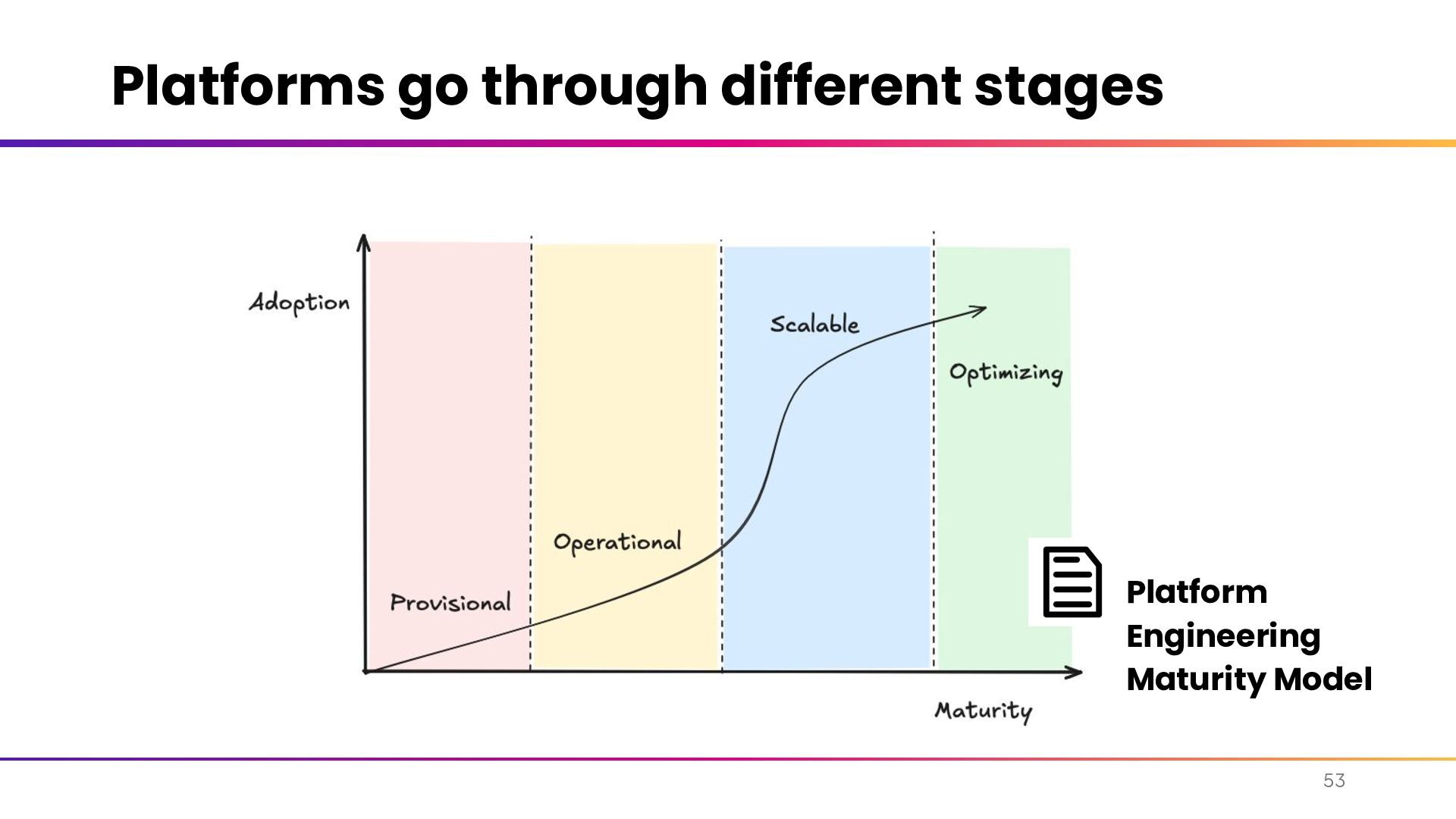
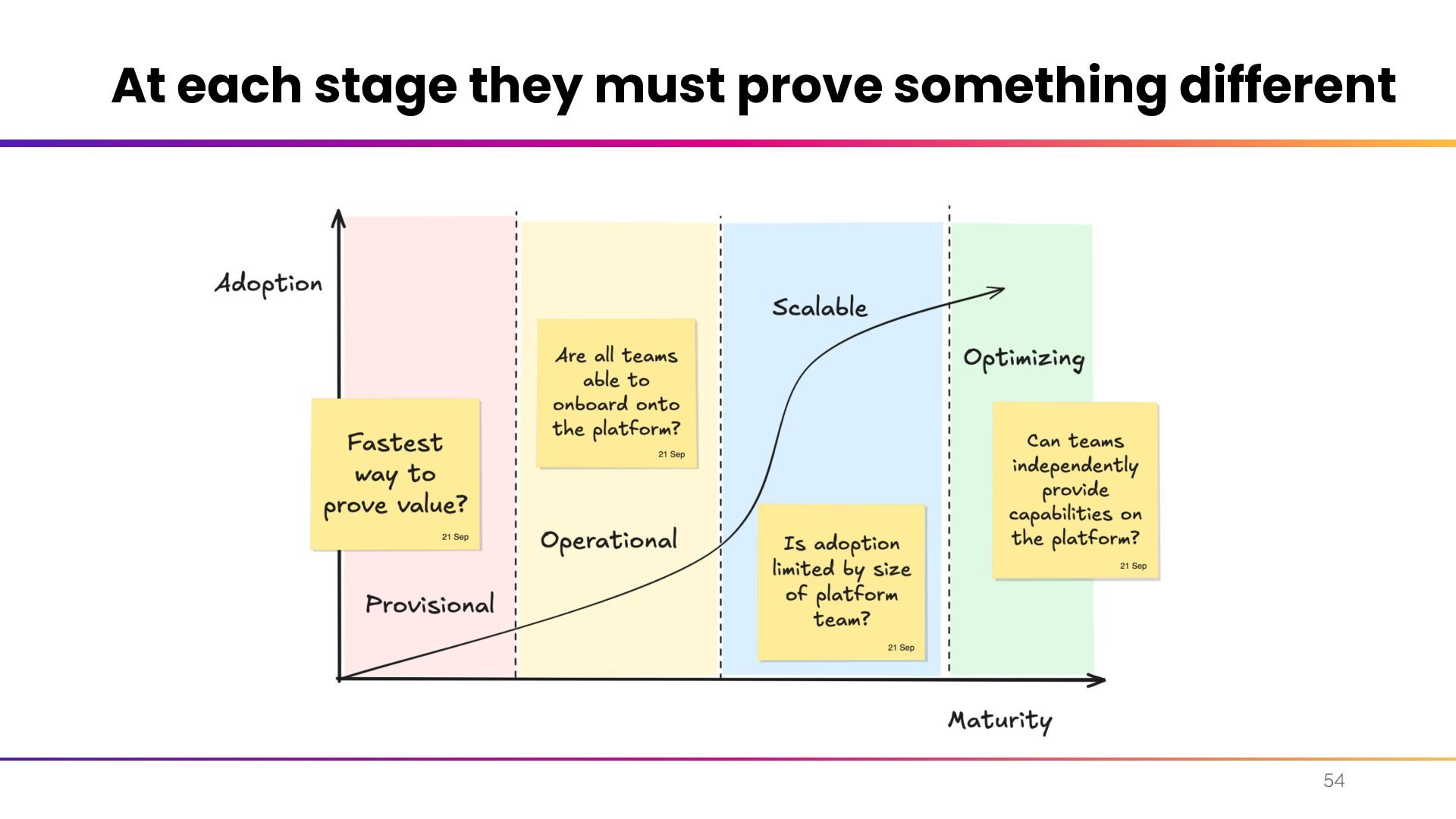
  24. Platforms maturity has different levels Platform Capability Factors W E

    N An approach to grow internal platforms beyond bottlenecks into thriving marketplaces. 52
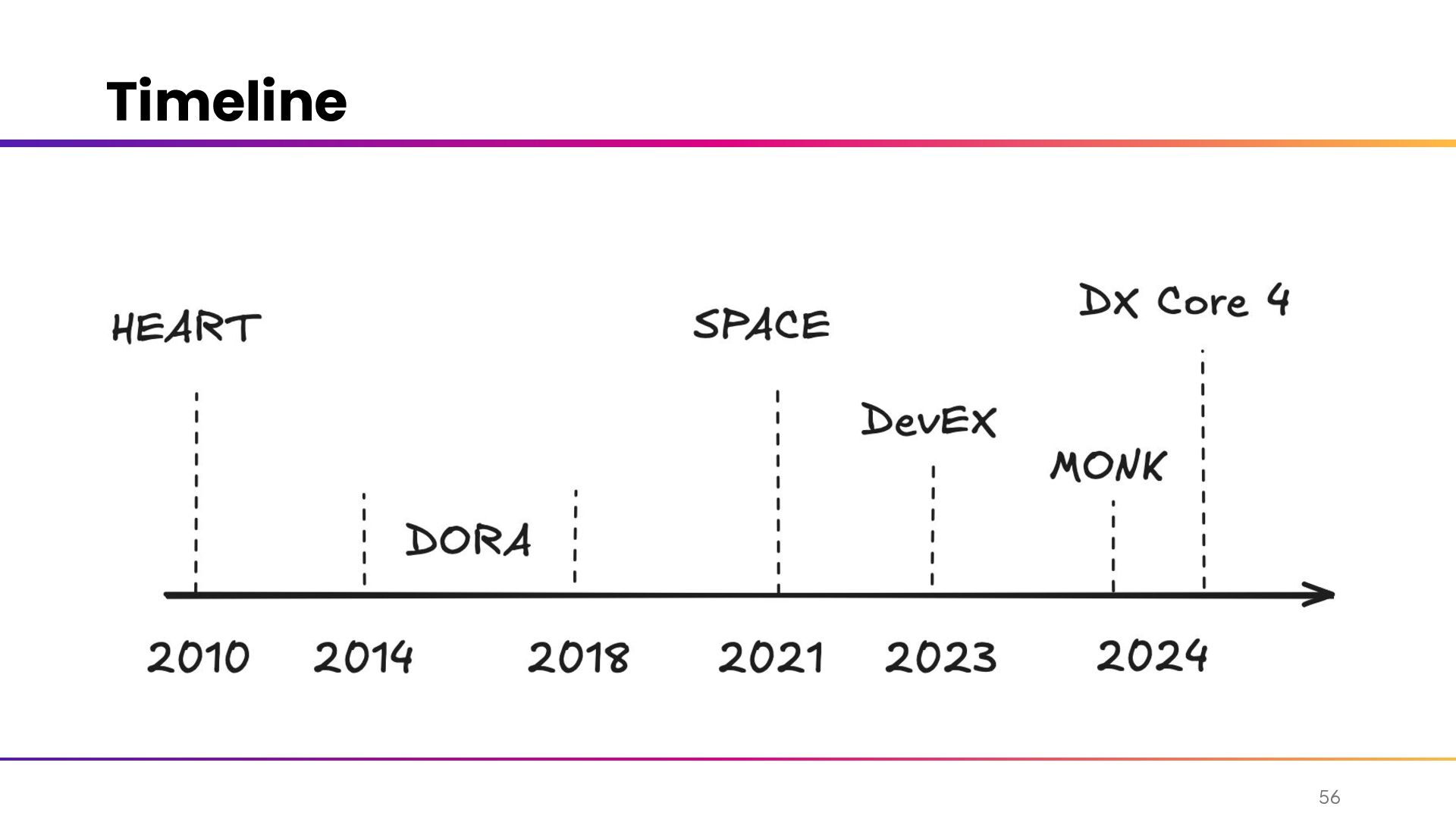
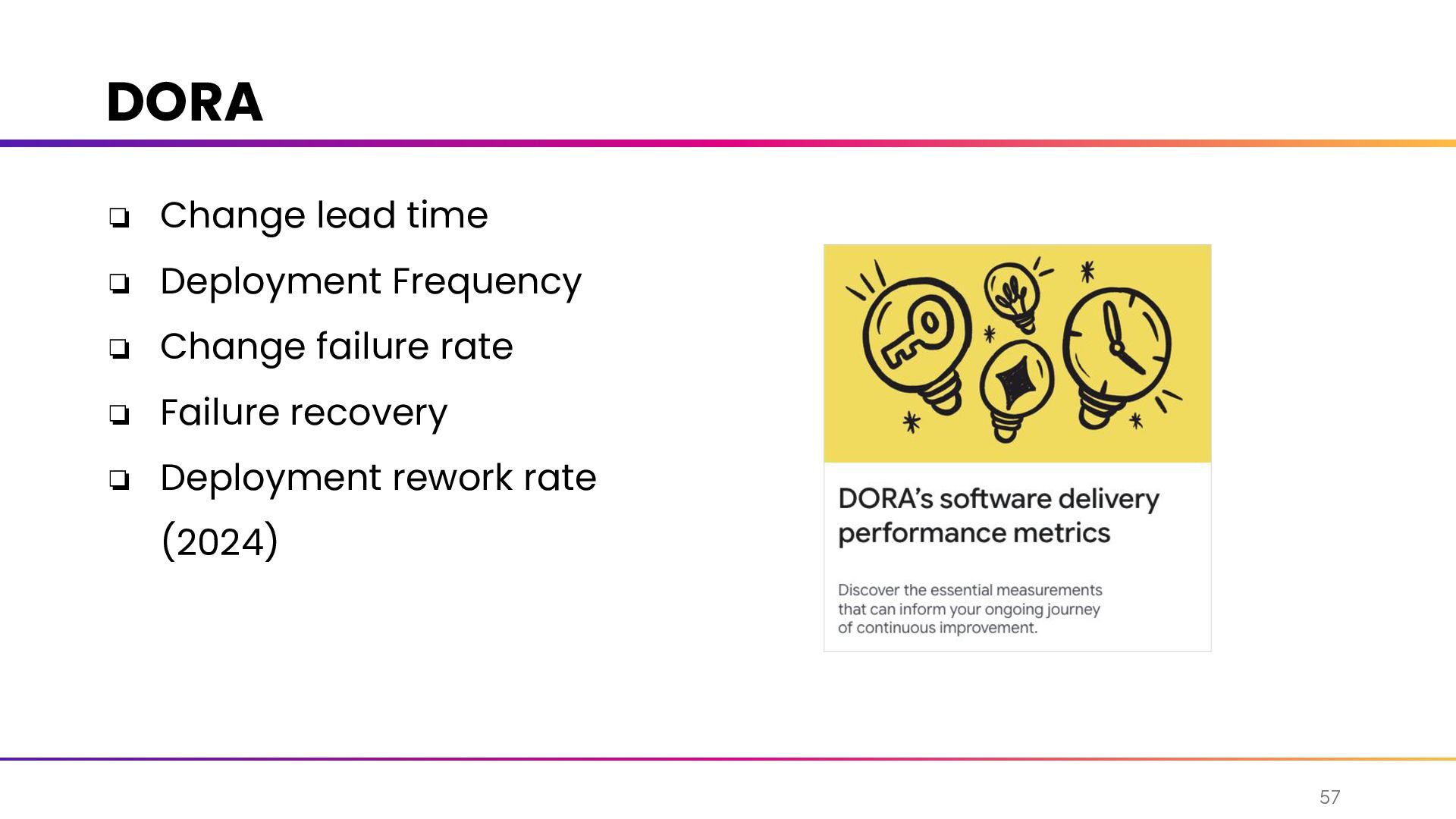
  25. DORA ❏ Change lead time ❏ Deployment Frequency ❏ Change

    failure rate ❏ Failure recovery ❏ Deployment rework rate (2024) 57
  26. DORA ❏ Change lead time ❏ Deployment Frequency ❏ Change

    failure rate ❏ Failure recovery ❏ Deployment rework rate (2024) Software delivery 58
  27. SPACE ❏ Satisfaction & Well-being ❏ Performance ❏ Activity ❏

    Communication & Collaboration ❏ Efficiency & Flow Developer Productivity 59
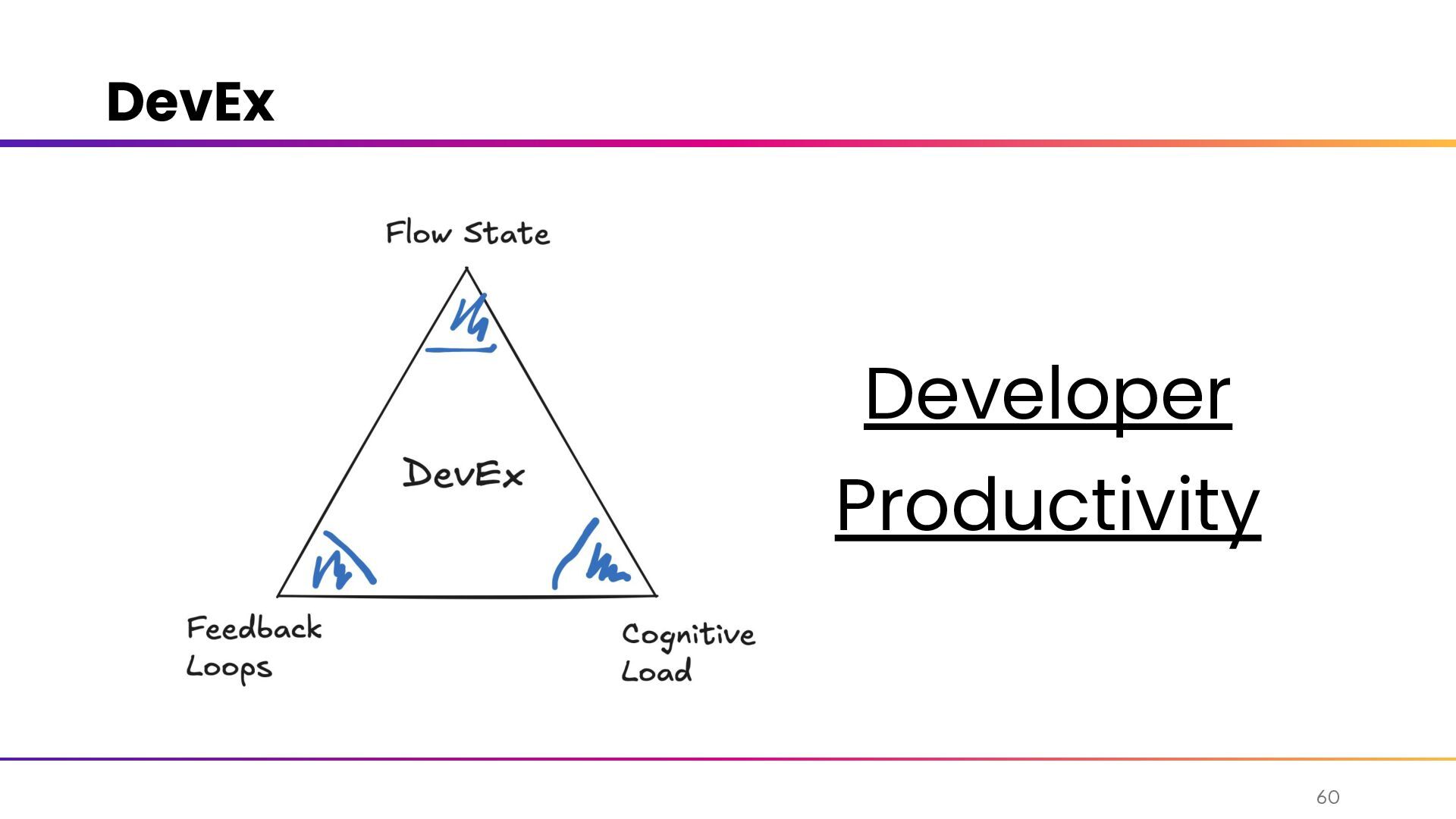
  28. DX Core 4 (Dora + Space + DevEx) ❏ Speed

    ❏ Effectiveness ❏ Quality ❏ Impact Developer Productivity 61
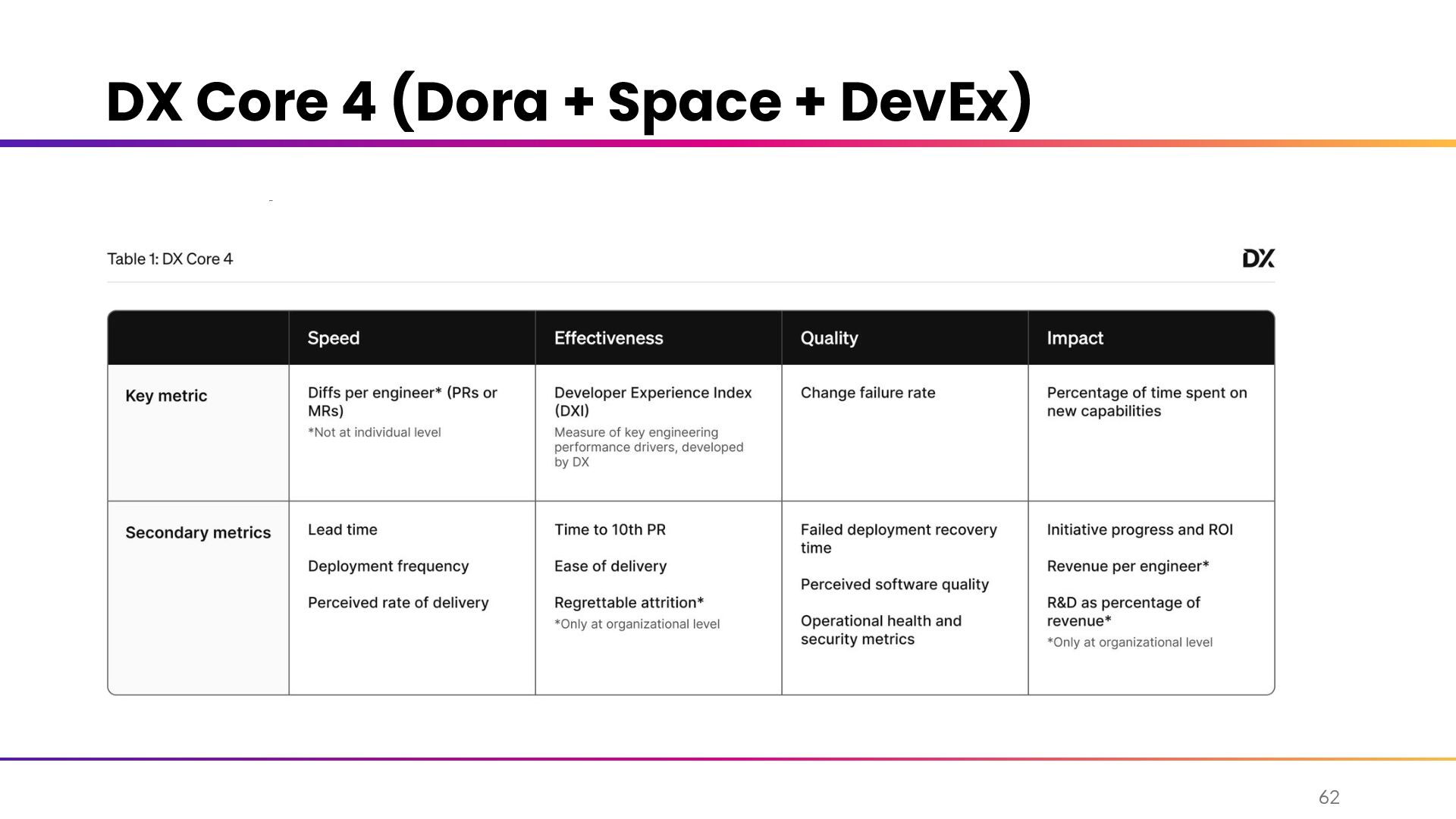
  29. DX Core 4 (Dora + Space + DevEx) ❏ Speed

    ❏ Effectiveness ❏ Quality ❏ Impact Developer Productivity 62
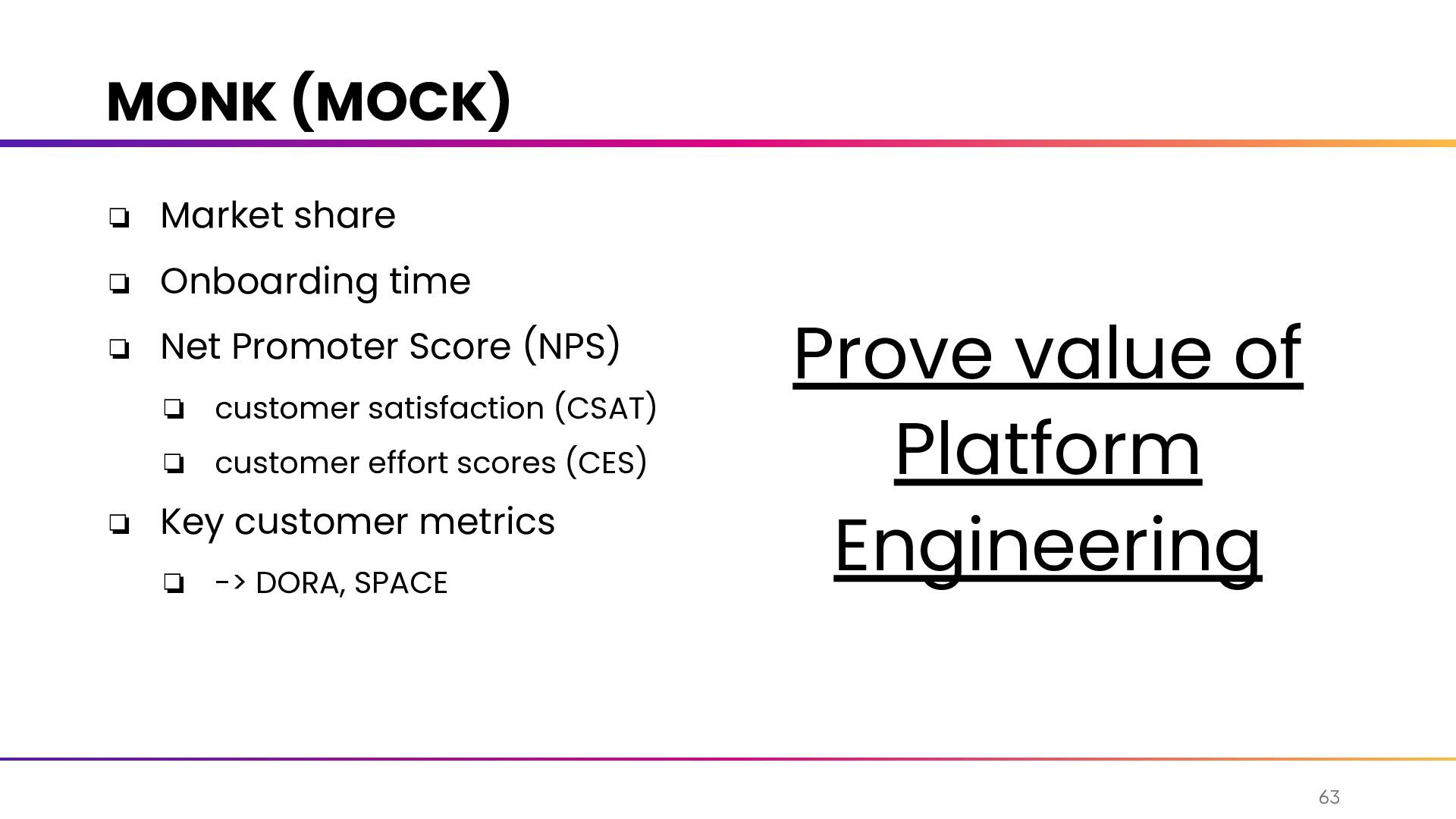
  30. MONK (MOCK) ❏ Market share ❏ Onboarding time ❏ Net

    Promoter Score (NPS) ❏ customer satisfaction (CSAT) ❏ customer effort scores (CES) ❏ Key customer metrics ❏ -> DORA, SPACE Prove value of Platform Engineering 63
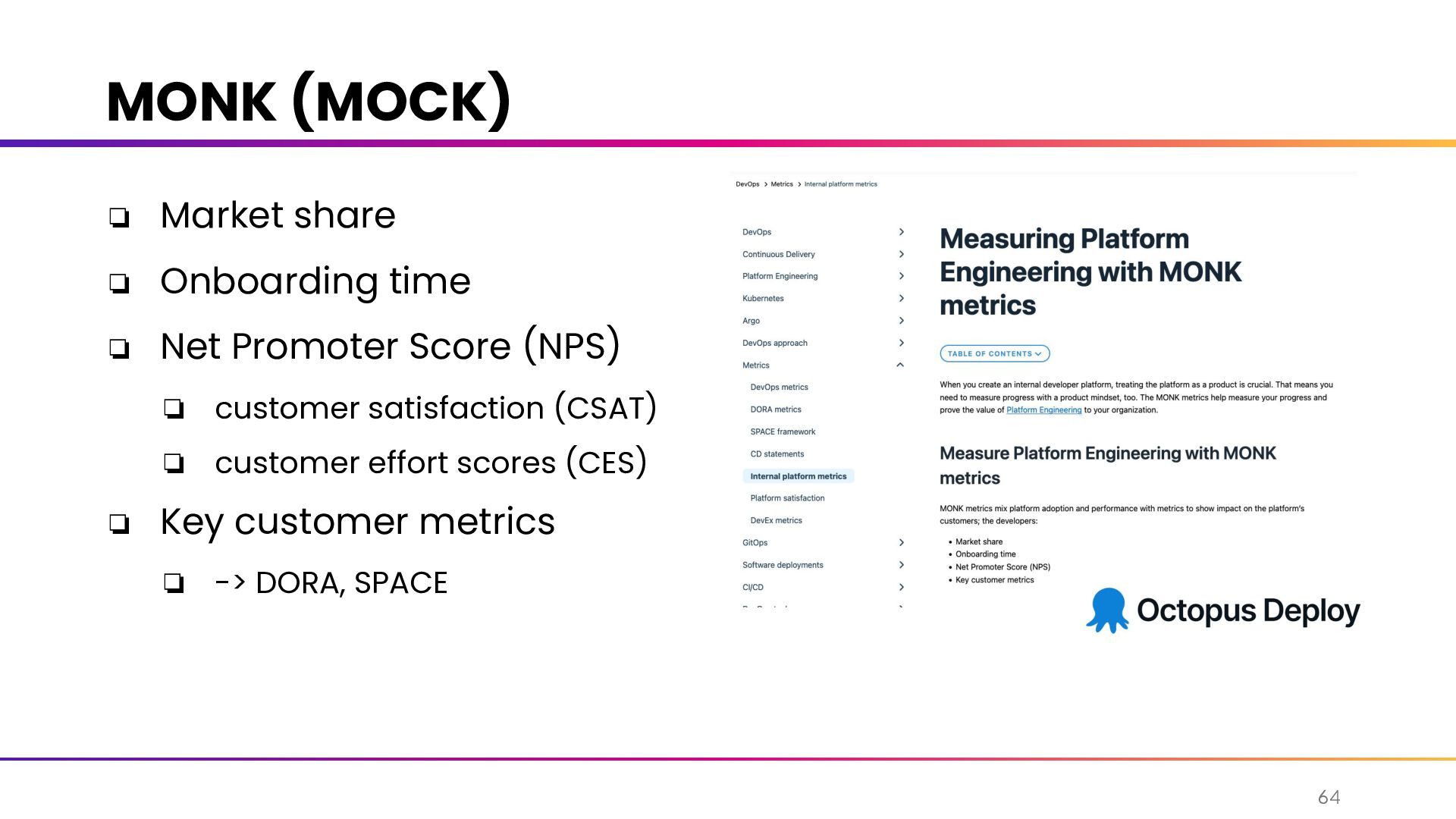
  31. MONK (MOCK) ❏ Market share ❏ Onboarding time ❏ Net

    Promoter Score (NPS) ❏ customer satisfaction (CSAT) ❏ customer effort scores (CES) ❏ Key customer metrics Measure progress to prove the value of Platform Engineering to your Organization ❏ -> DORA, SPACE 64
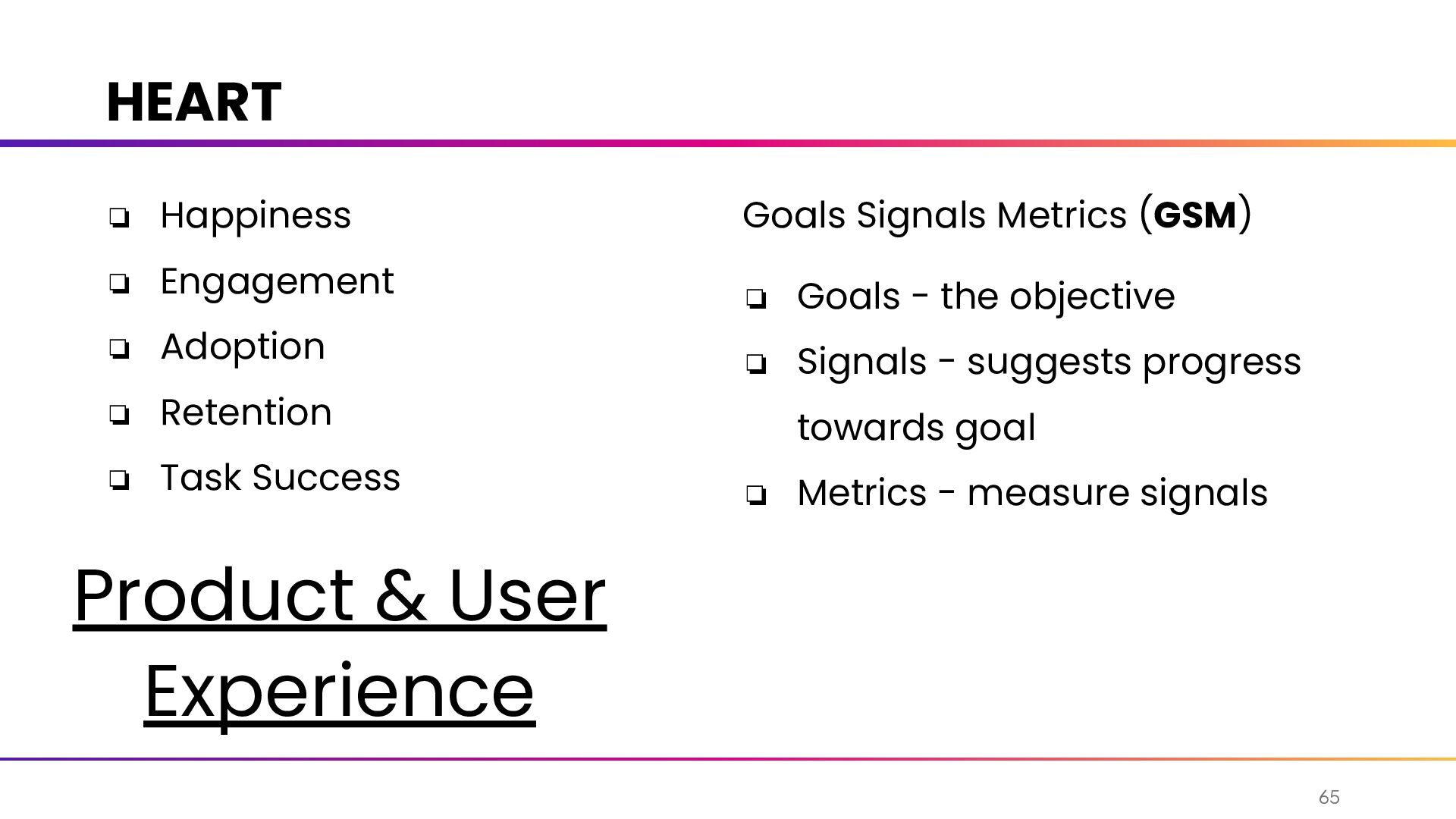
  32. HEART ❏ Happiness Goals Signals Metrics (GSM) ❏ Engagement ❏

    ❏ Adoption Goals - the objective ❏ ❏ Retention Signals - suggests progress ❏ Task Success towards goal ❏ Metrics - measure signals Product & User Experience 65
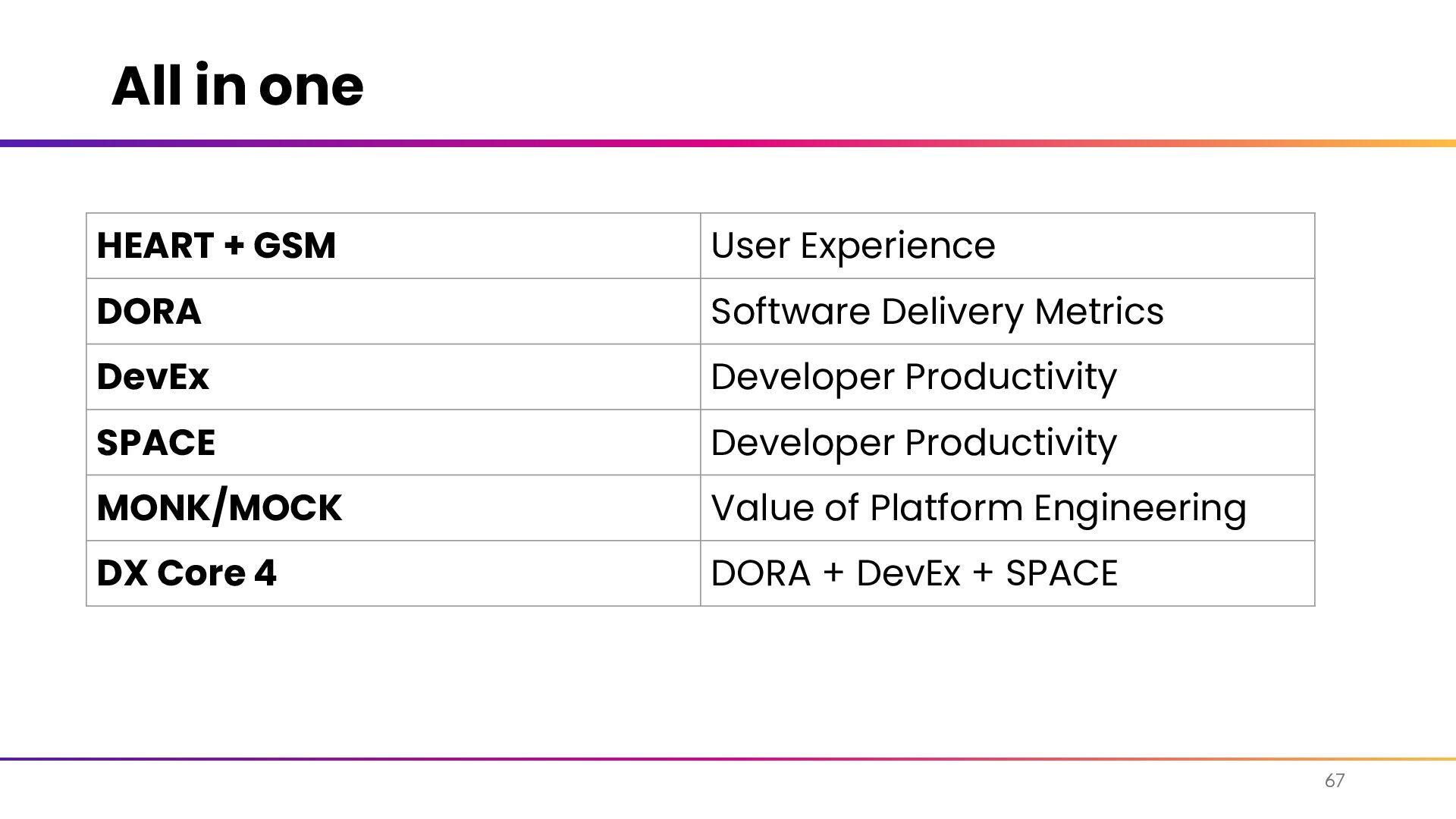
  33. All in one HEART + GSM User Experience DORA Software

    Delivery Metrics DevEx Developer Productivity SPACE Developer Productivity MONK/MOCK Value of Platform Engineering DX Core 4 DORA + DevEx + SPACE 67
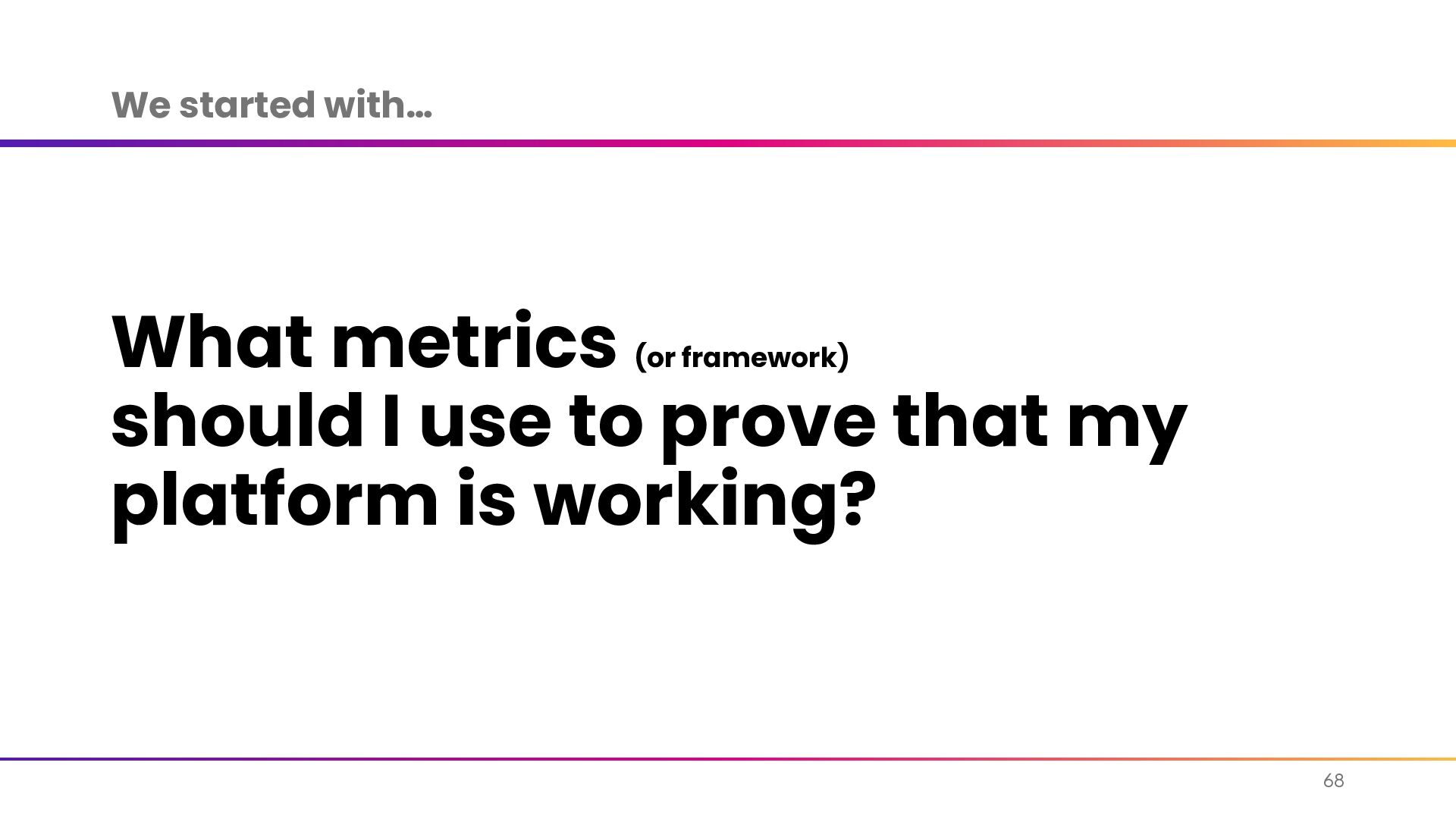
  34. We started with… What metrics should I use to prove

    that my platform is working? (or framework) 68
  35. The 2 Ways to look at metrics 1⃣ - Metrics

    are used to provide evidence to inform decisions 70
  36. The 2 Ways to look at metrics 2⃣ - We

    use metrics to feel good 71
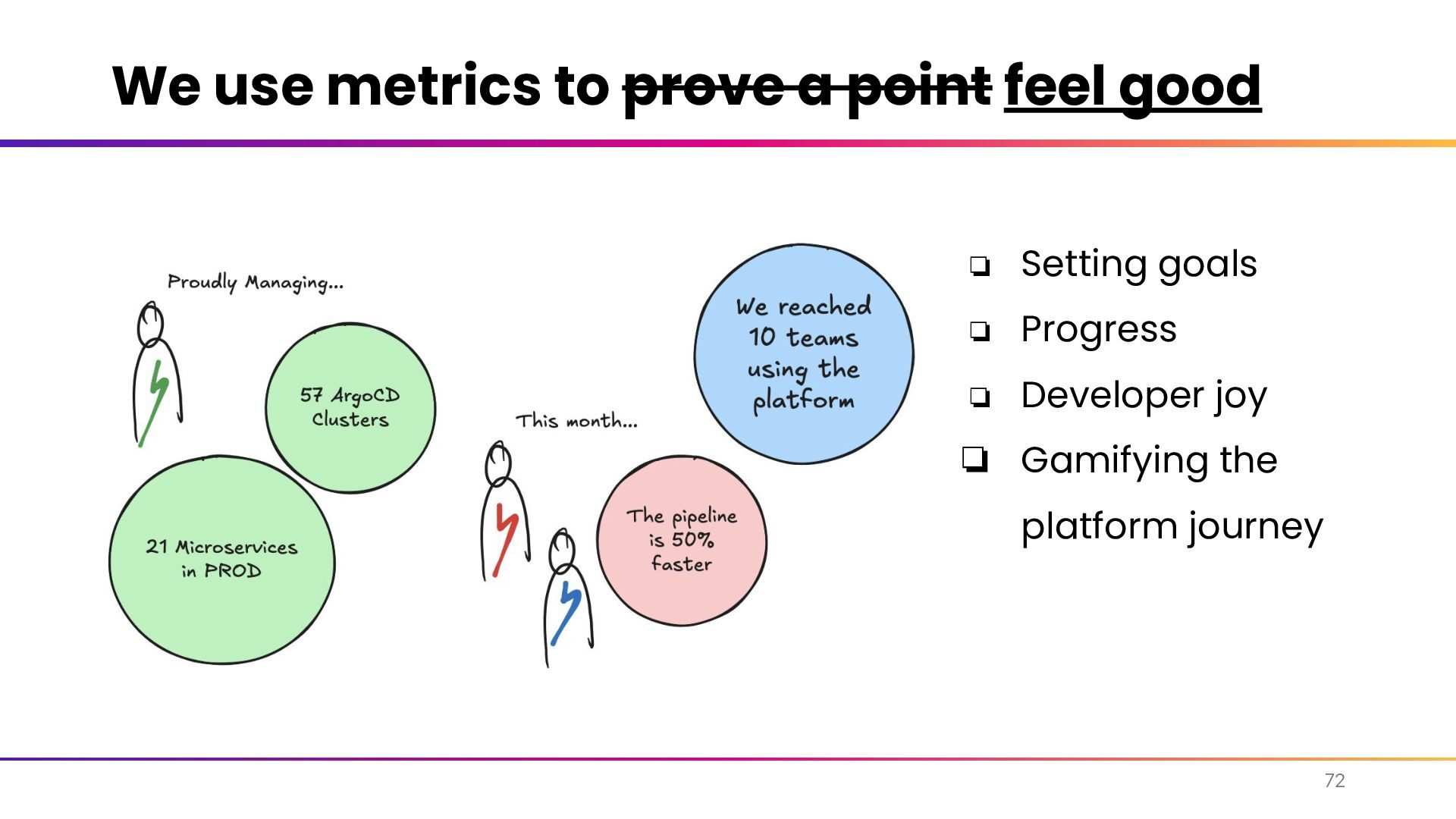
  37. We use metrics to prove a point feel good ❏

    Setting goals ❏ Progress ❏ Developer joy ❏ Gamifying the platform journey 72
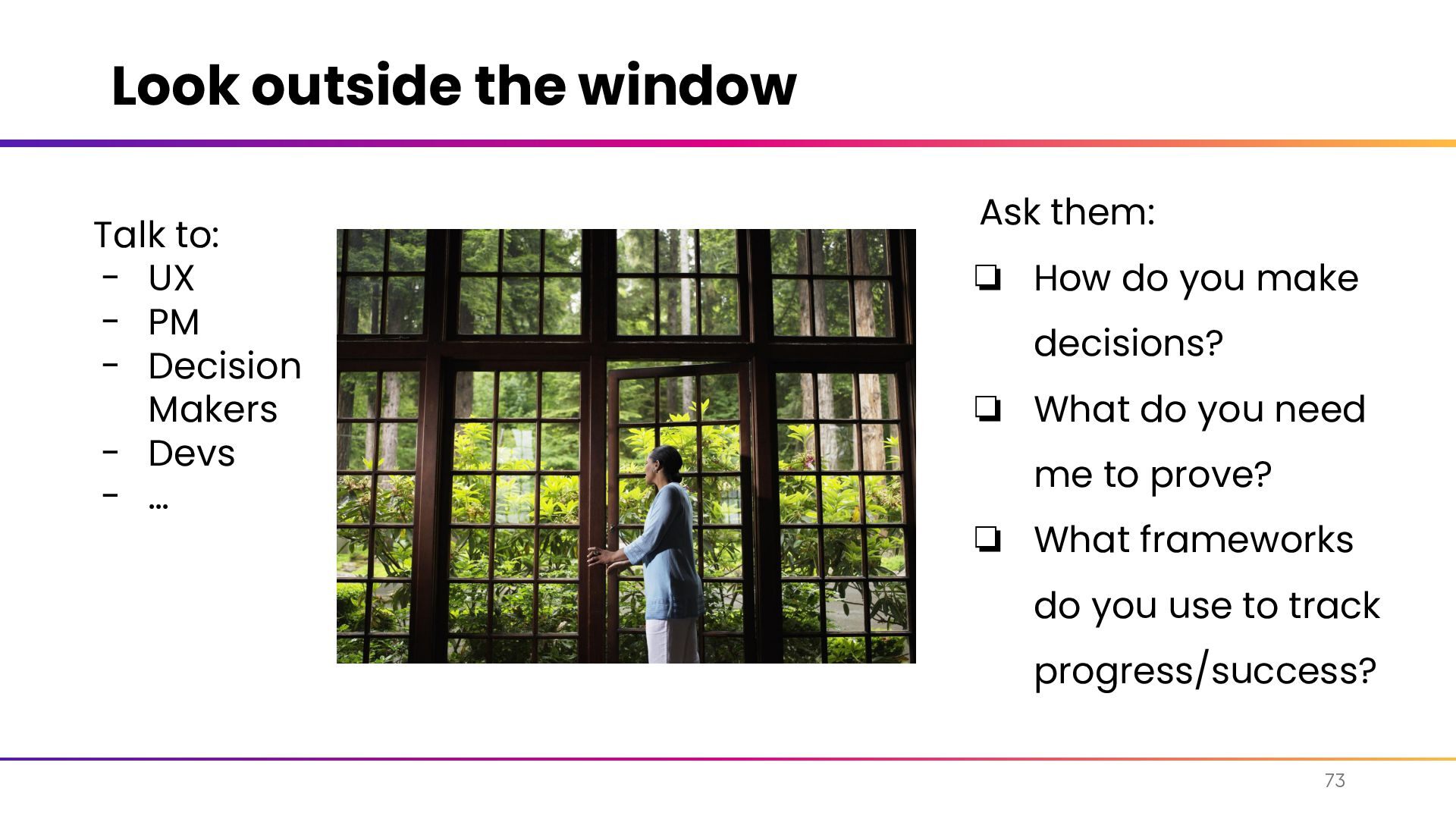
  38. Look outside the window Talk to: - UX - PM

    - Decision Makers - Devs - … Ask them: ❏ How do you make decisions? ❏ What do you need me to prove? ❏ What frameworks do you use to track progress/success? 73
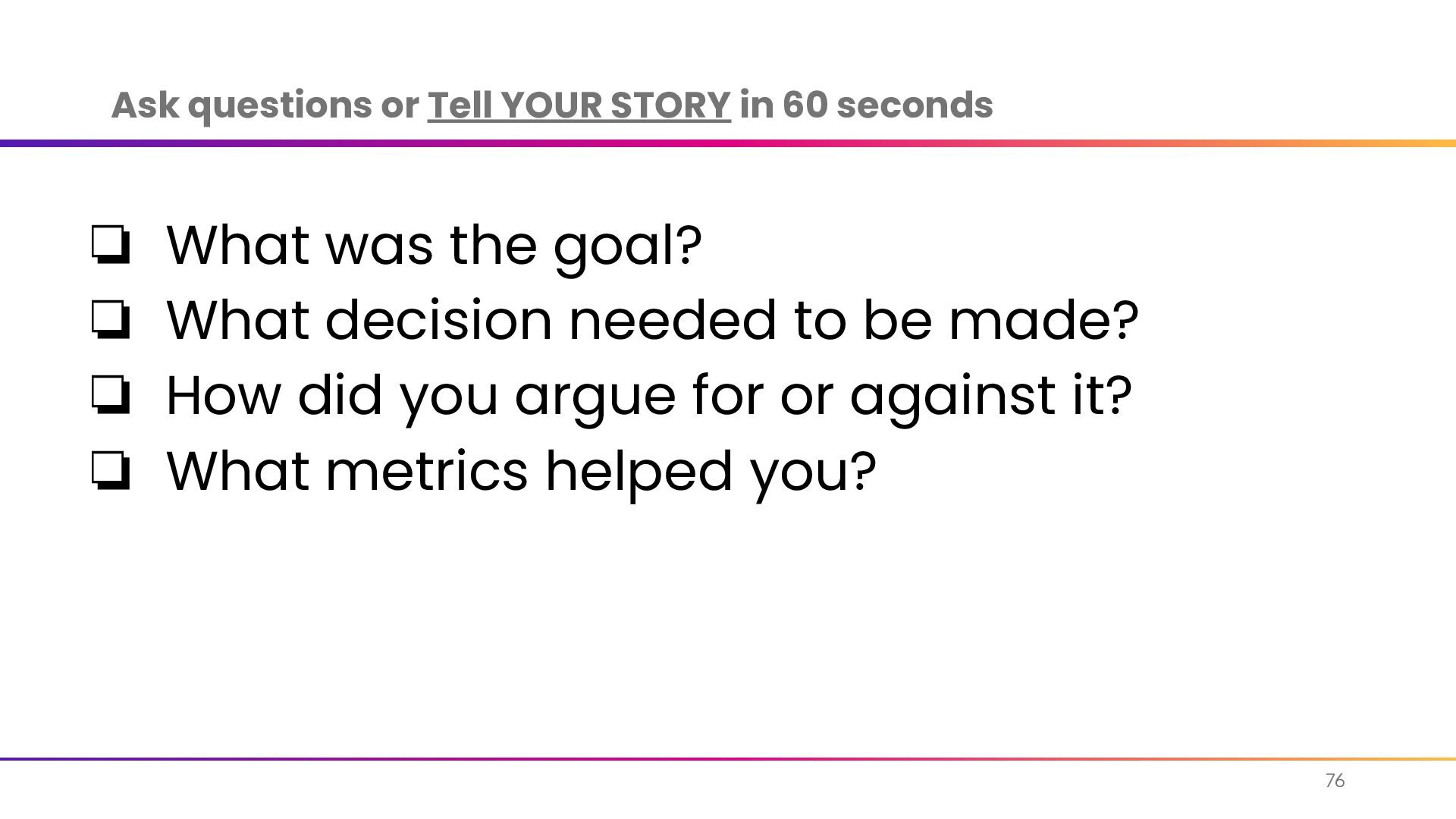
  39. Ask questions or Tell YOUR STORY in 60 seconds ❏

    What was the goal? ❏ What decision needed to be made? ❏ How did you argue for or against it? ❏ What metrics helped you? 76
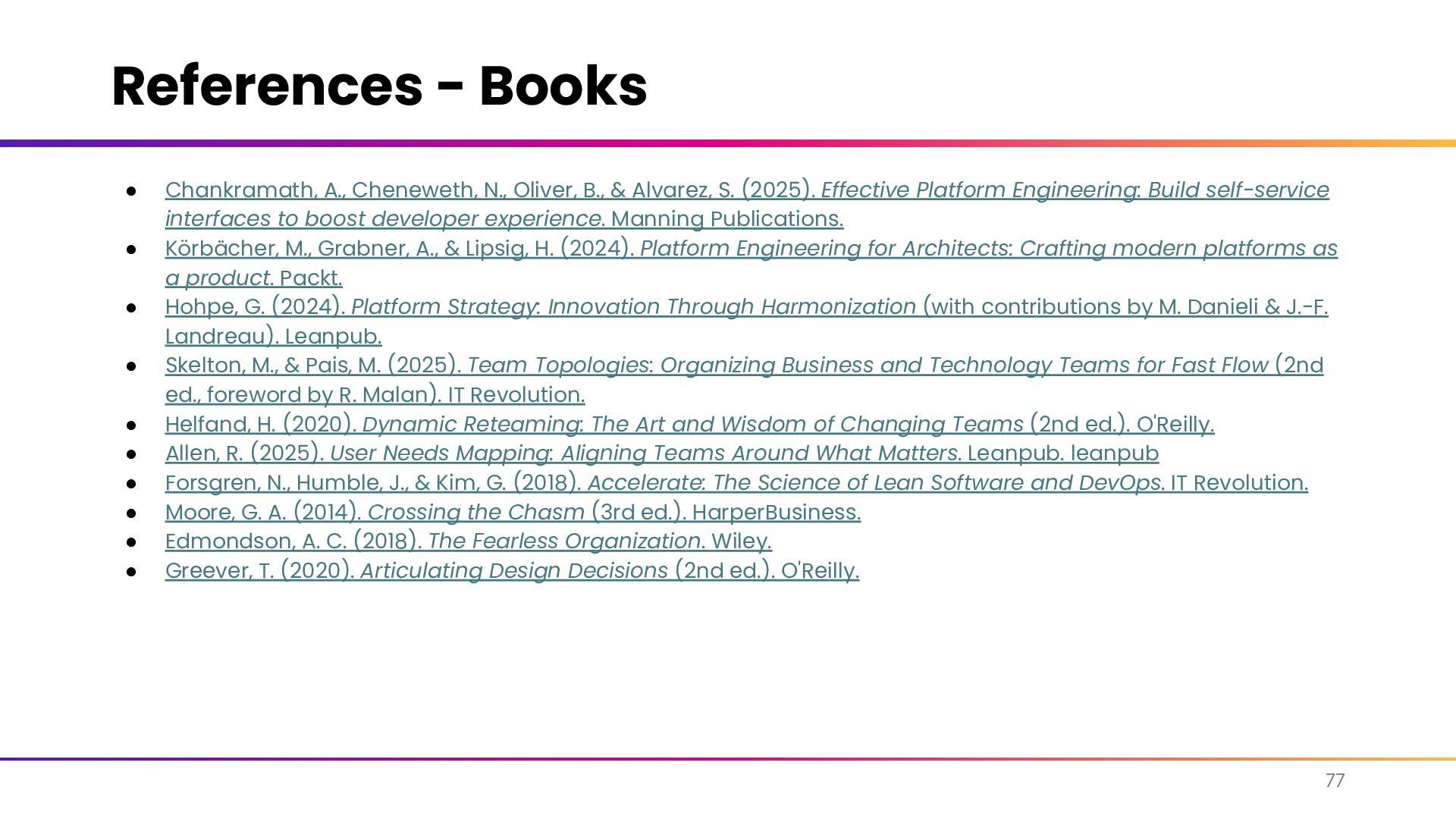
  40. References - Books • • • • • • •

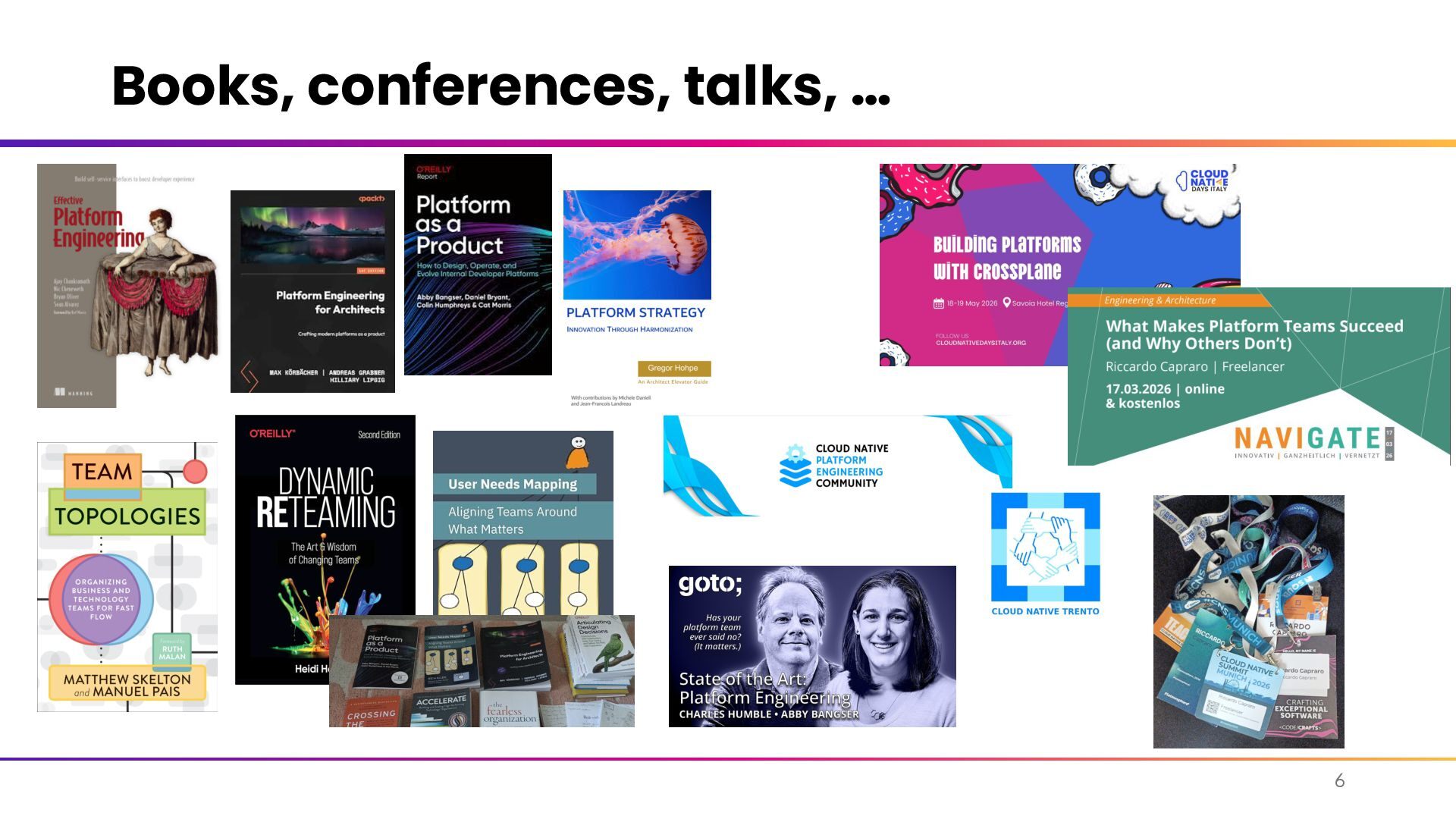
    • • • Chankramath, A., Cheneweth, N., Oliver, B., & Alvarez, S. (2025). Effective Platform Engineering: Build self-service interfaces to boost developer experience. Manning Publications. Körbächer, M., Grabner, A., & Lipsig, H. (2024). Platform Engineering for Architects: Crafting modern platforms as a product. Packt. Hohpe, G. (2024). Platform Strategy: Innovation Through Harmonization (with contributions by M. Danieli & J.-F. Landreau). Leanpub. Skelton, M., & Pais, M. (2025). Team Topologies: Organizing Business and Technology Teams for Fast Flow (2nd ed., foreword by R. Malan). IT Revolution. Helfand, H. (2020). Dynamic Reteaming: The Art and Wisdom of Changing Teams (2nd ed.). O'Reilly. Allen, R. (2025). User Needs Mapping: Aligning Teams Around What Matters. Leanpub. leanpub Forsgren, N., Humble, J., & Kim, G. (2018). Accelerate: The Science of Lean Software and DevOps. IT Revolution. Moore, G. A. (2014). Crossing the Chasm (3rd ed.). HarperBusiness. Edmondson, A. C. (2018). The Fearless Organization. Wiley. Greever, T. (2020). Articulating Design Decisions (2nd ed.). O'Reilly. 77
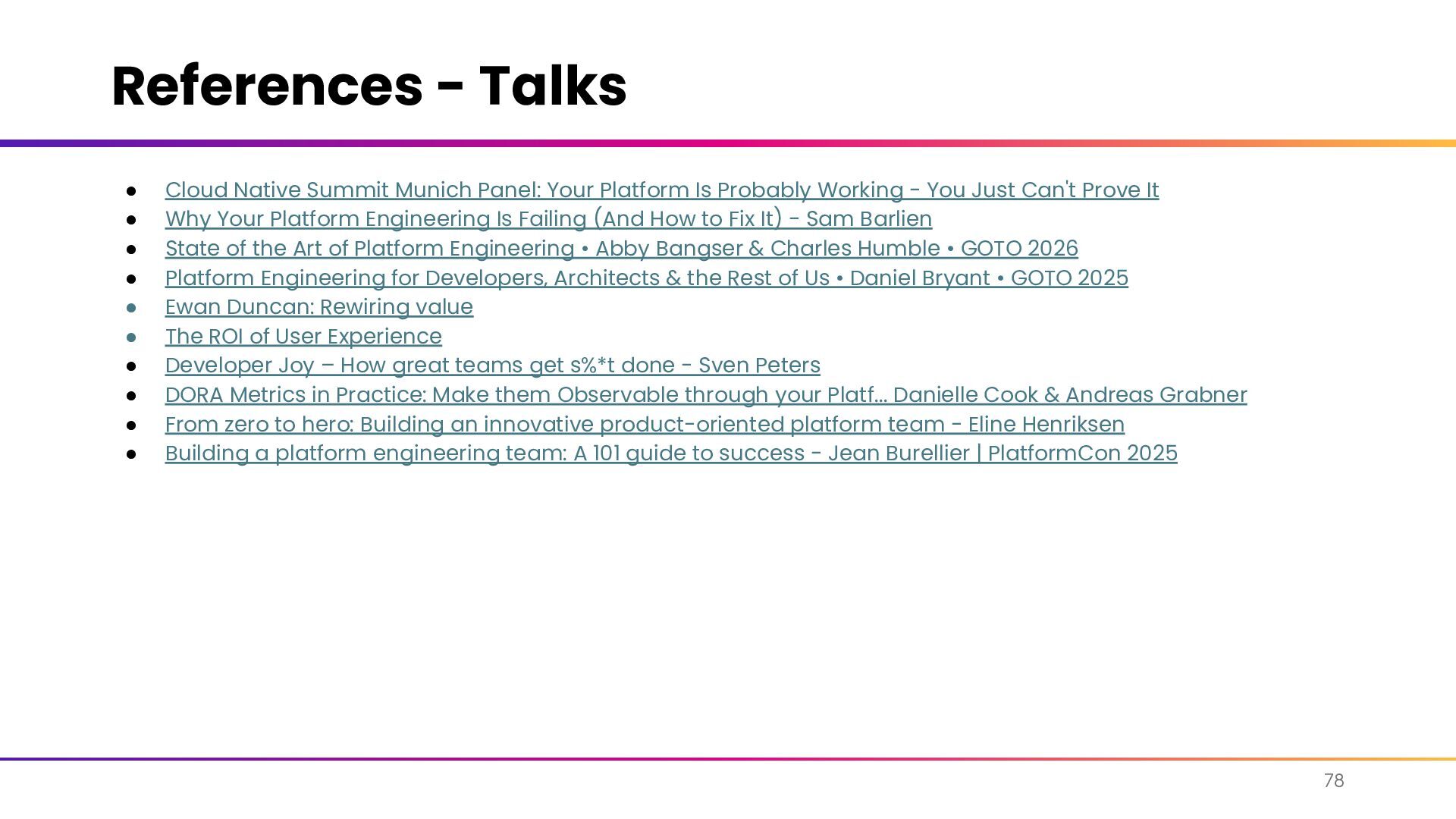
  41. References - Talks • • • • • • •

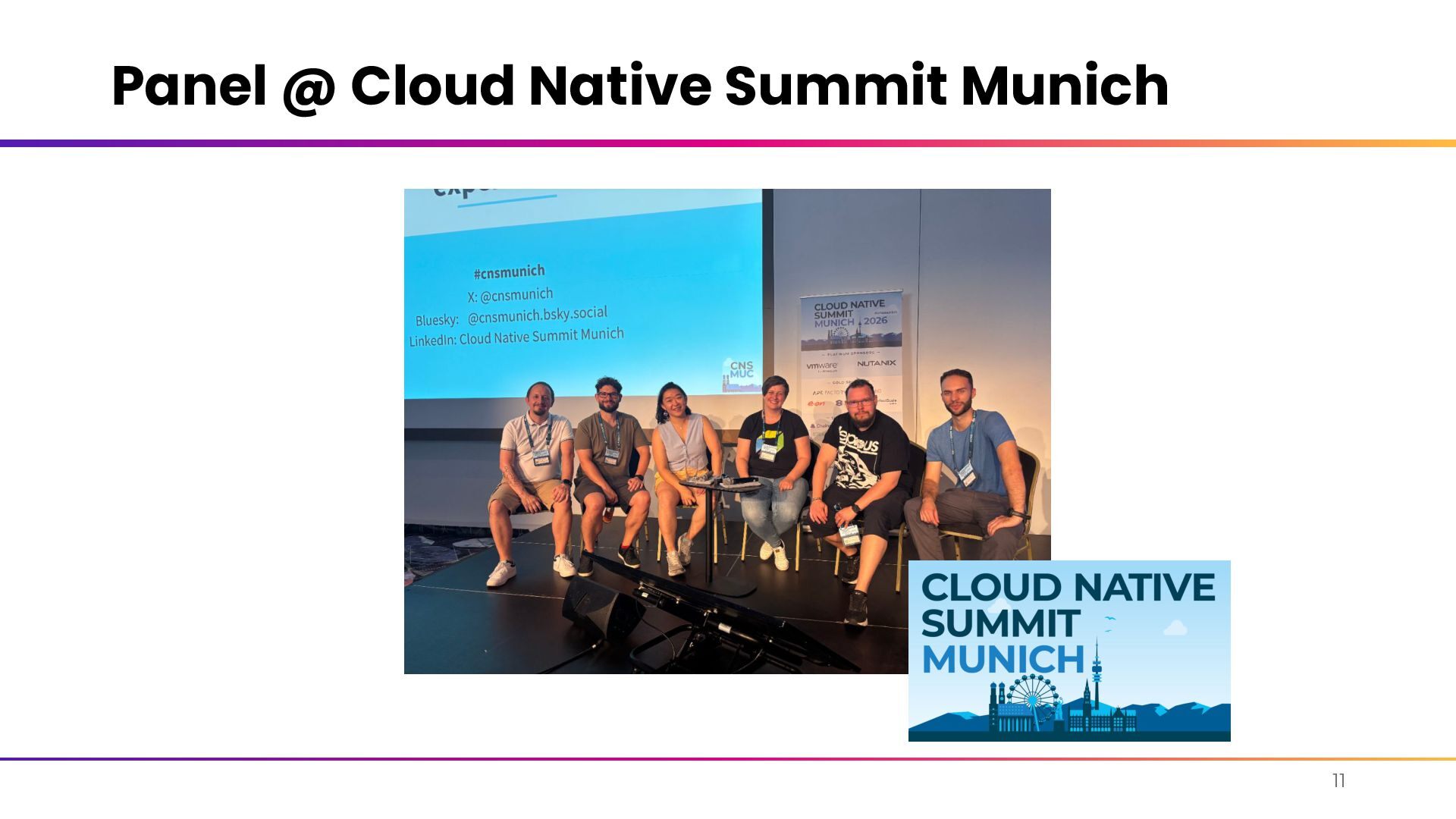
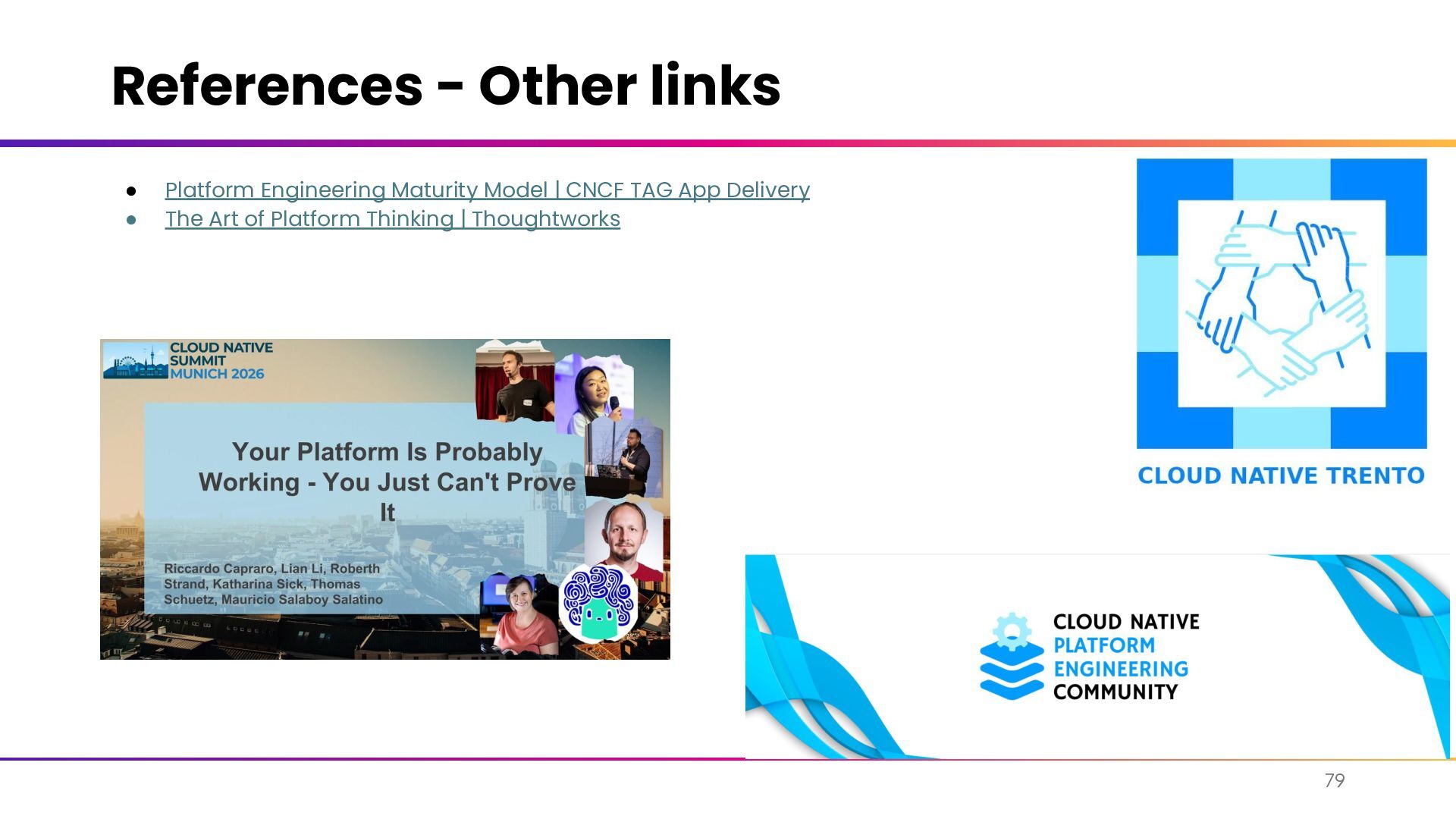
    • • • Cloud Native Summit Munich Panel: Your Platform Is Probably Working - You Just Can't Prove It Why Your Platform Engineering Is Failing (And How to Fix It) - Sam Barlien State of the Art of Platform Engineering • Abby Bangser & Charles Humble • GOTO 2026 Platform Engineering for Developers, Architects & the Rest of Us • Daniel Bryant • GOTO 2025 Ewan Duncan: Rewiring value The ROI of User Experience Developer Joy – How great teams get s%*t done - Sven Peters DORA Metrics in Practice: Make them Observable through your Platf... Danielle Cook & Andreas Grabner From zero to hero: Building an innovative product-oriented platform team - Eline Henriksen Building a platform engineering team: A 101 guide to success - Jean Burellier | PlatformCon 2025 78
  42. References - Other links • • Platform Engineering Maturity Model

    | CNCF TAG App Delivery The Art of Platform Thinking | Thoughtworks 79
  43. Question #1 How can we effectively translate engineering-centric metrics into

    clear business value that resonates with non-technical stakeholders/managers? ❏ ❏ Understand what they need to make decisions (the numbers they understand) Then focus on the translation 82
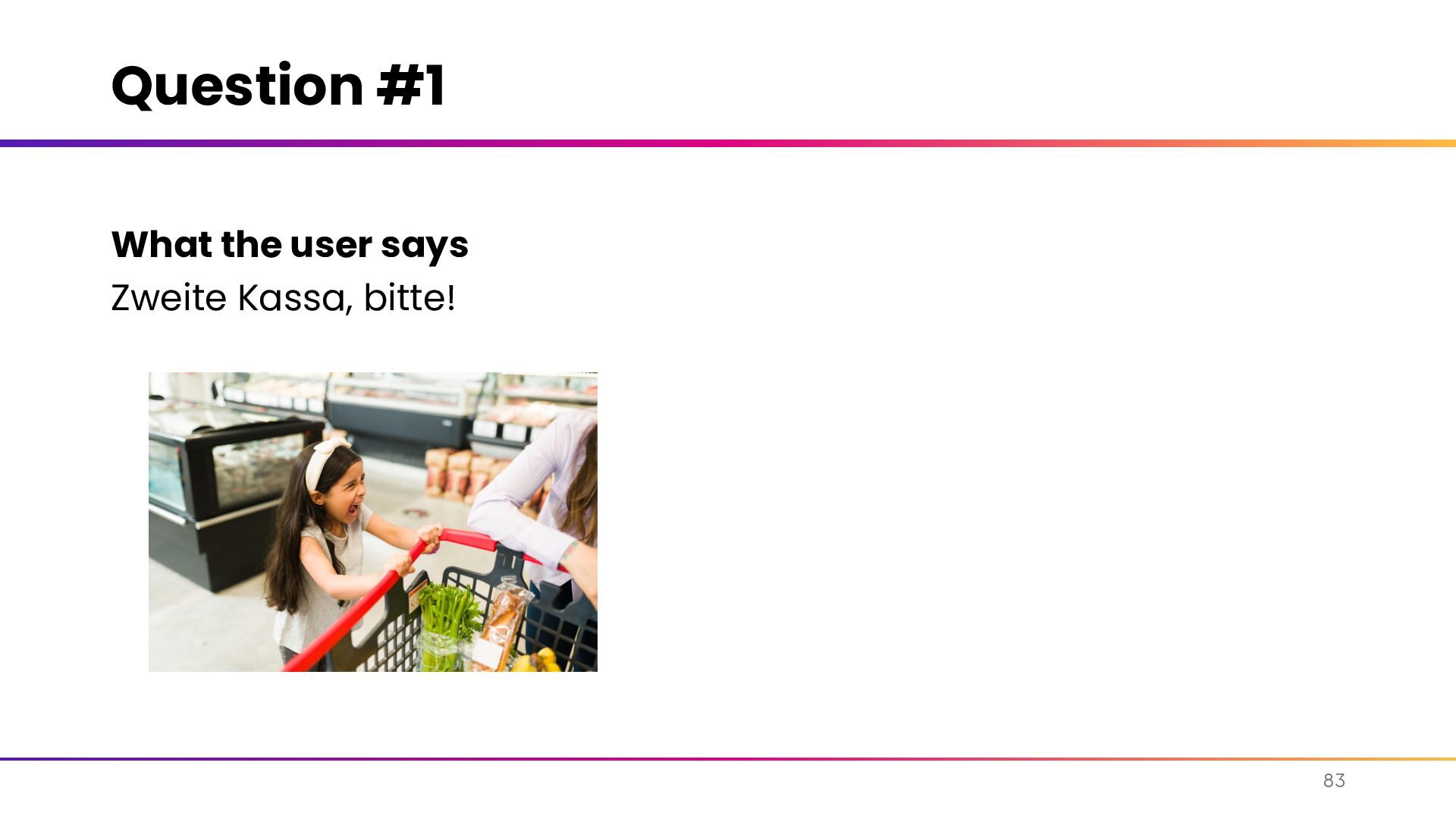
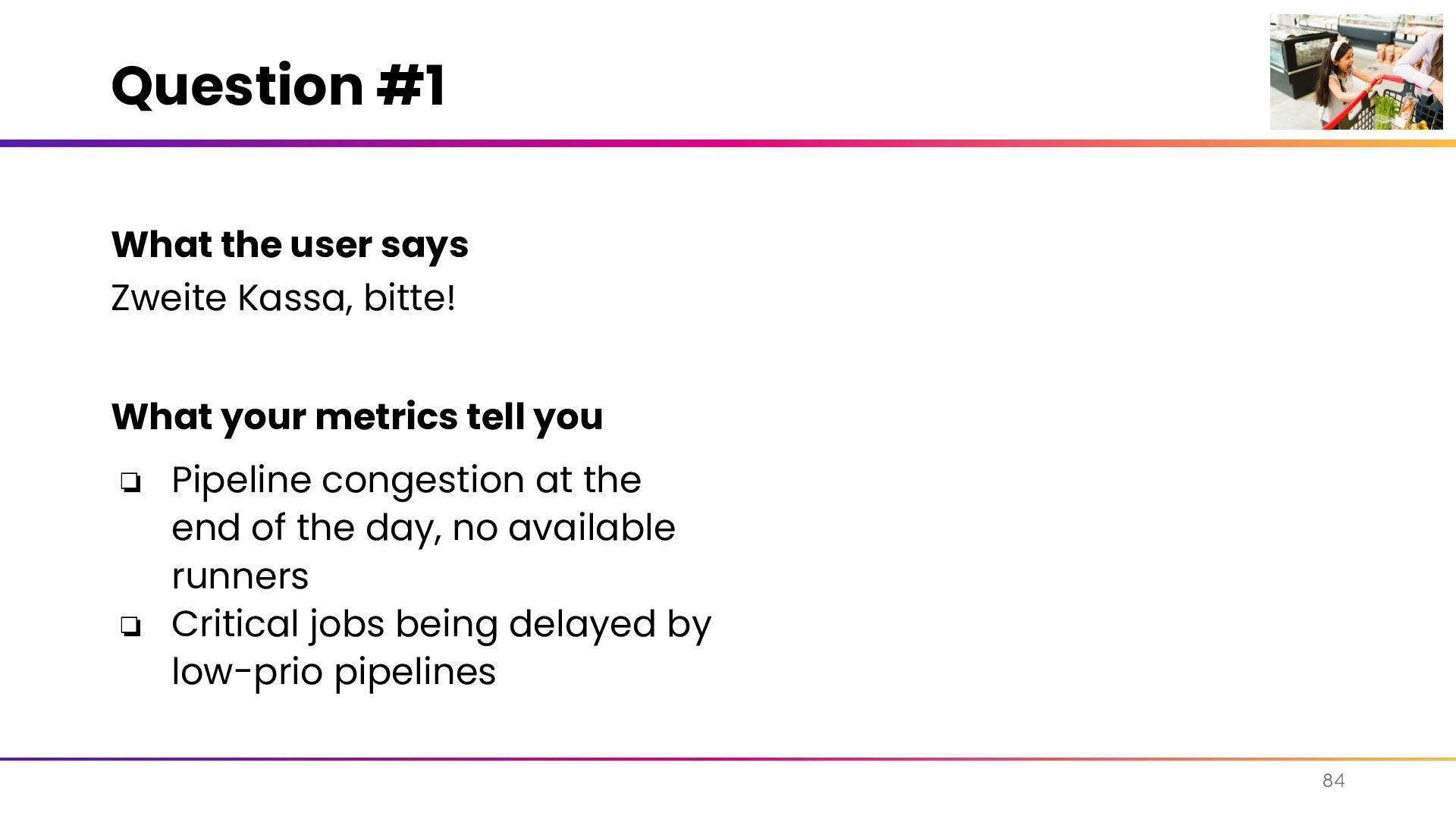
  44. Question #1 What the user says Zweite Kassa, bitte! What

    your metrics tell you ❏ ❏ Pipeline congestion at the end of the day, no available runners Critical jobs being delayed by low-prio pipelines 84
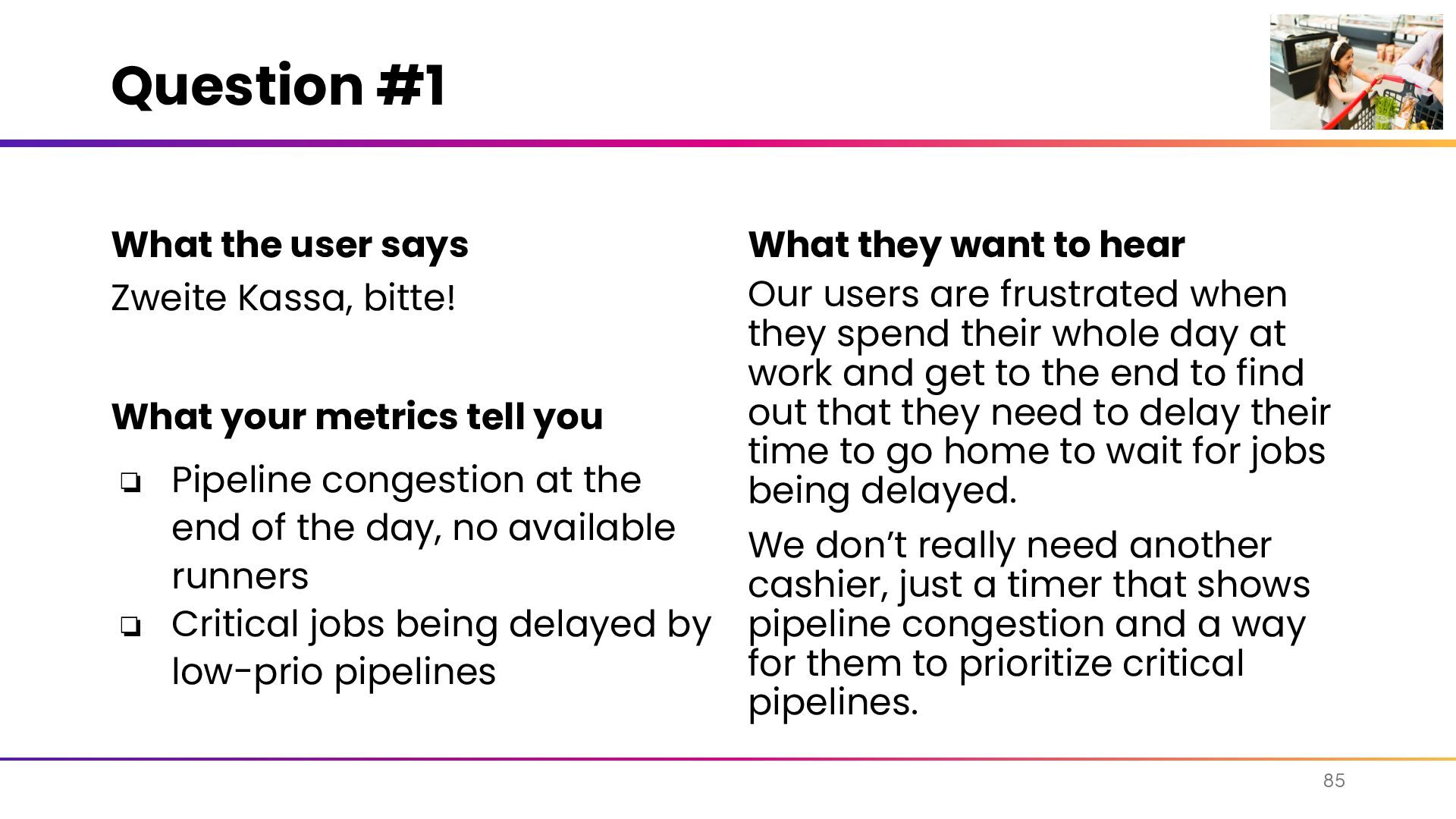
  45. Question #1 What the user says Zweite Kassa, bitte! What

    they want to hear Our users are frustrated when they spend their whole day at work and get to the end to find out that they need to delay their What your metrics tell you time to go home to wait for jobs ❏ Pipeline congestion at the being delayed. end of the day, no available We don’t really need another runners cashier, just a timer that shows ❏ Critical jobs being delayed by pipeline congestion and a way for them to prioritize critical low-prio pipelines pipelines. 85
  46. Question #2 How do you prove success or failure can

    be attributed to the platform? • Backtrack from outcome 86
  47. Question #3 AI-tools are enabling a more diverse group of

    people to bring workloads to production. Do our platforms need to adapt and if yes, how? ❏ ❏ Yes, platforms need to adapt New users = new needs 87
  48. Question #4 Do you agree that most observability platforms are

    good in proving how they contribute to Dev Experience but lack in proving how they benefit the business? Differently asked: What led to the fact that Developers lost the feeling to be a business stakeholder for their employer? ❏ ❏ ❏ It was never their job and they were never trained to do that You cannot assume that everyone know product management, UX design, business strategy etc. - you need multiple people in your team Learn x-101 helps you be a better stakeholder 88
  49. “ The platform’s product owner handles viability. The platform engineers

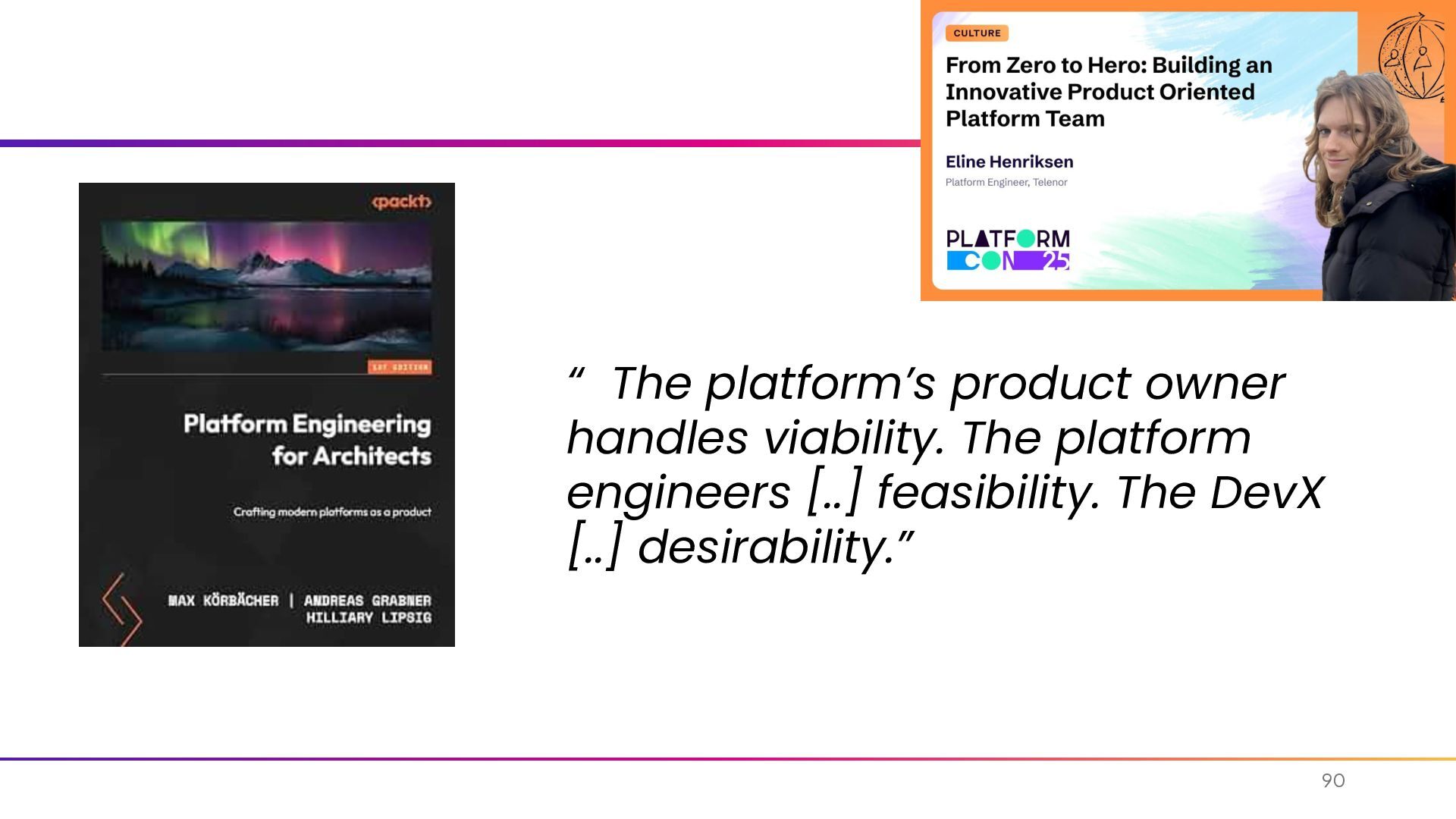
    [..] feasibility. The DevX [..] desirability.” 90
  50. The agenda ❏ A lot of questions about success, metrics,

    ROI,... ❏ Some foundations ❏ The best answers I could come up with ❏ More questions from CNS Munich audience ❏ Tell YOUR STORY in 60 seconds 91
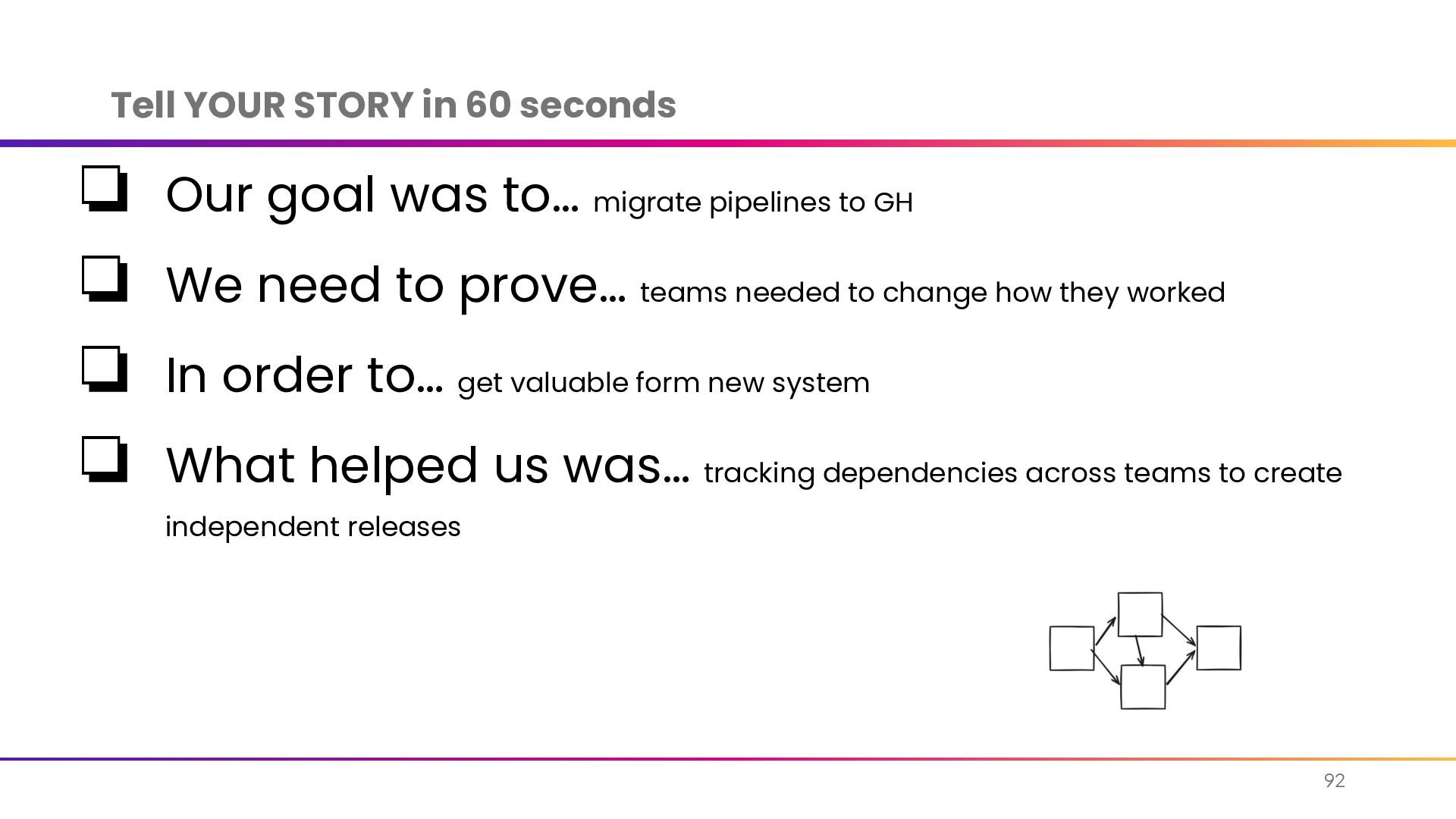
  51. Tell YOUR STORY in 60 seconds ❏ Our goal was

    to… migrate pipelines to GH ❏ We need to prove… teams needed to change how they worked ❏ In order to… get valuable form new system ❏ What helped us was… tracking dependencies across teams to create independent releases 92