Upgrade to Pro — share decks privately, control downloads, hide ads and more …

California Well Pump Repair Costs: What Affects...

California Well Pump Repair Costs: What Affects the Price?

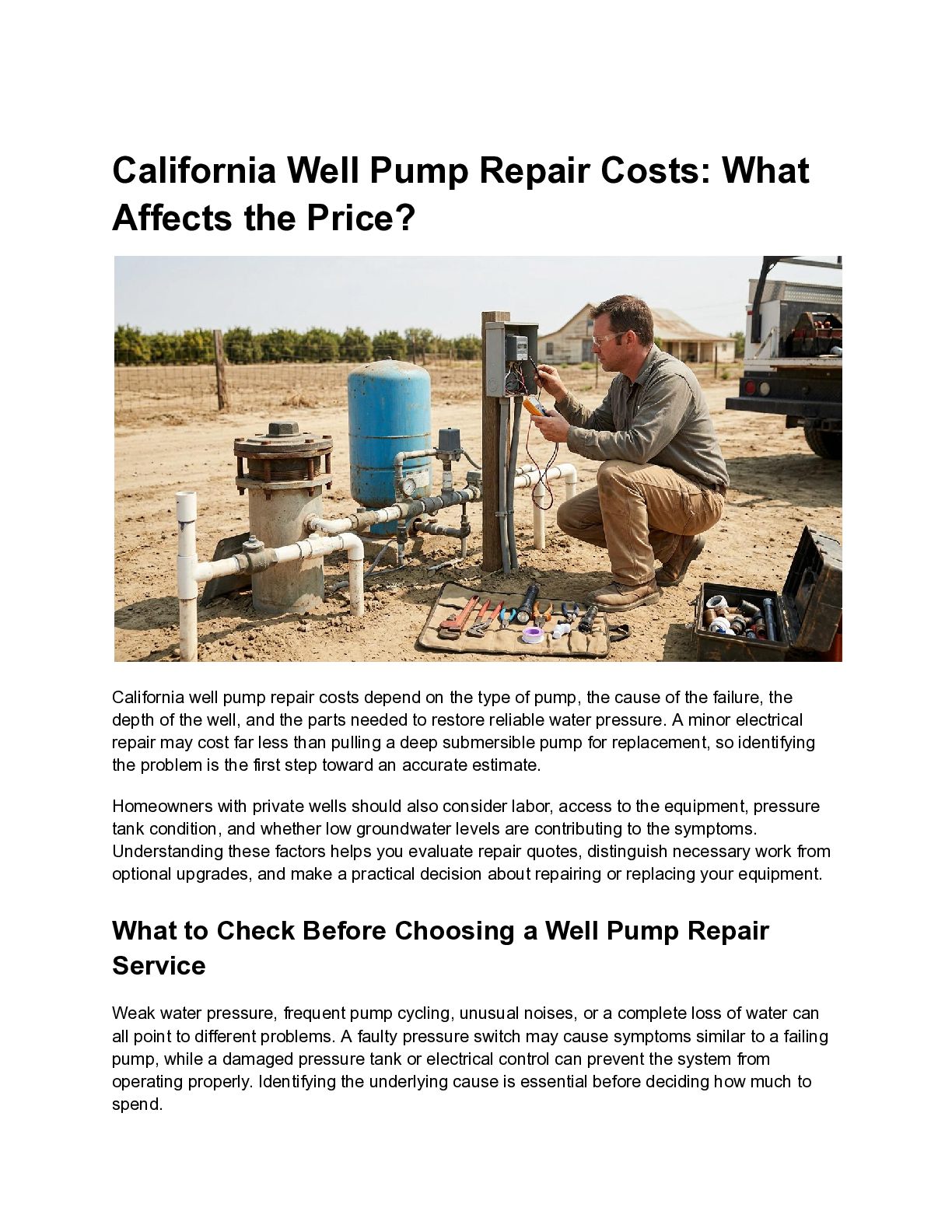
California well pump repair costs depend on the pump type, the cause of the failure, well depth, labor, and replacement parts. All Flow Plumbing can help homeowners understand common well pump problems and the factors that influence repair decisions. Minor issues, such as a faulty pressure switch or control box, may cost less to fix than replacing a damaged submersible pump. Well depth and equipment accessibility also affect labor costs, especially when technicians must remove and reinstall a pump.
Before approving repairs, homeowners should request an itemized estimate covering diagnosis, labor, parts, and testing. Comparing repair and replacement options helps determine which solution offers better long-term value. Pressure tank problems can cause frequent pump cycling and place unnecessary strain on the system. Electrical faults, worn components, and insufficient groundwater can also lead to low water pressure or water loss. A professional diagnosis helps identify the actual cause before unnecessary parts are replaced.
Homeowners should ask about warranties, additional charges, and the expected results of the recommended repair. Regular inspections can help identify developing problems before they become expensive breakdowns. Monitoring unusual noises, fluctuating pressure, and frequent pump starts can provide early warning signs. If the pump stops working or repeatedly trips the breaker, avoid unsafe DIY electrical repairs. Choosing appropriate Well Pump Services can help restore reliable water flow and address underlying system problems. By comparing clear estimates and fixing the root cause, California homeowners can make informed decisions and manage well pump repair expenses.

Avatar for Rural Plumbing

Rural Plumbing

October 15, 2026

Other Decks in Business

Transcript

  1. California Well Pump Repair Costs: What Affects the Price? California

    well pump repair costs depend on the type of pump, the cause of the failure, the depth of the well, and the parts needed to restore reliable water pressure. A minor electrical repair may cost far less than pulling a deep submersible pump for replacement, so identifying the problem is the first step toward an accurate estimate. Homeowners with private wells should also consider labor, access to the equipment, pressure tank condition, and whether low groundwater levels are contributing to the symptoms. Understanding these factors helps you evaluate repair quotes, distinguish necessary work from optional upgrades, and make a practical decision about repairing or replacing your equipment. What to Check Before Choosing a Well Pump Repair Service Weak water pressure, frequent pump cycling, unusual noises, or a complete loss of water can all point to different problems. A faulty pressure switch may cause symptoms similar to a failing pump, while a damaged pressure tank or electrical control can prevent the system from operating properly. Identifying the underlying cause is essential before deciding how much to spend.
  2. Before approving a repair, ask how the technician will diagnose

    the problem and whether the estimate separates inspection fees, labor, replacement parts, and any additional equipment charges. Comparing the proposed work and the reasoning behind it can help you avoid paying for a replacement when a smaller repair would restore normal operation. A useful estimate should explain what has failed, which components need attention, and how the completed work will be tested. It should also clarify whether the quoted amount covers removing and reinstalling a submersible pump, if necessary, and whether unexpected problems could lead to additional charges. Homeowners should compare diagnostic methods, itemized estimates, repair-versus-replacement recommendations, and the scope of available Well Pump Services before authorizing work. A clear explanation of the recommended solution makes it easier to assess whether the price is reasonable for the equipment, site conditions, and expected reliability. Why a Proper Diagnosis Can Reduce Repair Costs A pump that will not start does not automatically need to be replaced. A technician may need to check the power supply, circuit protection, wiring, control box, pressure switch, and other system components to identify the fault. Similarly, low water pressure may result from a pressure tank problem, a leak, a clogged component, or an issue with the well's water supply. Accurate testing helps narrow down the cause before parts are ordered or equipment is removed. It also reduces the risk of replacing one component only to discover that a separate fault is still preventing the system from working correctly. Questions to Ask Before Approving the Work Ask whether the estimate includes the diagnostic visit, labor, parts, installation, and system testing. If the technician recommends replacing the pump, find out why repairing the existing unit is not advisable and whether the new pump is appropriately sized for the well and household's water demand. It is also sensible to ask about warranties on parts and labor, payment terms, and how additional work will be approved. A written estimate with clearly defined limits gives you a better basis for comparing providers than a single unexplained total. Which Factors Have the Biggest Effect on Repair Prices? Several factors determine whether a well pump repair is a relatively straightforward service call or a more involved project. The most important considerations include the pump's design, its installation depth, the condition of supporting equipment, and the time required to locate and fix the fault.
  3. Pump Type and Horsepower Jet pumps and submersible pumps have

    different installation and repair requirements. Jet pumps are generally accessible above ground, while submersible pumps sit inside the well and may need to be lifted out for certain repairs. Removing and reinstalling a submersible pump can add substantial labor and equipment costs. Horsepower also affects the price of replacement equipment. Higher-capacity pumps may cost more, and choosing the right unit requires considering well yield, vertical lift, household demand, and the pressure needed to deliver water reliably. Installing a pump that is too powerful or poorly matched to the system can cause unnecessary wear and operating problems. Well Depth and Pump Accessibility A pump installed in a deep well can take considerably longer to retrieve than one located near the surface. Technicians may need specialized lifting equipment, additional workers, or extra time to handle the drop pipe and electrical cable safely. Access conditions can also influence labor charges. Tight equipment spaces, difficult terrain, obstructed wellheads, and limited vehicle access may complicate an otherwise routine repair. Providing details about the well's location and known depth when requesting an estimate can help the technician anticipate these challenges. Replacement Parts and Electrical Components The price of a repair depends partly on which component has failed. A pressure switch, capacitor, control box, or damaged electrical connection may be less expensive to replace than an entire pump motor. However, the actual cost depends on the equipment model, part availability, compatibility, and labor required. Some problems involve more than one component. For example, a failed control box may be accompanied by damaged wiring or signs of motor failure. Replacing only the visibly damaged part without checking the rest of the system can lead to another service call and additional expense. Labor, Travel, and Emergency Scheduling Labor charges reflect the time, skill, and equipment needed to complete the repair. A quick adjustment or accessible component replacement may require relatively little work, whereas retrieving a deep pump, replacing pipework, and testing the system can take much longer. Service location and scheduling may also affect the final bill. Remote properties can involve additional travel, while evenings, weekends, or urgent callouts may carry higher rates. Ask whether these charges apply before approving the work, especially if the initial estimate was provided over the phone.
  4. How Much Do Common Well Pump Repairs Involve? Repair prices

    vary widely, so a single statewide figure can be misleading. The same symptom may have several causes, and two homes with similar pumps may require different amounts of labor because their well depths and equipment layouts differ. For a useful estimate, identify the suspected fault, the equipment involved, and whether the technician expects to remove the pump. These details provide a more meaningful starting point than comparing prices based only on a description such as low pressure or no water. Pressure Switch and Control Box Repairs A faulty pressure switch may prevent a pump from starting at the correct pressure or shutting off when the system reaches its intended setting. A damaged control box or capacitor can also interfere with pump operation, depending on the equipment design. These repairs may be less expensive than replacing a complete pump, particularly when the failed component is accessible. However, repeated breaker trips, burnt wiring, or unusual electrical smells can indicate a more serious problem. Electrical equipment should be inspected by a qualified professional rather than repeatedly reset or opened by a homeowner. Pressure Tank Problems A pressure tank helps maintain steady water delivery and reduces how frequently the pump starts. If the tank loses its air cushion, develops a bladder failure, or has an incorrect pressure setting, the pump may cycle too frequently. Frequent cycling places additional stress on the motor and electrical components. The technician may need to inspect the tank, check its air pressure using the appropriate procedure, and verify that the pressure switch is functioning correctly. Depending on the findings, the solution may involve an adjustment, a replacement component, or a new tank. Replacing the pump without correcting an underlying pressure tank problem can leave the new equipment exposed to the same operating conditions that contributed to the original failure. Submersible Pump Repair or Replacement Submersible pumps operate below the water level inside the well. If the pump itself fails, retrieving it may require lifting the drop pipe, cable, and attached equipment. The deeper the installation, the more time-consuming and demanding this work can become. The total price depends on the pump's condition, the depth of installation, replacement specifications, and whether the existing pipework and wiring can be reused safely. A technician may recommend replacing the complete pump rather than attempting an uneconomical repair if the motor is severely damaged or the unit has a history of repeated failures.
  5. Low Water Levels and Sand in the Water Sometimes the

    pump is not the primary cause of a water supply problem. Falling groundwater levels, reduced well yield, a blocked intake, or excessive sediment can reduce the amount of water available to the system. A pump that runs without receiving enough water may overheat or suffer damage, depending on its design and protective features. Sand or sediment can also accelerate wear on pump components and affect valves or other equipment. Before paying for a replacement, ask whether the symptoms suggest a problem with the well's water supply itself. If the water level is unusually low or sediment is entering the system, further investigation may be needed beyond a standard pump repair. When Is Repair More Affordable Than Replacement? The cheapest immediate solution is not always the least expensive option over time. A minor repair can be sensible when the pump is otherwise in good condition, but repeated service calls may eventually cost more than replacing an unreliable unit. Consider the pump's age, repair history, availability of parts, energy use, and the cost of the proposed work. A technician should explain the evidence behind a replacement recommendation rather than assuming that every malfunction requires new equipment. Signs a Smaller Repair May Be Enough A targeted repair may be appropriate when testing identifies a single failed pressure switch, capacitor, control component, or other replaceable part. It may also make sense when the pump has operated reliably for years and there are no signs of major mechanical deterioration. Ask whether the proposed repair addresses the underlying cause and whether other components show signs of wear. A clear explanation of the expected outcome helps you decide whether repairing the existing equipment is a reasonable investment. When a New Pump May Be the Better Investment Replacement may be worth considering when the motor has failed, essential parts are difficult to obtain, or the system has experienced repeated breakdowns. Severe corrosion, persistent mechanical problems, and damage caused by operating without adequate water can also make repairs less attractive. Compare the full replacement estimate with the likely cost of repair, including the labor required to access the pump. Also consider whether a replacement would improve reliability or operating efficiency. The right choice depends on the system's condition rather than its age alone.
  6. Why Fixing the Root Cause Matters Repeated pump failures often

    indicate that something else in the system needs attention. Frequent cycling, insufficient water, electrical faults, or unsuitable equipment sizing can place unnecessary strain on a pump even after it has been repaired. A lasting solution should address these conditions where possible. Otherwise, homeowners may pay for another repair or replacement without resolving the problem responsible for the original breakdown. How to Compare Estimates and Avoid Unexpected Charges An itemized estimate makes it easier to understand what you are paying for and compare different repair proposals. Look for a clear description of the fault, the recommended solution, the parts involved, and the expected labor. Do not assume that two estimates cover the same work simply because their totals are similar. One may include pump removal, replacement pipework, and testing, while another may cover only the replacement component. Check the Scope of Work Ask whether the price includes diagnosis, labor, replacement parts, installation materials, pump removal and reinstallation where necessary, and final system testing. If the work requires additional plumbing or electrical repairs, confirm whether those items are included or charged separately. Clarify how unexpected problems will be handled. A provider should explain when additional work might be necessary and seek your approval before proceeding with charges outside the agreed scope. Understand Warranty and Follow-Up Terms Warranty coverage can vary between equipment manufacturers and service providers. Some warranties cover replacement parts but exclude labor, while others apply only under specified installation or operating conditions. Before approving the work, ask how long the coverage lasts, what it includes, and which circumstances could invalidate it. Keep the written estimate, invoice, equipment details, and warranty documents together so you can refer to them if the same problem returns. Recognize When a Specialist Is Needed
  7. Some problems extend beyond the pump and household plumbing system.

    A well with declining water production, structural damage, or persistent sediment may require assessment by a qualified water well contractor. Well drilling, deepening, or major rehabilitation can involve different equipment, permits, and costs from a routine pump repair. Confirm that the professional you hire has the appropriate qualifications and experience for the specific work required. How to Prevent Expensive Well Pump Failures Routine attention can help identify developing problems before they cause a complete loss of water. Although maintenance cannot prevent every breakdown, monitoring system performance and responding promptly to unusual changes can reduce avoidable damage. Monitor Water Pressure and Pump Cycling Pay attention to changes in water flow, pressure fluctuations, and how often the pump starts and stops. A pump that runs much longer than usual or cycles repeatedly may be responding to a leak, pressure tank problem, control fault, or reduced water supply. Keep track of recurring symptoms and when they occur. This information can help a technician identify patterns and narrow down the likely cause without unnecessary guesswork. Schedule Appropriate System Inspections Periodic inspections can help identify worn electrical components, pressure tank issues, leaking connections, and other developing faults. The appropriate schedule depends on the equipment, its age, operating conditions, and any problems observed. If the pump has required repeated repairs, ask whether a broader system assessment would be worthwhile. Checking related components can help prevent a minor fault from developing into a more expensive breakdown. Protect the Well and Maintain Water Quality Keep the wellhead protected from surface runoff, physical damage, and contamination. Make sure the surrounding area remains accessible for inspection and that any damaged well cap or exposed opening is addressed promptly. Private well water should also be tested periodically and whenever conditions suggest possible contamination. If repairs involve opening or disturbing the well, ask whether disinfection and follow-up water testing are appropriate. Pump maintenance and water quality are separate concerns, but both are important for a dependable household supply.
  8. What to Do When Your Well Pump Stops Working A

    sudden loss of water can result from a pump failure, an electrical fault, a pressure system problem, or a shortage of water in the well. The safest next step is to observe the symptoms without attempting repairs that require electrical work or opening the well system. Identify Symptoms Without Opening Electrical Equipment Check whether the loss of water affects the entire property or only certain fixtures. If accessible, note the pressure gauge reading and whether you can hear the pump running, clicking repeatedly, or remaining silent. If a breaker trips repeatedly, stop resetting it and arrange a professional inspection. A burning smell, exposed wiring, or signs of overheating also warrant immediate caution. Do not open control boxes, touch wet electrical equipment, or attempt to retrieve a pump yourself. Prepare Information for the Repair Estimate When contacting a technician, describe when the problem started, whether pressure declined gradually or disappeared suddenly, and whether the pump has recently been noisy or cycling frequently. If you know the pump's age, model, horsepower, or well depth, provide those details as well. Mention recent electrical interruptions, plumbing work, changes in water quality, or periods of unusually heavy water use. Accurate information can help the technician prepare for the visit and identify which diagnostic checks may be necessary. Decide When to Arrange Professional Service Professional assessment is appropriate when the system repeatedly loses pressure, the pump will not start, the breaker trips, or water production changes unexpectedly. Continuing to operate a malfunctioning pump can worsen certain problems, especially if the equipment is running without adequate water. The best repair decision comes from understanding both the immediate fault and the condition of the complete system. By comparing clearly itemized estimates, asking about the reason for the recommended work, and addressing the cause rather than only the symptom, California homeowners can make better-informed decisions about well pump repair costs and long-term water reliability.