Upgrade to Pro — share decks privately, control downloads, hide ads and more …

From vericoding to verified projects

Avatar for Sachin Singh Sachin Singh
July 29, 2026
16

From vericoding to verified projects

Bangalore System meetup July 2026

Avatar for Sachin Singh

Sachin Singh

July 29, 2026

Transcript

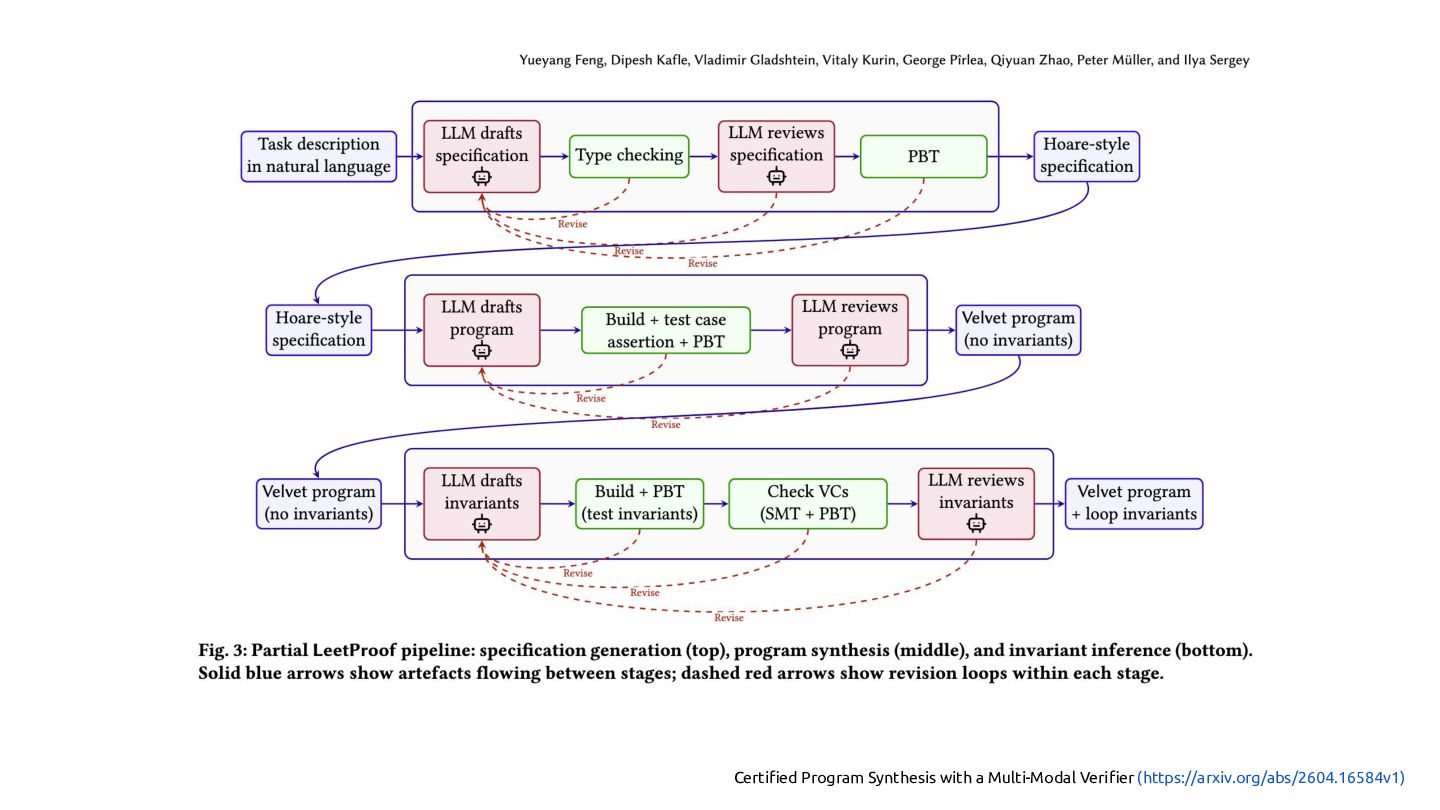
  1. What is vericoding Certified program synthesis (a.k.a. vericoding) is the

    process of automatically generating a program, its formal specification, and a machine-checkable proof of program/specification alignment from a task description given in a natural language
  2. What does verified means • Verified” does not mean “perfect”

    or “bug-free in every possible sense.” It means: Specific properties were proved under specific assumptions. • Testing asks, “Did the program work for these examples?” • Verification asks, “Can we prove it works for every permitted input?” • For example, if the specification only says “return a non-negative number,” a program that always returns zero could be verified—even if the user actually wanted an absolute difference.
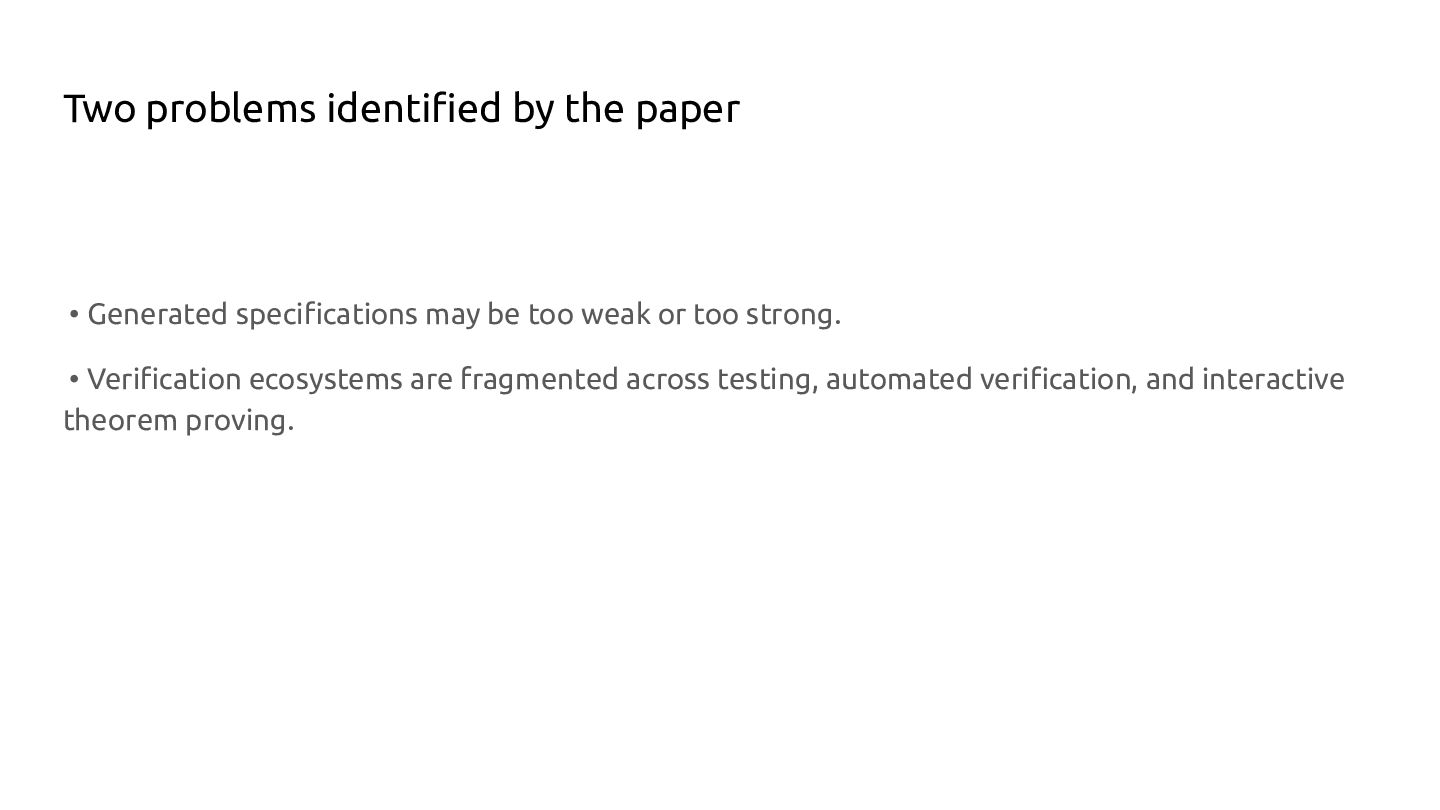
  3. Two problems identified by the paper • Generated specifications may

    be too weak or too strong. • Verification ecosystems are fragmented across testing, automated verification, and interactive theorem proving.
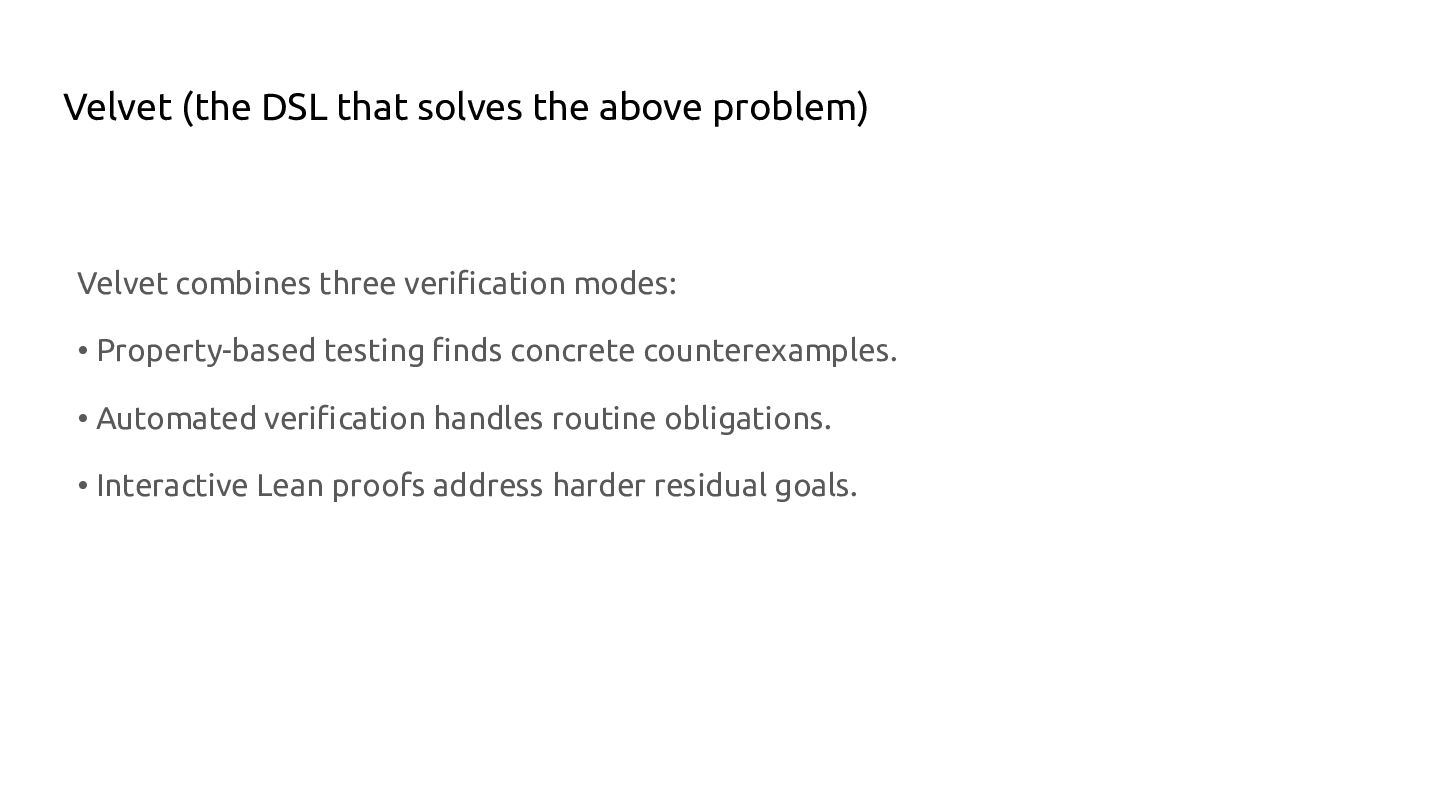
  4. Velvet (the DSL that solves the above problem) Velvet combines

    three verification modes: • Property-based testing finds concrete counterexamples. • Automated verification handles routine obligations. • Interactive Lean proofs address harder residual goals.
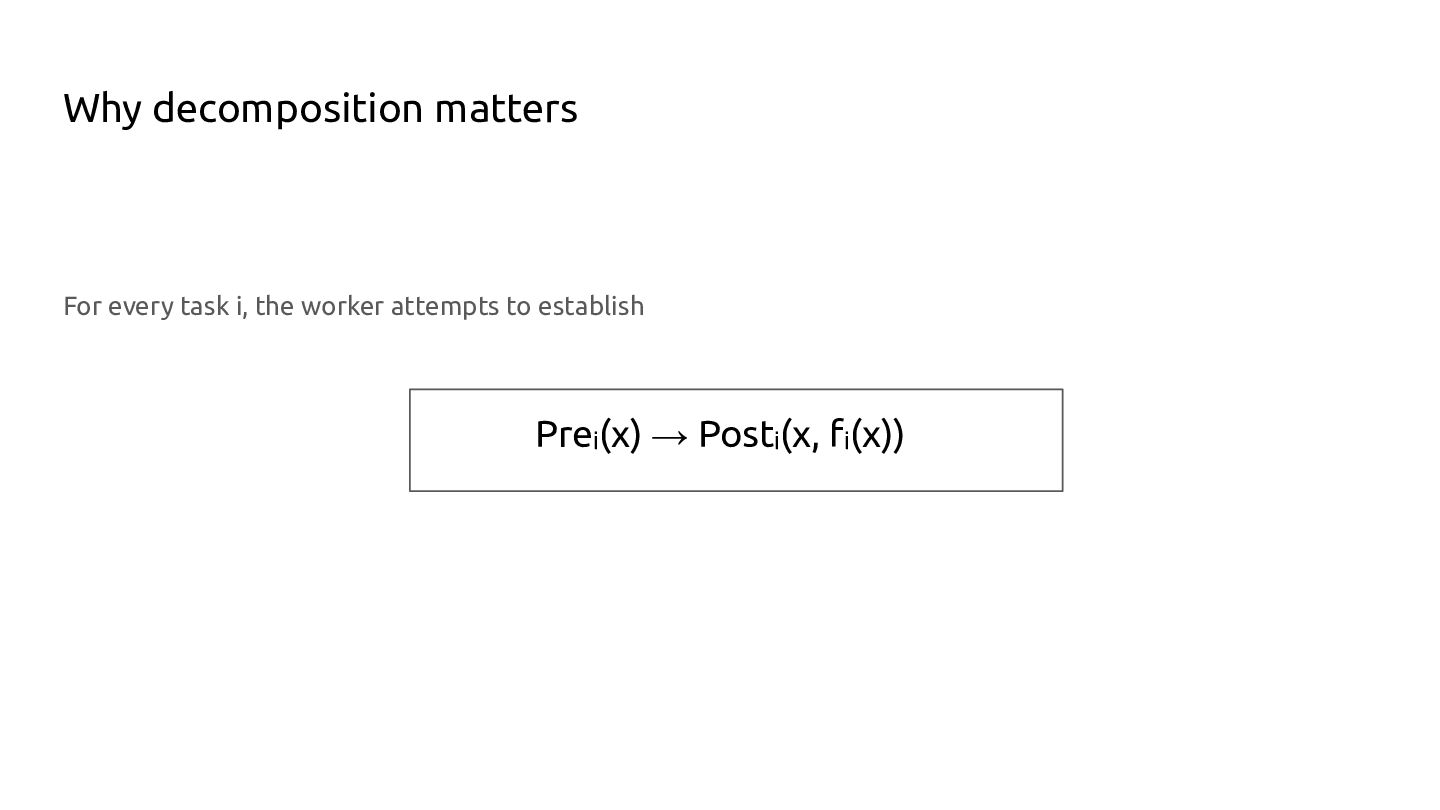
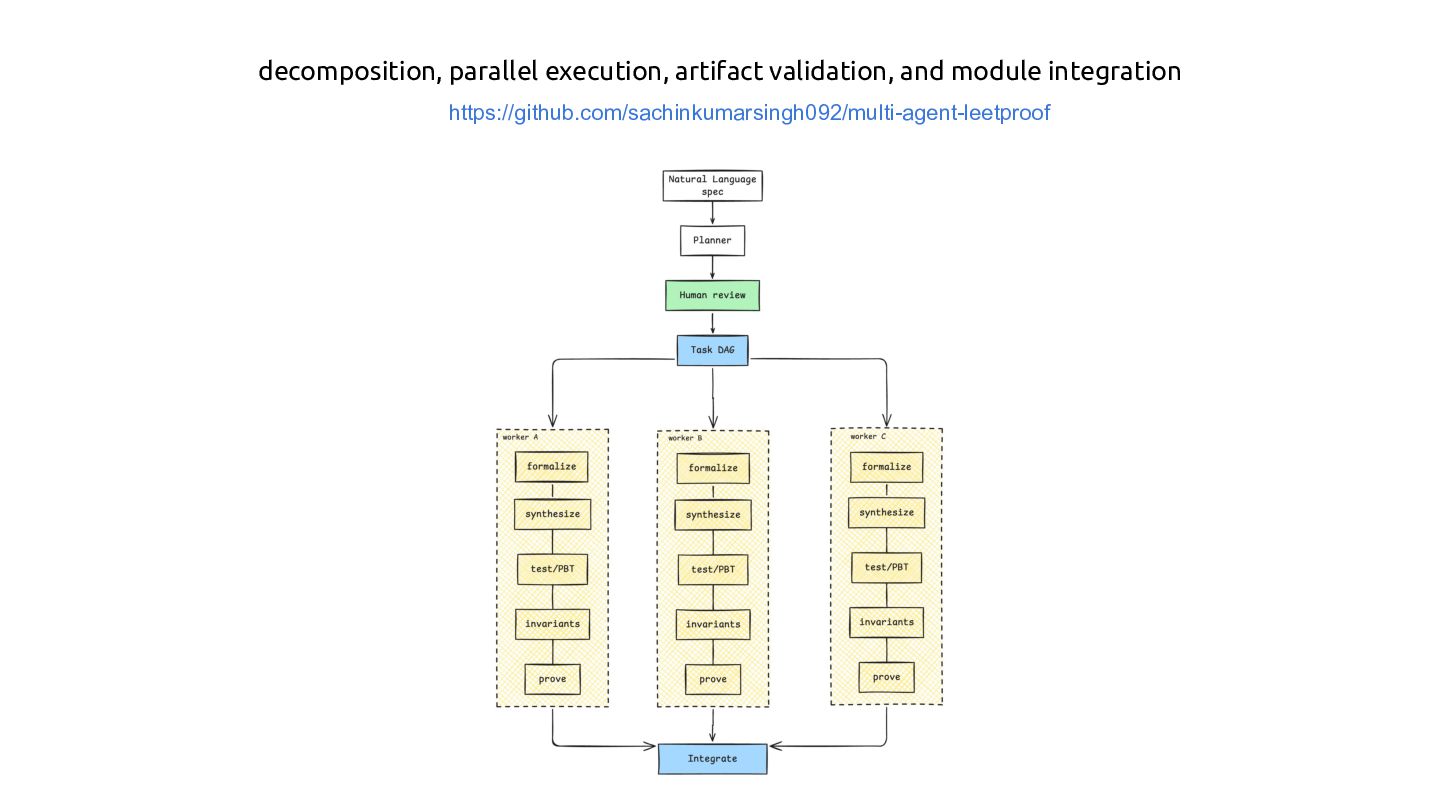
  5. Why decomposition matters For every task i, the worker attempts

    to establish Preᵢ(x) → Postᵢ(x, fᵢ(x))
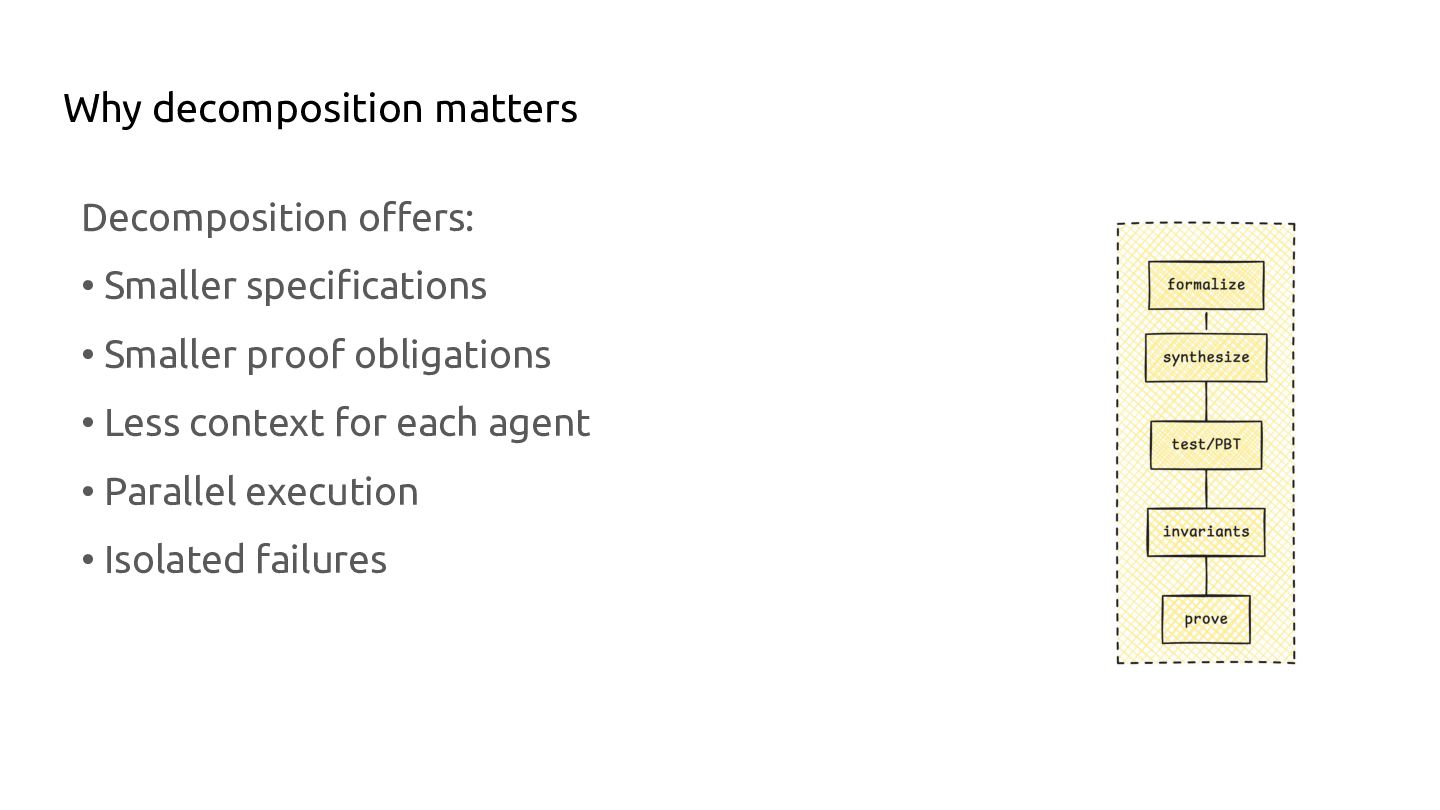
  6. Why decomposition matters Decomposition offers: • Smaller specifications • Smaller

    proof obligations • Less context for each agent • Parallel execution • Isolated failures
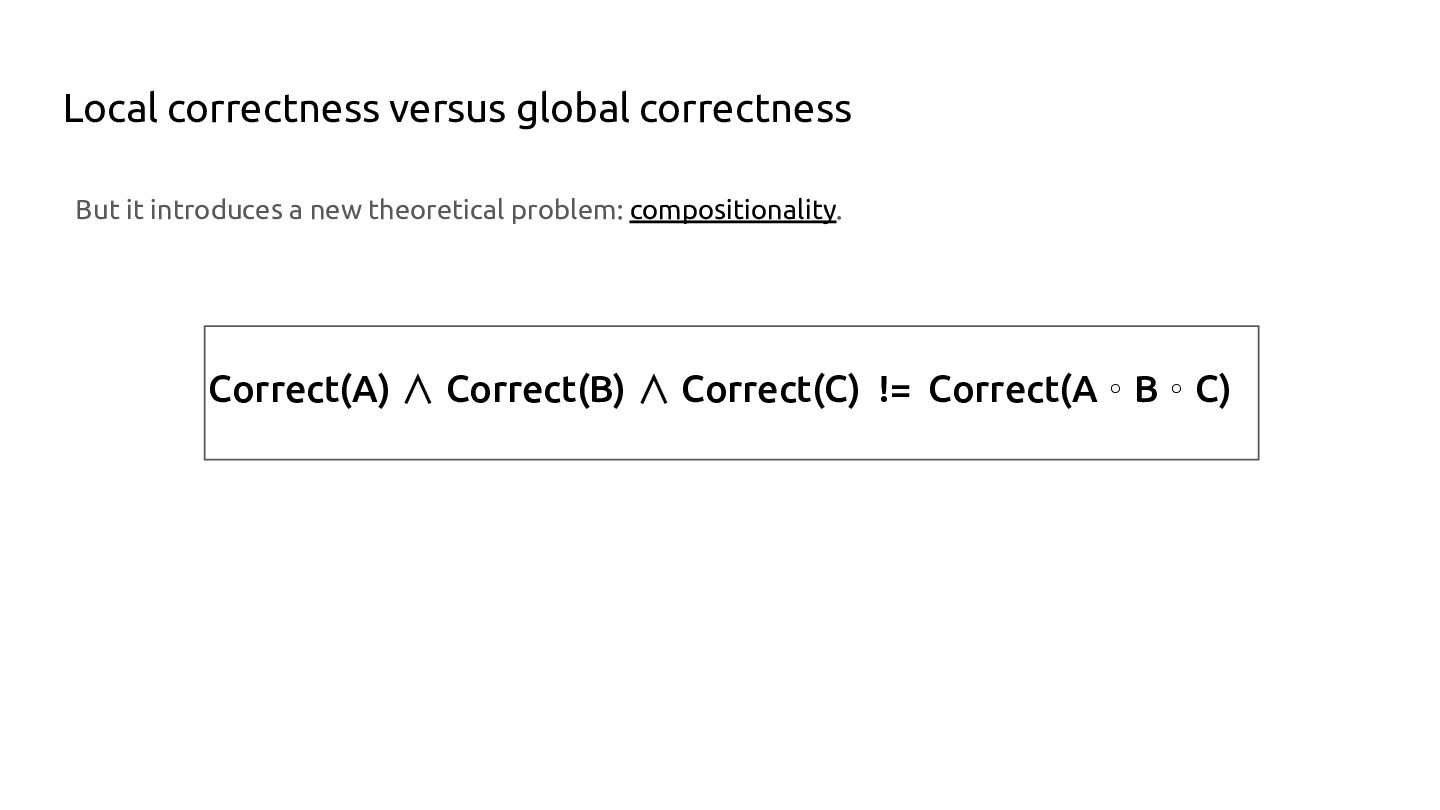
  7. Local correctness versus global correctness But it introduces a new

    theoretical problem: compositionality. Correct(A) ∧ Correct(B) ∧ Correct(C) != Correct(A ∘ B ∘ C)
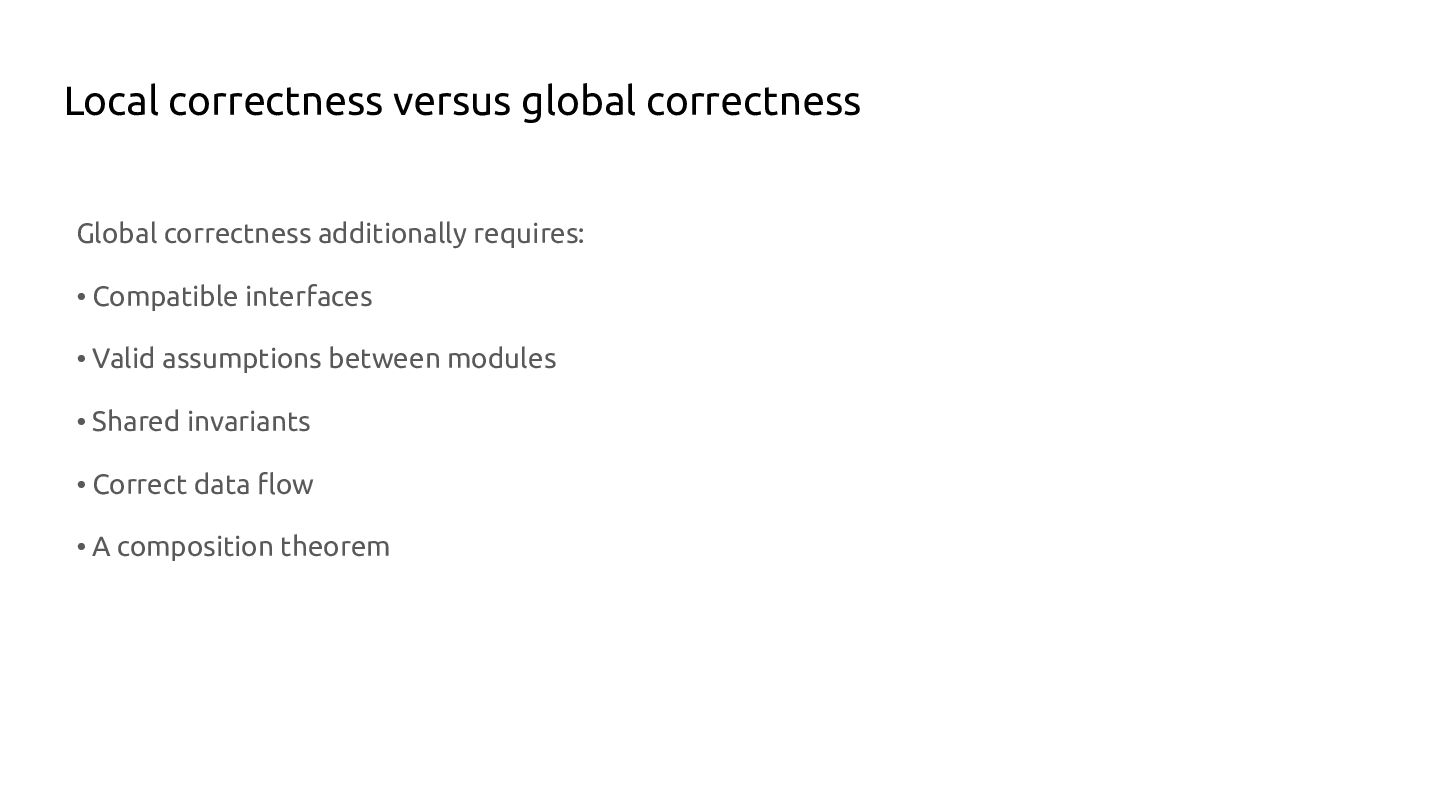
  8. Local correctness versus global correctness Global correctness additionally requires: •

    Compatible interfaces • Valid assumptions between modules • Shared invariants • Correct data flow • A composition theorem
  9. Can a single-method vericoding be scaled into a controlled project

    workflow while preserving each worker’s verification guarantees?