functional programming talk • Talk on concurrency models (implementation) which uses a few concurrency patterns (futures, async.. await, actors, callbacks). We are not going to discuss patterns in detail. • The concepts discussed are language and OS agnostic • Feel free to stop me at any time for questions
all began • Terminology: Concurrency, Parallelism, Workloads, Scheduling • Examples (Demo) • The modified Reactor Pattern (Event Loop) • Thread vs Coroutine vs Fiber vs Green Thread • Final thoughts
the hood helps you: • Write performant code and scale your systems better. • Reason about why something works the way it does. • Picking a concurrency model when presented with options. • Generally being informed is better!
interleaving). • Programs (jobs) would be run one after another. • The execution order was “sequential / synchronous”. • Sequential / Synchronous: One job at a time. Execution of next job only after first one ends.
was only one control flow • But, programs (jobs) are “interleaved” (multi-tasking) • Interleaved: At any point in time, only a single job runs, but processor time is split among multiple jobs. • “Multiple jobs (tasks) are making progress overall” even though only one job runs at any point in time.
== Run multiple jobs in “parallel” • Parallel: More than one control flow (one per processor) • Each control flow can be again interleaved. • Now, “multiple jobs are making progress (& running)”
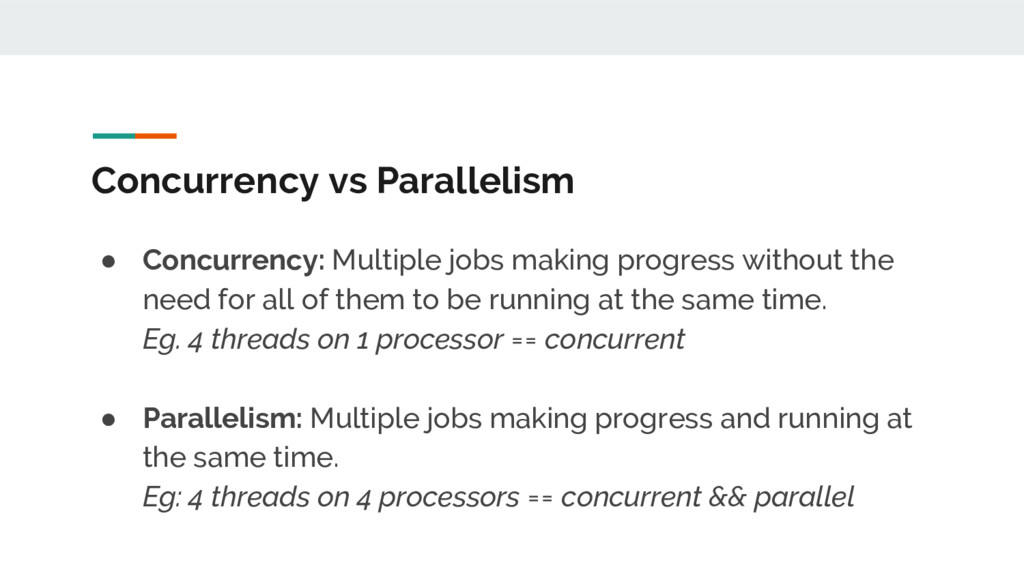
the need for all of them to be running at the same time. Eg. 4 threads on 1 processor == concurrent • Parallelism: Multiple jobs making progress and running at the same time. Eg: 4 threads on 4 processors == concurrent && parallel
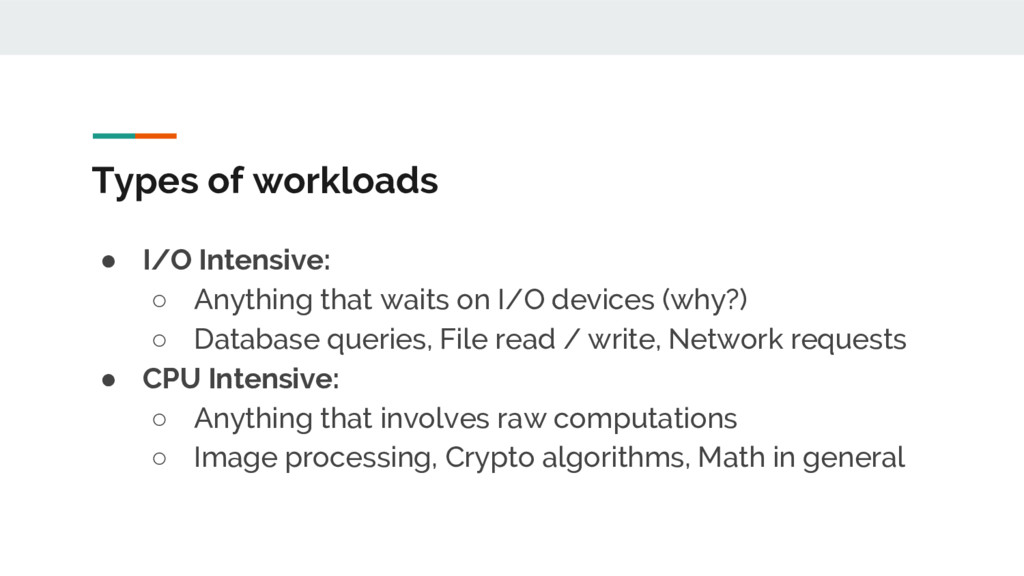
on I/O devices (why?) ◦ Database queries, File read / write, Network requests • CPU Intensive: ◦ Anything that involves raw computations ◦ Image processing, Crypto algorithms, Math in general
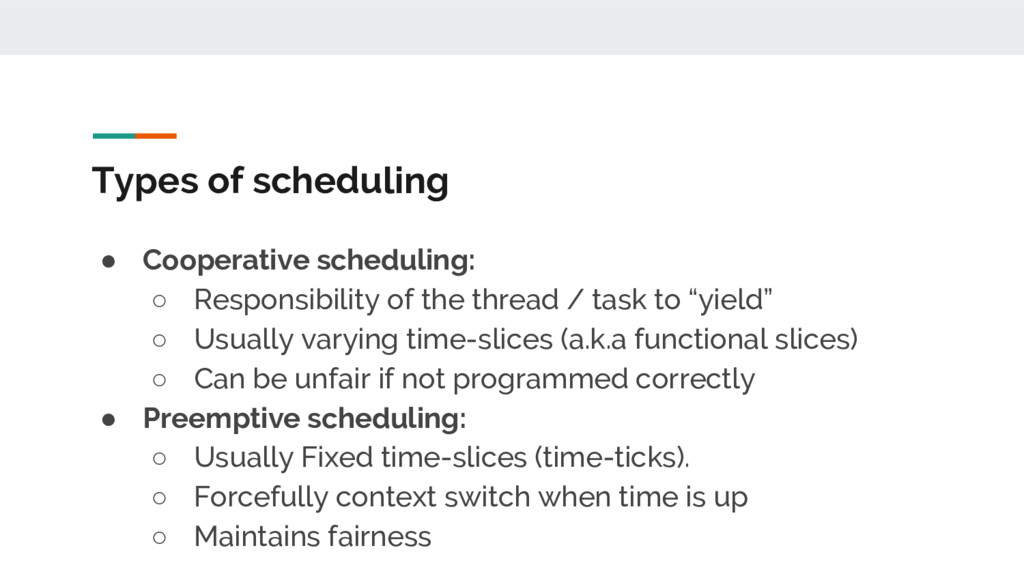
thread / task to “yield” ◦ Usually varying time-slices (a.k.a functional slices) ◦ Can be unfair if not programmed correctly • Preemptive scheduling: ◦ Usually Fixed time-slices (time-ticks). ◦ Forcefully context switch when time is up ◦ Maintains fairness
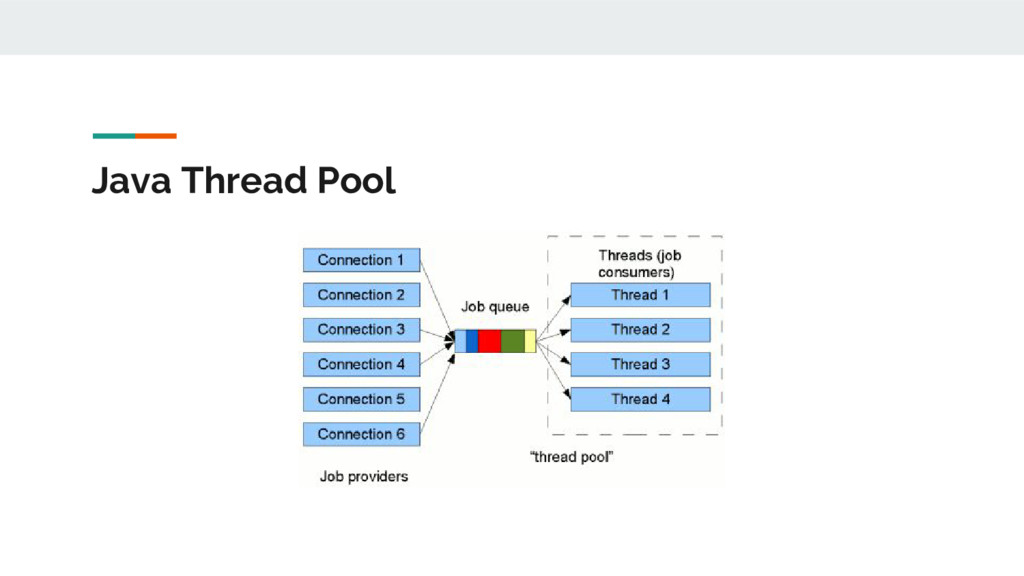
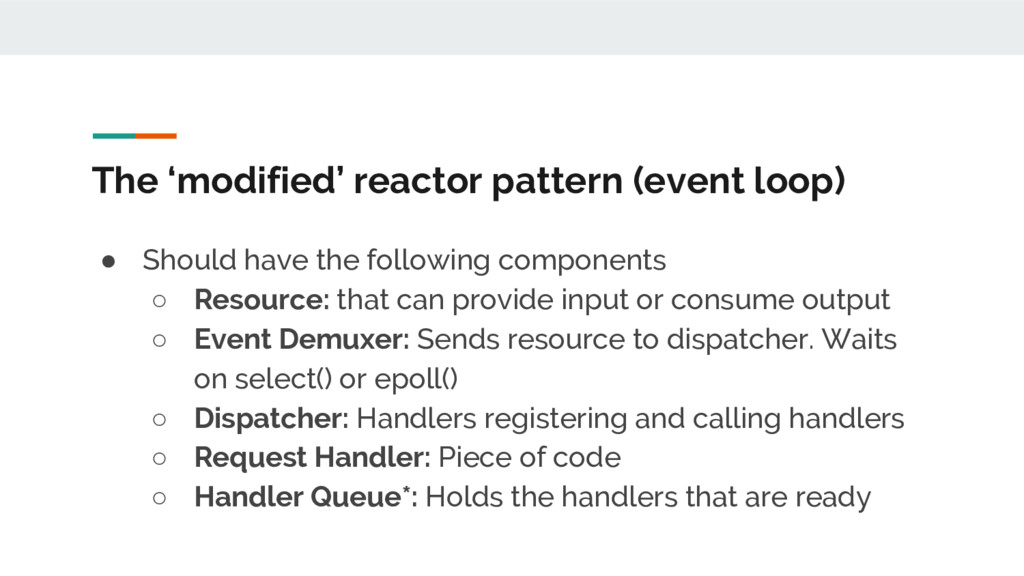
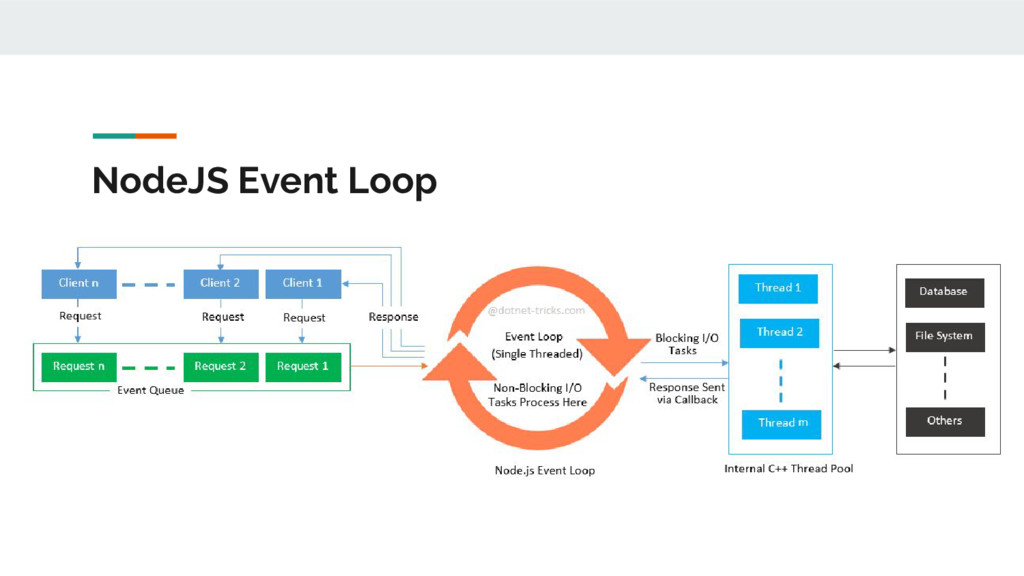
following components ◦ Resource: that can provide input or consume output ◦ Event Demuxer: Sends resource to dispatcher. Waits on select() or epoll() ◦ Dispatcher: Handlers registering and calling handlers ◦ Request Handler: Piece of code ◦ Handler Queue*: Holds the handlers that are ready
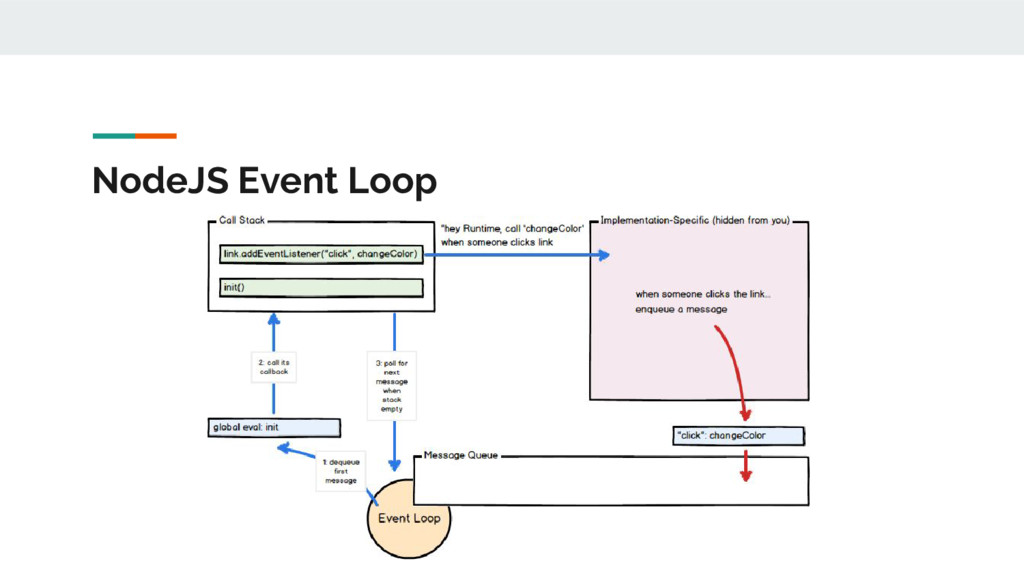
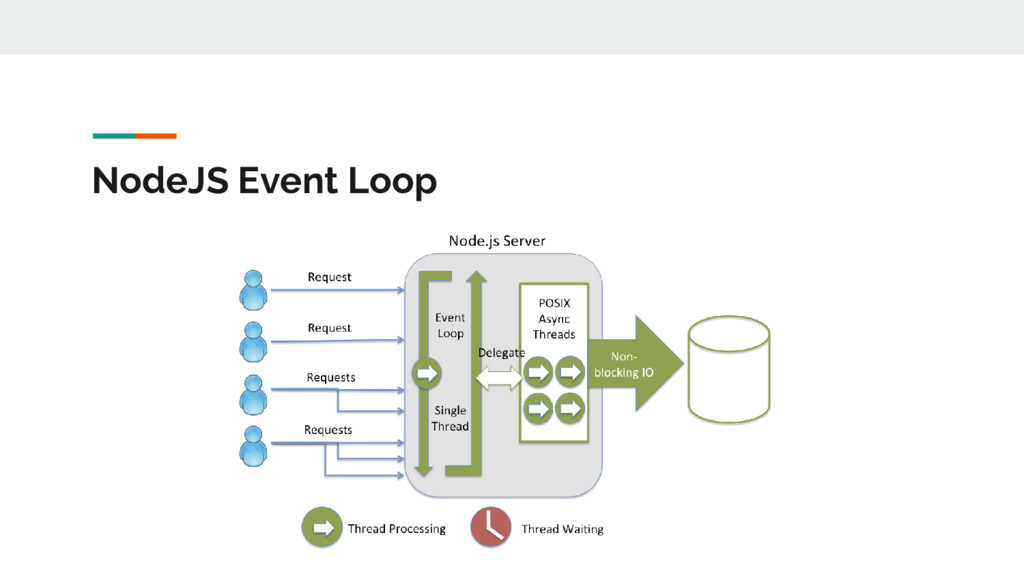
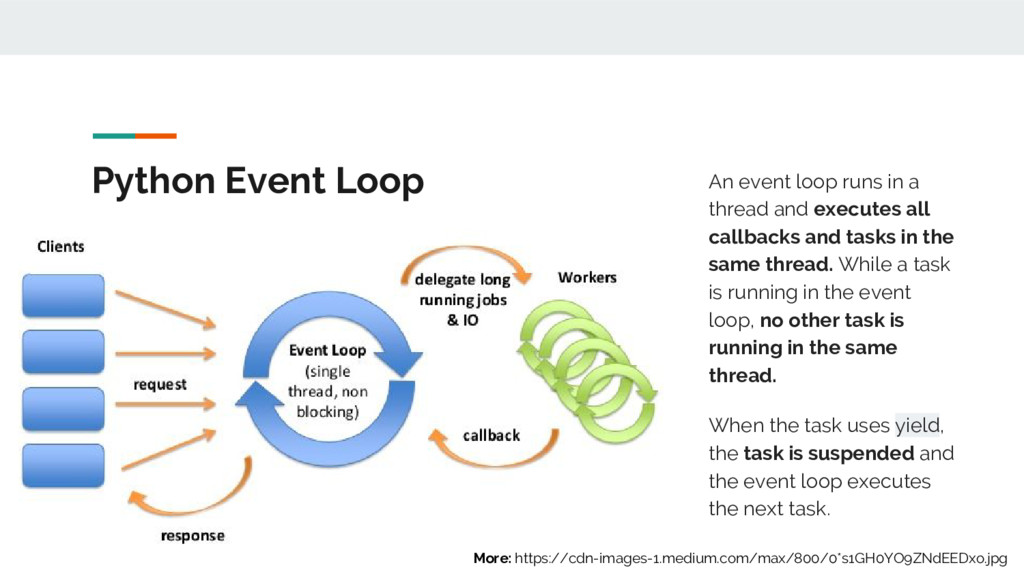
and executes all callbacks and tasks in the same thread. While a task is running in the event loop, no other task is running in the same thread. When the task uses yield, the task is suspended and the event loop executes the next task. More: https://cdn-images-1.medium.com/max/800/0*s1GH0YO9ZNdEEDxo.jpg
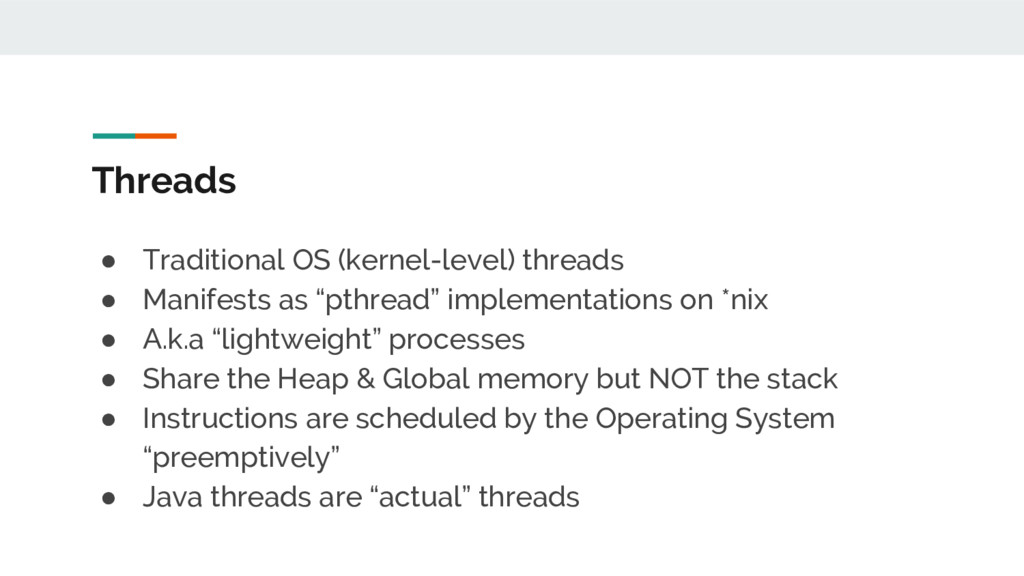
implementations on *nix • A.k.a “lightweight” processes • Share the Heap & Global memory but NOT the stack • Instructions are scheduled by the Operating System “preemptively” • Java threads are “actual” threads
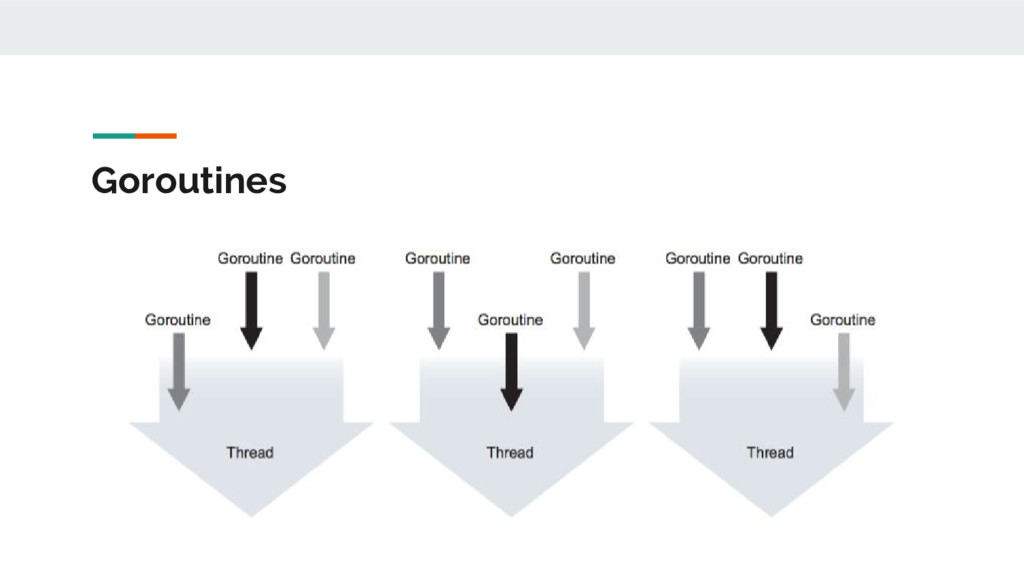
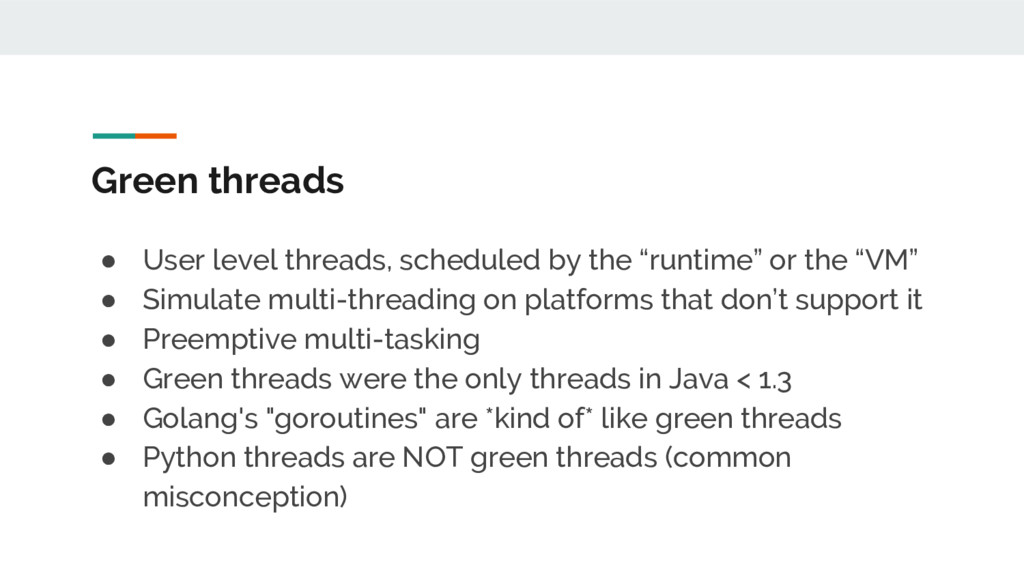
or the “VM” • Simulate multi-threading on platforms that don’t support it • Preemptive multi-tasking • Green threads were the only threads in Java < 1.3 • Golang's "goroutines" are *kind of* like green threads • Python threads are NOT green threads (common misconception)
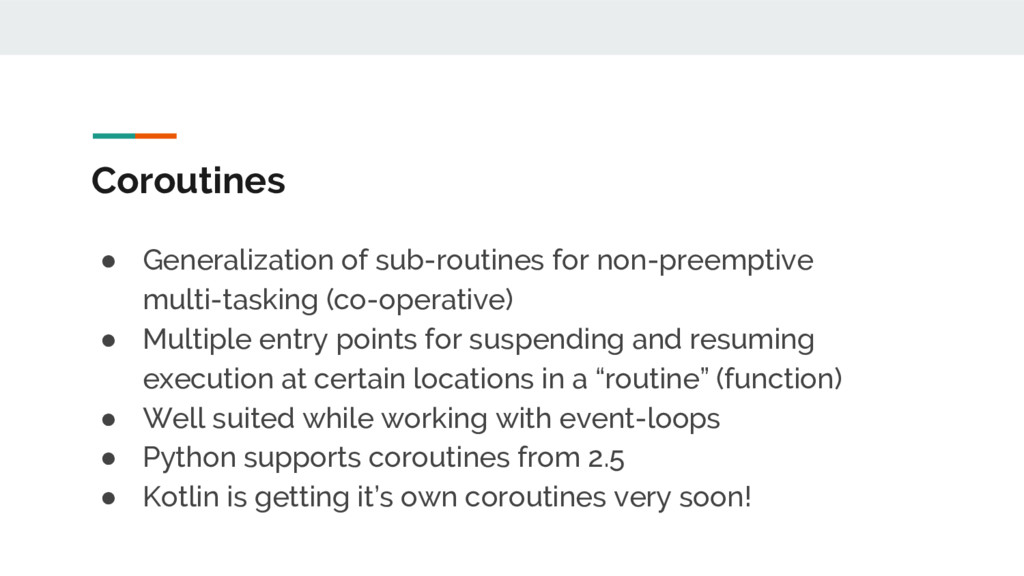
Multiple entry points for suspending and resuming execution at certain locations in a “routine” (function) • Well suited while working with event-loops • Python supports coroutines from 2.5 • Kotlin is getting it’s own coroutines very soon!
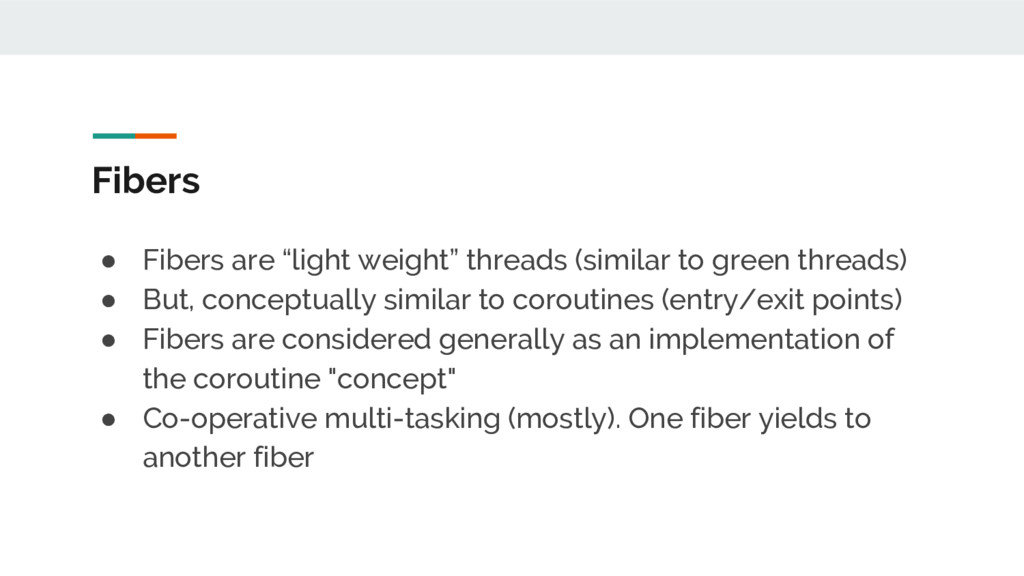
threads) • But, conceptually similar to coroutines (entry/exit points) • Fibers are considered generally as an implementation of the coroutine "concept" • Co-operative multi-tasking (mostly). One fiber yields to another fiber
co-routine can control where the execution can continue, generators continue just after the “yield” • Used to simplifying iterators, building infinite lists
OS level thread or a process. • All the previous ones can be generalized as tasks • To add to the confusion, Python asyncio has something called “tasks”
head around conceptually due to time-slicing & scheduling • Non standard naming convention and various concurrency models don’t make it any easier • There is an initial learning curve and after that, it is just a mix and match of the core set of concepts • Learning the models of various languages helps understanding the concepts better
heck is the event loop anyway? • Concurrency is not parallelism • Concurrency from ground up (Python) • Understanding the Python GIL • Coroutines for the curious • Java (JDK) concurrency


 sandeepraju
 ivargrimstad
 yub0n
yub0n
 akase244
 ken_tunc
.jpg) yumnumm
yumnumm
 sts11142
 gam0022
 satotakeshi
 morizo_1984
 kaityo256
 akihisaikeda
 hatsu38
 scottboms
 aleyda
 stuffmc
 katiecoart
 cassininazir
 kneath
 bkeepers
 honzajavorek
 codingconduct
 bermonpainter
 raygrieselhuber
 addyosmani