Upgrade to Pro — share decks privately, control downloads, hide ads and more …

Technical Writing 101

Sponsored · Your Podcast. Everywhere. Effortlessly. Share. Educate. Inspire. Entertain. You do you. We'll handle the rest. →

Technical Writing 101

Getting started with Technical Writing especially for developers.

Avatar for Sarah Chima

Sarah Chima

June 23, 2018

Other Decks in Programming

Transcript

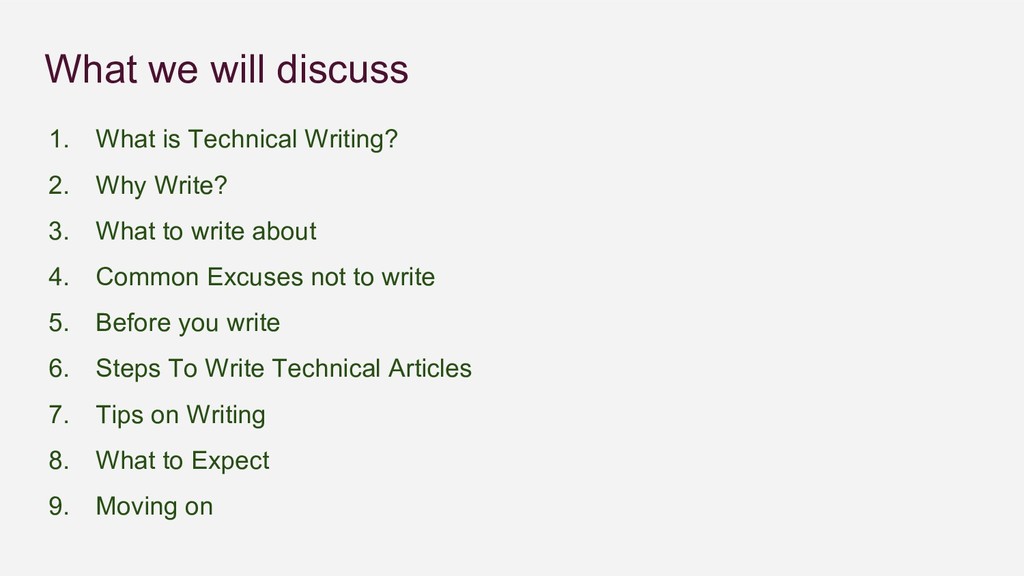
  1. What we will discuss 1. What is Technical Writing? 2.

    Why Write? 3. What to write about 4. Common Excuses not to write 5. Before you write 6. Steps To Write Technical Articles 7. Tips on Writing 8. What to Expect 9. Moving on
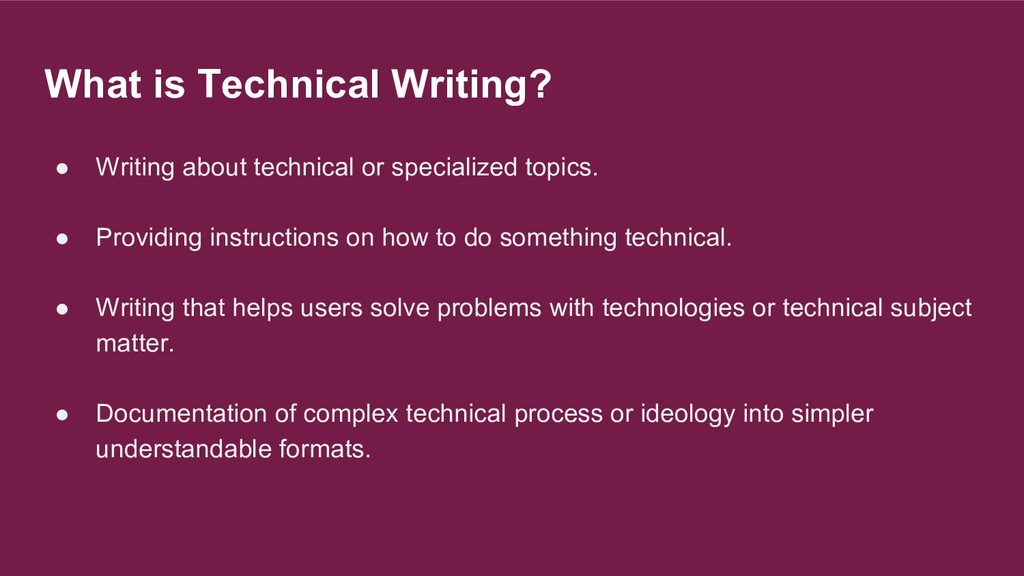
  2. What is Technical Writing? • Writing about technical or specialized

    topics. • Providing instructions on how to do something technical. • Writing that helps users solve problems with technologies or technical subject matter. • Documentation of complex technical process or ideology into simpler understandable formats.
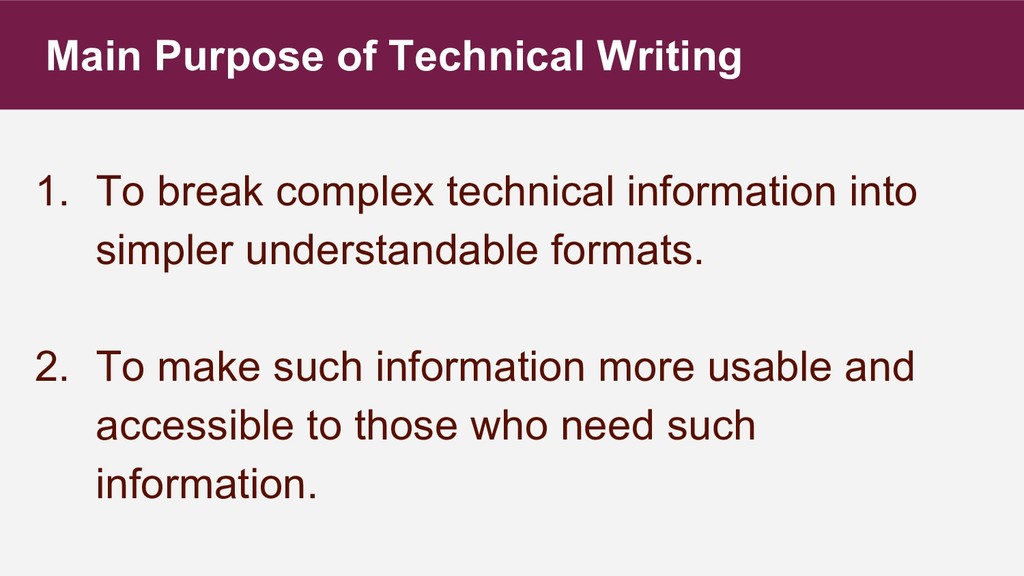
  3. Main Purpose of Technical Writing 1. To break complex technical

    information into simpler understandable formats. 2. To make such information more usable and accessible to those who need such information.
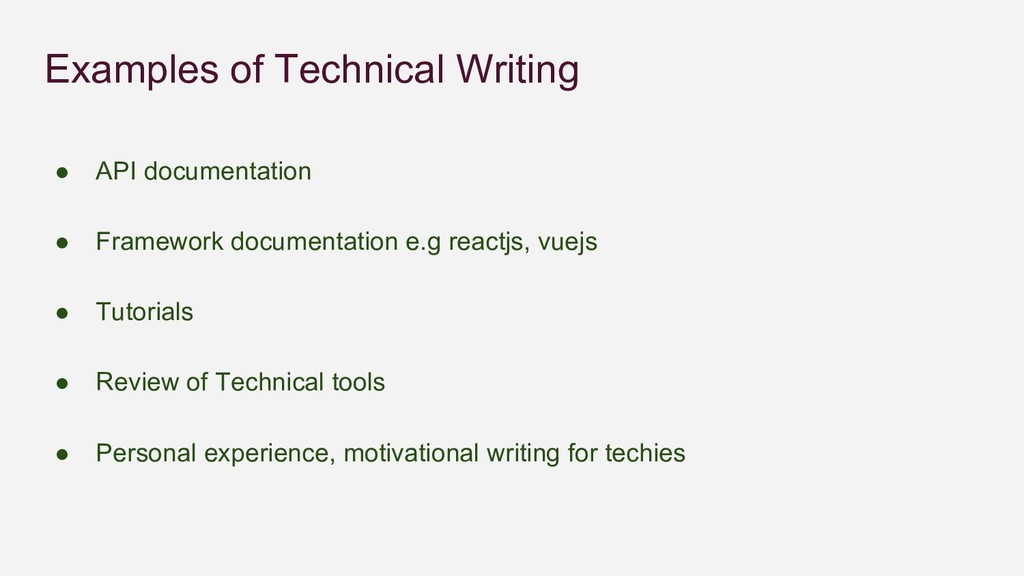
  4. Examples of Technical Writing • API documentation • Framework documentation

    e.g reactjs, vuejs • Tutorials • Review of Technical tools • Personal experience, motivational writing for techies
  5. Why Write? Job Opportunities • Work as a technical writer

    in a company like Auth0, X-team. • Write articles for technical blogs like Scotch.io, LogRocket, Pusher etc
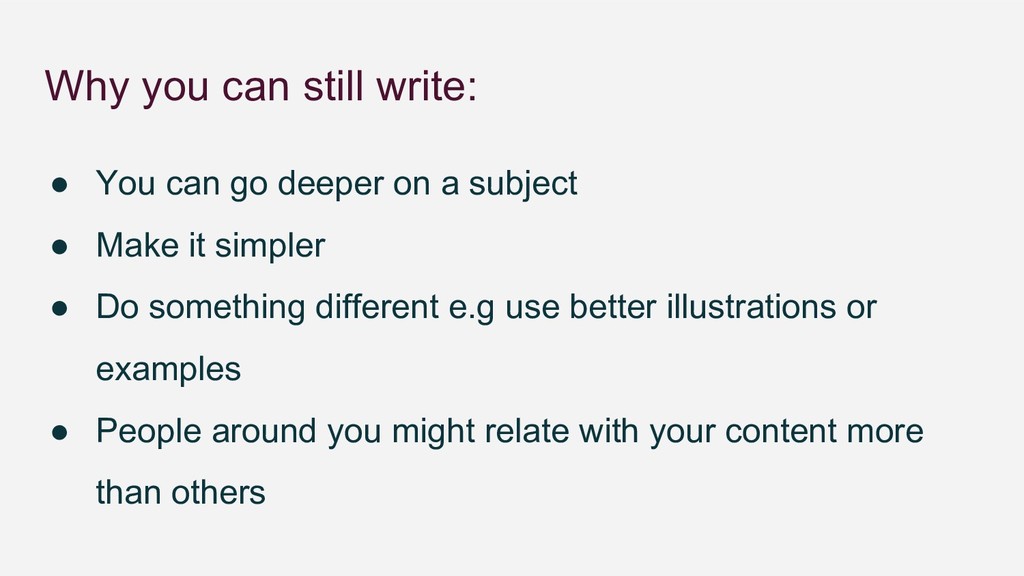
  6. Why you can still write: • You can go deeper

    on a subject • Make it simpler • Do something different e.g use better illustrations or examples • People around you might relate with your content more than others
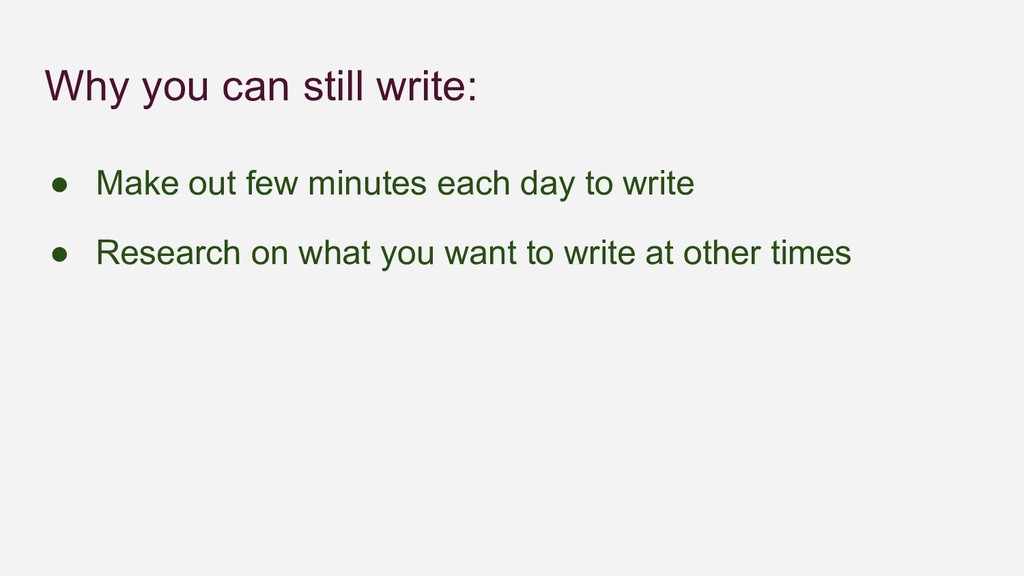
  7. Why you can still write: • Make out few minutes

    each day to write • Research on what you want to write at other times
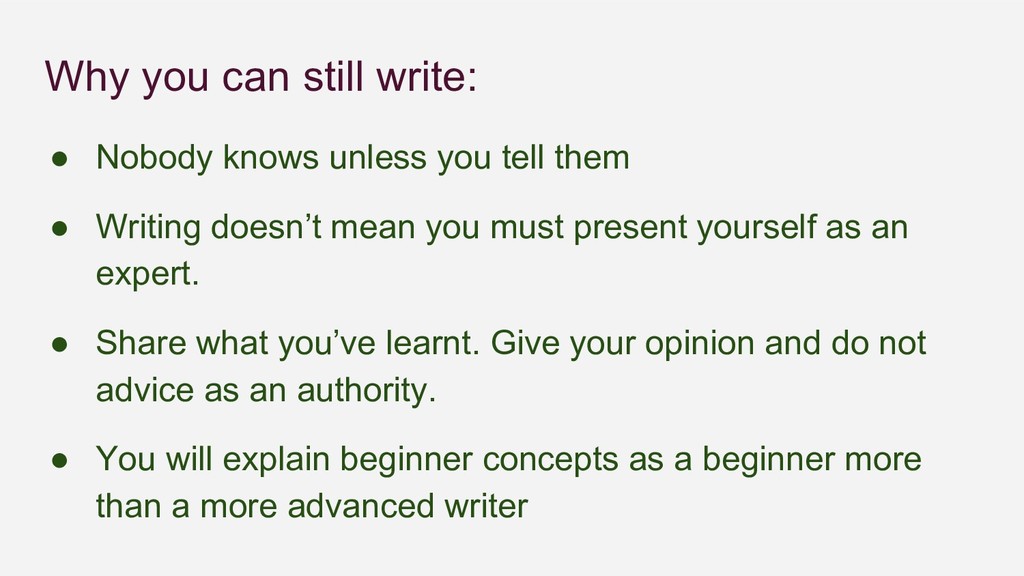
  8. Why you can still write: • Nobody knows unless you

    tell them • Writing doesn’t mean you must present yourself as an expert. • Share what you’ve learnt. Give your opinion and do not advice as an authority. • You will explain beginner concepts as a beginner more than a more advanced writer
  9. Before you write: Decide on a theme for your blog.

    Find a niche. Don’t be a generalist.
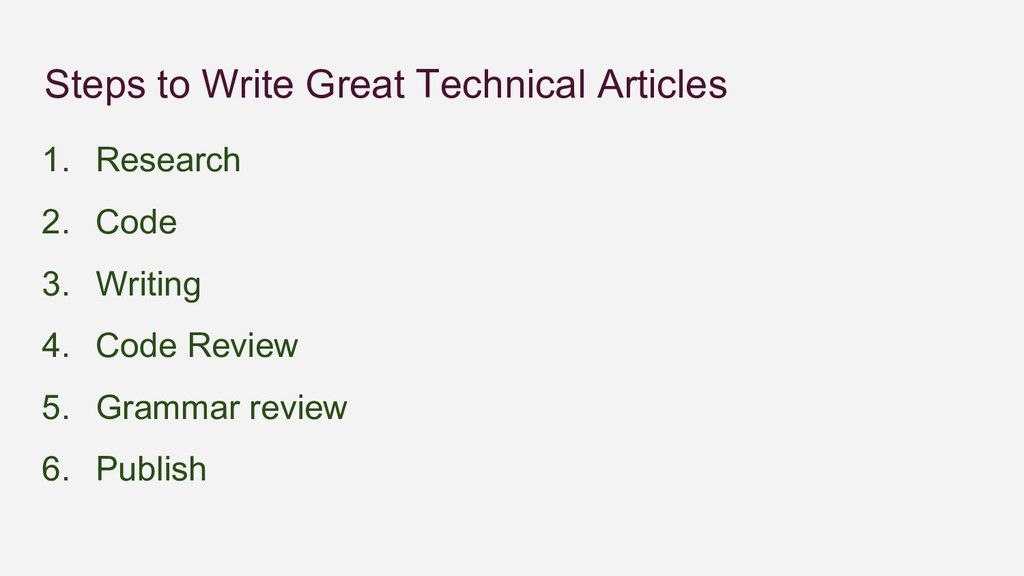
  10. Steps to Write Great Technical Articles 1. Research 2. Code

    3. Writing 4. Code Review 5. Grammar review 6. Publish
  11. Research Find out all you can about a topic, what

    others have written and things they’ve not. Find out how you can improve what has been written. Make headings from your research
  12. Code If you are writing a tutorial, work on the

    project first and make sure it works.
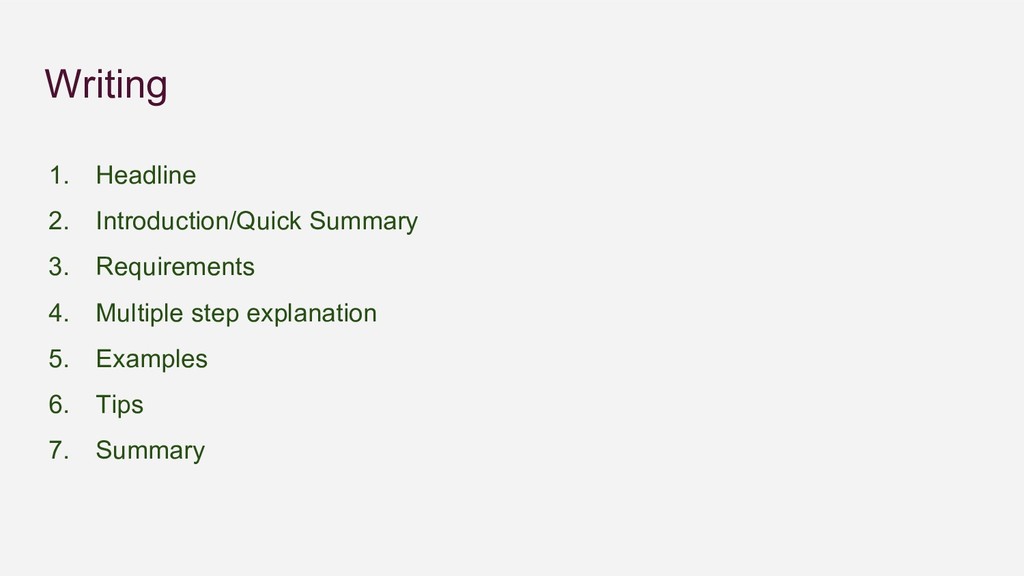
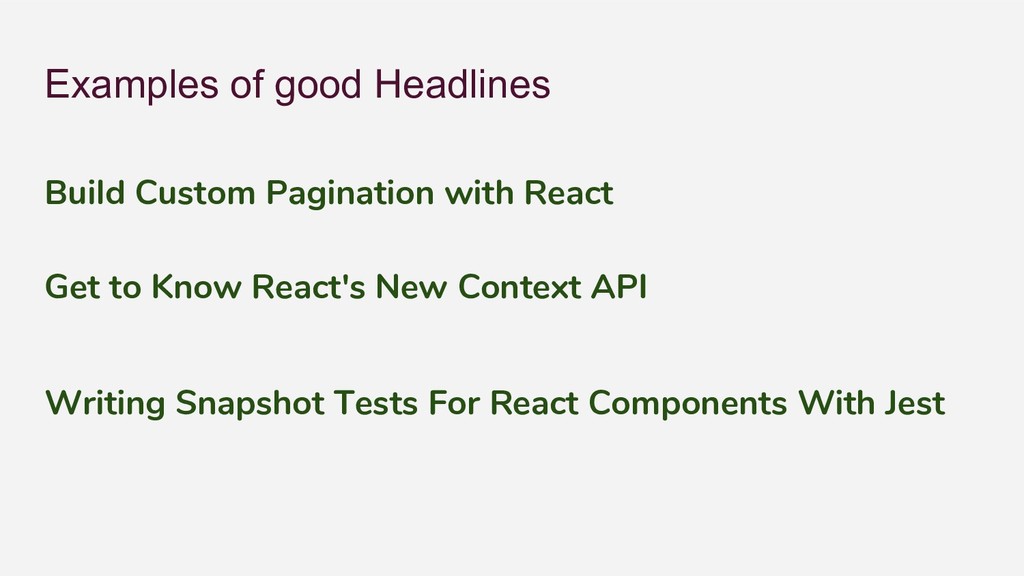
  13. Examples of good Headlines Build Custom Pagination with React Get

    to Know React's New Context API Writing Snapshot Tests For React Components With Jest
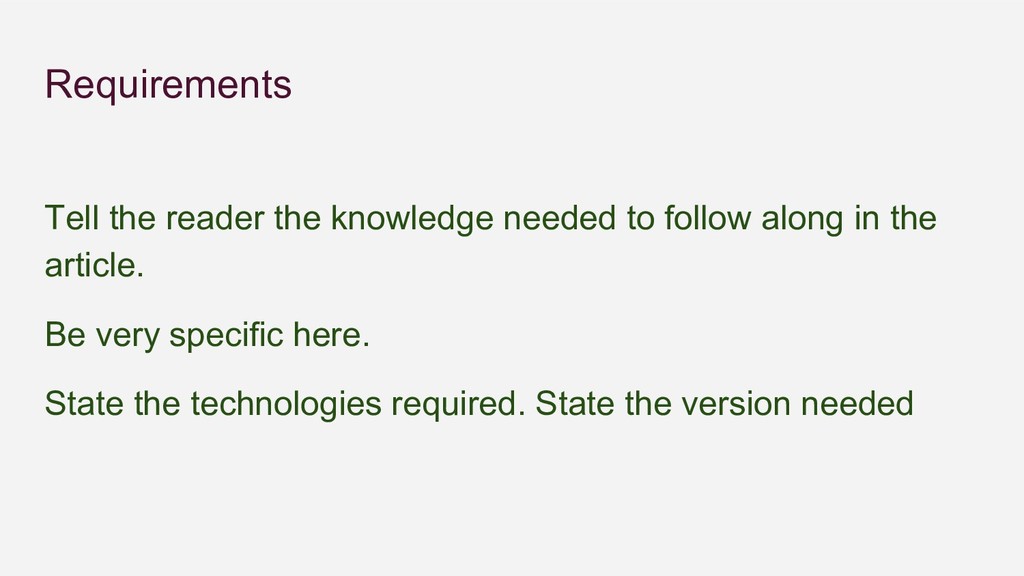
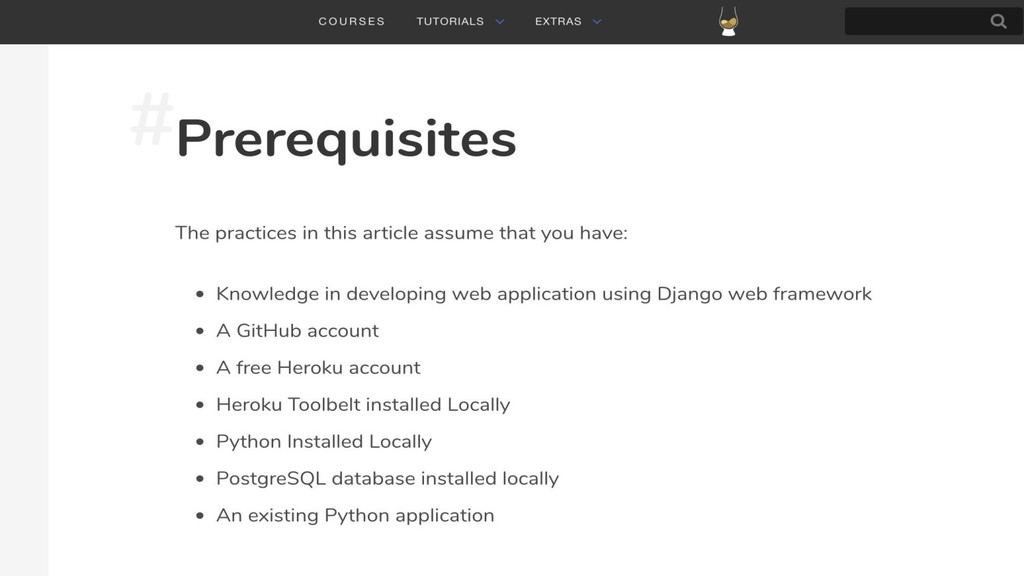
  14. Requirements Tell the reader the knowledge needed to follow along

    in the article. Be very specific here. State the technologies required. State the version needed
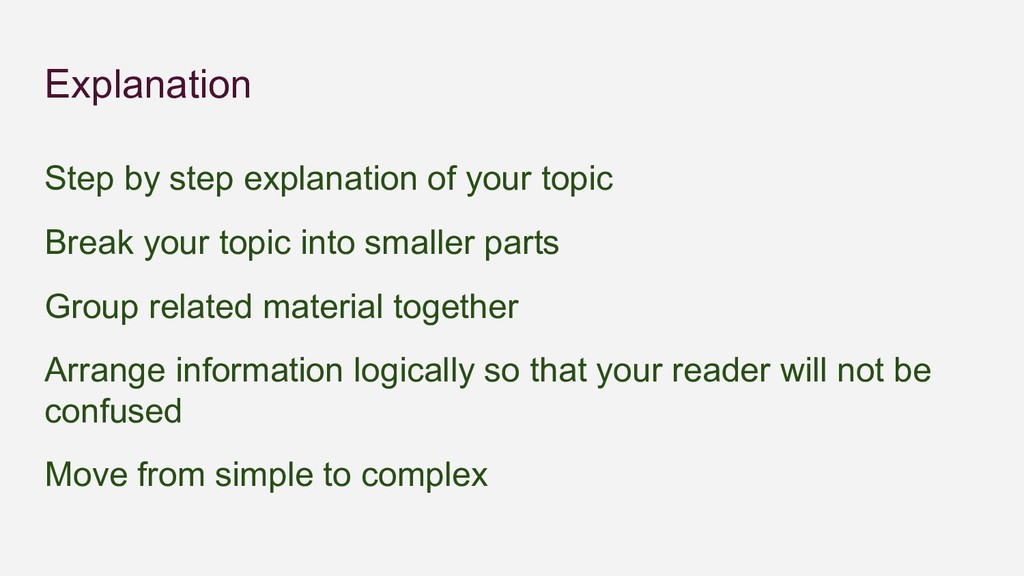
  15. Explanation Step by step explanation of your topic Break your

    topic into smaller parts Group related material together Arrange information logically so that your reader will not be confused Move from simple to complex
  16. Summary Give a summary of what you’ve discussed. Repeat important

    points for emphasis Add links to resources you found helpful Add links to resources if the reader needs more information
  17. Tips on Writing 1. Keep it simple. Do not write

    ten sentences to explain a concept when two or three will do. 2. Do not assume that your reader understands the jargons you use. Explain when you can. 3. If your article is not a tutorial, do not make it too long. 4. Don’t write very long paragraphs.
  18. Tips on Writing 5. Do not use images for code

    examples. Don’t do it!!! People need to be able to copy your code if they need it. 6. Embed your Codepen or JS code examples so that user can run it in the article. 7. Don’t make your user feel stupid. Avoid using words like ‘simply’, ‘just’. 8. Use a grammar editor like Grammarly, Hemmingway. 9. A little humour is good but don’t overdo it.
  19. Code Review Important especially when for tutorials and when you

    have code examples. Have someone follow your tutorial step by step to make sure the code works
  20. What to expect Feedback - People will criticize, people will

    point out your mistakes. Accept it and make corrections when necessary. You’ll learn a lot from such feedback.
  21. Moving on Write regularly - as often as you can.

    Be consistent. Keep up with new tools or frameworks in your area of specialization. Build a brand of quality content.