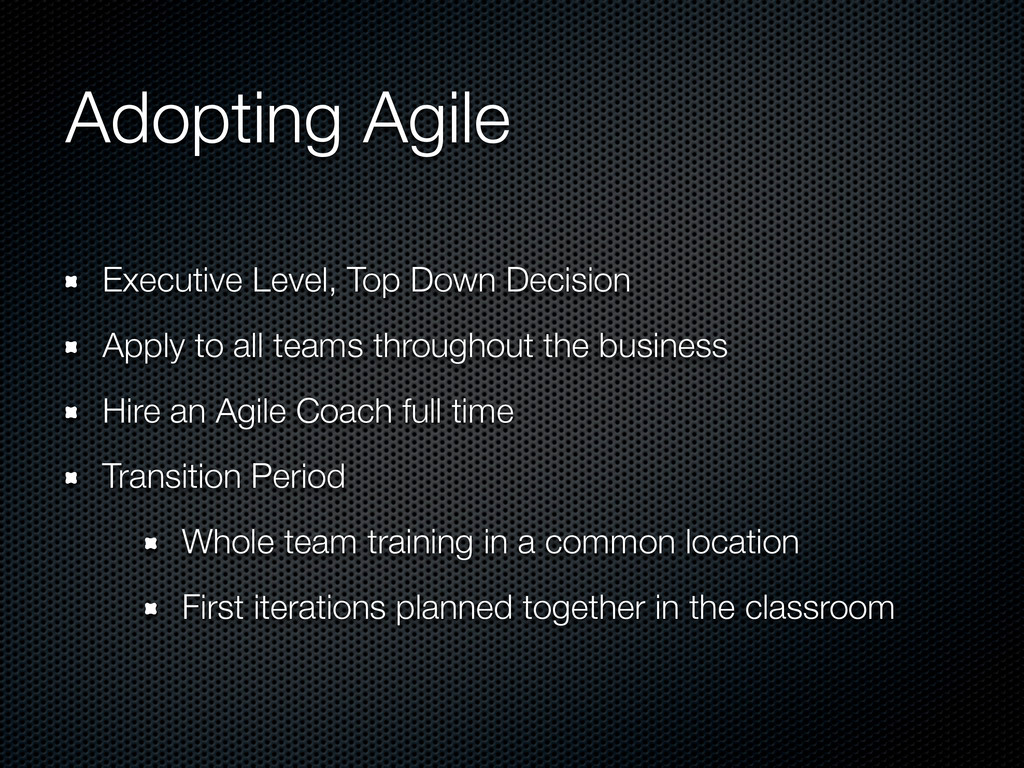
the business Hire an Agile Coach full time Transition Period Whole team training in a common location First iterations planned together in the classroom Adopting Agile
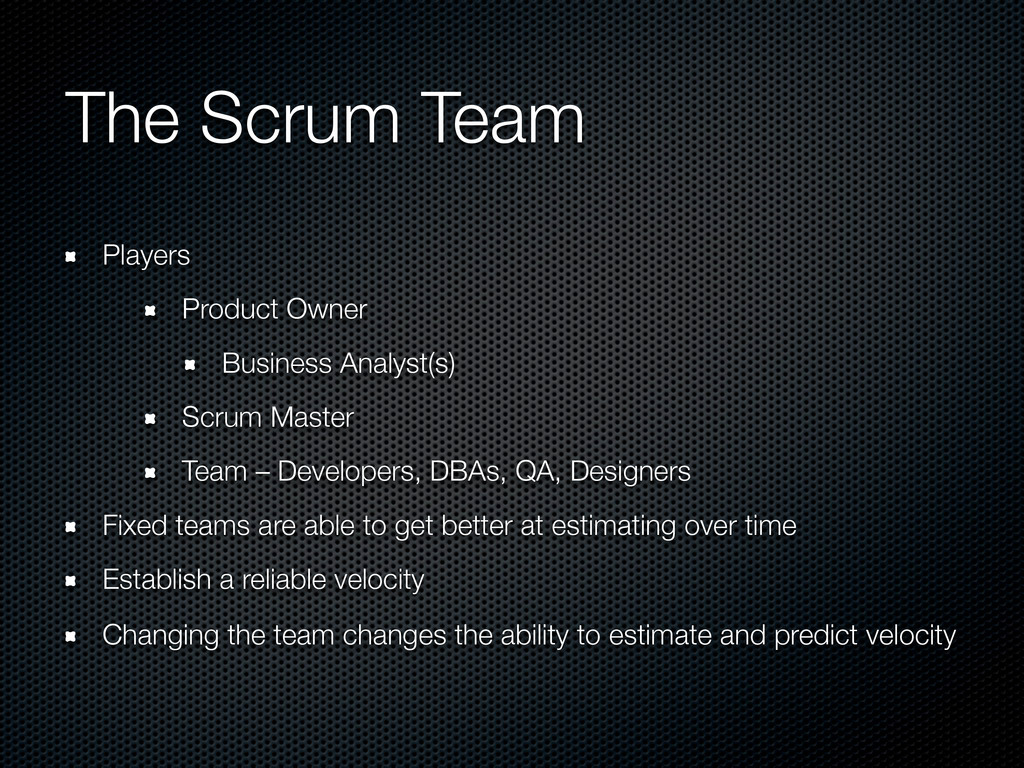
DBAs, QA, Designers Fixed teams are able to get better at estimating over time Establish a reliable velocity Changing the team changes the ability to estimate and predict velocity The Scrum Team
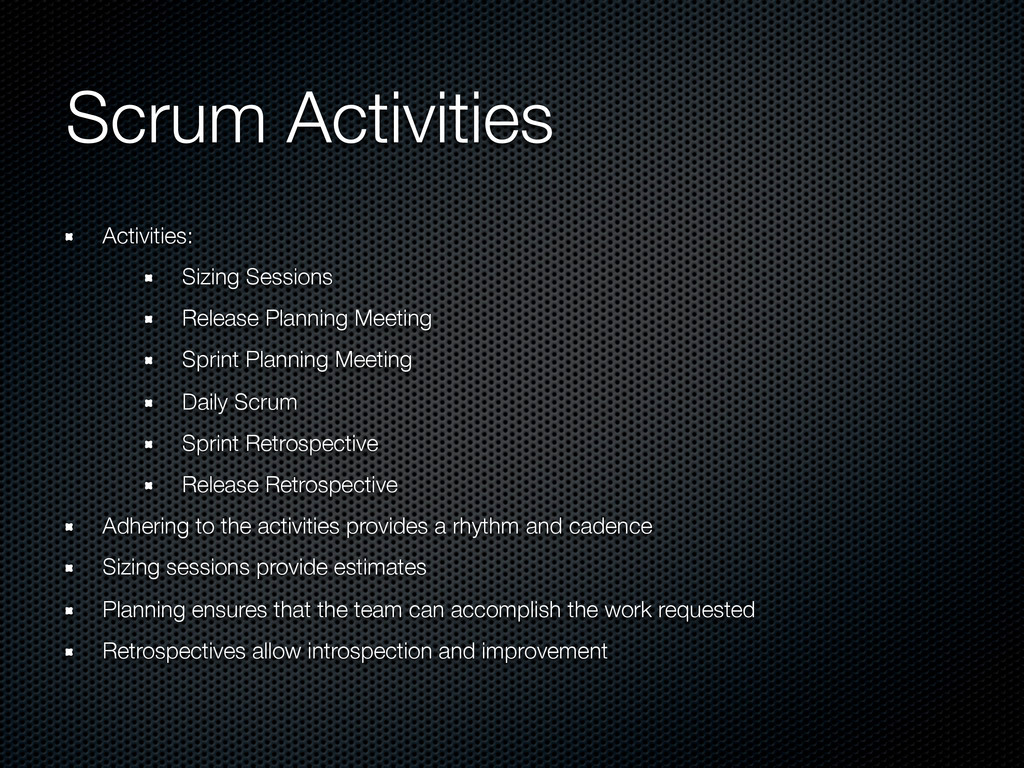
Scrum Sprint Retrospective Release Retrospective Adhering to the activities provides a rhythm and cadence Sizing sessions provide estimates Planning ensures that the team can accomplish the work requested Retrospectives allow introspection and improvement Scrum Activities
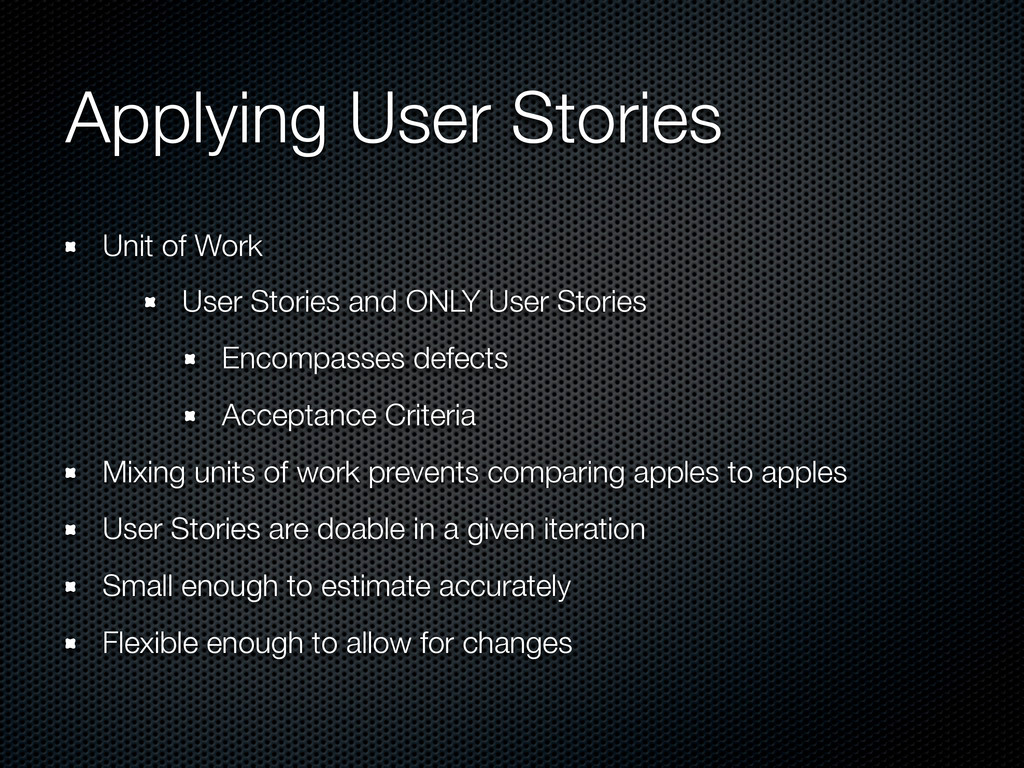
defects Acceptance Criteria Mixing units of work prevents comparing apples to apples User Stories are doable in a given iteration Small enough to estimate accurately Flexible enough to allow for changes Applying User Stories
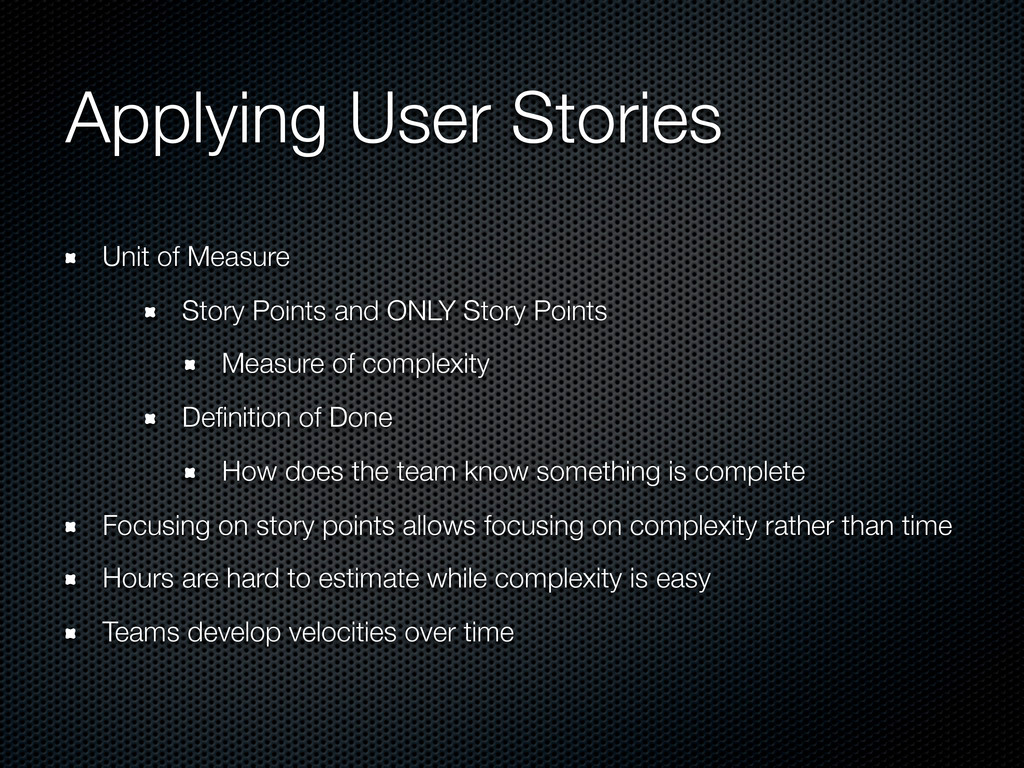
of complexity Definition of Done How does the team know something is complete Focusing on story points allows focusing on complexity rather than time Hours are hard to estimate while complexity is easy Teams develop velocities over time Applying User Stories
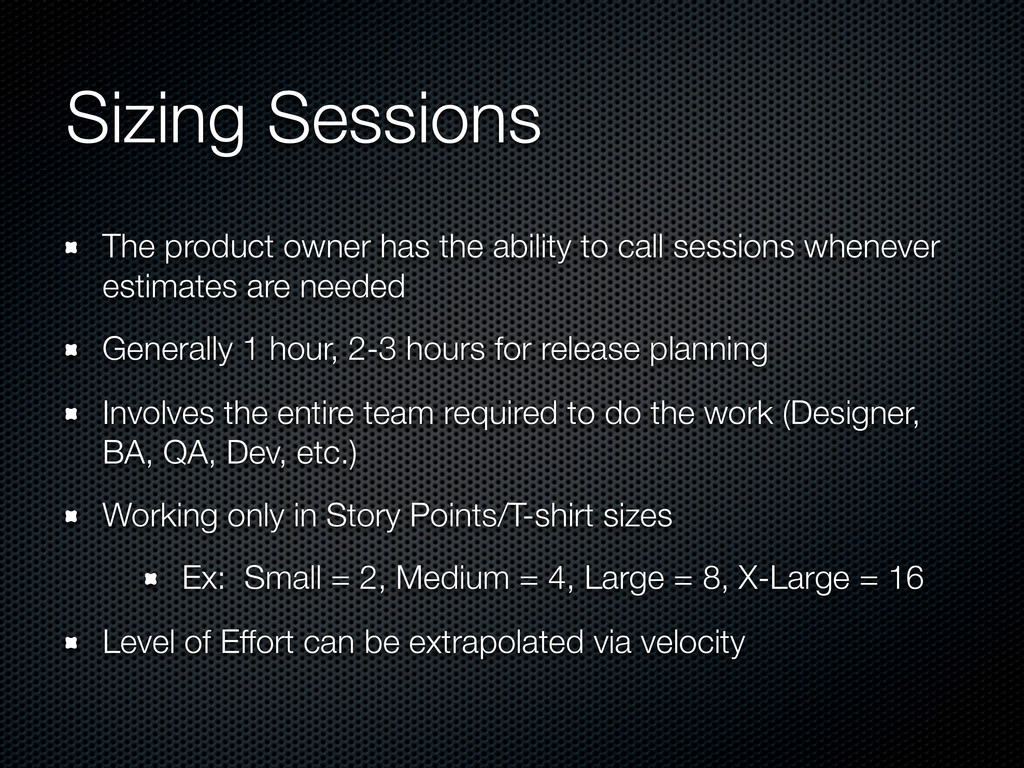
estimates are needed Generally 1 hour, 2-3 hours for release planning Involves the entire team required to do the work (Designer, BA, QA, Dev, etc.) Working only in Story Points/T-shirt sizes Ex: Small = 2, Medium = 4, Large = 8, X-Large = 16 Level of Effort can be extrapolated via velocity Sizing Sessions
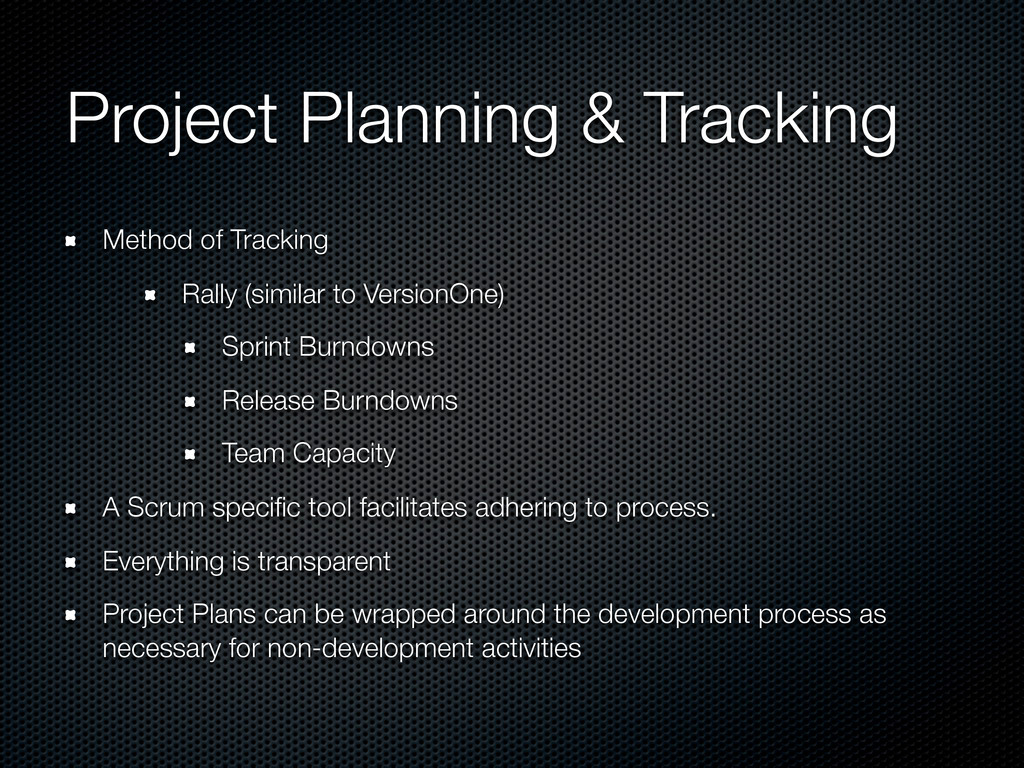
Burndowns Team Capacity A Scrum specific tool facilitates adhering to process. Everything is transparent Project Plans can be wrapped around the development process as necessary for non-development activities Project Planning & Tracking
Failure to complete committed work in an iteration is visible as a change in Velocity and thus target end date Either change the scope or change the date Measuring Progress
and executing over time Picking a process, unit of work and measurement allows consistency Focusing on complexity is easier than focusing on time Measuring progress allows adjusting estimates Retrospectives allow introspection and improvement Lessons Learned


 panda728
 ___akari11
 oniak3ibm
 nao_randd
 hschwentner
 neuecc
 gam0022
 steliosf
 takai
 yub0n
 satoshi256kbyte
 ivargrimstad
 malarkey
 jmmastey
 techseoconnect
 eileencodes
 davidcarrasco
 keithpitt
 addyosmani
 aemeredith
 kimpetersen
 mongodb
 uxyall
 bluesmoon