Share
Embed
Transcript
17 slides
-
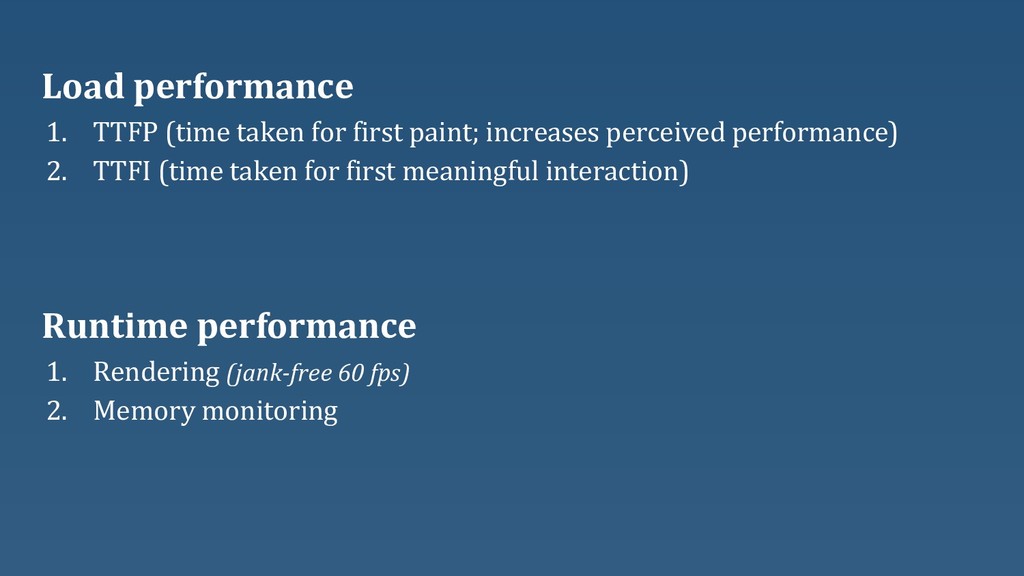
Load performance 1. TTFP (time taken for first paint; increases
perceived performance) 2. TTFI (time taken for first meaningful interaction) Runtime performance 1. Rendering (jank-free 60 fps) 2. Memory monitoring -
Memory Management JS engine does automatic memory allocation. So, we
don’t have any role to play So, we don’t have any role to play -
Everything on memory are not leaks. In ember world, ideally
you’d want to look for `destroyed` objects being held Few profiling tips Force garbage collection before taking snapshots Always use Incognito/Guest window Identify & measure the leaks before fixing it -
• Prototypal state leakage • Event listeners leakage • Third
party libs • window.set*/Ember.run* timers • Module scope leakage • Global leakage In ember.js apps -
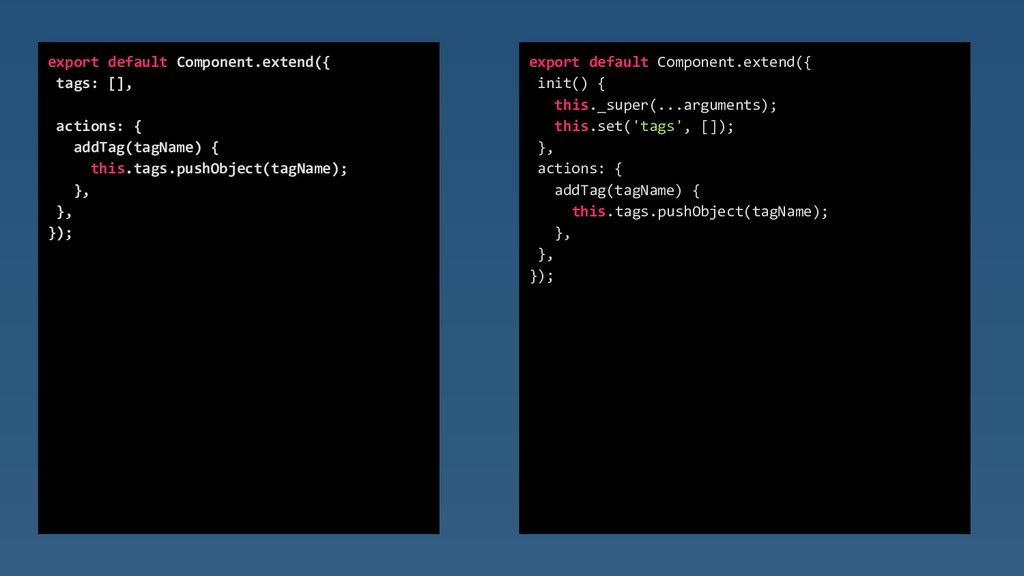
export default Component.extend({ init() { this._super(...arguments); this.set('tags', []); }, actions:
{ addTag(tagName) { this.tags.pushObject(tagName); }, }, }); export default Component.extend({ tags: [], actions: { addTag(tagName) { this.tags.pushObject(tagName); }, }, }); -
export default Component.extend({ didInsertElement() { this._super(...arguments); this._closeModal = this.closeModal.bind(this); window.addEventListener('keydown',
this._closeModal); }, willDestroyElement() { this._super(...arguments); window.removeEventListener('keydown', this._closeModal); }, closeModal(event) { if (event.which === 27) { this.onClose(); } } }); export default Component.extend({ didInsertElement() { this._super(...arguments); window.addEventListener('keydown', this.closeModal.bind(this)); }, willDestroyElement() { this._super(...arguments); window.removeEventListener('keydown', this.closeModal); }, closeModal(event) { if (event.which === 27) { this.onClose(); } } }); -
export default TextField.extend({ didInsertElement() { this._super(...arguments); this.$().selectize({ delimiter: ',', create:
function(input) { return { value: input, text: input }; } }); }, }); export default TextField.extend({ didInsertElement() { this._super(...arguments); this.$().selectize({ delimiter: ',', create: function(input) { return { value: input, text: input }; } }); }, willDestroyElement() { this._super(...arguments); this.$()[0].selectize.destroy(); } }); -
export default Component.extend({ didInsertElement() { this._super(...arguments); this.setTimeoutId = setTimeout(() =>
{ // this.doSomeStuffs() }, 1000); this.runTimerId = Ember.run.later(() => { // this.doSomeStuffs() }, 1000); }, willDestroyElement() { this._super(...arguments); clearTimeout(this.setTimeoutId); Ember.run.cancel(this.runTimerId); } }); export default Component.extend({ didInsertElement() { this._super(...arguments); setTimeout(() => { // this.doSomeStuffs() }, 1000); Ember.run.later(() => { // this.doSomeStuffs() }, 1000); }, }); -
const UNIQUE_OPTIONS_COUNTER = new Map() export default Component.extend({ options: UNIQUE_OPTIONS_COUNTER,
actions: { addFooToOptions() { this.options.set(this, 'foo') } } }); export default Component.extend({ init() { this._super(...arguments); this.set('options', new Map()); }, actions: { addFooToOptions() { this.options.set(this, 'foo') } } }); -
Summarising - Clear all timers/event listeners/third-party libs - Don’t pass
the entire controller/component references around (yield the component’s public api using hash helper) - Do not set non-primitives on prototypes - Don’t increase the scope of your objects