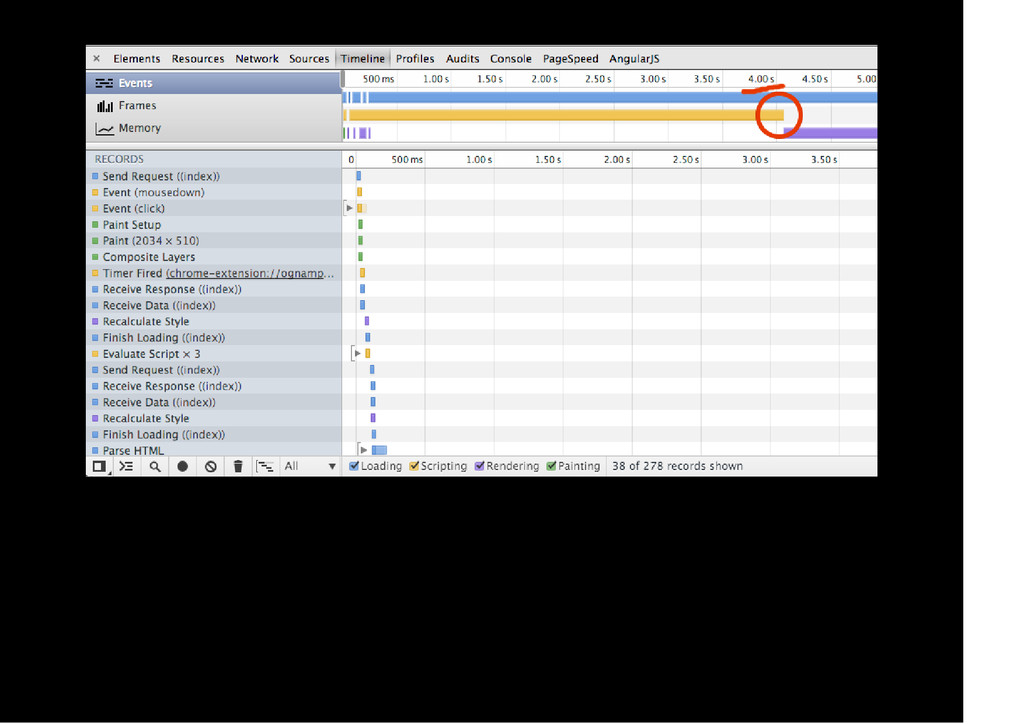
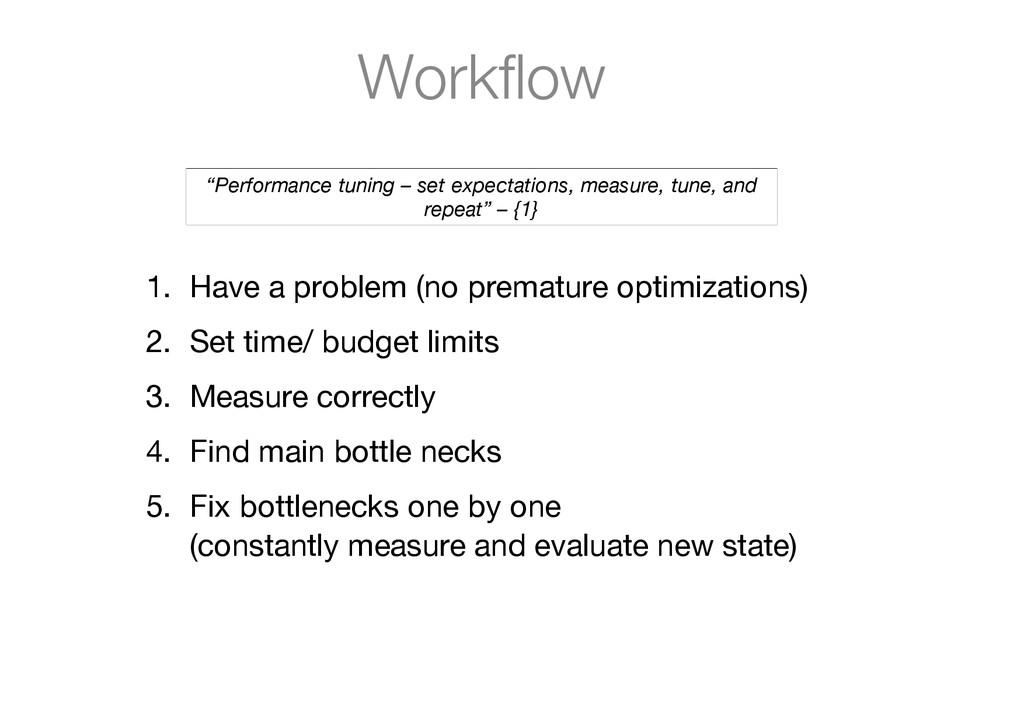
– {1} 1. Have a problem (no premature optimizations) 2. Set time/ budget limits 3. Measure correctly 4. Find main bottle necks 5. Fix bottlenecks one by one (constantly measure and evaluate new state)
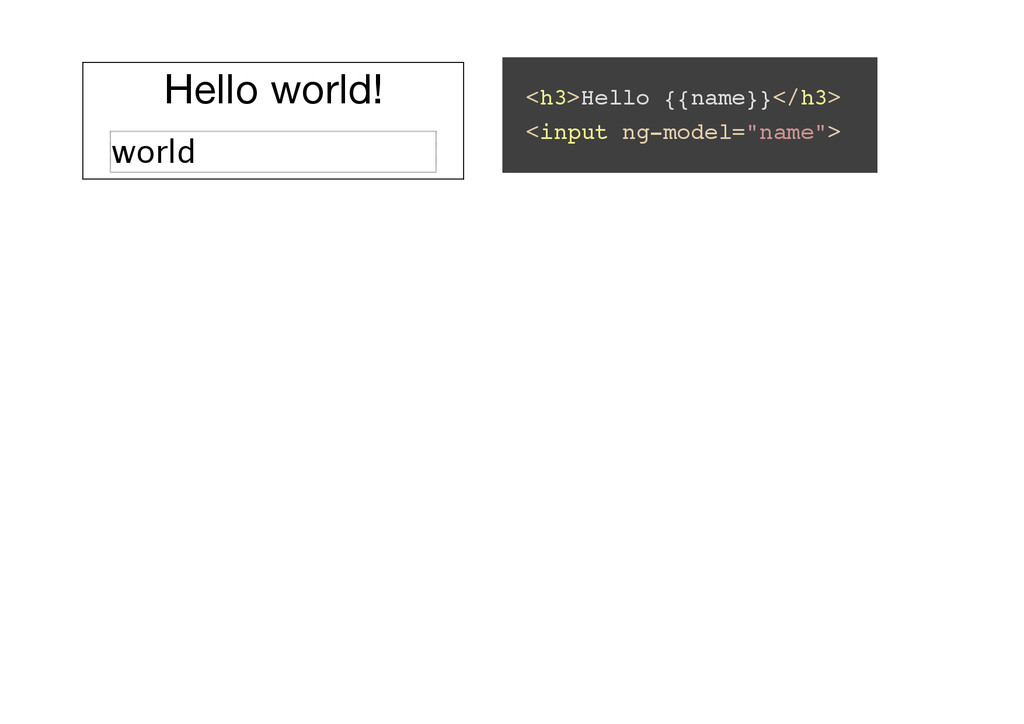
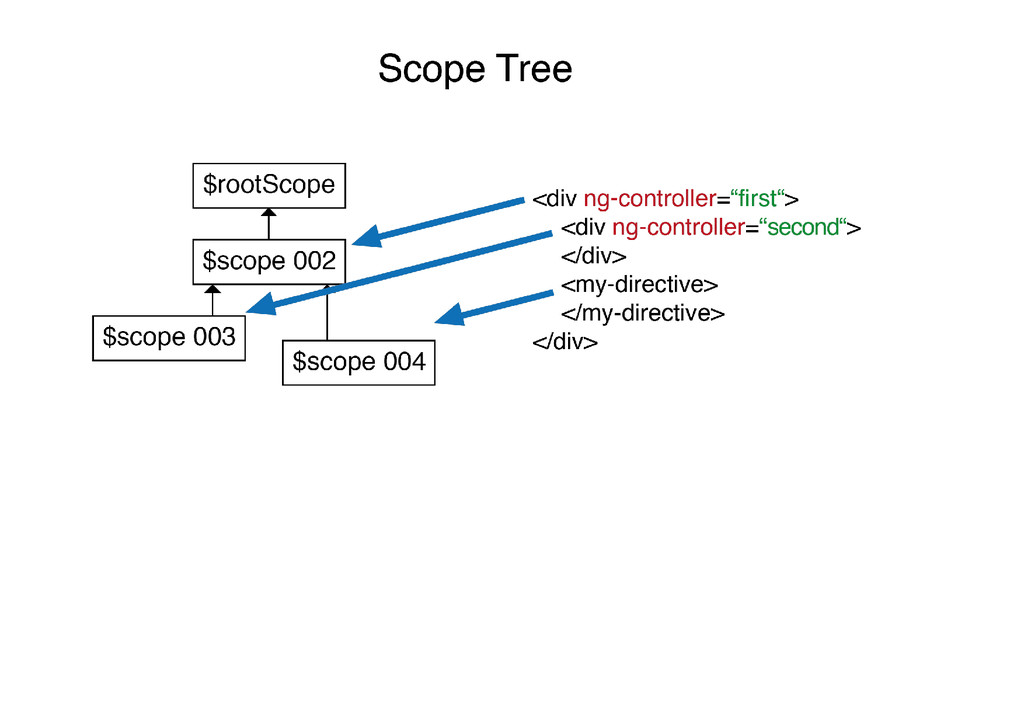
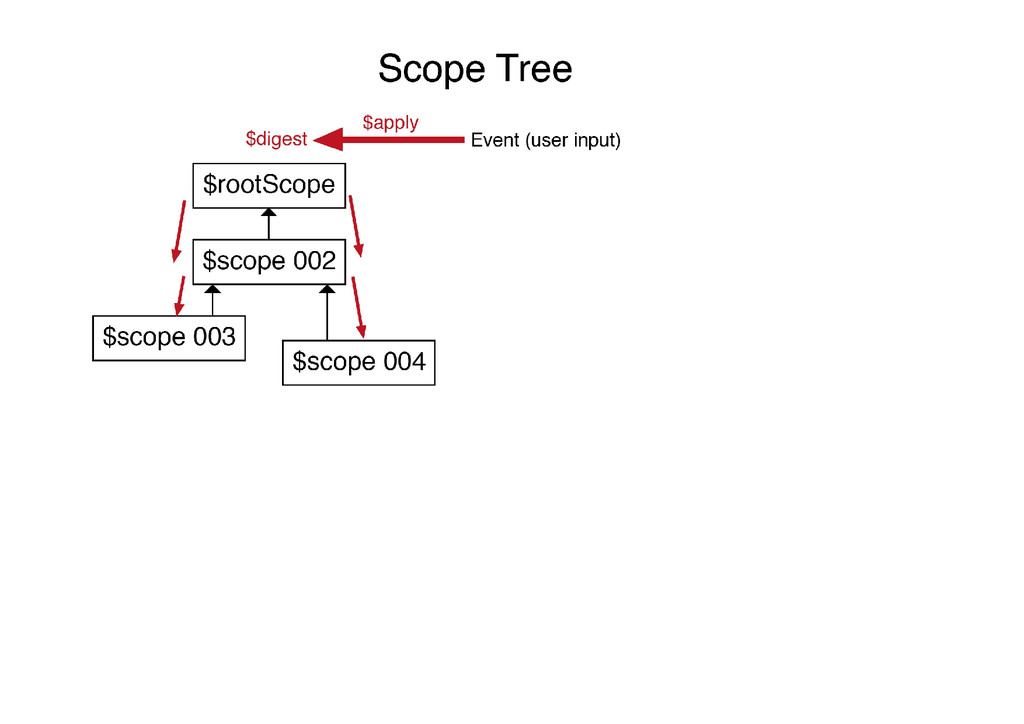
the $digest cycle a previous stored value is compared to the actual model value. Process is repeated until models are stable One: Don't watch for invisible (ng-if > ng-show) Two: Avoid complex watch-expressions Three: Ensure DOM updtes are batched Workflow: detect problem, set expectations, measure, fix, repeat * Small Improvements is hiring
Peter Bacon Darwin, Packt Publishing, 23. August 2013 2. 3. 4. 5. 6. 7. AngularJS Performance Tuning for Long Lists Optimizing AngularJS: 1200ms to 35ms Analysing Performance of AngularJS Screens Misco Hevery on AngularJS performance AngularJS: 6 Common Pitfalls Using Scopes Bindonce: Zero watches binding for AngularJS


 sfroestl
 tomokusaba
 pfn
pfn
 satomasahiro2005
 grimoh
 mhrtech
 camiha
 shugo
shugo
 tetsuya28
 kaminashi
 ueponx
 yu23ki14
 yuuuuuuu168
 aleyda
 keavy
keavy
 reverentgeek
 codingconduct
 hannesfritz
 lara
lara
 baasie
 inesmontani
 letsgokoyo
 techseoconnect
 tamaranovitovic
 jonrohan