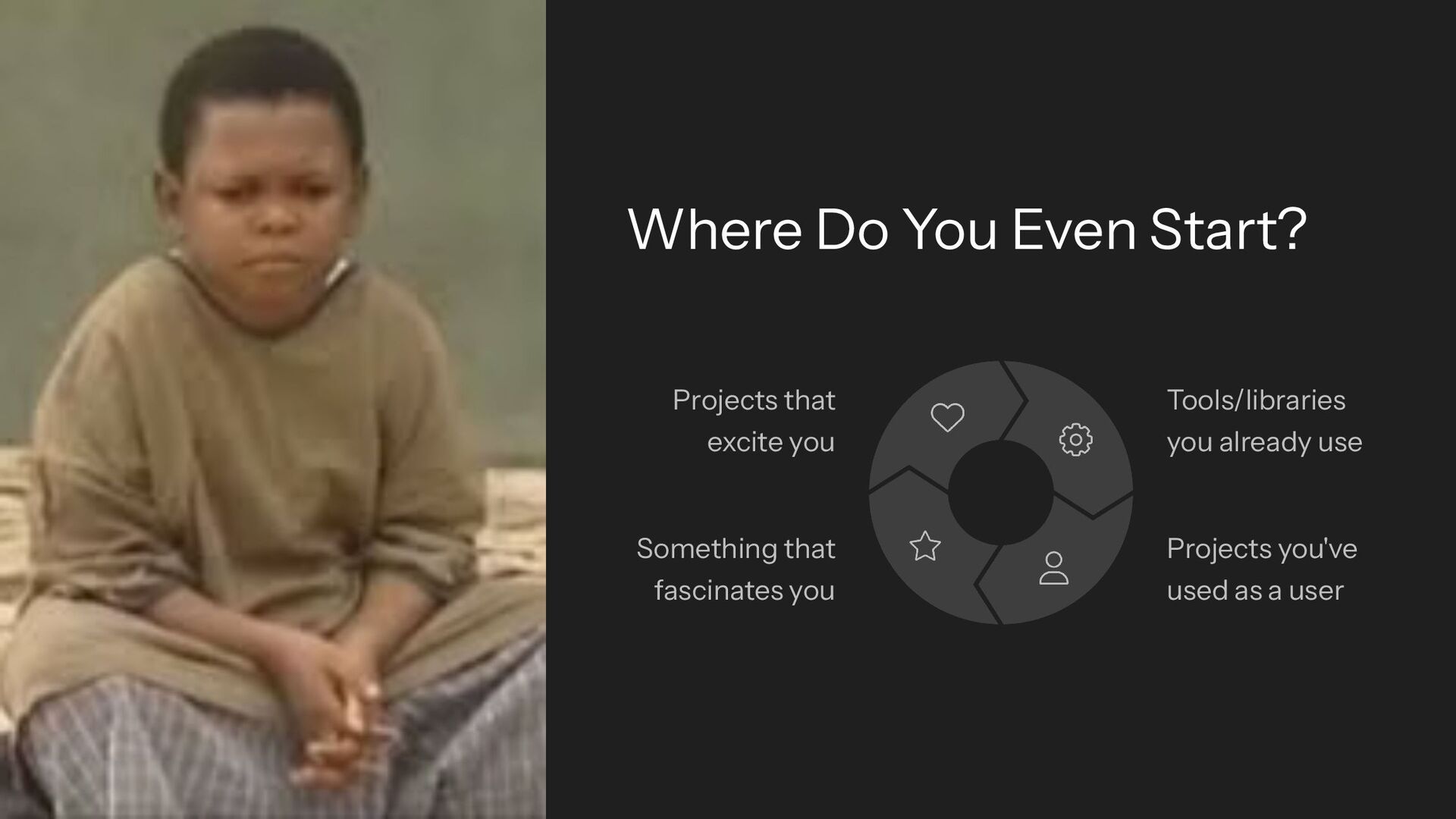
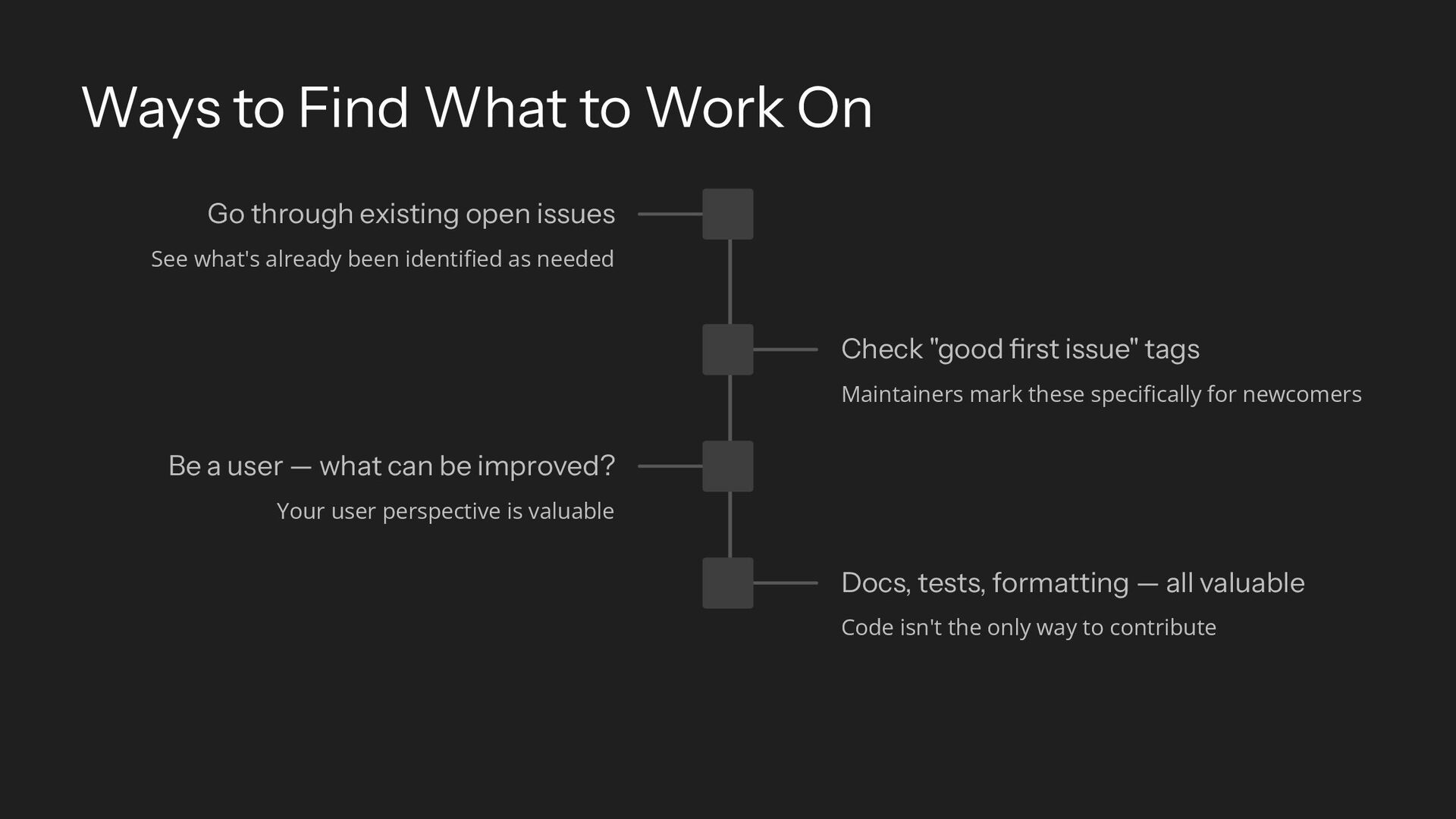
open issues See what's already been identified as needed Check "good first issue" tags Maintainers mark these specifically for newcomers Be a user — what can be improved? Your user perspective is valuable Docs, tests, formatting — all valuable Code isn't the only way to contribute
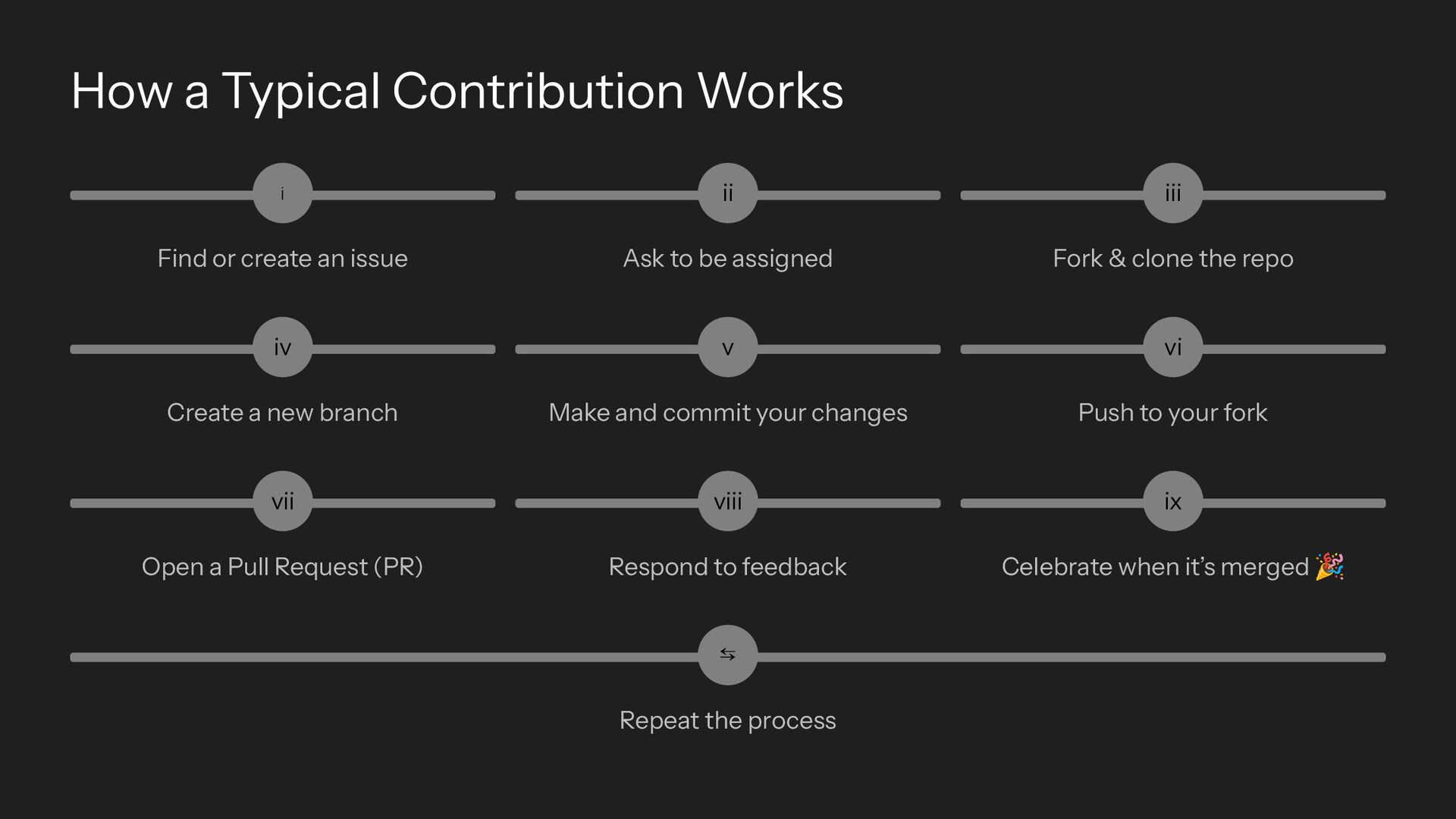
issue ii Ask to be assigned iii Fork & clone the repo iv Create a new branch v Make and commit your changes vi Push to your fork vii Open a Pull Request (PR) viii Respond to feedback ix Celebrate when it’s merged 🎉 ⇆ Repeat the process
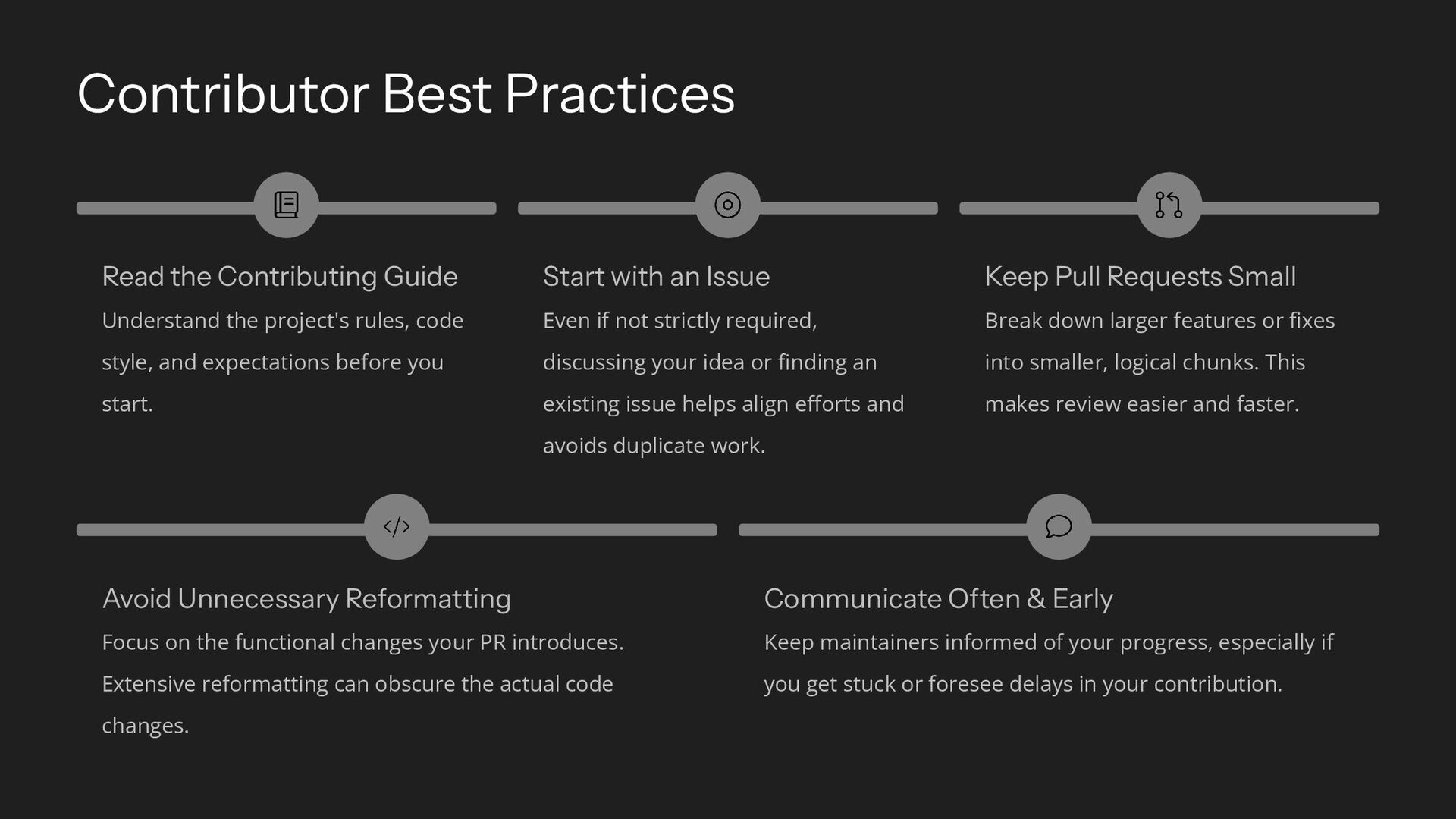
rules, code style, and expectations before you start. Start with an Issue Even if not strictly required, discussing your idea or finding an existing issue helps align efforts and avoids duplicate work. Keep Pull Requests Small Break down larger features or fixes into smaller, logical chunks. This makes review easier and faster. Avoid Unnecessary Reformatting Focus on the functional changes your PR introduces. Extensive reformatting can obscure the actual code changes. Communicate Often & Early Keep maintainers informed of your progress, especially if you get stuck or foresee delays in your contribution.
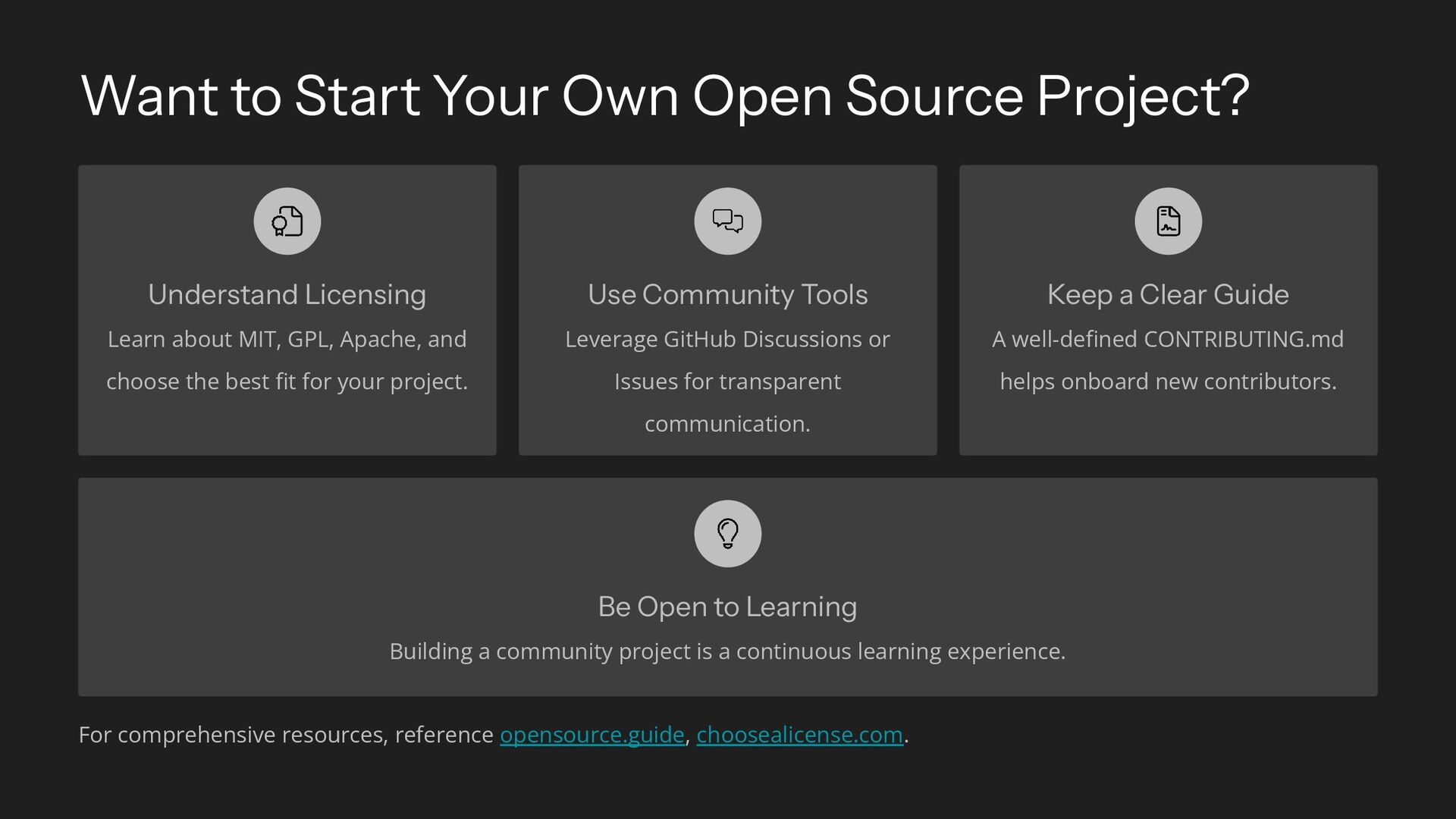
Learn about MIT, GPL, Apache, and choose the best fit for your project. Use Community Tools Leverage GitHub Discussions or Issues for transparent communication. Keep a Clear Guide A well-defined CONTRIBUTING.md helps onboard new contributors. Be Open to Learning Building a community project is a continuous learning experience. For comprehensive resources, reference opensource.guide, choosealicense.com.
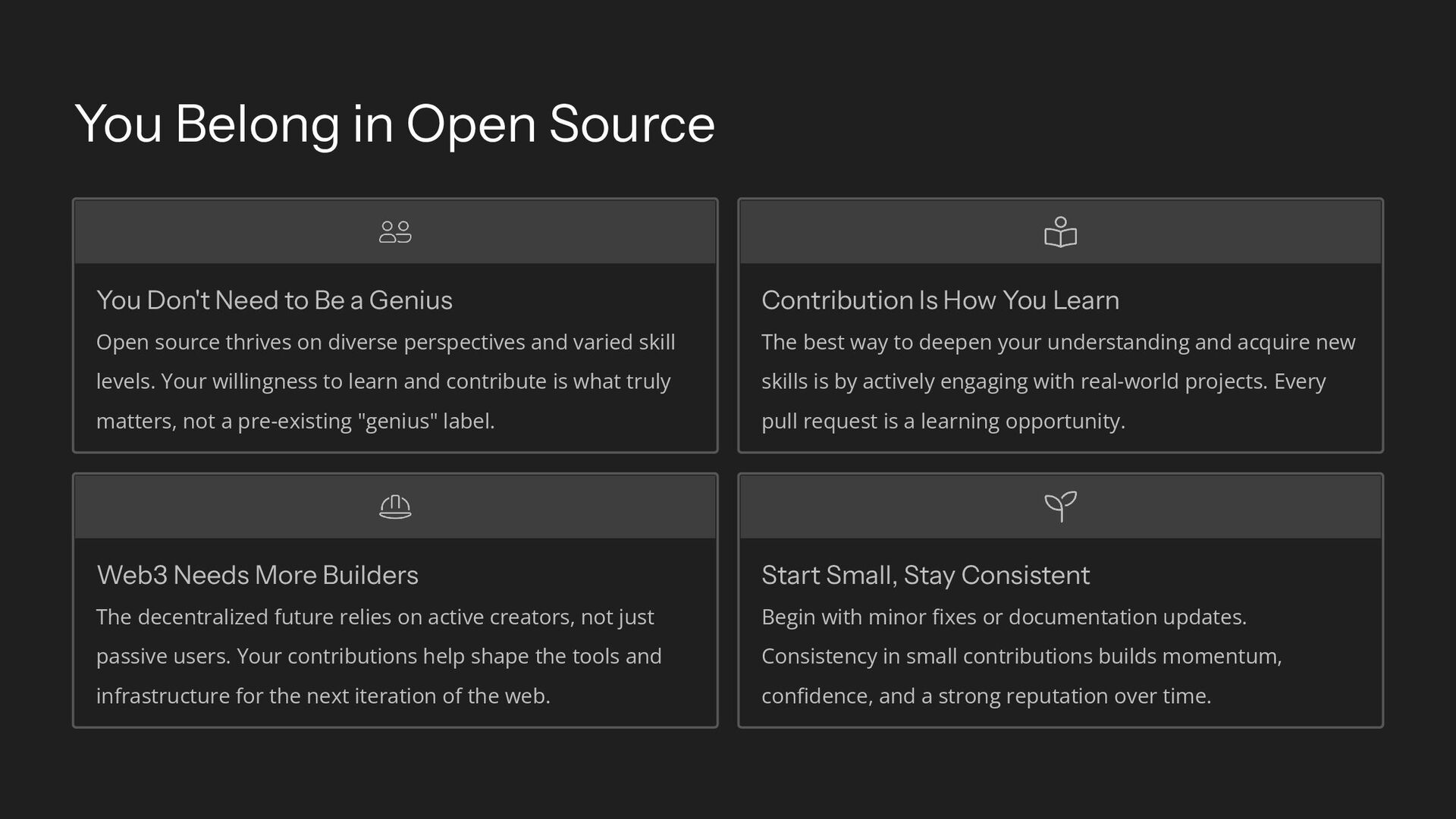
a Genius Open source thrives on diverse perspectives and varied skill levels. Your willingness to learn and contribute is what truly matters, not a pre-existing "genius" label. Contribution Is How You Learn The best way to deepen your understanding and acquire new skills is by actively engaging with real-world projects. Every pull request is a learning opportunity. Web3 Needs More Builders The decentralized future relies on active creators, not just passive users. Your contributions help shape the tools and infrastructure for the next iteration of the web. Start Small, Stay Consistent Begin with minor fixes or documentation updates. Consistency in small contributions builds momentum, confidence, and a strong reputation over time.


 seathinner
 stephaniewalter
 paigeccino
 inesmontani
 eileencodes
 deanohume
 tmiket
 aemeredith
 stuffmc
 helmedeiros
 aleyda
 frankvandijk