Upgrade to Pro — share decks privately, control downloads, hide ads and more …

Fraud Detection System using Deep Neural Networks

Sponsored · Your Podcast. Everywhere. Effortlessly. Share. Educate. Inspire. Entertain. You do you. We'll handle the rest.

Fraud Detection System using Deep Neural Networks

My presentation slide in Re-Work Deep Learning Summit at Singapore, 2017

Avatar for Hendri Karisma

Hendri Karisma

September 12, 2017
Tweet

More Decks by Hendri Karisma

Other Decks in Technology

Transcript

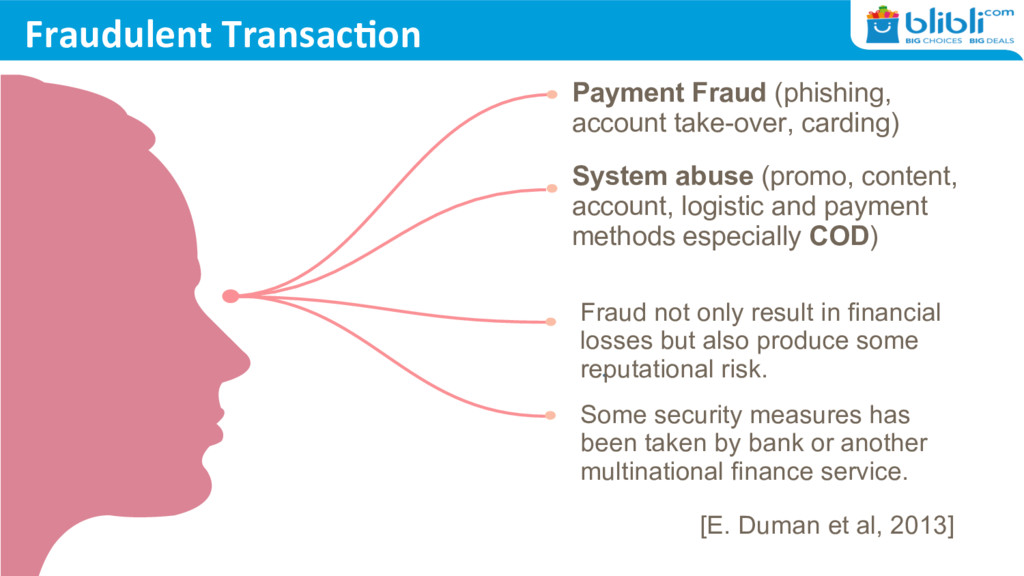
  1. Fraudulent Transac+on Payment Fraud (phishing, account take-over, carding) System abuse

    (promo, content, account, logistic and payment methods especially COD) Fraud not only result in financial losses but also produce some reputational risk. Some security measures has been taken by bank or another multinational finance service. [E. Duman et al, 2013]
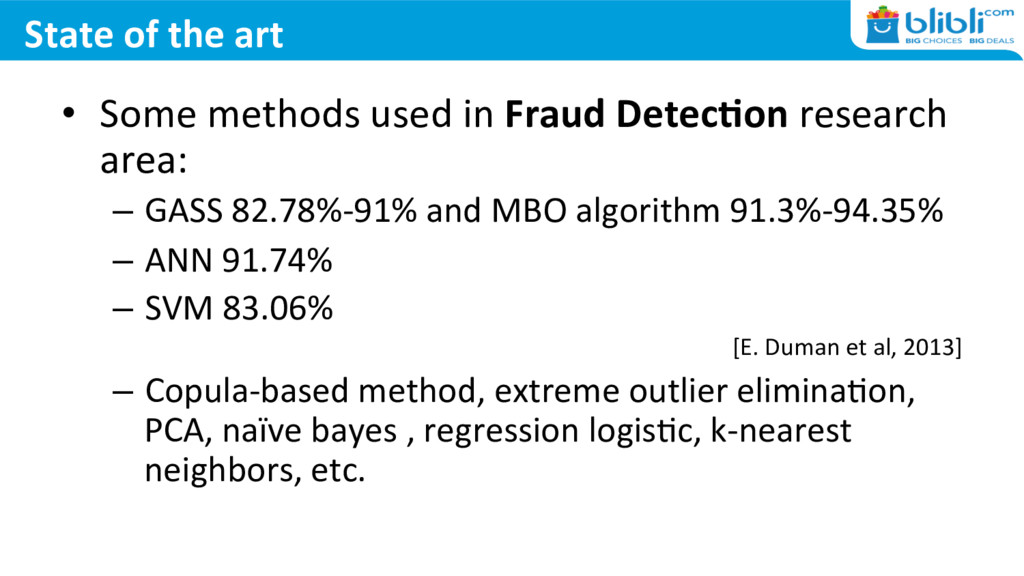
  2. State of the art •  Some methods used in Fraud

    Detec+on research area: –  GASS 82.78%-91% and MBO algorithm 91.3%-94.35% –  ANN 91.74% –  SVM 83.06% [E. Duman et al, 2013] –  Copula-based method, extreme outlier eliminaUon, PCA, naïve bayes , regression logisUc, k-nearest neighbors, etc.
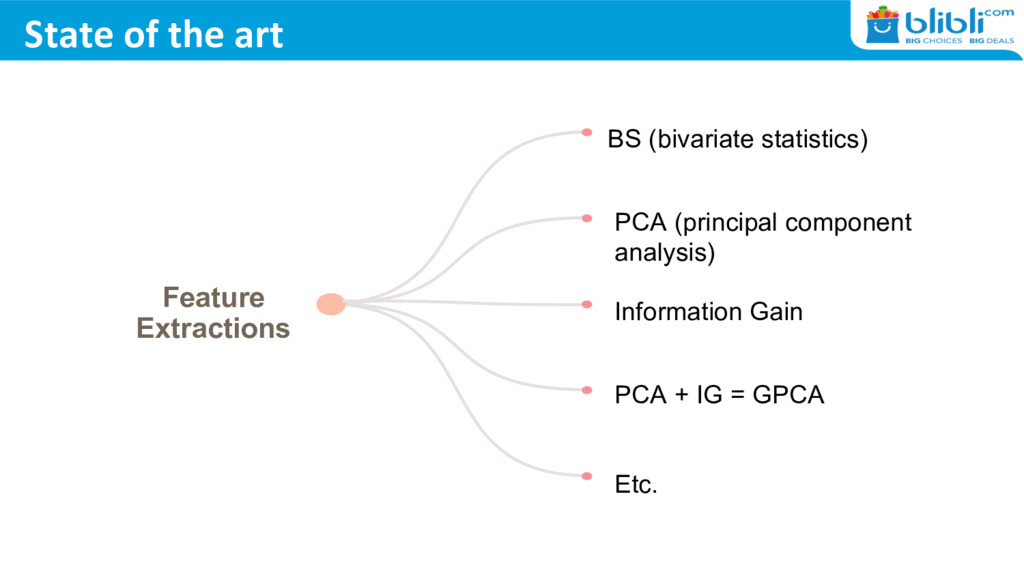
  3. State of the art BS (bivariate statistics) Feature Extractions PCA

    (principal component analysis) Information Gain PCA + IG = GPCA Etc.
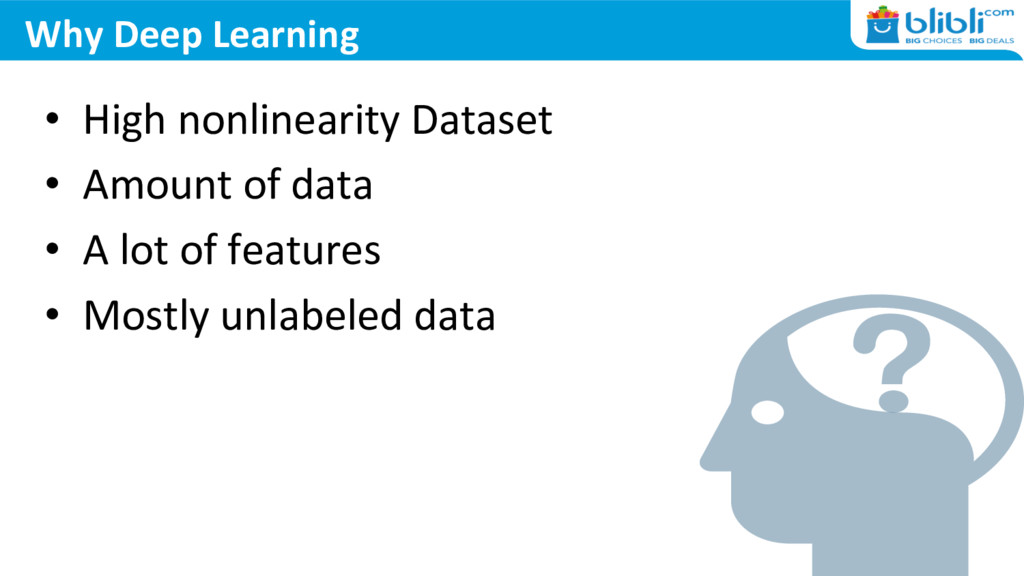
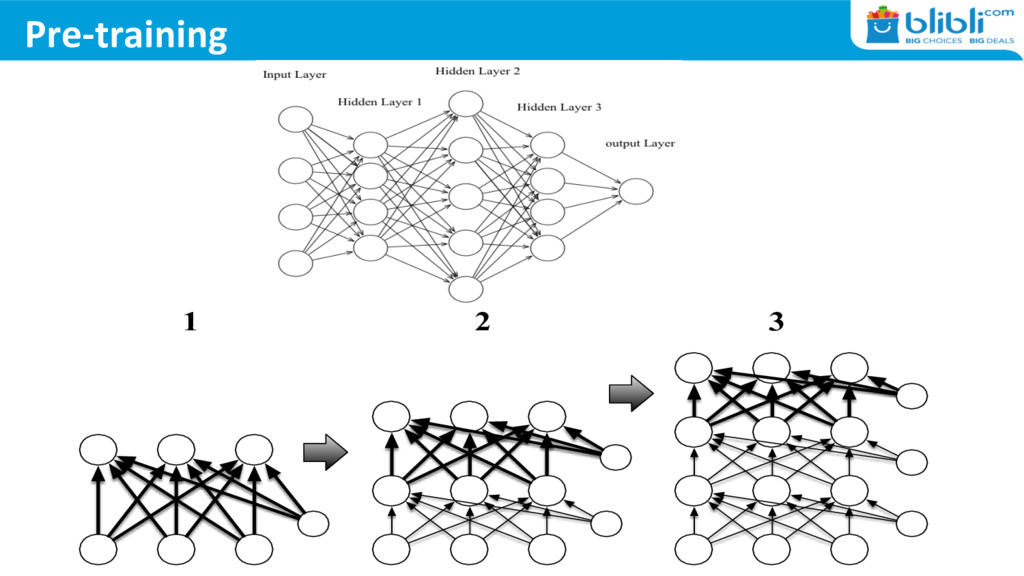
  4. Why Deep Learning •  High nonlinearity Dataset •  Amount of

    data •  A lot of features •  Mostly unlabeled data
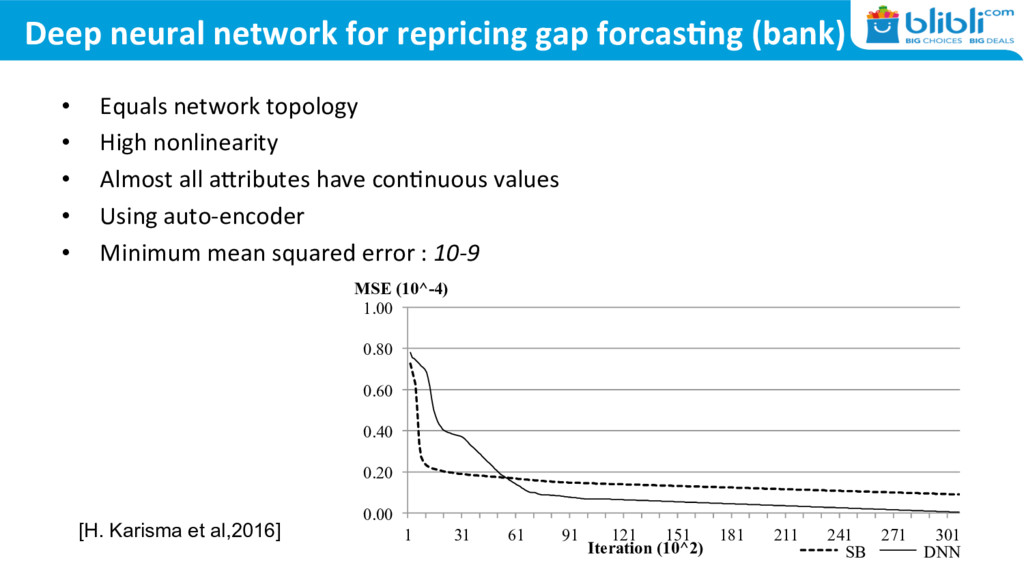
  5. Deep neural network for repricing gap forcas+ng (bank) •  Equals

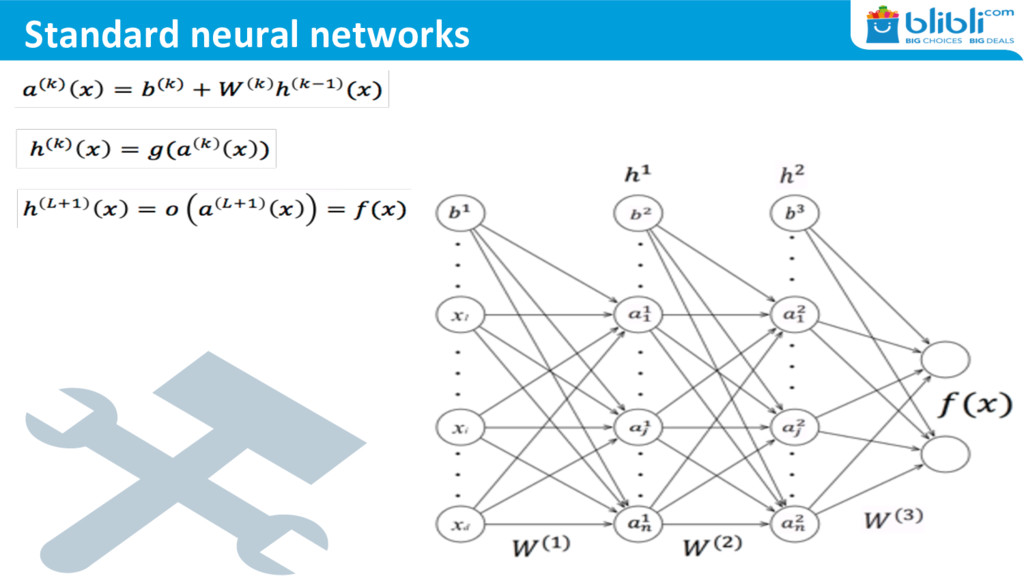
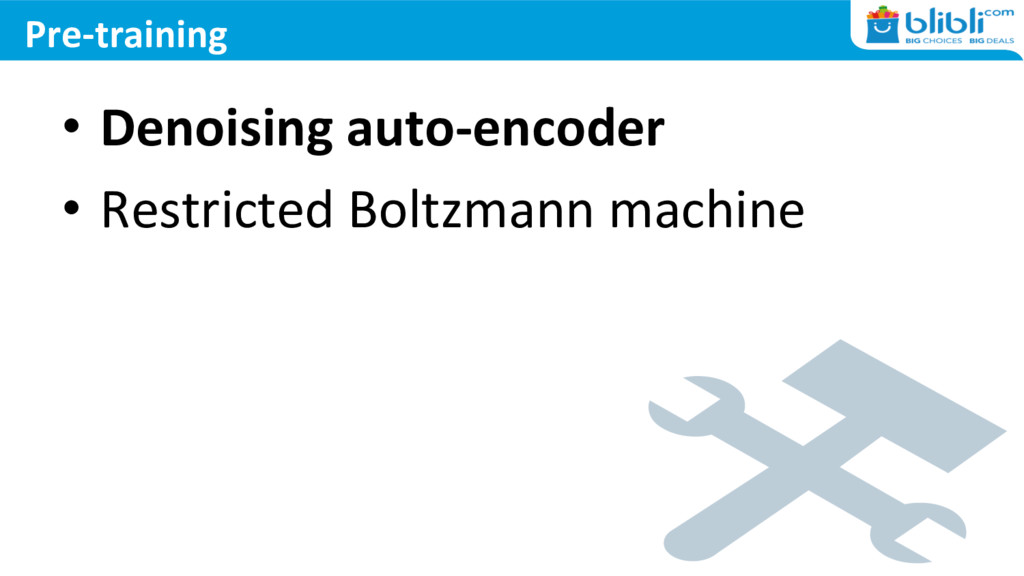
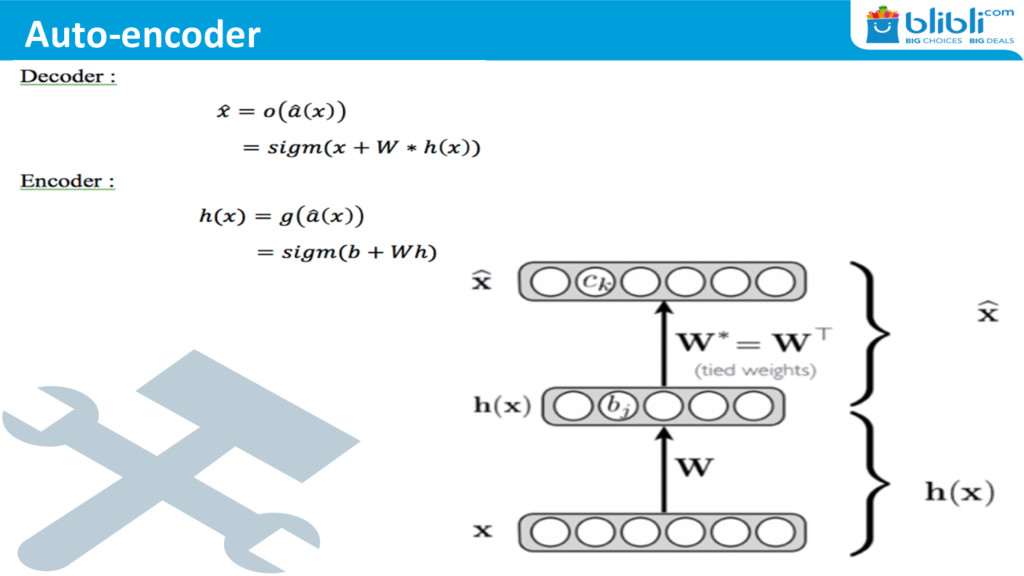
    network topology •  High nonlinearity •  Almost all a_ributes have conUnuous values •  Using auto-encoder •  Minimum mean squared error : 10-9 0.00 0.20 0.40 0.60 0.80 1.00 1 31 61 91 121 151 181 211 241 271 301 MSE (10^-4) Iteration (10^2) SB DNN [H. Karisma et al,2016]
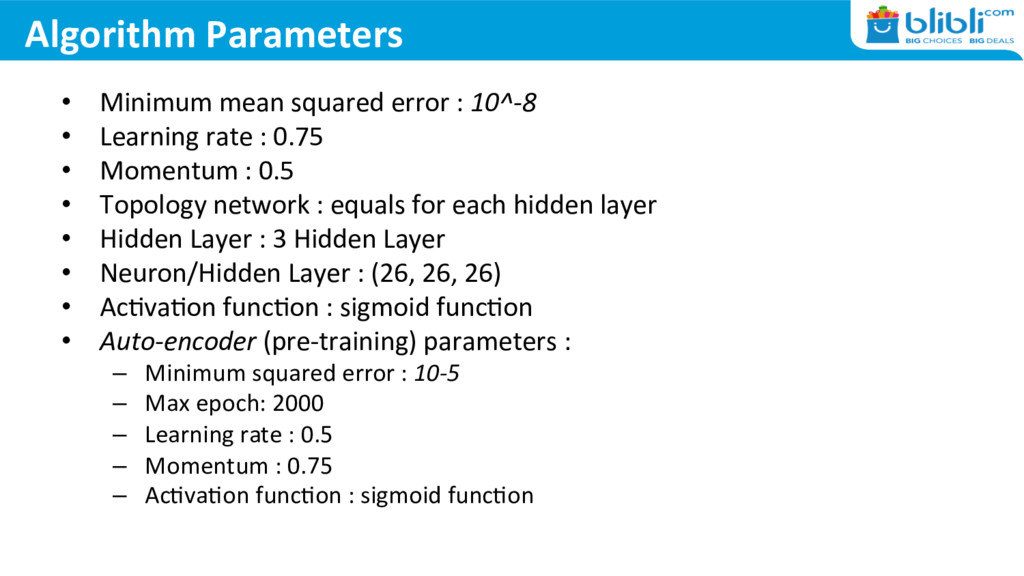
  6. Algorithm Parameters •  Minimum mean squared error : 10^-8 • 

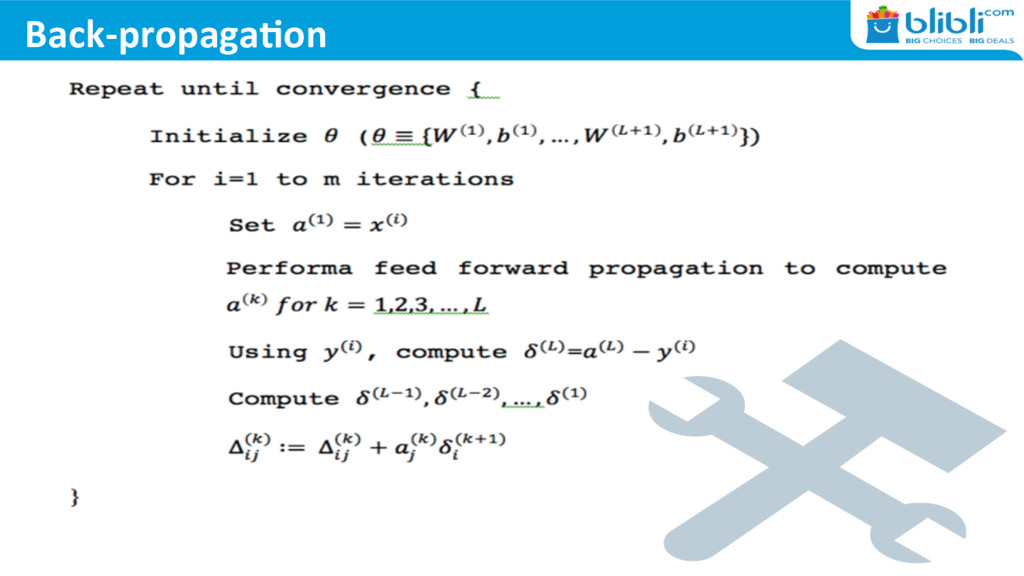
    Learning rate : 0.75 •  Momentum : 0.5 •  Topology network : equals for each hidden layer •  Hidden Layer : 3 Hidden Layer •  Neuron/Hidden Layer : (26, 26, 26) •  AcUvaUon funcUon : sigmoid funcUon •  Auto-encoder (pre-training) parameters : –  Minimum squared error : 10-5 –  Max epoch: 2000 –  Learning rate : 0.5 –  Momentum : 0.75 –  AcUvaUon funcUon : sigmoid funcUon
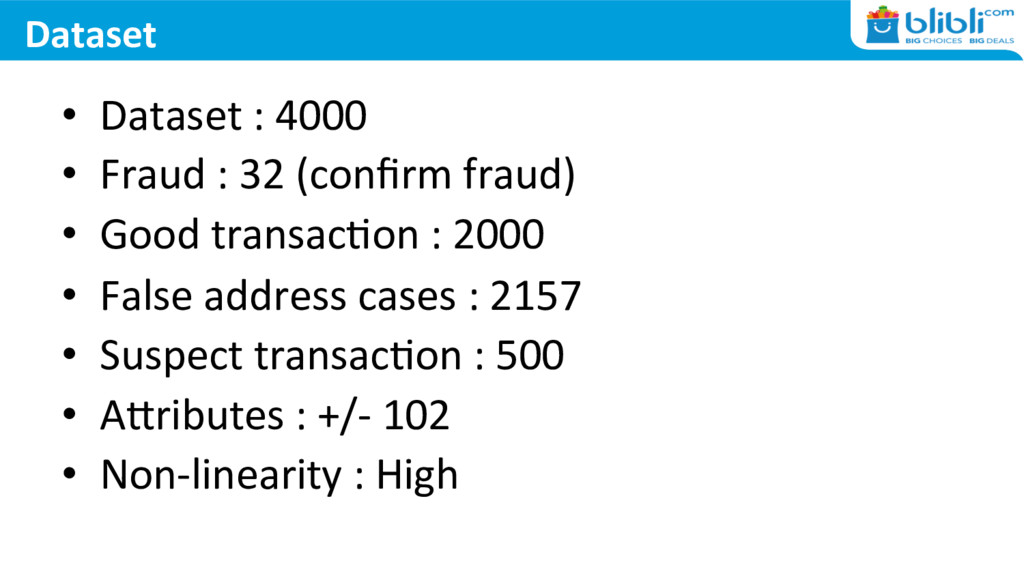
  7. Dataset •  Dataset : 4000 •  Fraud : 32 (confirm

    fraud) •  Good transacUon : 2000 •  False address cases : 2157 •  Suspect transacUon : 500 •  A_ributes : +/- 102 •  Non-linearity : High
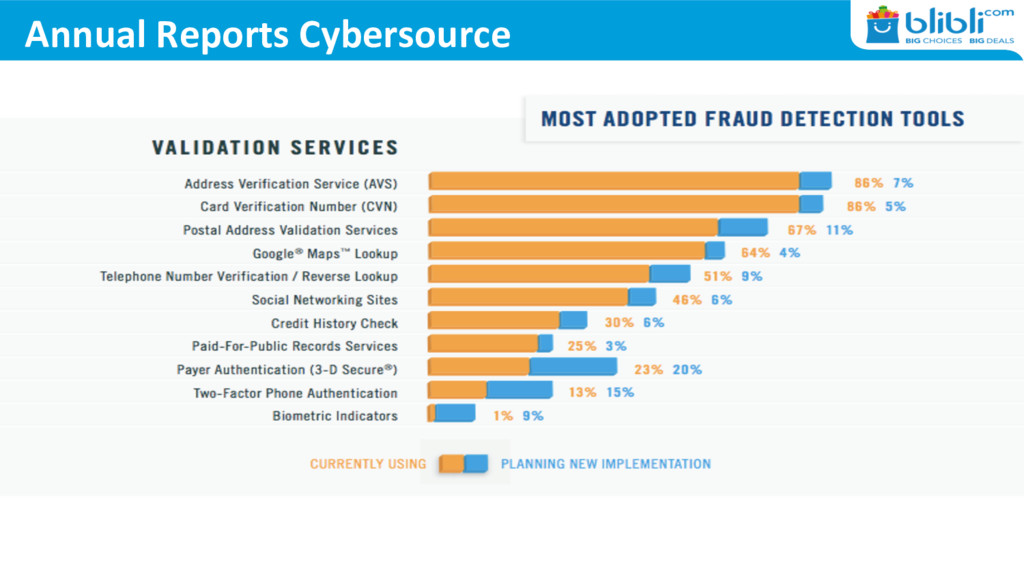
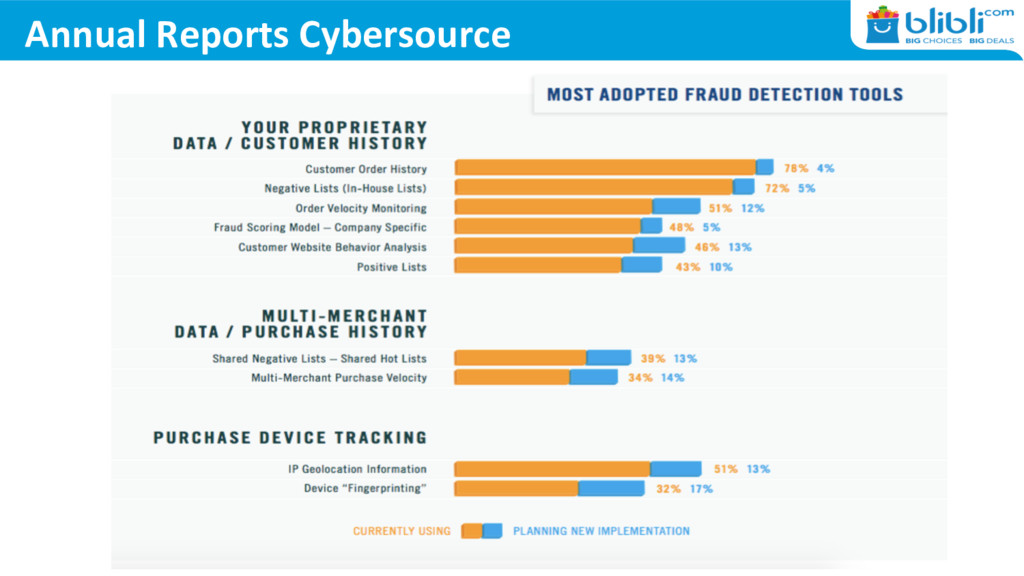
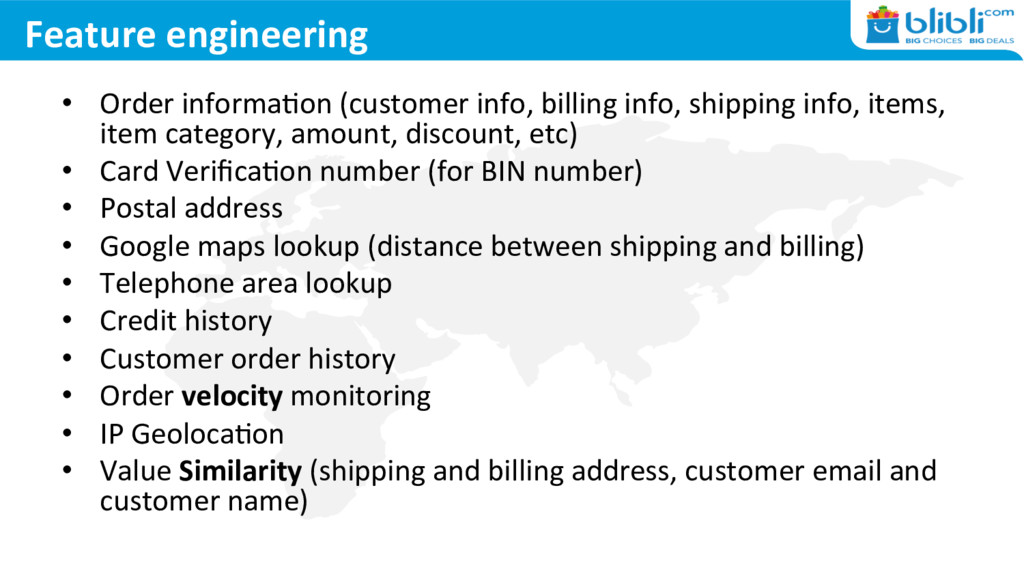
  8. Feature engineering •  Order informaUon (customer info, billing info, shipping

    info, items, item category, amount, discount, etc) •  Card VerificaUon number (for BIN number) •  Postal address •  Google maps lookup (distance between shipping and billing) •  Telephone area lookup •  Credit history •  Customer order history •  Order velocity monitoring •  IP GeolocaUon •  Value Similarity (shipping and billing address, customer email and customer name)
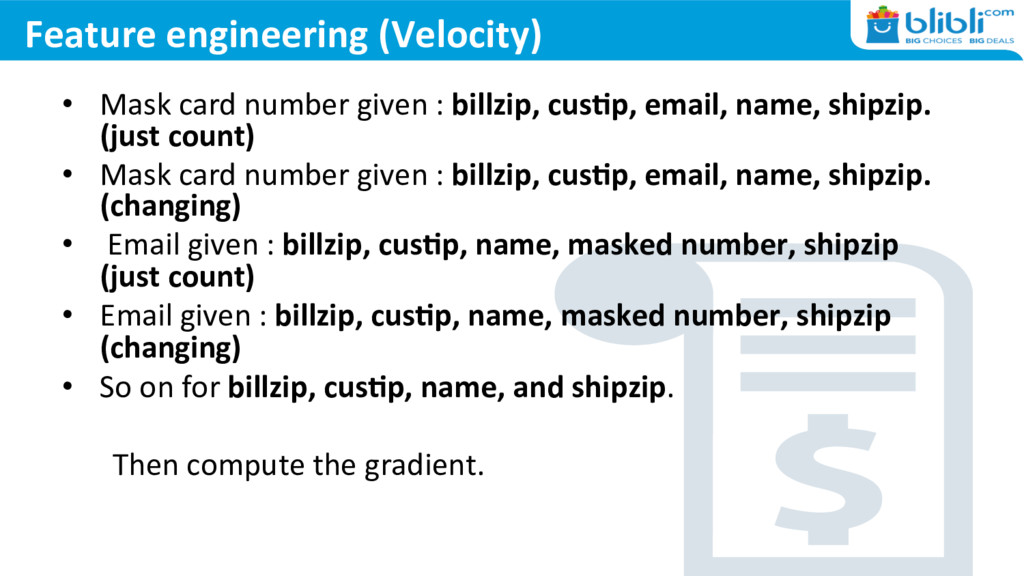
  9. Feature engineering (Velocity) •  Mask card number given : billzip,

    cus+p, email, name, shipzip. (just count) •  Mask card number given : billzip, cus+p, email, name, shipzip. (changing) •  Email given : billzip, cus+p, name, masked number, shipzip (just count) •  Email given : billzip, cus+p, name, masked number, shipzip (changing) •  So on for billzip, cus+p, name, and shipzip. Then compute the gradient.
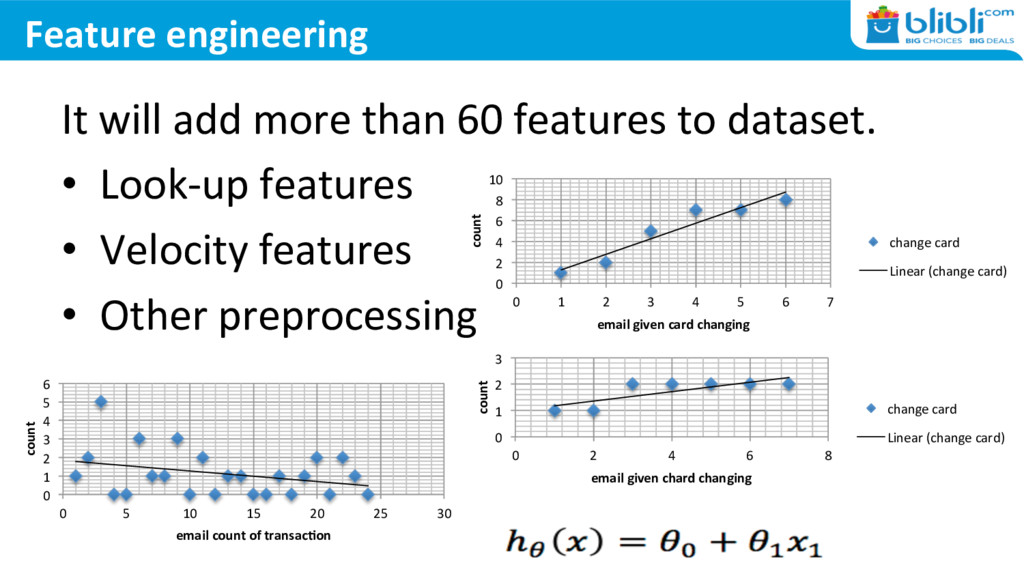
  10. Feature engineering It will add more than 60 features to

    dataset. •  Look-up features •  Velocity features •  Other preprocessing 0 2 4 6 8 10 0 1 2 3 4 5 6 7 count email given card changing change card Linear (change card) 0 1 2 3 0 2 4 6 8 count email given chard changing change card Linear (change card) 0 1 2 3 4 5 6 0 5 10 15 20 25 30 count email count of transac+on
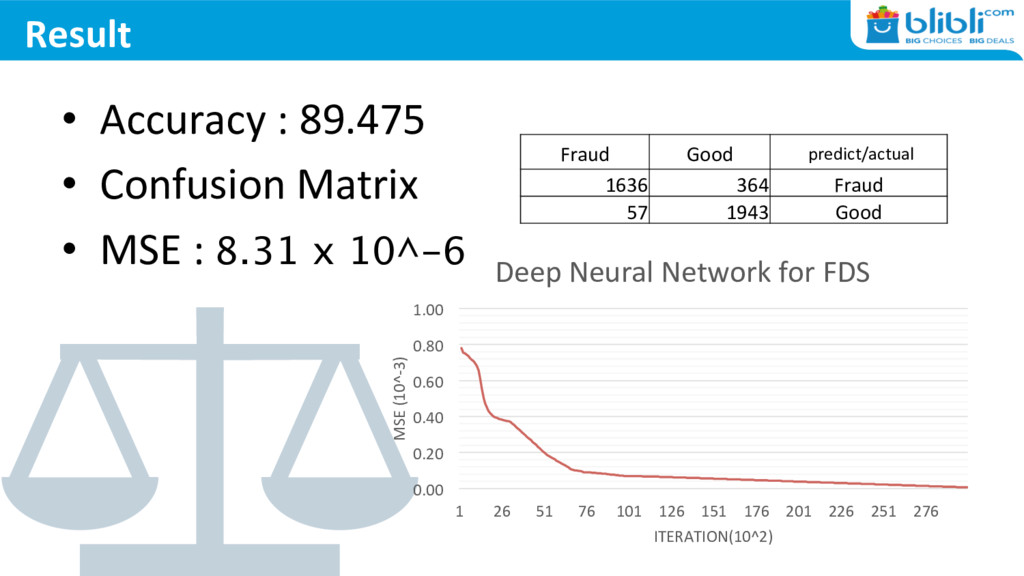
  11. Result •  Accuracy : 89.475 •  Confusion Matrix •  MSE

    : 8.31 x 10^-6 Fraud Good predict/actual 1636 364 Fraud 57 1943 Good 0.00 0.20 0.40 0.60 0.80 1.00 1 26 51 76 101 126 151 176 201 226 251 276 MSE (10^-3) ITERATION(10^2) Deep Neural Network for FDS
  12. Challenges •  Unbalancing dataset •  Fraud is transacUon perspecUve to

    fraud is person perspecUve (data structures changing) •  Event data (from checking page, order unUl transacUon/ checkout) •  GPU opUmizaUon •  Network model architecture •  Social network features (text and network) •  Restricted Boltzmann machine or another pre-training •  Graph theory