not replace independent professional judgment. Statements of fact and opinions expressed are those of the participants individually and don’t necessarily reflect those of blibli.com. Blibli.com does not endorse or approve, and assumes no responsibility for, the content, accuracy or completeness of the information presented.
(PT. Global Digital Niaga) • Rnd Team for Data Science/intelligence system • Working for Fraud Detection System. Current working in dynamic recommendation system project.
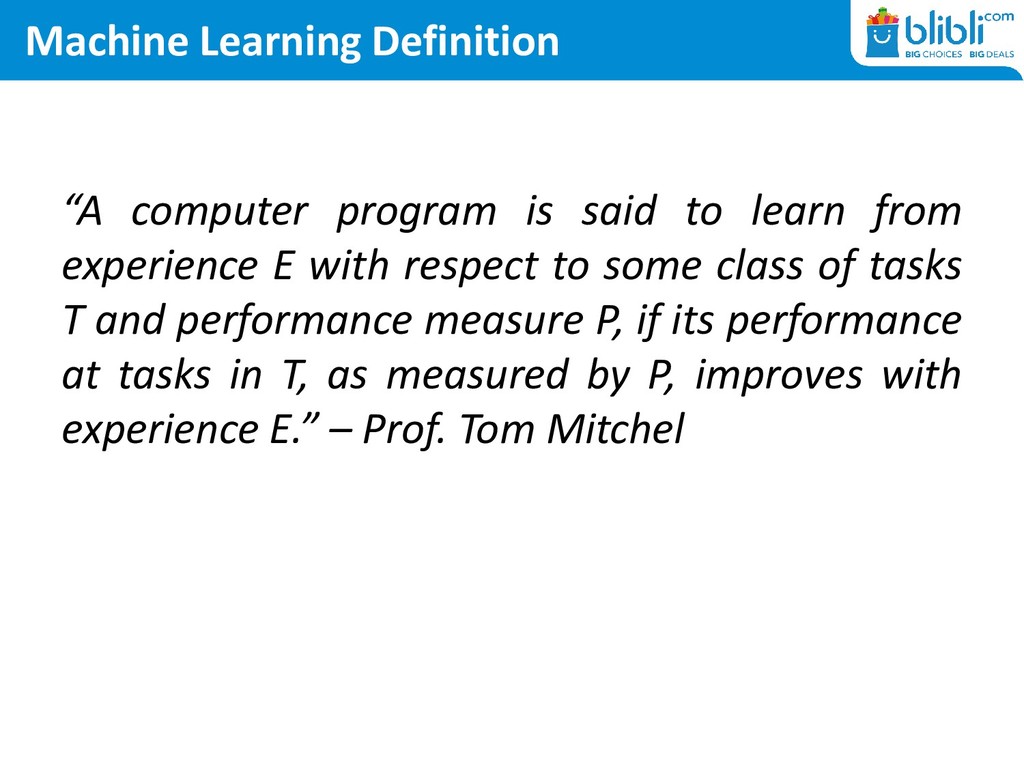
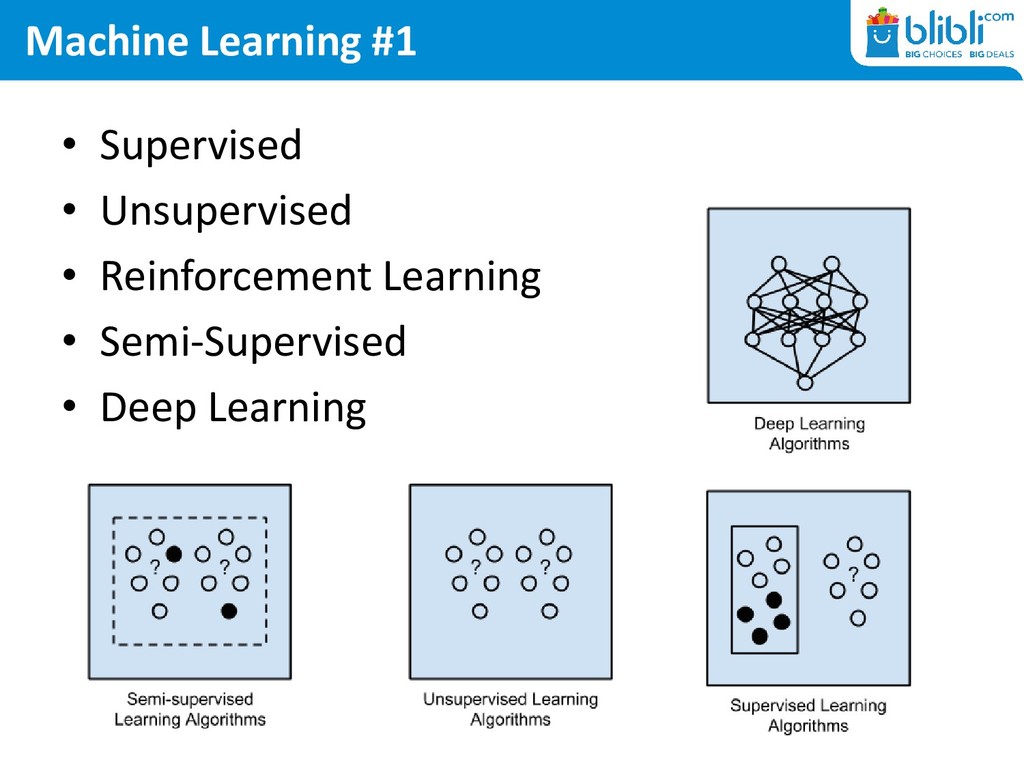
from experience E with respect to some class of tasks T and performance measure P, if its performance at tasks in T, as measured by P, improves with experience E.” – Prof. Tom Mitchel
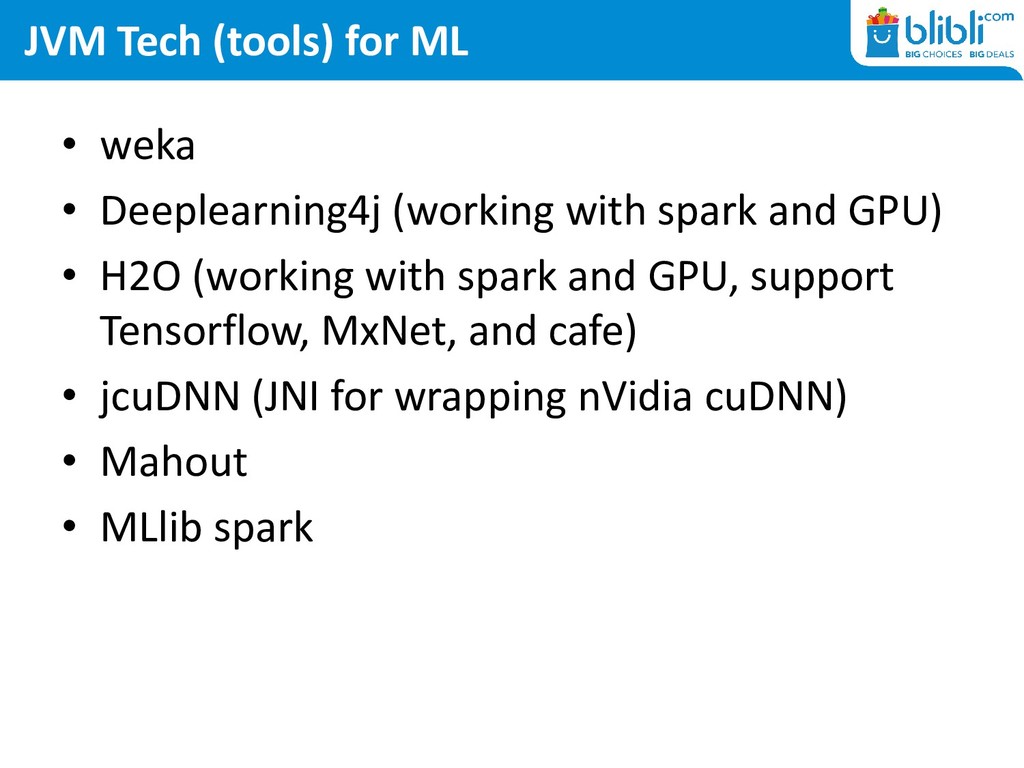
with spark and GPU) • H2O (working with spark and GPU, support Tensorflow, MxNet, and cafe) • jcuDNN (JNI for wrapping nVidia cuDNN) • Mahout • MLlib spark
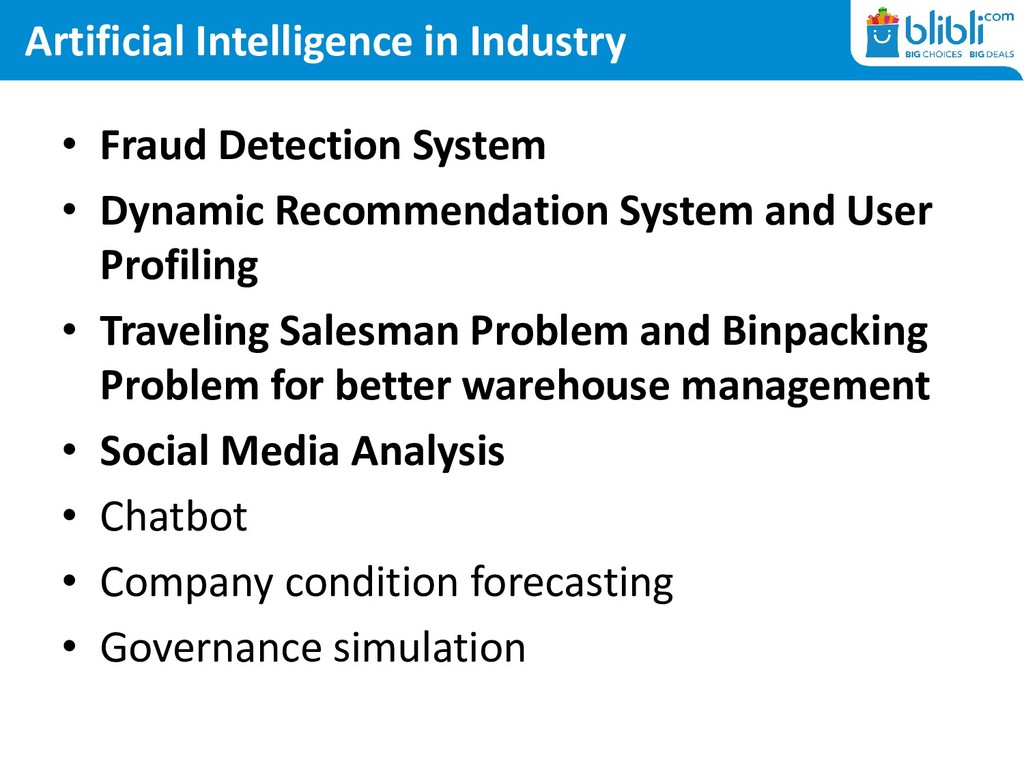
Recommendation System and User Profiling • Traveling Salesman Problem and Binpacking Problem for better warehouse management • Social Media Analysis • Chatbot • Company condition forecasting • Governance simulation
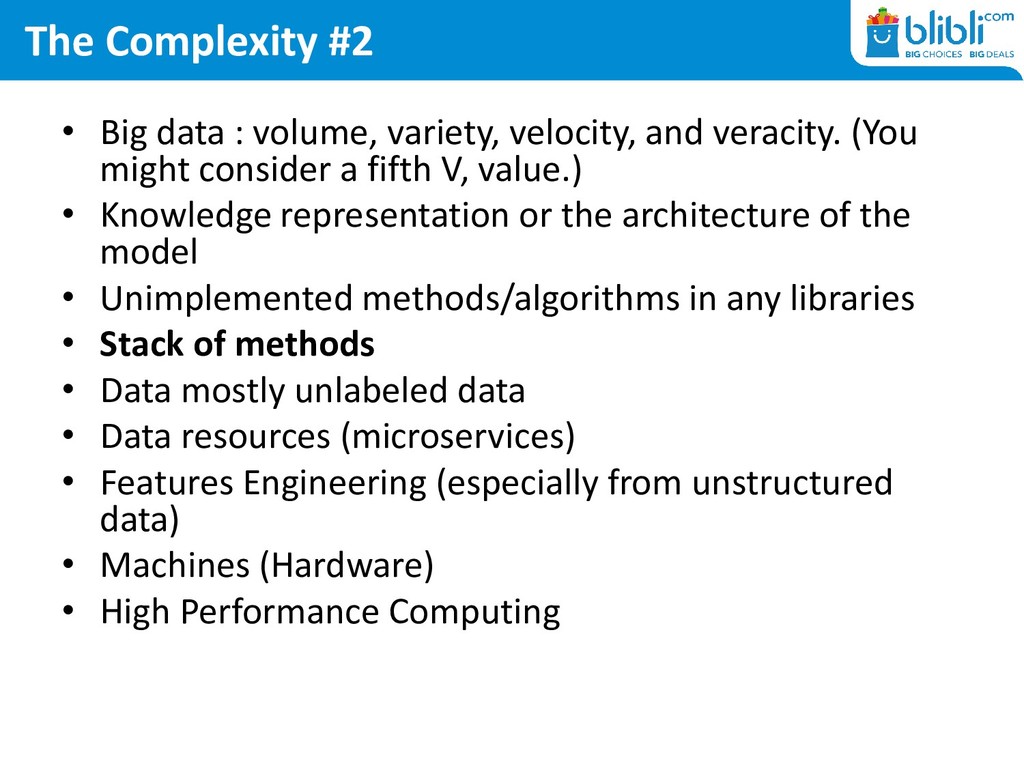
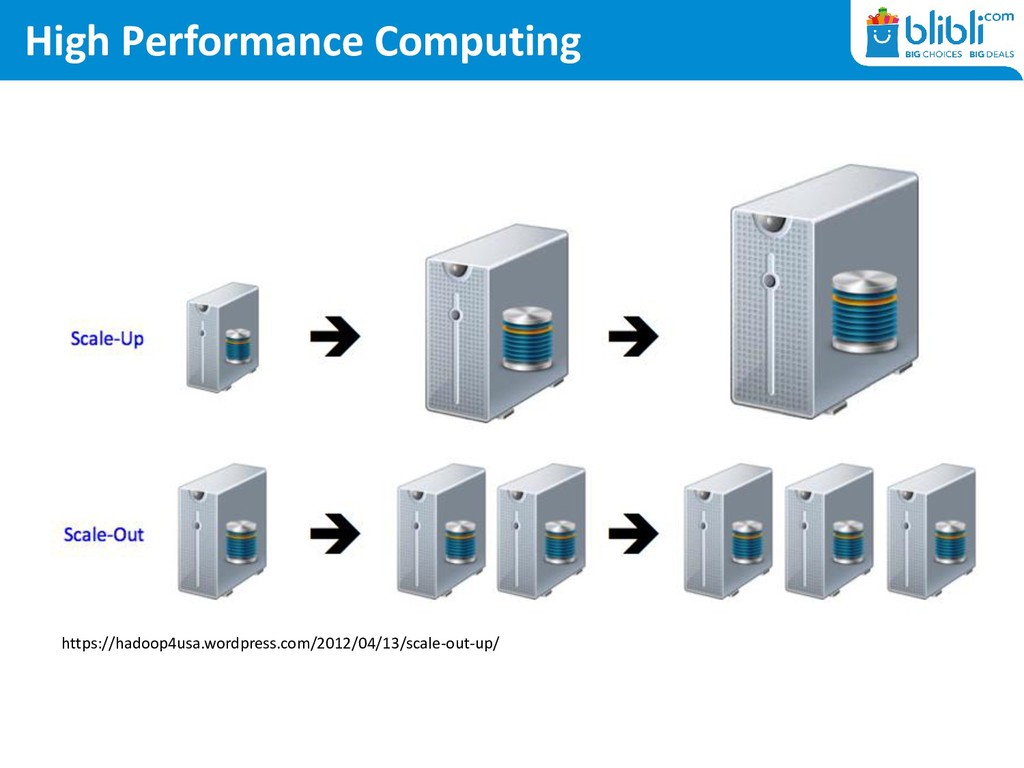
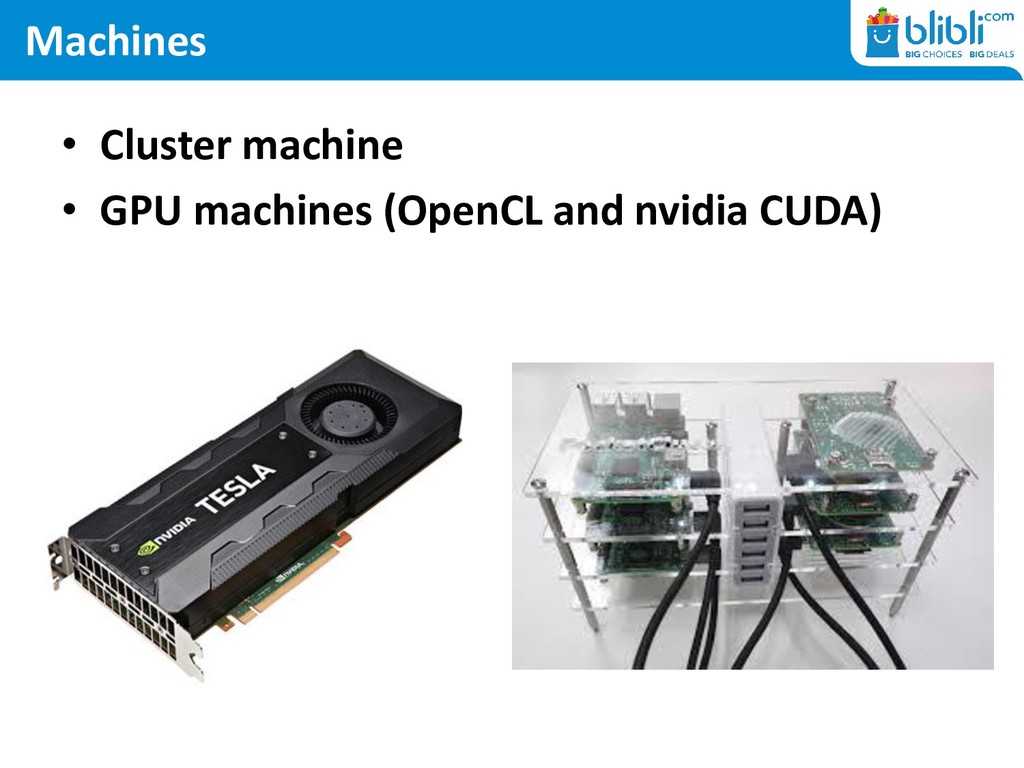
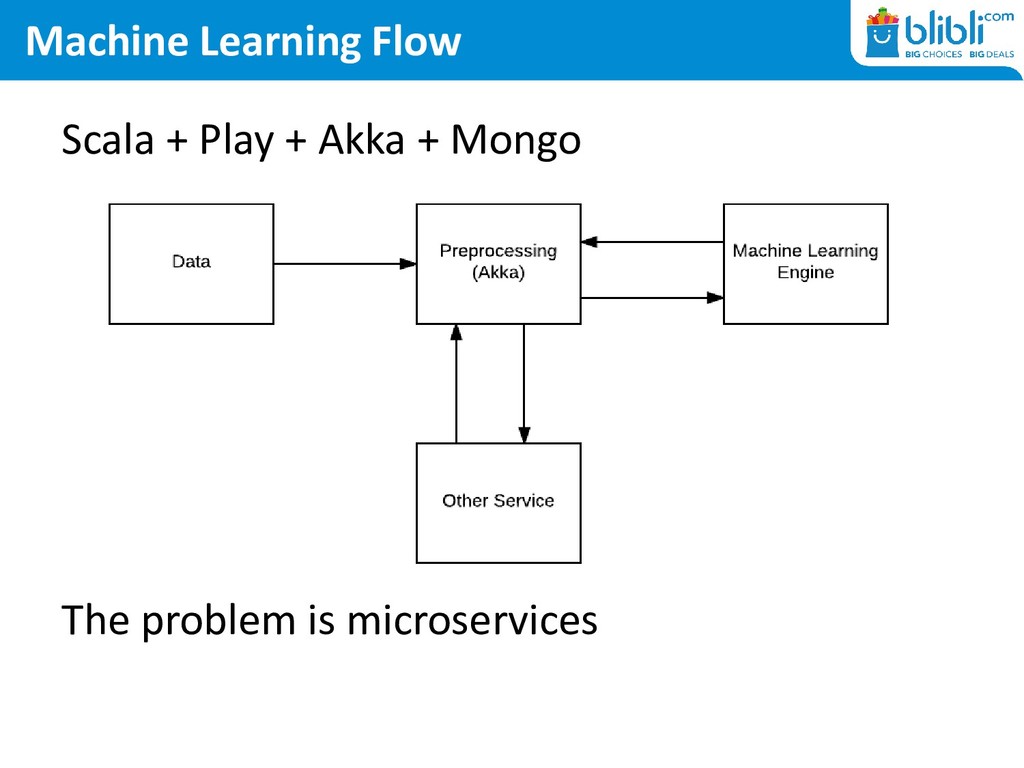
and veracity. (You might consider a fifth V, value.) • Knowledge representation or the architecture of the model • Unimplemented methods/algorithms in any libraries • Stack of methods • Data mostly unlabeled data • Data resources (microservices) • Features Engineering (especially from unstructured data) • Machines (Hardware) • High Performance Computing
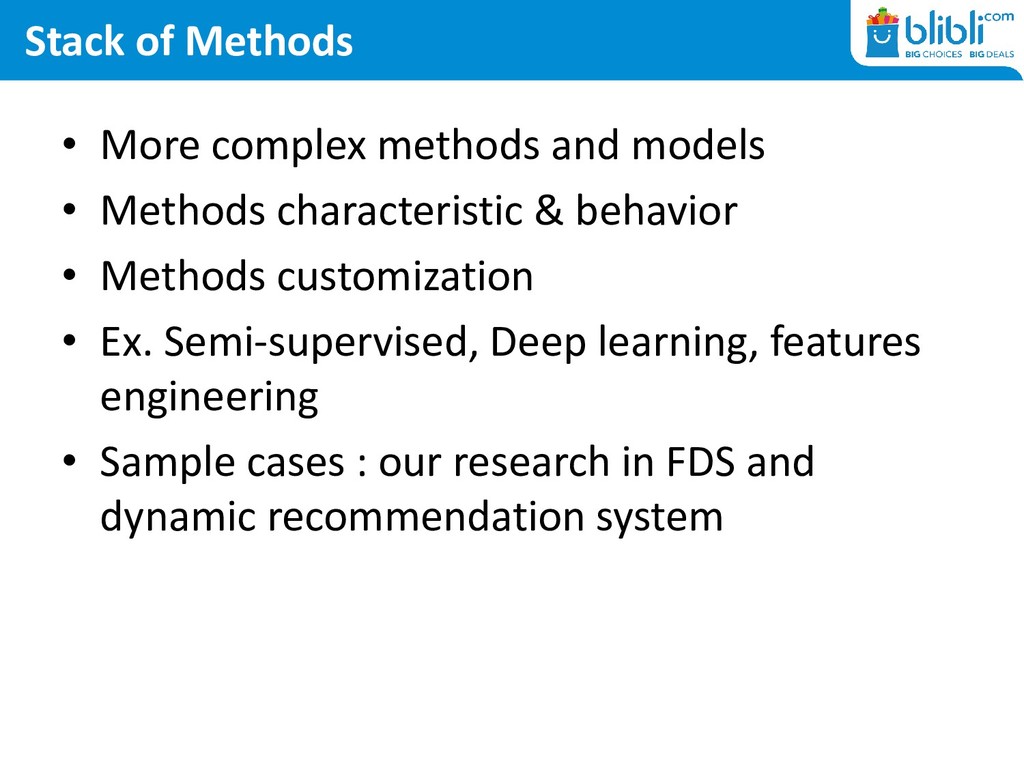
Methods characteristic & behavior • Methods customization • Ex. Semi-supervised, Deep learning, features engineering • Sample cases : our research in FDS and dynamic recommendation system
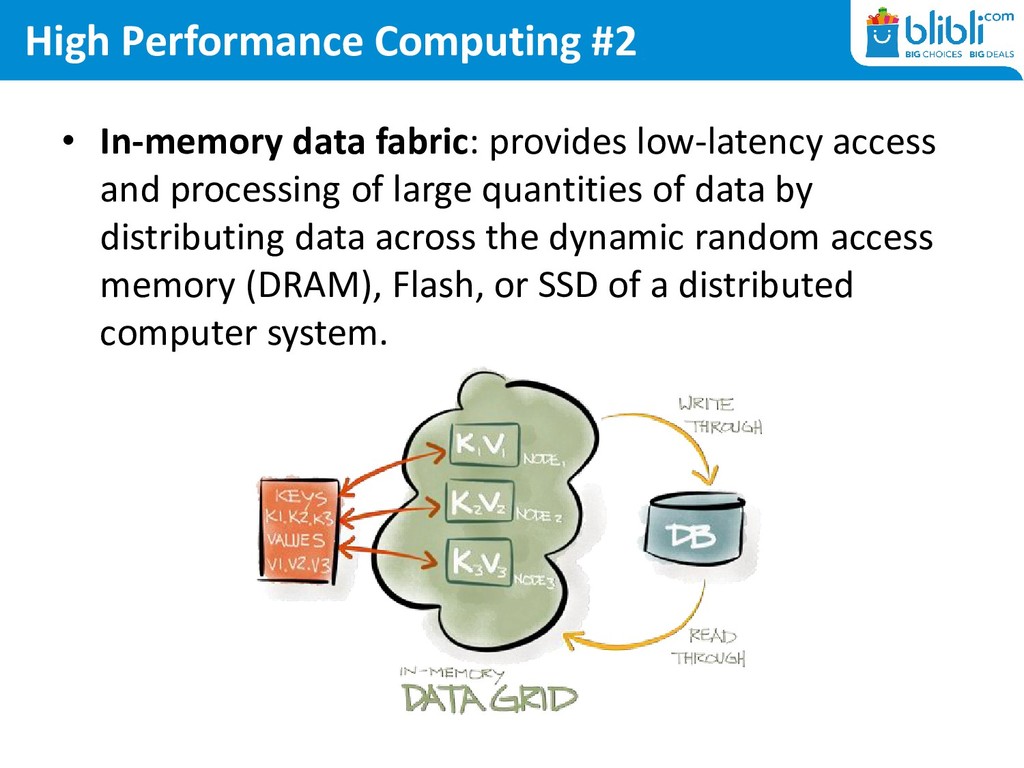
access and processing of large quantities of data by distributing data across the dynamic random access memory (DRAM), Flash, or SSD of a distributed computer system.


 situkangsayur
 koukihosaka
 occhi
occhi
 teamlab
 takahashim
 mohab1
 recruitengineers
 glaforge
 colopl
 ezaki
ezaki
 kentapapa
 daidaidai
.png) yamad
yamad
 aleyda
 gr2m
gr2m
 ryanjones
 codingconduct
 mojombo
 kristinabergwall1
 chriscoyier
 inesmontani
 jonoalderson
 rkaga
rkaga
 lara
lara
 seathinner
![Machine Learning Research in blibli Hendri Karisma [email protected] / [email protected]](https://files.speakerdeck.com/presentations/487863e460c14df488723df76006733a/slide_1.jpg)