not replace independent professional judgment. Statements of fact and opinions expressed are those of the participants individually and don’t necessarily reflect those of blibli.com. Blibli.com does not endorse or approve, and assumes no responsibility for, the content, accuracy or completeness of the information presented.
(PT. Global Digital Niaga) • Rnd Team for Machine Learning • Working for Fraud Detection System. Current working in dynamic recommendation system project.
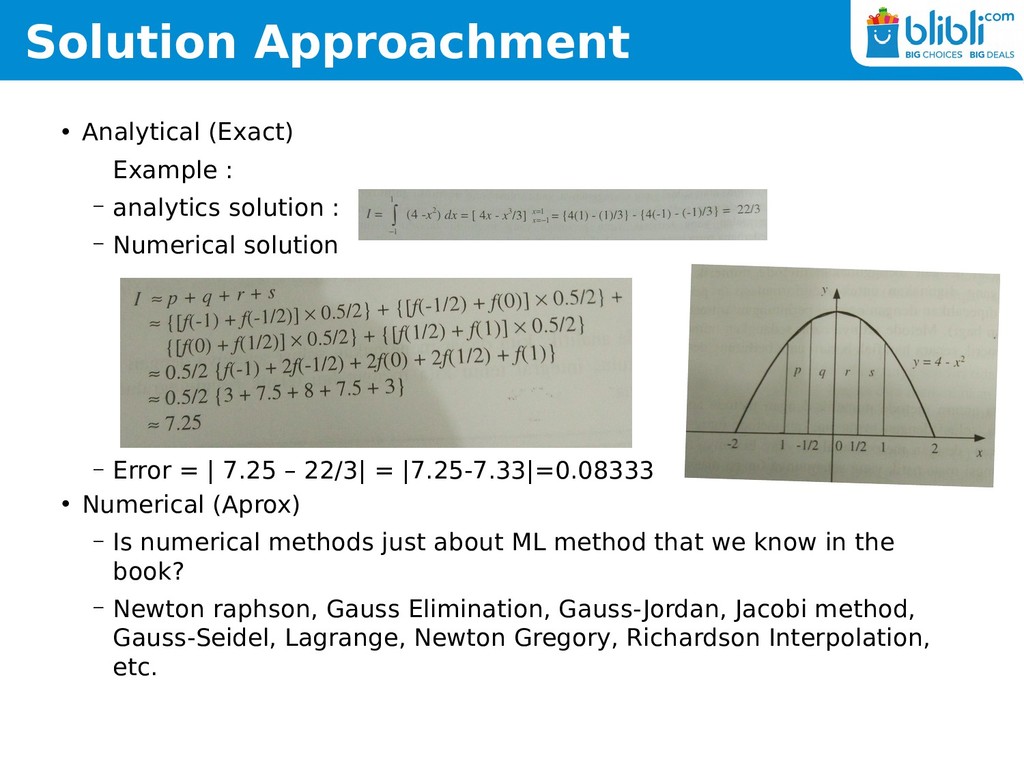
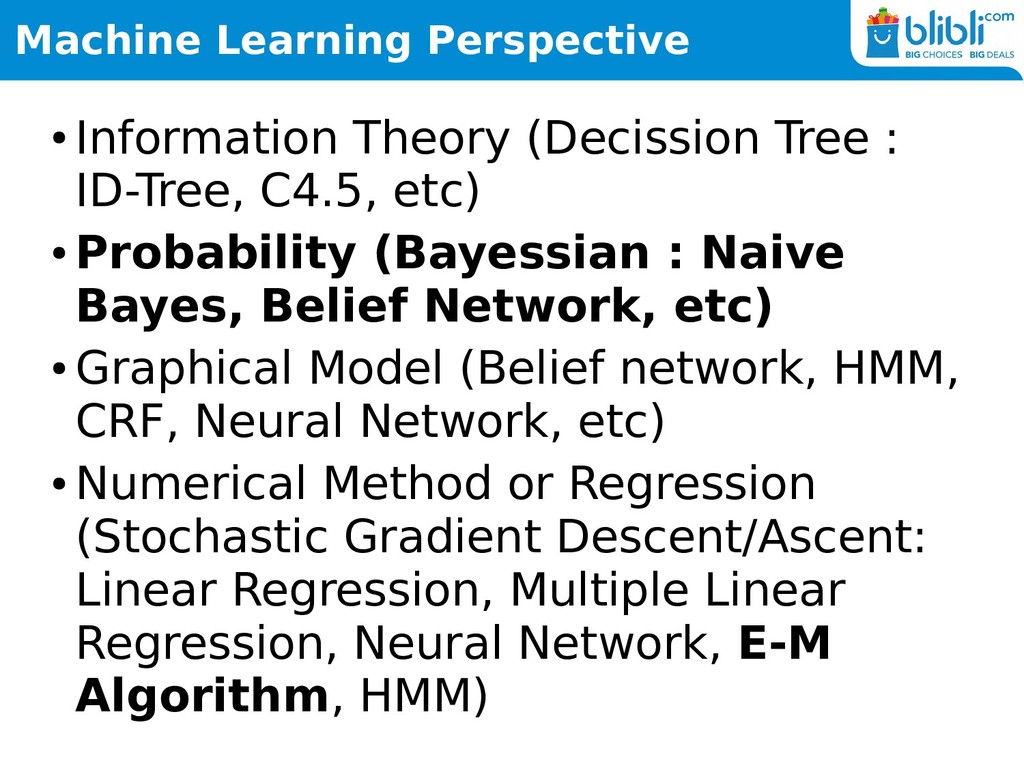
: – Numerical solution – Error = | 7.25 – 22/3| = |7.25-7.33|=0.08333 • Numerical (Aprox) – Is numerical methods just about ML method that we know in the book? – Newton raphson, Gauss Elimination, Gauss-Jordan, Jacobi method, Gauss-Seidel, Lagrange, Newton Gregory, Richardson Interpolation, etc.
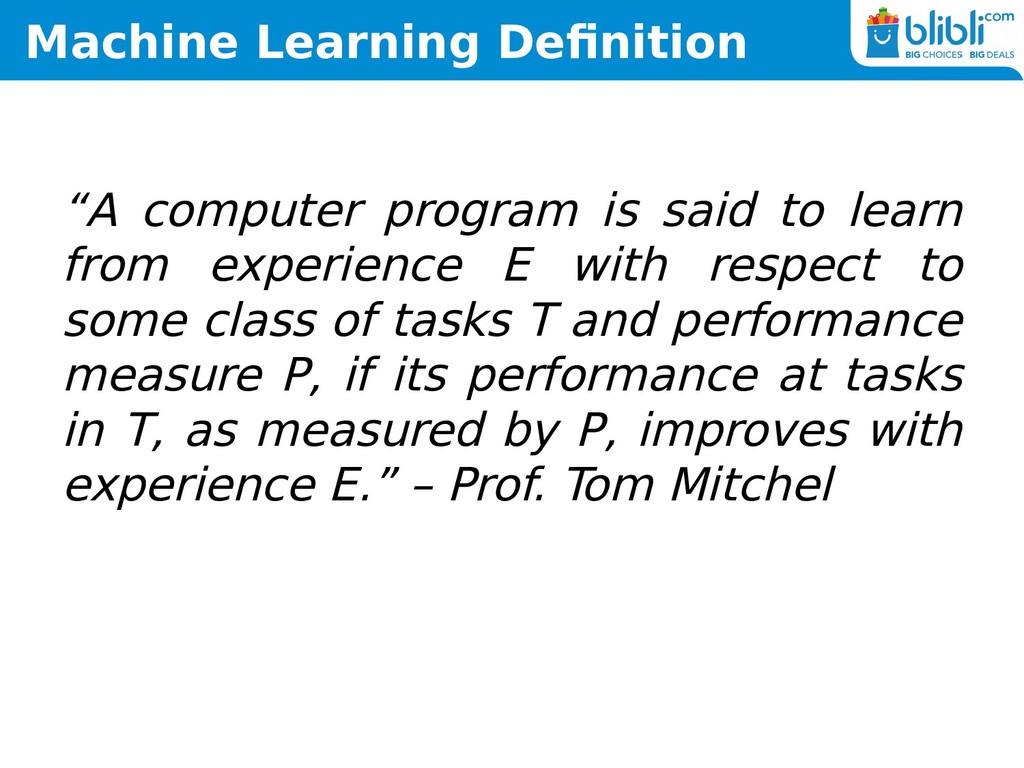
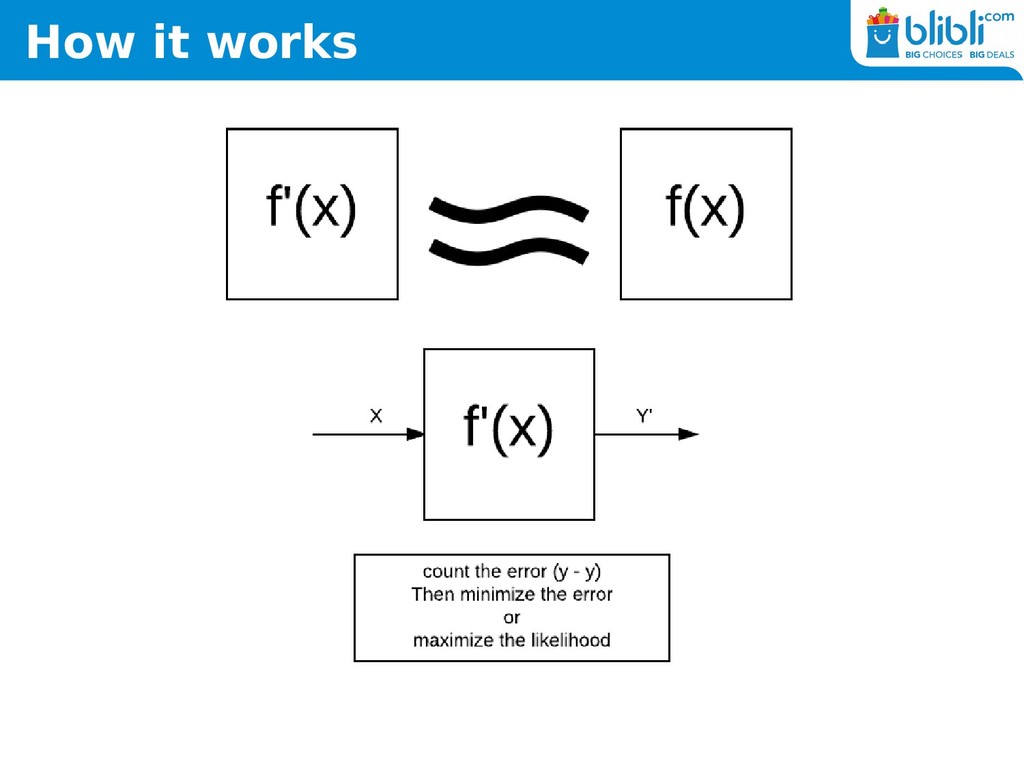
from experience E with respect to some class of tasks T and performance measure P, if its performance at tasks in T, as measured by P, improves with experience E.” – Prof. Tom Mitchel
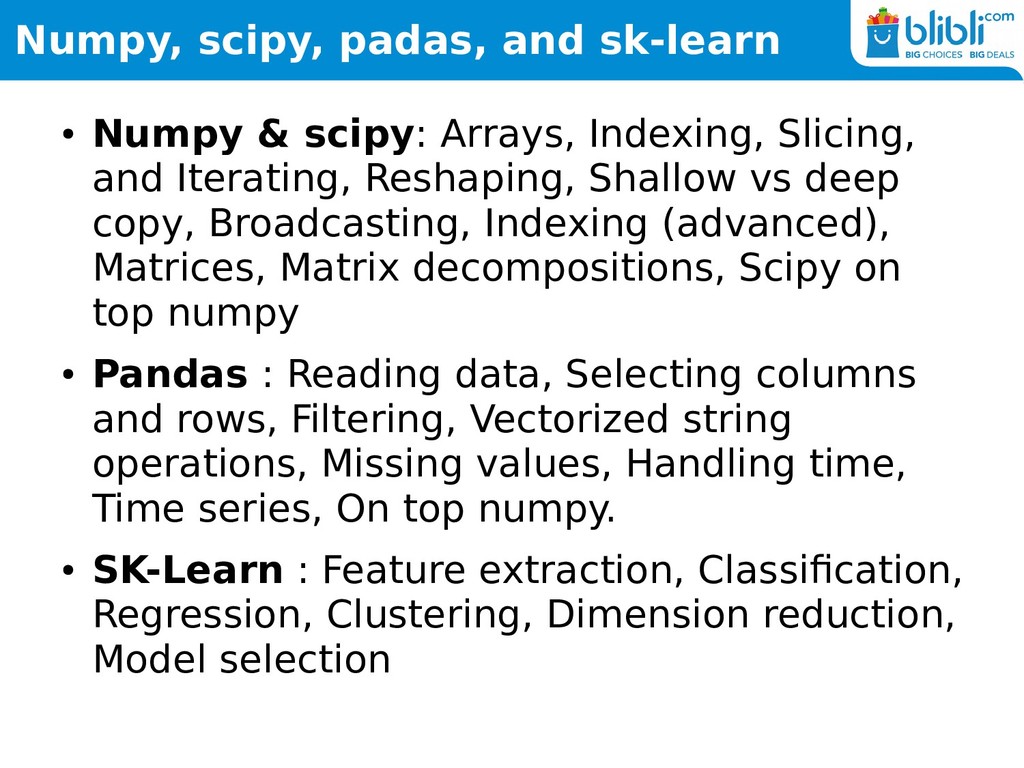
Indexing, Slicing, and Iterating, Reshaping, Shallow vs deep copy, Broadcasting, Indexing (advanced), Matrices, Matrix decompositions, Scipy on top numpy • Pandas : Reading data, Selecting columns and rows, Filtering, Vectorized string operations, Missing values, Handling time, Time series, On top numpy. • SK-Learn : Feature extraction, Classification, Regression, Clustering, Dimension reduction, Model selection
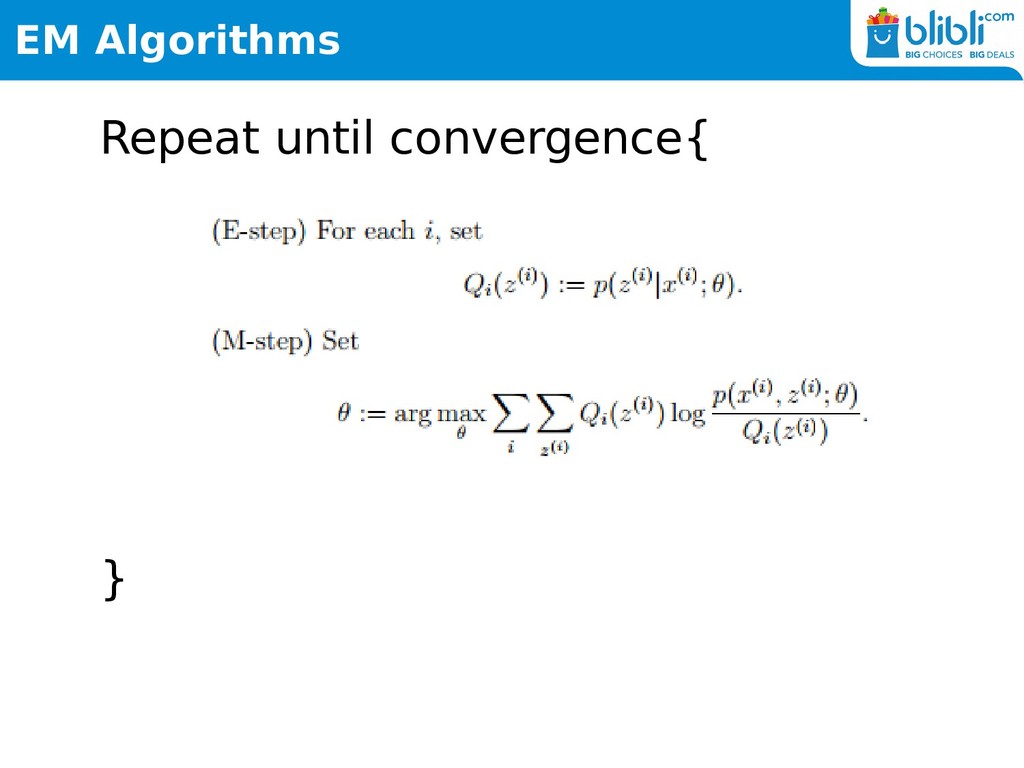
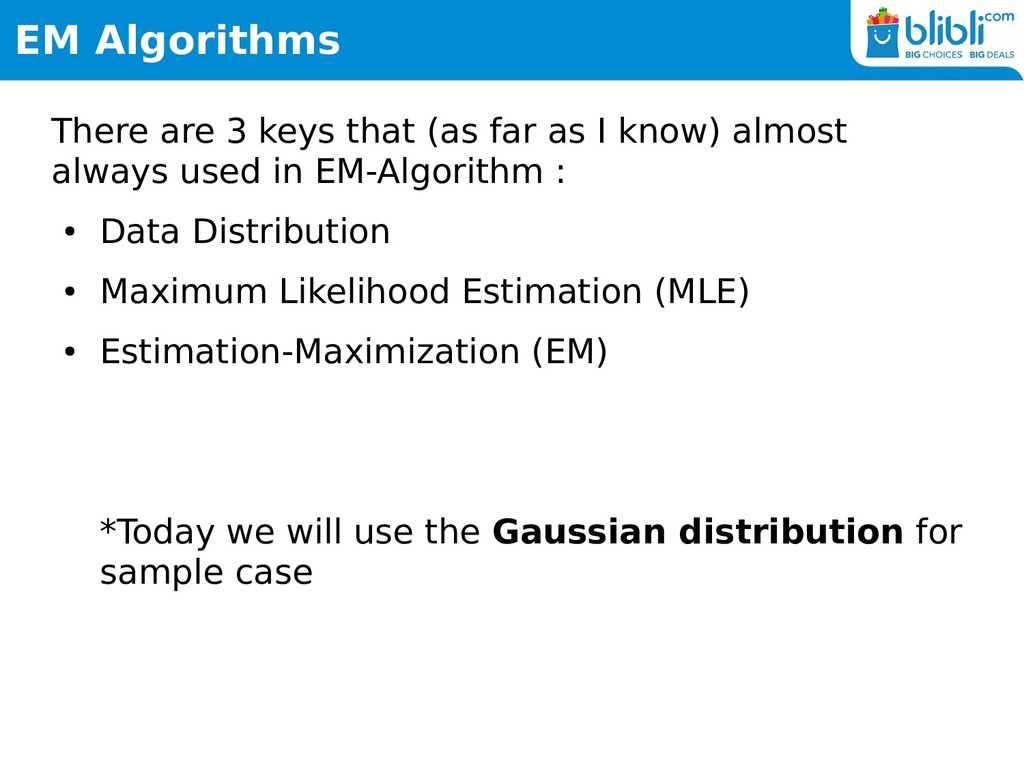
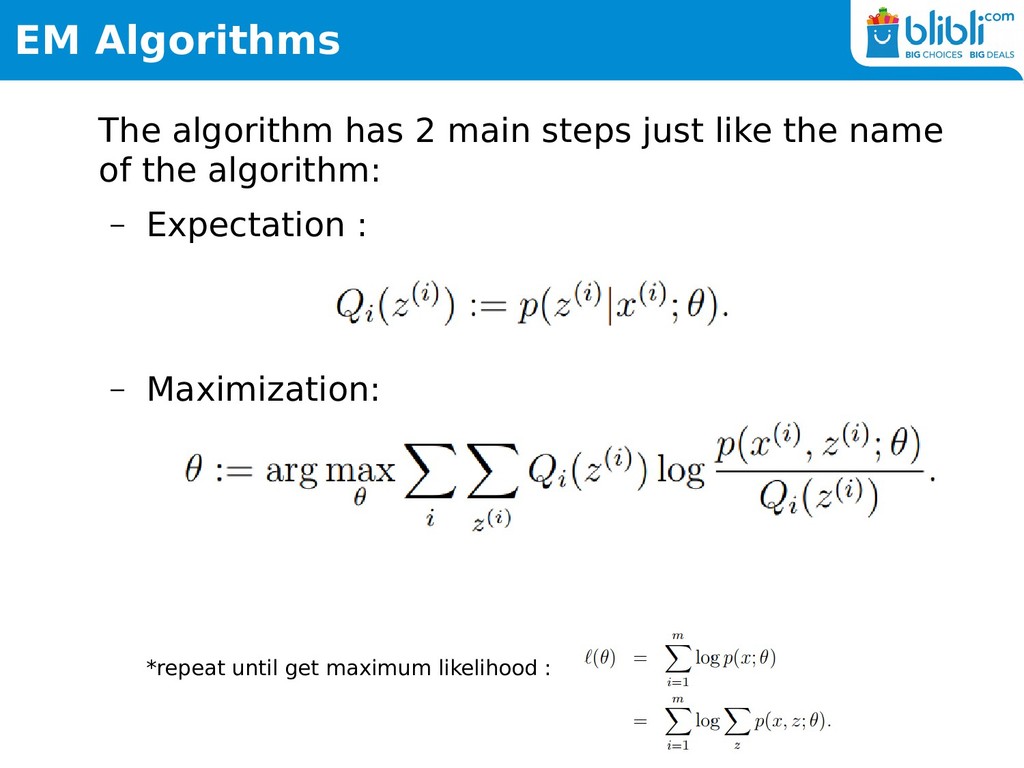
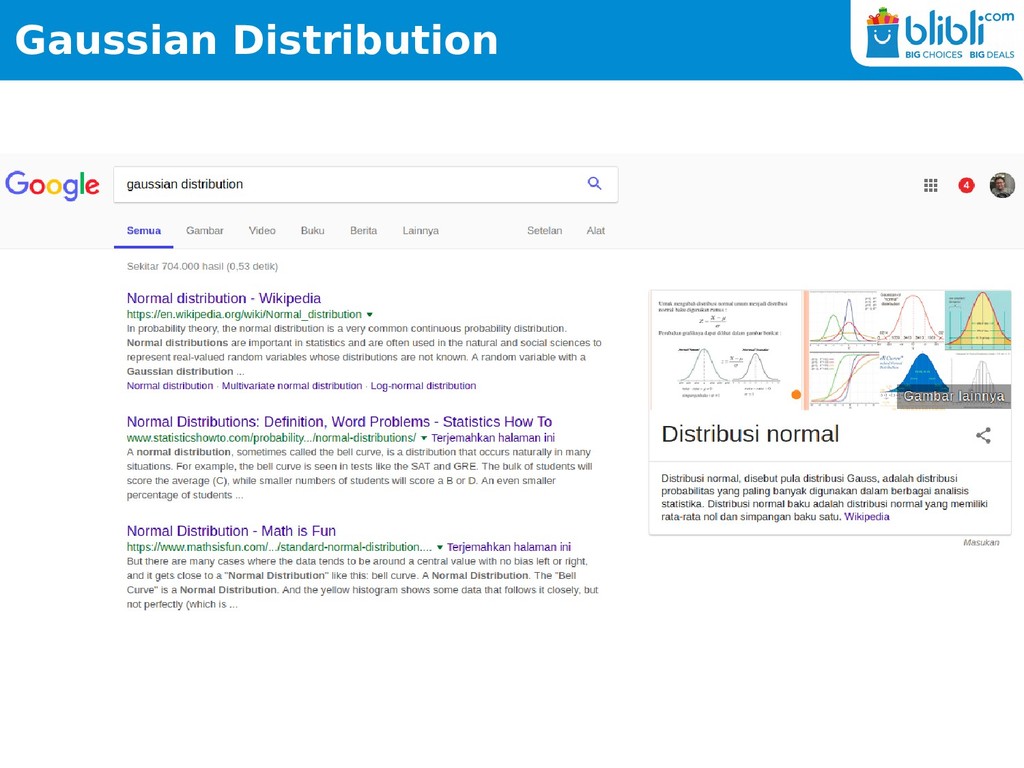
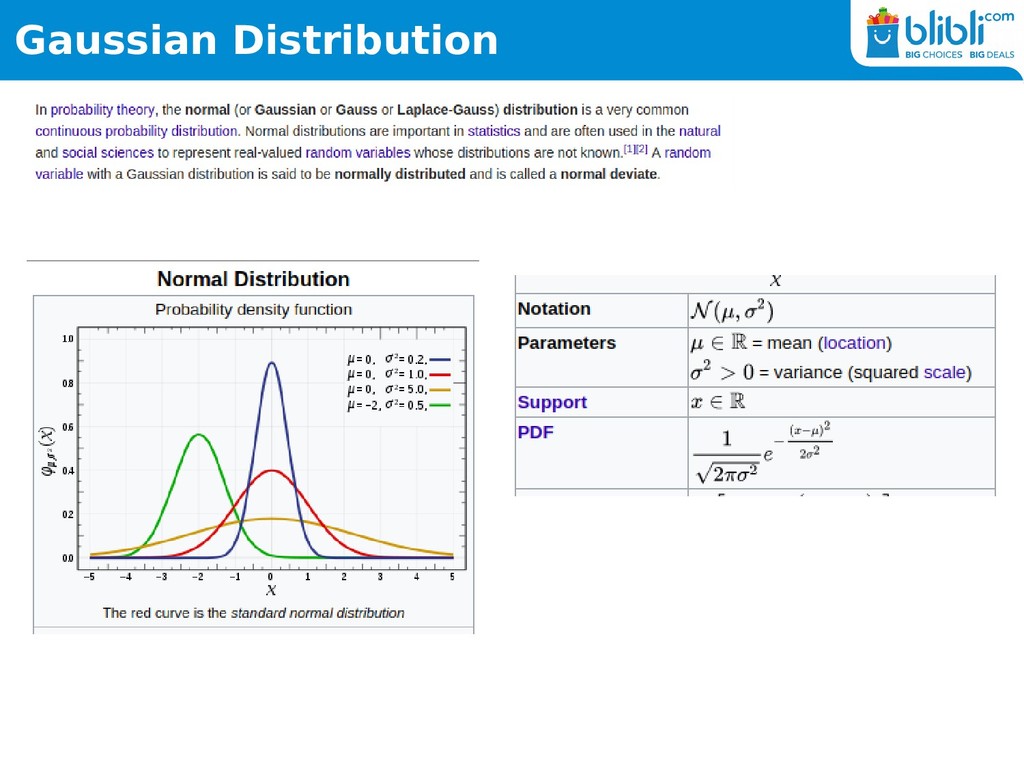
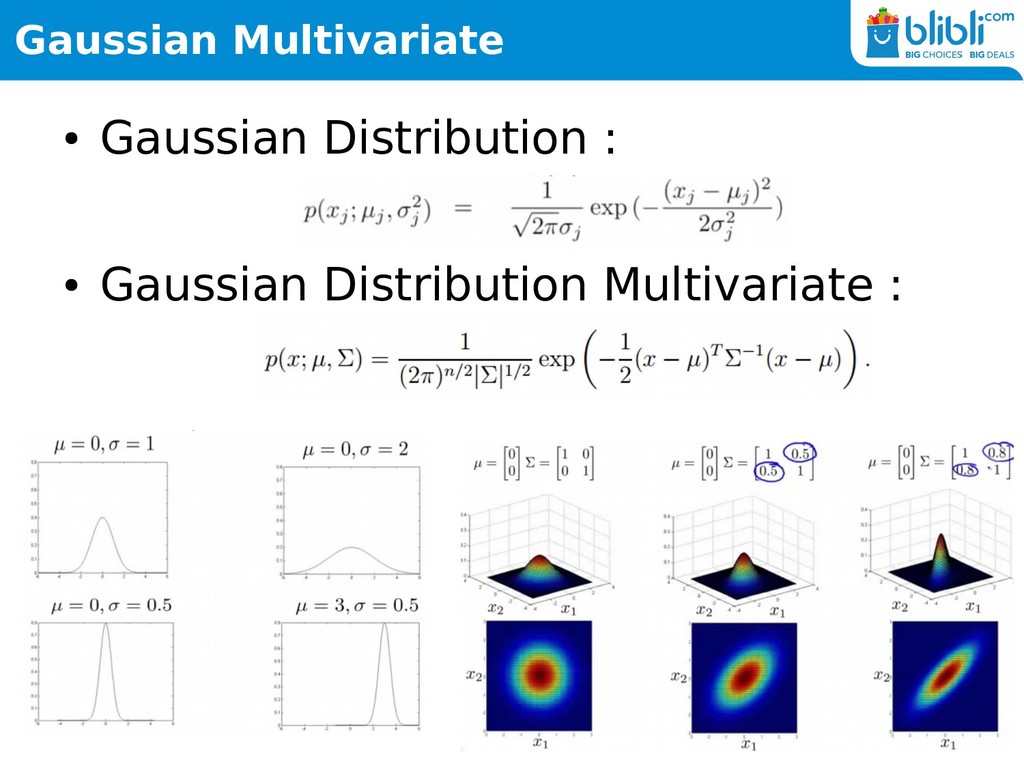
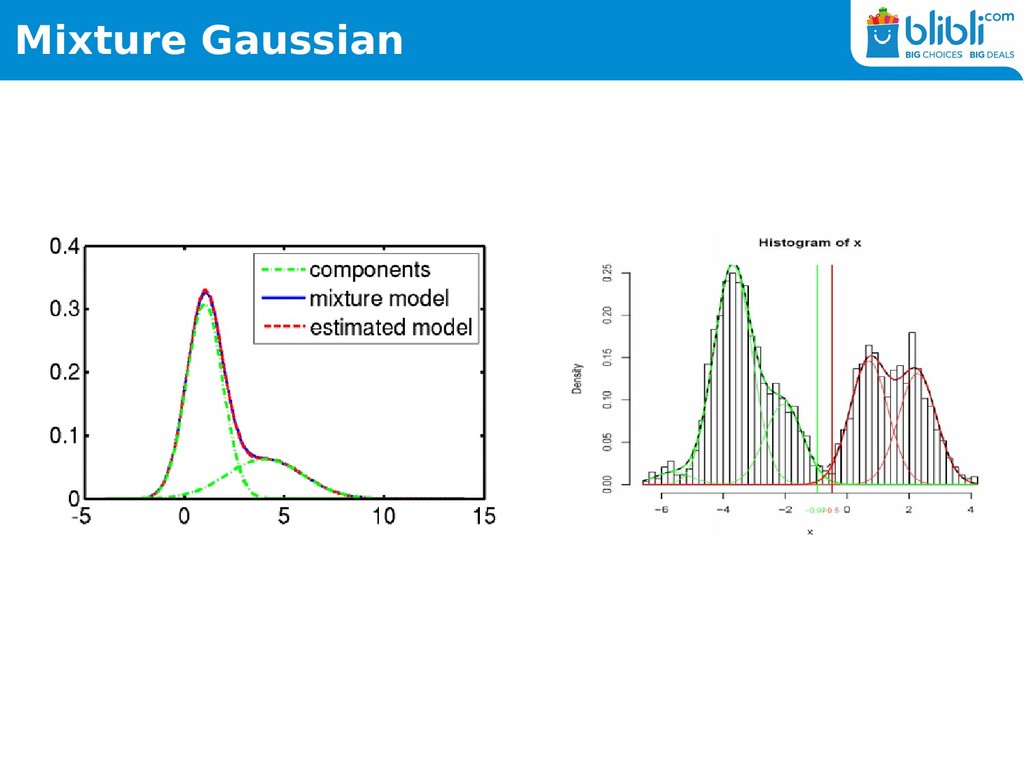
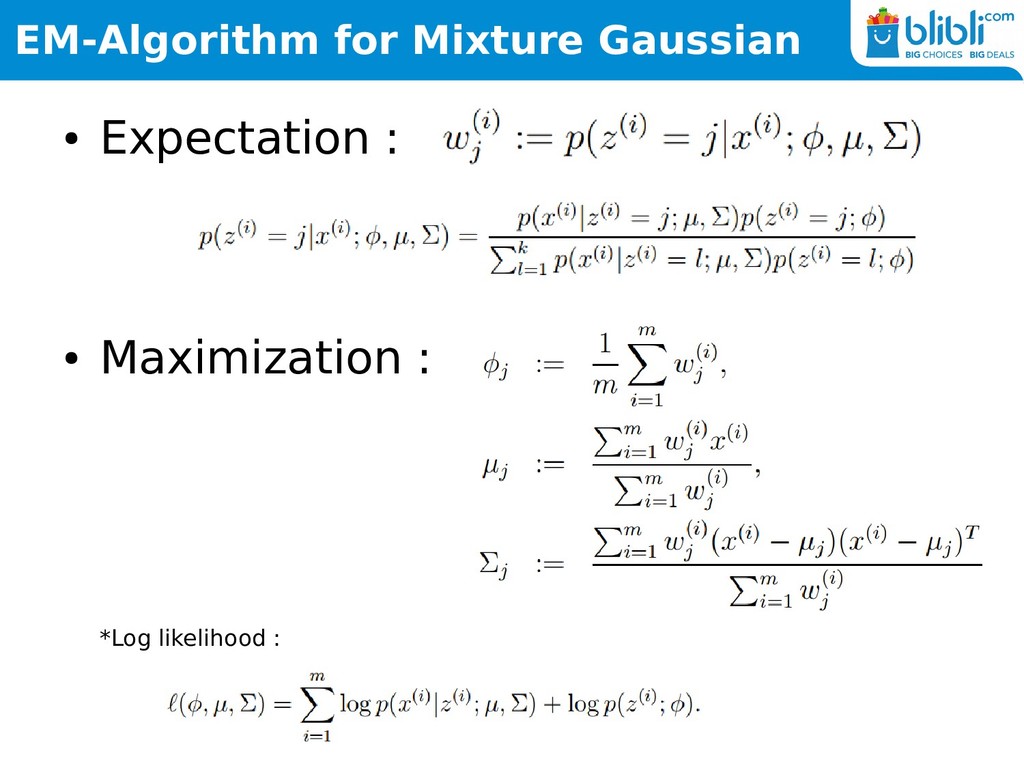
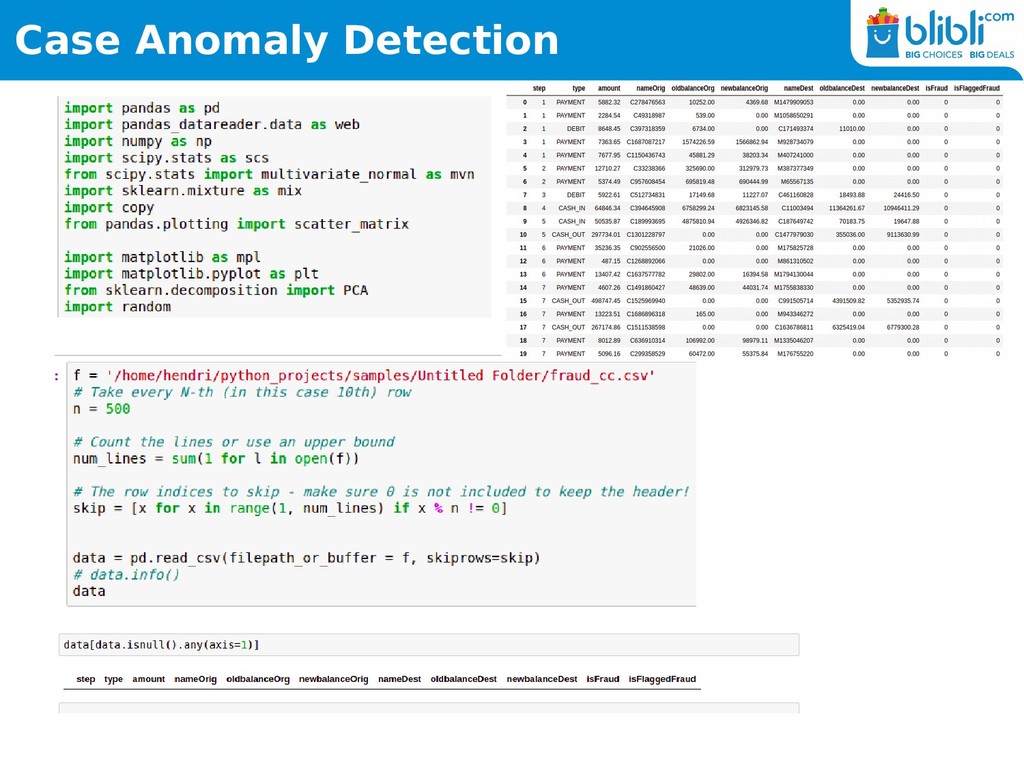
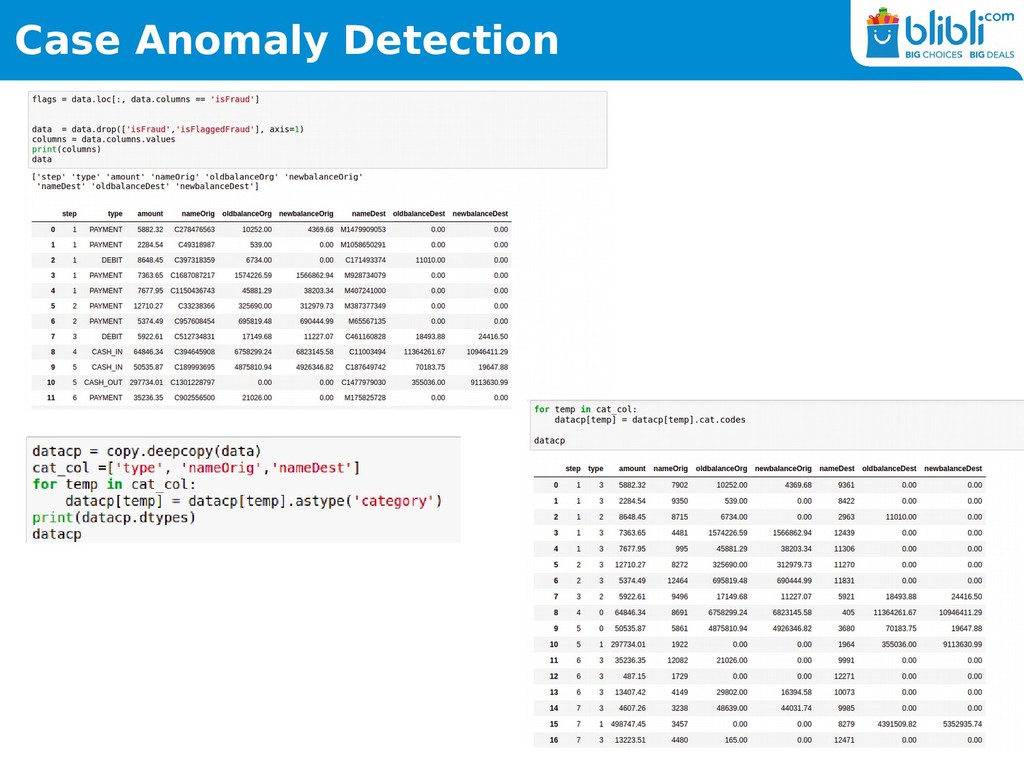
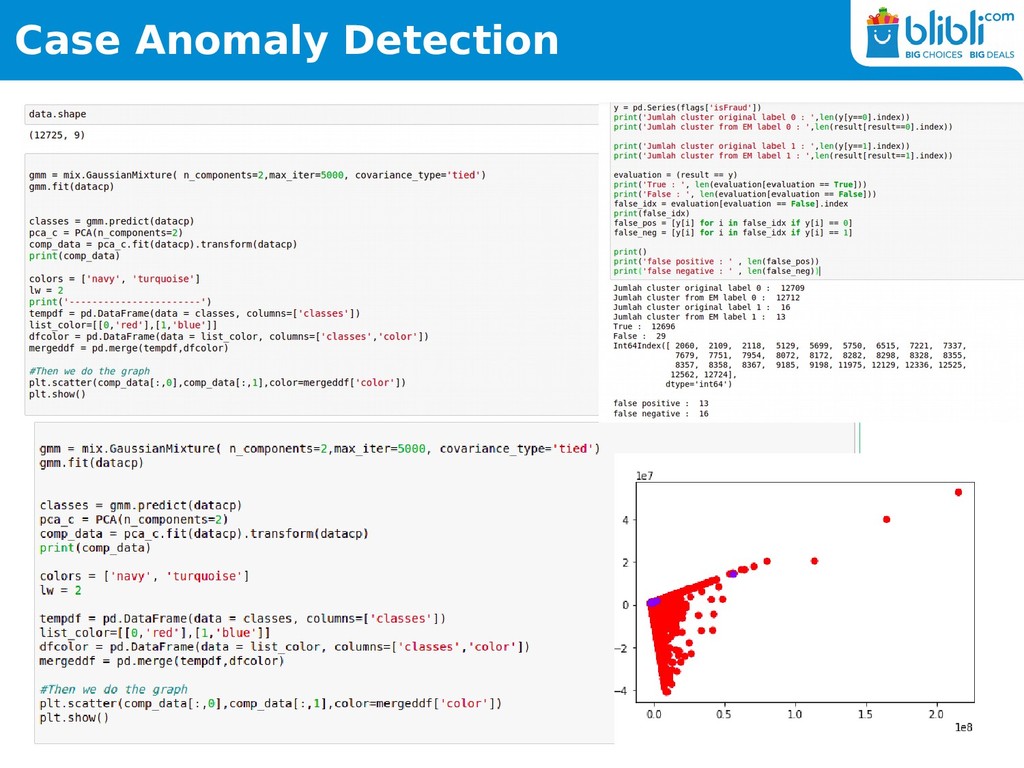
I know) almost always used in EM-Algorithm : • Data Distribution • Maximum Likelihood Estimation (MLE) • Estimation-Maximization (EM) *Today we will use the Gaussian distribution for sample case
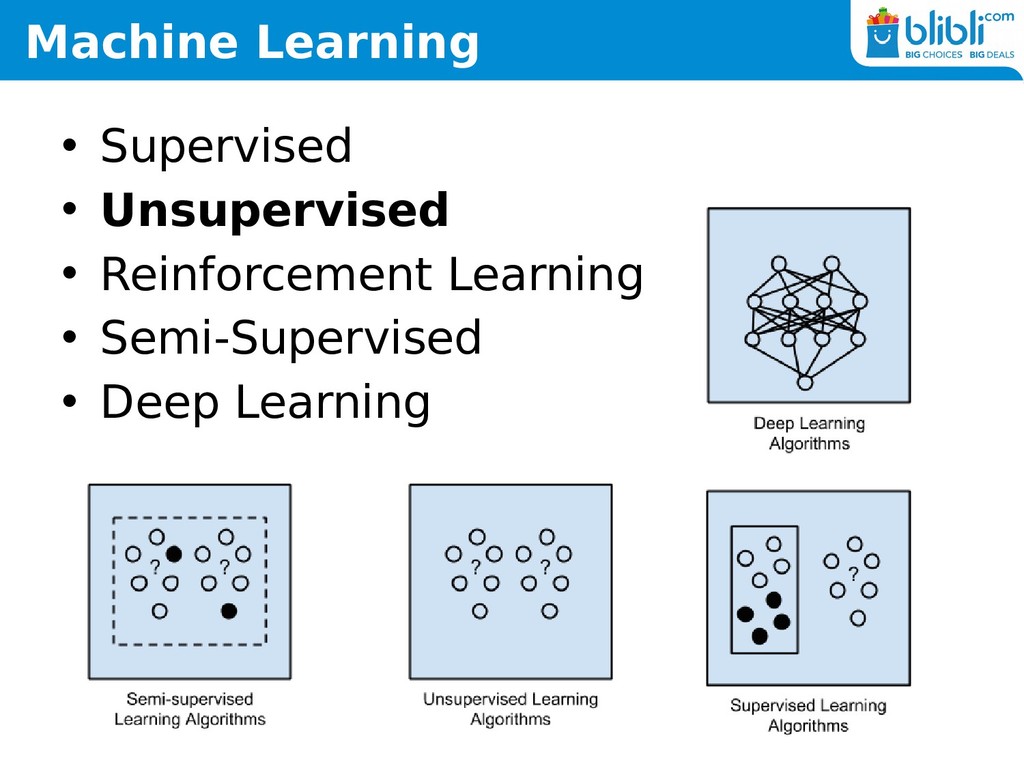
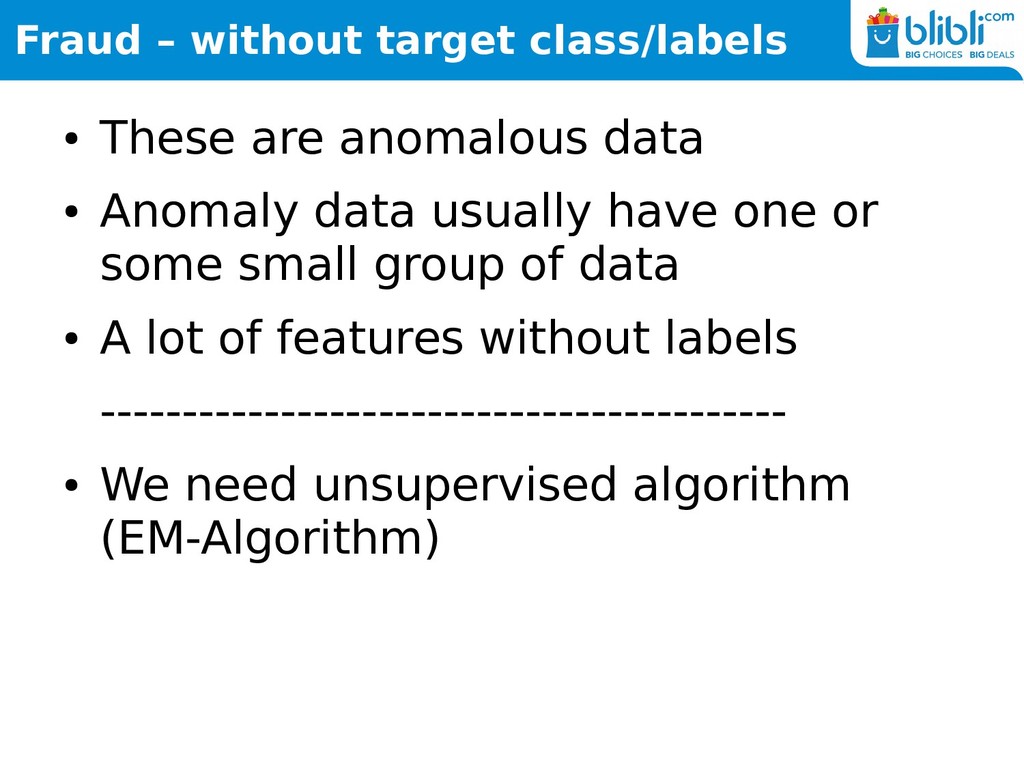
• Anomaly data usually have one or some small group of data • A lot of features without labels ------------------------------------------ • We need unsupervised algorithm (EM-Algorithm)


 situkangsayur
 takanorip
 teamlab
 onk
onk
 kash1064
 greenmidori
 jtakeda
 yu23ki14
 nealle
 rfdnxbro
 shuta13
 ymotongpoo
 iktakahiro
 shpigford
 destraynor
 skipperchong
 geshan
 danielanewman
 csswizardry
 soysaucechin
 mlcsv
mlcsv
 schroneko
 427marketing
 pwiseman
 lara
lara
![Python, data science, and unsupervised learning Hendri Karisma [email protected] /](https://files.speakerdeck.com/presentations/f201f91f289e44bd9c6650d6ccf7f200/slide_1.jpg)