Upgrade to Pro — share decks privately, control downloads, hide ads and more …

When Should You See a Dermatologist for Acne? 7...

Sponsored · Your Podcast. Everywhere. Effortlessly. Share. Educate. Inspire. Entertain. You do you. We'll handle the rest. →

When Should You See a Dermatologist for Acne? 7 Signs You Need Professional Treatment

Acne is one of the most common skin concerns, but persistent, painful, or severe acne may require professional dermatological care. This educational presentation explains 7 signs that it may be time to see a dermatologist for acne, including severe breakouts, persistent acne, acne scarring, ineffective over-the-counter treatments, and acne that affects daily confidence.

Learn about common acne concerns, when professional evaluation may be appropriate, and how specialized dermatology services can help address different skin conditions.

Explore Specialized Dermatology Services at Smart Health Clinic:
https://smarthealthclinic.com.np/services/specialized-dermatology-services
This presentation is intended for general educational purposes and does not replace professional medical advice.

Avatar for Social Media Manager

Social Media Manager

September 07, 2026

Other Decks in Science

Transcript

  1. When Should You See a Dermatologist for Acne? 7 Signs

    You May Need Professional Treatment SMART HEALTH CLINIC
  2. Acne Is Common - But Not Every Case Is the

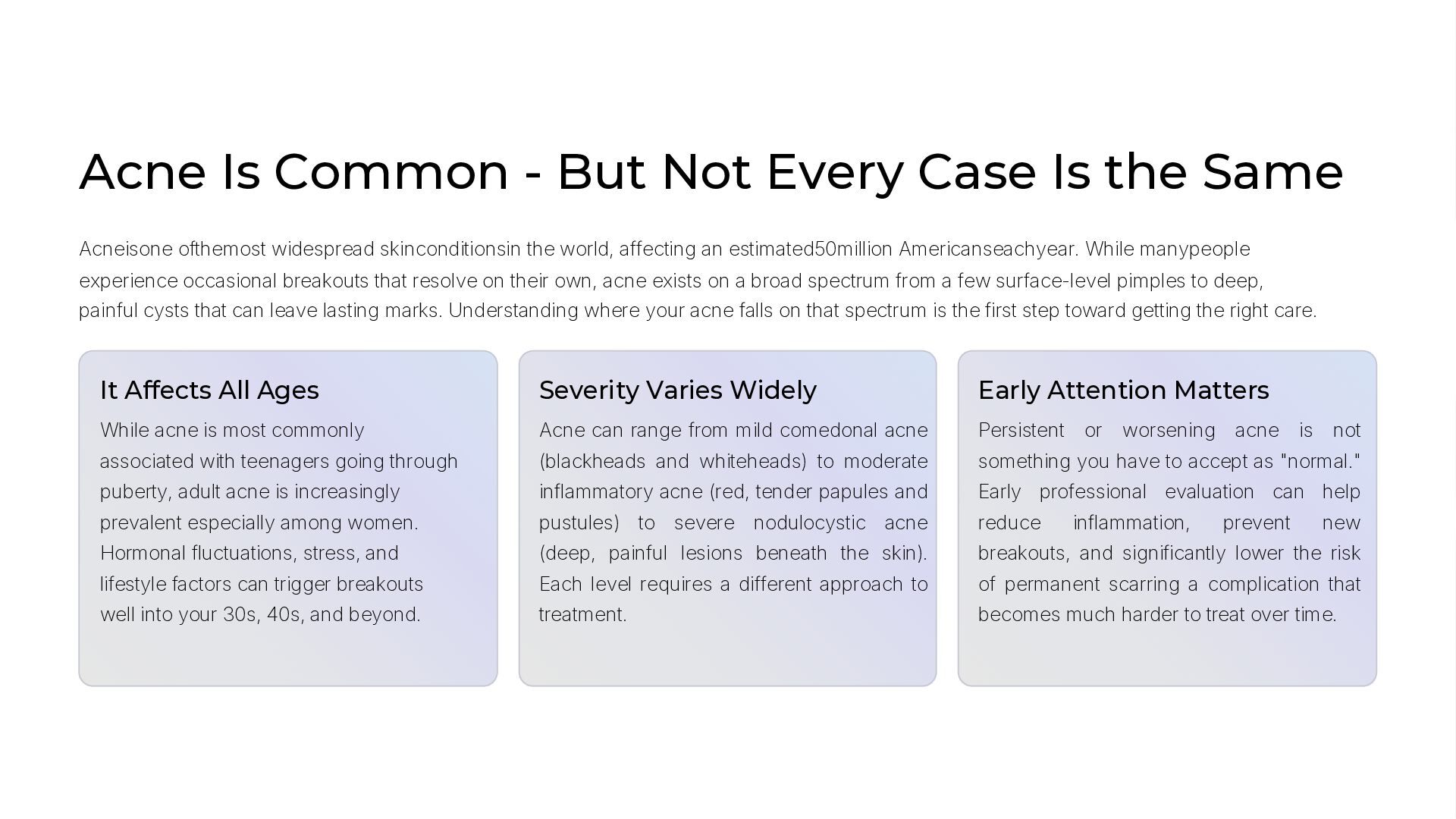
    Same Acneisone ofthemost widespread skinconditionsin the world, affecting an estimated50million Americanseachyear. While manypeople experience occasional breakouts that resolve on their own, acne exists on a broad spectrum from a few surface-level pimples to deep, painful cysts that can leave lasting marks. Understanding where your acne falls on that spectrum is the first step toward getting the right care. It Affects All Ages Severity Varies Widely Early Attention Matters While acne is most commonly Acne can range from mild comedonal acne Persistent associated with teenagers going through (blackheads and whiteheads) to moderate something you have to accept as "normal." puberty, adult acne is increasingly inflammatory acne (red, tender papules and Early professional evaluation can help prevalent especially among women. pustules) to severe nodulocystic acne reduce Hormonal fluctuations, stress, and (deep, painful lesions beneath the skin). breakouts, and significantly lower the risk lifestyle factors can trigger breakouts Each level requires a different approach to of permanent scarring a complication that well into your 30s, 40s, and beyond. treatment. becomes much harder to treat over time. or worsening inflammation, acne prevent is not new
  3. Sign #1: Severe or Painful Acne WARNING SIGN Not all

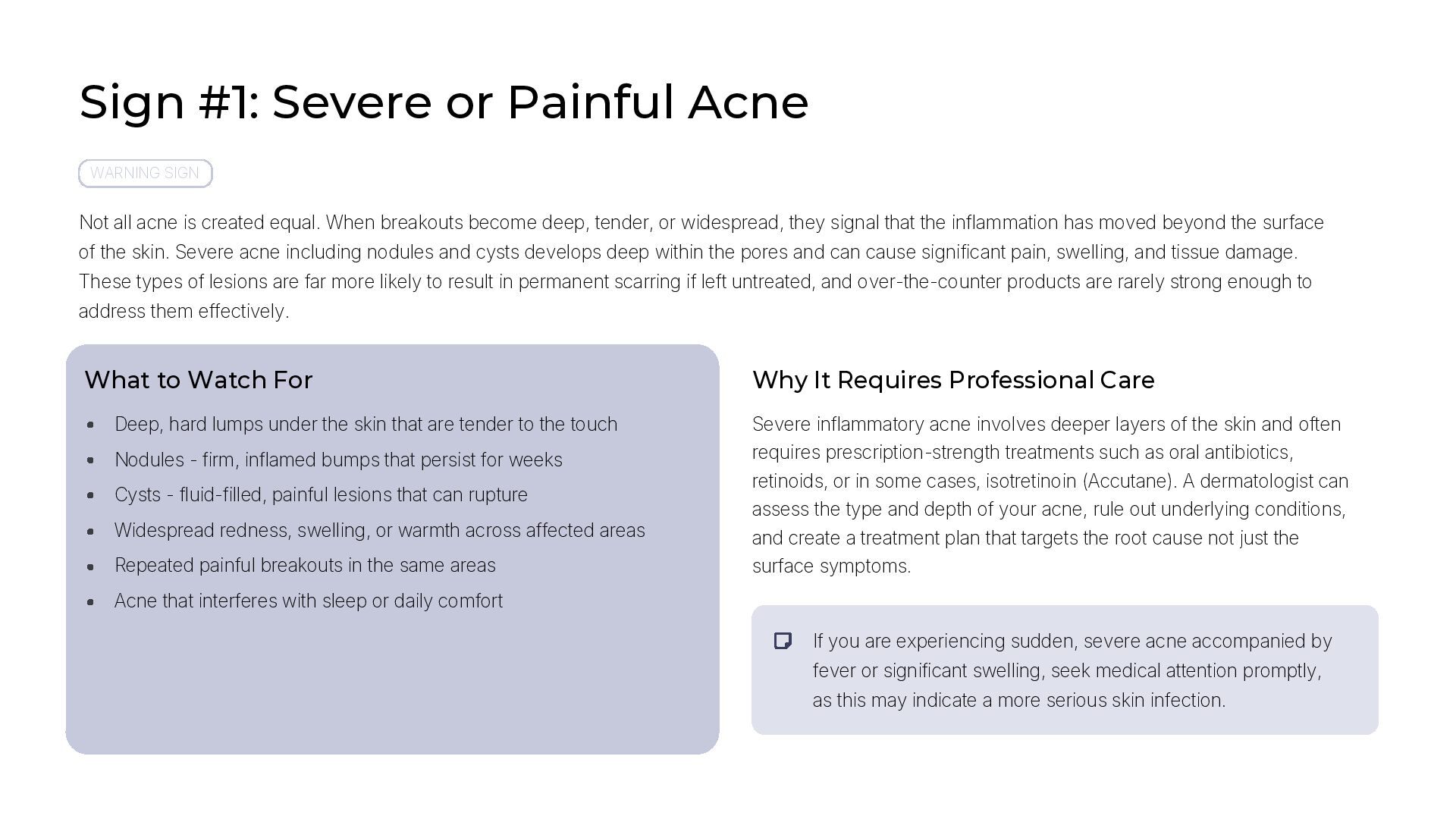
    acne is created equal. When breakouts become deep, tender, or widespread, they signal that the inflammation has moved beyond the surface of the skin. Severe acne including nodules and cysts develops deep within the pores and can cause significant pain, swelling, and tissue damage. These types of lesions are far more likely to result in permanent scarring if left untreated, and over-the-counter products are rarely strong enough to address them effectively. What to Watch For Why It Requires Professional Care Deep, hard lumps under the skin that are tender to the touch Severe inflammatory acne involves deeper layers of the skin and often Nodules - firm, inflamed bumps that persist for weeks requires prescription-strength treatments such as oral antibiotics, Cysts - fluid-filled, painful lesions that can rupture Widespread redness, swelling, or warmth across affected areas Repeated painful breakouts in the same areas retinoids, or in some cases, isotretinoin (Accutane). A dermatologist can assess the type and depth of your acne, rule out underlying conditions, and create a treatment plan that targets the root cause not just the surface symptoms. Acne that interferes with sleep or daily comfort If you are experiencing sudden, severe acne accompanied by fever or significant swelling, seek medical attention promptly, as this may indicate a more serious skin infection.
  4. Sign #2: Acne Isn't Improving With Over-the-Counter Treatments WARNING SIGN

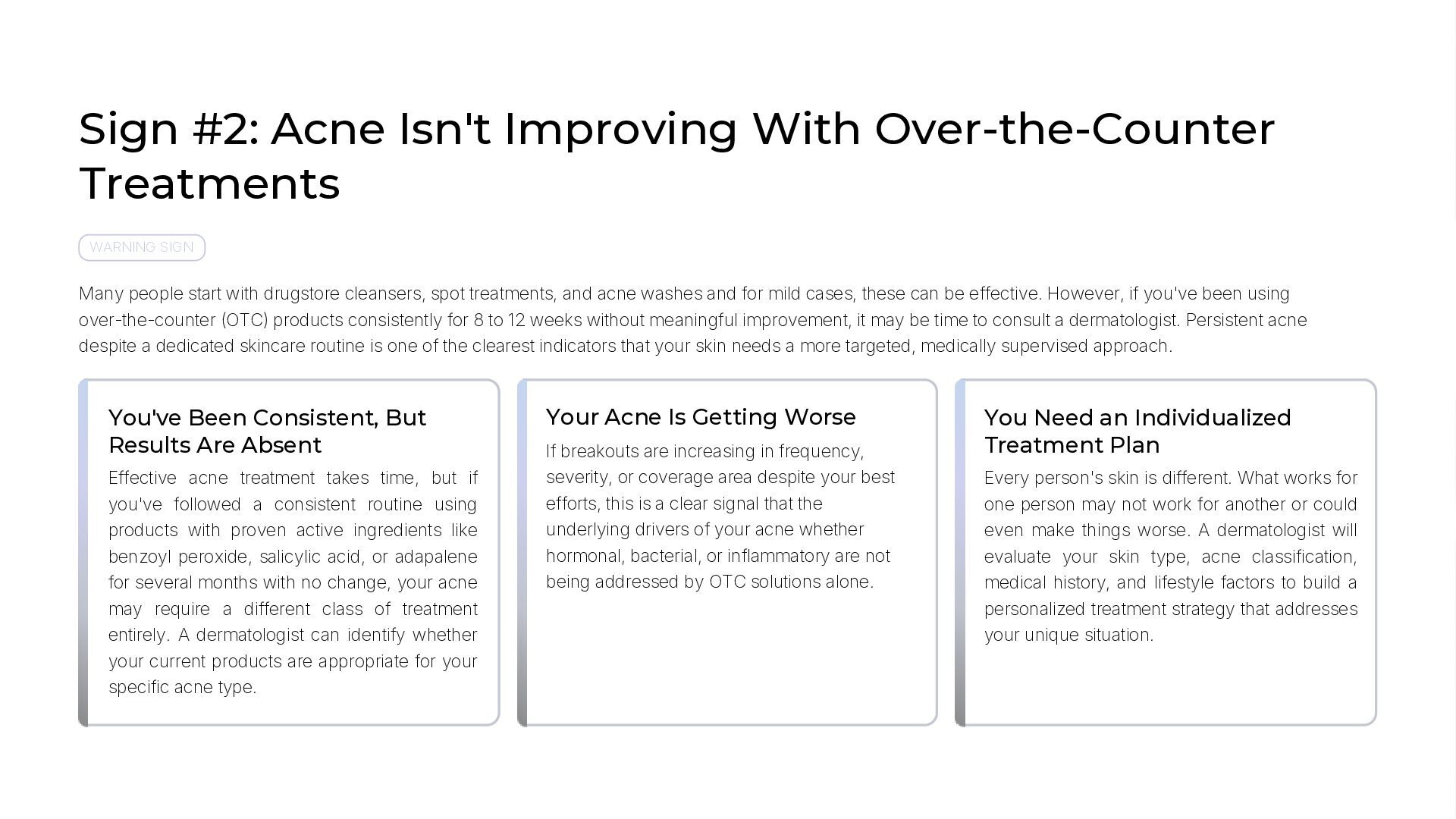
    Many people start with drugstore cleansers, spot treatments, and acne washes and for mild cases, these can be effective. However, if you've been using over-the-counter (OTC) products consistently for 8 to 12 weeks without meaningful improvement, it may be time to consult a dermatologist. Persistent acne despite a dedicated skincare routine is one of the clearest indicators that your skin needs a more targeted, medically supervised approach. You've Been Consistent, But Results Are Absent Effective acne treatment takes time, but if you've followed a consistent routine using products with proven active ingredients like benzoyl peroxide, salicylic acid, or adapalene for several months with no change, your acne may require a different class of treatment entirely. A dermatologist can identify whether your current products are appropriate for your specific acne type. Your Acne Is Getting Worse If breakouts are increasing in frequency, severity, or coverage area despite your best efforts, this is a clear signal that the underlying drivers of your acne whether hormonal, bacterial, or inflammatory are not being addressed by OTC solutions alone. You Need an Individualized Treatment Plan Every person's skin is different. What works for one person may not work for another or could even make things worse. A dermatologist will evaluate your skin type, acne classification, medical history, and lifestyle factors to build a personalized treatment strategy that addresses your unique situation.
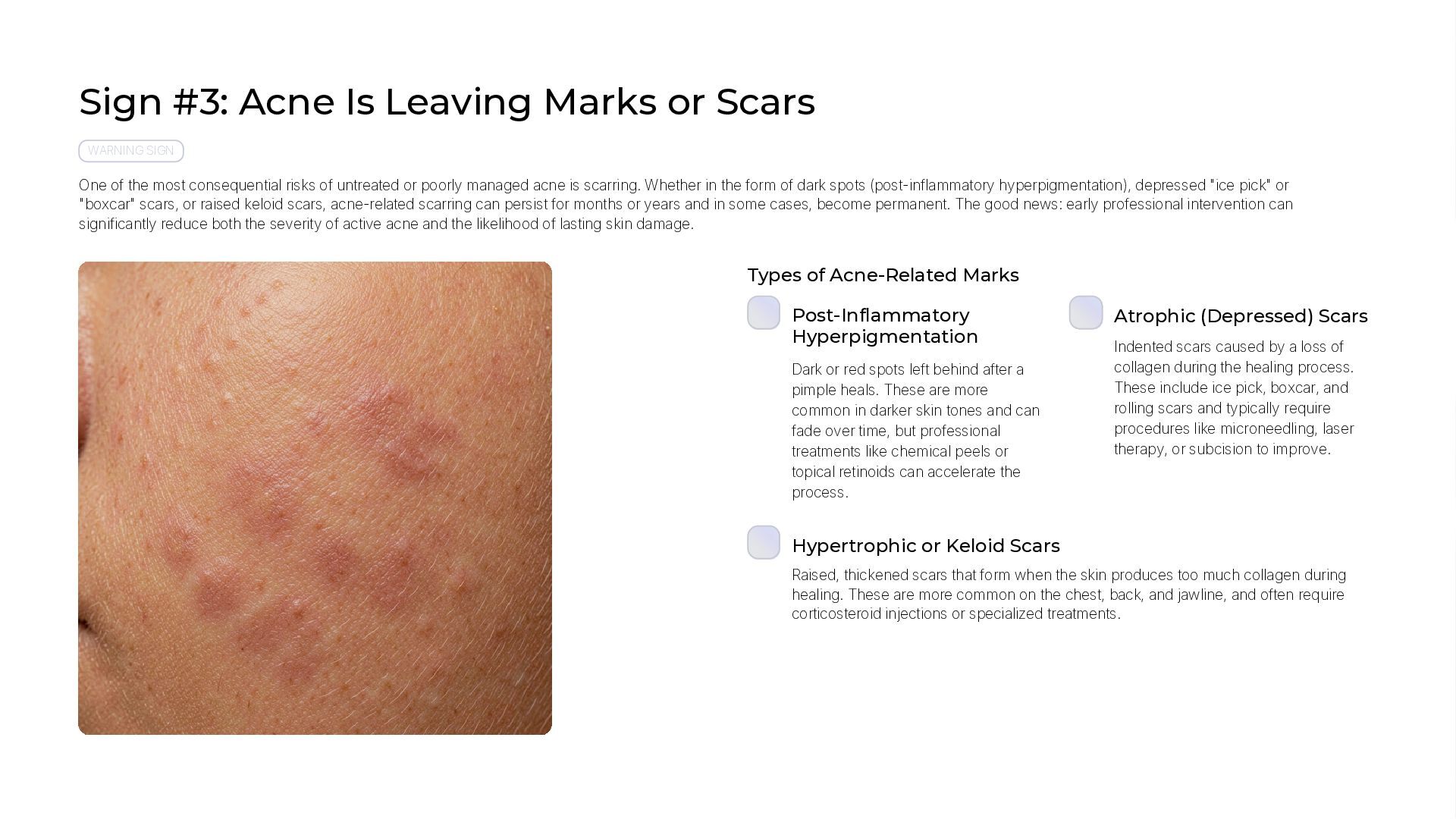
  5. Sign #3: Acne Is Leaving Marks or Scars WARNING SIGN

    One of the most consequential risks of untreated or poorly managed acne is scarring. Whether in the form of dark spots (post-inflammatory hyperpigmentation), depressed "ice pick" or "boxcar" scars, or raised keloid scars, acne-related scarring can persist for months or years and in some cases, become permanent. The good news: early professional intervention can significantly reduce both the severity of active acne and the likelihood of lasting skin damage. Types of Acne-Related Marks Post-Inflammatory Hyperpigmentation Dark or red spots left behind after a pimple heals. These are more common in darker skin tones and can fade over time, but professional treatments like chemical peels or topical retinoids can accelerate the process. Atrophic (Depressed) Scars Indented scars caused by a loss of collagen during the healing process. These include ice pick, boxcar, and rolling scars and typically require procedures like microneedling, laser therapy, or subcision to improve. Hypertrophic or Keloid Scars Raised, thickened scars that form when the skin produces too much collagen during healing. These are more common on the chest, back, and jawline, and often require corticosteroid injections or specialized treatments.
  6. Signs #4–7: Other Reasons to See a Dermatologist Beyond severity,

    persistence, andscarring,there areseveral otherimportantsituationsthatwarranta professionaldermatology consultation.These signs often indicate that your acne has an underlying cause hormonal, medication-related, or psychological that requires expert evaluation and a tailored treatment approach. Sign #4: Acne Keeps Coming Back Sign #5: Acne Affects Your Confidence or Daily Life Recurrent acne breakouts that clear up temporarily but return in the same areas suggests an ongoing trigger that hasn't been addressed. This could be hormonal, related to skincare products, diet, stress, or an underlying skin condition. A dermatologist can help identify the pattern and break the cycle with long-term management strategies. The emotional and psychological impact of acne is real and significant. If breakouts are causing you to avoid social situations, feel anxious about your appearance, or experience low self-esteem, it's important to seek help. Dermatologists understand the whole-person impact of skin conditions and can offer treatments that address both the physical and emotional aspects of acne. Sign #6: You Suspect Hormonal Acne Sign #7: Medication May Be Contributing Hormonal acne typically presents along the jawline, chin, and lower cheeks, and often Certain medications including corticosteroids, lithium, some anticonvulsants, and flares in sync with the menstrual cycle in women. It can also be associated with hormonal treatments can trigger or worsen acne as a side effect. If you suspect a conditions like polycystic ovary syndrome (PCOS). Hormonal acne often requires medication is affecting your skin, do not stop taking it on your own. A specific treatments such as oral contraceptives, spironolactone, or other hormone- dermatologist can work with your prescribing physician to explore alternatives or modulating therapies that only a healthcare provider can prescribe. add acne management to your treatment plan.
  7. How Can a Dermatologist Help? Adermatologist isamedical doctorwho specializes indiagnosingandtreating

    conditions ofthe skin, hair, and nails. When it comes to acne, their expertise goes far beyond what any over-the-counter product can offer. From accurate diagnosis to personalized treatment plans and scar management, a dermatologist provides comprehensive care tailored to your skin's unique needs. 01 Comprehensive Skin Assessment Your dermatologist will evaluate the type, severity, and distribution of your acne, as well as your skin type and any contributing factors such as hormones, lifestyle, or medications. This thorough assessment ensures that your treatment plan is built on an accurate understanding of your condition. 02 03 Review of Skincare and Treatment History Personalized Treatment Recommendations Understanding what you've already tried and how your skin responded helps your dermatologist avoid repeating ineffective approaches. Bring a list of current and past products, medications, and treatments to your appointment for the most productive consultation. Based on your assessment, your dermatologist may recommend topical retinoids, antibiotics, benzoyl peroxide combinations, oral medications, hormonal therapies, or procedural treatments like chemical peels or light therapy. The goal is to find the most effective, well-tolerated approach for your specific situation. 04 Scar Management and Prevention If scarring has already occurred, your dermatologist can offer treatments such as microneedling, laser resurfacing, dermal fillers, or subcision to improve skin texture and appearance. Preventing new scars through effective acne control is always the first priority. 05 Ongoing Monitoring and Plan Adjustment Acne treatment is rarely a one-and-done process. Your dermatologist will follow up to monitor your progress, adjust treatments as needed, and ensure you're achieving the best possible outcome with minimal side effects.
  8. When Should You Seek Professional Care? Ifyou'reunsurewhether your acnewarrants adermatologist

    visit, usethis quickreference guide.Thepresenceofone or more of the following factors is a strong indication that professional evaluation would be beneficial. Remember: there is no shame in seeking help for a medical skin condition, and earlier intervention typically leads to better, faster results. Severe Painful Deep nodules, cysts, or widespread inflammatory acne that goes beyond surface-level breakouts. Acne that causes tenderness, throbbing, or physical discomfort a sign of deep inflammation. Persistent Recurrent Breakouts that continue for weeks or months without improvement, even with consistent OTC treatment. Acne that clears and returns repeatedly in the same areas, suggesting an unresolved underlying trigger. Scarring Not Responding Any evidence of dark spots, depressed scars, or raised marks left behind by previous breakouts. Acne that does not improve after 8–12 weeks of appropriate over-the-counter treatment. Even one of these signs is enough reason to schedule a consultation. You don't need to wait until your acne becomes severe early professional care can prevent complications and help you achieve clearer skin faster.
  9. Looking for Professional Dermatology Care? At Smart HealthClinic,our experienced dermatologyteamis

    heretohelpyou achieve clearer, healthierskin. Whetheryou're dealing with persistent breakouts, painful cystic acne, hormonal flare-ups, or acne-related scarring, we offer personalized, evidence-based treatment plans designed to address your unique skin concerns. 🌐 Visit Our Website 🩺 Explore Specialized Dermatology Services Explore our full range of dermatology services, meet our Looking for professional care for acne, skin concerns, and providers, and learn more about what to expect during your first other dermatological conditions? Explore our specialized visit. dermatology services and learn more about the care available at Smart Health Clinic. Smart Health Clinic Specialized Dermatology Services This presentation is for educational purposes only and is not a substitute for professional medical advice. If you have concerns about your skin, please consult a licensed dermatologist or healthcare provider.