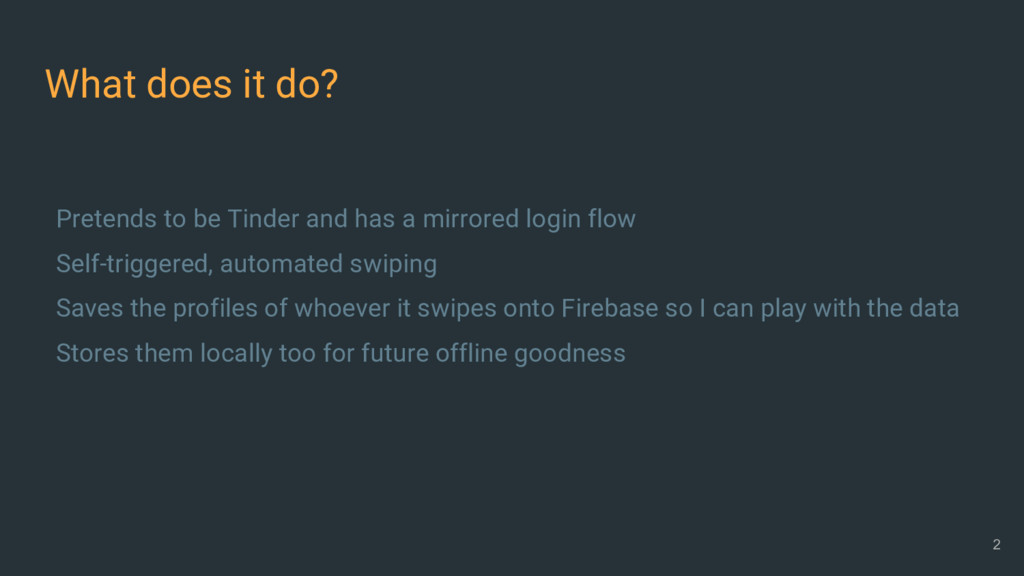
a mirrored login flow Self-triggered, automated swiping Saves the profiles of whoever it swipes onto Firebase so I can play with the data Stores them locally too for future offline goodness 2
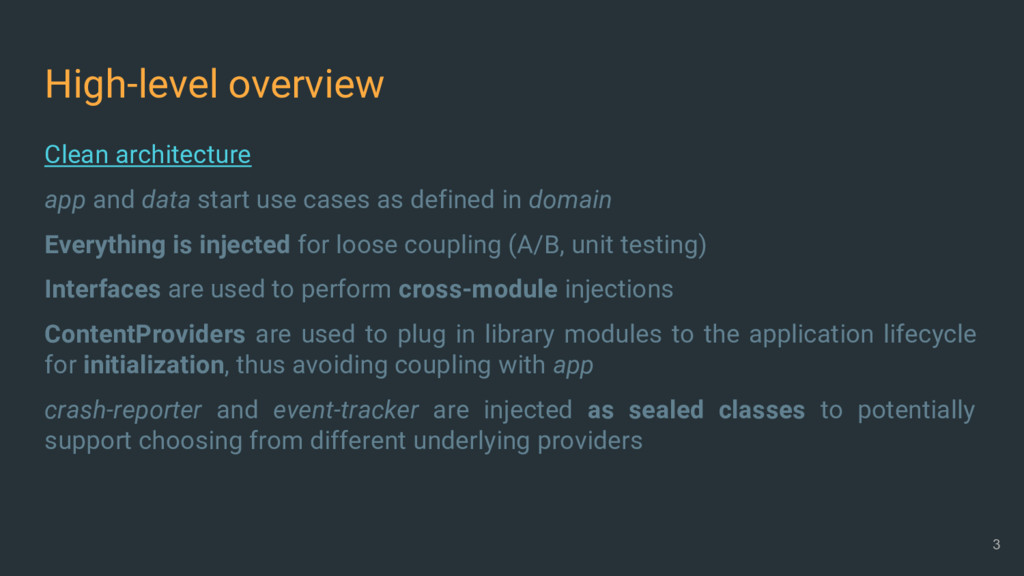
as defined in domain Everything is injected for loose coupling (A/B, unit testing) Interfaces are used to perform cross-module injections ContentProviders are used to plug in library modules to the application lifecycle for initialization, thus avoiding coupling with app crash-reporter and event-tracker are injected as sealed classes to potentially support choosing from different underlying providers 3
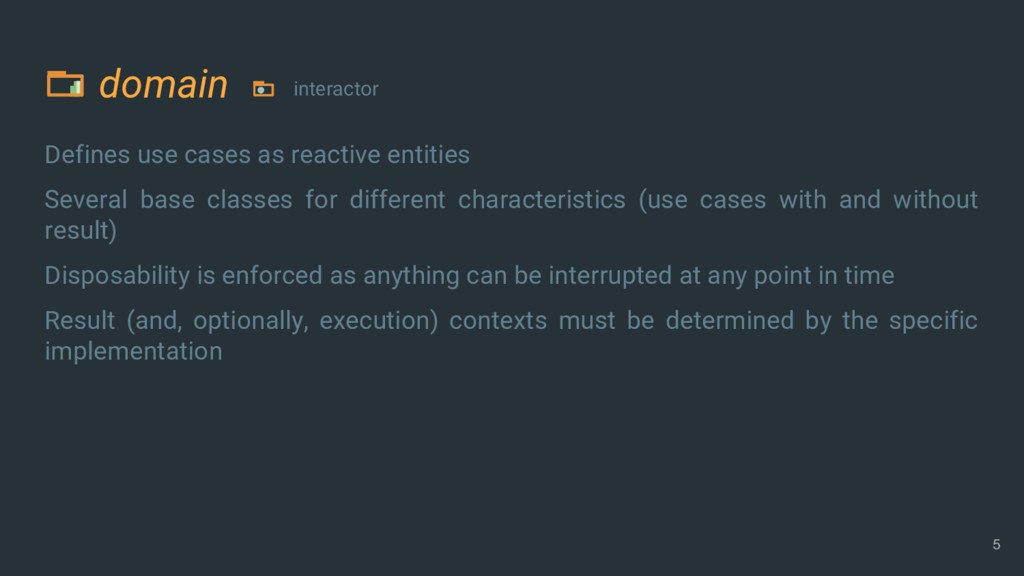
for different characteristics (use cases with and without result) Disposability is enforced as anything can be interrupted at any point in time Result (and, optionally, execution) contexts must be determined by the specific implementation interactor 5
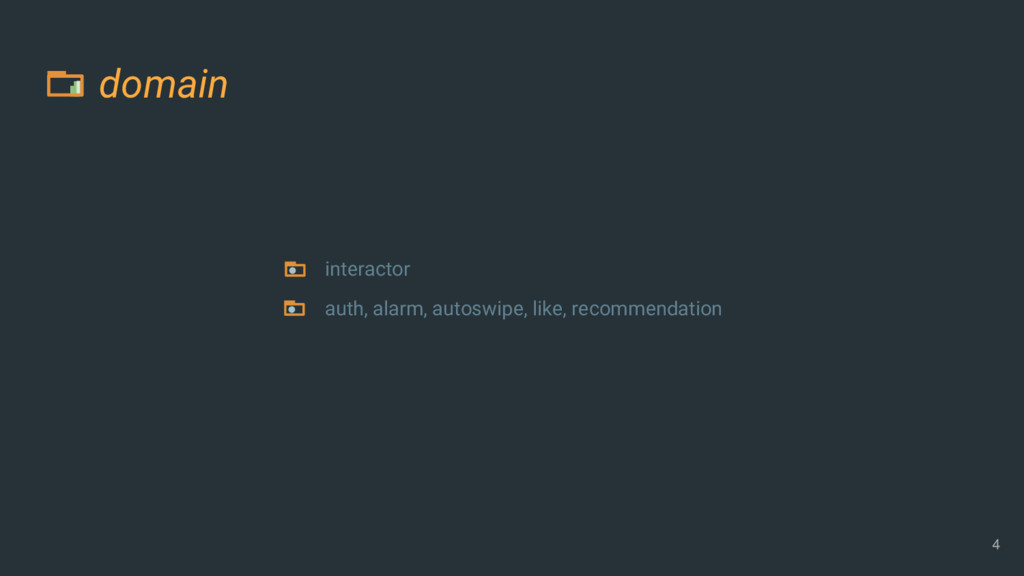
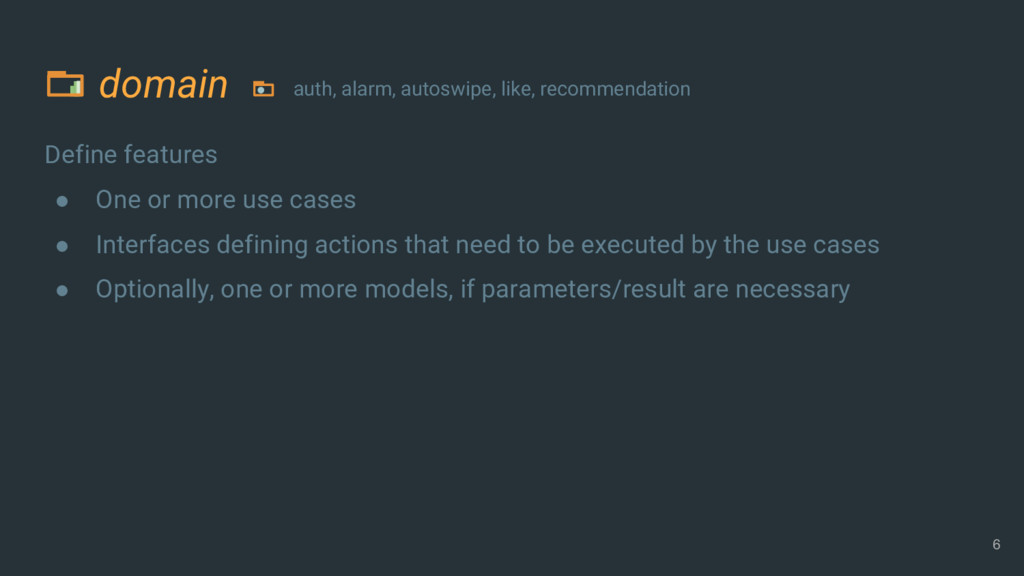
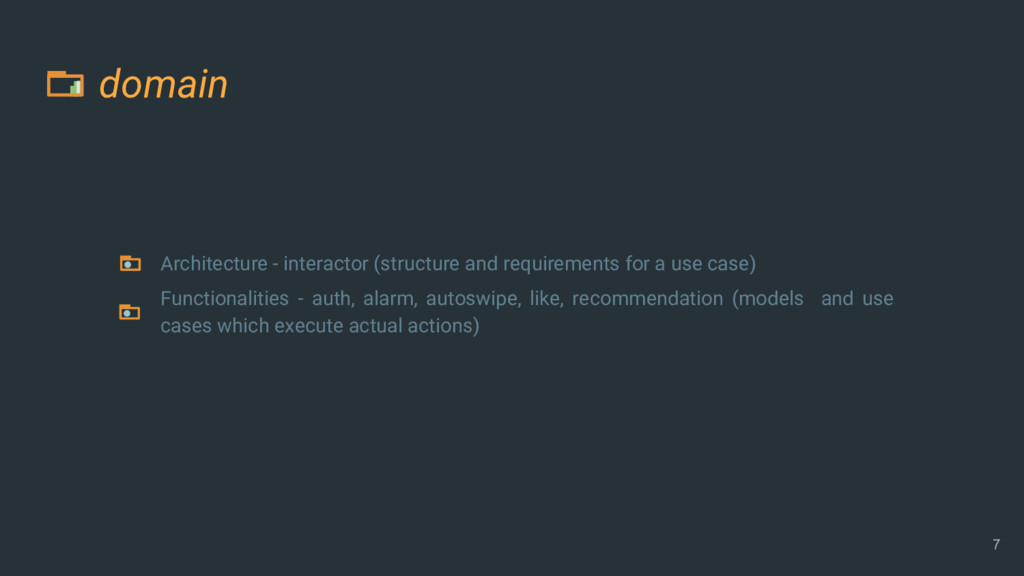
Interfaces defining actions that need to be executed by the use cases • Optionally, one or more models, if parameters/result are necessary auth, alarm, autoswipe, like, recommendation 6
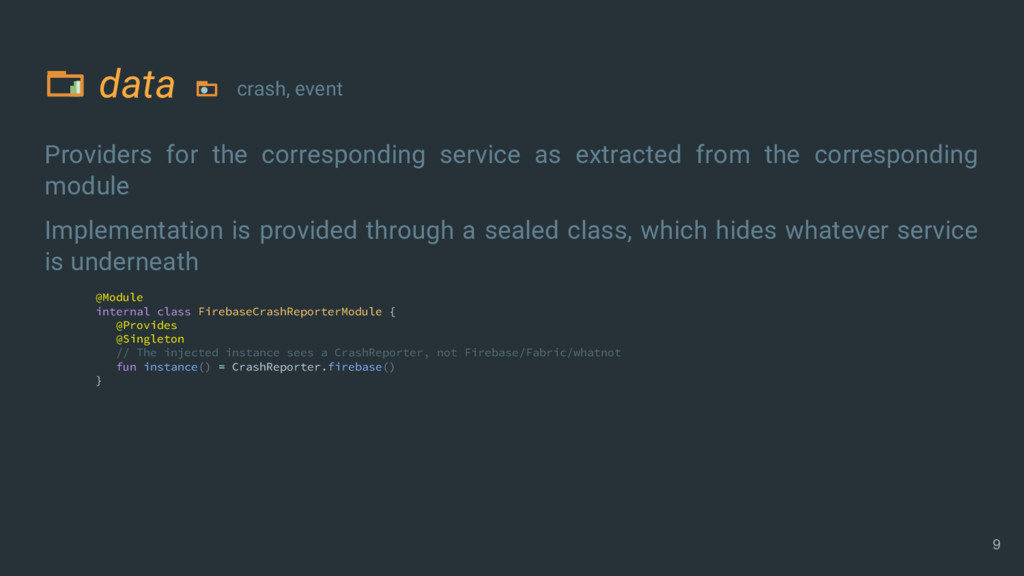
corresponding module Implementation is provided through a sealed class, which hides whatever service is underneath @Module internal class FirebaseCrashReporterModule { @Provides @Singleton // The injected instance sees a CrashReporter, not Firebase/Fabric/whatnot fun instance() = CrashReporter.firebase() } crash, event 9
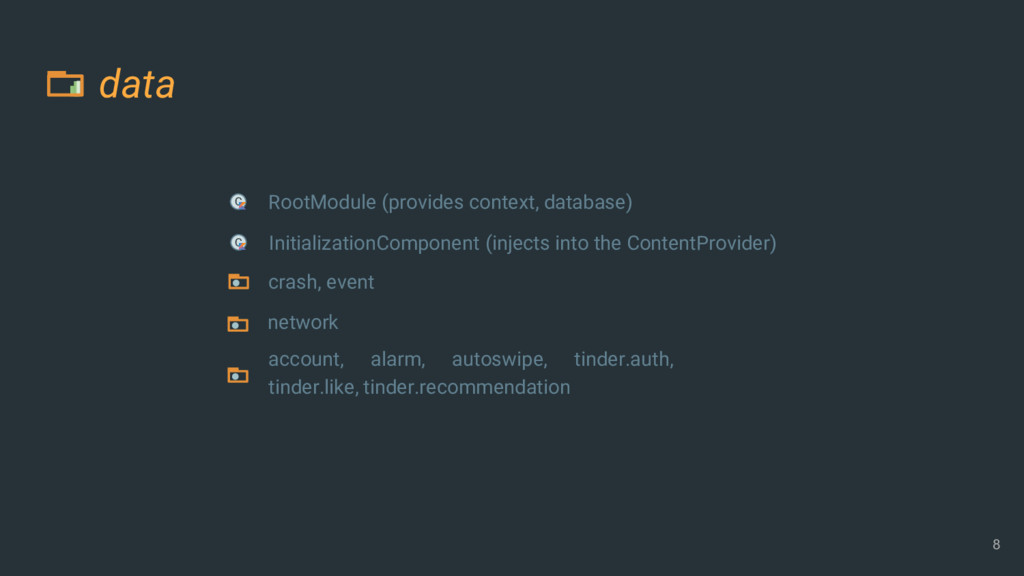
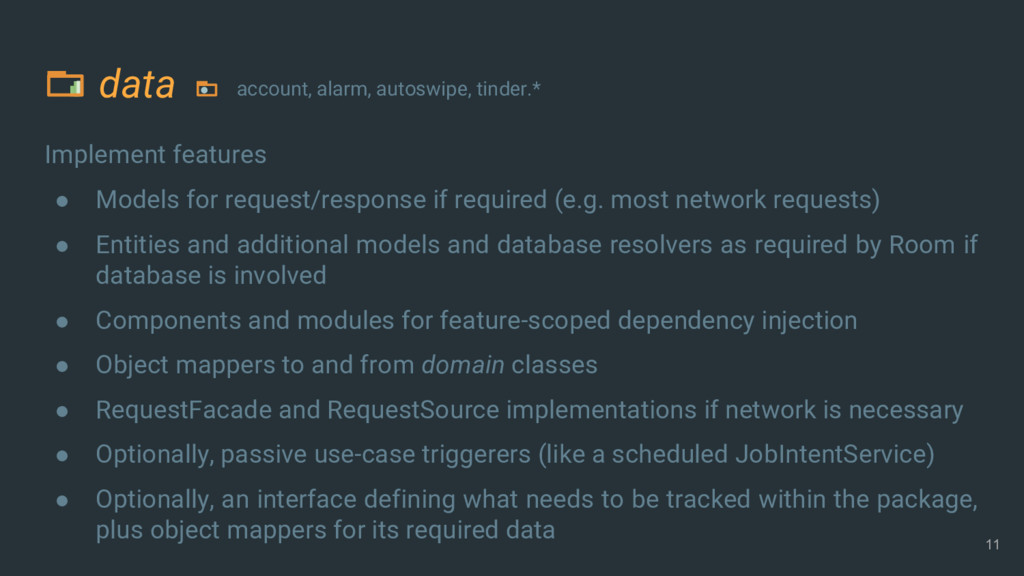
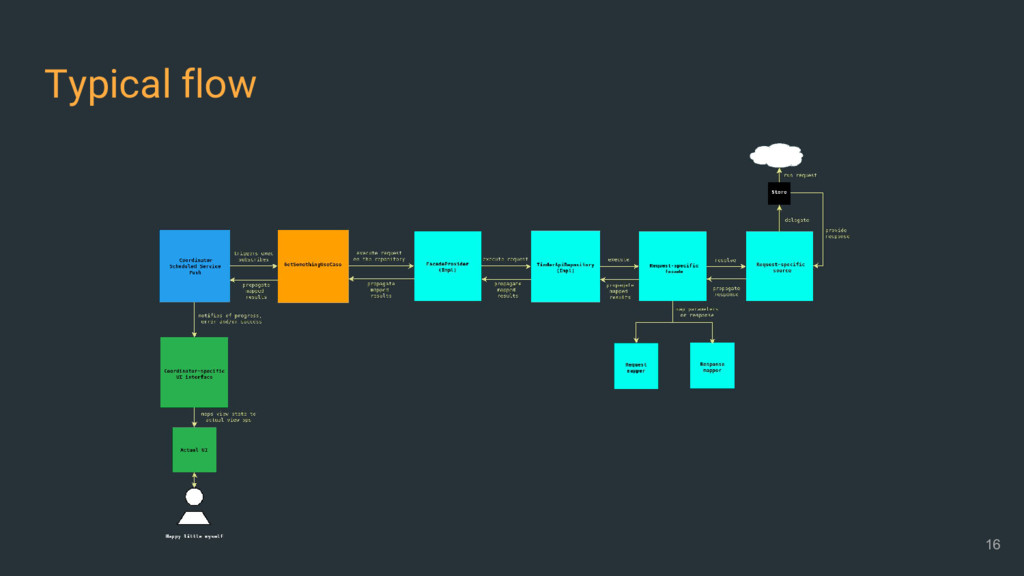
most network requests) • Entities and additional models and database resolvers as required by Room if database is involved • Components and modules for feature-scoped dependency injection • Object mappers to and from domain classes • RequestFacade and RequestSource implementations if network is necessary • Optionally, passive use-case triggerers (like a scheduled JobIntentService) • Optionally, an interface defining what needs to be tracked within the package, plus object mappers for its required data account, alarm, autoswipe, tinder.* 11
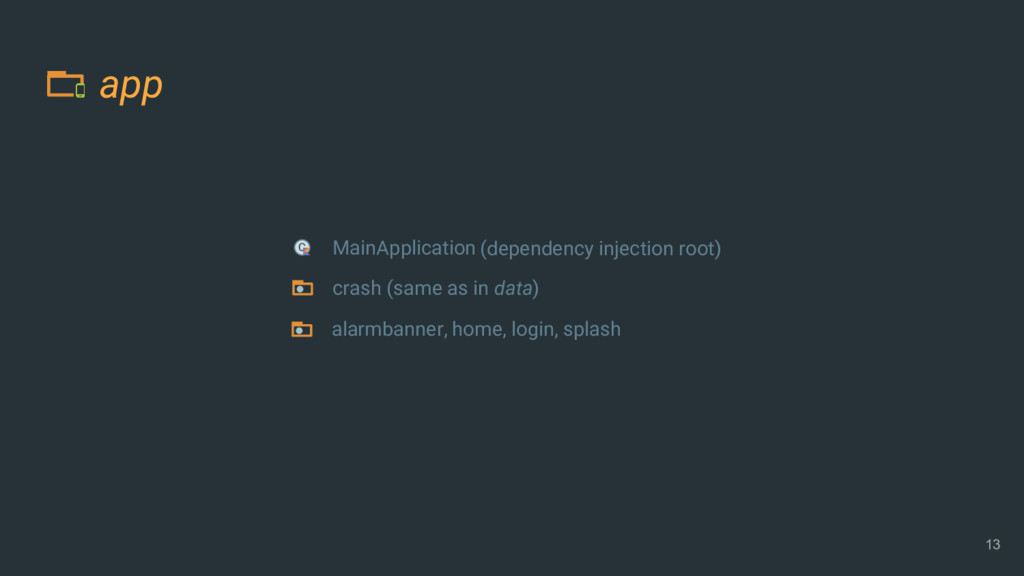
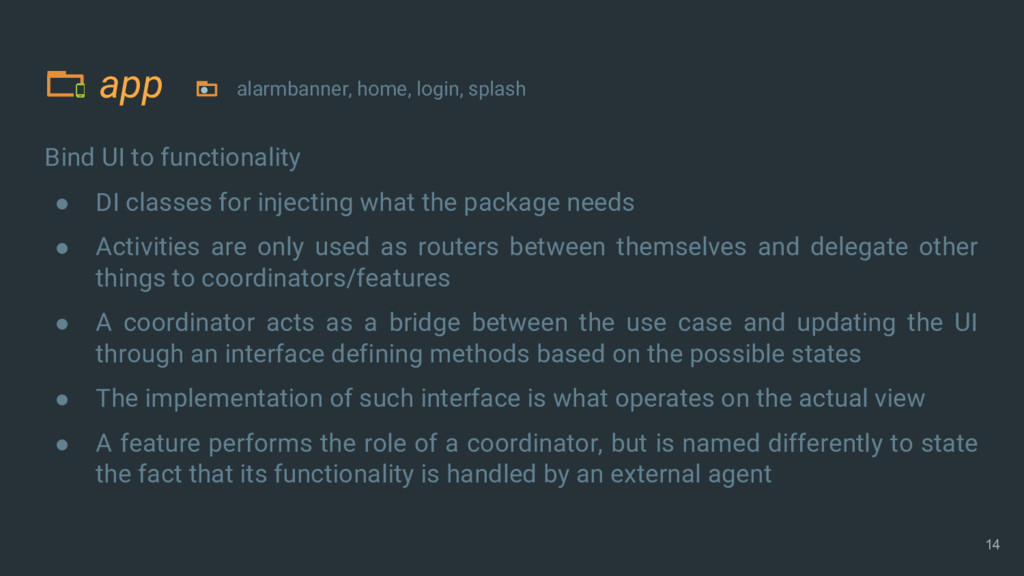
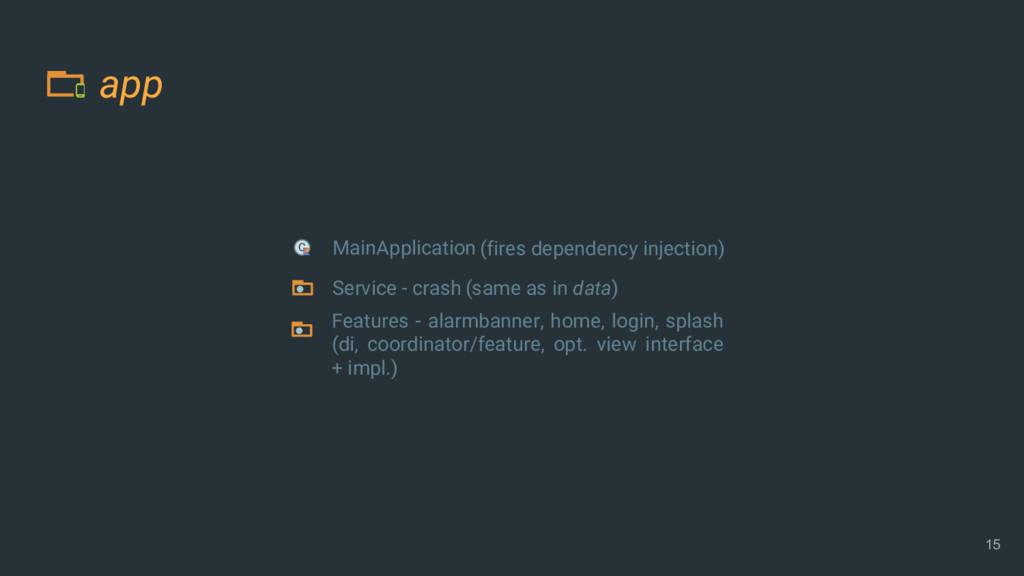
what the package needs • Activities are only used as routers between themselves and delegate other things to coordinators/features • A coordinator acts as a bridge between the use case and updating the UI through an interface defining methods based on the possible states • The implementation of such interface is what operates on the actual view • A feature performs the role of a coordinator, but is named differently to state the fact that its functionality is handled by an external agent alarmbanner, home, login, splash 14
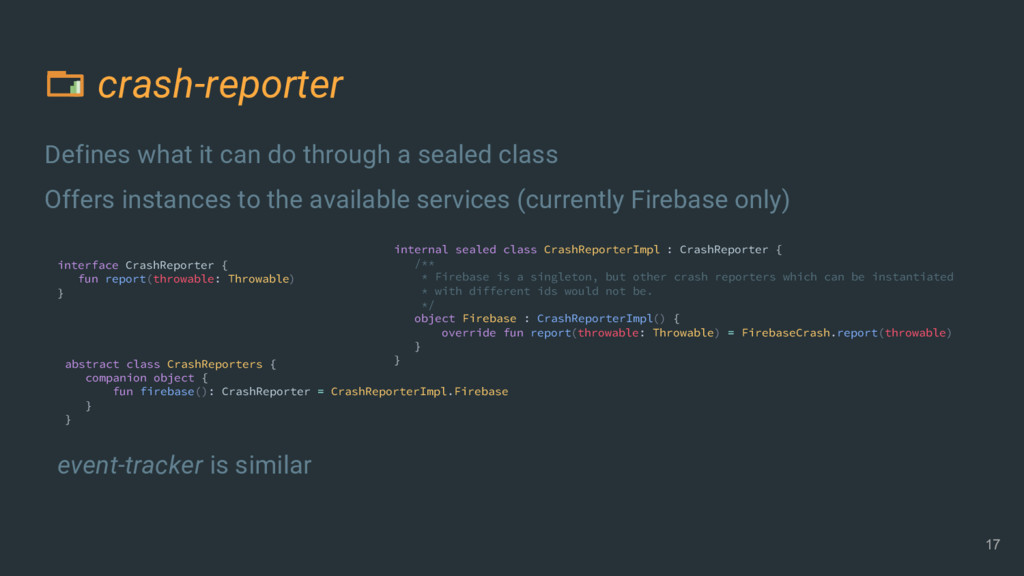
instances to the available services (currently Firebase only) crash-reporter 17 internal sealed class CrashReporterImpl : CrashReporter { /** * Firebase is a singleton, but other crash reporters which can be instantiated * with different ids would not be. */ object Firebase : CrashReporterImpl() { override fun report(throwable: Throwable) = FirebaseCrash.report(throwable) } } event-tracker is similar interface CrashReporter { fun report(throwable: Throwable) } abstract class CrashReporters { companion object { fun firebase(): CrashReporter = CrashReporterImpl.Firebase } }


 kenjiyoneyama
 gam0022
 guaca
 yutobara
 mofurune
 kishida
 tanahiro2010
 oku053
 skydoves
 satoshi256kbyte
 siroemk
 takai
 portentint
 skipperchong
 baasie
 csswizardry
 tammyeverts
 watany
 jonoalderson
 marketingsoph
 codingconduct
 mlcsv
 ivargrimstad
 yeseniaperezcruz