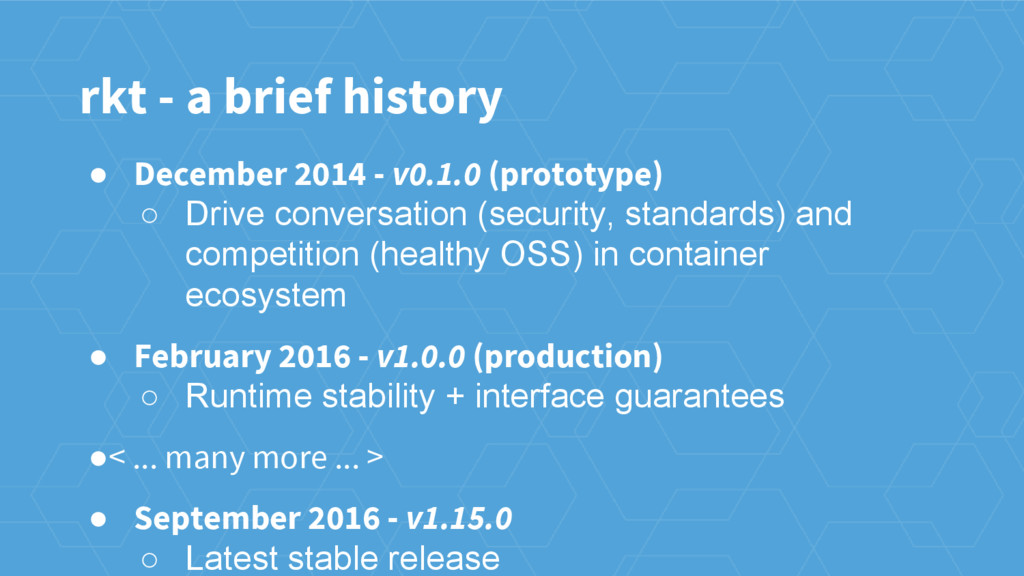
standards) and competition (healthy OSS) in container ecosystem • February 2016 - v1.0.0 (production) ◦ Runtime stability + interface guarantees •< ... many more ... > • September 2016 - v1.15.0 ◦ Latest stable release rkt - a brief history
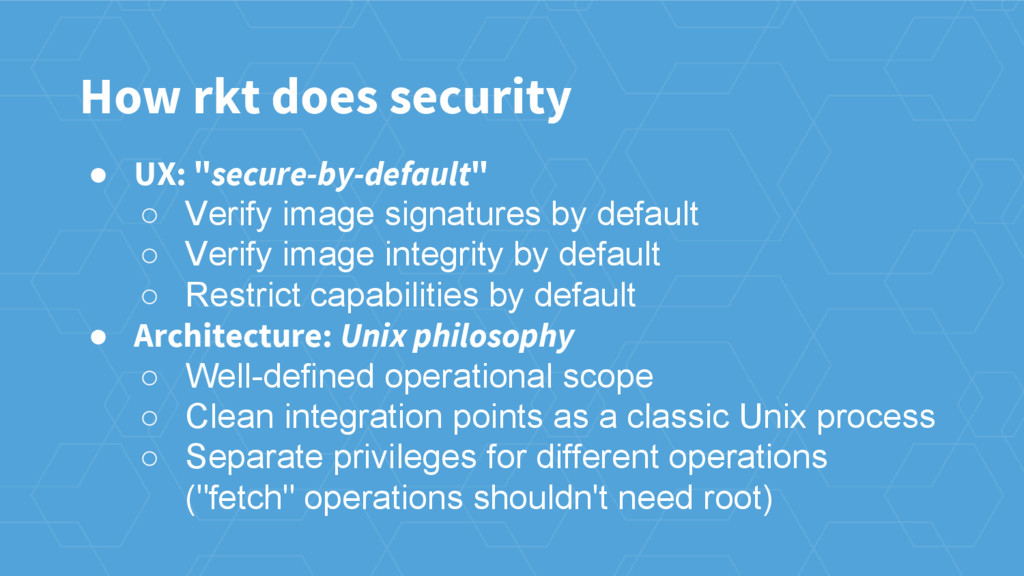
Verify image integrity by default ◦ Restrict capabilities by default • Architecture: Unix philosophy ◦ Well-defined operational scope ◦ Clean integration points as a classic Unix process ◦ Separate privileges for different operations ("fetch" operations shouldn't need root) How rkt does security
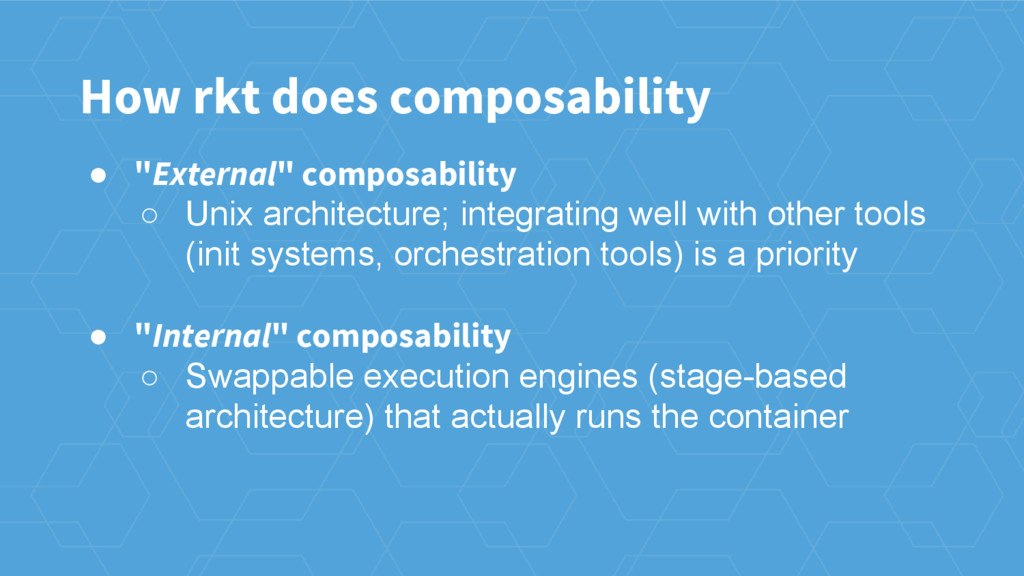
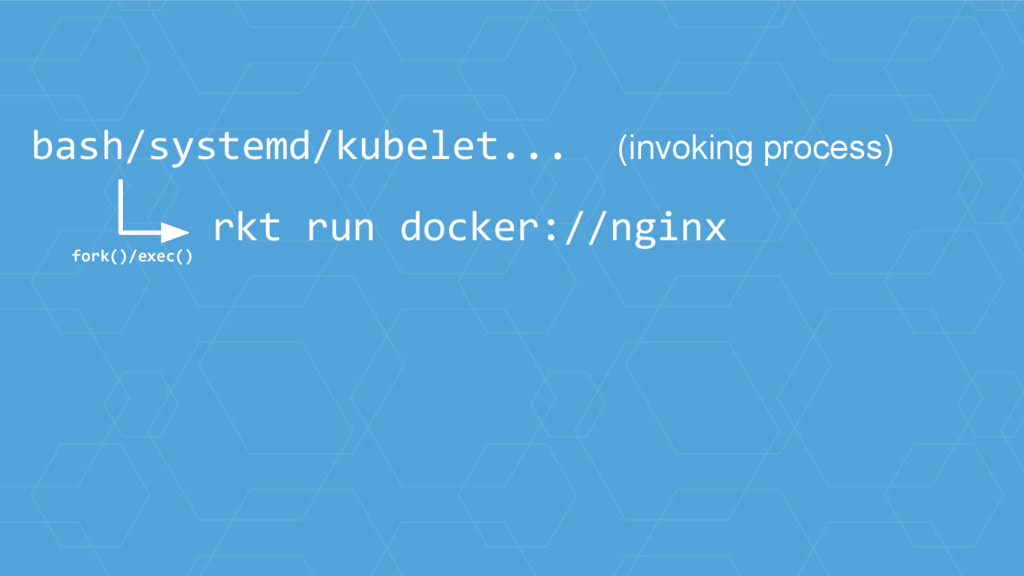
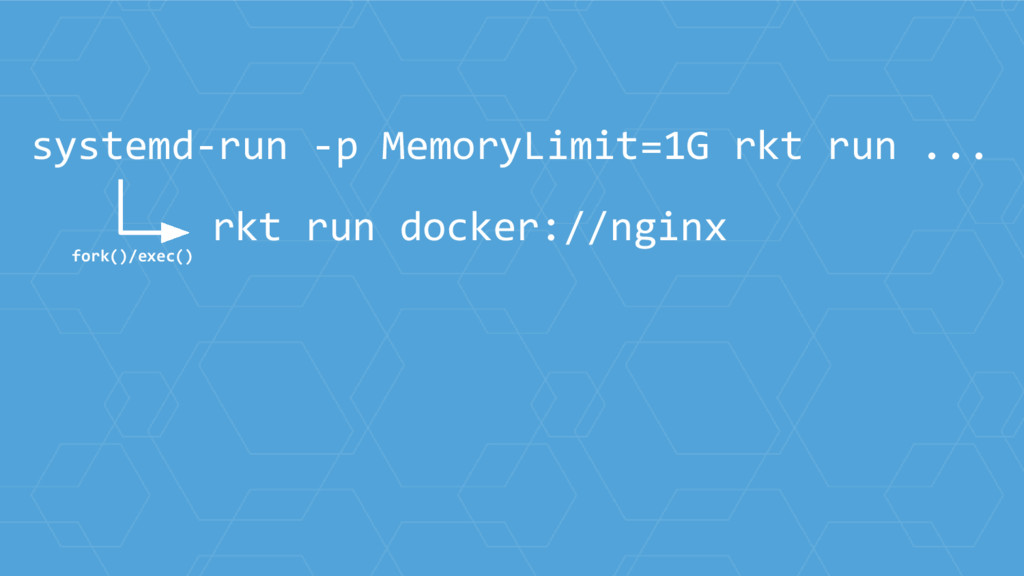
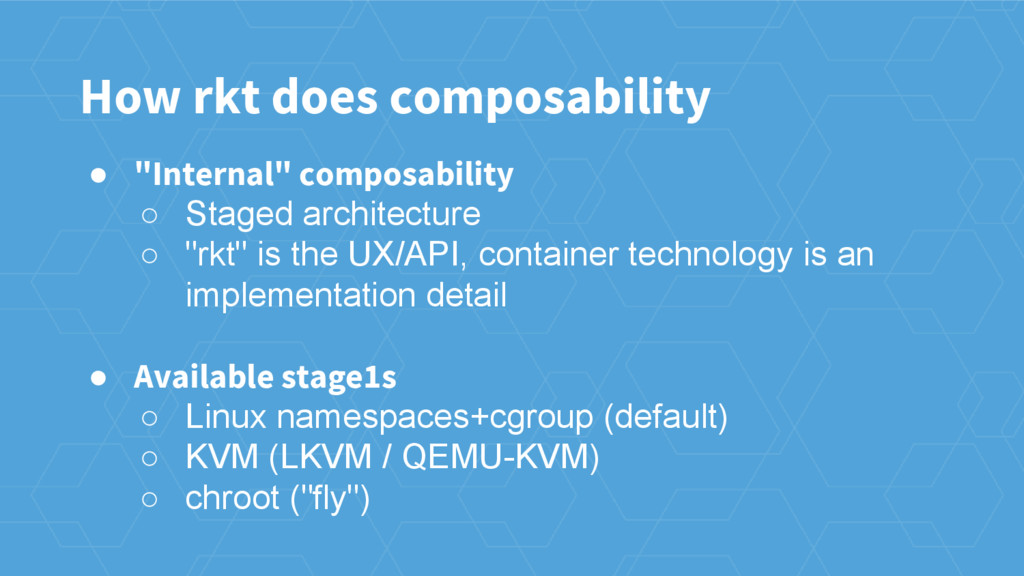
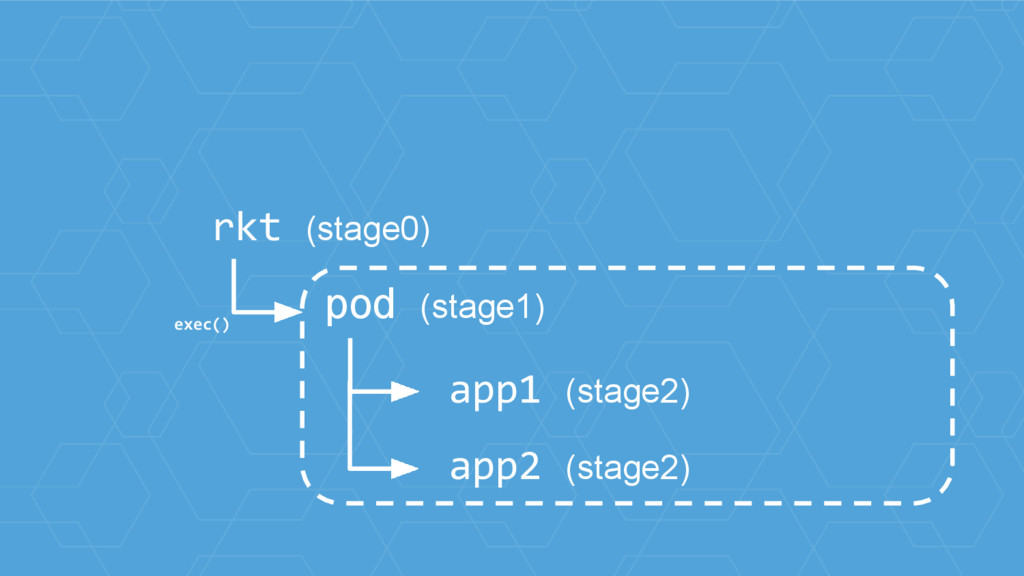
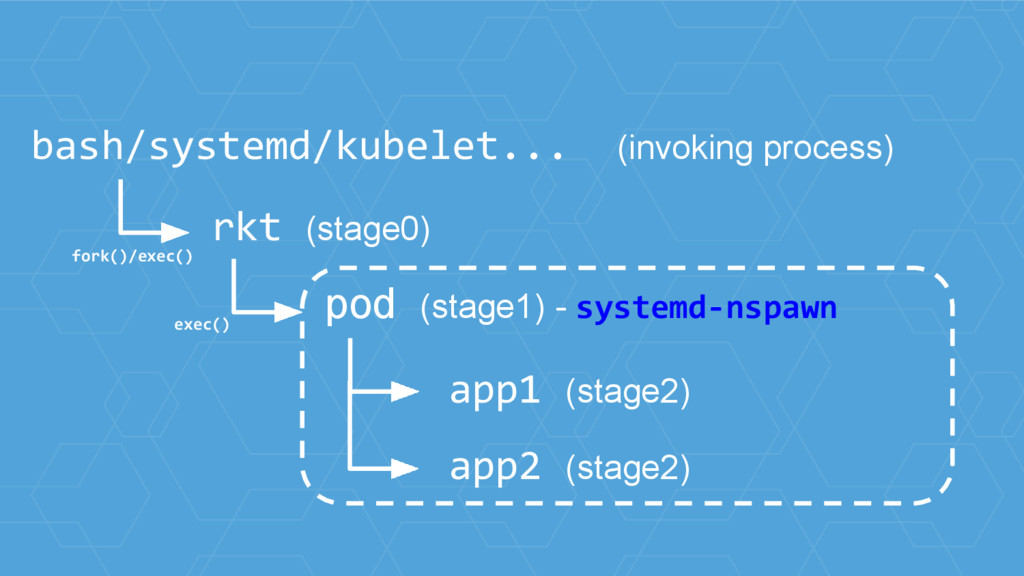
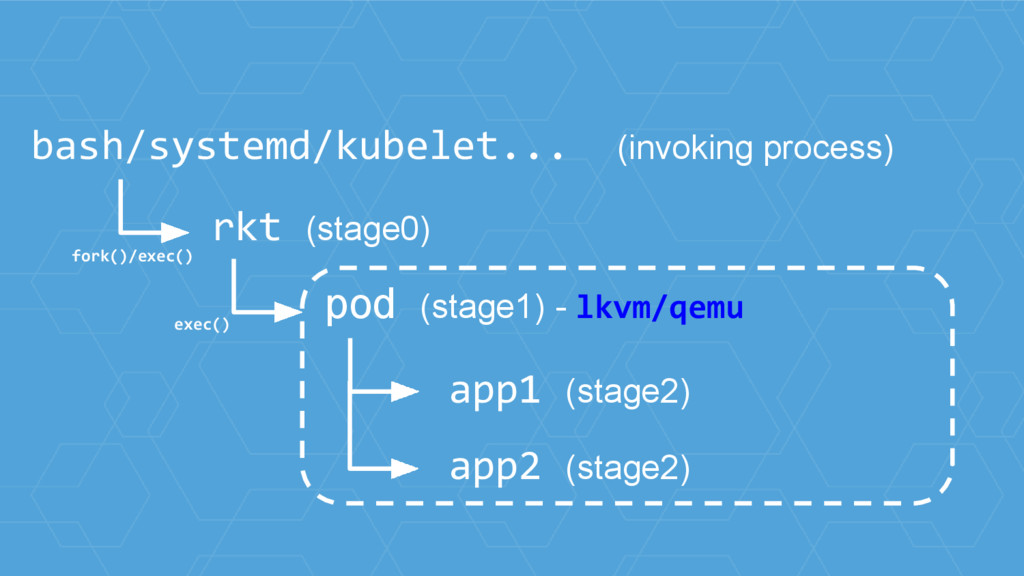
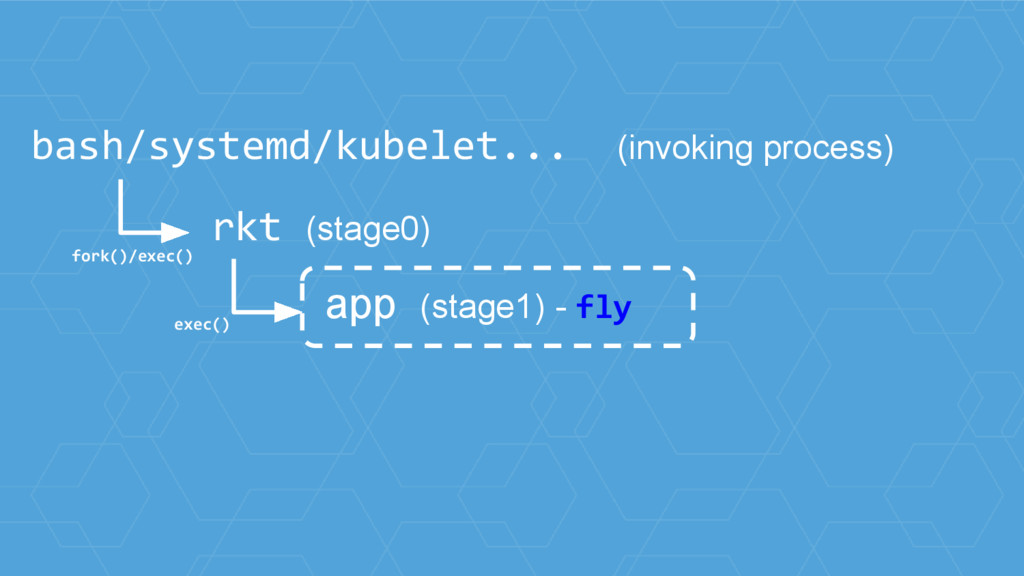
tools (init systems, orchestration tools) is a priority • "Internal" composability ◦ Swappable execution engines (stage-based architecture) that actually runs the container How rkt does composability
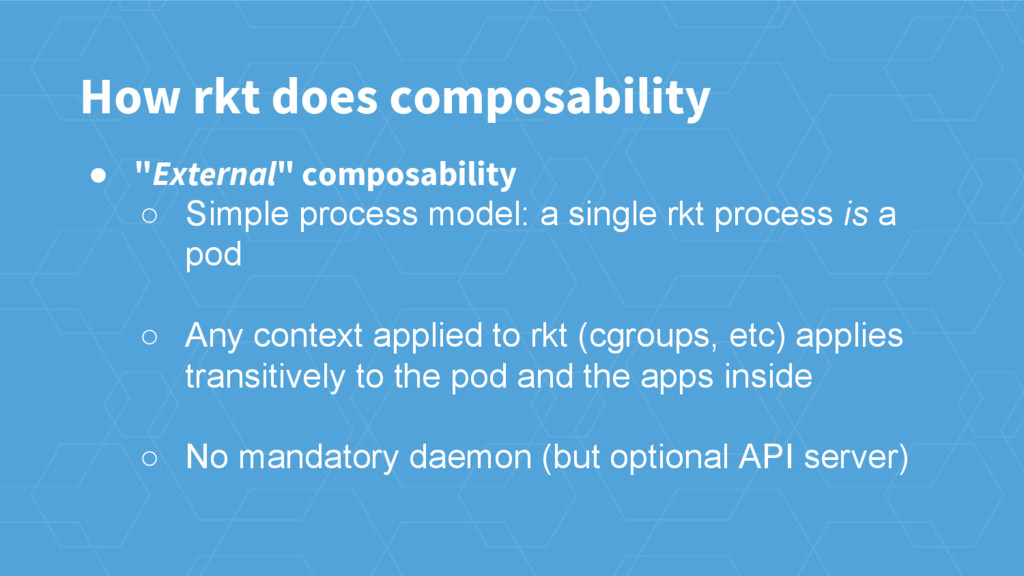
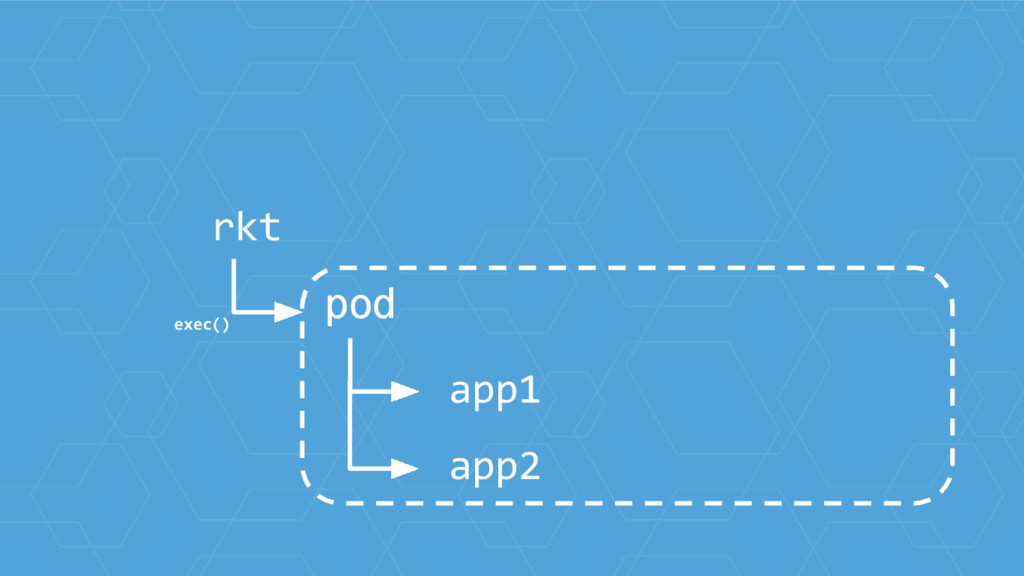
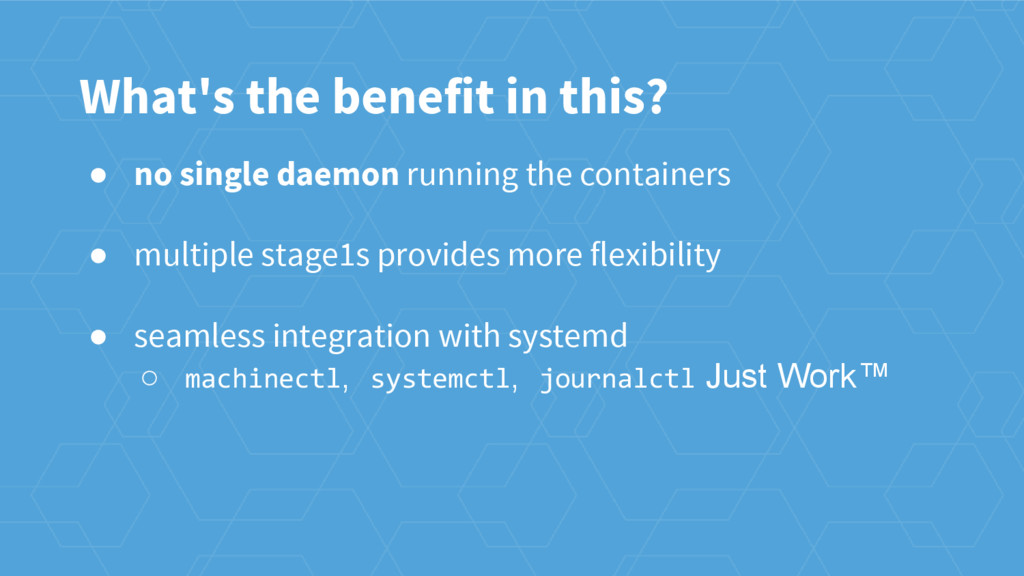
process is a pod ◦ Any context applied to rkt (cgroups, etc) applies transitively to the pod and the apps inside ◦ No mandatory daemon (but optional API server) How rkt does composability
UX/API, container technology is an implementation detail • Available stage1s ◦ Linux namespaces+cgroup (default) ◦ KVM (LKVM / QEMU-KVM) ◦ chroot ("fly") How rkt does composability
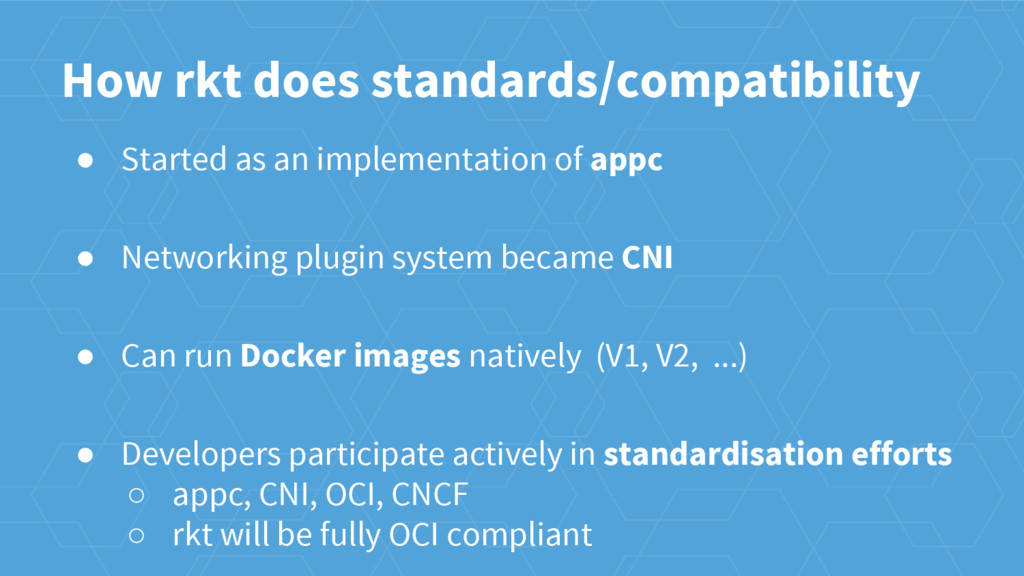
appc • Networking plugin system became CNI • Can run Docker images natively (V1, V2, ...) • Developers participate actively in standardisation efforts ◦ appc, CNI, OCI, CNCF ◦ rkt will be fully OCI compliant
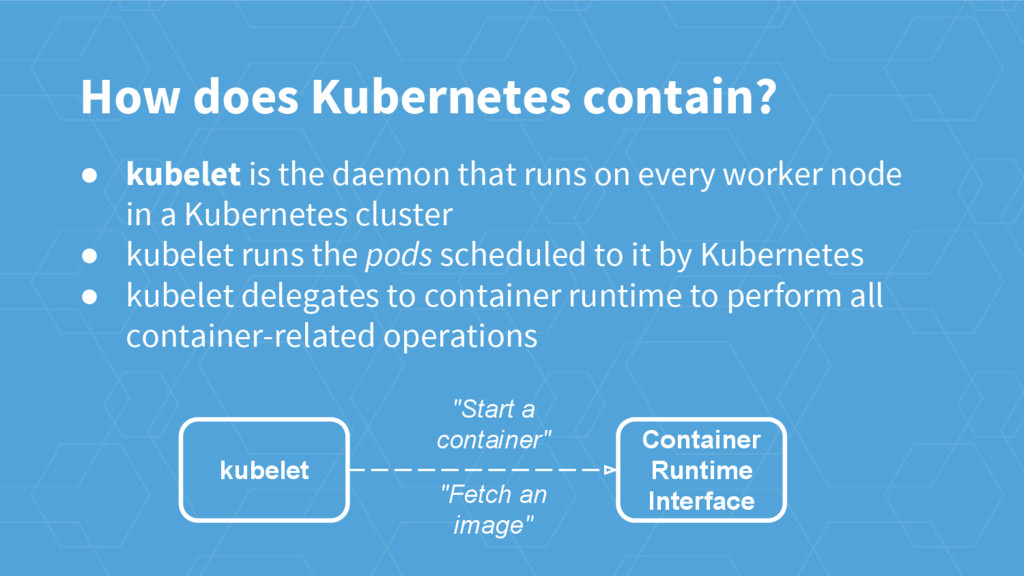
node in a Kubernetes cluster • kubelet runs the pods scheduled to it by Kubernetes • kubelet delegates to container runtime to perform all container-related operations How does Kubernetes contain? kubelet Container Runtime Interface "Start a container" "Fetch an image"
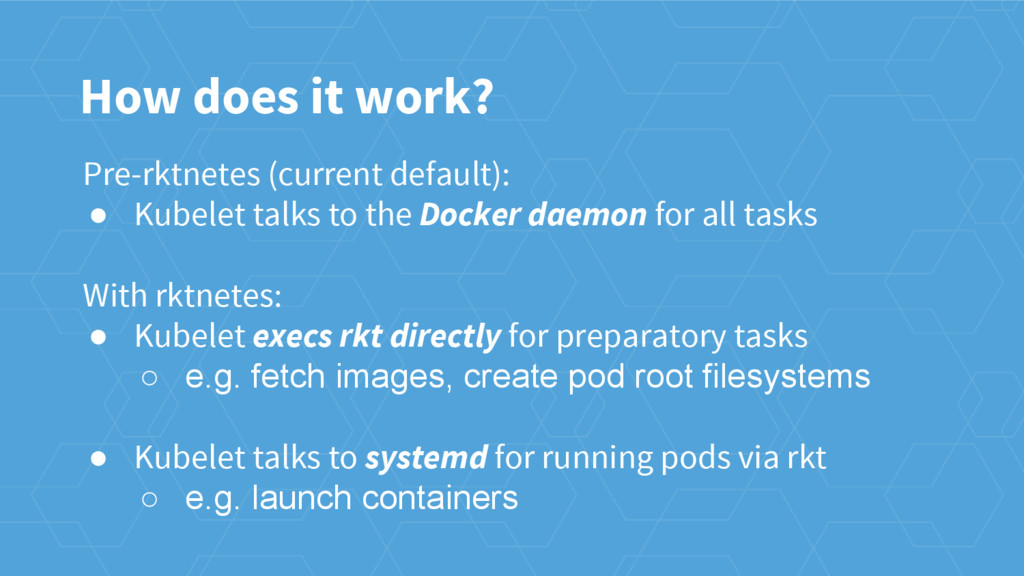
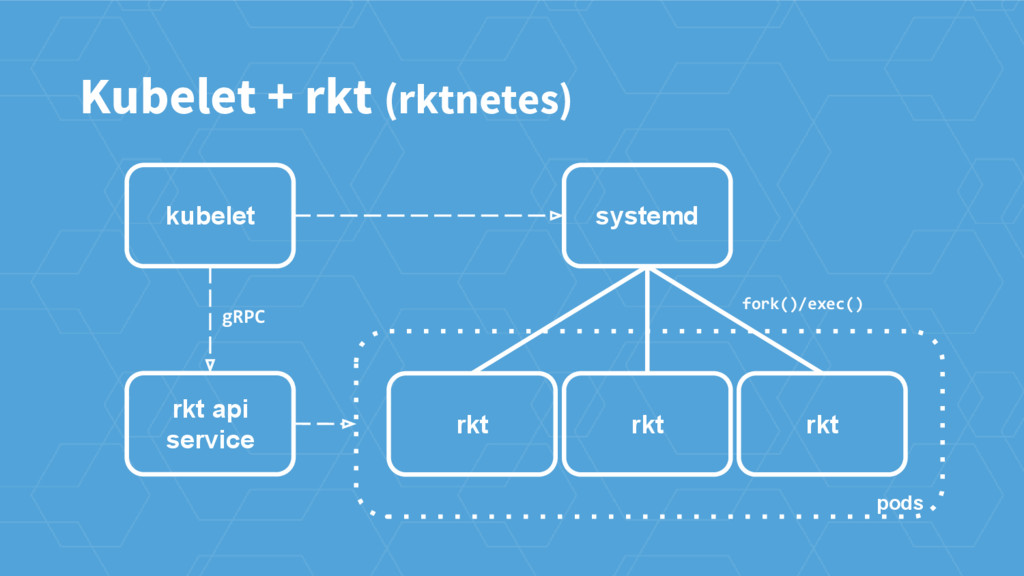
for all tasks With rktnetes: • Kubelet execs rkt directly for preparatory tasks ◦ e.g. fetch images, create pod root filesystems • Kubelet talks to systemd for running pods via rkt ◦ e.g. launch containers How does it work?
90+ Projects on GitHub, 1,000+ Contributors OPEN SOURCE CoreOS.com - @coreoslinux - github/coreos Secure solutions, support plans, training + more ENTERPRISE [email protected] - tectonic.com - quay.io CoreOS is Running the World’s Containers


 surbaniak
 davidcarrasco
 andyhume
 schroneko
 eileencodes
 soysaucechin
 paigeccino
 joshbly
 geshan
 inesmontani
 mongodb
 orderedlist
 jonoalderson