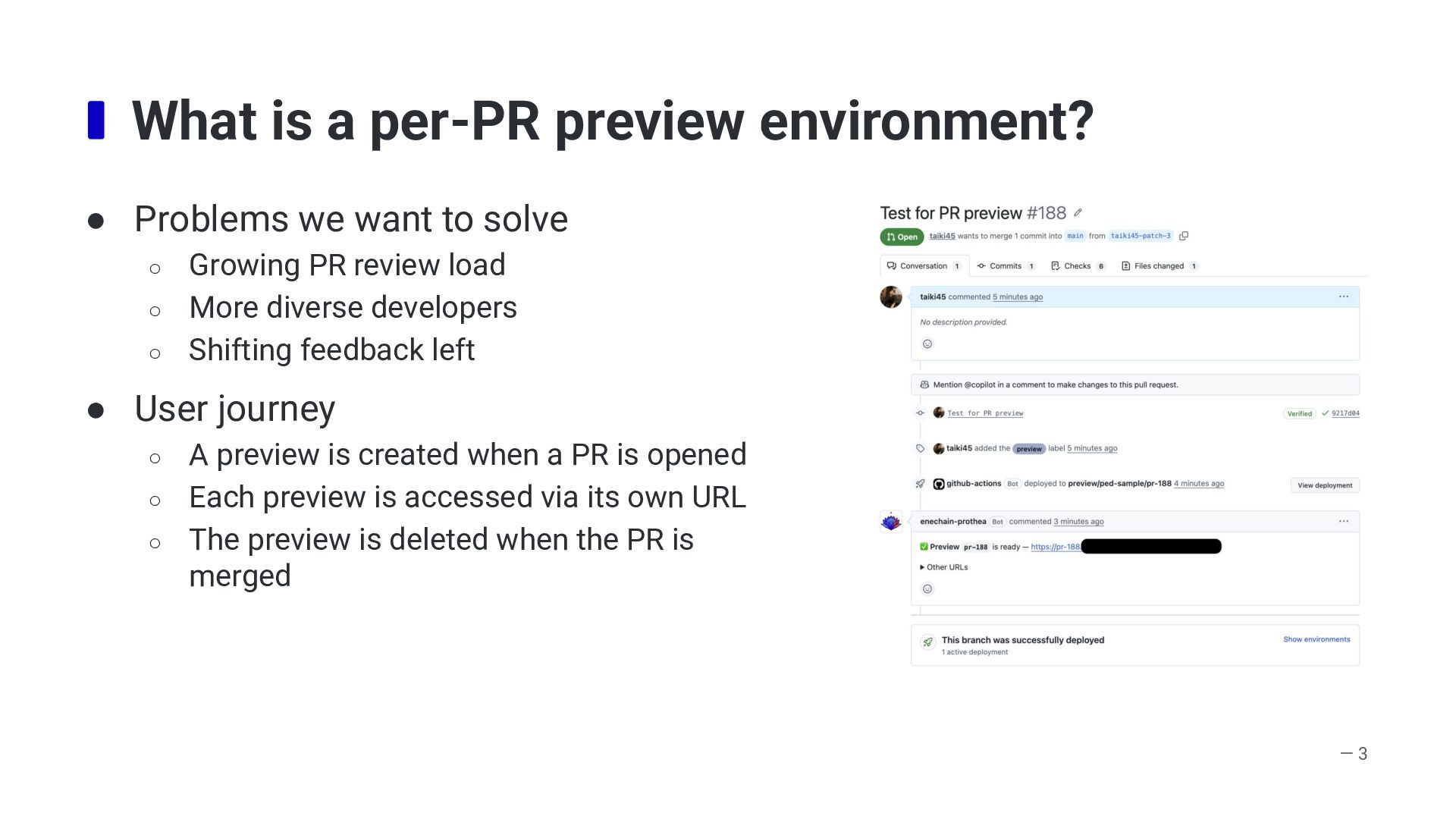
to solve ◦ ◦ ◦ Growing PR review load More diverse developers Shifting feedback left • User journey ◦ ◦ ◦ A preview is created when a PR is opened Each preview is accessed via its own URL The preview is deleted when the PR is merged ―3
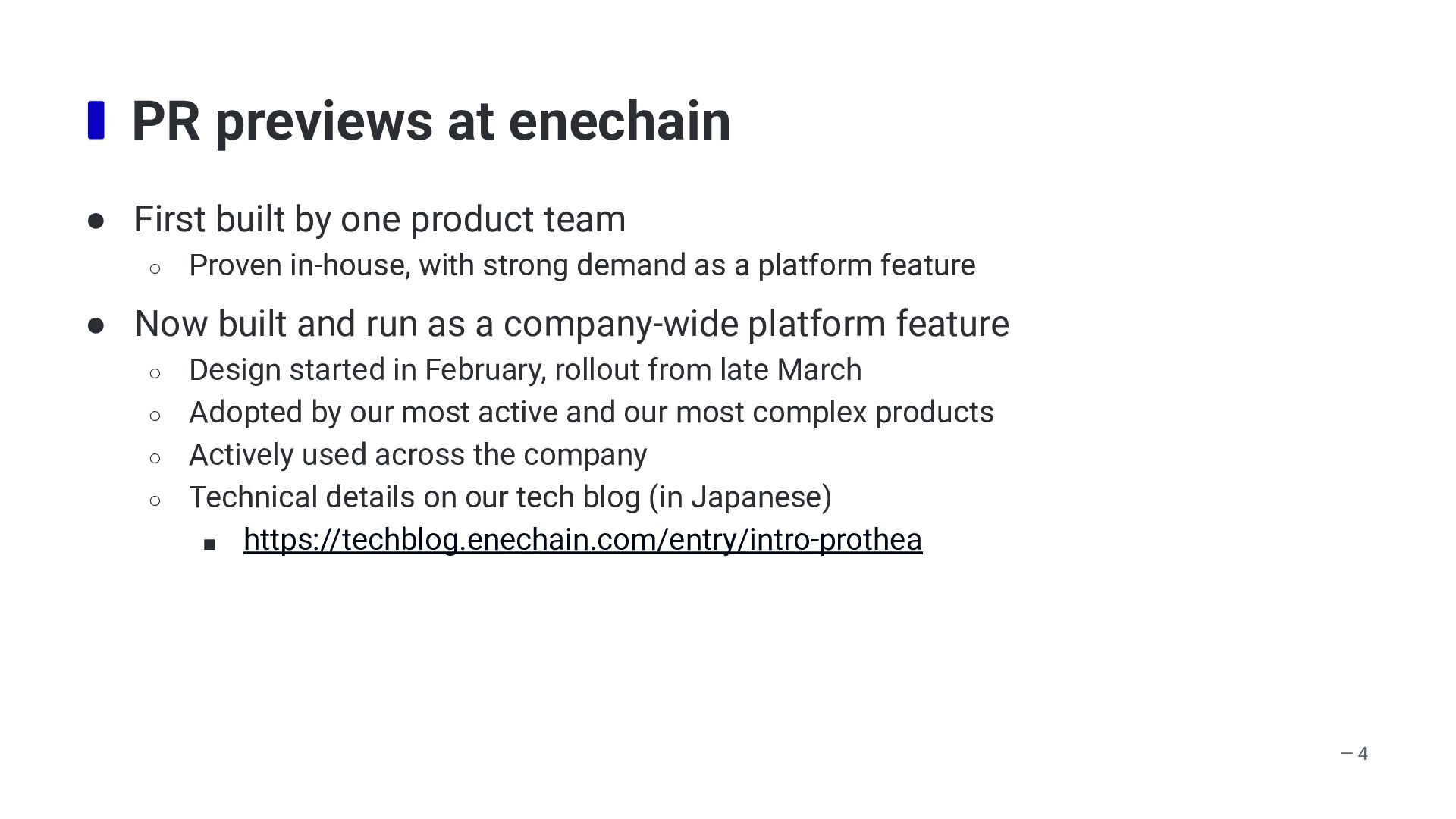
team ◦ Proven in-house, with strong demand as a platform feature • Now built and run as a company-wide platform feature ◦ ◦ ◦ ◦ Design started in February, rollout from late March Adopted by our most active and our most complex products Actively used across the company Technical details on our tech blog (in Japanese) ▪ https://techblog.enechain.com/entry/intro-prothea ―4
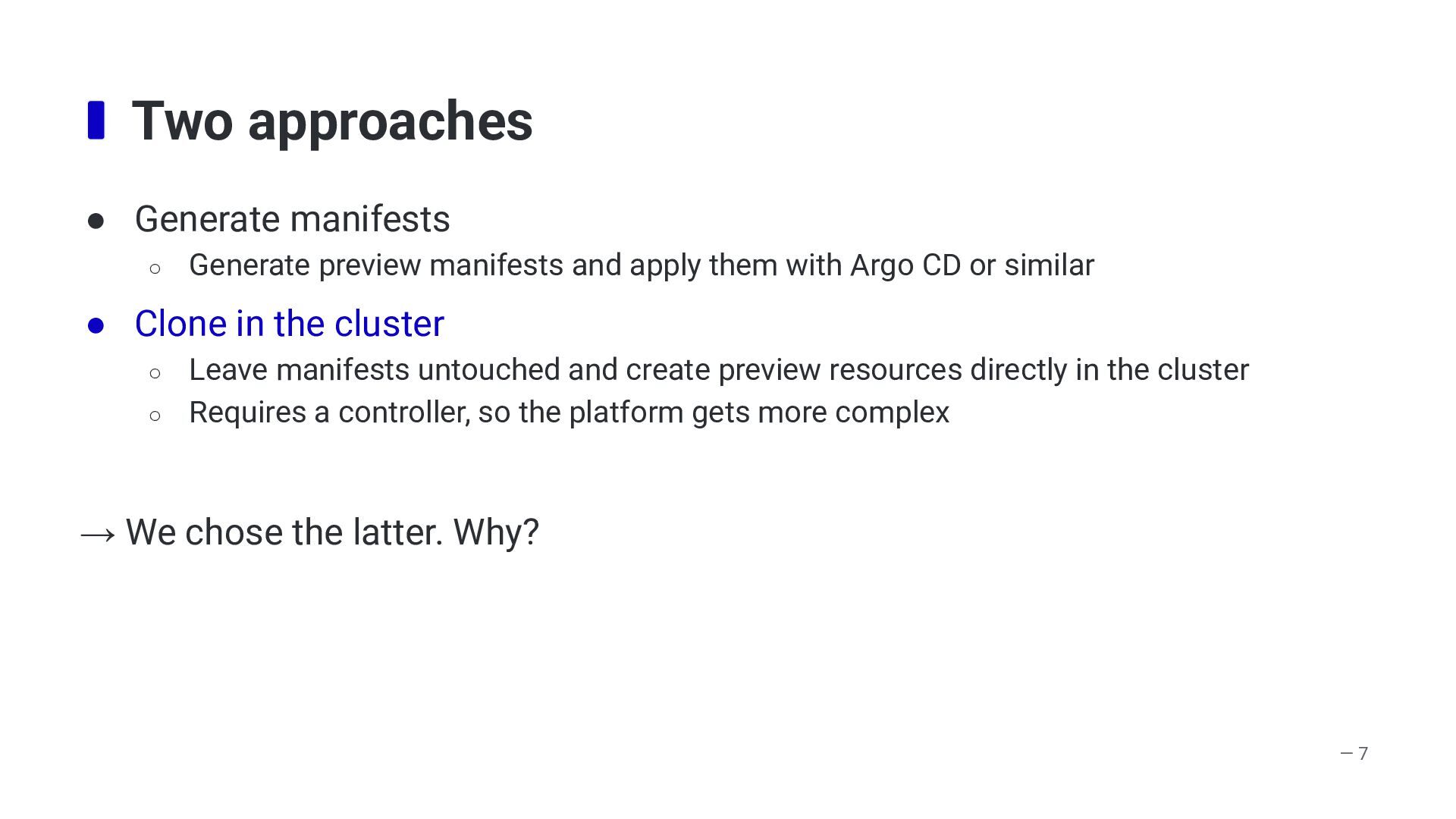
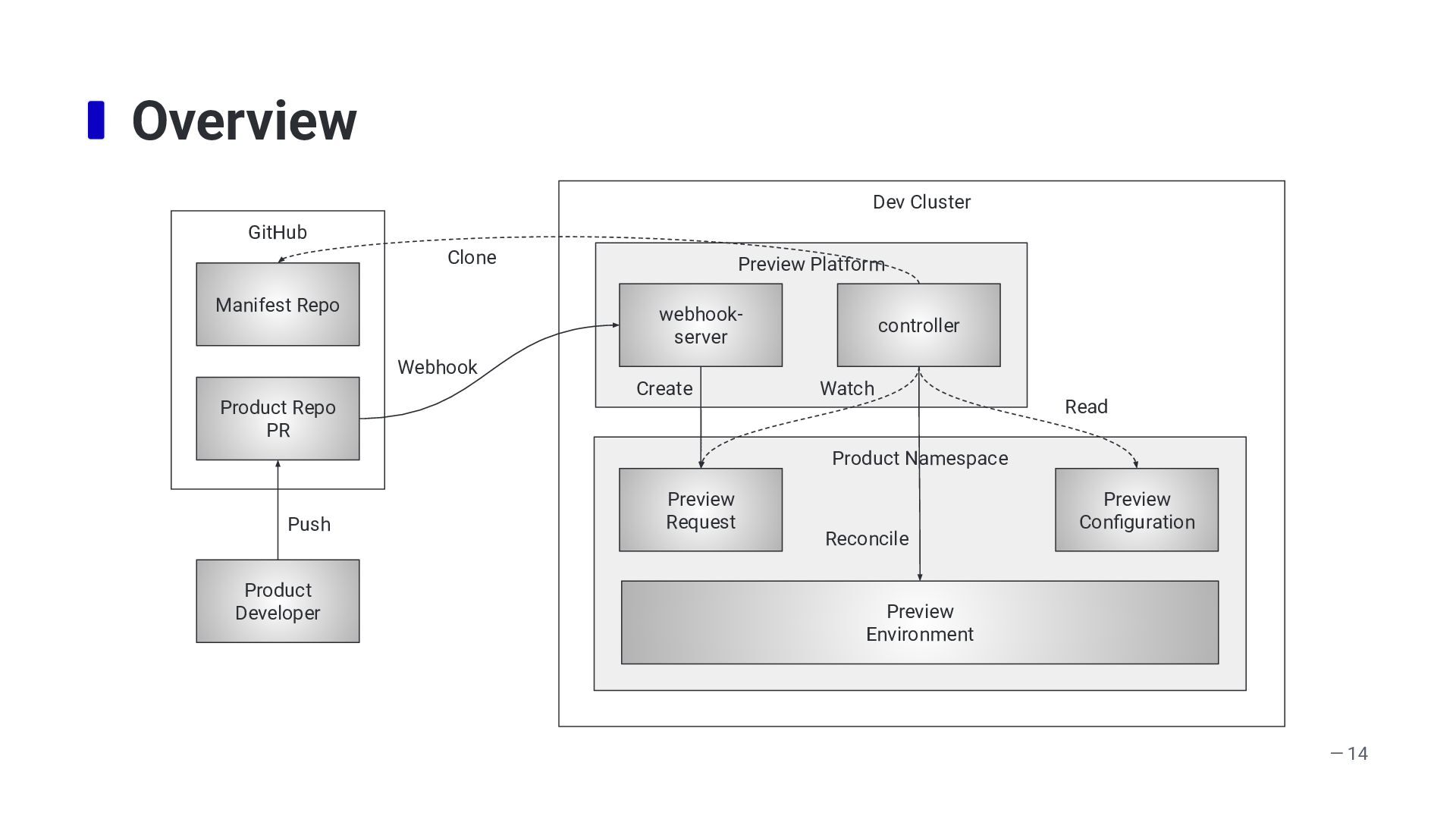
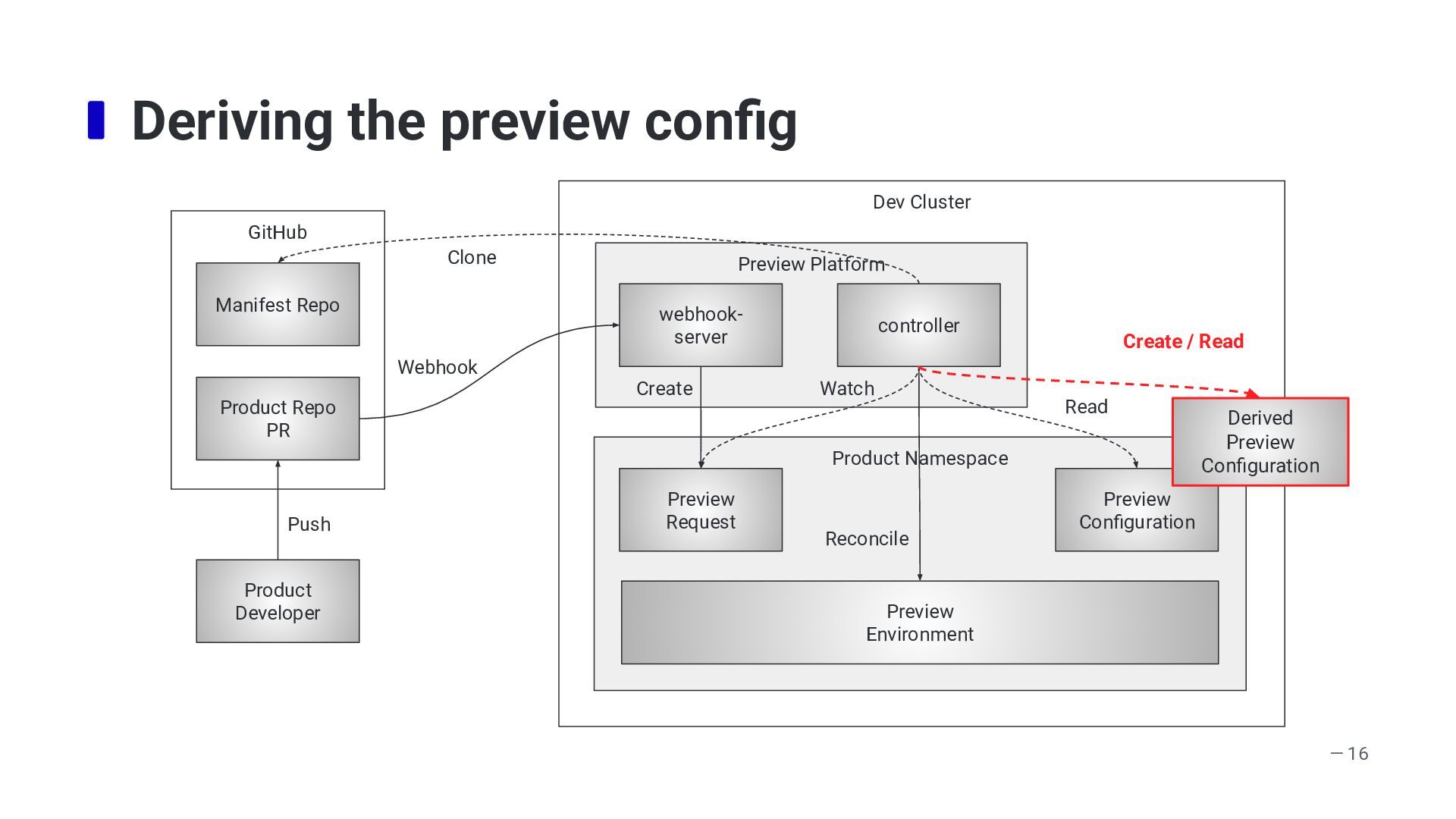
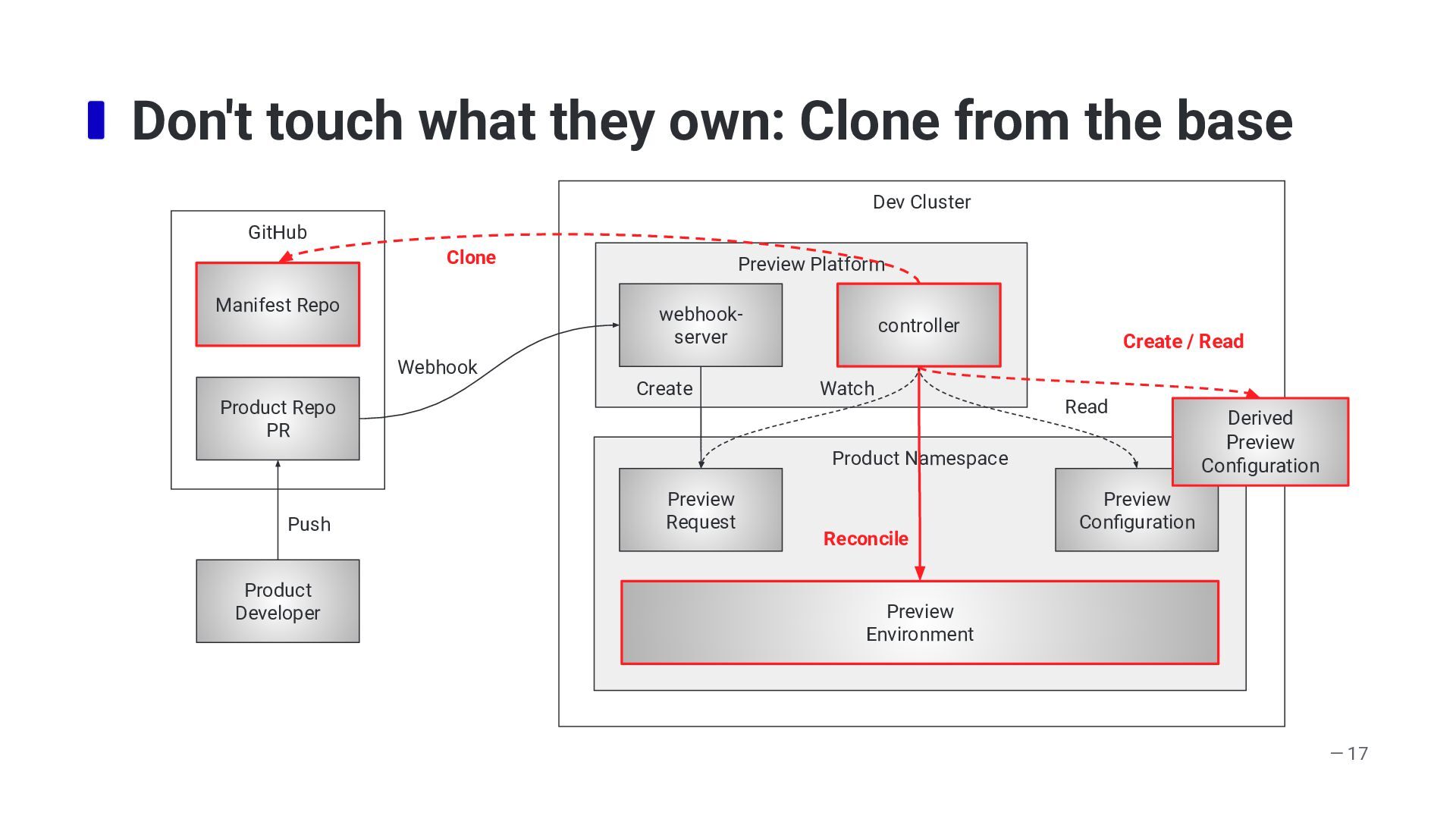
apply them with Argo CD or similar • Clone in the cluster ◦ ◦ Leave manifests untouched and create preview resources directly in the cluster Requires a controller, so the platform gets more complex → We chose the latter. Why? ―7
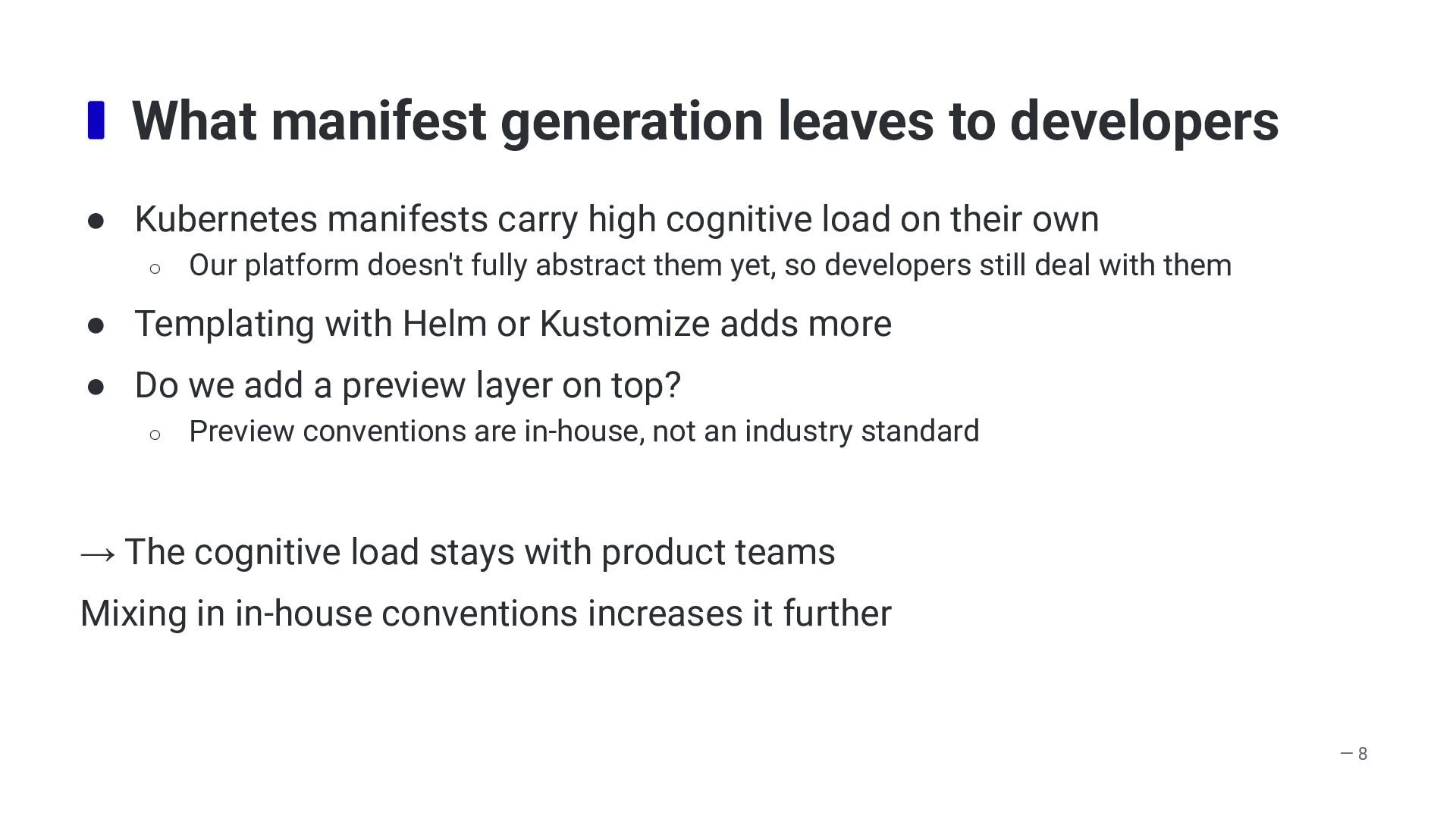
high cognitive load on their own ◦ Our platform doesn't fully abstract them yet, so developers still deal with them • Templating with Helm or Kustomize adds more • Do we add a preview layer on top? ◦ Preview conventions are in-house, not an industry standard → The cognitive load stays with product teams Mixing in in-house conventions increases it further ―8
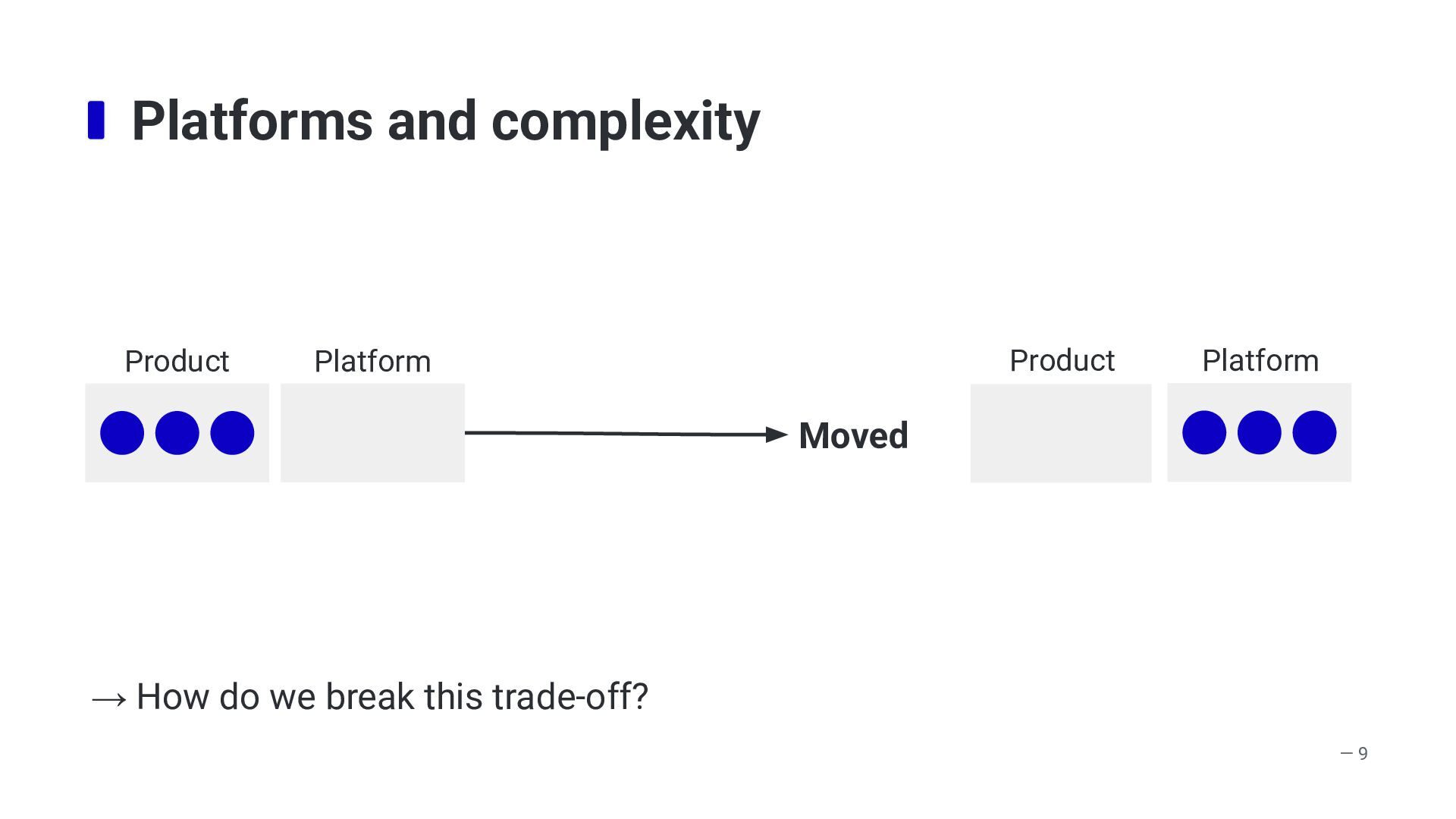
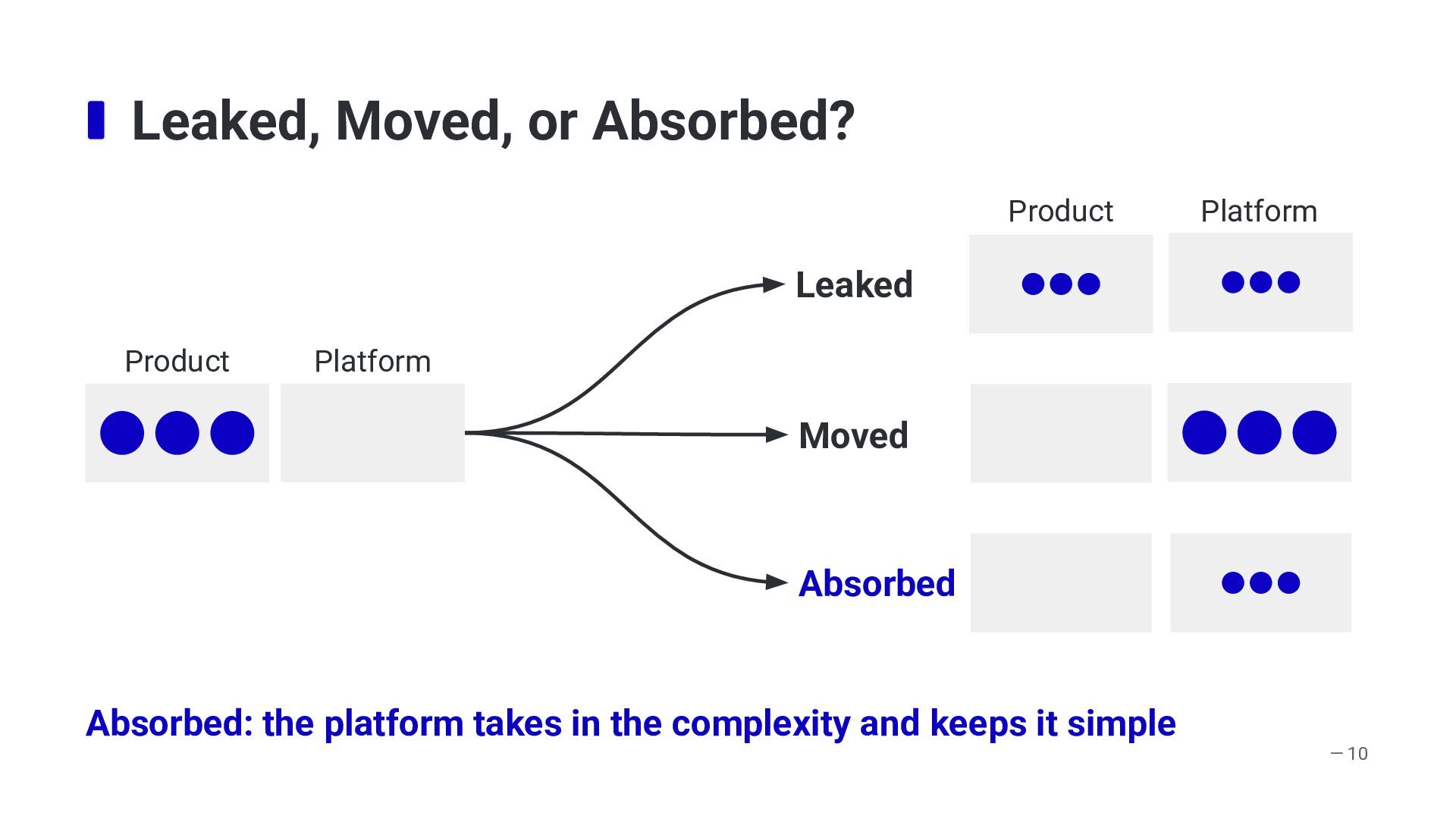
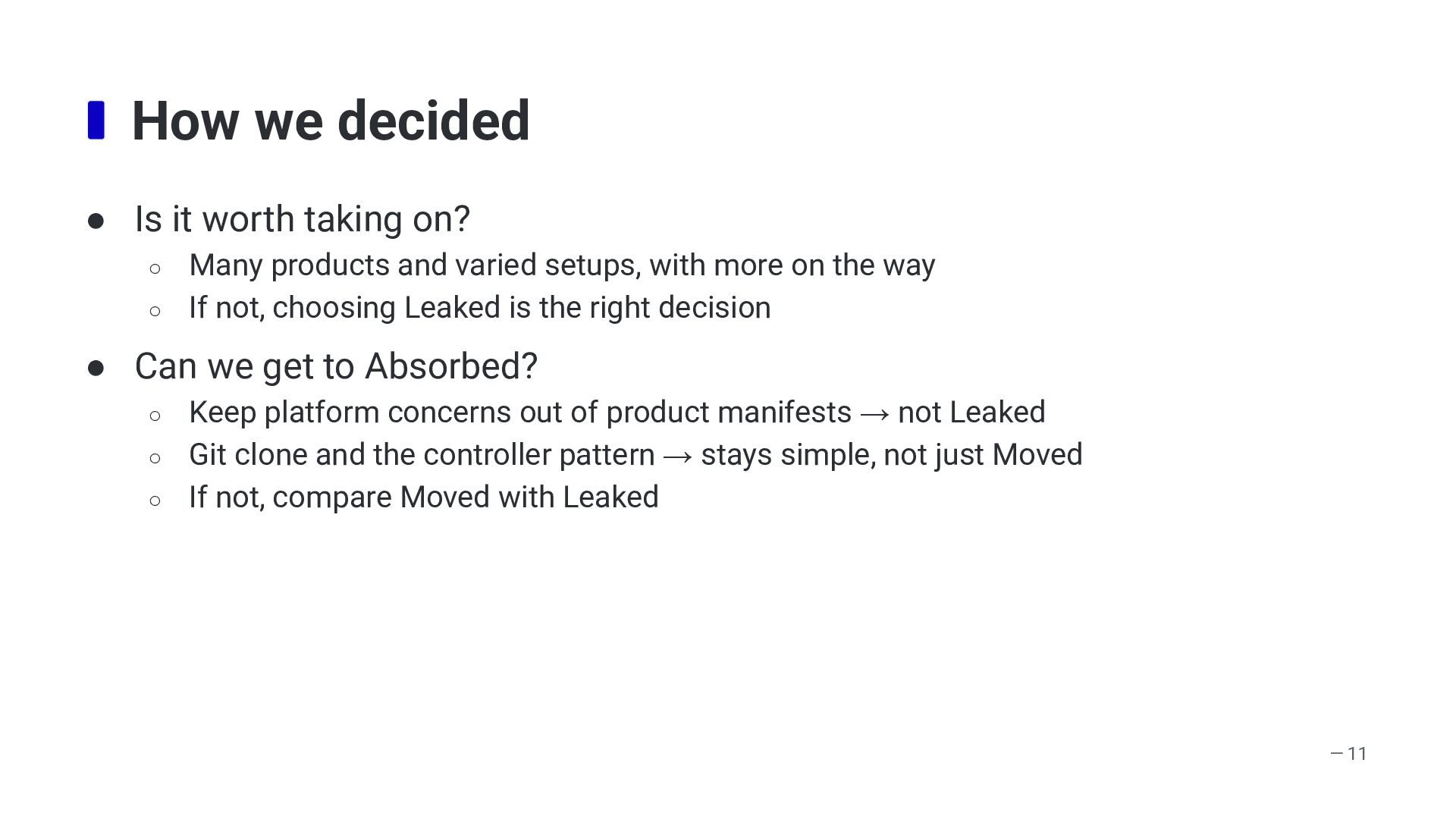
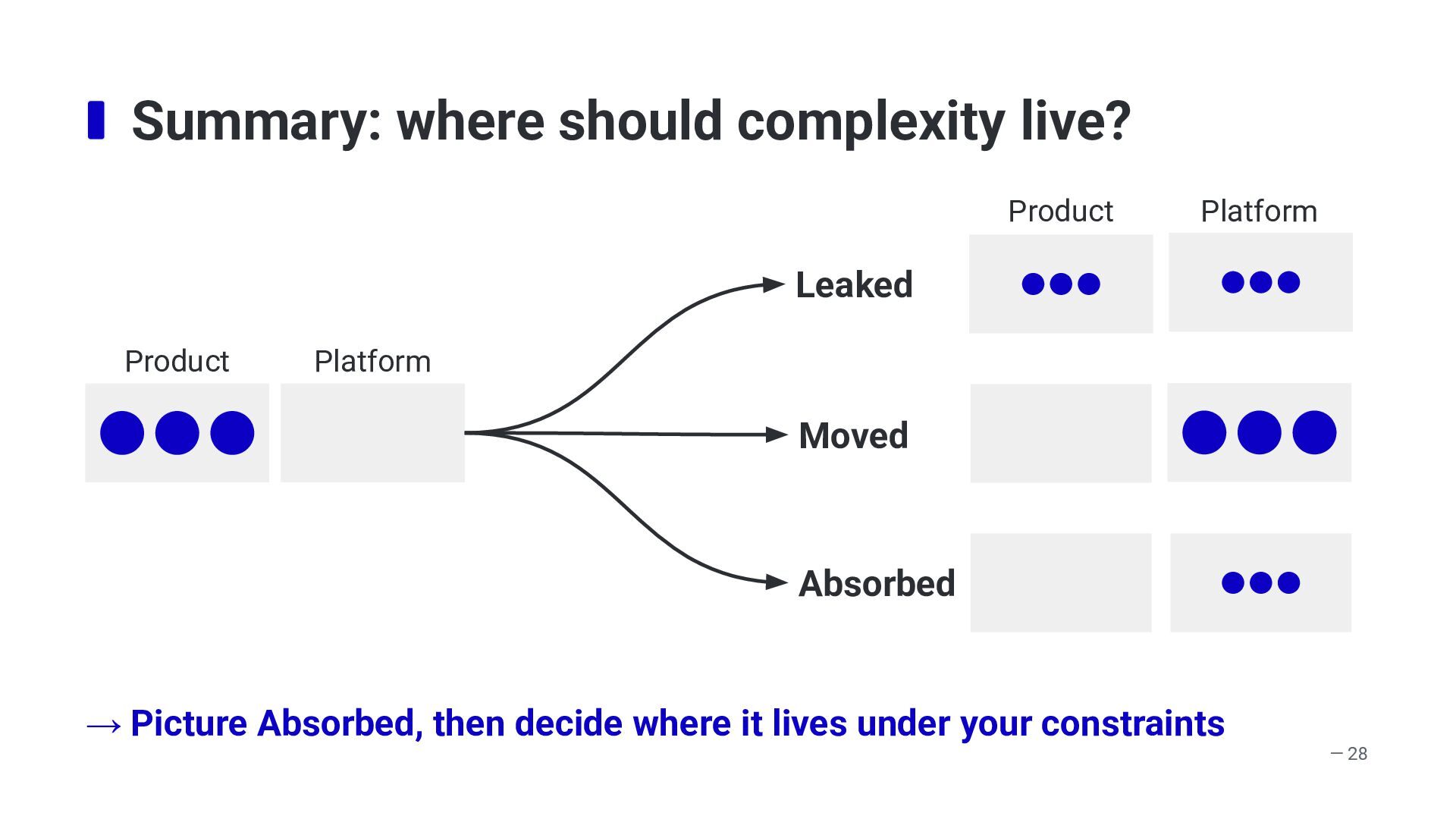
◦ Many products and varied setups, with more on the way If not, choosing Leaked is the right decision • Can we get to Absorbed? ◦ ◦ ◦ Keep platform concerns out of product manifests → not Leaked Git clone and the controller pattern → stays simple, not just Moved If not, compare Moved with Leaked ― 11
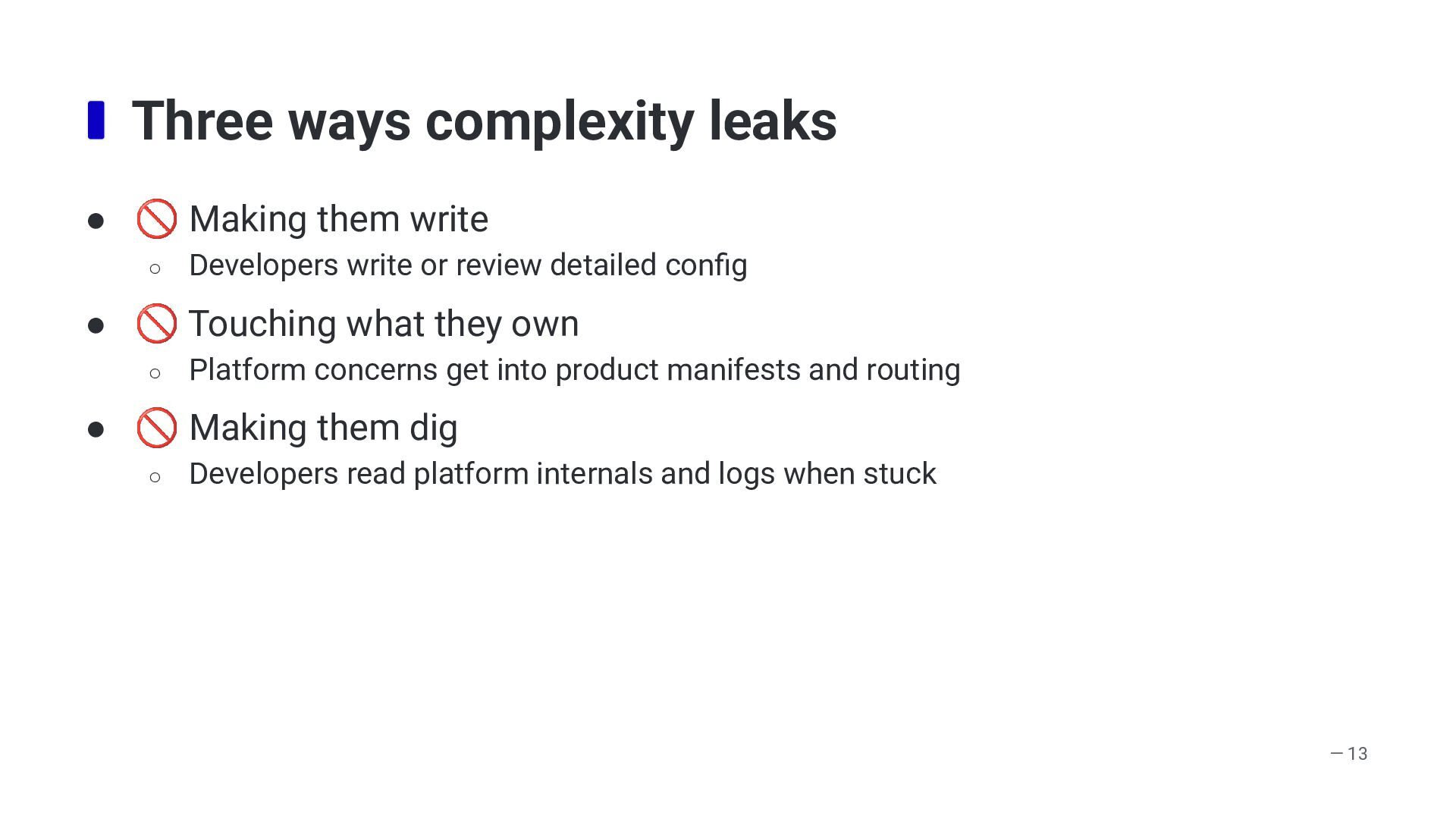
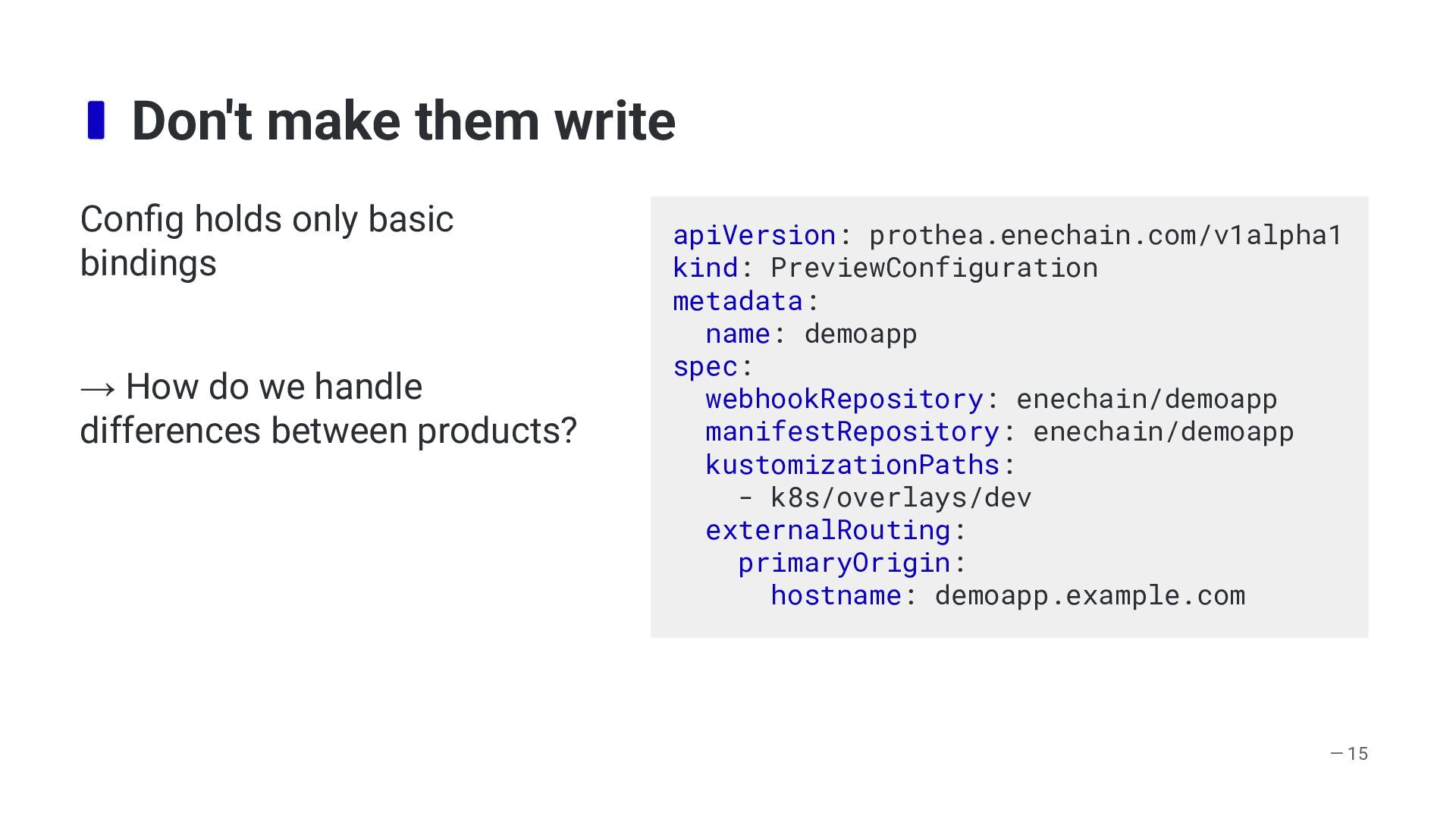
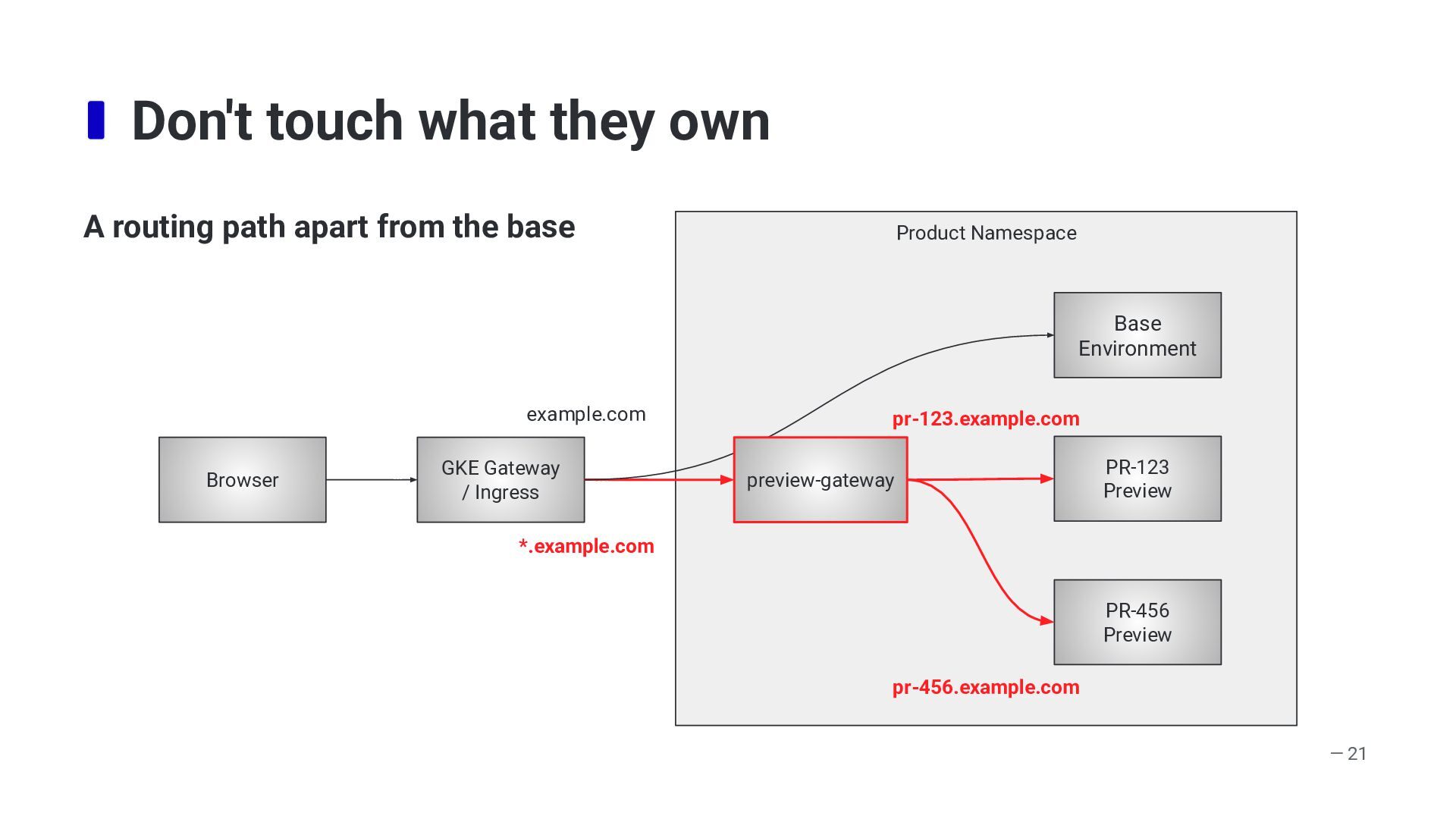
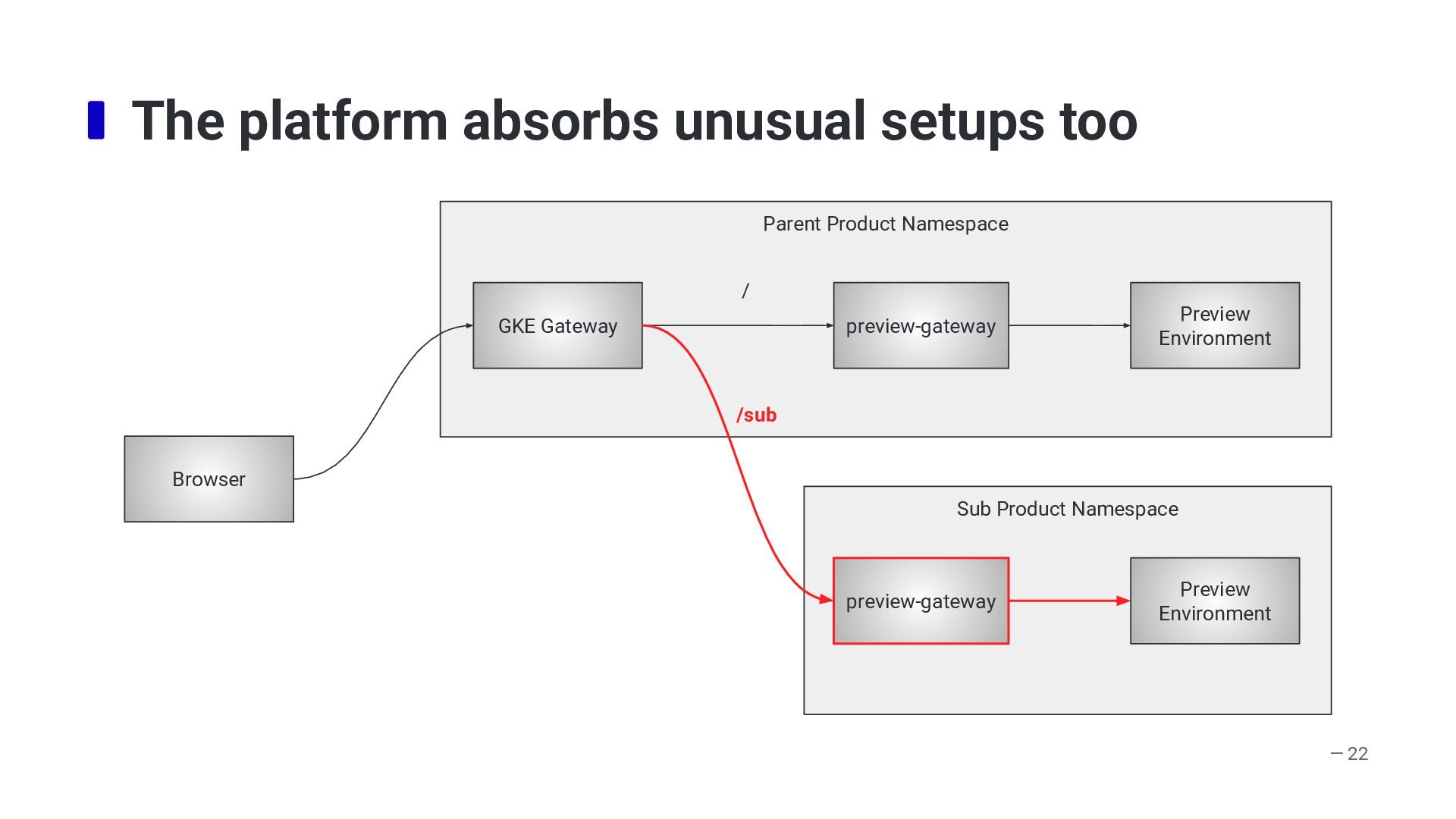
Developers write or review detailed config • 🚫 Touching what they own ◦ Platform concerns get into product manifests and routing • 🚫 Making them dig ◦ Developers read platform internals and logs when stuck ― 13
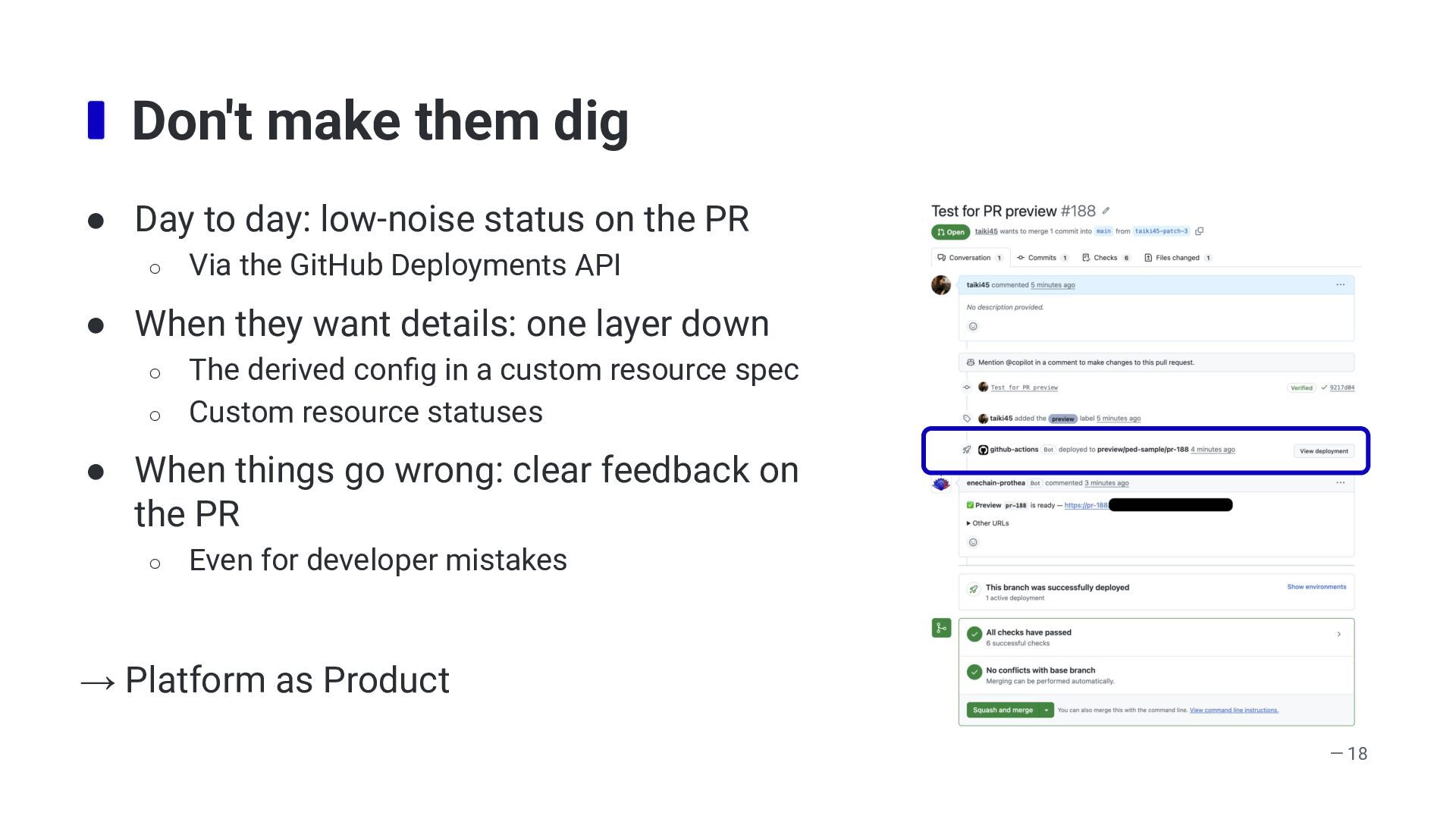
on the PR ◦ Via the GitHub Deployments API • When they want details: one layer down ◦ ◦ The derived config in a custom resource spec Custom resource statuses • When things go wrong: clear feedback on the PR ◦ Even for developer mistakes → Platform as Product ― 18
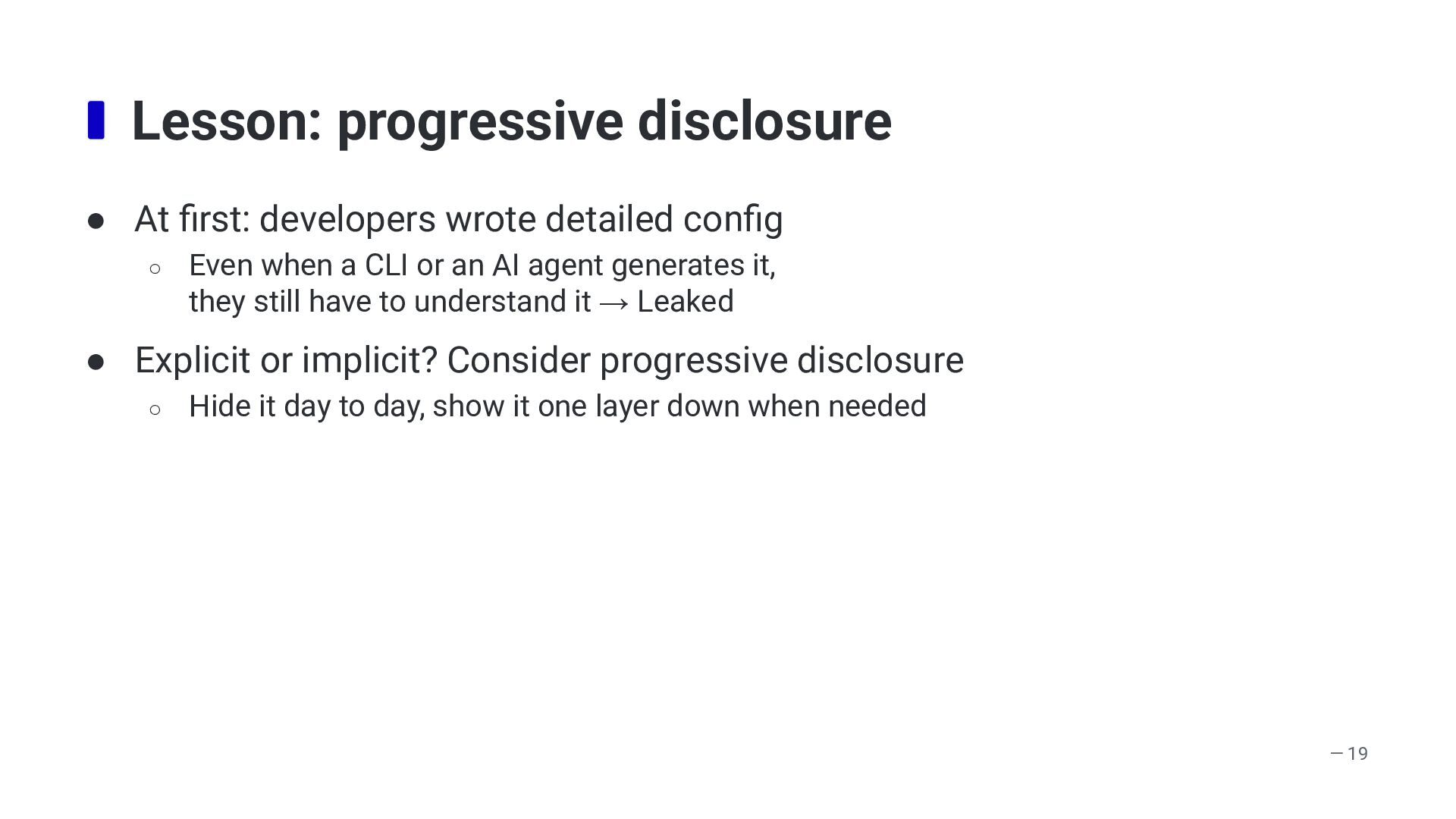
◦ Even when a CLI or an AI agent generates it, they still have to understand it → Leaked • Explicit or implicit? Consider progressive disclosure ◦ Hide it day to day, show it one layer down when needed ― 19
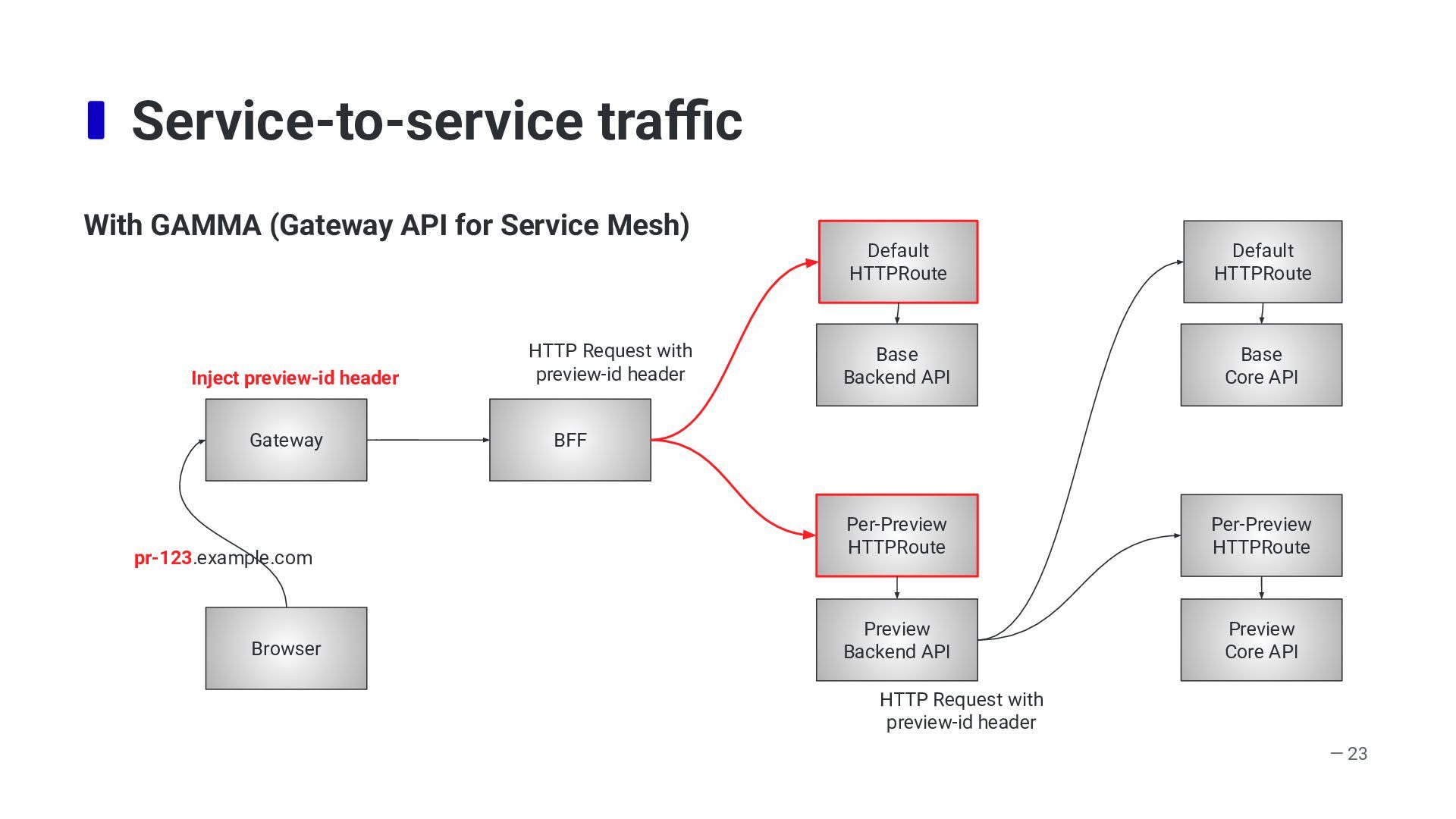
preview-id header Gateway pr-123.example.com Browser HTTP Request with preview-id header Default HTTPRoute Default HTTPRoute Base Backend API Base Core API Per-Preview HTTPRoute Per-Preview HTTPRoute Preview Backend API Preview Core API BFF HTTP Request with preview-id header ― 23
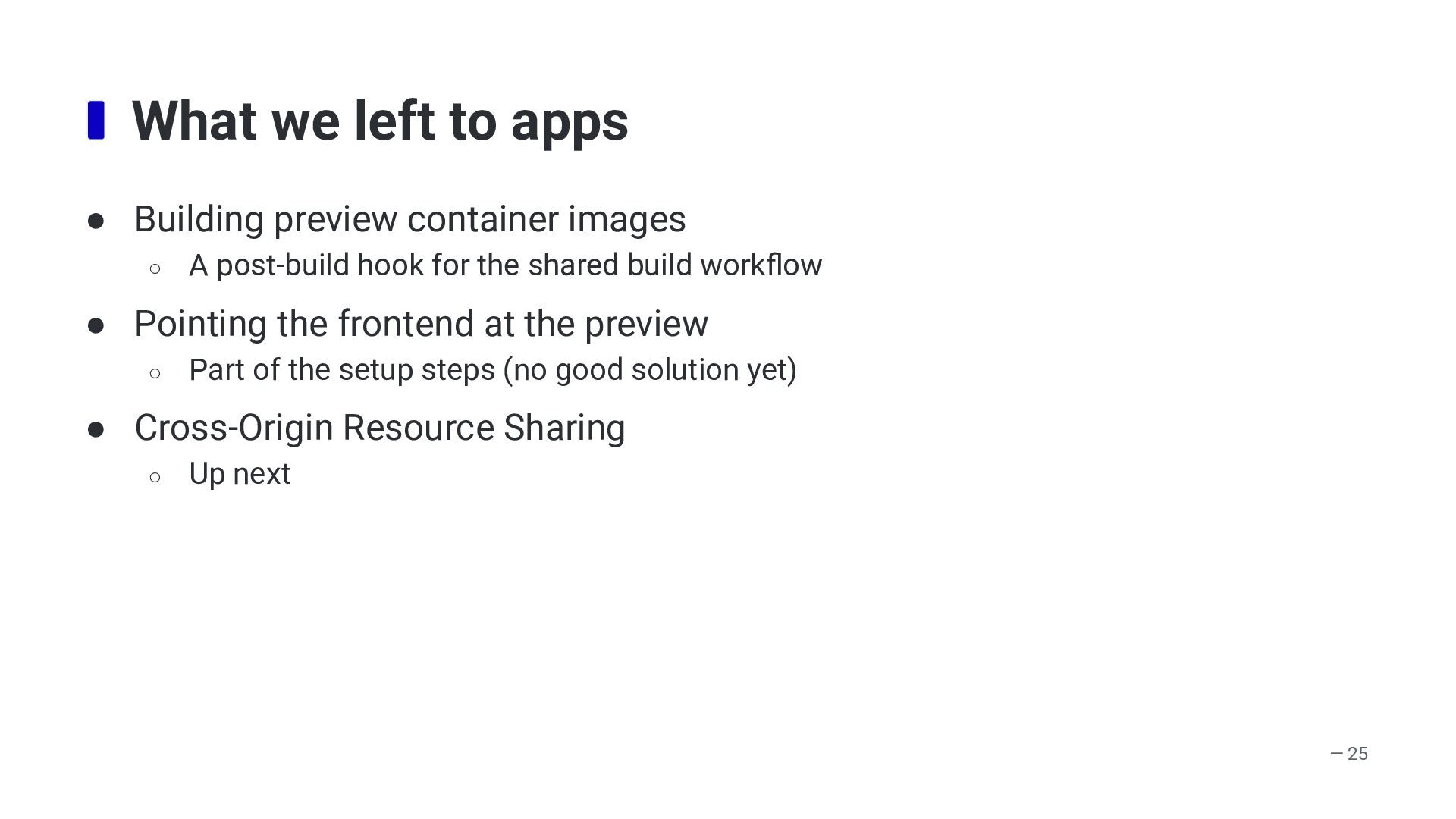
◦ A post-build hook for the shared build workflow • Pointing the frontend at the preview ◦ Part of the setup steps (no good solution yet) • Cross-Origin Resource Sharing ◦ Up next ― 25
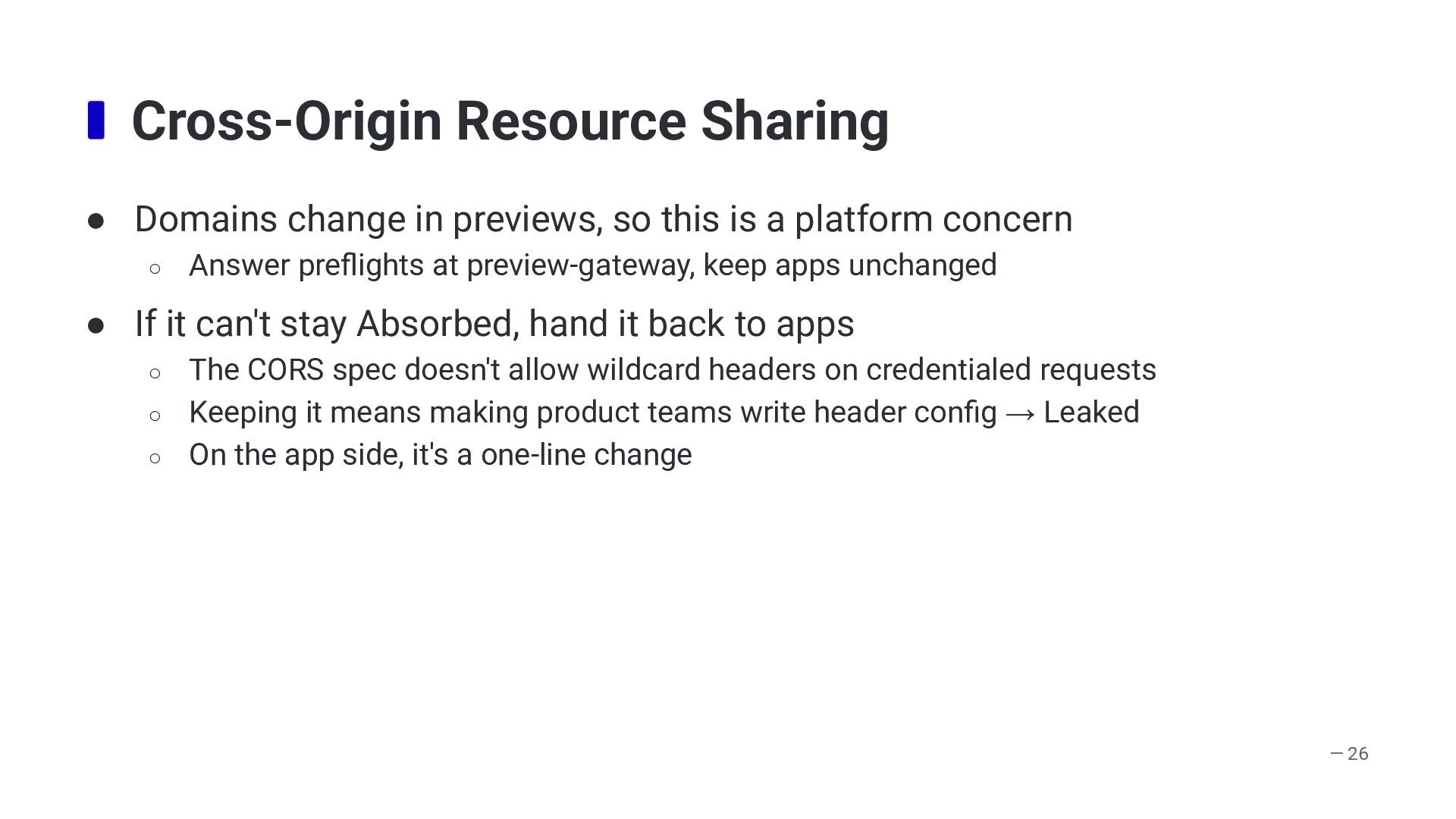
is a platform concern ◦ Answer preflights at preview-gateway, keep apps unchanged • If it can't stay Absorbed, hand it back to apps ◦ ◦ ◦ The CORS spec doesn't allow wildcard headers on credentialed requests Keeping it means making product teams write header config → Leaked On the app side, it's a one-line change ― 26
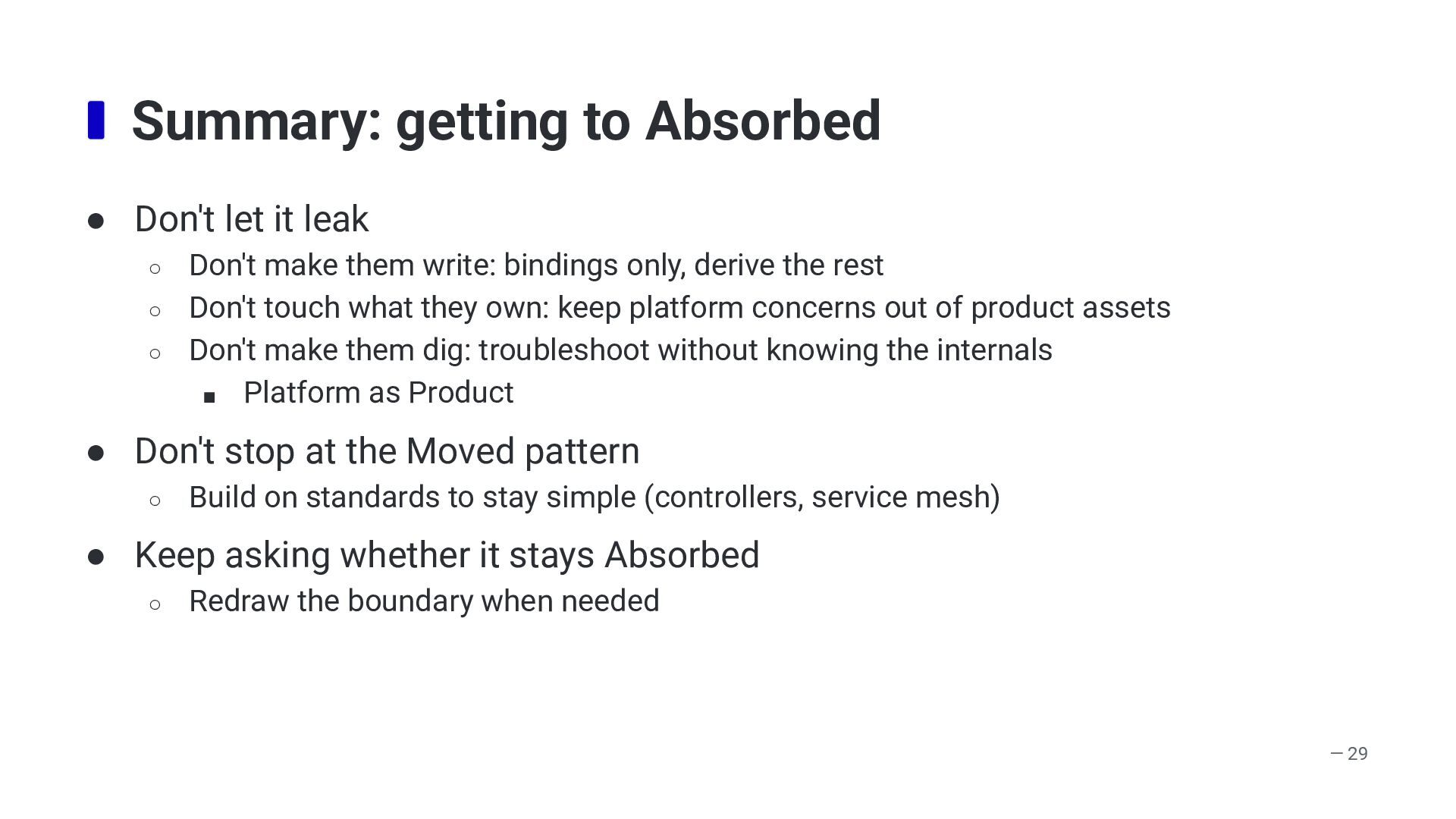
◦ ◦ Don't make them write: bindings only, derive the rest Don't touch what they own: keep platform concerns out of product assets Don't make them dig: troubleshoot without knowing the internals ▪ Platform as Product • Don't stop at the Moved pattern ◦ Build on standards to stay simple (controllers, service mesh) • Keep asking whether it stays Absorbed ◦ Redraw the boundary when needed ― 29


 taiki45
 joere
 tgidgd
 ayaka_egaaa
 uhyo
 lehupa
 kintotechdev
 minorun365
 shisyu_gaku
 occhi
 cscengineer
 miso
 oidfj
 nikkihalliwell
 lara
 malarkey
 reverentgeek
 inesmontani
 chrisshort
 thirion
 helenjbeal
 chriscoyier
 sergeychernyshev
 bluesmoon
 smashingmag