Upgrade to Pro — share decks privately, control downloads, hide ads and more …

Mobile Application Development: Bringing Your I...

Avatar for Timothy S. Jaramillo Timothy S. Jaramillo
August 05, 2025
17

Mobile Application Development: Bringing Your Ideas to Life on Every Screen

In today’s fast-paced digital world, mobile applications have become essential tools for business growth and customer engagement. From startups to enterprise brands, companies are investing in mobile application development to stay relevant, accessible, and competitive.

Mobile app development involves designing, coding, testing, and launching applications for devices like smartphones and tablets. Whether you're targeting Android, iOS, or both platforms, a well-crafted app can deliver personalized experiences, streamline operations, and drive revenue growth.

Modern development tools such as Flutter, React Native, and Swift enable faster, more efficient builds—often with a single codebase for multiple platforms. Paired with smart UI/UX design and secure backend integration, these technologies help create seamless user journeys.

Whether you're building an eCommerce app, booking platform, or a custom business solution, mobile apps connect you directly with users—anytime, anywhere.

Ready to turn your mobile app idea into reality?
Explore our services: https://www.bobcares.com/mobile-application-development

Avatar for Timothy S. Jaramillo

Timothy S. Jaramillo

August 05, 2025

Transcript

  1. Mobile Application Development: Bringing Your Ideas to Life on Every

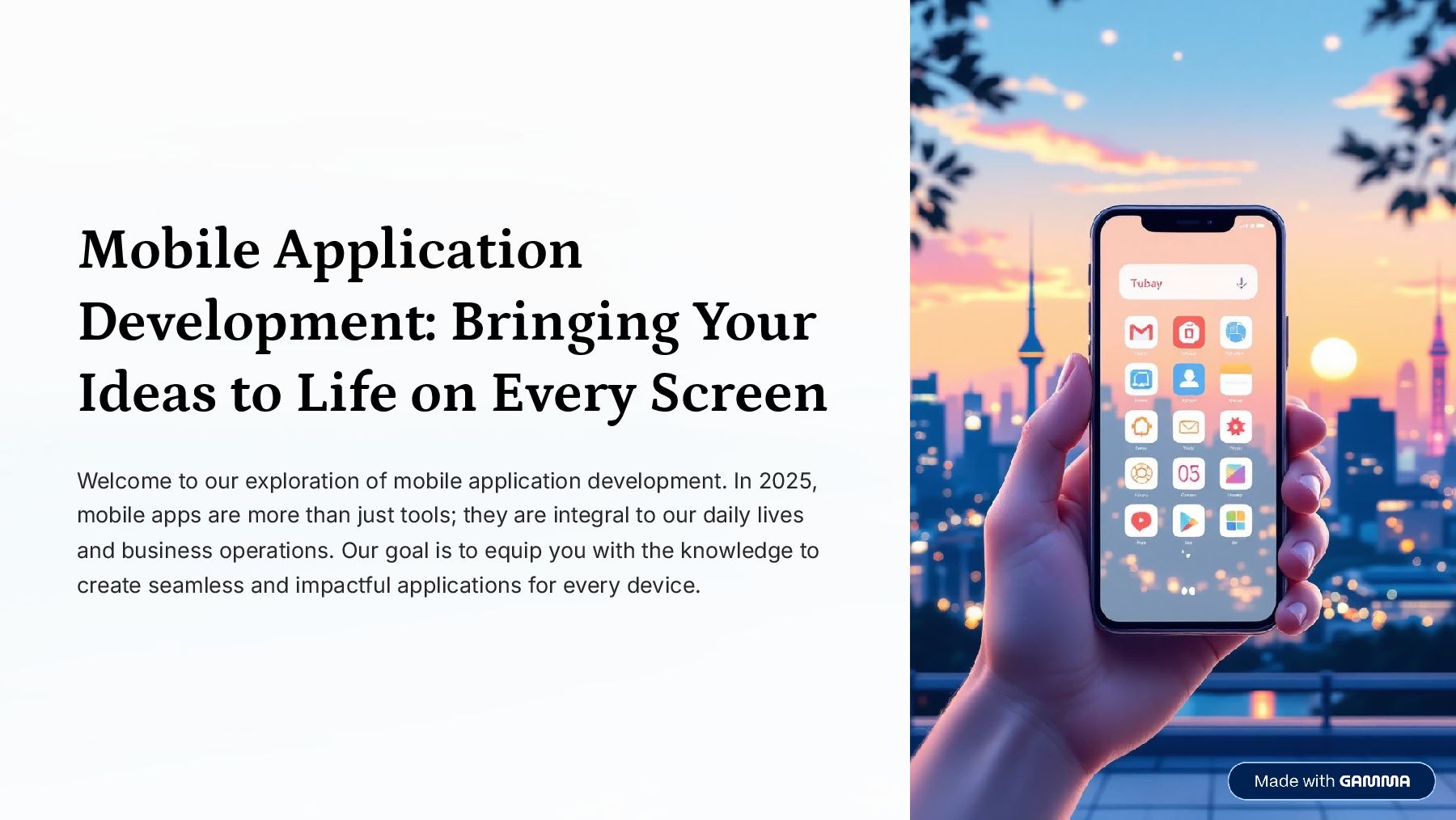
    Screen Welcome to our exploration of mobile application development. In 2025, mobile apps are more than just tools; they are integral to our daily lives and business operations. Our goal is to equip you with the knowledge to create seamless and impactful applications for every device.
  2. What Are Mobile Applications? Mobile applications are software programs specifically

    designed to run on portable devices like smartphones and tablets. They offer a diverse range of functionalities, from social networking to navigation. Software programs running on smartphones and tablets Types: Native, Hybrid, and Web apps Examples: Facebook, Instagram, Google Maps
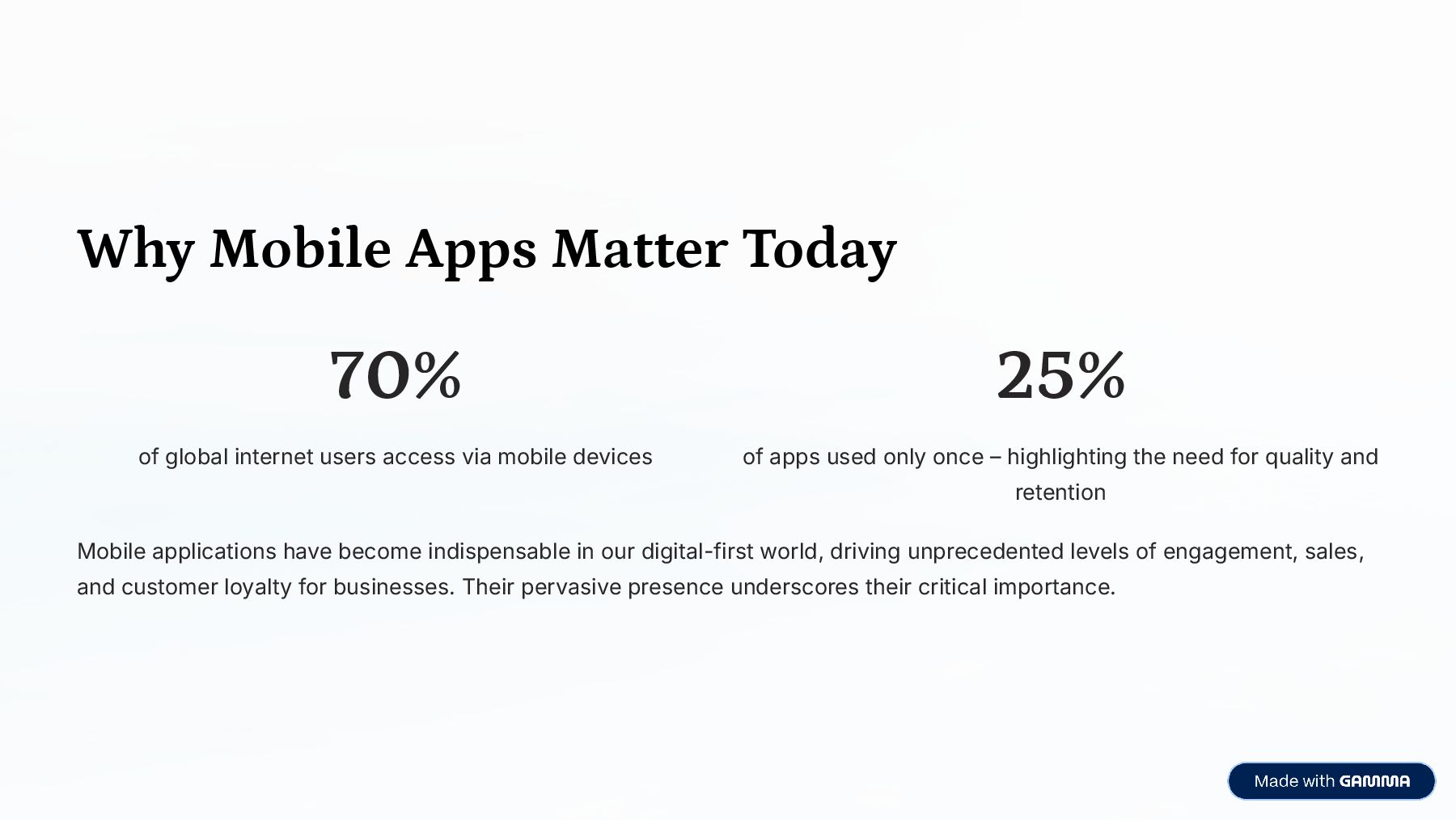
  3. Why Mobile Apps Matter Today 70% of global internet users

    access via mobile devices 25% of apps used only once 3 highlighting the need for quality and retention Mobile applications have become indispensable in our digital-first world, driving unprecedented levels of engagement, sales, and customer loyalty for businesses. Their pervasive presence underscores their critical importance.
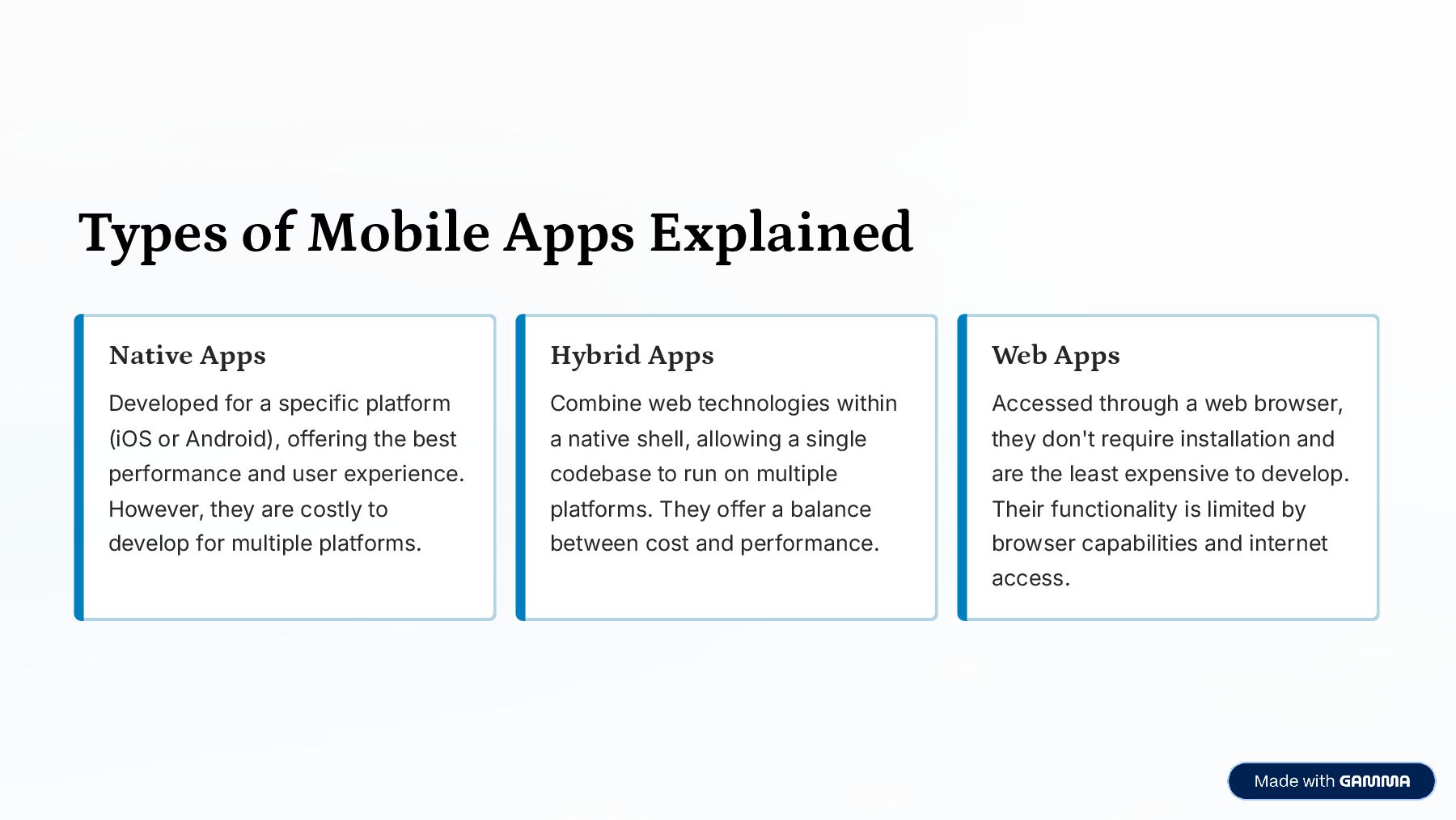
  4. Types of Mobile Apps Explained Native Apps Developed for a

    specific platform (iOS or Android), offering the best performance and user experience. However, they are costly to develop for multiple platforms. Hybrid Apps Combine web technologies within a native shell, allowing a single codebase to run on multiple platforms. They offer a balance between cost and performance. Web Apps Accessed through a web browser, they don't require installation and are the least expensive to develop. Their functionality is limited by browser capabilities and internet access.
  5. Designing for Every Screen: User Experience Essentials Effective mobile app

    design prioritises seamless user experience across diverse devices. This means creating responsive interfaces that adapt to various screen sizes and densities, ensuring optimal usability. Responsive UI adapting to multiple screen sizes and densities Integration with device sensors and functions (GPS, camera) Importance of fast, intuitive, and accessible interfaces
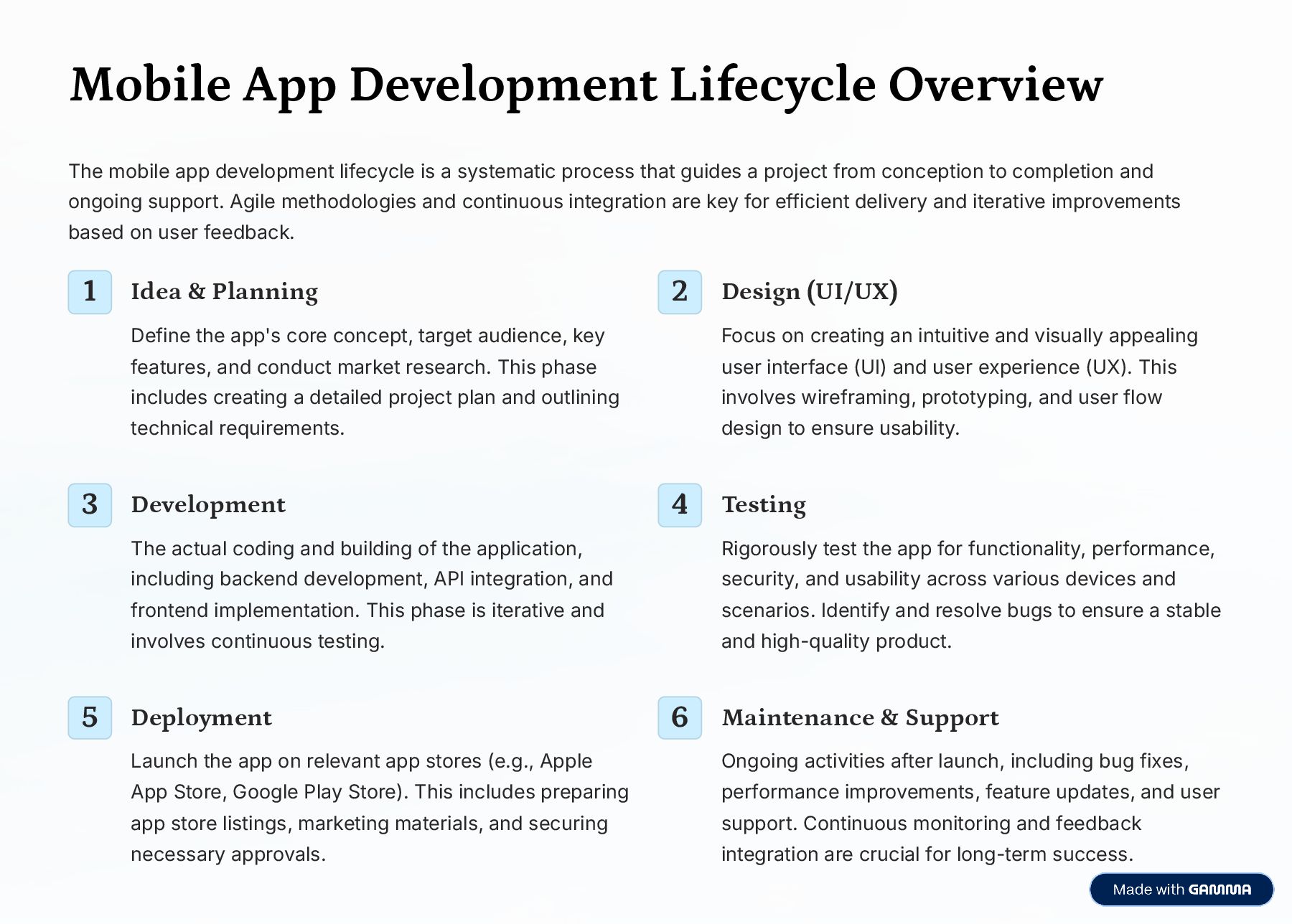
  6. Mobile App Development Lifecycle Overview The mobile app development lifecycle

    is a systematic process that guides a project from conception to completion and ongoing support. Agile methodologies and continuous integration are key for efficient delivery and iterative improvements based on user feedback. 1 Idea & Planning Define the app's core concept, target audience, key features, and conduct market research. This phase includes creating a detailed project plan and outlining technical requirements. 2 Design (UI/UX) Focus on creating an intuitive and visually appealing user interface (UI) and user experience (UX). This involves wireframing, prototyping, and user flow design to ensure usability. 3 Development The actual coding and building of the application, including backend development, API integration, and frontend implementation. This phase is iterative and involves continuous testing. 4 Testing Rigorously test the app for functionality, performance, security, and usability across various devices and scenarios. Identify and resolve bugs to ensure a stable and high-quality product. 5 Deployment Launch the app on relevant app stores (e.g., Apple App Store, Google Play Store). This includes preparing app store listings, marketing materials, and securing necessary approvals. 6 Maintenance & Support Ongoing activities after launch, including bug fixes, performance improvements, feature updates, and user support. Continuous monitoring and feedback integration are crucial for long-term success.
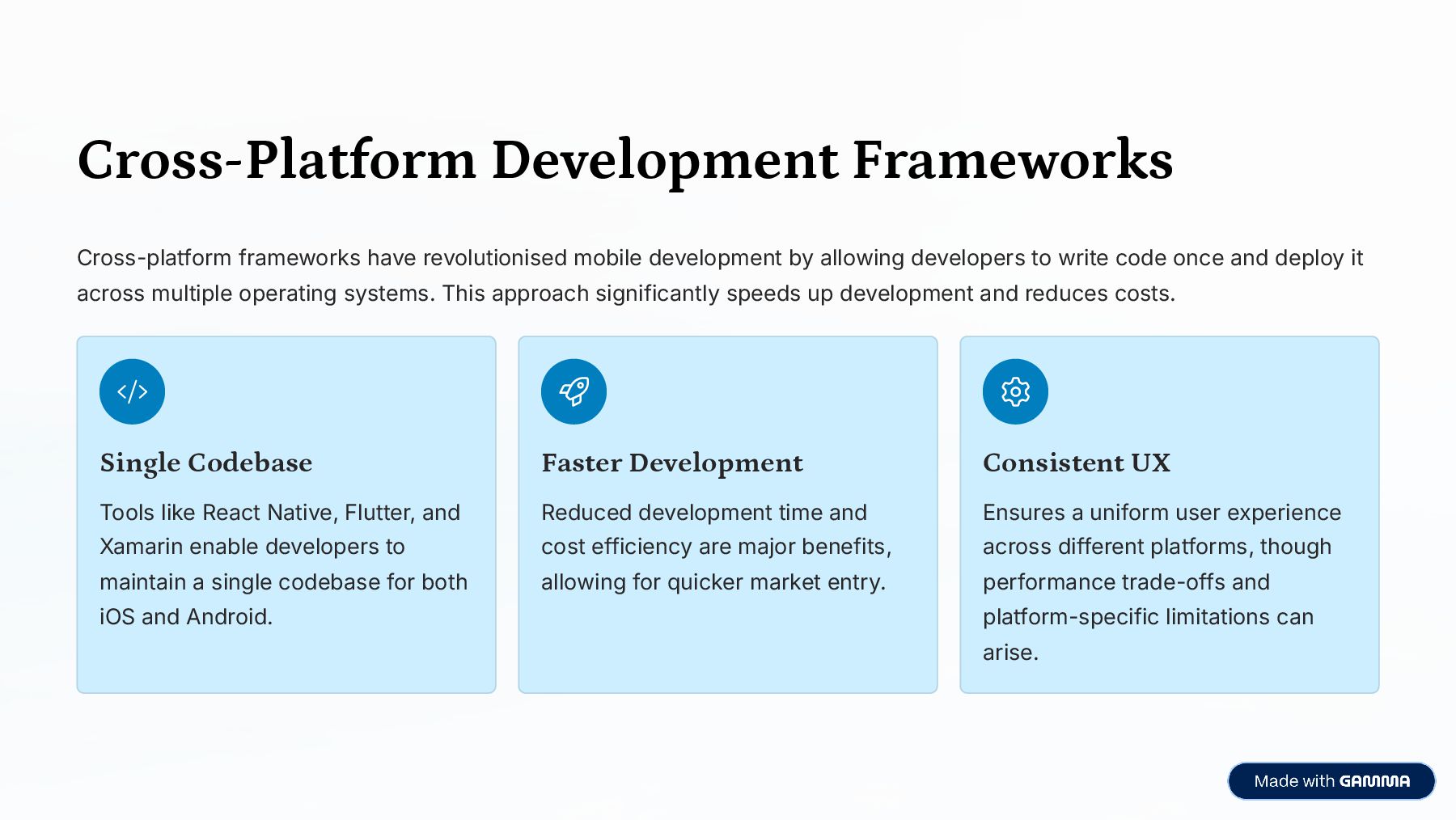
  7. Cross-Platform Development Frameworks Cross-platform frameworks have revolutionised mobile development by

    allowing developers to write code once and deploy it across multiple operating systems. This approach significantly speeds up development and reduces costs. Single Codebase Tools like React Native, Flutter, and Xamarin enable developers to maintain a single codebase for both iOS and Android. Faster Development Reduced development time and cost efficiency are major benefits, allowing for quicker market entry. Consistent UX Ensures a uniform user experience across different platforms, though performance trade-offs and platform-specific limitations can arise.
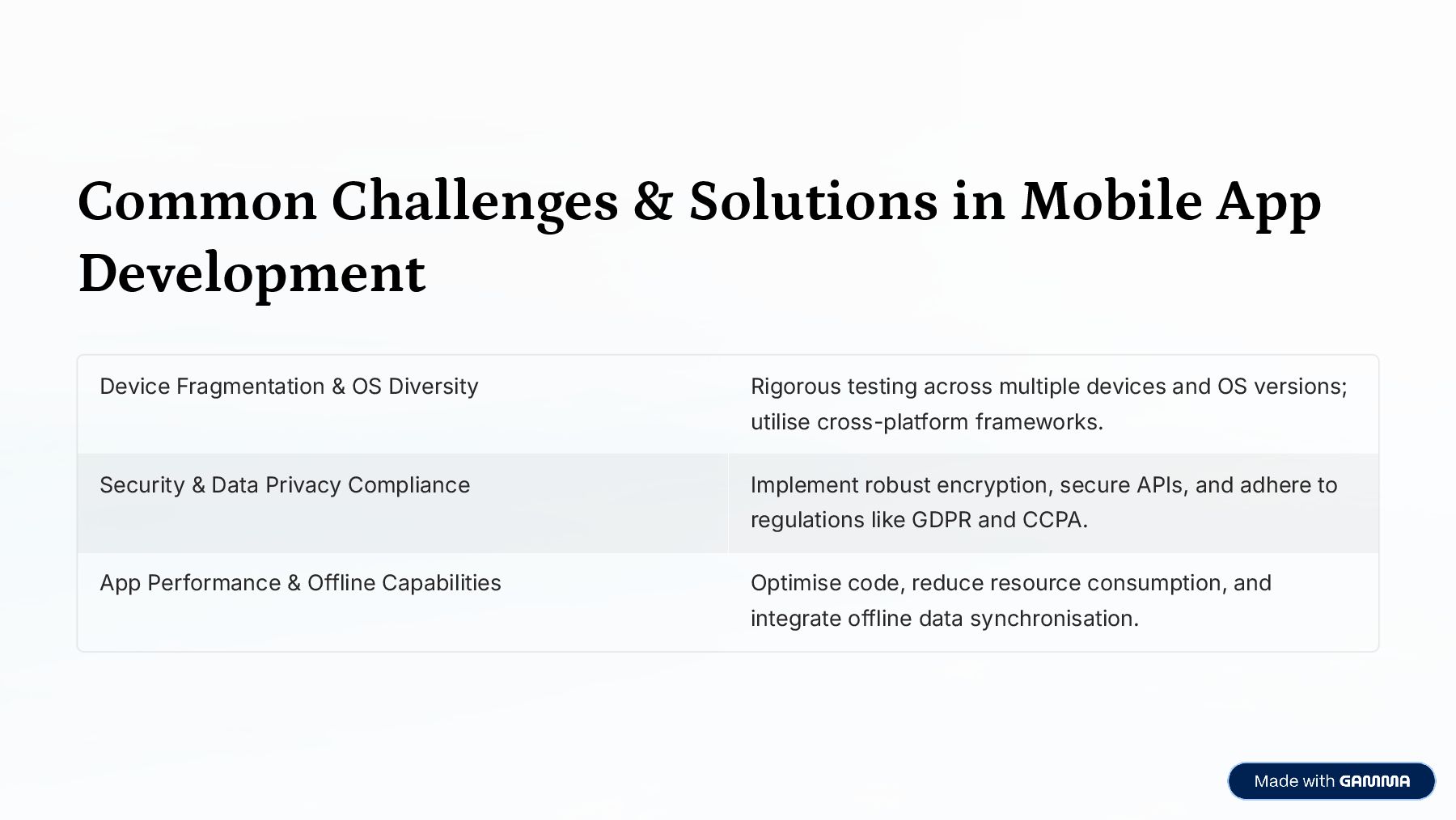
  8. Common Challenges & Solutions in Mobile App Development Device Fragmentation

    & OS Diversity Rigorous testing across multiple devices and OS versions; utilise cross-platform frameworks. Security & Data Privacy Compliance Implement robust encryption, secure APIs, and adhere to regulations like GDPR and CCPA. App Performance & Offline Capabilities Optimise code, reduce resource consumption, and integrate offline data synchronisation.
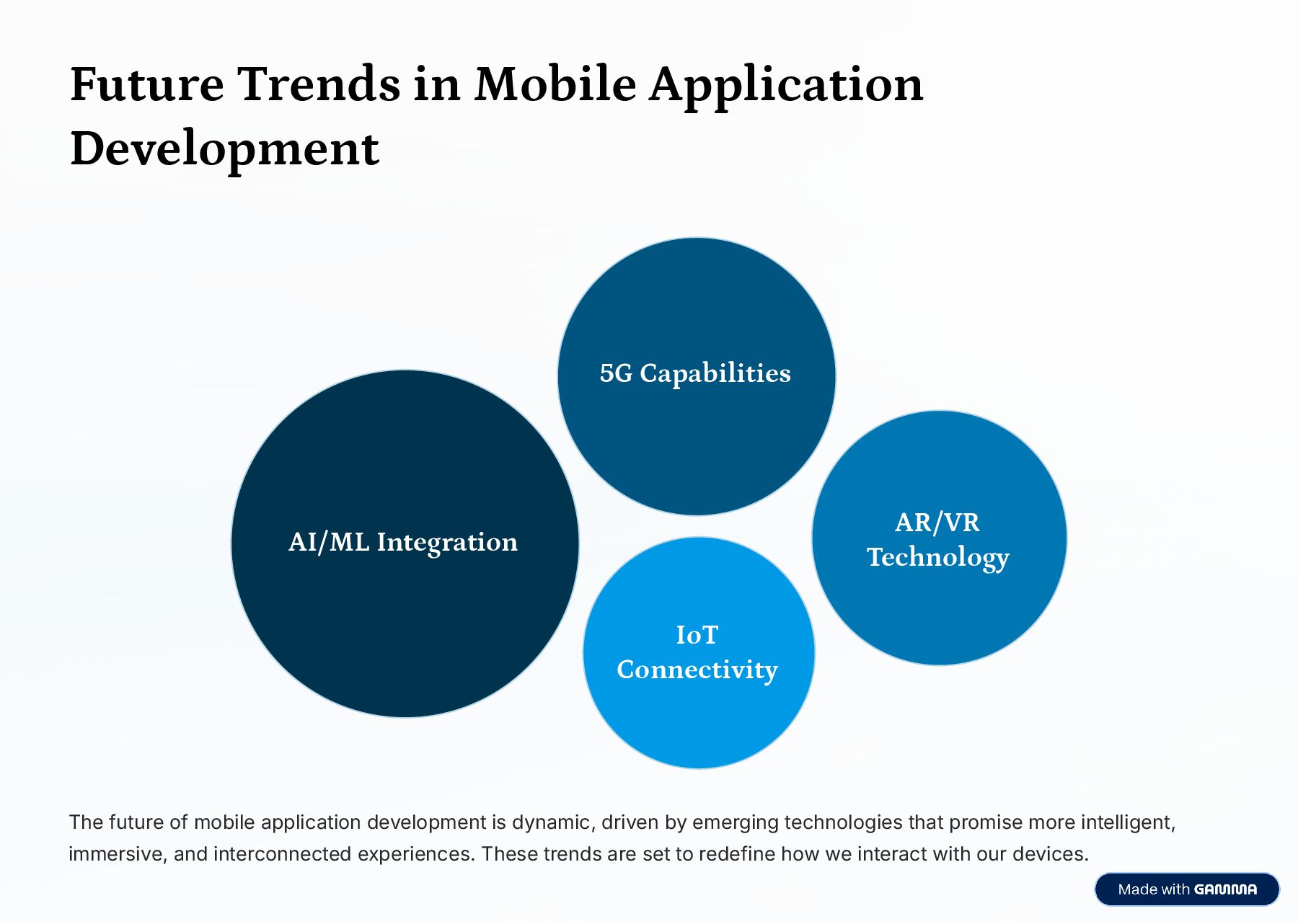
  9. Future Trends in Mobile Application Development AI/ML Integration 5G Capabilities

    AR/VR Technology IoT Connectivity The future of mobile application development is dynamic, driven by emerging technologies that promise more intelligent, immersive, and interconnected experiences. These trends are set to redefine how we interact with our devices.
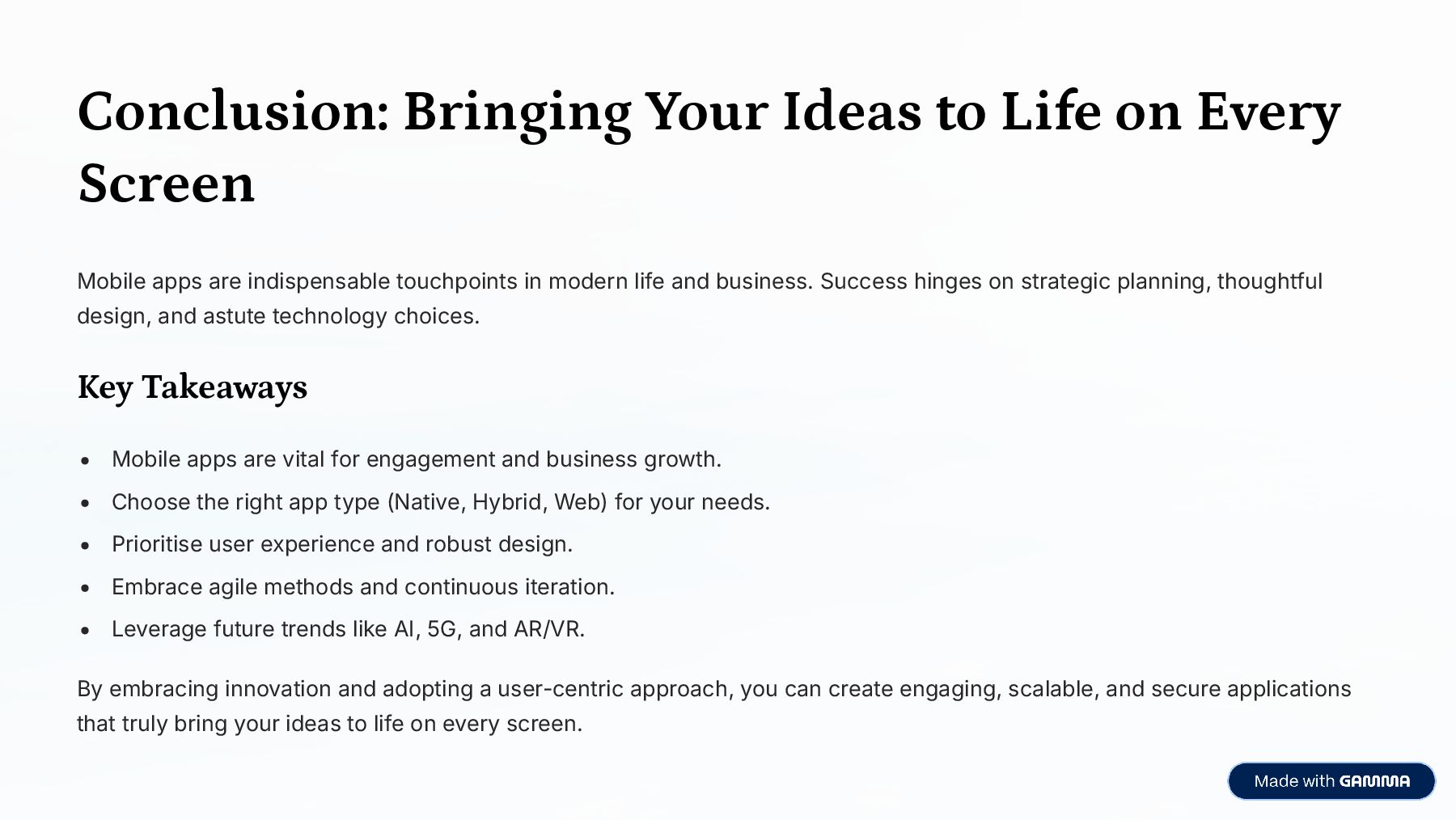
  10. Conclusion: Bringing Your Ideas to Life on Every Screen Mobile

    apps are indispensable touchpoints in modern life and business. Success hinges on strategic planning, thoughtful design, and astute technology choices. Key Takeaways Mobile apps are vital for engagement and business growth. Choose the right app type (Native, Hybrid, Web) for your needs. Prioritise user experience and robust design. Embrace agile methods and continuous iteration. Leverage future trends like AI, 5G, and AR/VR. By embracing innovation and adopting a user-centric approach, you can create engaging, scalable, and secure applications that truly bring your ideas to life on every screen.