Upgrade to Pro — share decks privately, control downloads, hide ads and more …

Diplograptus

Sponsored · Your Podcast. Everywhere. Effortlessly. Share. Educate. Inspire. Entertain. You do you. We'll handle the rest.
Avatar for Tj Haigler Tj Haigler
April 23, 2025
28

 Diplograptus

Avatar for Tj Haigler

Tj Haigler

April 23, 2025
Tweet

Transcript

  1. A Derived Member Of Orthograptids, Ordovician Graptolite Diplograptus TJ Haigler

    Department of Geological and Environmental Sciences, Appalachian State University, Boone, North Carolina
  2. Introduction to Diplograptus • Extinct genus of small graptolites •

    Related to primitive chordates • Predominate during the Ordovician • Index fossil for the Ordovician • First thought to be solitary but now understood to be colonial
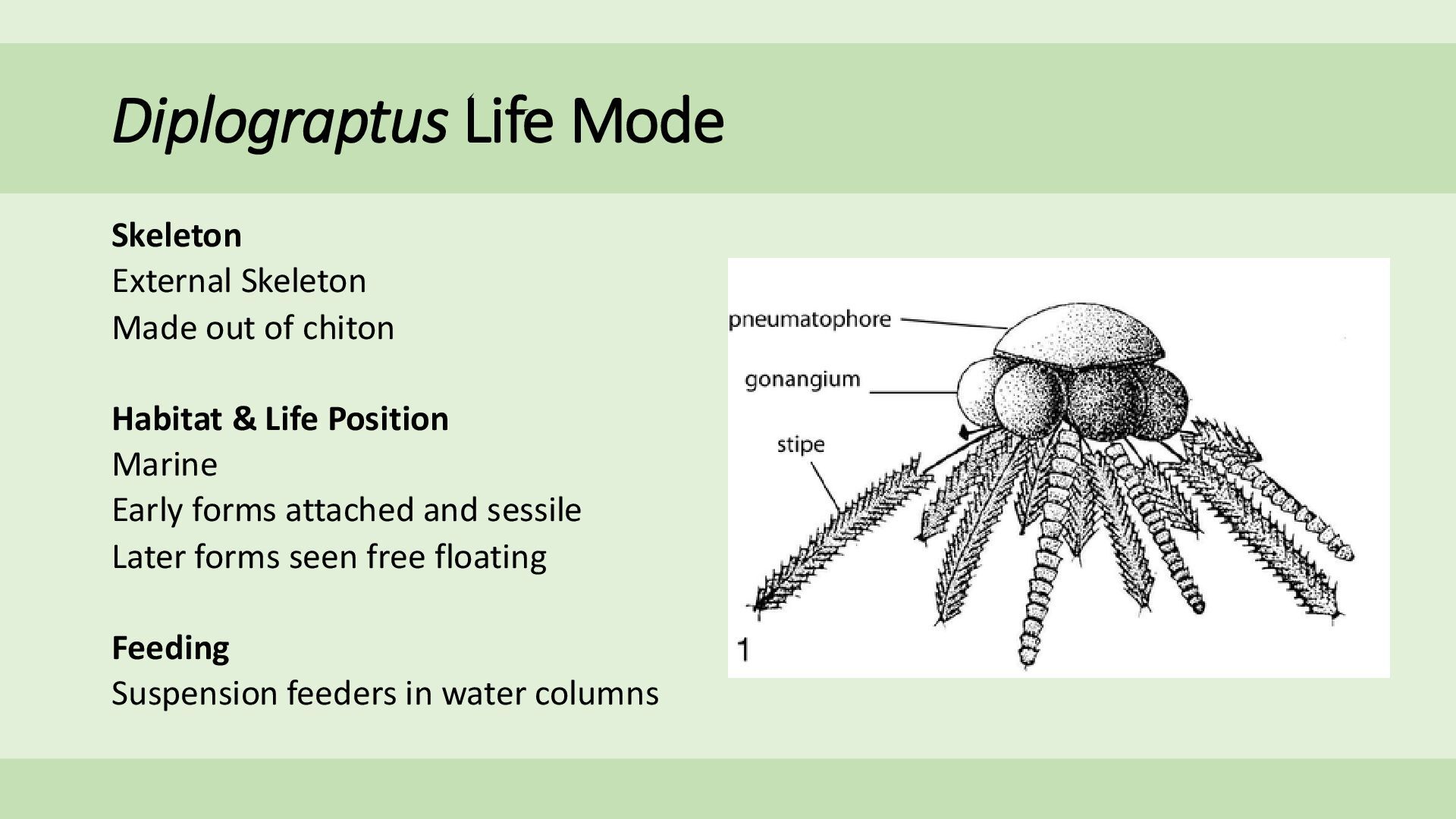
  3. Diplograptus Life Mode Skeleton External Skeleton Made out of chiton

    Habitat & Life Position Marine Early forms attached and sessile Later forms seen free floating Feeding Suspension feeders in water columns
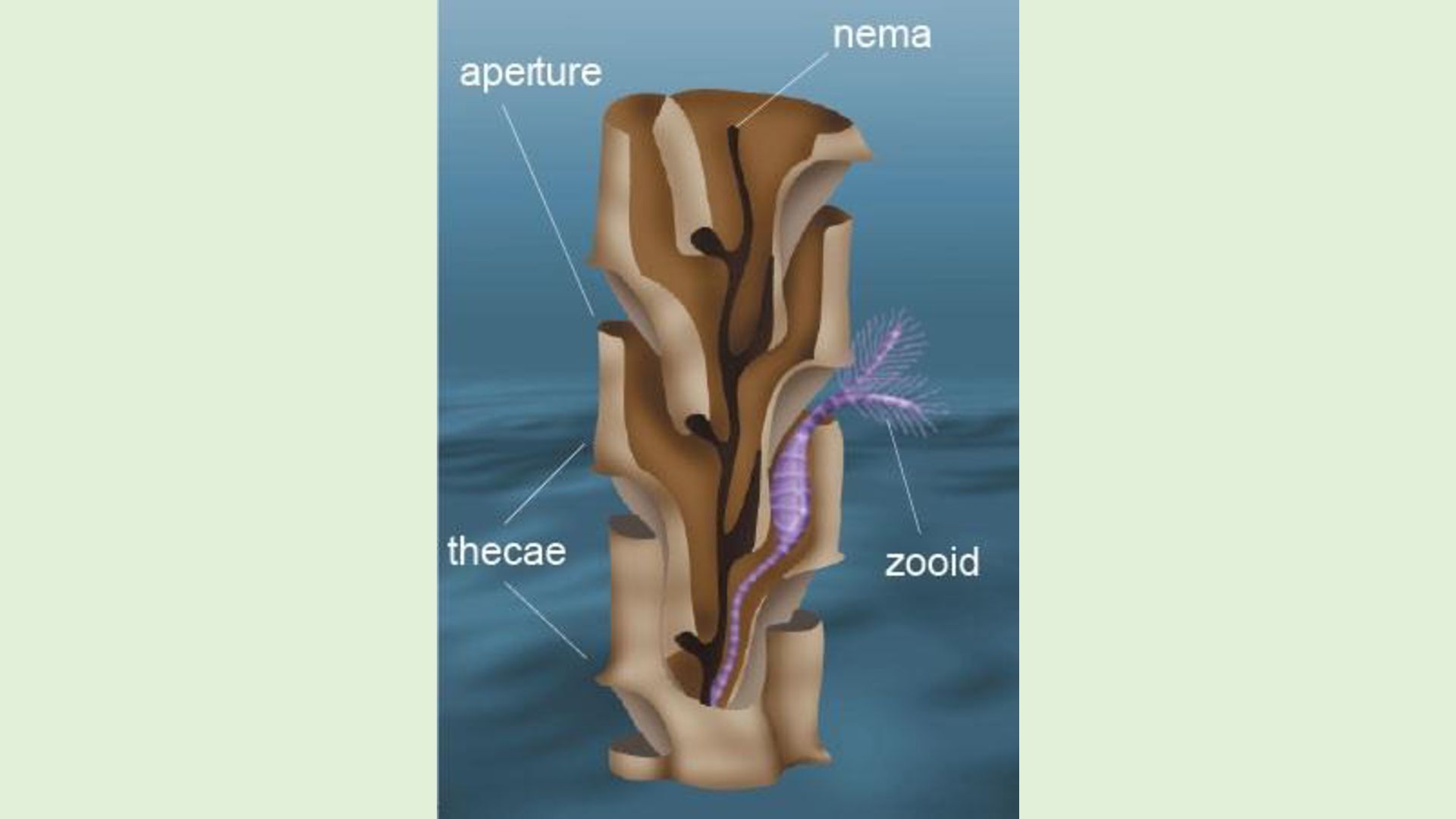
  4. Diplograptus Life Mode Body Plan Colonial Bilaterally symmetric Initial tube

    called the sicula Smaller tubes called thecae arranged in branches called stipes Whole colony called a rhabdosome Thecae openings called apertures house individuals called zooids
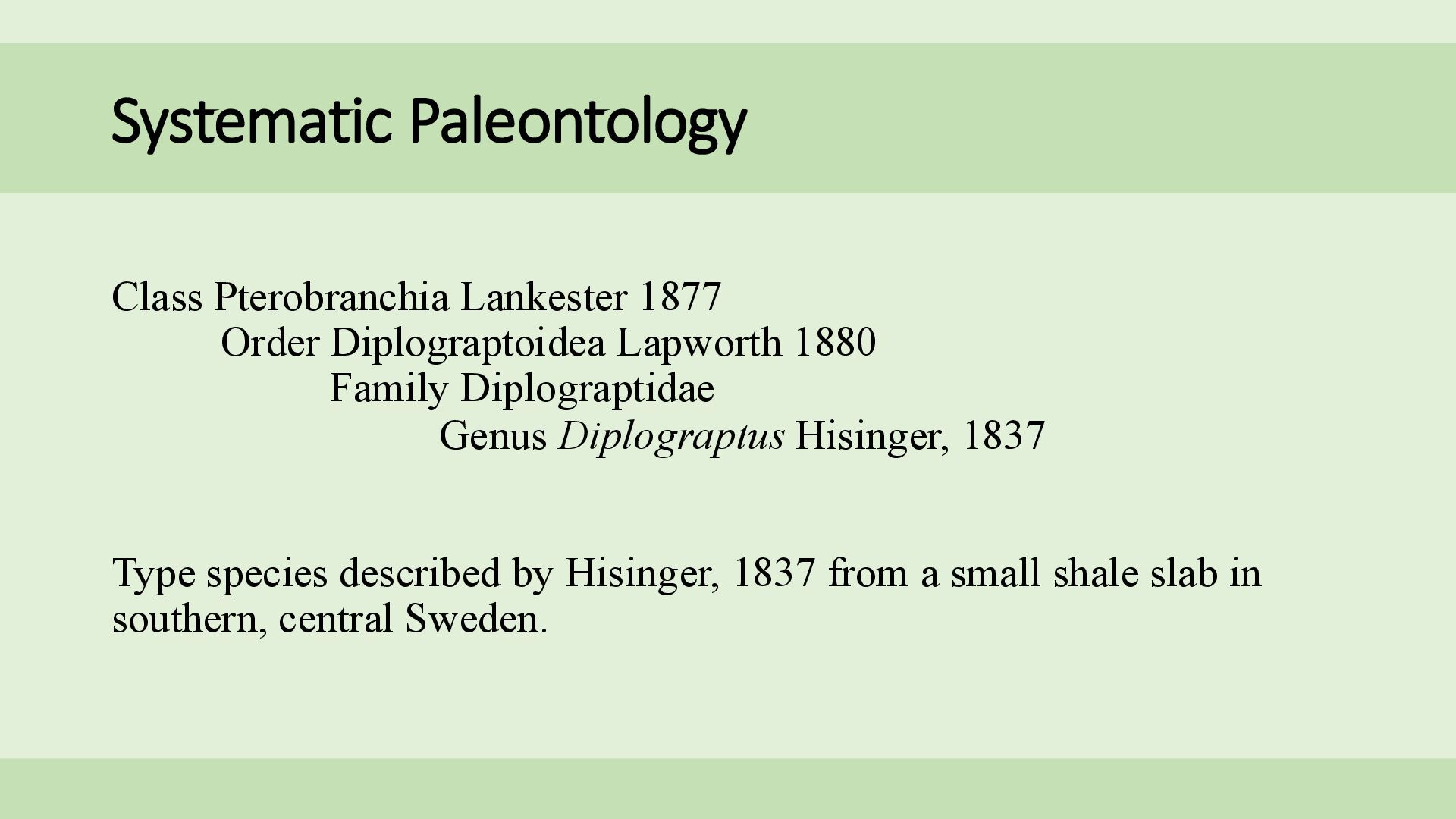
  5. Systematic Paleontology Class Pterobranchia Lankester 1877 Order Diplograptoidea Lapworth 1880

    Family Diplograptidae Genus Diplograptus Hisinger, 1837 Type species described by Hisinger, 1837 from a small shale slab in southern, central Sweden.
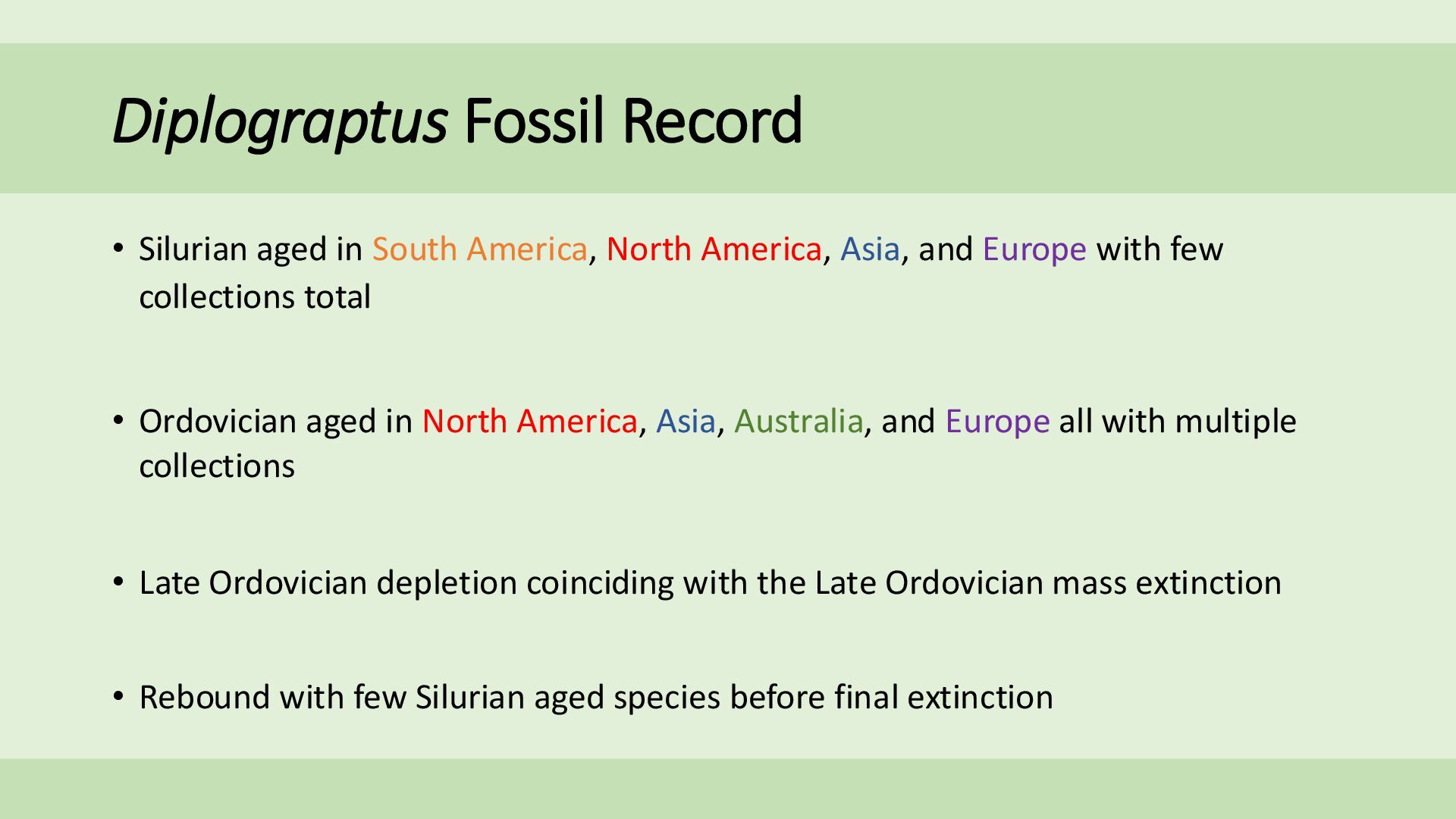
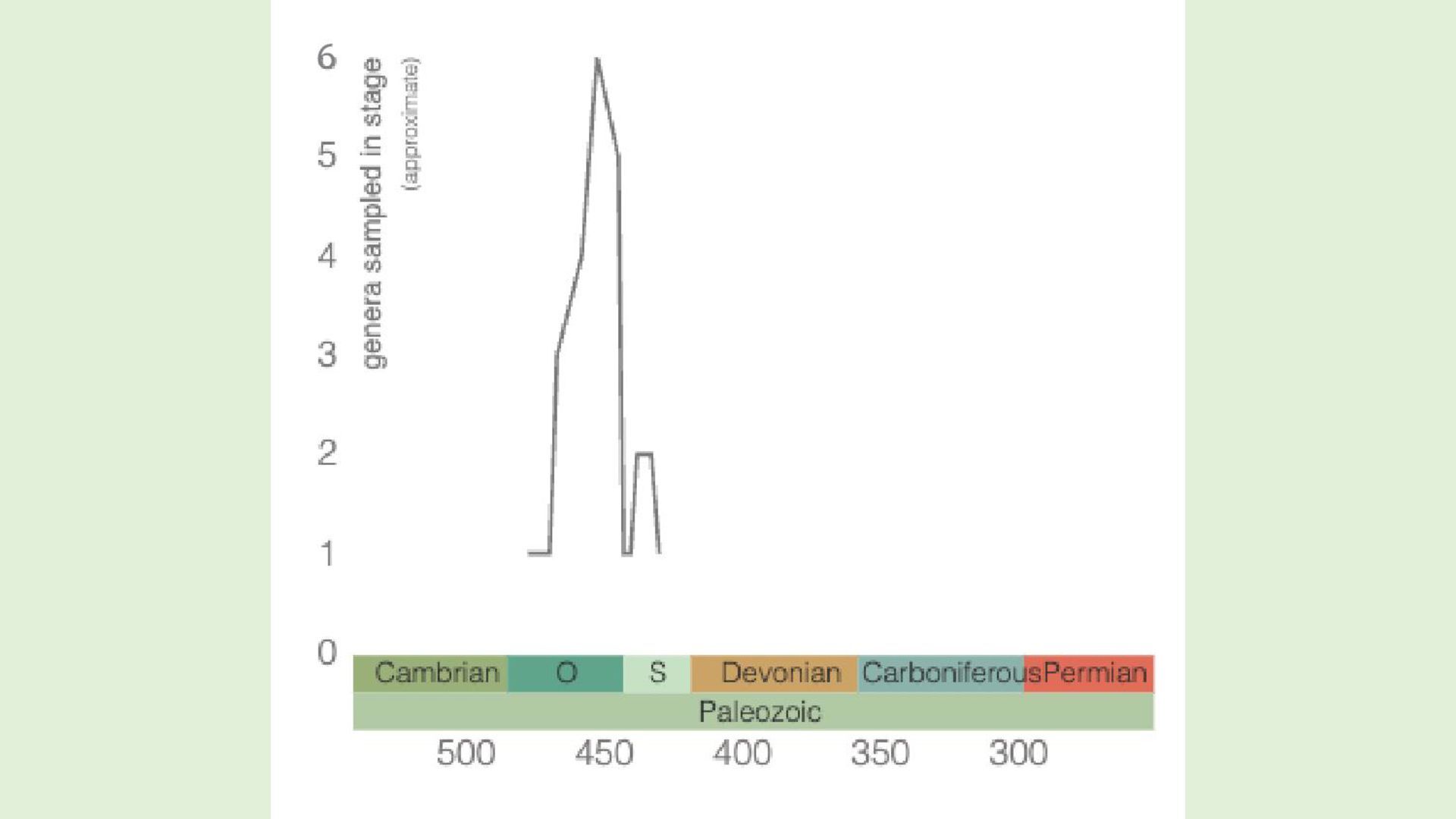
  6. Diplograptus Fossil Record • Silurian aged in South America, North

    America, Asia, and Europe with few collections total • Ordovician aged in North America, Asia, Australia, and Europe all with multiple collections • Late Ordovician depletion coinciding with the Late Ordovician mass extinction • Rebound with few Silurian aged species before final extinction
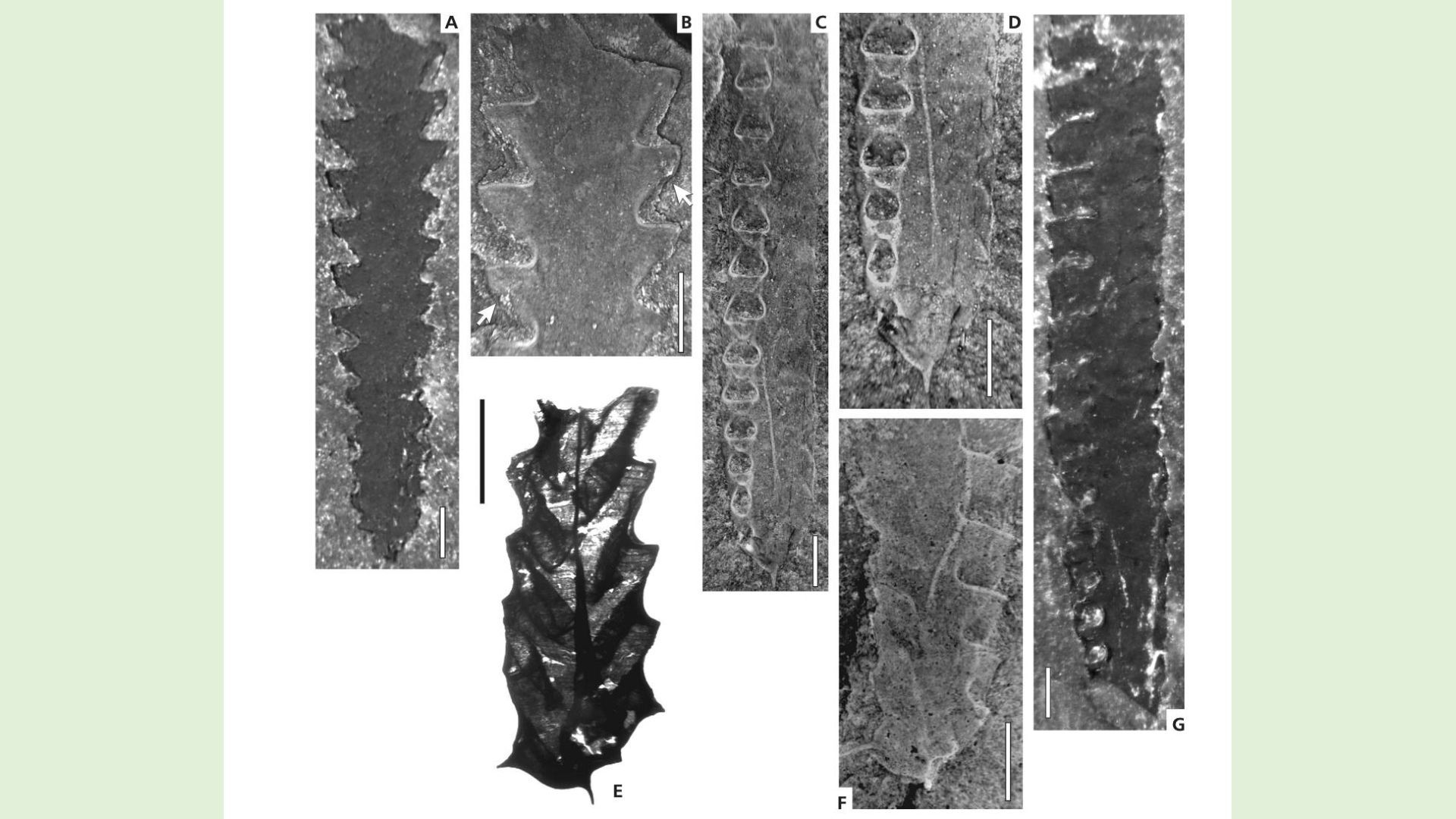
  7. Using Electron Microscopy With Diplograptus • Dissolve carbonate rock away

    using hydrochloric acid • Rhabdosomes aligned to bedding surfaces • Bottom currents in environment • Measure thecae lengths and angles • Measure aperture depth • Abnormalities in growth cycle (metamorphosis)
  8. References Berry, W.B. N., and Takagi, R.S., 1971, Electron microscope

    study of Diplograptus species: Lethaia, v. 4, no. 1, p. 1–13. Hisinger, W., 1837, Lethaea svecica seu petrificata Sveciæ: Iconibus et characteribus illustrata: Oxford, England, Oxford Microform Publications. 124 pp. D.A. Norstedt et filii, Stockholm. Maletz, J., 2015. Graptolite reconstructions and interpretations. Paläontologische Zeitschrift, 89, pp.271-286. Mitchell, C.E., Maletz, J., and Goldman, D., 2009, What is Diplograptus?: Bulletin of Geosciences, p. 27–34. Ruedemann, R., 1895, Synopsis of the mode of growth and development of the graptolitic genus Diplograptus.: American Journal of Science, s3-49, no. 294, p. 453–455. Williams, S.H., Ingham, J.K., McManus, K., and Murray, I., 1982, The use of experimental palaeontology in reproducing the effects of diagenetic flattening on graptolites: Lethaia, v. 15, no. 4, p. 365–372.