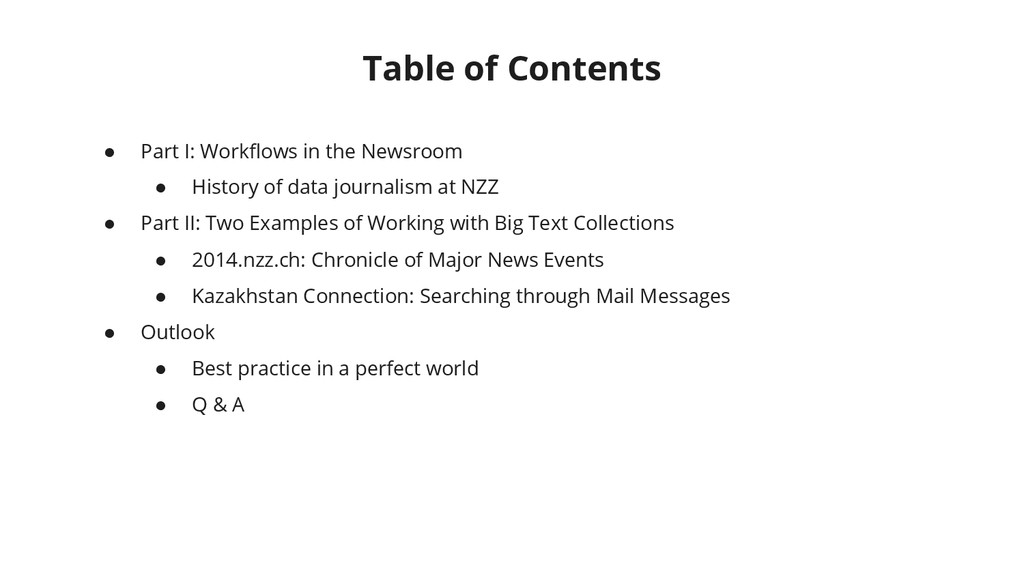
data journalism at NZZ • Part II: Two Examples of Working with Big Text Collections • 2014.nzz.ch: Chronicle of Major News Events • Kazakhstan Connection: Searching through Mail Messages • Outlook • Best practice in a perfect world • Q & A Table of Contents
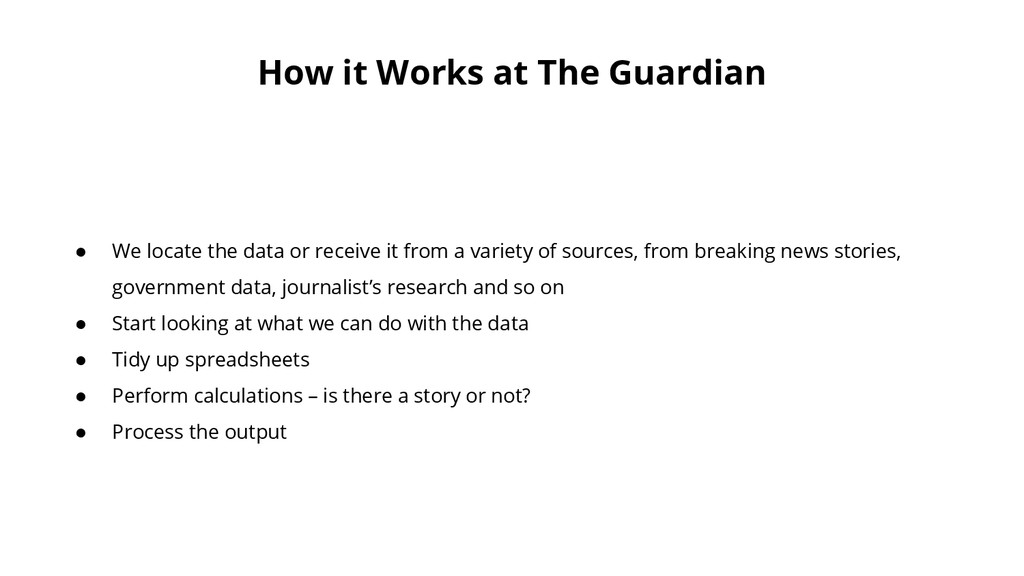
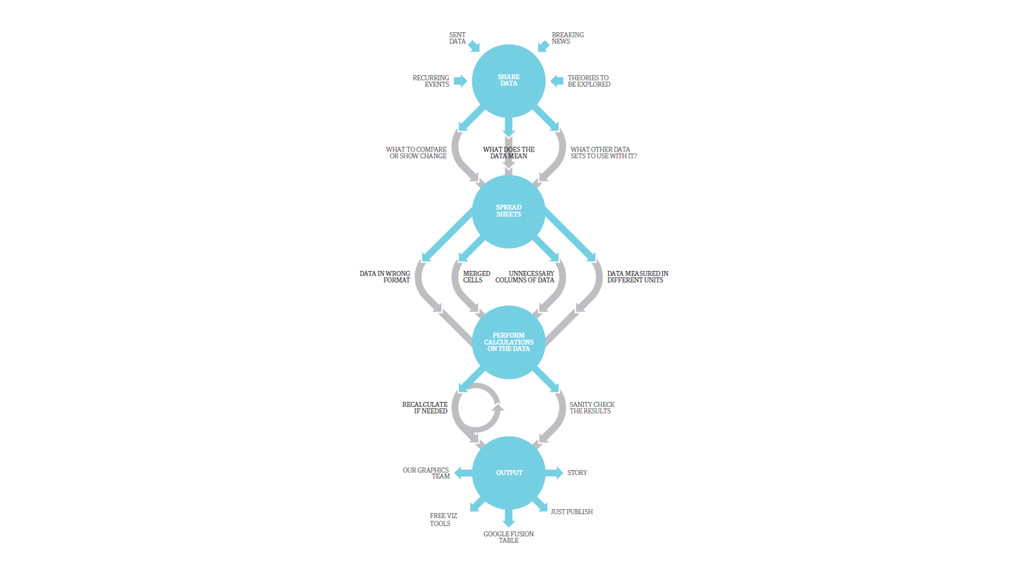
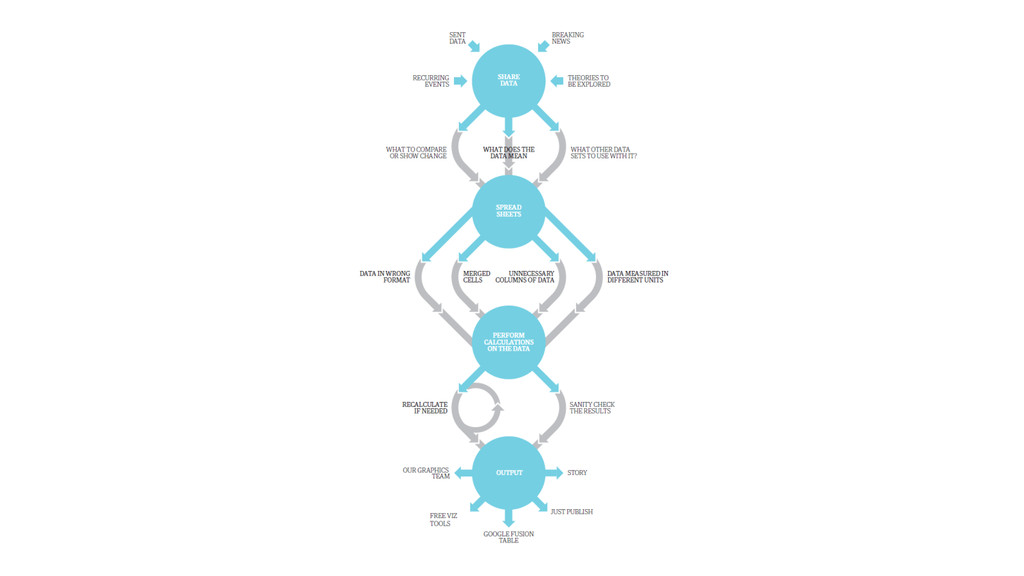
data or receive it from a variety of sources, from breaking news stories, government data, journalist’s research and so on • Start looking at what we can do with the data • Tidy up spreadsheets • Perform calculations – is there a story or not? • Process the output
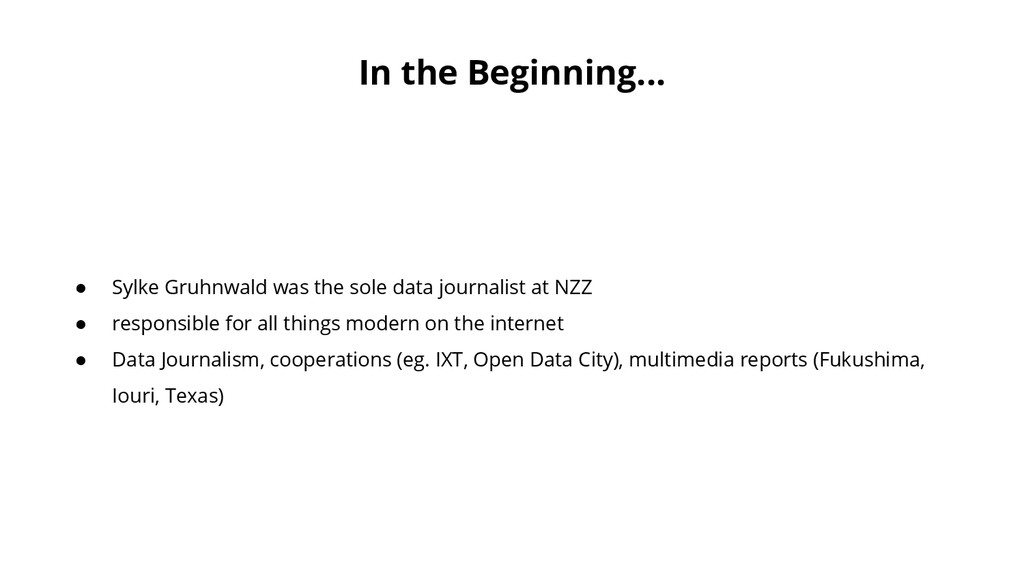
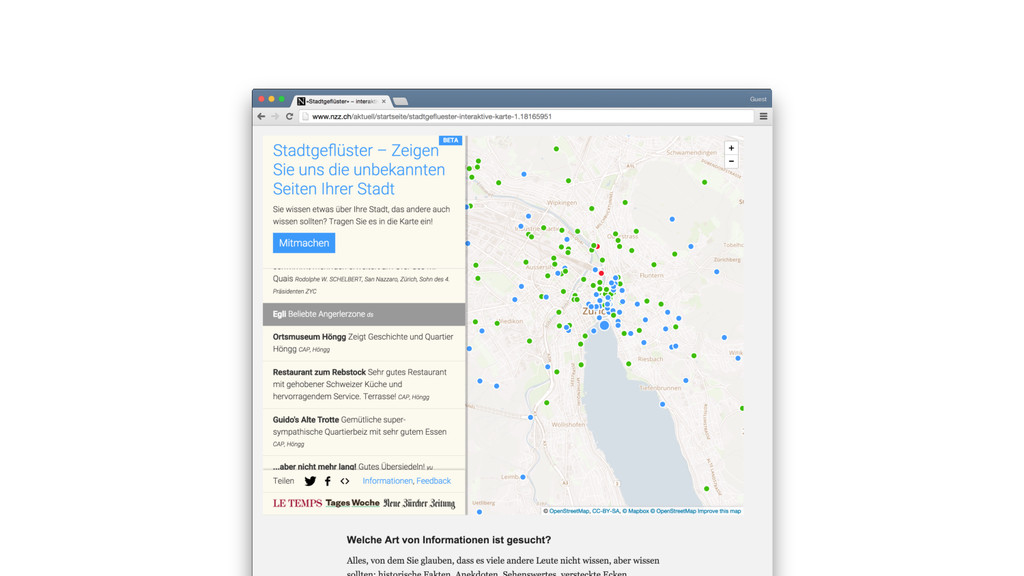
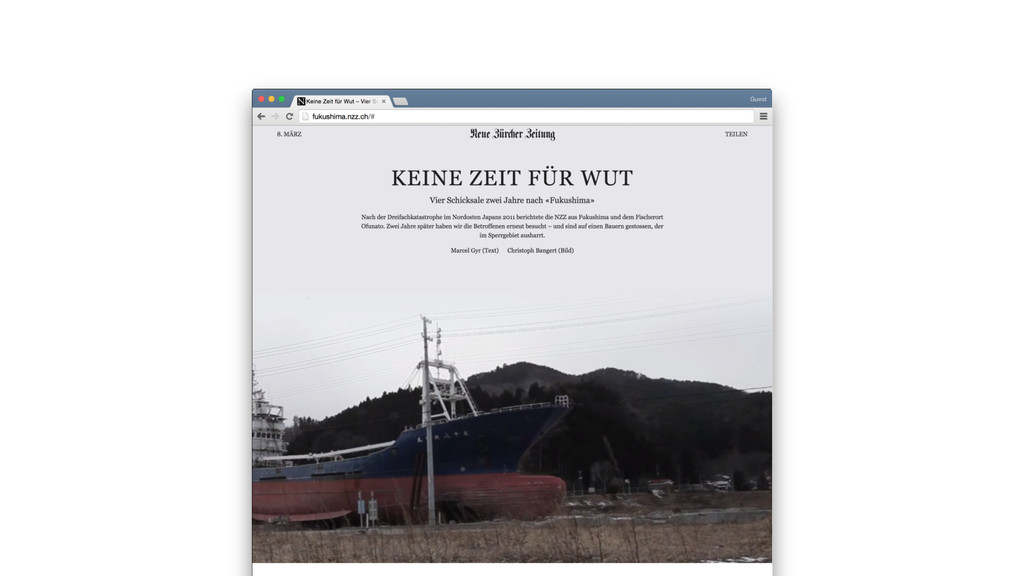
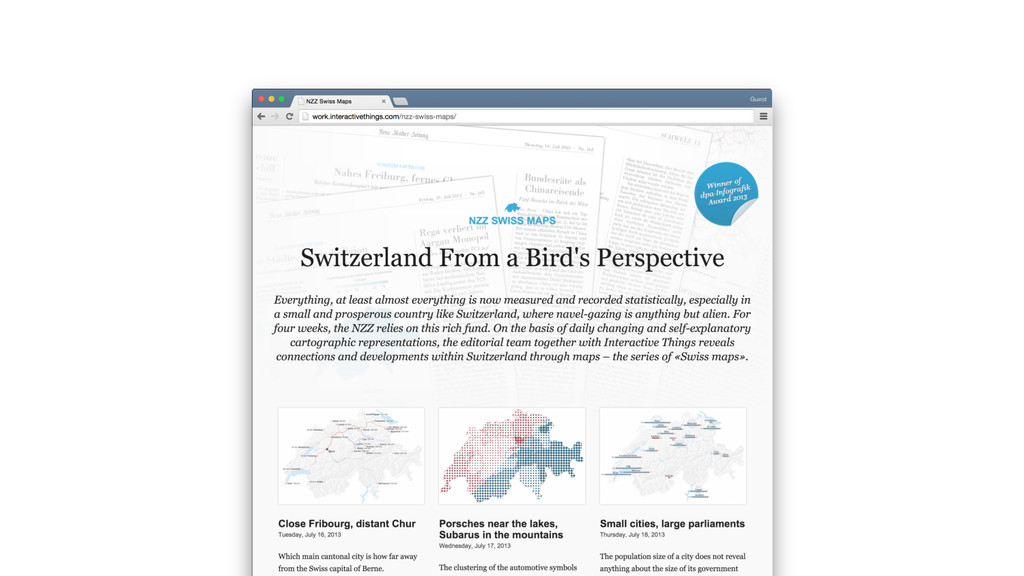
journalist at NZZ • responsible for all things modern on the internet • Data Journalism, cooperations (eg. IXT, Open Data City), multimedia reports (Fukushima, Iouri, Texas)
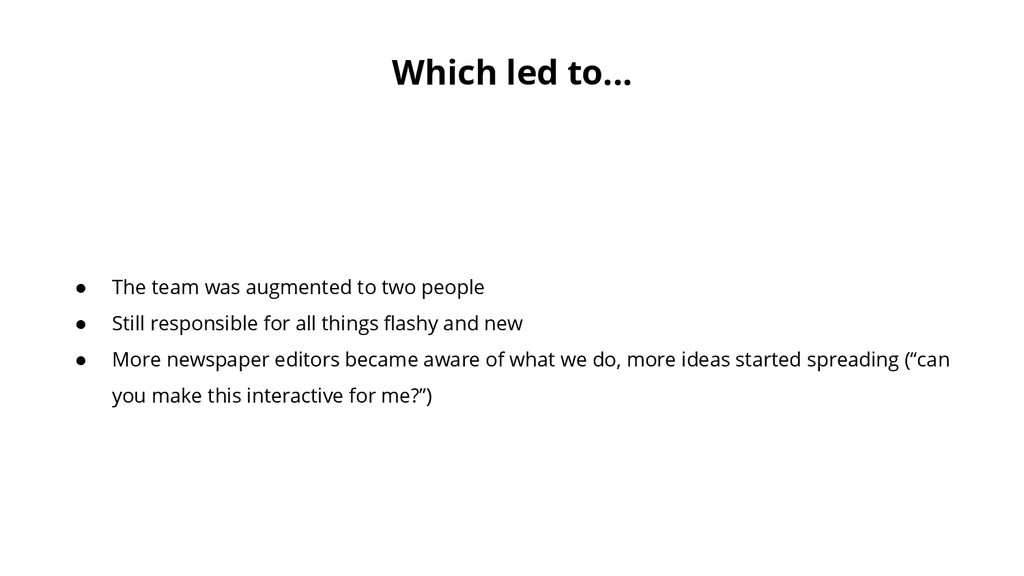
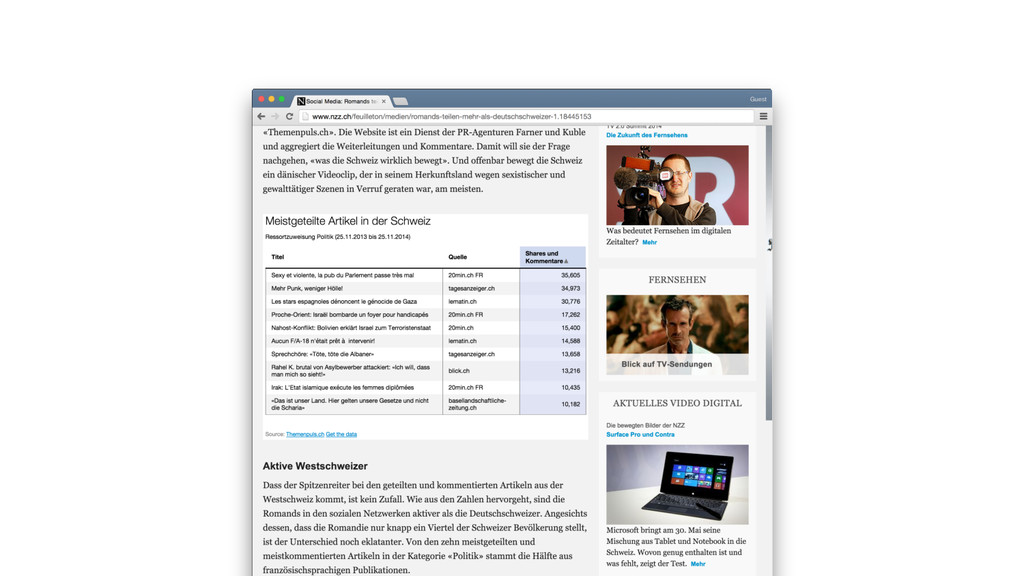
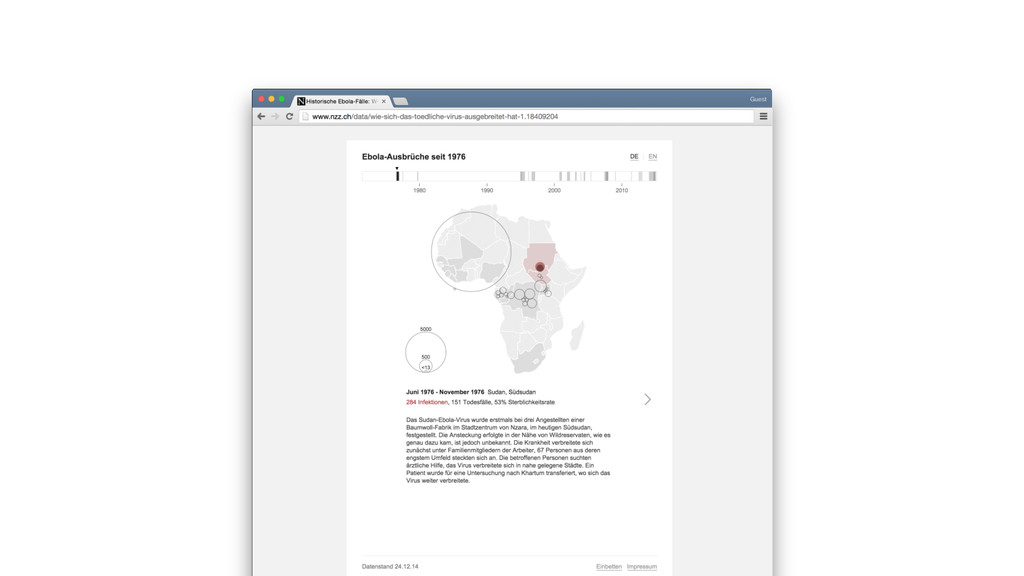
people • Still responsible for all things flashy and new • More newspaper editors became aware of what we do, more ideas started spreading (“can you make this interactive for me?”)
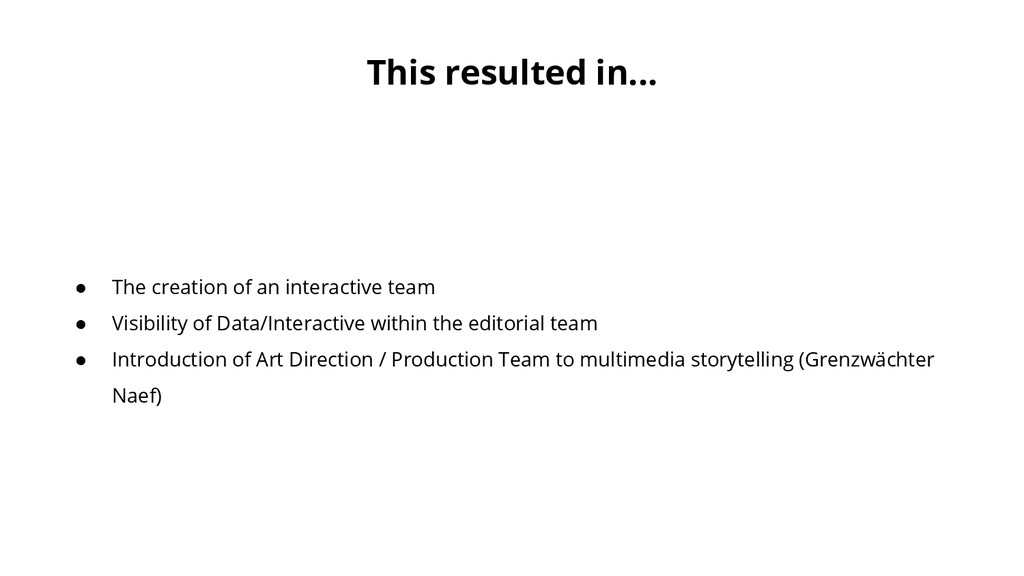
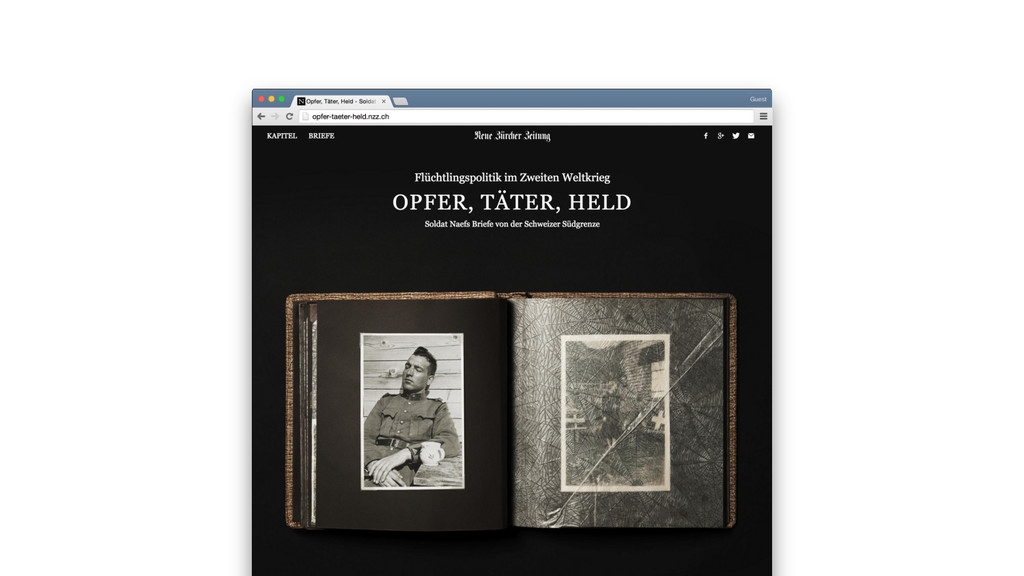
• Visibility of Data/Interactive within the editorial team • Introduction of Art Direction / Production Team to multimedia storytelling (Grenzwächter Naef)
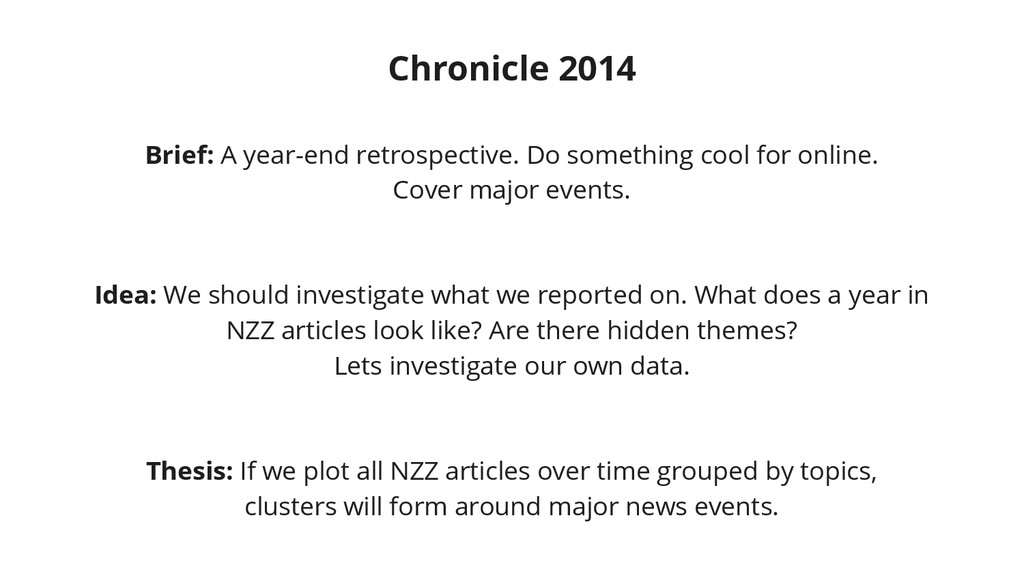
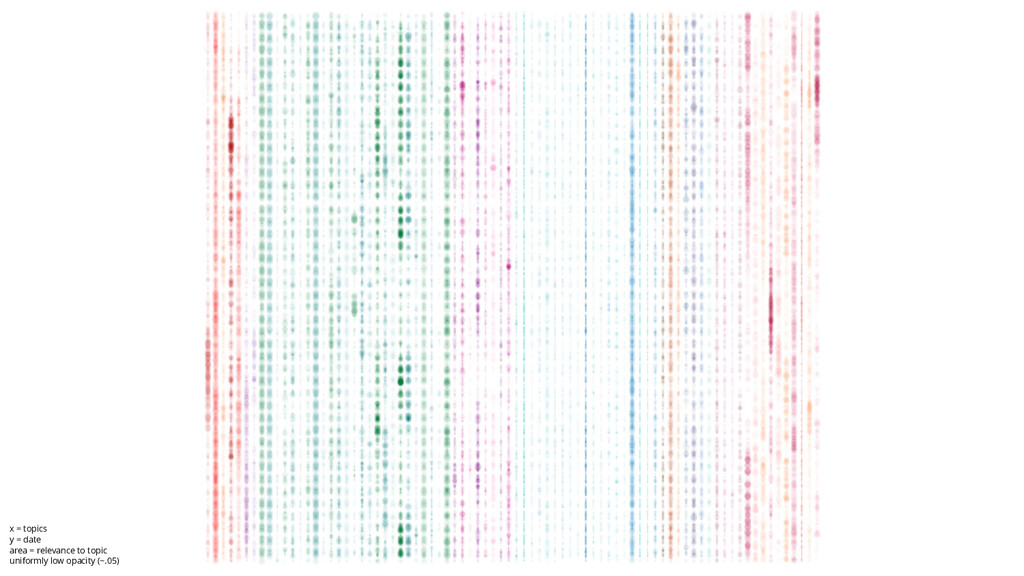
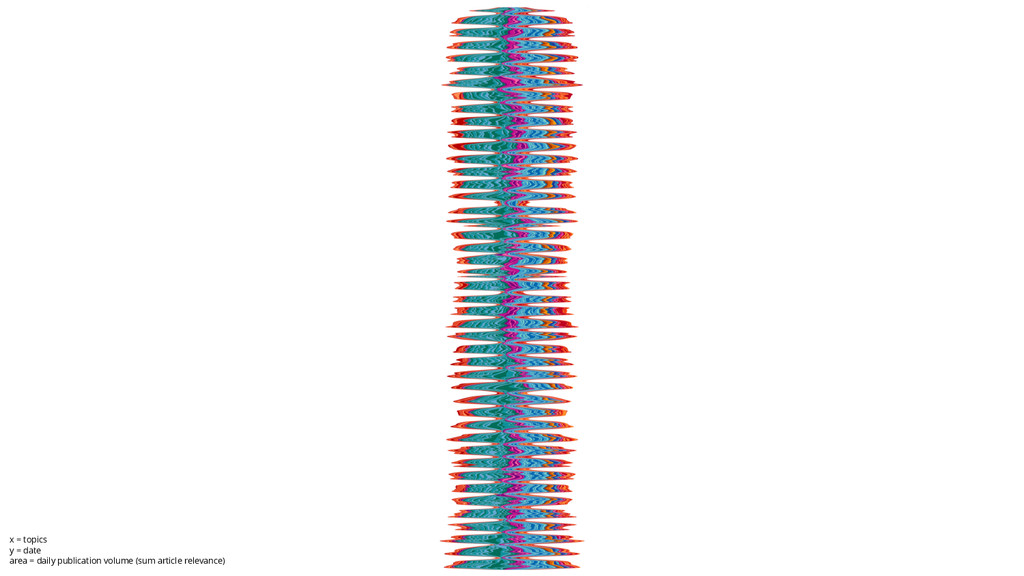
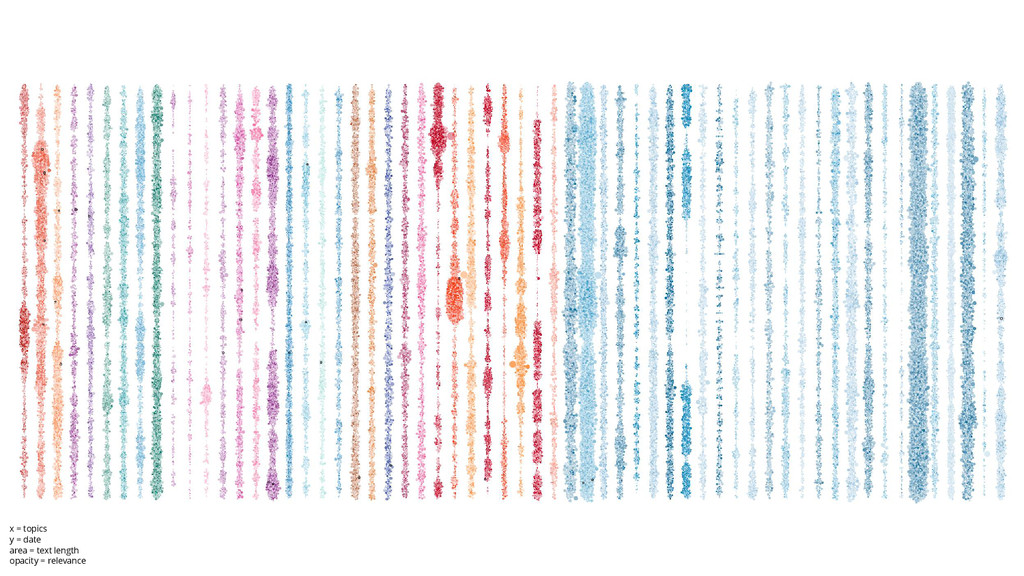
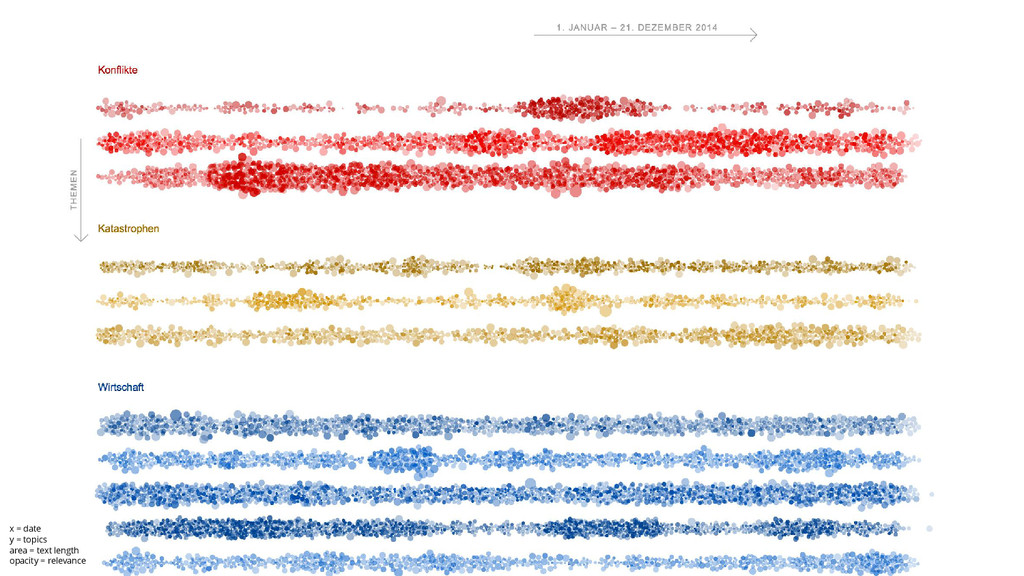
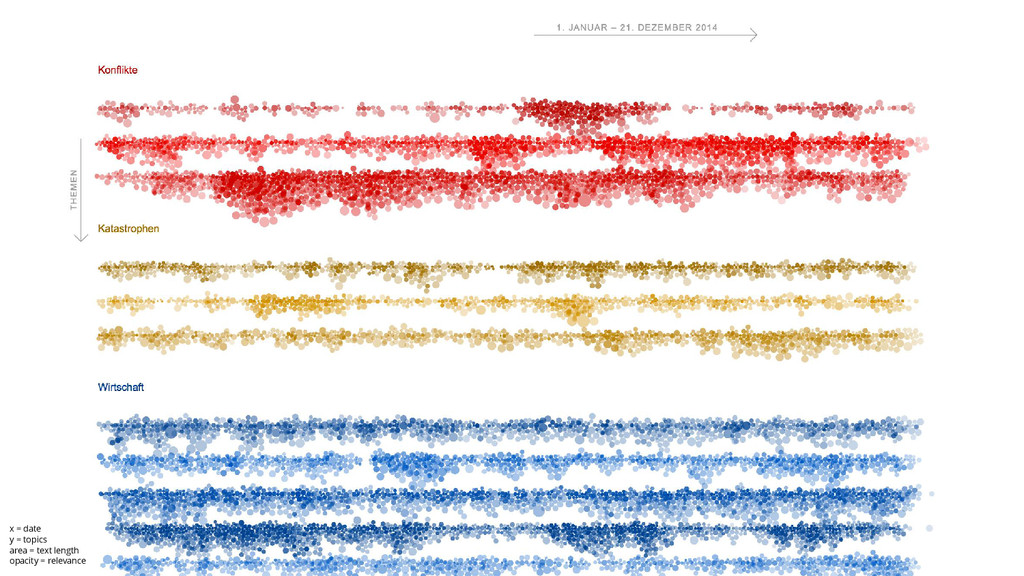
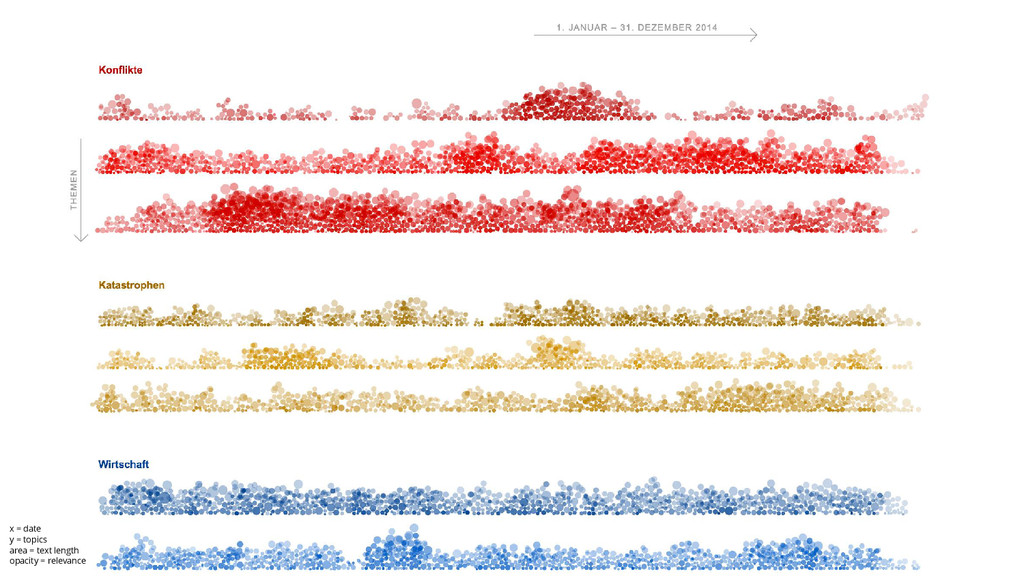
online. Cover major events. Idea: We should investigate what we reported on. What does a year in NZZ articles look like? Are there hidden themes? Lets investigate our own data. Thesis: If we plot all NZZ articles over time grouped by topics, clusters will form around major news events.
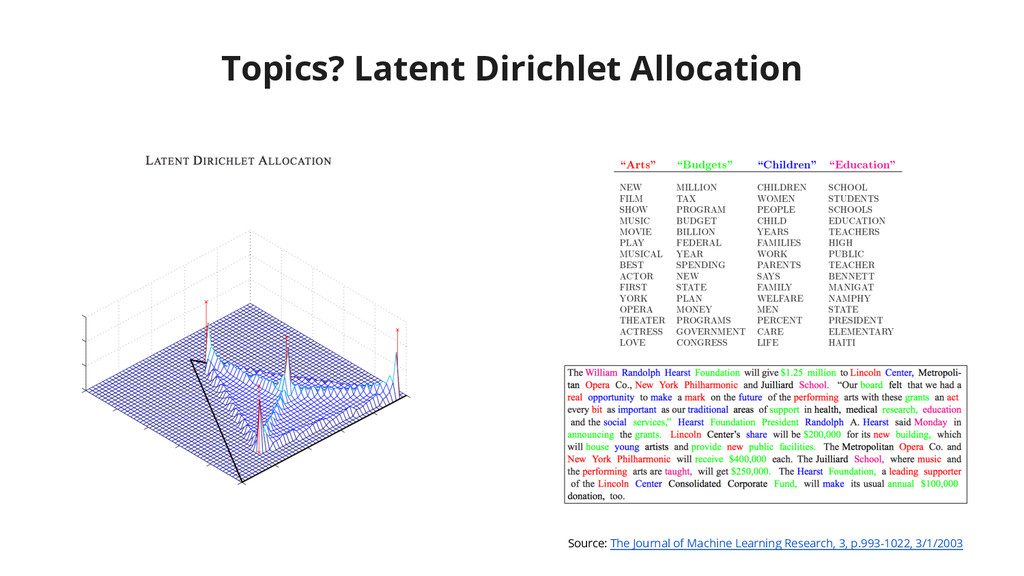
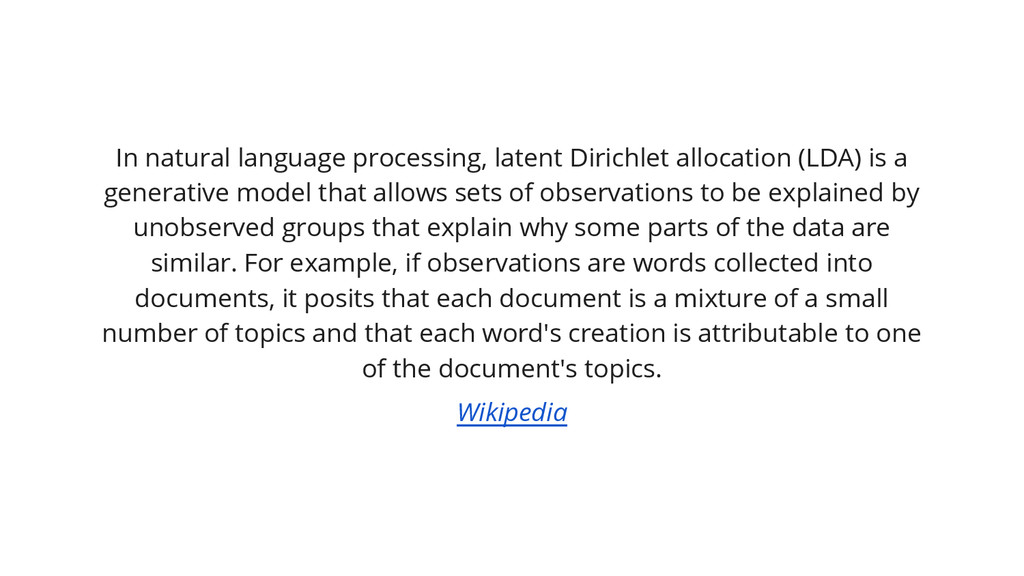
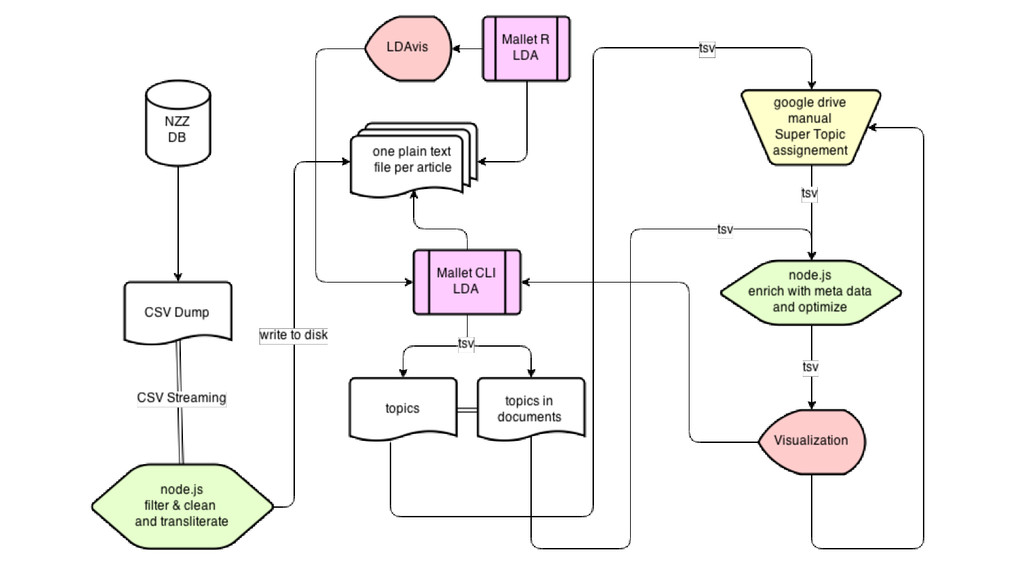
generative model that allows sets of observations to be explained by unobserved groups that explain why some parts of the data are similar. For example, if observations are words collected into documents, it posits that each document is a mixture of a small number of topics and that each word's creation is attributable to one of the document's topics. Wikipedia
Cherny introducing me to LDA, project advice and consultation Peer Teuwsen trusting us to experiment with his project Volodymyr Fertak proof reading my SQL queries NZZ Interactive design and support NZZ Editorial Staff all the text
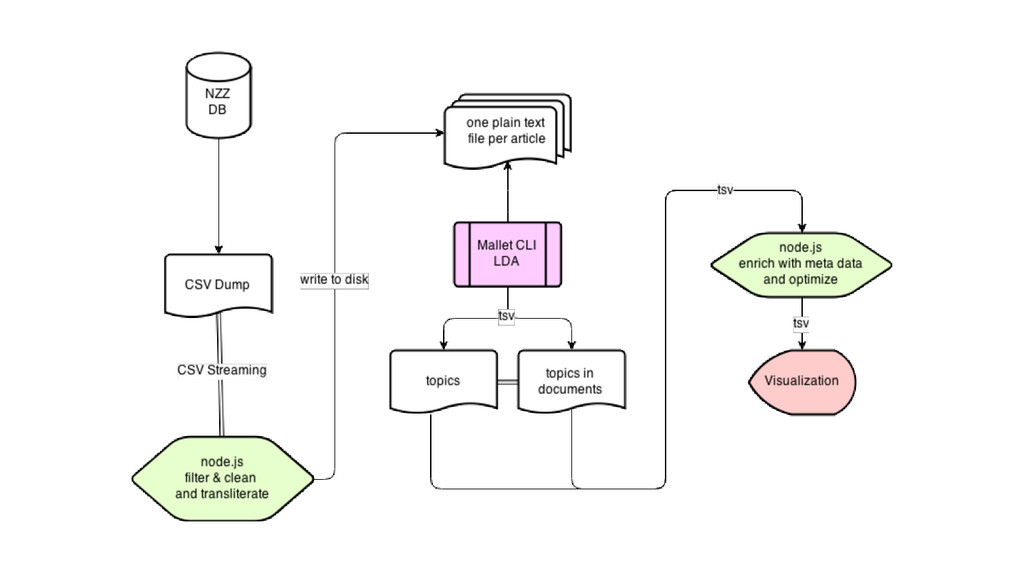
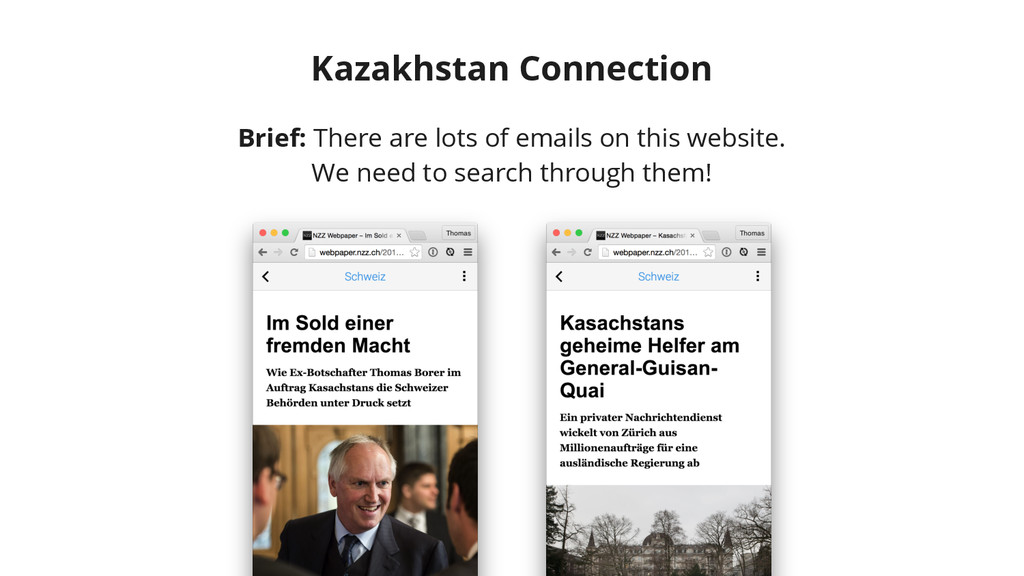
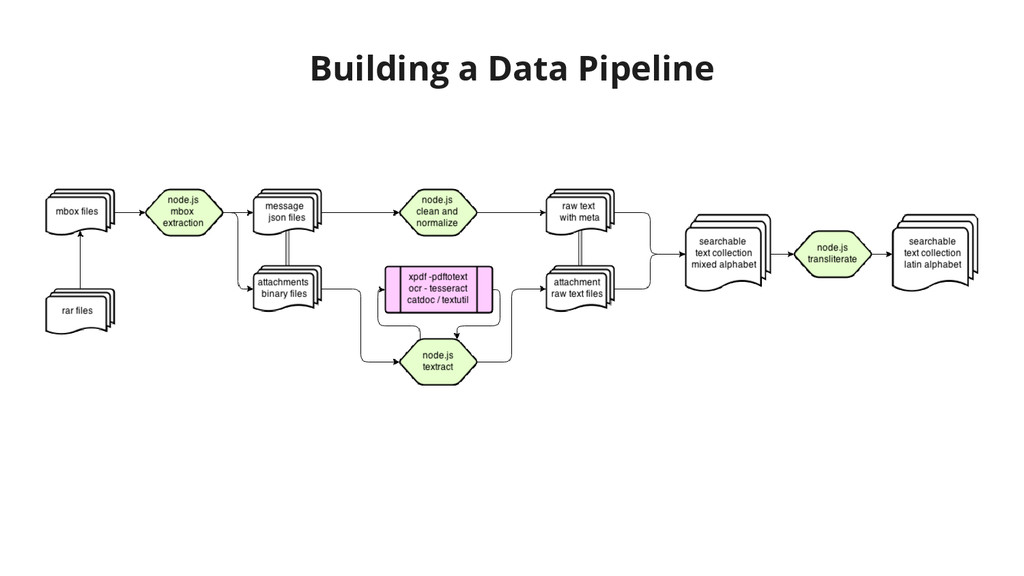
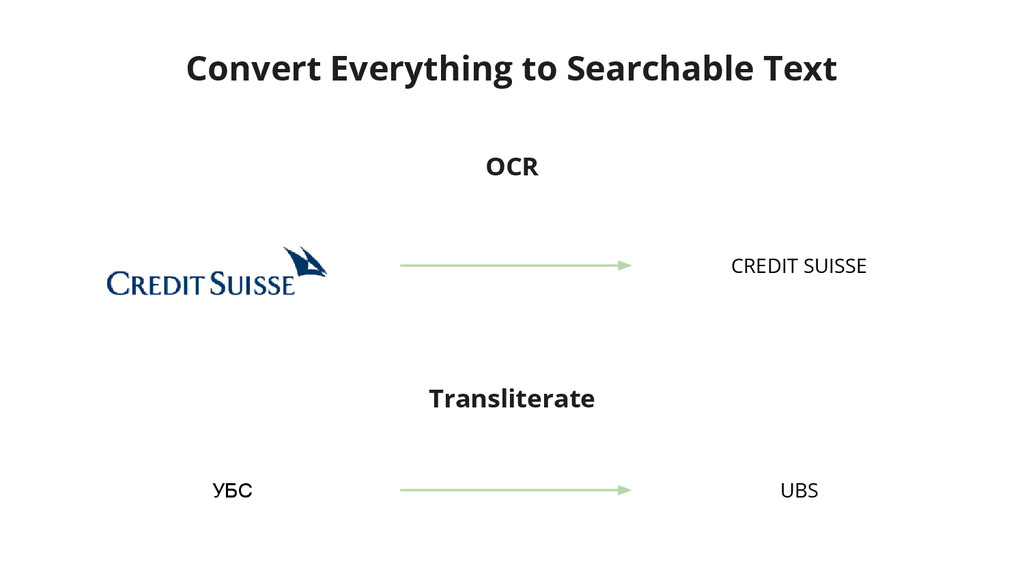
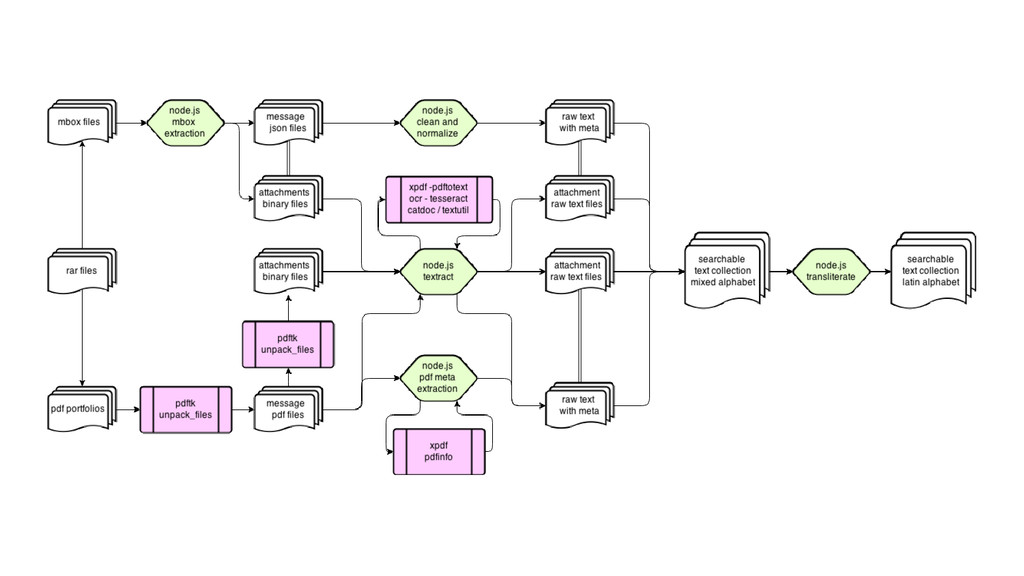
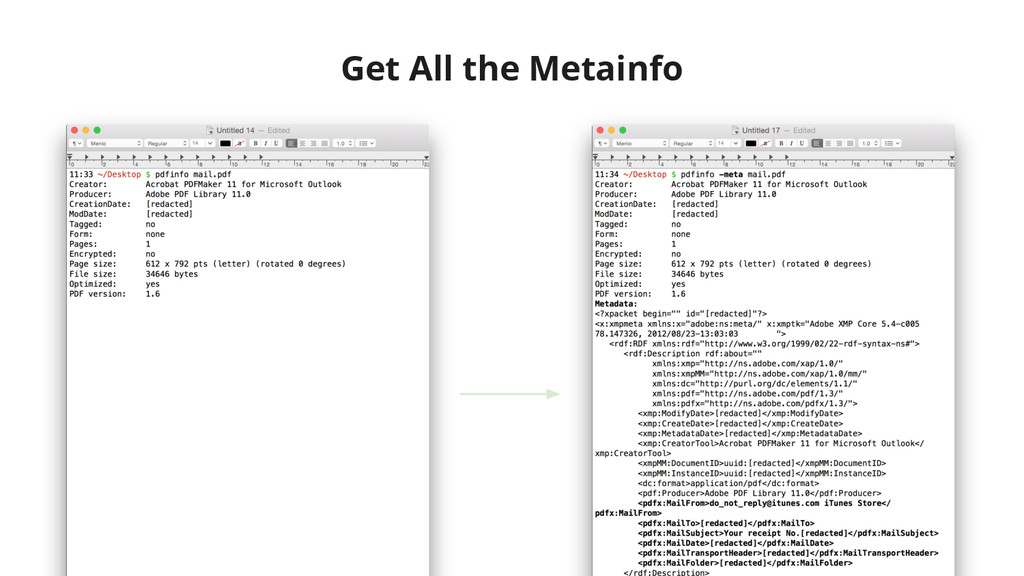
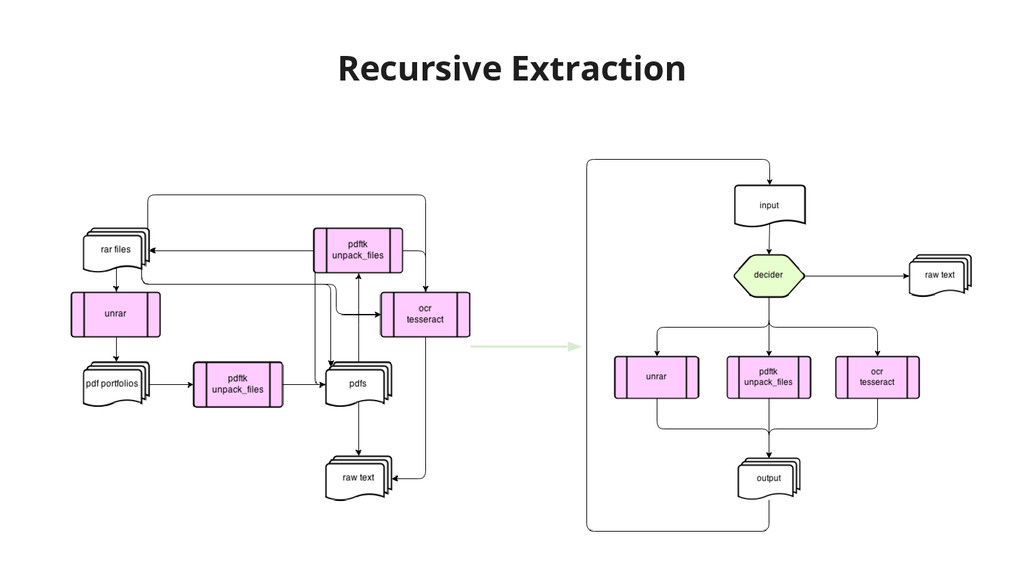
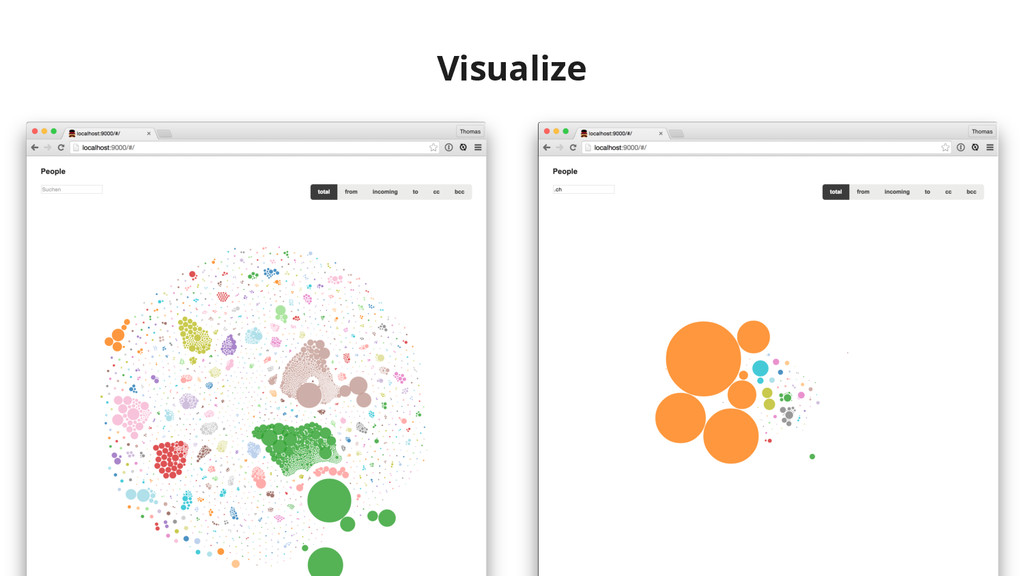
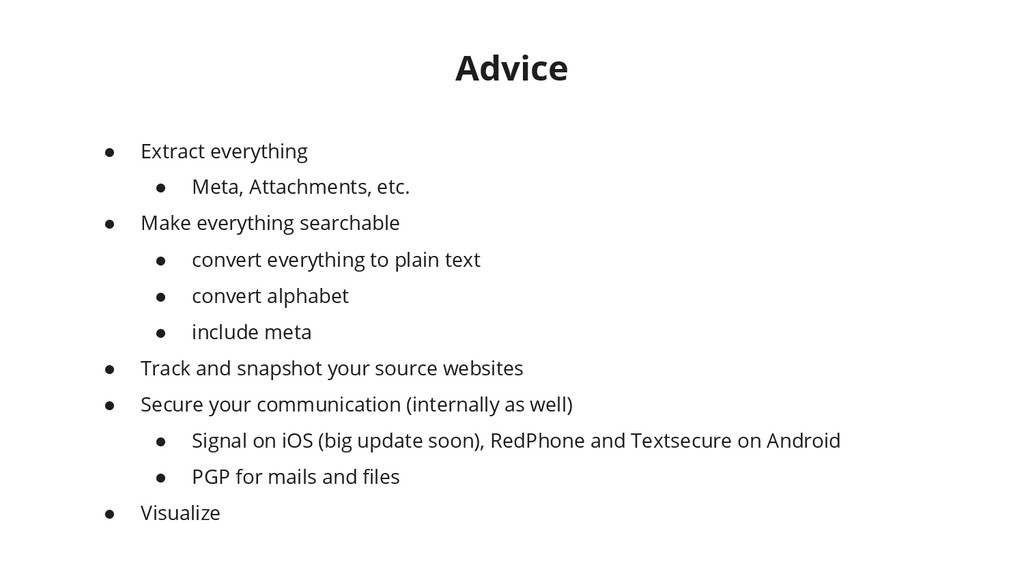
everything searchable • convert everything to plain text • convert alphabet • include meta • Track and snapshot your source websites • Secure your communication (internally as well) • Signal on iOS (big update soon), RedPhone and Textsecure on Android • PGP for mails and files • Visualize
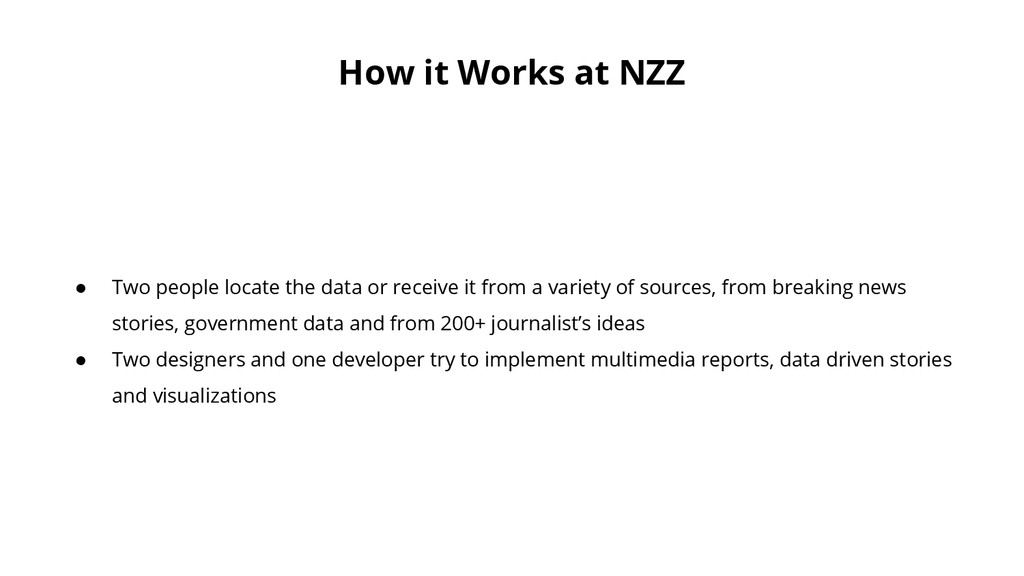
data or receive it from a variety of sources, from breaking news stories, government data and from 200+ journalist’s ideas • Two designers and one developer try to implement multimedia reports, data driven stories and visualizations
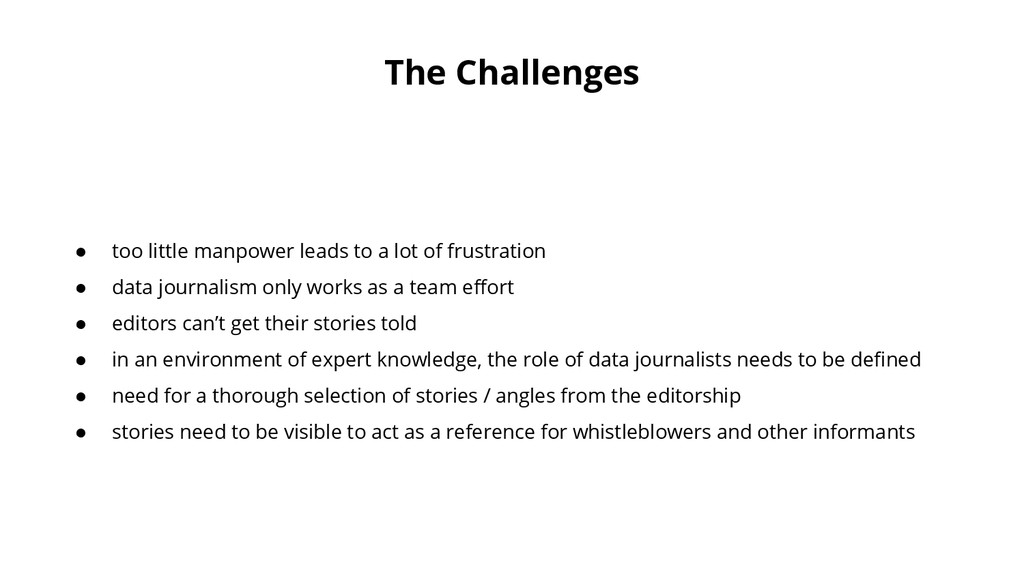
• data journalism only works as a team effort • editors can’t get their stories told • in an environment of expert knowledge, the role of data journalists needs to be defined • need for a thorough selection of stories / angles from the editorship • stories need to be visible to act as a reference for whistleblowers and other informants The Challenges
every department - or better yet: there will be no more departments and every story is visited from different angles, always including a data angle. «Ich bin überzeugt, der Begriff Datenjournalismus wird in ein paar Jahren wieder verschwinden – weil sich die Techniken in alle Sparten des Journalismus integrieren werden. Die Methoden und Tools des Datenjournalismus jedoch werden den Journalismus verändern, wie ihn auch die Erfindung des Telefons verändert hat. Man sagt ja heute auch nicht Telefonjournalismus, trotzdem arbeitet jeder mit dem Telefon. Übrigens auch der Datenjournalist.» Julian Schmidli, SRG Insider The Future


 lara
lara
 sachag
 lauravandoore
 katarinadahlin
 kevinliebholz
 jacobian
 techseoconnect
 nwiizo
 jnunemaker
 skoyamalab
 ammeep

![Part I Workflows in the Newsroom Alice Kohli [email protected] @AliceKohli](https://files.speakerdeck.com/presentations/f15c684c57084b1fae61819f0e5d2c63/slide_2.jpg)
![Part II Working with Big Text Collections Thomas Preusse [email protected]](https://files.speakerdeck.com/presentations/f15c684c57084b1fae61819f0e5d2c63/slide_14.jpg)



![Q & A Thursday, February 19, 2015 Alice Kohli [email protected]](https://files.speakerdeck.com/presentations/f15c684c57084b1fae61819f0e5d2c63/slide_43.jpg)
![Merci Thursday, February 19, 2015 Alice Kohli [email protected] @AliceKohli Thomas](https://files.speakerdeck.com/presentations/f15c684c57084b1fae61819f0e5d2c63/slide_44.jpg)