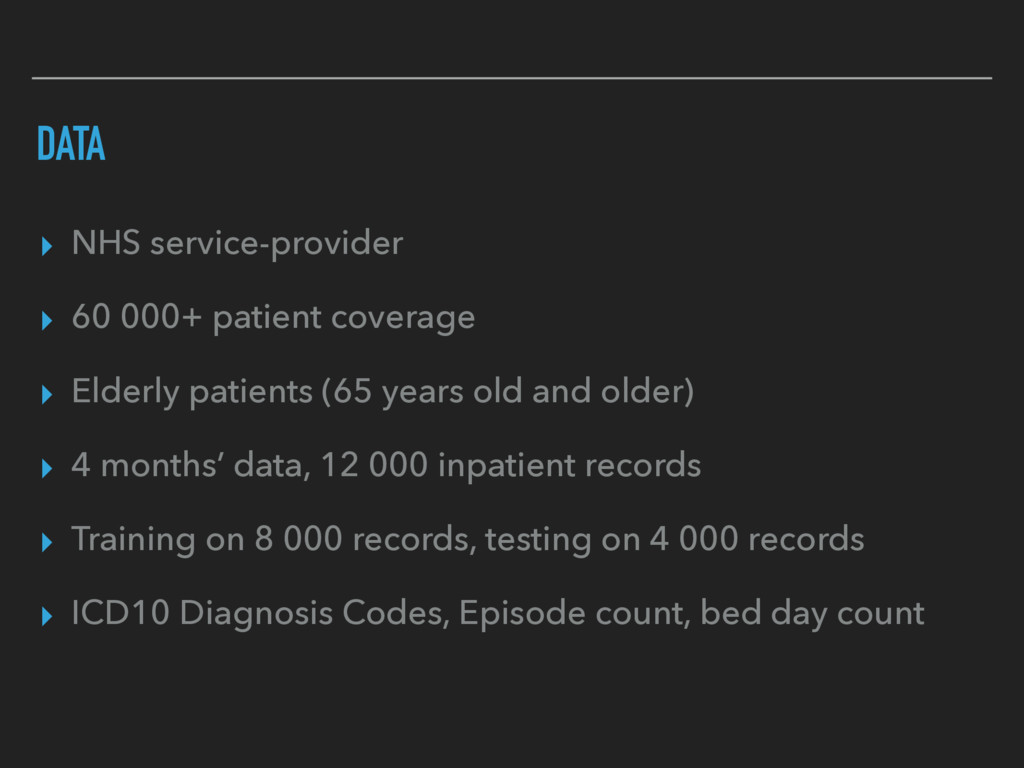
Elderly patients (65 years old and older) ▸ 4 months’ data, 12 000 inpatient records ▸ Training on 8 000 records, testing on 4 000 records ▸ ICD10 Diagnosis Codes, Episode count, bed day count
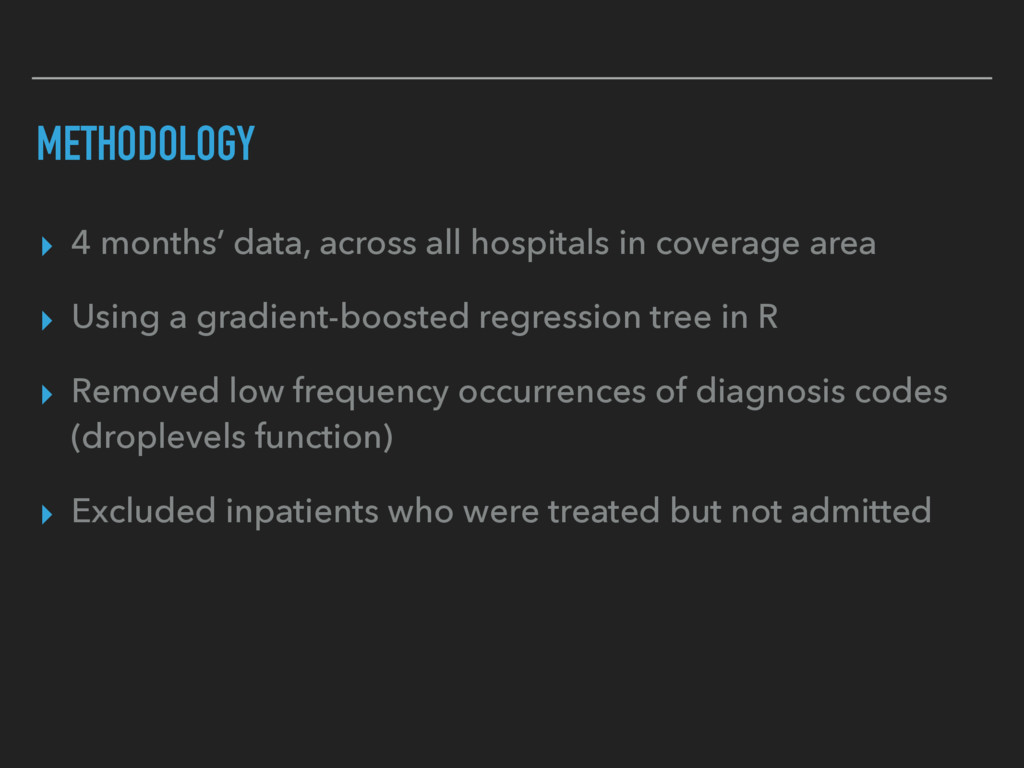
area ▸ Using a gradient-boosted regression tree in R ▸ Removed low frequency occurrences of diagnosis codes (droplevels function) ▸ Excluded inpatients who were treated but not admitted
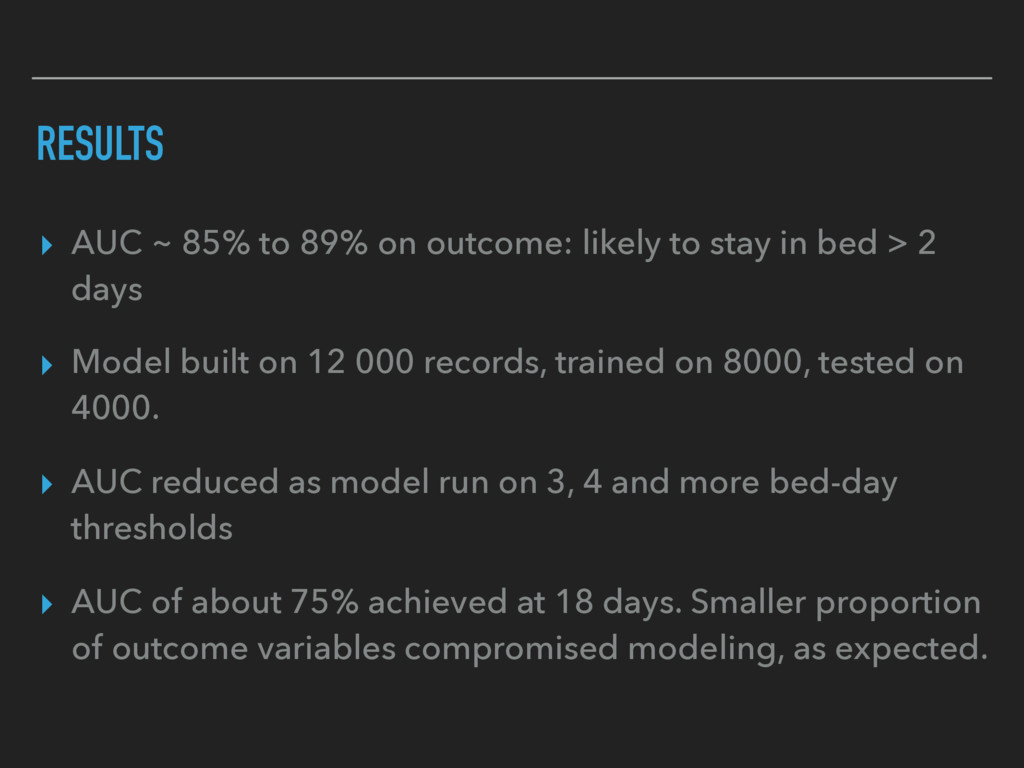
to stay in bed > 2 days ▸ Model built on 12 000 records, trained on 8000, tested on 4000. ▸ AUC reduced as model run on 3, 4 and more bed-day thresholds ▸ AUC of about 75% achieved at 18 days. Smaller proportion of outcome variables compromised modeling, as expected.
bed because they died? ▸ There’s an odd twist in the data: in between recovering enough to go home or dying, the survivors are the ones we are identifying. ▸ What are the operational procedures we can implement to decrease stays in bed?


 brainpadpr
 sshimizu2006
 peterdesmet
 tsoh
tsoh
 tagtag
 analokmaus
 trycycle
 shumpei777
 taka88
 hf149
hf149
 xleitix
 khoart
 swwweet
 frankvandijk
 jonyablonski
 tammyeverts
 colly
colly
 aleyda
 jacobtomlinson
 sferik
 mfonobong
 axbom
axbom
 zakiyama