Upgrade to Pro — share decks privately, control downloads, hide ads and more …

The future of architectural work

The future of architectural work

This slide deck tries to take a peak into the future of architectural work. To build the context, it starts with the foundations: why we are doing architectural work, and what we are doing. It then looks into the past and the present of architectural work – or at least, how we _should_ do architectural work today.

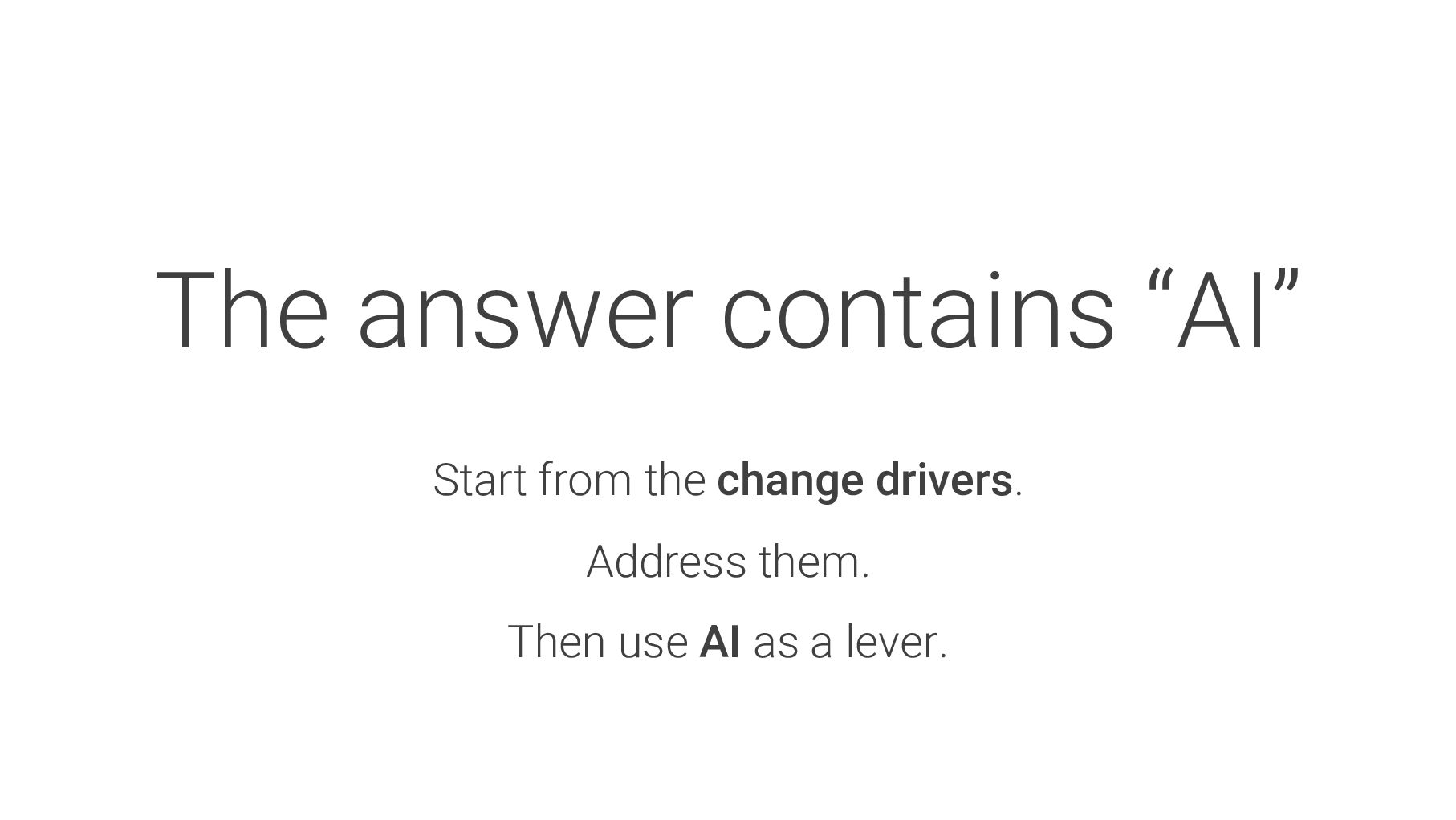
With these prerequisites, the presentation moves into the future of architectural work. It looks into the change drivers of IT and its change inhibitors. Based on these, it discusses several areas that we need to address differently than we usually do today. Of course, AI is one of the change drivers and therefore is discussed, too. Finally, the slide deck sums it all up and lists several references, mainly other presentations this slide deck builds upon.

As always, a voice track is missing (but there will be a recording of my presentation at code.talks 2026 on YouTube). I still hope, the slides will provide some ideas to ponder ...

Side note: This deck is about the future of architectural work, not about the future of software architectures and how we will implement them. This is a completely different topic and thus a different presentation ... ;)

Avatar for Uwe Friedrichsen

Uwe Friedrichsen

November 05, 2026

More Decks by Uwe Friedrichsen

Other Decks in Technology

Transcript

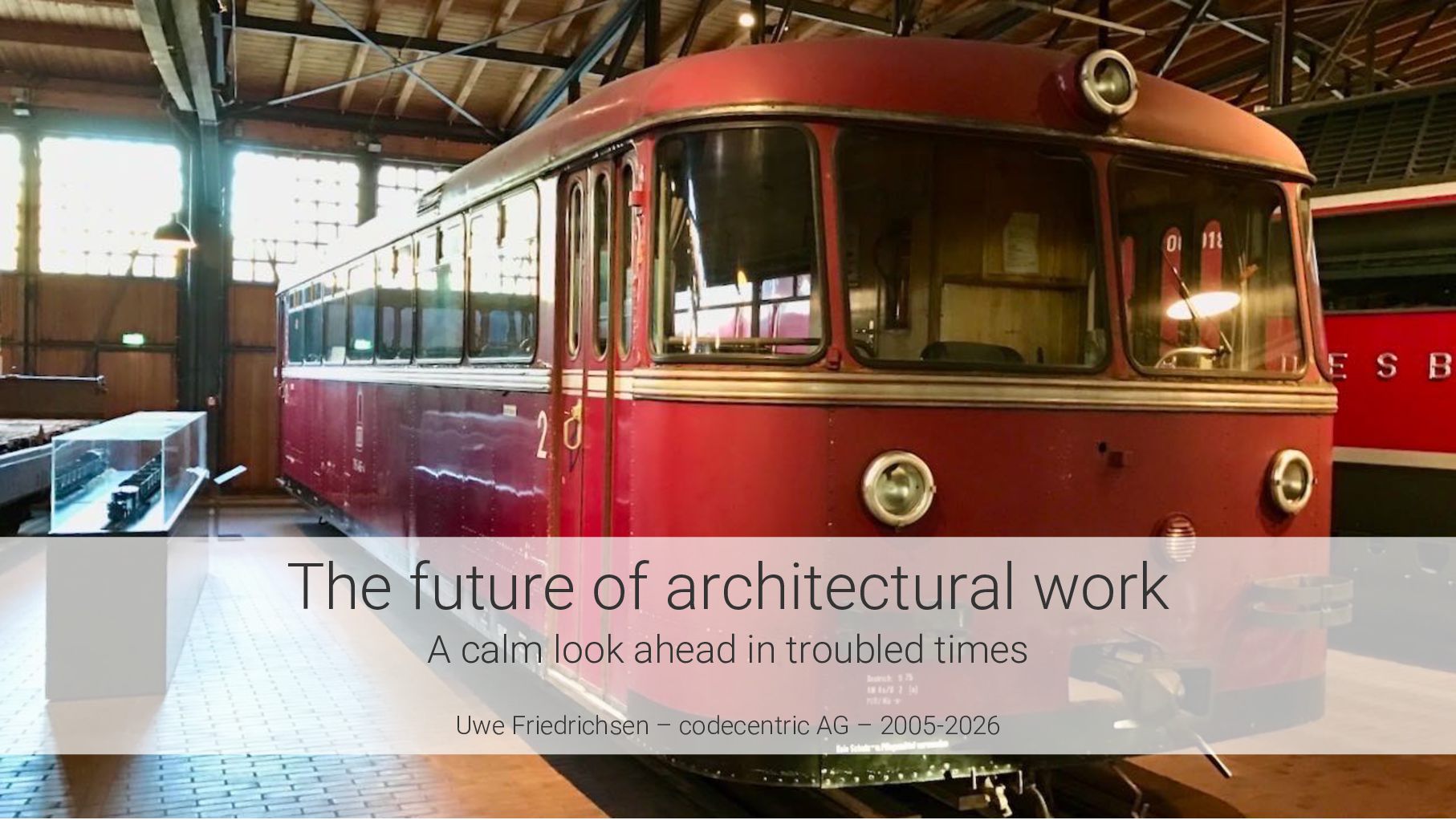
  1. The future of architectural work A calm look ahead in
    troubled times Uwe Friedrichsen – codecentric AG – 2005-2026
  2. The economical perspective • With architecture we attempt • to

    minimize the cumulative costs of a system over its lifetime • while ensuring the correctness of behavior at runtime
  3. The cognitive perspective • With architecture we attempt to •

    condense and structure needs and demands • and provide guidance and orientation • to reduce cognitive load
  4. The humane perspective • With architecture we attempt to •

    improve the lives of the people affected
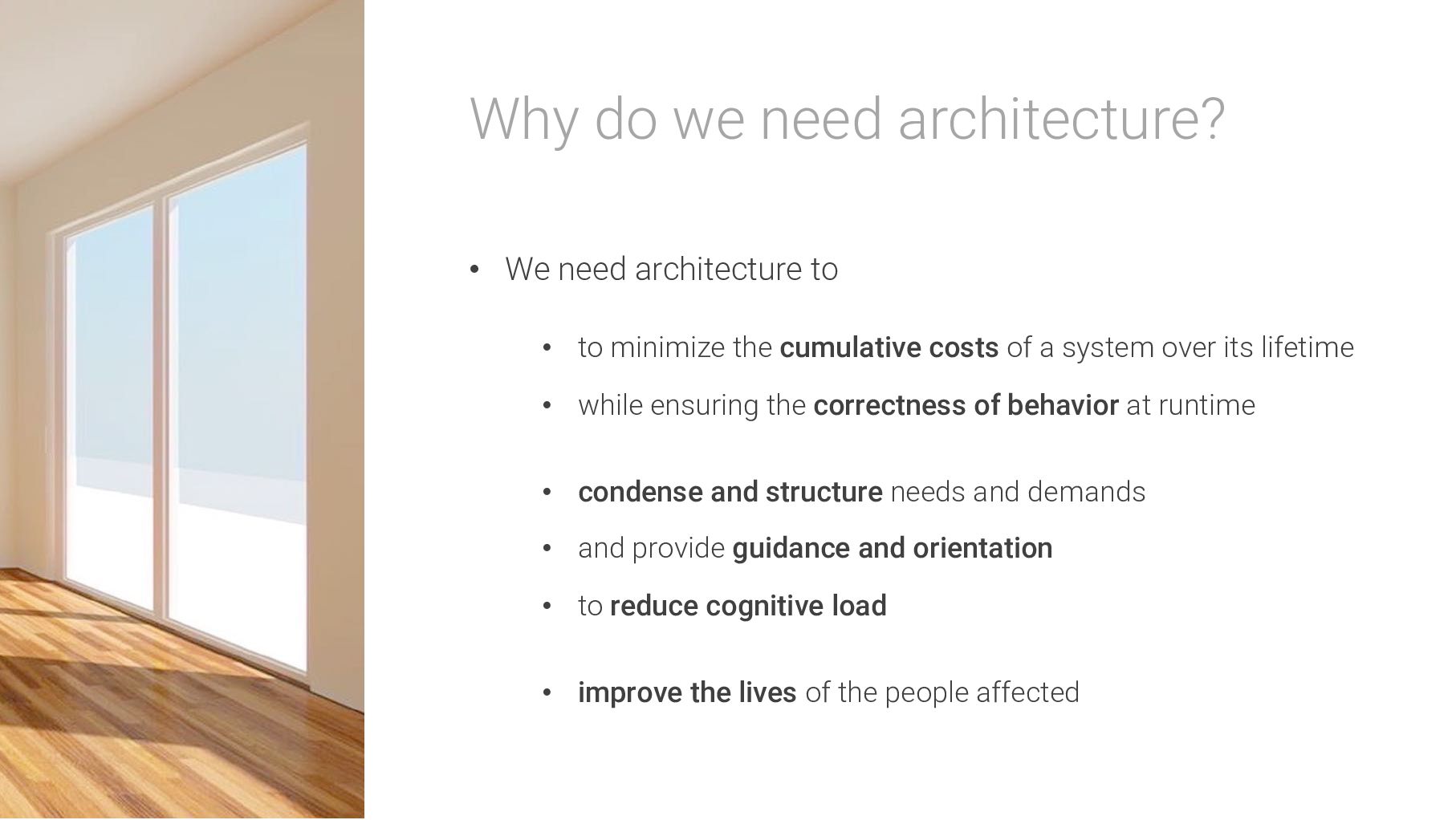
  5. Why do we need architecture? • We need architecture to

    • to minimize the cumulative costs of a system over its lifetime • while ensuring the correctness of behavior at runtime • condense and structure needs and demands • and provide guidance and orientation • to reduce cognitive load • improve the lives of the people affected
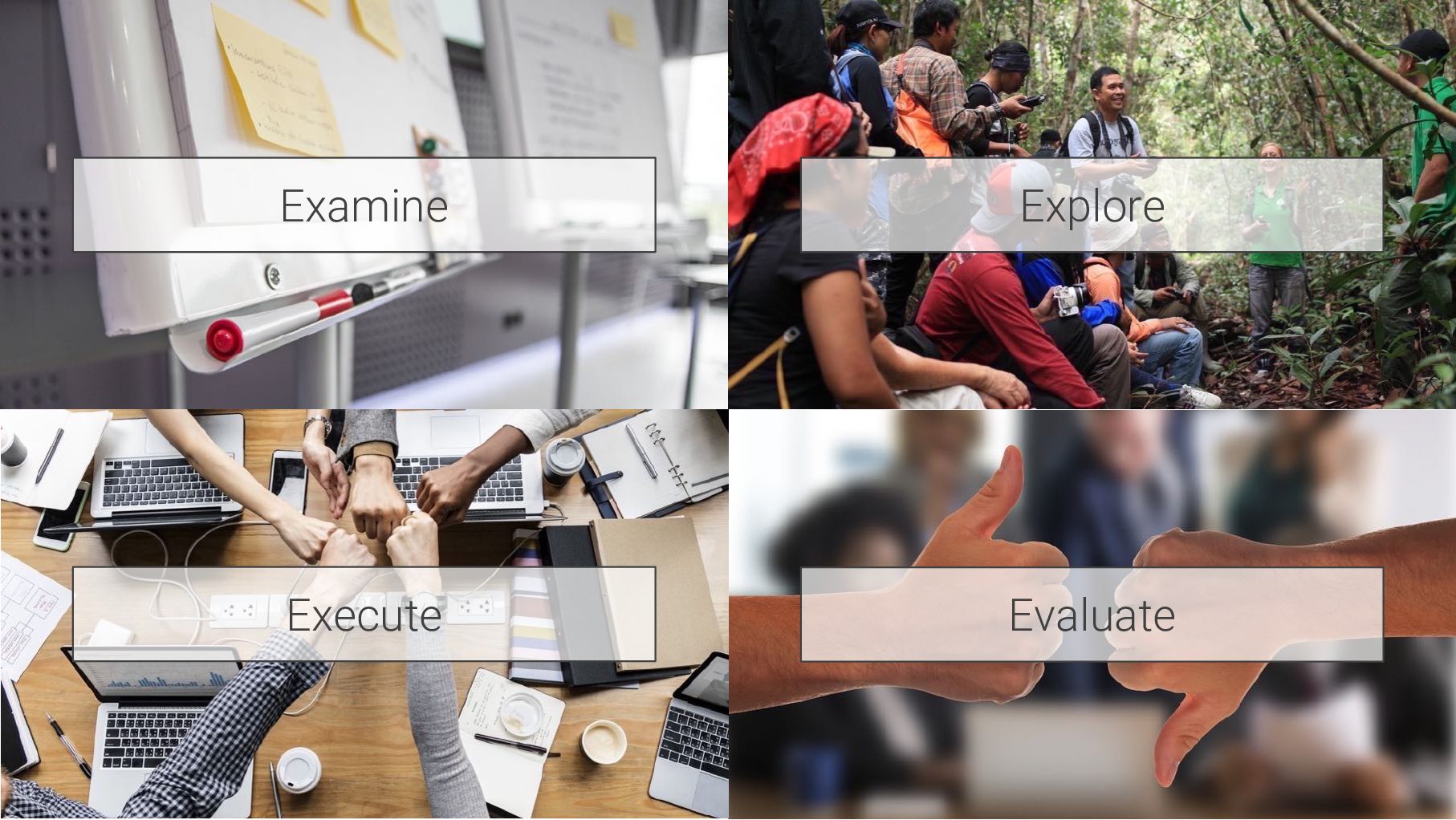
  6. What is architectural work? • Architectural work consists of •

    understanding the problem holistically (Examine) • identifying suitable solution options (Explore) • assessing their trade-offs (Evaluate) • helping stakeholders to make the best decisions possible in their respective contexts (Execute)
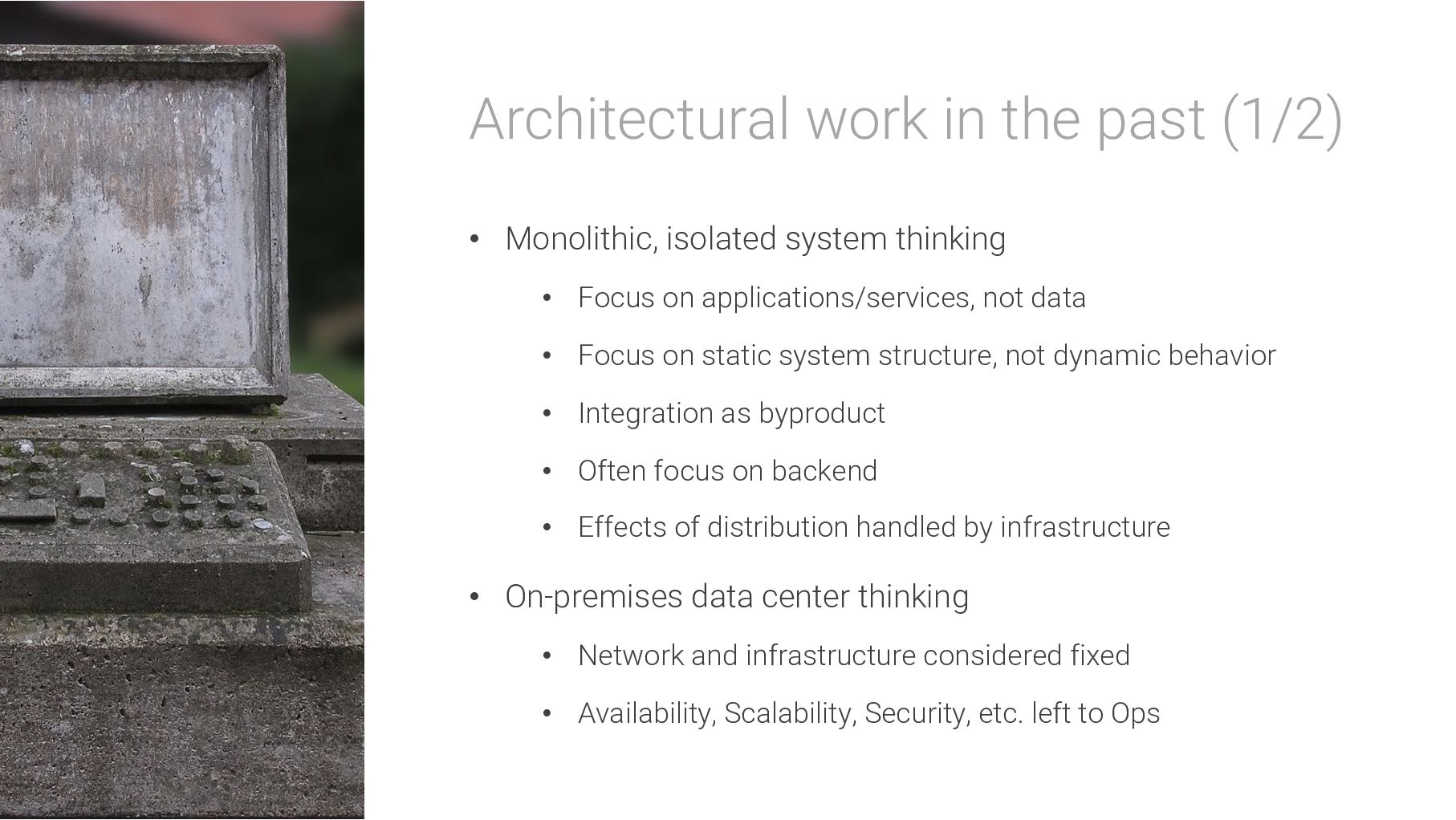
  7. Architectural work in the past (1/2) • Monolithic, isolated system

    thinking • Focus on applications/services, not data • Focus on static system structure, not dynamic behavior • Integration as byproduct • Often focus on backend • Effects of distribution handled by infrastructure • On-premises data center thinking • Network and infrastructure considered fixed • Availability, Scalability, Security, etc. left to Ops
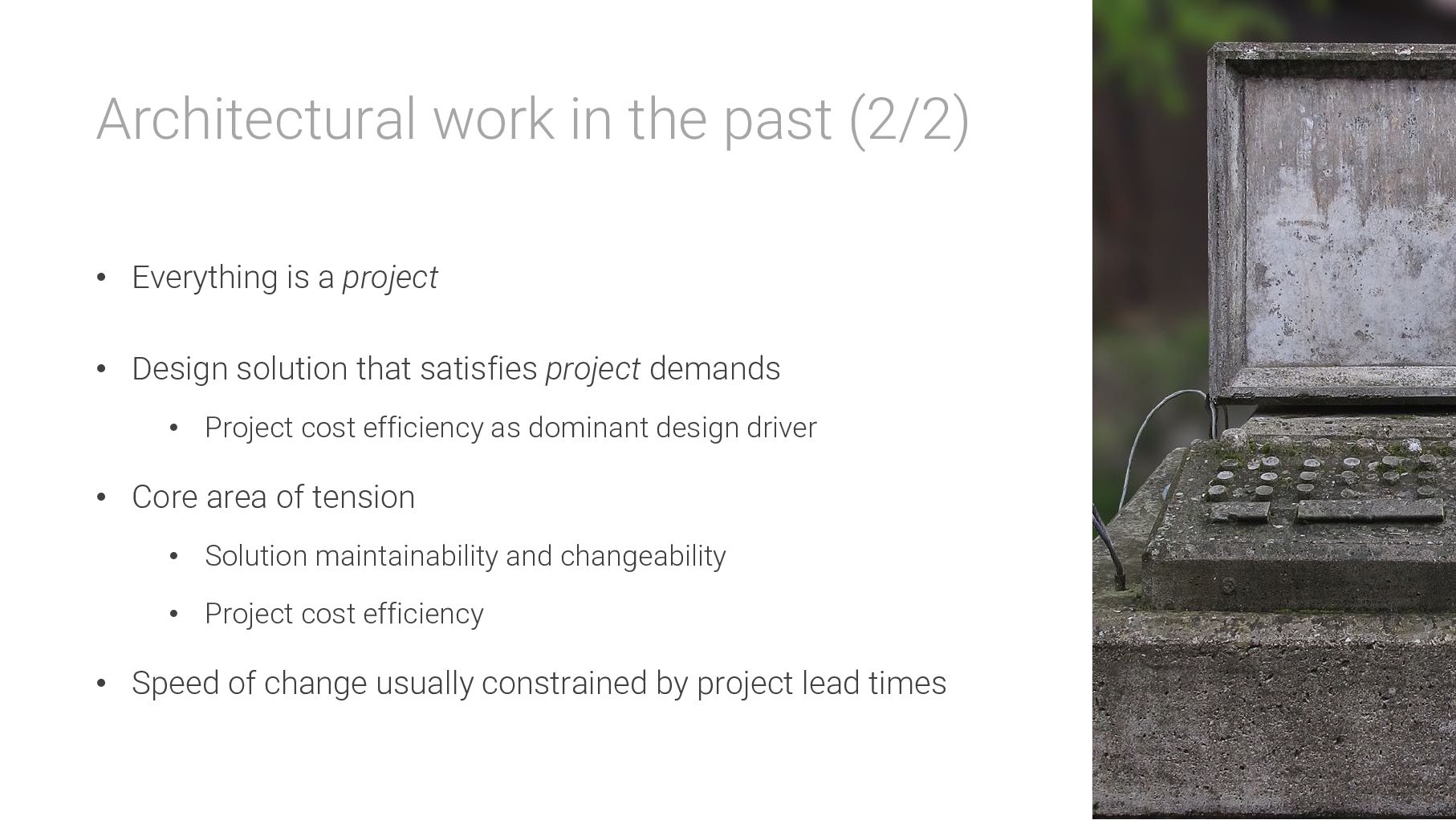
  8. Architectural work in the past (2/2) • Everything is a

    project • Design solution that satisfies project demands • Project cost efficiency as dominant design driver • Core area of tension • Solution maintainability and changeability • Project cost efficiency • Speed of change usually constrained by project lead times
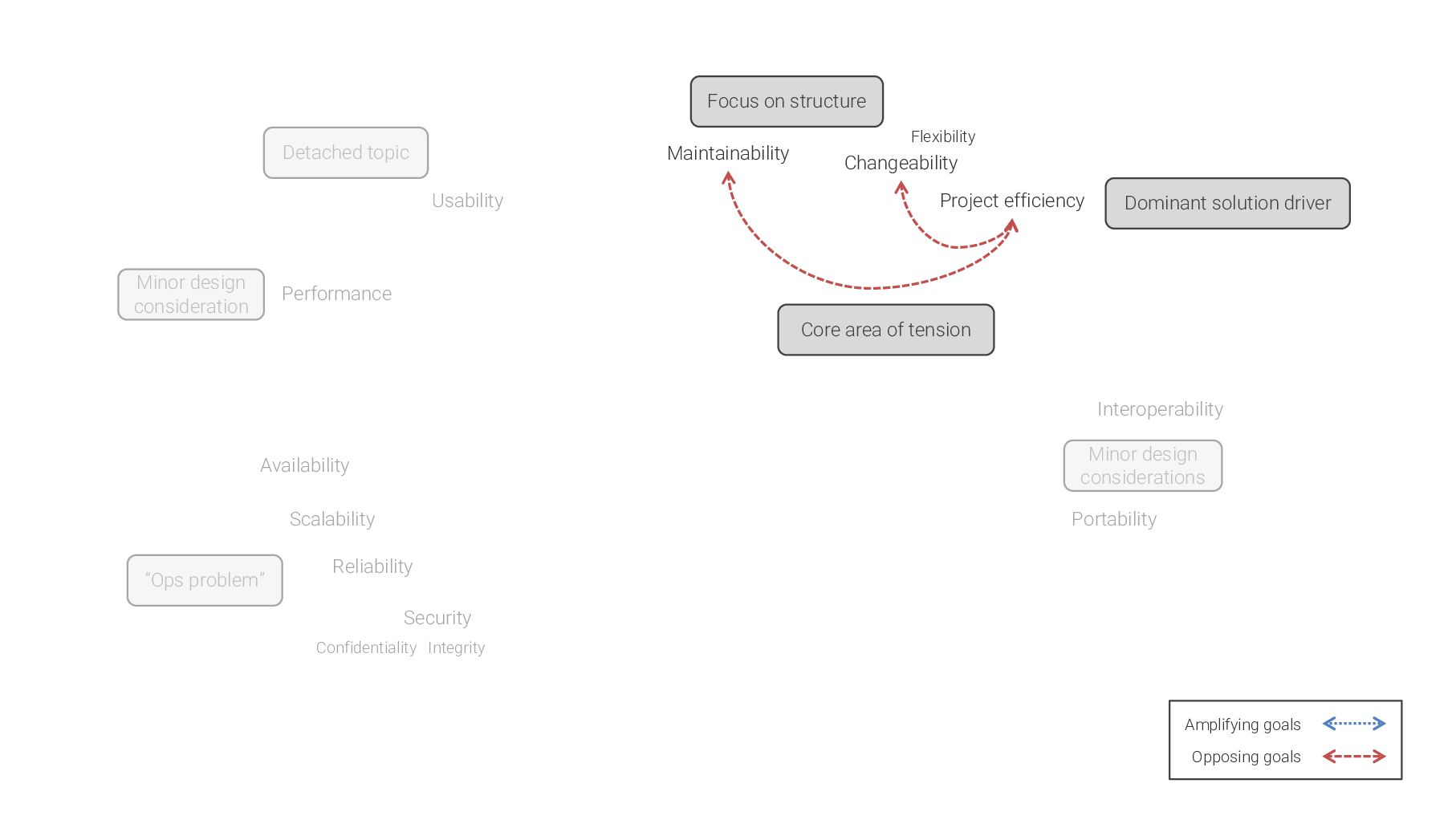
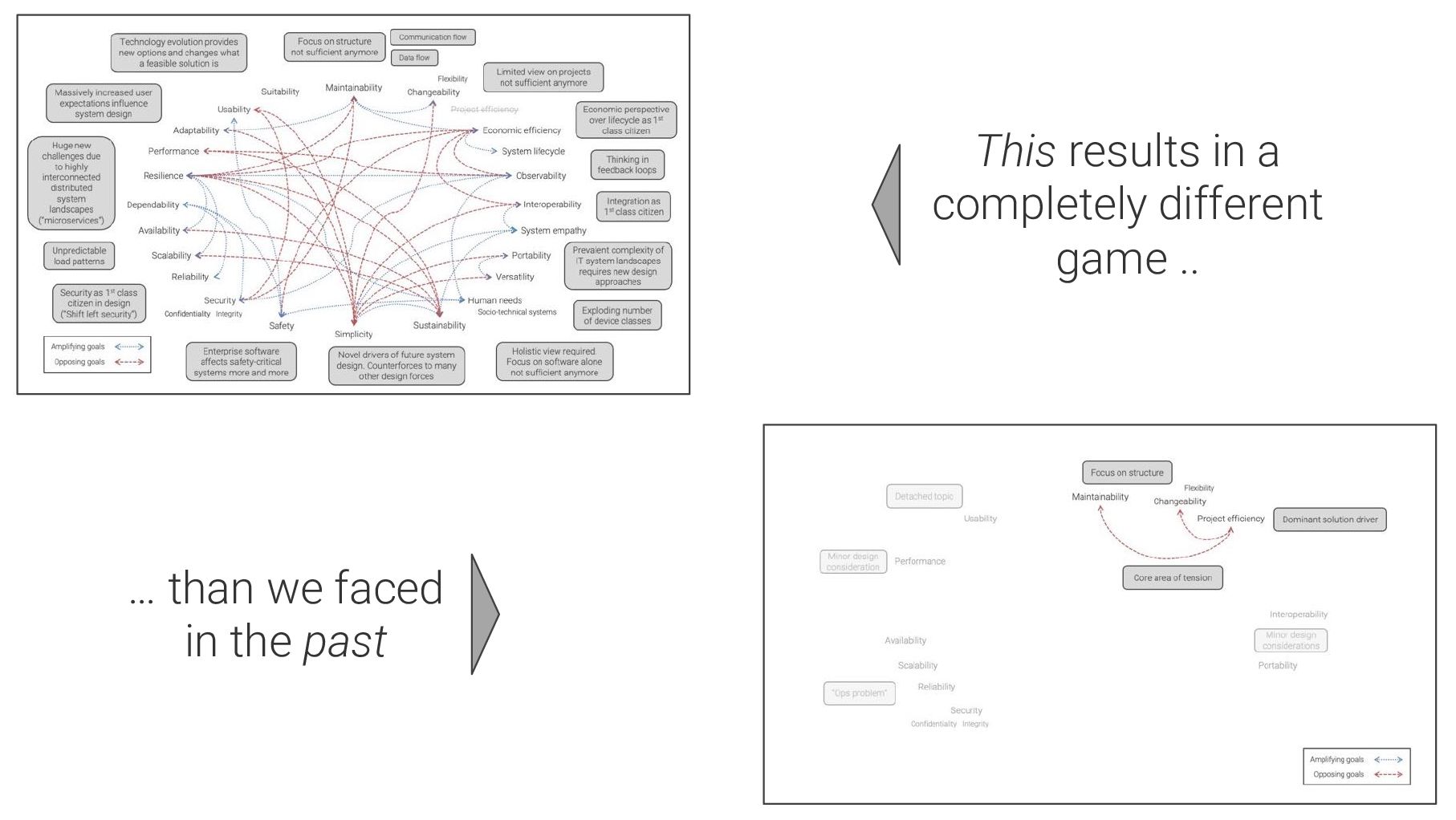
  9. Focus on structure Detached topic Maintainability Usability Minor design consideration

    Flexibility Changeability Project efficiency Dominant solution driver Performance Core area of tension Interoperability Minor design considerations Availability Scalability “Ops problem” Portability Reliability Security Confidentiality Integrity Amplifying goals Opposing goals
  10. New technologies • Public Cloud • Mobile devices • IoT,

    Edge & OT • Big data • Machine learning • Artificial intelligence
  11. New paradigms • Everything is a distributed system • Near-realtime

    processing as default • Never-down systems (24x7 w/o maintenance windows) • Shift left security (and safety)
  12. New parameters • Digital transformation makes IT indispensable • Post-industrial

    markets drive VUCA • Exploding system complexity puts business viability at risk • Ecological sustainability creates a counterforce
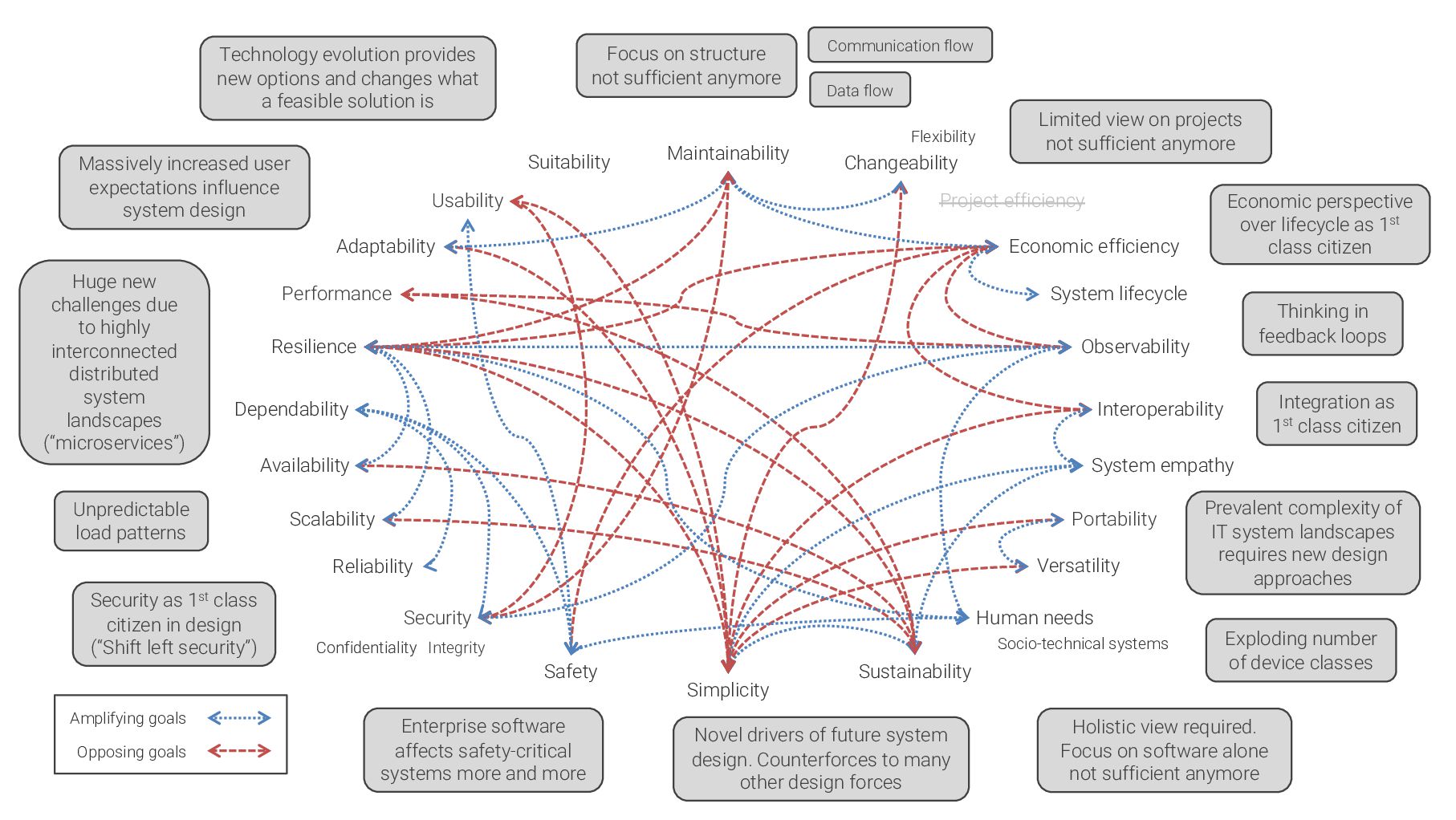
  13. Focus on structure not sufficient anymore Technology evolution provides new

    options and changes what a feasible solution is Suitability Massively increased user expectations influence system design Maintainability Usability Communication flow Data flow Flexibility Changeability Project efficiency Adaptability Huge new challenges due to highly interconnected distributed system landscapes (“microservices”) System lifecycle Resilience Thinking in feedback loops Observability Integration as 1st class citizen Dependability Interoperability Availability System empathy Scalability Portability Versatility Reliability Security as 1st class citizen in design (“Shift left security”) Security Human needs Socio-technical systems Confidentiality Integrity Safety Opposing goals Economic perspective over lifecycle as 1st class citizen Economic efficiency Performance Unpredictable load patterns Amplifying goals Limited view on projects not sufficient anymore Enterprise software affects safety-critical systems more and more Simplicity Sustainability Novel drivers of future system design. Counterforces to many other design forces Prevalent complexity of IT system landscapes requires new design approaches Exploding number of device classes Holistic view required. Focus on software alone not sufficient anymore
  14. Questions for architects in IT • How does our work

    change? • How does our role change? • How does our tooling change? • How does the technology change?
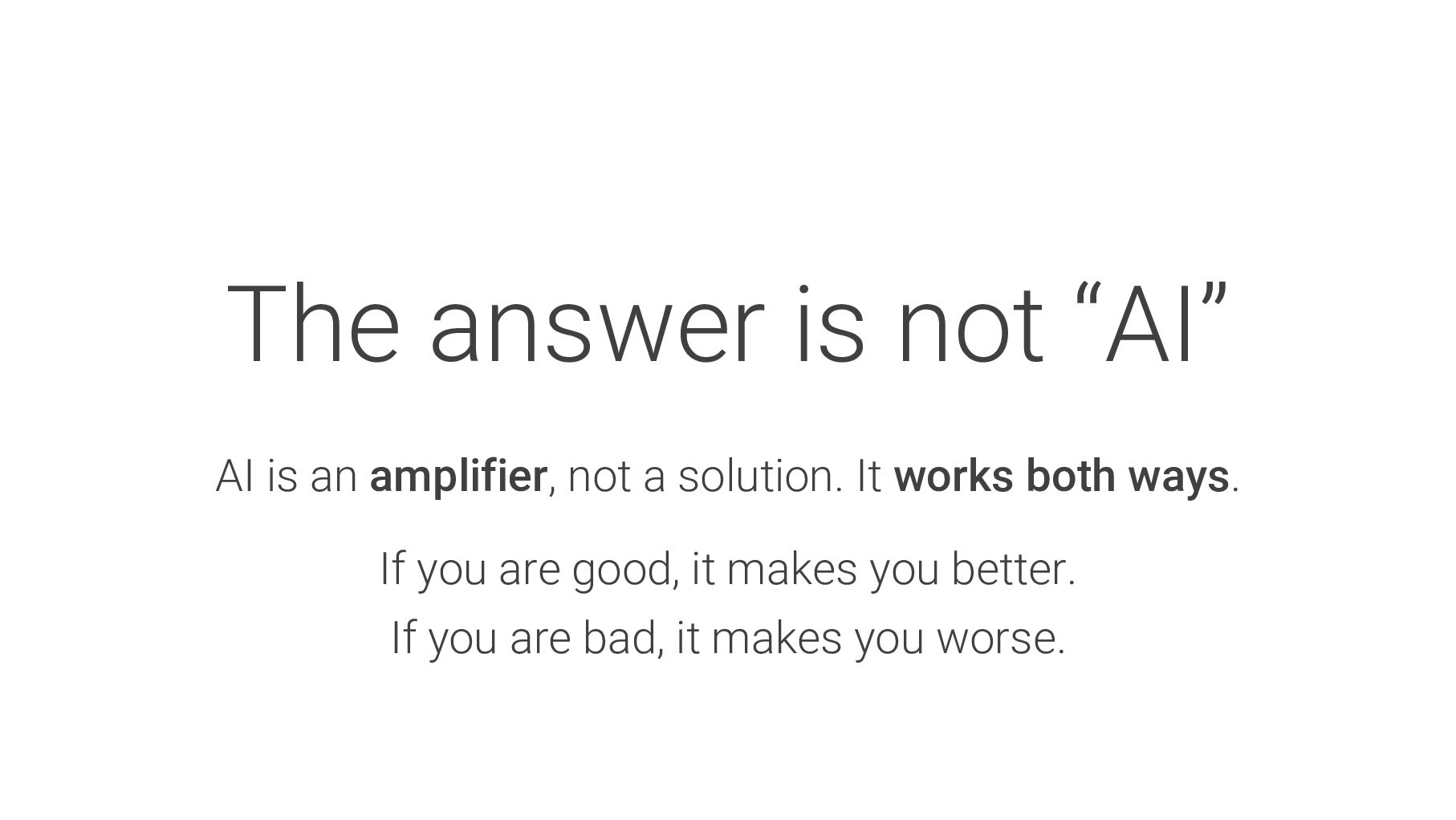
  15. The answer is not “AI” AI is an amplifier, not

    a solution. It works both ways. If you are good, it makes you better. If you are bad, it makes you worse.
  16. Change drivers • Indispensability of IT • Post-industrial markets •

    Increasing uncertainty (VUCA) • Unsustainable complexity explosion • Artificial intelligence (AI)
  17. Areas to explore • Sustainability • Driven by indispensability of

    IT • Needed to ensure mid- and long-term business viability
  18. Sustainability • Foster all 4 pillars of sustainability • Economical

    • Ecological • Social/Human • Technological • How to keep systems and the system landscape topical? • How to make IT for all parties affected sustainable? • How not to waste resources? • How not to waste money, now and in the future?
  19. Areas to explore • Sustainability • Resilience • Driven by

    increasing uncertainty • Needed to ensure business viability
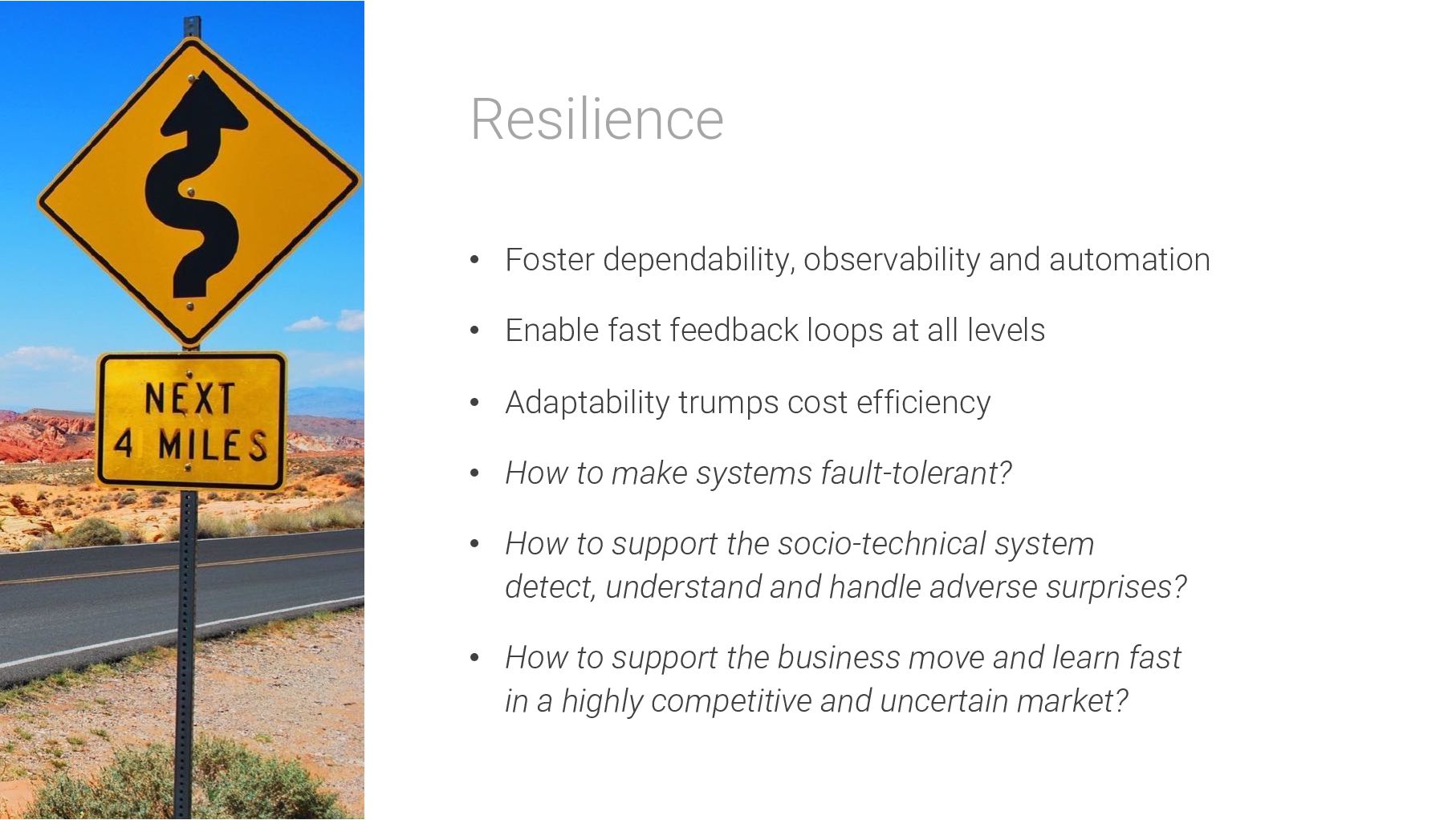
  20. Resilience • Foster dependability, observability and automation • Enable fast

    feedback loops at all levels • Adaptability trumps cost efficiency • How to make systems fault-tolerant? • How to support the socio-technical system detect, understand and handle adverse surprises? • How to support the business move and learn fast in a highly competitive and uncertain market?
  21. Areas to explore • Sustainability • Resilience • Simplification •

    Driven by complexity explosion • Needed to ensure mid- and long-term business viability
  22. Simplification • Resist FOMO • Foster understandability (become egoless) •

    Aim for powerful abstractions • Accept architecture without an end state • Support easy integration and removal of systems • Understand distributed systems • Mind the complexity bias!
  23. Areas to explore • Sustainability • Resilience • Simplification •

    Effectiveness • Driven by post-industrial markets • Needed to ensure business viability
  24. Effectiveness • Support hypothesis-driven development • Enable fast feedback and

    learning loops • Push automation • Foster observability • Mind the user experience • How to foster business value and impact? • How to support distinguishing value from waste fast? • How to maximize likelihood of user satisfaction?
  25. Mind the change inhibitors Trying to take too big a

    bite of the cake at once can make you choke
  26. AI amplifying architectural work • LLMs recombine existing knowledge (from

    their corpus) • They do not know about sustainability • They do not know about resilience • They do not know about simplification • They do not know about effectiveness • AI cannot cover these areas • We need to do the required architectural work • But leverage AI as an amplifier for your work • As analyst, option generator, critic, prototyper, documenter, ...
  27. Areas to explore • Sustainability • Resilience • Simplification •

    Effectiveness • Use AI as an amplifier • Use AI to extend your options
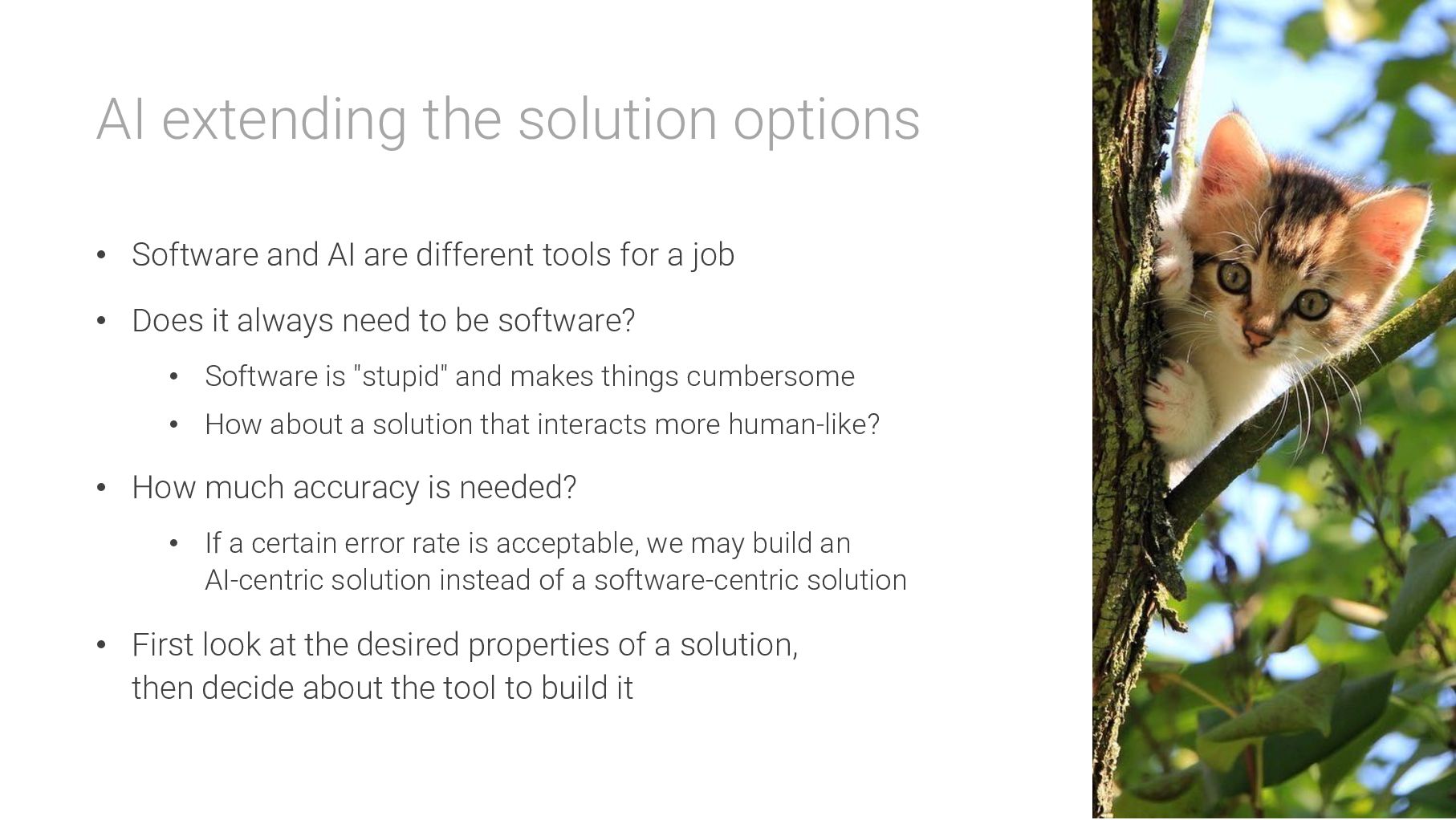
  28. AI extending the solution options • Software and AI are

    different tools for a job • Does it always need to be software? • Software is "stupid" and makes things cumbersome • How about a solution that interacts more human-like? • How much accuracy is needed? • If a certain error rate is acceptable, we may build an AI-centric solution instead of a software-centric solution • First look at the desired properties of a solution, then decide about the tool to build it
  29. The reinventing the wheel trap • Most of the time,

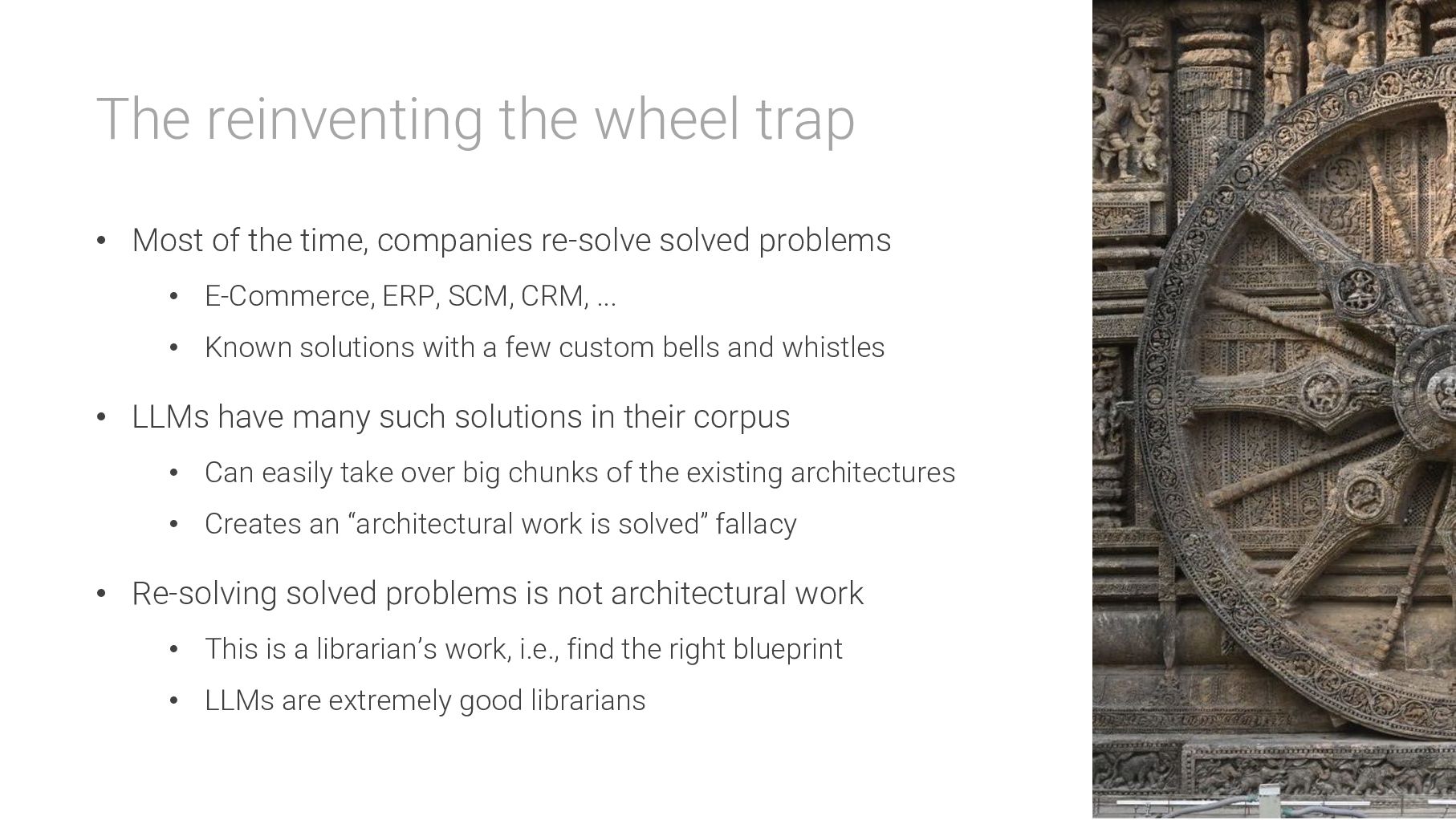
    companies re-solve solved problems • E-Commerce, ERP, SCM, CRM, ... • Known solutions with a few custom bells and whistles • LLMs have many such solutions in their corpus • Can easily take over big chunks of the existing architectures • Creates an “architectural work is solved” fallacy • Re-solving solved problems is not architectural work • This is a librarian’s work, i.e., find the right blueprint • LLMs are extremely good librarians
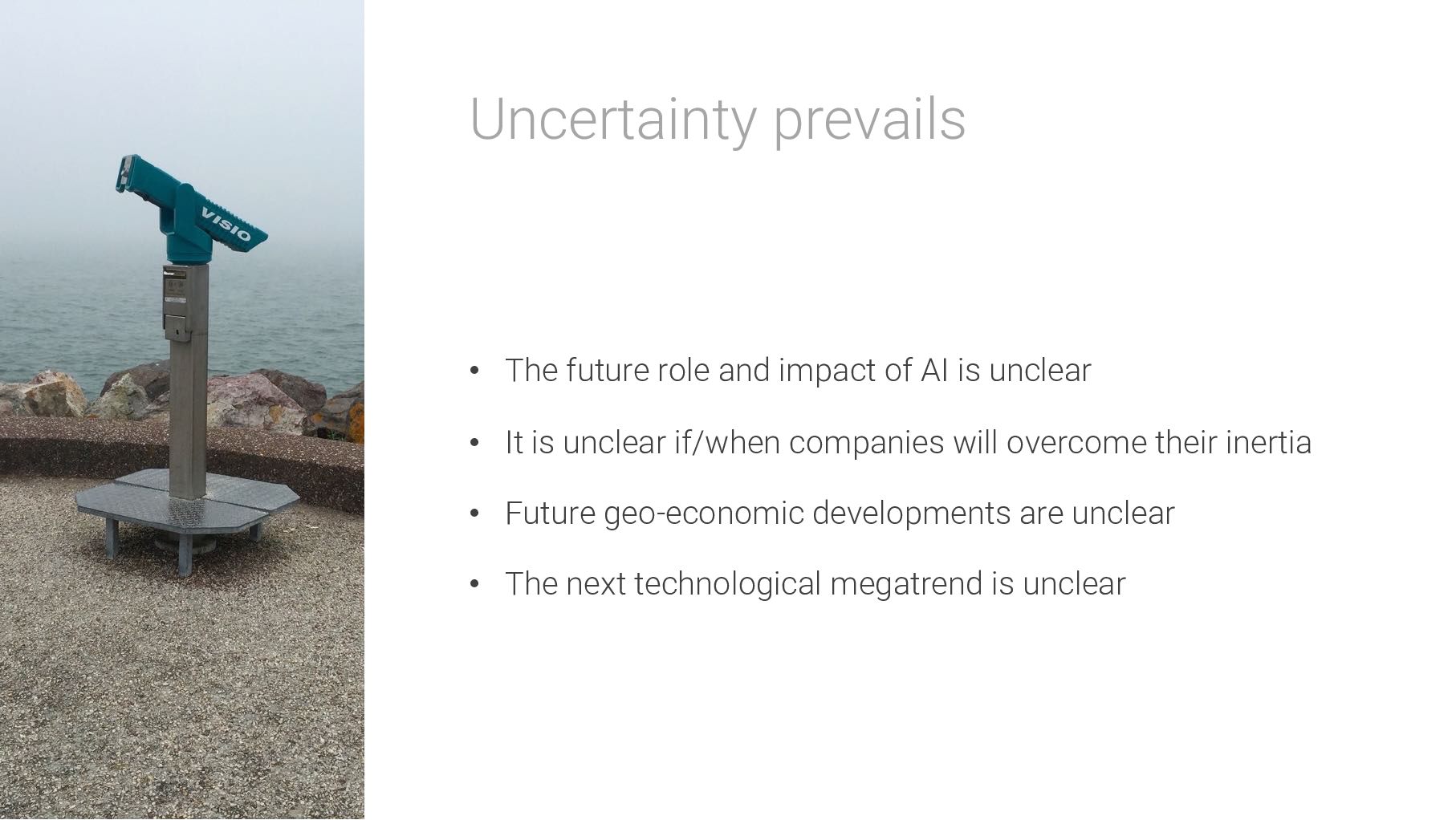
  30. Uncertainty prevails • The future role and impact of AI

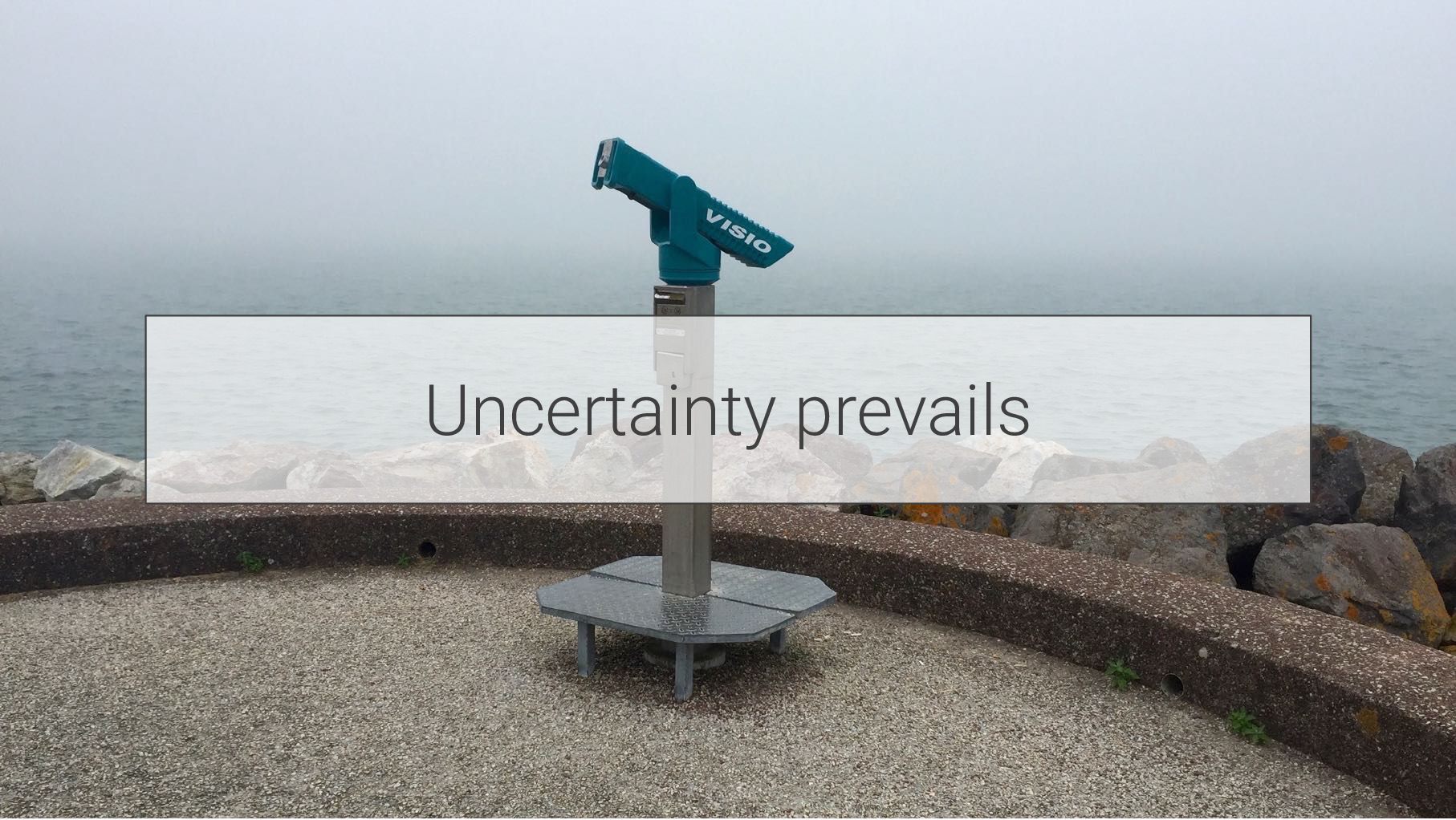
    is unclear • It is unclear if/when companies will overcome their inertia • Future geo-economic developments are unclear • The next technological megatrend is unclear
  31. Consequences for IT architects • We need to navigate uncertainty

    at multiple levels • We need to tackle the change drivers • We need to work towards better architectures • We need to go beyond satisfying quality attributes
  32. Further reading Essential architectural thinking https://speakerdeck.com/ufried/essential-architectural-thinking Tell me why https://speakerdeck.com/ufried/tell-me-why-about-the-purpose-of-architectural-work

    Beyond "it depends" https://speakerdeck.com/ufried/beyond-it-depends-how-much-architectural-work-do-we-need Where do we go from here? https://speakerdeck.com/ufried/where-do-we-go-from-here-mastering-the-changed-needs-ofarchitectural-work
  33. Further reading The future is already here https://speakerdeck.com/ufried/the-future-is-already-here-mastering-the-challenges-of-the-coming-years From here

    to resilience https://speakerdeck.com/ufried/from-here-to-resilience-a-travel-guide Simplify! https://speakerdeck.com/ufried/simplify-10-ways-to-reduce-complexity-in-software-development Forget efficiency https://speakerdeck.com/ufried/forget-efficiency-become-more-productive-without-the-stress Patterns of sustainability https://speakerdeck.com/ufried/patterns-of-sustainability-going-green-in-it