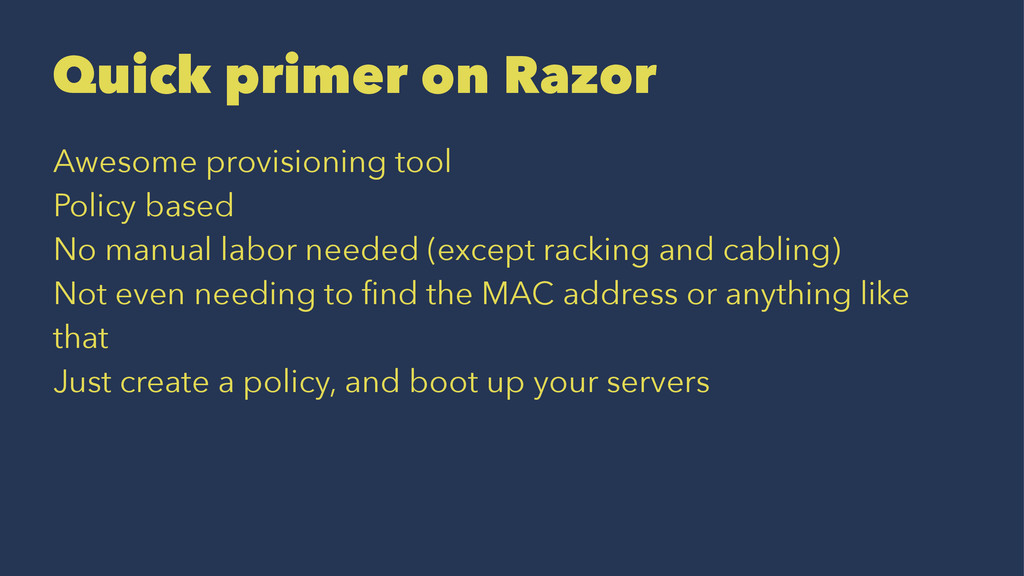
manual labor needed (except racking and cabling) Not even needing to find the MAC address or anything like that Just create a policy, and boot up your servers
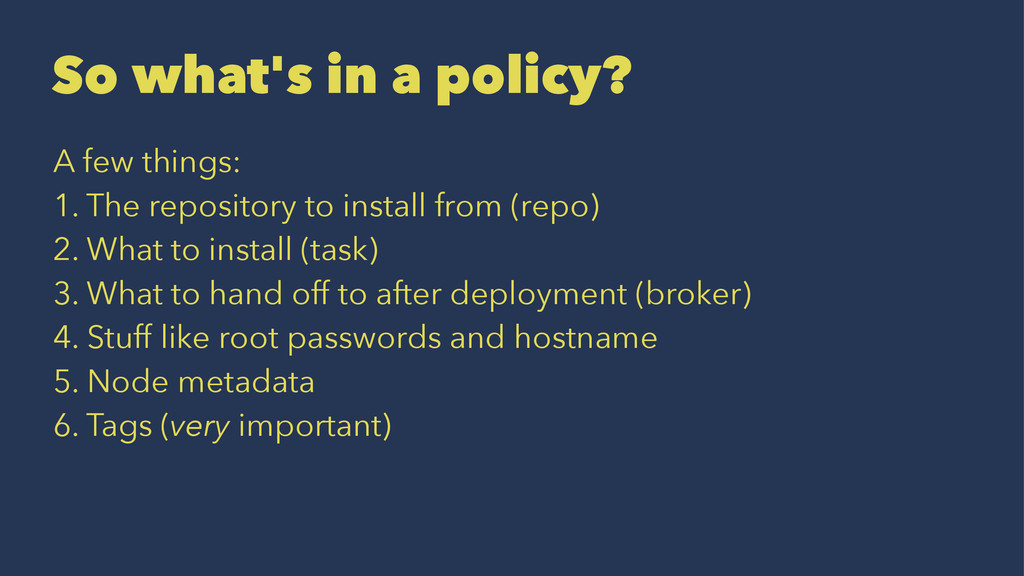
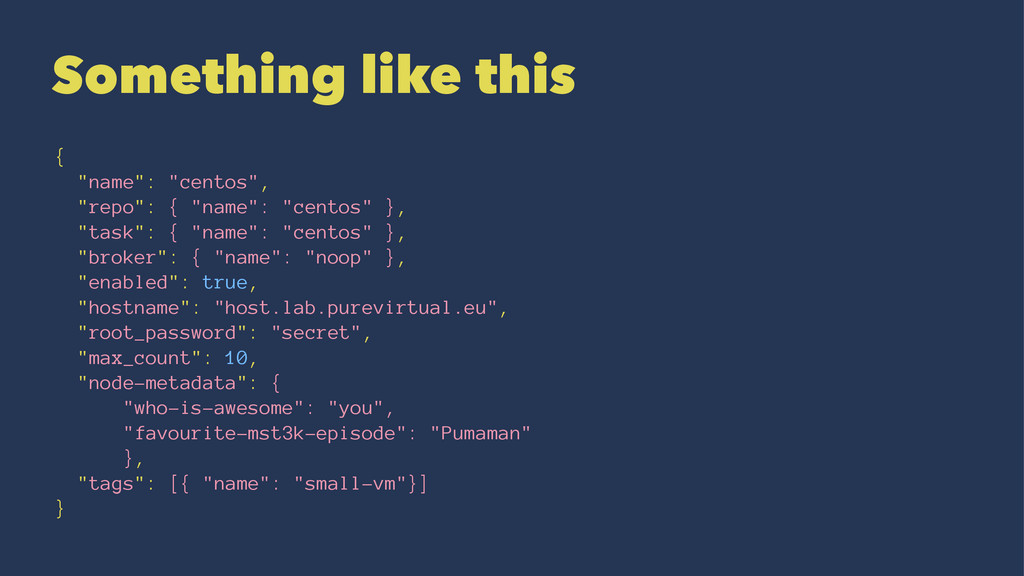
repository to install from (repo) 2. What to install (task) 3. What to hand off to after deployment (broker) 4. Stuff like root passwords and hostname 5. Node metadata 6. Tags (very important)
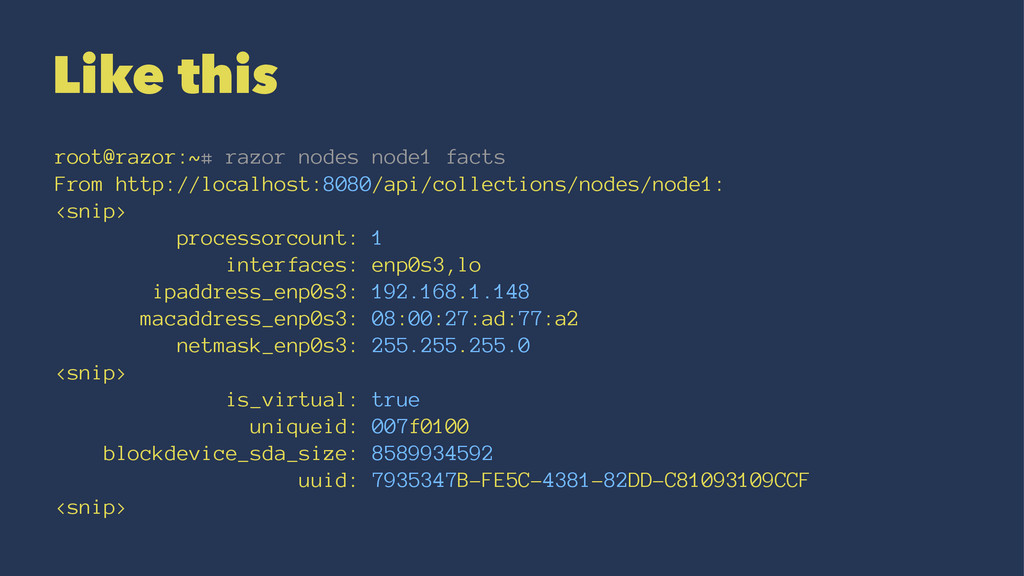
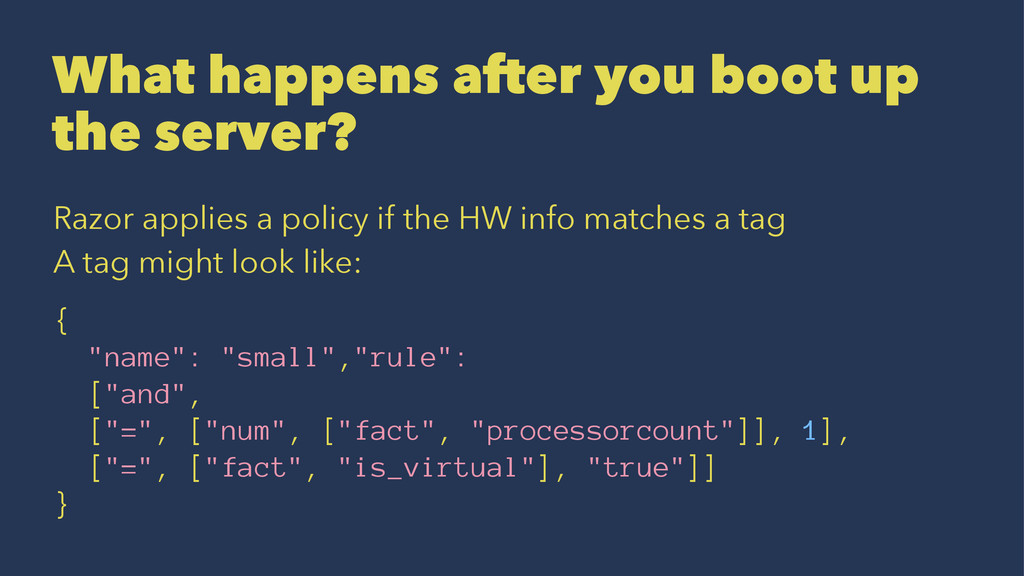
a policy if the HW info matches a tag A tag might look like: { "name": "small","rule": ["and", ["=", ["num", ["fact", "processorcount"]], 1], ["=", ["fact", "is_virtual"], "true"]] }
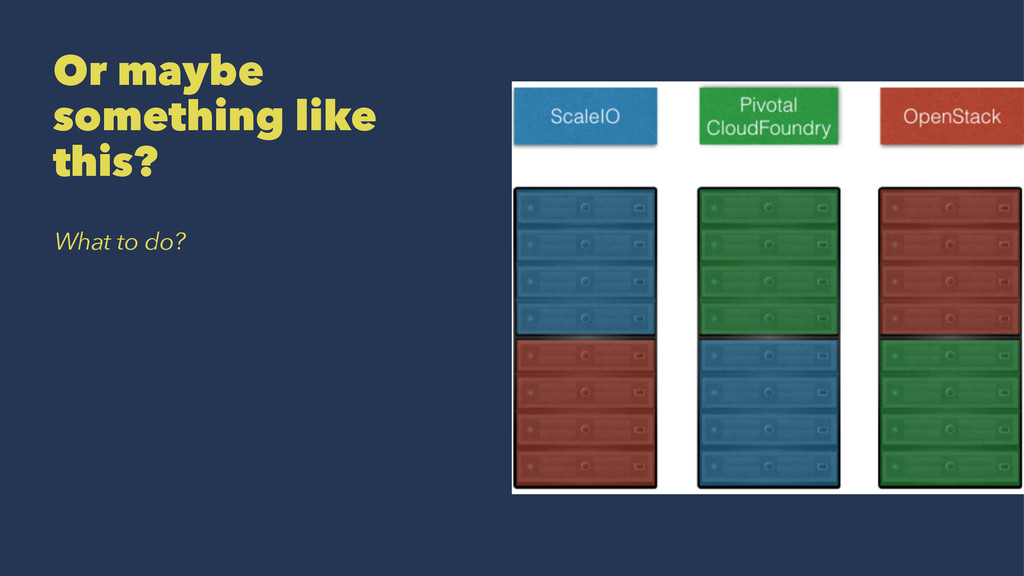
Razor grabs the next available one out of the "pool" Works very well if most of your servers run the same thing Might not apply if you want more control over what actually gets installed where
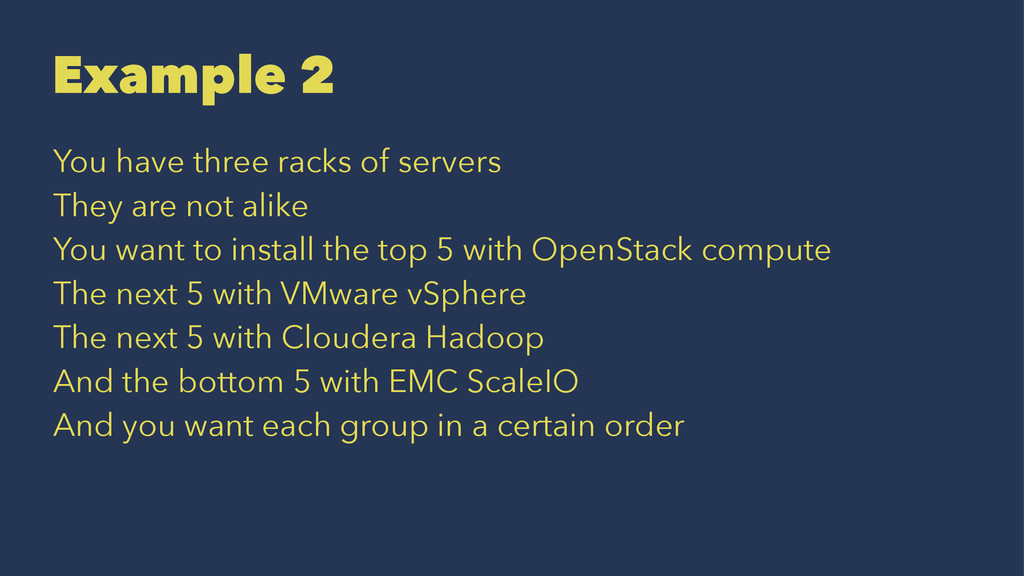
not alike You want to install the top 5 with OpenStack compute The next 5 with VMware vSphere The next 5 with Cloudera Hadoop And the bottom 5 with EMC ScaleIO And you want each group in a certain order
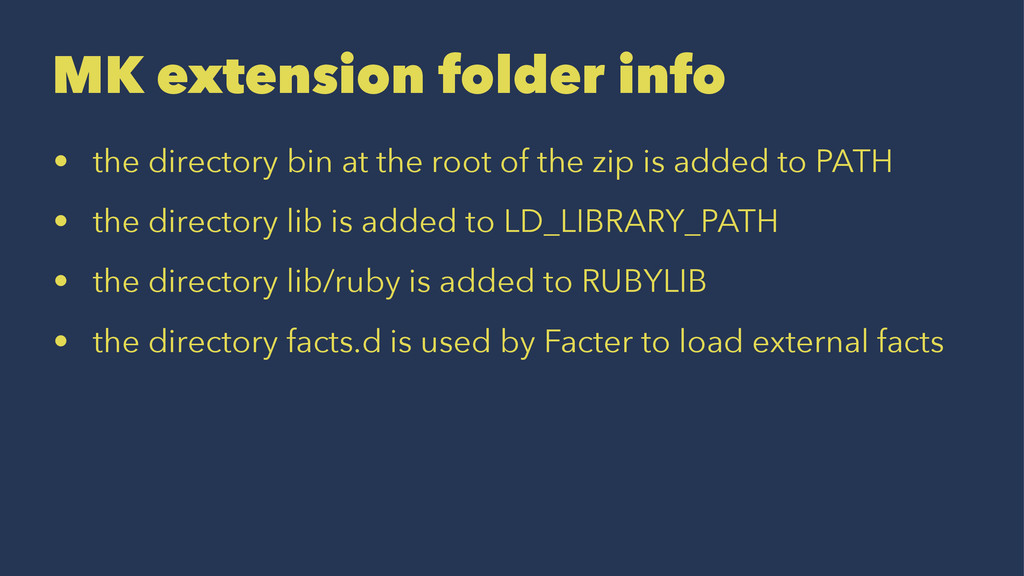
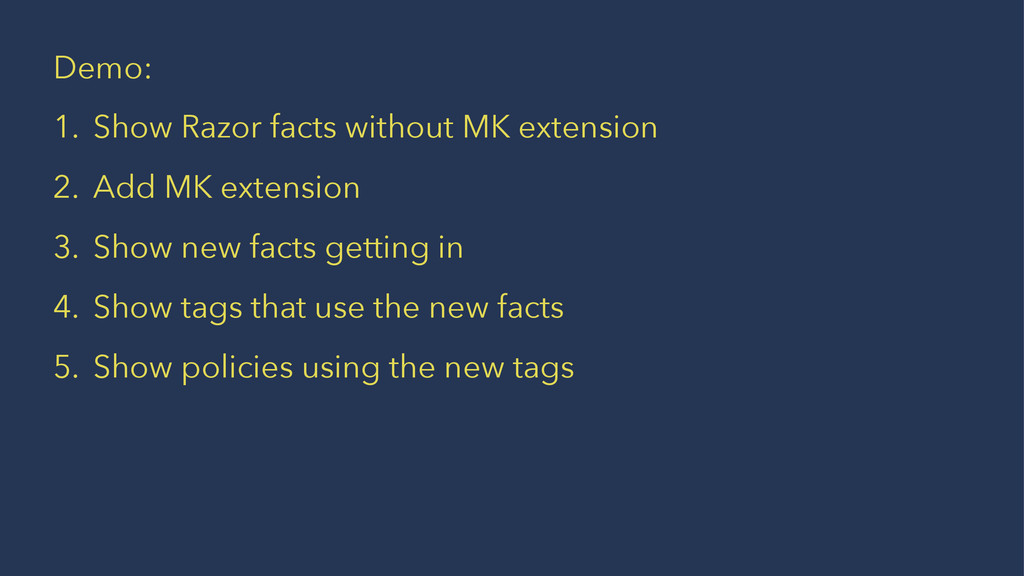
root of the zip is added to PATH • the directory lib is added to LD_LIBRARY_PATH • the directory lib/ruby is added to RUBYLIB • the directory facts.d is used by Facter to load external facts
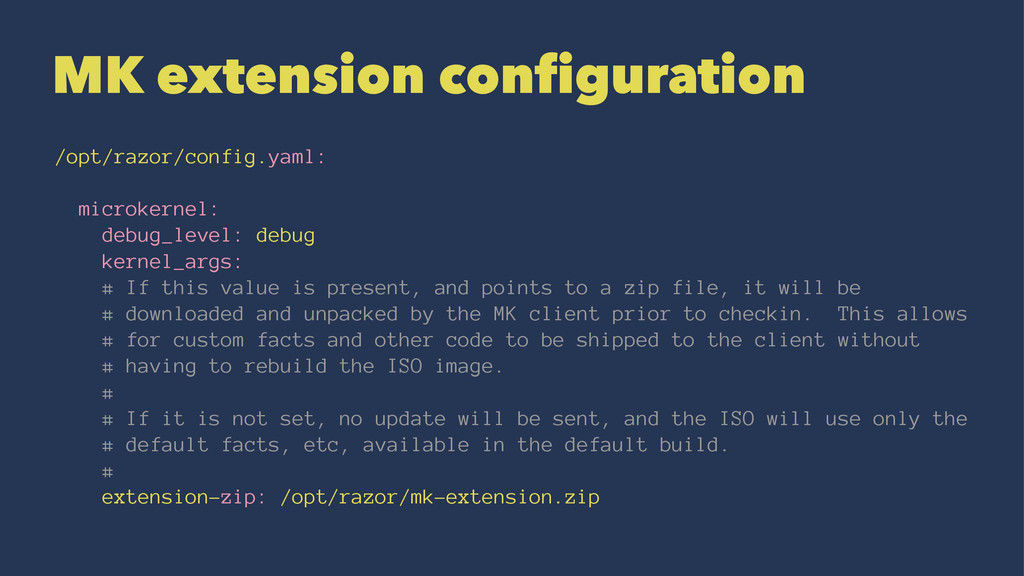
this value is present, and points to a zip file, it will be # downloaded and unpacked by the MK client prior to checkin. This allows # for custom facts and other code to be shipped to the client without # having to rebuild the ISO image. # # If it is not set, no update will be sent, and the ISO will use only the # default facts, etc, available in the default build. # extension-zip: /opt/razor/mk-extension.zip


 virtualswede
 koukihosaka
 recruitengineers
 prog893
 puhitaku
 pfn
 jyouryuusui
 occhi
 nealle
 takahashim
 camiha
 yamad
 ivry_presentationmaterials
 bluesmoon
 addyosmani
 eileencodes
 skipperchong
 katarinadahlin
 62gerente
 portentint
 signer
 jonoalderson
 bermonpainter
 jct
 thirion