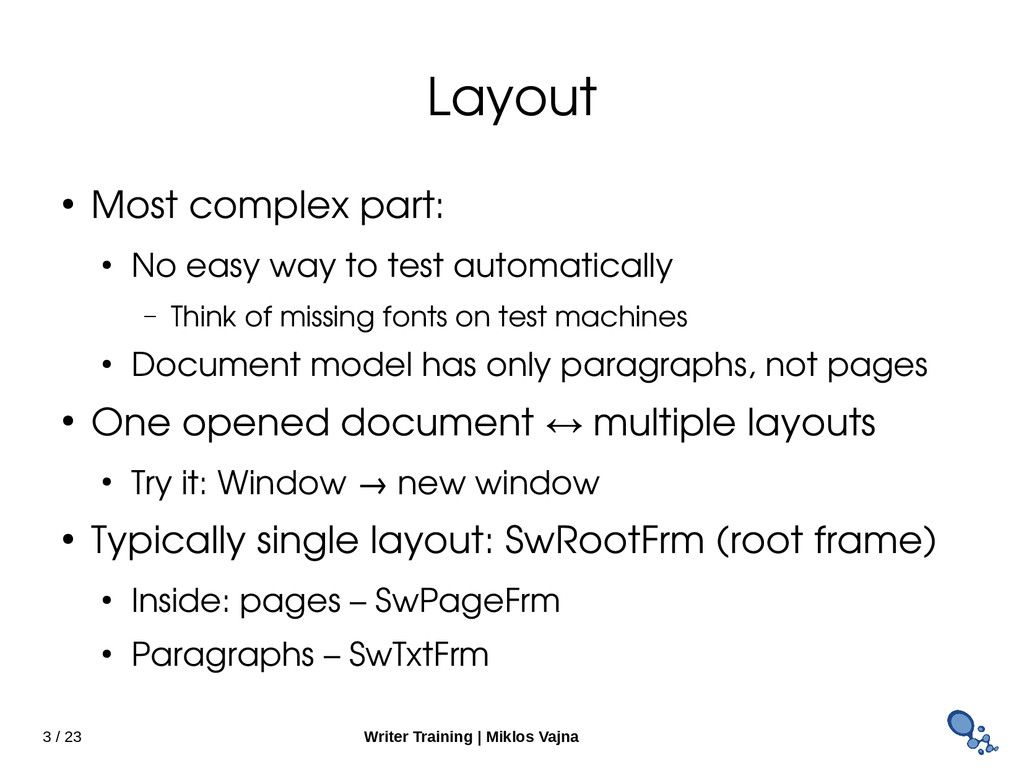
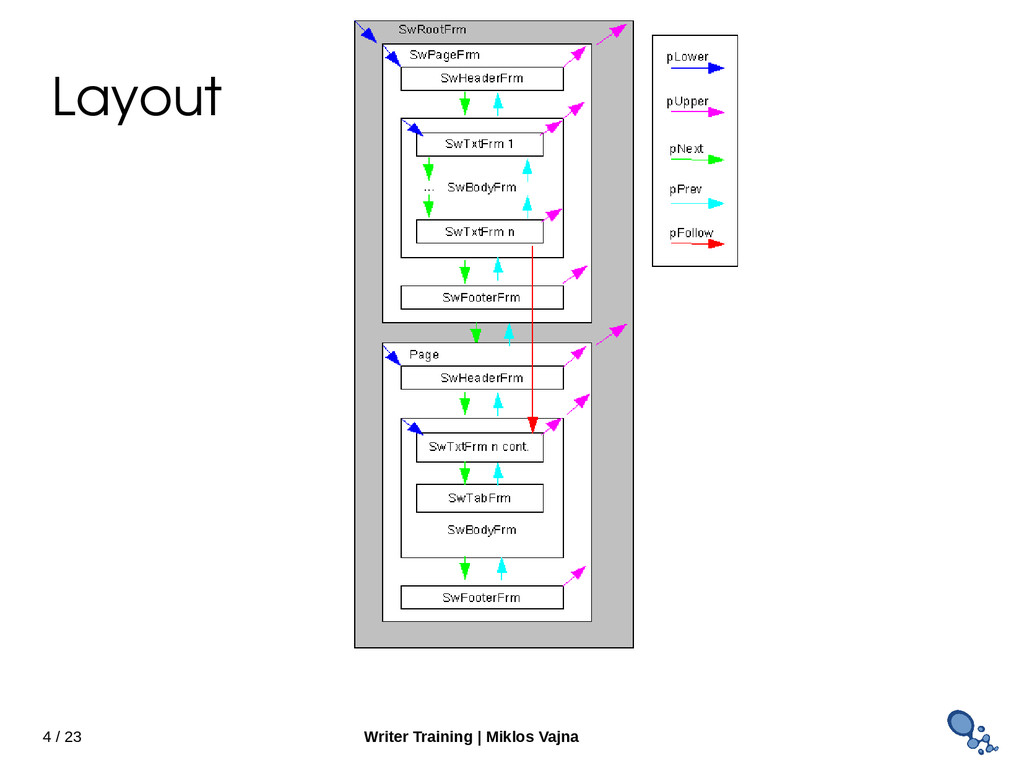
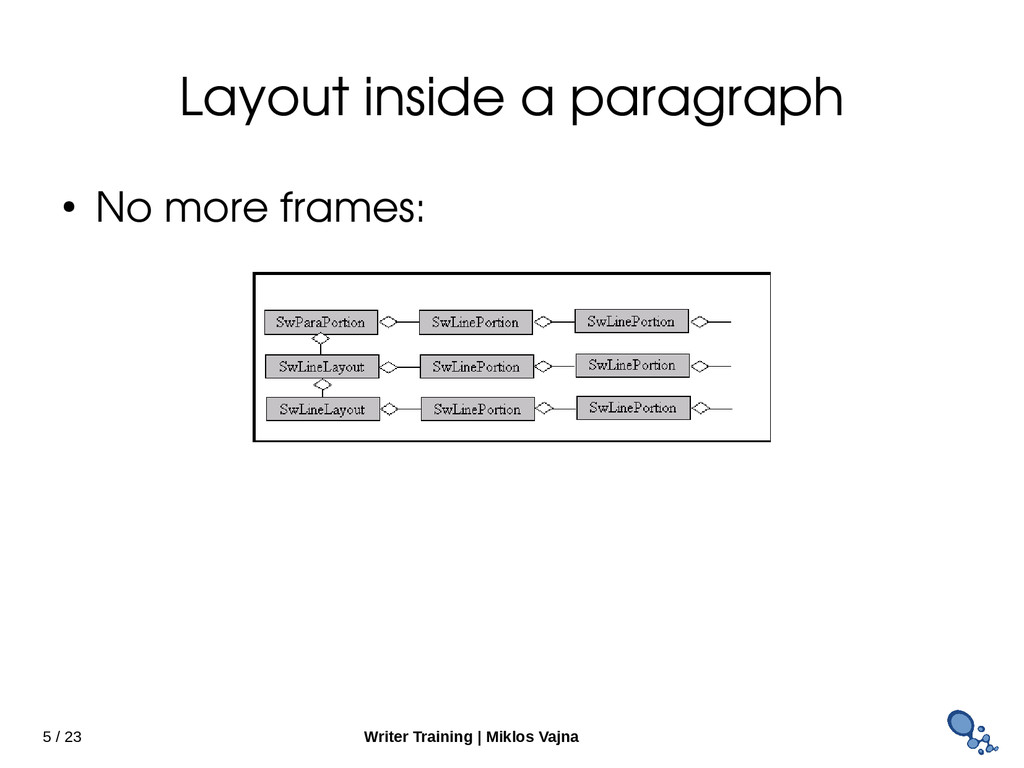
Most complex part: • No easy way to test automatically – Think of missing fonts on test machines • Document model has only paragraphs, not pages • One opened document multiple layouts ↔ • Try it: Window new window → • Typically single layout: SwRootFrm (root frame) • Inside: pages – SwPageFrm • Paragraphs – SwTxtFrm
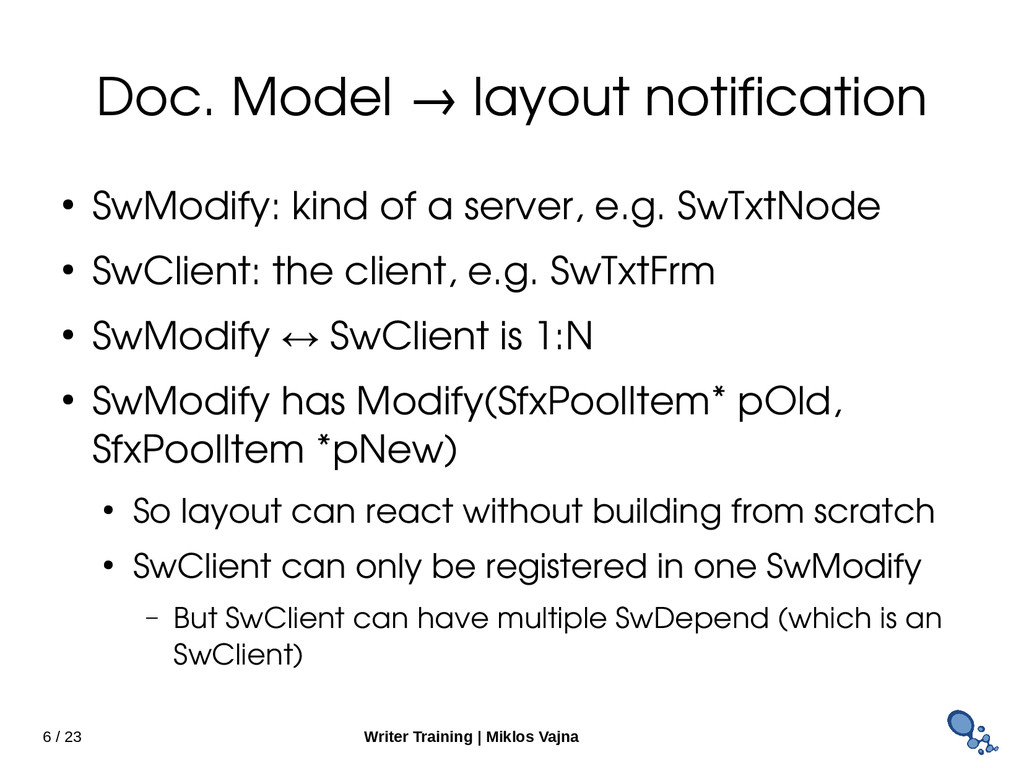
layout notification → • SwModify: kind of a server, e.g. SwTxtNode • SwClient: the client, e.g. SwTxtFrm • SwModify SwClient is 1:N ↔ • SwModify has Modify(SfxPoolItem* pOld, SfxPoolItem *pNew) • So layout can react without building from scratch • SwClient can only be registered in one SwModify – But SwClient can have multiple SwDepend (which is an SwClient)
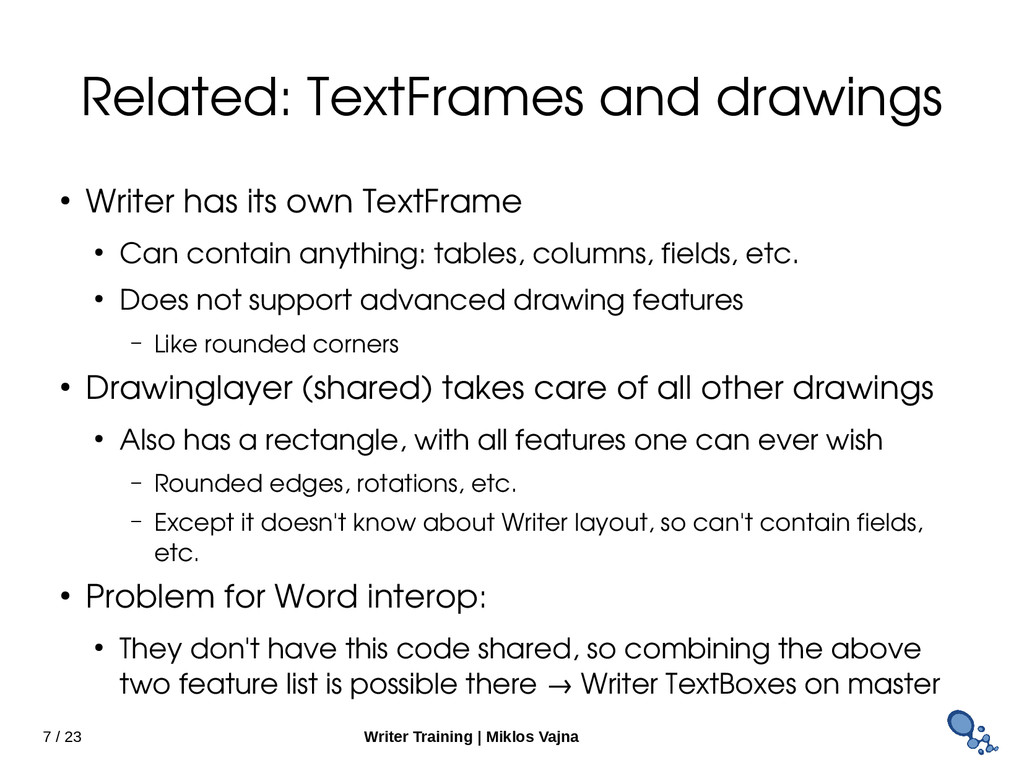
and drawings • Writer has its own TextFrame • Can contain anything: tables, columns, fields, etc. • Does not support advanced drawing features – Like rounded corners • Drawinglayer (shared) takes care of all other drawings • Also has a rectangle, with all features one can ever wish – Rounded edges, rotations, etc. – Except it doesn't know about Writer layout, so can't contain fields, etc. • Problem for Word interop: • They don't have this code shared, so combining the above two feature list is possible there Writer TextBoxes on master →
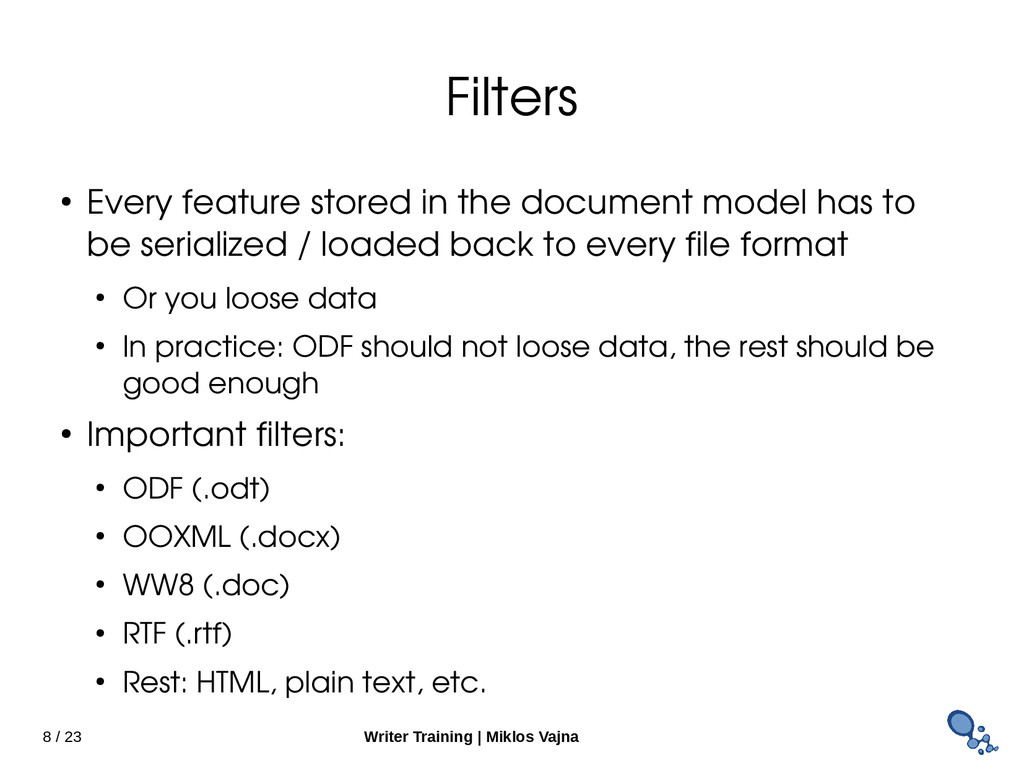
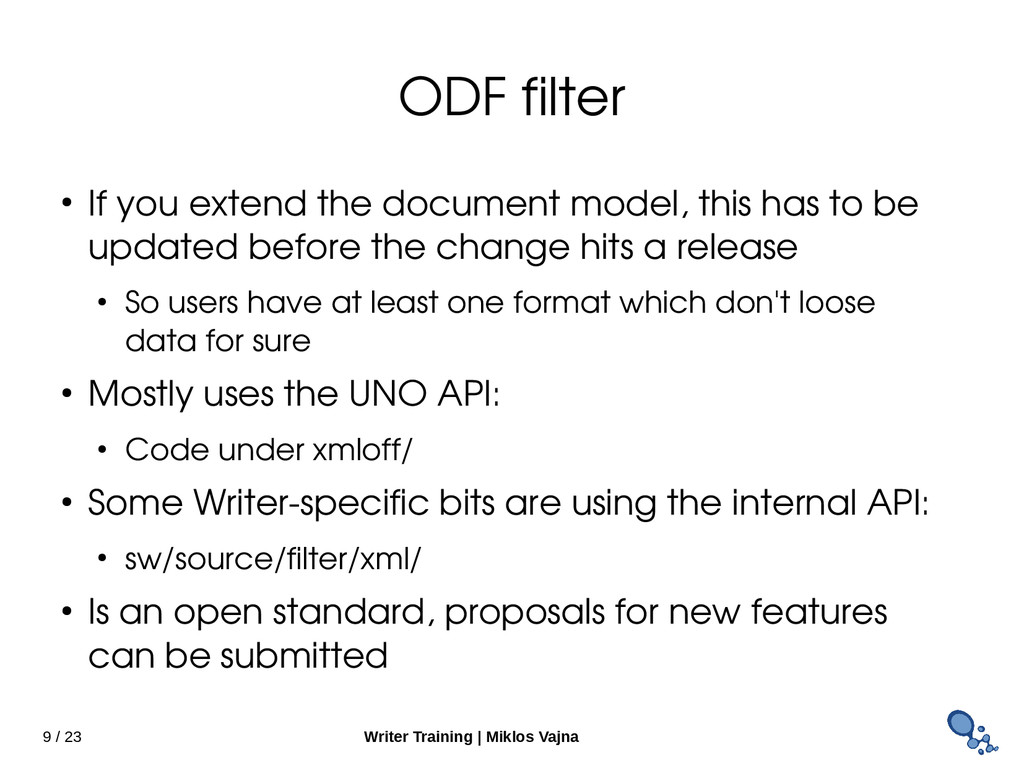
Every feature stored in the document model has to be serialized / loaded back to every file format • Or you loose data • In practice: ODF should not loose data, the rest should be good enough • Important filters: • ODF (.odt) • OOXML (.docx) • WW8 (.doc) • RTF (.rtf) • Rest: HTML, plain text, etc.
• If you extend the document model, this has to be updated before the change hits a release • So users have at least one format which don't loose data for sure • Mostly uses the UNO API: • Code under xmloff/ • Some Writerspecific bits are using the internal API: • sw/source/filter/xml/ • Is an open standard, proposals for new features can be submitted
• Import: • Uses the UNO API, code under writerfilter/ • Tokenizer: – Shared XML parser, model.xml tokens → • Domain mapper: – Handles the incoming stream of tokens and maps them to UNO API • Tokenizer dmapper traffic is XML logged: → – cd writerfilter; make sr dbglevel=2, then /tmp/test.docx*.XML after load • Export: • Shared with RTF/WW8, uses internal API • sw/source/filter/ww8/docx*
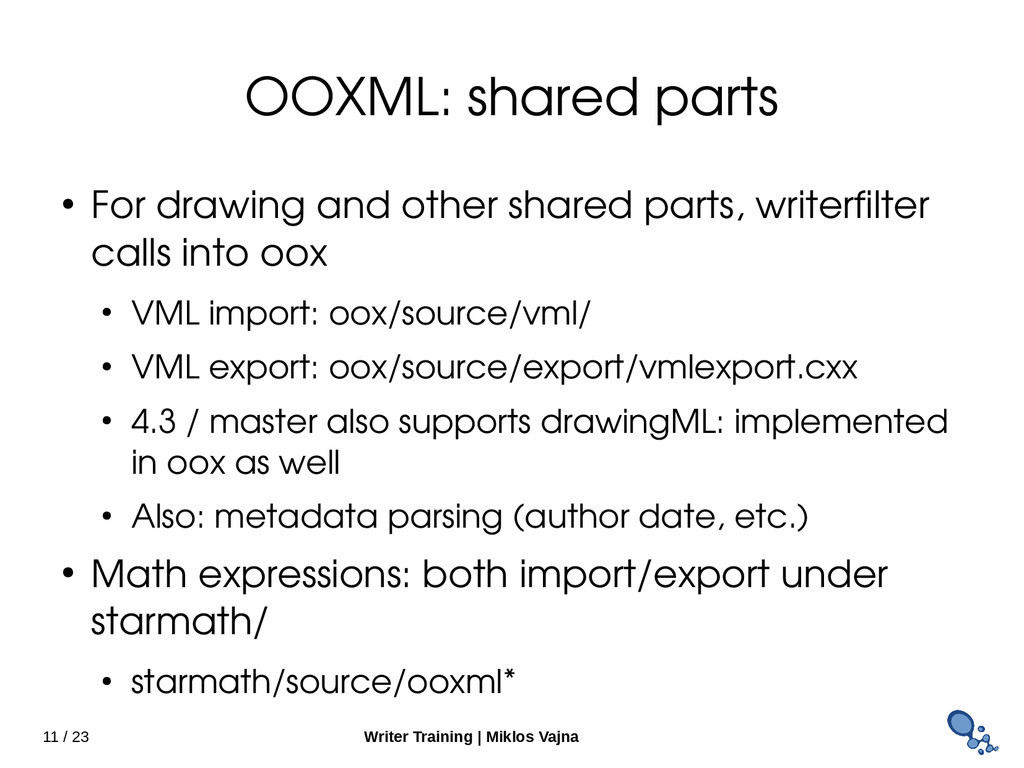
parts • For drawing and other shared parts, writerfilter calls into oox • VML import: oox/source/vml/ • VML export: oox/source/export/vmlexport.cxx • 4.3 / master also supports drawingML: implemented in oox as well • Also: metadata parsing (author date, etc.) • Math expressions: both import/export under starmath/ • starmath/source/ooxml*
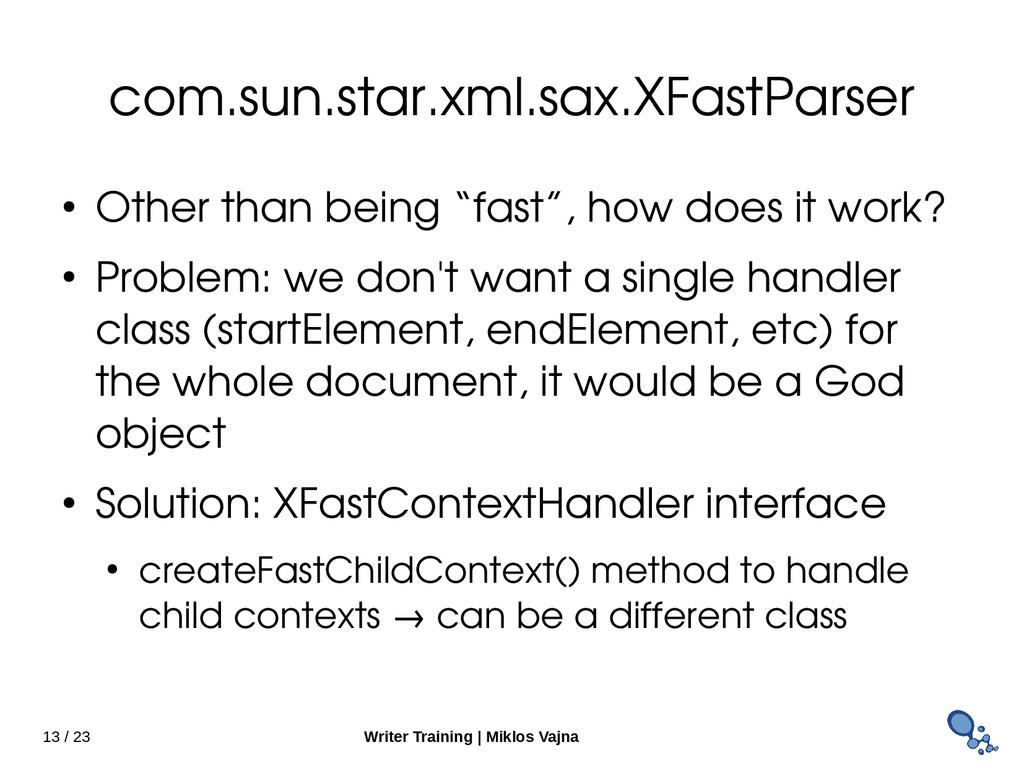
DOCX import is a push parser • Benefit: can implement feature incrementally • Drawback: XML is text, would have to compare strings a lot slow → • Solution: we know all the expected strings (namespaces, element names, attribute names, attribute values) • Register a string id map before parsing → • Exactly what XFastParser does
Other than being “fast”, how does it work? • Problem: we don't want a single handler class (startElement, endElement, etc) for the whole document, it would be a God object • Solution: XFastContextHandler interface • createFastChildContext() method to handle child contexts can be a different class →
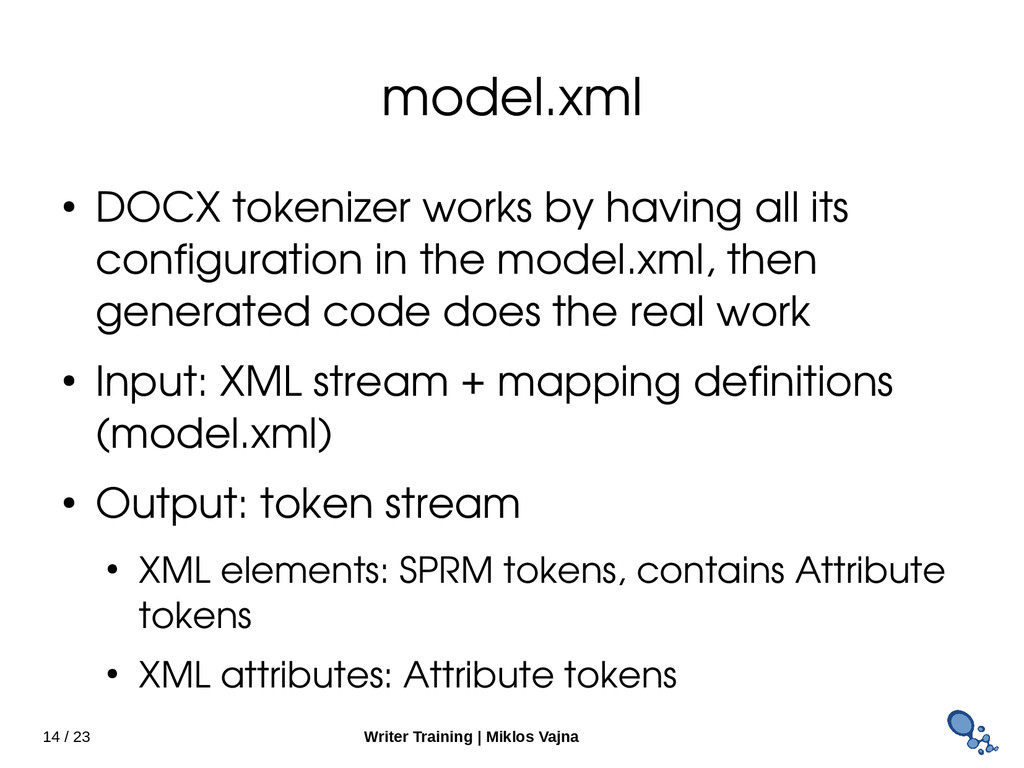
DOCX tokenizer works by having all its configuration in the model.xml, then generated code does the real work • Input: XML stream + mapping definitions (model.xml) • Output: token stream • XML elements: SPRM tokens, contains Attribute tokens • XML attributes: Attribute tokens
• Parsed using patternmatching by XSLT scripts... • Cleanup of that is in progress • Concept: • Take the RNG schema (grammar / defines) • Add matching resource tags that define the token maps • Example: framePr
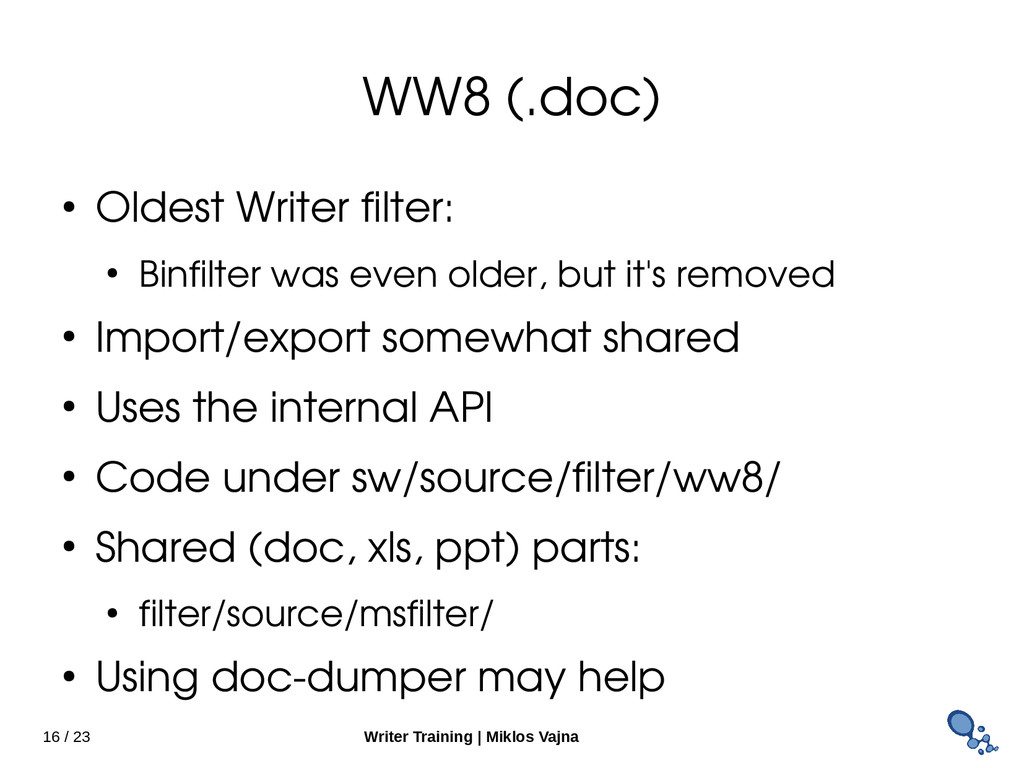
• Oldest Writer filter: • Binfilter was even older, but it's removed • Import/export somewhat shared • Uses the internal API • Code under sw/source/filter/ww8/ • Shared (doc, xls, ppt) parts: • filter/source/msfilter/ • Using docdumper may help
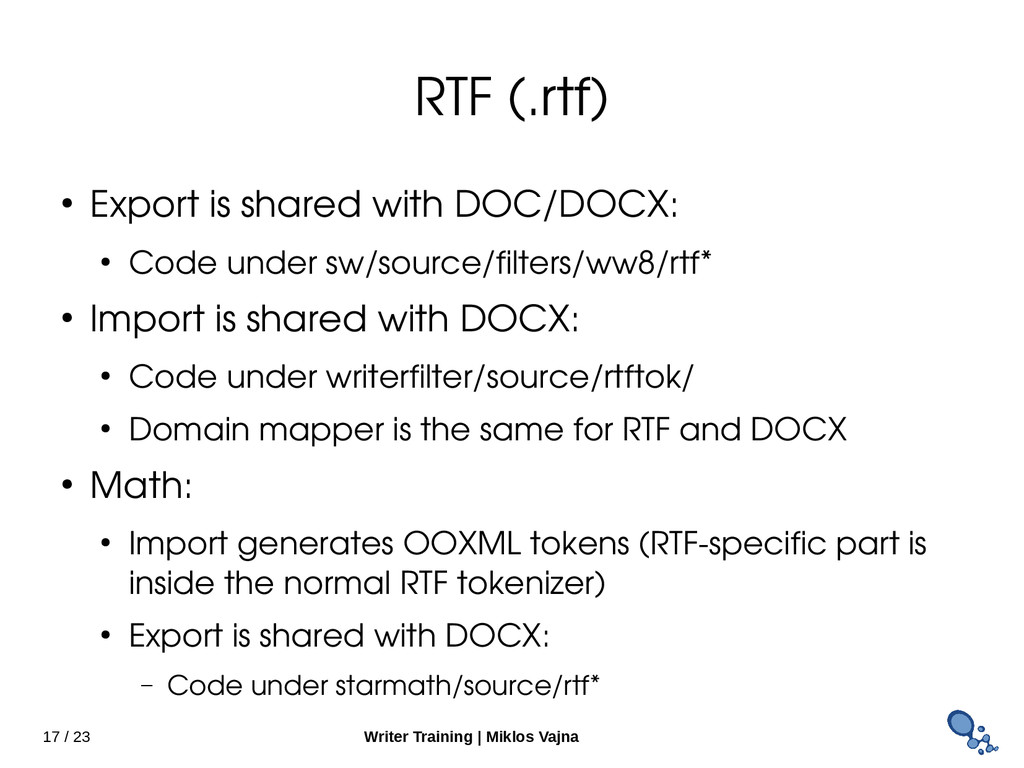
• Export is shared with DOC/DOCX: • Code under sw/source/filters/ww8/rtf* • Import is shared with DOCX: • Code under writerfilter/source/rtftok/ • Domain mapper is the same for RTF and DOCX • Math: • Import generates OOXML tokens (RTFspecific part is inside the normal RTF tokenizer) • Export is shared with DOCX: – Code under starmath/source/rtf*
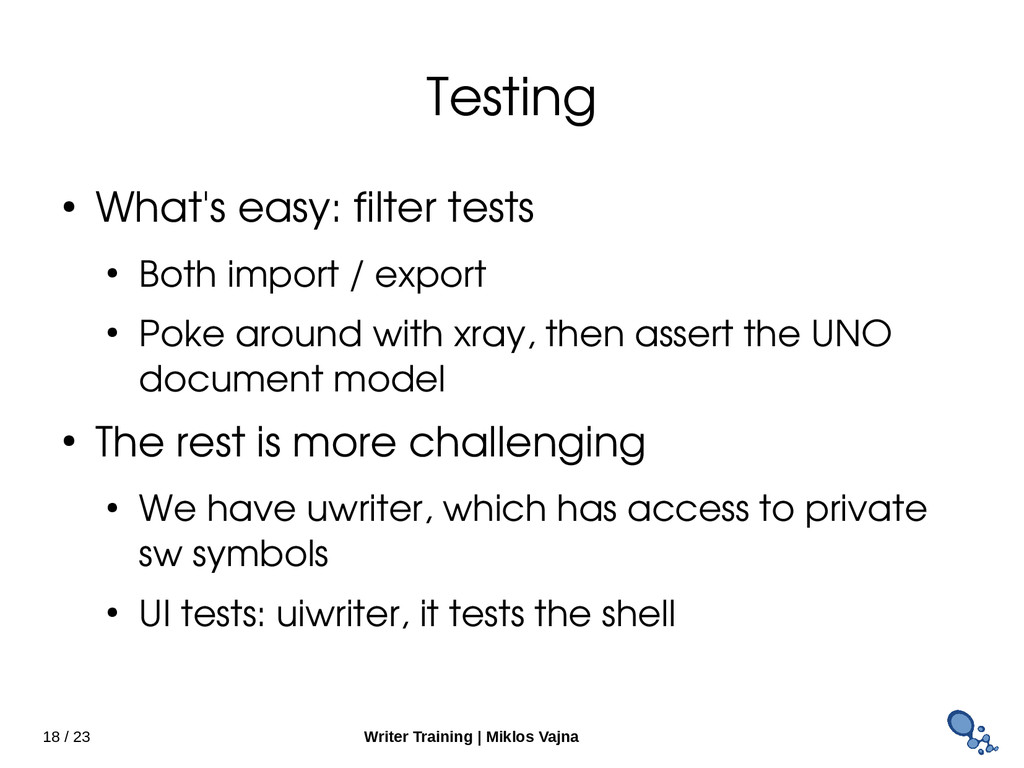
What's easy: filter tests • Both import / export • Poke around with xray, then assert the UNO document model • The rest is more challenging • We have uwriter, which has access to private sw symbols • UI tests: uiwriter, it tests the shell
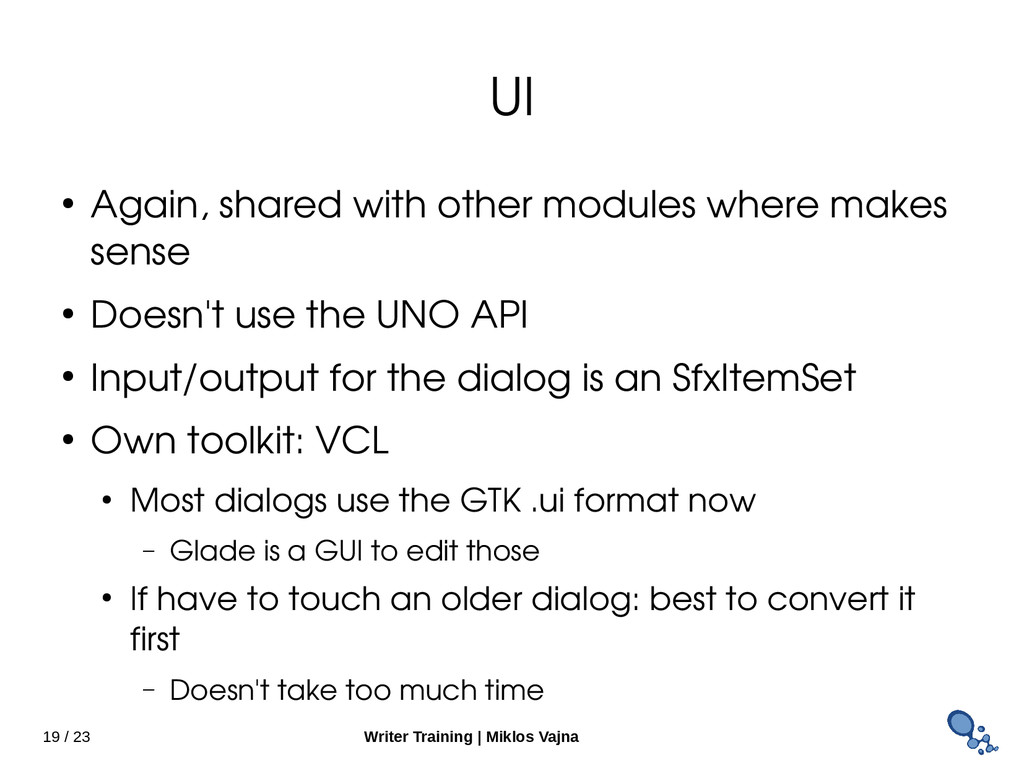
Again, shared with other modules where makes sense • Doesn't use the UNO API • Input/output for the dialog is an SfxItemSet • Own toolkit: VCL • Most dialogs use the GTK .ui format now – Glade is a GUI to edit those • If have to touch an older dialog: best to convert it first – Doesn't take too much time
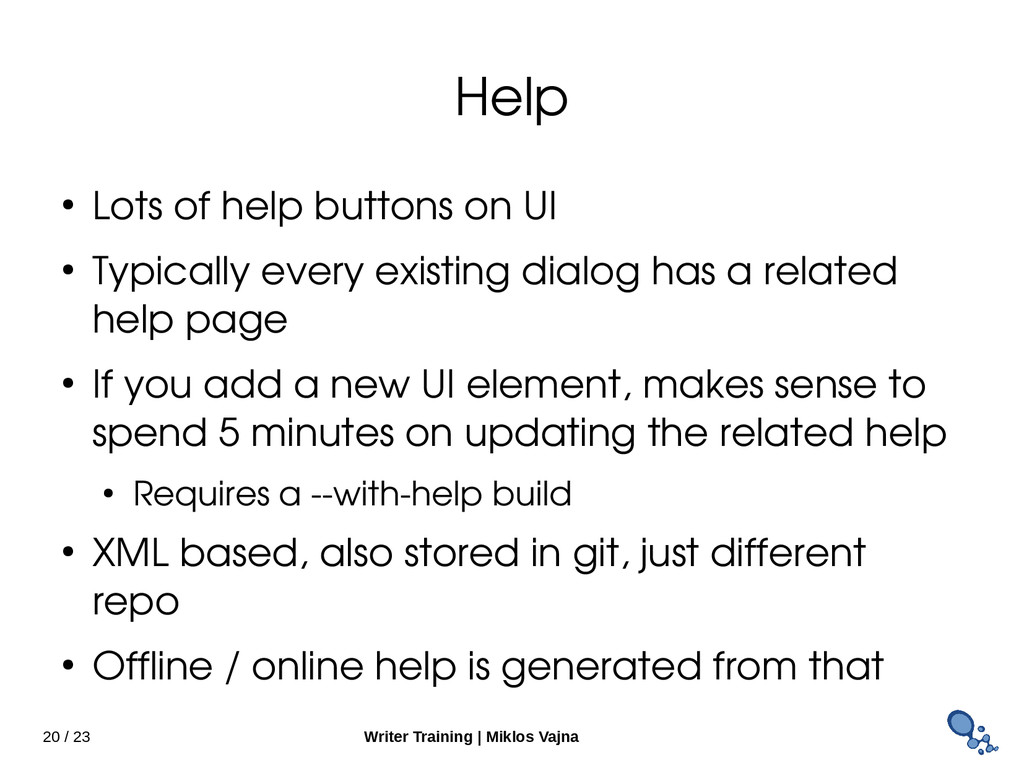
Lots of help buttons on UI • Typically every existing dialog has a related help page • If you add a new UI element, makes sense to spend 5 minutes on updating the related help • Requires a withhelp build • XML based, also stored in git, just different repo • Offline / online help is generated from that
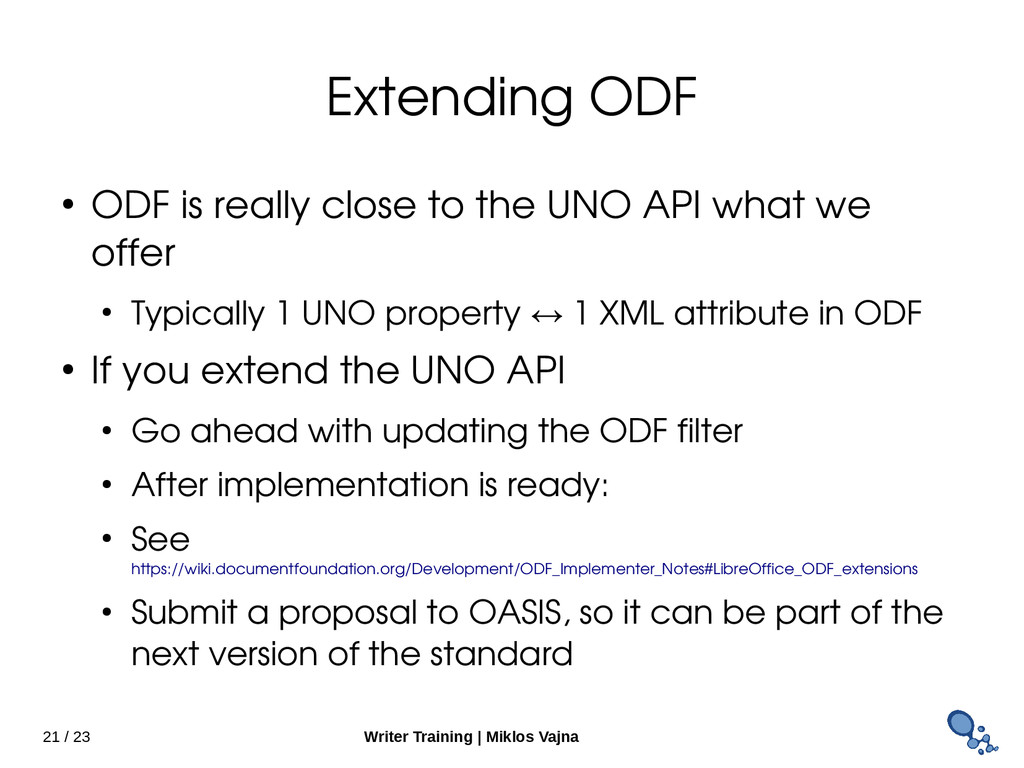
• ODF is really close to the UNO API what we offer • Typically 1 UNO property 1 XML attribute in ODF ↔ • If you extend the UNO API • Go ahead with updating the ODF filter • After implementation is ready: • See https://wiki.documentfoundation.org/Development/ODF_Implementer_Notes#LibreOffice_ODF_extensions • Submit a proposal to OASIS, so it can be part of the next version of the standard


 vmiklos
 mfonobong
 jonyablonski
 reverentgeek
 madoxten
 codingconduct
 keithpitt
.png) helenjbeal
helenjbeal
 honnibal
 konakalab
 vanstee
 dugsong
 addyosmani