Upgrade to Pro — share decks privately, control downloads, hide ads and more …

otc_nail_fungus_treatment.pdf

Avatar for Stylverra Stylverra
May 22, 2025
13

 otc_nail_fungus_treatment.pdf

Avatar for Stylverra

Stylverra

May 22, 2025

Transcript

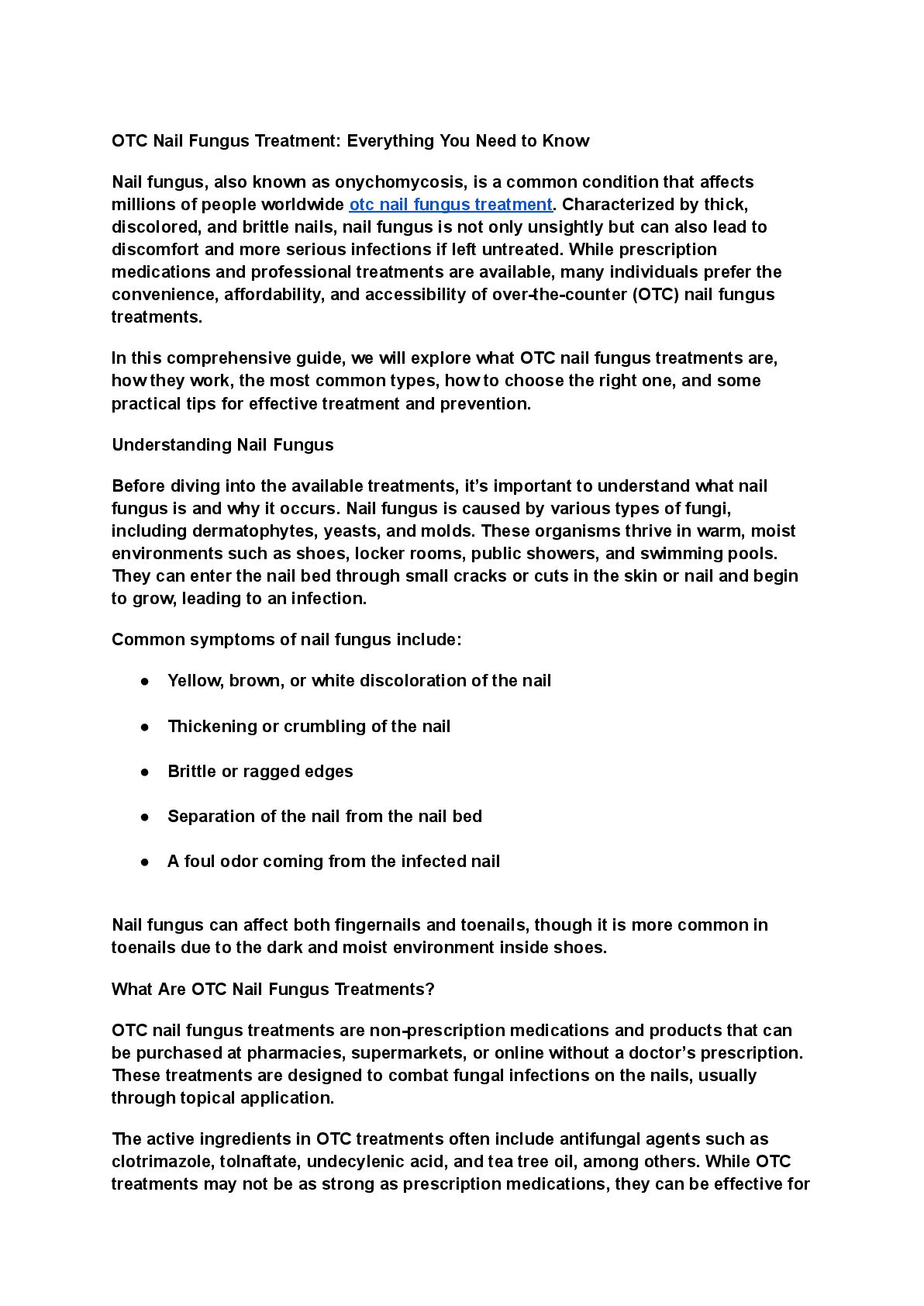
  1. OTC Nail Fungus Treatment: Everything You Need to Know Nail

    fungus, also known as onychomycosis, is a common condition that affects millions of people worldwide otc nail fungus treatment. Characterized by thick, discolored, and brittle nails, nail fungus is not only unsightly but can also lead to discomfort and more serious infections if left untreated. While prescription medications and professional treatments are available, many individuals prefer the convenience, affordability, and accessibility of over-the-counter (OTC) nail fungus treatments. In this comprehensive guide, we will explore what OTC nail fungus treatments are, how they work, the most common types, how to choose the right one, and some practical tips for effective treatment and prevention. Understanding Nail Fungus Before diving into the available treatments, it’s important to understand what nail fungus is and why it occurs. Nail fungus is caused by various types of fungi, including dermatophytes, yeasts, and molds. These organisms thrive in warm, moist environments such as shoes, locker rooms, public showers, and swimming pools. They can enter the nail bed through small cracks or cuts in the skin or nail and begin to grow, leading to an infection. Common symptoms of nail fungus include: •​ Yellow, brown, or white discoloration of the nail​ •​ Thickening or crumbling of the nail​ •​ Brittle or ragged edges​ •​ Separation of the nail from the nail bed​ •​ A foul odor coming from the infected nail​ Nail fungus can affect both fingernails and toenails, though it is more common in toenails due to the dark and moist environment inside shoes. What Are OTC Nail Fungus Treatments? OTC nail fungus treatments are non-prescription medications and products that can be purchased at pharmacies, supermarkets, or online without a doctor’s prescription. These treatments are designed to combat fungal infections on the nails, usually through topical application. The active ingredients in OTC treatments often include antifungal agents such as clotrimazole, tolnaftate, undecylenic acid, and tea tree oil, among others. While OTC treatments may not be as strong as prescription medications, they can be effective for
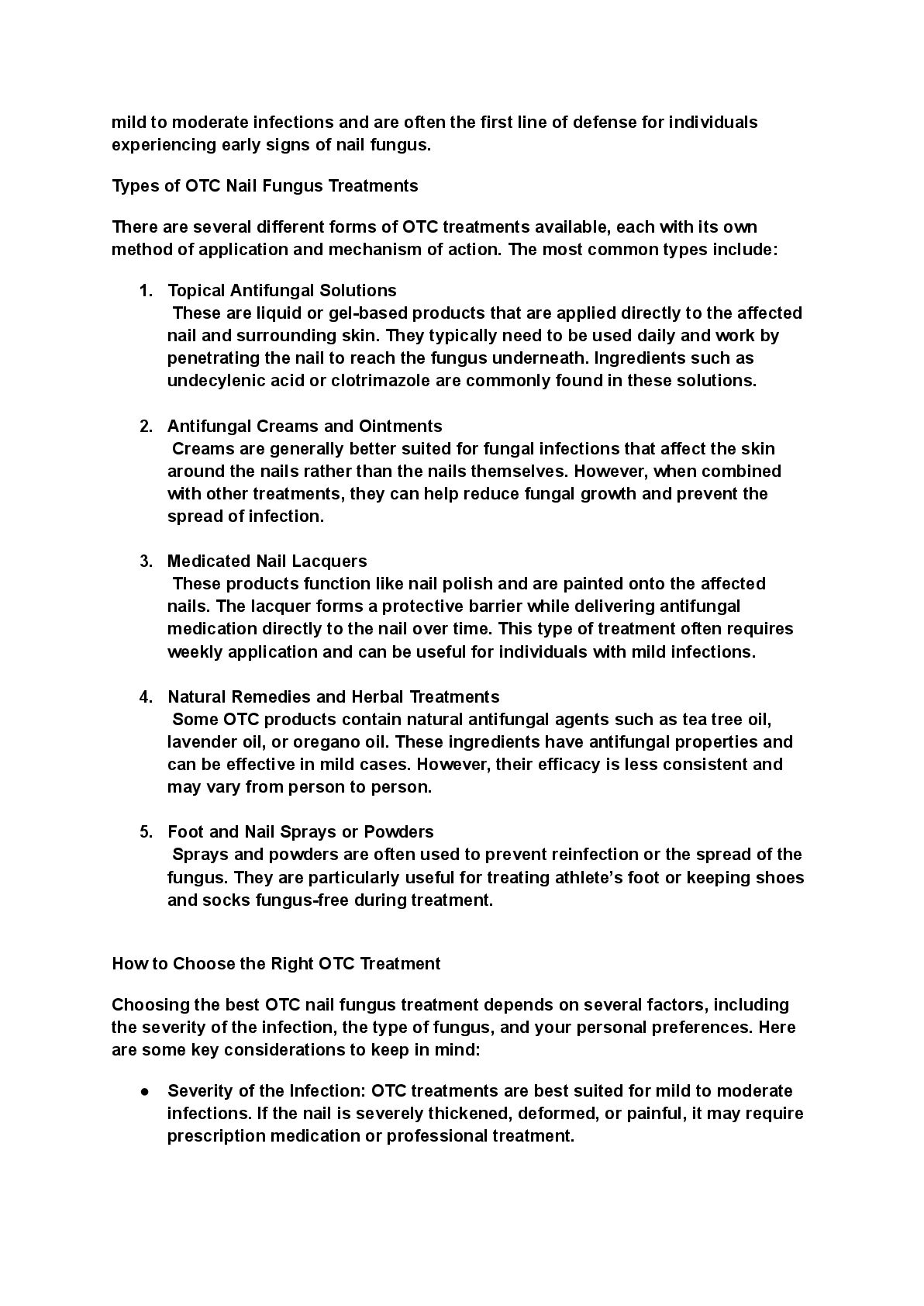
  2. mild to moderate infections and are often the first line

    of defense for individuals experiencing early signs of nail fungus. Types of OTC Nail Fungus Treatments There are several different forms of OTC treatments available, each with its own method of application and mechanism of action. The most common types include: 1.​ Topical Antifungal Solutions​ These are liquid or gel-based products that are applied directly to the affected nail and surrounding skin. They typically need to be used daily and work by penetrating the nail to reach the fungus underneath. Ingredients such as undecylenic acid or clotrimazole are commonly found in these solutions.​ 2.​ Antifungal Creams and Ointments​ Creams are generally better suited for fungal infections that affect the skin around the nails rather than the nails themselves. However, when combined with other treatments, they can help reduce fungal growth and prevent the spread of infection.​ 3.​ Medicated Nail Lacquers​ These products function like nail polish and are painted onto the affected nails. The lacquer forms a protective barrier while delivering antifungal medication directly to the nail over time. This type of treatment often requires weekly application and can be useful for individuals with mild infections.​ 4.​ Natural Remedies and Herbal Treatments​ Some OTC products contain natural antifungal agents such as tea tree oil, lavender oil, or oregano oil. These ingredients have antifungal properties and can be effective in mild cases. However, their efficacy is less consistent and may vary from person to person.​ 5.​ Foot and Nail Sprays or Powders​ Sprays and powders are often used to prevent reinfection or the spread of the fungus. They are particularly useful for treating athlete’s foot or keeping shoes and socks fungus-free during treatment.​ How to Choose the Right OTC Treatment Choosing the best OTC nail fungus treatment depends on several factors, including the severity of the infection, the type of fungus, and your personal preferences. Here are some key considerations to keep in mind: •​ Severity of the Infection: OTC treatments are best suited for mild to moderate infections. If the nail is severely thickened, deformed, or painful, it may require prescription medication or professional treatment.​
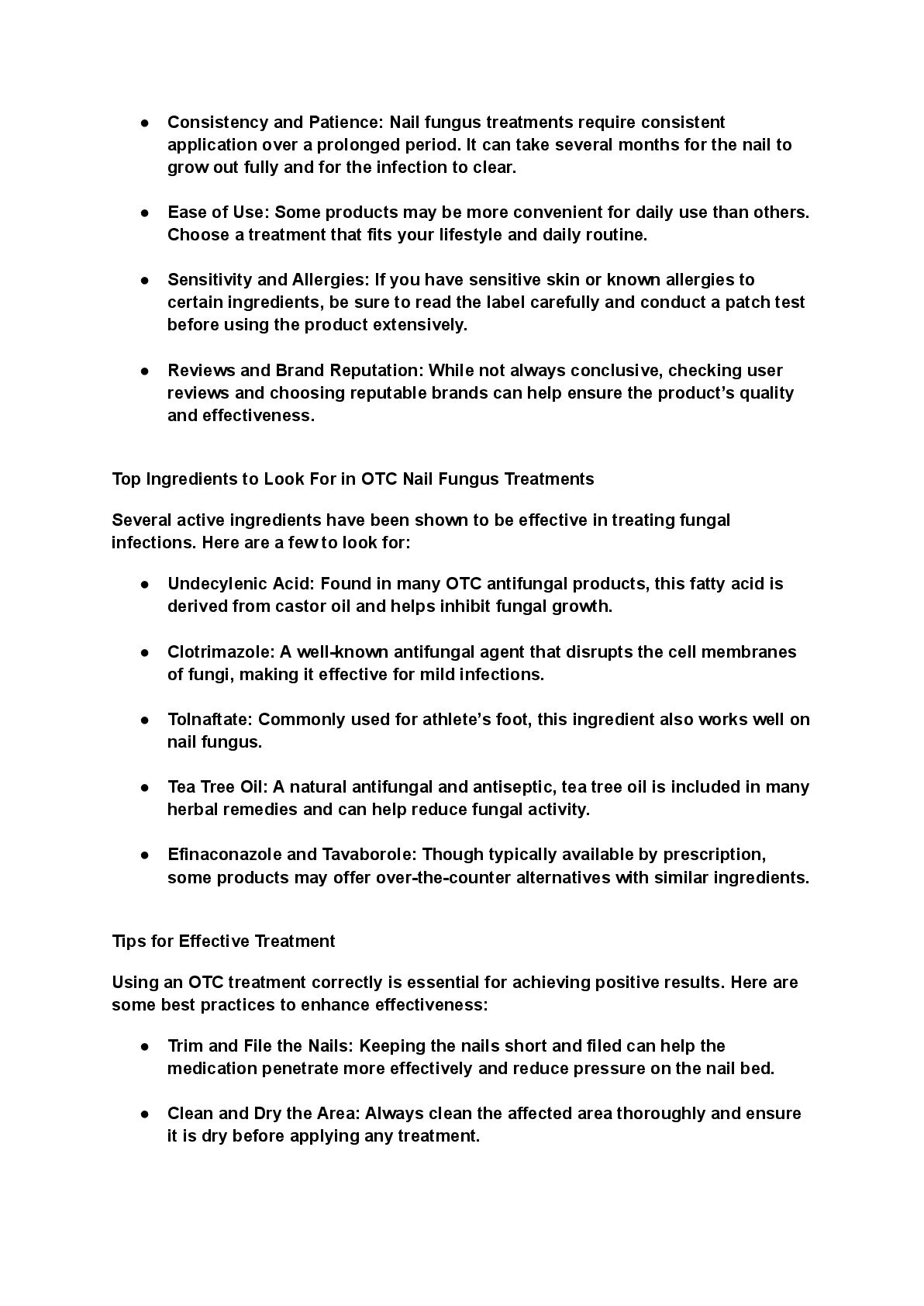
  3. •​ Consistency and Patience: Nail fungus treatments require consistent application

    over a prolonged period. It can take several months for the nail to grow out fully and for the infection to clear.​ •​ Ease of Use: Some products may be more convenient for daily use than others. Choose a treatment that fits your lifestyle and daily routine.​ •​ Sensitivity and Allergies: If you have sensitive skin or known allergies to certain ingredients, be sure to read the label carefully and conduct a patch test before using the product extensively.​ •​ Reviews and Brand Reputation: While not always conclusive, checking user reviews and choosing reputable brands can help ensure the product’s quality and effectiveness.​ Top Ingredients to Look For in OTC Nail Fungus Treatments Several active ingredients have been shown to be effective in treating fungal infections. Here are a few to look for: •​ Undecylenic Acid: Found in many OTC antifungal products, this fatty acid is derived from castor oil and helps inhibit fungal growth.​ •​ Clotrimazole: A well-known antifungal agent that disrupts the cell membranes of fungi, making it effective for mild infections.​ •​ Tolnaftate: Commonly used for athlete’s foot, this ingredient also works well on nail fungus.​ •​ Tea Tree Oil: A natural antifungal and antiseptic, tea tree oil is included in many herbal remedies and can help reduce fungal activity.​ •​ Efinaconazole and Tavaborole: Though typically available by prescription, some products may offer over-the-counter alternatives with similar ingredients.​ Tips for Effective Treatment Using an OTC treatment correctly is essential for achieving positive results. Here are some best practices to enhance effectiveness: •​ Trim and File the Nails: Keeping the nails short and filed can help the medication penetrate more effectively and reduce pressure on the nail bed.​ •​ Clean and Dry the Area: Always clean the affected area thoroughly and ensure it is dry before applying any treatment.​
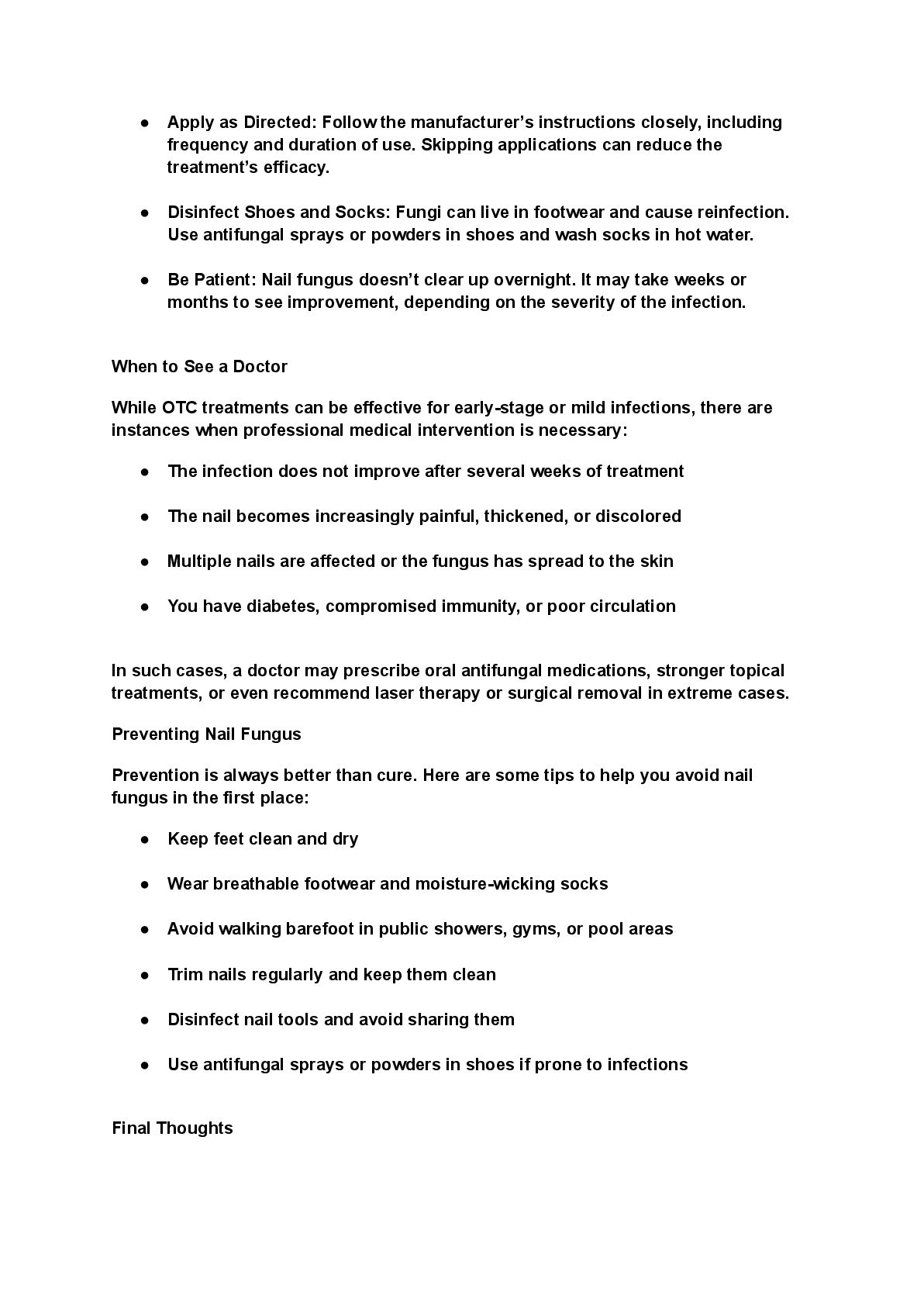
  4. •​ Apply as Directed: Follow the manufacturer’s instructions closely, including

    frequency and duration of use. Skipping applications can reduce the treatment’s efficacy.​ •​ Disinfect Shoes and Socks: Fungi can live in footwear and cause reinfection. Use antifungal sprays or powders in shoes and wash socks in hot water.​ •​ Be Patient: Nail fungus doesn’t clear up overnight. It may take weeks or months to see improvement, depending on the severity of the infection.​ When to See a Doctor While OTC treatments can be effective for early-stage or mild infections, there are instances when professional medical intervention is necessary: •​ The infection does not improve after several weeks of treatment​ •​ The nail becomes increasingly painful, thickened, or discolored​ •​ Multiple nails are affected or the fungus has spread to the skin​ •​ You have diabetes, compromised immunity, or poor circulation​ In such cases, a doctor may prescribe oral antifungal medications, stronger topical treatments, or even recommend laser therapy or surgical removal in extreme cases. Preventing Nail Fungus Prevention is always better than cure. Here are some tips to help you avoid nail fungus in the first place: •​ Keep feet clean and dry​ •​ Wear breathable footwear and moisture-wicking socks​ •​ Avoid walking barefoot in public showers, gyms, or pool areas​ •​ Trim nails regularly and keep them clean​ •​ Disinfect nail tools and avoid sharing them​ •​ Use antifungal sprays or powders in shoes if prone to infections​ Final Thoughts
  5. OTC nail fungus treatments can be an effective and affordable

    way to manage mild to moderate fungal infections of the nails. With various products available in the form of creams, solutions, lacquers, and natural remedies, there’s a wide range of options to choose from. The key to success lies in early detection, consistent treatment, and adopting good hygiene habits to prevent recurrence. If you suspect you have nail fungus, starting an OTC treatment promptly can help prevent the condition from worsening. However, if there’s no improvement over time or the infection becomes severe, seeking medical advice is the best course of action. Taking care of your nails today can save you from long-term complications tomorrow.