Upgrade to Pro — share decks privately, control downloads, hide ads and more …

Introduction to Cloud Computing

Sponsored · Ship Features Fearlessly Turn features on and off without deploys. Used by thousands of Ruby developers. →
Avatar for xautjzd xautjzd
November 13, 2013

Introduction to Cloud Computing

Avatar for xautjzd

xautjzd

November 13, 2013

More Decks by xautjzd

Other Decks in Technology

Transcript

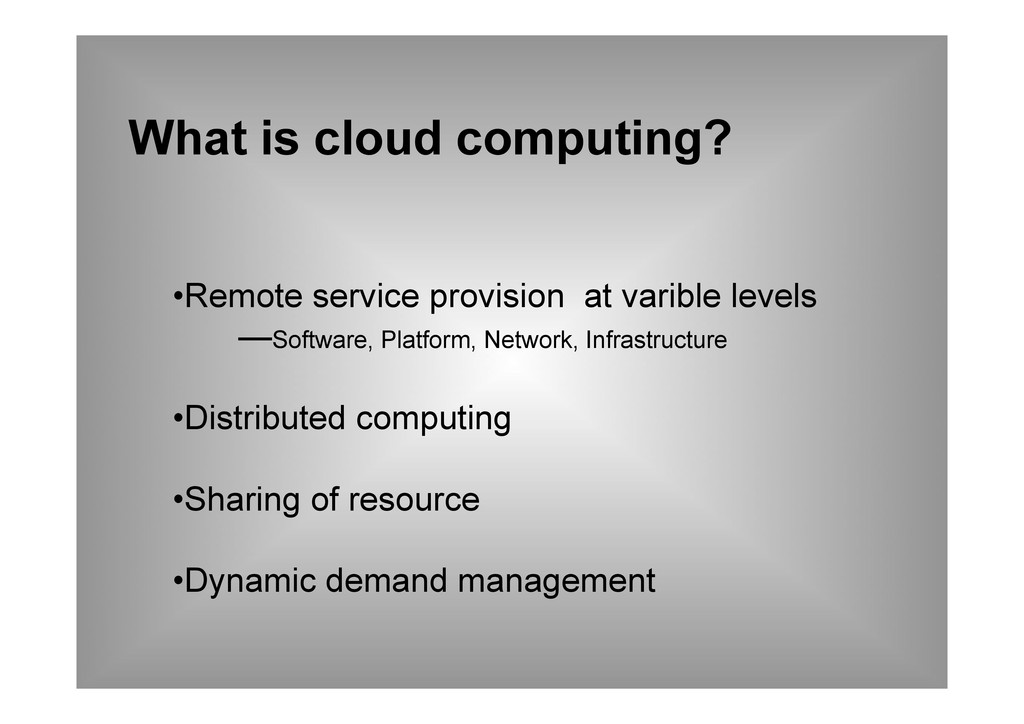
  1. What is cloud computing? •Remote service provision at varible levels

    —Software, Platform, Network, Infrastructure •Distributed computing •Sharing of resource •Dynamic demand management
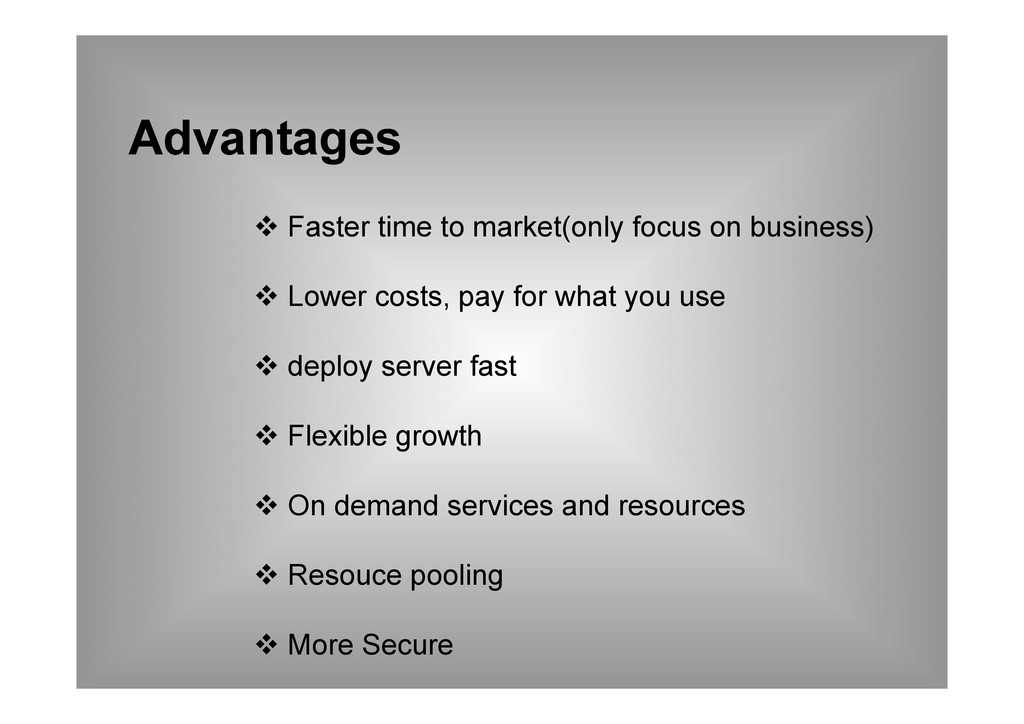
  2. Advantages  Faster time to market(only focus on business) 

    Lower costs, pay for what you use  deploy server fast  Flexible growth  On demand services and resources  Resouce pooling  More Secure
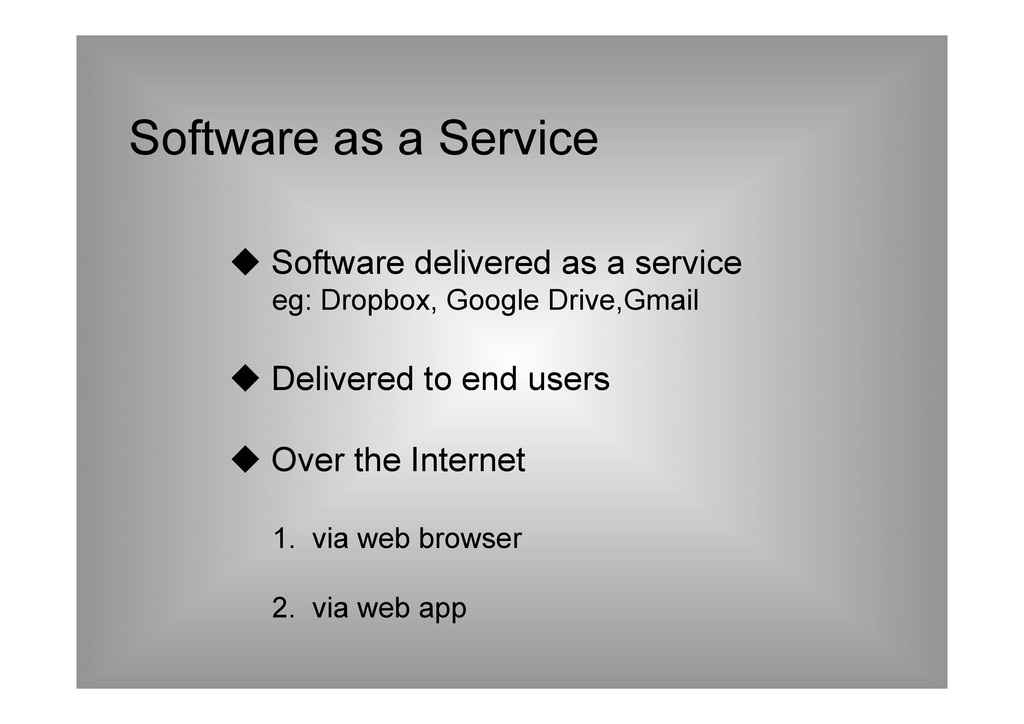
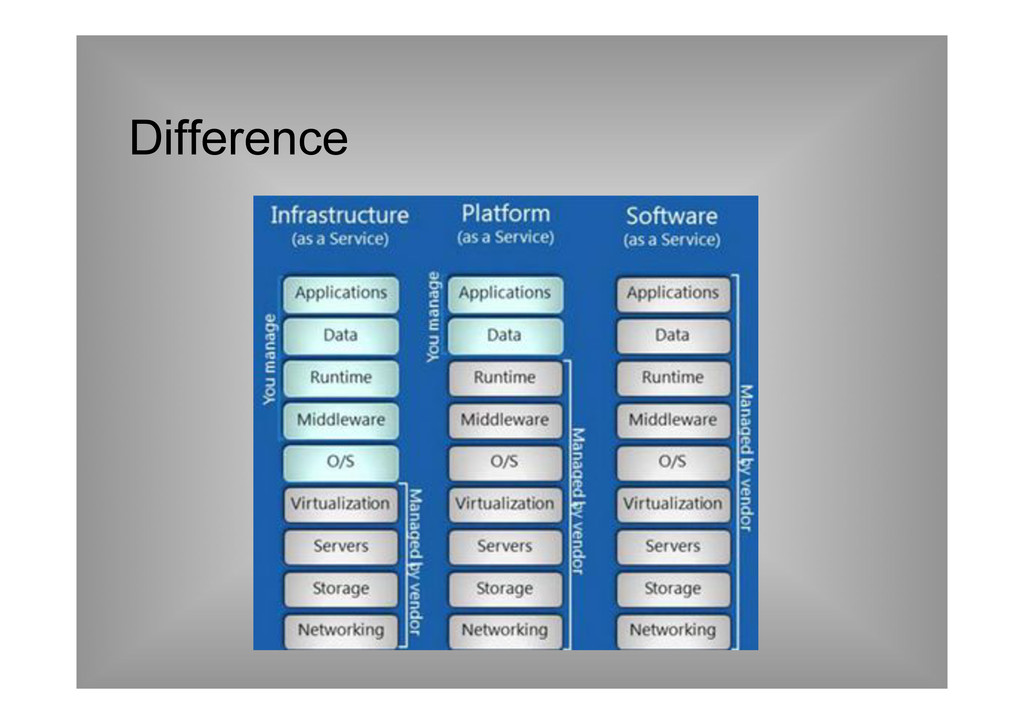
  3. Software as a Service  Software delivered as a service

    eg: Dropbox, Google Drive,Gmail  Delivered to end users  Over the Internet 1. via web browser 2. via web app
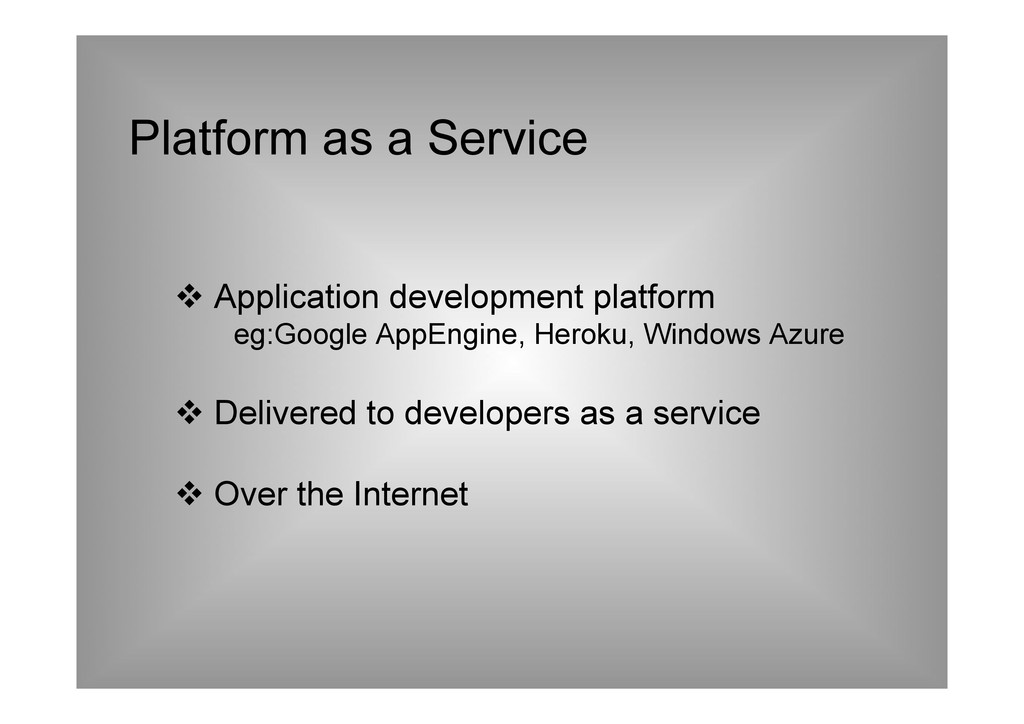
  4. Platform as a Service  Application development platform eg:Google AppEngine,

    Heroku, Windows Azure  Delivered to developers as a service  Over the Internet
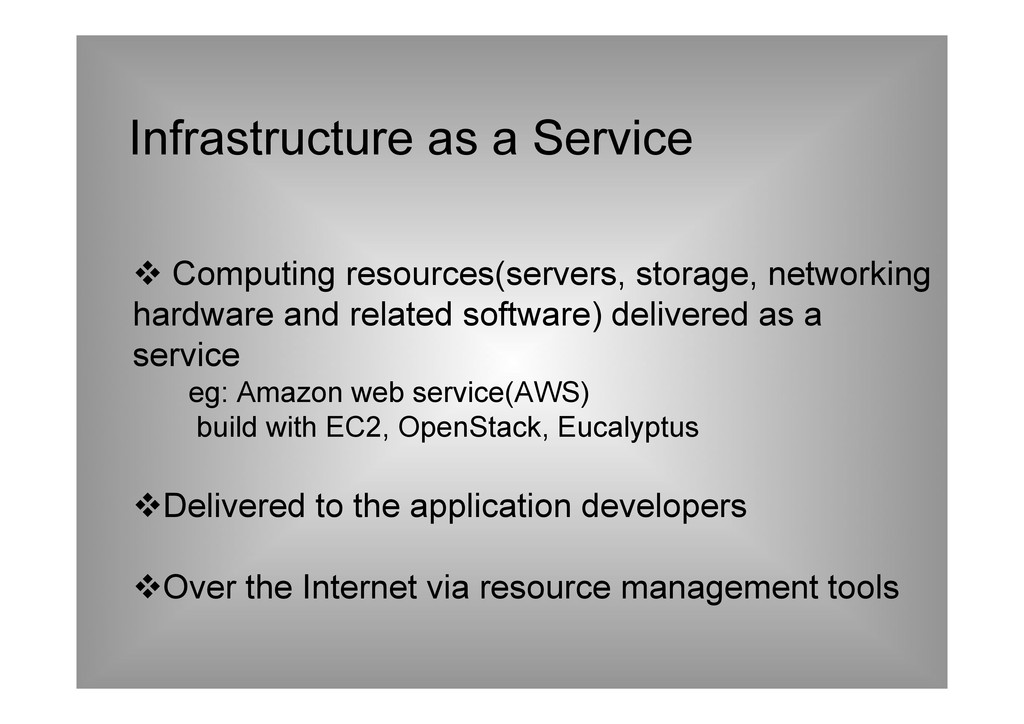
  5. Infrastructure as a Service  Computing resources(servers, storage, networking hardware

    and related software) delivered as a service eg: Amazon web service(AWS) build with EC2, OpenStack, Eucalyptus Delivered to the application developers Over the Internet via resource management tools
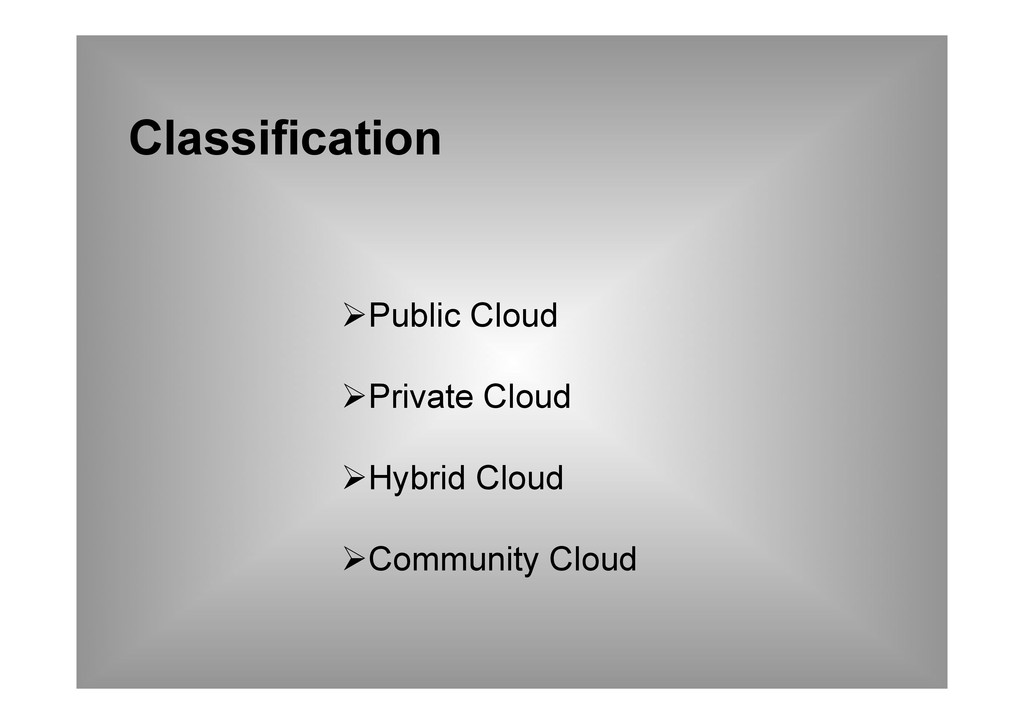
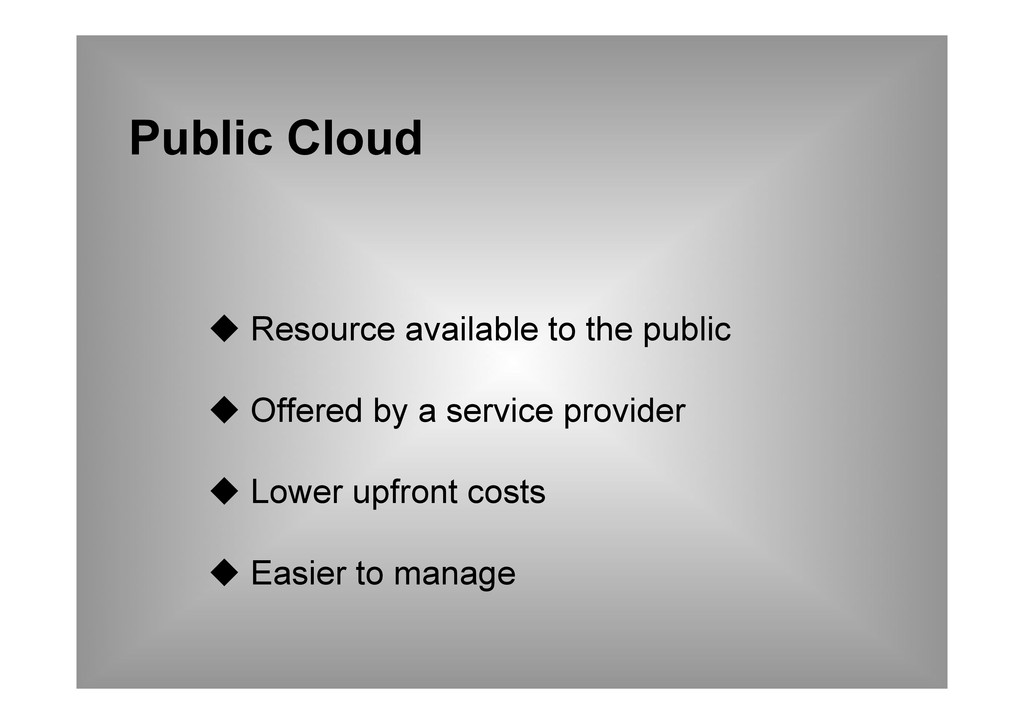
  6. Public Cloud  Resource available to the public  Offered

    by a service provider  Lower upfront costs  Easier to manage
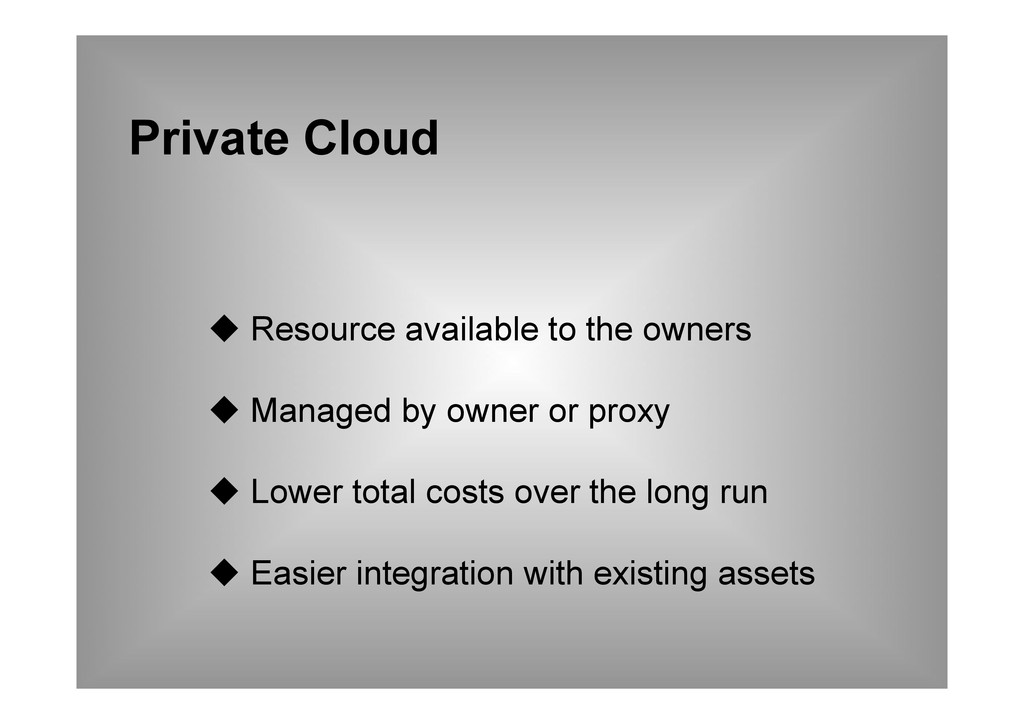
  7. Private Cloud  Resource available to the owners  Managed

    by owner or proxy  Lower total costs over the long run  Easier integration with existing assets
  8. Hybrid Cloud Resource available to the public Offered by a

    service provider Lower upfront costs Easyer to manage
  9. What is Virtualization? Virtualization, in computing, refers the act of

    creating a virtual (rather than actual) version of something, including but not limited to a virtual hardware platform, operating system (OS), storage device, or network resources. --wikipedia
  10. Virtualization Classification  Instruction Set Virtualization  Hardware Virtualization(via VMM)

     Operating System Virtualization  Programming Langurage Virtualization(eg: JVM)  Library Virtualization(eg: Wine, Cygwin)