Upgrade to Pro
— share decks privately, control downloads, hide ads and more …
Speaker Deck
Sign up for free
Menu
Search
Features
All features
Private URLs
Password Protection
Custom URLS
Scheduled publishing
Remove Branding
Restrict embedding
Deck Collections
Notes
Features
All features
Private URLs
Password Protection
Custom URLS
Scheduled publishing
Remove Branding
Restrict embedding
Deck Collections
Notes
Explore
Featured decks
Featured speakers
Programming
Technology
Storyboards
Explore
Featured decks
Featured speakers
Programming
Technology
Storyboards
Pricing
Search
Sign in
Sign up for free
Ruby YARV Challenge: Build Your Own Bytecode V...
Search
yuhi
April 22, 2026
580
1
Share
Embed
Copy iframe code
Copy JS code
Copy link
Start on current slide
Ruby YARV Challenge: Build Your Own Bytecode VM in 7 Steps
RubyKaigi 2026 Lightning Talks
yuhi
April 22, 2026
More Decks by yuhi
See All by yuhi
APIリファレンスを 読み込むと楽しい
yuhisatoxxx
0
640
社内の3名登壇へ貢献した話 〜若手よ生意気になれ〜
yuhisatoxxx
0
880
階層構造を表現するデータ構造とリファクタリング 〜1年で10倍成長したプロダクトの変化と課題〜
yuhisatoxxx
3
2.1k
Wakate.rb #1
yuhisatoxxx
0
57
ひとりぼっちの新卒エンジニアが社外の同期50人と繋った話
yuhisatoxxx
0
330
24th Dev オープニング
yuhisatoxxx
0
300
コミュニティビジョン ~繋がりとキャリア~
yuhisatoxxx
0
330
遅延評価勉強法で良質な学びを
yuhisatoxxx
3
1.5k
Featured
See All Featured
AI in Enterprises - Java and Open Source to the Rescue
ivargrimstad
0
1.5k
Building an army of robots
kneath
307
47k
The Curious Case for Waylosing
cassininazir
1
570
Reflections from 52 weeks, 52 projects
jeffersonlam
356
22k
Heart Work Chapter 1 - Part 1
lfama
PRO
10
37k
My Coaching Mixtape
mlcsv
0
350
Dominate Local Search Results - an insider guide to GBP, reviews, and Local SEO
greggifford
PRO
0
360
What's in a price? How to price your products and services
michaelherold
247
13k
Done Done
chrislema
187
17k
How to make the Groovebox
asonas
2
2.5k
First, design no harm
axbom
PRO
2
1.3k
Six Lessons from altMBA
skipperchong
29
4.5k
Transcript
Ruby YARV Challenge: Build Your Own Bytecode VM in 7
Steps yuhi(@yuhi_junior) RubyKaigi 2026 Lightning Talks 2026-04-22 #rubykaigiA
2 SmartBank, Inc. Software Engineer yuhi @yuhi_junior @Yuhi-Sato Self Introduction
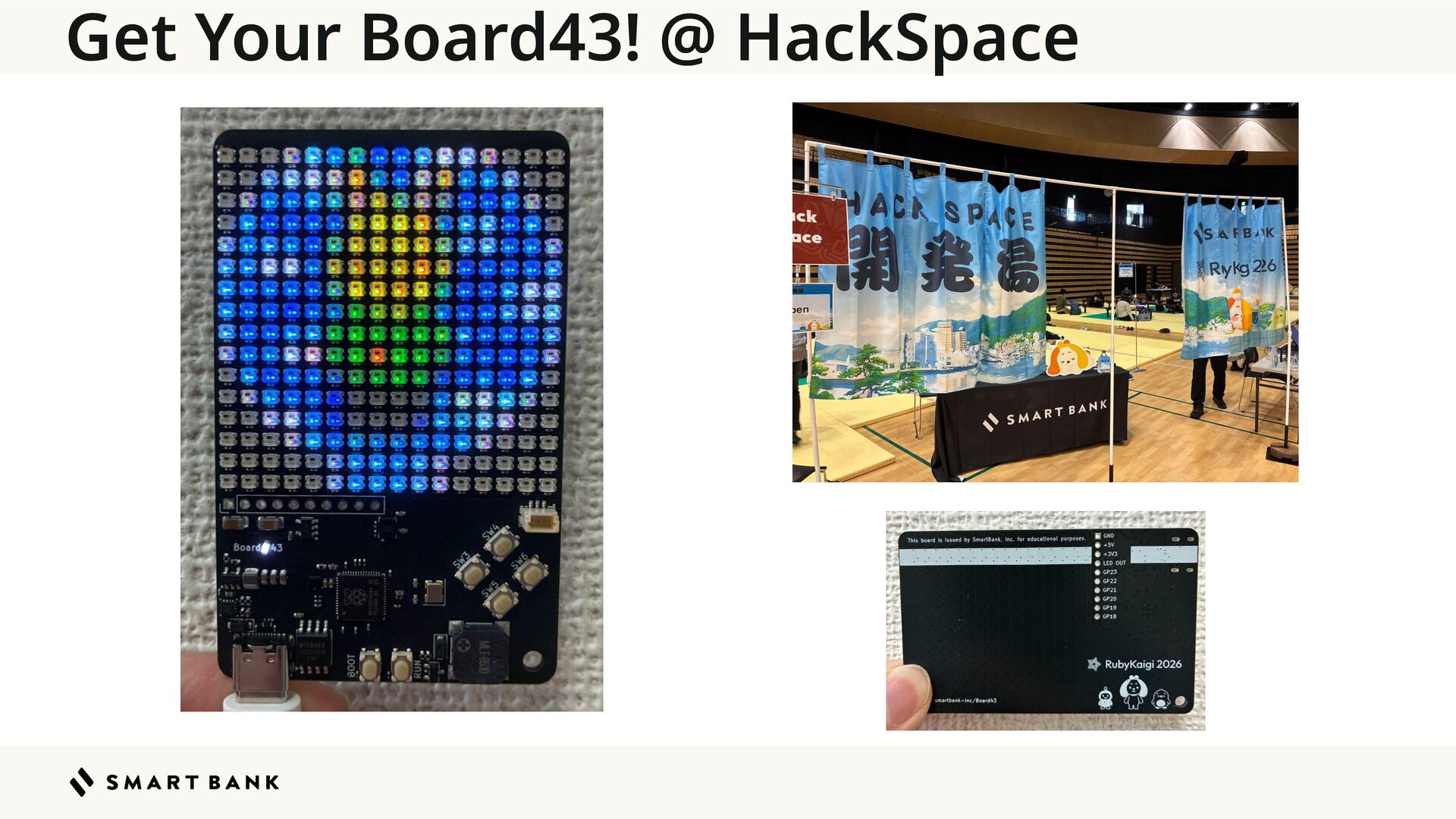
Get Your Board43! @ HackSpace
• A browser-based workshop • Build simplified YARV bytecode and
compiler in Ruby • Tutorials + hints at every step What’s “Ruby YARV Challenge”?
None
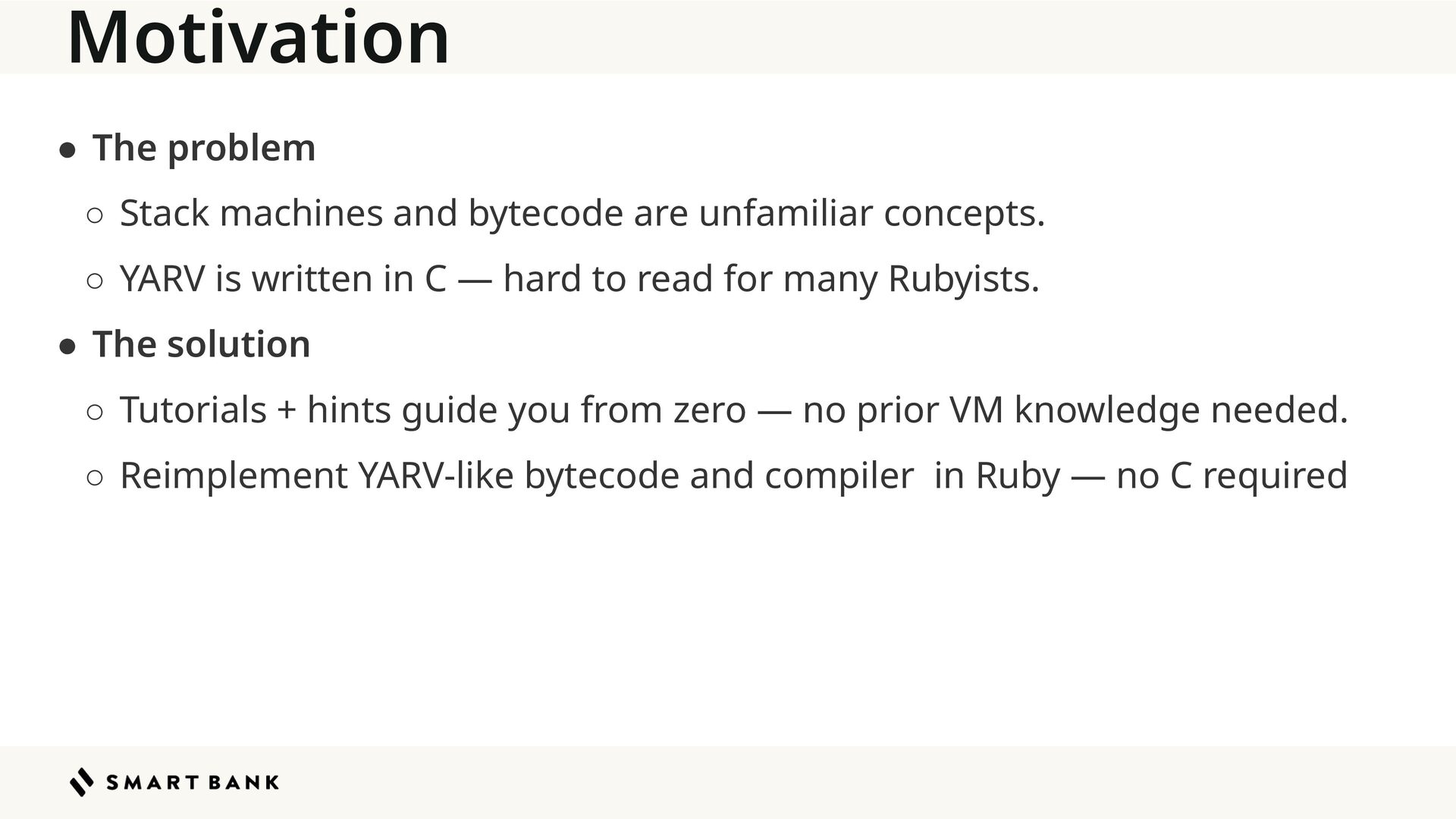
Motivation • The problem ◦ Stack machines and bytecode are
unfamiliar concepts. ◦ YARV is written in C — hard to read for many Rubyists. • The solution ◦ Tutorials + hints guide you from zero — no prior VM knowledge needed. ◦ Reimplement YARV-like bytecode and compiler in Ruby — no C required
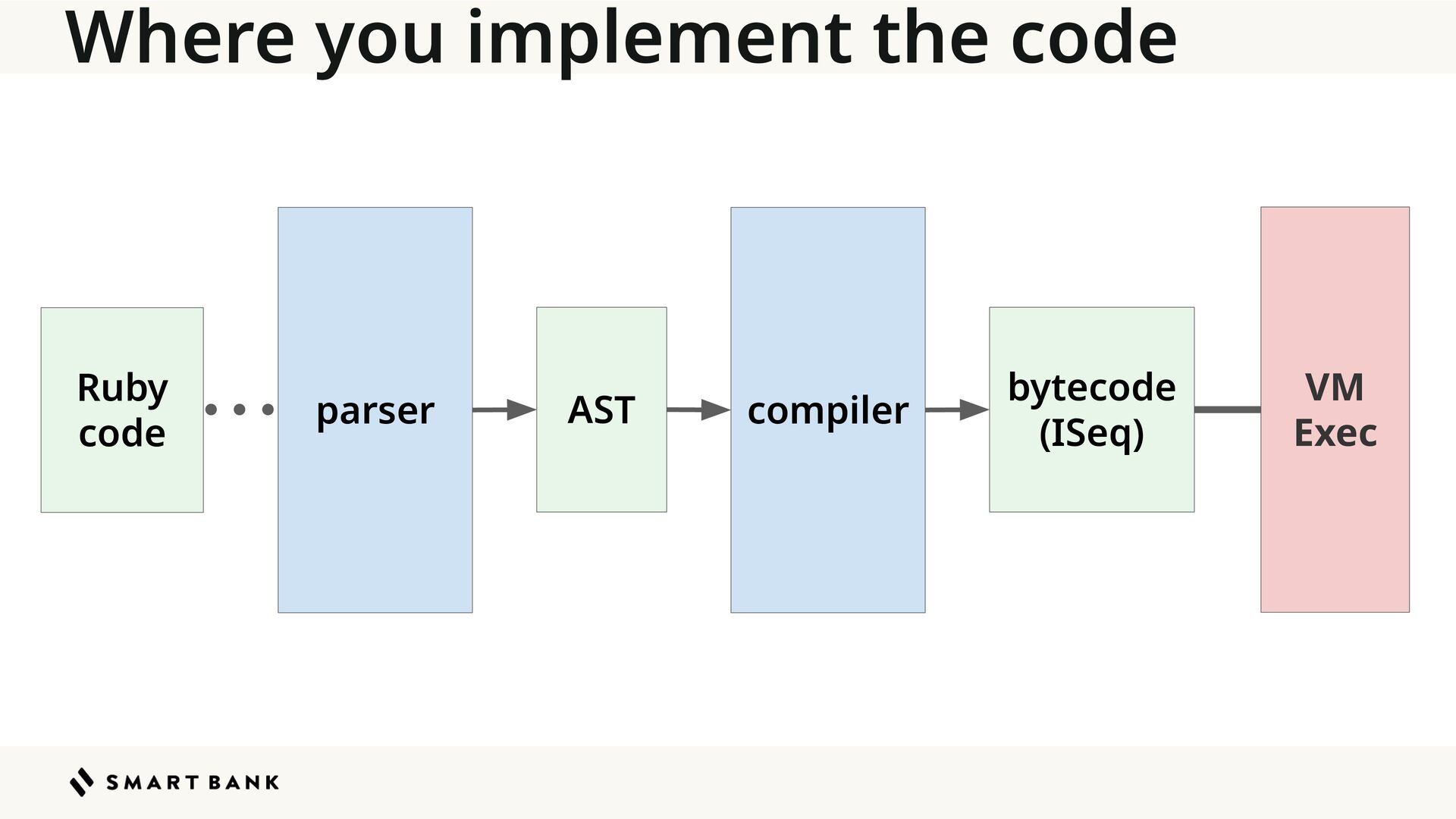
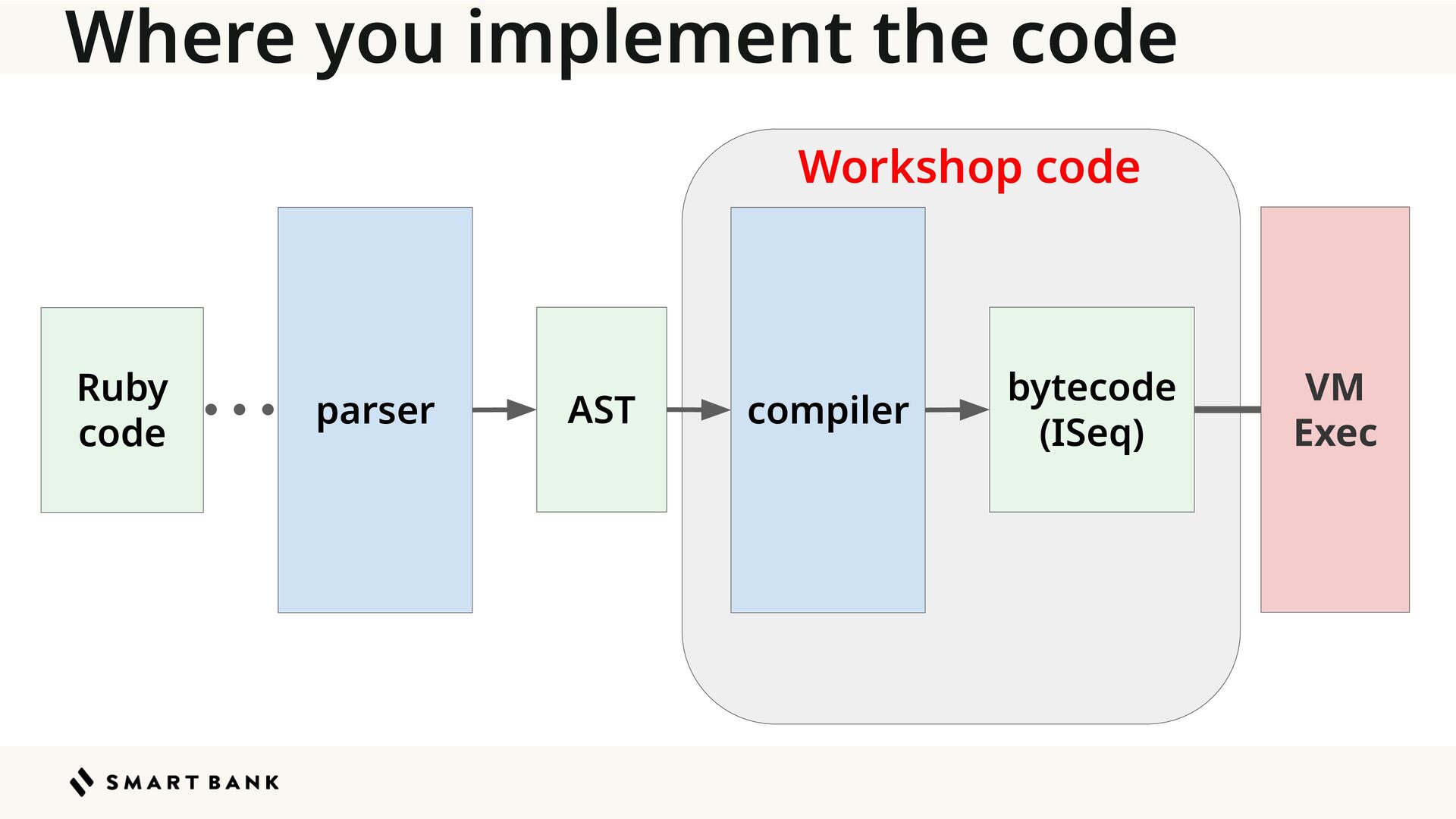
Where you implement the code bytecode (ISeq) AST Ruby code
VM Exec parser compiler
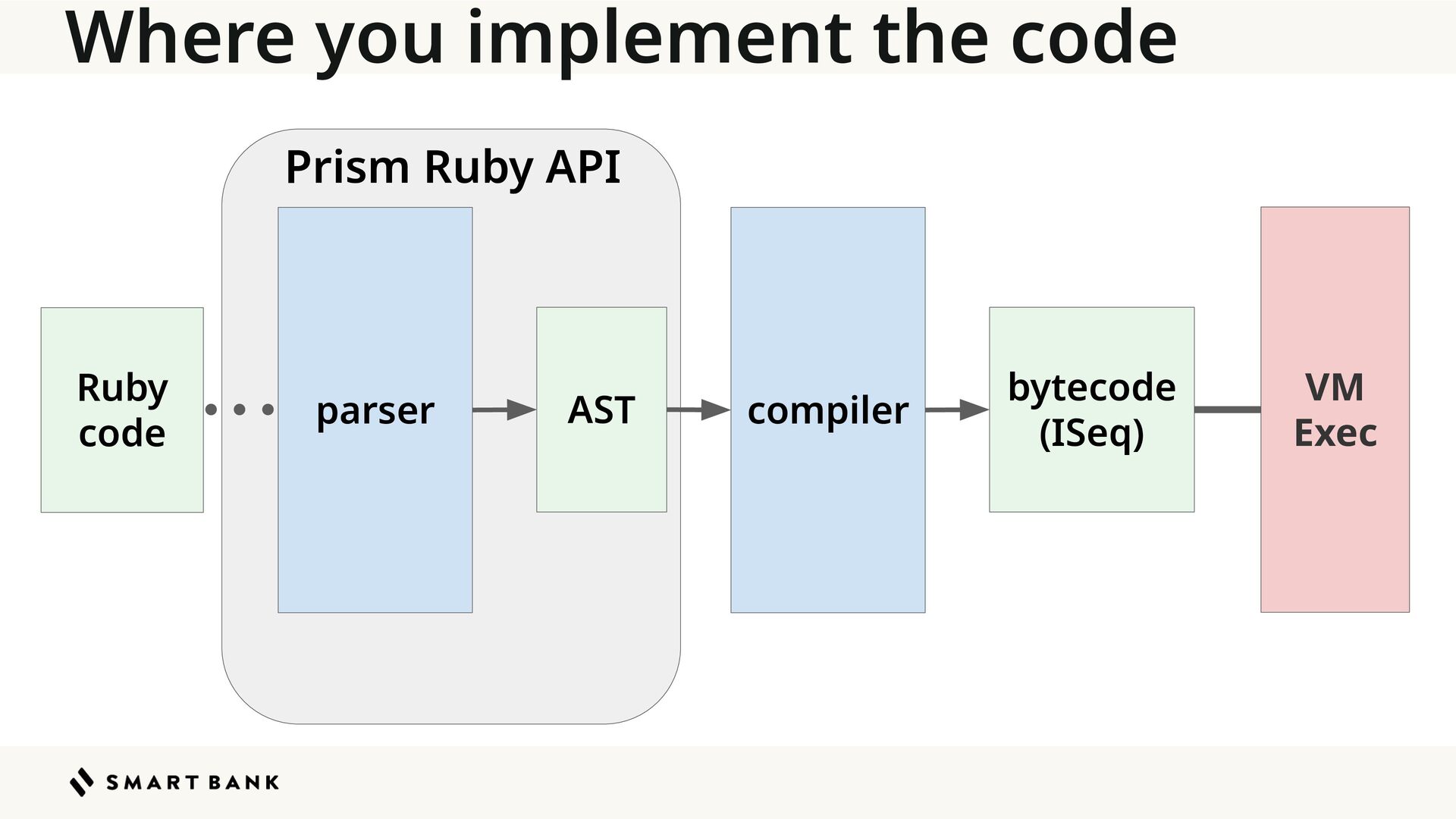
Where you implement the code Prism Ruby API bytecode (ISeq)
AST Ruby code VM Exec parser compiler
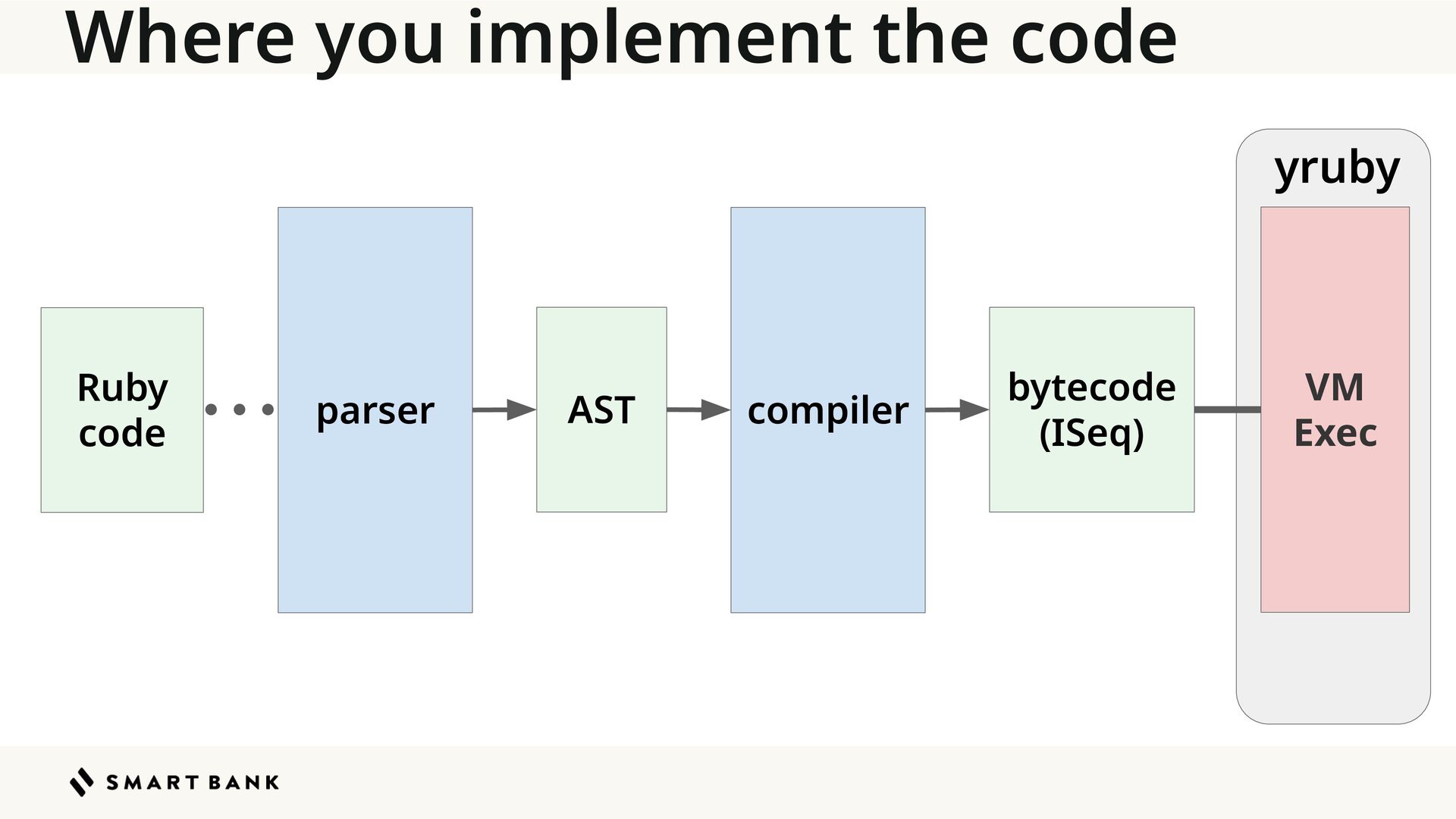
Where you implement the code yruby bytecode (ISeq) AST Ruby
code VM Exec parser compiler
Where you implement the code Workshop code bytecode (ISeq) AST
Ruby code VM Exec parser compiler
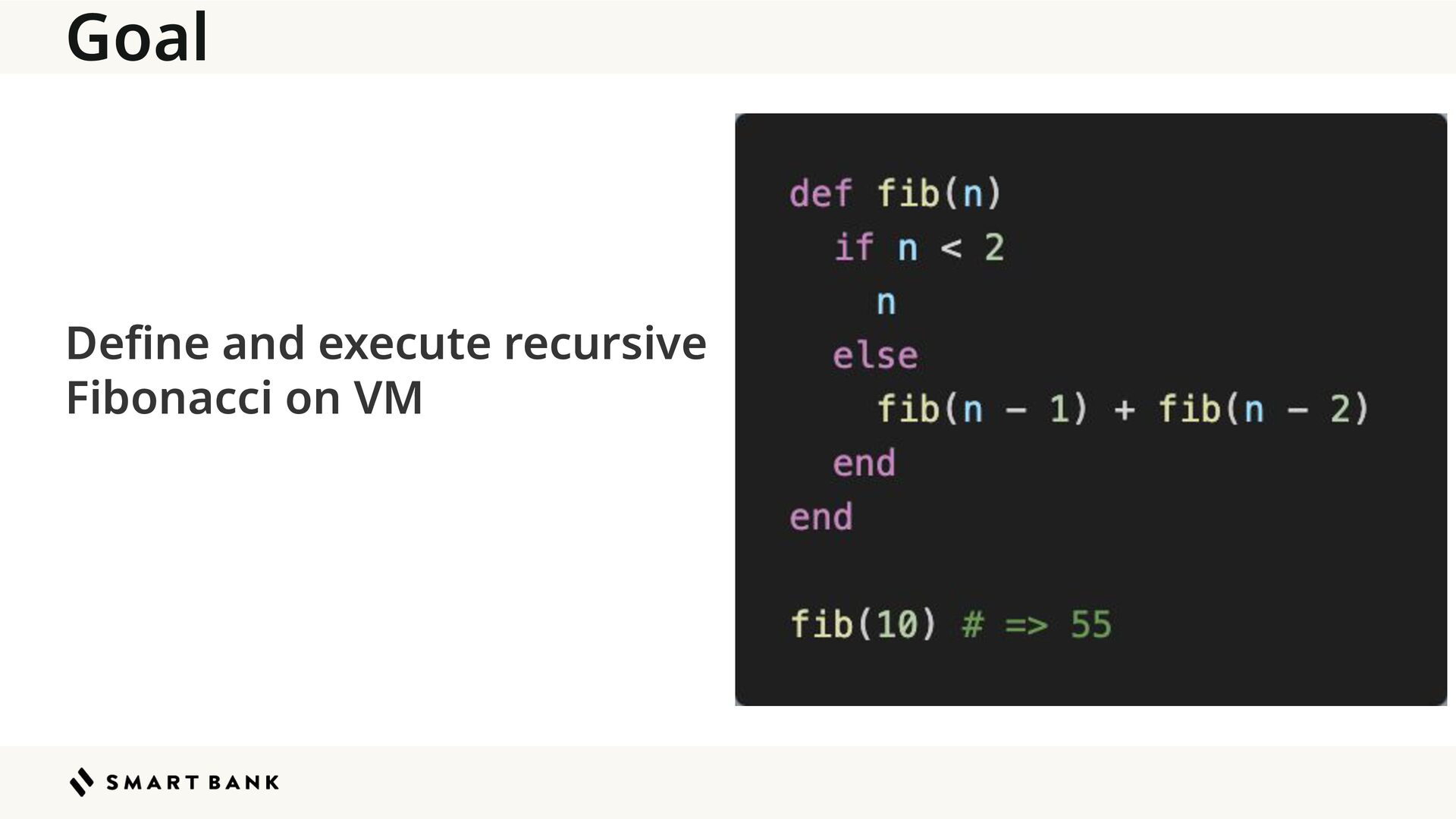
Goal Define and execute recursive Fibonacci on VM
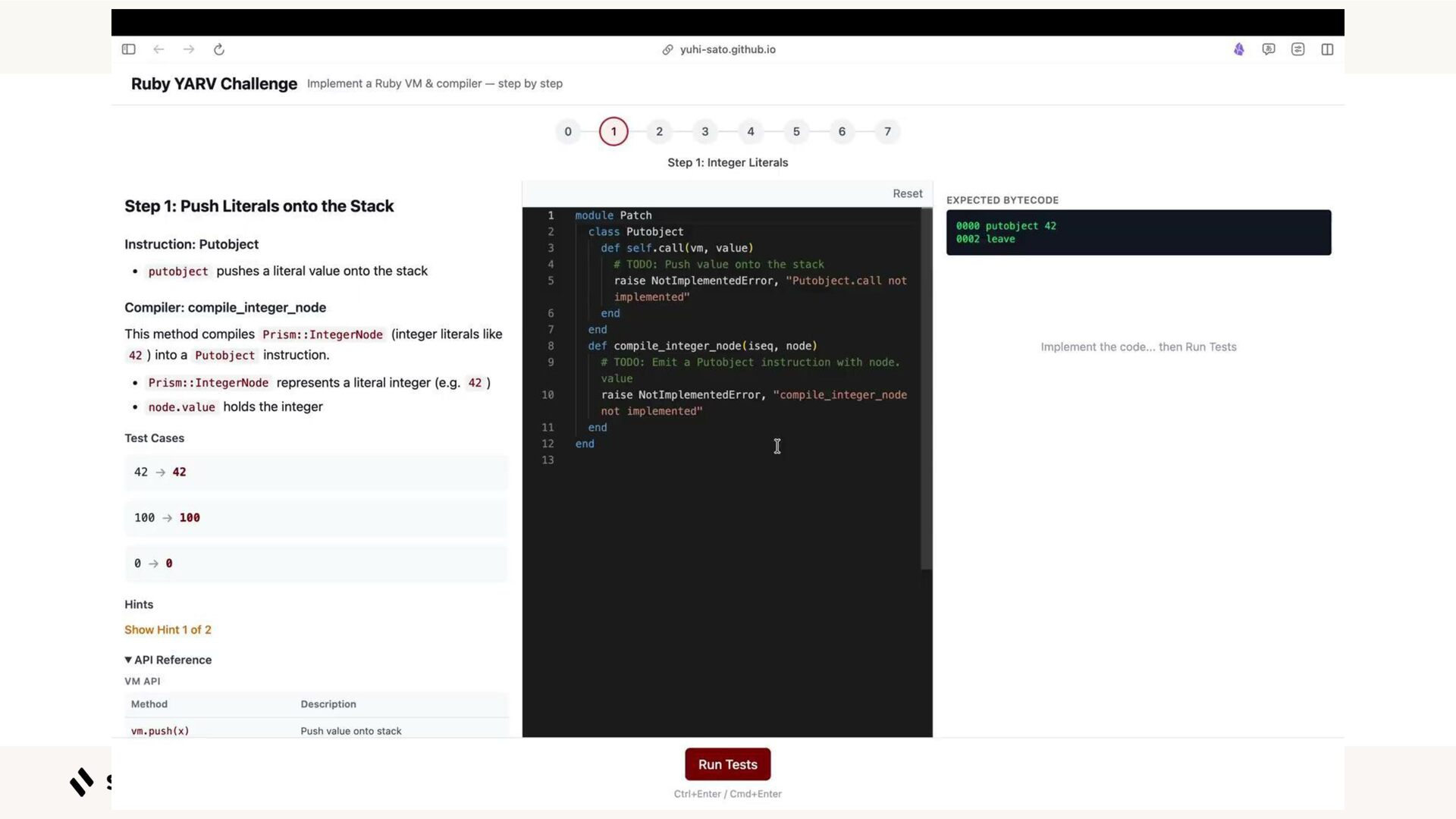
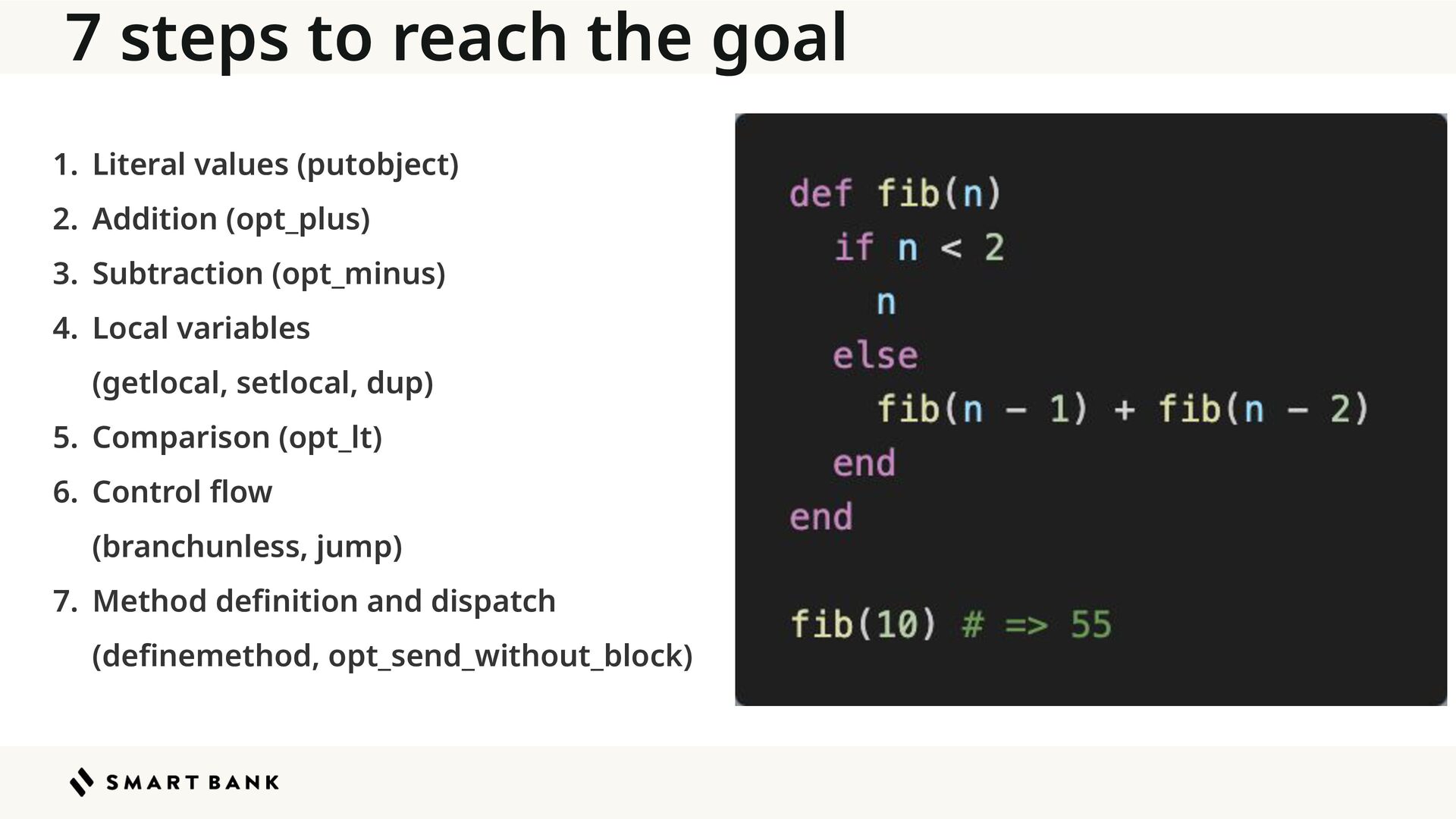
7 steps to reach the goal 1. Literal values (putobject)
2. Addition (opt_plus) 3. Subtraction (opt_minus) 4. Local variables (getlocal, setlocal, dup) 5. Comparison (opt_lt) 6. Control flow (branchunless, jump) 7. Method definition and dispatch (definemethod, opt_send_without_block)
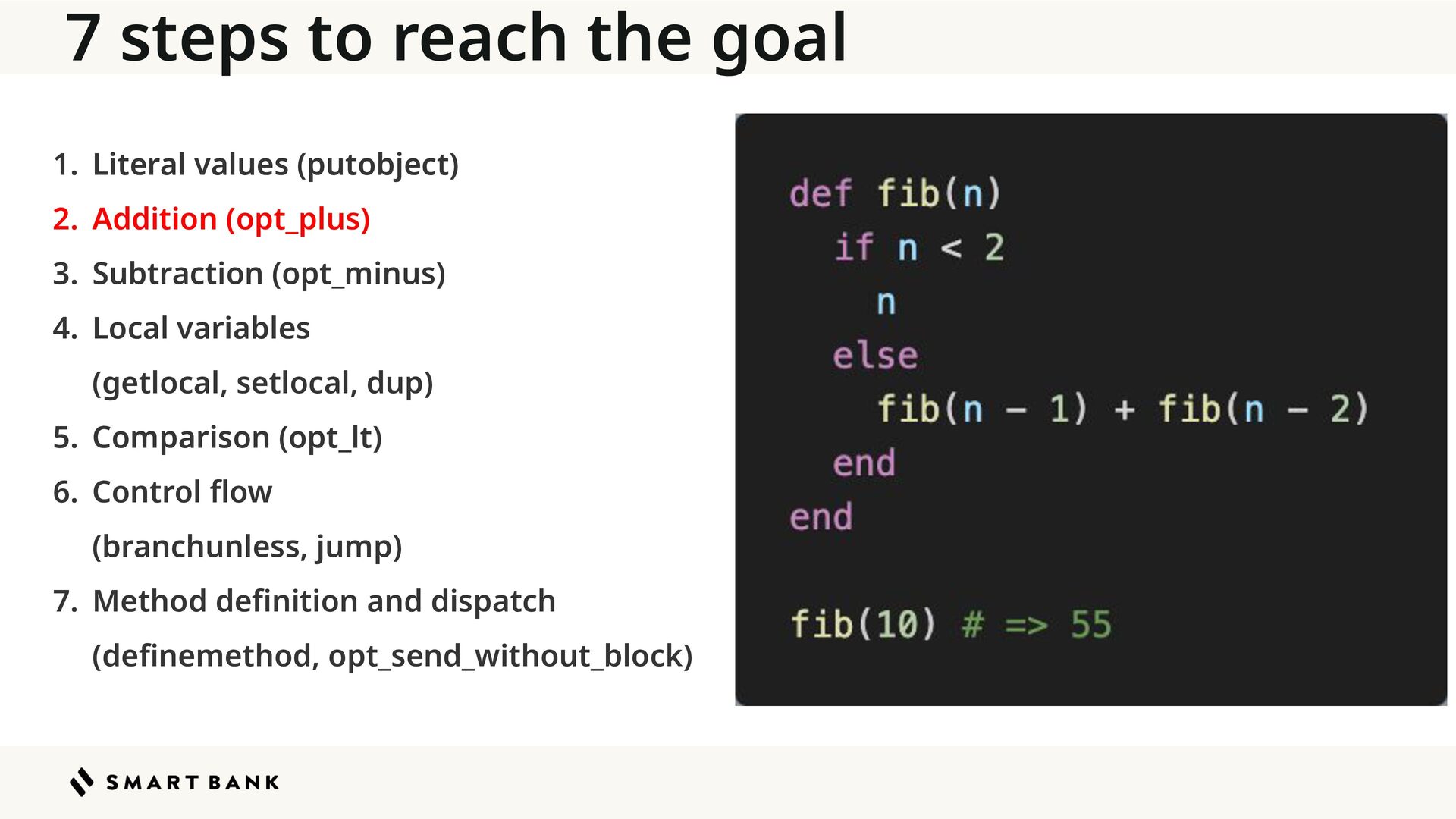
7 steps to reach the goal 1. Literal values (putobject)
2. Addition (opt_plus) 3. Subtraction (opt_minus) 4. Local variables (getlocal, setlocal, dup) 5. Comparison (opt_lt) 6. Control flow (branchunless, jump) 7. Method definition and dispatch (definemethod, opt_send_without_block)
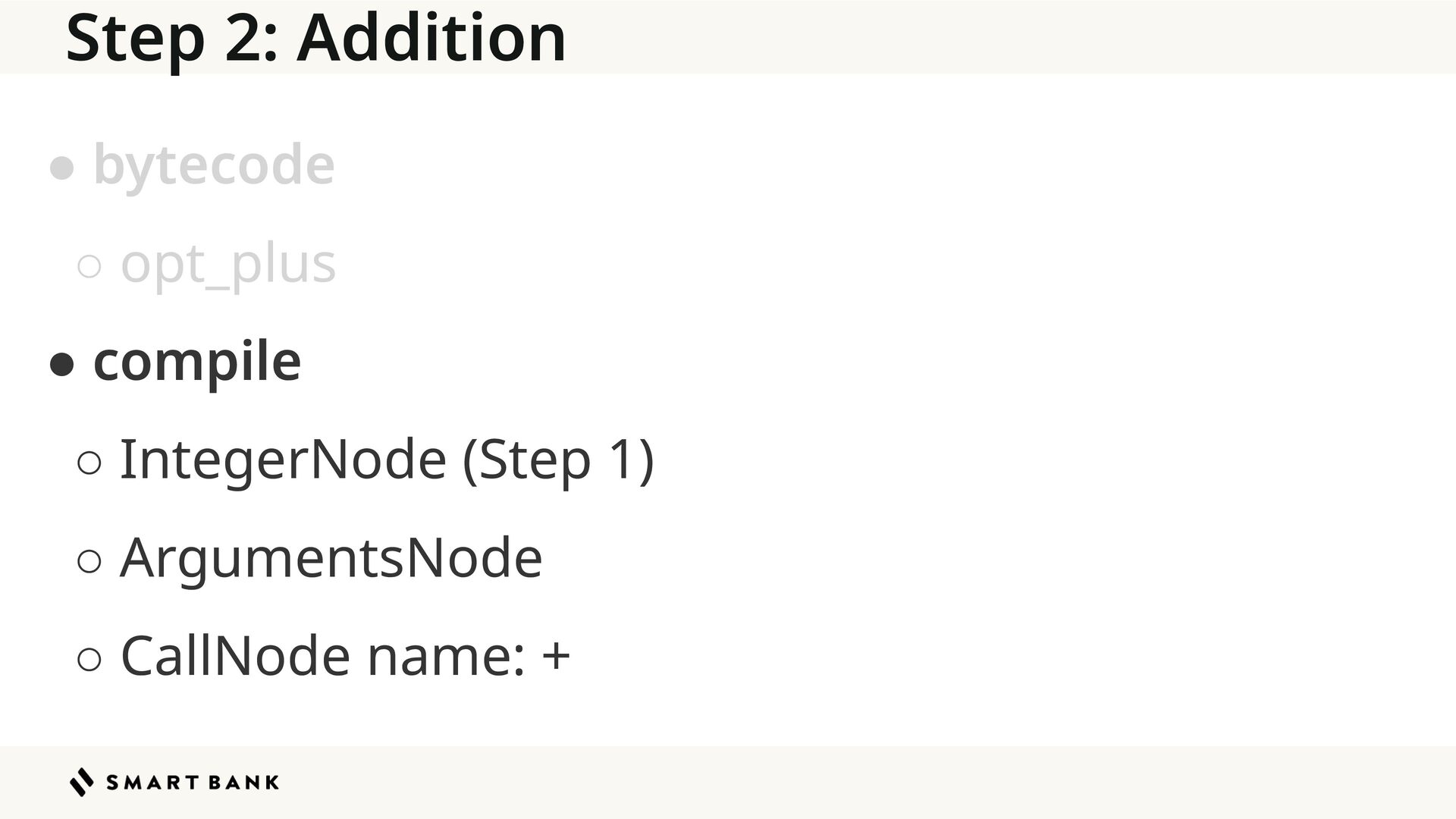
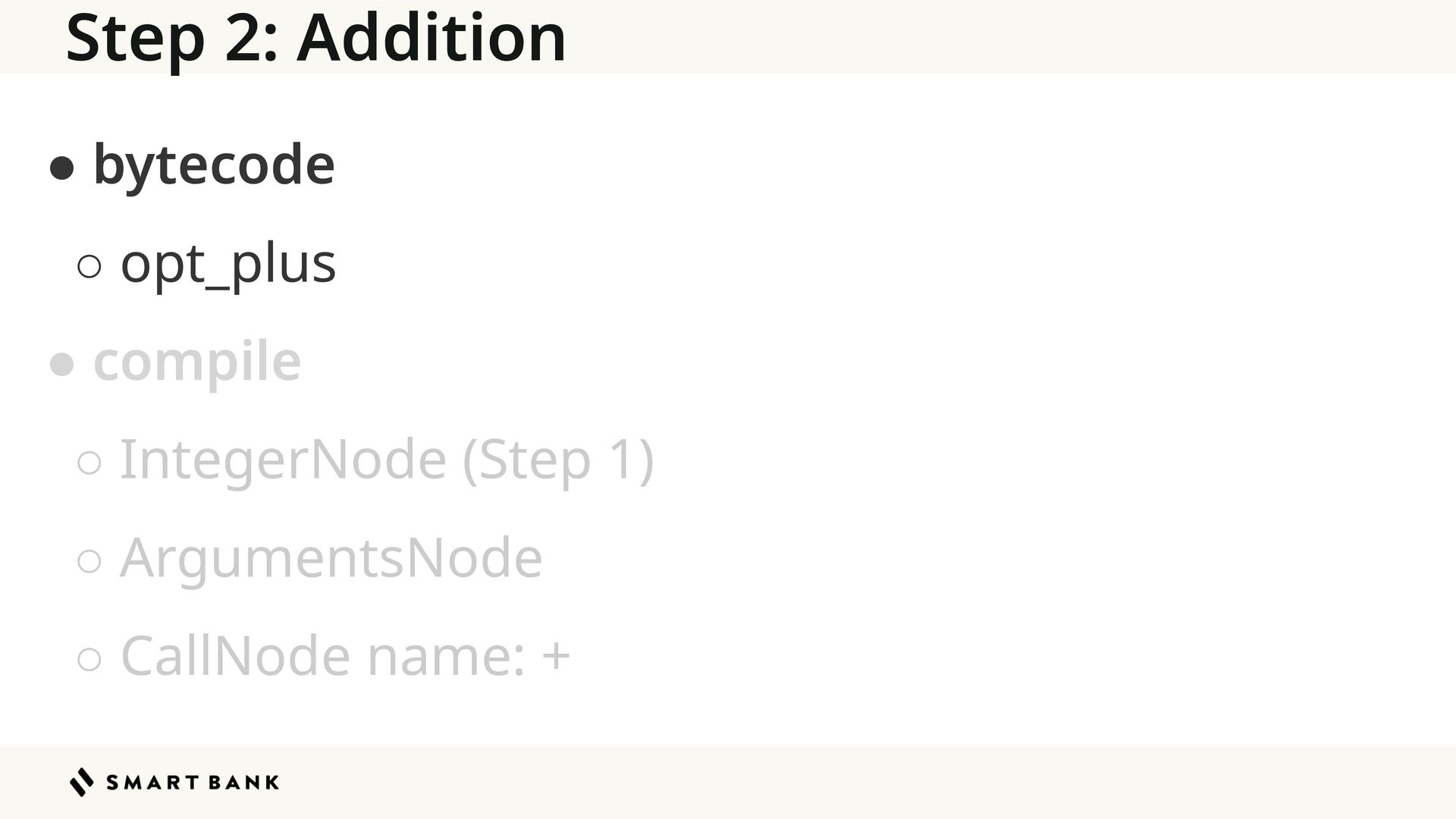
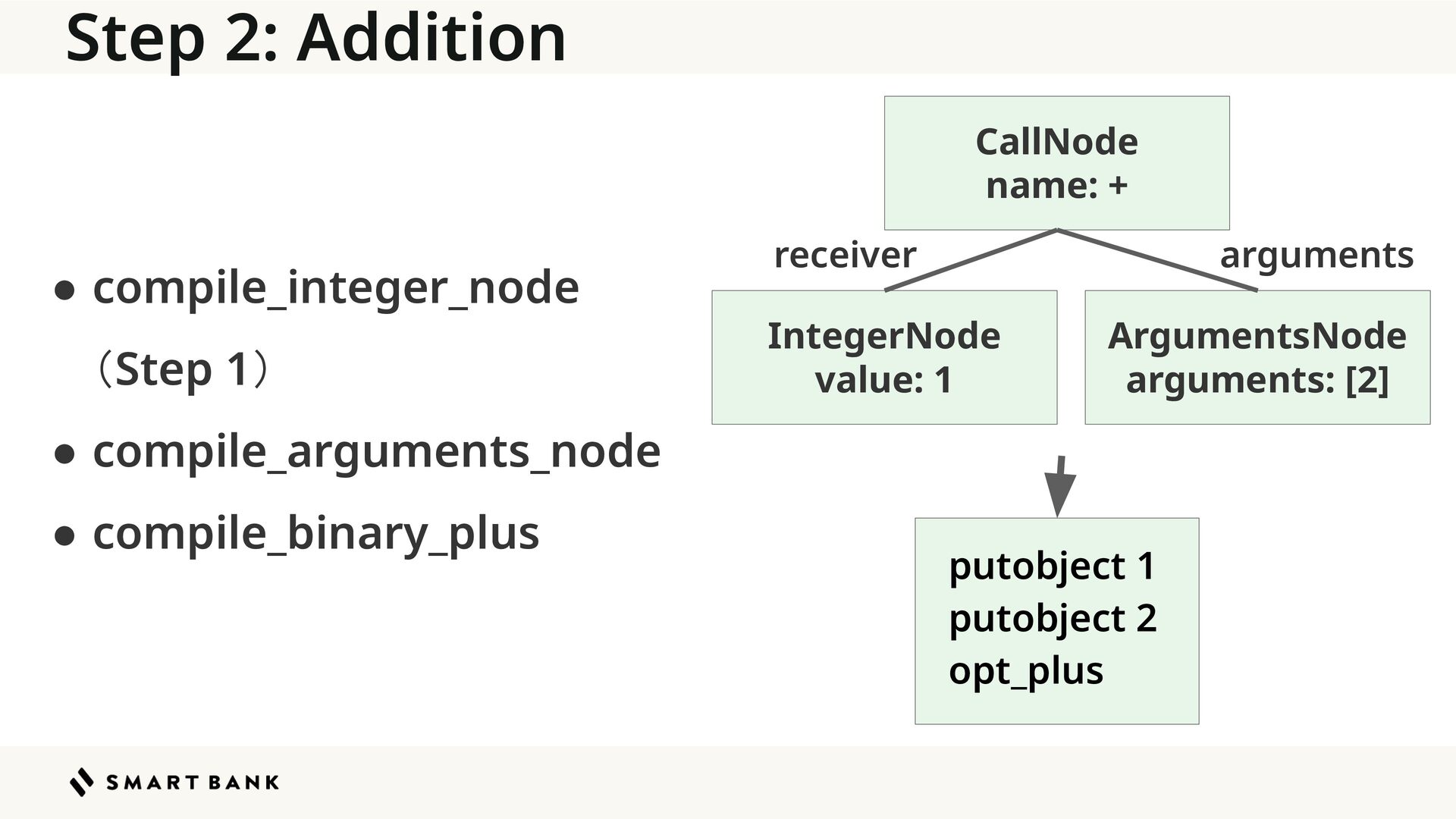
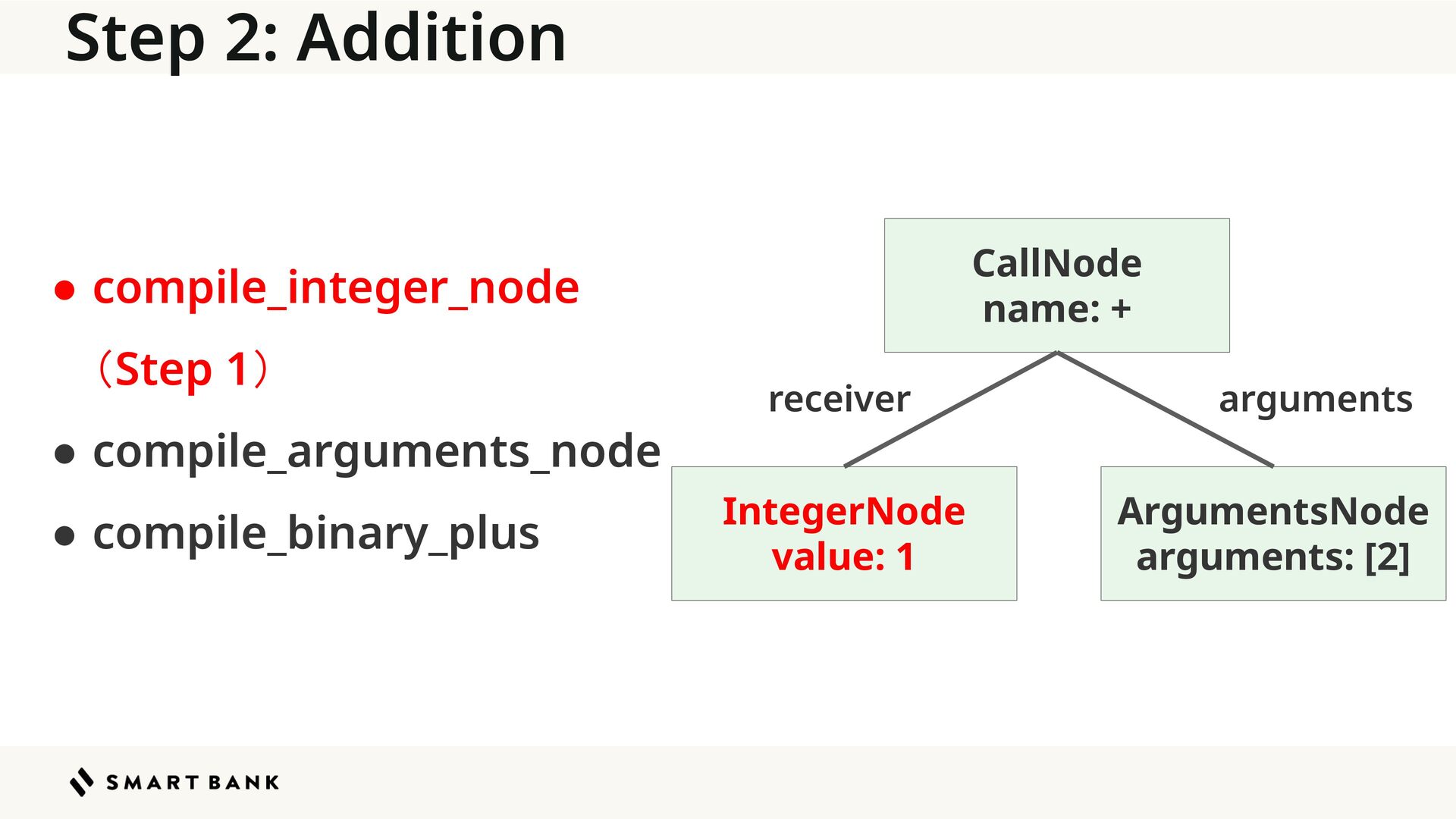
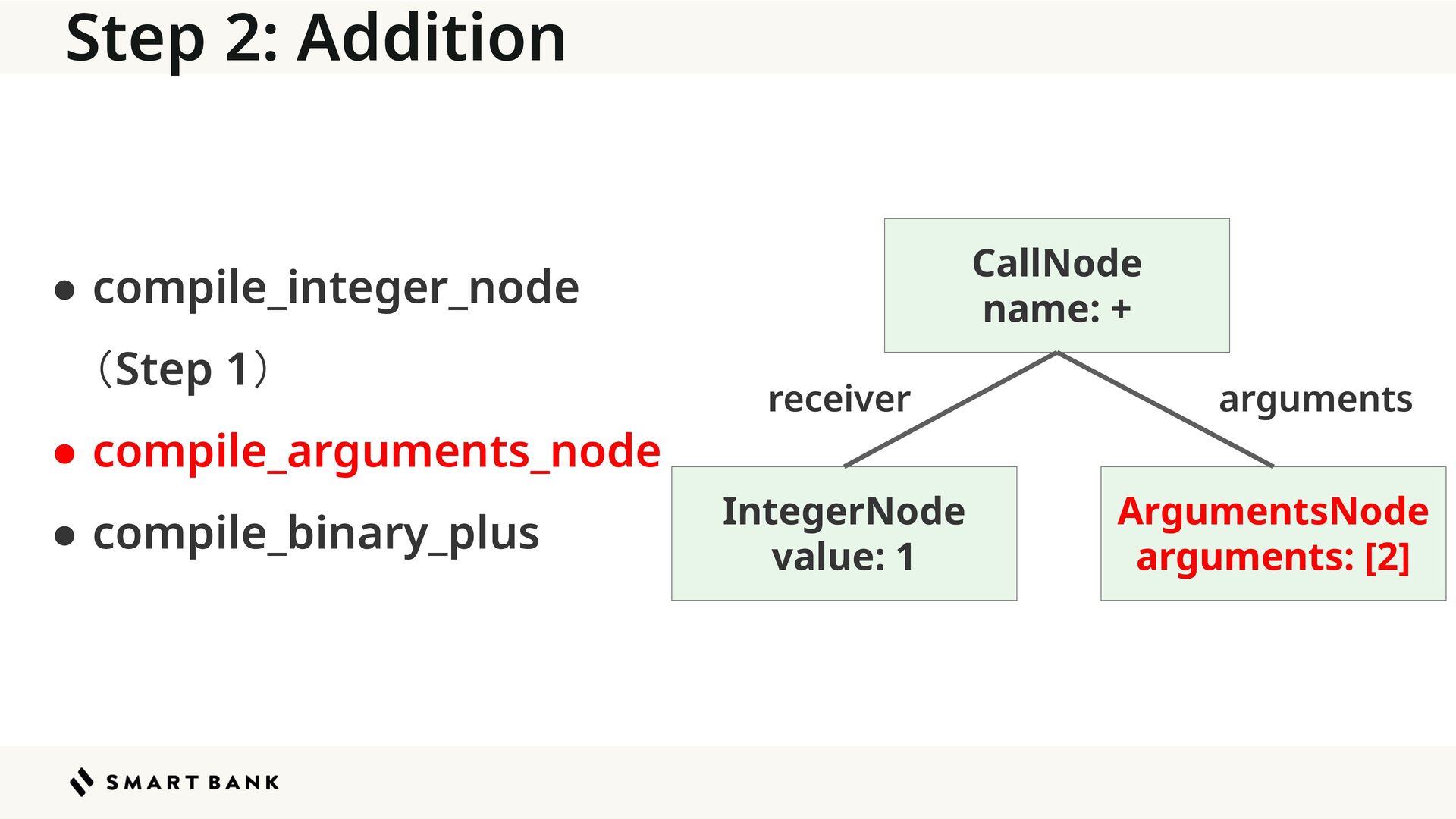
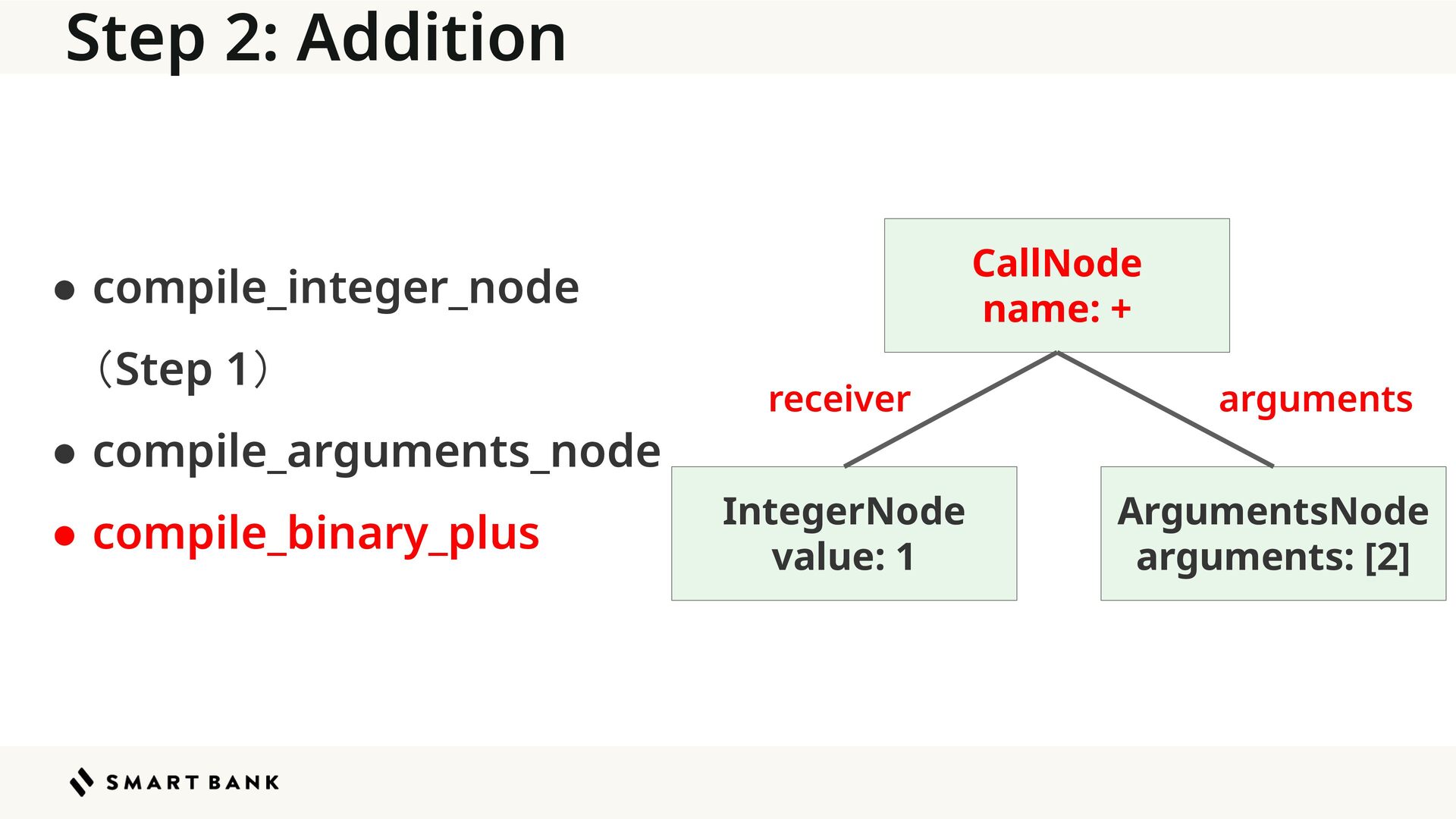
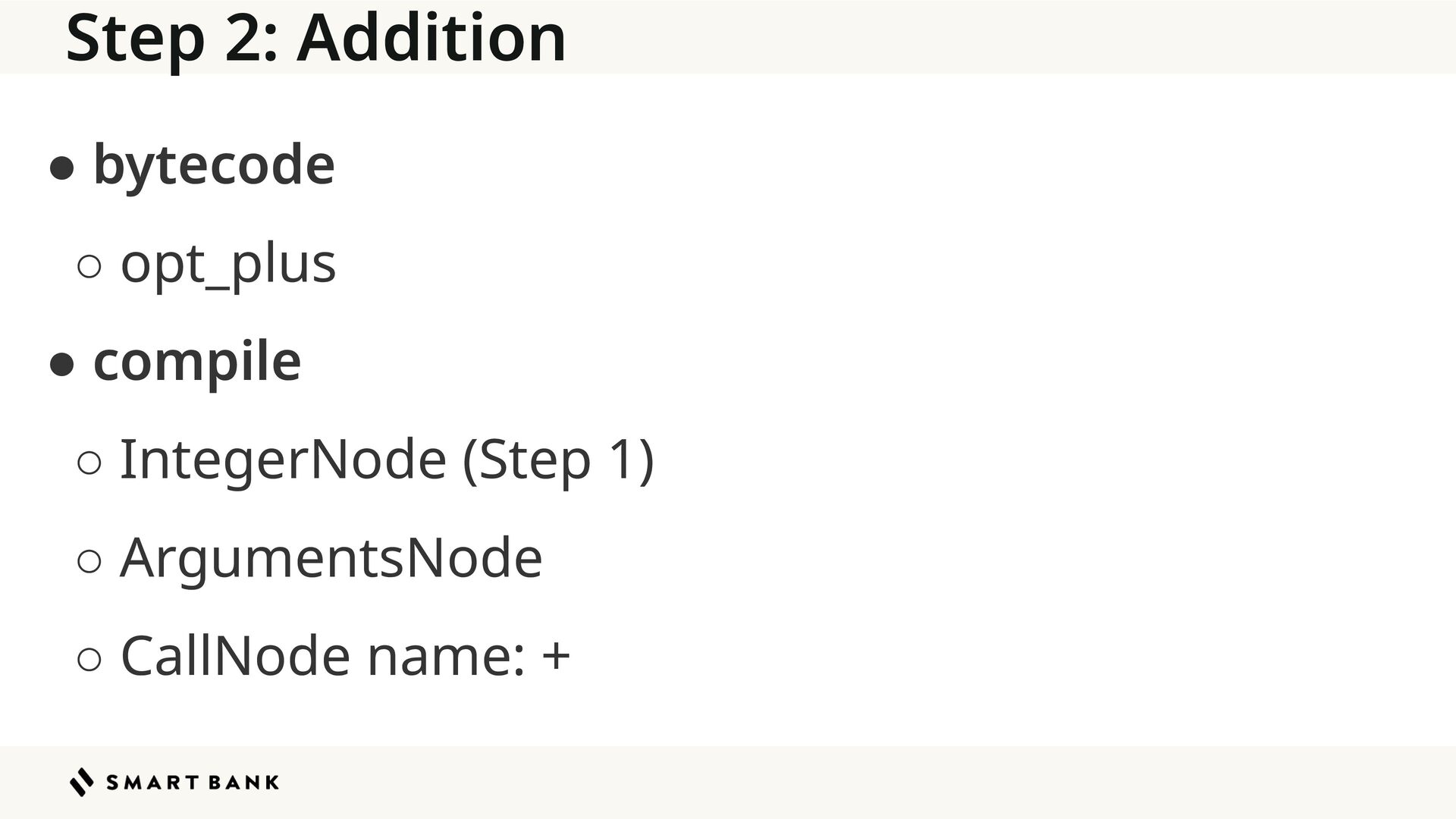
Step 2: Addition • bytecode ◦ opt_plus • compile ◦
IntegerNode (Step 1) ◦ ArgumentsNode ◦ CallNode name: +
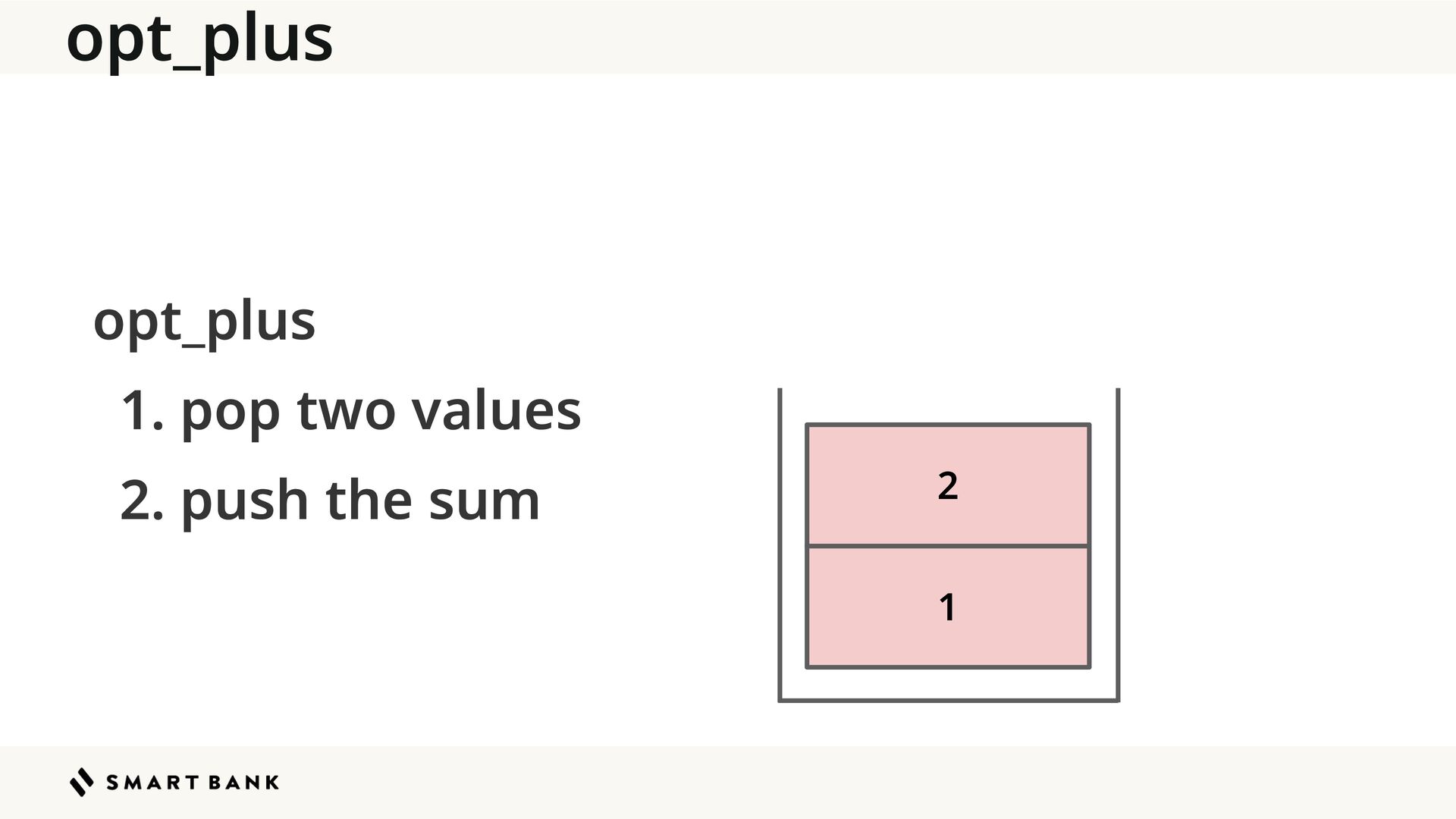
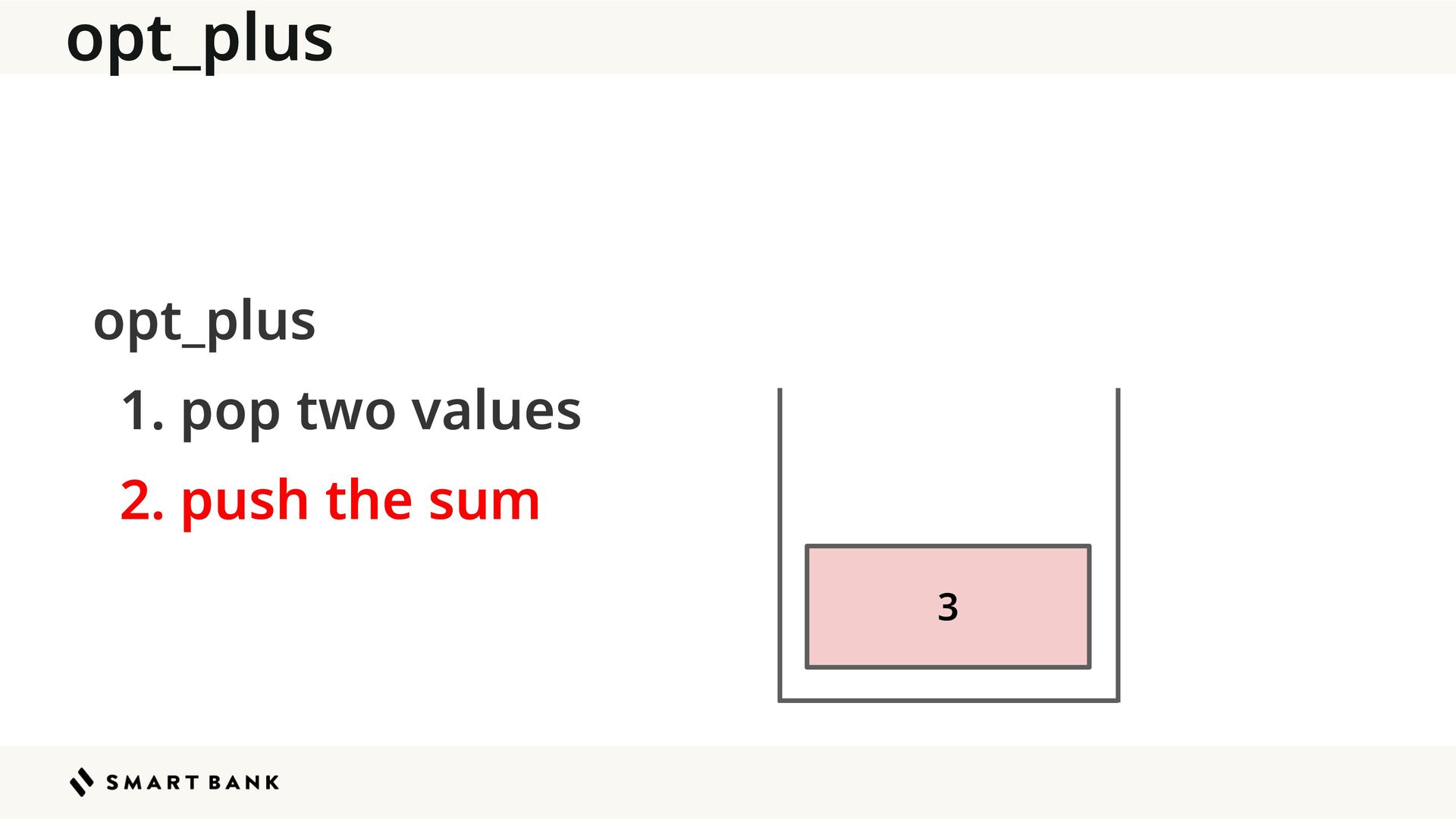
opt_plus opt_plus 1. pop two values 2. push the sum
1 2
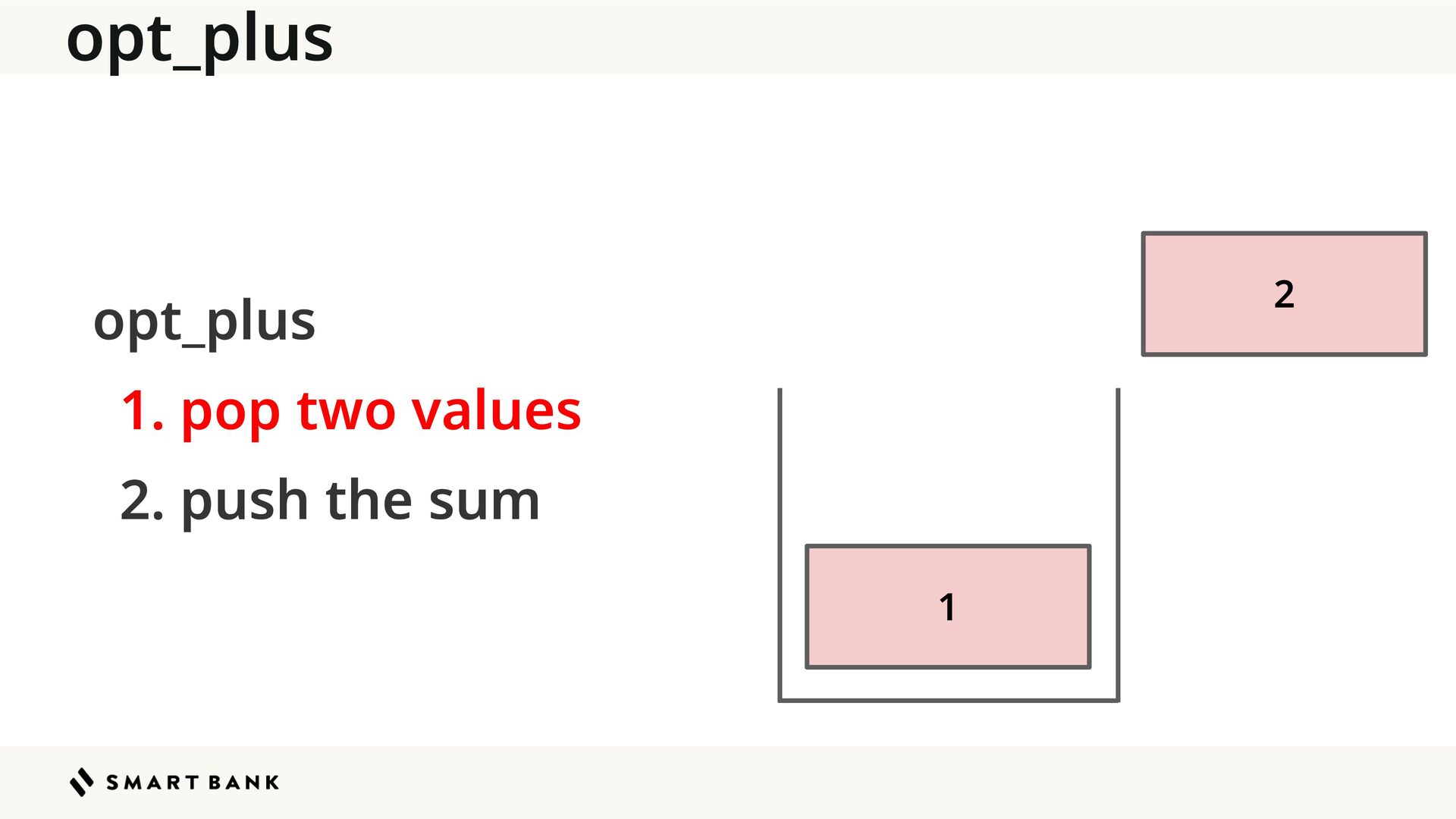
opt_plus opt_plus 1. pop two values 2. push the sum
1 2
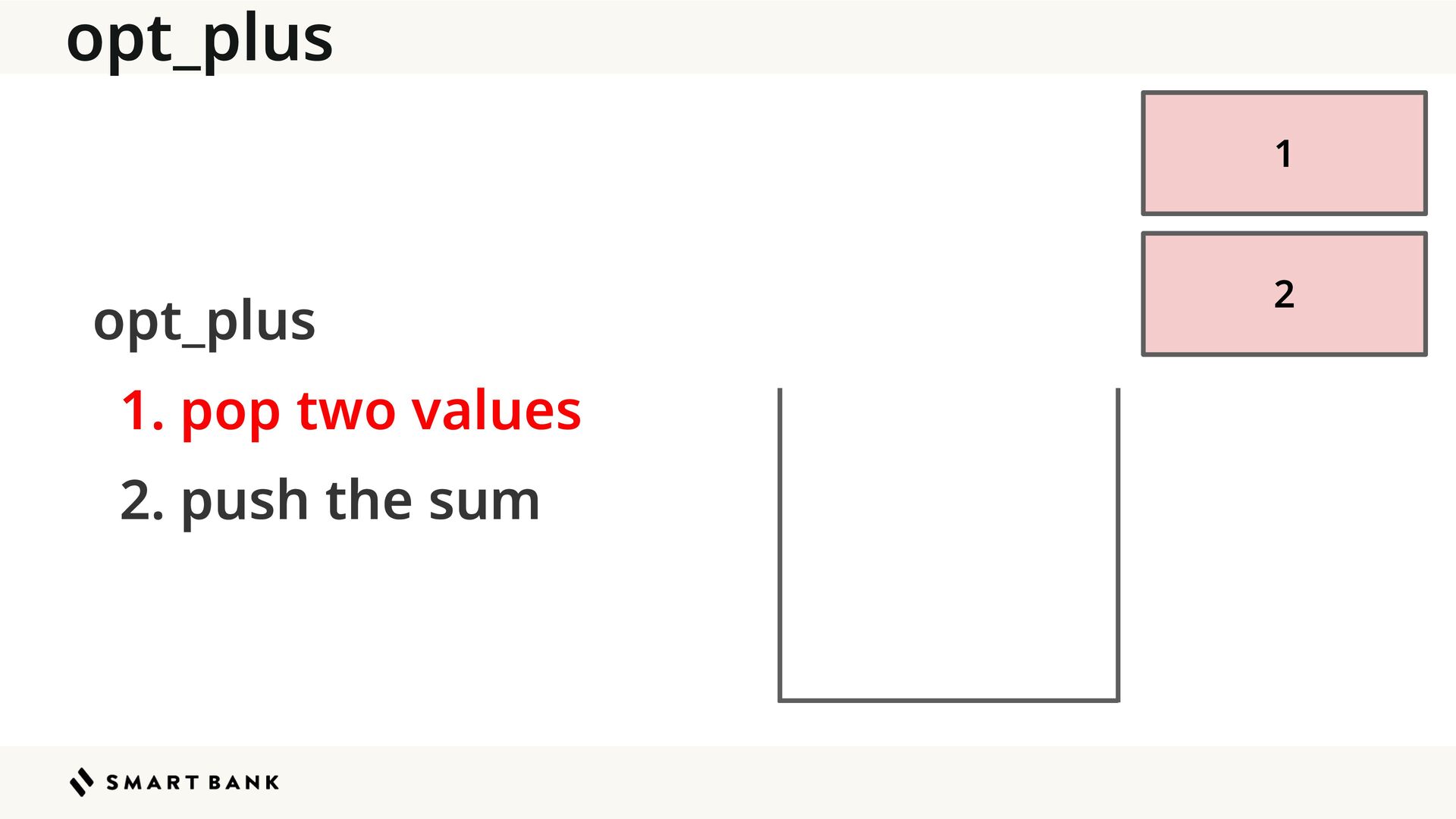
opt_plus opt_plus 1. pop two values 2. push the sum
1 2
opt_plus opt_plus 1. pop two values 2. push the sum
3
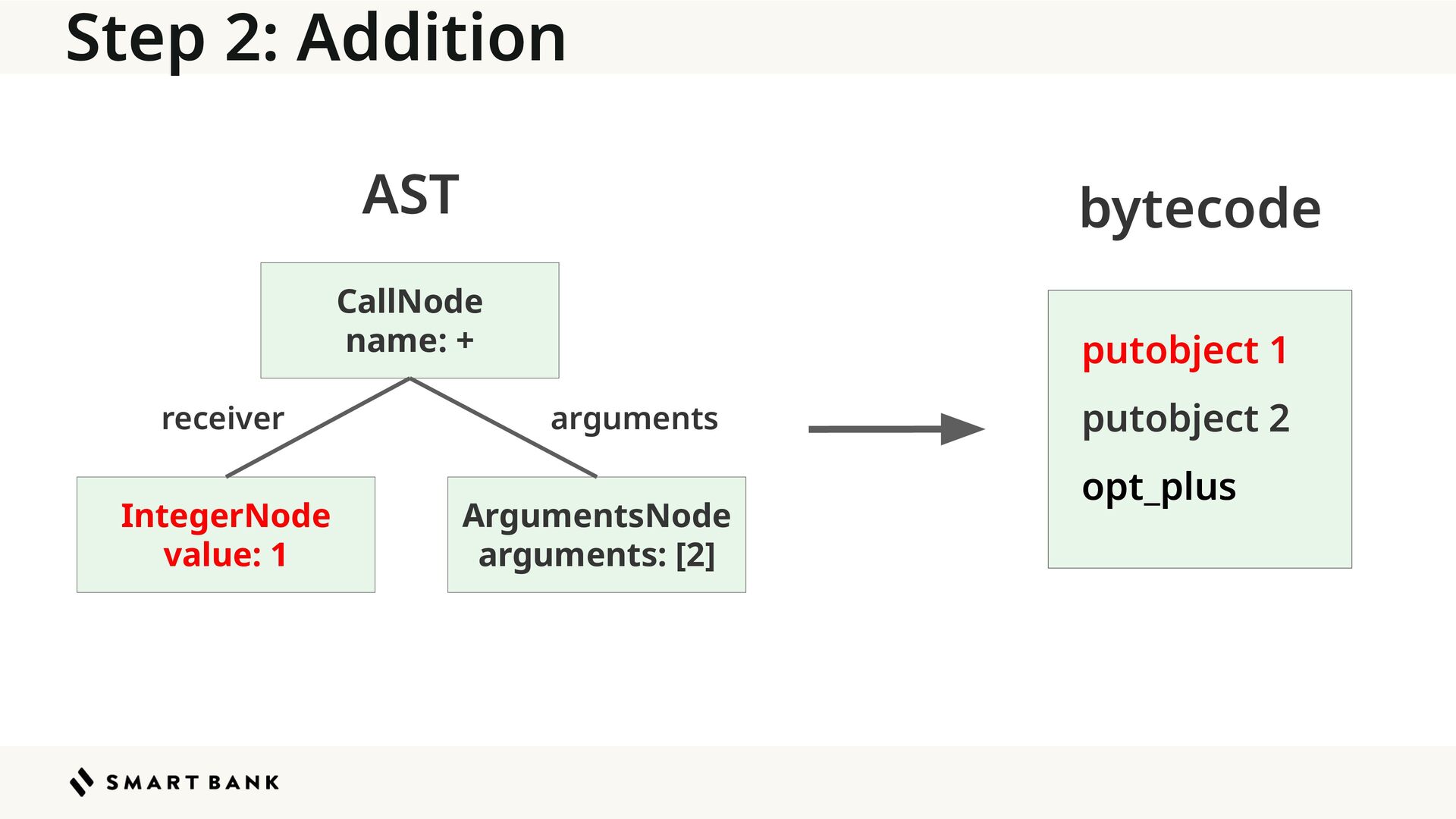
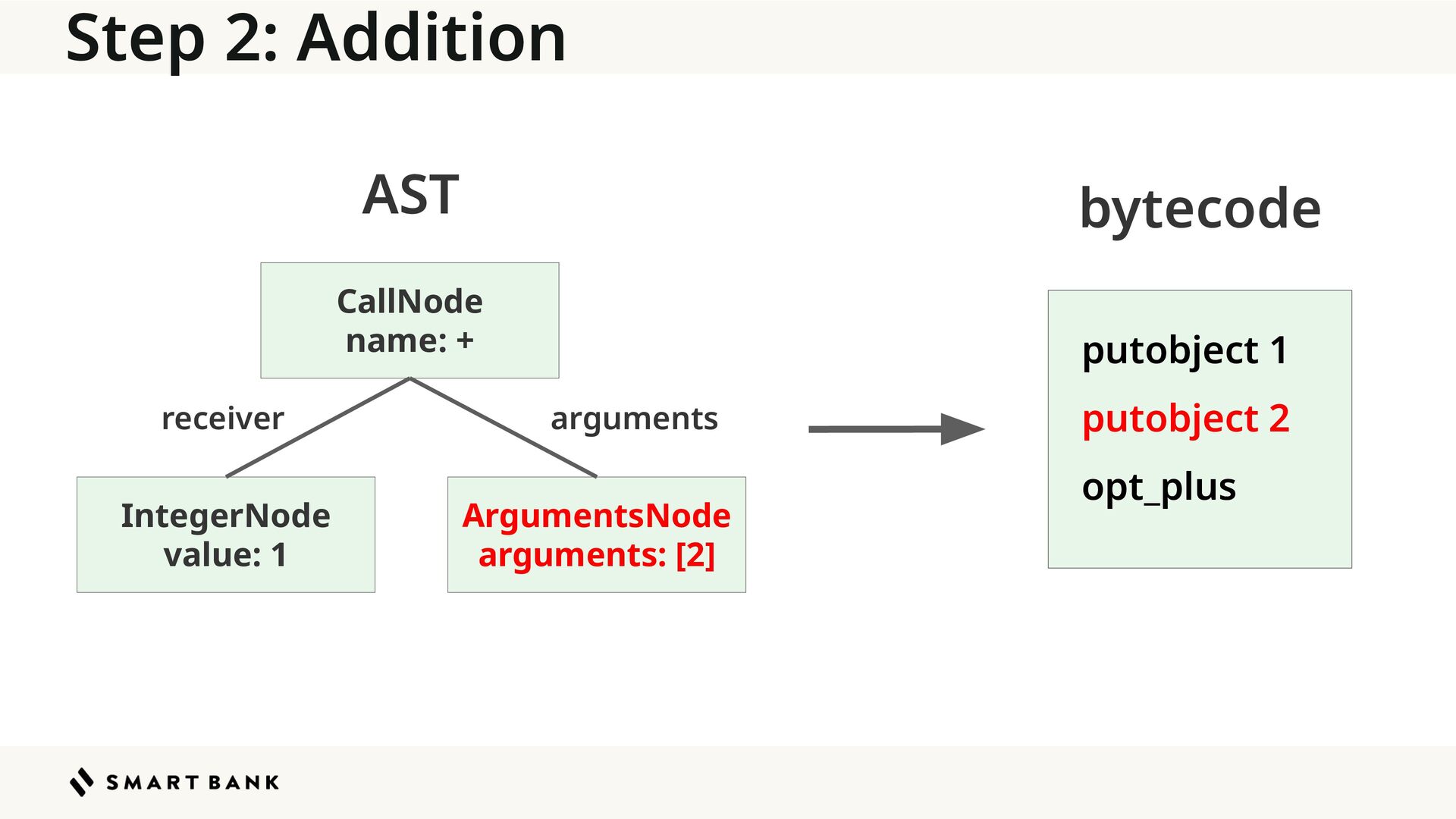
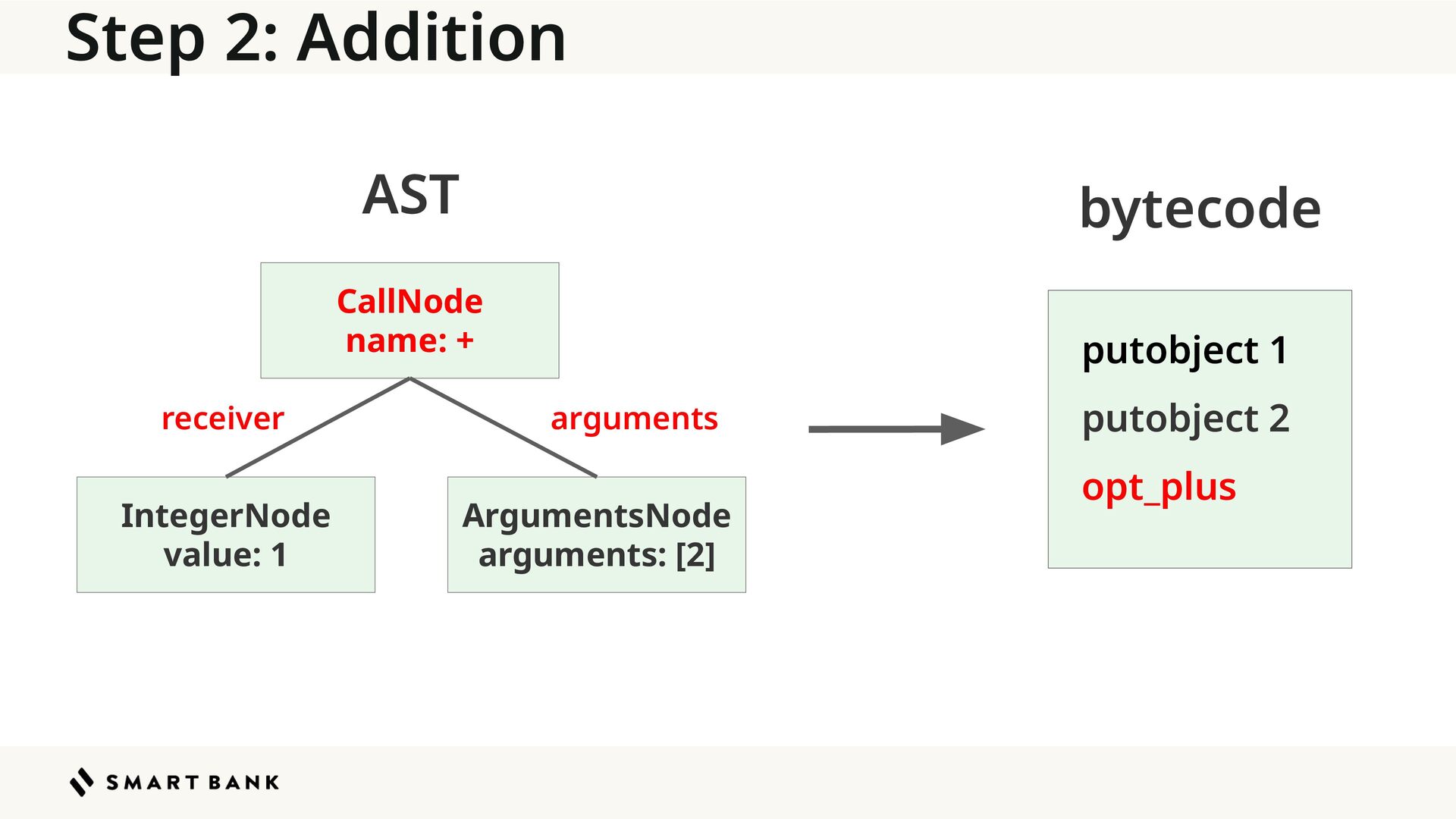
Compiler CallNode name: + IntegerNode value: 1 ArgumentsNode arguments: [2]
receiver arguments putobject 1 putobject 2 opt_plus AST bytecode
Demo: Step 2 URL: https://yuhi-sato.github.io/ruby-yarv-challenge
Let’s try! URL: https://yuhi-sato.github.io/ruby-yarv-challenge
None
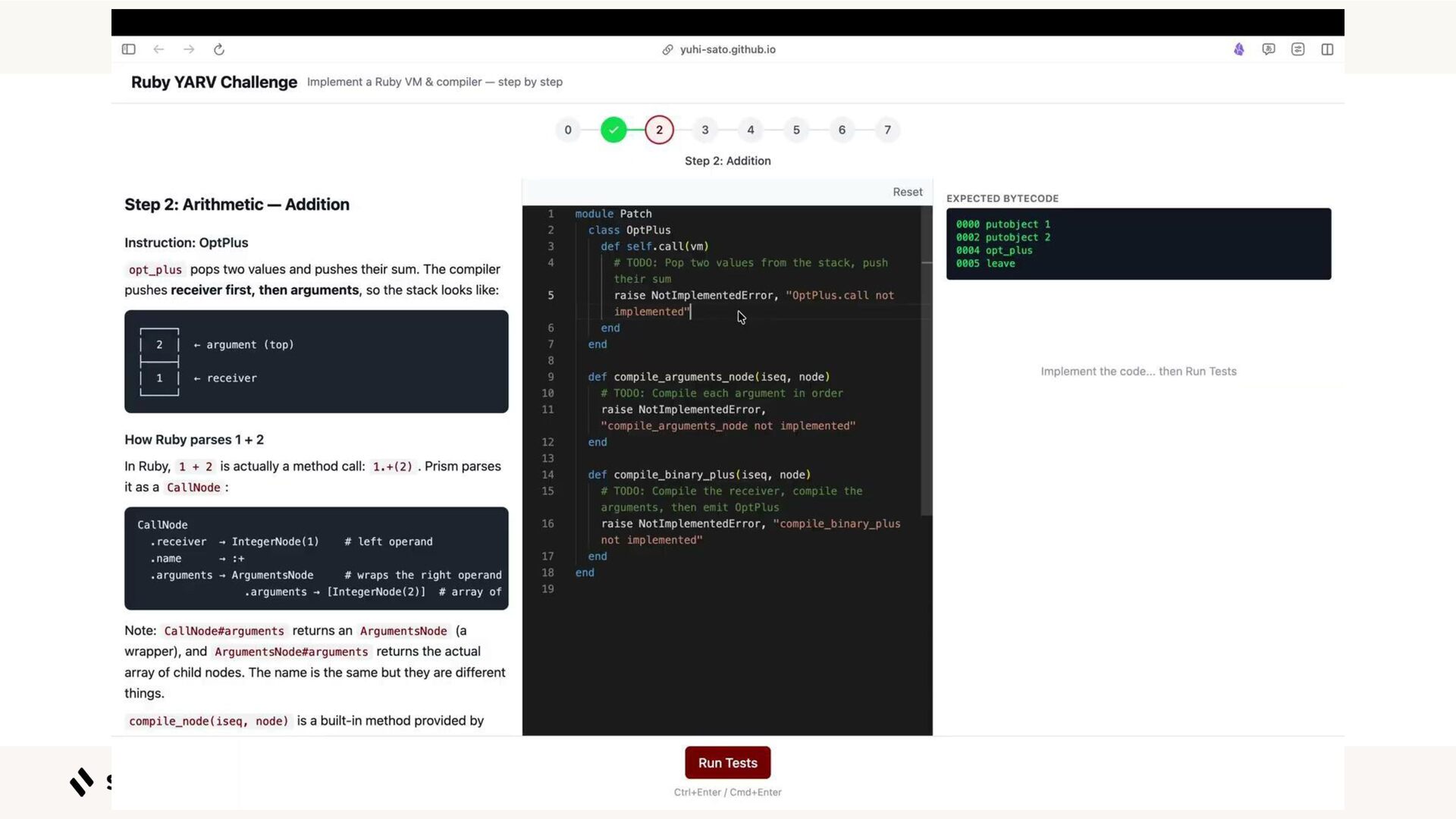
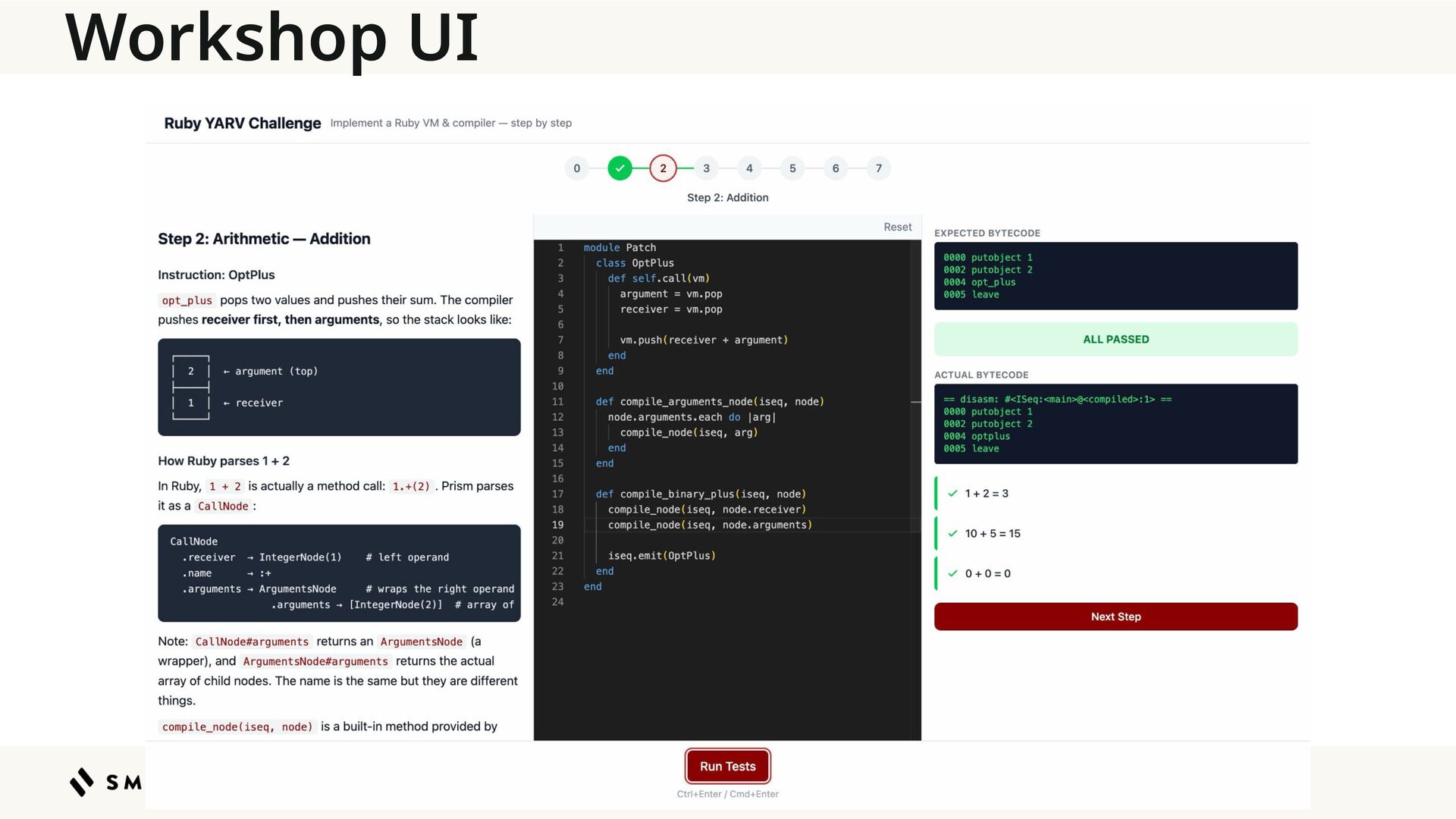
Workshop UI
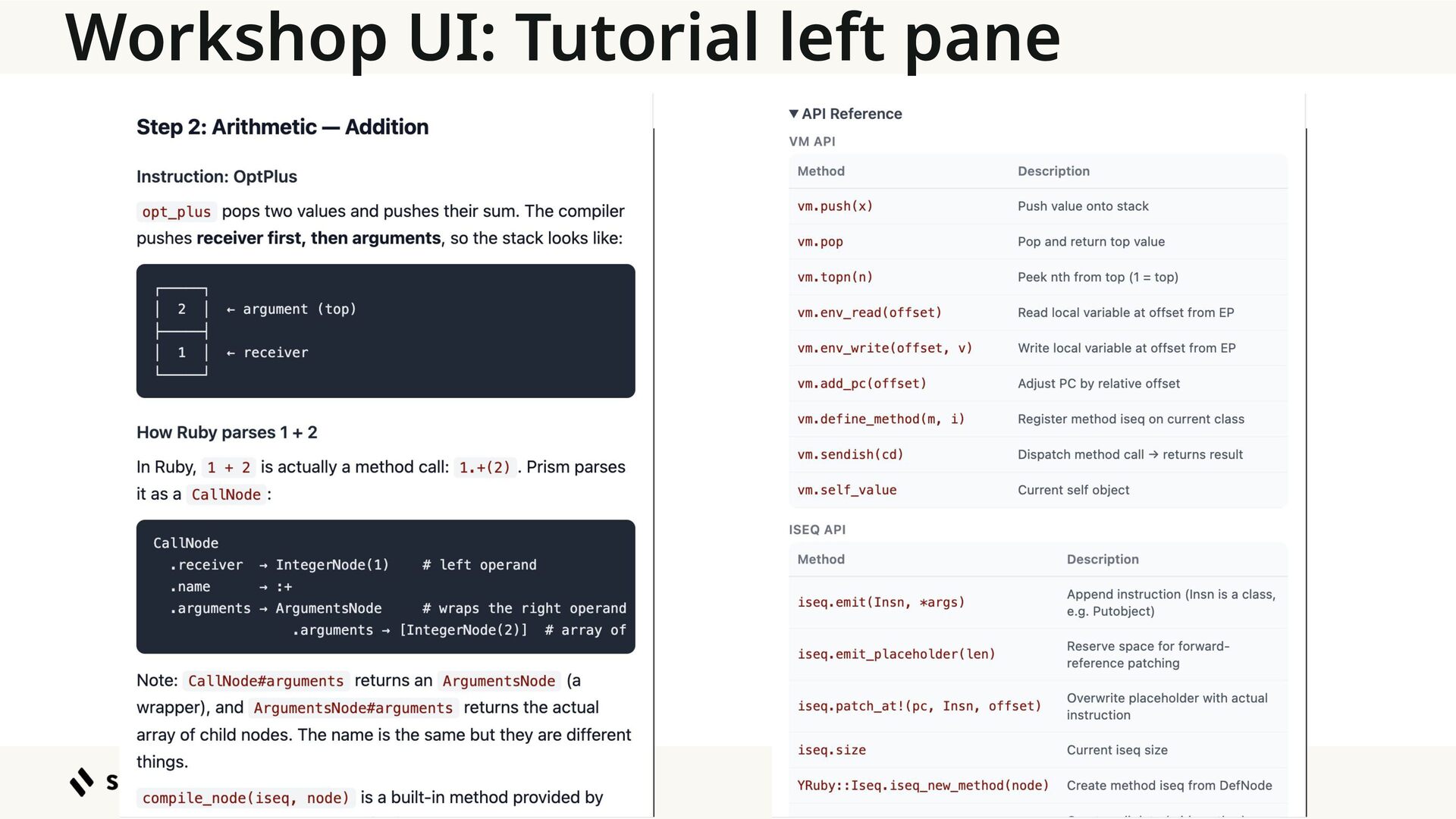
Workshop UI: Tutorial left pane
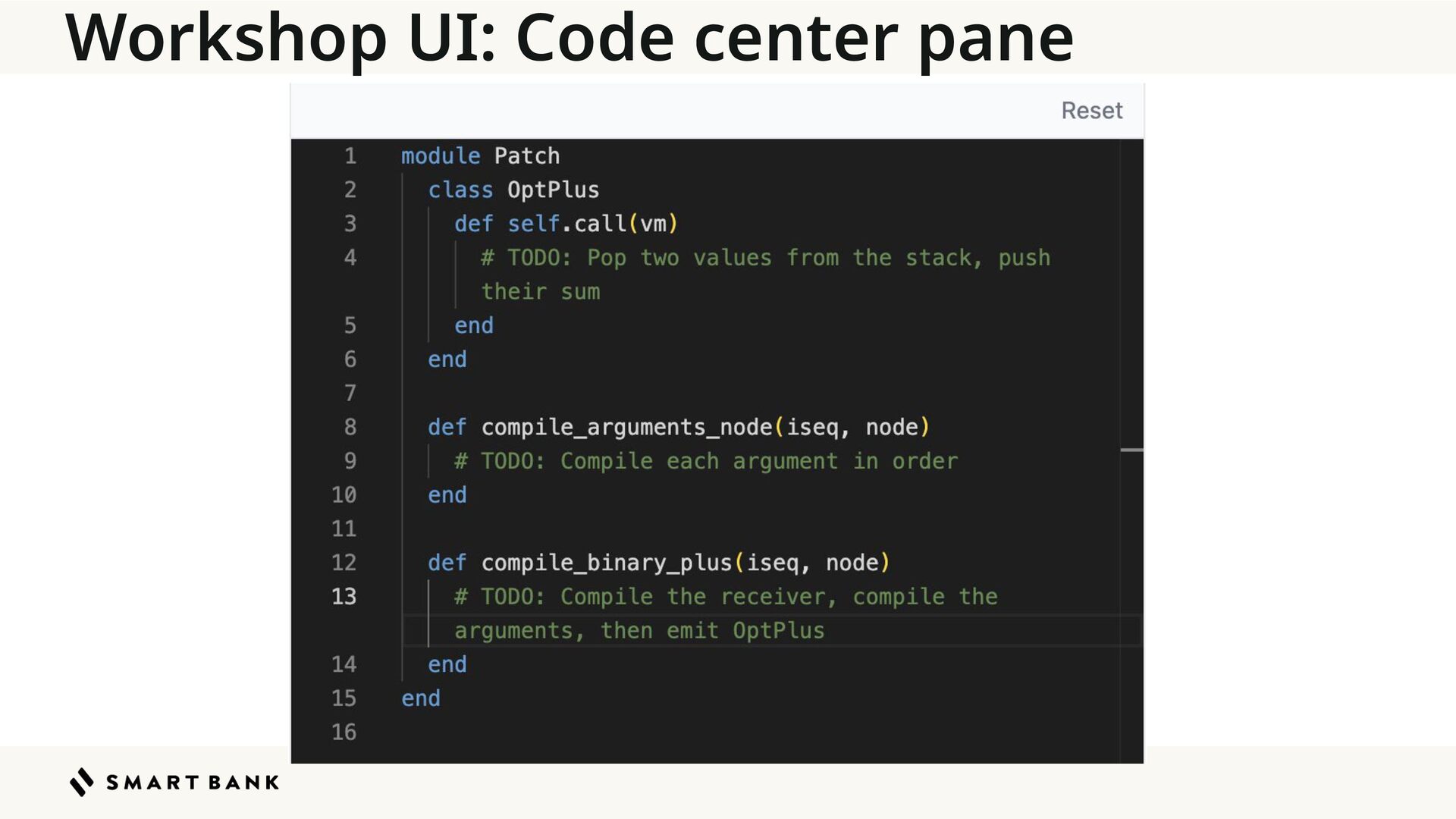
Workshop UI: Code center pane
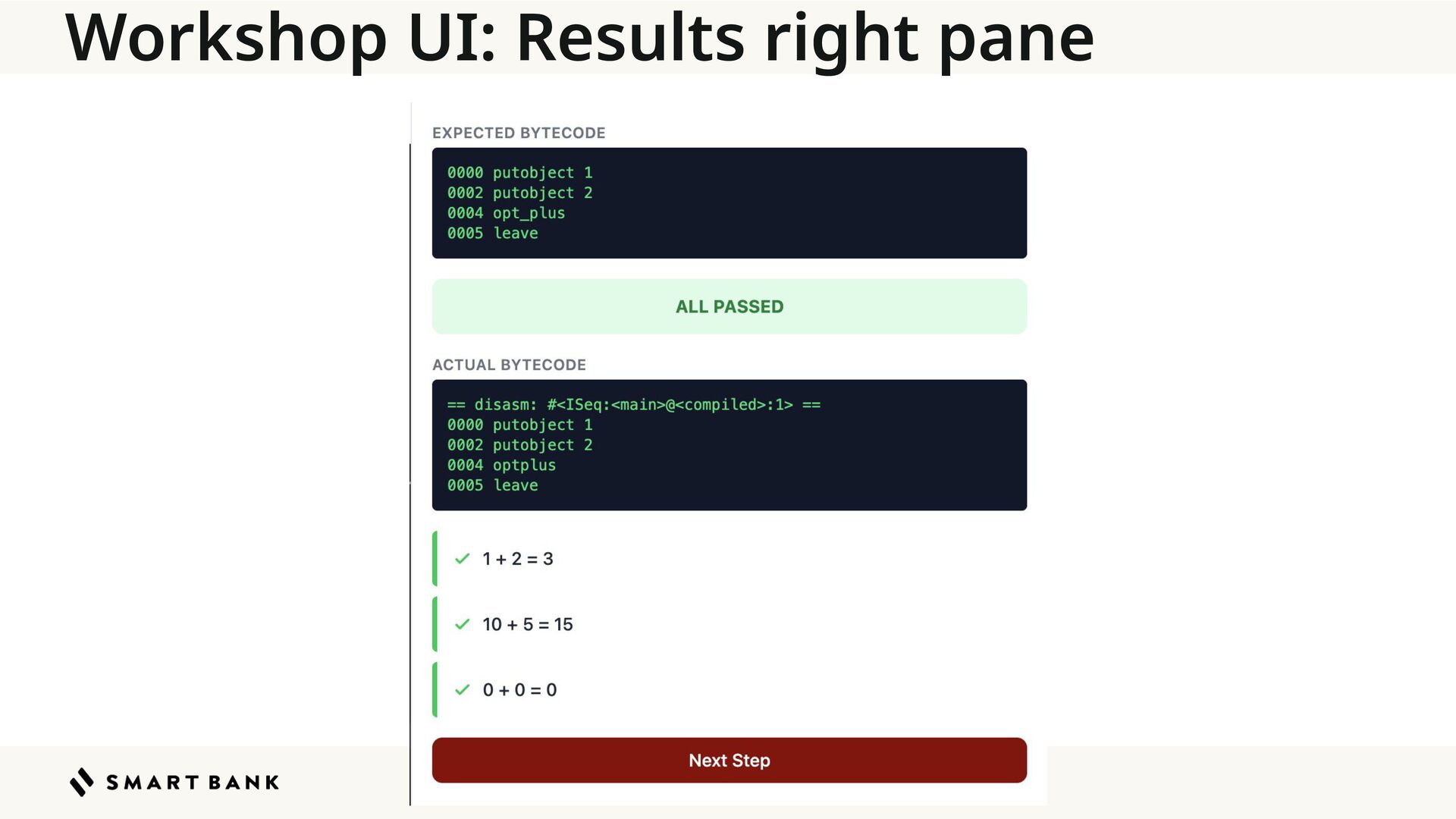
Workshop UI: Results right pane
Step 2: Addition CallNode name: + IntegerNode value: 1 ArgumentsNode
arguments: [2] receiver arguments putobject 1 putobject 2 opt_plus AST bytecode
Step 2: Addition CallNode name: + IntegerNode value: 1 ArgumentsNode
arguments: [2] receiver arguments putobject 1 putobject 2 opt_plus AST bytecode
Step 2: Addition • bytecode ◦ opt_plus • compile ◦
IntegerNode (Step 1) ◦ ArgumentsNode ◦ CallNode name: +
Step 2: Addition CallNode name: + IntegerNode value: 1 ArgumentsNode
arguments: [2] receiver arguments putobject 1 putobject 2 opt_plus AST bytecode
Step 2: Addition • bytecode ◦ opt_plus • compile ◦
IntegerNode (Step 1) ◦ ArgumentsNode ◦ CallNode name: +
Step 2: Addition CallNode name: + IntegerNode value: 1 ArgumentsNode
arguments: [2] receiver arguments • compile_integer_node (Step 1) • compile_arguments_node • compile_binary_plus putobject 1 putobject 2 opt_plus
Step 2: Addition CallNode name: + IntegerNode value: 1 ArgumentsNode
arguments: [2] receiver arguments • compile_integer_node (Step 1) • compile_arguments_node • compile_binary_plus
Step 2: Addition • compile_integer_node (Step 1) • compile_arguments_node •
compile_binary_plus CallNode name: + IntegerNode value: 1 ArgumentsNode arguments: [2] receiver arguments
Step 2: Addition • compile_integer_node (Step 1) • compile_arguments_node •
compile_binary_plus CallNode name: + IntegerNode value: 1 ArgumentsNode arguments: [2] receiver arguments
Inspirations


 yuhisatoxxx
 ivargrimstad
 kneath
 cassininazir
 jeffersonlam
 lfama
lfama
 mlcsv
mlcsv
 greggifford
 michaelherold
 chrislema
 asonas
 axbom
axbom
 skipperchong

![Compiler CallNode name: + IntegerNode value: 1 ArgumentsNode arguments: [2]](https://files.speakerdeck.com/presentations/f9d6e21a612d47b9b344854a40f7dbd8/slide_18.jpg)