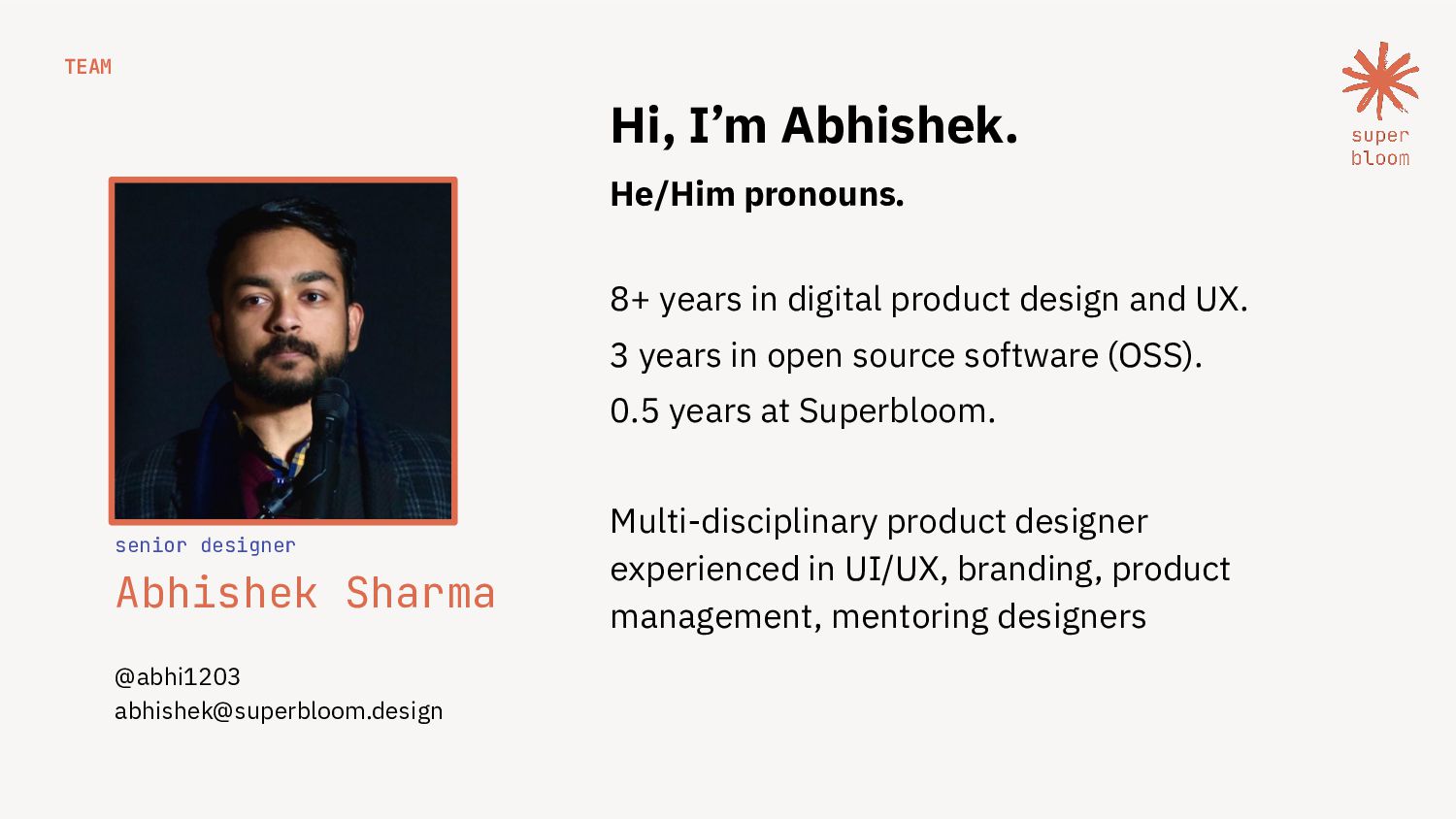
He/Him pronouns. 8+ years in digital product design and UX. 3 years in open source software (OSS). 0.5 years at Superbloom. Multi-disciplinary product designer experienced in UI/UX, branding, product management, mentoring designers
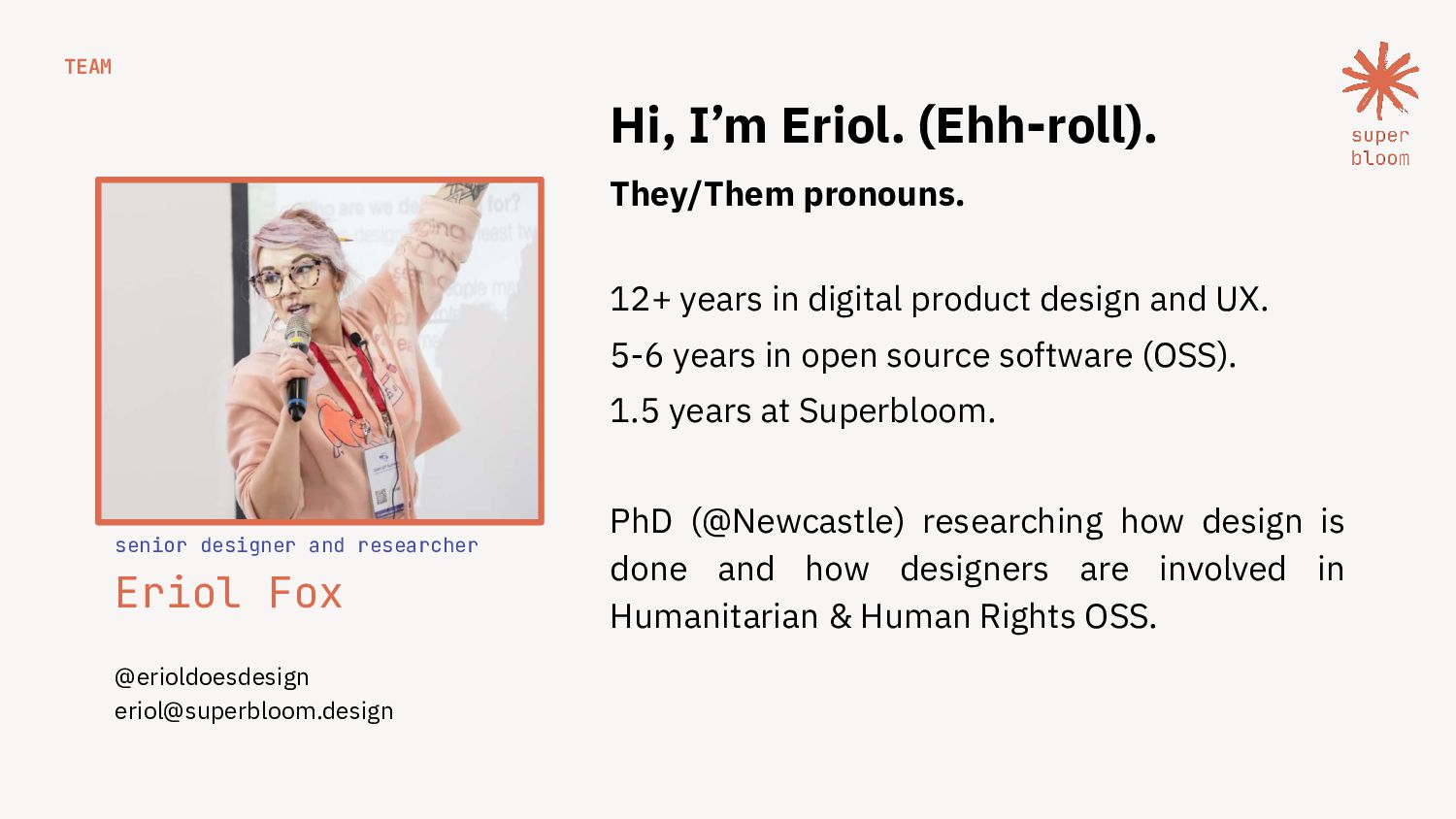
I’m Eriol. (Ehh-roll). They/Them pronouns. 12+ years in digital product design and UX. 5-6 years in open source software (OSS). 1.5 years at Superbloom. PhD (@Newcastle) researching how design is done and how designers are involved in Humanitarian & Human Rights OSS.
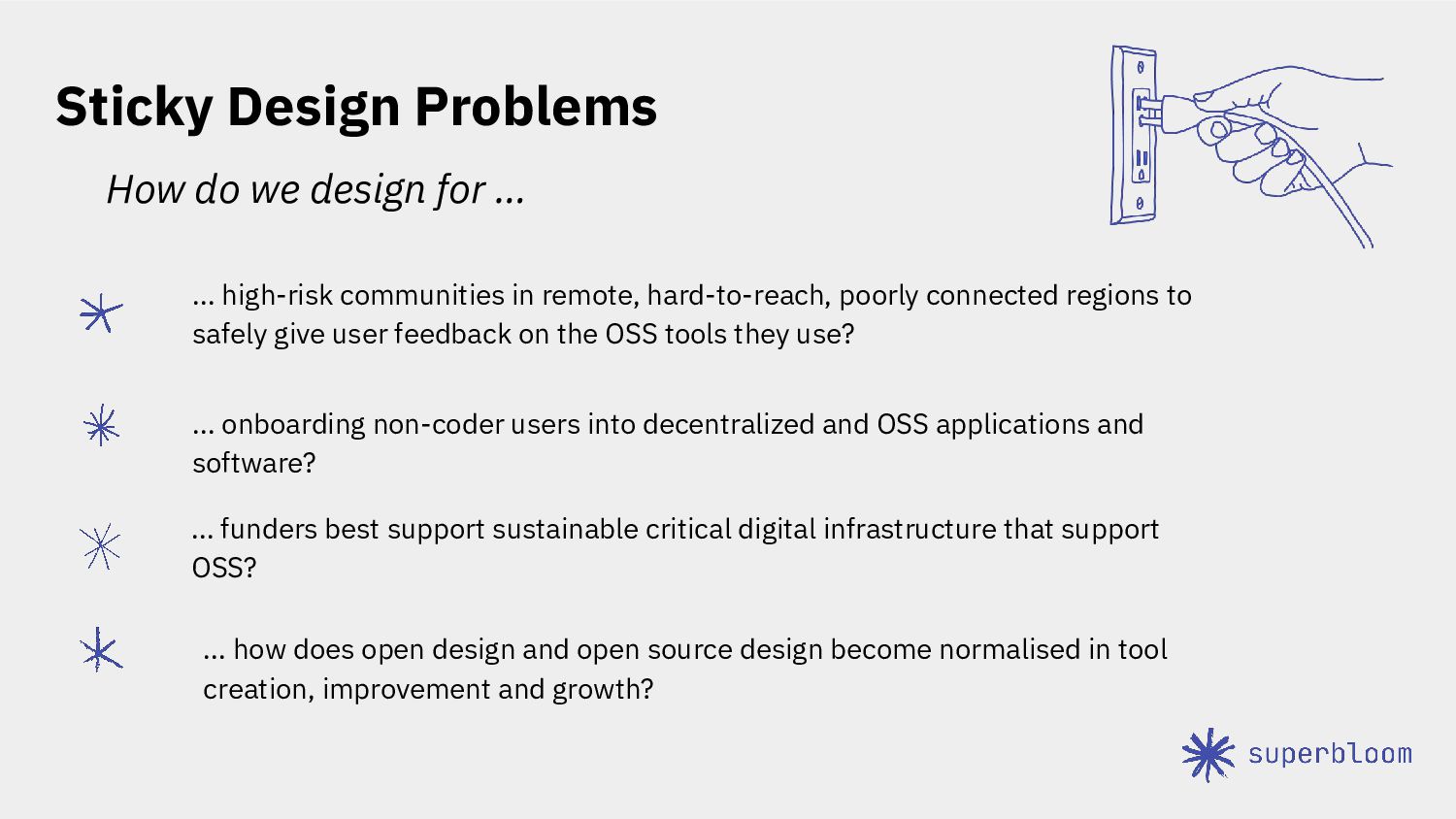
connected regions to safely give user feedback on the OSS tools they use? … onboarding non-coder users into decentralized and OSS applications and software? … funders best support sustainable critical digital infrastructure that support OSS? How do we design for … … how does open design and open source design become normalised in tool creation, improvement and growth?
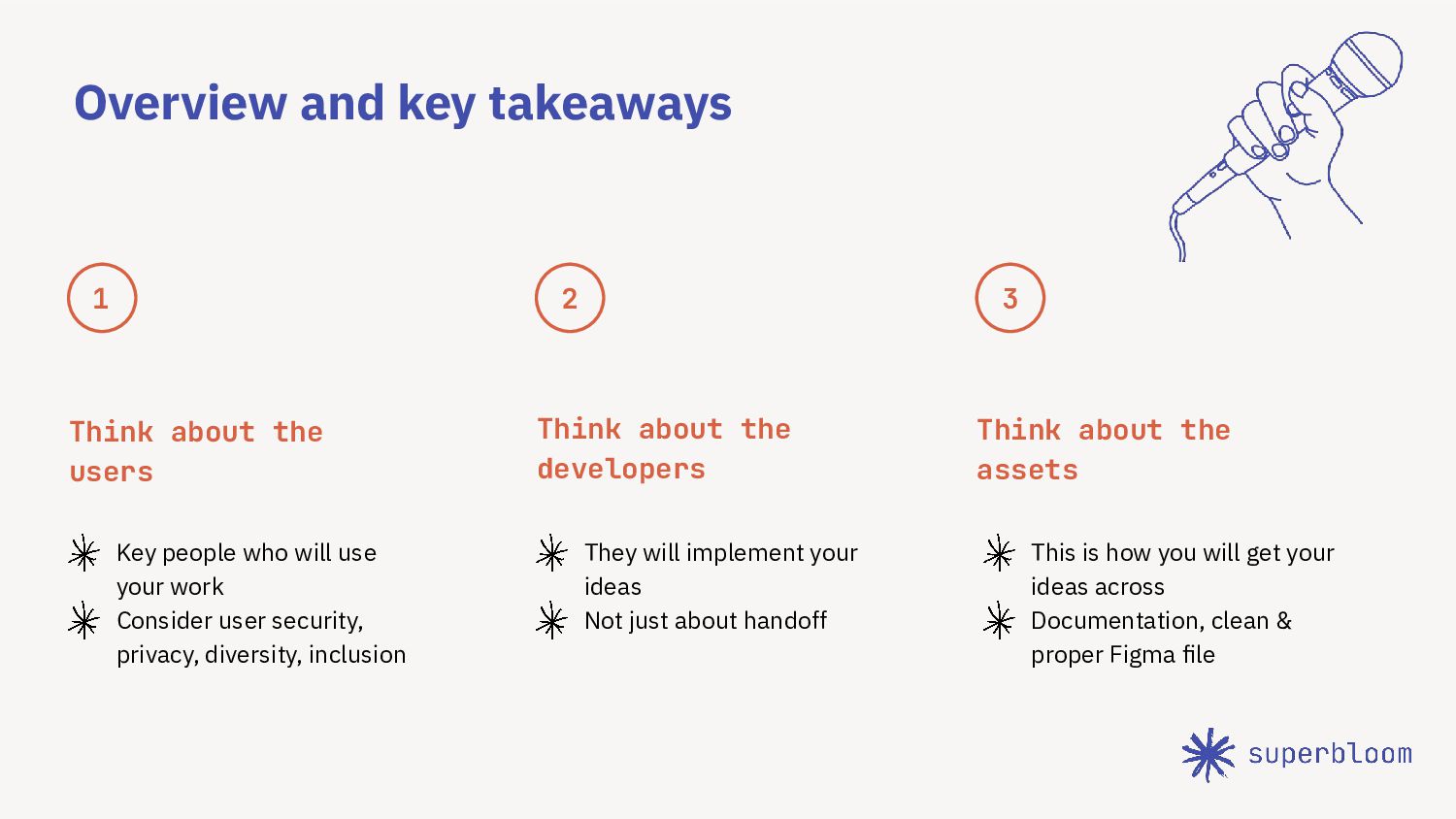
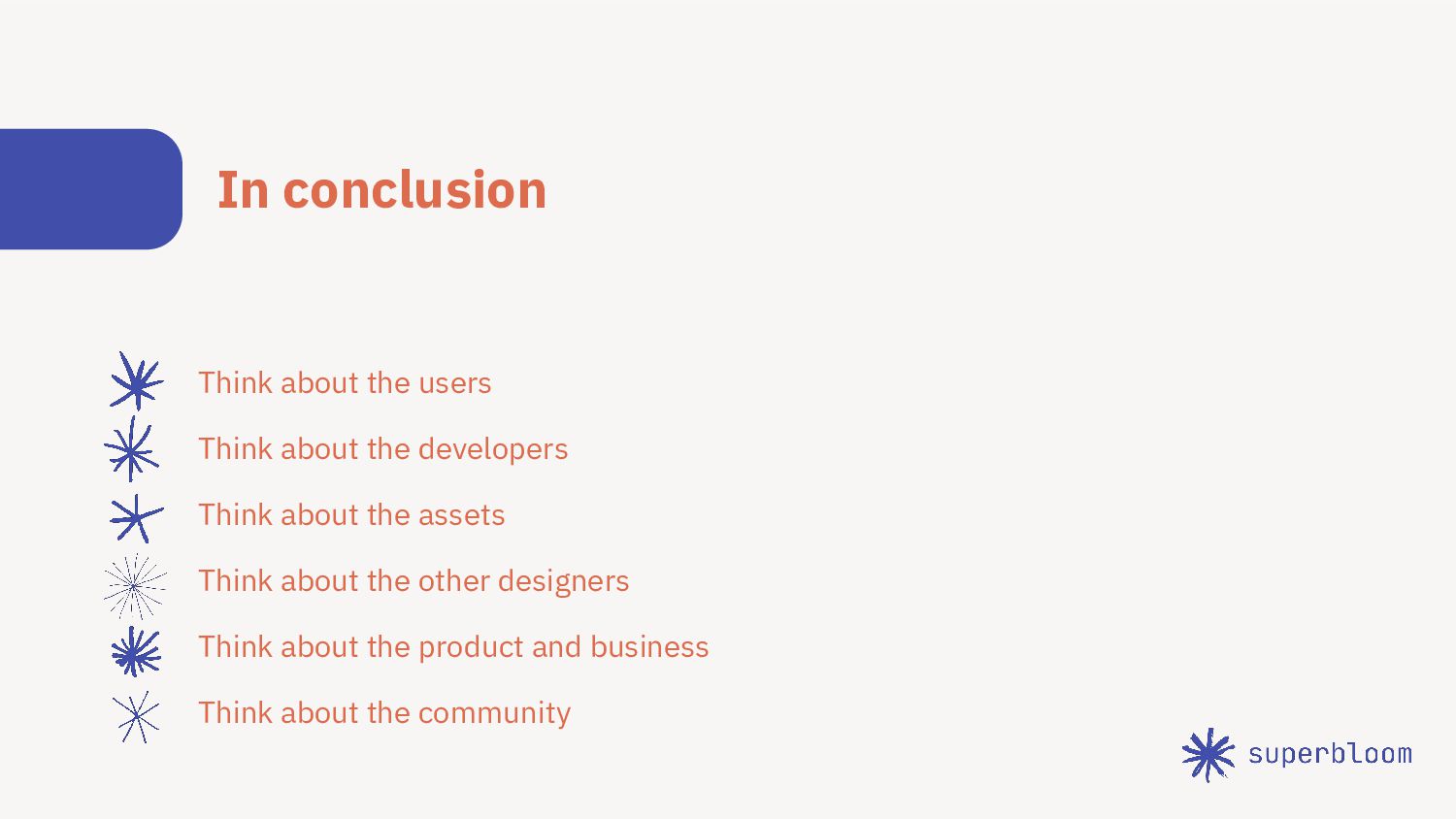
the developers 1 2 Consider user security, privacy, diversity, inclusion Think about the assets 3 Key people who will use your work Not just about handoff They will implement your ideas Documentation, clean & proper Figma file This is how you will get your ideas across
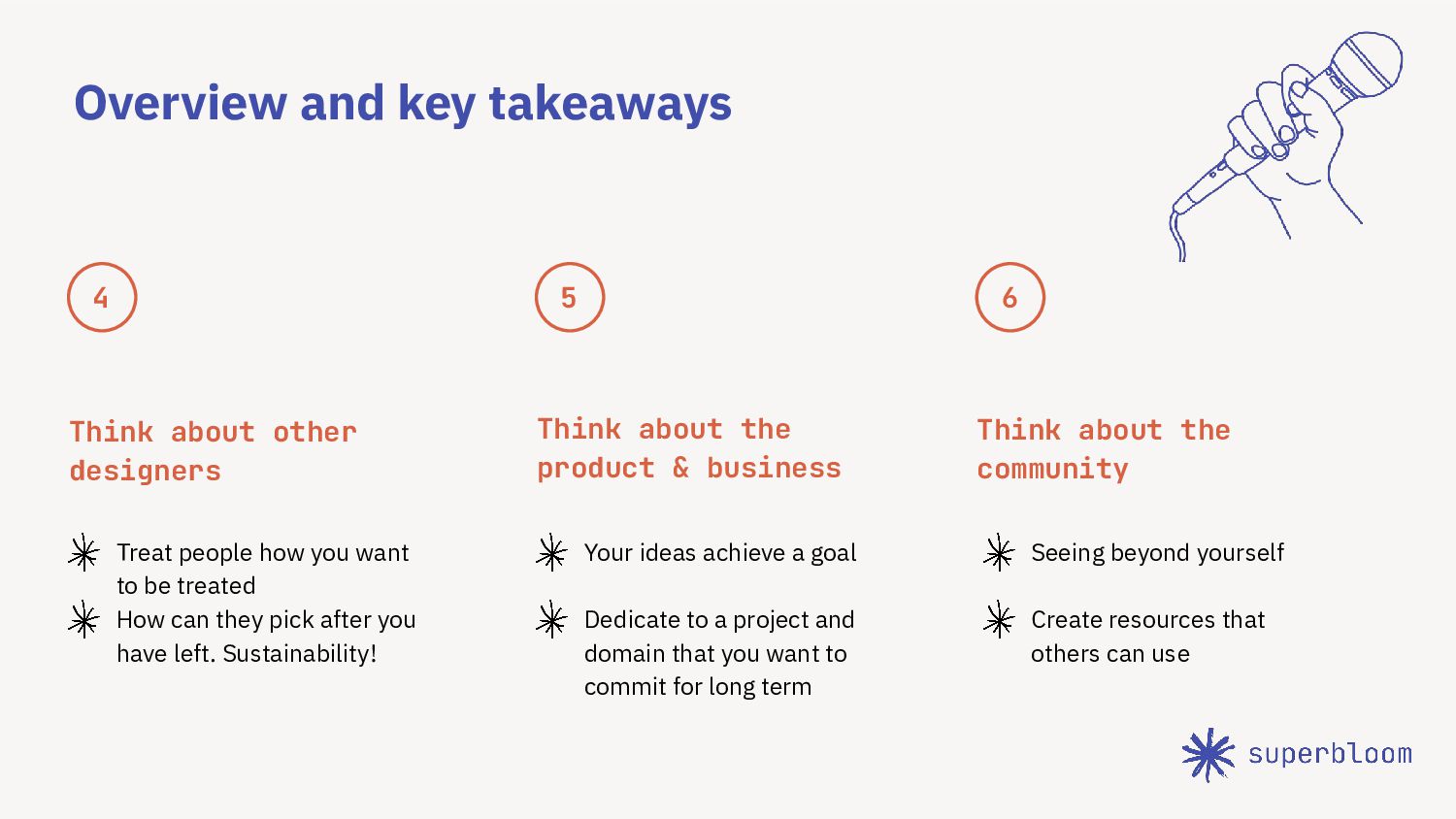
4 5 How can they pick after you have left. Sustainability! Think about the community 6 Treat people how you want to be treated Dedicate to a project and domain that you want to commit for long term Your ideas achieve a goal Create resources that others can use Seeing beyond yourself Overview and key takeaways
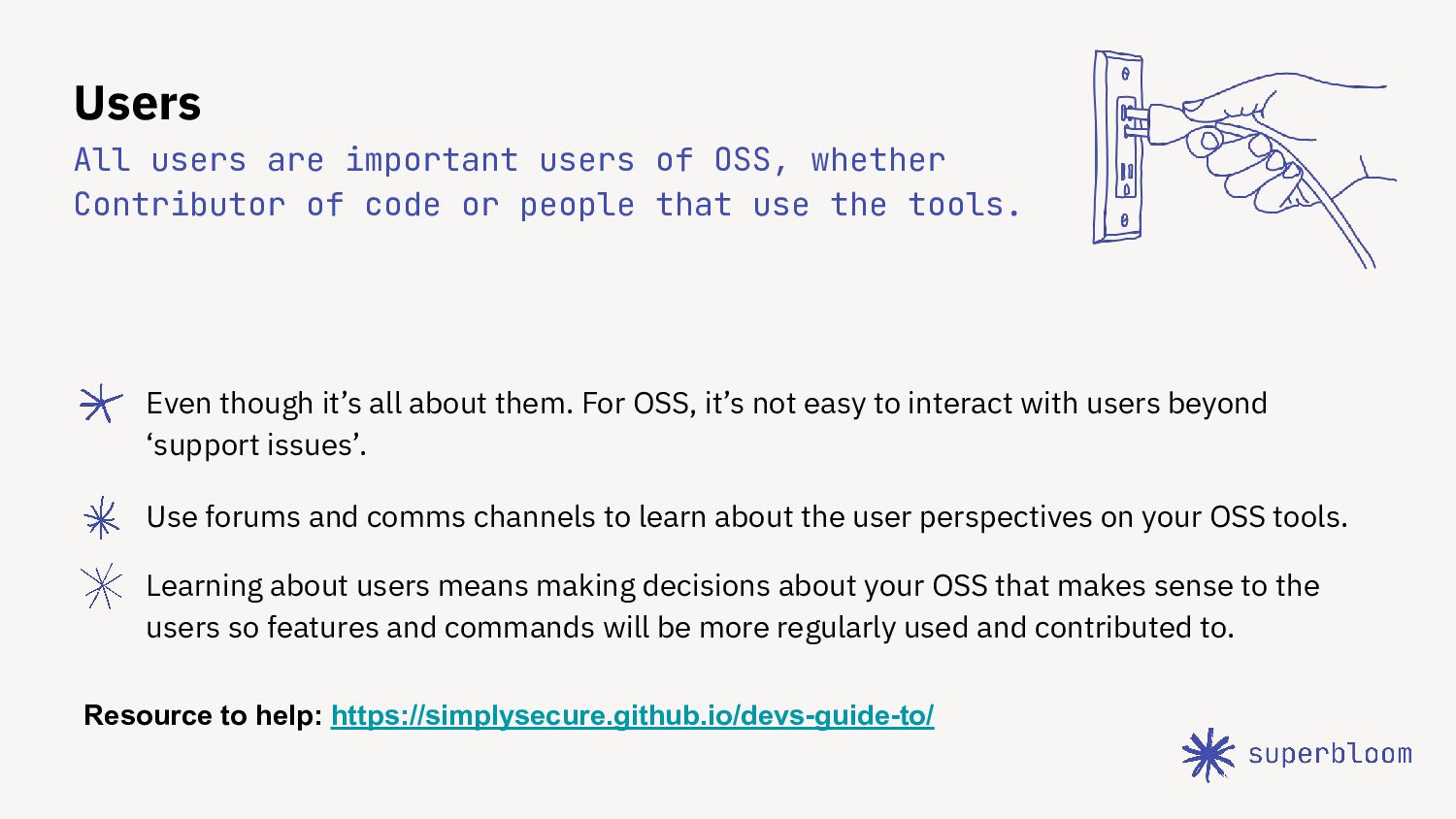
easy to interact with users beyond ‘support issues’. Users All users are important users of OSS, whether Contributor of code or people that use the tools. Use forums and comms channels to learn about the user perspectives on your OSS tools. Learning about users means making decisions about your OSS that makes sense to the users so features and commands will be more regularly used and contributed to. Resource to help: https://simplysecure.github.io/devs-guide-to/
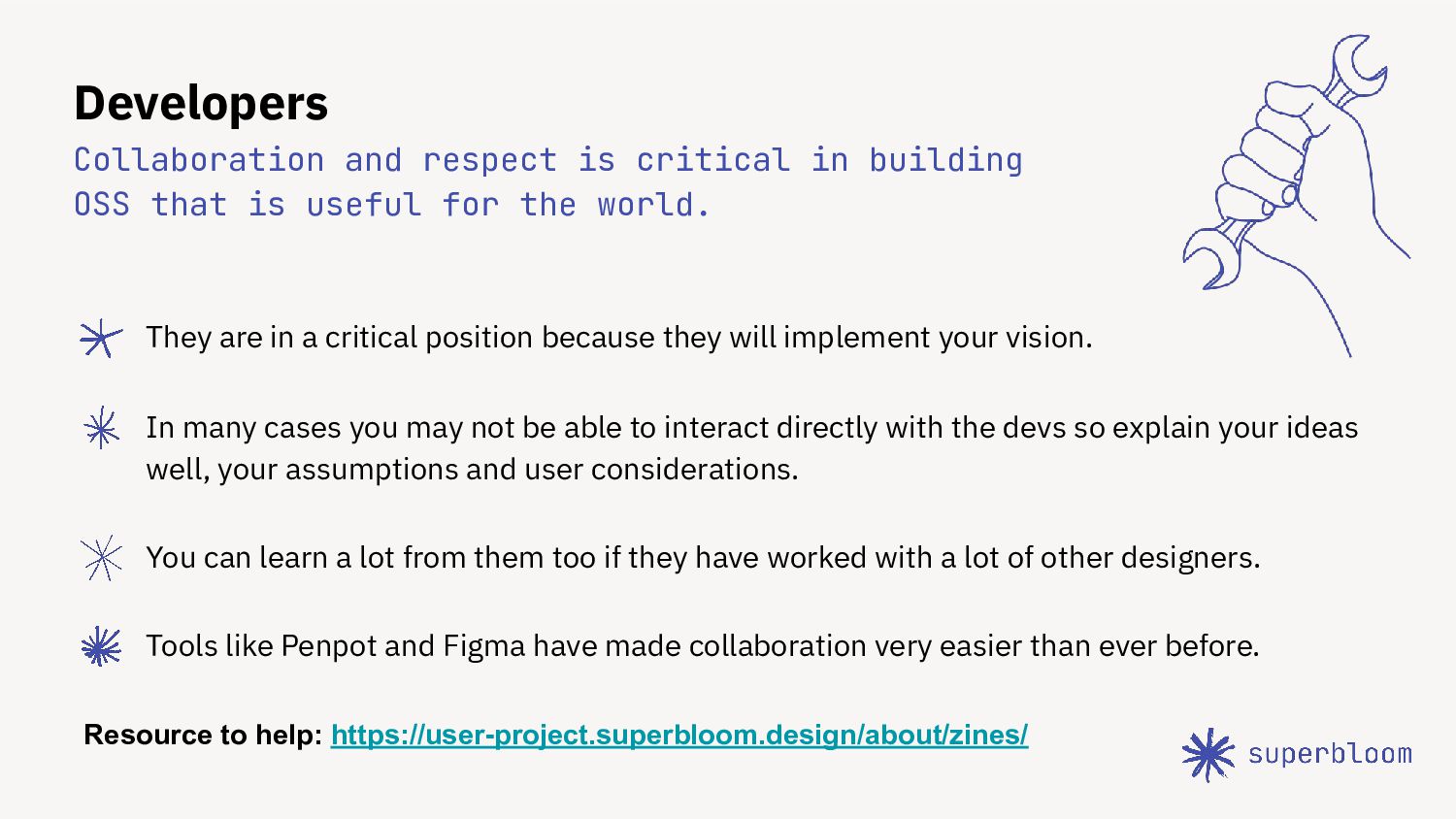
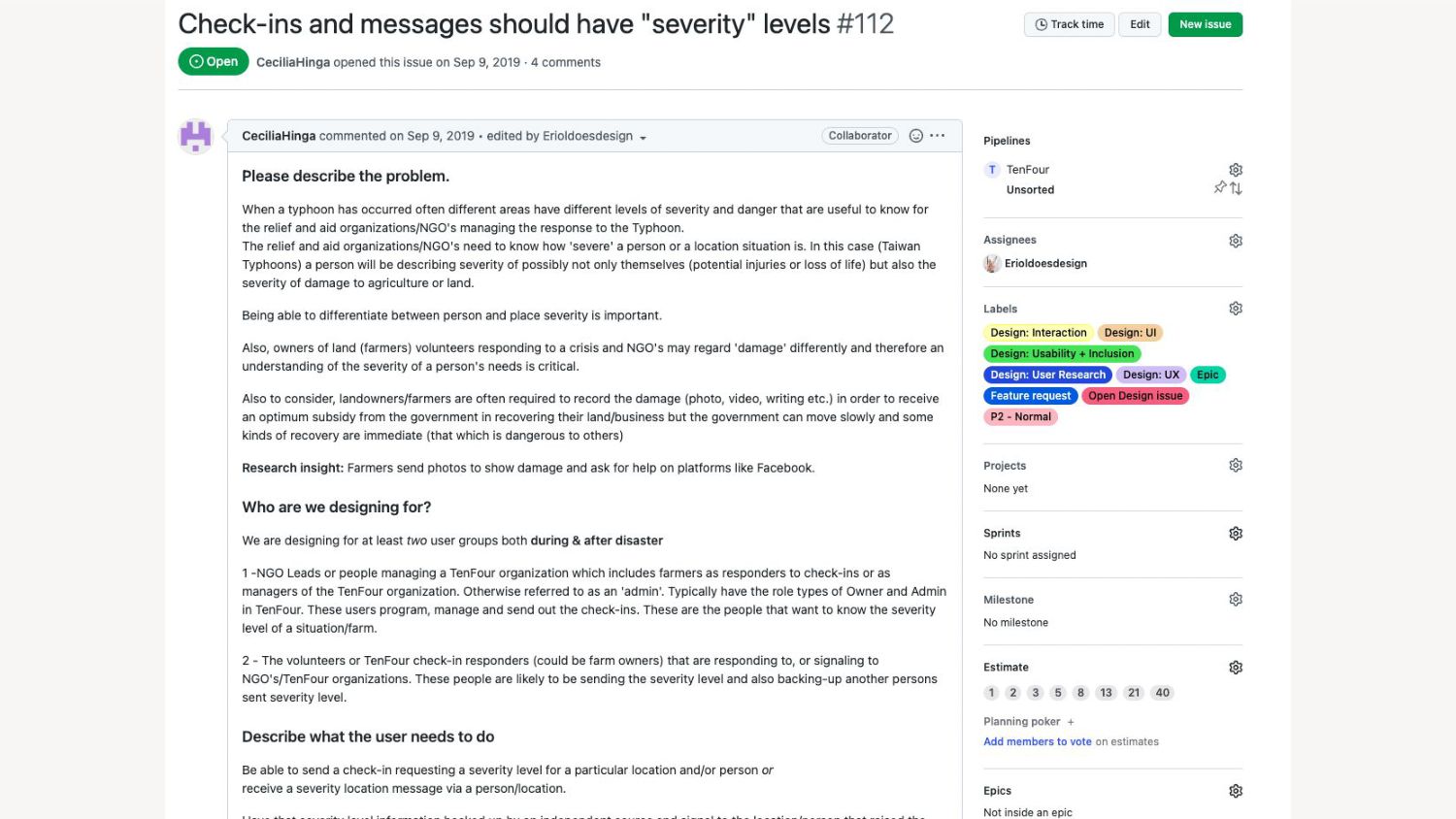
your vision. Developers Collaboration and respect is critical in building OSS that is useful for the world. In many cases you may not be able to interact directly with the devs so explain your ideas well, your assumptions and user considerations. You can learn a lot from them too if they have worked with a lot of other designers. Tools like Penpot and Figma have made collaboration very easier than ever before. Resource to help: https://user-project.superbloom.design/about/zines/
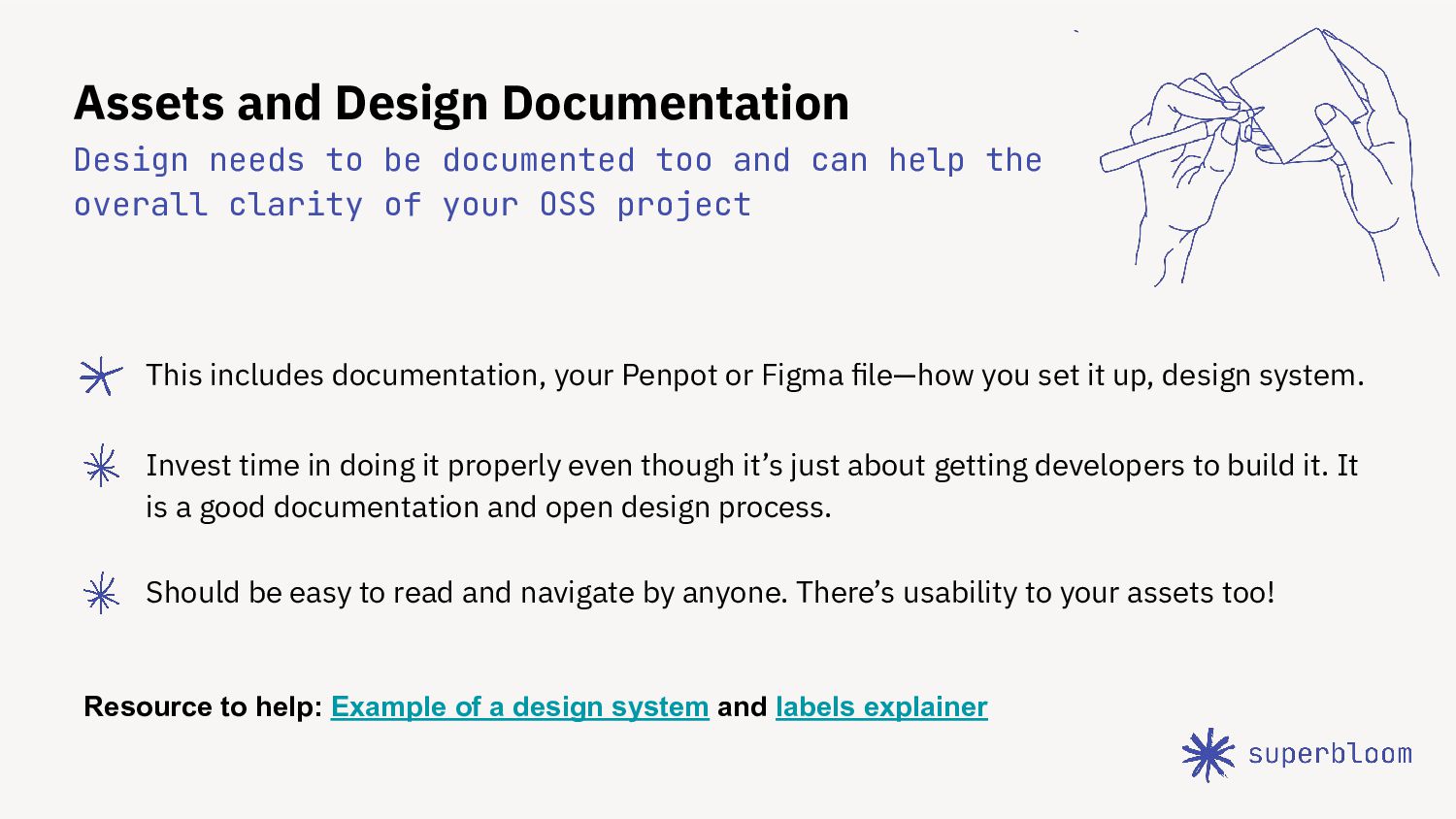
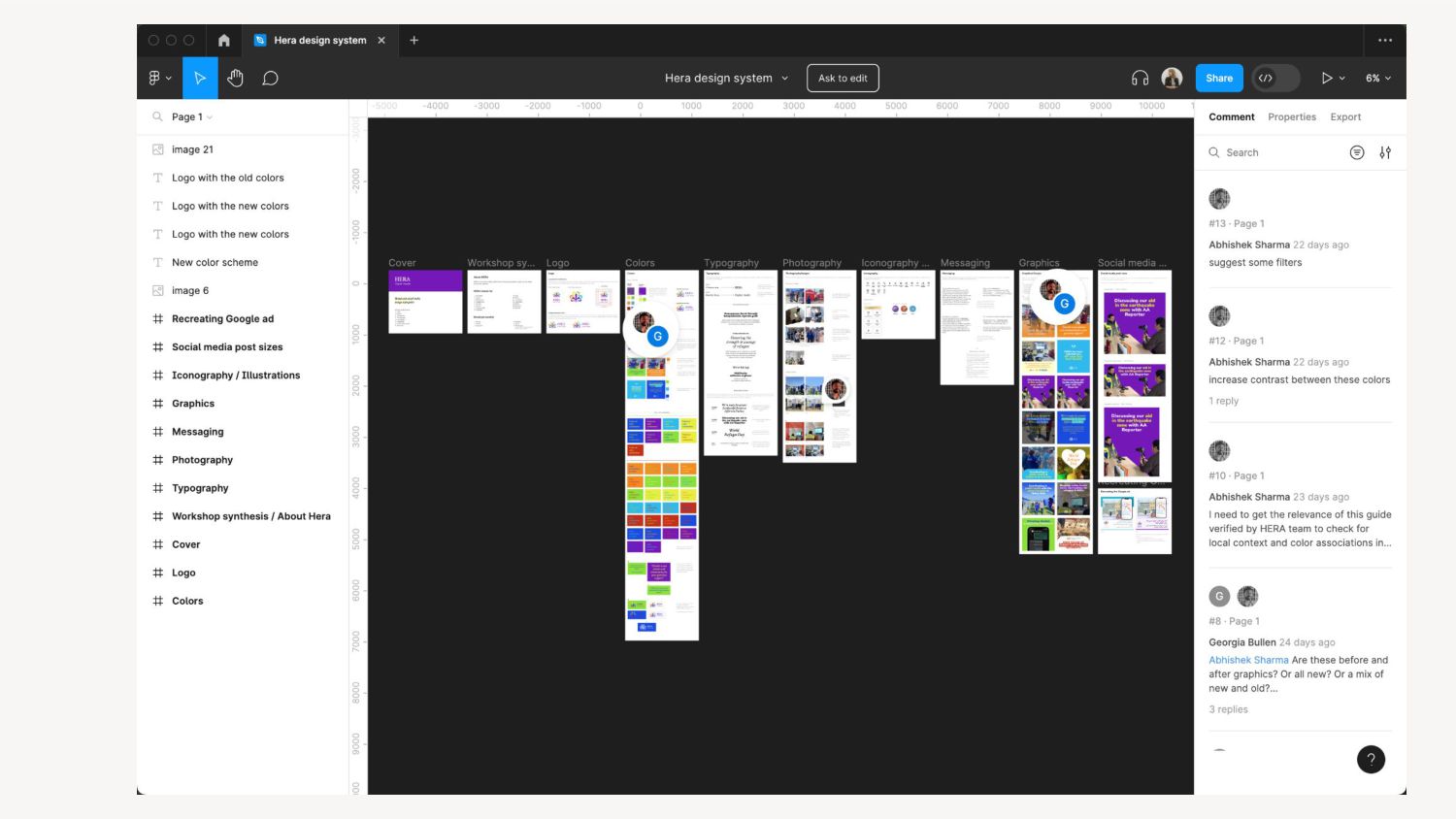
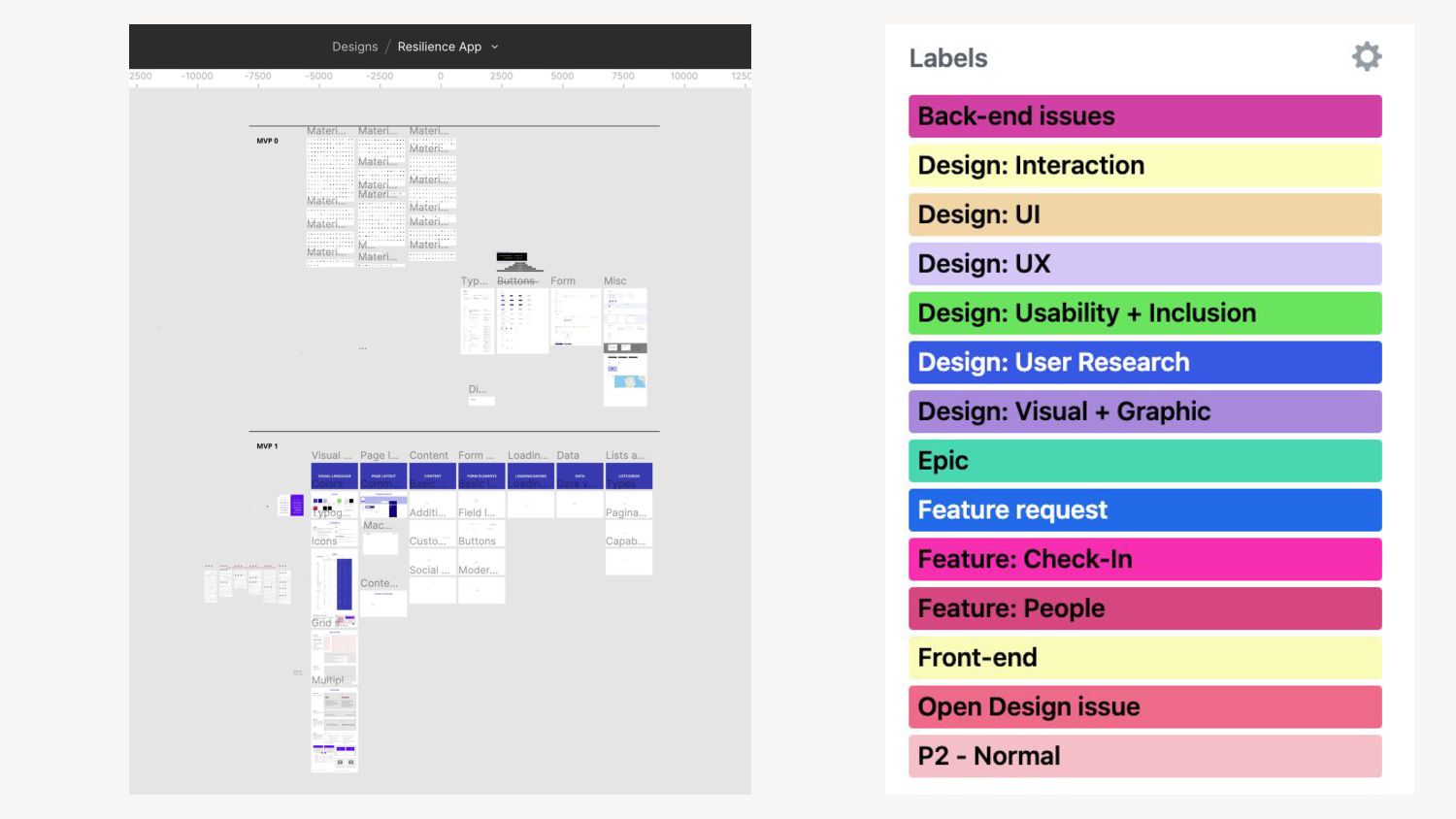
it up, design system. Assets and Design Documentation Design needs to be documented too and can help the overall clarity of your OSS project Invest time in doing it properly even though it’s just about getting developers to build it. It is a good documentation and open design process. Should be easy to read and navigate by anyone. There’s usability to your assets too! Resource to help: Example of a design system and labels explainer
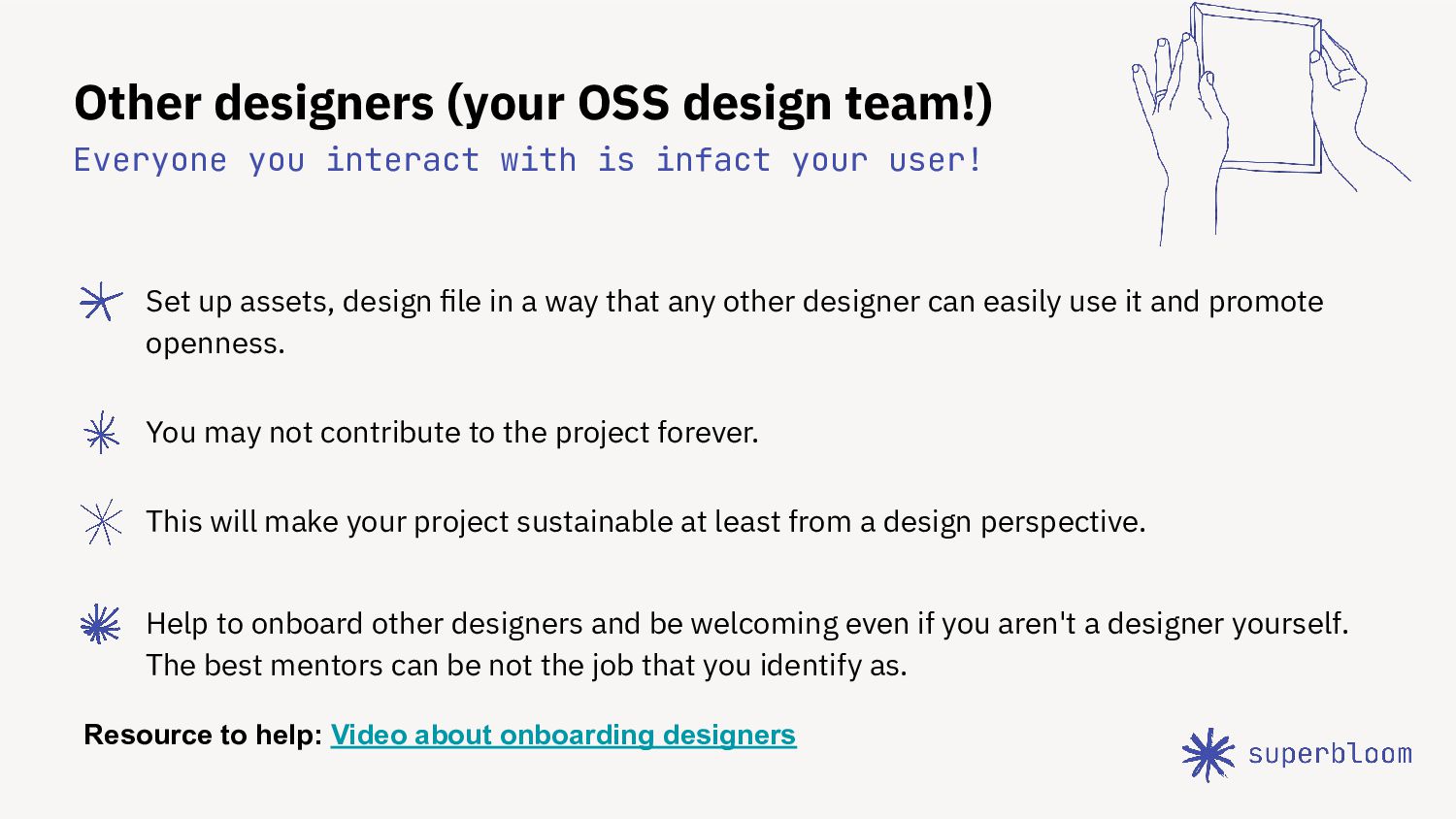
other designer can easily use it and promote openness. Other designers (your OSS design team!) Everyone you interact with is infact your user! You may not contribute to the project forever. This will make your project sustainable at least from a design perspective. Help to onboard other designers and be welcoming even if you aren't a designer yourself. The best mentors can be not the job that you identify as. Resource to help: Video about onboarding designers
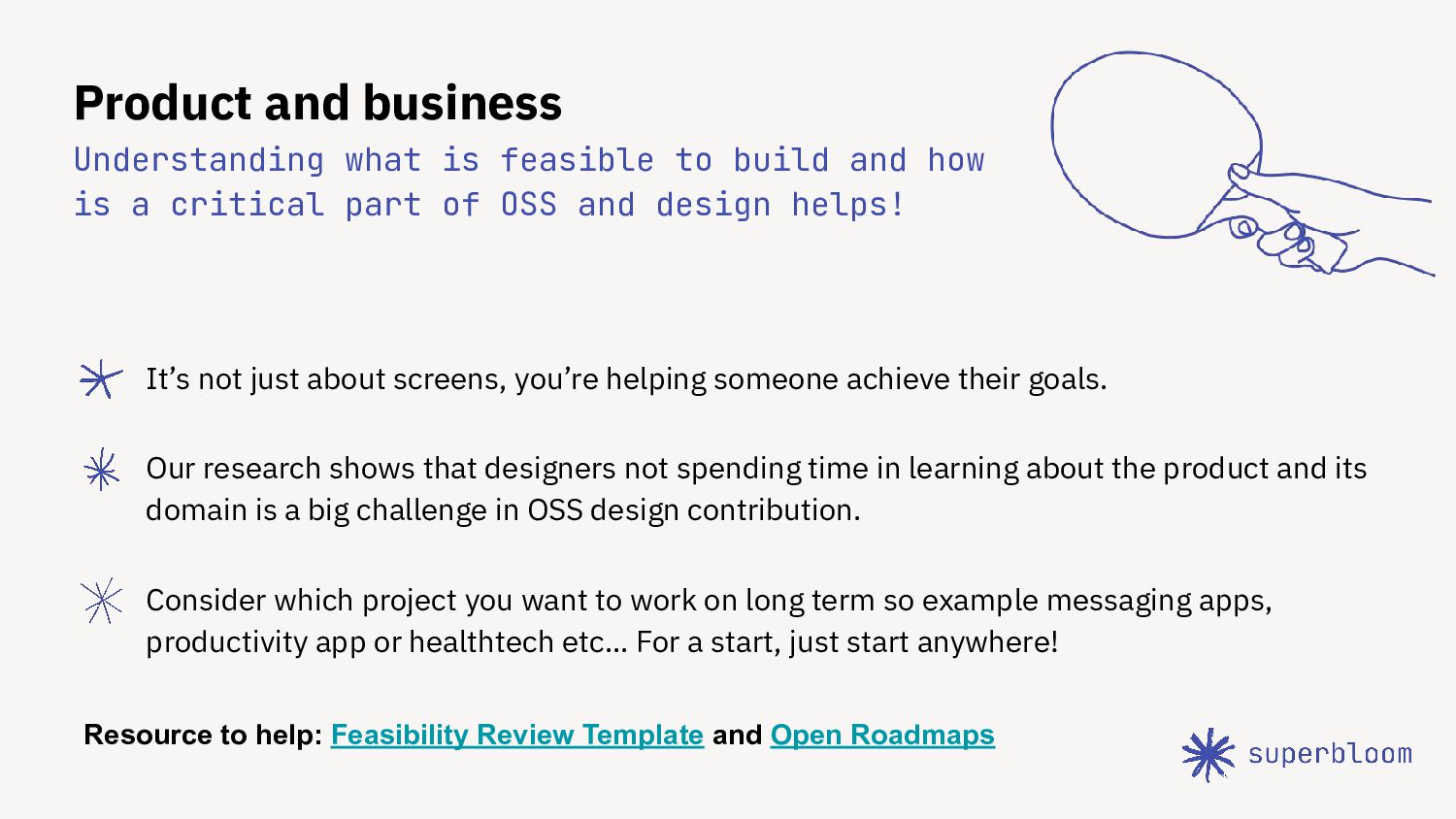
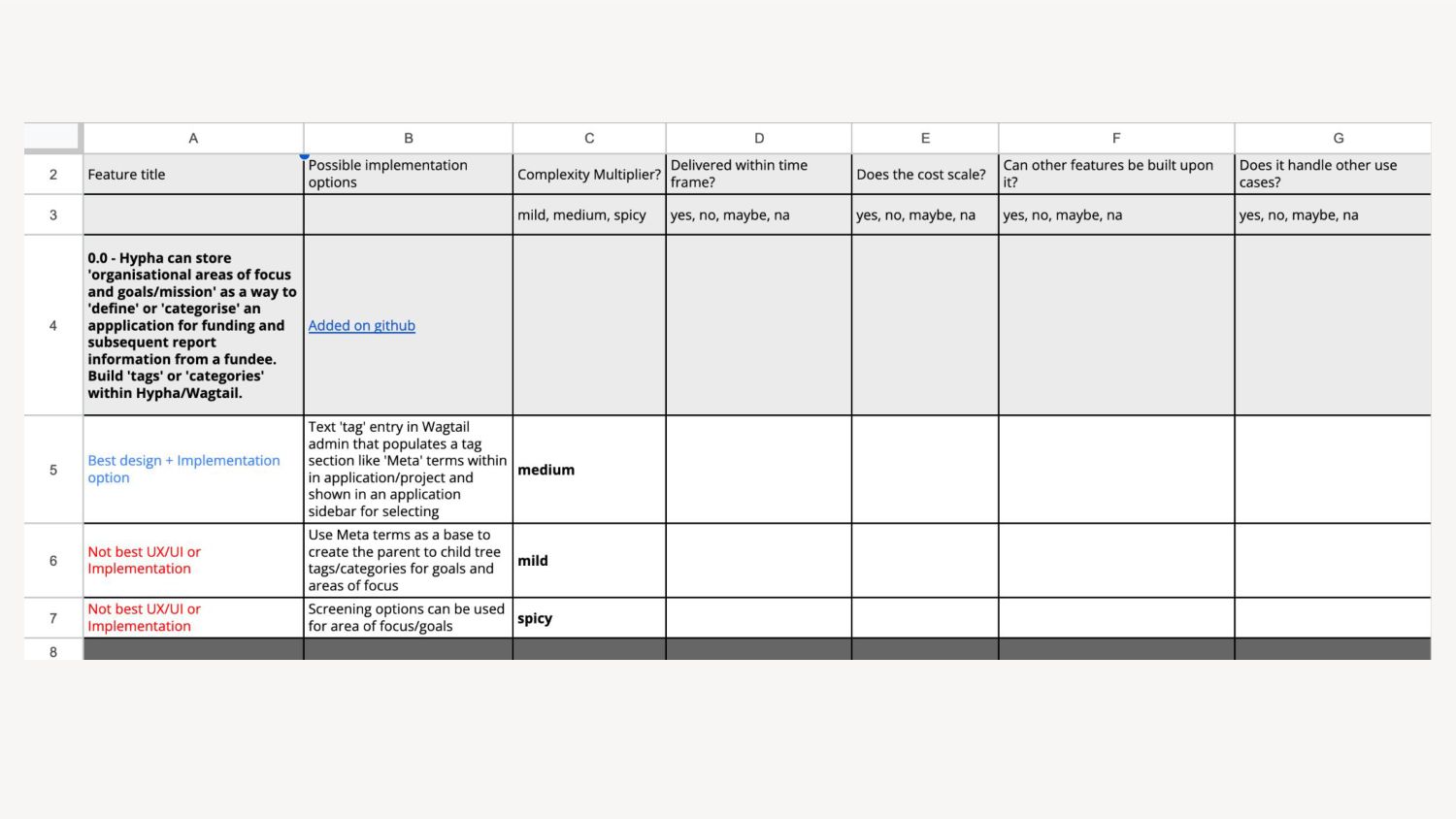
goals. Product and business Understanding what is feasible to build and how is a critical part of OSS and design helps! Our research shows that designers not spending time in learning about the product and its domain is a big challenge in OSS design contribution. Consider which project you want to work on long term so example messaging apps, productivity app or healthtech etc… For a start, just start anywhere! Resource to help: Feasibility Review Template and Open Roadmaps
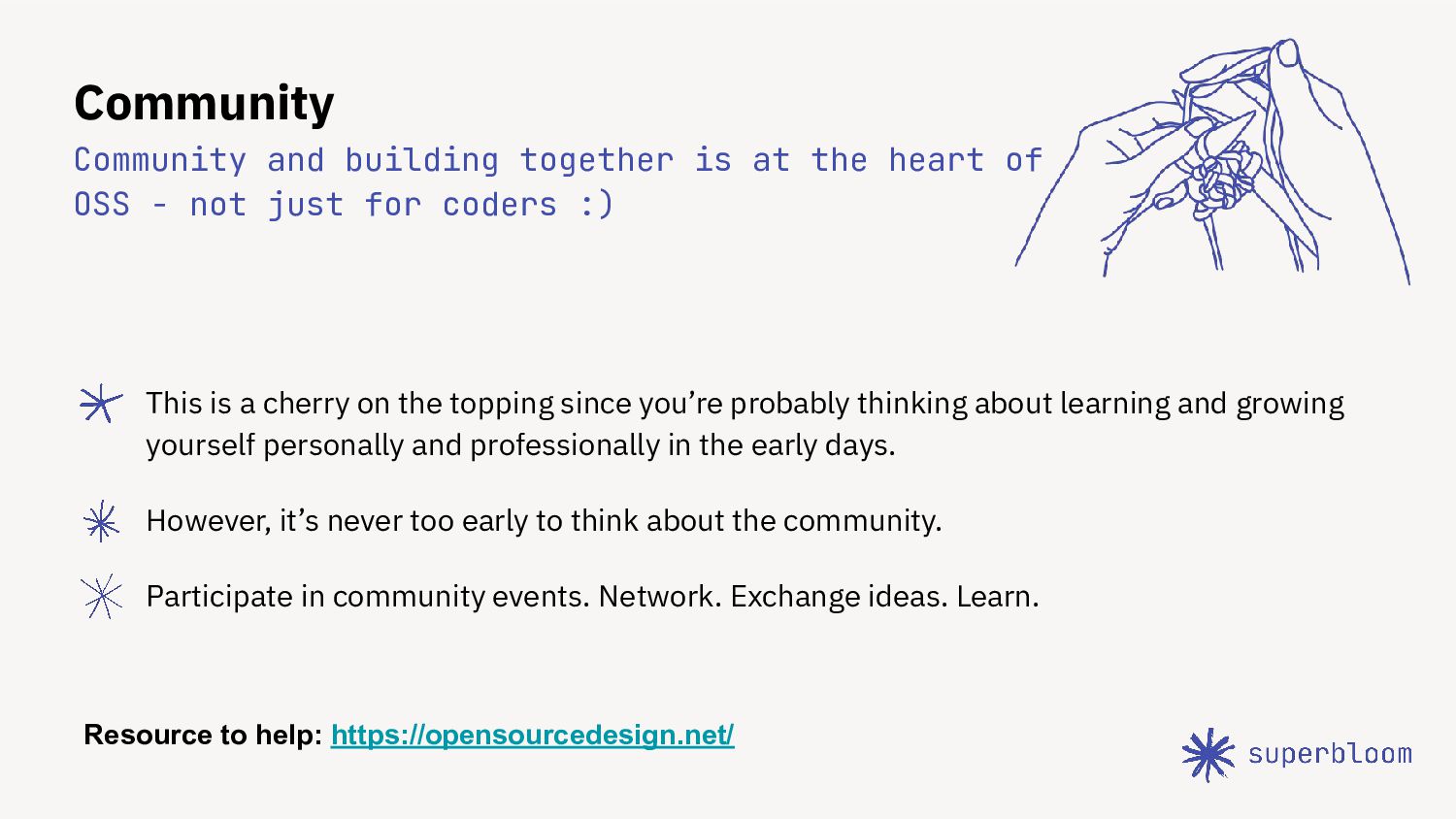
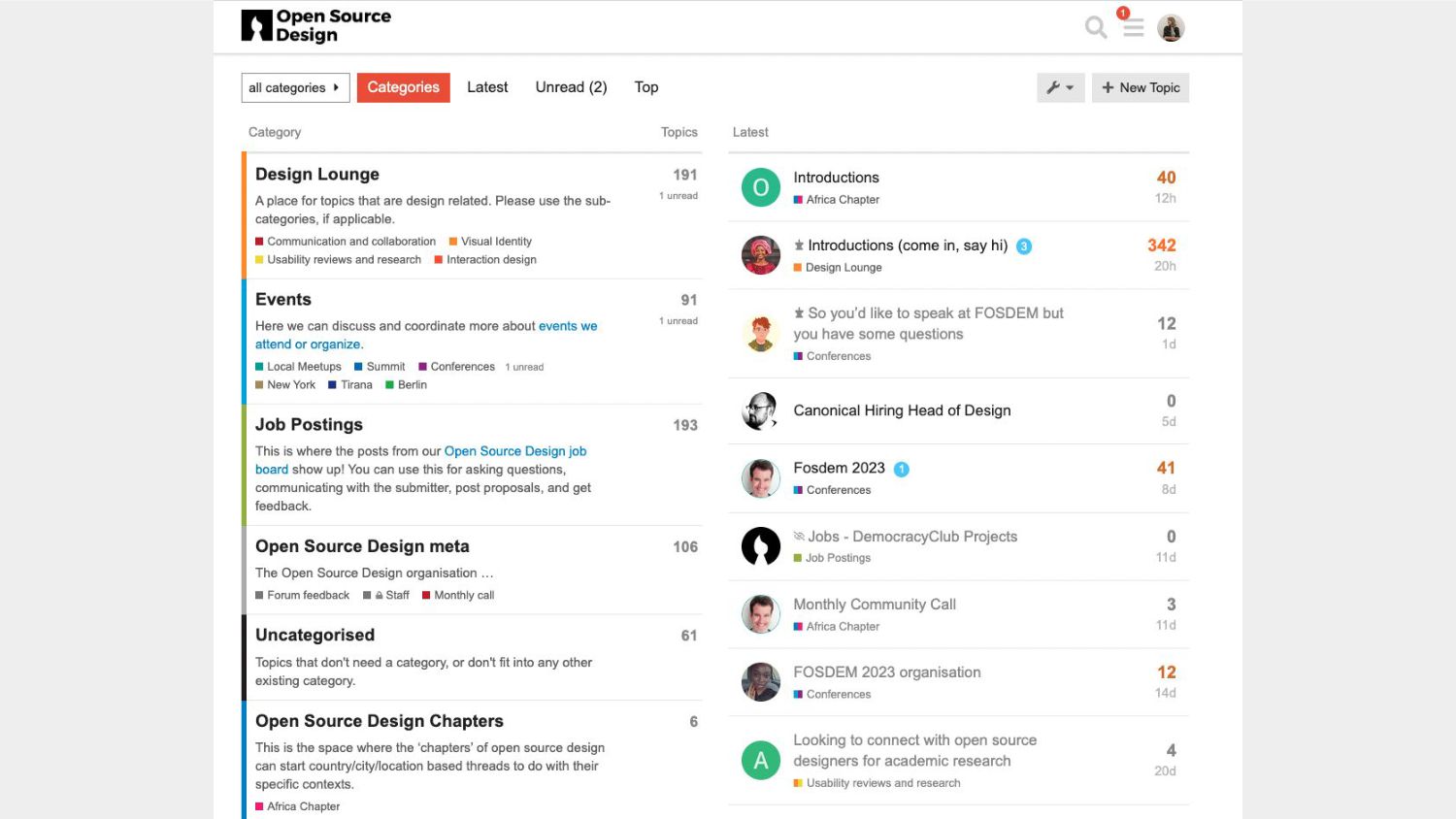
thinking about learning and growing yourself personally and professionally in the early days. Community Community and building together is at the heart of OSS - not just for coders :) However, it’s never too early to think about the community. Participate in community events. Network. Exchange ideas. Learn. Resource to help: https://opensourcedesign.net/
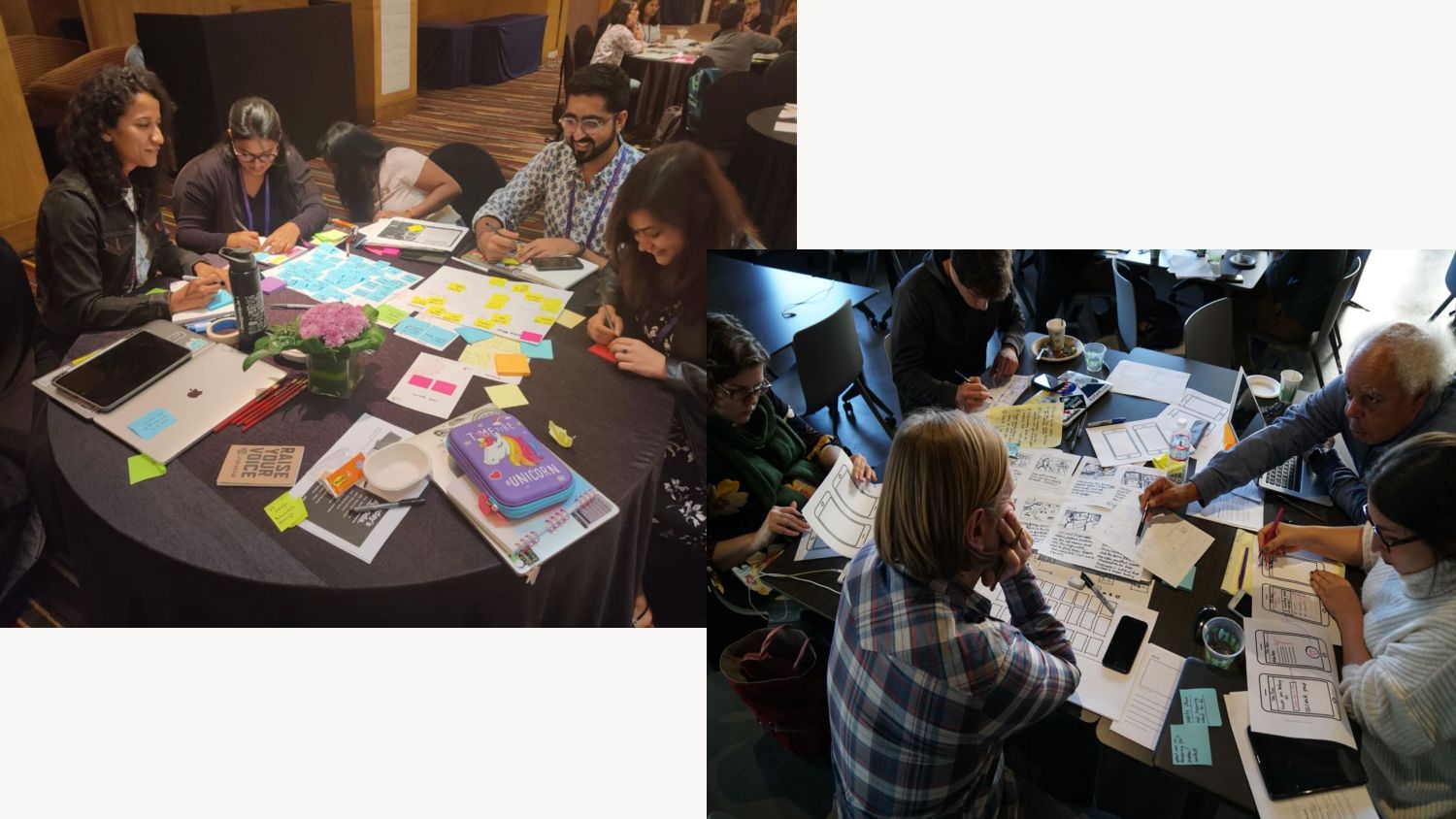
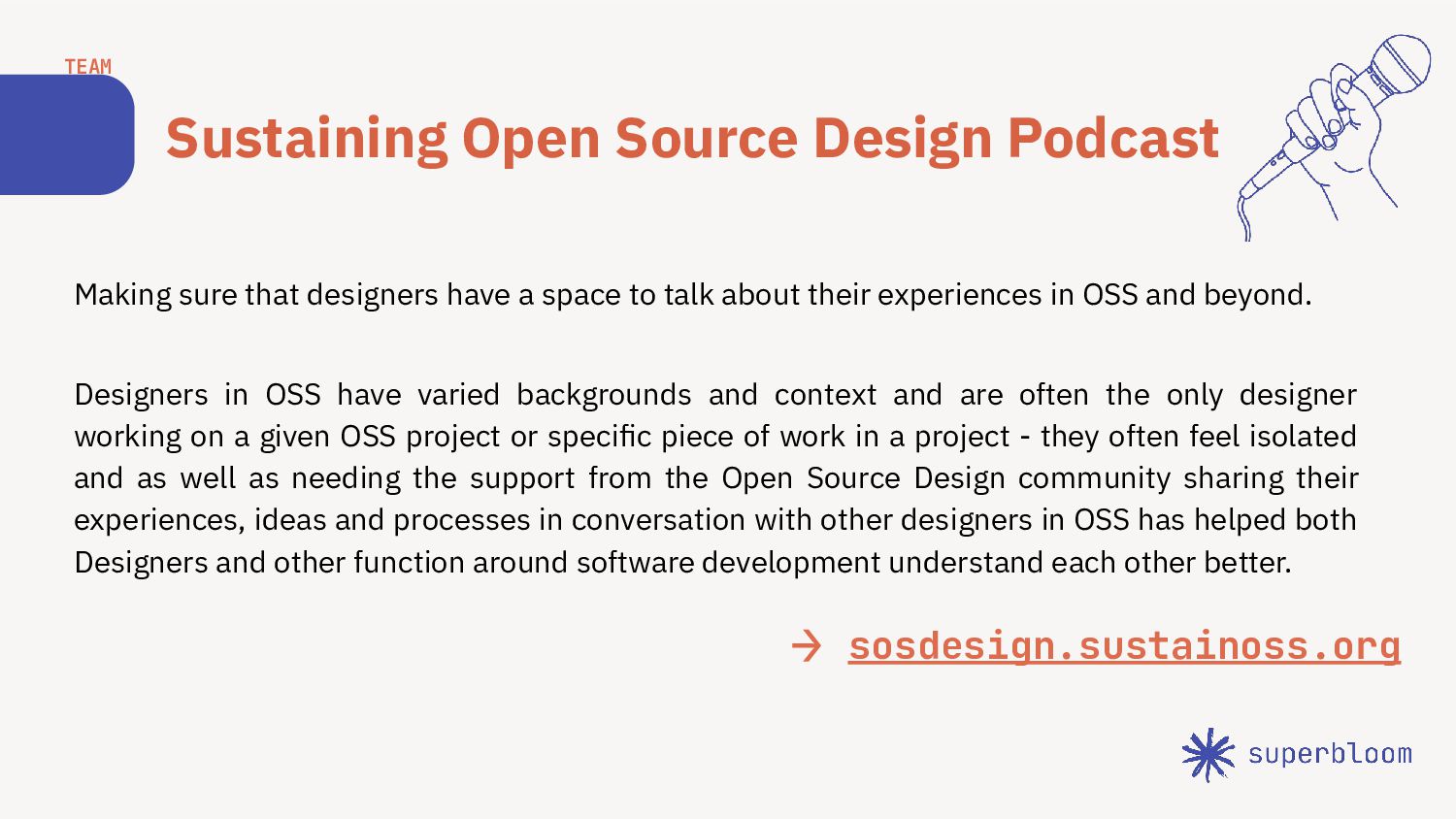
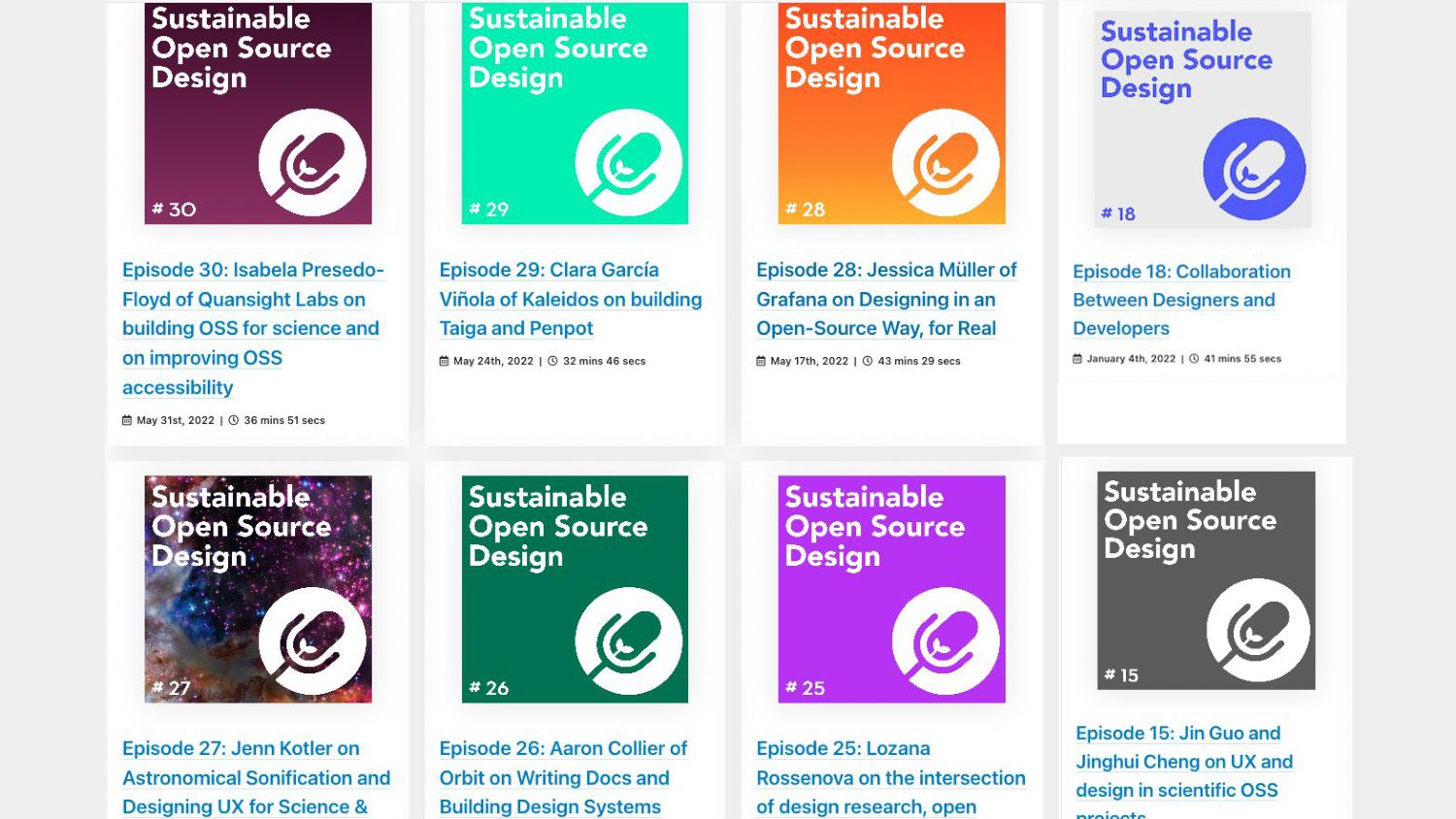
that designers have a space to talk about their experiences in OSS and beyond. Designers in OSS have varied backgrounds and context and are often the only designer working on a given OSS project or specific piece of work in a project - they often feel isolated and as well as needing the support from the Open Source Design community sharing their experiences, ideas and processes in conversation with other designers in OSS has helped both Designers and other function around software development understand each other better.
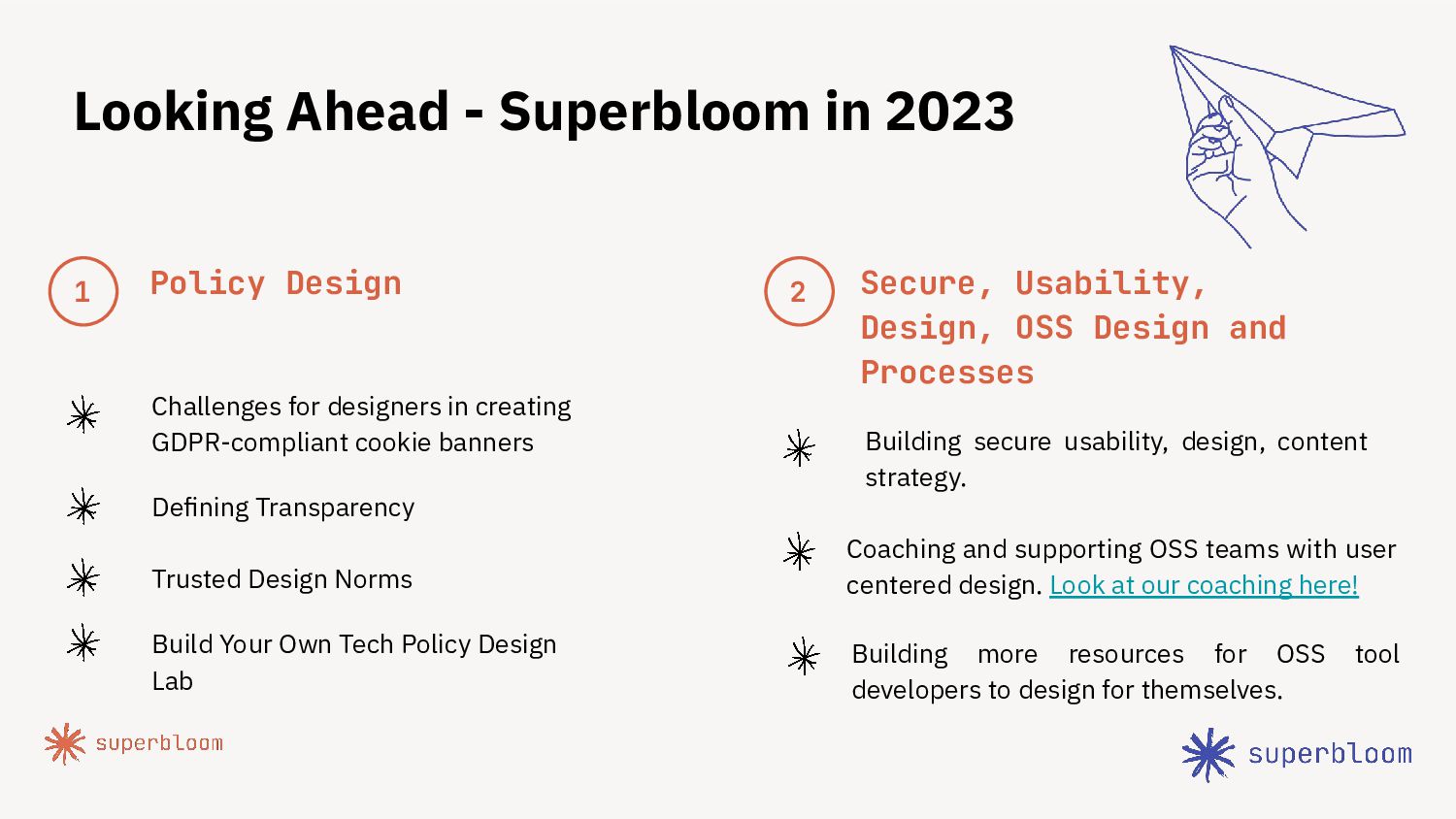
in creating GDPR-compliant cookie banners Defining Transparency Build Your Own Tech Policy Design Lab Policy Design 2 Building secure usability, design, content strategy. Secure, Usability, Design, OSS Design and Processes Trusted Design Norms Coaching and supporting OSS teams with user centered design. Look at our coaching here! Building more resources for OSS tool developers to design for themselves.


 assuredjp
 mhand01
 omy
 chiemitaki
 r5ni4
 baku89
 garyuten
 rezaline
 quoitworks999
 niccy
 0b1tk
 wjw100788
 productmarketing
 garrettdimon
 wjessup
 tonyrice
 cargoodrich
 ks91
 palkan
 jonyablonski
 trishagee
 mlcsv
 techseoconnect
 eileencodes