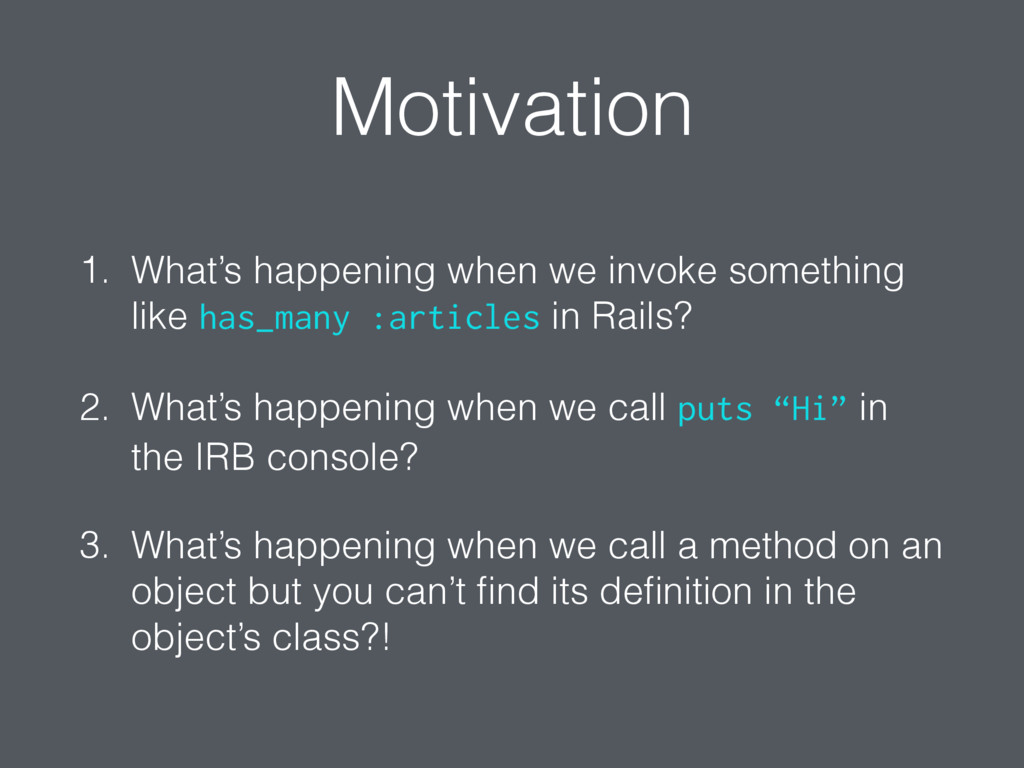
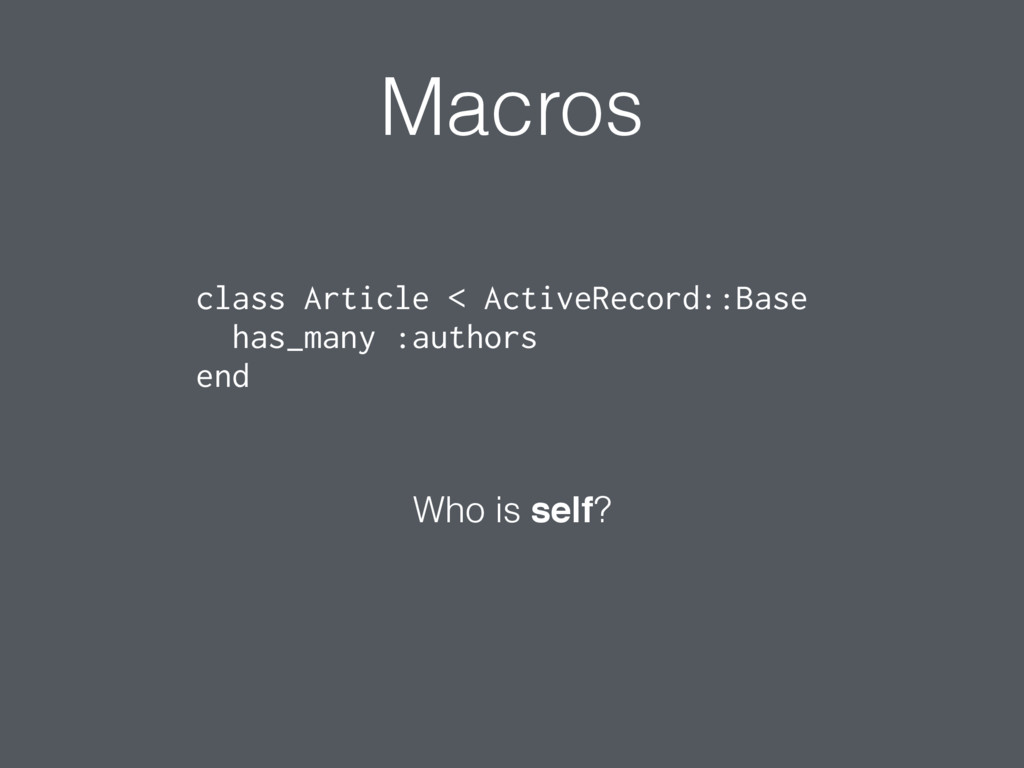
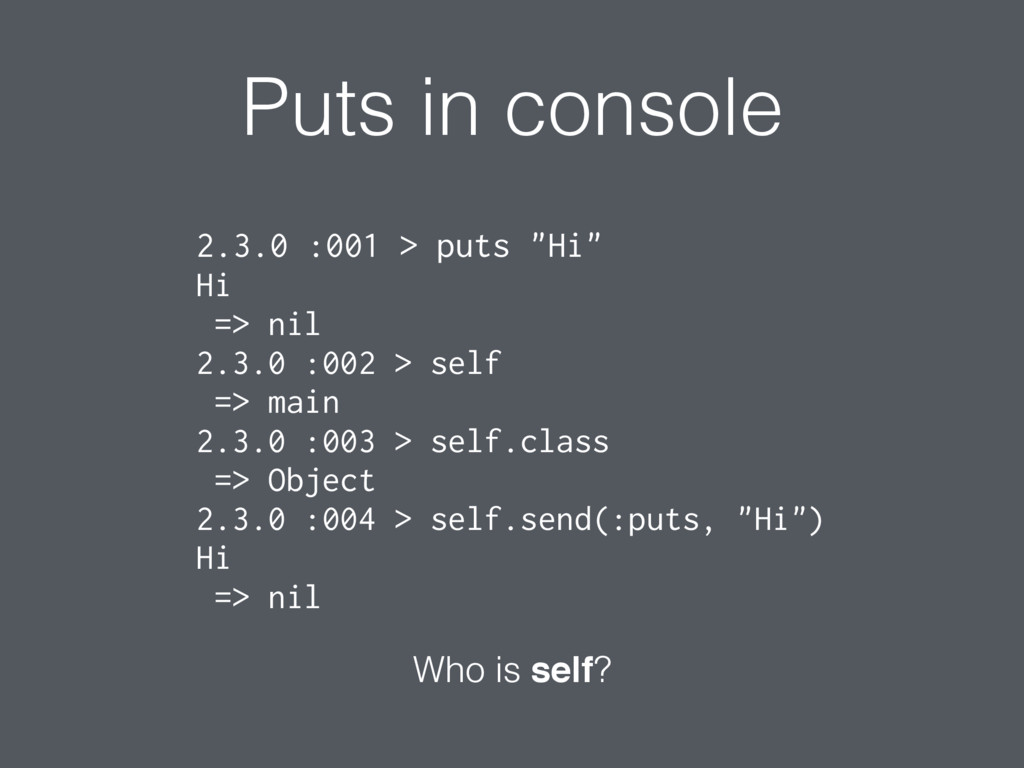
:articles in Rails? 2. What’s happening when we call puts “Hi” in the IRB console? 3. What’s happening when we call a method on an object but you can’t find its definition in the object’s class?!
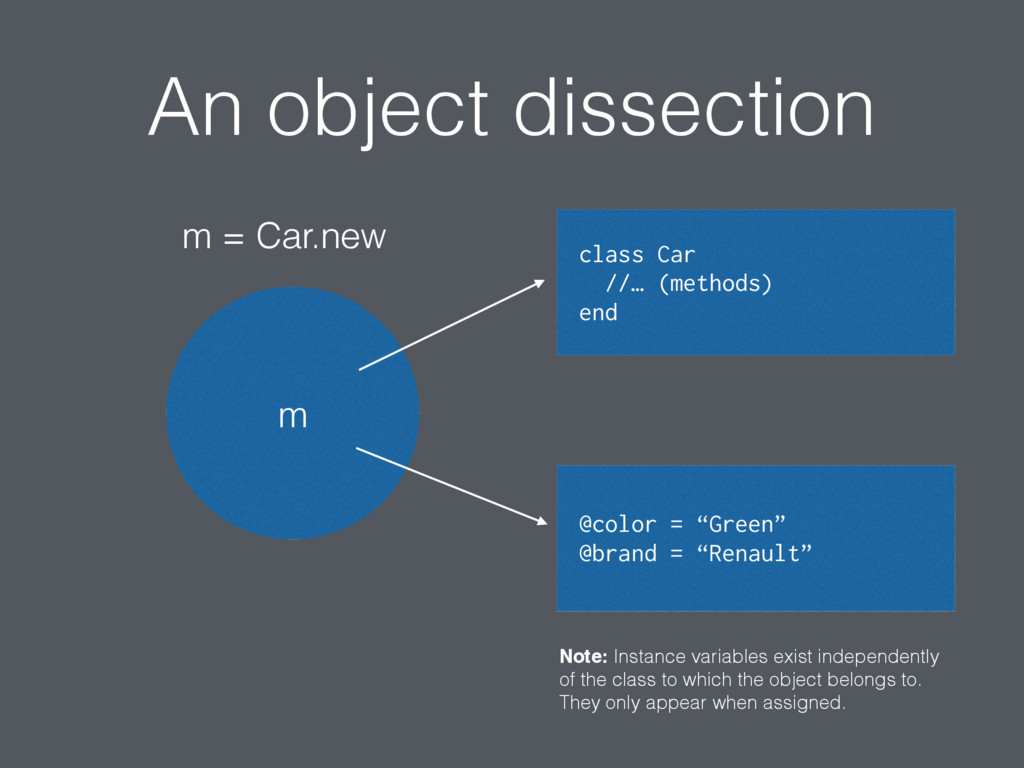
(methods) end @color = “Green” @brand = “Renault” Note: Instance variables exist independently of the class to which the object belongs to. They only appear when assigned.
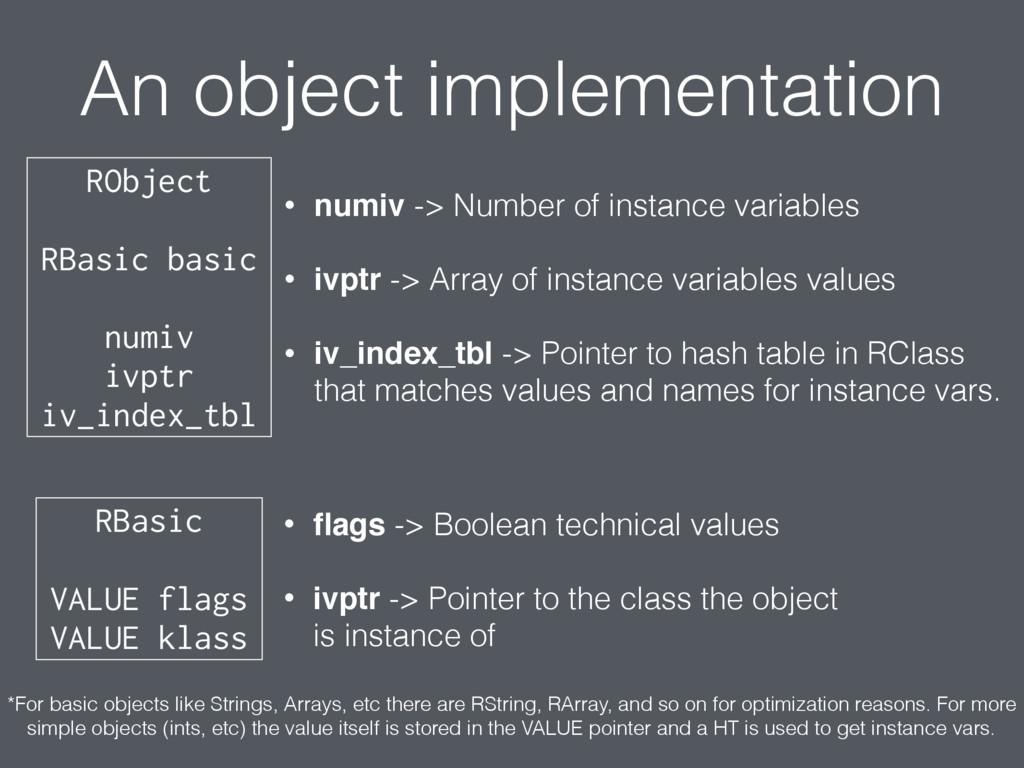
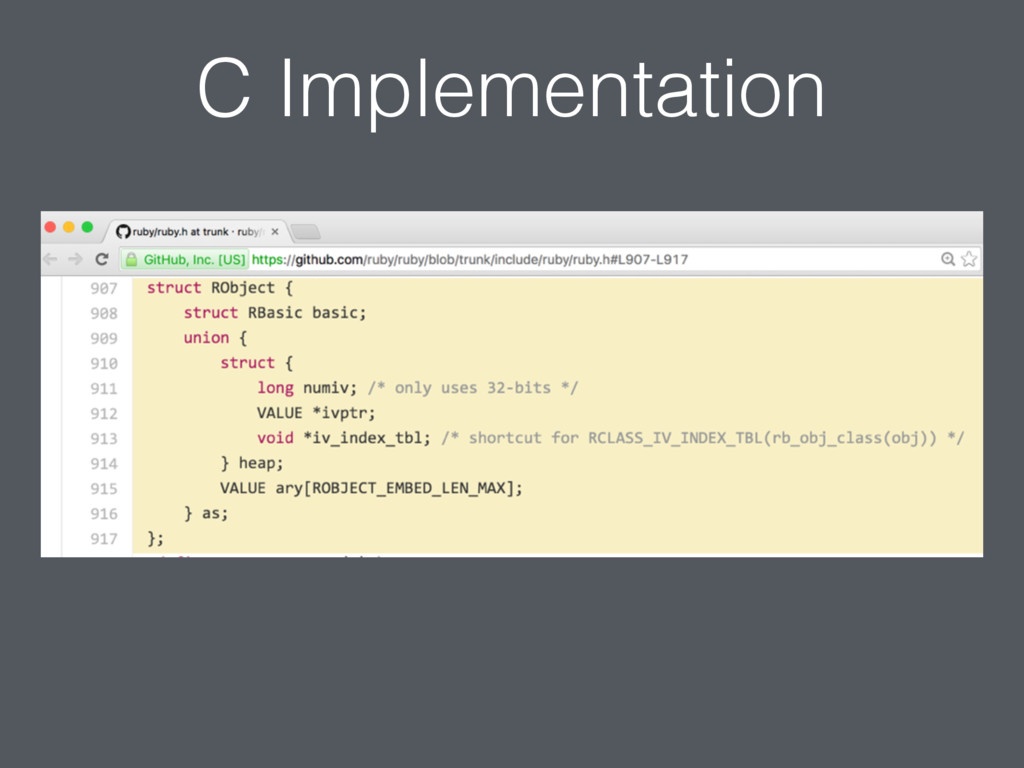
VALUE flags VALUE klass • numiv -> Number of instance variables • ivptr -> Array of instance variables values • iv_index_tbl -> Pointer to hash table in RClass that matches values and names for instance vars. • flags -> Boolean technical values • ivptr -> Pointer to the class the object is instance of *For basic objects like Strings, Arrays, etc there are RString, RArray, and so on for optimization reasons. For more simple objects (ints, etc) the value itself is stored in the VALUE pointer and a HT is used to get instance vars.
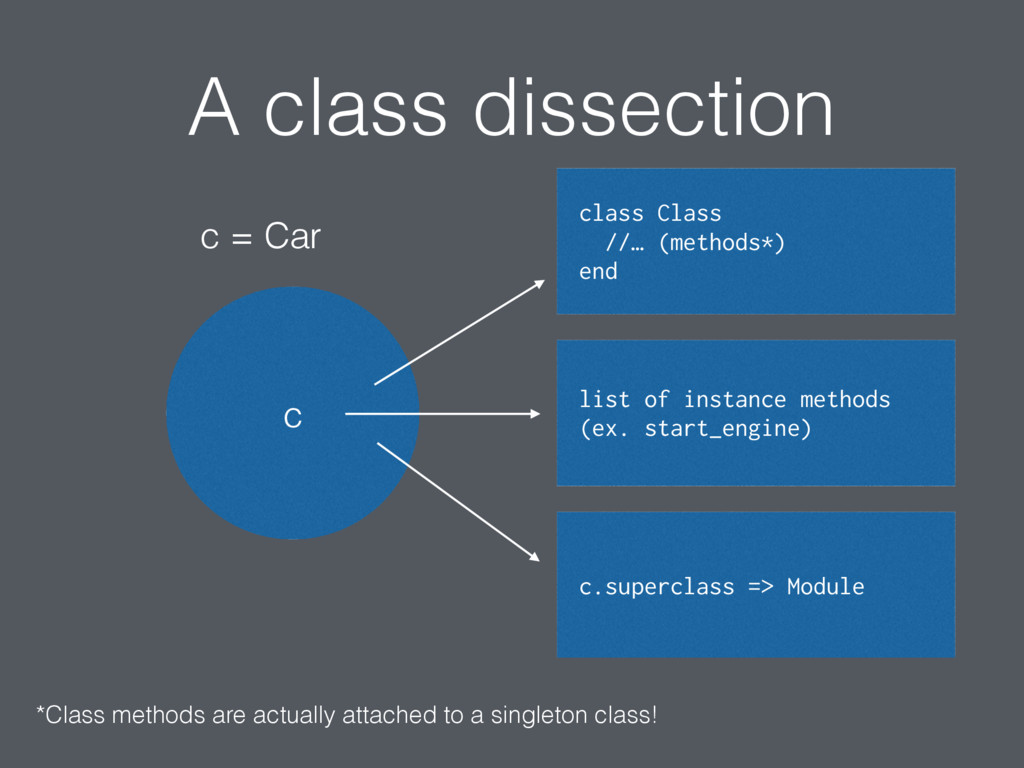
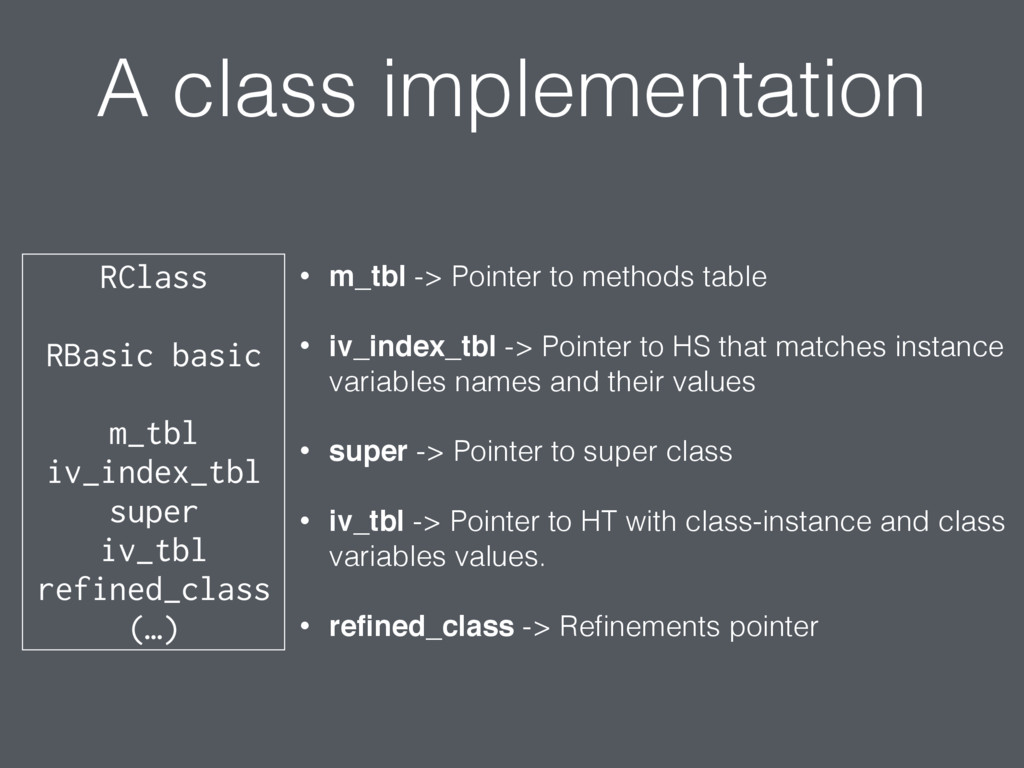
refined_class (…) • m_tbl -> Pointer to methods table • iv_index_tbl -> Pointer to HS that matches instance variables names and their values • super -> Pointer to super class • iv_tbl -> Pointer to HT with class-instance and class variables values. • refined_class -> Refinements pointer
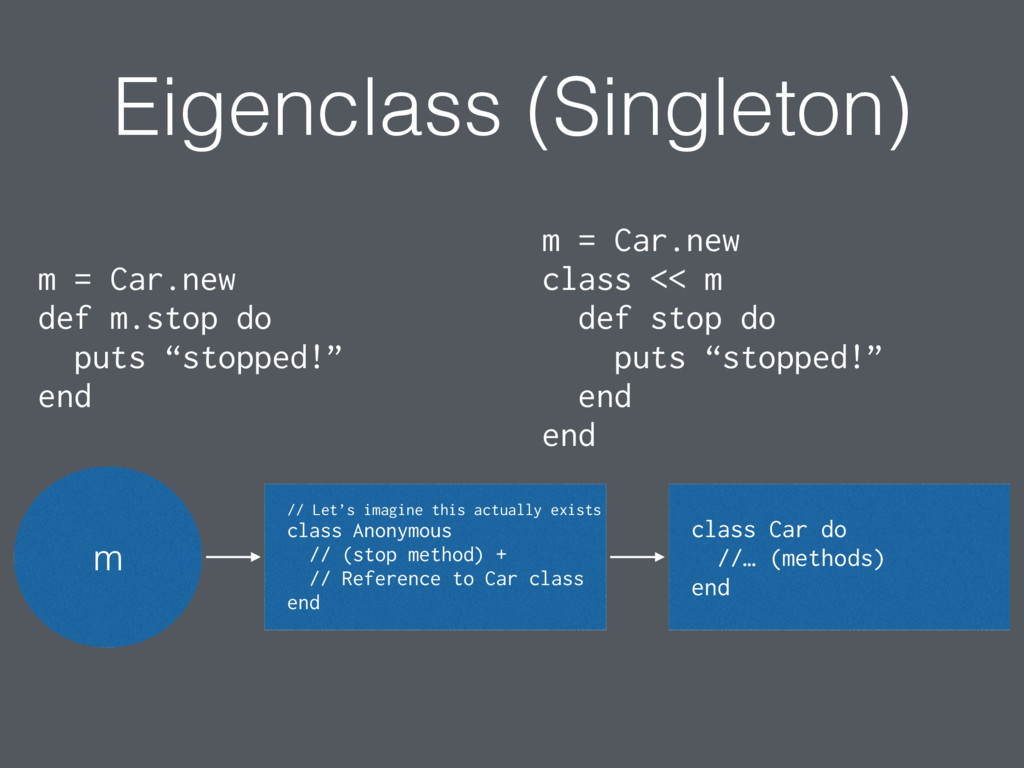
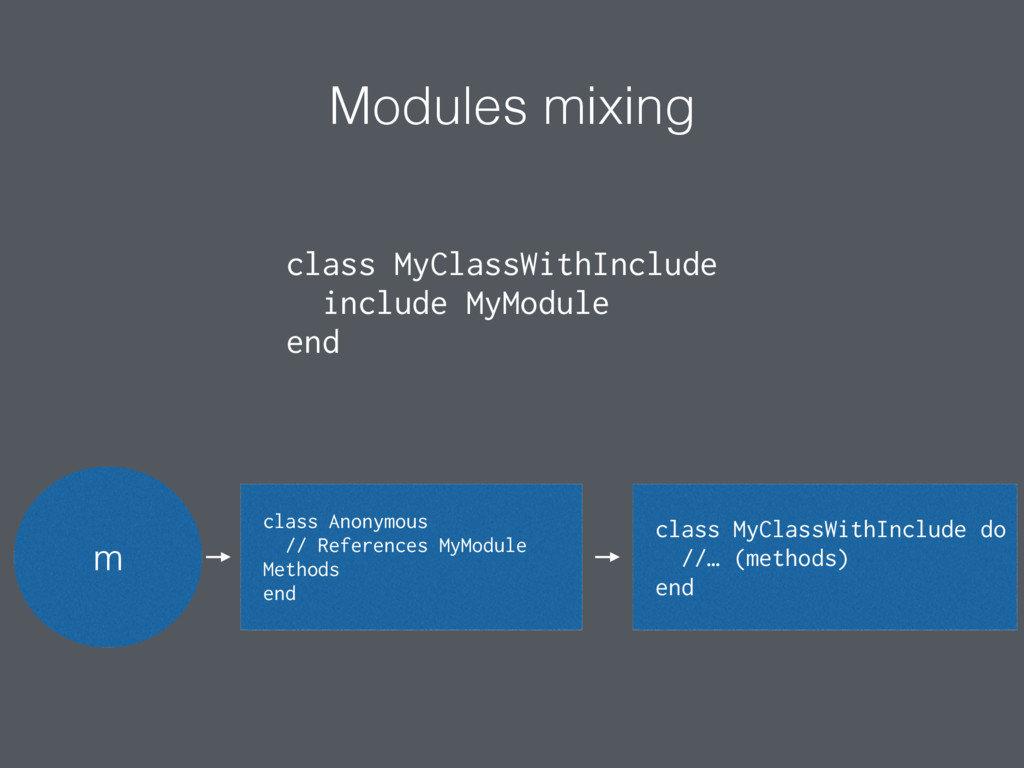
Anonymous // (stop method) + // Reference to Car class end class Car do //… (methods) end m = Car.new def m.stop do puts “stopped!” end m = Car.new class << m def stop do puts “stopped!” end end
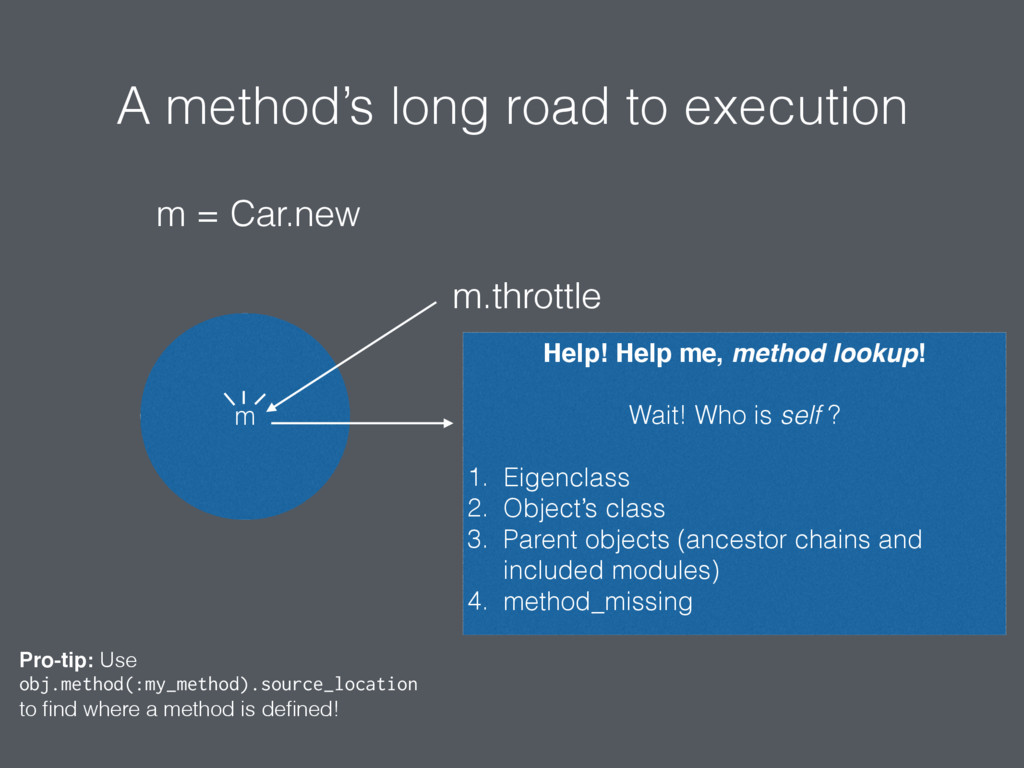
m.throttle Help! Help me, method lookup! Wait! Who is self ? 1. Eigenclass 2. Object’s class 3. Parent objects (ancestor chains and included modules) 4. method_missing Pro-tip: Use obj.method(:my_method).source_location to find where a method is defined!
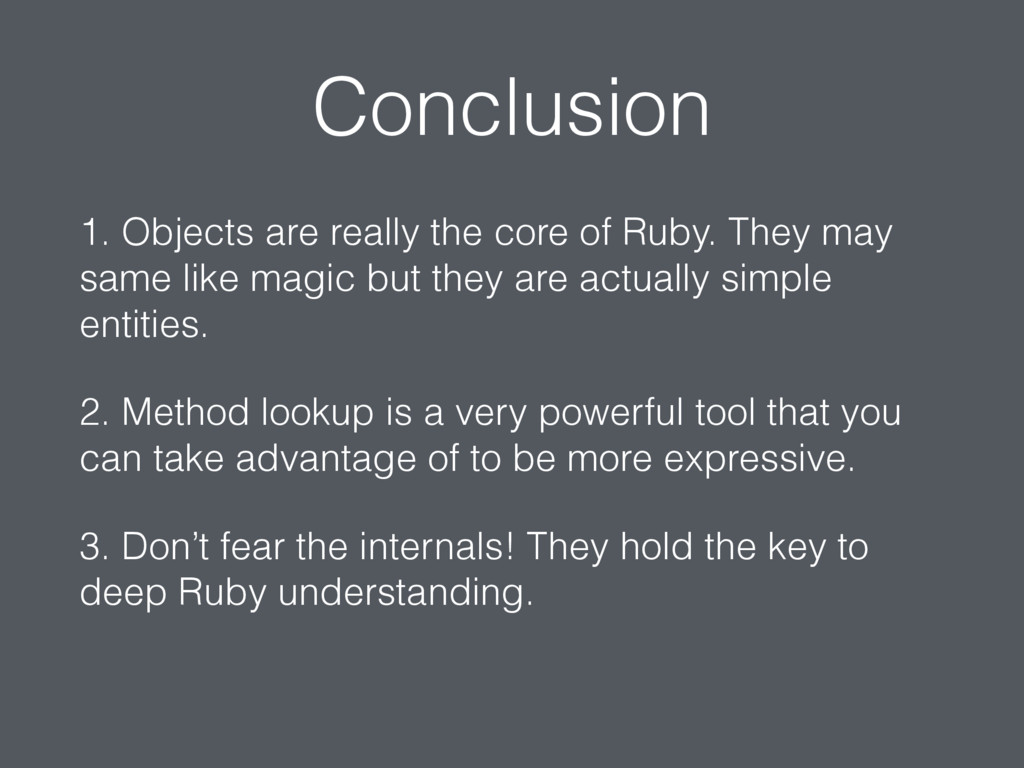
may same like magic but they are actually simple entities. 2. Method lookup is a very powerful tool that you can take advantage of to be more expressive. 3. Don’t fear the internals! They hold the key to deep Ruby understanding.


 yutobara
 kenjiyoneyama
 marcoroth
 prota
 kaityo256
 sylph01
 utakaha
 satoshi256kbyte
 morizo_1984
 ryu1013
 drumath2237
 rollbear
 malarkey
 stephenakadiri
 moore
 seathinner
 ianozsvald
 jonoalderson
 aleyda
 elsirapls
 paigeccino
 helmedeiros
 jnunemaker
 baasie