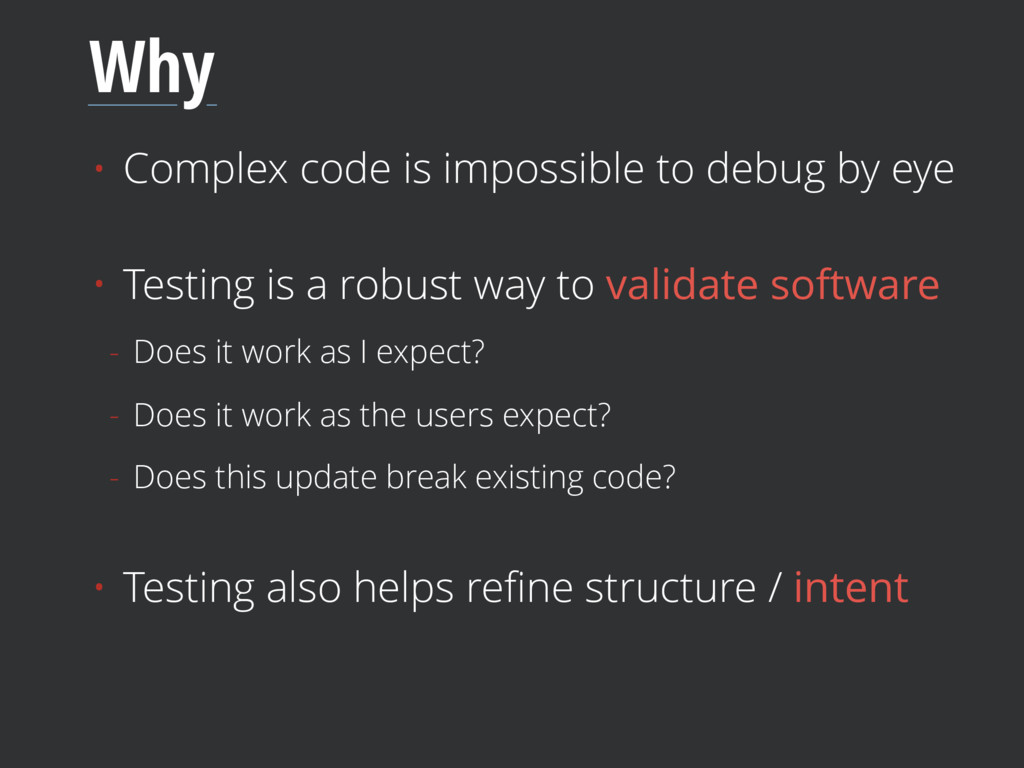
Testing is a robust way to validate software - Does it work as I expect? - Does it work as the users expect? - Does this update break existing code? Why
Testing is a robust way to validate software - Does it work as I expect? - Does it work as the users expect? - Does this update break existing code? • Testing also helps refine structure / intent Why
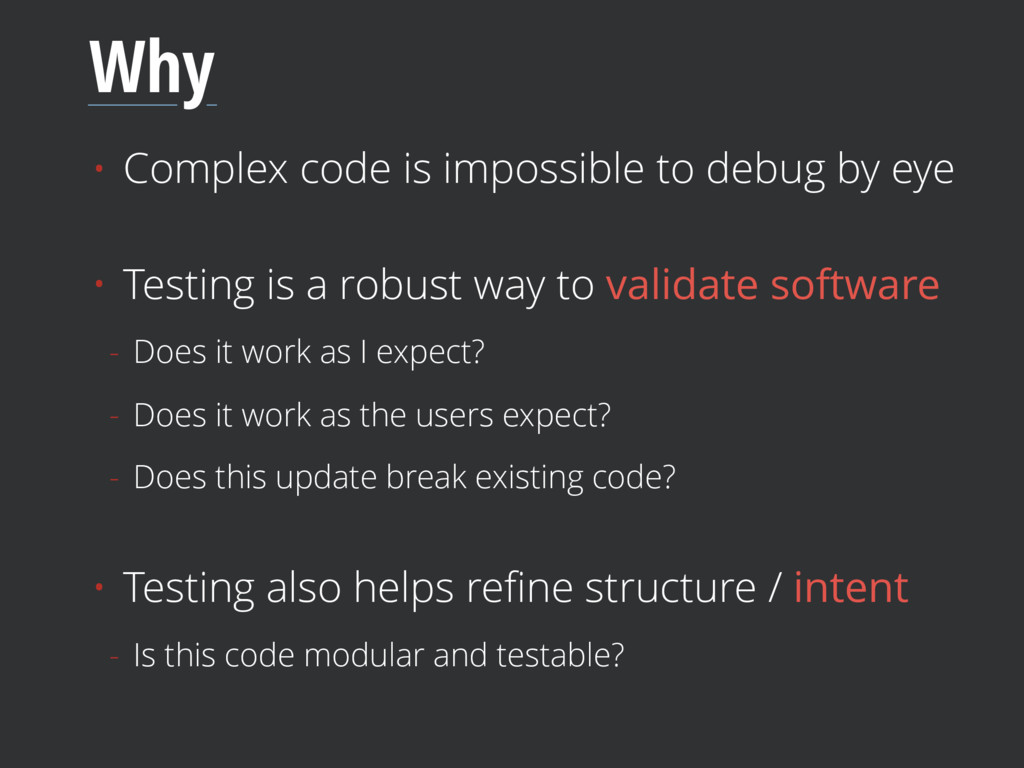
Testing is a robust way to validate software - Does it work as I expect? - Does it work as the users expect? - Does this update break existing code? • Testing also helps refine structure / intent - Is this code modular and testable? Why
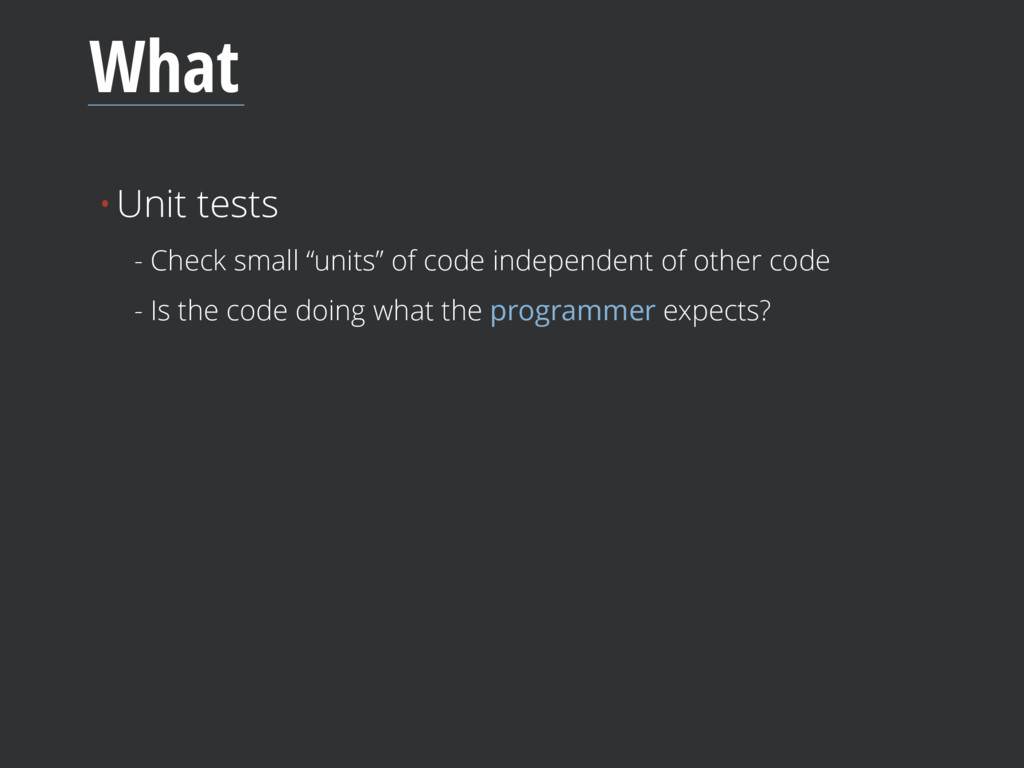
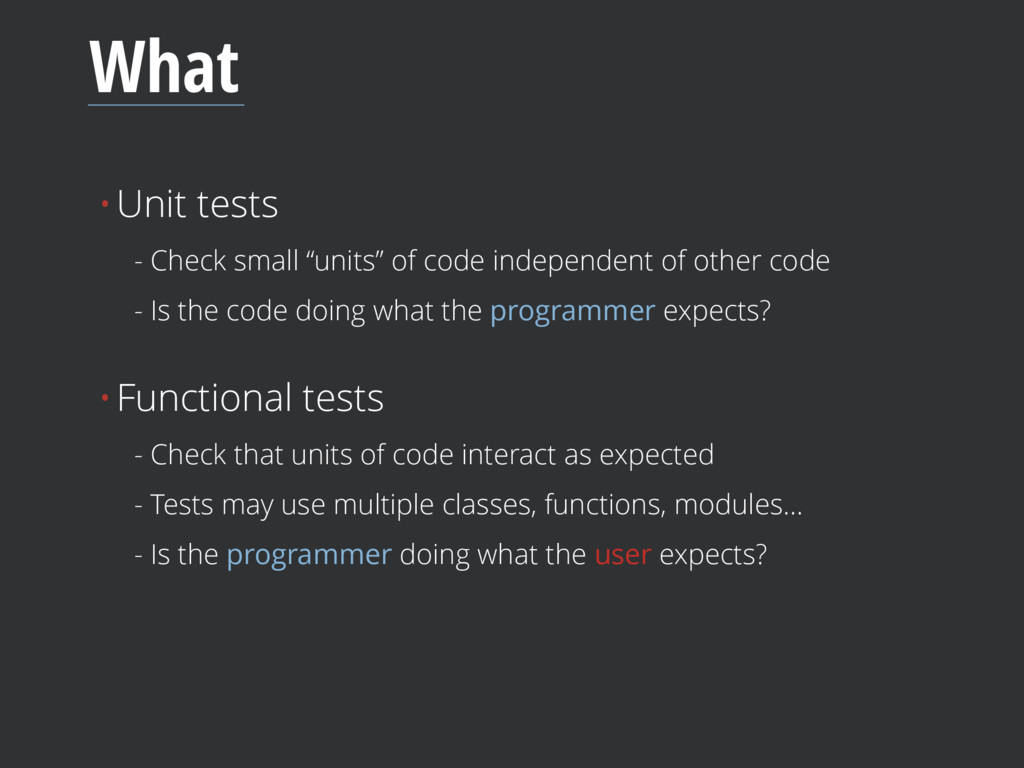
of other code - Is the code doing what the programmer expects? •Functional tests - Check that units of code interact as expected - Tests may use multiple classes, functions, modules… - Is the programmer doing what the user expects?
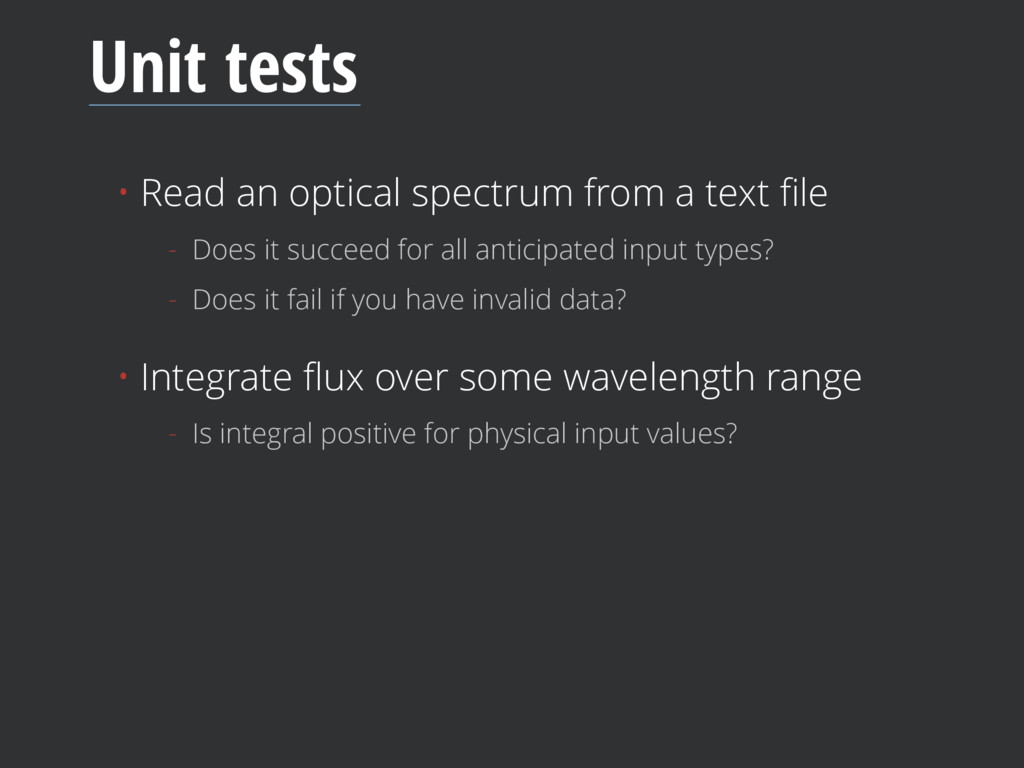
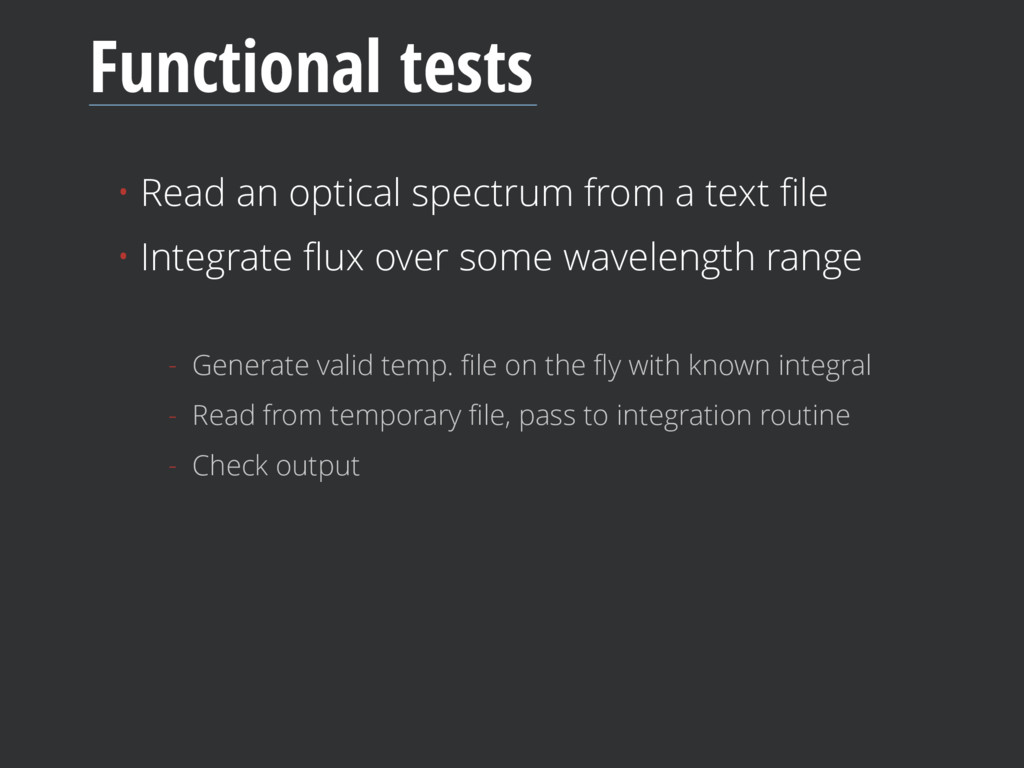
file - Does it succeed for all anticipated input types? - Does it fail if you have invalid data? • Integrate flux over some wavelength range - Is integral positive for physical input values?
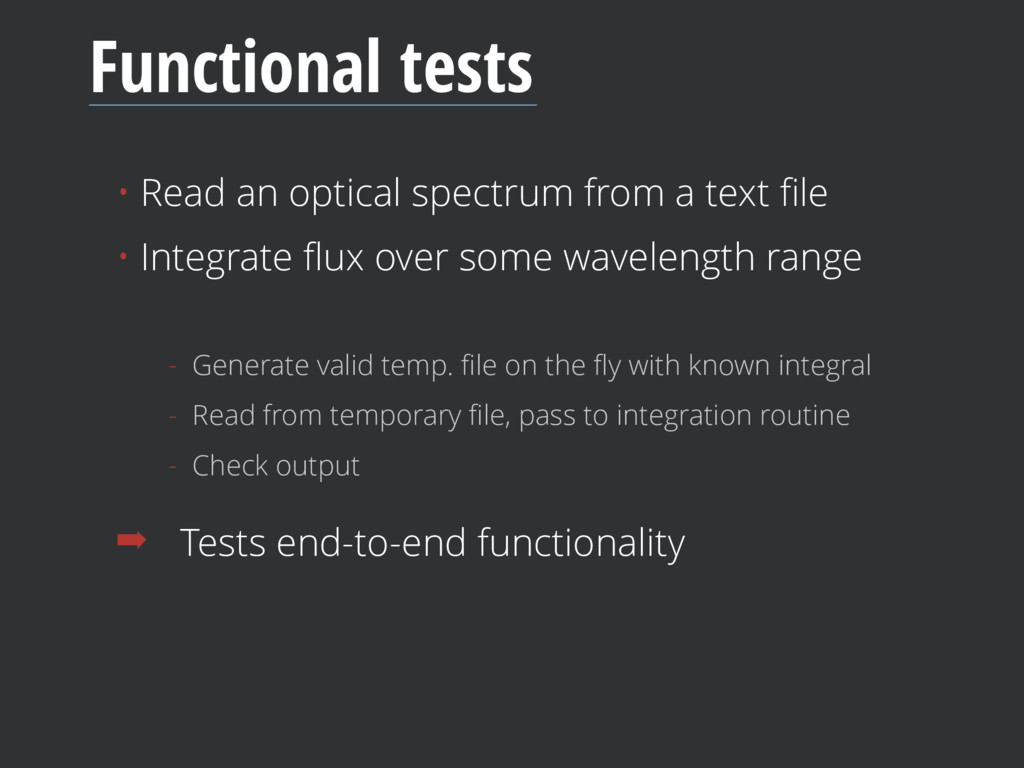
file • Integrate flux over some wavelength range - Generate valid temp. file on the fly with known integral - Read from temporary file, pass to integration routine - Check output
file • Integrate flux over some wavelength range - Generate valid temp. file on the fly with known integral - Read from temporary file, pass to integration routine - Check output ➡ Tests end-to-end functionality
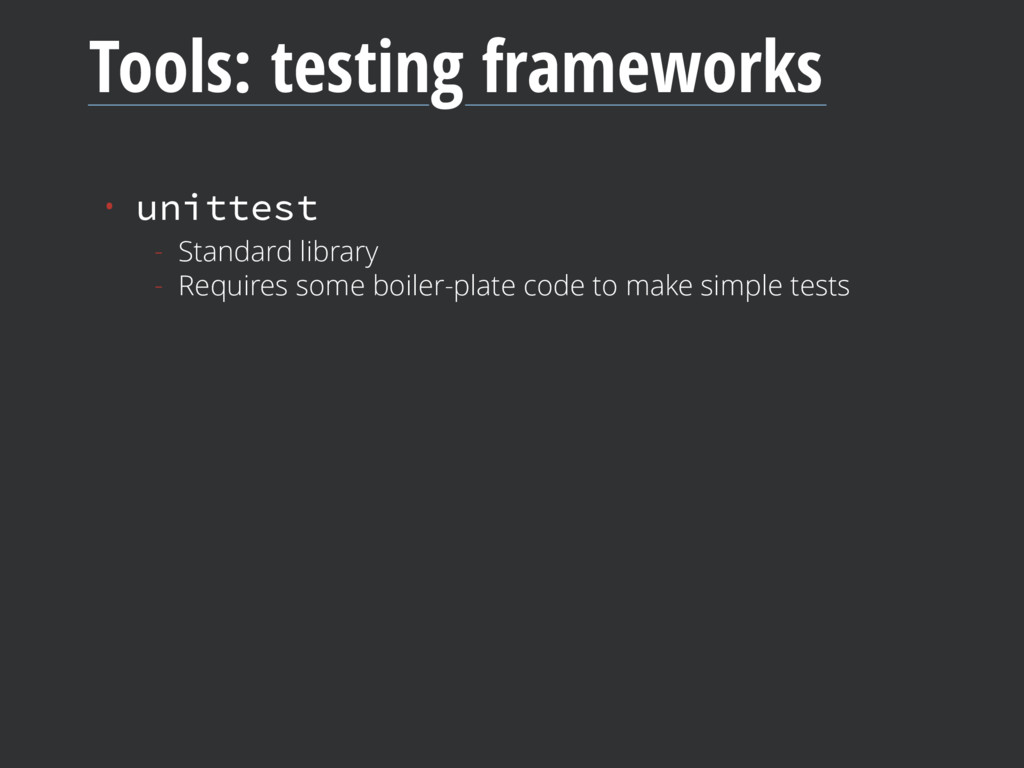
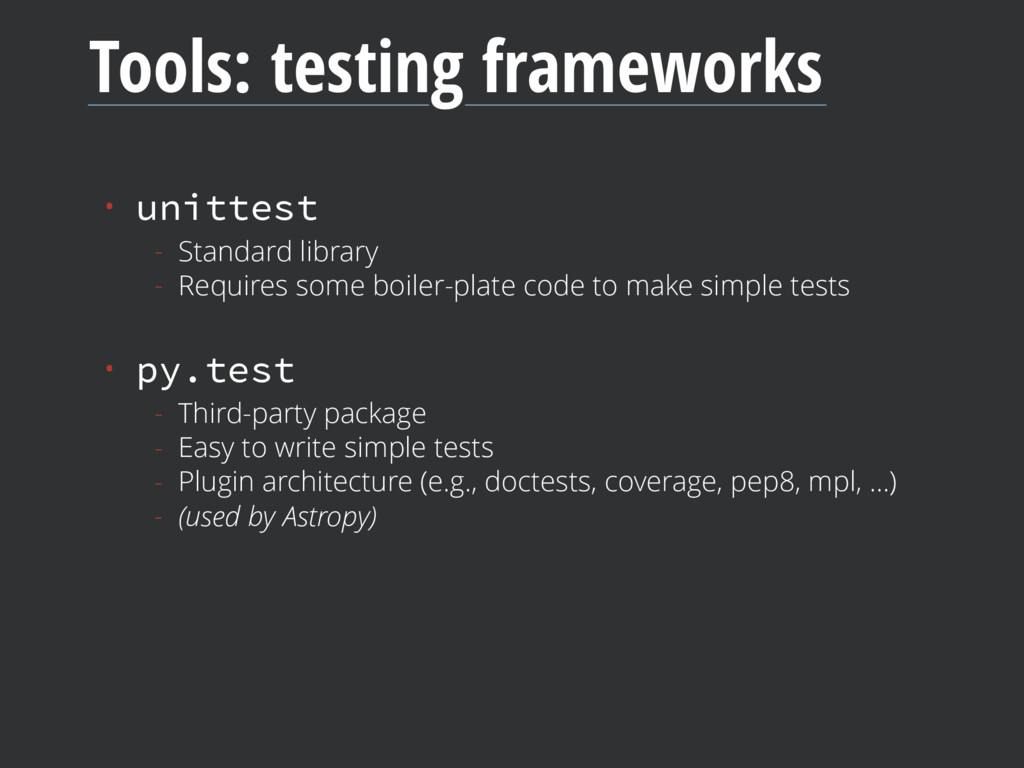
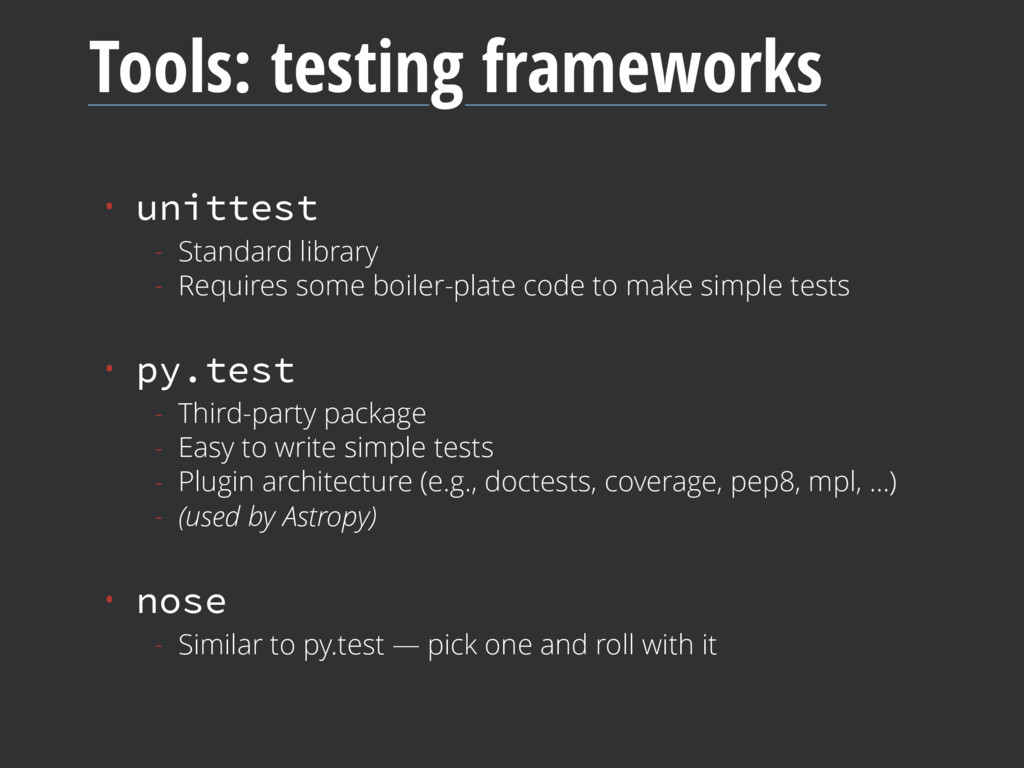
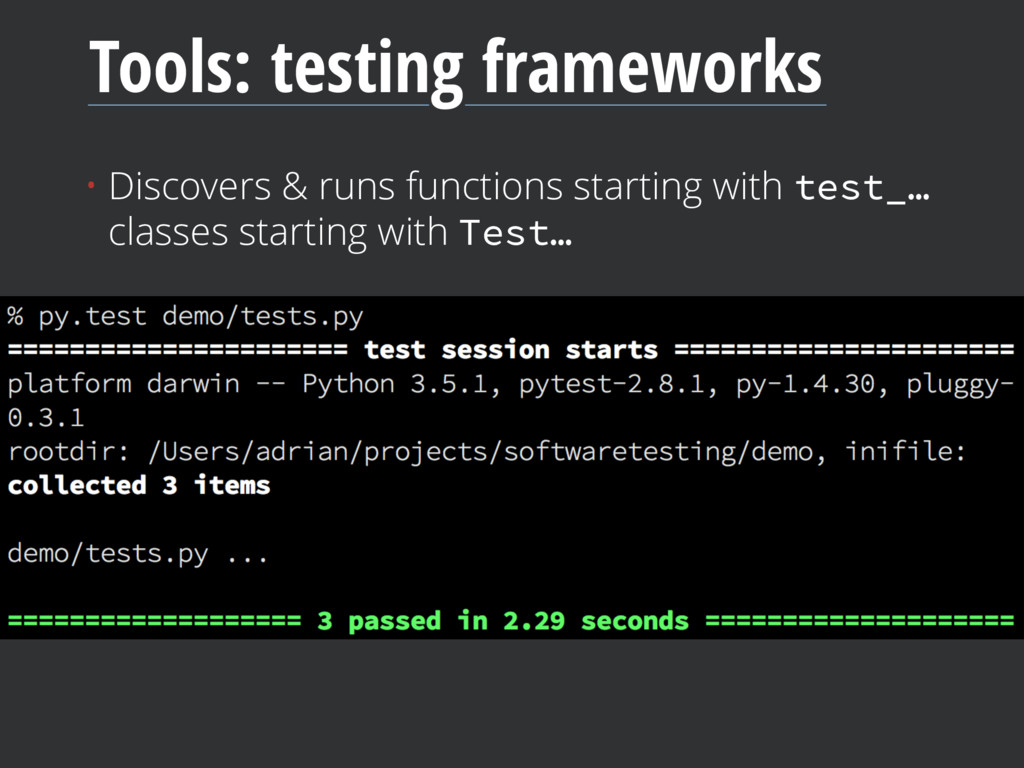
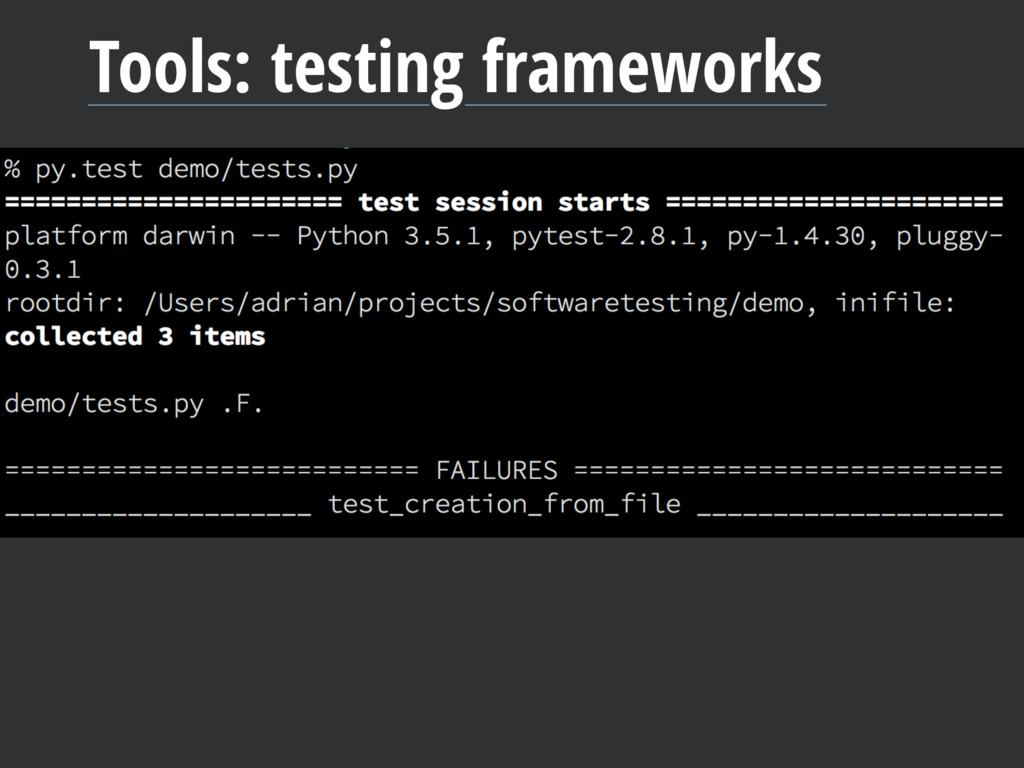
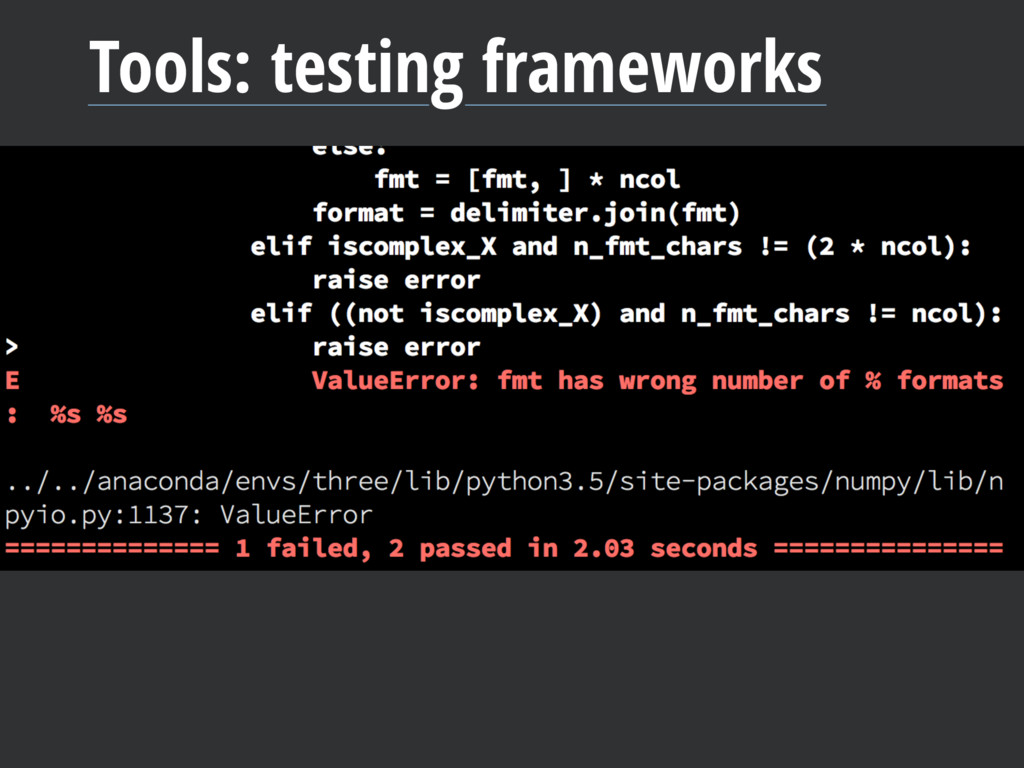
some boiler-plate code to make simple tests • py.test - Third-party package - Easy to write simple tests - Plugin architecture (e.g., doctests, coverage, pep8, mpl, …) - (used by Astropy) • nose - Similar to py.test — pick one and roll with it
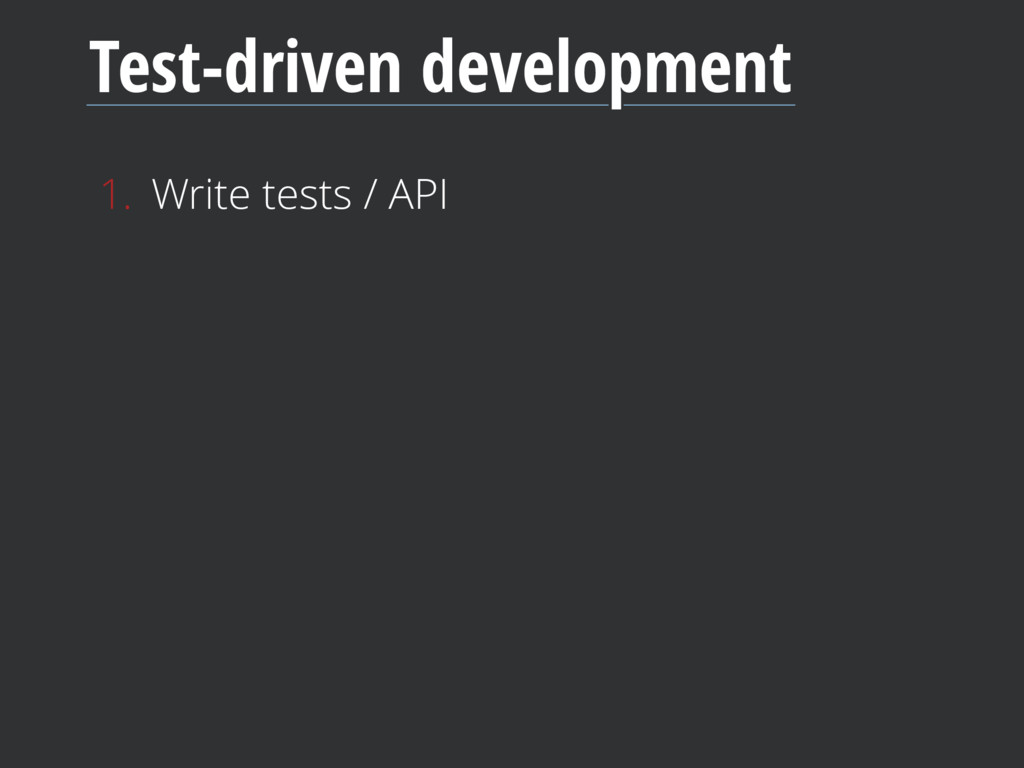
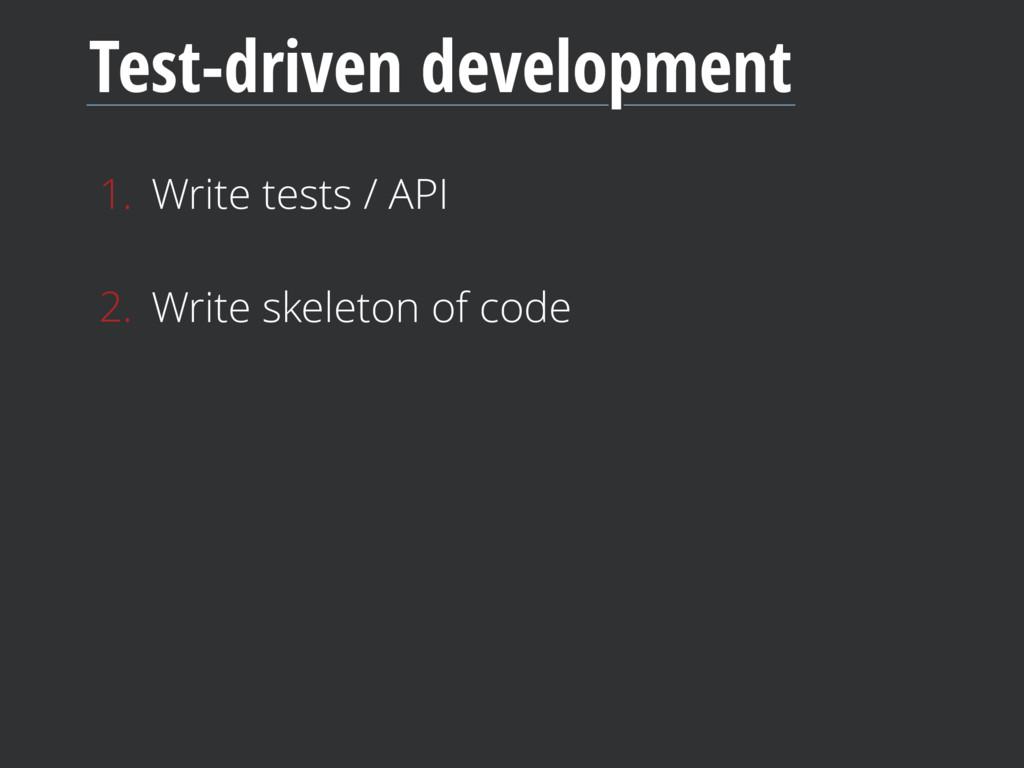
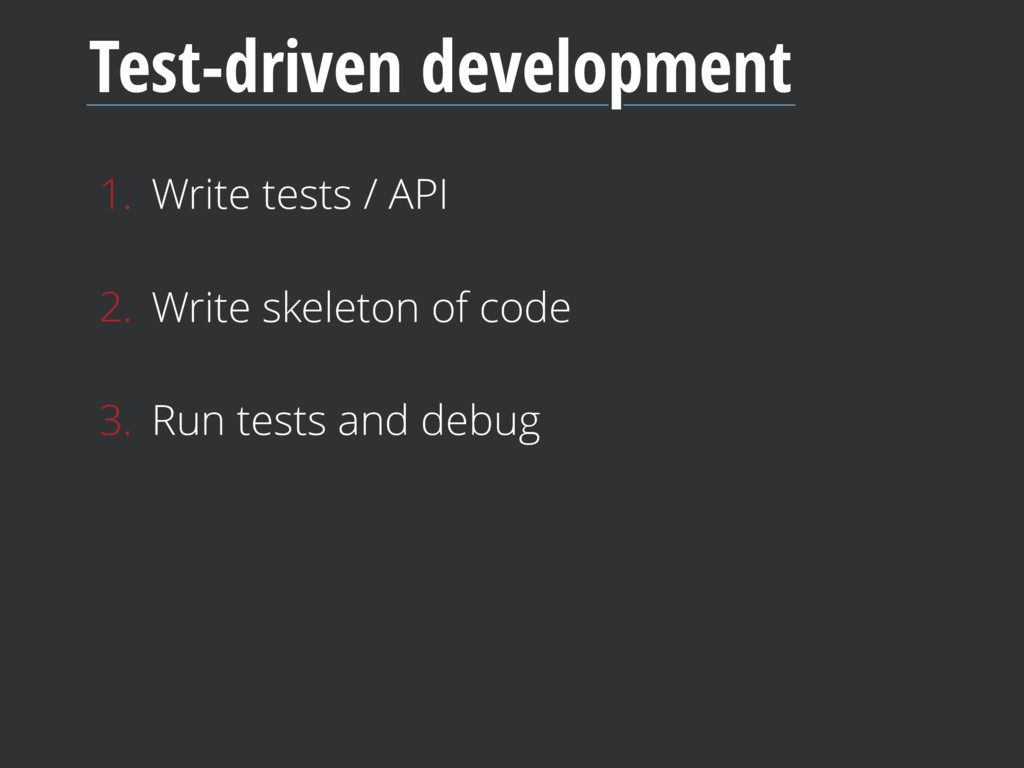
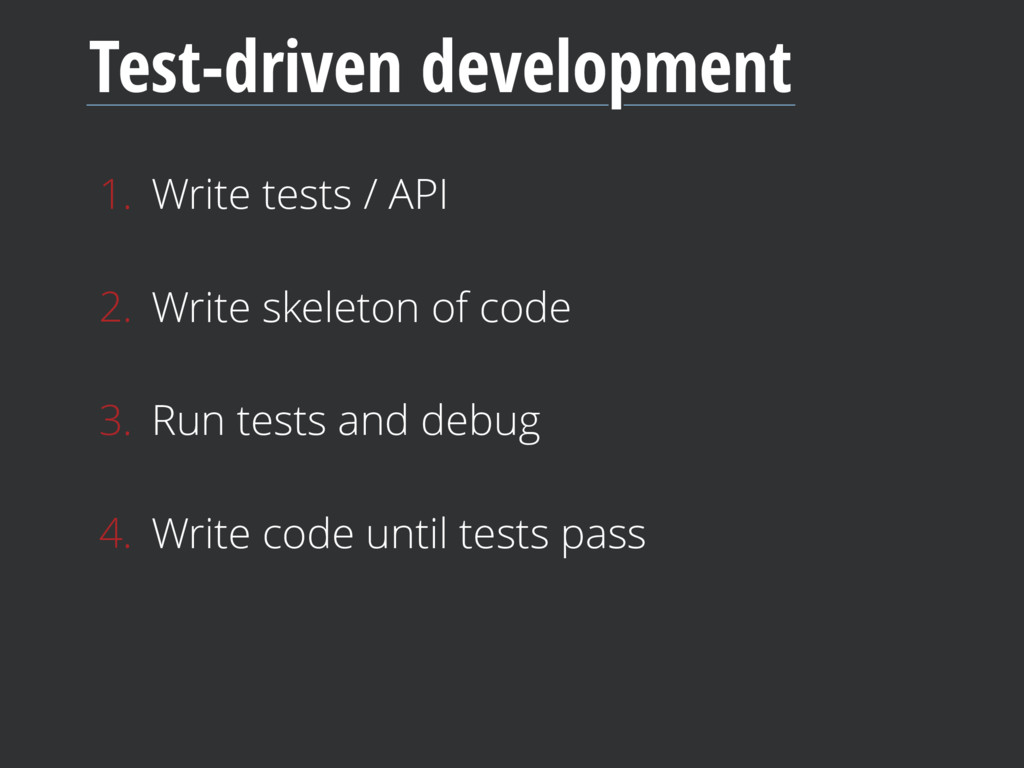
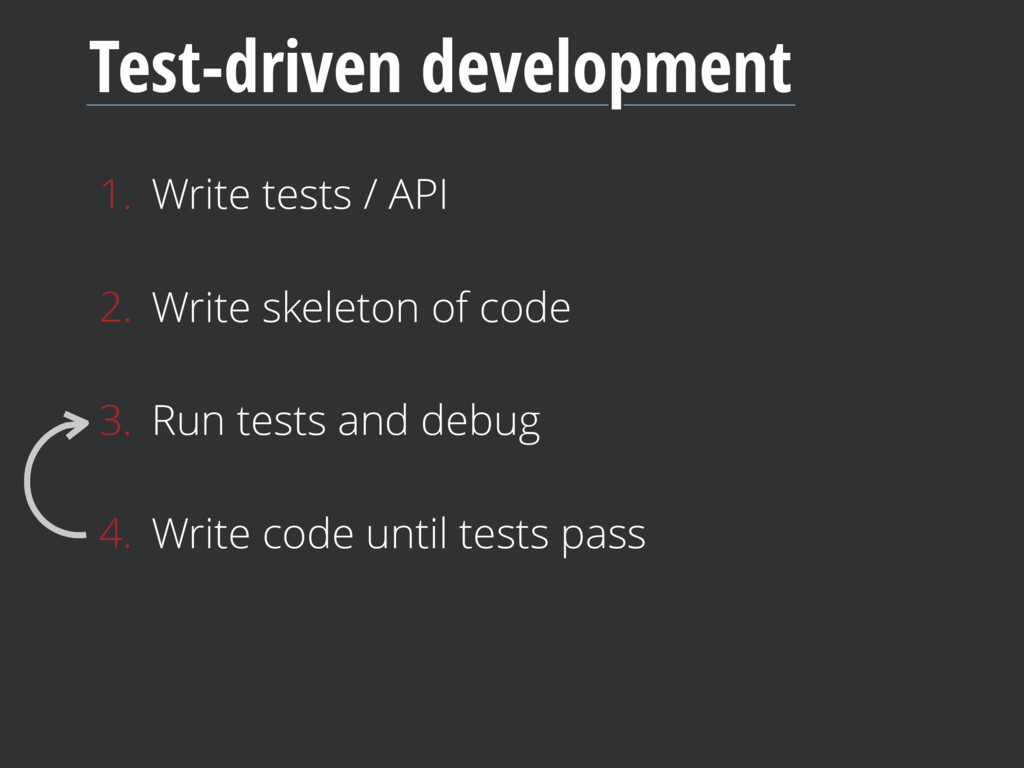
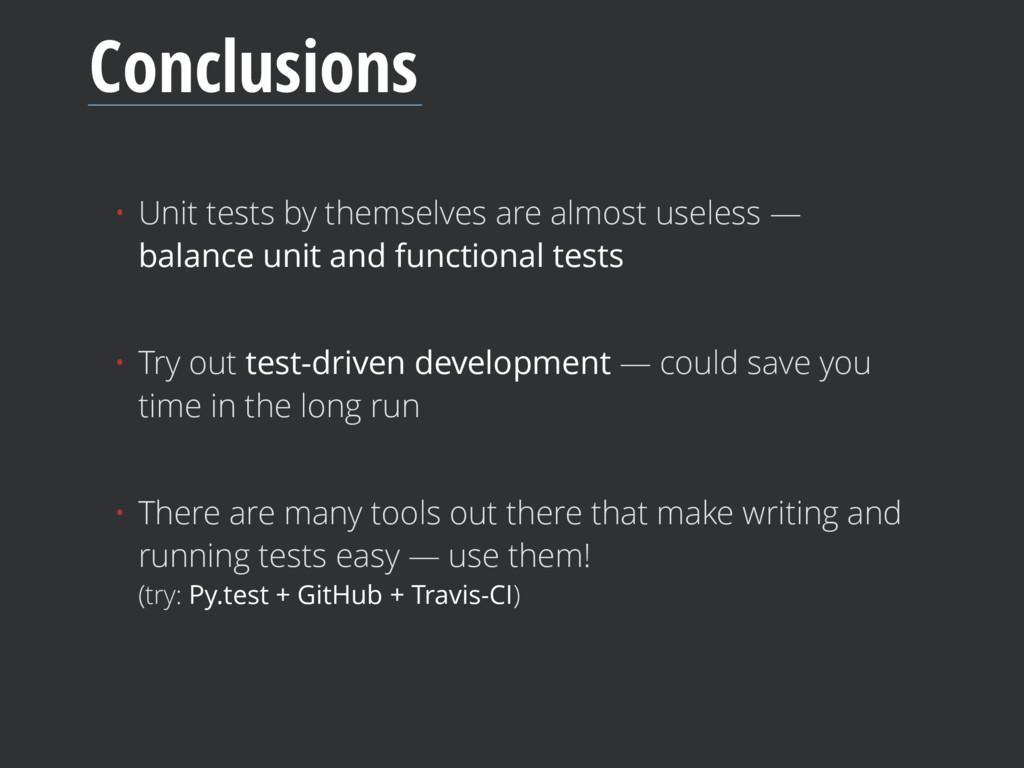
balance unit and functional tests • Try out test-driven development — could save you time in the long run • There are many tools out there that make writing and running tests easy — use them!
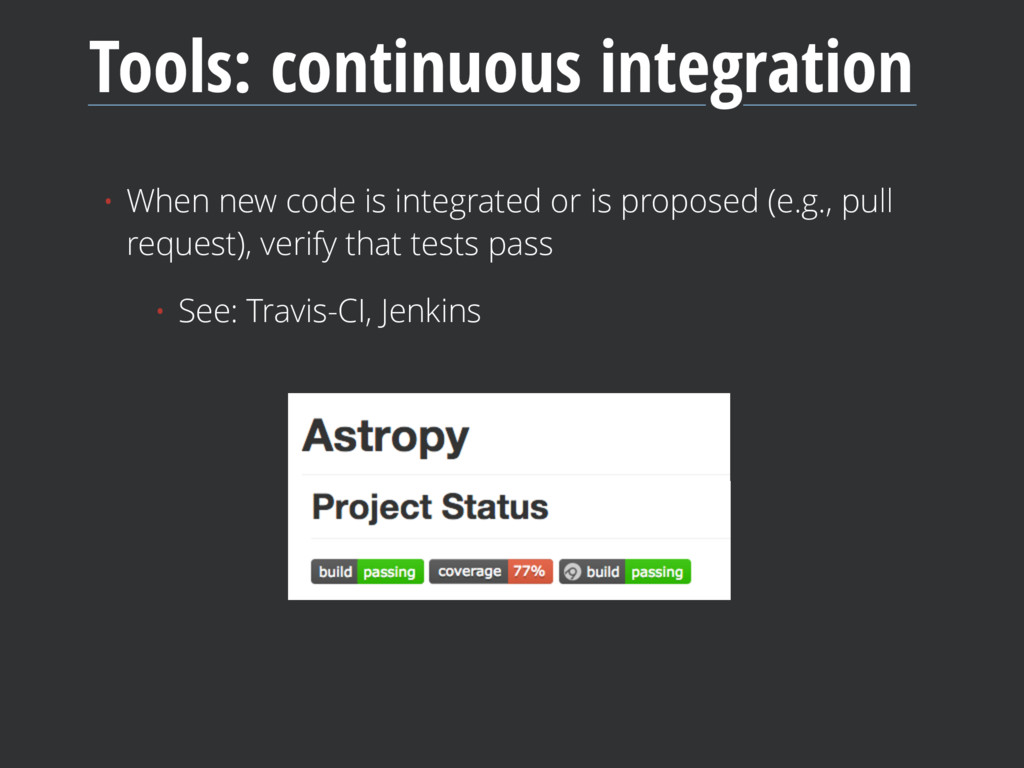
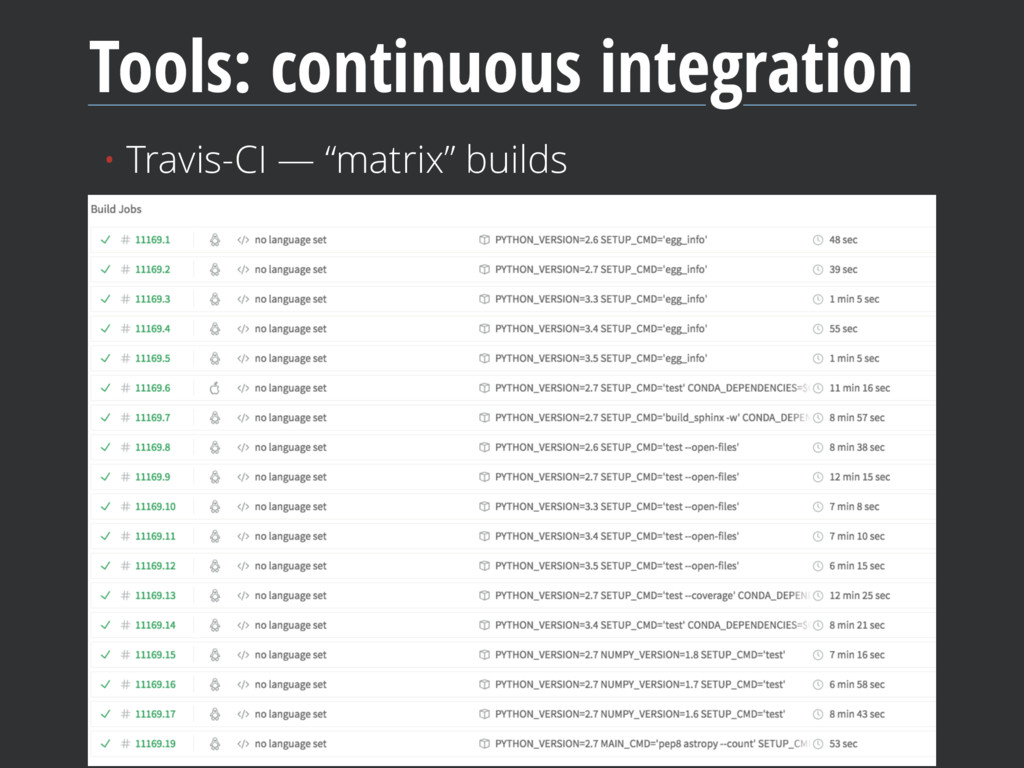
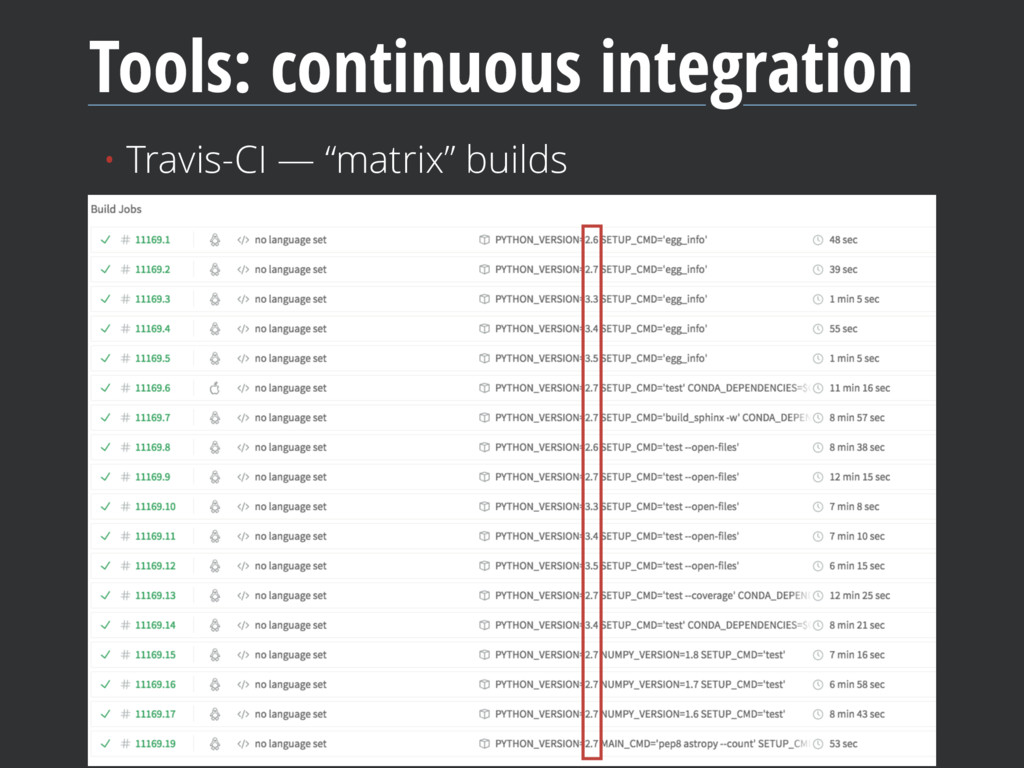
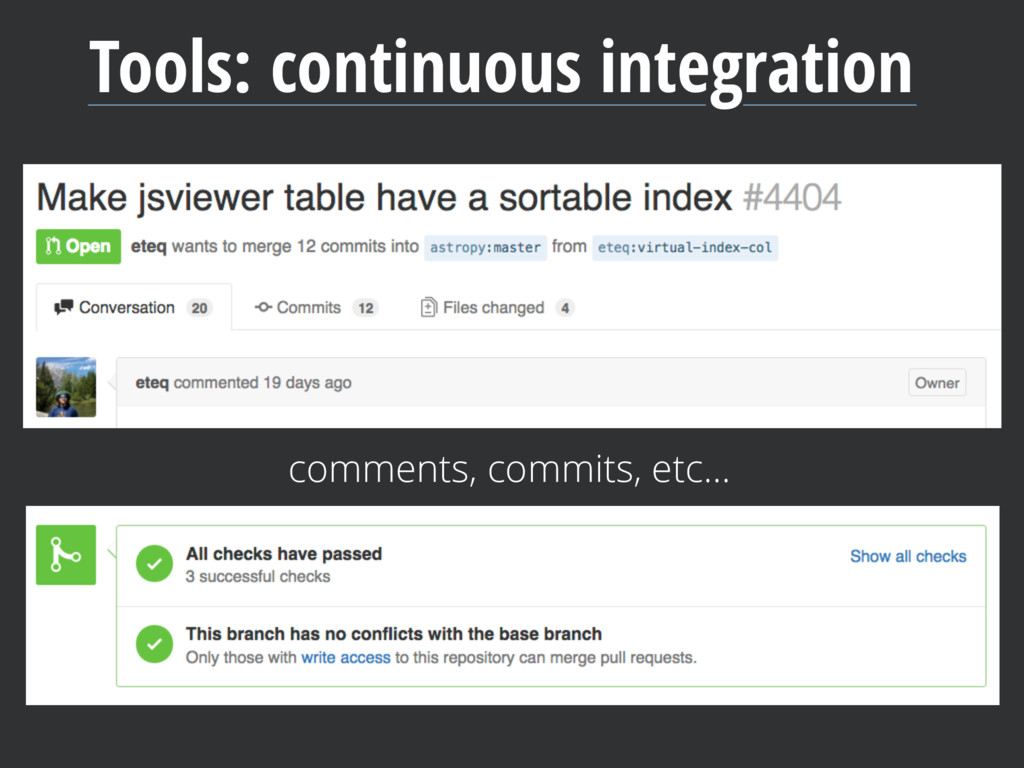
balance unit and functional tests • Try out test-driven development — could save you time in the long run • There are many tools out there that make writing and running tests easy — use them! (try: Py.test + GitHub + Travis-CI)


 adrn
adrn
 estie
estie
 akasan
 ianozsvald
 jarvist
 martinlippert
 voginip
 institutdelelevage
 syuchimu
 xspa2012
 hayataka88
 brainpadpr
 bryan
bryan
 marktimemedia
 tamaranovitovic
 mongodb
 chriscoyier
 sergeychernyshev
 shpigford
 wayneb77
 jlugia
 tmiket
 jmmastey
 baasie