Share
Embed
Protect your API with OAuth 2
I explored how OAuth 2 works at CodeTalks in Hamburg.
Rob Allen
September 28, 2017
Transcript
73 slides
-
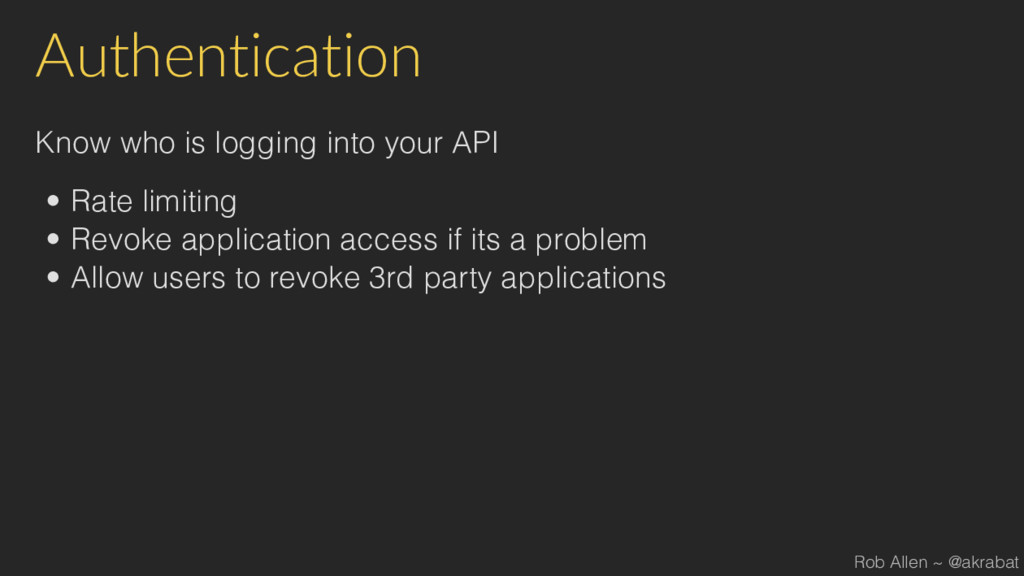
Authentication Know who is logging into your API • Rate
limiting • Revoke application access if its a problem • Allow users to revoke 3rd party applications Rob Allen ~ @akrabat -
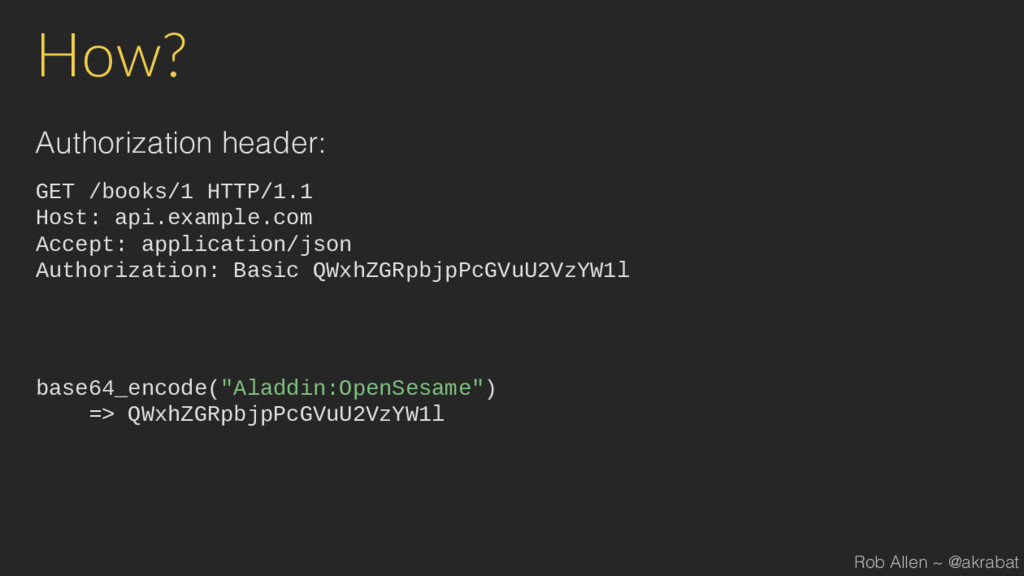
How? Authorization header: GET /books/1 HTTP/1.1 Host: api.example.com Accept: application/json
Authorization: Basic QWxhZGRpbjpPcGVuU2VzYW1l base64_encode("Aladdin:OpenSesame") => QWxhZGRpbjpPcGVuU2VzYW1l Rob Allen ~ @akrabat -
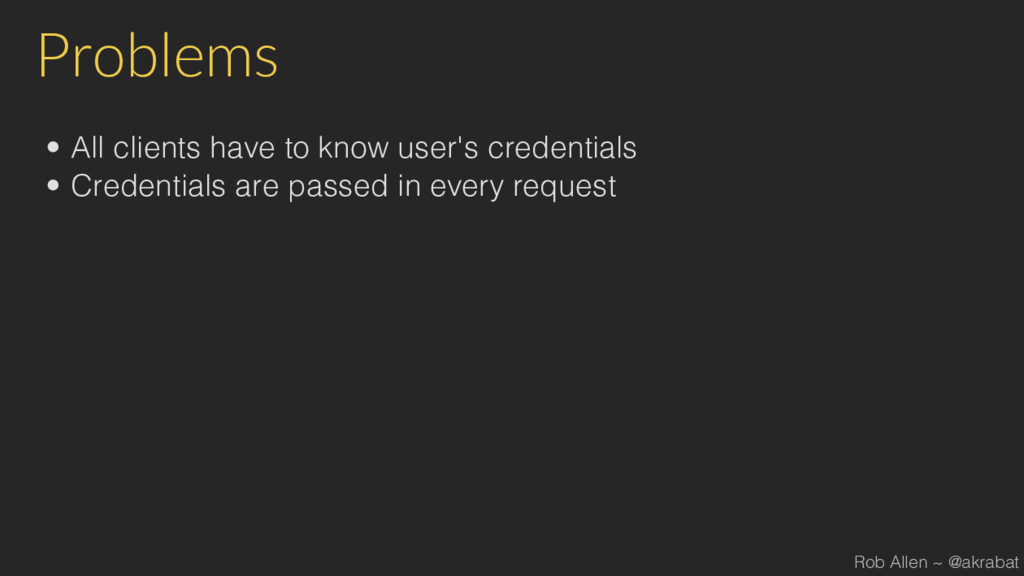
Problems • All clients have to know user's credentials •
Credentials are passed in every request Rob Allen ~ @akrabat -
OAuth2 The OAuth 2.0 authorization framework enables a third-party application
to obtain limited access to an HTTP service oauth.net Rob Allen ~ @akrabat -
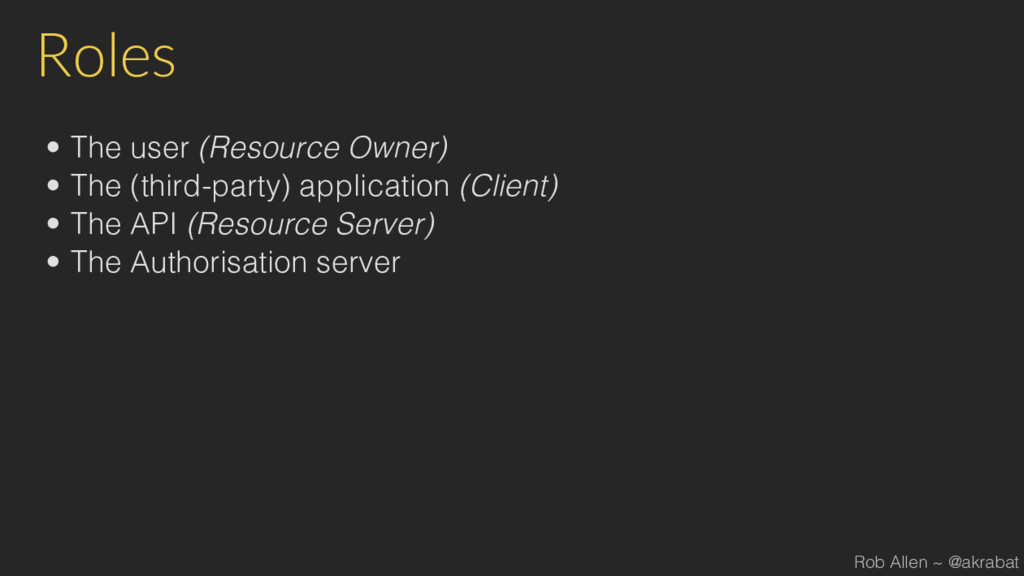
Roles • The user (Resource Owner) • The (third-party) application
(Client) • The API (Resource Server) • The Authorisation server Rob Allen ~ @akrabat -
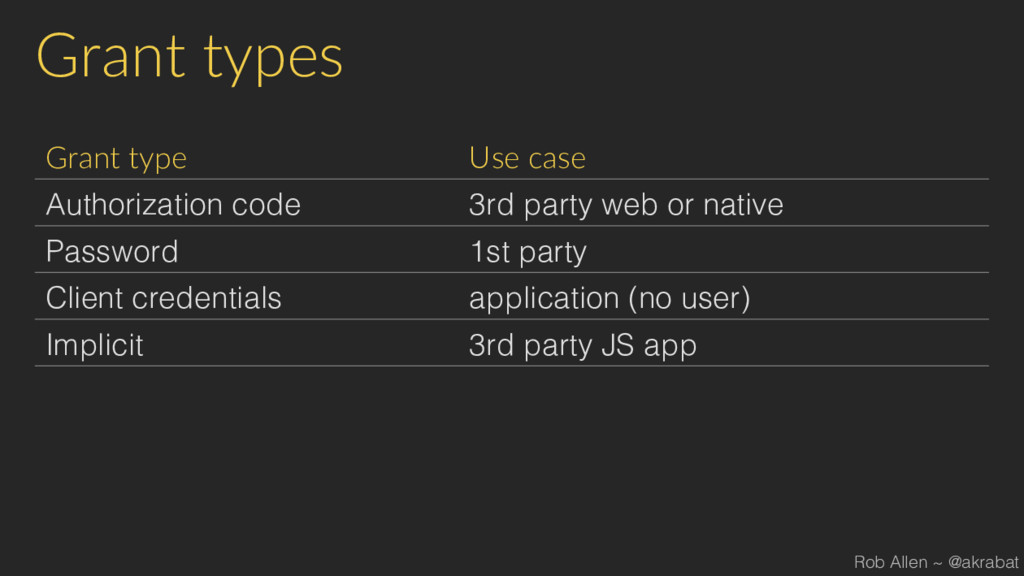
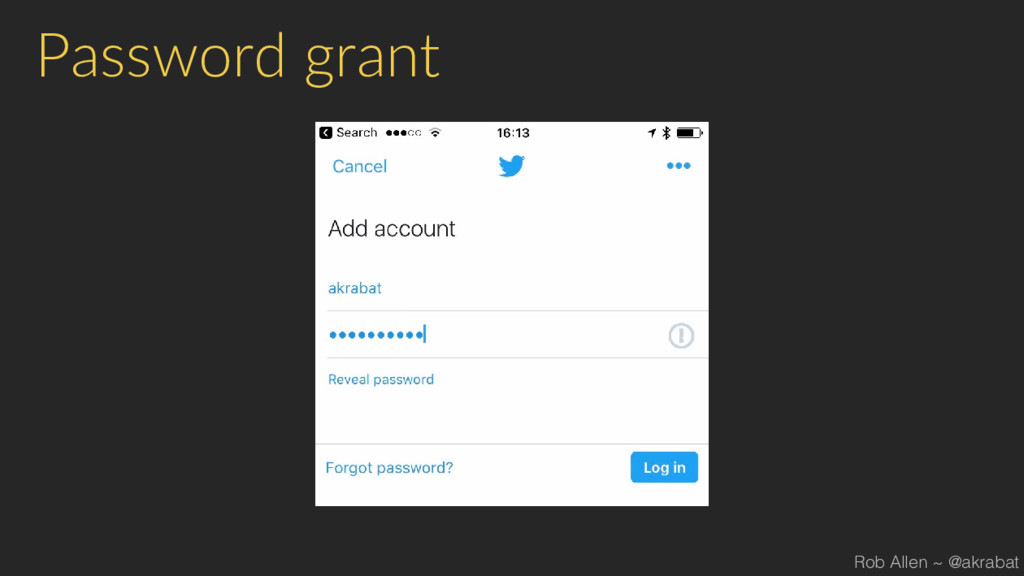
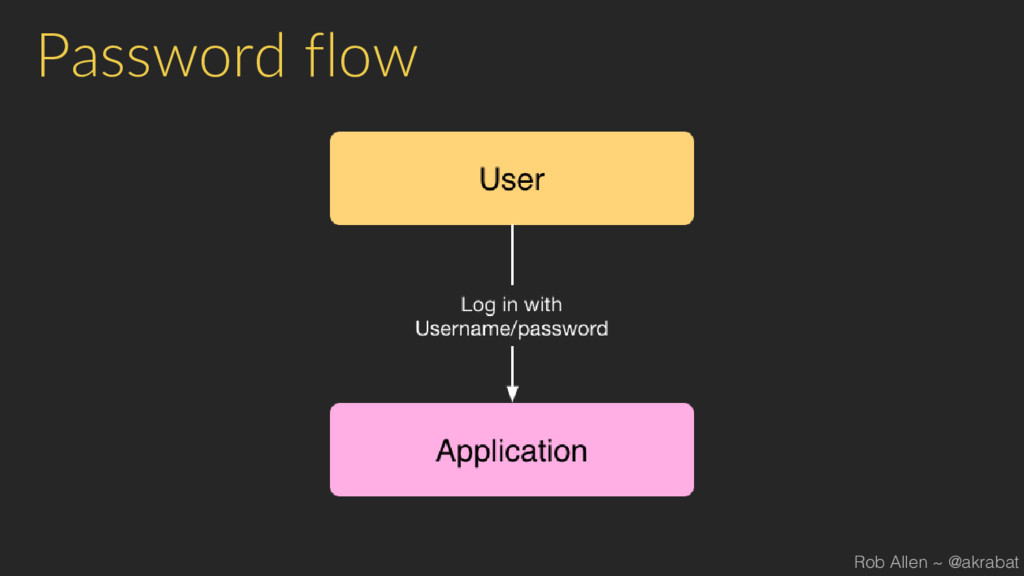
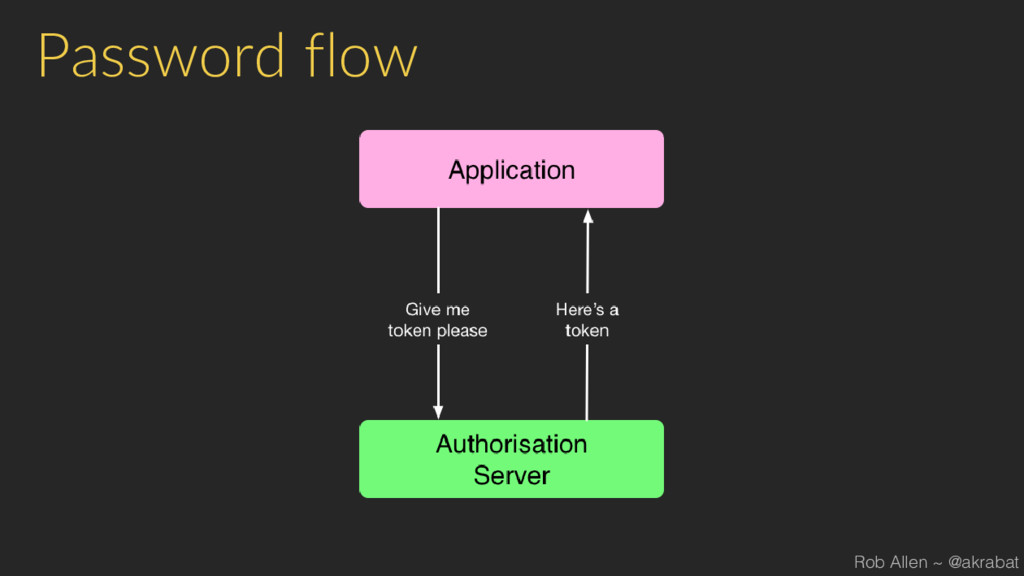
Grant types Grant type Use case Authorization code 3rd party
web or native Password 1st party Client credentials application (no user) Implicit 3rd party JS app Rob Allen ~ @akrabat -
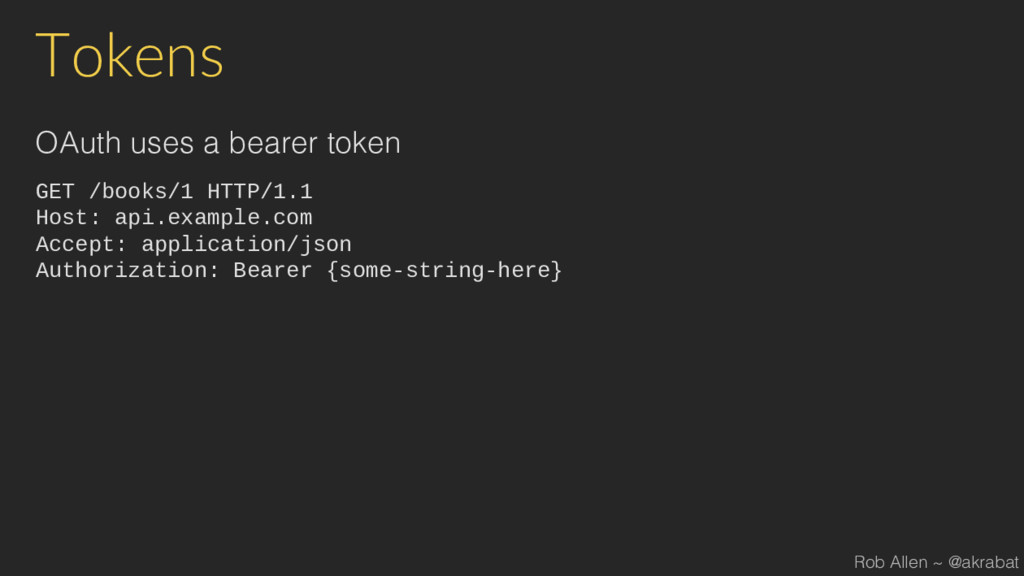
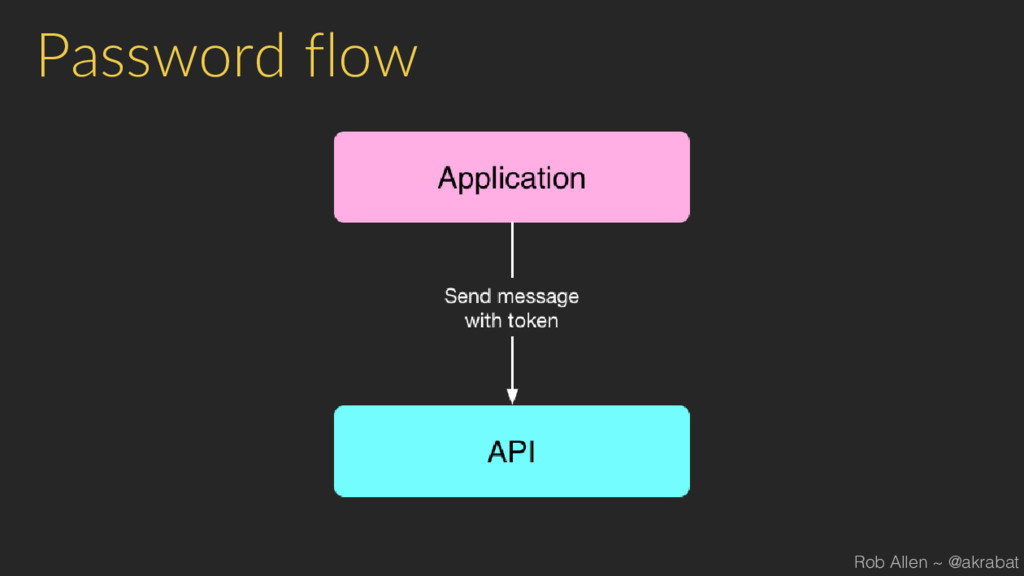
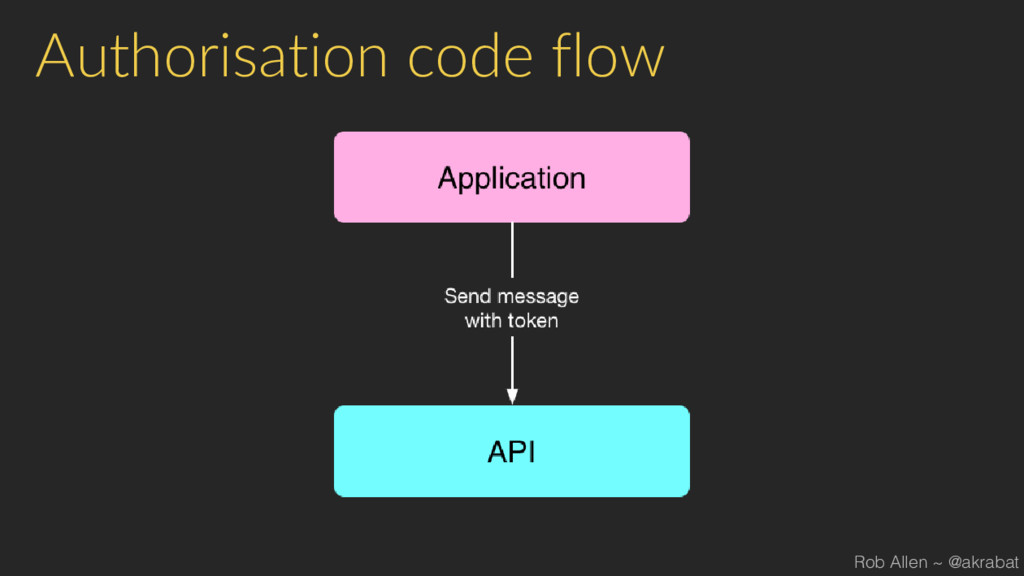
Tokens OAuth uses a bearer token GET /books/1 HTTP/1.1 Host:
api.example.com Accept: application/json Authorization: Bearer {some-string-here} Rob Allen ~ @akrabat -
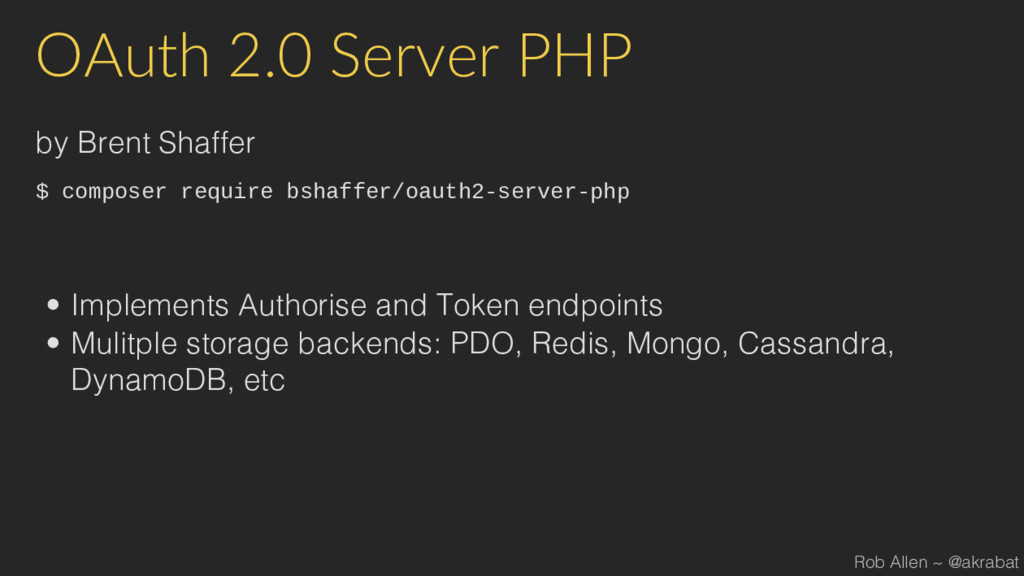
OAuth 2.0 Server PHP by Brent Shaffer $ composer require
bshaffer/oauth2-server-php • Implements Authorise and Token endpoints • Mulitple storage backends: PDO, Redis, Mongo, Cassandra, DynamoDB, etc Rob Allen ~ @akrabat -
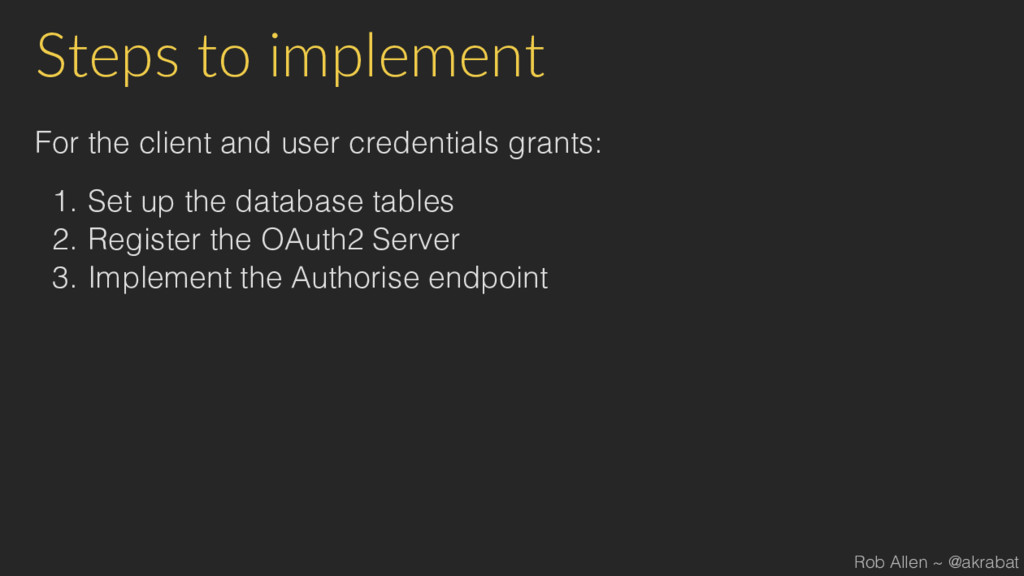
Steps to implement For the client and user credentials grants:
1. Set up the database tables 2. Register the OAuth2 Server 3. Implement the Authorise endpoint Rob Allen ~ @akrabat -
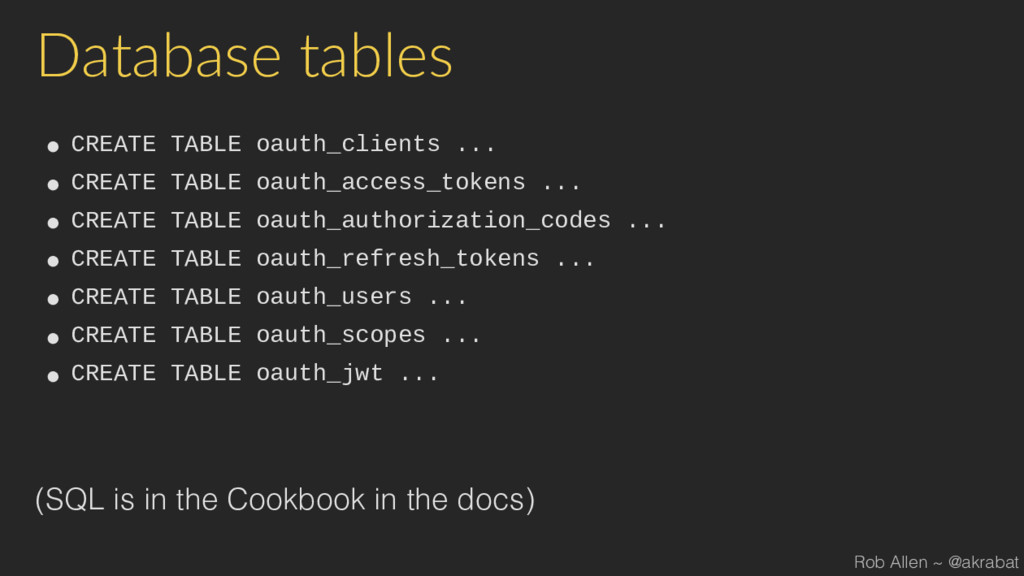
Database tables • CREATE TABLE oauth_clients ... • CREATE TABLE
oauth_access_tokens ... • CREATE TABLE oauth_authorization_codes ... • CREATE TABLE oauth_refresh_tokens ... • CREATE TABLE oauth_users ... • CREATE TABLE oauth_scopes ... • CREATE TABLE oauth_jwt ... (SQL is in the Cookbook in the docs) Rob Allen ~ @akrabat -
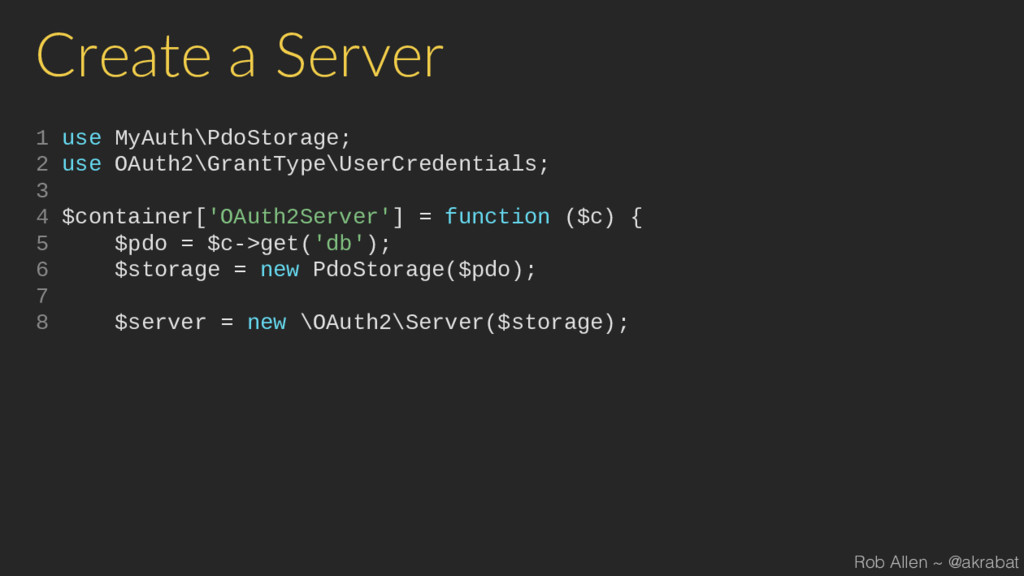
Create a Server 1 use MyAuth\PdoStorage; 2 use OAuth2\GrantType\UserCredentials; 3
4 $container['OAuth2Server'] = function ($c) { 5 $pdo = $c->get('db'); 6 $storage = new PdoStorage($pdo); 7 8 $server = new \OAuth2\Server($storage); Rob Allen ~ @akrabat -
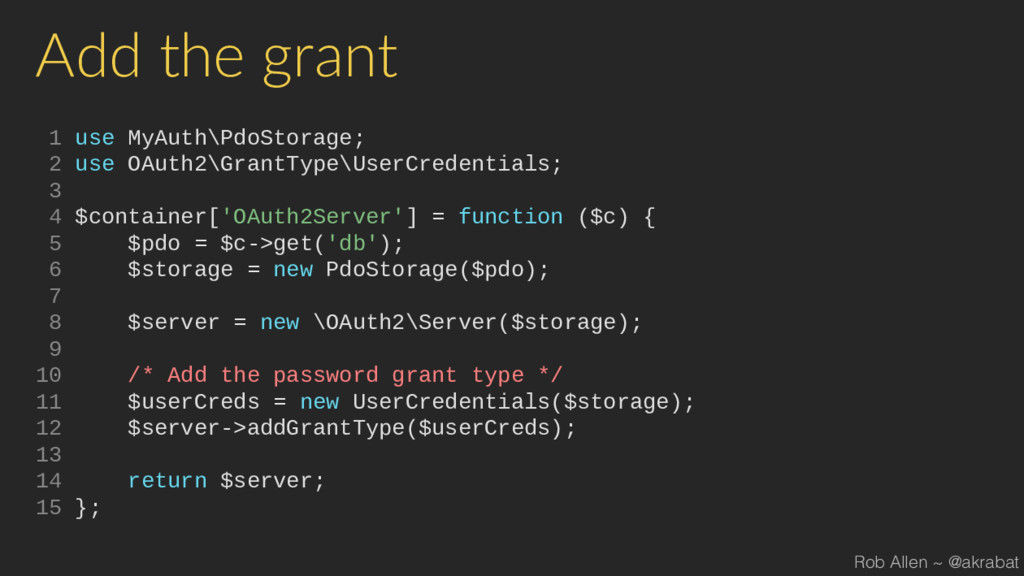
Add the grant 1 use MyAuth\PdoStorage; 2 use OAuth2\GrantType\UserCredentials; 3
4 $container['OAuth2Server'] = function ($c) { 5 $pdo = $c->get('db'); 6 $storage = new PdoStorage($pdo); 7 8 $server = new \OAuth2\Server($storage); 9 10 /* Add the password grant type */ 11 $userCreds = new UserCredentials($storage); 12 $server->addGrantType($userCreds); 13 14 return $server; 15 }; Rob Allen ~ @akrabat -
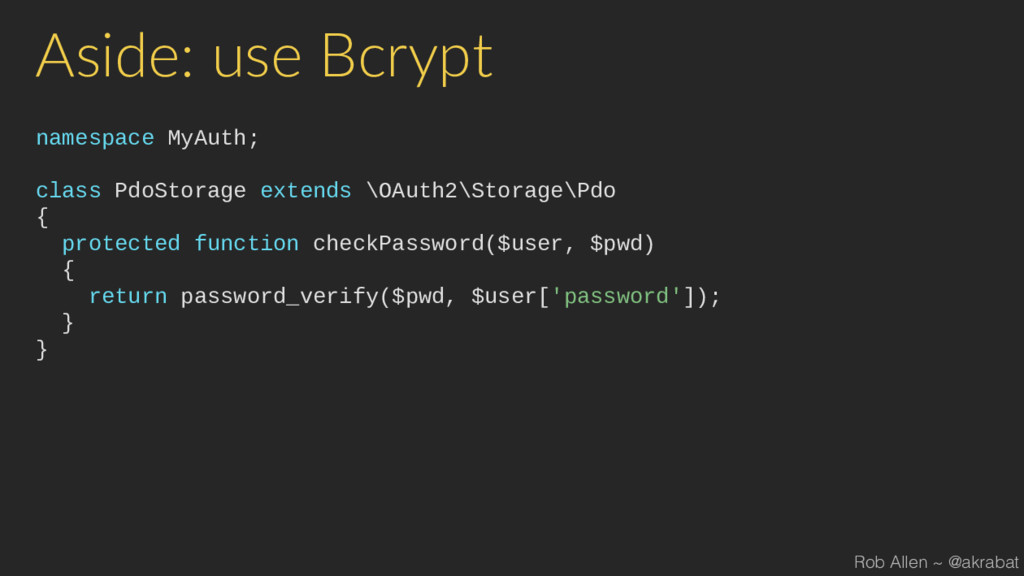
Aside: use Bcrypt namespace MyAuth; class PdoStorage extends \OAuth2\Storage\Pdo {
protected function checkPassword($user, $pwd) { return password_verify($pwd, $user['password']); } } Rob Allen ~ @akrabat -
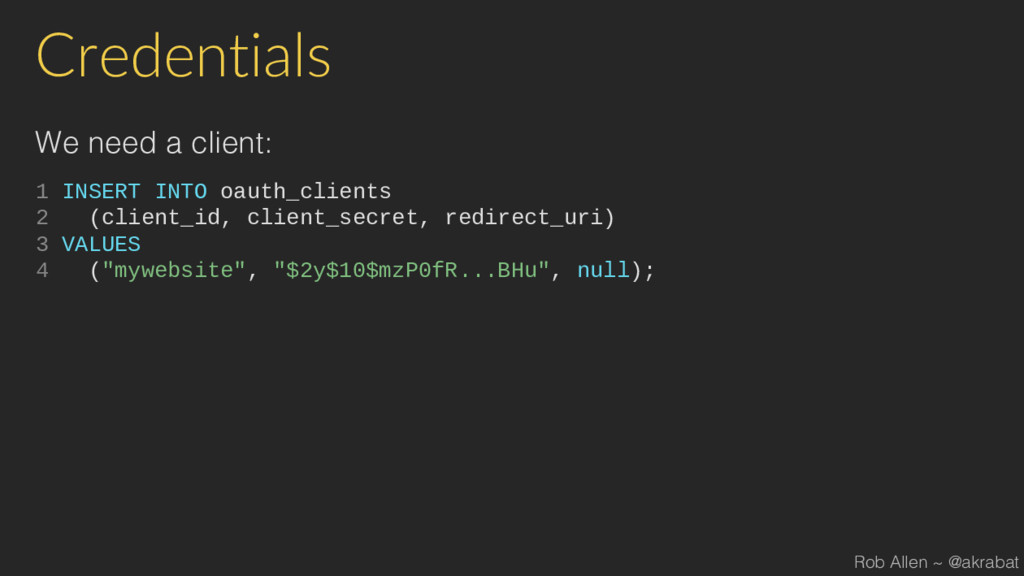
Credentials We need a client: 1 INSERT INTO oauth_clients 2
(client_id, client_secret, redirect_uri) 3 VALUES 4 ("mywebsite", "$2y$10$mzP0fR...BHu", null); Rob Allen ~ @akrabat -
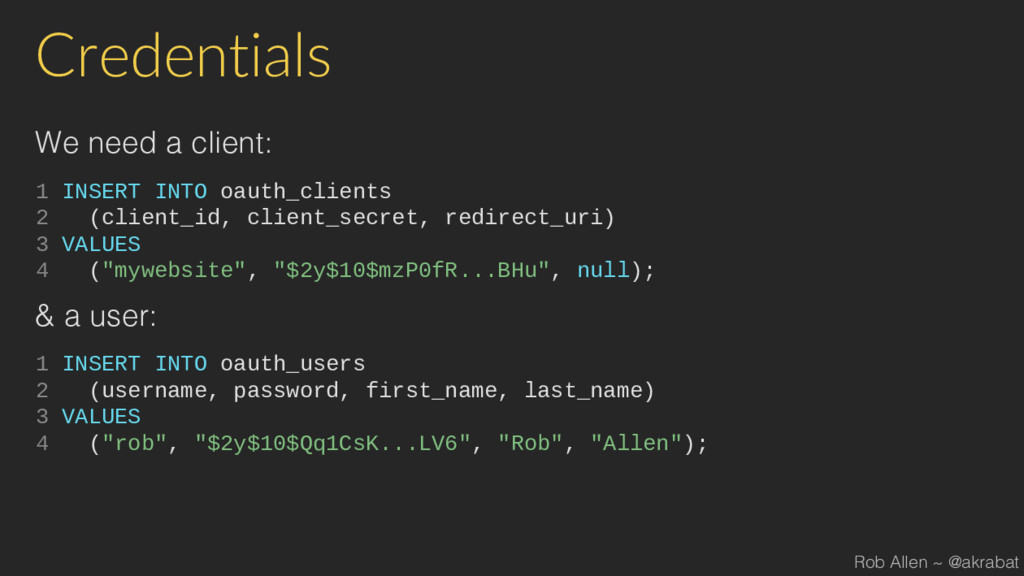
Credentials We need a client: 1 INSERT INTO oauth_clients 2
(client_id, client_secret, redirect_uri) 3 VALUES 4 ("mywebsite", "$2y$10$mzP0fR...BHu", null); & a user: 1 INSERT INTO oauth_users 2 (username, password, first_name, last_name) 3 VALUES 4 ("rob", "$2y$10$Qq1CsK...LV6", "Rob", "Allen"); Rob Allen ~ @akrabat -
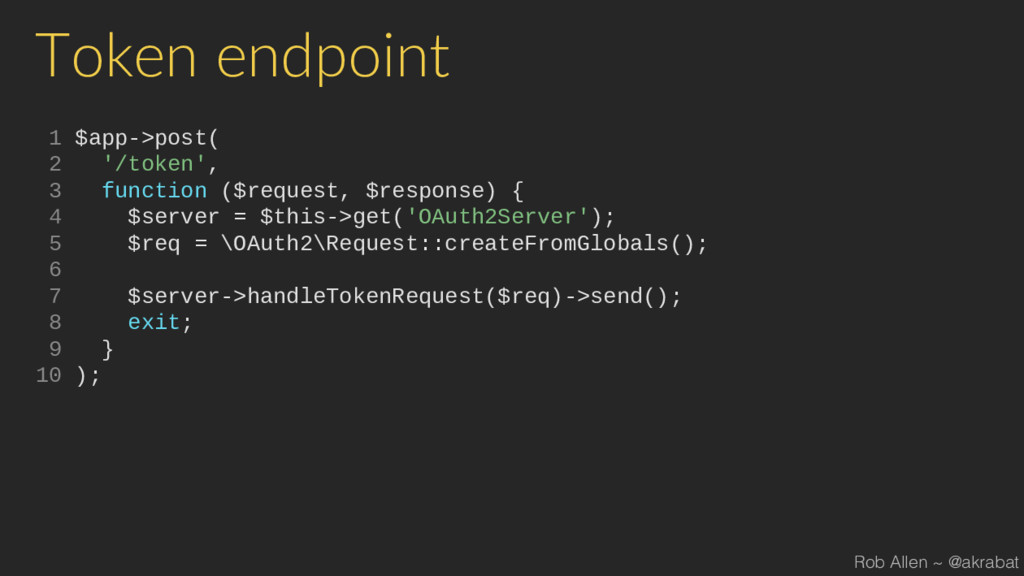
Token endpoint 1 $app->post( 2 '/token', 3 function ($request, $response)
{ 4 $server = $this->get('OAuth2Server'); 5 $req = \OAuth2\Request::createFromGlobals(); 6 7 $server->handleTokenRequest($req)->send(); 8 exit; 9 } 10 ); Rob Allen ~ @akrabat -
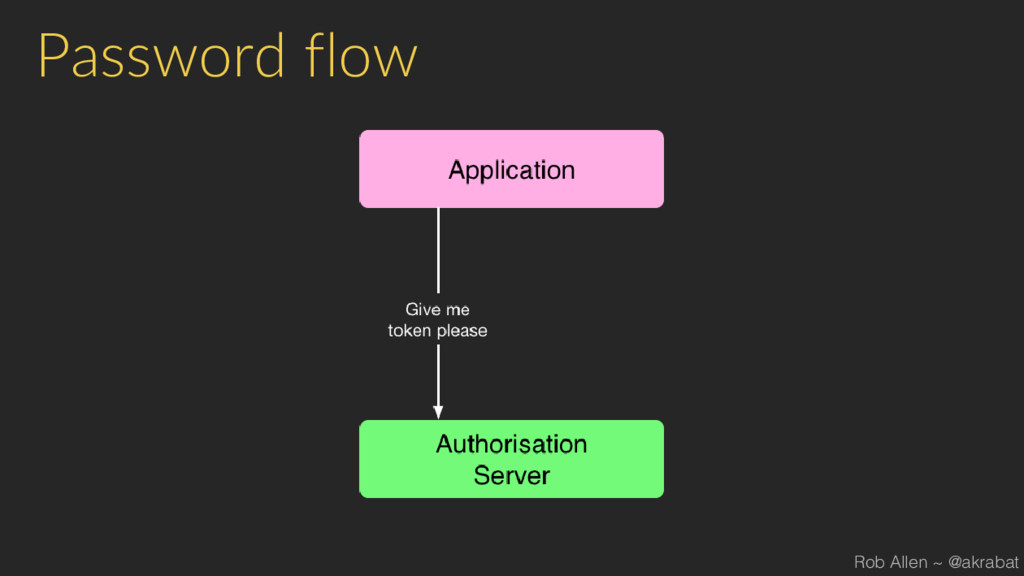
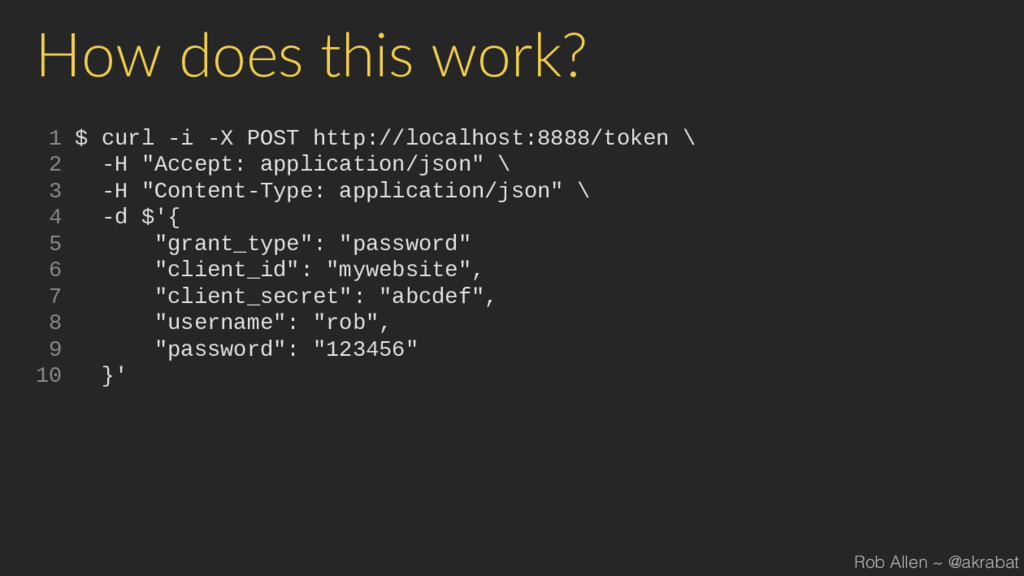
How does this work? 1 $ curl -i -X POST
http://localhost:8888/token \ 2 -H "Accept: application/json" \ 3 -H "Content-Type: application/json" \ 4 -d $'{ 5 "grant_type": "password" 6 "client_id": "mywebsite", 7 "client_secret": "abcdef", 8 "username": "rob", 9 "password": "123456" 10 }' Rob Allen ~ @akrabat -
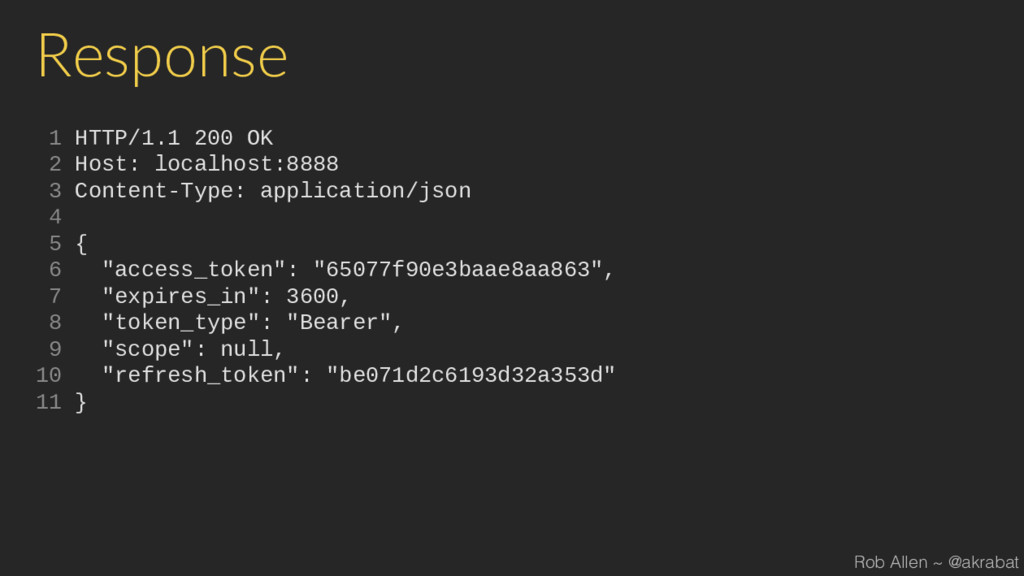
Response 1 HTTP/1.1 200 OK 2 Host: localhost:8888 3 Content-Type:
application/json 4 5 { 6 "access_token": "65077f90e3baae8aa863", 7 "expires_in": 3600, 8 "token_type": "Bearer", 9 "scope": null, 10 "refresh_token": "be071d2c6193d32a353d" 11 } Rob Allen ~ @akrabat -
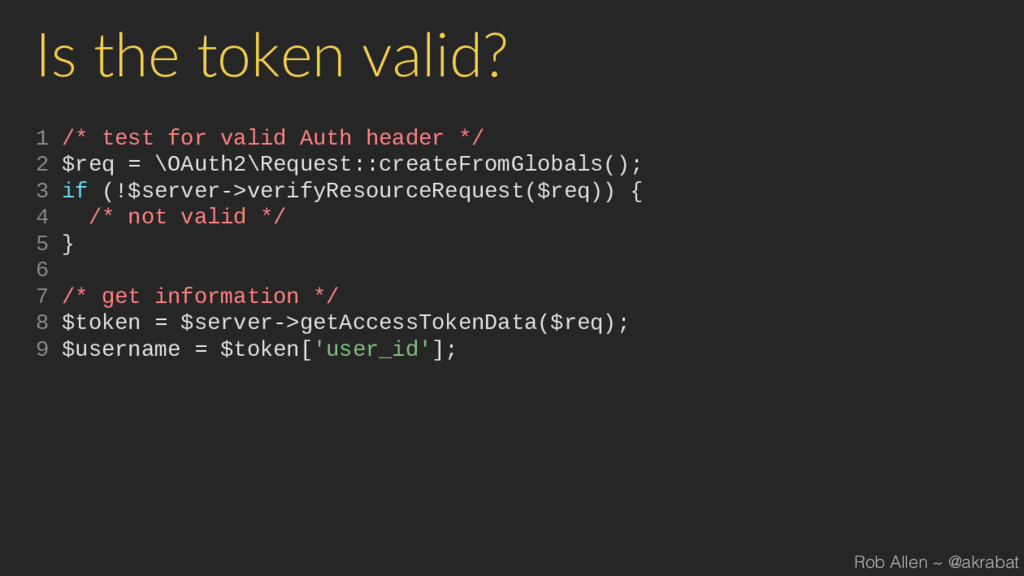
Is the token valid? 1 /* test for valid Auth
header */ 2 $req = \OAuth2\Request::createFromGlobals(); 3 if (!$server->verifyResourceRequest($req)) { 4 /* not valid */ 5 } 6 7 /* get information */ 8 $token = $server->getAccessTokenData($req); 9 $username = $token['user_id']; Rob Allen ~ @akrabat -
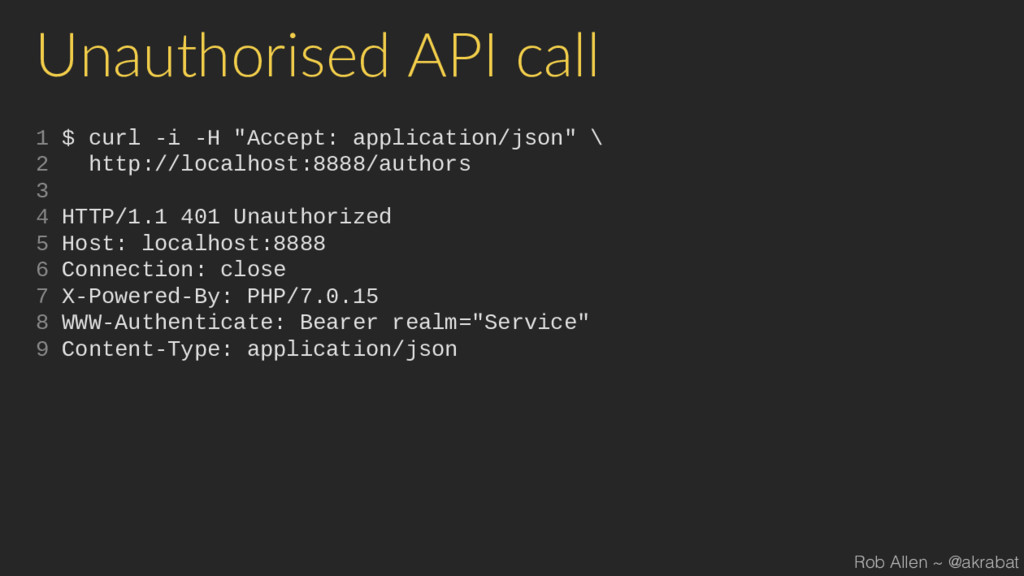
Unauthorised API call 1 $ curl -i -H "Accept: application/json"
\ 2 http://localhost:8888/authors 3 4 HTTP/1.1 401 Unauthorized 5 Host: localhost:8888 6 Connection: close 7 X-Powered-By: PHP/7.0.15 8 WWW-Authenticate: Bearer realm="Service" 9 Content-Type: application/json Rob Allen ~ @akrabat -
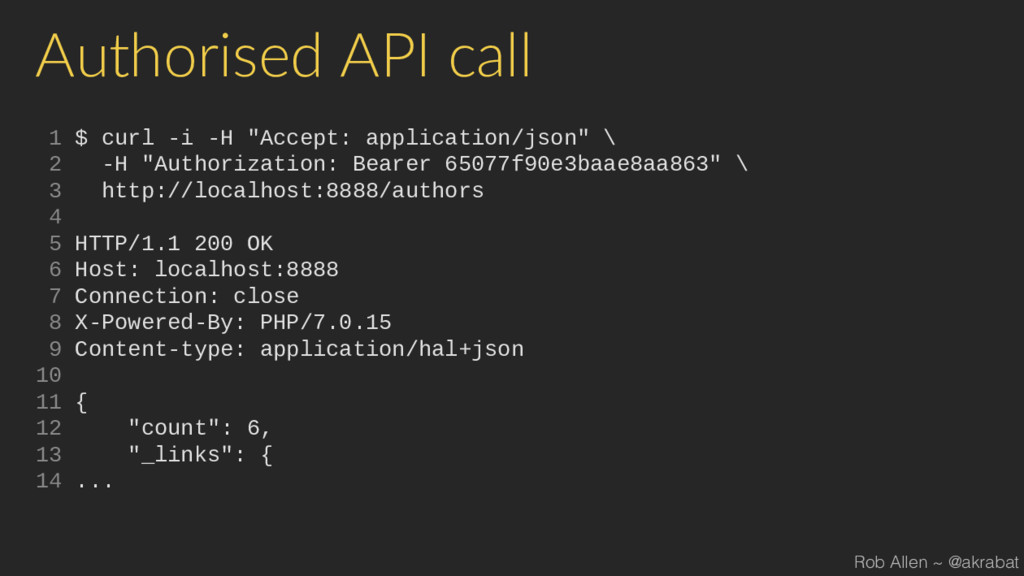
Authorised API call 1 $ curl -i -H "Accept: application/json"
\ 2 -H "Authorization: Bearer 65077f90e3baae8aa863" \ 3 http://localhost:8888/authors 4 5 HTTP/1.1 200 OK 6 Host: localhost:8888 7 Connection: close 8 X-Powered-By: PHP/7.0.15 9 Content-type: application/hal+json 10 11 { 12 "count": 6, 13 "_links": { 14 ... Rob Allen ~ @akrabat -
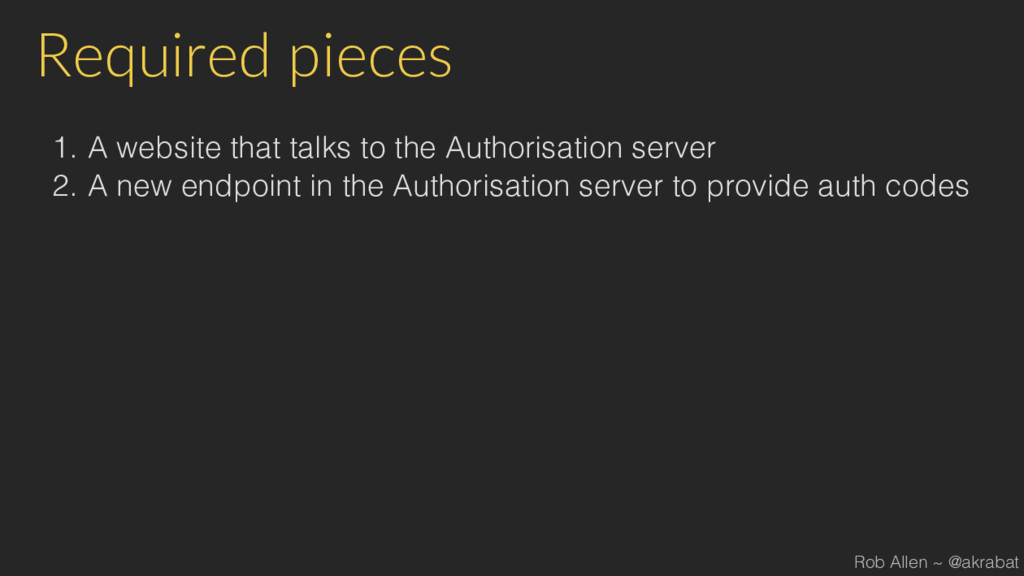
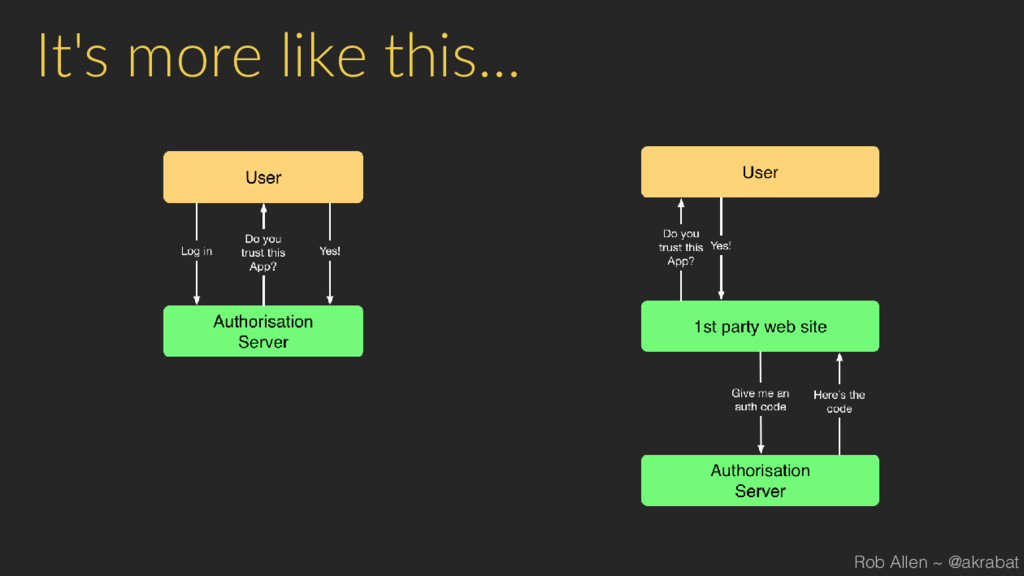
Required pieces 1. A website that talks to the Authorisation
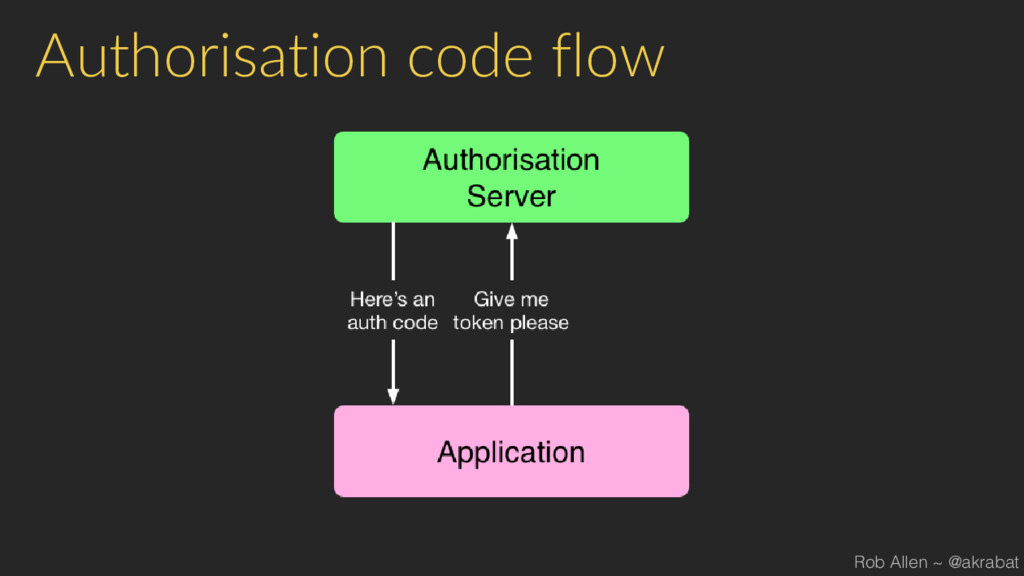
server 2. A new endpoint in the Authorisation server to provide auth codes Rob Allen ~ @akrabat -
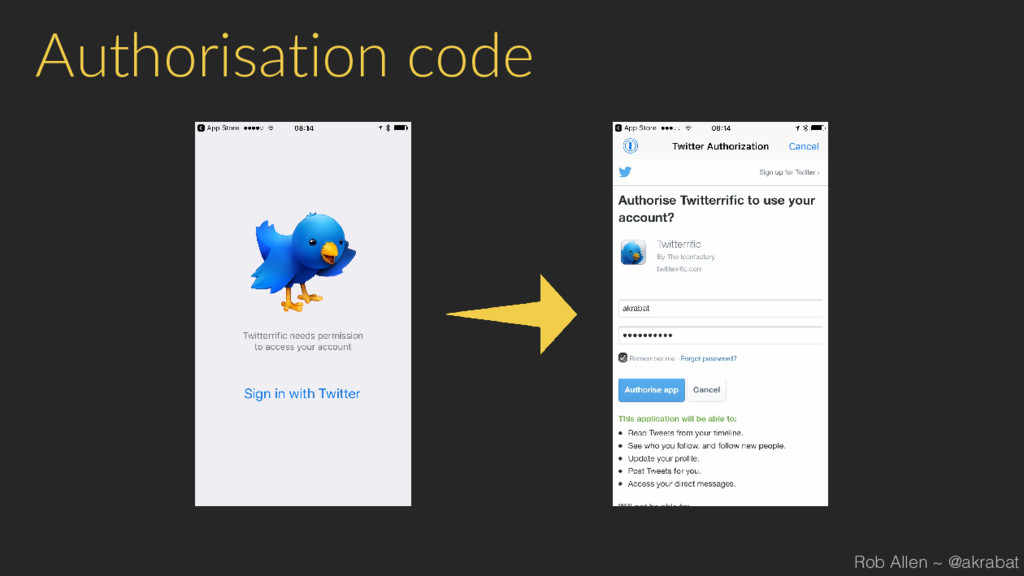
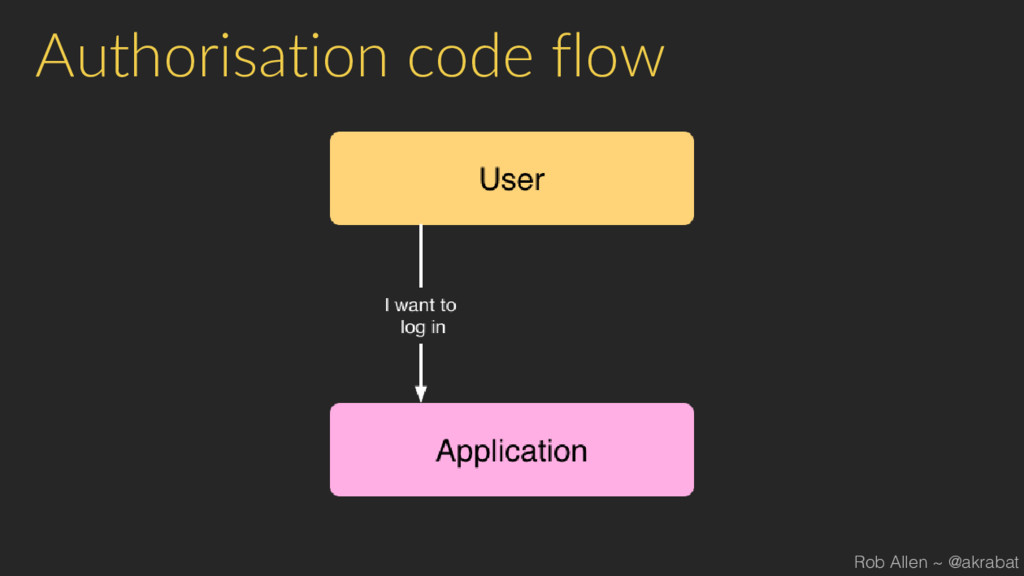
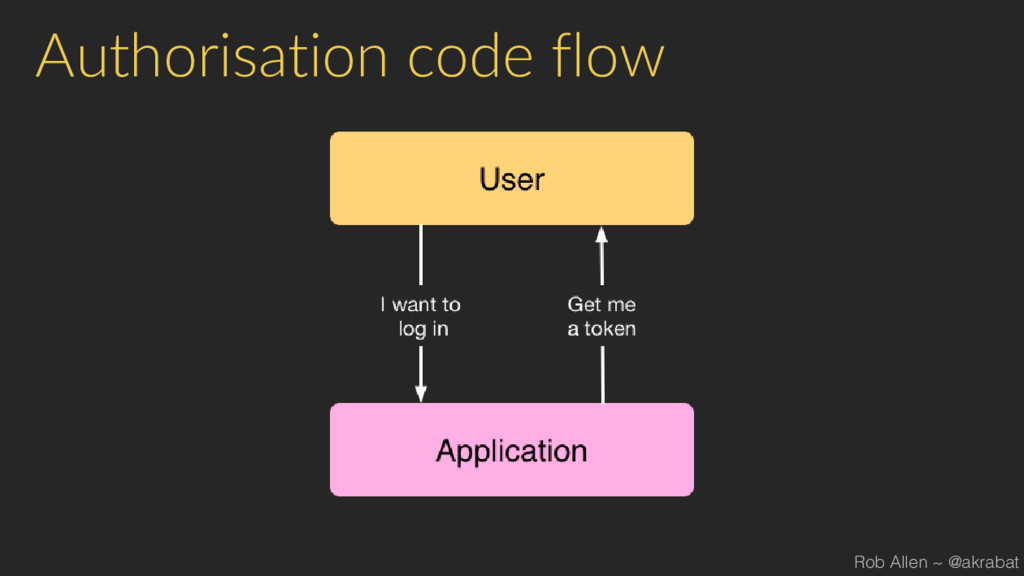
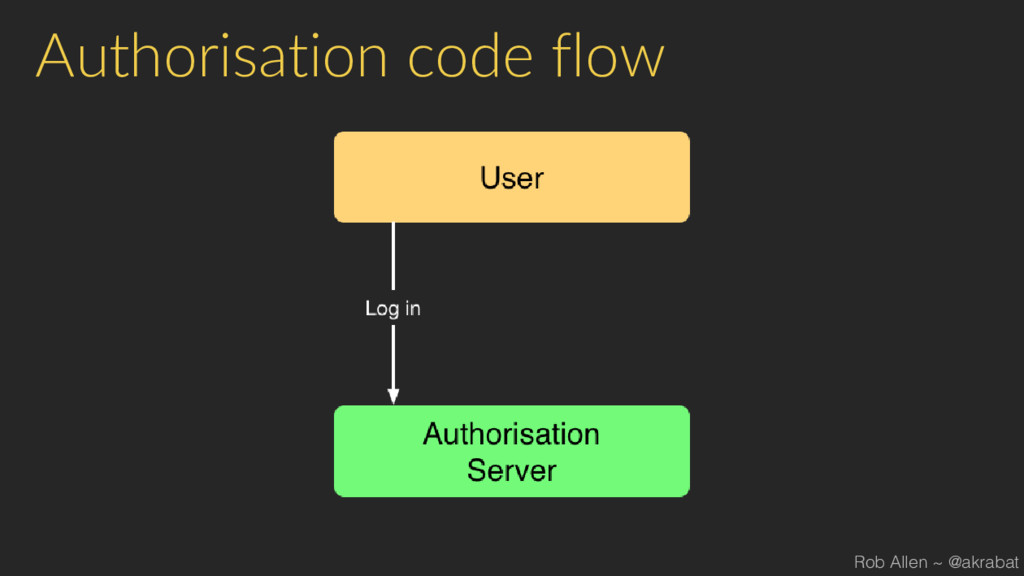
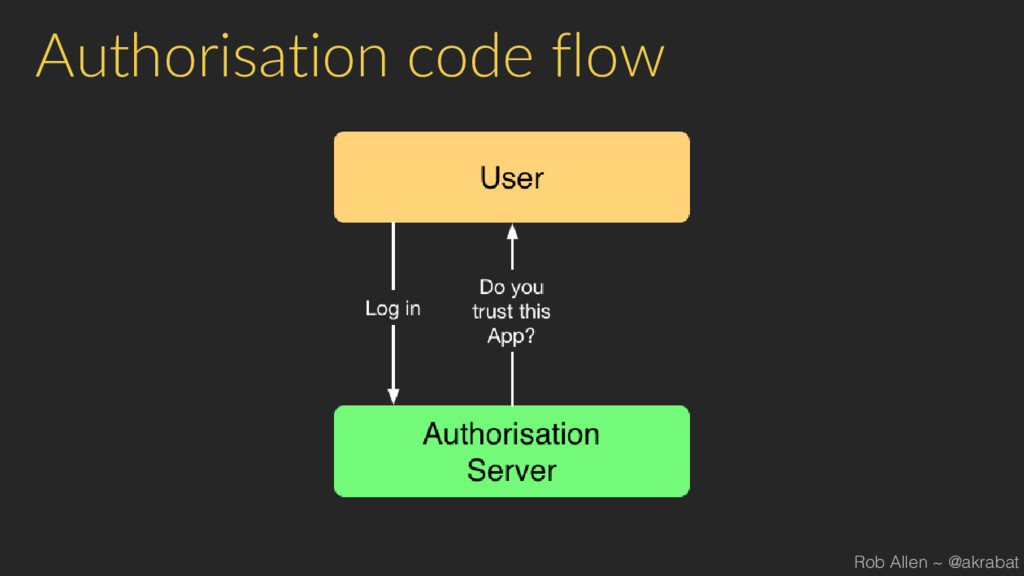
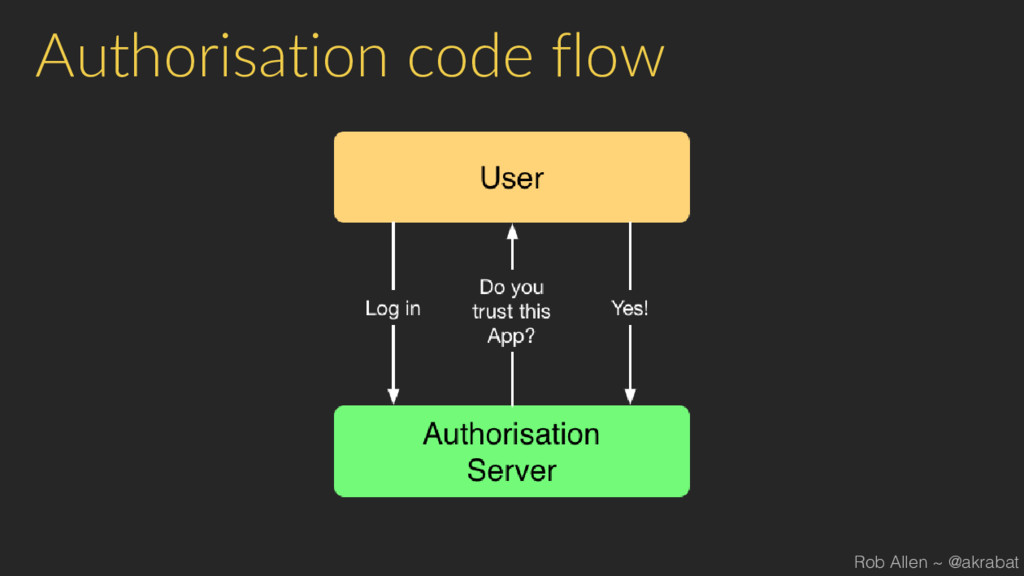
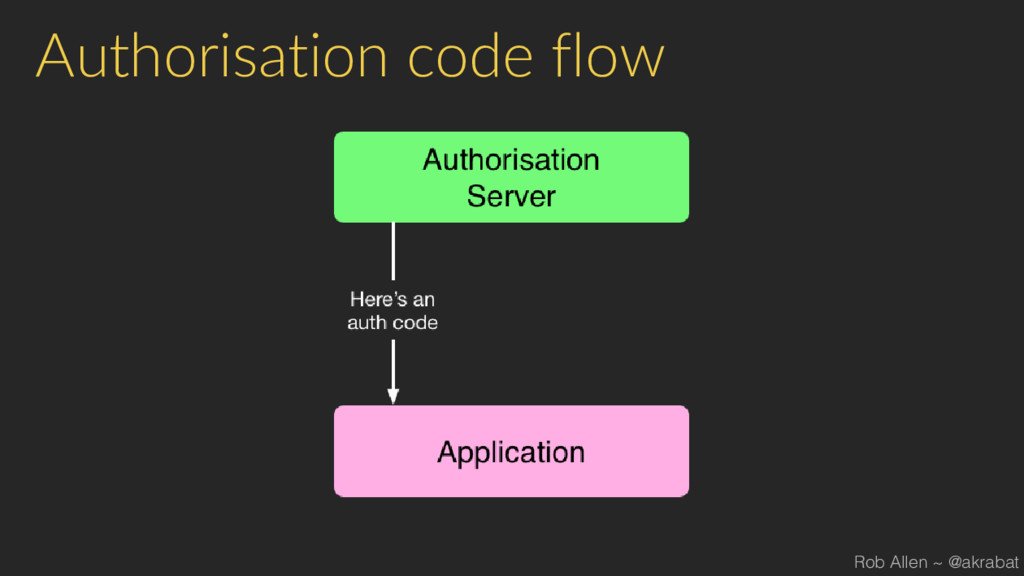
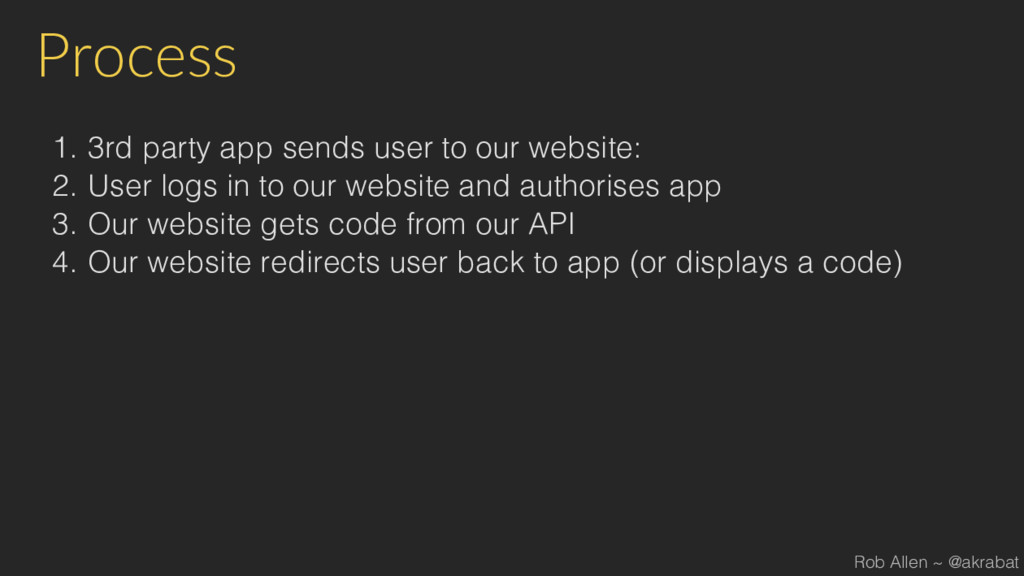
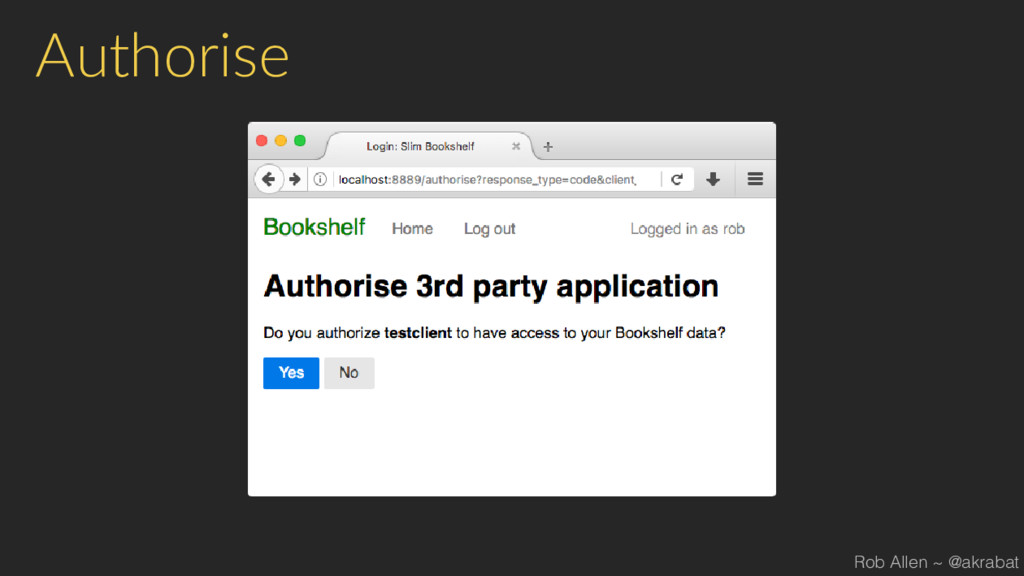
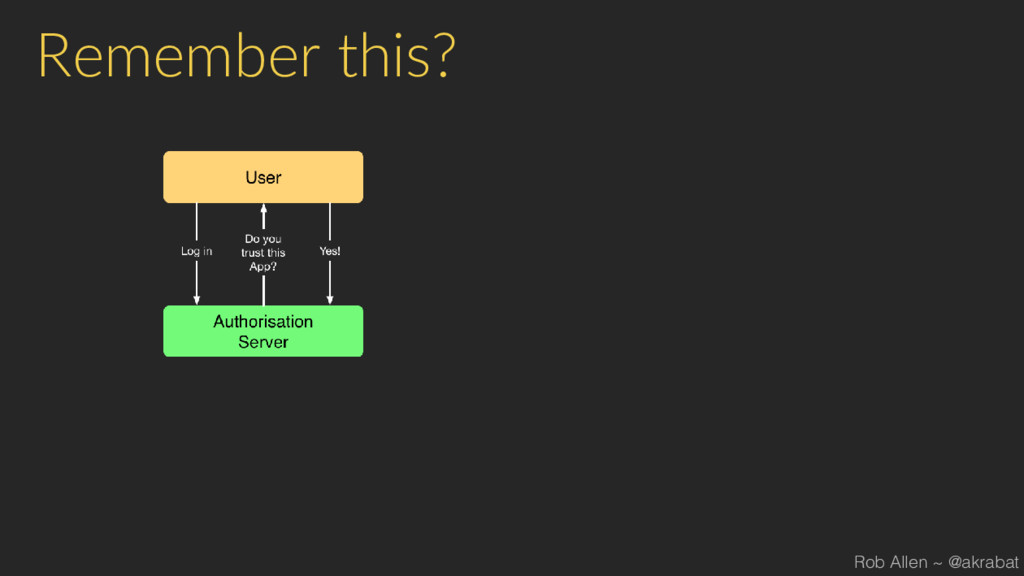
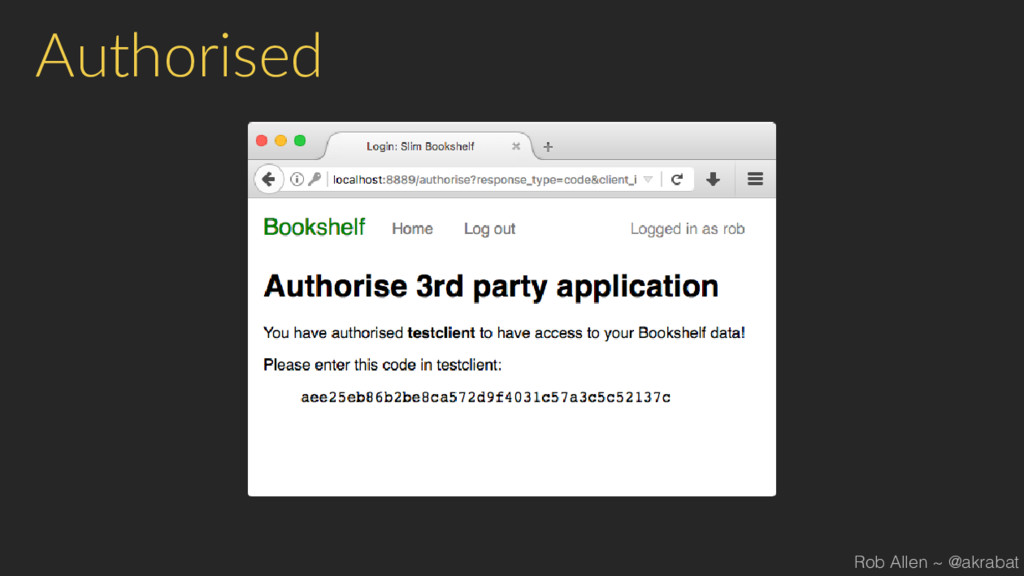
Process 1. 3rd party app sends user to our website:
2. User logs in to our website and authorises app 3. Our website gets code from our API 4. Our website redirects user back to app (or displays a code) Rob Allen ~ @akrabat -
Add the grant 1 $container['OAuth2Server'] = function ($c) { 2
// ... 3 $server = new \OAuth2\Server($storage); 4 5 /* Add the password grant type */ 6 $userCreds = new UserCredentials($storage); 7 $server->addGrantType($userCreds); 8 9 return $server; 10 }; Rob Allen ~ @akrabat -
Add the grant 1 $container['OAuth2Server'] = function ($c) { 2
// ... 3 $server = new \OAuth2\Server($storage); 4 5 /* Add the password grant type */ 6 $userCreds = new UserCredentials($storage); 7 $server->addGrantType($userCreds); 8 9 /* Add authorisation code grant type */ 10 $authCode = new AuthorizationCode($storage); 11 $server->addGrantType($authCode); 12 13 return $server; 14 }; Rob Allen ~ @akrabat -
Website sends to API Pressing Yes does this: 1 $data['code']
= 'token'; 2 $data['client_id'] = $_GET['client_id']; 3 $data['redirect_uri'] = $_GET['redirect_uri']; 4 $data['state'] = $_GET['state']; 5 6 $apiResponse = $guzzle->post('/authorise', [ 7 'json' => $data, 8 'headers' => [ 9 'Authorization' => 'Bearer '.$webAccessToken, 10 ] 11 ]); Rob Allen ~ @akrabat -
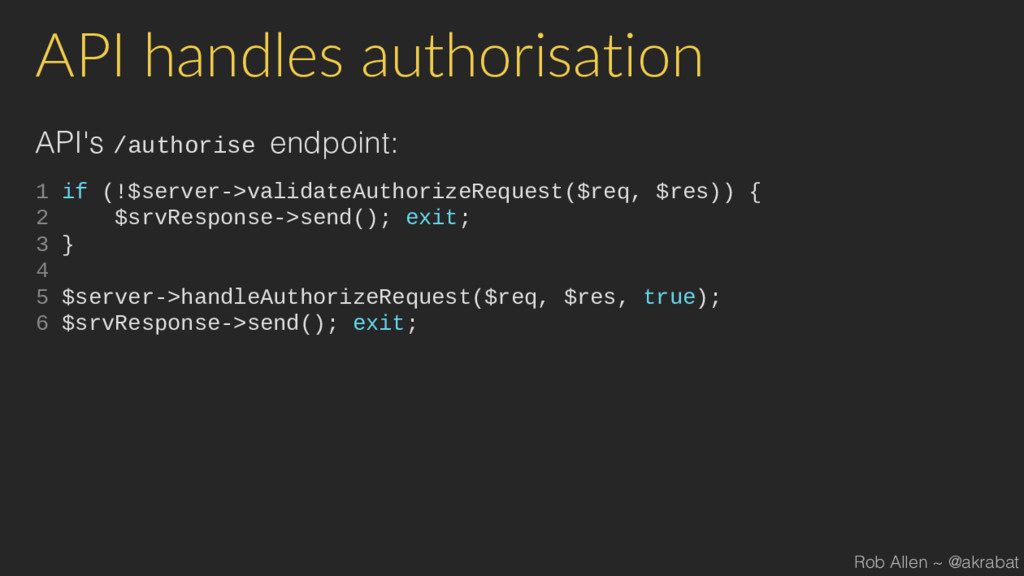
API handles authorisation API's /authorise endpoint: 1 if (!$server->validateAuthorizeRequest($req, $res))
{ 2 $srvResponse->send(); exit; 3 } 4 5 $server->handleAuthorizeRequest($req, $res, true); 6 $srvResponse->send(); exit; Rob Allen ~ @akrabat -
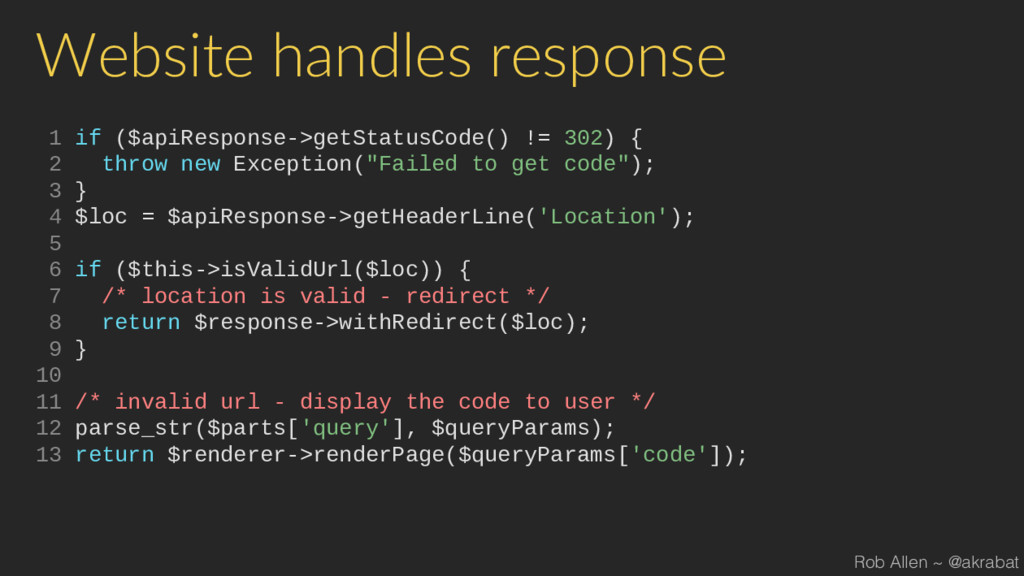
Website handles response 1 if ($apiResponse->getStatusCode() != 302) { 2
throw new Exception("Failed to get code"); 3 } 4 $loc = $apiResponse->getHeaderLine('Location'); 5 6 if ($this->isValidUrl($loc)) { 7 /* location is valid - redirect */ 8 return $response->withRedirect($loc); 9 } 10 11 /* invalid url - display the code to user */ 12 parse_str($parts['query'], $queryParams); 13 return $renderer->renderPage($queryParams['code']); Rob Allen ~ @akrabat -
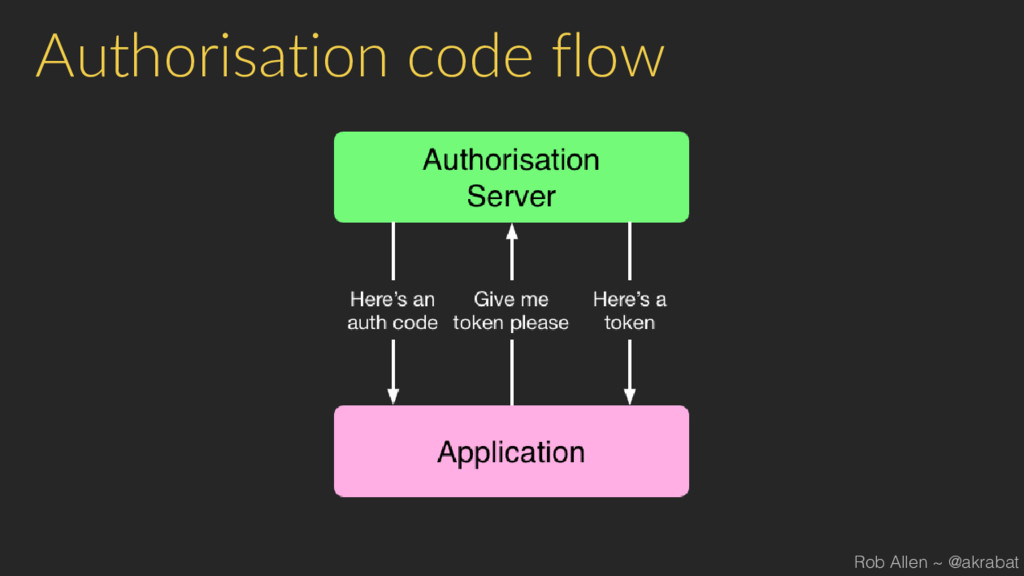
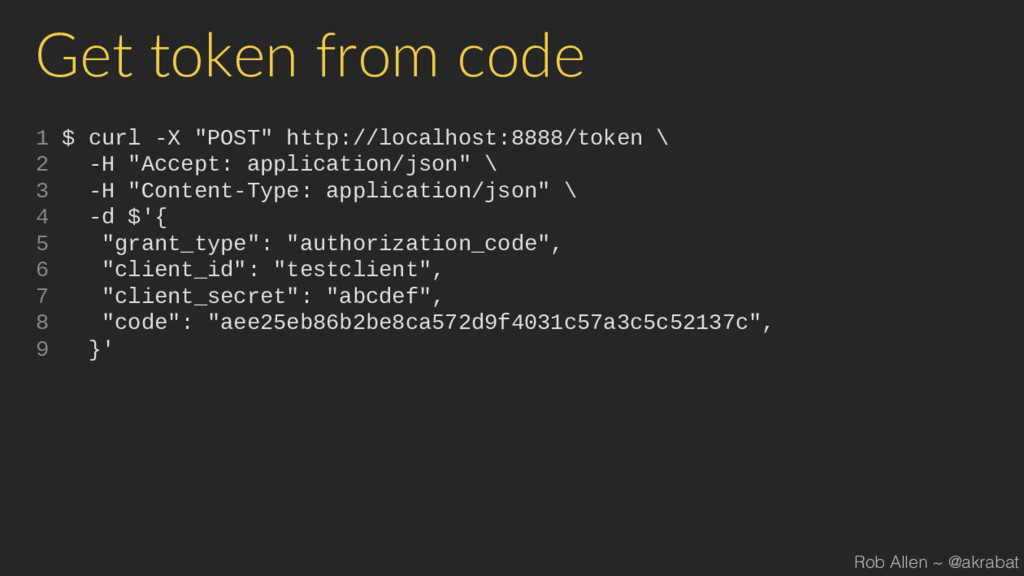
Get token from code 1 $ curl -X "POST" http://localhost:8888/token
\ 2 -H "Accept: application/json" \ 3 -H "Content-Type: application/json" \ 4 -d $'{ 5 "grant_type": "authorization_code", 6 "client_id": "testclient", 7 "client_secret": "abcdef", 8 "code": "aee25eb86b2be8ca572d9f4031c57a3c5c52137c", 9 }' Rob Allen ~ @akrabat -
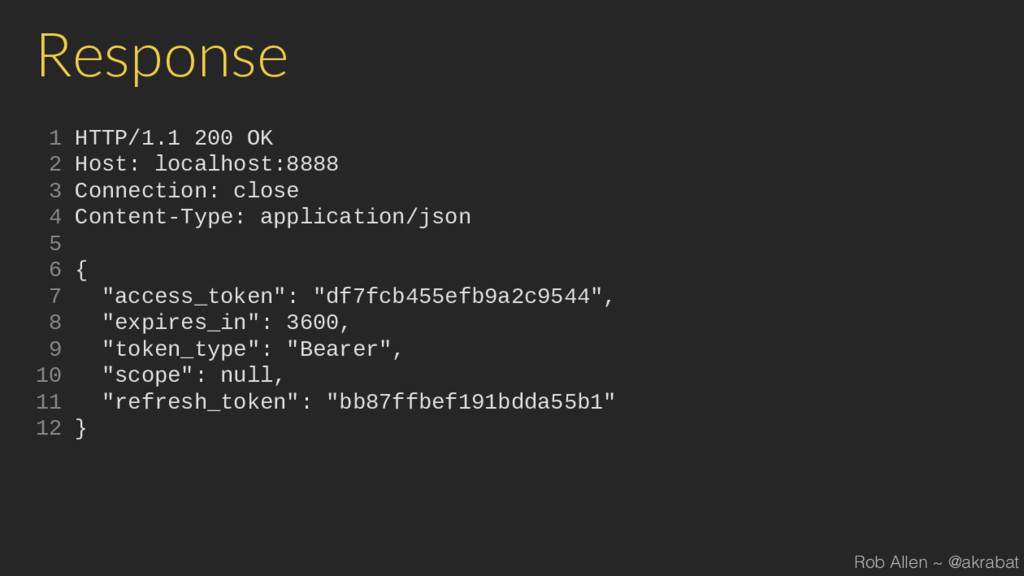
Response 1 HTTP/1.1 200 OK 2 Host: localhost:8888 3 Connection:
close 4 Content-Type: application/json 5 6 { 7 "access_token": "df7fcb455efb9a2c9544", 8 "expires_in": 3600, 9 "token_type": "Bearer", 10 "scope": null, 11 "refresh_token": "bb87ffbef191bdda55b1" 12 } Rob Allen ~ @akrabat -
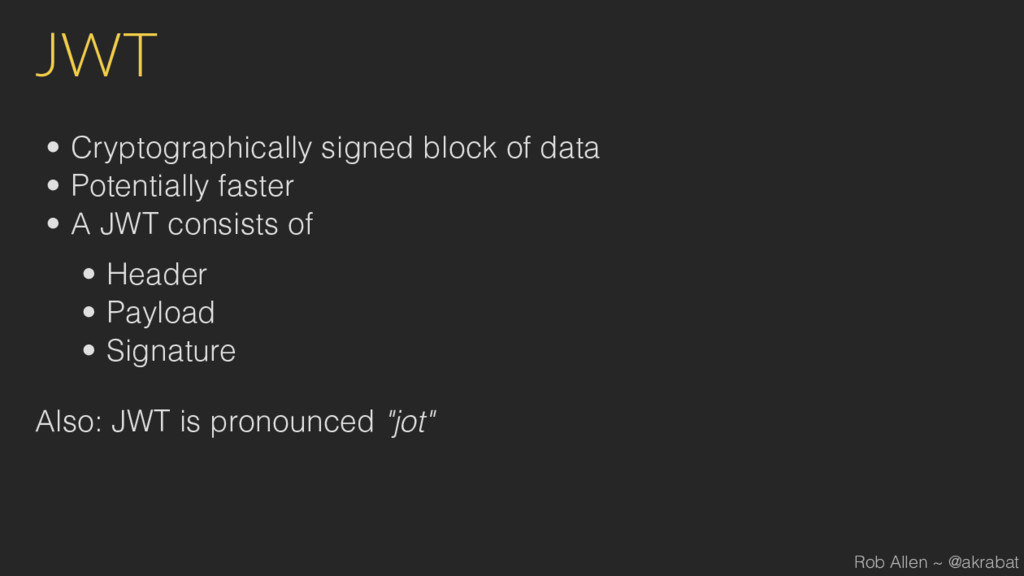
JWT • Cryptographically signed block of data • Potentially faster
• A JWT consists of • Header • Payload • Signature Also: JWT is pronounced "jot" Rob Allen ~ @akrabat -
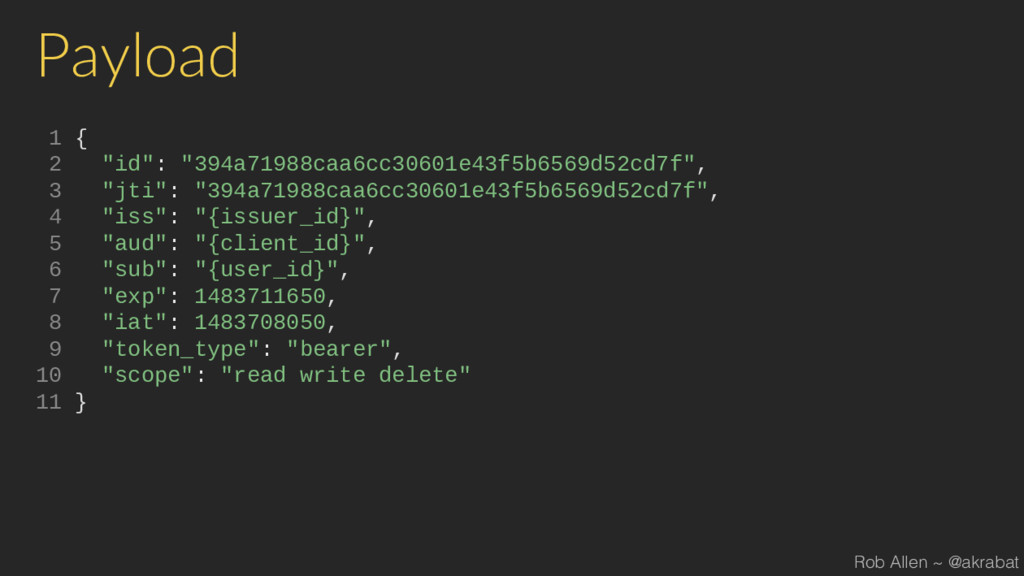
Payload 1 { 2 "id": "394a71988caa6cc30601e43f5b6569d52cd7f", 3 "jti": "394a71988caa6cc30601e43f5b6569d52cd7f", 4
"iss": "{issuer_id}", 5 "aud": "{client_id}", 6 "sub": "{user_id}", 7 "exp": 1483711650, 8 "iat": 1483708050, 9 "token_type": "bearer", 10 "scope": "read write delete" 11 } Rob Allen ~ @akrabat -
Implementation 1. Update token creation to create JWT tokens 2.
Update validation to check for JWT tokens Rob Allen ~ @akrabat -
Previously 1 $container['OAuth2Server'] = function ($c) { 2 $pdo =
$c->get('db'); 3 $storage = new PdoStorage($pdo); 4 5 $server = new \OAuth2\Server($storage); 6 7 // ... add grants ... Rob Allen ~ @akrabat -
Enable JWT 1 $container['OAuth2Server'] = function ($c) { 2 $pdo
= $c->get('db'); 3 $storage = new PdoStorage($pdo); 4 5 $server = new \OAuth2\Server($storage, [ 6 'use_jwt_access_tokens' => true, 7 ]); 8 9 // ... add grants ... Rob Allen ~ @akrabat -
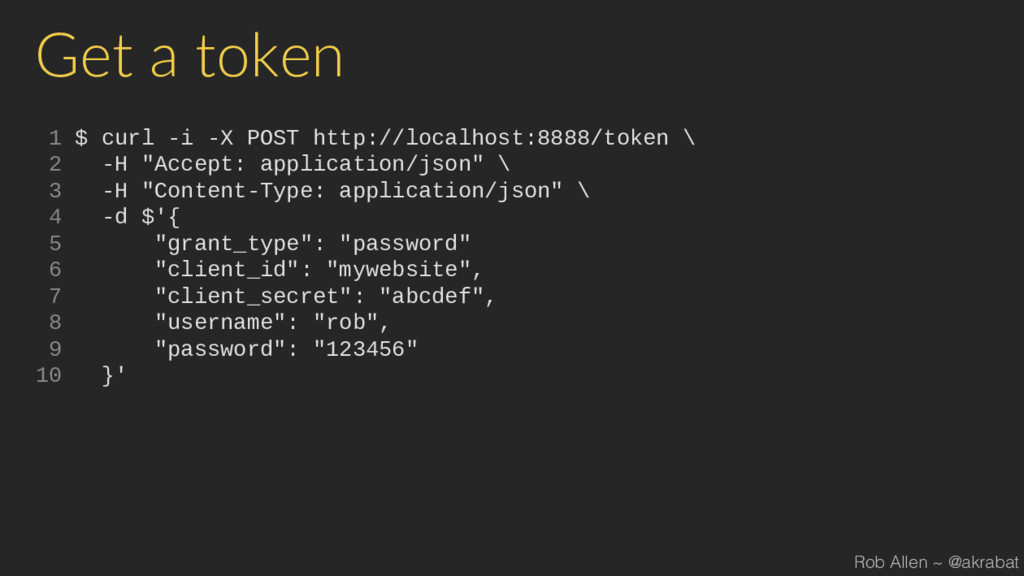
Get a token 1 $ curl -i -X POST http://localhost:8888/token
\ 2 -H "Accept: application/json" \ 3 -H "Content-Type: application/json" \ 4 -d $'{ 5 "grant_type": "password" 6 "client_id": "mywebsite", 7 "client_secret": "abcdef", 8 "username": "rob", 9 "password": "123456" 10 }' Rob Allen ~ @akrabat -
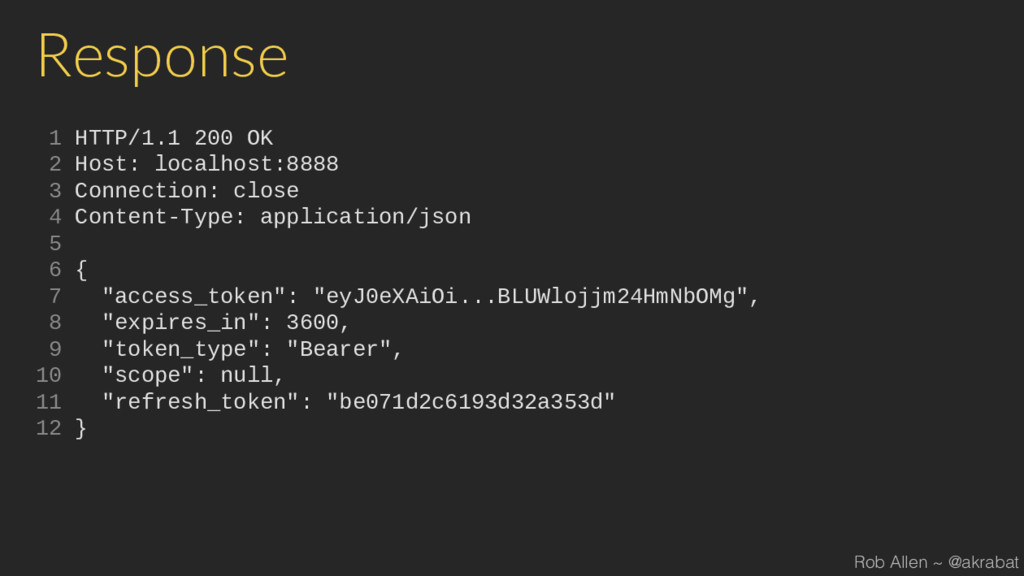
Response 1 HTTP/1.1 200 OK 2 Host: localhost:8888 3 Connection:
close 4 Content-Type: application/json 5 6 { 7 "access_token": "eyJ0eXAiOi...BLUWlojjm24HmNbOMg", 8 "expires_in": 3600, 9 "token_type": "Bearer", 10 "scope": null, 11 "refresh_token": "be071d2c6193d32a353d" 12 } Rob Allen ~ @akrabat -
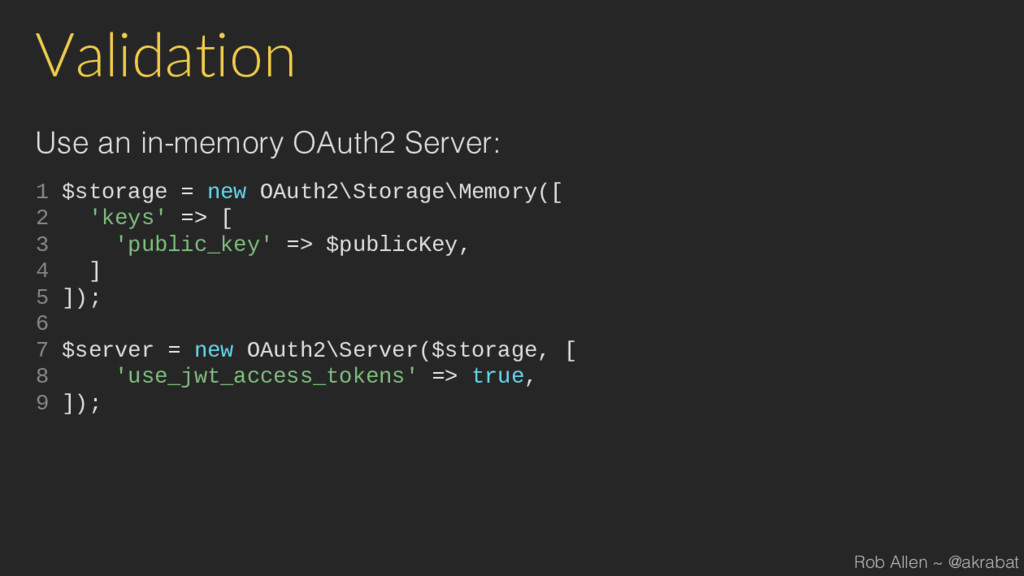
Validation Use an in-memory OAuth2 Server: 1 $storage = new
OAuth2\Storage\Memory([ 2 'keys' => [ 3 'public_key' => $publicKey, 4 ] 5 ]); 6 7 $server = new OAuth2\Server($storage, [ 8 'use_jwt_access_tokens' => true, 9 ]); Rob Allen ~ @akrabat -
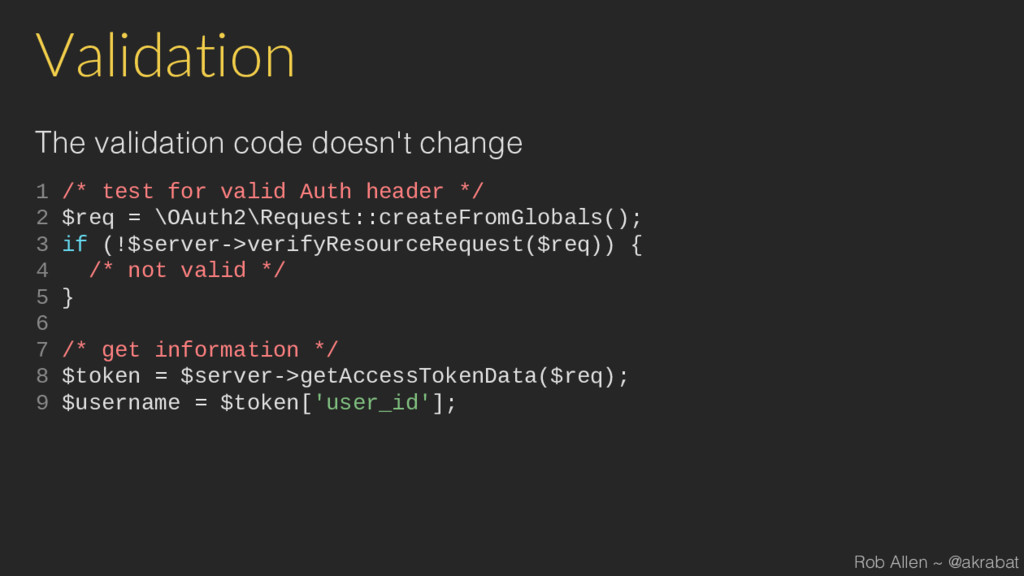
Validation The validation code doesn't change 1 /* test for
valid Auth header */ 2 $req = \OAuth2\Request::createFromGlobals(); 3 if (!$server->verifyResourceRequest($req)) { 4 /* not valid */ 5 } 6 7 /* get information */ 8 $token = $server->getAccessTokenData($req); 9 $username = $token['user_id']; Rob Allen ~ @akrabat -
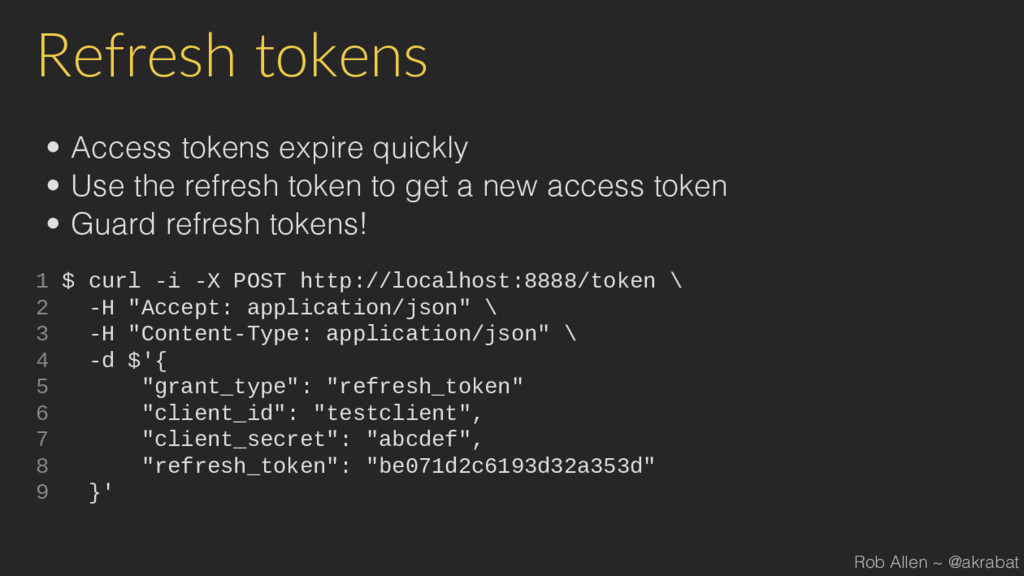
Refresh tokens • Access tokens expire quickly • Use the
refresh token to get a new access token • Guard refresh tokens! 1 $ curl -i -X POST http://localhost:8888/token \ 2 -H "Accept: application/json" \ 3 -H "Content-Type: application/json" \ 4 -d $'{ 5 "grant_type": "refresh_token" 6 "client_id": "testclient", 7 "client_secret": "abcdef", 8 "refresh_token": "be071d2c6193d32a353d" 9 }' Rob Allen ~ @akrabat -
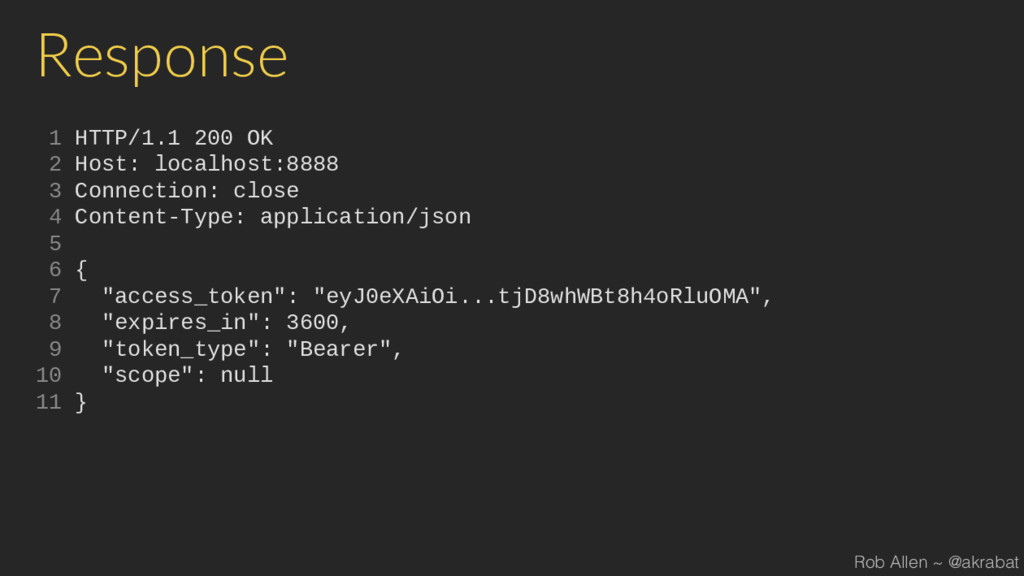
Response 1 HTTP/1.1 200 OK 2 Host: localhost:8888 3 Connection:
close 4 Content-Type: application/json 5 6 { 7 "access_token": "eyJ0eXAiOi...tjD8whWBt8h4oRluOMA", 8 "expires_in": 3600, 9 "token_type": "Bearer", 10 "scope": null 11 } Rob Allen ~ @akrabat -
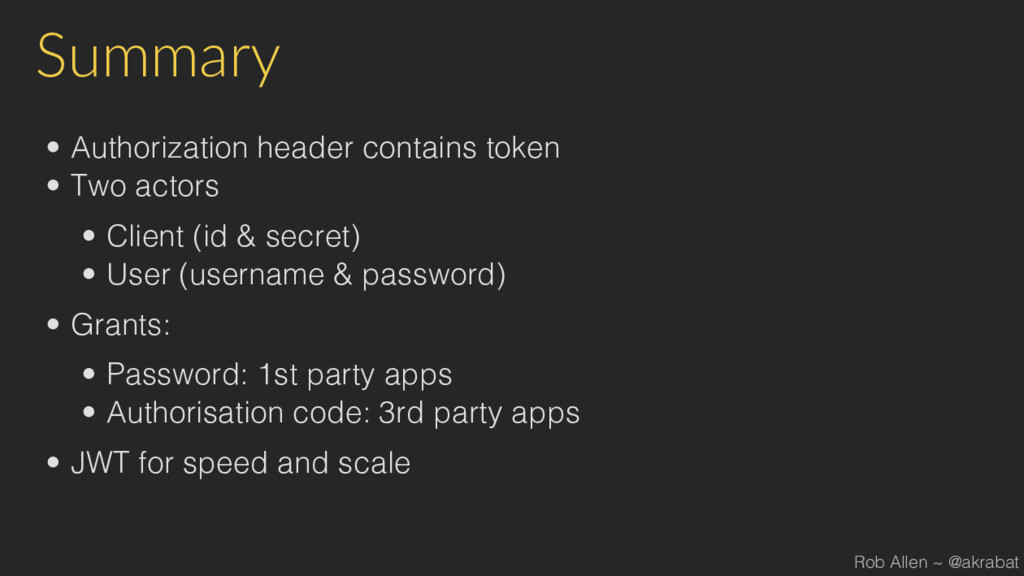
Summary • Authorization header contains token • Two actors •
Client (id & secret) • User (username & password) • Grants: • Password: 1st party apps • Authorisation code: 3rd party apps • JWT for speed and scale Rob Allen ~ @akrabat -
Resources This talk: • https://github.com/akrabat/slim-bookshelf-api • https://akrabat.com/talks/protect-your-api-with-oauth2-codetalks/ Around the web:
• https://oauth.net/2/ • http://bshaffer.github.io/oauth2-server-php-docs • https://aaronparecki.com/oauth-2-simplified/ Rob Allen ~ @akrabat