Upgrade to Pro — share decks privately, control downloads, hide ads and more …

Five Algorithms Every Web Developer Can Use and...

Sponsored · SiteGround - Reliable hosting with speed, security, and support you can count on. →
Avatar for Algorithmia Algorithmia
November 02, 2015

Five Algorithms Every Web Developer Can Use and Understand

Make state-of-the-art algorithms accessible and discoverable by everyone.

We have compiled a short primer for web developers on how and when to harness the power of algorithms in your website or other web applications. Each chapter features one algorithm available with the Algorithmia API. Using this tool, developers with limited background in mathematics can access these amazing utilities. In fact, only basic, high-school level mathematics is used in this book. However, even if you are an advanced mathematician, the examples may still prove to be useful, because they clearly display how to use the API within your application.

Avatar for Algorithmia

Algorithmia

November 02, 2015

Other Decks in Programming

Transcript

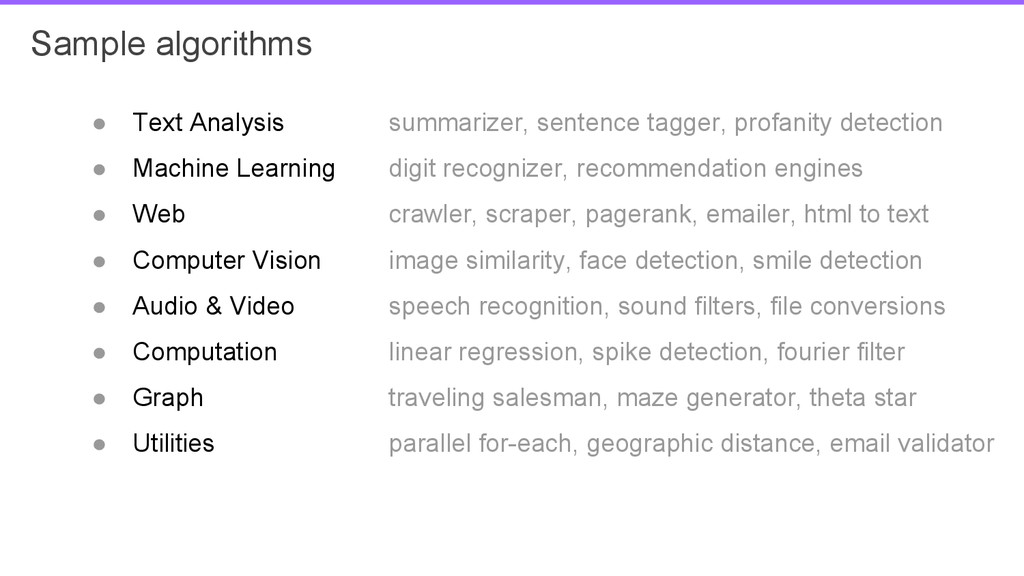
  1. Sample algorithms • Text Analysis summarizer, sentence tagger, profanity detection

    • Machine Learning digit recognizer, recommendation engines • Web crawler, scraper, pagerank, emailer, html to text • Computer Vision image similarity, face detection, smile detection • Audio & Video speech recognition, sound filters, file conversions • Computation linear regression, spike detection, fourier filter • Graph traveling salesman, maze generator, theta star • Utilities parallel for-each, geographic distance, email validator
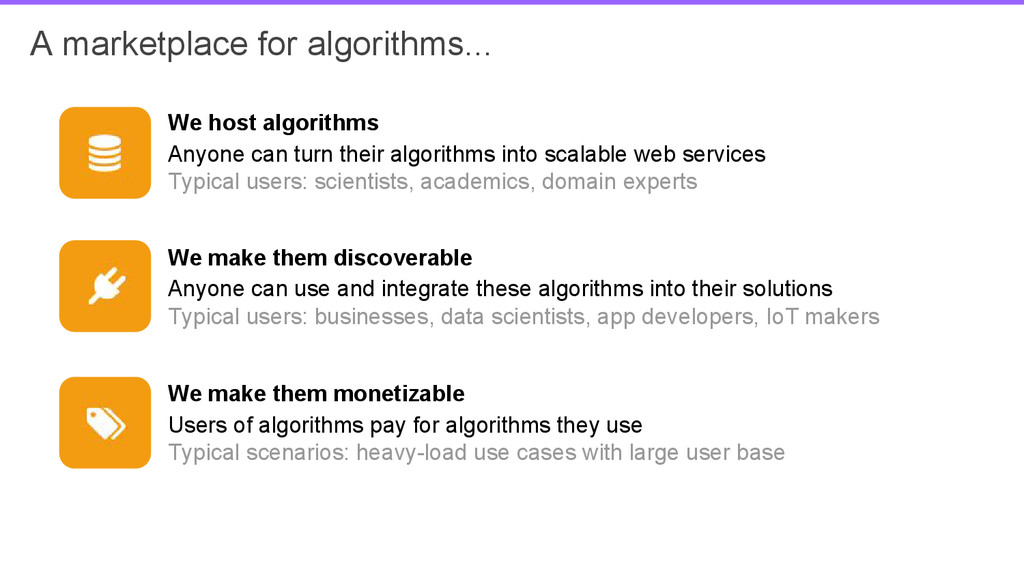
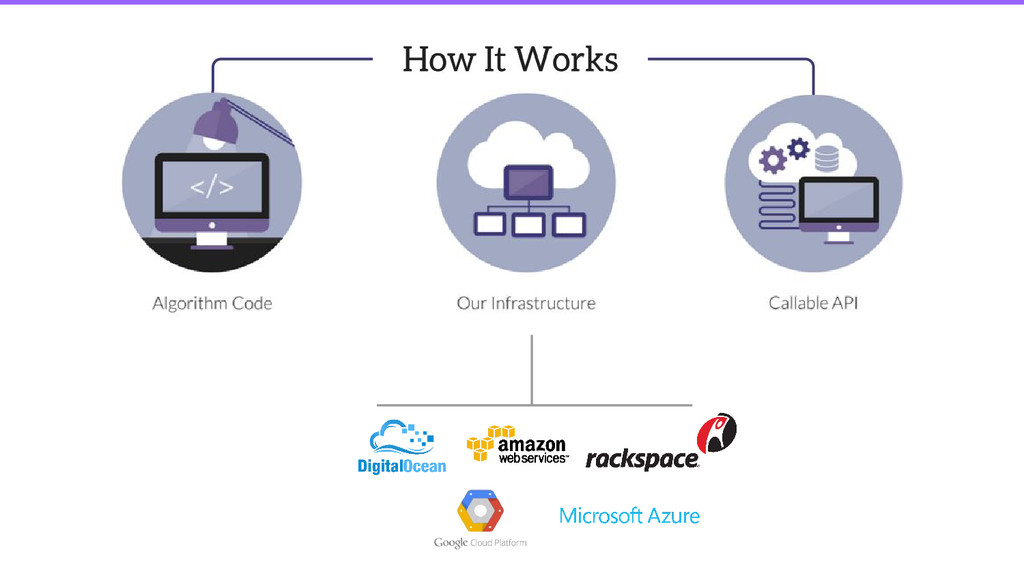
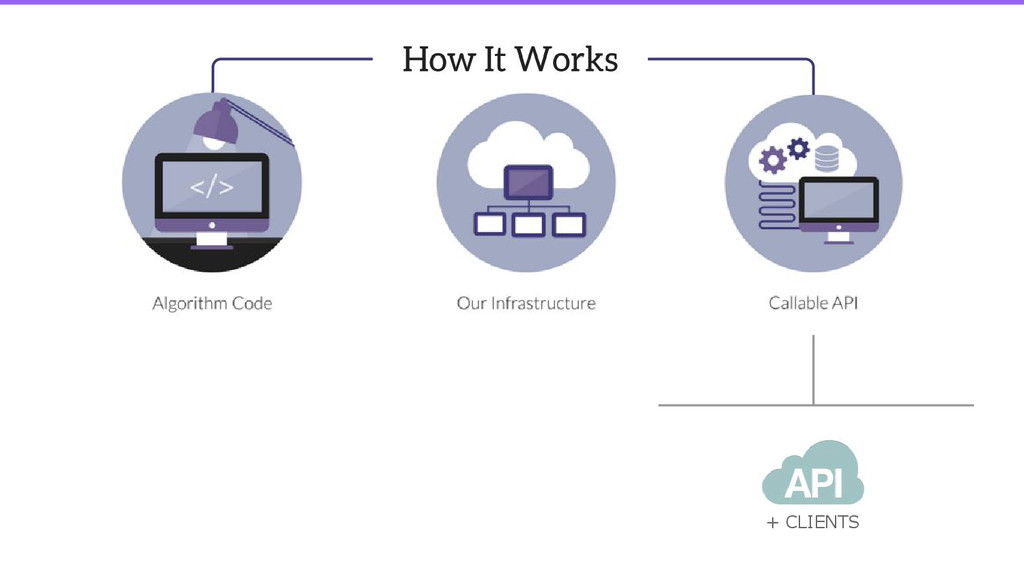
  2. A marketplace for algorithms... We host algorithms Anyone can turn

    their algorithms into scalable web services Typical users: scientists, academics, domain experts We make them discoverable Anyone can use and integrate these algorithms into their solutions Typical users: businesses, data scientists, app developers, IoT makers We make them monetizable Users of algorithms pay for algorithms they use Typical scenarios: heavy-load use cases with large user base
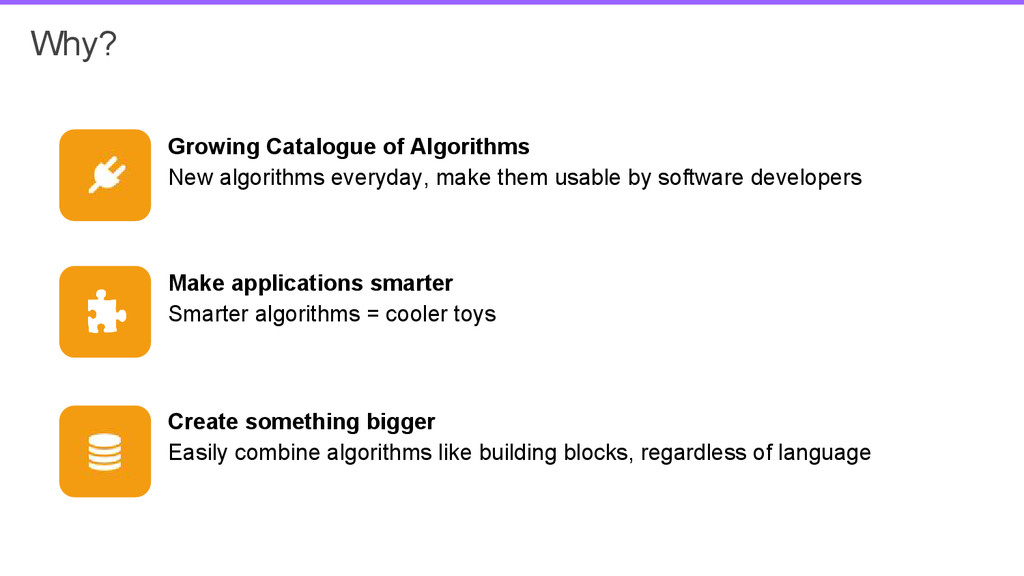
  3. Why? Create something bigger Easily combine algorithms like building blocks,

    regardless of language Growing Catalogue of Algorithms New algorithms everyday, make them usable by software developers Make applications smarter Smarter algorithms = cooler toys
  4. The Five Algorithms - Sentiment Analysis - Language Detection -

    PageRank - Nudity Detection - Term Frequency-Inverse Document Frequency
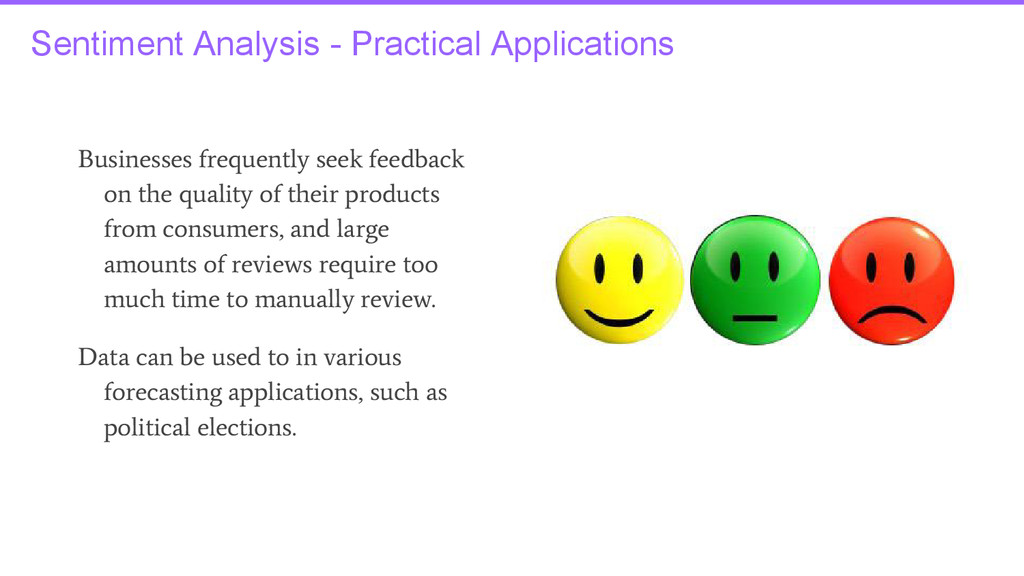
  5. Sentiment Analysis - Practical Applications Businesses frequently seek feedback on

    the quality of their products from consumers, and large amounts of reviews require too much time to manually review. Data can be used to in various forecasting applications, such as political elections.
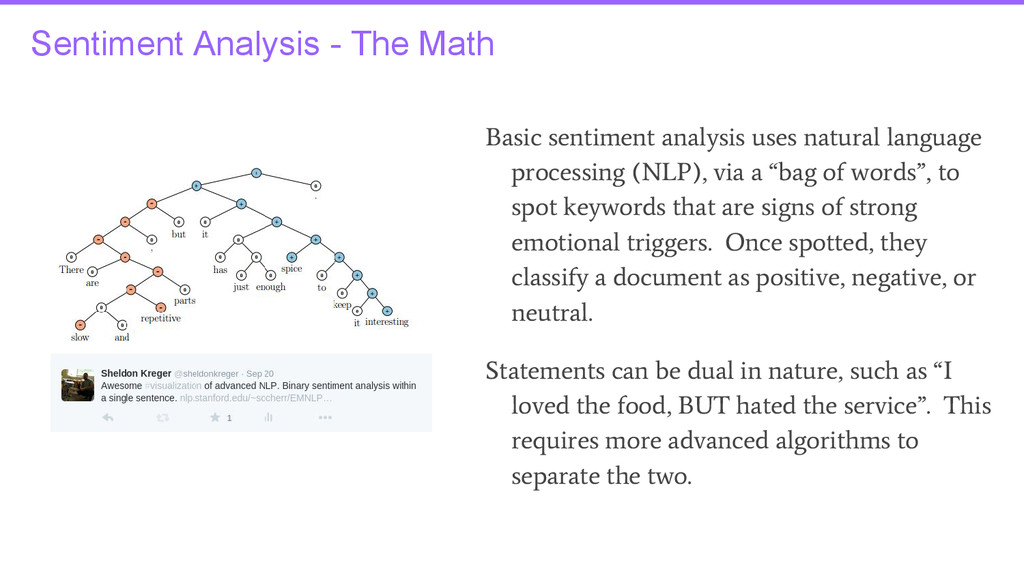
  6. Sentiment Analysis - The Math Basic sentiment analysis uses natural

    language processing (NLP), via a “bag of words”, to spot keywords that are signs of strong emotional triggers. Once spotted, they classify a document as positive, negative, or neutral. Statements can be dual in nature, such as “I loved the food, BUT hated the service”. This requires more advanced algorithms to separate the two.
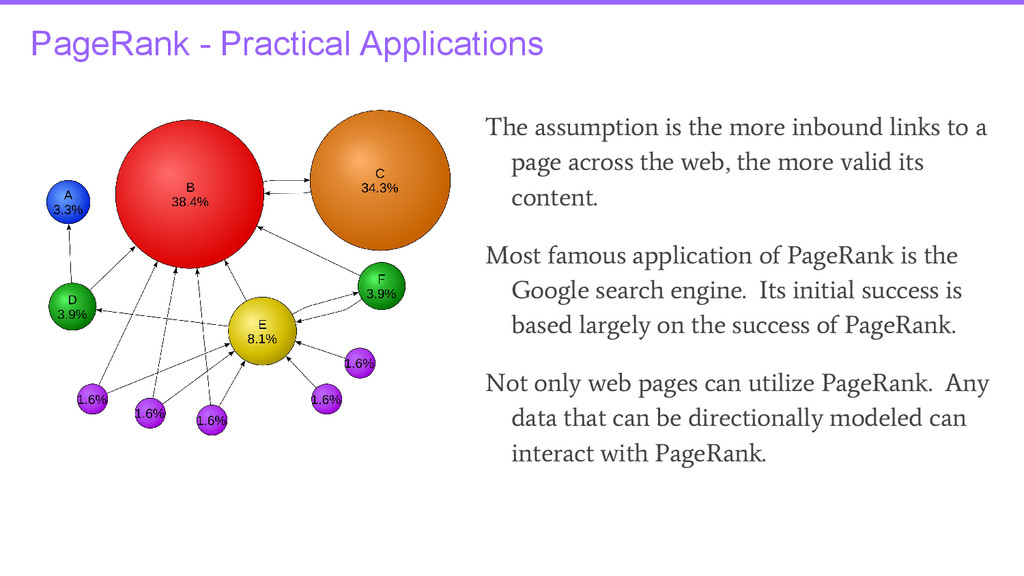
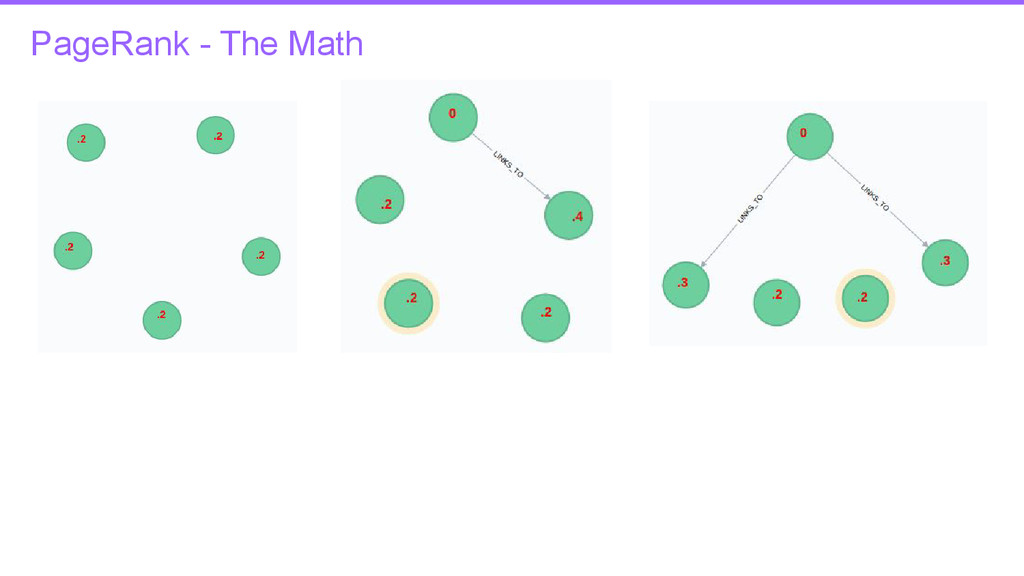
  7. PageRank - Practical Applications The assumption is the more inbound

    links to a page across the web, the more valid its content. Most famous application of PageRank is the Google search engine. Its initial success is based largely on the success of PageRank. Not only web pages can utilize PageRank. Any data that can be directionally modeled can interact with PageRank.
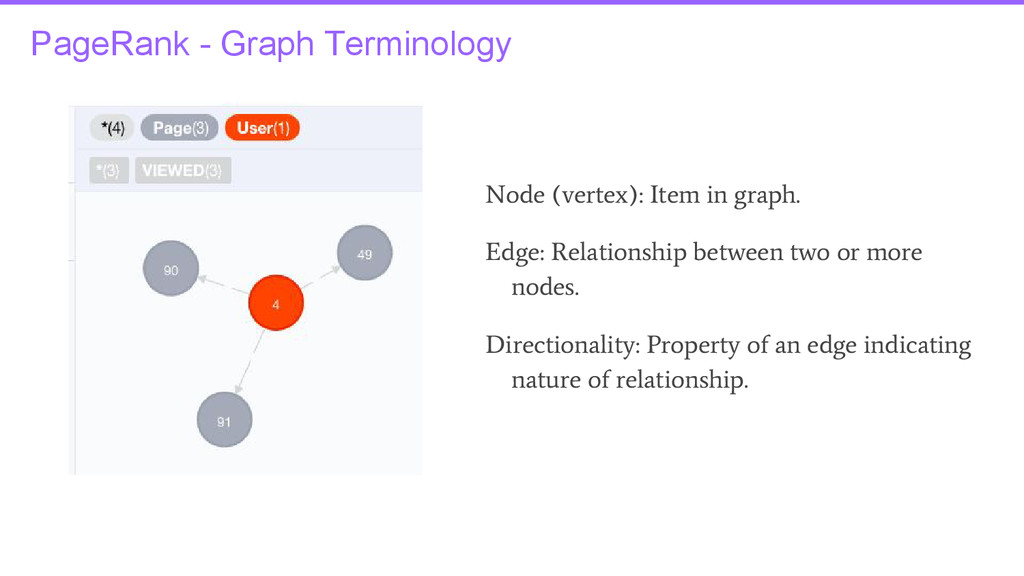
  8. PageRank - Graph Terminology Node (vertex): Item in graph. Edge:

    Relationship between two or more nodes. Directionality: Property of an edge indicating nature of relationship.
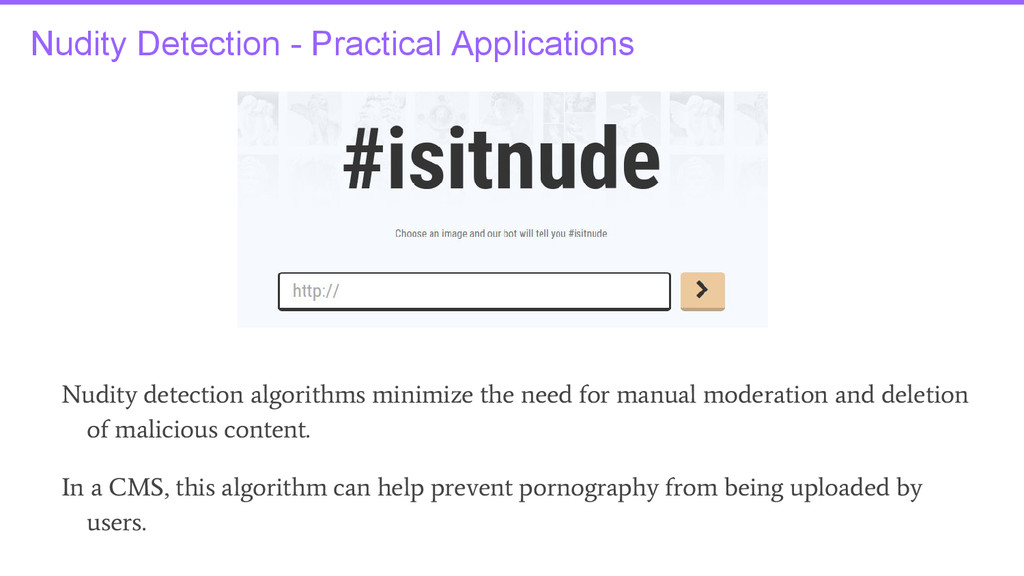
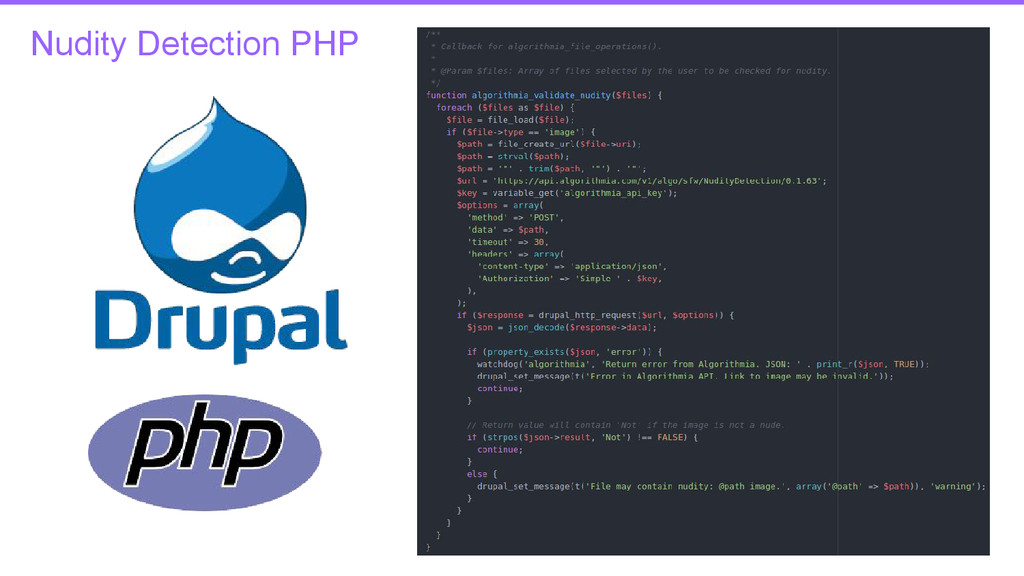
  9. Nudity Detection - Practical Applications Nudity detection algorithms minimize the

    need for manual moderation and deletion of malicious content. In a CMS, this algorithm can help prevent pornography from being uploaded by users.
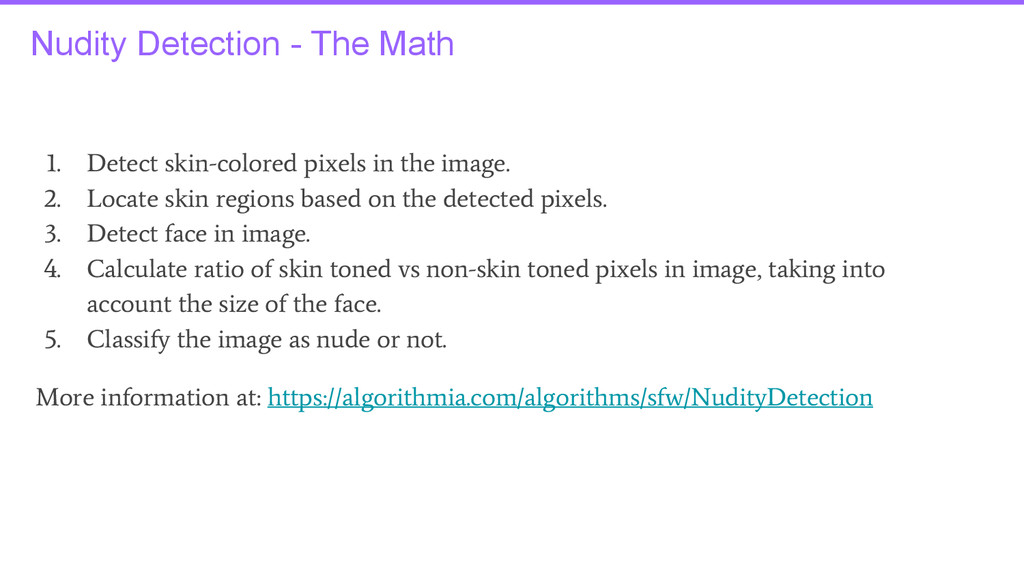
  10. Nudity Detection - The Math 1. Detect skin-colored pixels in

    the image. 2. Locate skin regions based on the detected pixels. 3. Detect face in image. 4. Calculate ratio of skin toned vs non-skin toned pixels in image, taking into account the size of the face. 5. Classify the image as nude or not. More information at: https://algorithmia.com/algorithms/sfw/NudityDetection
  11. TF/IDF - Practical Applications - Keyword extraction is used in

    search engines, and content categorization algorithms. - Creates great content recommendations! - https://drupal.org/project/algorithmia - https://wordpress.org/plugins/algorithmia - https://algorithmia.com/recommends
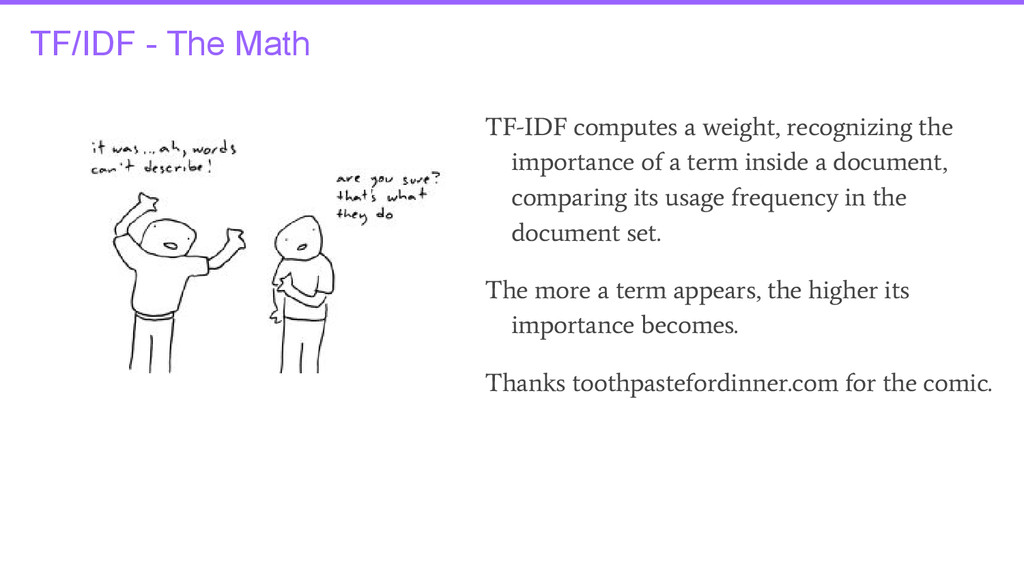
  12. TF/IDF - The Math TF-IDF computes a weight, recognizing the

    importance of a term inside a document, comparing its usage frequency in the document set. The more a term appears, the higher its importance becomes. Thanks toothpastefordinner.com for the comic.
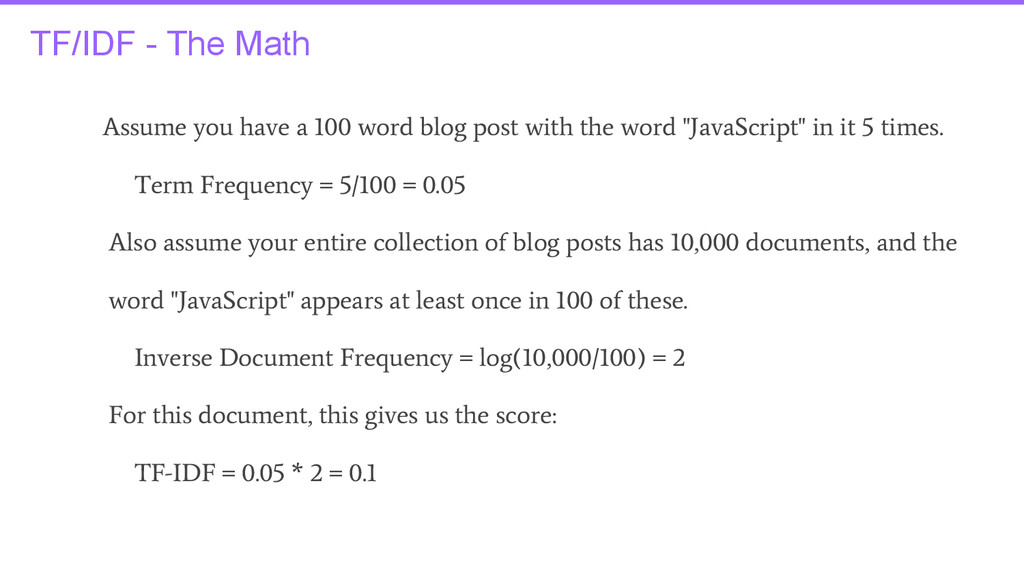
  13. TF/IDF - The Math Assume you have a 100 word

    blog post with the word "JavaScript" in it 5 times. Term Frequency = 5/100 = 0.05 Also assume your entire collection of blog posts has 10,000 documents, and the word "JavaScript" appears at least once in 100 of these. Inverse Document Frequency = log(10,000/100) = 2 For this document, this gives us the score: TF-IDF = 0.05 * 2 = 0.1
  14. Language Detection - Practical Applications Applications - Web searching, as

    engines bring up sites in dozens of languages. - May be required in conjunction with other Natural Language Processing (NLP) algorithms. Data sets may include documents in other languages. Some algorithms will only work in their natural language due to their training data. - Spam filtering services, so they can properly filter out specific languages and areas of origin.
  15. Language Detection - The Math Each language has a corpus

    at its core, a central pattern of components that uniquely identifies it. Profiling algorithms are used to set a core set of words to identify that language. The problem is not all text is long enough to identify a language. Instead, using the 3-gram algorithm via Algorithmia API, one HTTP request can break down detection by looking at groups of 3 letters.