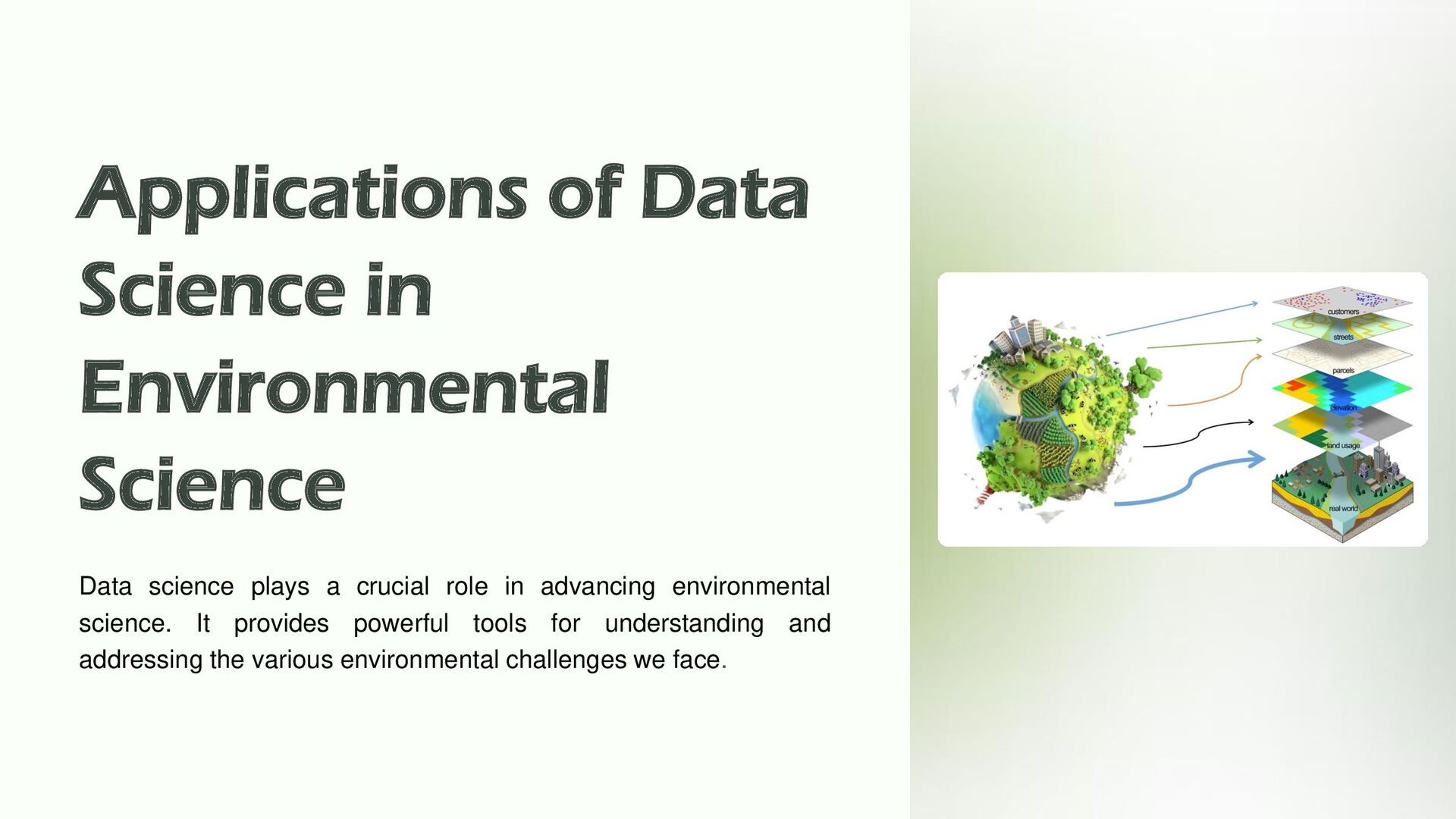
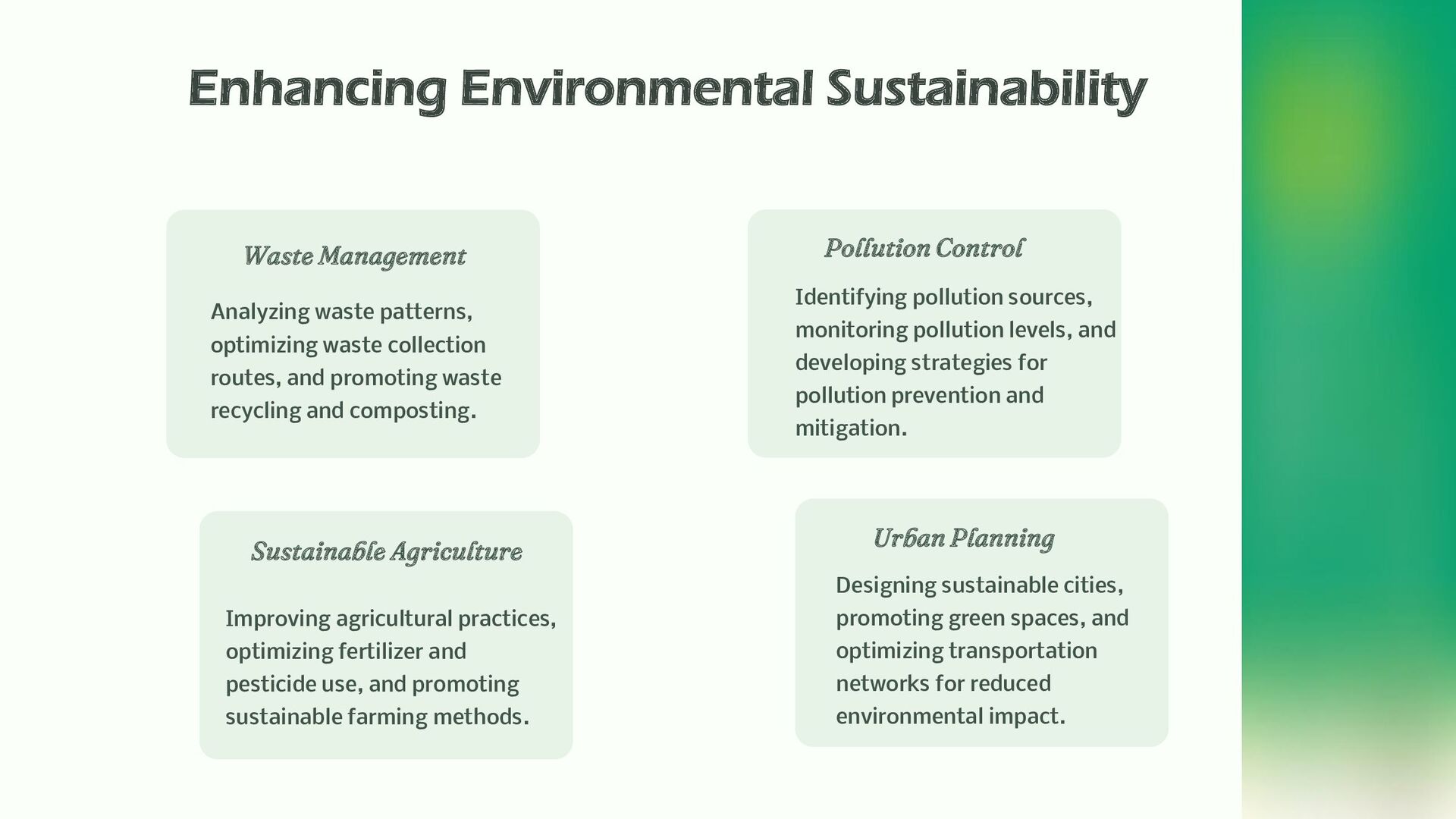
plays a crucial role in advancing environmental science. It provides powerful tools for understanding and addressing the various environmental challenges we face.
enables continuous monitoring of environmental parameters, such as air quality, water quality, and weather patterns, using sensors and remote sensing technologies. Predictive Modeling Developing sophisticated models to predict environmental changes and their impacts, including pollution levels, climate shifts, and ecosystem dynamics. Early Warning Systems Leveraging data analysis to create early warning systems for natural disasters, such as floods, droughts, and wildfires, enabling timely responses.
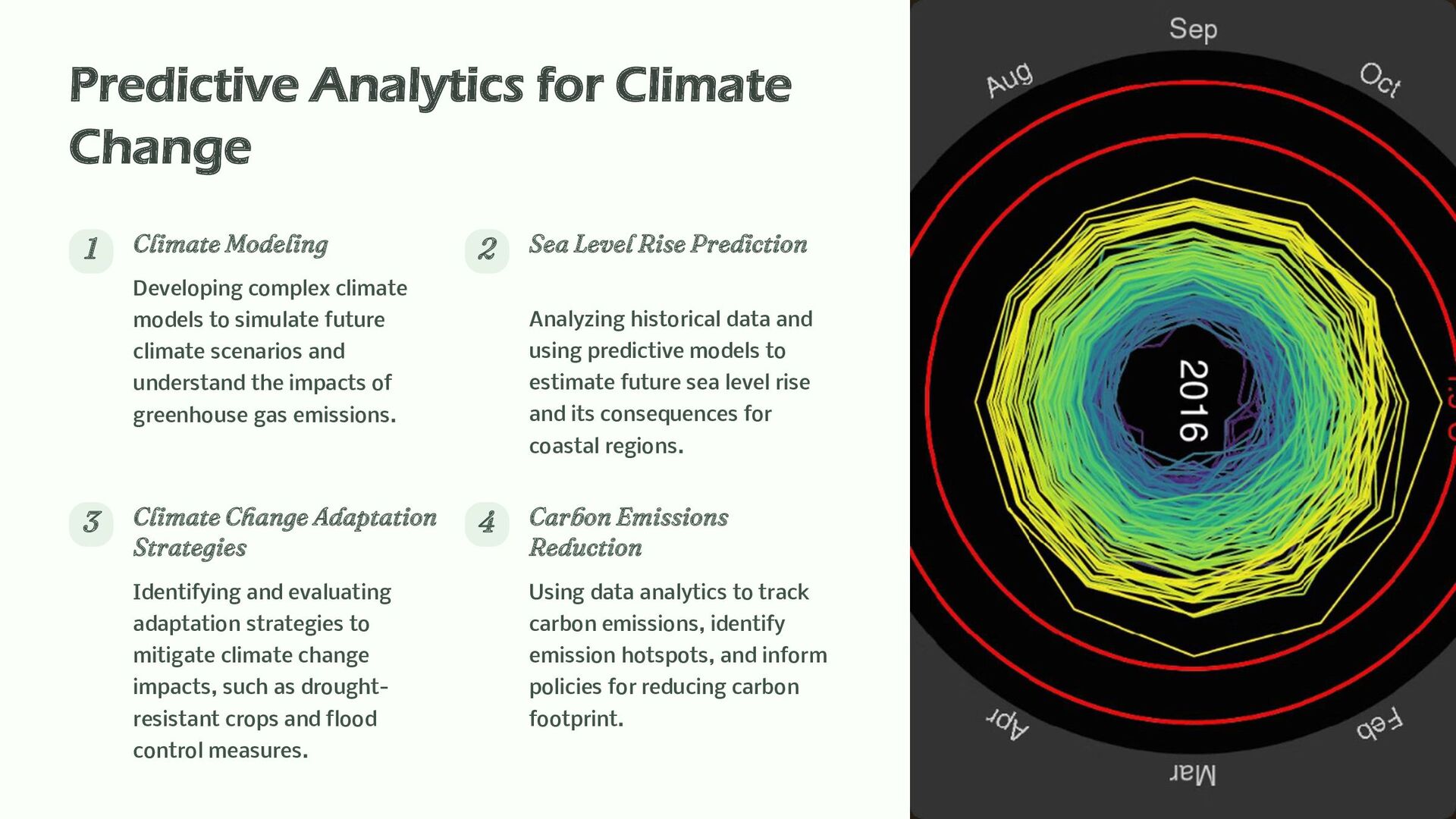
complex climate models to simulate future climate scenarios and understand the impacts of greenhouse gas emissions. 2 Sea Level Rise Prediction Analyzing historical data and using predictive models to estimate future sea level rise and its consequences for coastal regions. 3 Climate Change Adaptation Strategies Identifying and evaluating adaptation strategies to mitigate climate change impacts, such as drought- resistant crops and flood control measures. 4 Carbon Emissions Reduction Using data analytics to track carbon emissions, identify emission hotspots, and inform policies for reducing carbon footprint.
reducing water waste, and managing water resources for sustainable use. Forest Management Monitoring forest health, predicting forest fires, and optimizing timber harvesting for sustainable forestry practices. Energy Resource Management Optimizing energy production and distribution, improving energy efficiency, and promoting renewable energy sources.
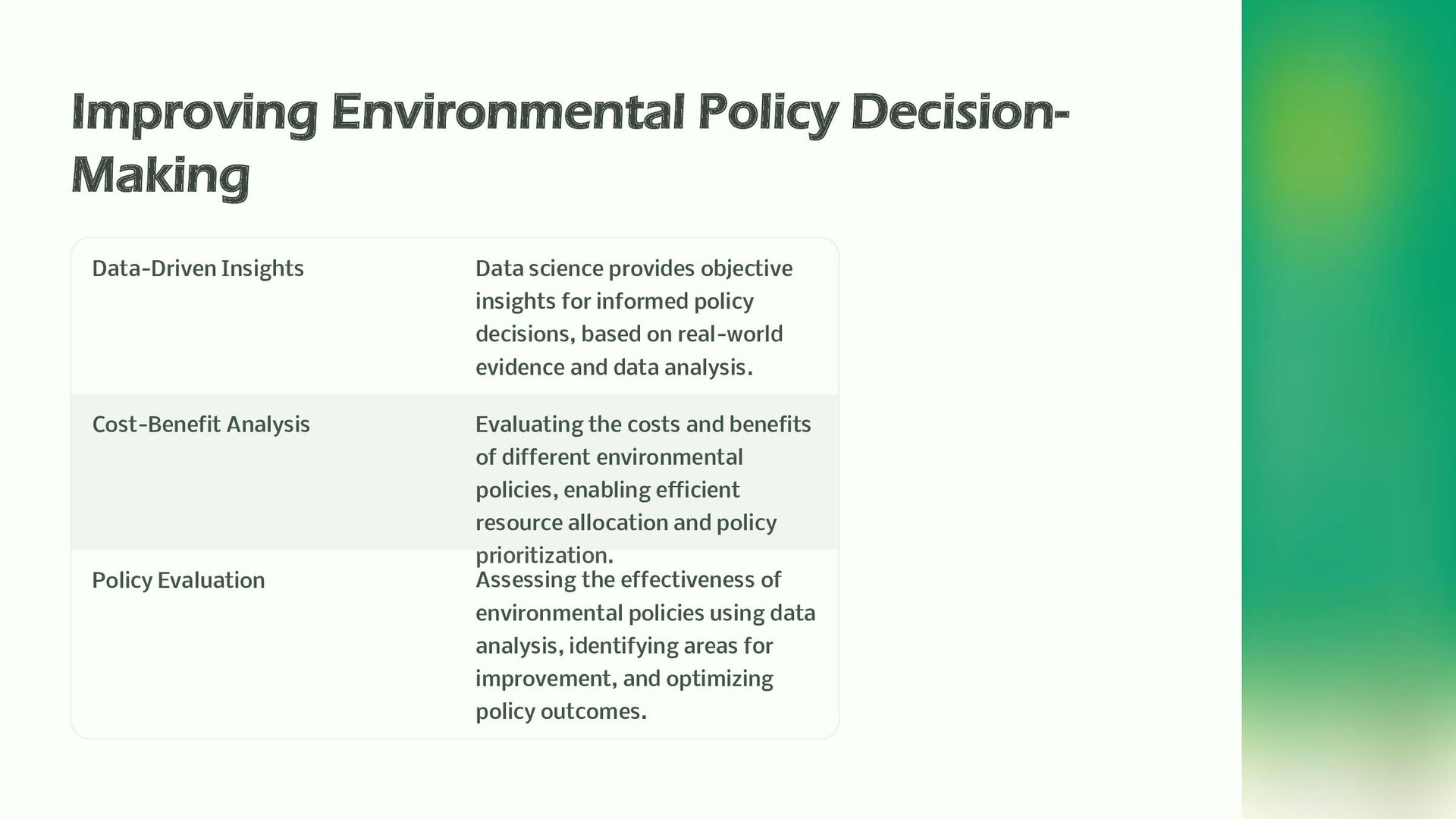
provides objective insights for informed policy decisions, based on real-world evidence and data analysis. Cost-Benefit Analysis Evaluating the costs and benefits of different environmental policies, enabling efficient resource allocation and policy prioritization. Policy Evaluation Assessing the effectiveness of environmental policies using data analysis, identifying areas for improvement, and optimizing policy outcomes.
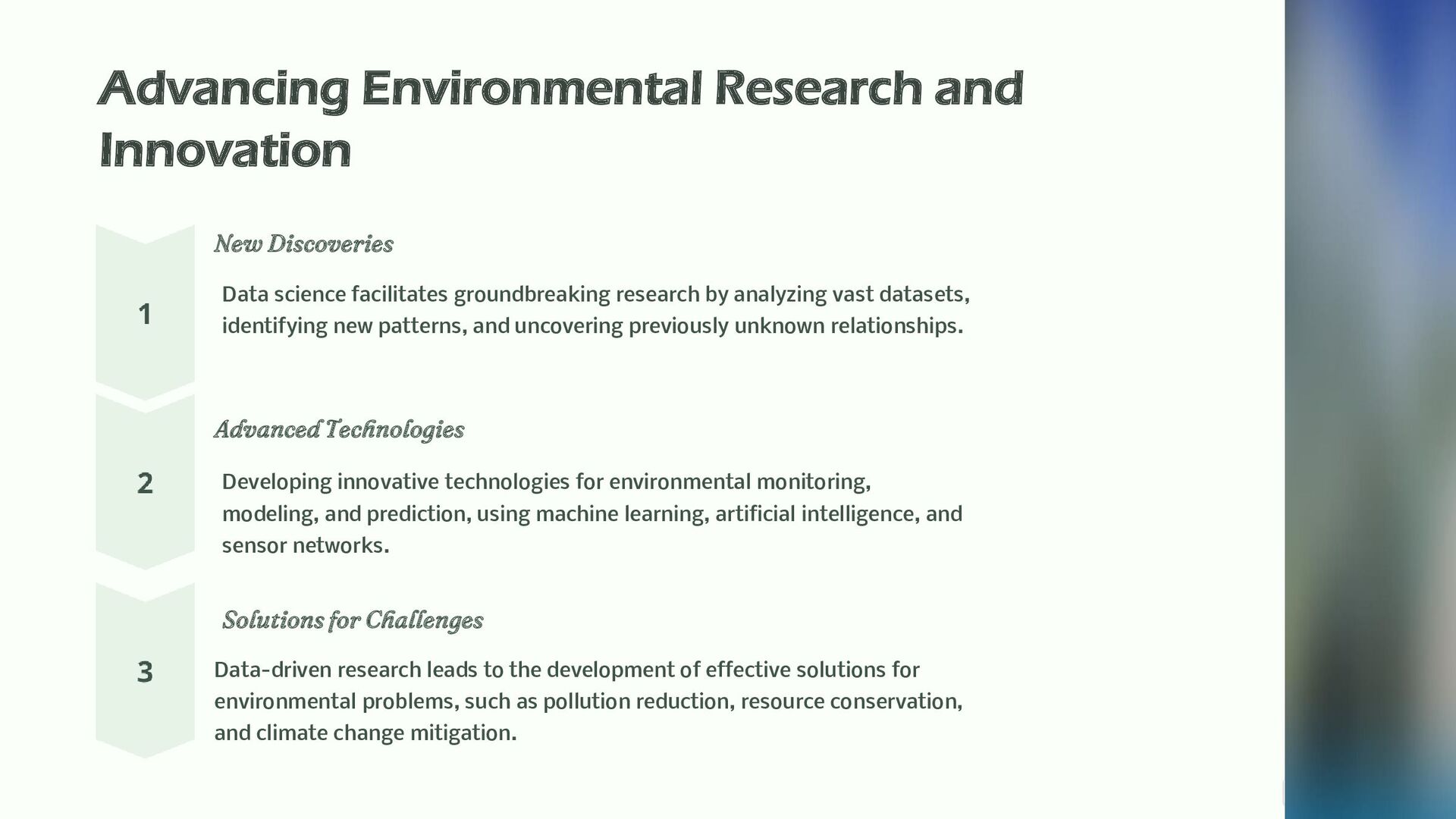
facilitates groundbreaking research by analyzing vast datasets, identifying new patterns, and uncovering previously unknown relationships. Advanced Technologies Developing innovative technologies for environmental monitoring, modeling, and prediction, using machine learning, artificial intelligence, and sensor networks. Solutions for Challenges Data-driven research leads to the development of effective solutions for environmental problems, such as pollution reduction, resource conservation, and climate change mitigation.
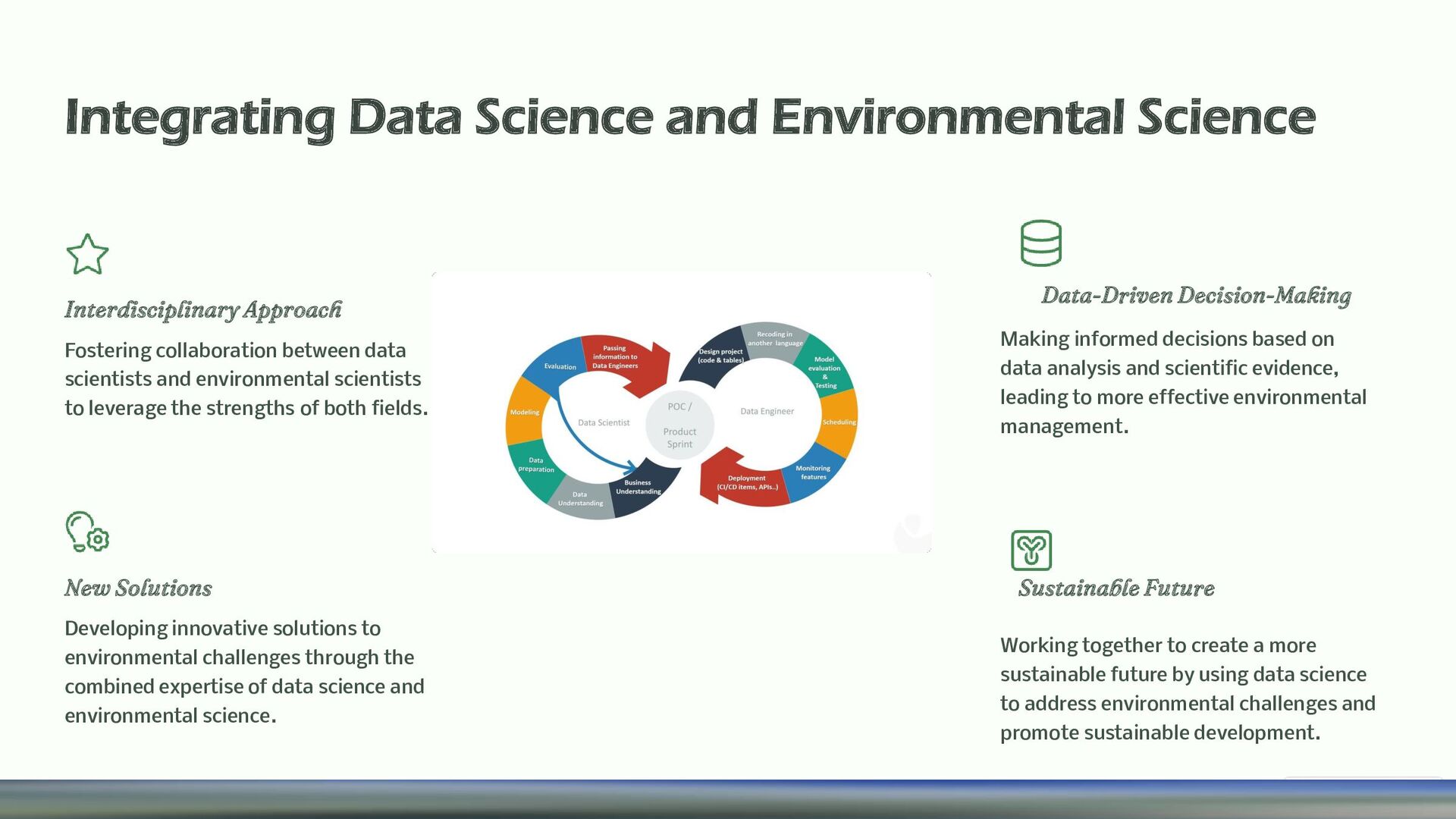
collaboration between data scientists and environmental scientists to leverage the strengths of both fields. Data-Driven Decision-Making Making informed decisions based on data analysis and scientific evidence, leading to more effective environmental management. New Solutions Developing innovative solutions to environmental challenges through the combined expertise of data science and environmental science. Sustainable Future Working together to create a more sustainable future by using data science to address environmental challenges and promote sustainable development.


 danielanewman
 akosma
 jonoalderson
 aemeredith
 thirion
 sstephenson
 popppiees
 eileencodes
 chriscoyier
 pauljervisheath
 baasie
 addyosmani