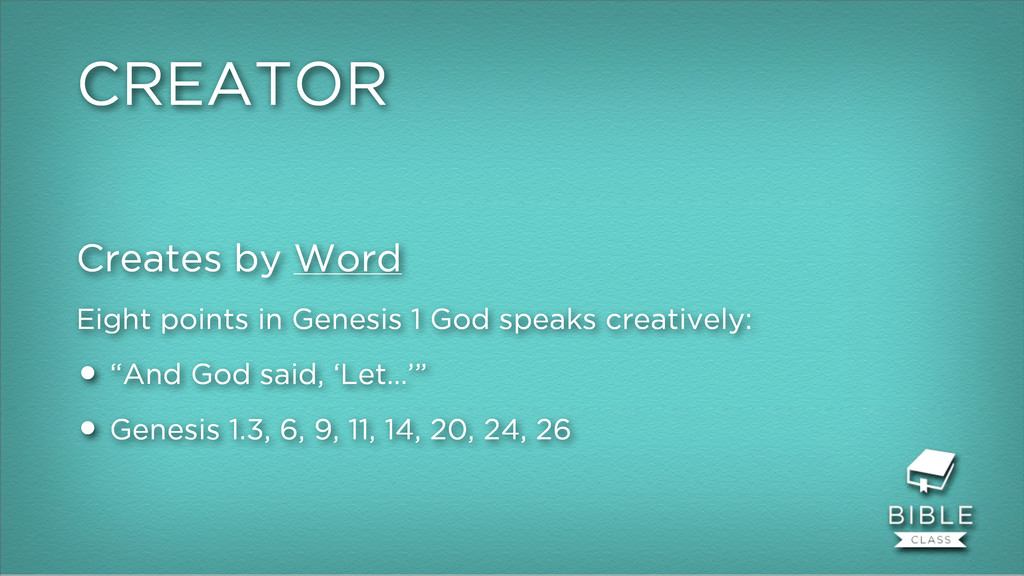
light. And God said, “Let there be an expanse in the midst of the waters, and let it separate the waters from the waters.” And God said, “Let the waters under the heavens be gathered together into one place, and let the dry land appear.” And it was so. And God said, “Let the earth sprout vegetation, plants yielding seed, and fruit trees bearing fruit in which is their seed, each according to its kind, on the earth.” And it was so.
of the heavens to separate the day from the night. And let them be for signs and for seasons, and for days and years, And God said, “Let the waters swarm with swarms of living creatures, and let birds fly above the earth across the expanse of the heavens.” And God said, “Let the earth bring forth living creatures according to their kinds—livestock and creeping things and beasts of the earth according to their kinds.” And it was so. Then God said, “Let us make man in our image, after our likeness. And let them have dominion over the fish of the sea and over the birds of the heavens and over the livestock and over all the earth and over every creeping thing that creeps on the earth.”
By using speech as a metaphor the biblical authors are indicating that the divine activity of creation is voluntary, effortless and rational. In marked contrast, the creation myths of neighboring cultures characterize creation as a process of inevitable struggle and conflict. God commands and it so. The very effortlessness of the fulfillment indicates God’s sovereignty.” L.H. Osborn, “Creation” in New Dictionary of Biblical Theology
Quoting Augustine, Jon Webster notes that “Creation is, again, not necessary for God. God’s creative love is not ‘a love which is needy and in want’ and so ‘loves in such a way that it is subjected to the things it loves’; God loves not ‘out of the compulsion of his needs’ but ‘out of the abundance of his generosity’…creation is therefore, as Aquinas puts it, a ‘blessing’ which issues in praise of the one without need.” Jon Webster, “Trinity and Creation” in IJST Theology, January 2010.
“In the beginning God created everything that exists. He made Adam and Even and placed them in the garden of Eden. God spoke to them and gave them certain tasks in the world. For food he allowed them the fruit of all the trees in the garden except one. He warned them that they would die if they ate the fruit of that one tree.” Graeme Goldsworthy, According the Plan, 90
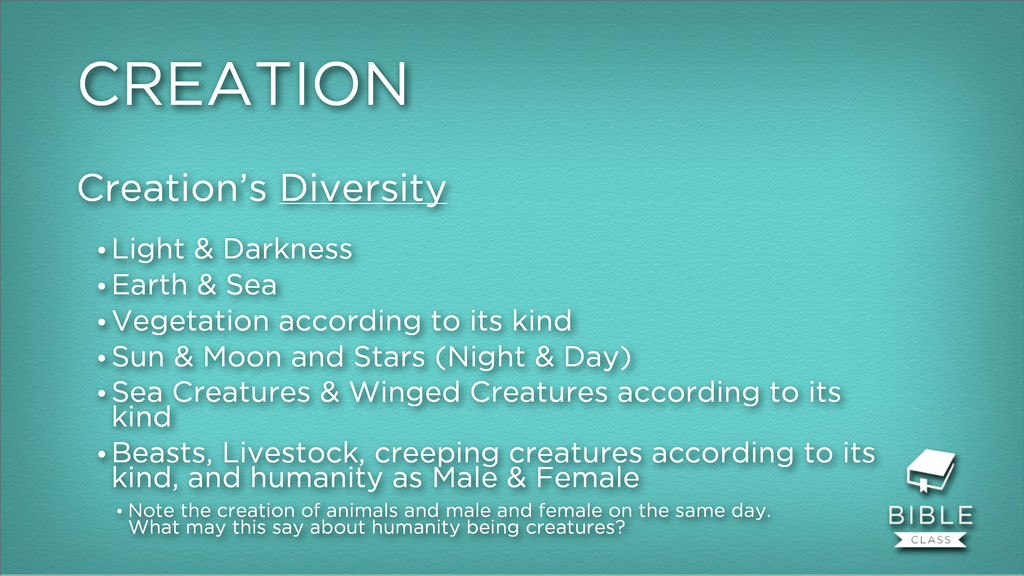
Sea • Vegetation according to its kind • Sun & Moon and Stars (Night & Day) • Sea Creatures & Winged Creatures according to its kind • Beasts, Livestock, creeping creatures according to its kind, and humanity as Male & Female • Note the creation of animals and male and female on the same day. What may this say about humanity being creatures?
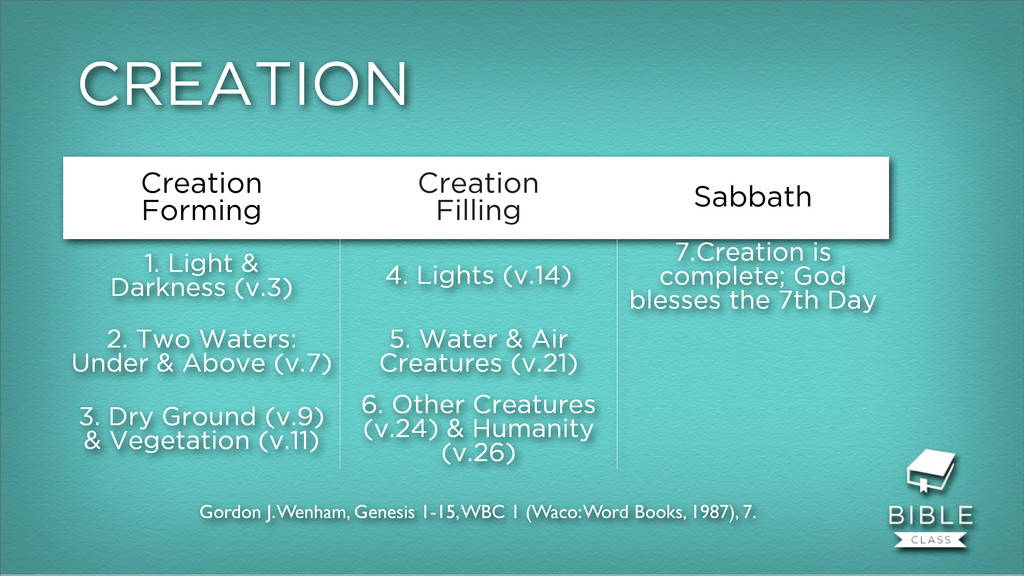
(v.3) 4. Lights (v.14) 7.Creation is complete; God blesses the 7th Day 2. Two Waters: Under & Above (v.7) 5. Water & Air Creatures (v.21) 3. Dry Ground (v.9) & Vegetation (v.11) 6. Other Creatures (v.24) & Humanity (v.26) Gordon J. Wenham, Genesis 1-15, WBC 1 (Waco: Word Books, 1987), 7.
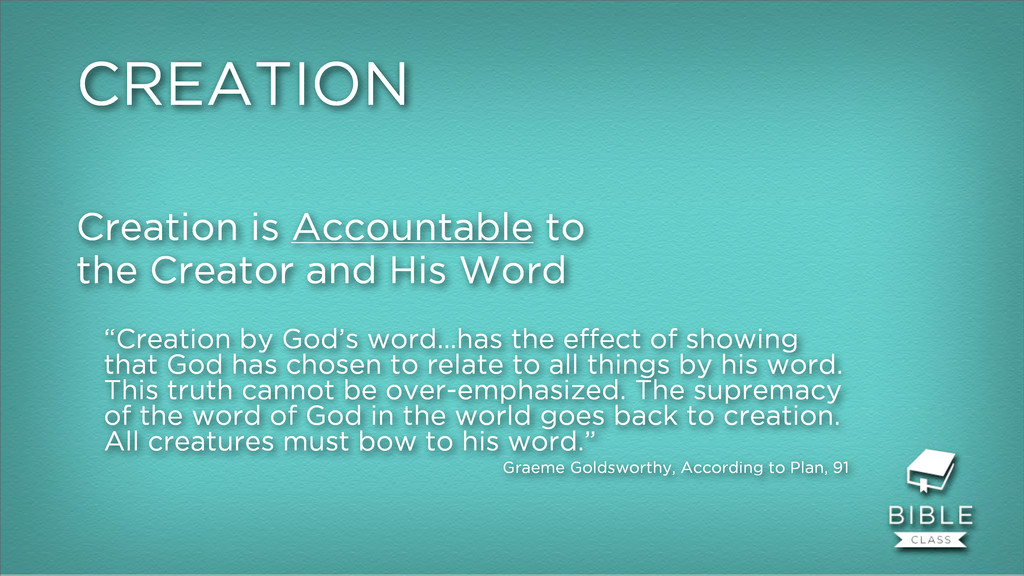
“Creation by God’s word…has the effect of showing that God has chosen to relate to all things by his word. This truth cannot be over-emphasized. The supremacy of the word of God in the world goes back to creation. All creatures must bow to his word.” Graeme Goldsworthy, According to Plan, 91
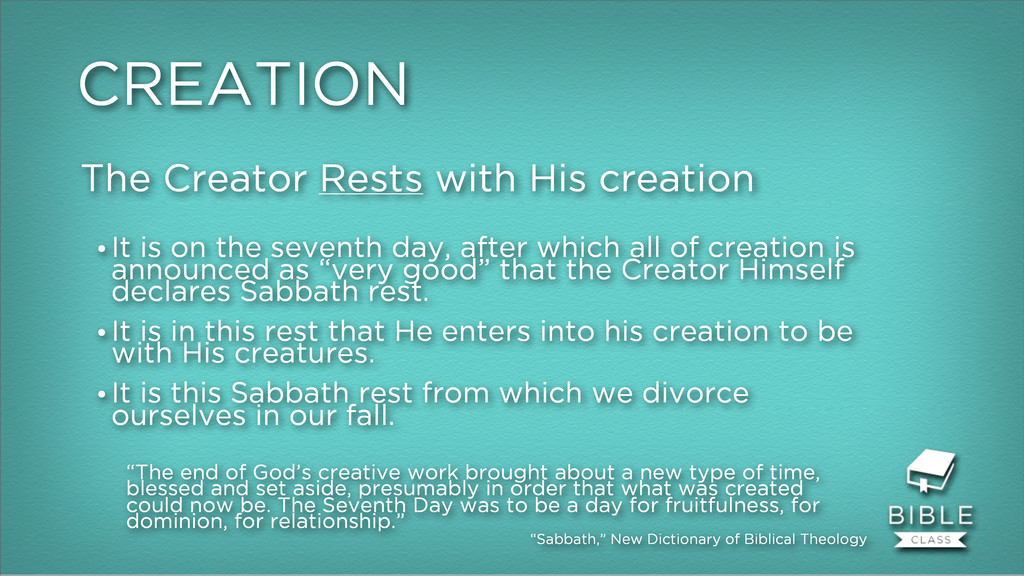
on the seventh day, after which all of creation is announced as “very good” that the Creator Himself declares Sabbath rest. • It is in this rest that He enters into his creation to be with His creatures. • It is this Sabbath rest from which we divorce ourselves in our fall. “The end of God’s creative work brought about a new type of time, blessed and set aside, presumably in order that what was created could now be. The Seventh Day was to be a day for fruitfulness, for dominion, for relationship.” “Sabbath,” New Dictionary of Biblical Theology
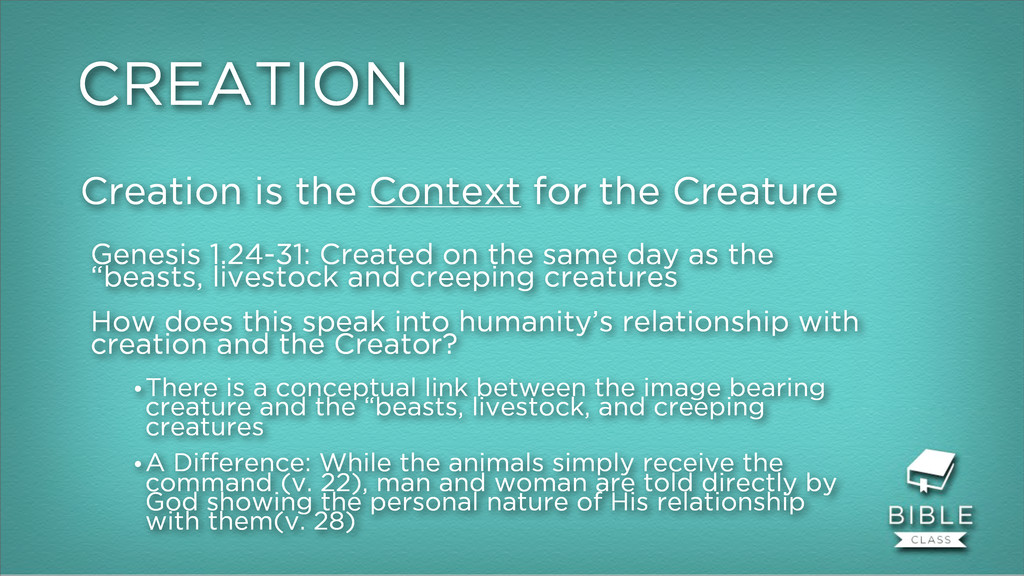
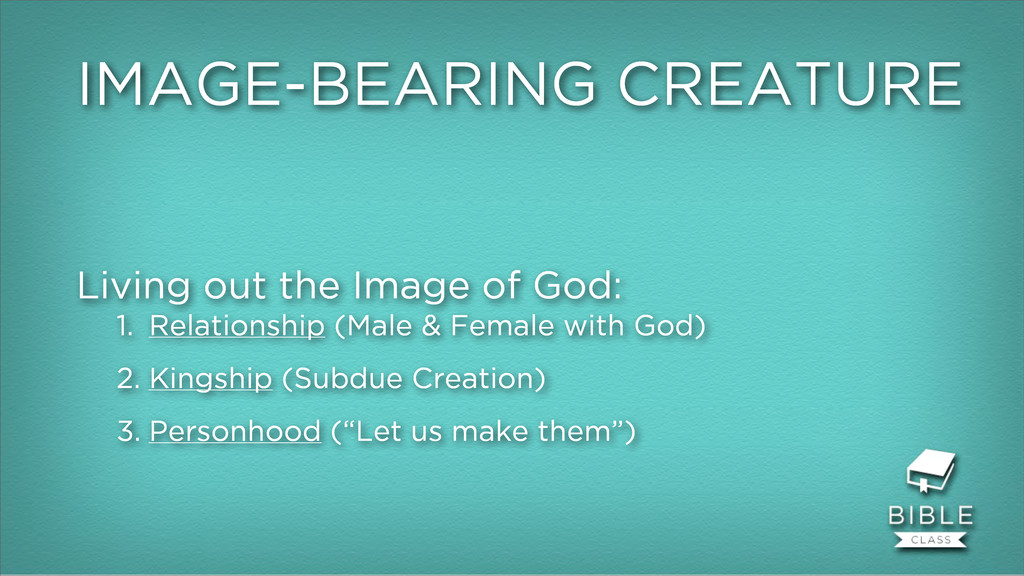
Created on the same day as the “beasts, livestock and creeping creatures How does this speak into humanity’s relationship with creation and the Creator? •There is a conceptual link between the image bearing creature and the “beasts, livestock, and creeping creatures •A Difference: While the animals simply receive the command (v. 22), man and woman are told directly by God showing the personal nature of His relationship with them(v. 28)
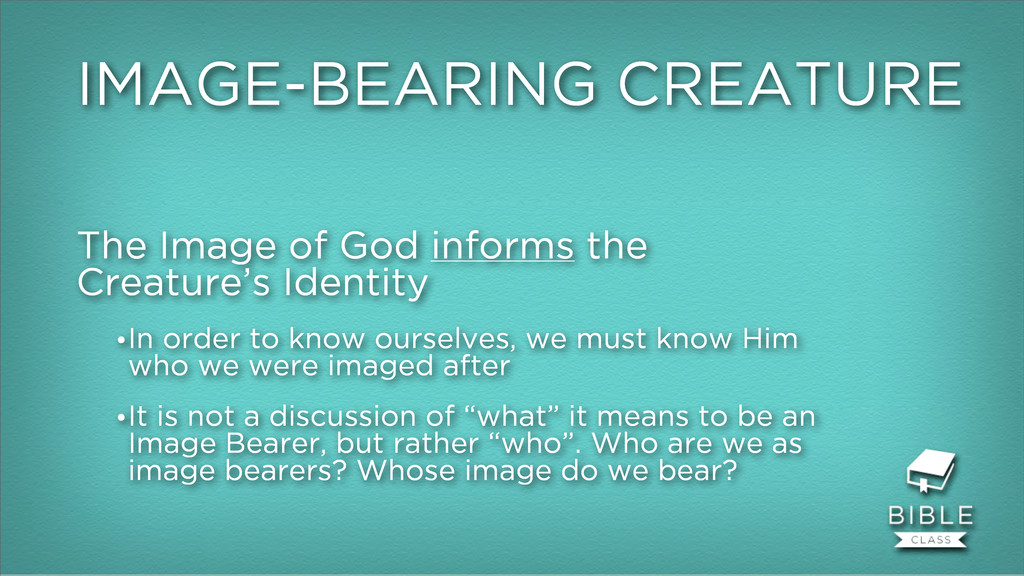
•In order to know ourselves, we must know Him who we were imaged after •It is not a discussion of “what” it means to be an Image Bearer, but rather “who”. Who are we as image bearers? Whose image do we bear?
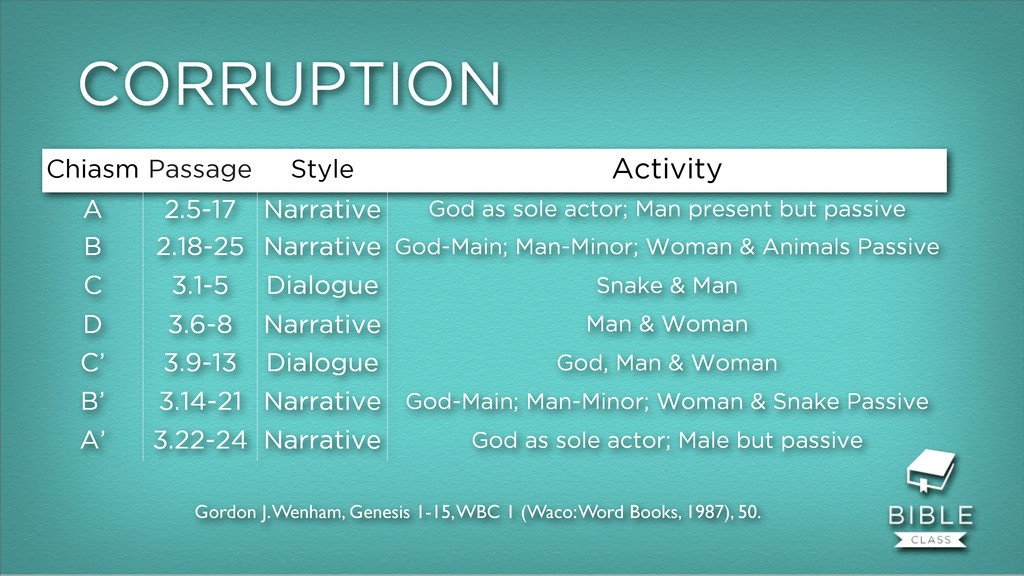
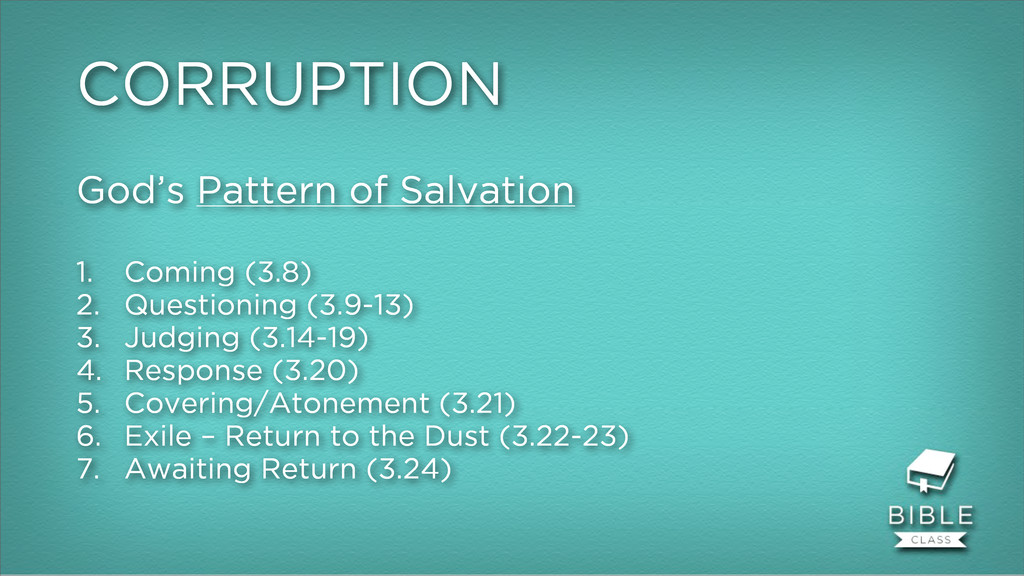
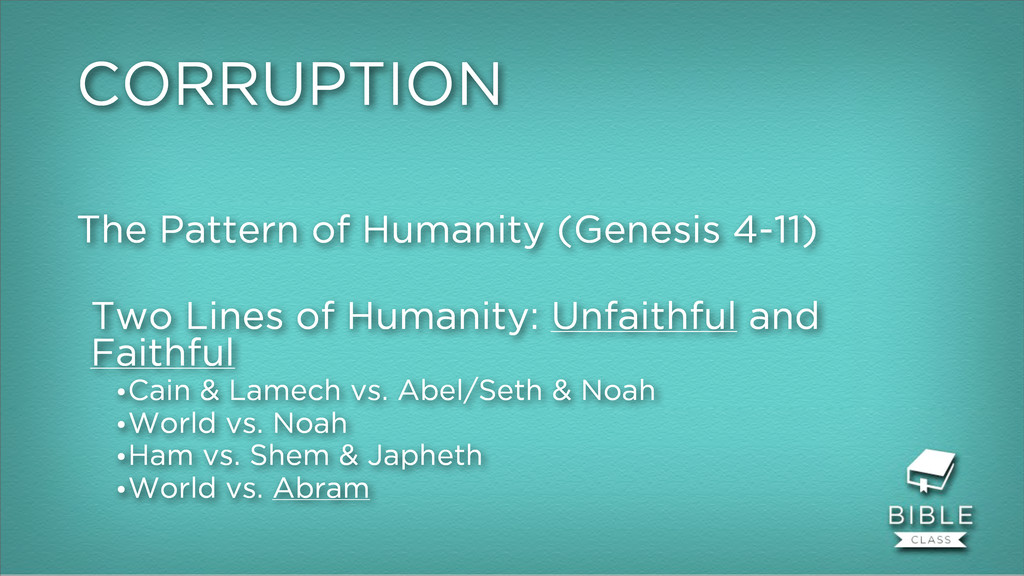
sole actor; Man present but passive B 2.18-25 Narrative God-Main; Man-Minor; Woman & Animals Passive C 3.1-5 Dialogue Snake & Man D 3.6-8 Narrative Man & Woman C’ 3.9-13 Dialogue God, Man & Woman B’ 3.14-21 Narrative God-Main; Man-Minor; Woman & Snake Passive A’ 3.22-24 Narrative God as sole actor; Male but passive Gordon J. Wenham, Genesis 1-15, WBC 1 (Waco: Word Books, 1987), 50.
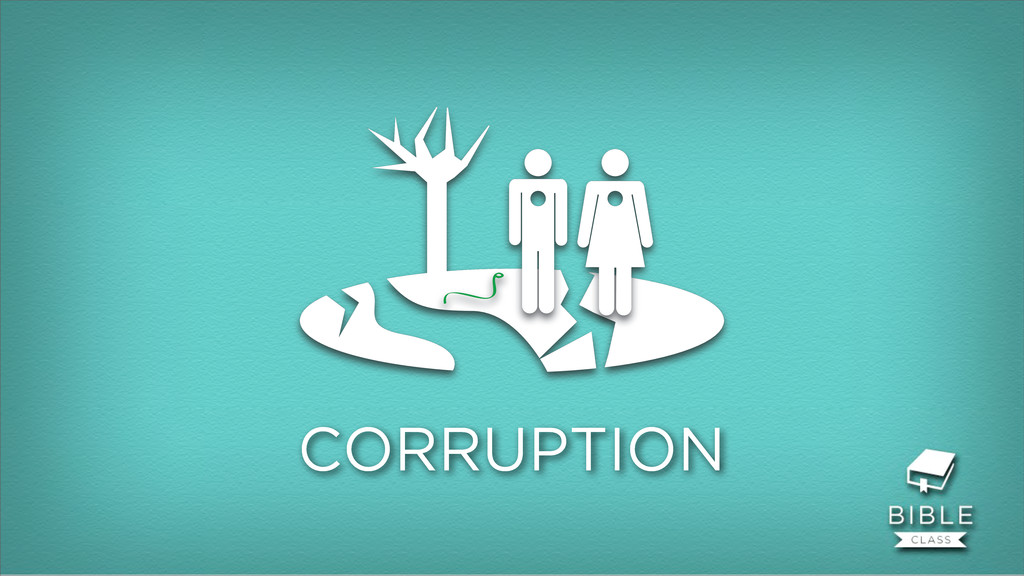
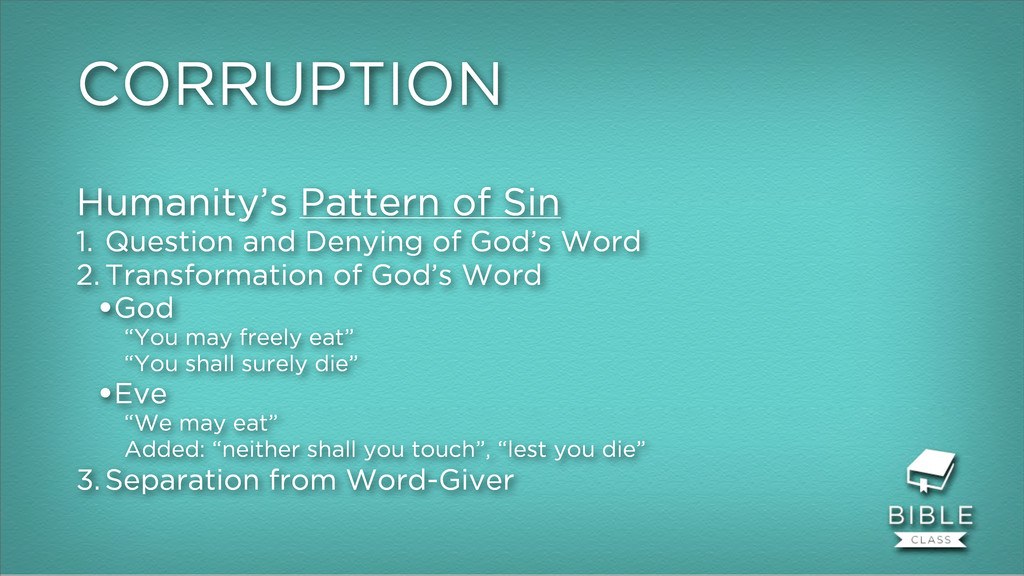
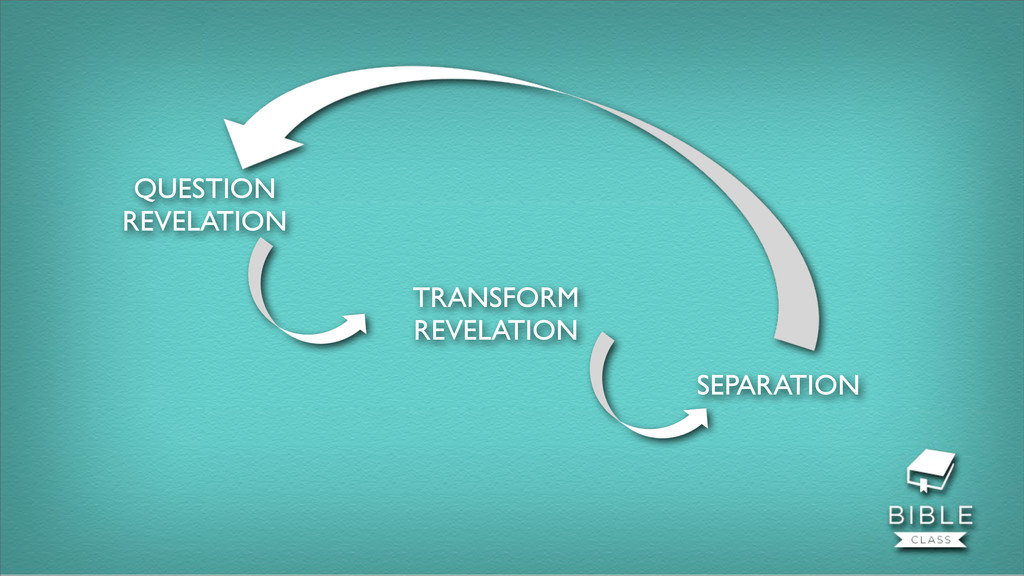
God’s Word 2. Transformation of God’s Word •God “You may freely eat” “You shall surely die” •Eve “We may eat” Added: “neither shall you touch”, “lest you die” 3.Separation from Word-Giver
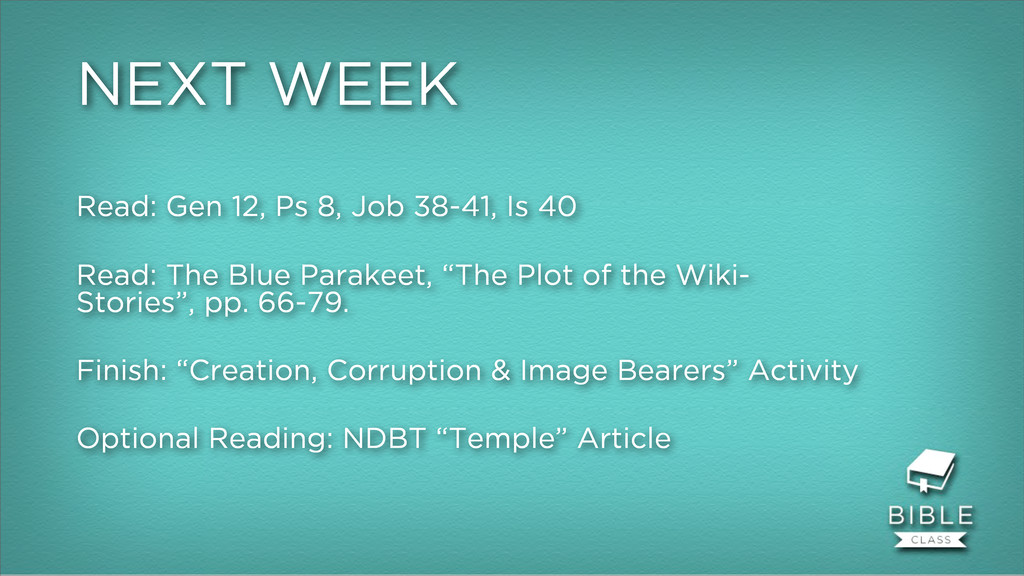
40 Read: The Blue Parakeet, “The Plot of the Wiki- Stories”, pp. 66-79. Finish: “Creation, Corruption & Image Bearers” Activity Optional Reading: NDBT “Temple” Article


 apexgrowing
 hiragahh
 akiraasano
 masakiokuda
 signer
 rashwhitman
 spring_aki
 robintux
 dragon2
 soudai
 naochim2026
 aleyda
 brettharned
 chrisshort
 michielstock
 tammyeverts
 garrettdimon
 schroneko
 katiecoart
 kimpetersen
 erikaheidi
 aarron