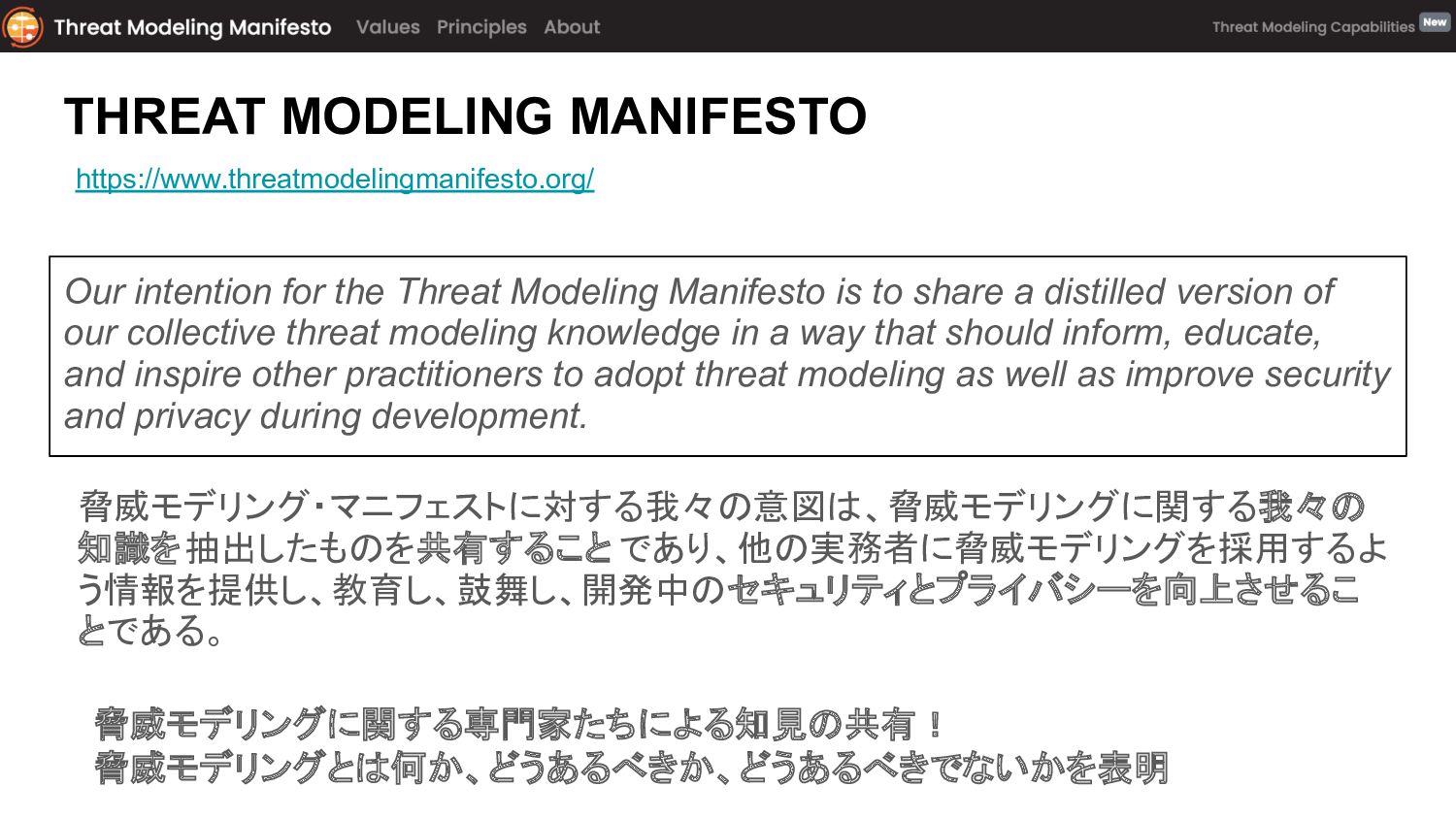
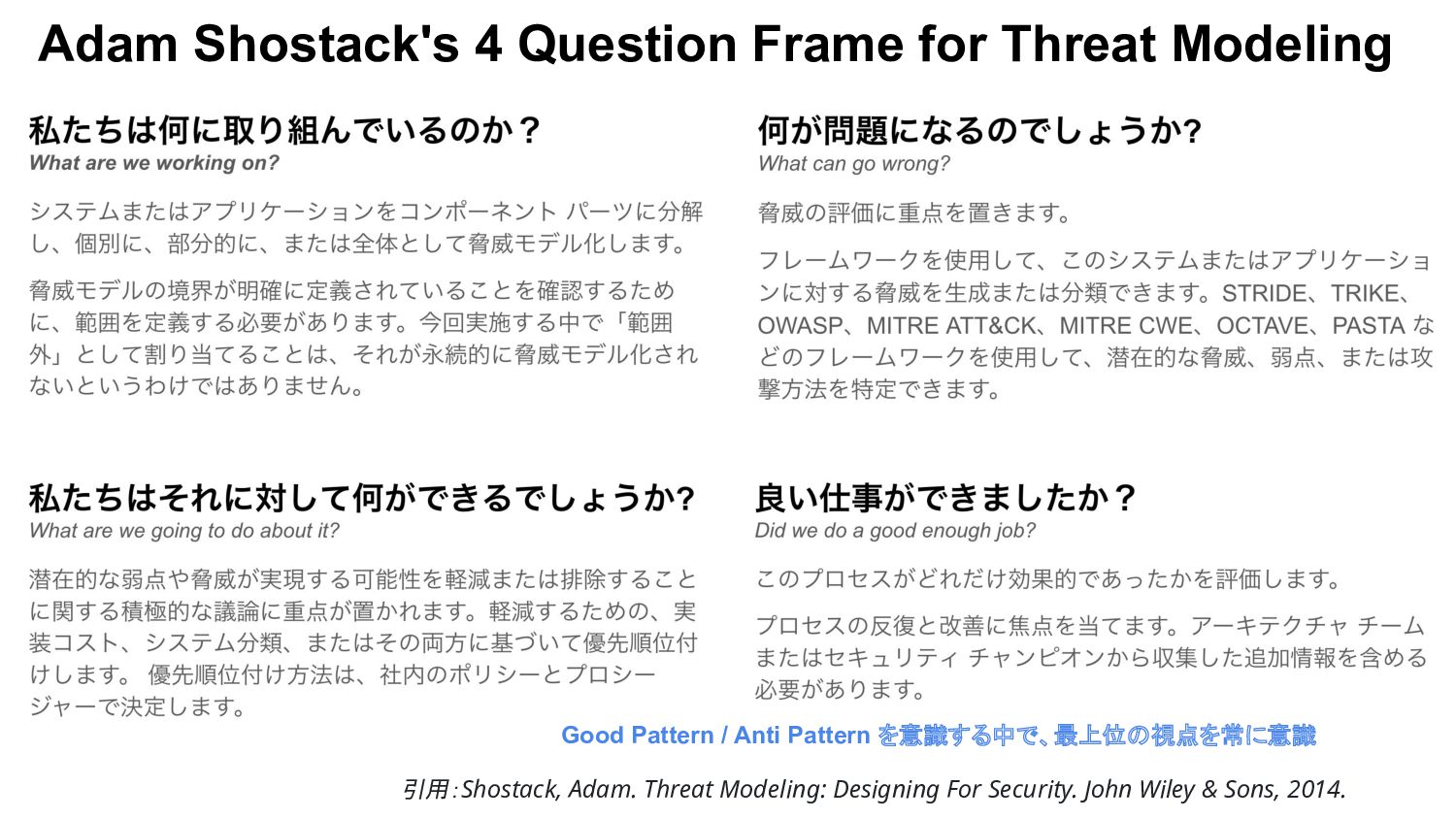
is to share a distilled version of our collective threat modeling knowledge in a way that should inform, educate, and inspire other practitioners to adopt threat modeling as well as improve security and privacy during development. 脅威モデリング・マニフェストに対する我々の意図は、脅威モデリングに関する我々の 知識を抽出したものを共有すること であり、他の実務者に脅威モデリングを採用するよ う情報を提供し、教育し、鼓舞し、開発中のセキュリティとプライバシーを向上させるこ とである。 脅威モデリングに関する専門家たちによる知見の共有! 脅威モデリングとは何か、どうあるべきか、どうあるべきでないかを表明 https://www.threatmodelingmanifesto.org/
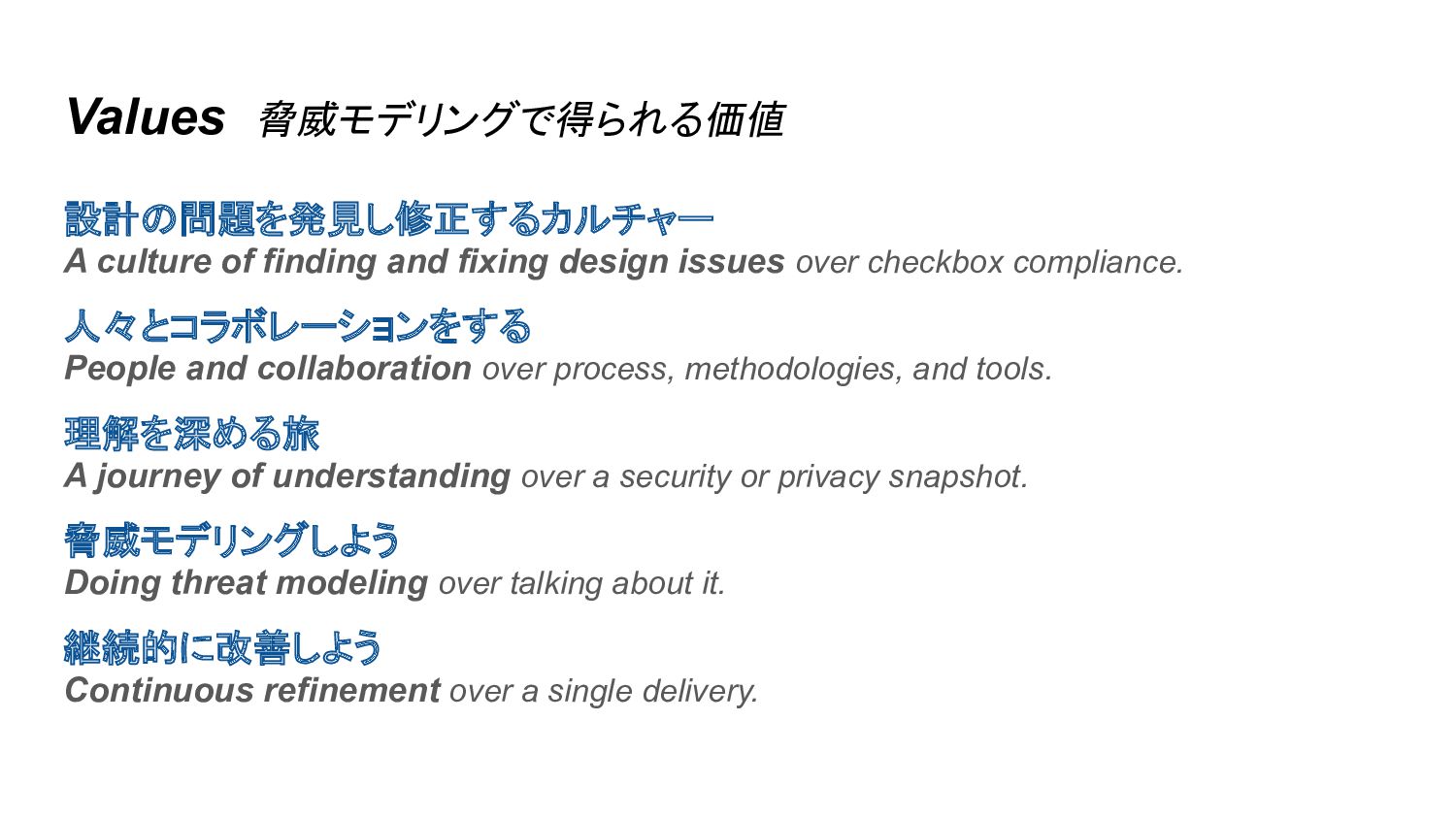
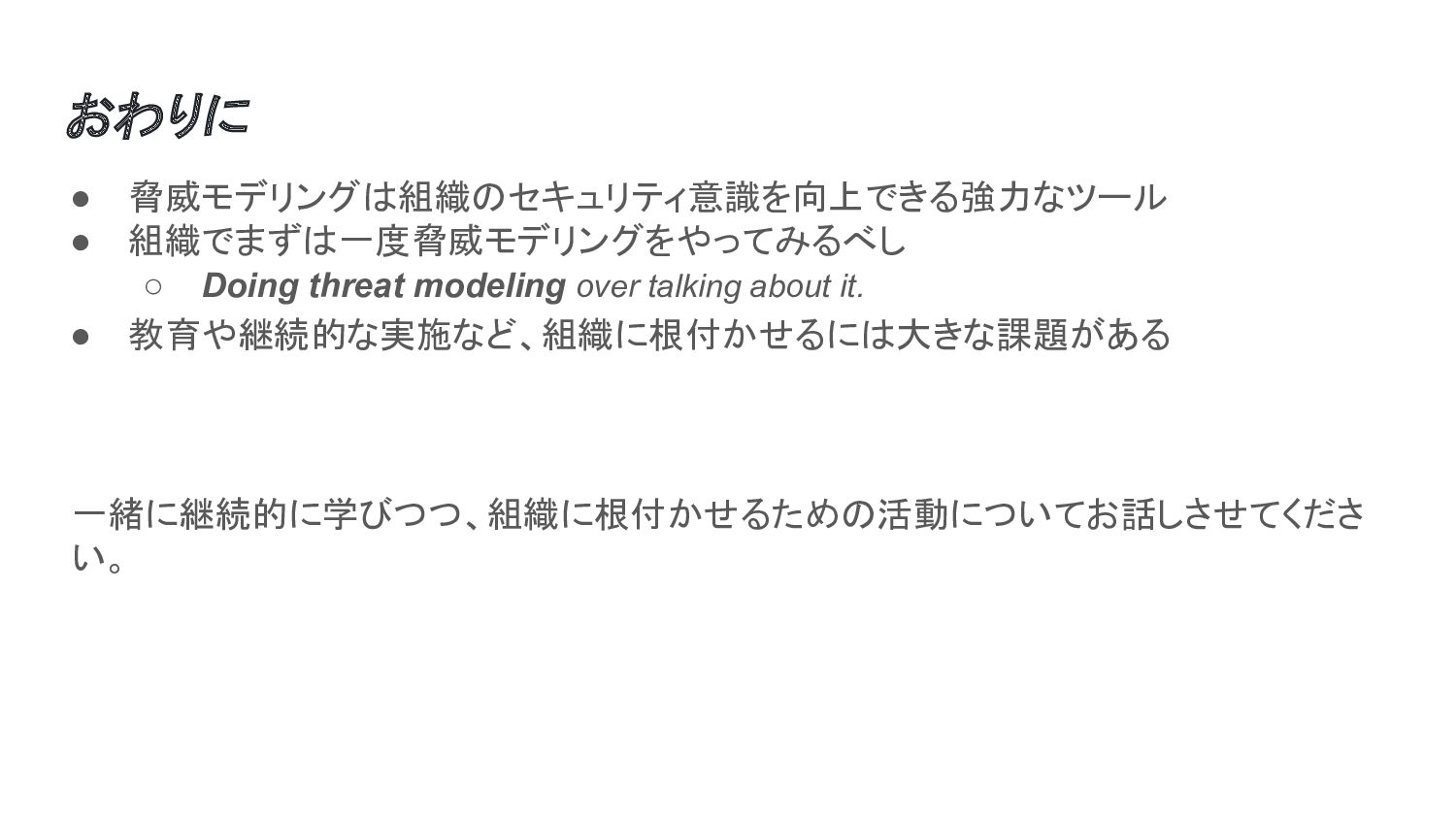
issues over checkbox compliance. 人々とコラボレーションをする People and collaboration over process, methodologies, and tools. 理解を深める旅 A journey of understanding over a security or privacy snapshot. 脅威モデリングしよう Doing threat modeling over talking about it. 継続的に改善しよう Continuous refinement over a single delivery.
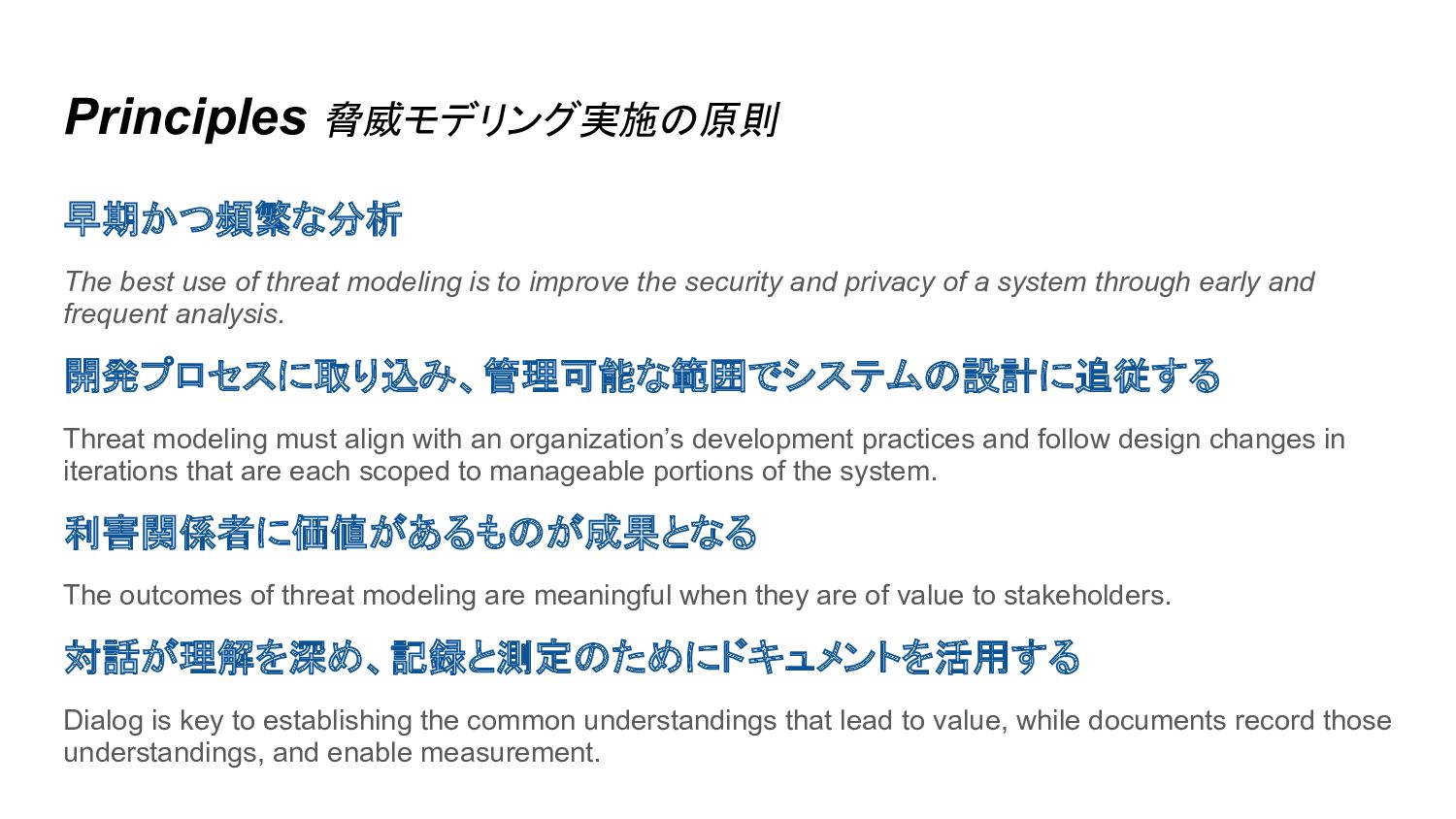
to improve the security and privacy of a system through early and frequent analysis. 開発プロセスに取り込み、管理可能な範囲でシステムの設計に追従する Threat modeling must align with an organization’s development practices and follow design changes in iterations that are each scoped to manageable portions of the system. 利害関係者に価値があるものが成果となる The outcomes of threat modeling are meaningful when they are of value to stakeholders. 対話が理解を深め、記録と測定のためにドキュメントを活用する Dialog is key to establishing the common understandings that lead to value, while documents record those understandings, and enable measurement.
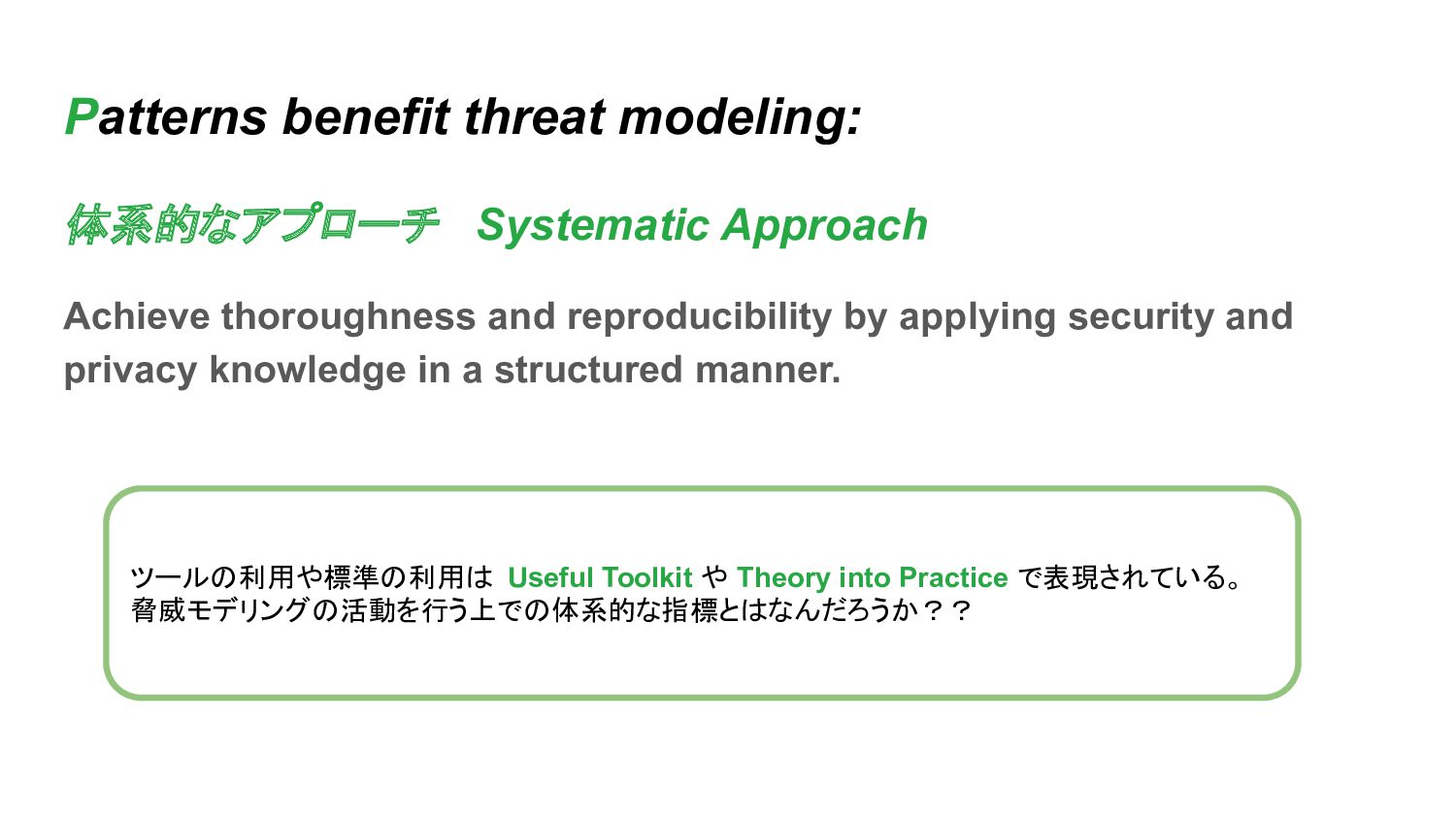
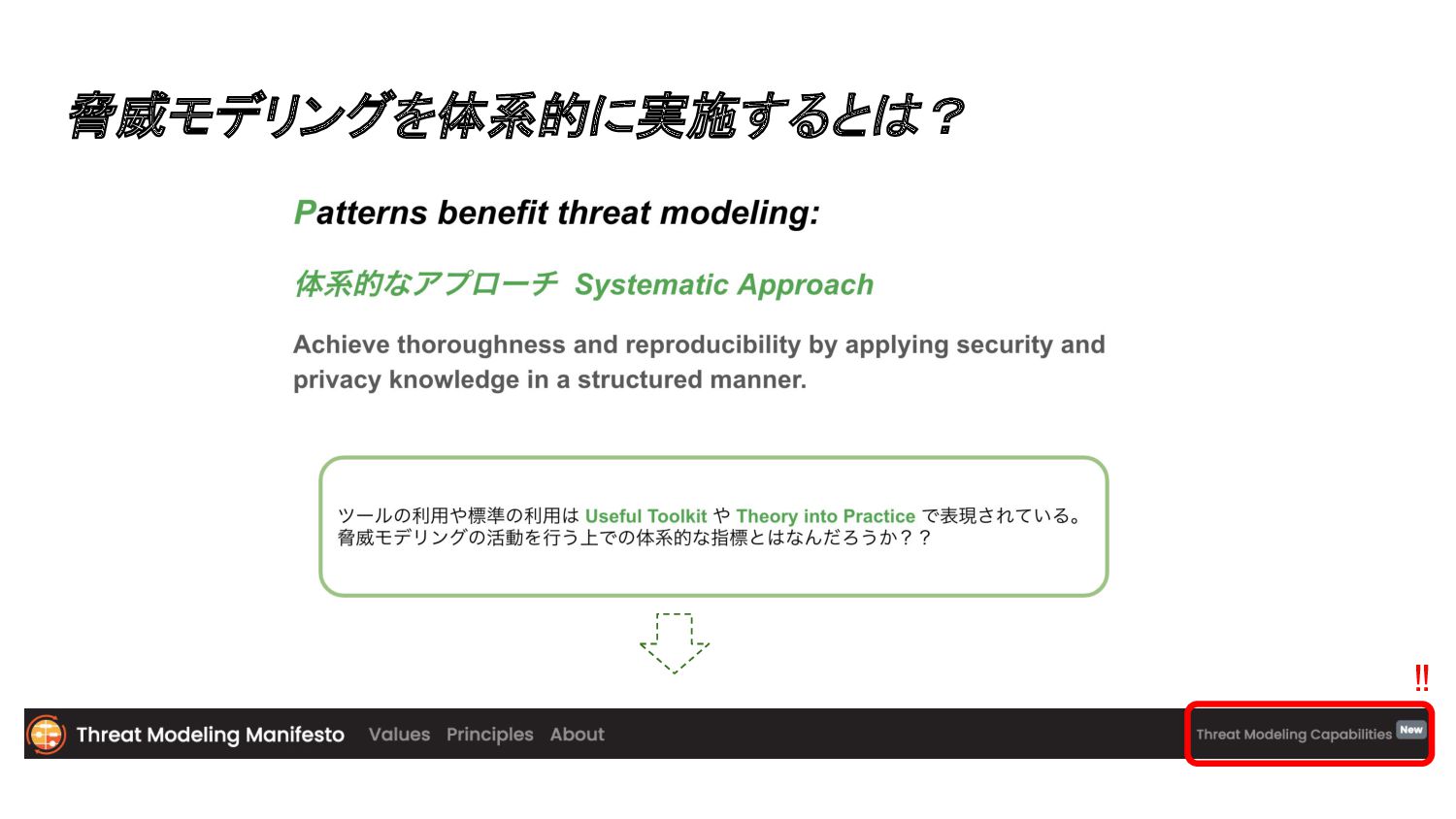
reproducibility by applying security and privacy knowledge in a structured manner. ツールの利用や標準の利用は Useful Toolkit や Theory into Practice で表現されている。 脅威モデリングの活動を行う上での体系的な指標とはなんだろうか??
by including both craft and science. 根拠を持ったアプローチや芸術的なアプローチなどを組み合わせて、手元にある情報を適切に 扱いつつも、創造性を発揮する。 どういう脅威があり、それがどういうリスクになるかは過去事例や自社事業を理解し、さらに想 像力を持つことが大切。
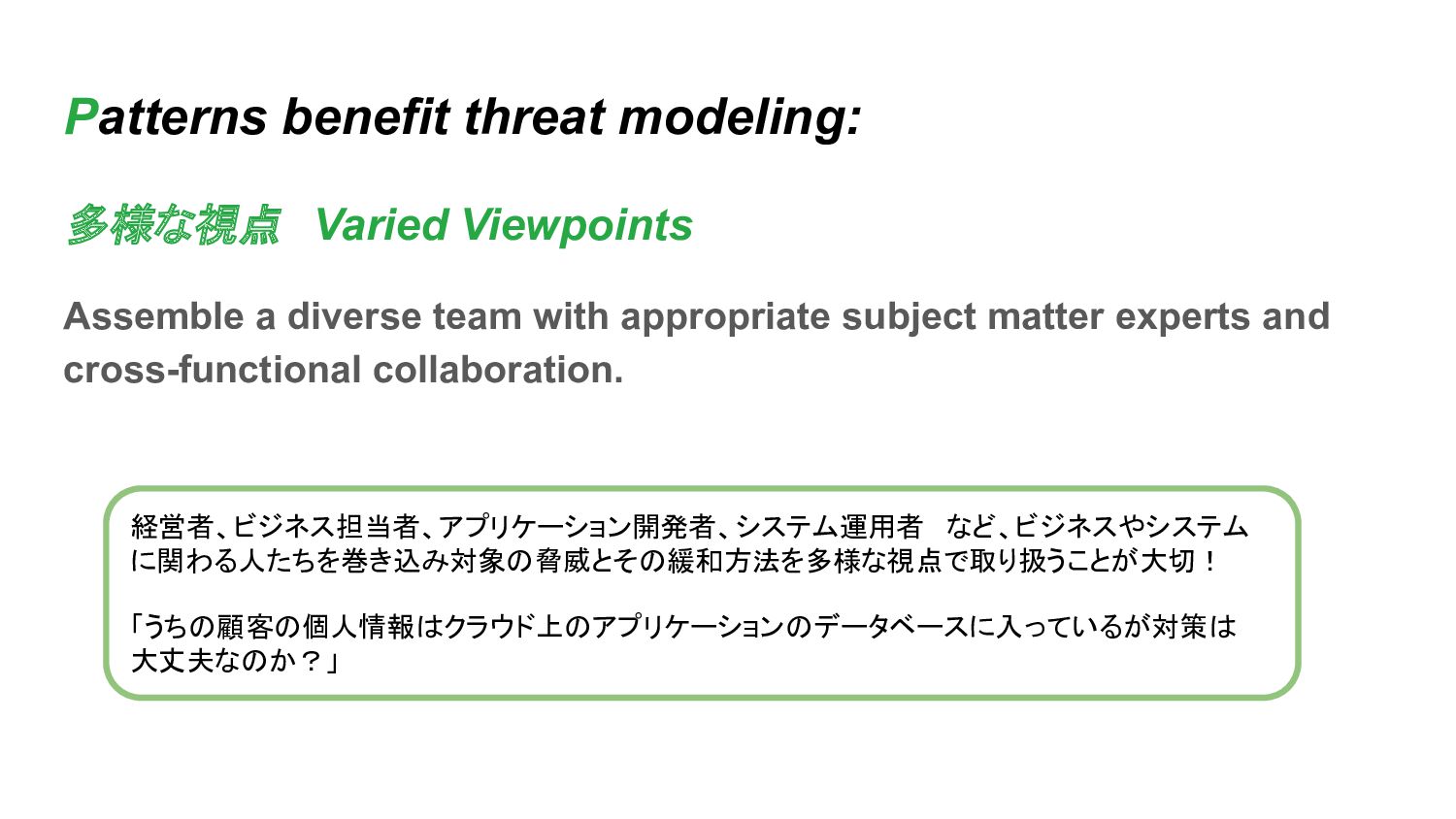
team with appropriate subject matter experts and cross-functional collaboration. 経営者、ビジネス担当者、アプリケーション開発者、システム運用者 など、ビジネスやシステム に関わる人たちを巻き込み対象の脅威とその緩和方法を多様な視点で取り扱うことが大切! 「うちの顧客の個人情報はクラウド上のアプリケーションのデータベースに入っているが対策は 大丈夫なのか?」
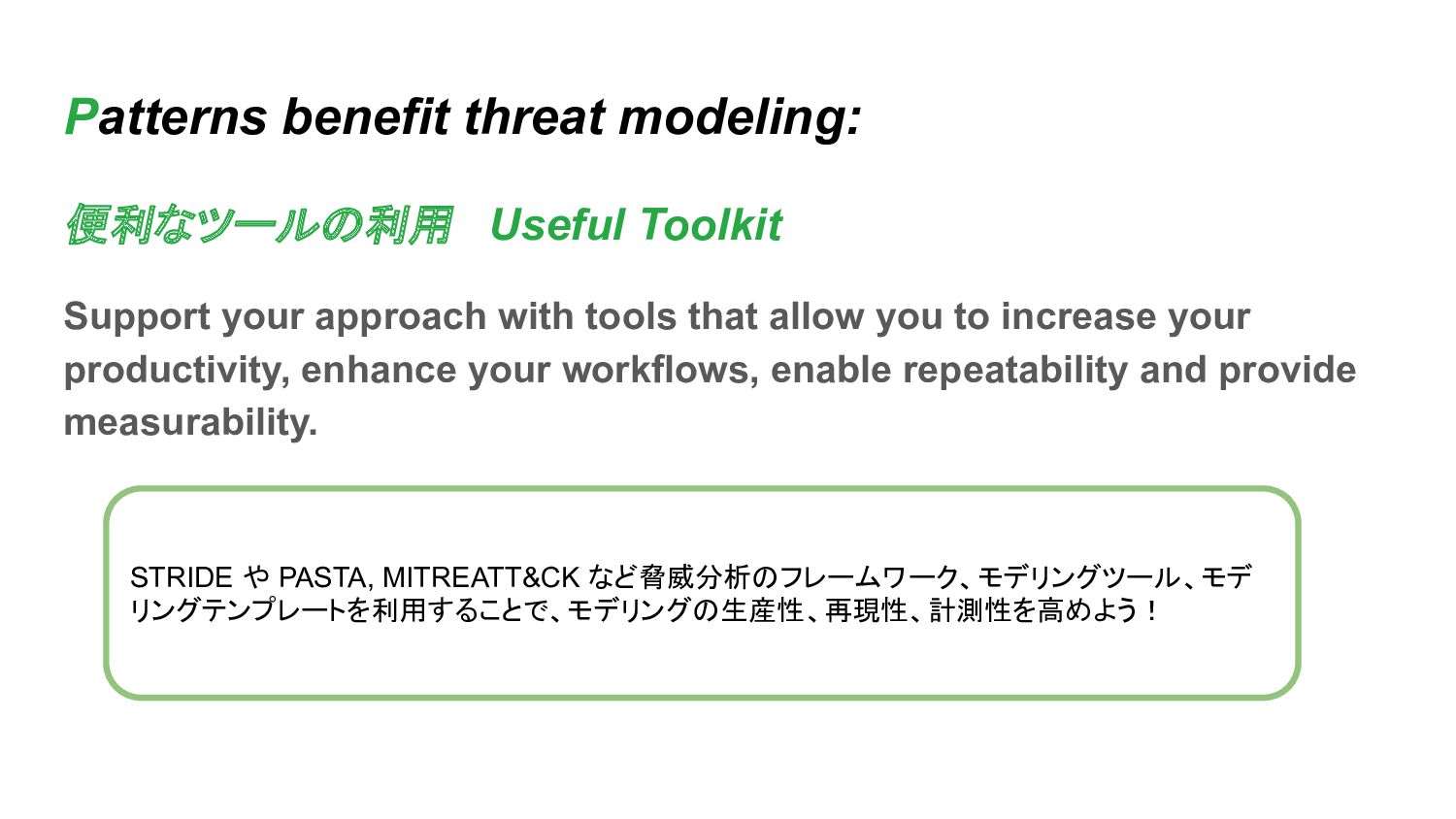
with tools that allow you to increase your productivity, enhance your workflows, enable repeatability and provide measurability. STRIDE や PASTA, MITREATT&CK など脅威分析のフレームワーク、モデリングツール、モデ リングテンプレートを利用することで、モデリングの生産性、再現性、計測性を高めよう!
field-tested techniques aligned to local needs, and that are informed by the latest thinking on the benefits and limits of those techniques. これまで実績のあるテクニックや、業界固有のニーズなどを結びつけてモデリングを実施する。 NIST CSF や PCIDSS などのようにサイバーセキュリティフレームワークや、業界標準のコンプ ライアンスを取り入れましょう。
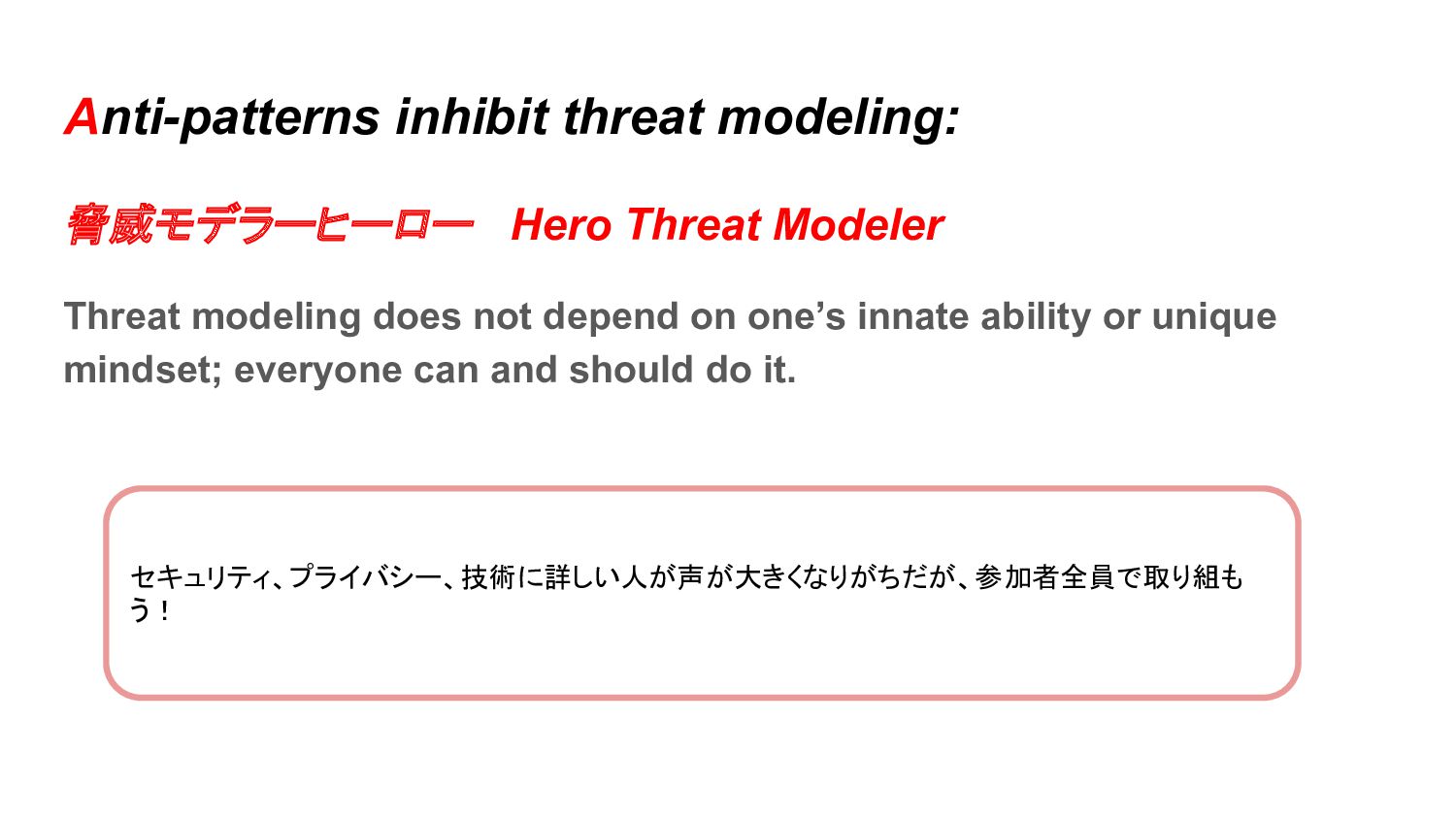
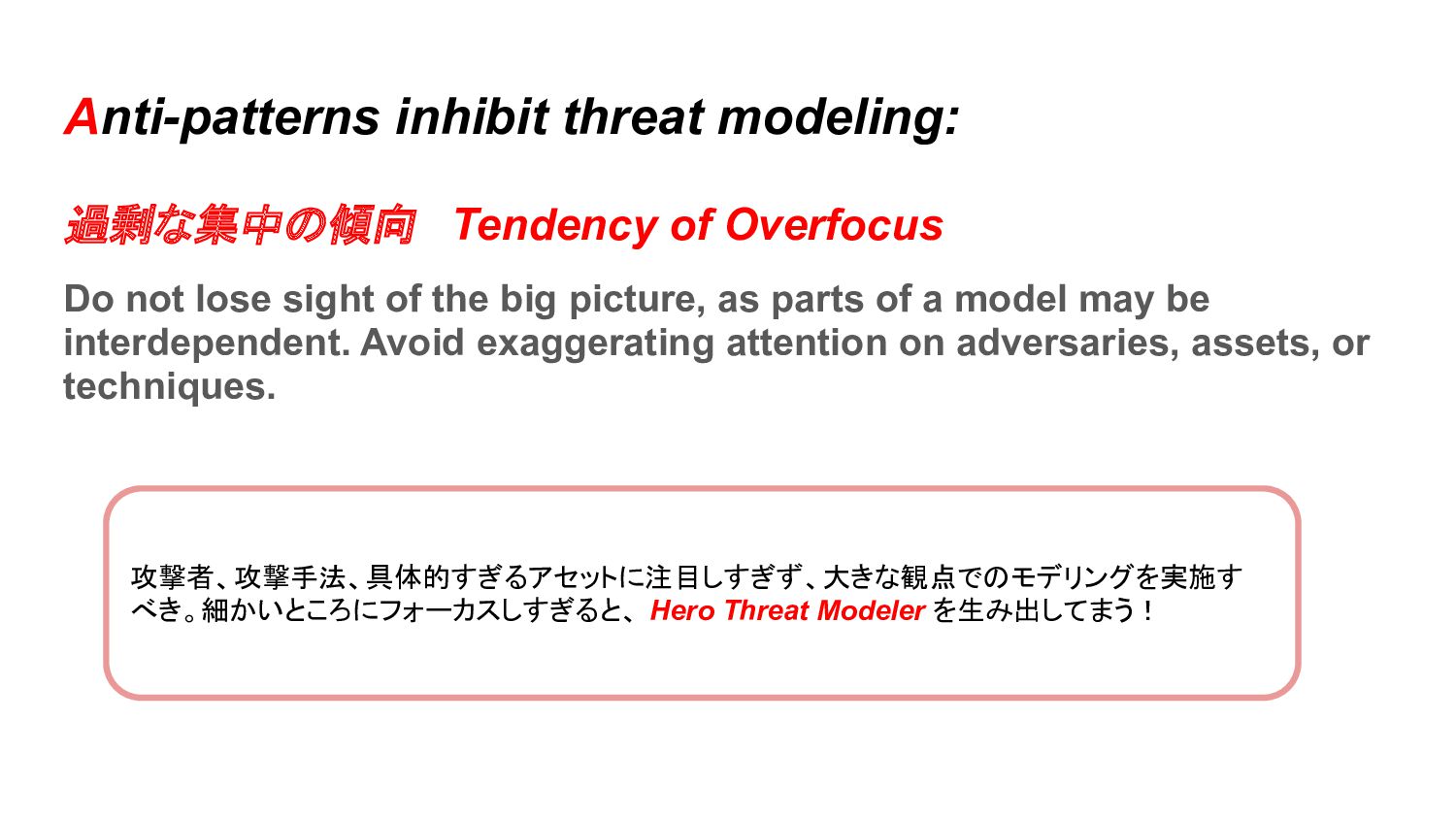
lose sight of the big picture, as parts of a model may be interdependent. Avoid exaggerating attention on adversaries, assets, or techniques. 攻撃者、攻撃手法、具体的すぎるアセットに注目しすぎず、大きな観点でのモデリングを実施す べき。細かいところにフォーカスしすぎると、 Hero Threat Modeler を生み出してまう!
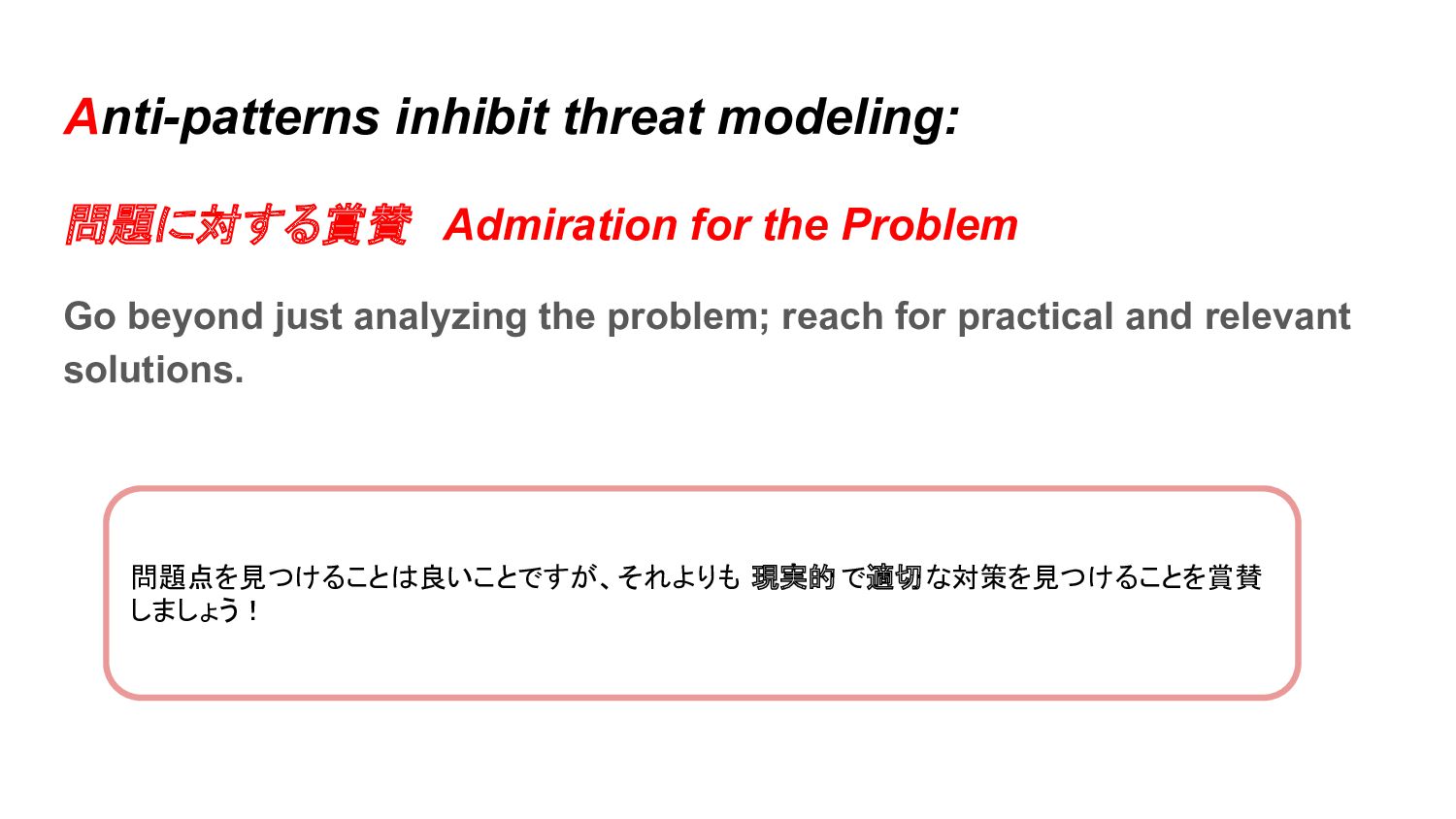
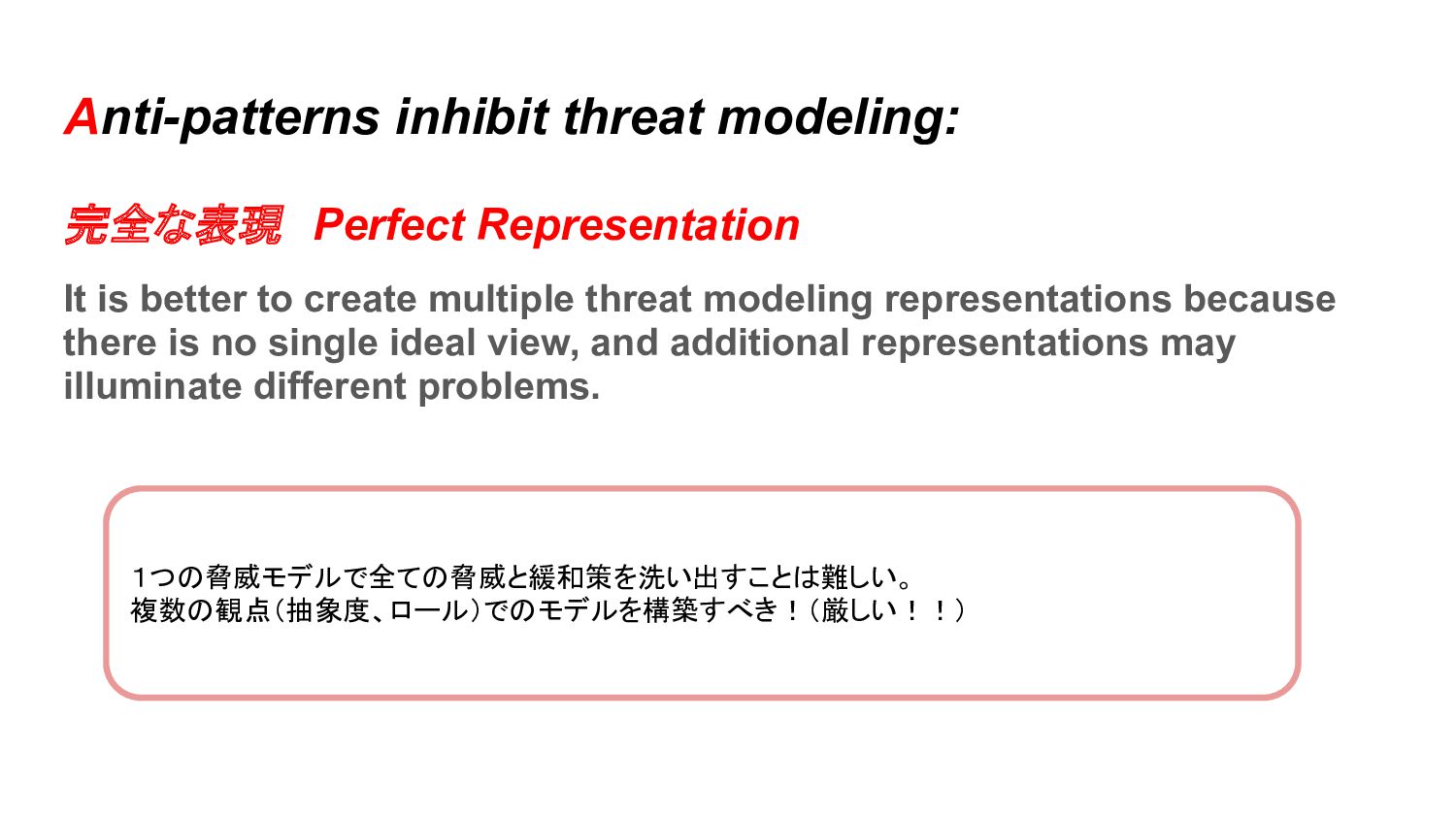
to create multiple threat modeling representations because there is no single ideal view, and additional representations may illuminate different problems. 1つの脅威モデルで全ての脅威と緩和策を洗い出すことは難しい。 複数の観点(抽象度、ロール)でのモデルを構築すべき!(厳しい!!)
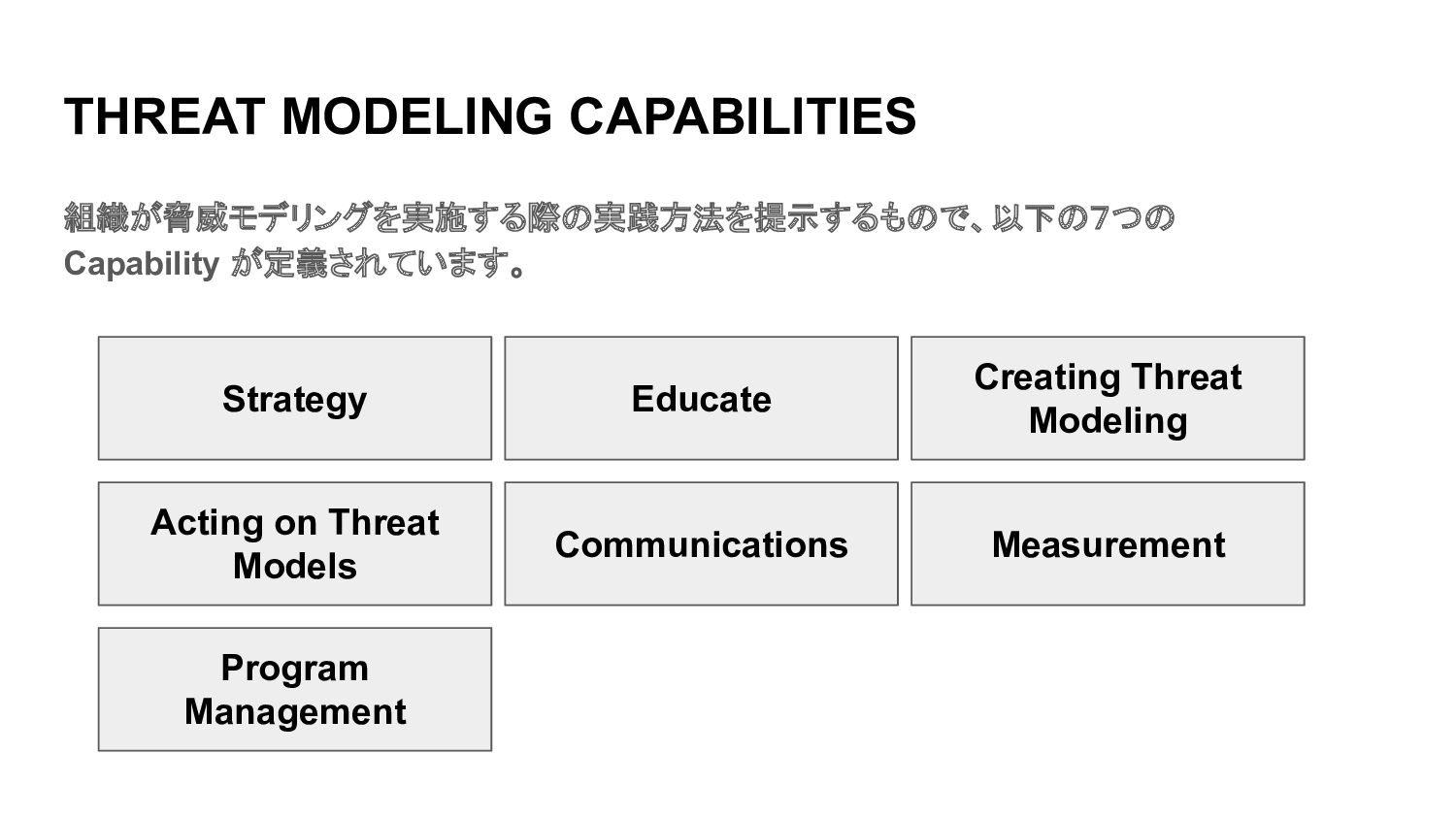
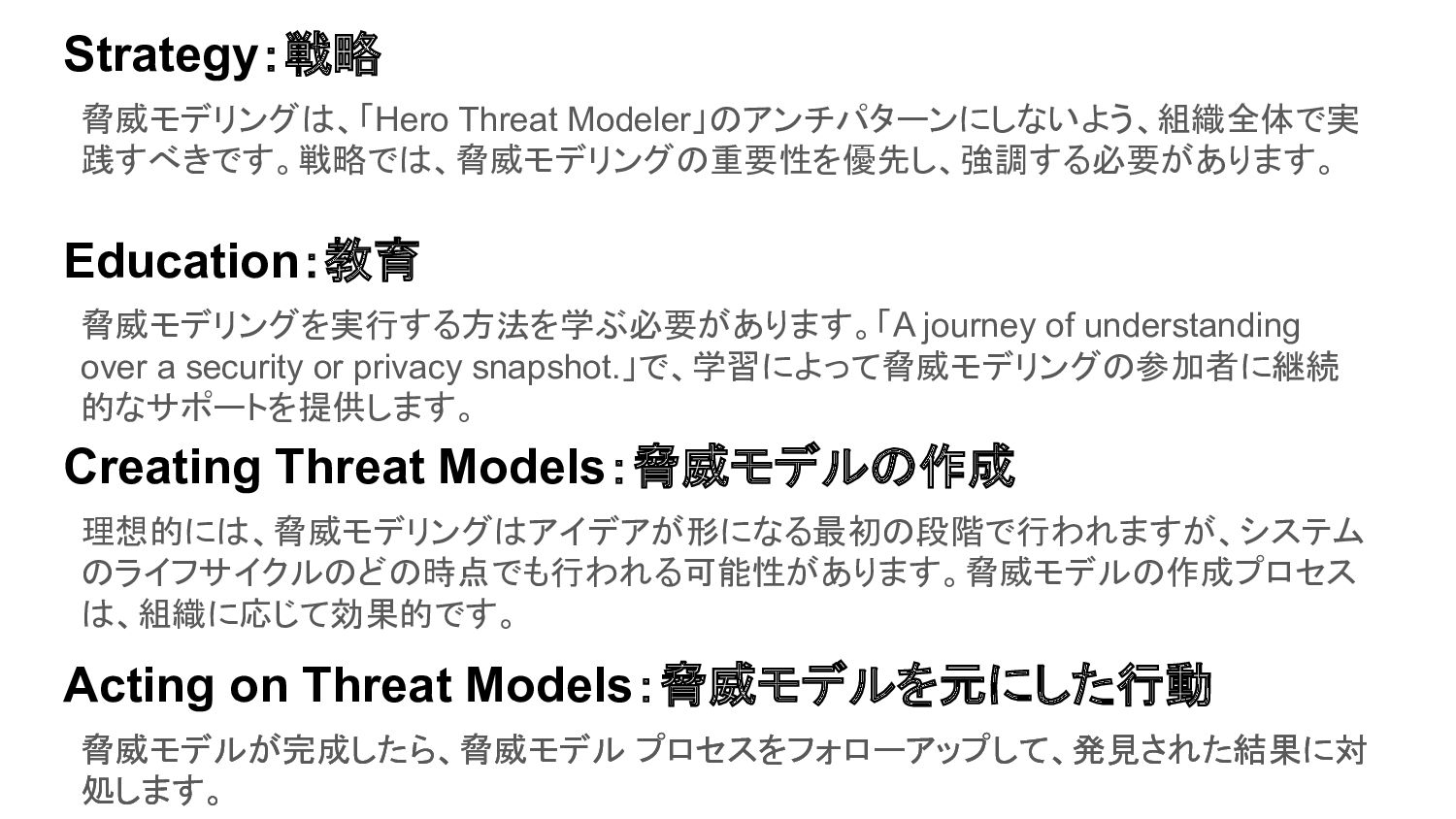
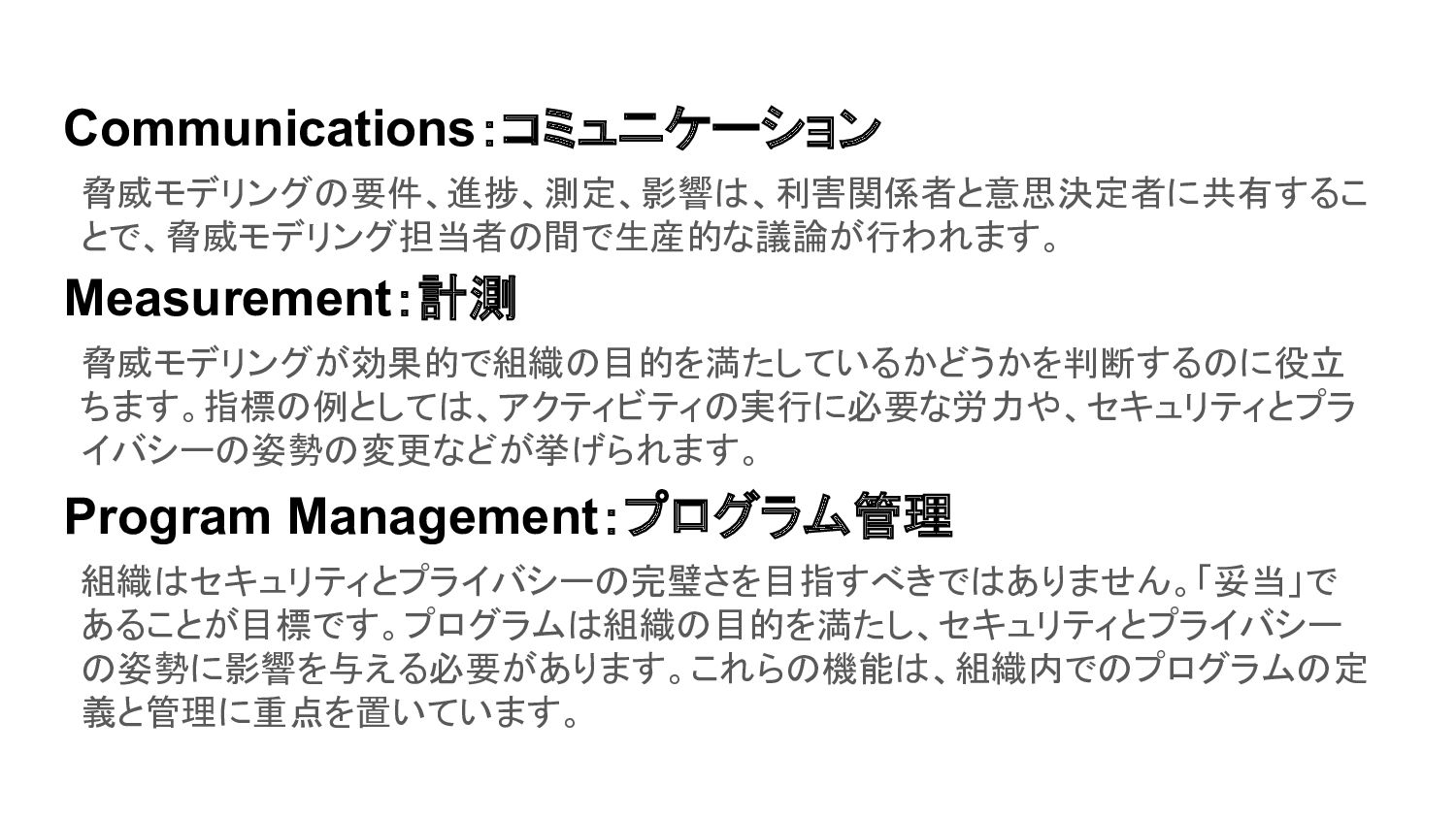
Capabilities do not attempt to explain how, why, or where they are used.Where you start the threat modeling process depends on your organization. Note that implementing capabilities is typically not a linear process. Some capabilities are easier for some organizations to implement, while others are harder. Start by understanding your circumstances, biggest problems, and best and most cost effective opportunities.This document serves as a catalog of capabilities; use them as Lego pieces to help you build a threat modeling program. Although these capabilities are very simple, the more of them you implement, the better your program becomes. 組織が何をするかを定義します 。脅威モデリングプロセスをどこから開始するかは、組 織によって異なります。一部の機能は、組織によって実装が容易ですが、他の機能は実 装が困難です。まず、状況、最大の問題、および最も費用対効果の高い最適な機会 を 理解することから始めます。 https://www.threatmodelingmanifesto.org/capabilities/


 aqeuefem
 shisyu_gaku
 vivion
 sansantech
 ynisqa1988
 ysuzuki
 dada4386
 mikanichinose
 judau
judau
 oracle4engineer
 yama3133
 taka_aki
 tessaabrams
 bkeepers
 portentint
 rmw
rmw
 akihiro_kokubo
 ipullrank
 szymonslowik
 davidcarrasco
 bcantrill
 notwaldorf
 csswizardry
 mfonobong