Upgrade to Pro — share decks privately, control downloads, hide ads and more …

slide_1116_aiyi.pdf

Avatar for argyi argyi
November 18, 2021
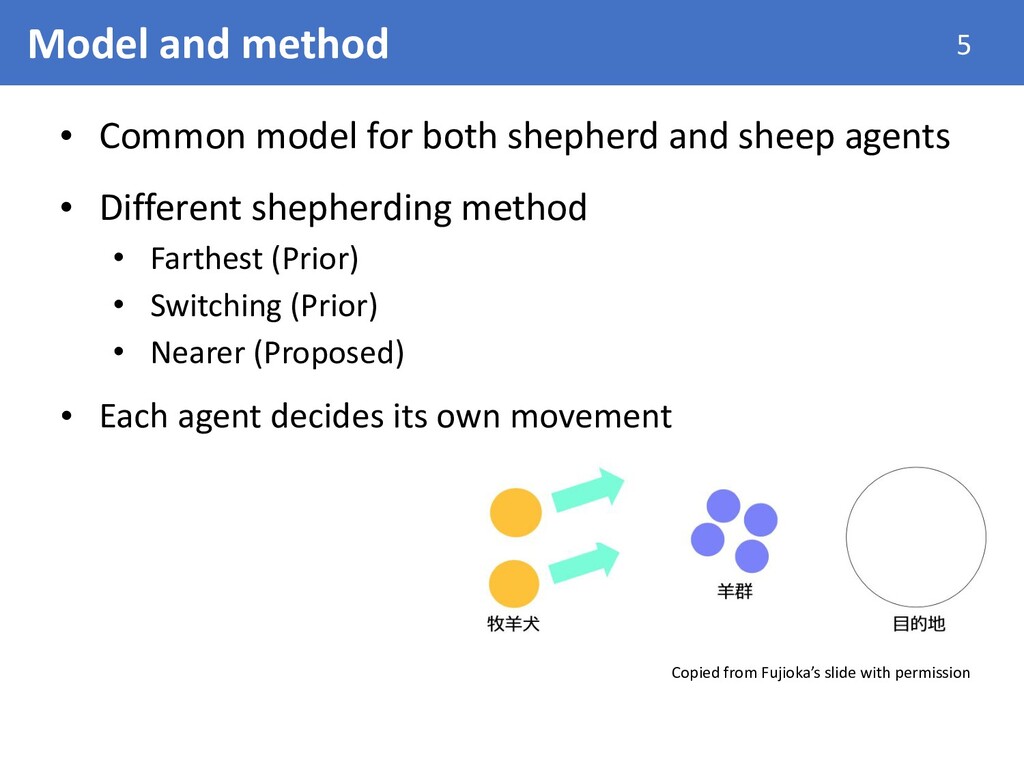
660

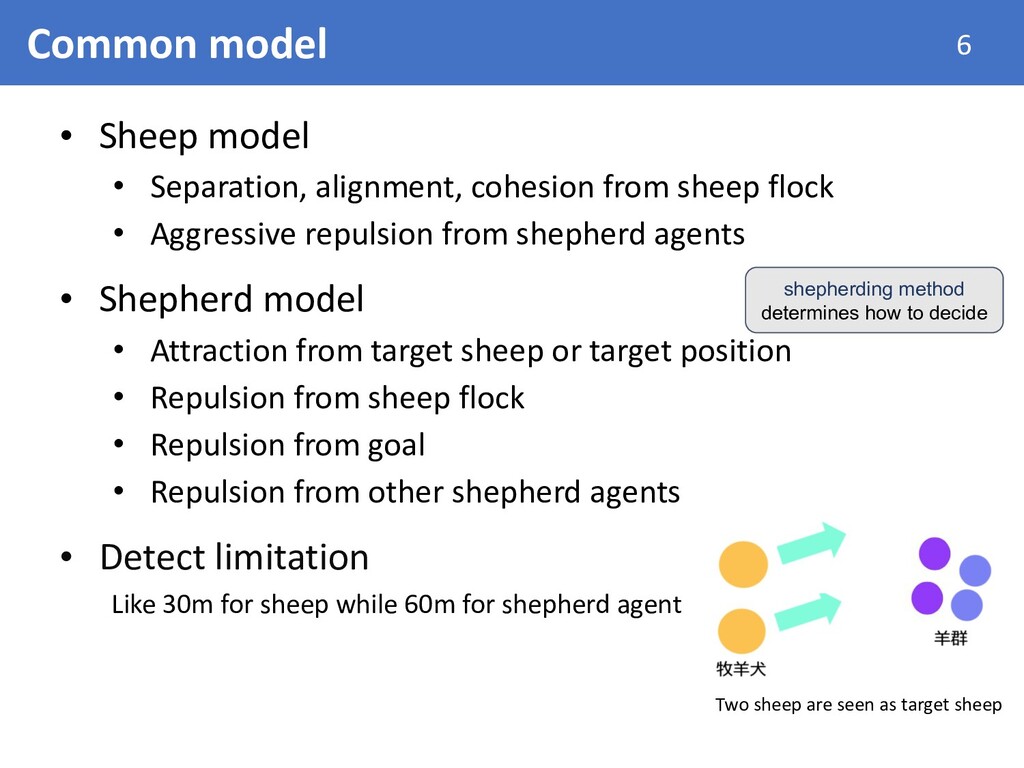
 slide_1116_aiyi.pdf

Avatar for argyi

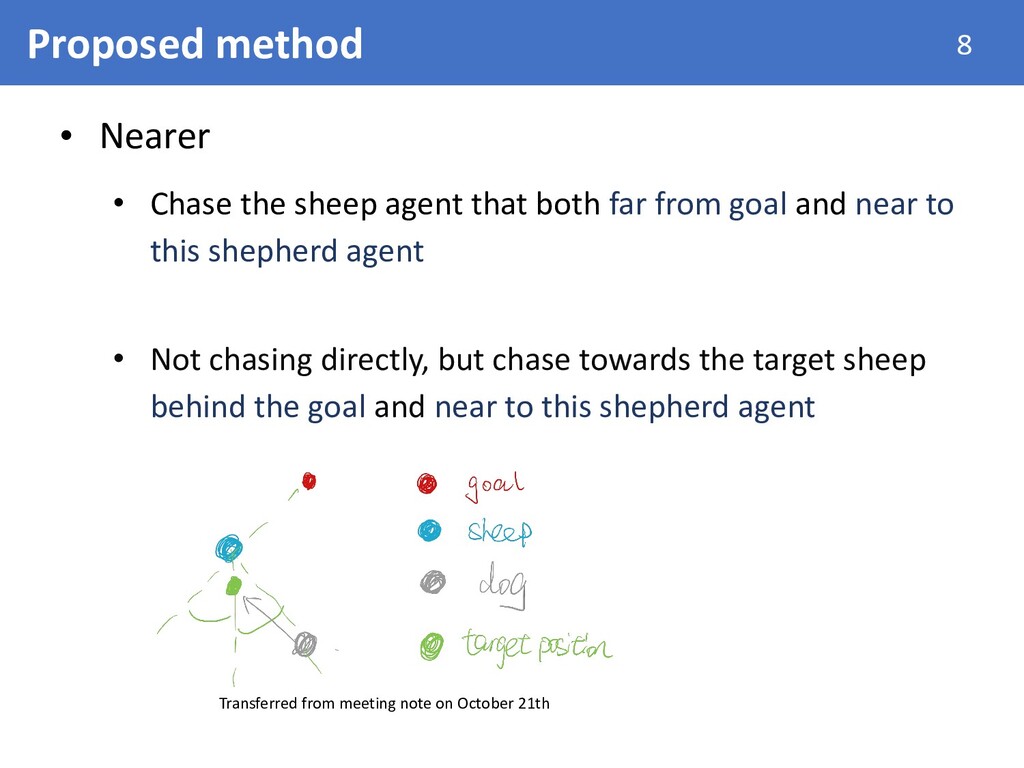
argyi

November 18, 2021

Transcript

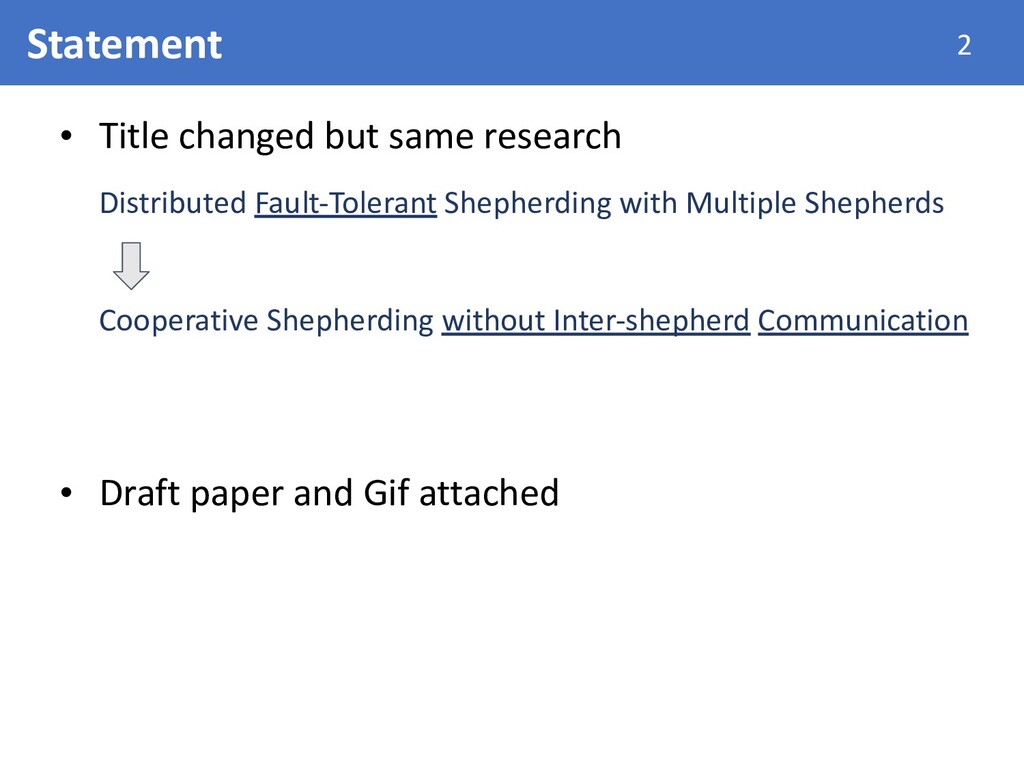
  1. • Title changed but same research Distributed Fault-Tolerant Shepherding with

    Multiple Shepherds Cooperative Shepherding without Inter-shepherd Communication • Draft paper and Gif attached Statement 2
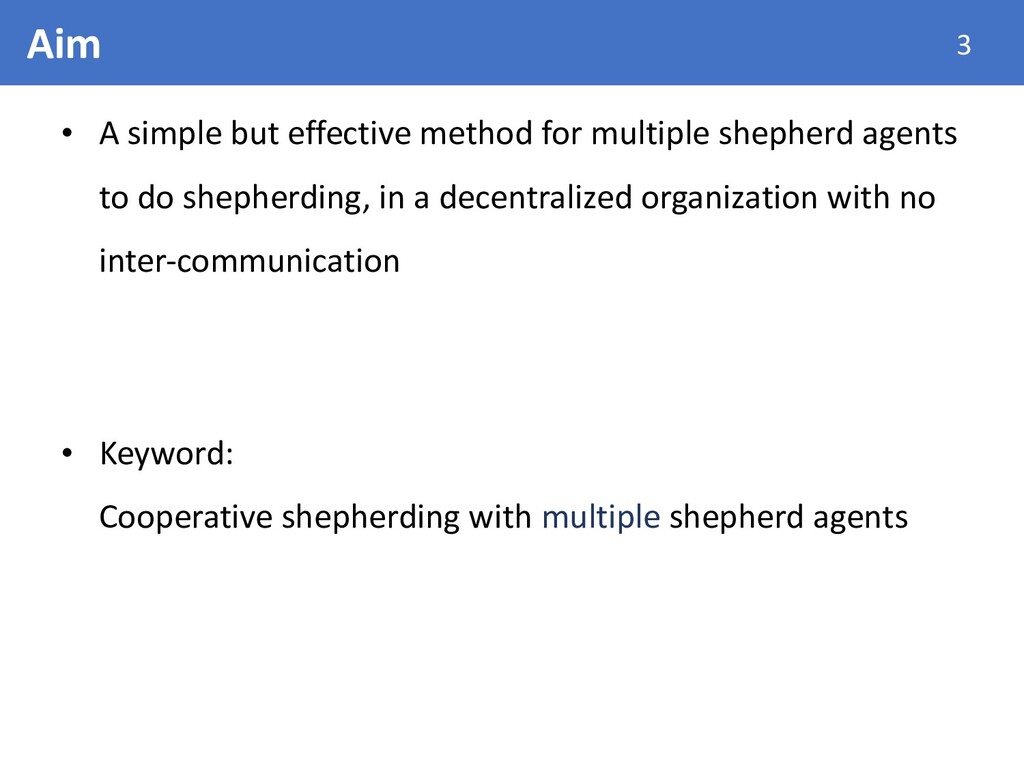
  2. • A simple but effective method for multiple shepherd agents

    to do shepherding, in a decentralized organization with no inter-communication • Keyword: Cooperative shepherding with multiple shepherd agents Aim 3
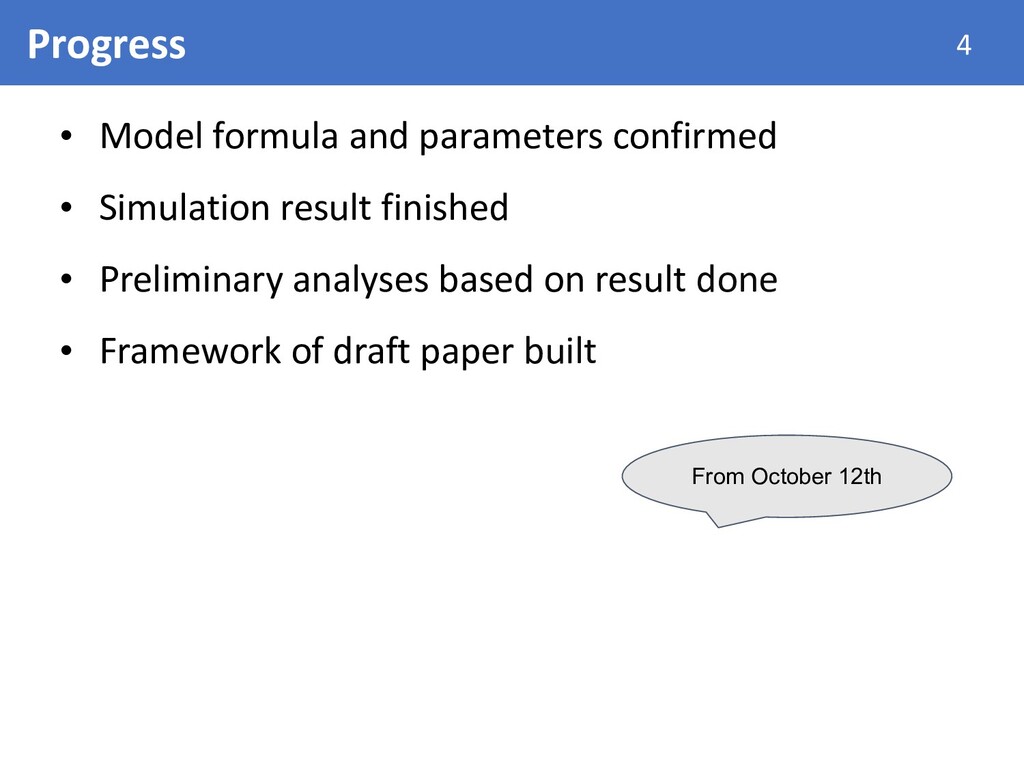
  3. • Model formula and parameters confirmed • Simulation result finished

    • Preliminary analyses based on result done • Framework of draft paper built Progress 4 From October 12th
  4. • Common model for both shepherd and sheep agents •

    Different shepherding method • Farthest (Prior) • Switching (Prior) • Nearer (Proposed) • Each agent decides its own movement Model and method 5 Copied from Fujioka’s slide with permission
  5. • Sheep model • Separation, alignment, cohesion from sheep flock

    • Aggressive repulsion from shepherd agents • Shepherd model • Attraction from target sheep or target position • Repulsion from sheep flock • Repulsion from goal • Repulsion from other shepherd agents • Detect limitation Like 30m for sheep while 60m for shepherd agent Common model 6 shepherding method determines how to decide Two sheep are seen as target sheep
  6. • Farthest • Always chase the farthest sheep from goal

    • Switching • Collect separated sheep flock, then drive gathered flock Prior method 7
  7. • Nearer • Chase the sheep agent that both far

    from goal and near to this shepherd agent • Not chasing directly, but chase towards the target sheep behind the goal and near to this shepherd agent Proposed method 8 Transferred from meeting note on October 21th
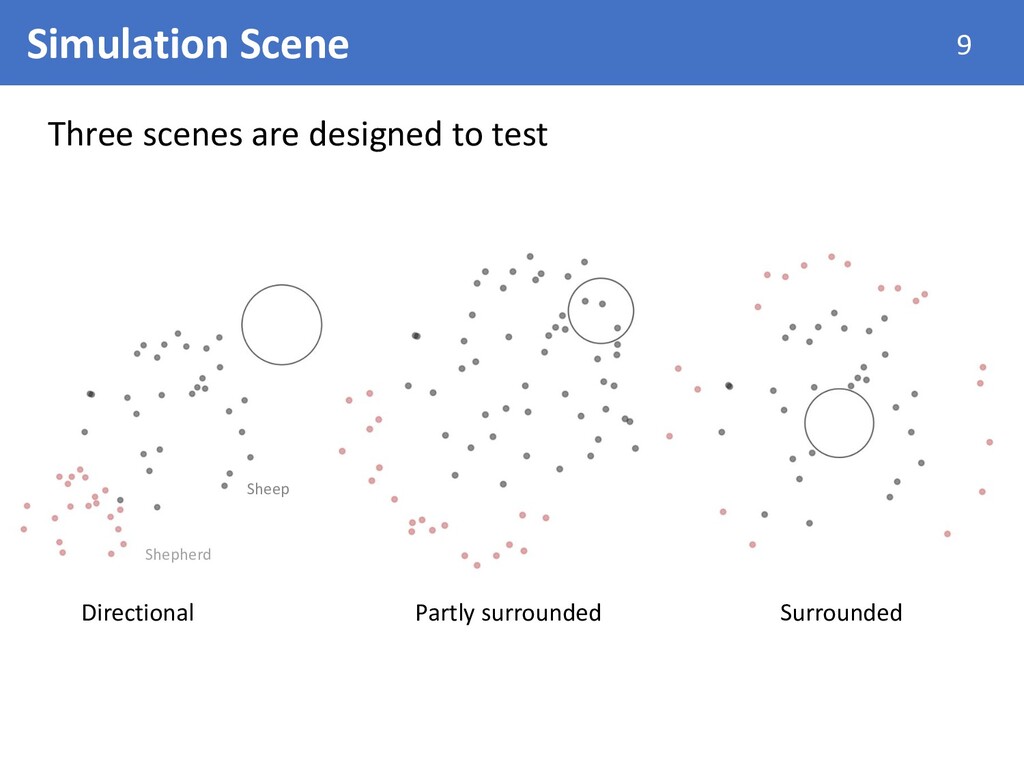
  8. Three scenes are designed to test Simulation Scene 9 Directional

    Partly surrounded Surrounded Shepherd Sheep
  9. • Success rate • Steps consumed until success (success step)

    • Average movement distance for shepherd agents Evaluation Index 10
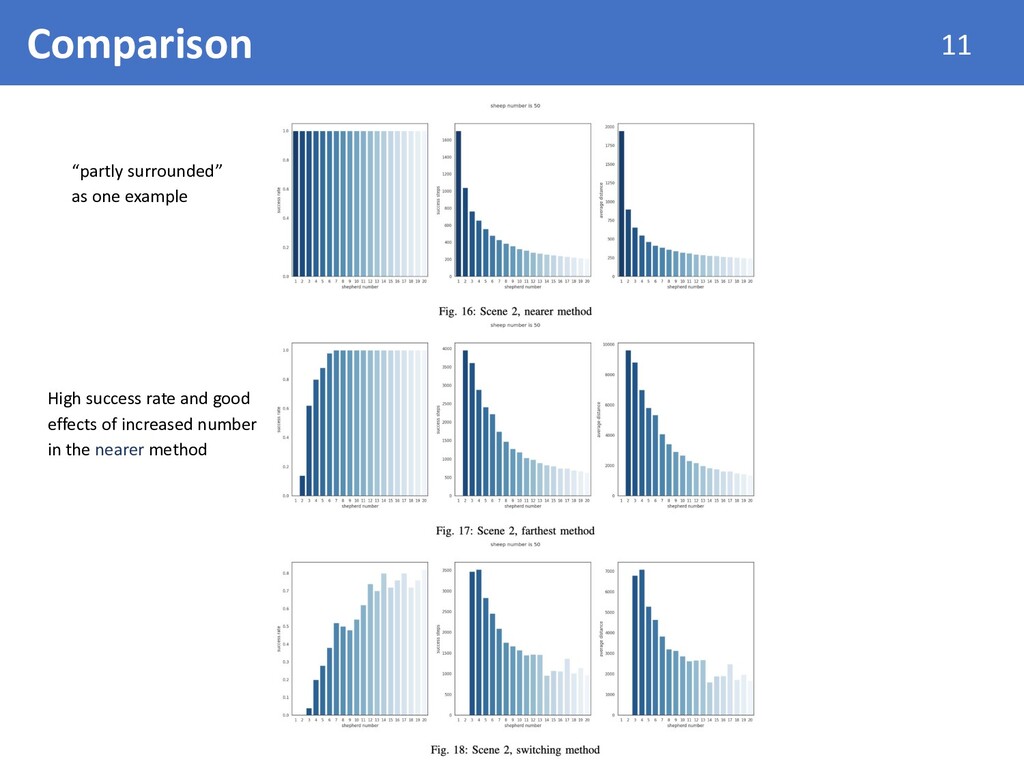
  10. Comparison 11 “partly surrounded” as one example High success rate

    and good effects of increased number in the nearer method
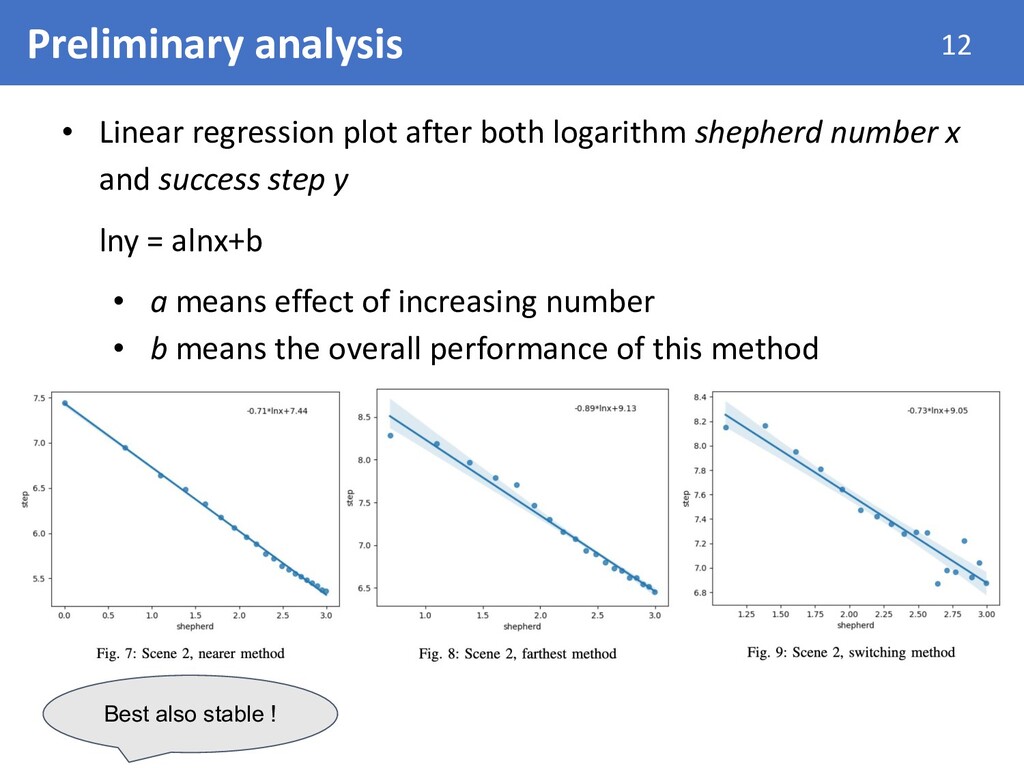
  11. • Linear regression plot after both logarithm shepherd number x

    and success step y lny = alnx+b • a means effect of increasing number • b means the overall performance of this method Preliminary analysis 12 Best also stable !
  12. • Complete draft until November (I strongly hope) • Revise

    according to advice • Submit it before 2022 Schedule 14