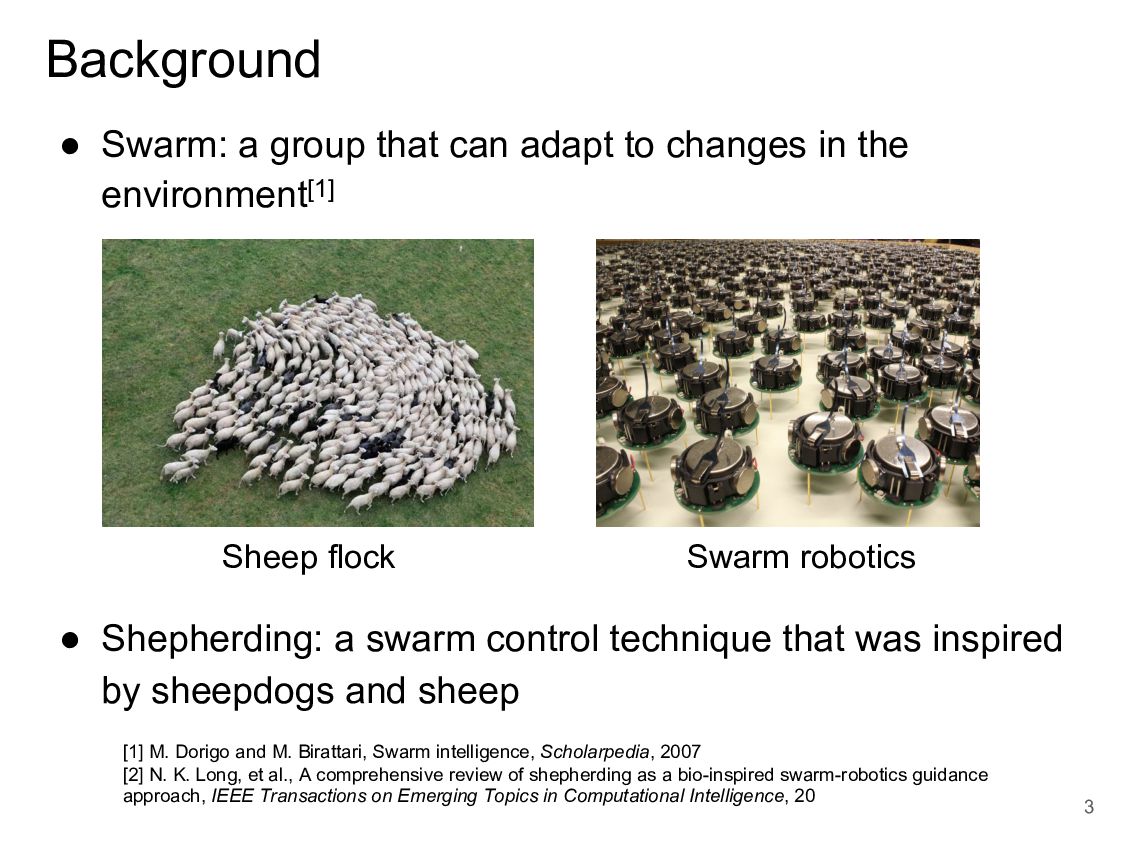
in the environment[1] • Shepherding: a swarm control technique that was inspired by sheepdogs and sheep 3 Sheep flock Swarm robotics [1] M. Dorigo and M. Birattari, Swarm intelligence, Scholarpedia, 2007 [2] N. K. Long, et al., A comprehensive review of shepherding as a bio-inspired swarm-robotics guidance approach, IEEE Transactions on Emerging Topics in Computational Intelligence, 20
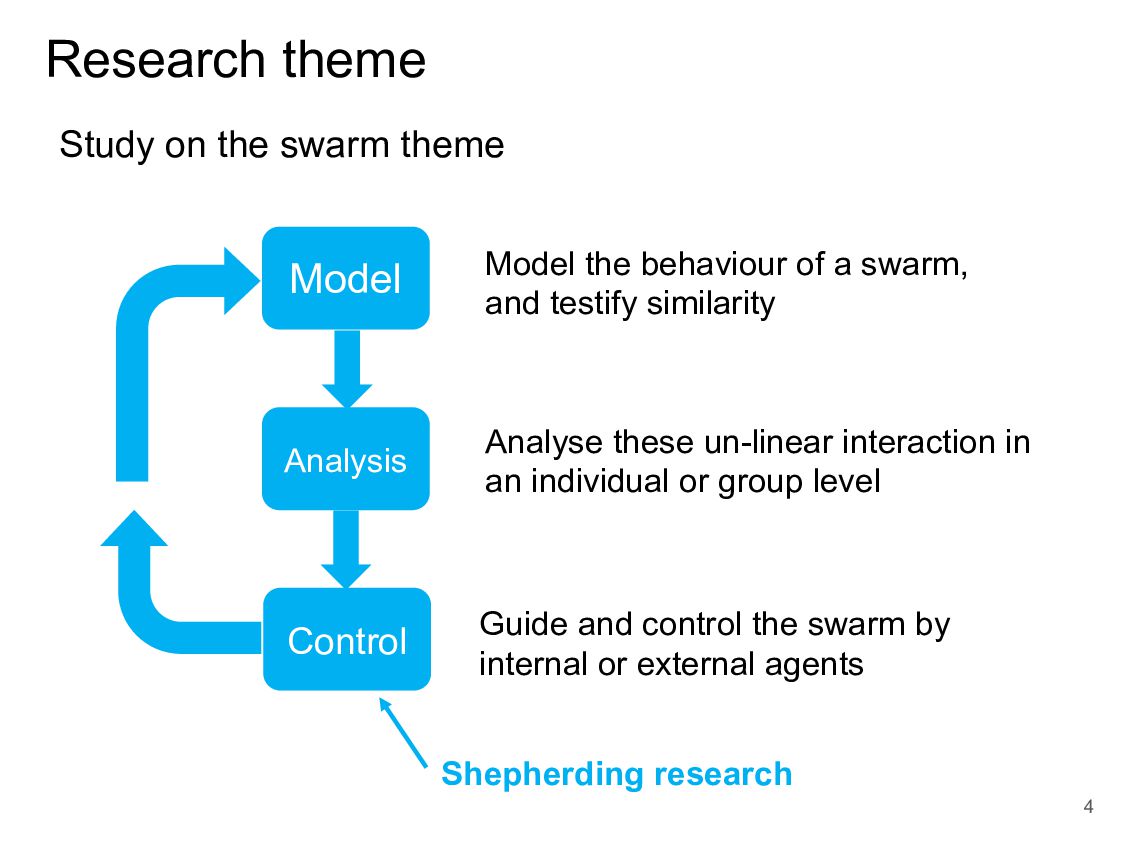
Control Guide and control the swarm by internal or external agents Analyse these un-linear interaction in an individual or group level Model the behaviour of a swarm, and testify similarity Shepherding research
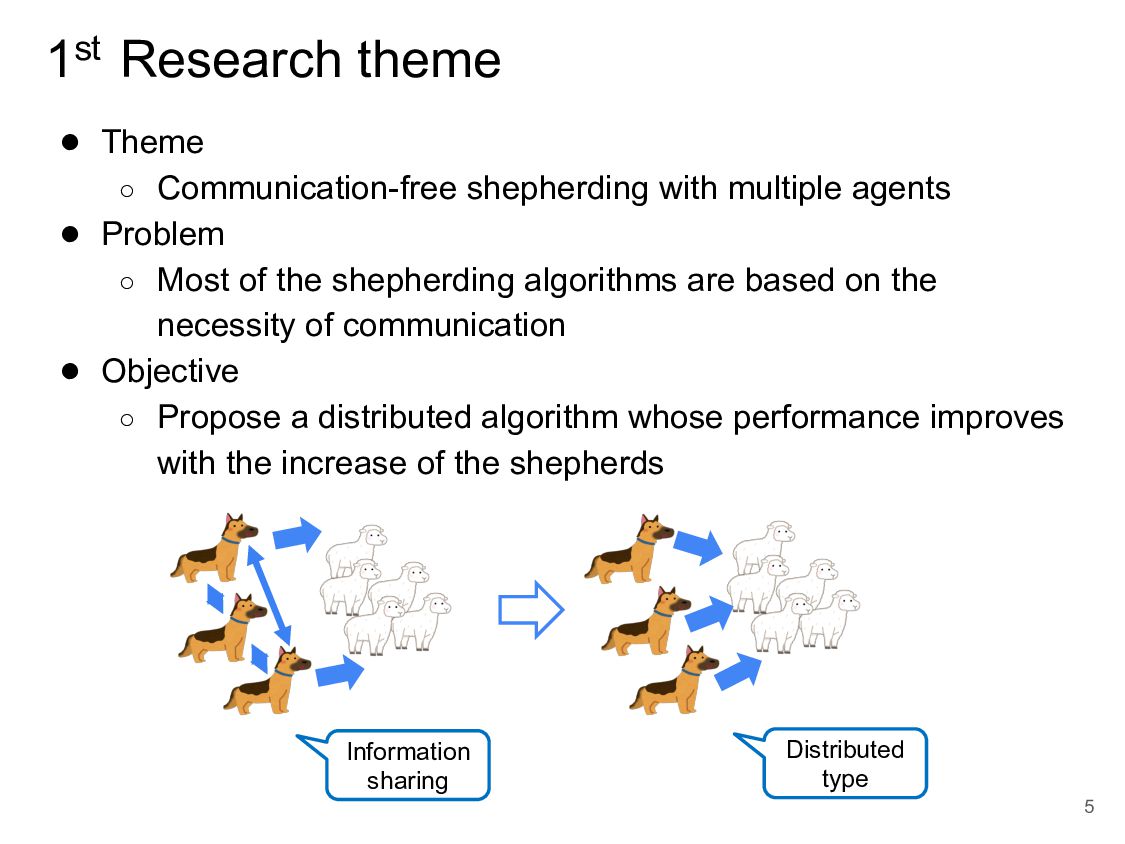
agents • Problem ◦ Most of the shepherding algorithms are based on the necessity of communication • Objective ◦ Propose a distributed algorithm whose performance improves with the increase of the shepherds 5 Information sharing Distributed type
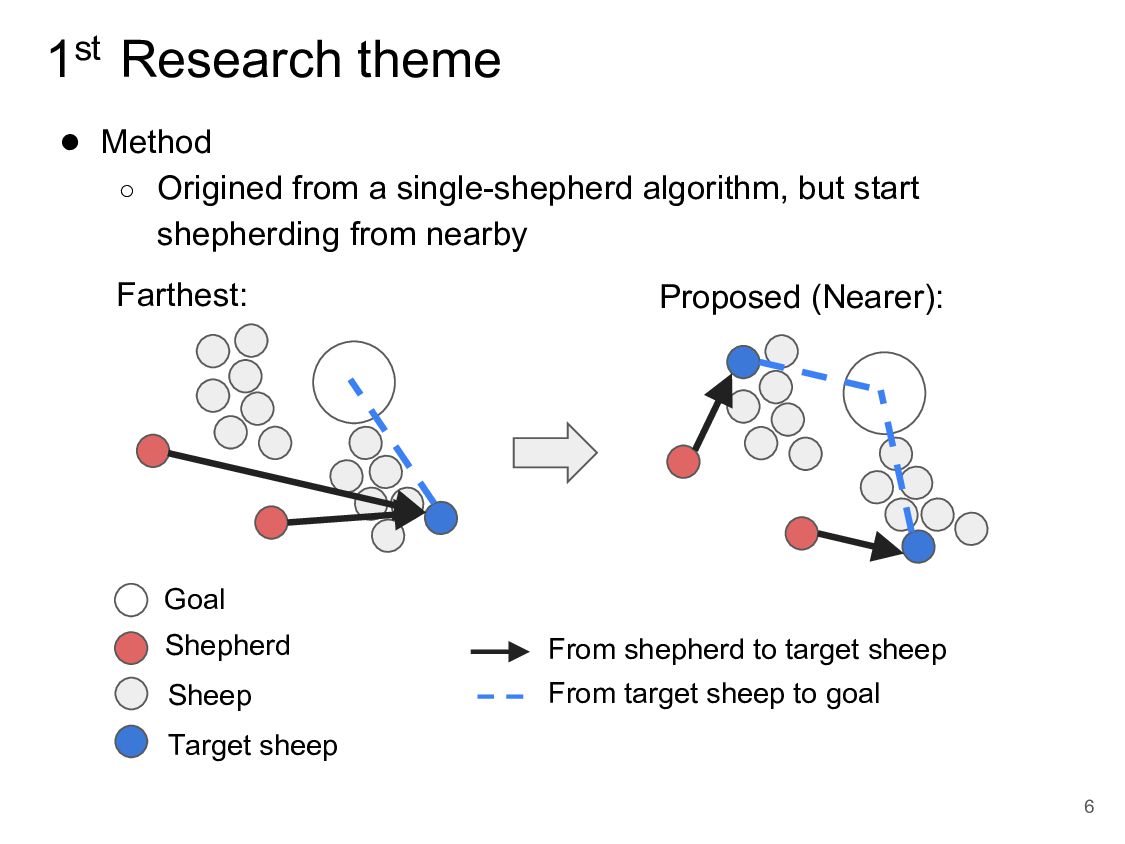
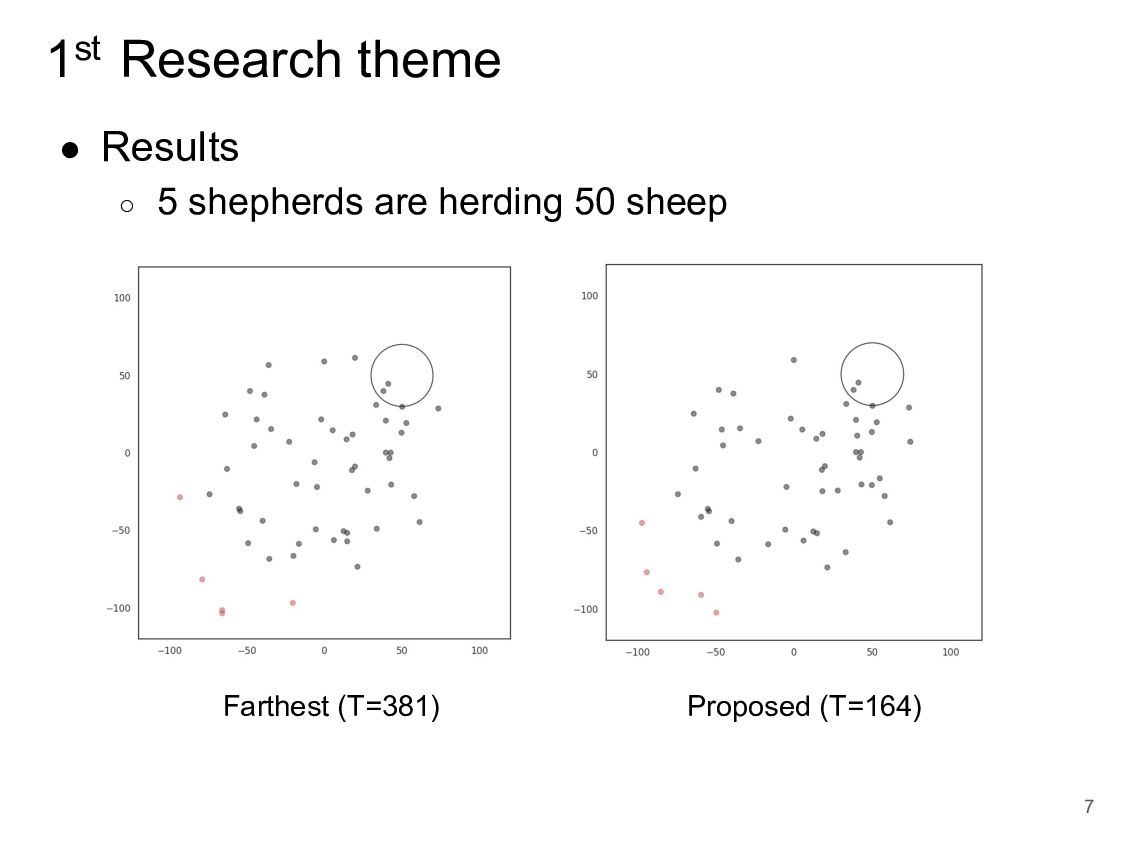
algorithm, but start shepherding from nearby 6 Shepherd Sheep Target sheep From target sheep to goal From shepherd to target sheep Farthest: Proposed (Nearer): Goal
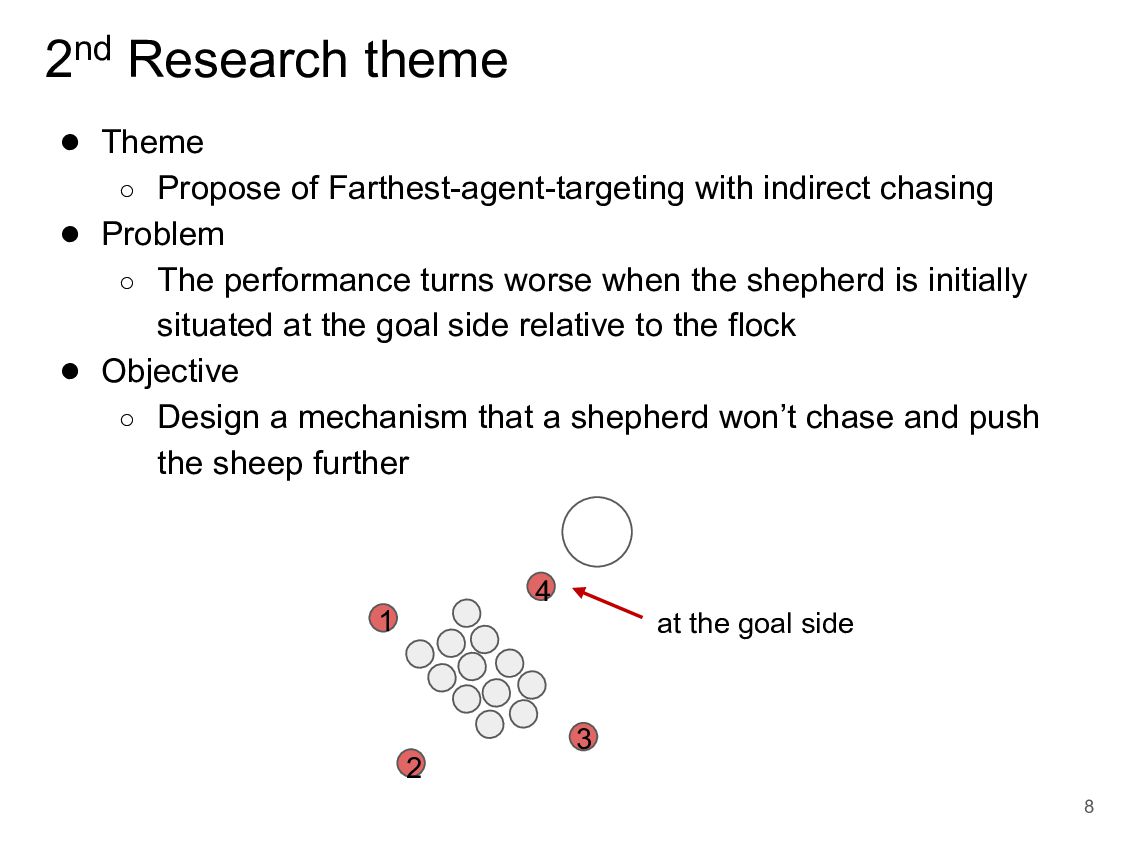
indirect chasing • Problem ◦ The performance turns worse when the shepherd is initially situated at the goal side relative to the flock • Objective ◦ Design a mechanism that a shepherd won’t chase and push the sheep further 8 1 2 3 4 at the goal side
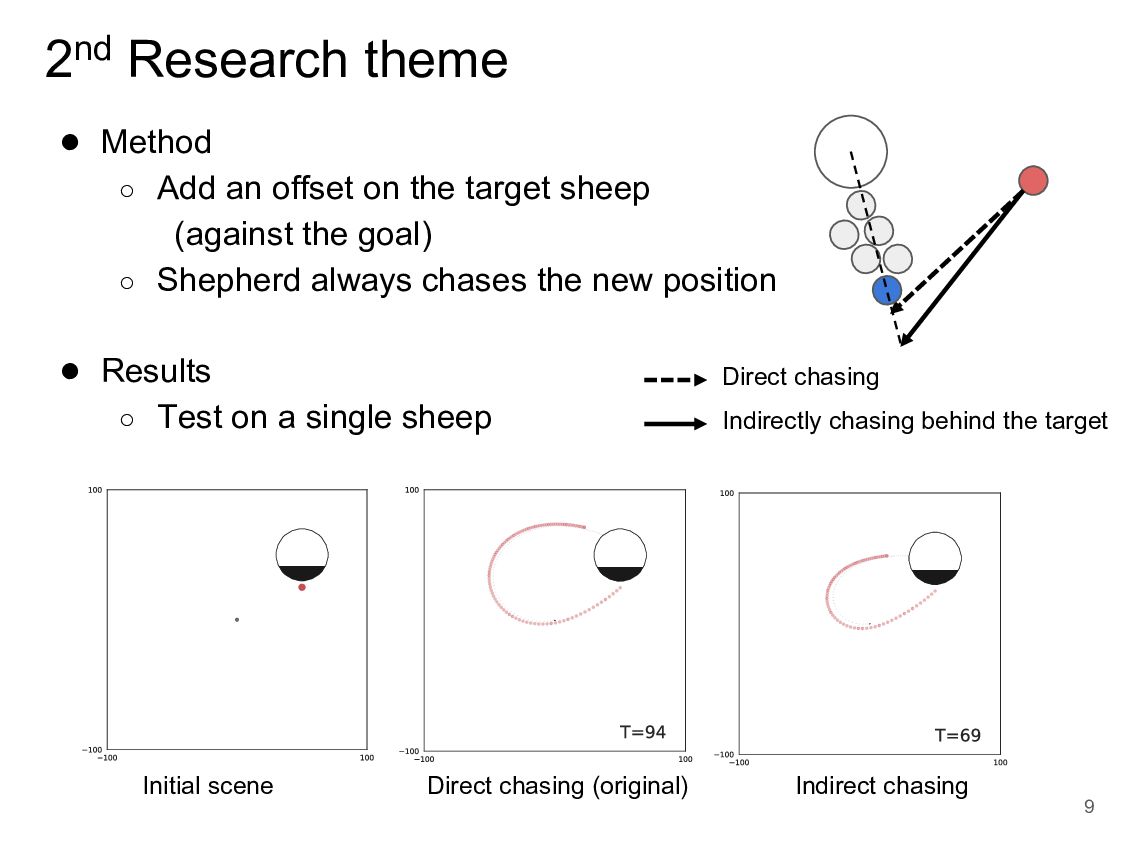
the target sheep (against the goal) ◦ Shepherd always chases the new position • Results ◦ Test on a single sheep 9 Indirectly chasing behind the target Direct chasing Initial scene Direct chasing (original) Indirect chasing
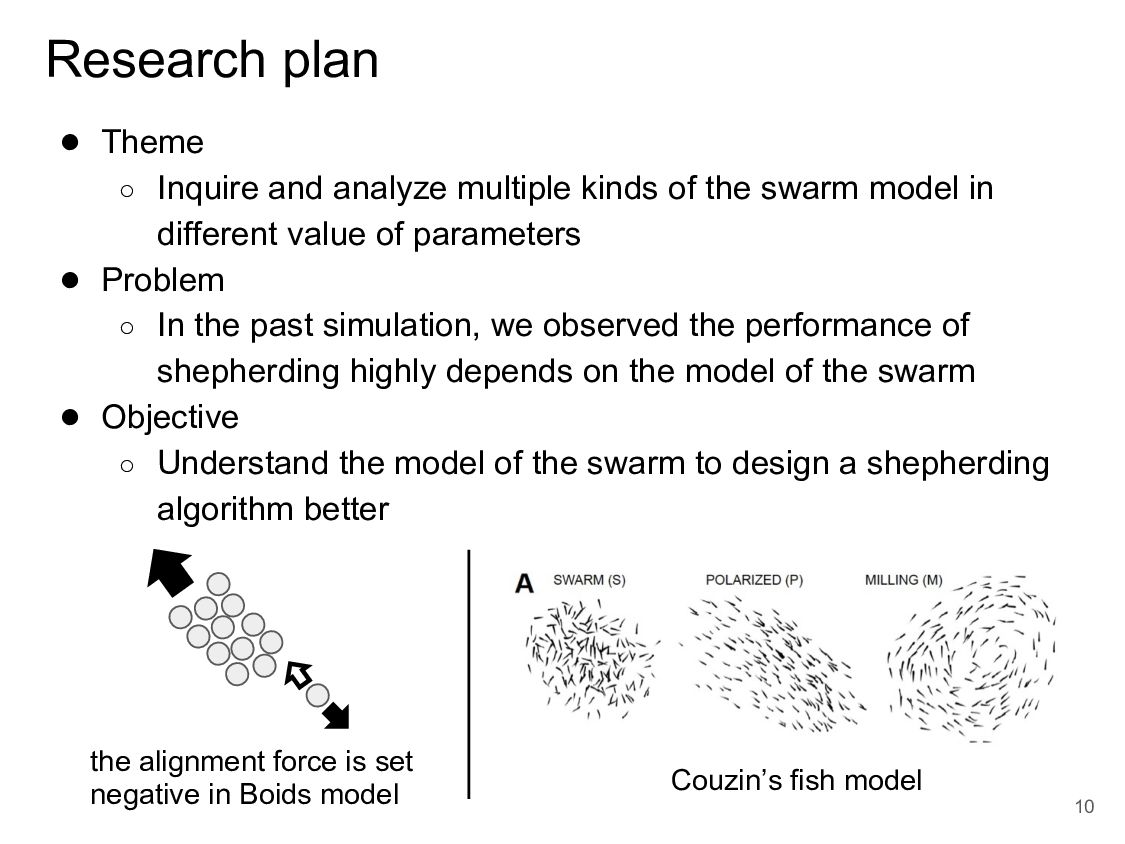
of the swarm model in different value of parameters • Problem ◦ In the past simulation, we observed the performance of shepherding highly depends on the model of the swarm • Objective ◦ Understand the model of the swarm to design a shepherding algorithm better 10 the alignment force is set negative in Boids model Couzin’s fish model


 argyili
 portentint
 baasie
 nonsquared
 wjessup
 addyosmani
 techseoconnect
 sferik
 samtorres
 brad_frost
 tessaabrams
 jlugia