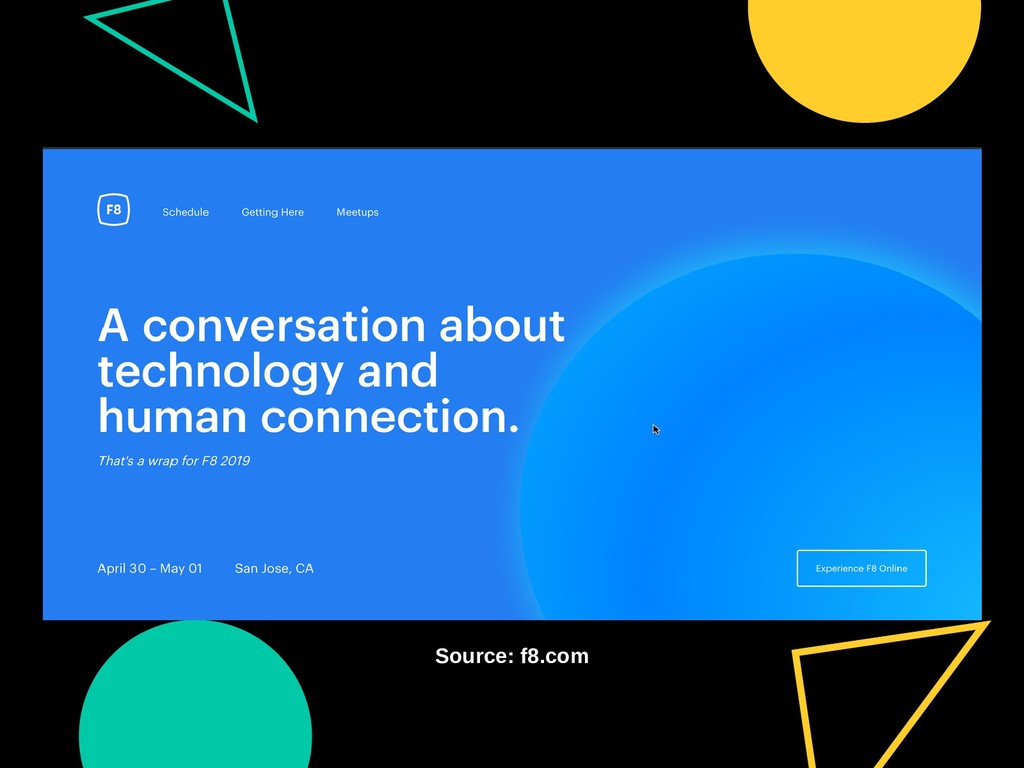
and it has long, very long articles which we're supposed to read. But, I'm using screen reader for it, because: I am a very good listener :P No, because I’m Lazy
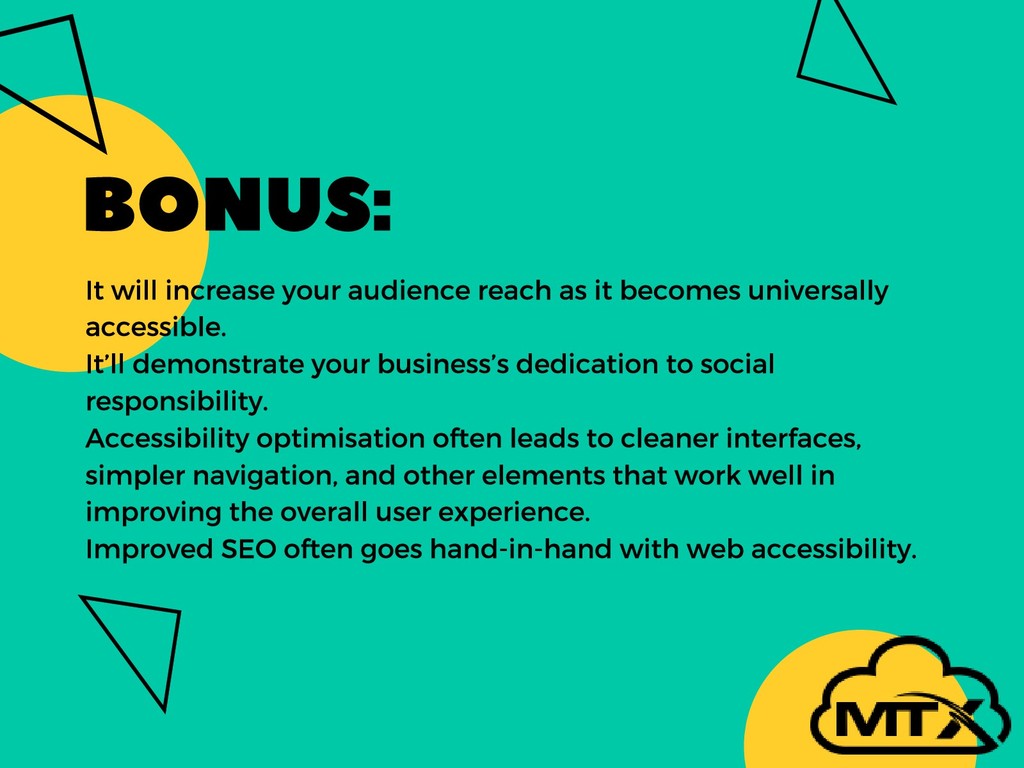
universally accessible. It’ll demonstrate your business’s dedication to social responsibility. Accessibility optimisation often leads to cleaner interfaces, simpler navigation, and other elements that work well in improving the overall user experience. Improved SEO often goes hand-in-hand with web accessibility.
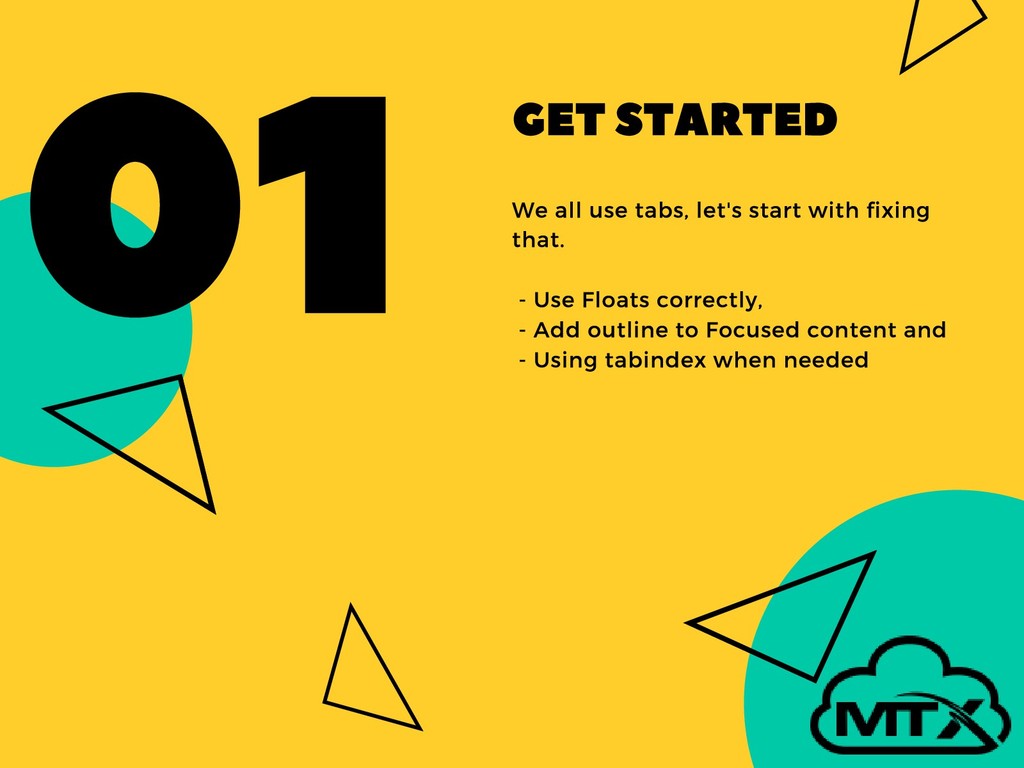
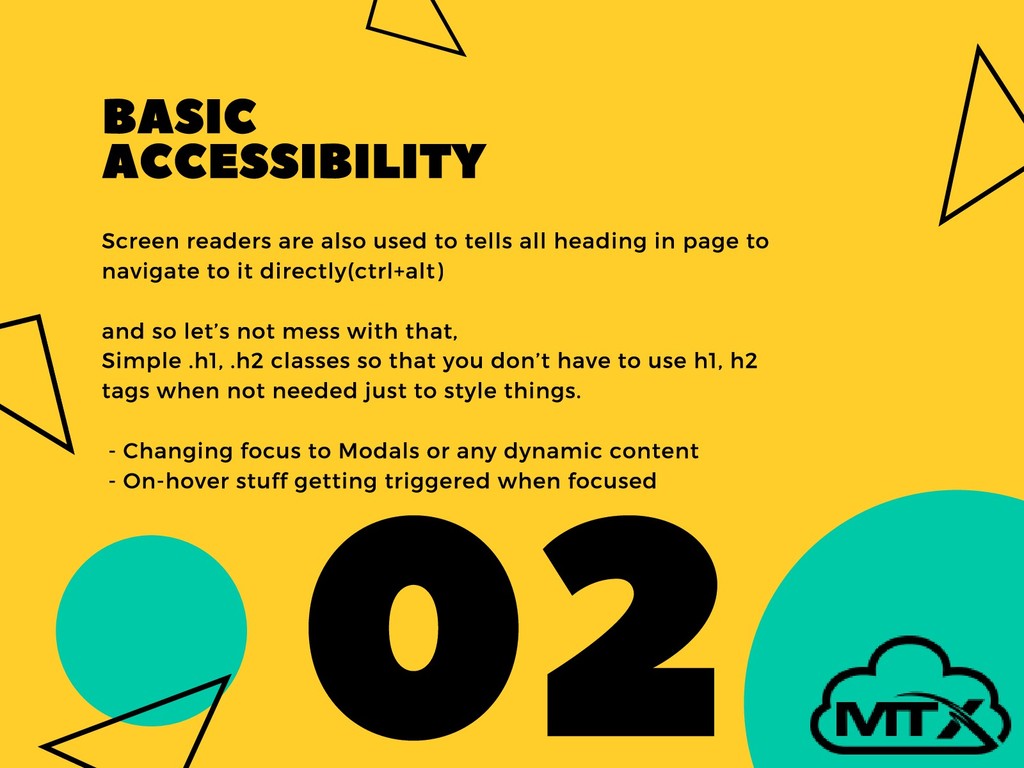
in page to navigate to it directly(ctrl+alt) and so let’s not mess with that, Simple .h1, .h2 classes so that you don’t have to use h1, h2 tags when not needed just to style things. - Changing focus to Modals or any dynamic content - On-hover stuff getting triggered when focused BASIC ACCESSIBILITY
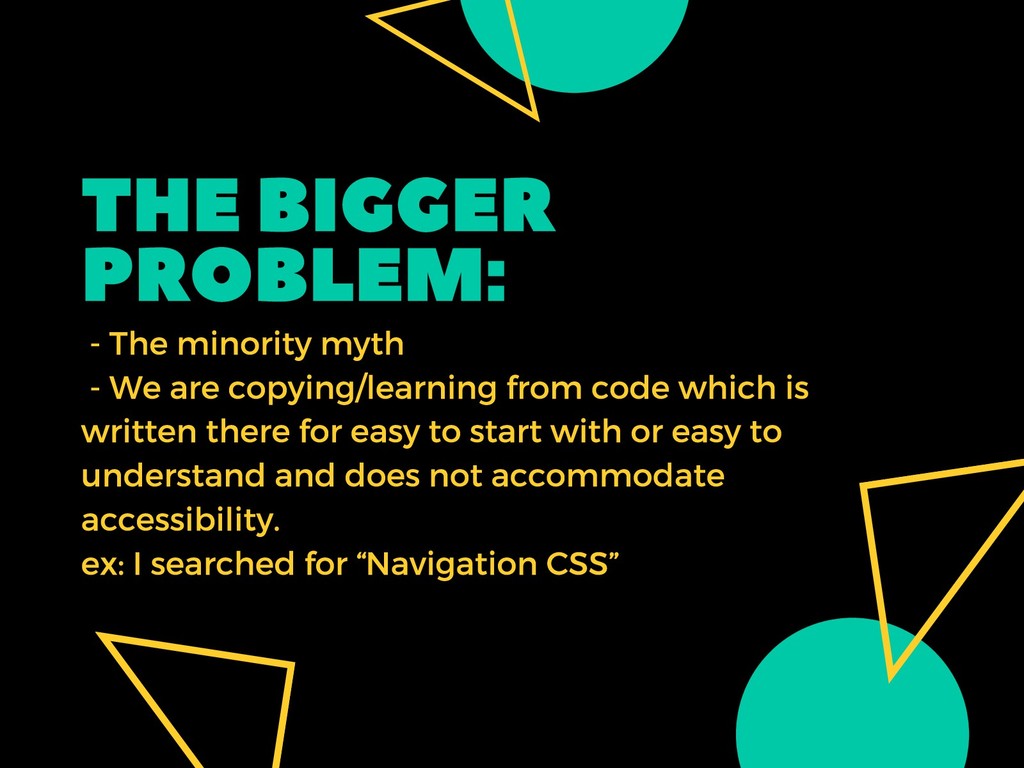
copying/learning from code which is written there for easy to start with or easy to understand and does not accommodate accessibility. ex: I searched for “Navigation CSS”
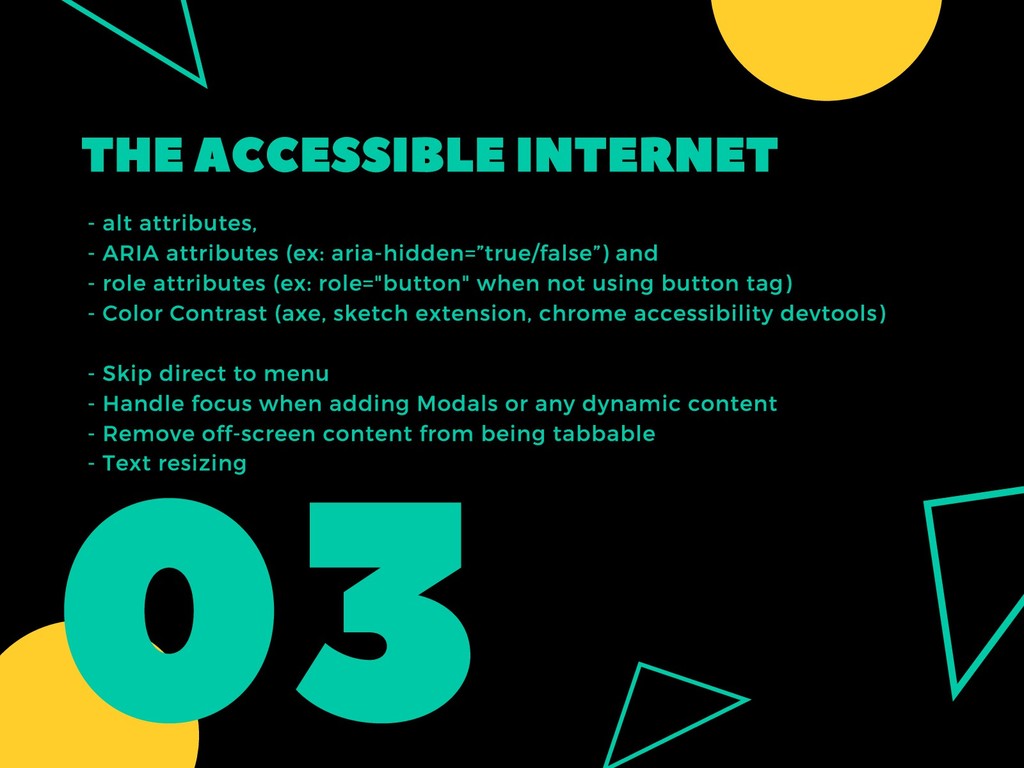
(ex: aria-hidden=”true/false”) and - role attributes (ex: role="button" when not using button tag) - Color Contrast (axe, sketch extension, chrome accessibility devtools) - Skip direct to menu - Handle focus when adding Modals or any dynamic content - Remove off-screen content from being tabbable - Text resizing
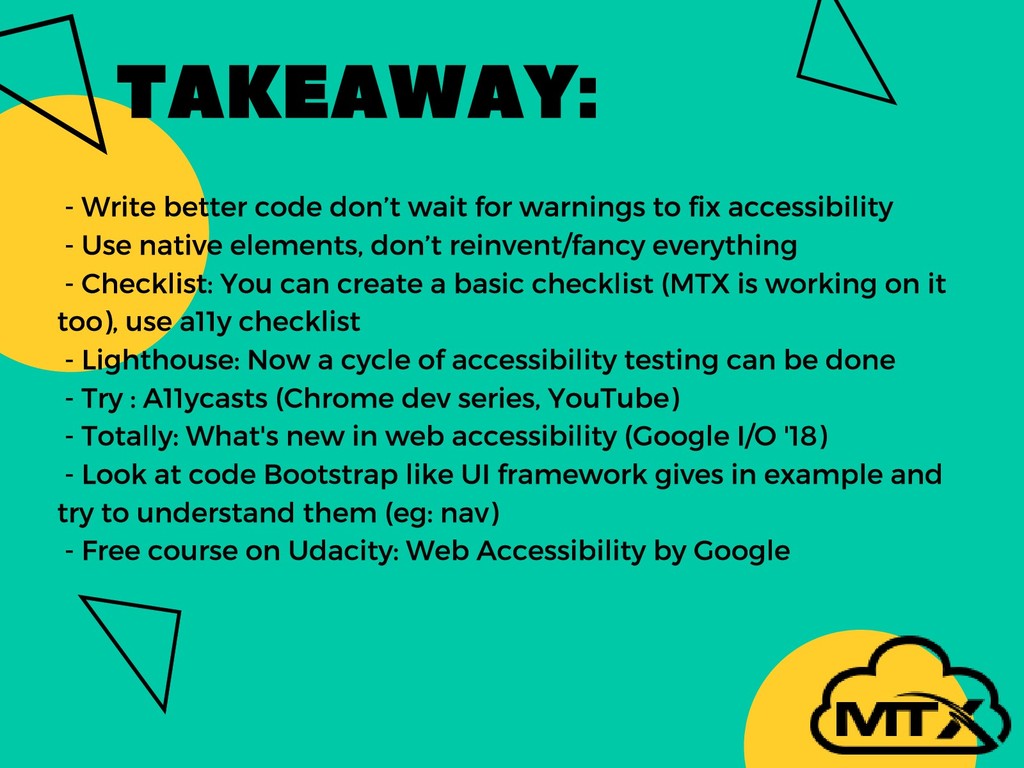
fix accessibility - Use native elements, don’t reinvent/fancy everything - Checklist: You can create a basic checklist (MTX is working on it too), use a11y checklist - Lighthouse: Now a cycle of accessibility testing can be done - Try : A11ycasts (Chrome dev series, YouTube) - Totally: What's new in web accessibility (Google I/O '18) - Look at code Bootstrap like UI framework gives in example and try to understand them (eg: nav) - Free course on Udacity: Web Accessibility by Google


 arpit_goyal
 satoshi256kbyte
 chobishiba
 tmikov2023
 ivargrimstad
 minodriven
 hollycummins
 sorah
sorah
 florets1
 dske104
 sylph01
 oku053
 morizo_1984
 palkan
 retrage
 greggifford
 pauljervisheath
 katarinadahlin
 takai
takai
 ammeep
 inesmontani
 elsirapls
 honnibal
 signer
 morganepeng