Upgrade to Pro — share decks privately, control downloads, hide ads and more …

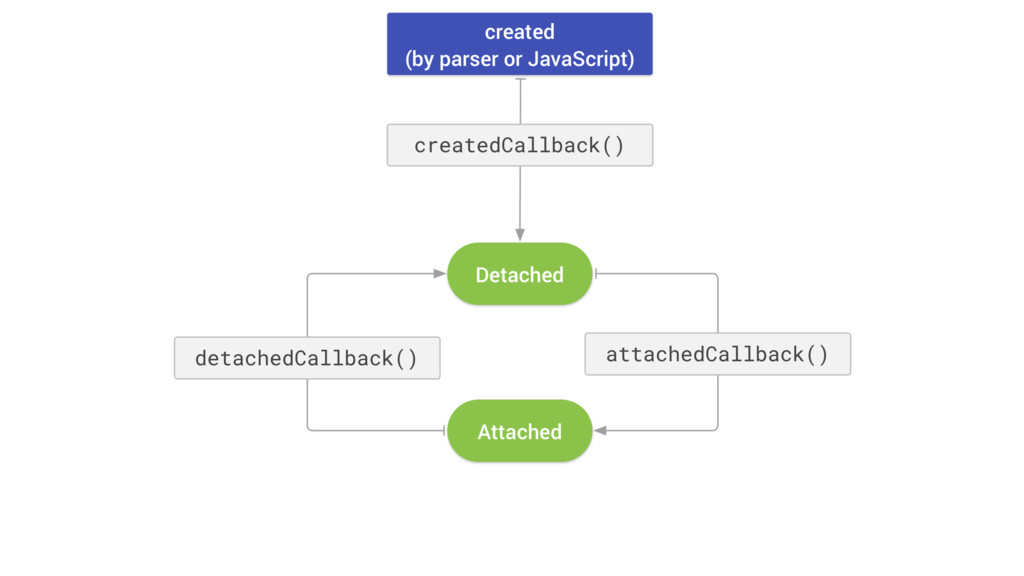
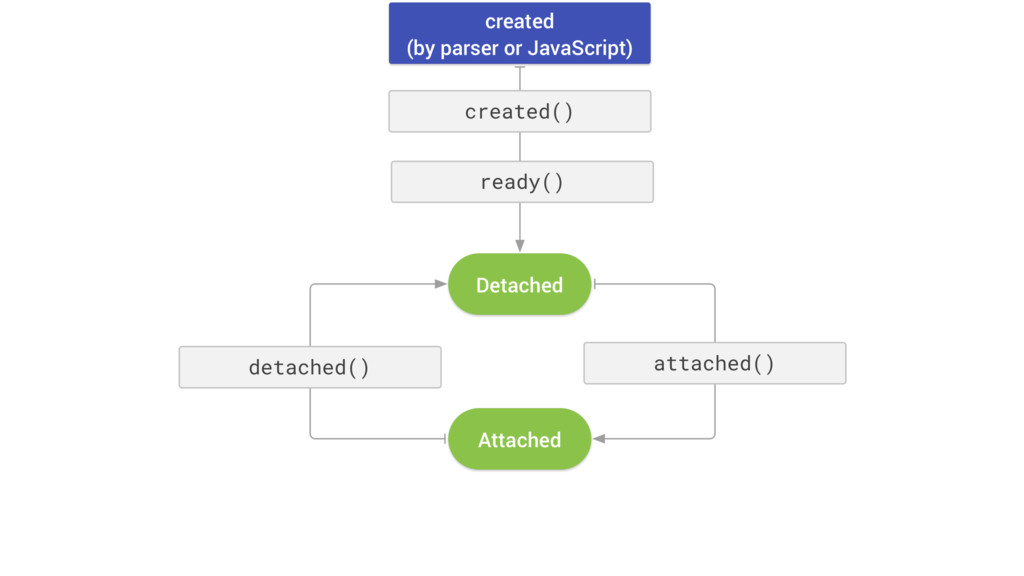
Polymer element lifecycle

Polymer element lifecycle

Lightning talk from the Modern Web UI meetup: http://www.meetup.com/modernwebui/events/228534967/

Polymer site: www.polymer-project.org
Notes & references from this talk: https://goo.gl/LLrgDq

Avatar for Arthur Evans

Arthur Evans

March 16, 2016

Other Decks in Programming

Transcript

  1. created Element’s prototype chain is set up, properties and local

    DOM are NOT initialized yet. What should I do in created? • Not a lot. • (You can set properties here before any observers run.)
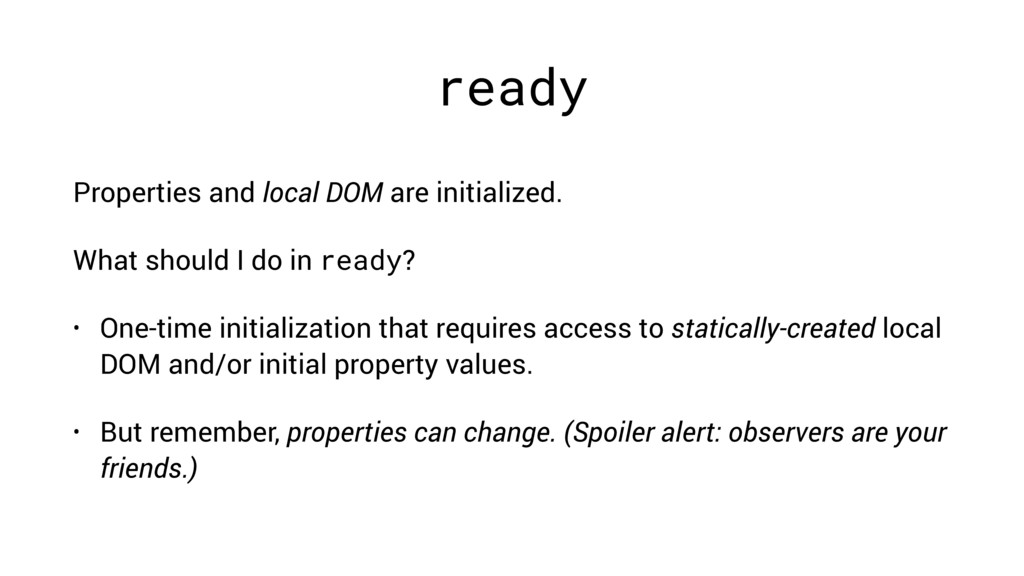
  2. ready Properties and local DOM are initialized. What should I

    do in ready? • One-time initialization that requires access to statically-created local DOM and/or initial property values. • But remember, properties can change. (Spoiler alert: observers are your friends.)
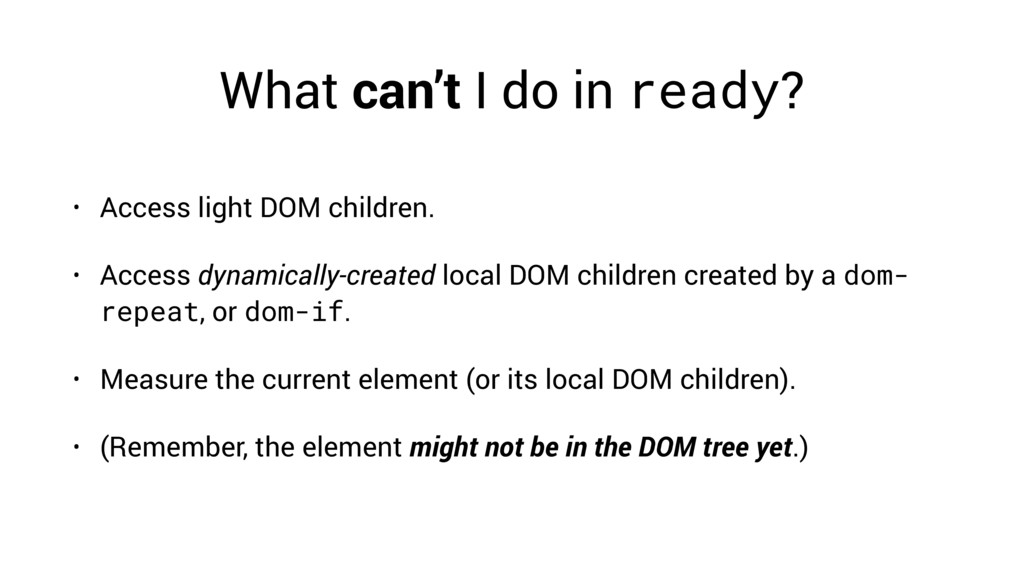
  3. What can’t I do in ready? • Access light DOM

    children. • Access dynamically-created local DOM children created by a dom- repeat, or dom-if. • Measure the current element (or its local DOM children). • (Remember, the element might not be in the DOM tree yet.)
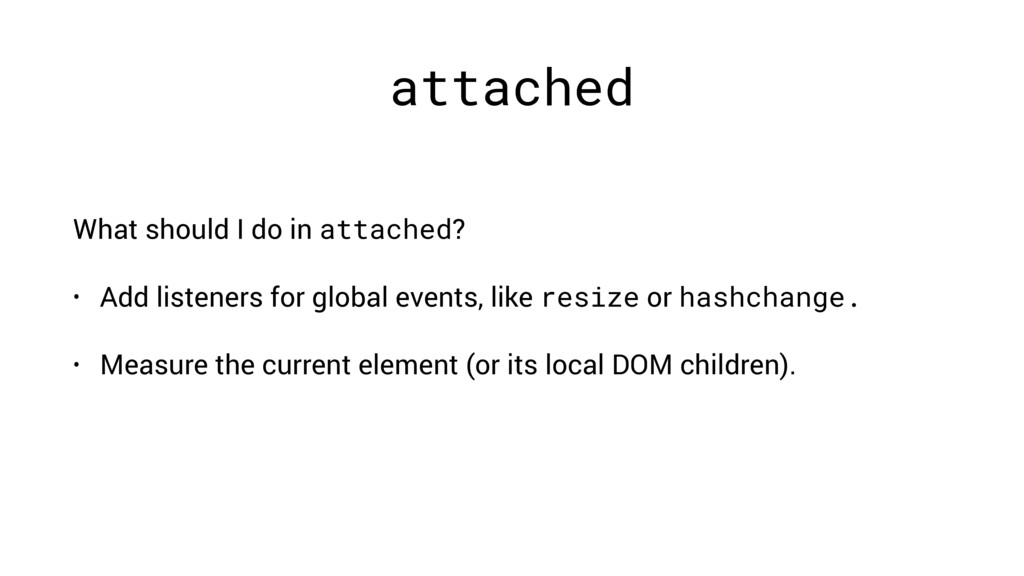
  4. attached What should I do in attached? • Add listeners

    for global events, like resize or hashchange. • Measure the current element (or its local DOM children).
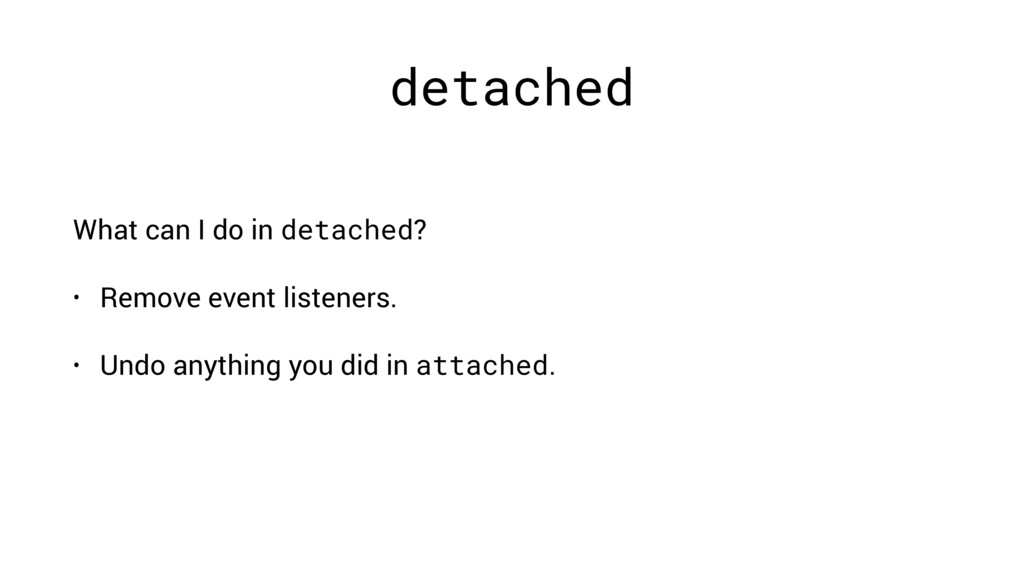
  5. detached What can I do in detached? • Remove event

    listeners. • Undo anything you did in attached.
  6. What about properties? • React to property changes with data

    bindings and observers. • Observers are a big topic. Rob has a polycast! http://bit.ly/polycast-observers
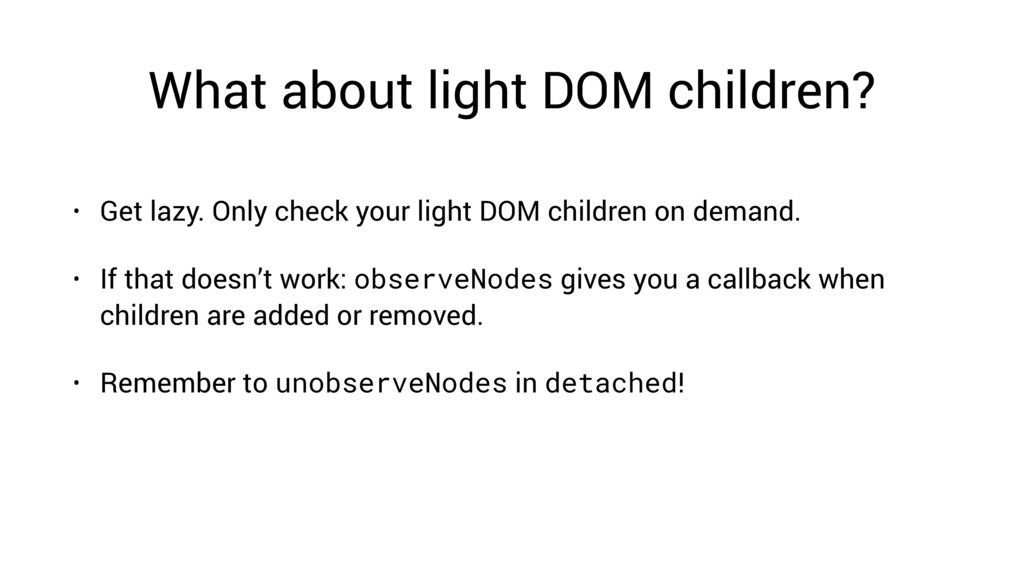
  7. What about light DOM children? • Get lazy. Only check

    your light DOM children on demand. • If that doesn’t work: observeNodes gives you a callback when children are added or removed. • Remember to unobserveNodes in detached!
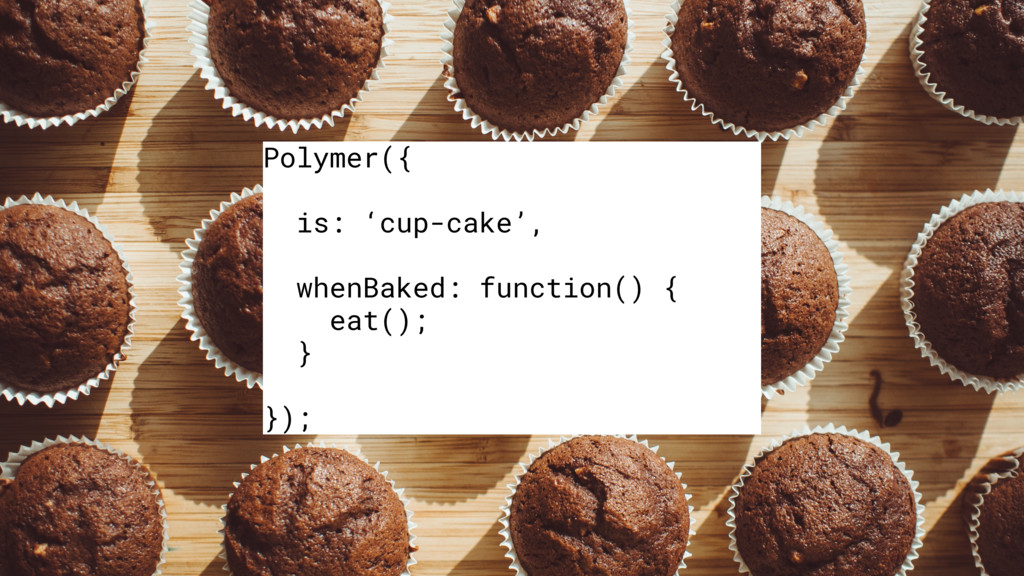
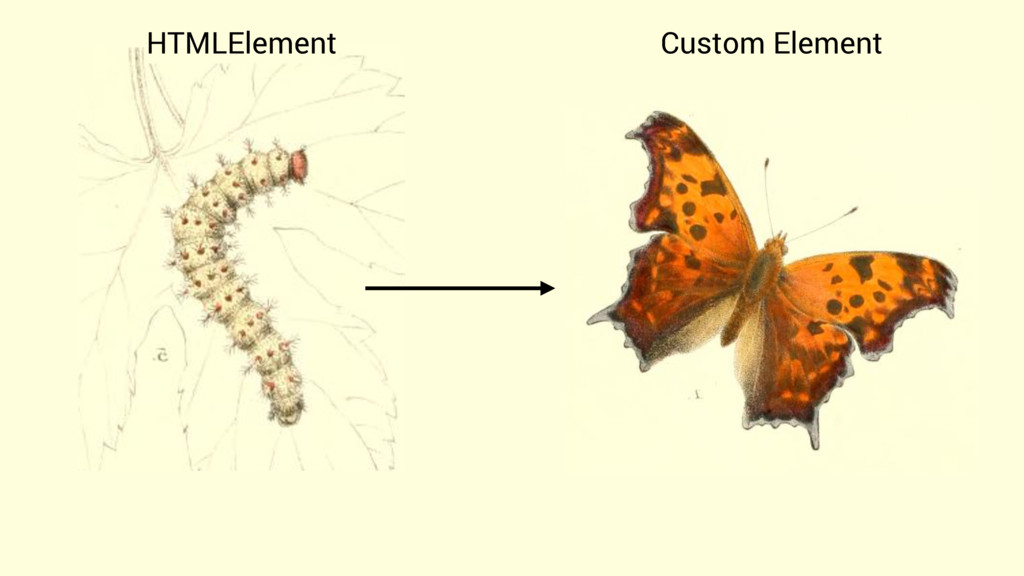
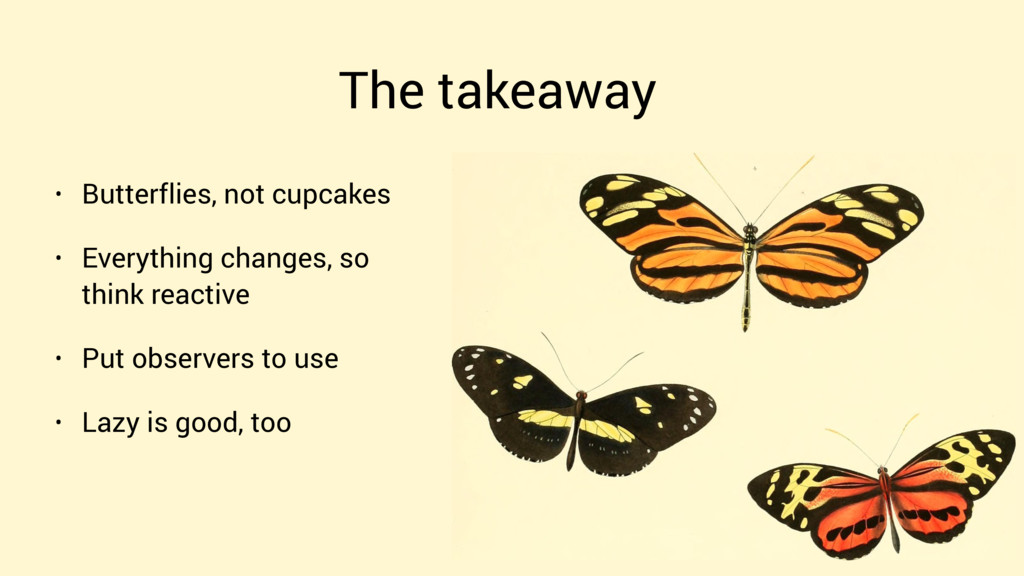
  8. The takeaway • Butterflies, not cupcakes • Everything changes, so

    think reactive • Put observers to use • Lazy is good, too