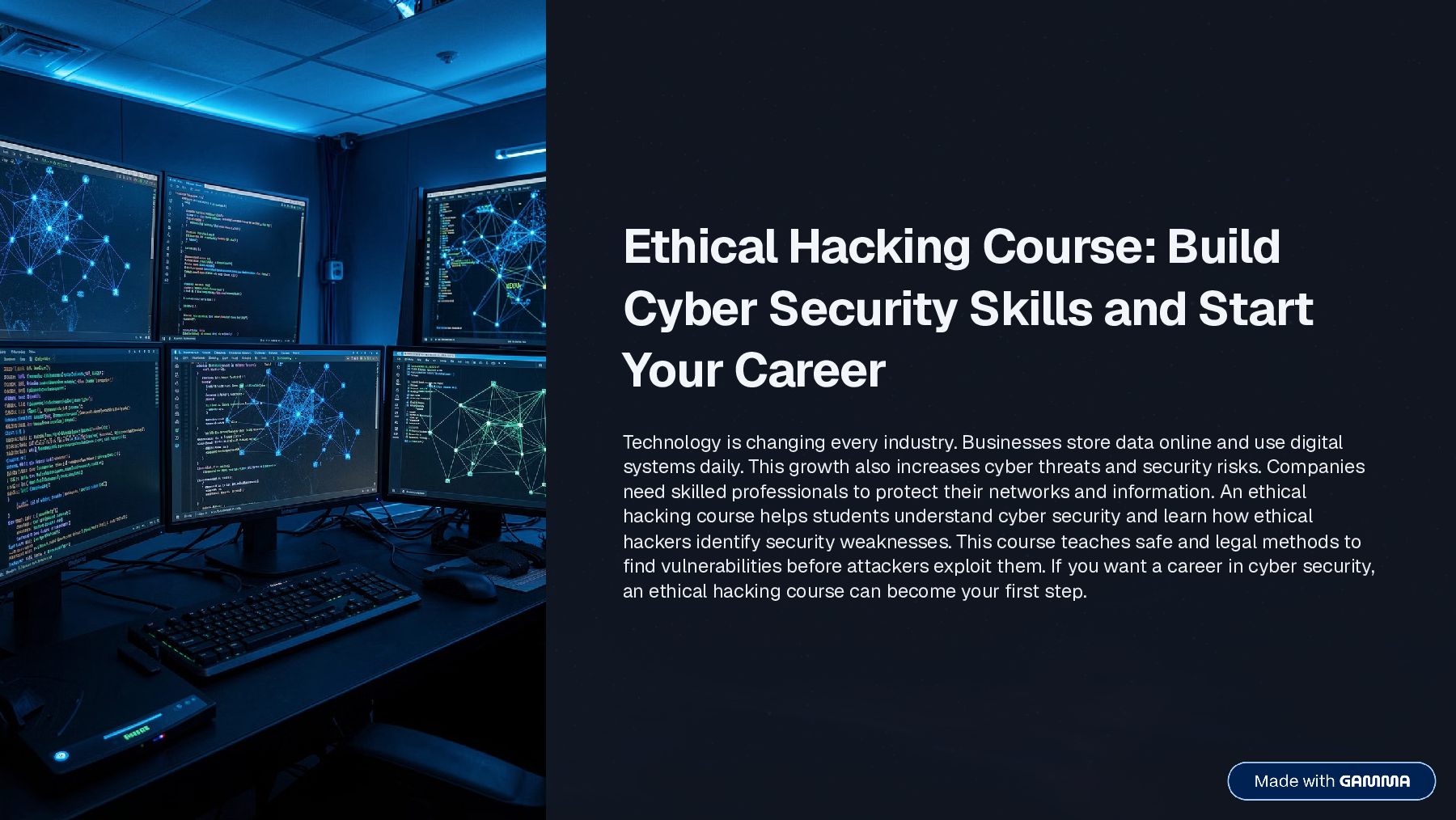
Career Technology is changing every industry. Businesses store data online and use digital systems daily. This growth also increases cyber threats and security risks. Companies need skilled professionals to protect their networks and information. An ethical hacking course helps students understand cyber security and learn how ethical hackers identify security weaknesses. This course teaches safe and legal methods to find vulnerabilities before attackers exploit them. If you want a career in cyber security, an ethical hacking course can become your first step.
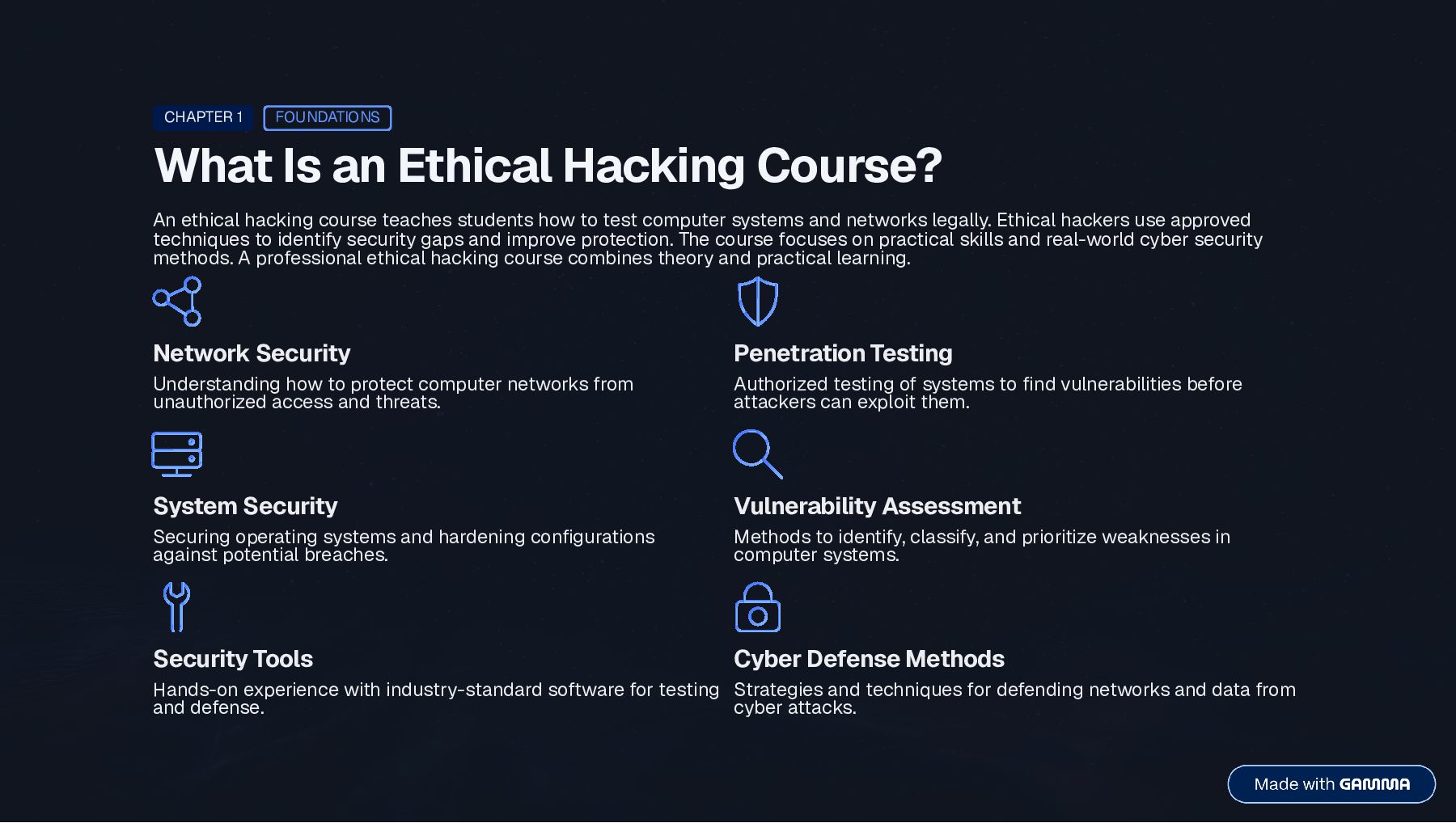
ethical hacking course teaches students how to test computer systems and networks legally. Ethical hackers use approved techniques to identify security gaps and improve protection. The course focuses on practical skills and real-world cyber security methods. A professional ethical hacking course combines theory and practical learning. Network Security Understanding how to protect computer networks from unauthorized access and threats. Penetration Testing Authorized testing of systems to find vulnerabilities before attackers can exploit them. System Security Securing operating systems and hardening configurations against potential breaches. Vulnerability Assessment Methods to identify, classify, and prioritize weaknesses in computer systems. Security Tools Hands-on experience with industry-standard software for testing and defense. Cyber Defense Methods Strategies and techniques for defending networks and data from cyber attacks.
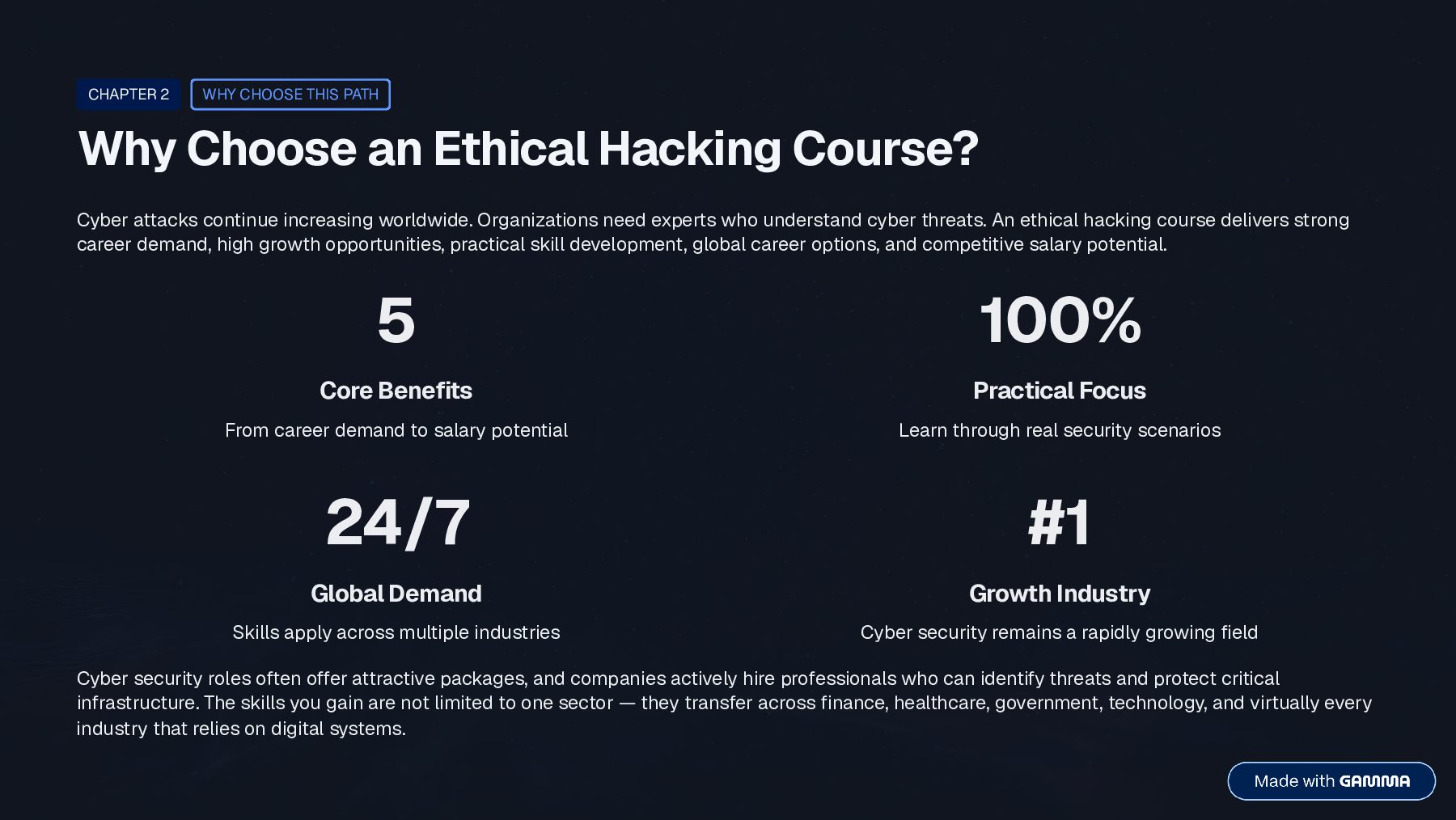
Hacking Course? Cyber attacks continue increasing worldwide. Organizations need experts who understand cyber threats. An ethical hacking course delivers strong career demand, high growth opportunities, practical skill development, global career options, and competitive salary potential. 5 Core Benefits From career demand to salary potential 100% Practical Focus Learn through real security scenarios 24/7 Global Demand Skills apply across multiple industries #1 Growth Industry Cyber security remains a rapidly growing field Cyber security roles often offer attractive packages, and companies actively hire professionals who can identify threats and protect critical infrastructure. The skills you gain are not limited to one sector 4 they transfer across finance, healthcare, government, technology, and virtually every industry that relies on digital systems.
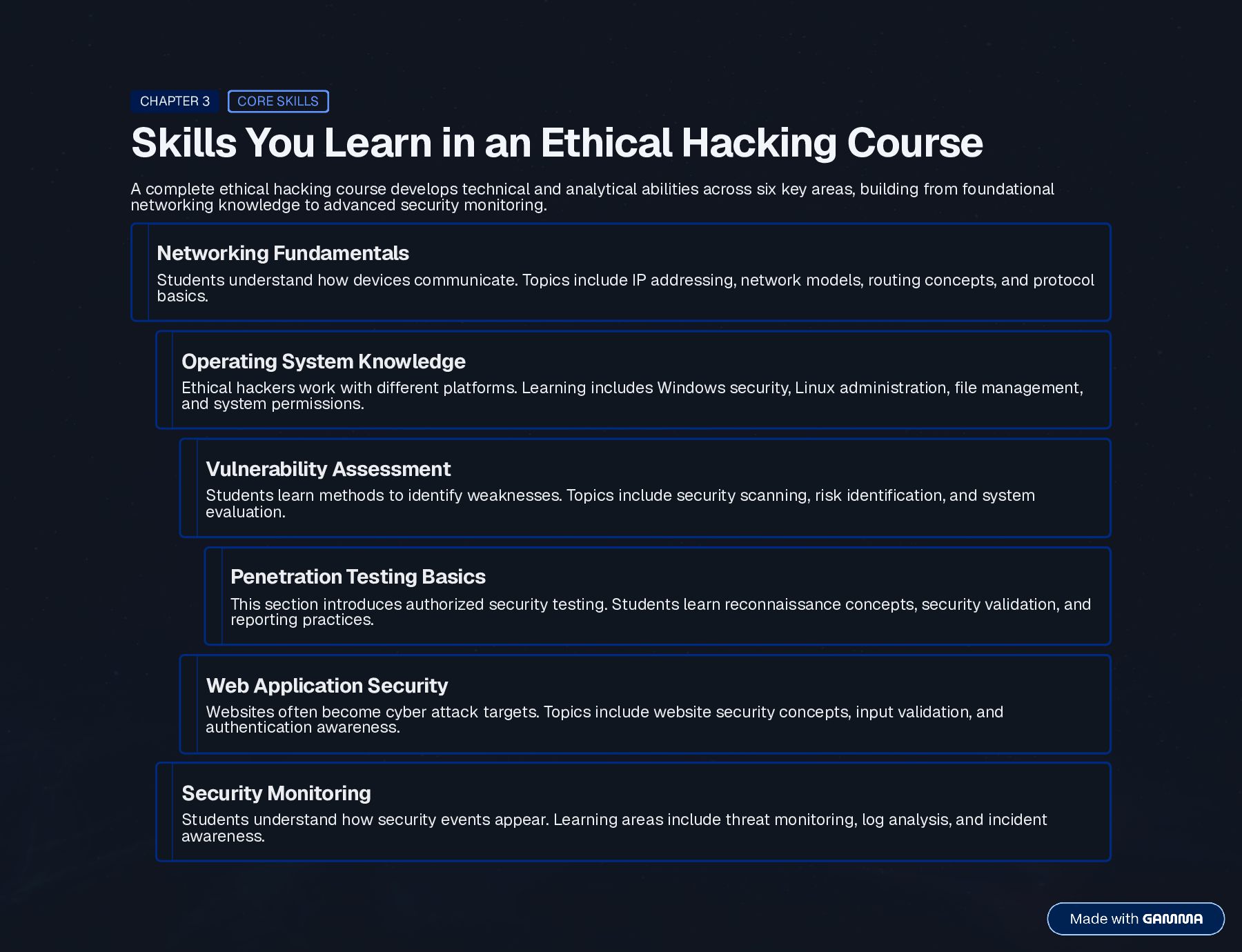
Hacking Course A complete ethical hacking course develops technical and analytical abilities across six key areas, building from foundational networking knowledge to advanced security monitoring. Networking Fundamentals Students understand how devices communicate. Topics include IP addressing, network models, routing concepts, and protocol basics. Operating System Knowledge Ethical hackers work with different platforms. Learning includes Windows security, Linux administration, file management, and system permissions. Vulnerability Assessment Students learn methods to identify weaknesses. Topics include security scanning, risk identification, and system evaluation. Penetration Testing Basics This section introduces authorized security testing. Students learn reconnaissance concepts, security validation, and reporting practices. Web Application Security Websites often become cyber attack targets. Topics include website security concepts, input validation, and authentication awareness. Security Monitoring Students understand how security events appear. Learning areas include threat monitoring, log analysis, and incident awareness.
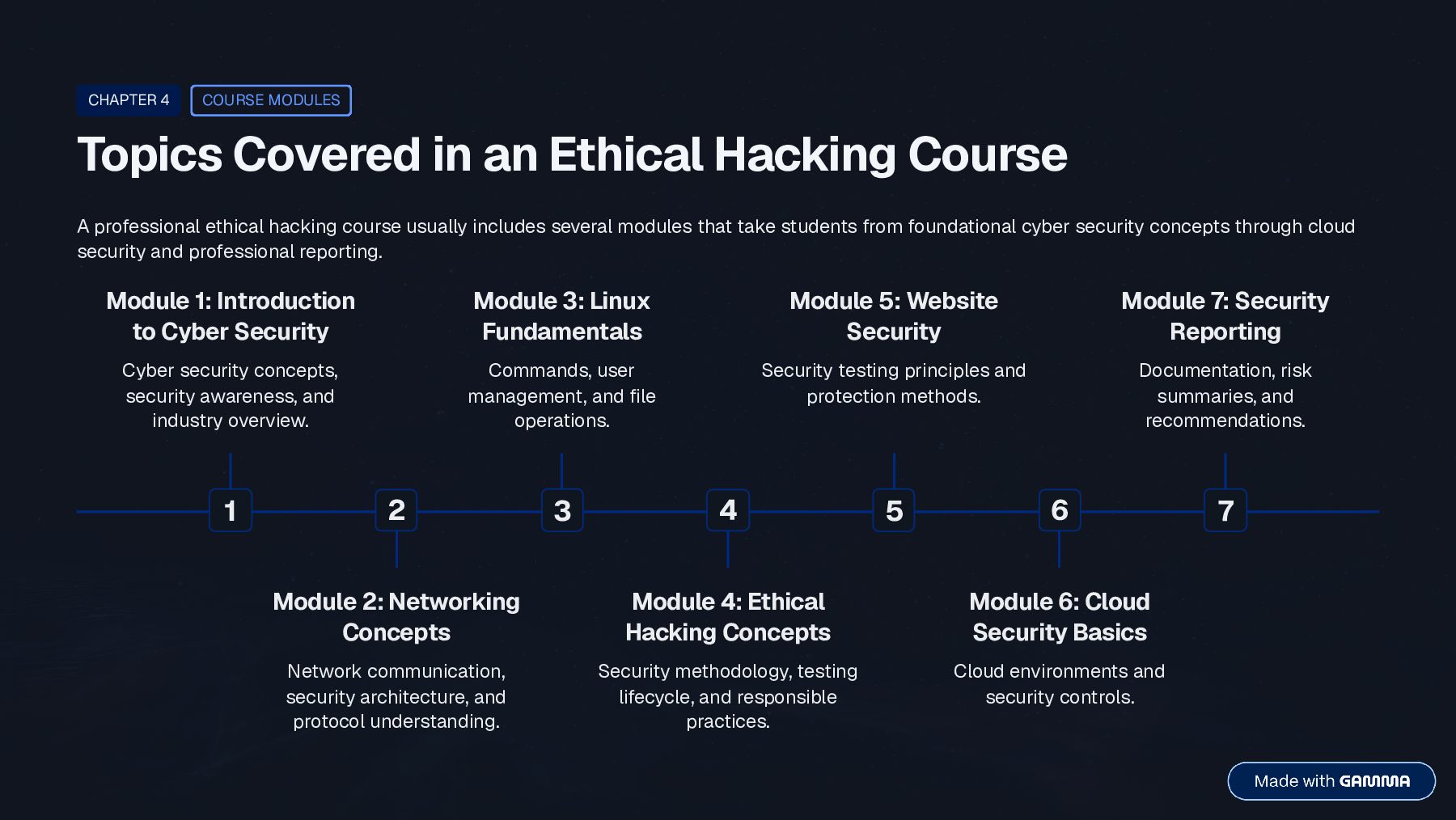
usually includes several modules that take students from foundational cyber security concepts through cloud security and professional reporting. 1 Module1Introduction toCyberSecurity Cyber security concepts, security awareness, and industry overview. 2 Module2Networking Concepts Network communication, security architecture, and protocol understanding. 3 Module3Linux Fundamentals Commands, user management, and file operations. 4 Module4Ethical HackingConcepts Security methodology, testing lifecycle, and responsible practices. 5 Module5Website Security Security testing principles and protection methods. 6 Module6Cloud SecurityBasics Cloud environments and security controls. 7 Module7Security Reporting Documentation, risk summaries, and recommendations.
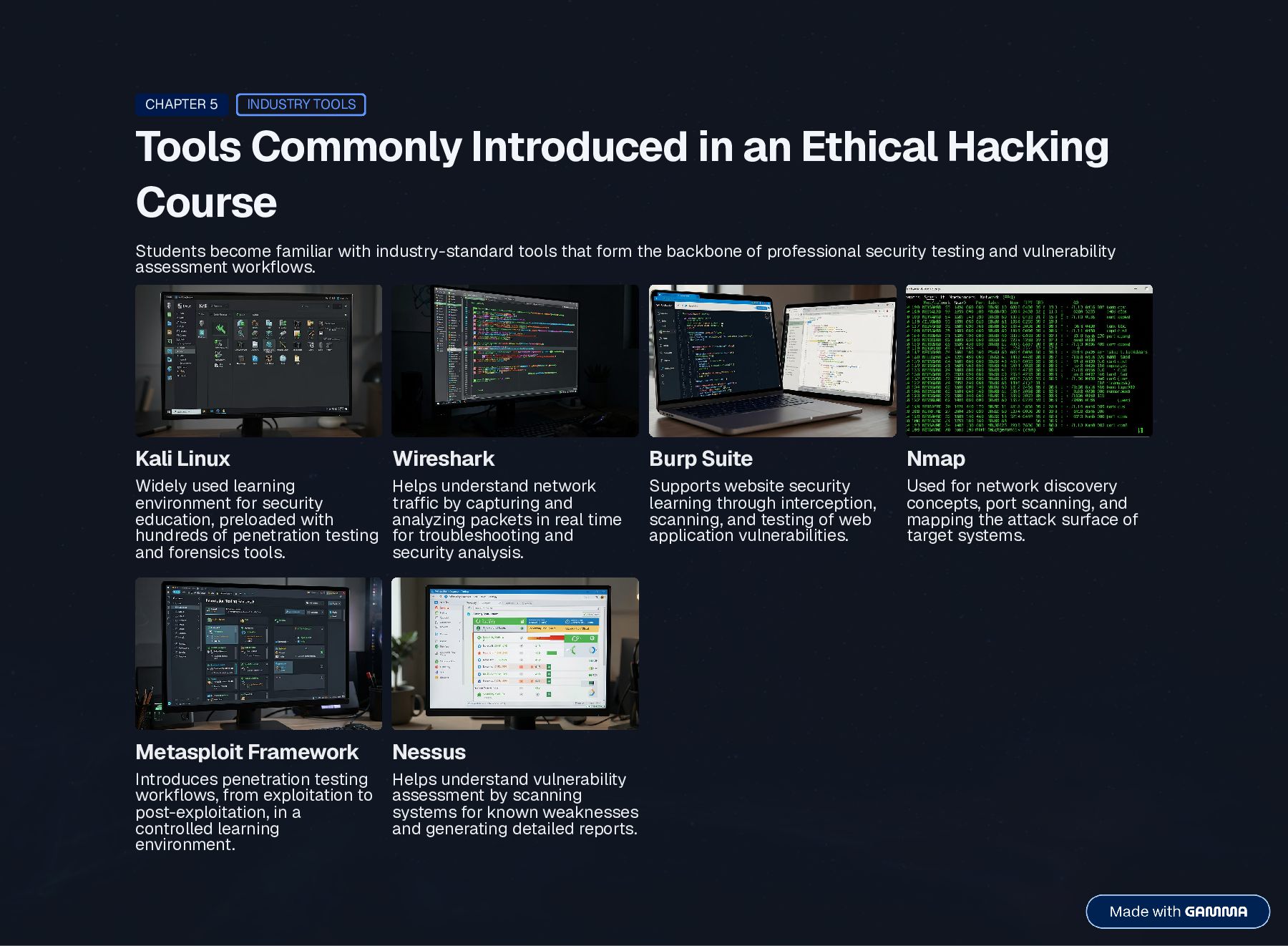
Hacking Course Students become familiar with industry-standard tools that form the backbone of professional security testing and vulnerability assessment workflows. Kali Linux Widely used learning environment for security education, preloaded with hundreds of penetration testing and forensics tools. Wireshark Helps understand network traffic by capturing and analyzing packets in real time for troubleshooting and security analysis. Burp Suite Supports website security learning through interception, scanning, and testing of web application vulnerabilities. Nmap Used for network discovery concepts, port scanning, and mapping the attack surface of target systems. Metasploit Framework Introduces penetration testing workflows, from exploitation to post-exploitation, in a controlled learning environment. Nessus Helps understand vulnerability assessment by scanning systems for known weaknesses and generating detailed reports.
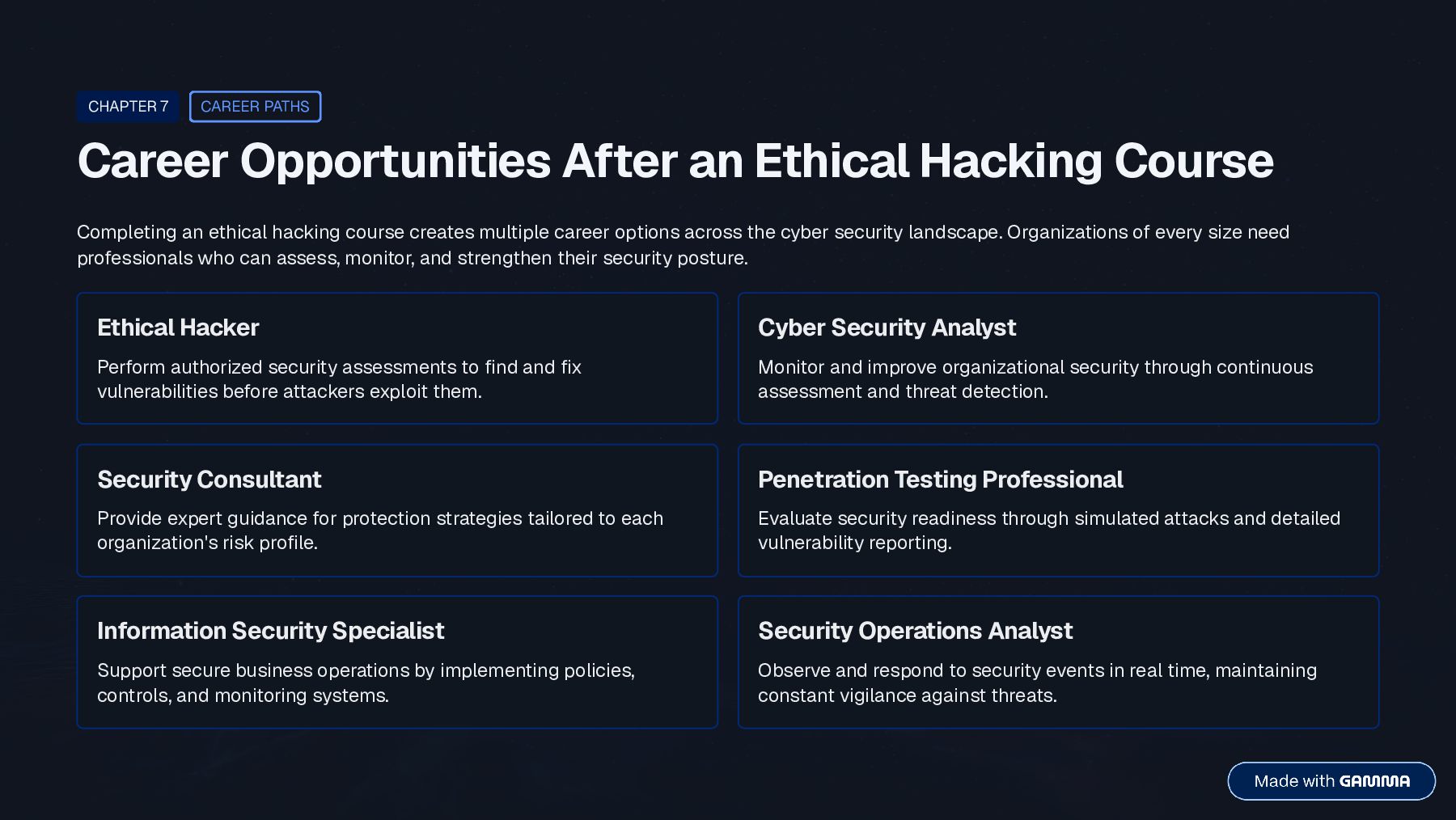
Course Completing an ethical hacking course creates multiple career options across the cyber security landscape. Organizations of every size need professionals who can assess, monitor, and strengthen their security posture. Ethical Hacker Perform authorized security assessments to find and fix vulnerabilities before attackers exploit them. Cyber Security Analyst Monitor and improve organizational security through continuous assessment and threat detection. Security Consultant Provide expert guidance for protection strategies tailored to each organization's risk profile. Penetration Testing Professional Evaluate security readiness through simulated attacks and detailed vulnerability reporting. Information Security Specialist Support secure business operations by implementing policies, controls, and monitoring systems. Security Operations Analyst Observe and respond to security events in real time, maintaining constant vigilance against threats.
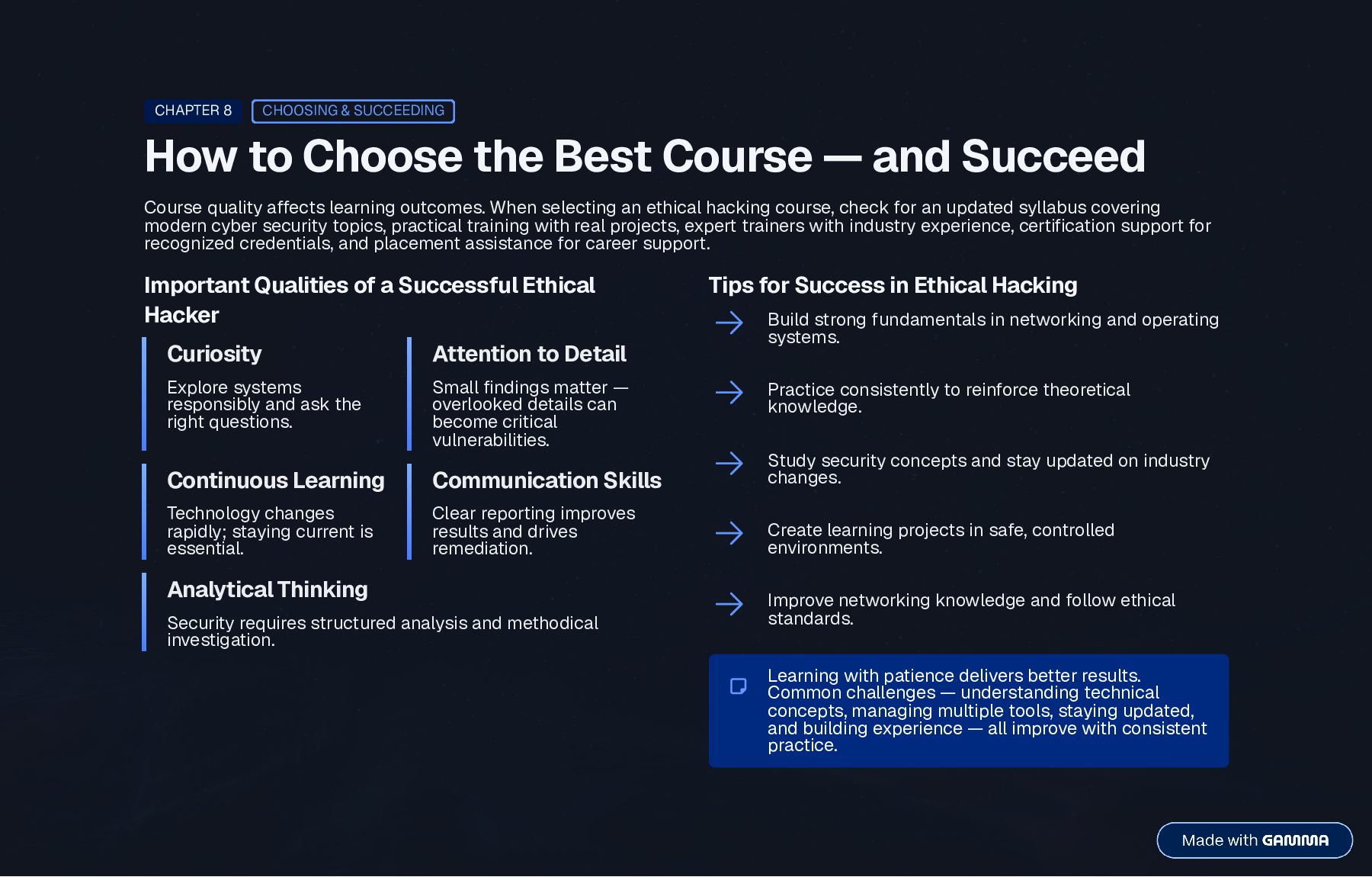
Course 4 and Succeed Course quality affects learning outcomes. When selecting an ethical hacking course, check for an updated syllabus covering modern cyber security topics, practical training with real projects, expert trainers with industry experience, certification support for recognized credentials, and placement assistance for career support. Important Qualities of a Successful Ethical Hacker Curiosity Explore systems responsibly and ask the right questions. Attention to Detail Small findings matter 4 overlooked details can become critical vulnerabilities. Continuous Learning Technology changes rapidly; staying current is essential. Communication Skills Clear reporting improves results and drives remediation. Analytical Thinking Security requires structured analysis and methodical investigation. Tips for Success in Ethical Hacking Build strong fundamentals in networking and operating systems. Practice consistently to reinforce theoretical knowledge. Study security concepts and stay updated on industry changes. Create learning projects in safe, controlled environments. Improve networking knowledge and follow ethical standards. Learning with patience delivers better results. Common challenges 4 understanding technical concepts, managing multiple tools, staying updated, and building experience 4 all improve with consistent practice.
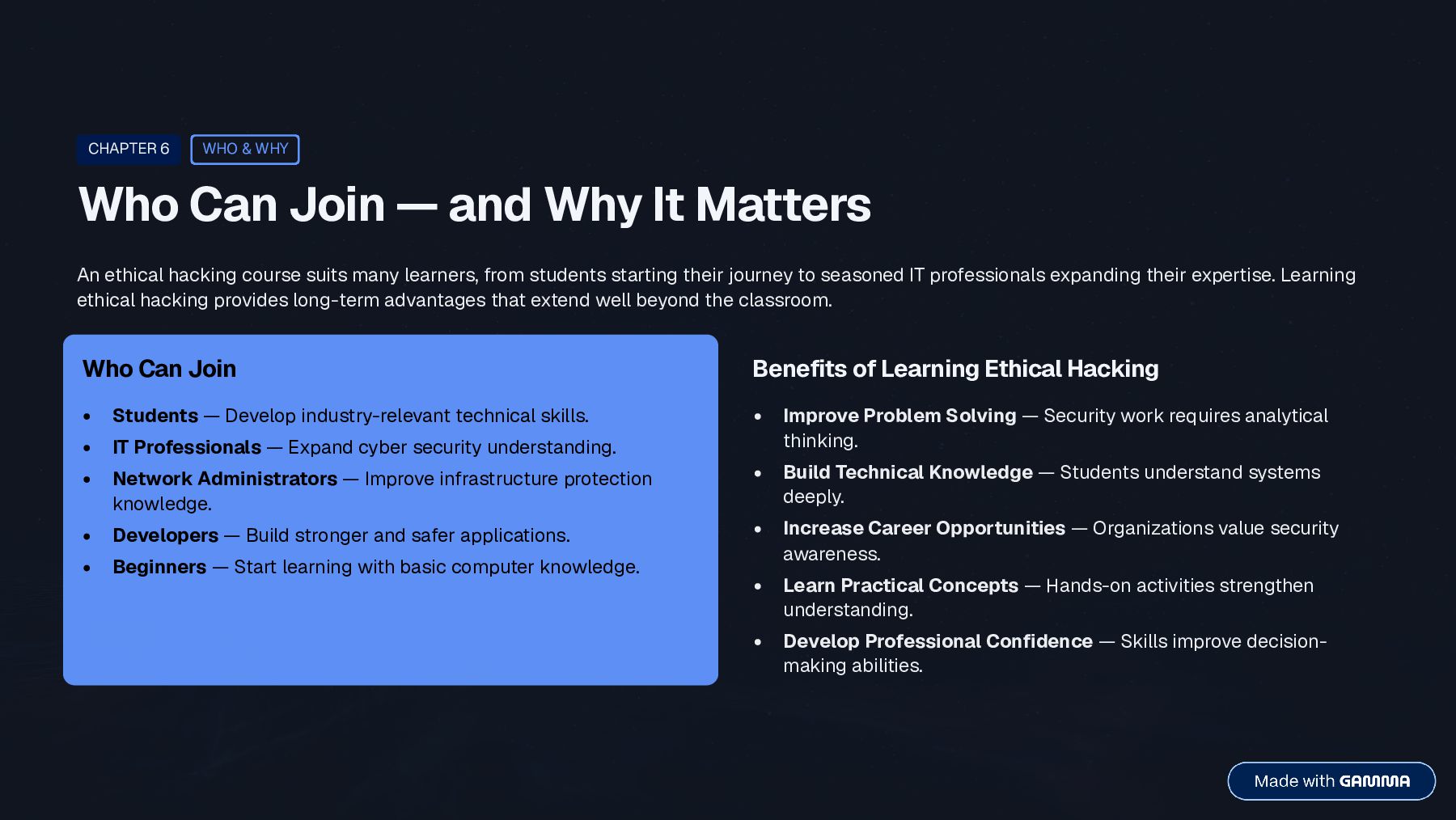
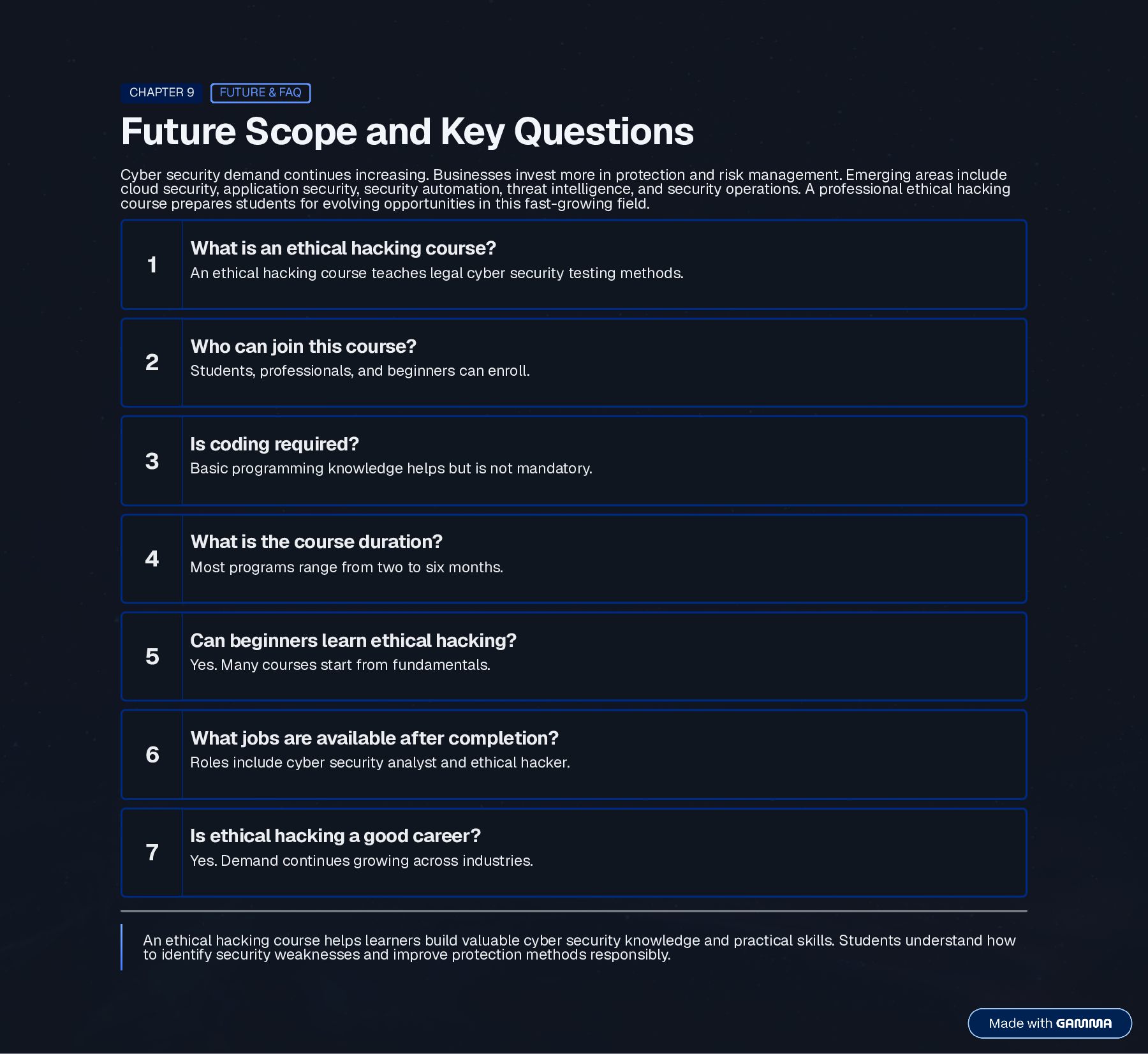
increasing. Businesses invest more in protection and risk management. Emerging areas include cloud security, application security, security automation, threat intelligence, and security operations. A professional ethical hacking course prepares students for evolving opportunities in this fast-growing field. 1 Whatisanethicalhackingcourse An ethical hacking course teaches legal cyber security testing methods. 2 Whocanjointhiscourse Students, professionals, and beginners can enroll. 3 Iscodingrequired Basic programming knowledge helps but is not mandatory. 4 Whatisthecourseduration Most programs range from two to six months. 5 Canbeginnerslearnethicalhacking Yes. Many courses start from fundamentals. 6 Whatjobsareavailableaftercompletion Roles include cyber security analyst and ethical hacker. 7 Isethicalhackingagoodcareer Yes. Demand continues growing across industries. An ethical hacking course helps learners build valuable cyber security knowledge and practical skills. Students understand how to identify security weaknesses and improve protection methods responsibly.


 moriyuya
 jdbedics
 arnoknobbe
 pawan_pharm
 akiraasano
 camel_404
 bvr7352
 hiola
 robintux
 cargoodrich
 palkan
 jonoalderson
 marktimemedia
 gurzu
 chriscoyier
 letsgokoyo
 caitiem20
 schlessera
 jct
 colly
 jeffersonlam