first psychological clinic (1896) • Post-WWII: VA’s need for clinicians • Intelligence and personality testing • Diagnostic evaluation • Psychotherapy Research • Consultation & Program Evaluation These are Links • The Boulder Model (1949) emphasized research over clinical practice • • • Traditionally, a PhD, affiliated with a large university Professor and researcher identity Clinical work only in service of research 4
the 1960s • Vail model emphasized clinical practice over research (1973 Vail Conference) • Two Types: • University-Based • Free-Standing (professional school) • Same Licensure Path as PhD (EPPP Exam) • Funding and cost considerations: • Assistantships/full funding less common than PhD programs • Free-standing schools often carry higher tuition/debt 5
Psychotherapy Process and Outcome • Expertise in DBT and Suicide Prevention • APA Division 29, Society for the Advancement of Psychotherapy — Science & Scholarship Board Domain Representative 7
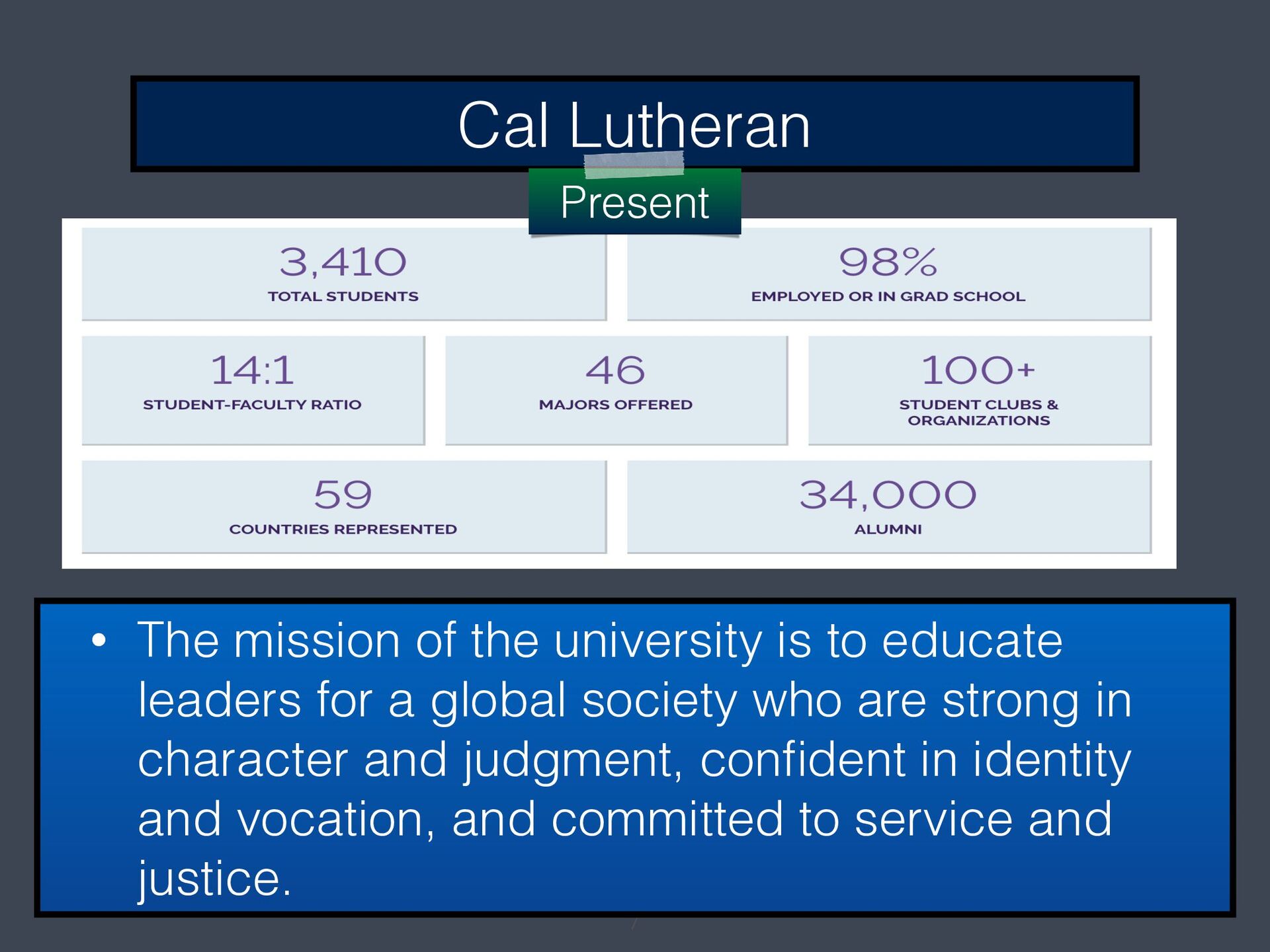
educate leaders for a global society who are strong in character and judgment, confident in identity and vocation, and committed to service and justice. 14
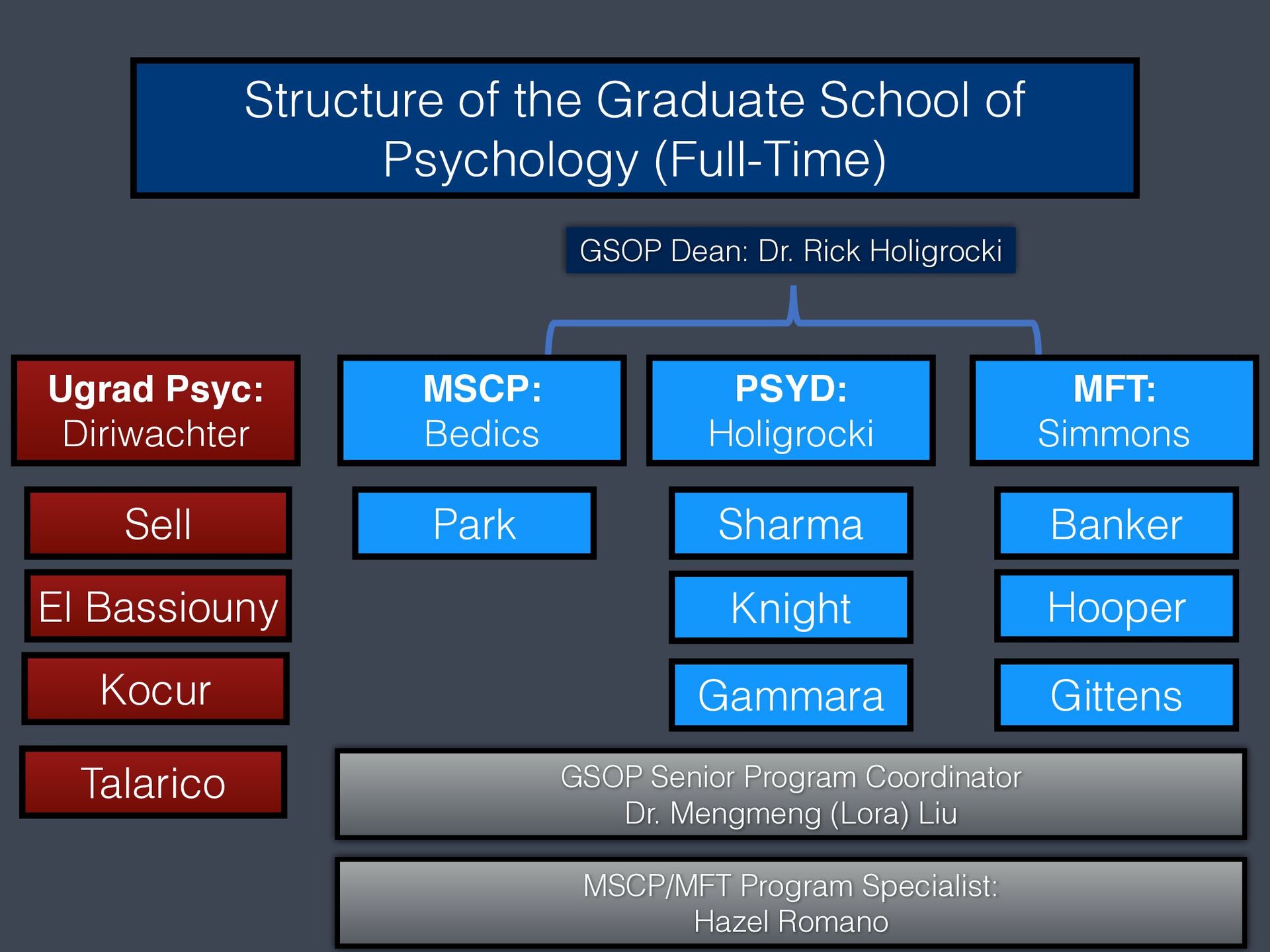
Rick Holigrocki Ugrad Psyc: Kocur MSCP: Bedics MFT: Simmons PSYD: Sharma Sell Park Banker El Bassiouny A - Lockwood Hooper EbrahimiAzadegan Diriwachter A - Johannson Gittens Talarico A - Hoover Gammara Knight Pizzano GSOP Student Services Specialist: Madison Patrick Email: [email protected] GSOP Program Coordinator: Michelle Pilch 15 Ramirez New person
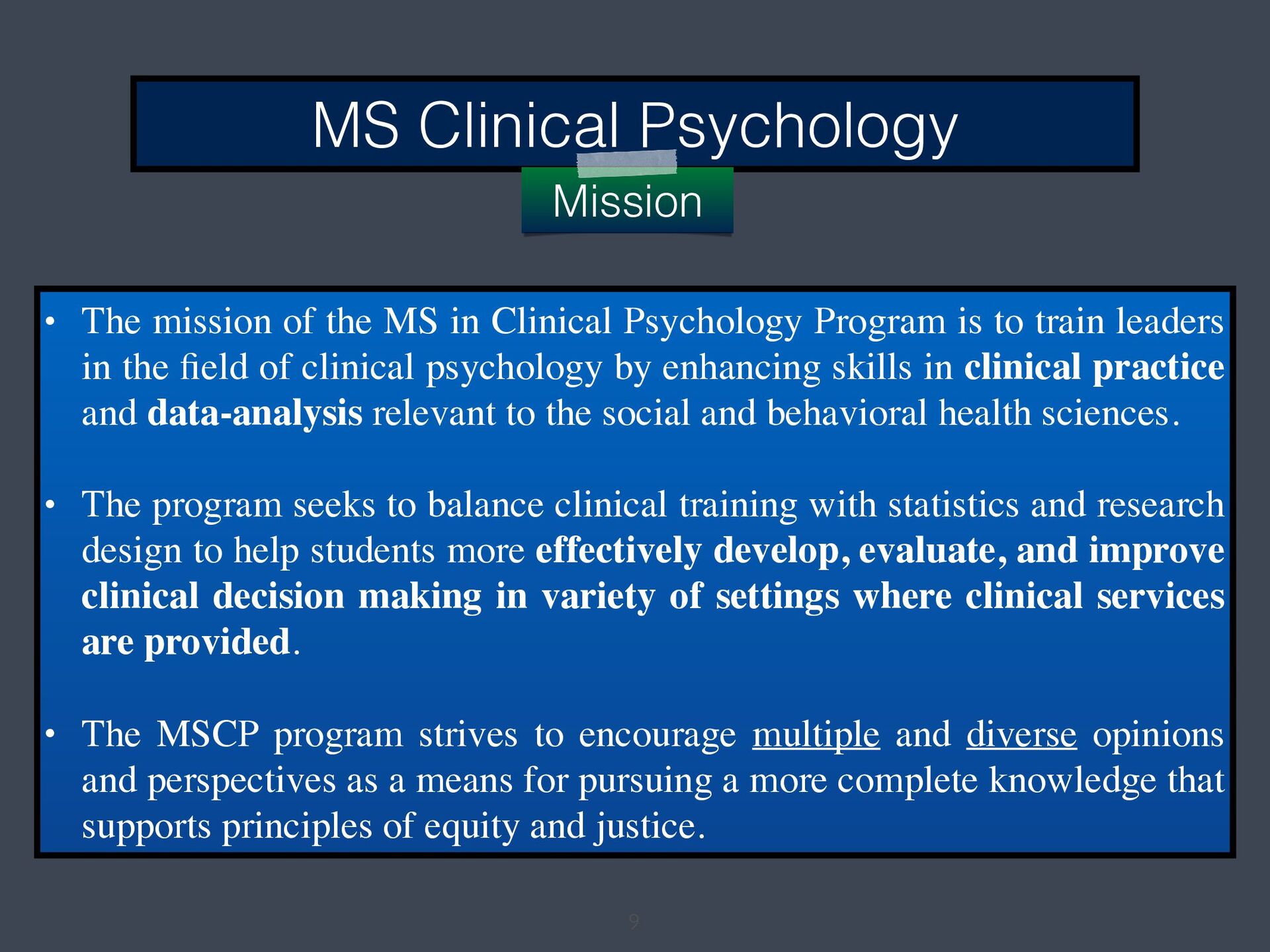
in Clinical Psychology Program is to train leaders in the field of clinical psychology by enhancing skills in clinical practice and data-analysis relevant to the social and behavioral health sciences. • The program seeks to balance clinical training with statistics and research design to help students more effectively develop, evaluate, and improve clinical decision making in variety of settings where clinical services are provided. • The MSCP program strives to encourage multiple and diverse opinions and perspectives as a means for pursuing a more complete knowledge that supports principles of equity and justice. 17
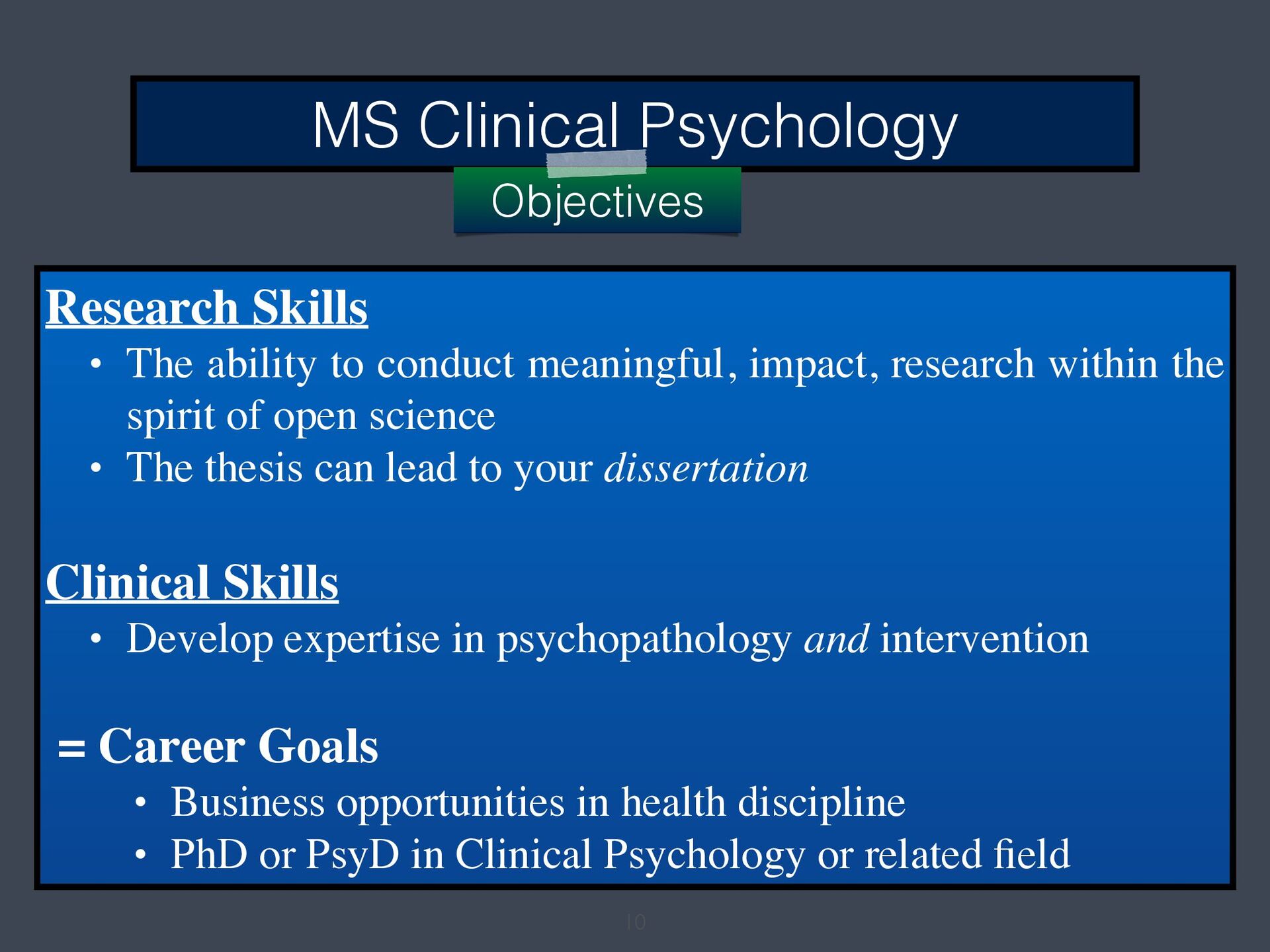
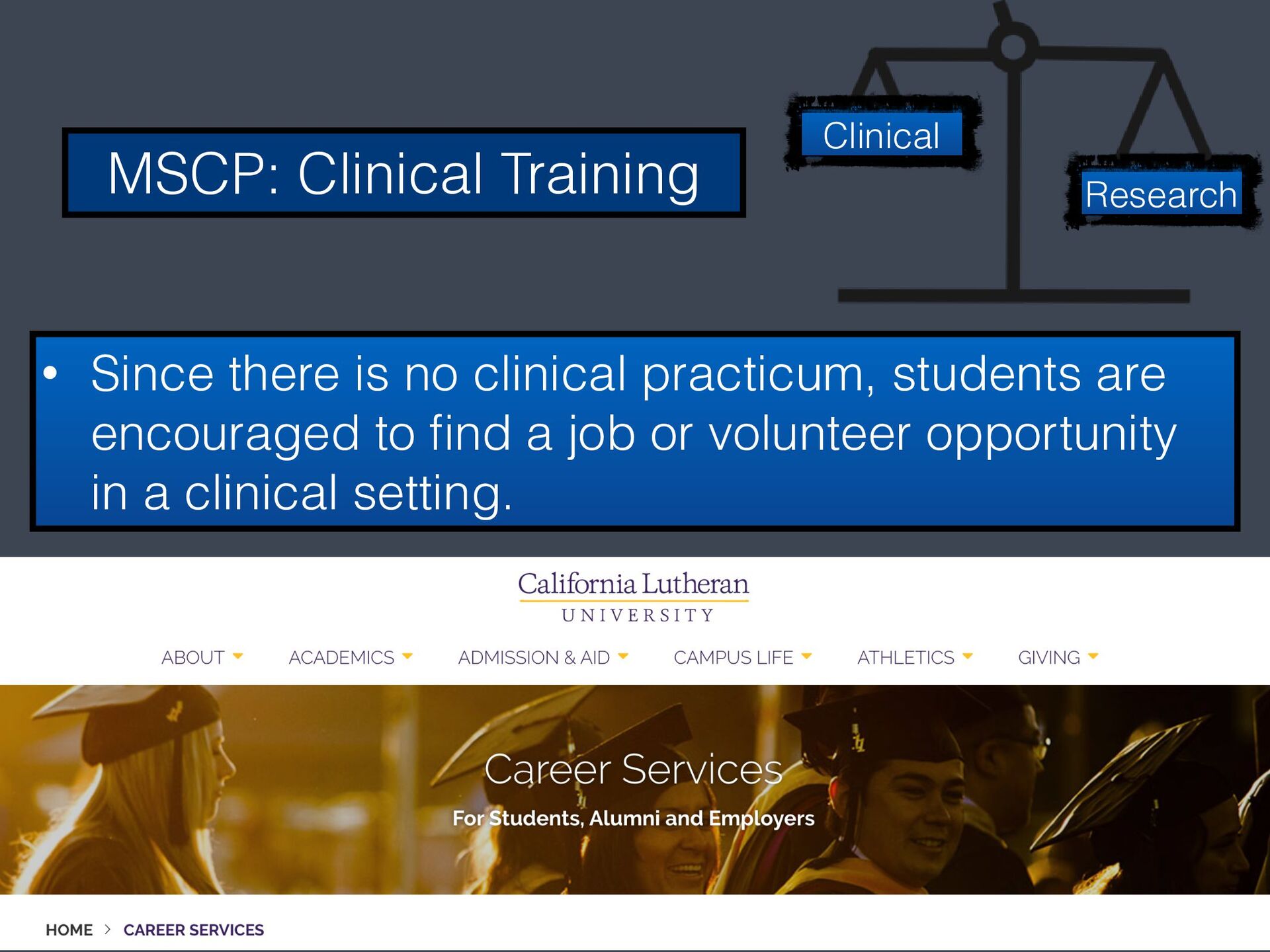
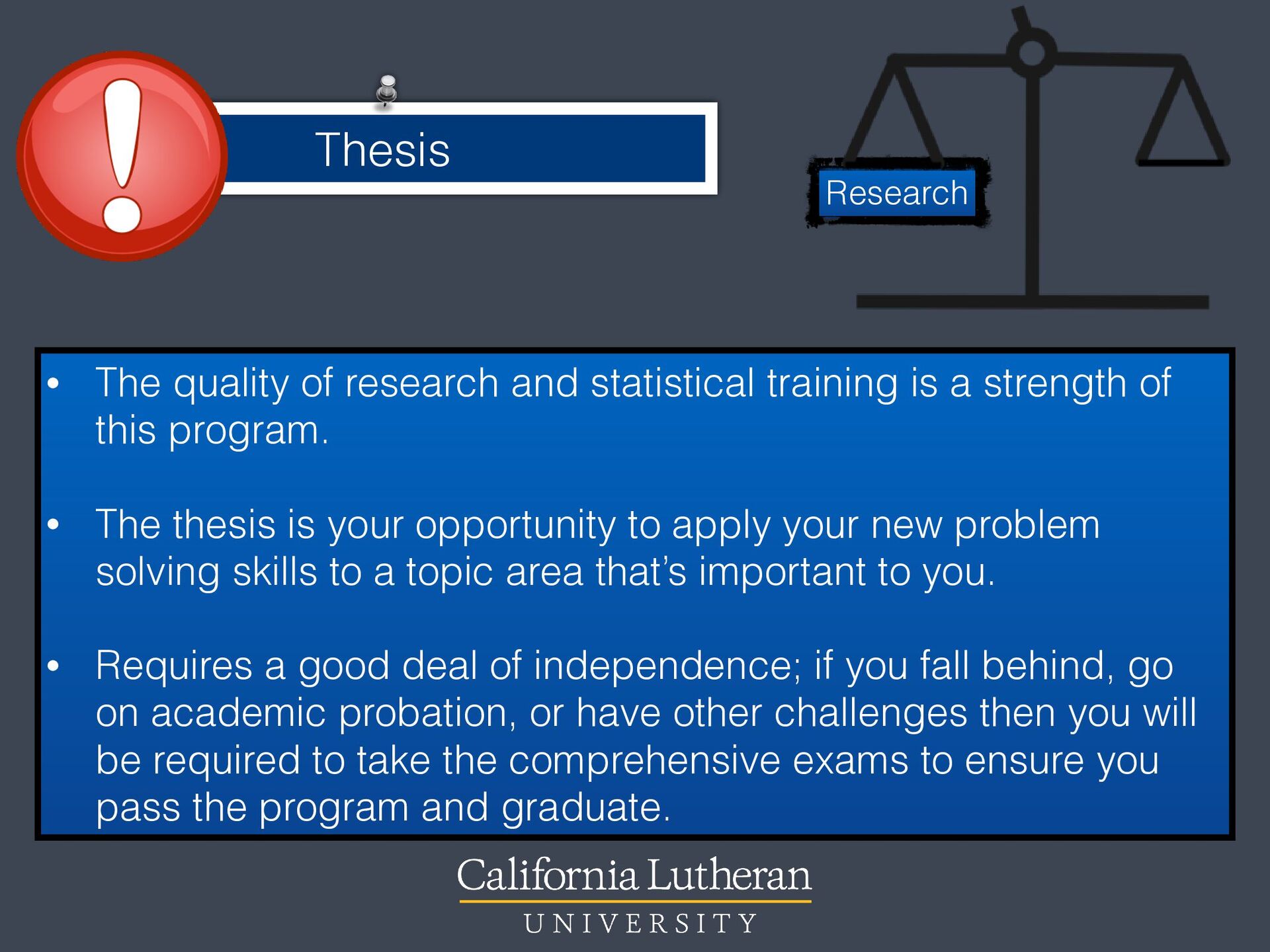
conduct meaningful research • • Open Science The thesis can lead to your dissertation Clinical Skills • Develop expertise in psychopathology and intervention = Career Goals Business opportunities in health discipline • PhD or PsyD in Clinical Psychology or related field • A second master’s degree leading to licensure • 18
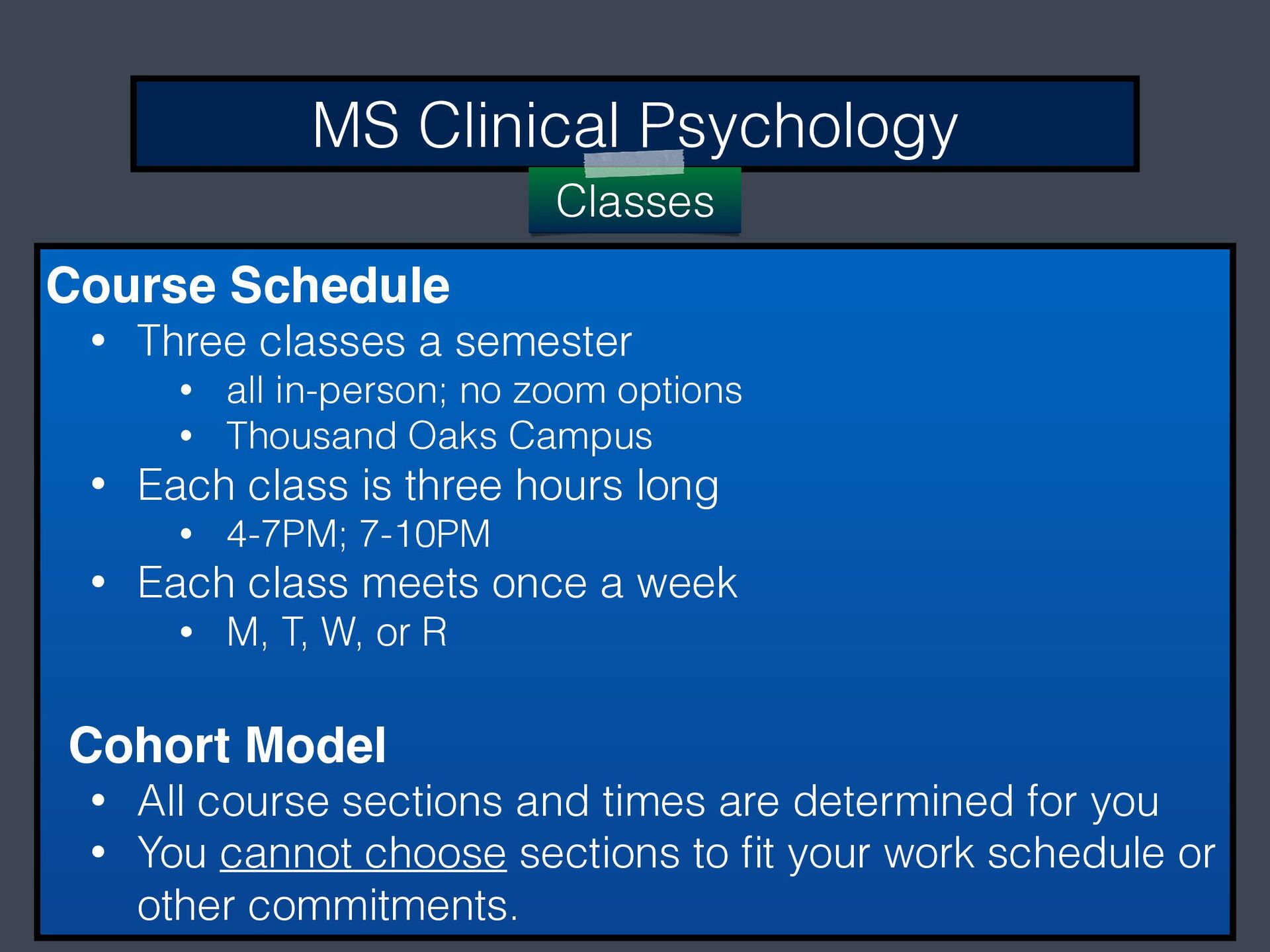
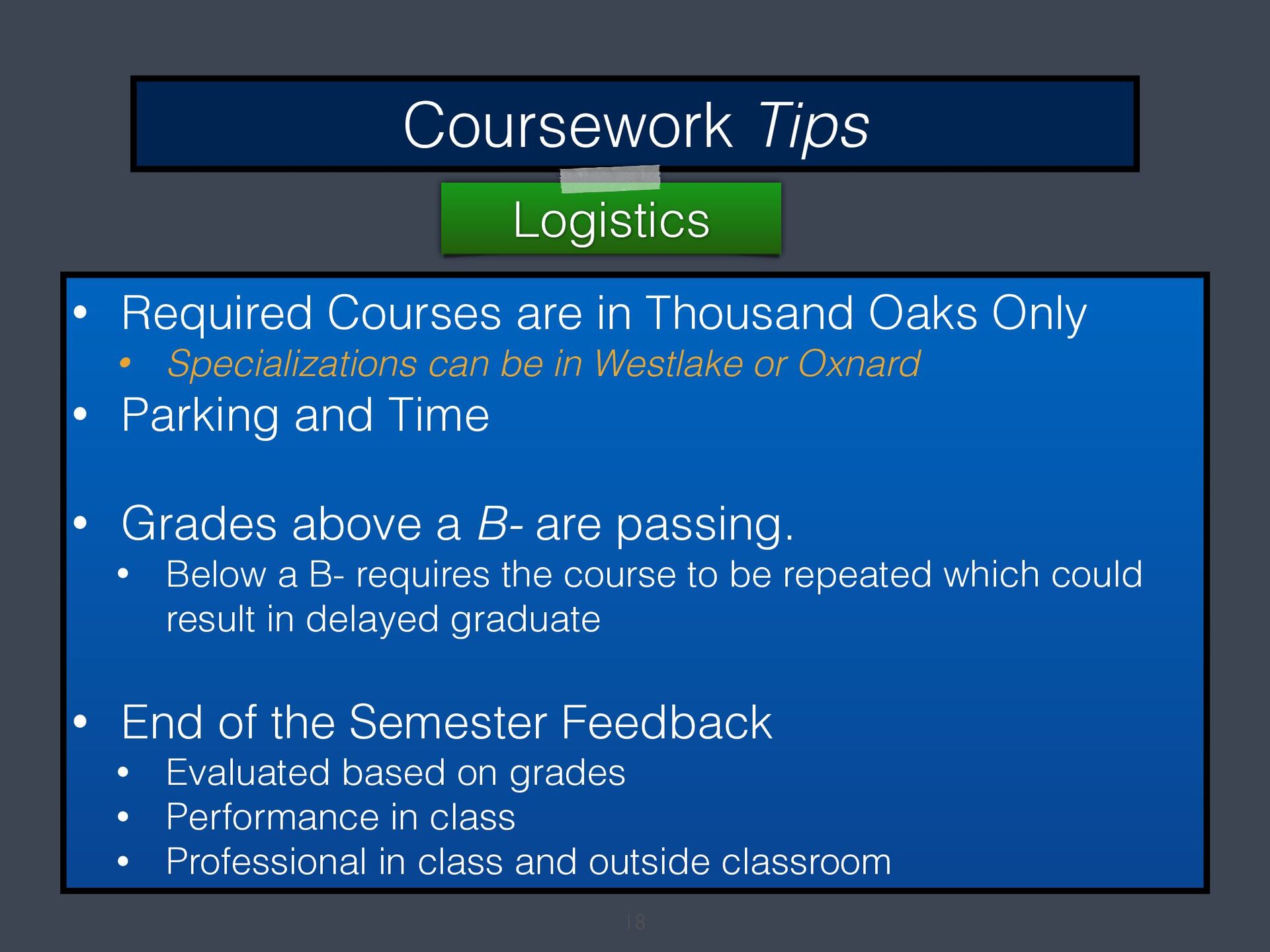
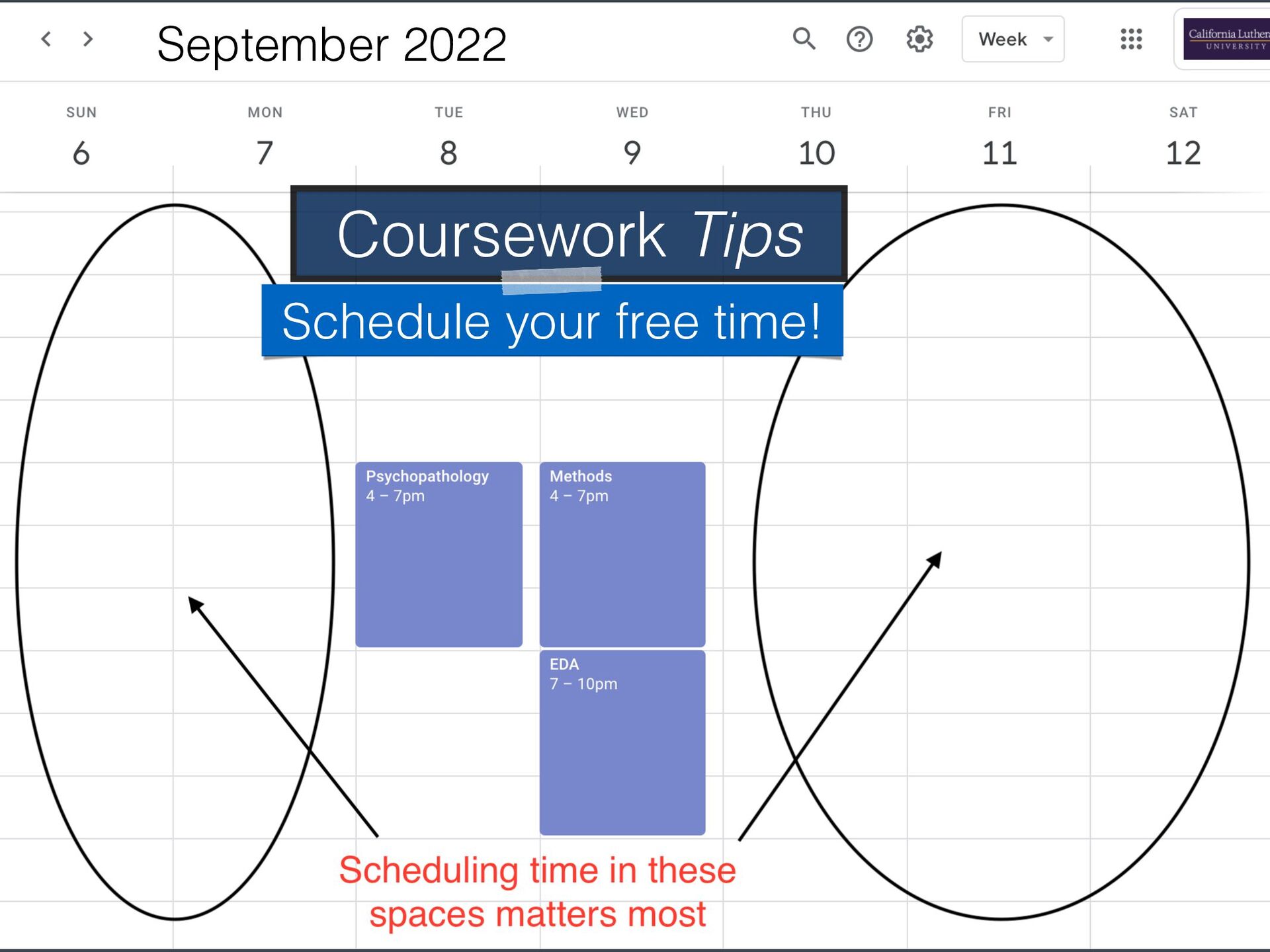
a semester • • • Each class is three hours long • • All in-person; no zoom options unless notified B- is passing 4-7PM; 7-10PM Each class meets once a week • M, T, W, or R Cohort Model • • Course sections and times are fixed (assigned) You cannot choose sections to fit your work schedule or other commitments. 23
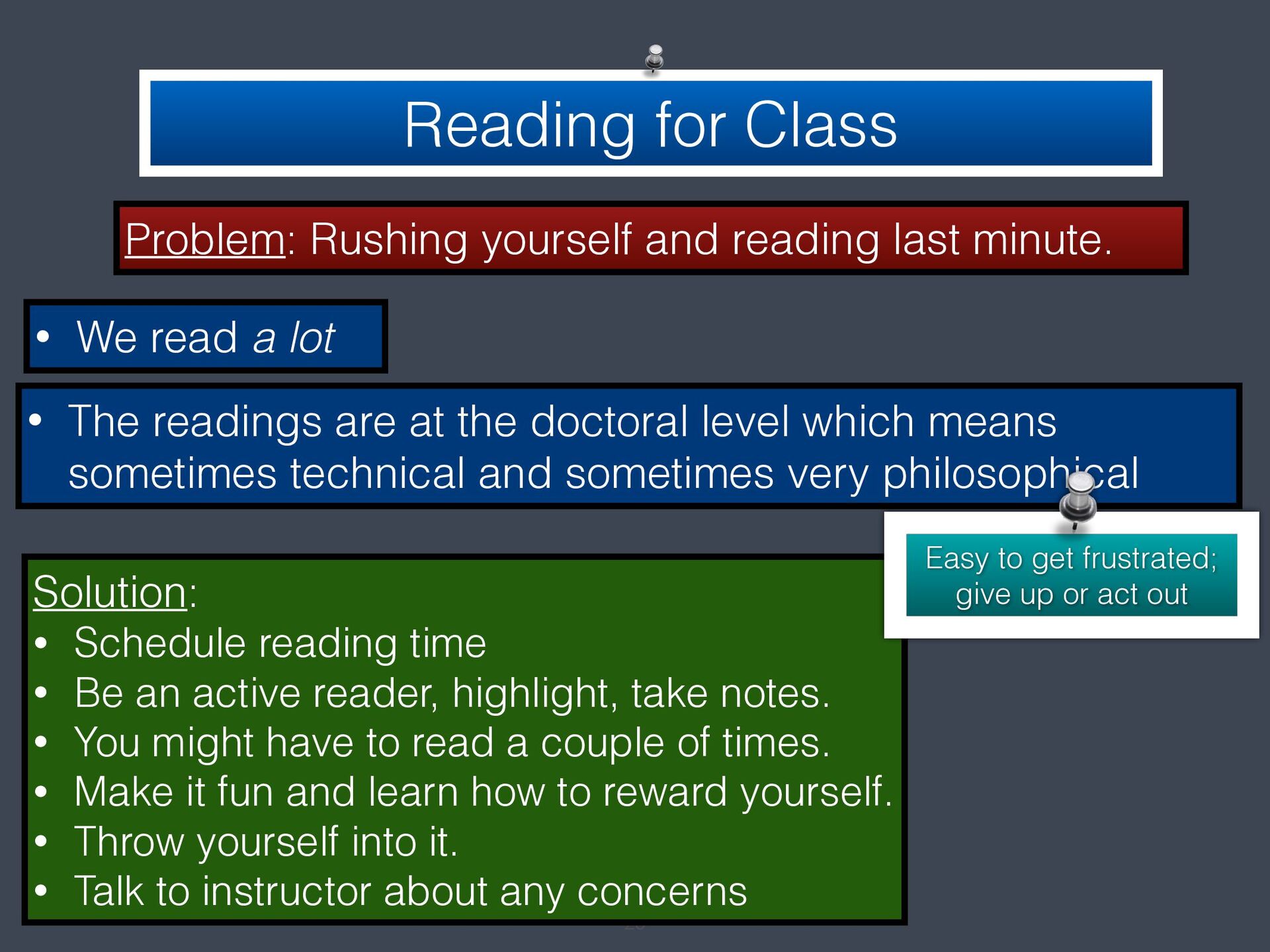
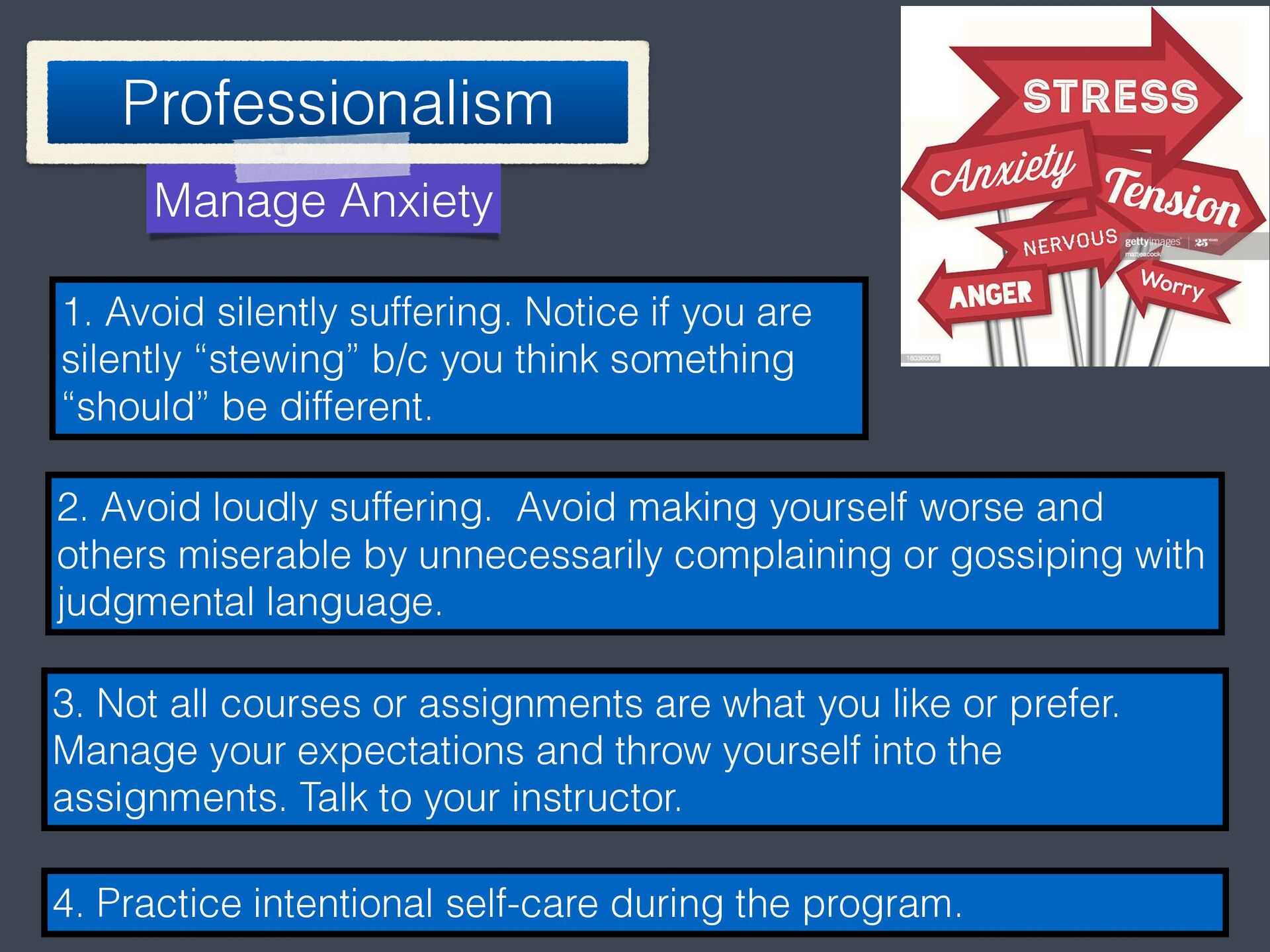
Notice if you are silently “stewing” b/c you think something “should” be different or you sense you’re behind. 2. Avoid loudly suffering. • • • Research Avoid making yourself worse and others miserable by unnecessarily complaining or gossiping with judgmental language. Not all courses or assignments are what you like Throw yourself into the assignments and make them your own 30
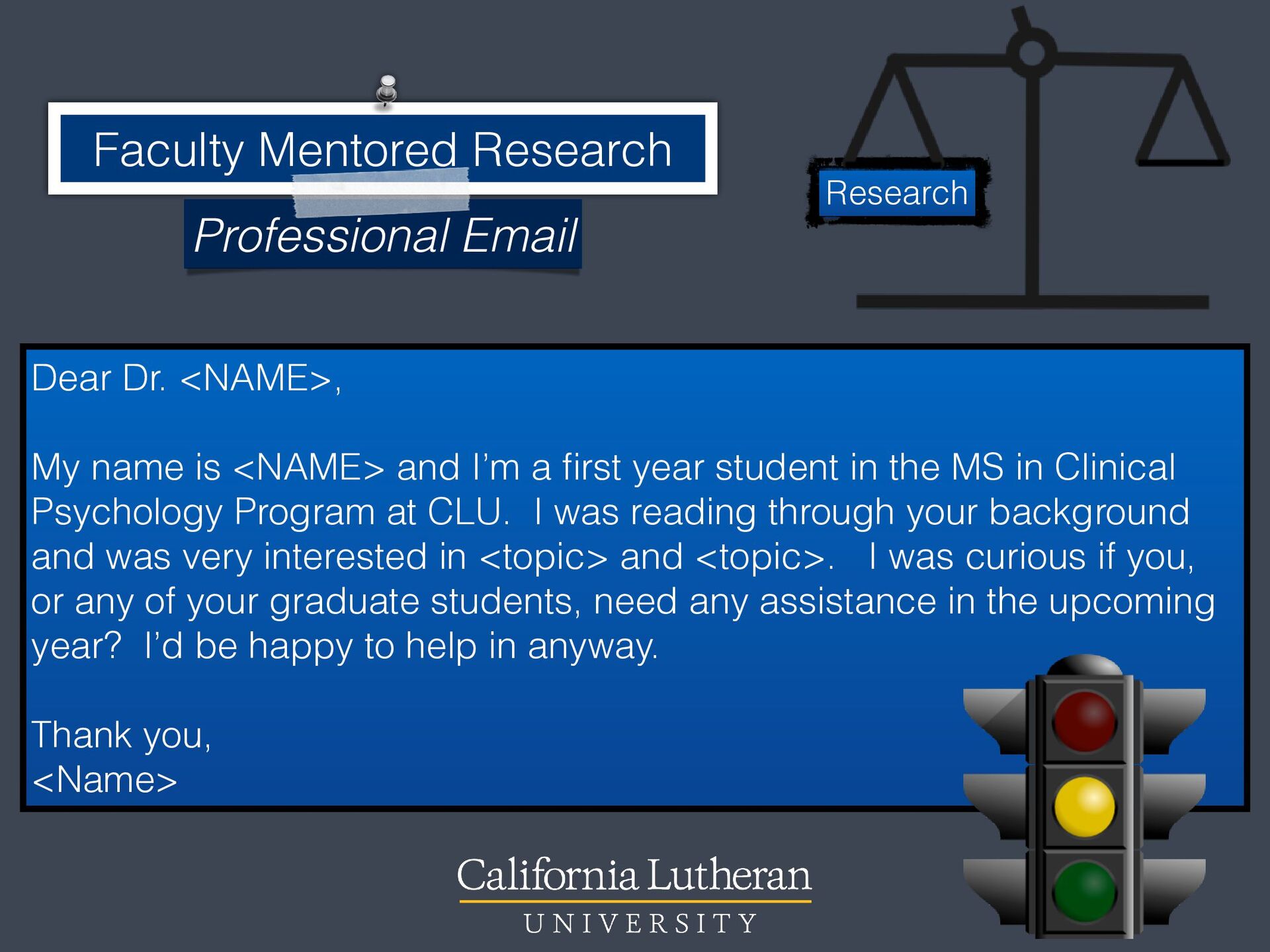
<NAME> and I’m a first-year student in the MS in Clinical Psychology Program at CLU. I was reading through your background and was very interested in <topic> and <topic>. I was curious if you, or any of your graduate students, need any assistance in the upcoming year? I’d be happy to help in anyway. Thank you, <Name>
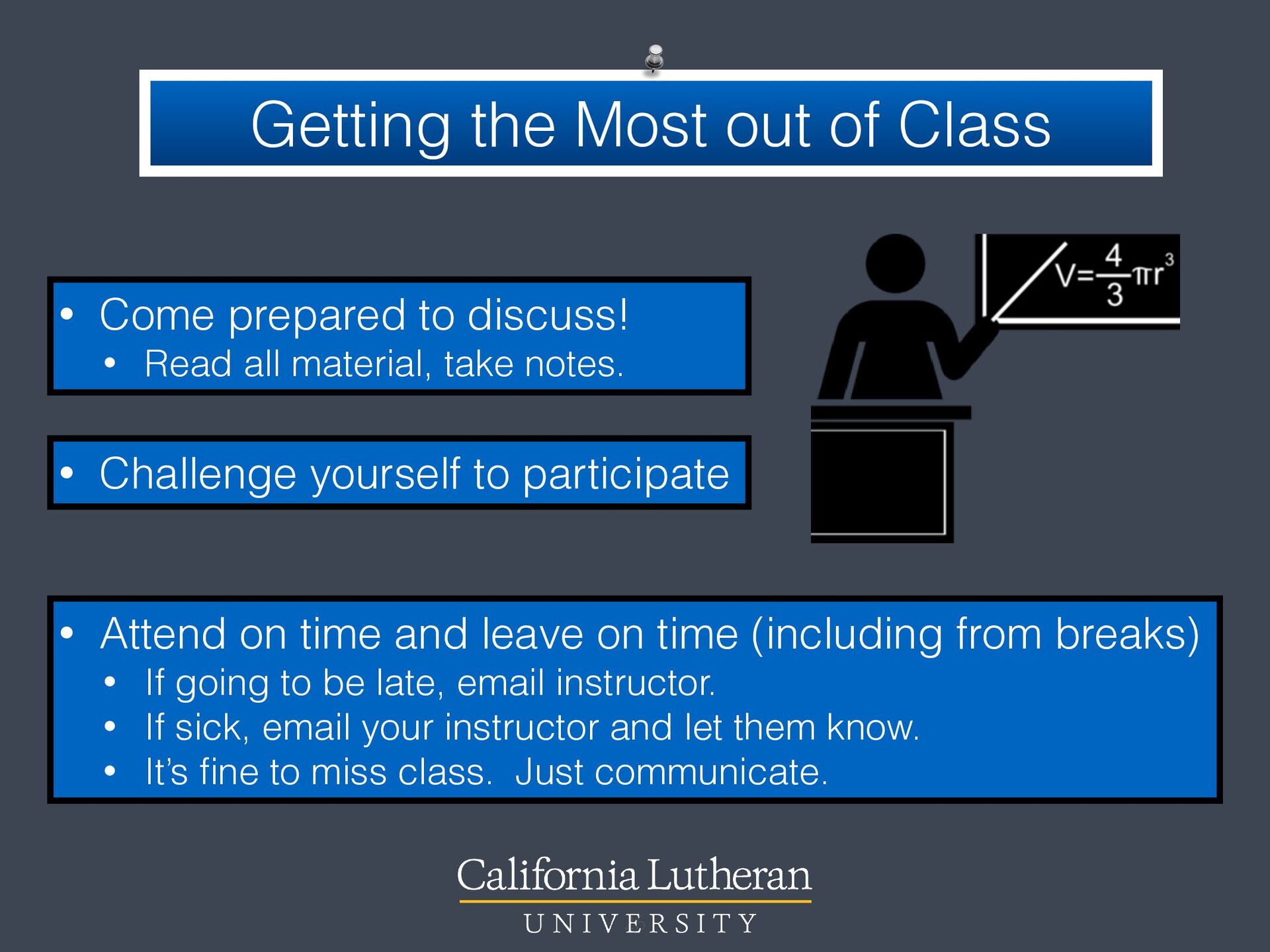
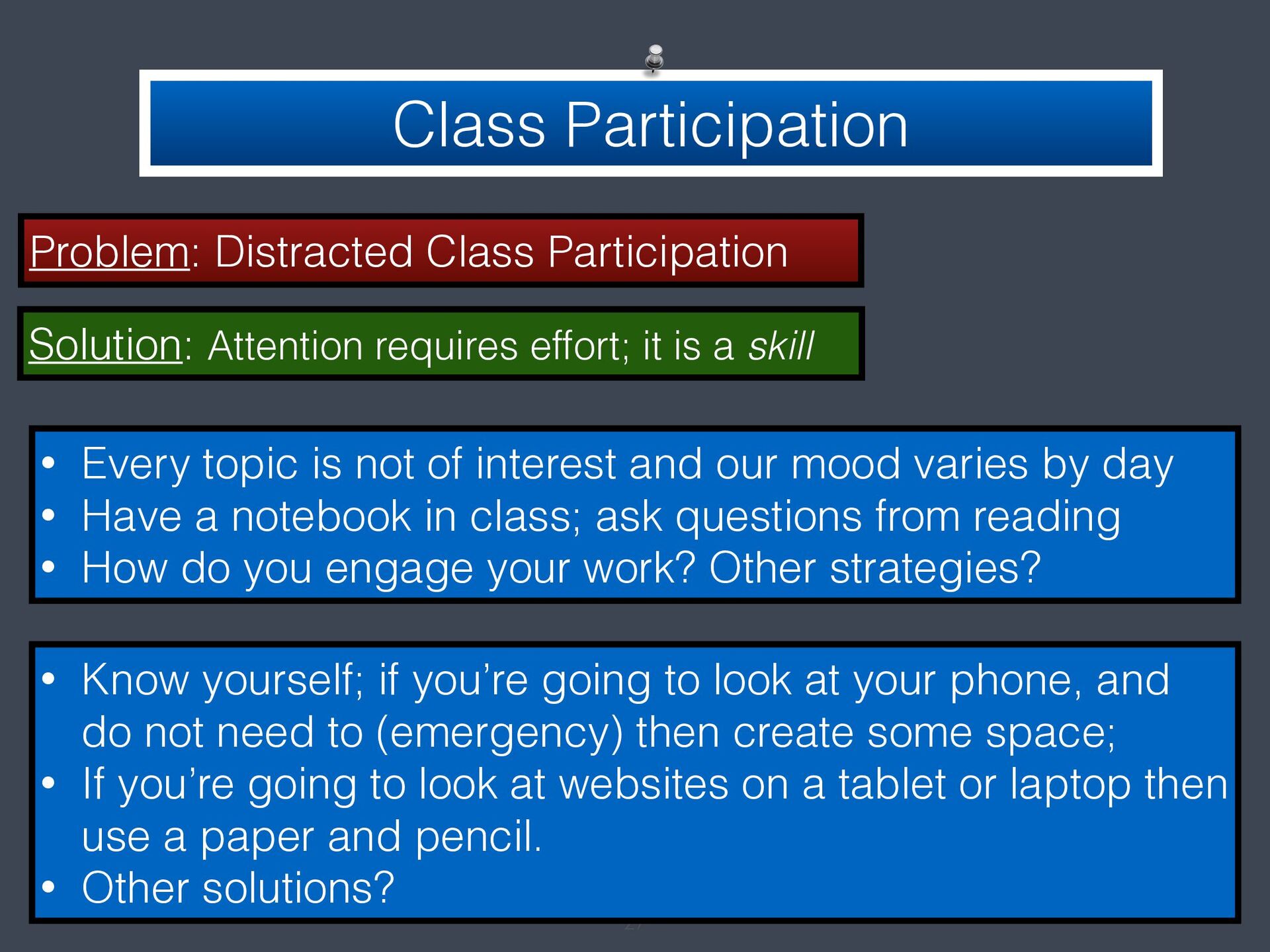
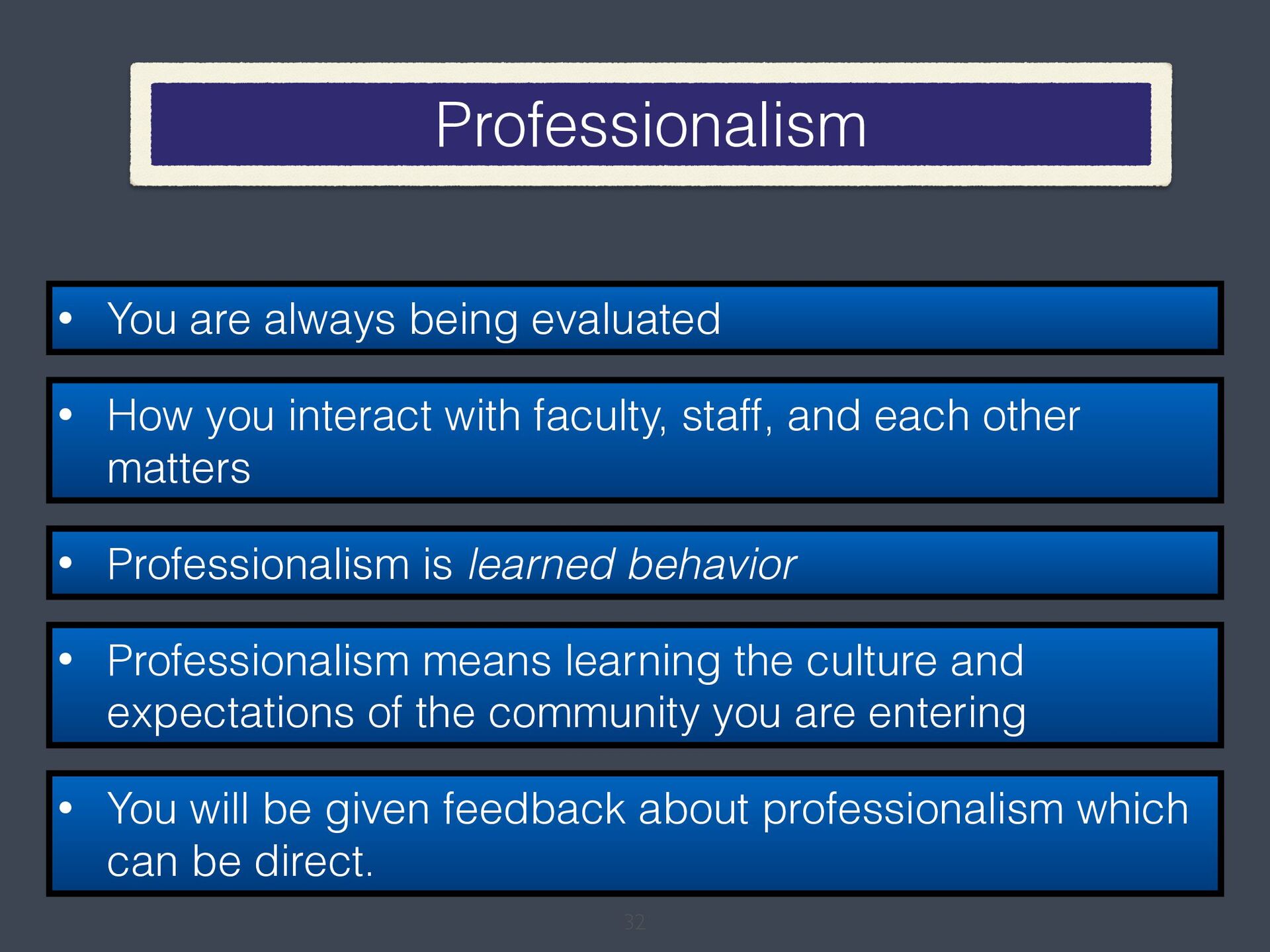
• Read all material • Take notes – Engage the Class/material • Challenge yourself to participate • Monitor How you Present Yourself in Class • • Instructors do • Professionalism is a Priority • Attend on time and leave on time (including from breaks) • • • If going to be late, email instructor. If sick, email your instructor and let them know. It’s fine to miss class. Just communicate. 32
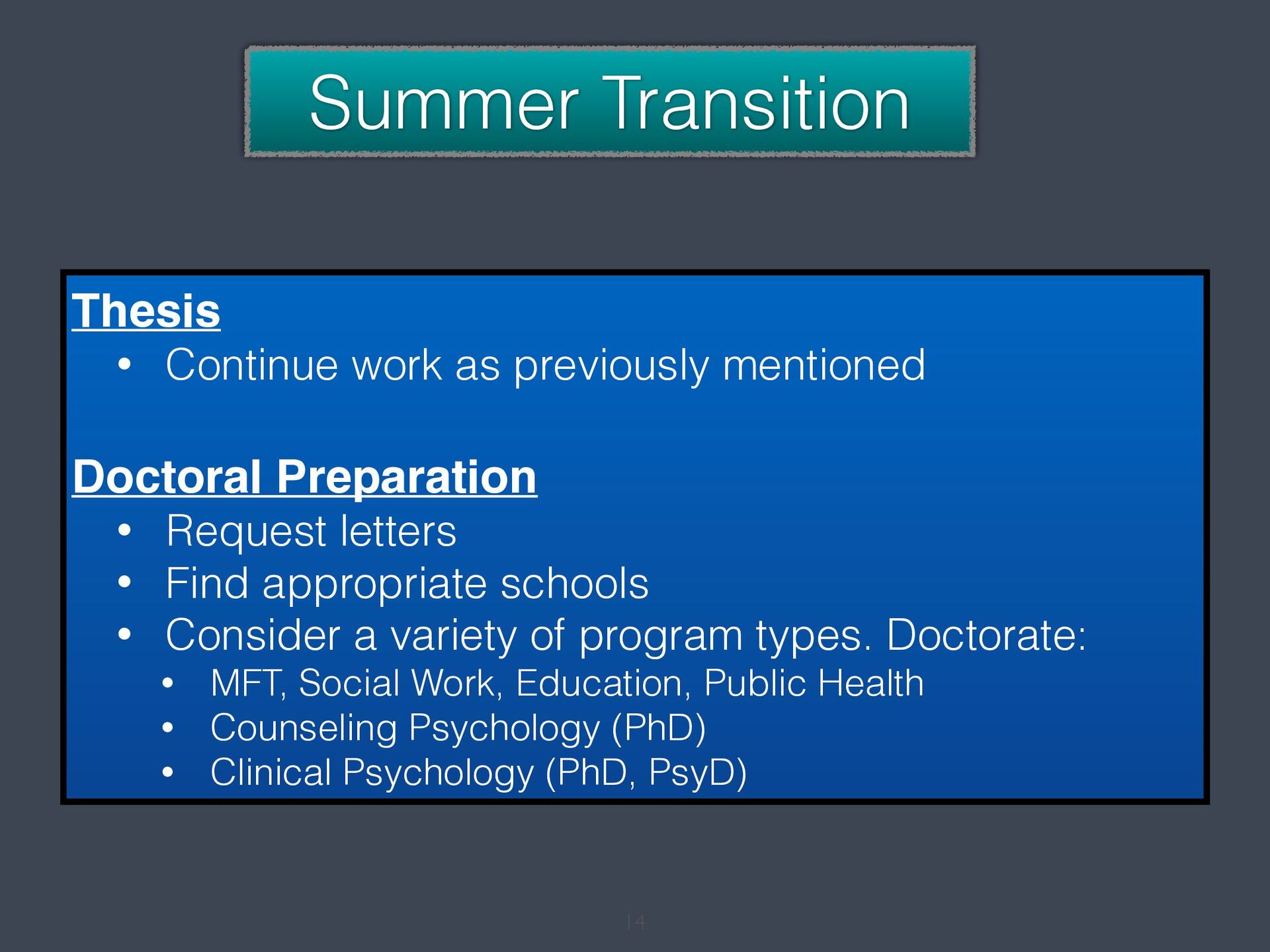
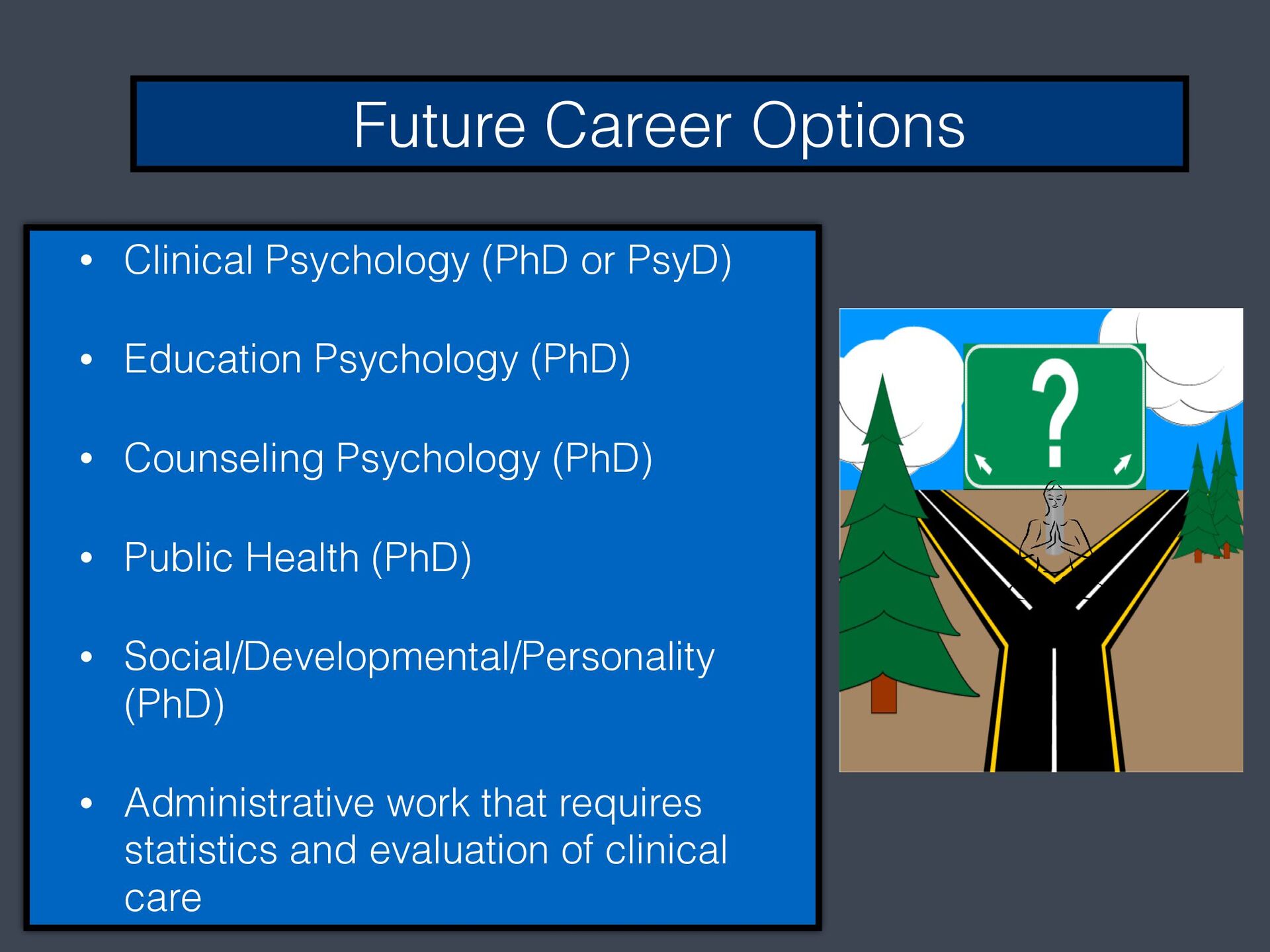
Education Psychology (PhD) • Counseling Psychology (PhD) • Public Health (PhD) • Social/Developmental/Personality (PhD) • Administrative work that requires statistics and evaluation of clinical care 39
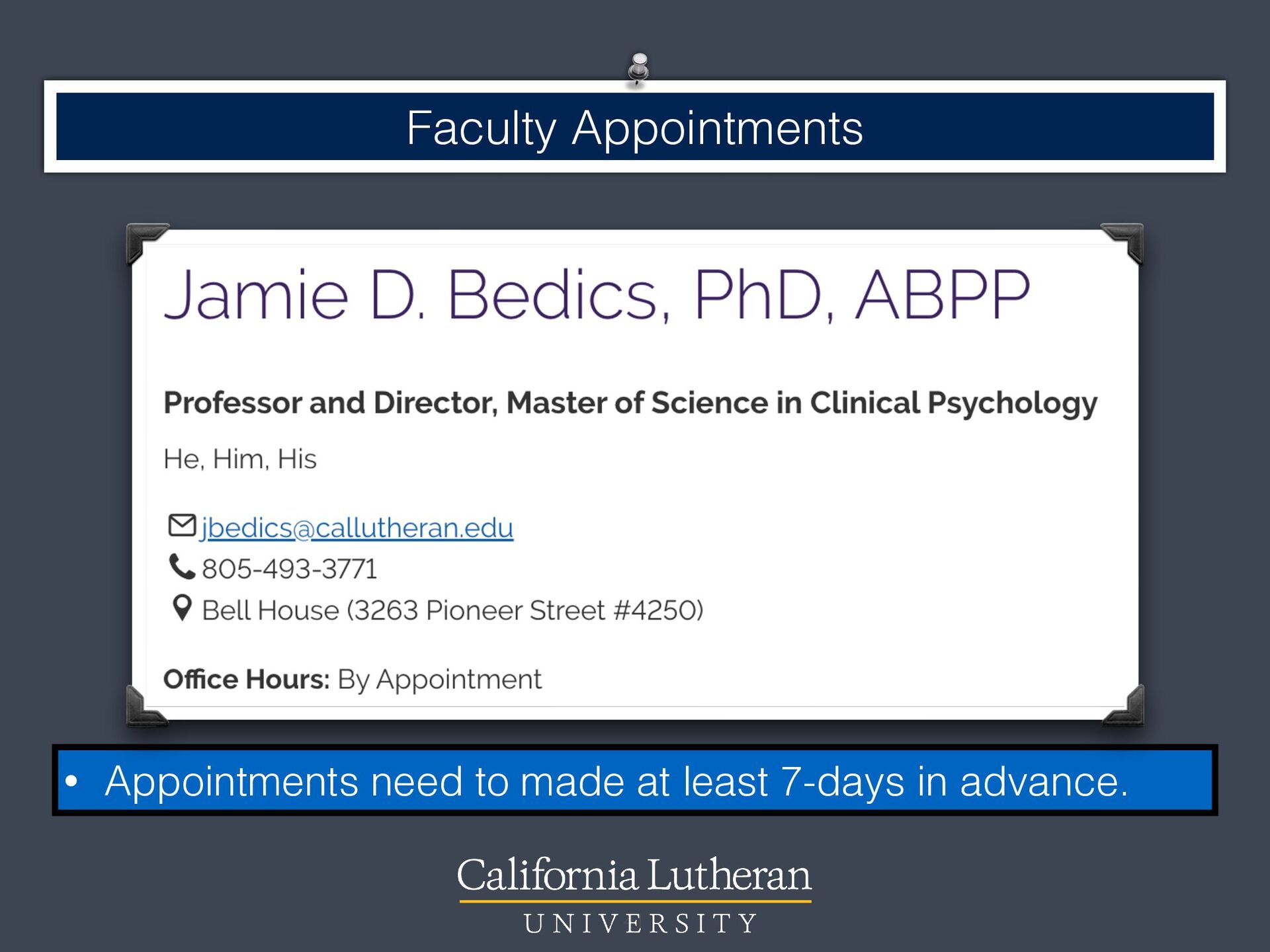
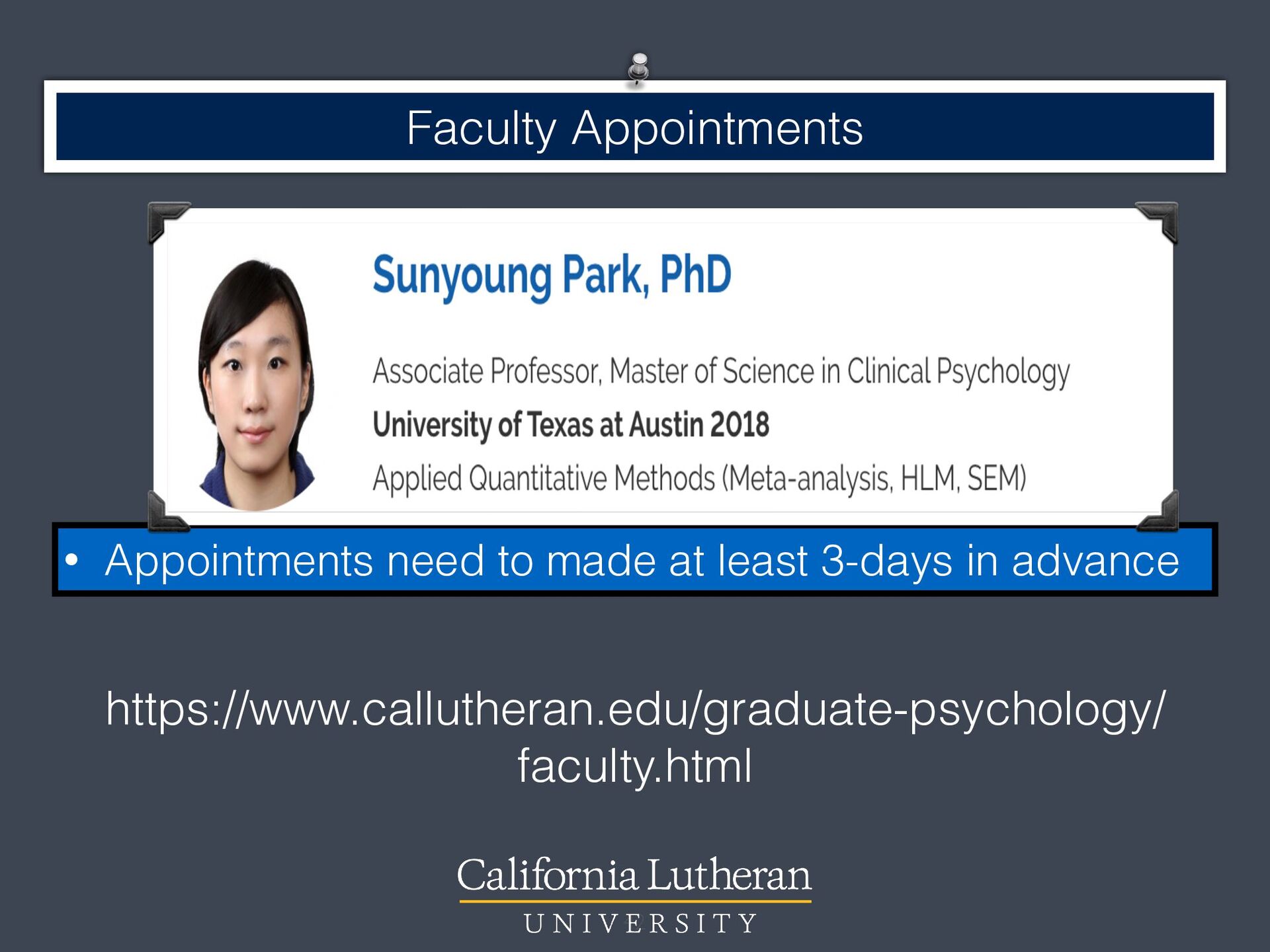
Bedics • See Dr. Bedics’ scheduler in the syllabus • Please reach out to all instructors to discuss material or answer questions • Think ahead • Do not expect a reply the same day • Do not expect a meeting in the same week 41


 jdbedics
 pawan_pharm
 juanmartin2026
 kekekenta
 yasslab
 yatabe
 signer
 masakiokuda
 cbtlibrary
 doratex
 dragon2
 mfonobong
 uxyall
 jakevdp
 geoffreycrofte
 eileencodes
 gr2m
gr2m
 reverentgeek
 jcasabona
 maltzj
 davetheseo
 elsirapls
 dougneiner