Upgrade to Pro — share decks privately, control downloads, hide ads and more …

Postmortem Design

Sponsored · Your Podcast. Everywhere. Effortlessly. Share. Educate. Inspire. Entertain. You do you. We'll handle the rest. →
Avatar for Per Axbom Per Axbom PRO
October 25, 2024
0

Postmortem Design

A talk/workshop given at Berghs School of Communication, first prepared for Ambition Empower. How can we prepare for and ensure that information is managed, accessed and treated with care after someone passes away? We will look at the challenges of digital after-life, explore how users can be given more control over how their content is managed, and how the expectations and needs of close relatives can be met.

Avatar for Per Axbom

Per Axbom PRO

October 25, 2024

Transcript

  1. P D e MY BLOG n t e g l

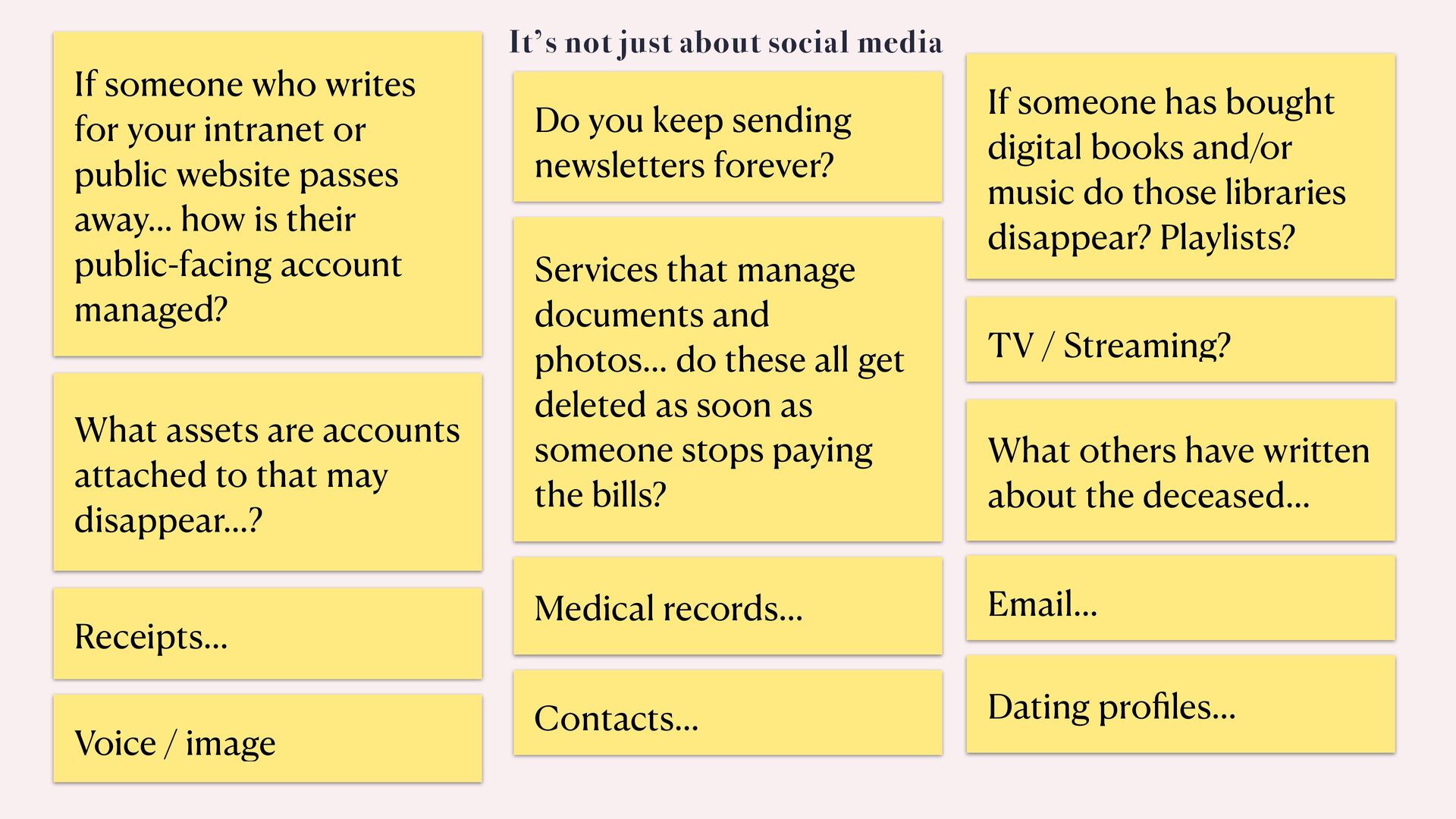
    i e s d e m e t r o m t s o UPON MY DEATH, PLEASE
  2. Take a deep breath. Thank you for being here. Participate

    in a way that works with where you are now, physically and mentally. And allow others to do the same.
  3. OPEN QUESTION menti.com code: 7936 0130 MENTI QUESTION How much

    do you think bout your own digit l leg cy nd wh t you m y w nt to keep or delete or sign over to someone else? a a a a a a a a Just brief response.
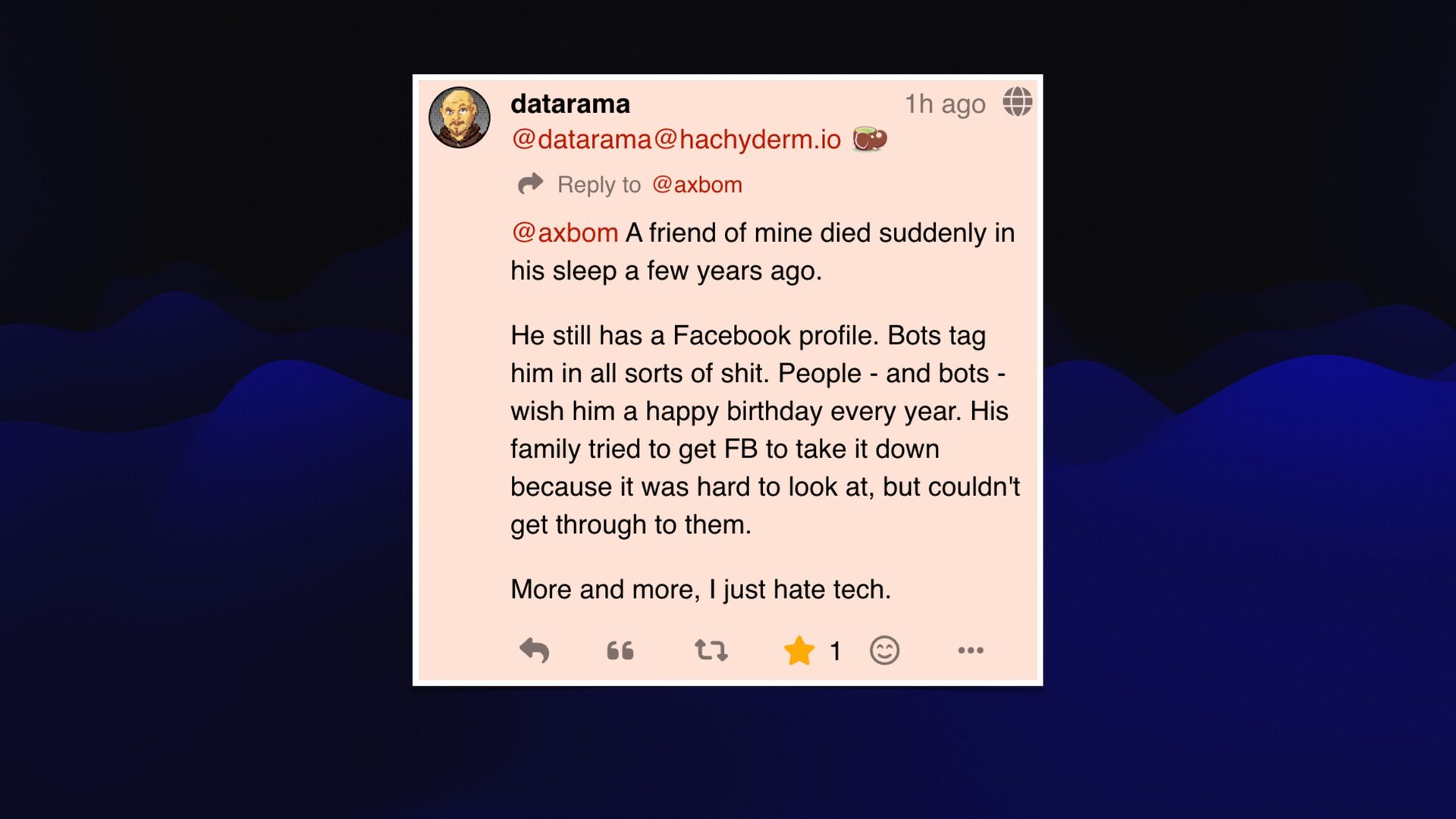
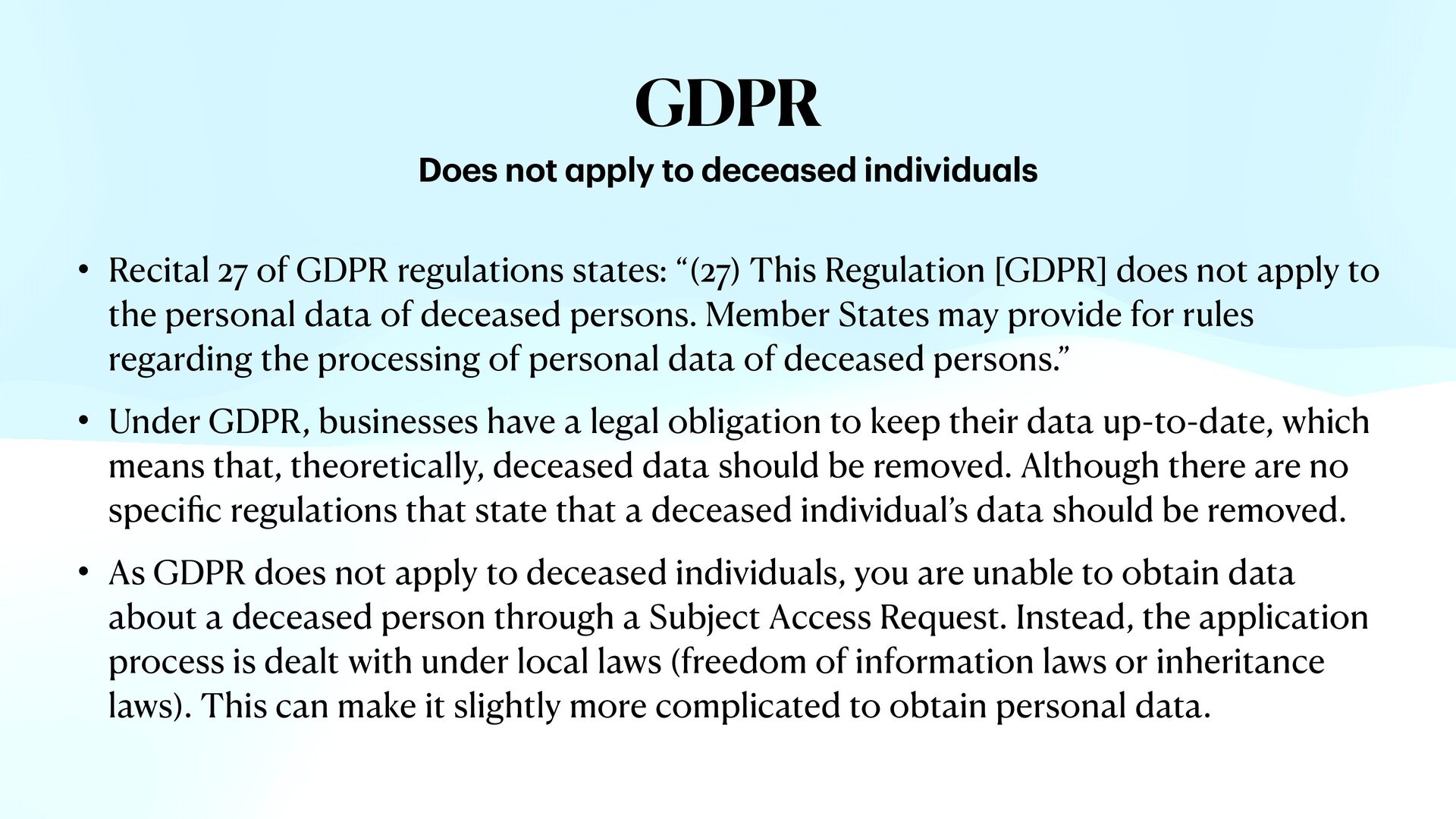
  4. GDPR Does not pply to dece sed individu ls •

    Recital 27 of GDPR regulations states: “(27) This Regulation [GDPR] does not apply to the personal data of deceased persons. Member States may provide for rules regarding the processing of personal data of deceased persons.” • Under GDPR, businesses have a legal obligation to keep their data up-to-date, which means that, theoretically, deceased data should be removed. Although there are no speci c regulations that state that a deceased individual’s data should be removed. • As GDPR does not apply to deceased individuals, you are unable to obtain data a a a fi about a deceased person through a Subject Access Request. Instead, the application process is dealt with under local laws (freedom of information laws or inheritance laws). This can make it slightly more complicated to obtain personal data.
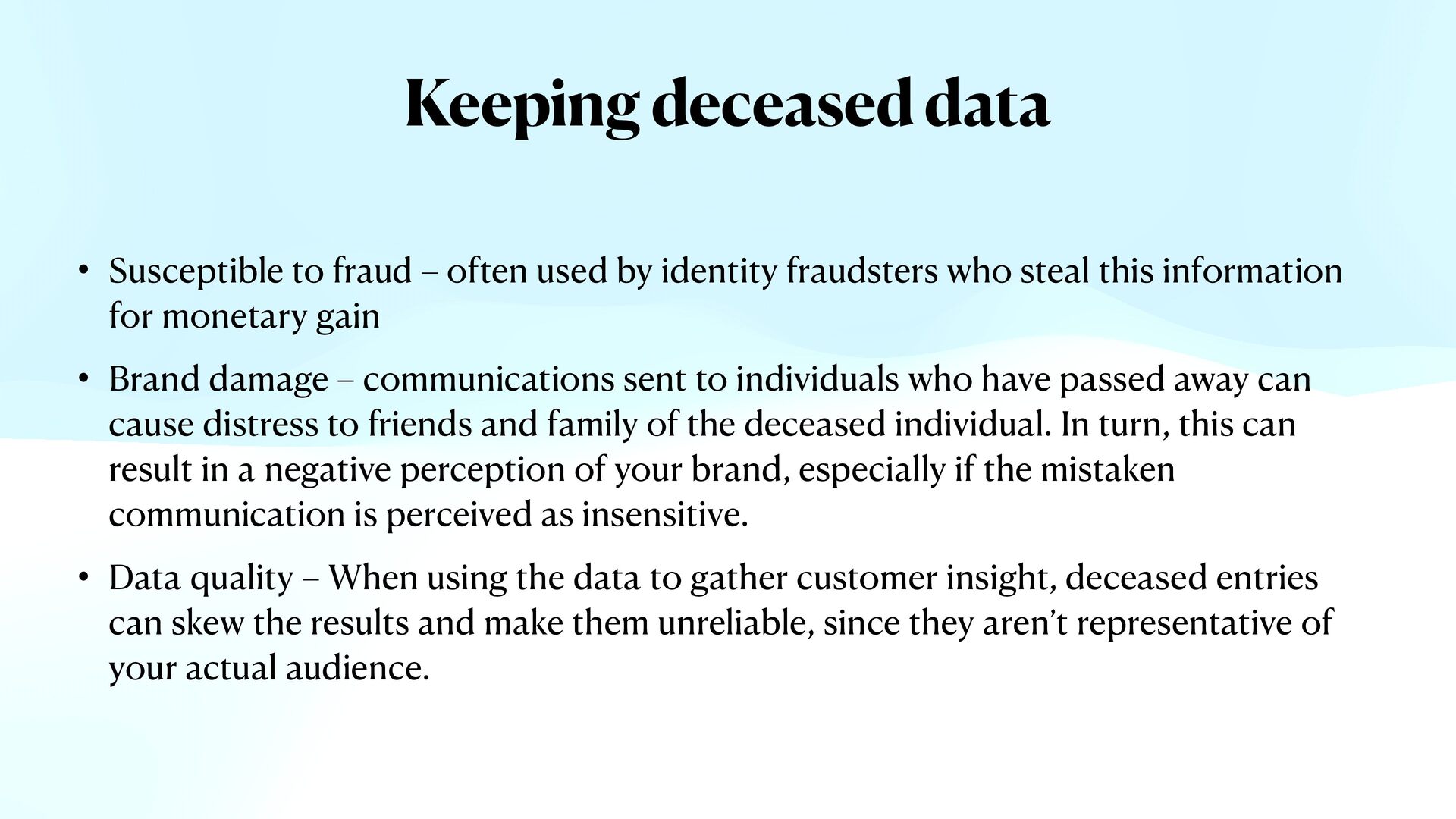
  5. Keeping deceased data • Susceptible to fraud – often used

    by identity fraudsters who steal this information for monetary gain • Brand damage – communications sent to individuals who have passed away can cause distress to friends and family of the deceased individual. In turn, this can result in a negative perception of your brand, especially if the mistaken communication is perceived as insensitive. • Data quality – When using the data to gather customer insight, deceased entries can skew the results and make them unreliable, since they aren’t representative of your actual audience.
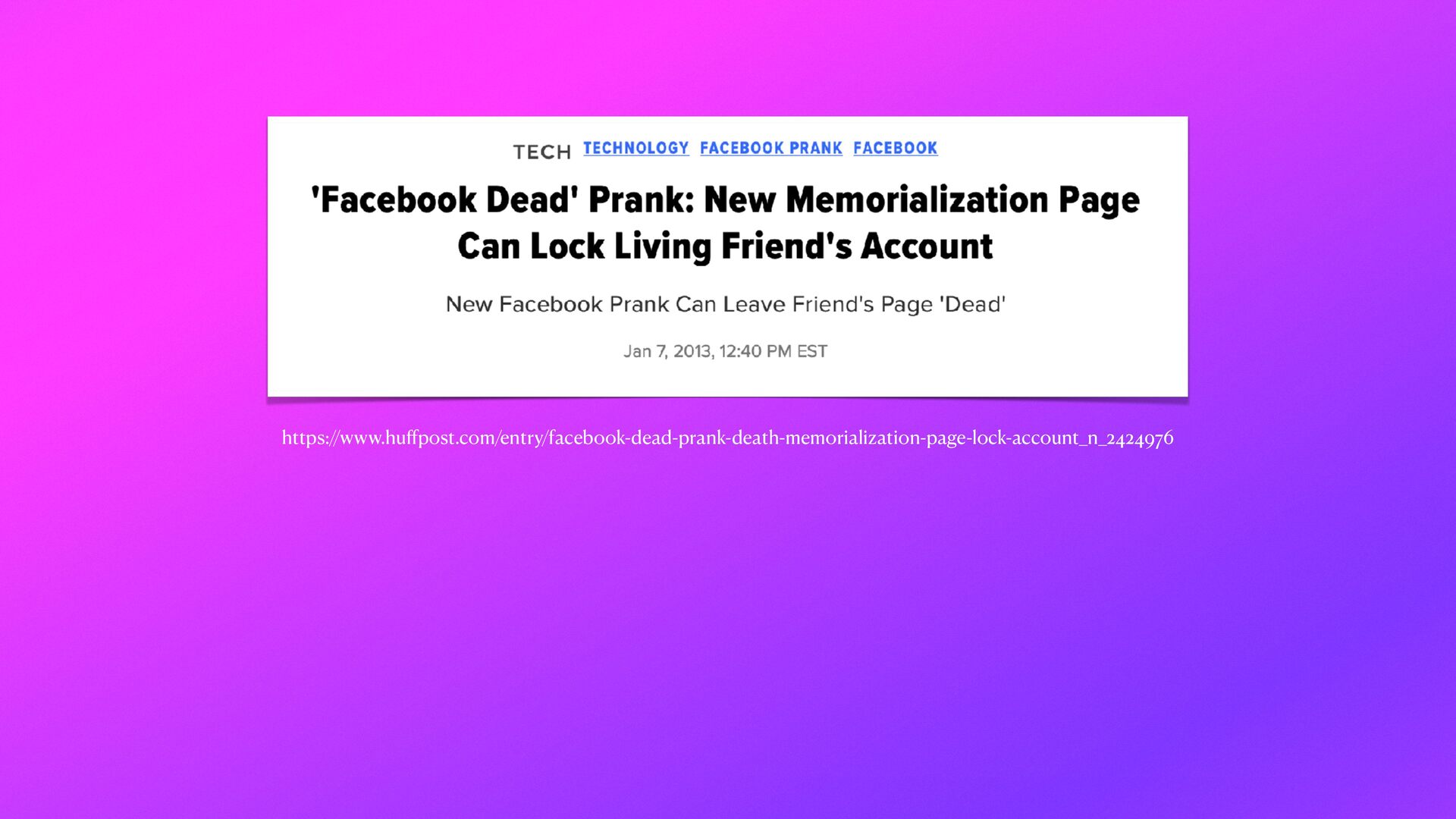
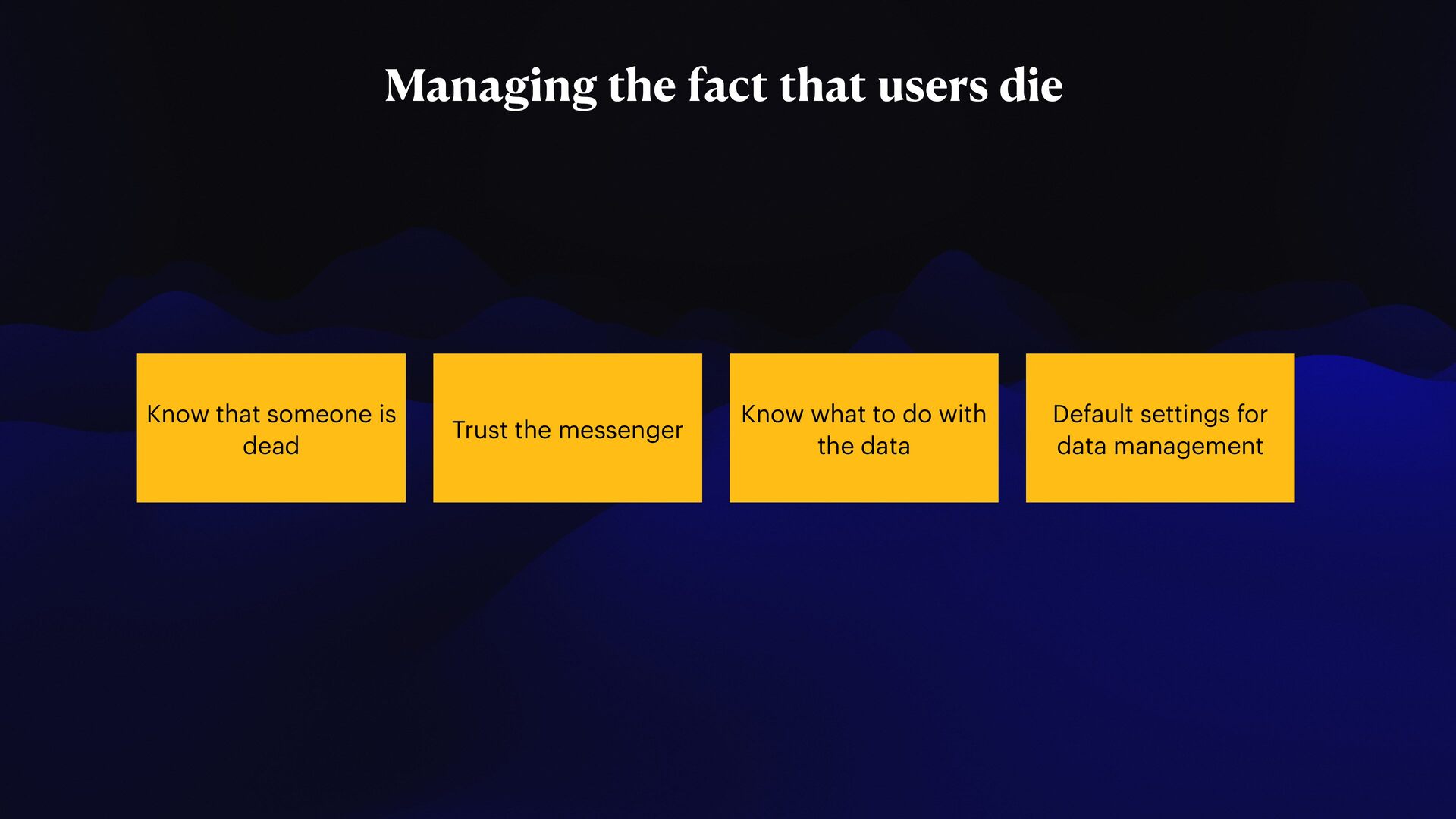
  6. Managing the fact that users die Know that someone is

    dead Trust the messenger Know what to do with the data Default settings for data management
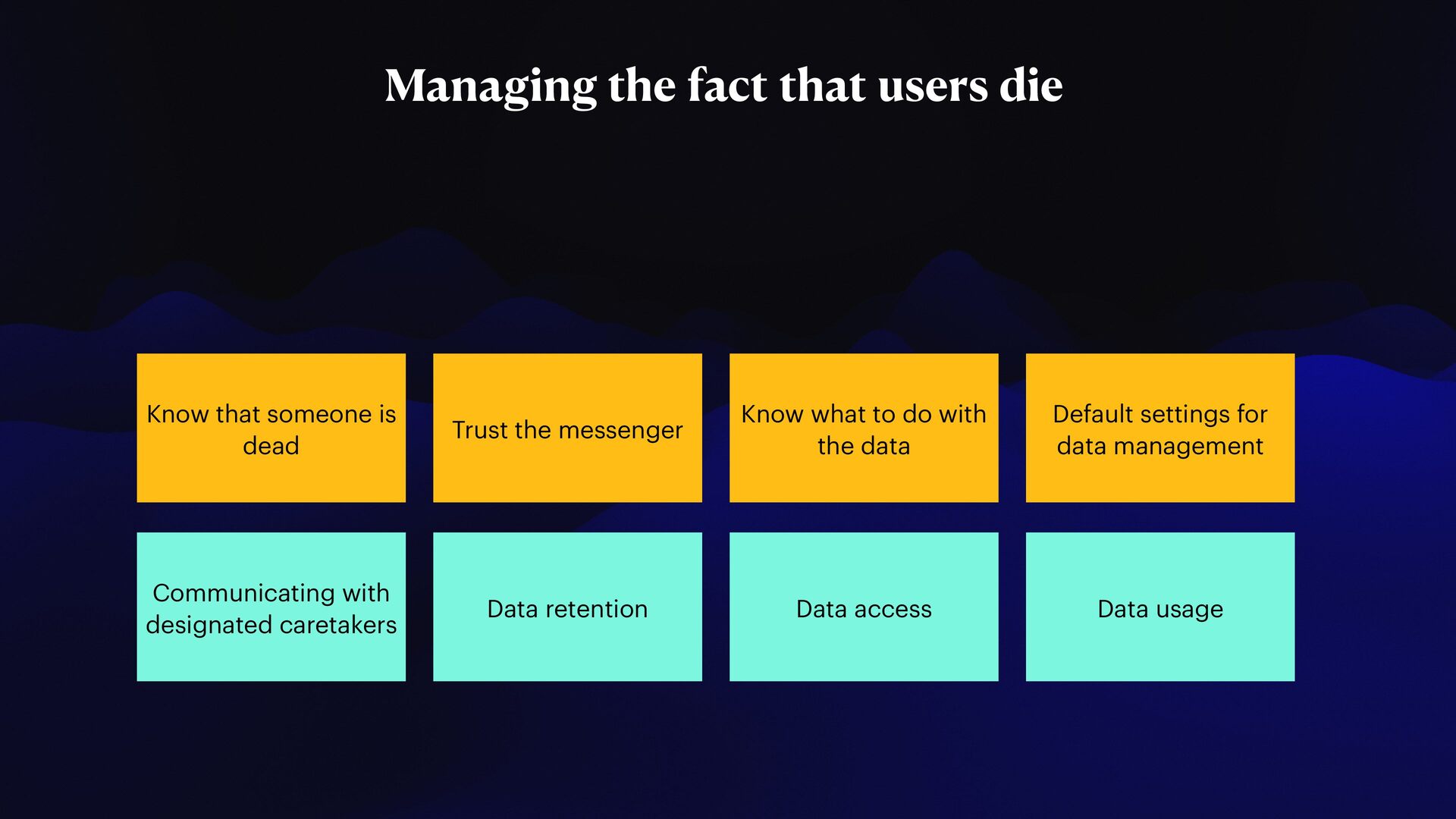
  7. Managing the fact that users die Know that someone is

    dead Communicating with designated caretakers Trust the messenger Know what to do with the data Default settings for data management Data retention Data access Data usage
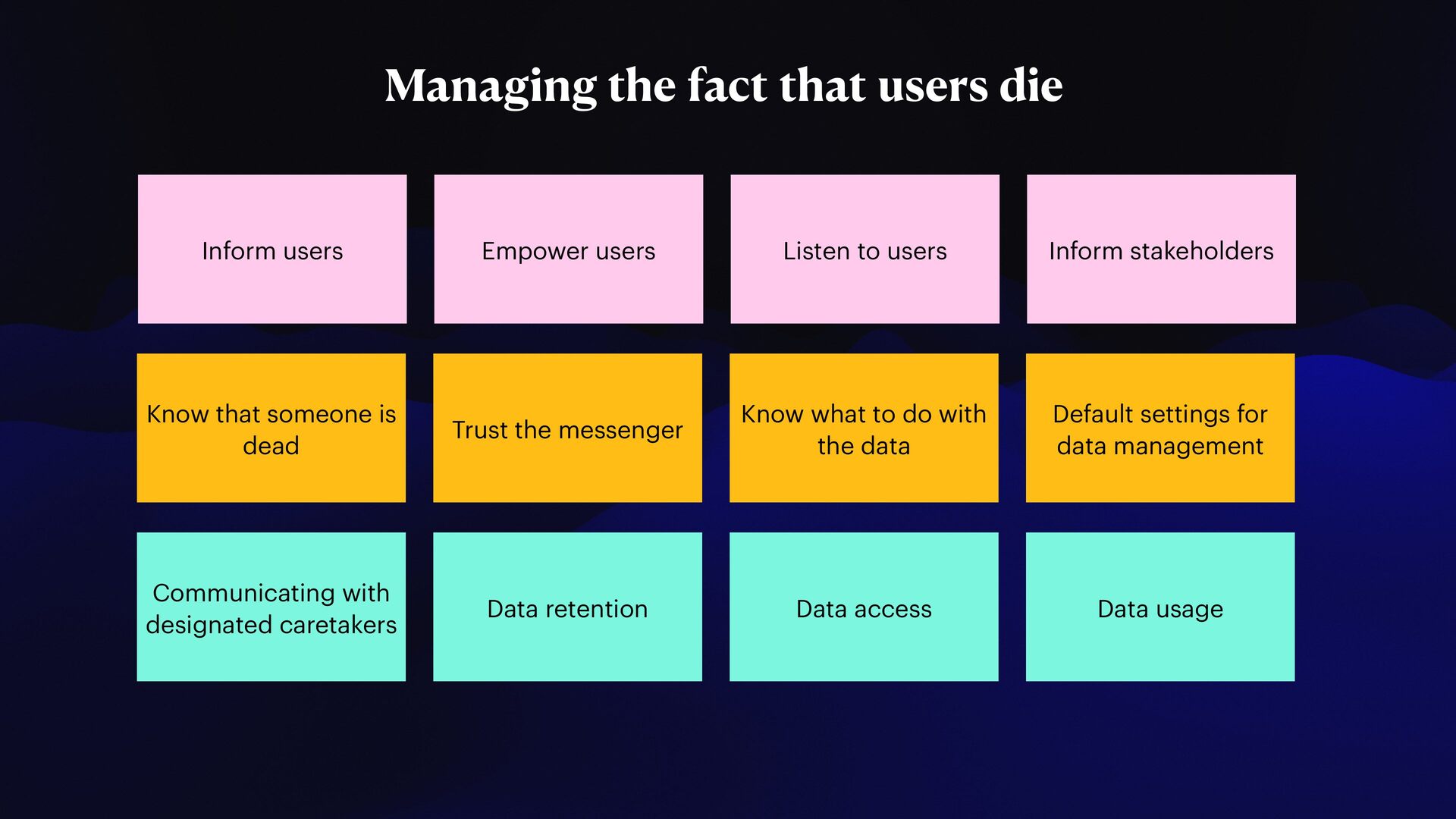
  8. Managing the fact that users die Inform users Empower users

    Listen to users Inform stakeholders Know that someone is dead Trust the messenger Know what to do with the data Default settings for data management Communicating with designated caretakers Data retention Data access Data usage
  9. Online platforms will have lots of settings for memorializing accounts.

    But they aren’t going to teach you how to download your content and make it available to your family. Maybe that’s what designers should do?
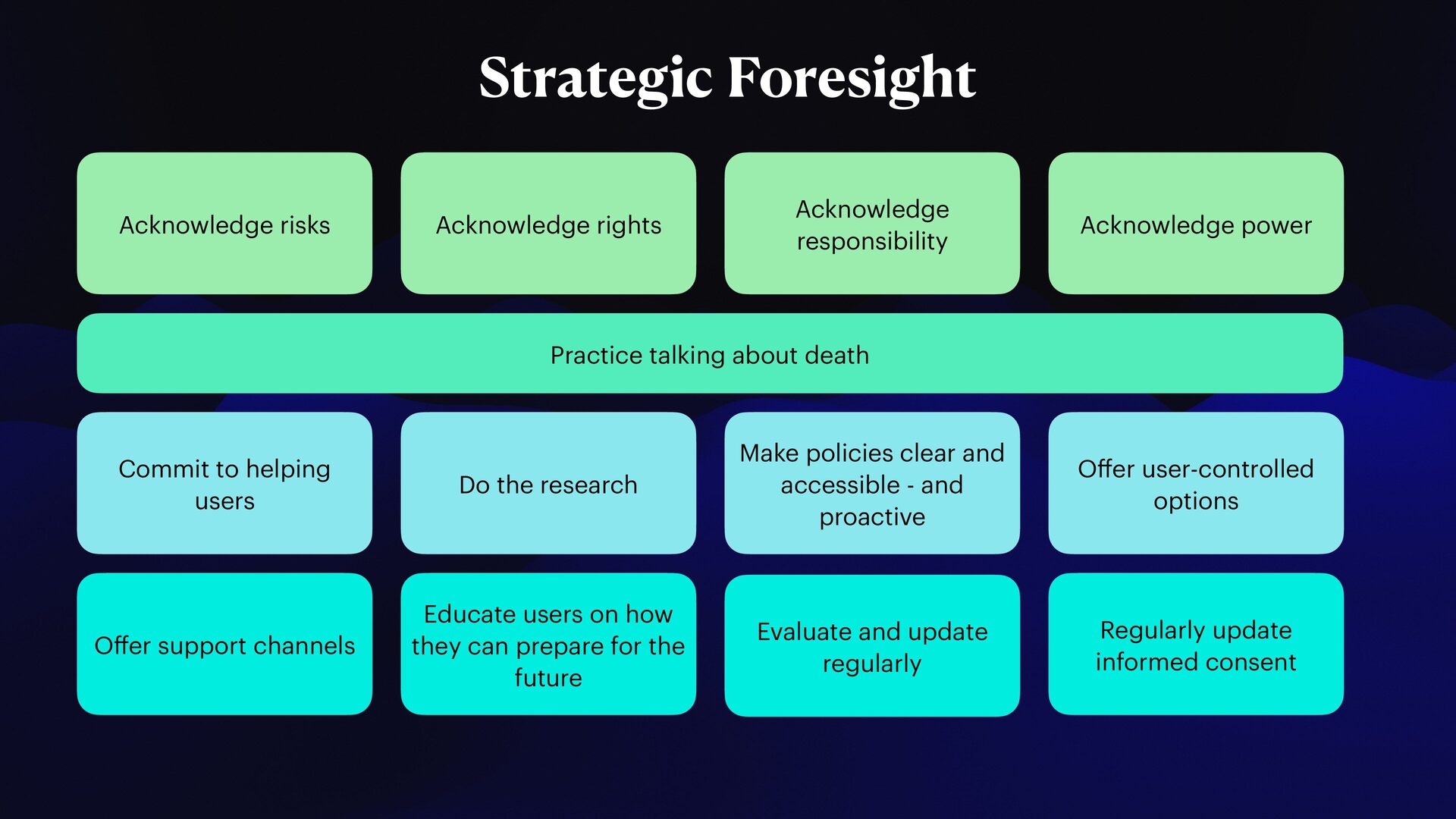
  10. Strategic Foresight Acknowledge risks Acknowledge rights Acknowledge responsibility Acknowledge power

    ff ff Practice talking about death Commit to helping users Do the research Make policies clear and accessible - and proactive O er support channels Educate users on how they can prepare for the future Evaluate and update regularly O er user-controlled options Regularly update informed consent
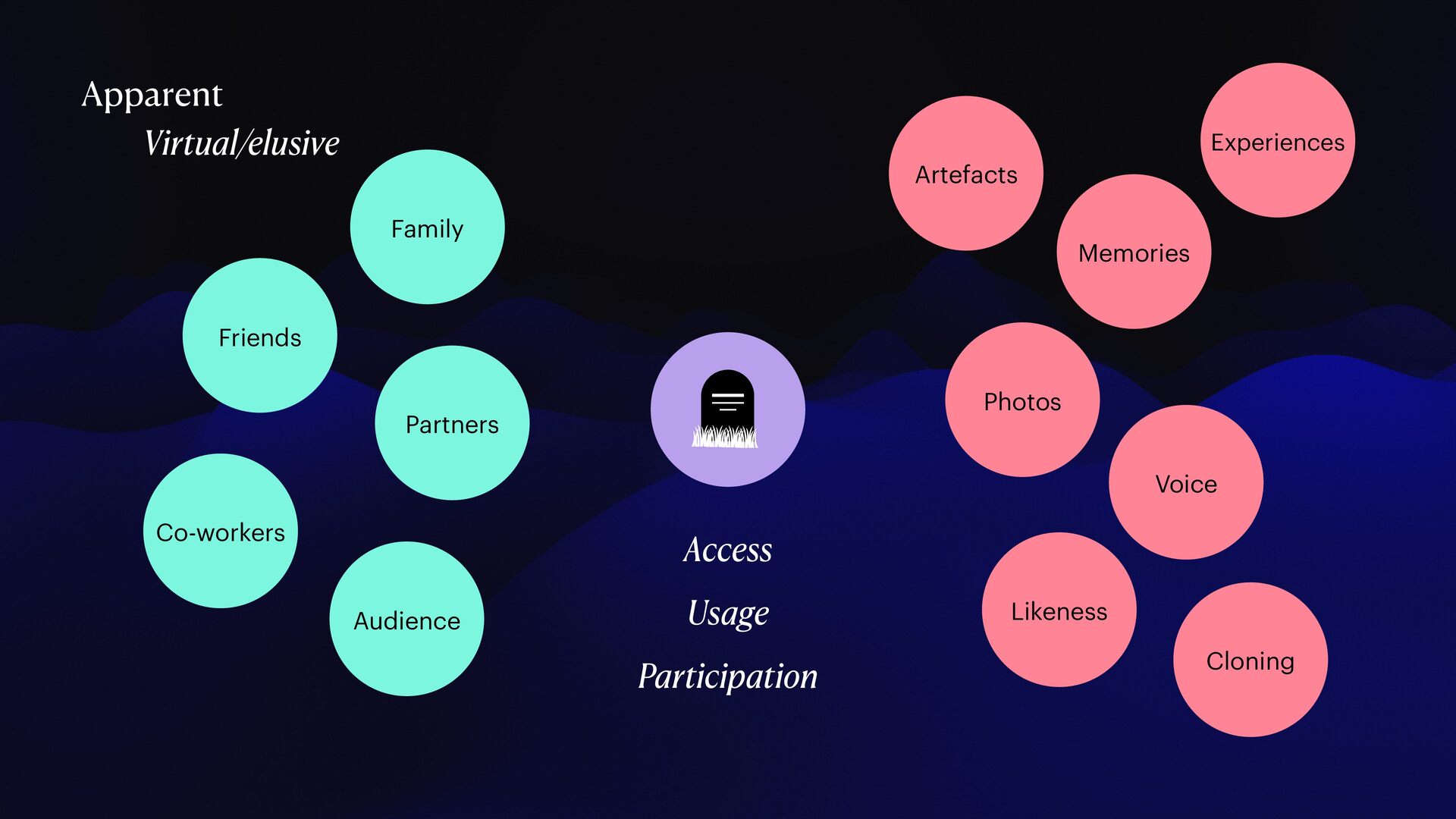
  11. Apparent Virtual/elusive Experiences Artefacts Family Memories Friends Photos Partners Voice

    Co-workers Access Audience Usage Participation Likeness Cloning
  12. Consider asking people close to you if they have considered

    what they would like to happen to their data after their passing.
  13. If someone who writes for your intranet or public website

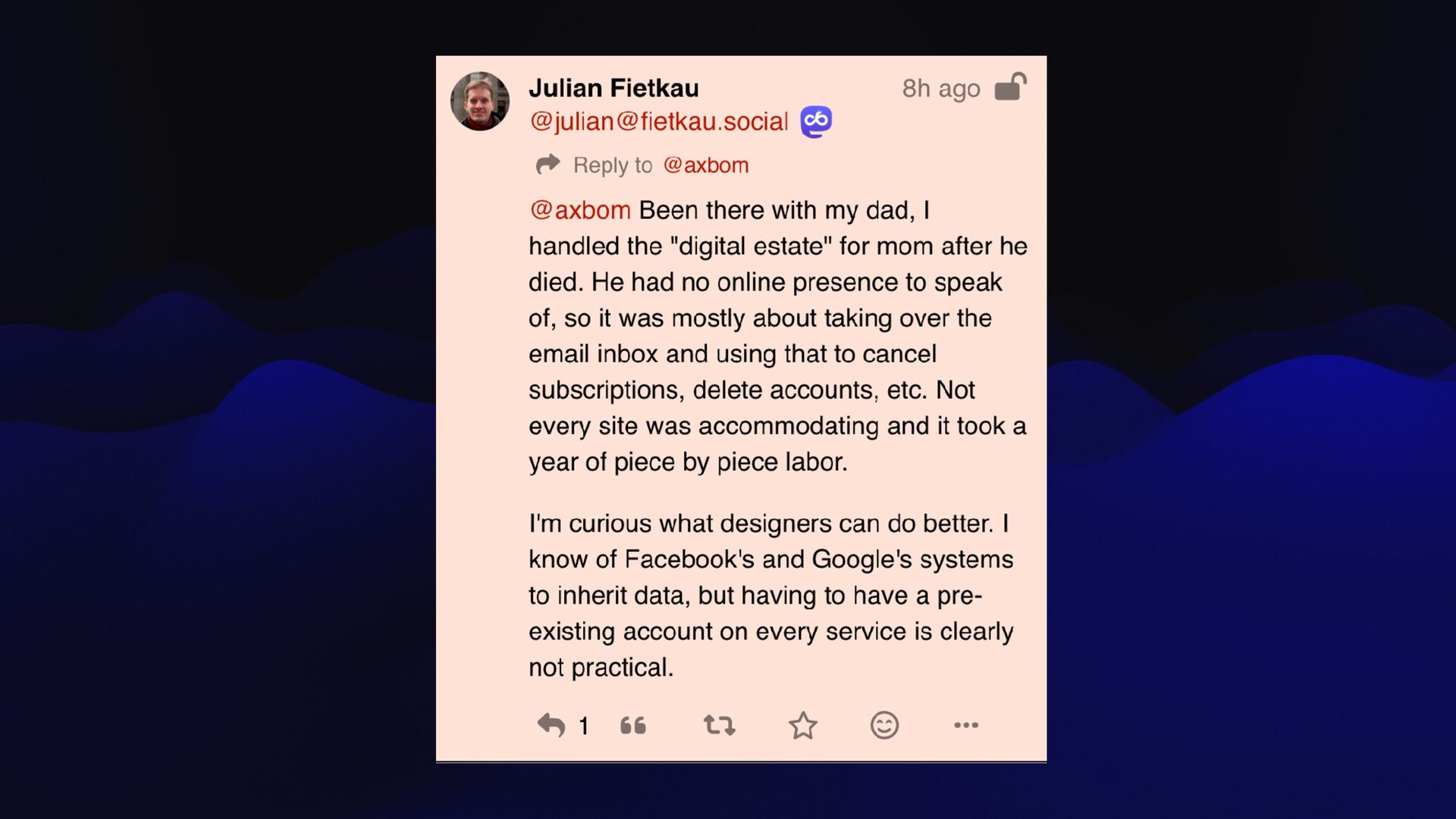
    passes away… how is their public-facing account managed? What assets are accounts attached to that may disappear…? Receipts… fi Voice / image It’s not just about social media Do you keep sending newsletters forever? Services that manage documents and photos… do these all get deleted as soon as someone stops paying the bills? If someone has bought digital books and/or music do those libraries disappear? Playlists? TV / Streaming? What others have written about the deceased… Medical records… Email… Contacts… Dating pro les…
  14. “We, the Party, control all records, and we control all

    memories. Then we control the past, do we not?” 1984 - George Orwell
  15. 'But how can you stop people remembering things?' cried Winston

    again momentarily forgetting the dial. 'It is involuntary. It is outside oneself. How can you control memory? You have not controlled mine!' 1984 - George Orwell
  16. Wh t c n providers of digit l services do

    better? f a a a a a Wh t feels dif icult? a a Wh t is your responsibility s designer?
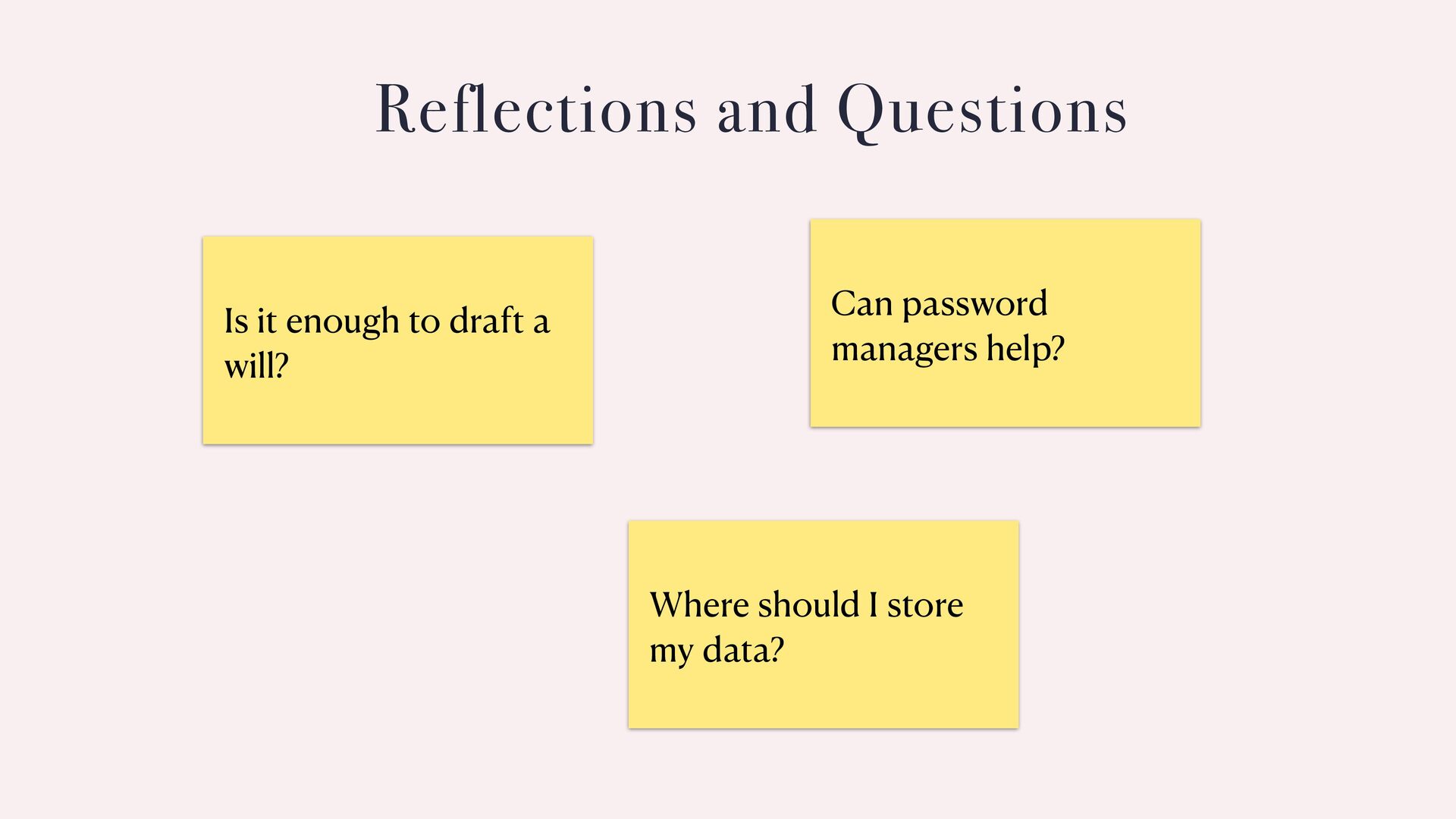
  17. Reflections and Questions Is it enough to draft a will?

    Can password managers help? Where should I store my data?
  18. PER AXBOM axbom.com / axbom.se blog • newsletter • podcast(s)

    d n i k e b o t r e b m e Rem T S R I F f l e to yo u rs 🥰 /axbom