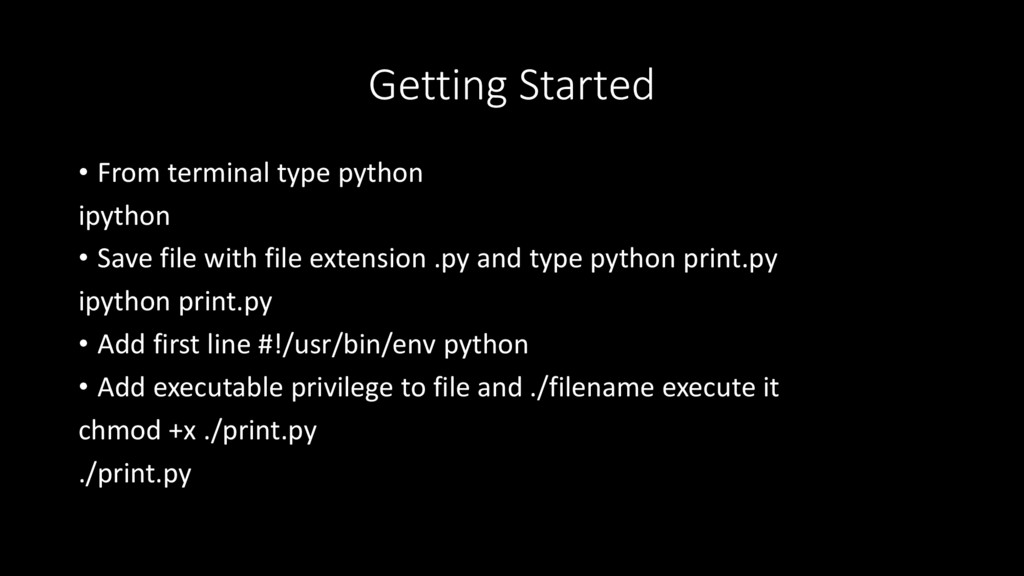
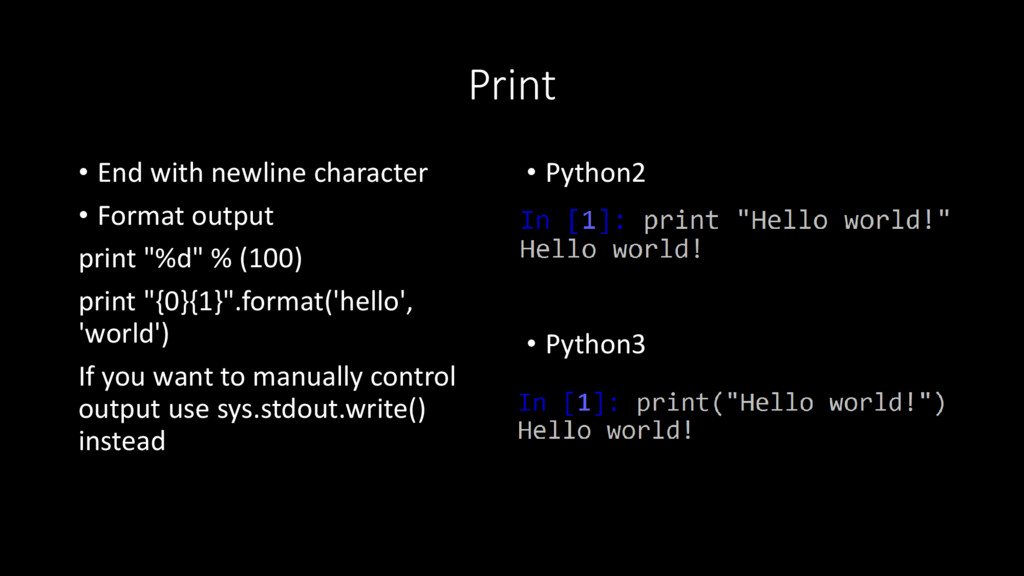
file with file extension .py and type python print.py ipython print.py • Add first line #!/usr/bin/env python • Add executable privilege to file and ./filename execute it chmod +x ./print.py ./print.py
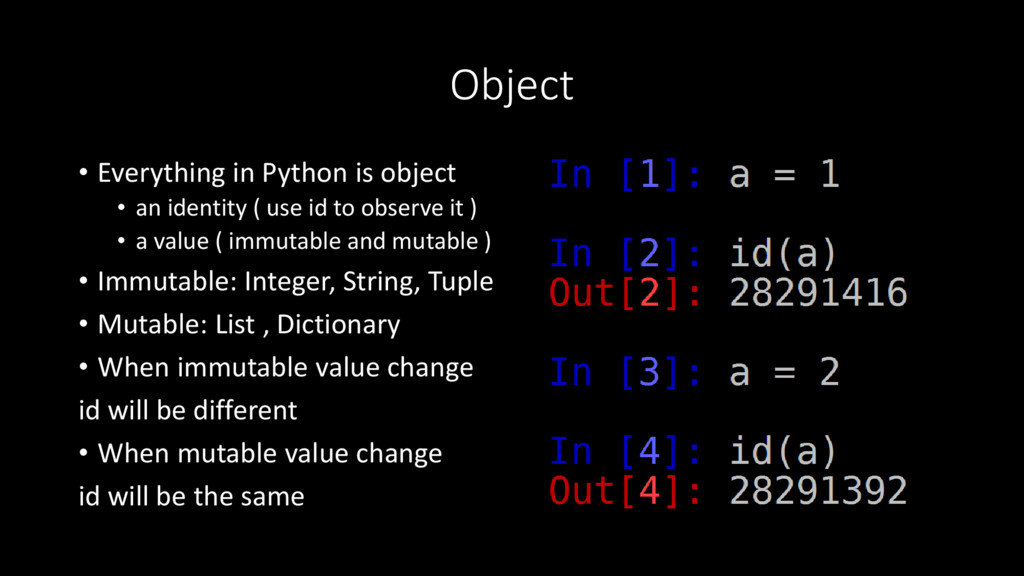
( use id to observe it ) • a value ( immutable and mutable ) • Immutable: Integer, String, Tuple • Mutable: List , Dictionary • When immutable value change id will be different • When mutable value change id will be the same
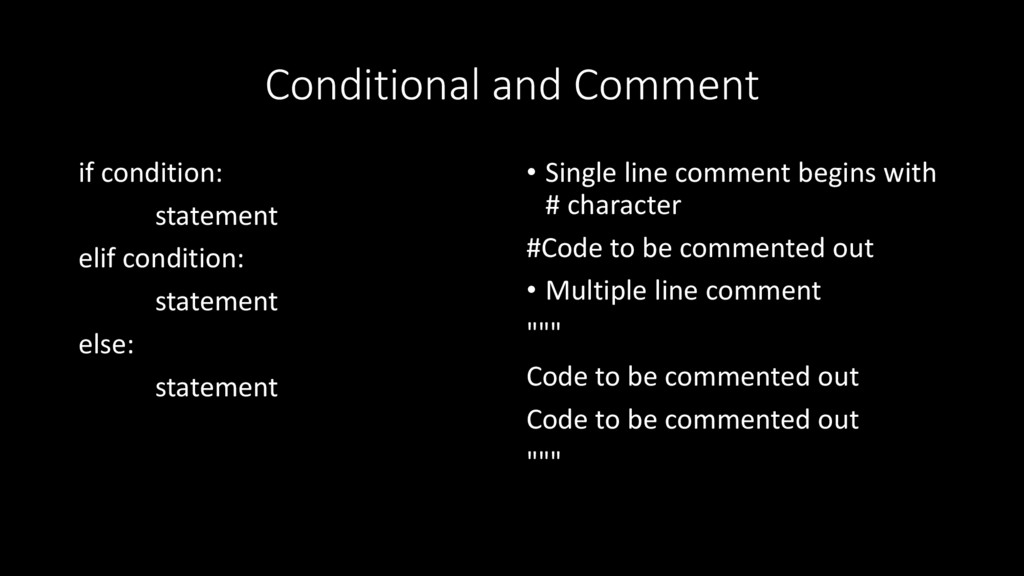
statement • Single line comment begins with # character #Code to be commented out • Multiple line comment """ Code to be commented out Code to be commented out """
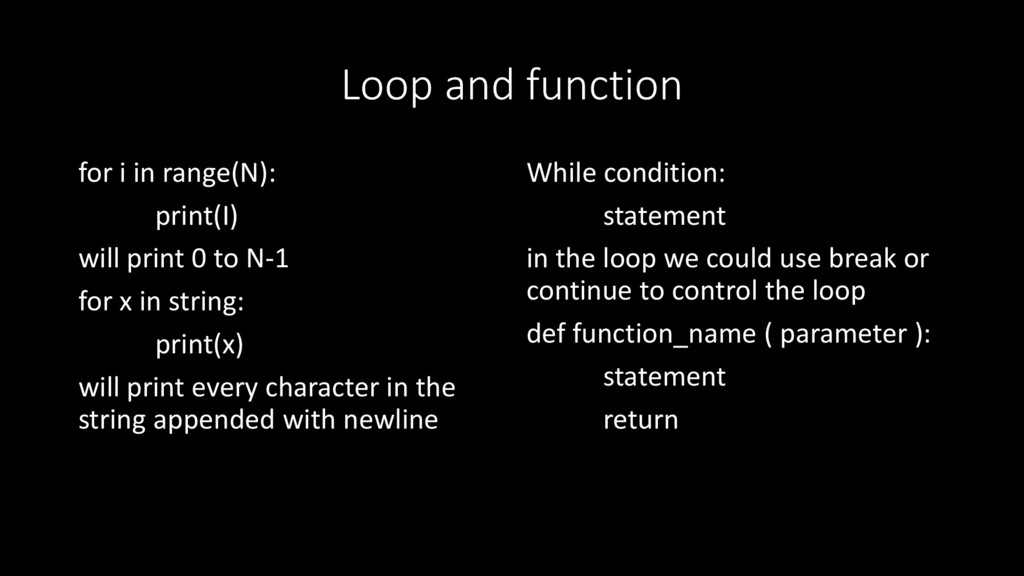
0 to N-1 for x in string: print(x) will print every character in the string appended with newline While condition: statement in the loop we could use break or continue to control the loop def function_name ( parameter ): statement return
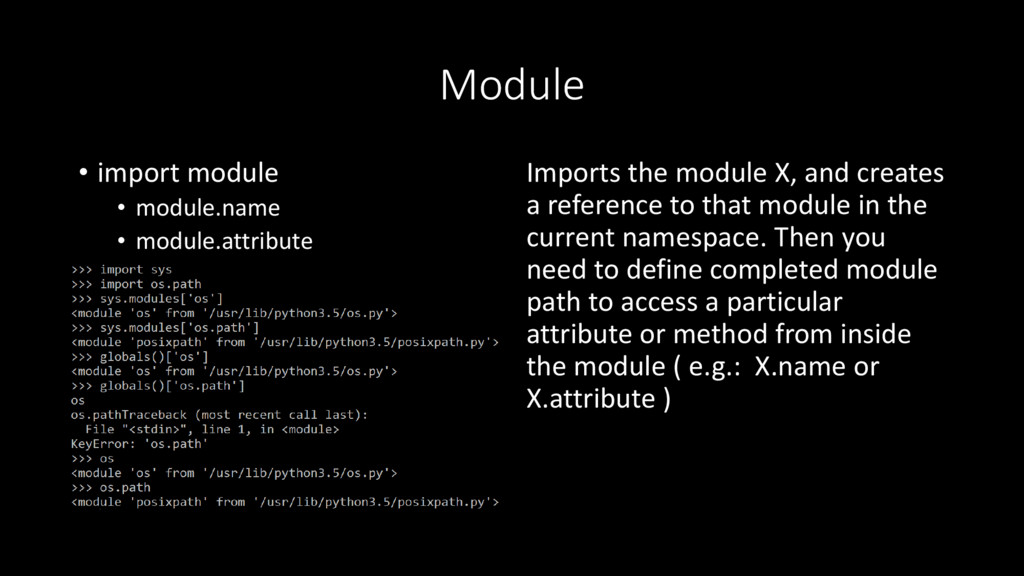
module X, and creates a reference to that module in the current namespace. Then you need to define completed module path to access a particular attribute or method from inside the module ( e.g.: X.name or X.attribute )
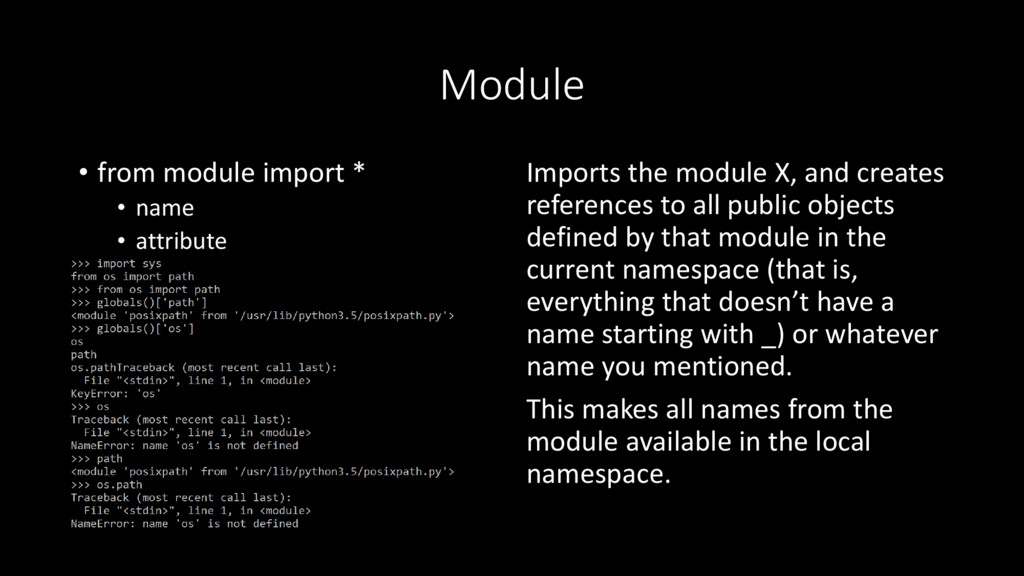
Imports the module X, and creates references to all public objects defined by that module in the current namespace (that is, everything that doesn’t have a name starting with _) or whatever name you mentioned. This makes all names from the module available in the local namespace.


 bananaappletw
 yusuga
 kishida
 kanfab1
 ivargrimstad
 drumath2237
 skydoves
 hatsu38
 gonta
gonta
 iwatsukayura
 tosite
 mpyw
mpyw
 findyinc
 techseoconnect
 tammyeverts
 garrettdimon
 tammielis
 madoxten
 palkan
 aleyda
 helmedeiros
 holman
 bcantrill
 tmiket
 pwiseman
![List • Declare with [] lis =[] • lis.append(element) #](https://files.speakerdeck.com/presentations/2cec1e0a61164095b9e166310708b0cf/slide_14.jpg)