Share
Embed
Transcript
71 slides
-
Stream Processing for the Serverless Generation Ben Stopford Office of
the CTO, Confluent -
Increasing Complexity Apps Monitoring Security Apps Apps S T R
E A M I N G P L AT F O R M Apps Monitoring Security Apps Apps DWH Hadoop S T R E A M I N G P L AT F O R M App Apps Search NoSQL Monitoring Security Apps Apps S T R E A M I N G P L AT F O R M Apps Search NoSQL Monitoring Security Apps Apps DWH Hadoop S T R E A M I N G P L AT F O R M App Apps Search NoSQL Monitoring Security Apps Apps S T R E A M I N G P L AT F O R M App Apps Search NoSQL Monitoring Security Apps Apps S T R E A M I N G P L AT F O R M App Apps Search NoSQL Apps Apps S T R E A M I N G P L AT F O R M Apps Search NoSQL Monitoring Security Apps Apps DWH Hadoop S T R E A M I N G P L AT F O R M App Apps Search NoSQL Mon Sec Apps Apps S T R E A M I N G P L AT F O R M Apps Search NoSQL Monitoring Security Apps Apps DWH Hadoop S T R E A M I N G P L AT F O R M App Apps Search NoSQL Apps App S T R E A M I N G P L AT F O R M Apps Search NoSQL Monitoring Security Apps Apps DWH Hadoop S T R E A M I N G P L AT F O R M App Apps Search NoSQL S T R E A M I N Apps Search NoSQL Apps DWH S T R E A M I N G P L AT App Apps Search NoSQL Apps S T R E A M I N G P L AT Apps Search NoSQL Apps Apps DWH Hadoop S T R E A M I N G P L AT F O R M App Apps Search NoSQL S T Apps Search NoSQL DWH S T R E App Apps Apps Search Apps App Apps Apps Apps Search Apps Apps App Apps Apps Search App Kafka Evolution of software systems Monolith Distributed Monolith Microservices Event-Driven Microservices -
Apps Search NoSQL Mo Se Apps Apps S T R
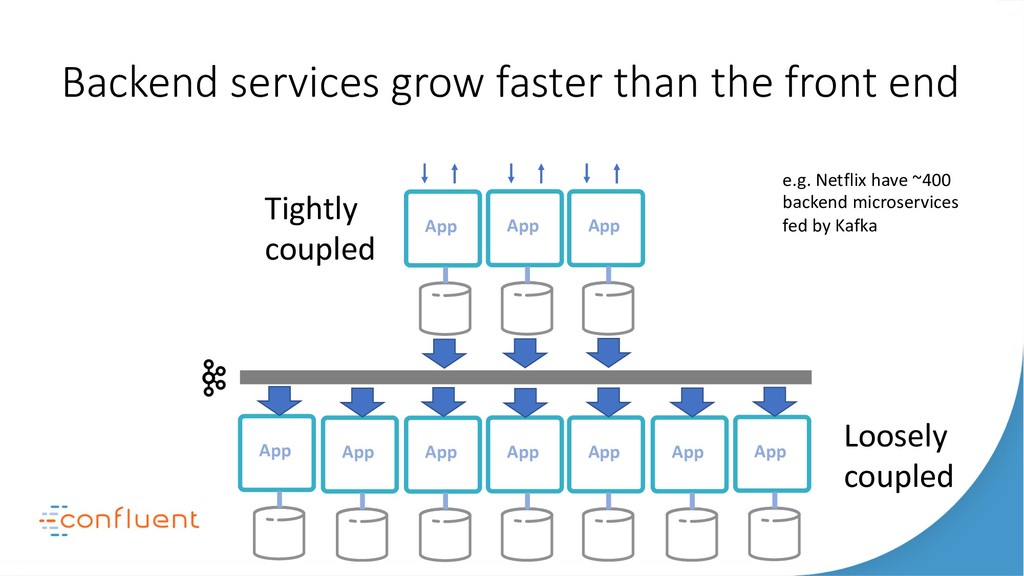
E A M I N G P L AT F O R M Apps Search NoSQL Monitoring Security Apps Apps DWH Hadoop S T R E A M I N G P L AT F O R M App Apps Search NoSQL Monitoring Security Apps Apps S T R E A M I N G P L AT F O R M Apps Search NoSQL Monitoring Security Apps Apps DWH Hadoop S T R E A M I N G P L AT F O R M App Apps Search NoSQL Apps Apps S T R E A M I N G P L AT F O R M Apps Search NoSQL Monitoring Security Apps Apps DWH Hadoop S T R E A M I N G P L AT F O R M App Apps Apps Apps Apps Apps Apps App Apps Apps Apps Apps Apps Apps App Apps Apps Apps Apps Apps Apps App Apps Apps Ap Apps Apps Apps App Apps Apps Apps Apps Apps App Apps Apps Apps Apps Apps Apps App Apps Apps Apps Apps Apps Apps App Backend services grow faster than the front end Tightly coupled Loosely coupled e.g. Netflix have ~400 backend microservices fed by Kafka -
In the serverless world, which is inherently event driven, stream
processors will become as important as databases are today. -
Apps Apps Apps Apps Search Monitoring Apps Apps Apps Apps
Apps Apps Search Monitoring Apps Apps Apps Search NoSQL Apps Apps DWH Hado S T R E A M I N G P L AT F O R M Apps Search NoSQL Apps DWH S T R E A M I N G P L AT F O R M PRODUCER CONSUMER Streaming Platform -
Event Storage Kafka stores petabytes of data Stream Processing Real-time
processing over streams and tables Scalability Clusters of hundreds of machines. Global. + + + Roots in big data messaging -
Are Serverless Functions and Stream Processors related? They are both
functions we define that are triggered by streams of events. -
FaaS in brief • Write a function • Upload •
Configure a trigger (HTTP, Event, Object Store, Database, Timer etc.) -
FaaS in a Nutshell • Fully managed (Runs in a
container) • Pay as you use • Auto-scales with load ~ 0-1000 concurrent functions • Short lived (max ~5 mins) • Weak ordering guarantees • Cold start’s can be slow: 100ms – 45s (AWS 250ms-7s) -
Where is FaaS useful? • Interesting for spikey workloads (i.e.
Extremities) • Grid compute: HPC, Genomics, Finance • Interesting for use cases that wouldn’t typically warrant the cost of conventional massive parallelism e.g. CI systems. • Serverless programming model -
Serverless Developer Ecosystem • Runtime diagnostics • Monitoring • Deploy
loop • Testing • IDE integration Currently quite poor -
Simple online retail example When the order is created ..and
the payment has been completed => get the customer’s info and send them an email confirming the purchase. -
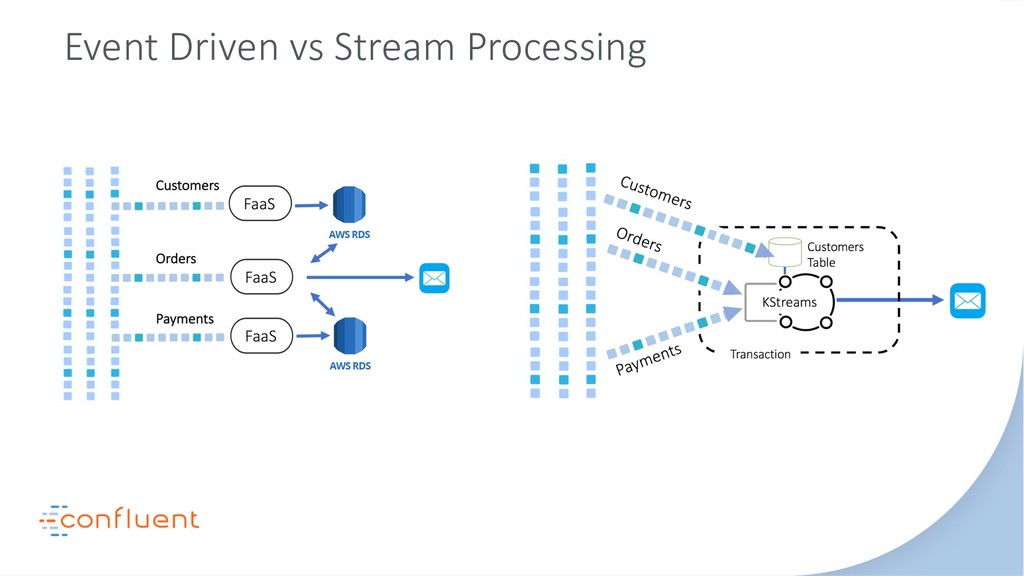
Serverless Way: event-driven (not streaming) Orders Customers Payments FaaS FaaS
FaaS - Too slow for high velocity use cases ~ 5-10 messages per second - Correctness: what if the payment isn’t there when the order arrives? All Customer data All Payment data -
Process boundary Orders Payments KStreams Customers Table Customers Event-Streaming Platforms
sew these operations together Stateful or Stateless • No network calls. • 50,000-100,000 messages per second, per thread • Better correctness -
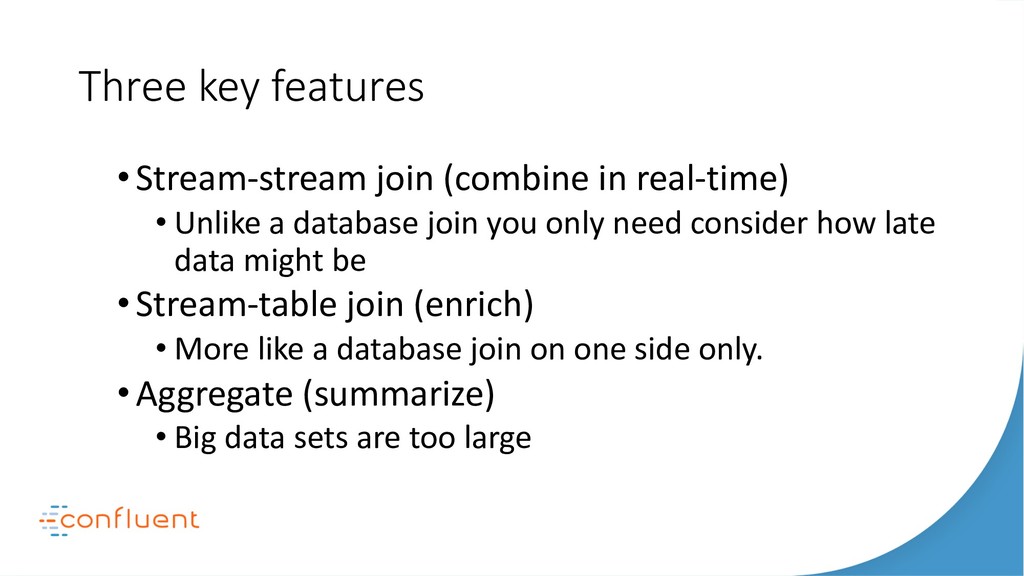
Three key features •Stream-stream join (combine in real-time) • Unlike
a database join you only need consider how late data might be •Stream-table join (enrich) • More like a database join on one side only. •Aggregate (summarize) • Big data sets are too large -
KSQL Joining two streams orders.join(payments) Bob’s Order Bob’s Payment Jill’s
Payment Jill’s Order Orders Payments -
KSQL Join is on the key (messages have keys in
Kafka) orders.join(payments) Bob’s Order Bob’s Payment Jill’s Payment Jill’s Order -
KSQL Joining Two Streams: Streaming systems doesn’t know when data
is going to arrive orders.join(payments) Bob’s Order Bob’s Payment Jill’s Payment Jill’s Order -
KSQL Bob’s payment arrives – nothing to join with orders.join(payments)
Bob’s Payment Bob’s Order Jill’s Payment Jill’s Order -
KSQL Message gets buffered Key-value store Bob’s Order Bob’s Payment
Jill’s Payment Jill’s Order -
KSQL Jill’s order arrives and gets buffered Key-value store Bob’s
Order Jill’s Payment Jill’s Order Bob’s Payment -
KSQL Another non-matching record is buffered Key-value store Bob’s Order
Jill’s Payment Jill’s Order Bob’s Payment -
KSQL MATCH - based on key comparison Bob’s Order Jill’s
Payment Jill’s Order Bob’s Payment -
KSQL MATCH – Create output event Bob’s Order Jill’s Payment
Jill’s Order Bob’s Payment -
KSQL 2nd MATCH – Create another output event Bob’s Order
Jill’s Payment Jill’s Order Bob’s Payment -
KSQL 2nd MATCH – Create another output event Jill’s Payment
Jill’s Order Bob’s Payment Bob’s Order -
KSQL Join a Stream with a Table Customers Orders Query
Cust1 Table of Customers -
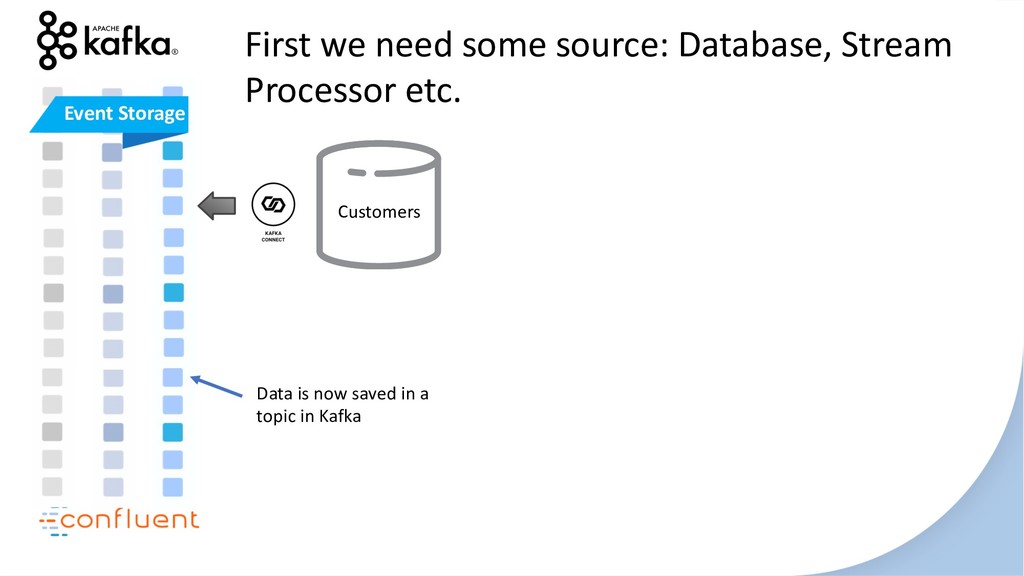
First we need some source: Database, Stream Processor etc. Apps
Search NoSQL Apps Apps S T R E A M I N G P L AT F O R M Customers Data is now saved in a topic in Kafka Event Storage -
KSQL Kind of data virtualizartion Table of Customers 1. Reload
2. Keep up to date Apps Search NoSQL Apps Apps S T R E A M I N G P L AT F O R M Customers Event Storage -
Summarizing data streams (Event Sourced) (Read/Write) KV Store Event Storage
Current state is streamed to Kafka KStreams Payments User-> Balance -
Calc Balance Payments Event Storage User Balance Bob $500 Sally
$250 George $32 Sum payments to get the user’s account balance SELECT user, sum(amount) FROM payments GROUP BY user; -
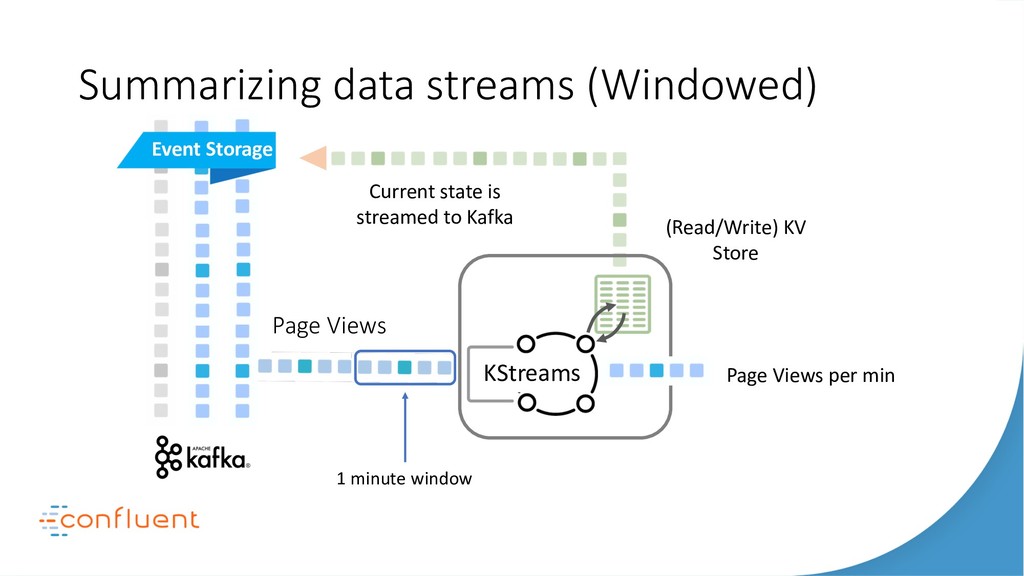
Summarizing data streams (Windowed) (Read/Write) KV Store Event Storage Current
state is streamed to Kafka KStreams Page Views 1 minute window Page Views per min -
Three key features • The stream-stream join (combine in real-time)
• The stream-table join (enrich) • The aggregate (summarize) (lot’s more: transactions, chained operations, queryable state etc.) -
The operations are stateful to different degrees • The stream-stream
join (state ∝ buffer) • The stream-table join (state ∝ table size) • The aggregate (state ∝ cardinality of aggregation key) -
API-based (Most common today) orders .filter((id, order) -> order.state().equals(“CREATED”)) .join(payments)
.transform(MyEmailer::new, STORE) .to(“sent-emails”) JVM Only Similar to Flink, Storm, Samza, Spark etc. -
Process boundary Orders Payments KStreams Customers Table Customers Use the
API Business logic -
Orders Payments KStreams Customers Table Customers Is mixing state and
business logic a good idea? Avoid Being too Stateful -
Use KSQL CREATE STREAM order-payments AS SELECT * FROM orders,
payments LEFT JOIN orders ON orders.orderId = payments.orderId; WHERE order.state = ‘CREATED’ -
Event Storage + Messaging Event Storage, query layer, App KSQL
KSQL KSQL Query Layer Apps Search Business Logic Joined, enriched, summarized event stream -
Orders Payments KSQL Customers Table Customers Use KSQL Server (or
Cloud Service) My code SELECT * FROM orders, payments, customers WHERE … Joined, enriched event stream Business Logic -
Stateless layer scales easily KSQL Stateful Data Layer Stateless Application
layer (any language) Scales quickly Event Storage Denormalized Events Three event streams from different event sources -
Pattern Should be Familiar Apps Search Apps Apps S T
R E A M I N G P L AT F O R M Apps Search Monitorin Apps Apps S T R E A M I N G P L AT F O R M Apps Search Apps Apps Search Monitor Apps Apps Stateful Stateless -
Comparing back to Serverless Functions FaaS - Autoscale based on
demand - Pay as you use - Simple programming model - Stateless - High latency - High throughput (if batched) - One event source Stream Processors - Stateful & Stateless operations at high throughputs. - Join different event sources /enrich - Correctness even after failure - Rich semantics for dataflow programming. - Effectively infinite storage in Kafka - Doesn’t autoscale (Scale manually / programmatically) - More complex -
FaaS FaaS FaaS Transaction KSQL Customers Table They compliment: Stream
processors act as a “data layer” for FaaS FaaS FaaS Stateless Stateful Orders Payments Customers AWS Lambda Connector -
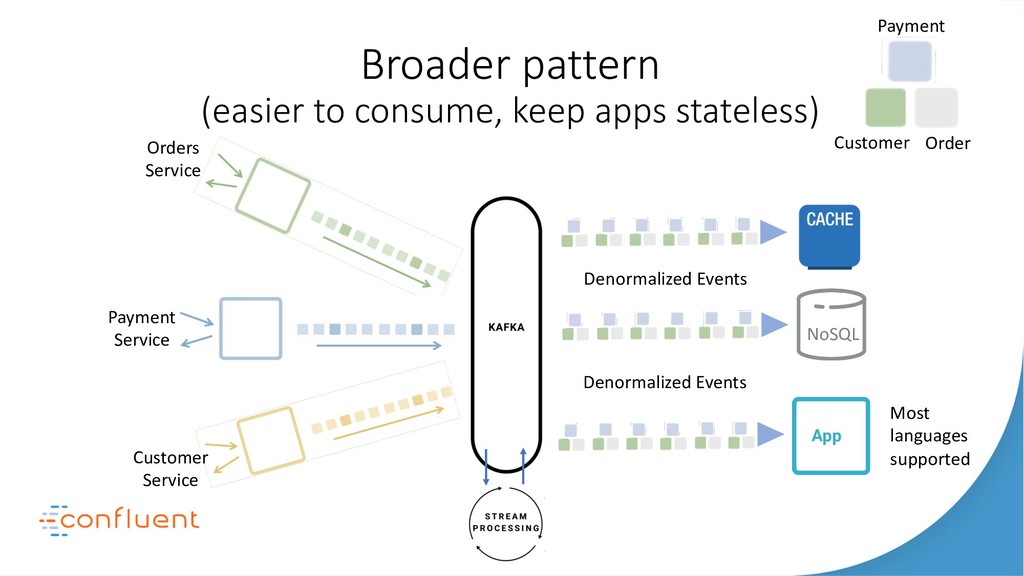
Broader pattern (easier to consume, keep apps stateless) Orders Service
Payment Service Customer Service Denormalized Events Apps Apps Apps Search NoSQL Apps S T R E A M I N G P L AT F NoSQL Order Payment Customer Most languages supported Denormalized Events -
Event Streams Orders Payments Customers Distinct Visits Destination C* Postgres
Lambda Other Kafka Select Organizational Events Stream Processing SELECT * FROM ORDERS O, CUSTOMERS C WHERE O.REGION = ‘EU’ AND C.TYPE = ‘Platinum’ Msgs/Day Customers Stream Processing C* Lambda Orders History 1w All Event storage + Stream Processing make data self service (real time & historical) -
Steaming Platforms apply these patterns across ecosystems Event Streaming Platform
(Storage + Stream Processing) -
FaaS FaaS FaaS Orders Payments KSQL Customers Table Customers Connector
FaaS FaaS • Ordering (by partition) • Batching -
FaaS FaaS FaaS Transaction Orders Payments KSQL Customers Table Customers
Stateless Stateful Maybe: Inherit Kakfa’s Transactional Guarantees FaaS FaaS -
In Summary • Stream processors can operate like databases for
this event driven world. • FaaS is one of many “end points” • FaaS has unique properties: • Pay as you use • Load driven autoscaling • Programming model •Trick: split application logic from data preparation & adopt event-first model. -
In this increasingly event driven world stream processors become as
important as databases are today. -
FaaS CRUD Event-Driven Application Database KSQL Stateful Data Layer FaaS
FaaS FaaS FaaS FaaS Event-Streaming Stateless Stateless Stateless Compute Layer Massive linear scalability with elasticity -
Streaming platforms provide a unique alternative. Billing Shipping Fraud Fraud
Fulfilment Streaming Platform