Upgrade to Pro — share decks privately, control downloads, hide ads and more …

Chronicles of the Node.js Ecosystem: The Consum...

Chronicles of the Node.js Ecosystem: The Consumer, The Author, and The Maintainer - Bethany Griggs, IBM

The sheer vastness of the Node.js module ecosystem poses challenges for the consumers, authors, and maintainers. How do consumers know which of the 1 million modules to rely on for their production deployments? How do module authors handle their hobby projects evolving into a widespread, critical dependency? What happens to abandoned modules? How can a module author test the impact of their changes on dependant applications? This talk will highlight these problems, and also showcase the work that the Node.js Package Maintenance team is doing to try and help solve these problems.

Avatar for Bethany Nicolle Griggs

Bethany Nicolle Griggs

June 24, 2020

Other Decks in Technology

Transcript

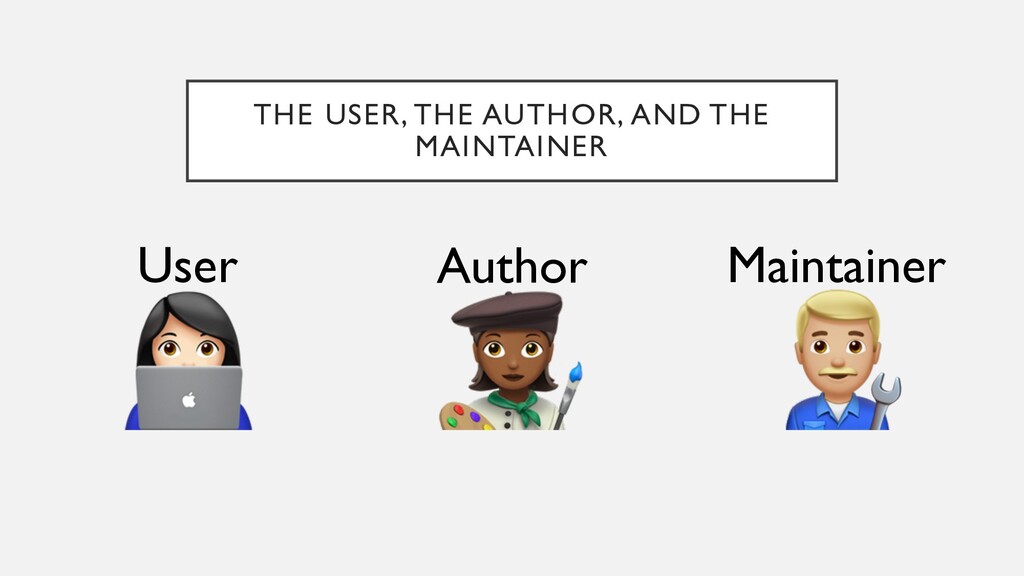
  1. CHRONICLES OF THE NODE.JS ECOSYSTYEM: THE USER, THE AUTHOR, AND

    THE MAINTAINER @BethGriggs_ @BethGriggs
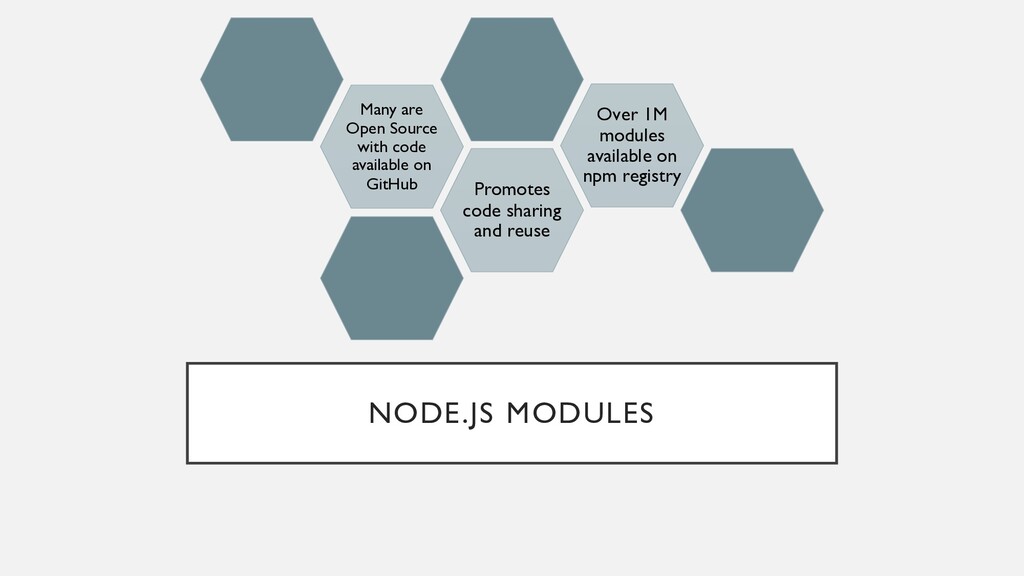
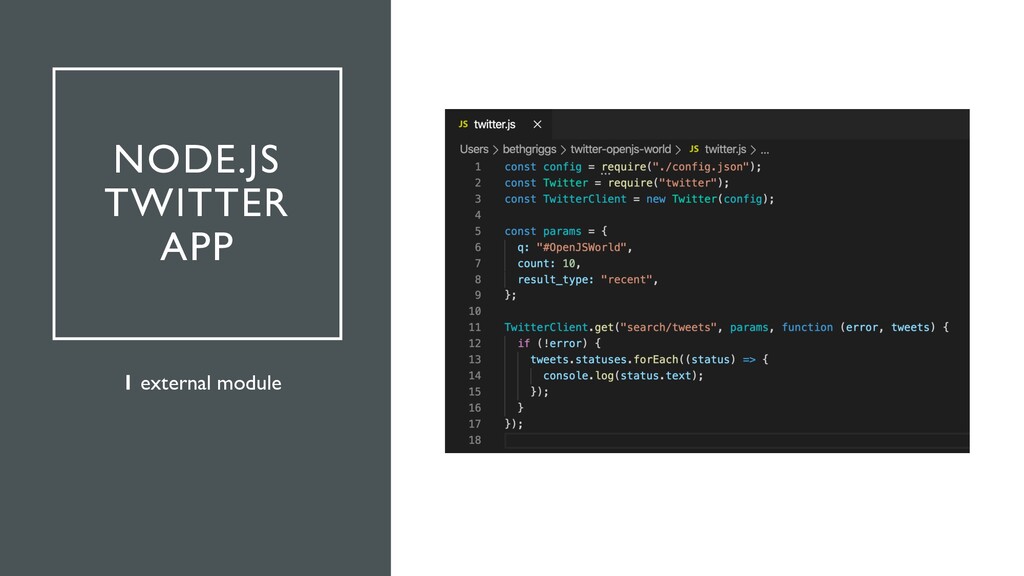
  2. NODE.JS MODULES Many are Open Source with code available on

    GitHub Promotes code sharing and reuse Over 1M modules available on npm registry
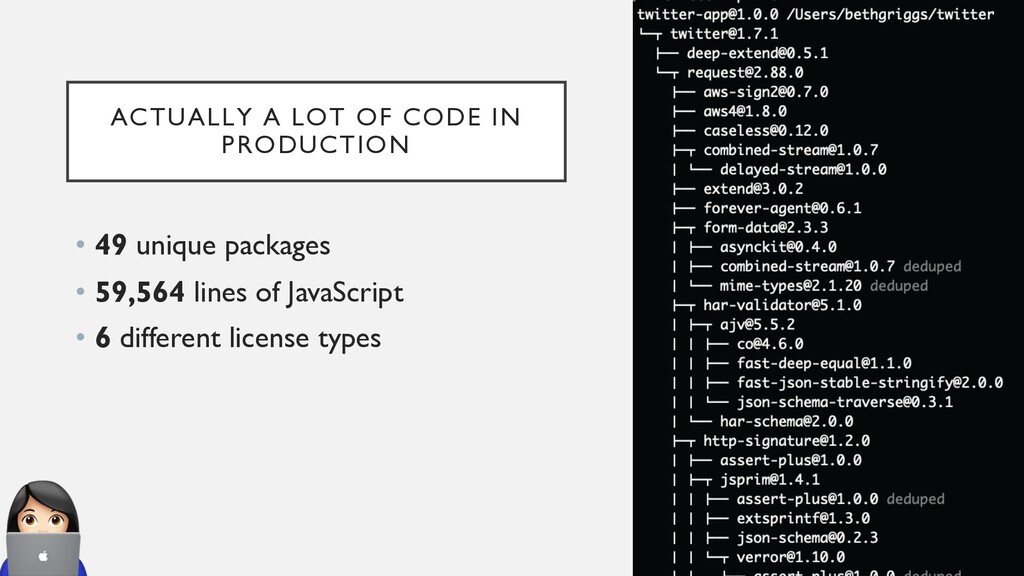
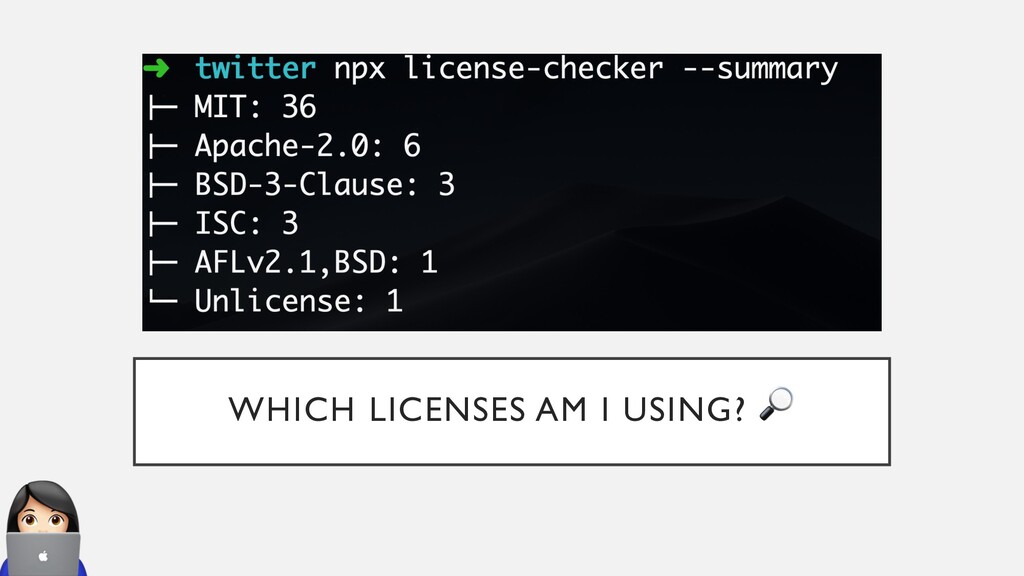
  3. ACTUALLY A LOT OF CODE IN PRODUCTION • 49 unique

    packages • 59,564 lines of JavaScript • 6 different license types
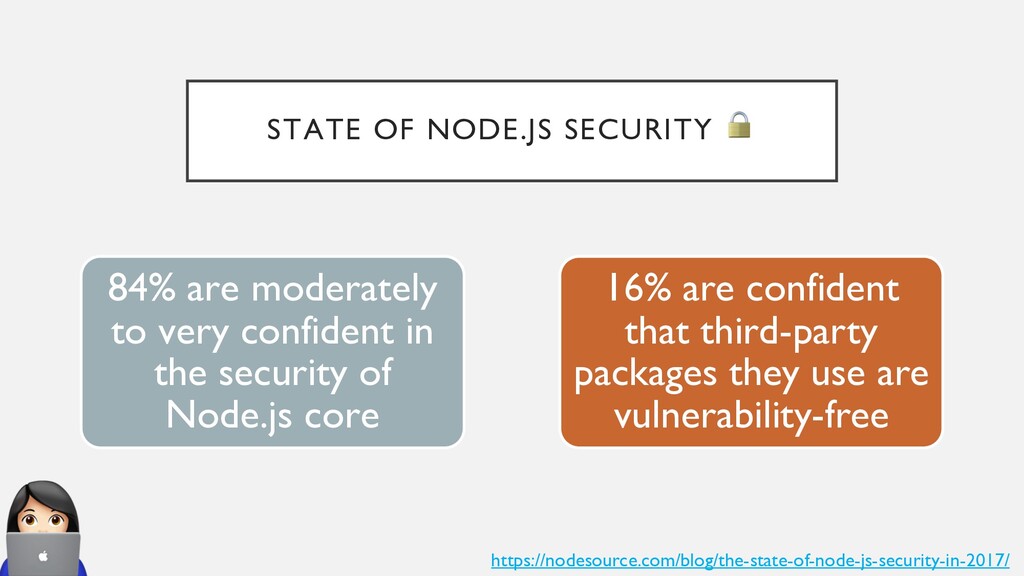
  4. STATE OF NODE.JS SECURITY 84% are moderately to very confident

    in the security of Node.js core 16% are confident that third-party packages they use are vulnerability-free https://nodesource.com/blog/the-state-of-node-js-security-in-2017/
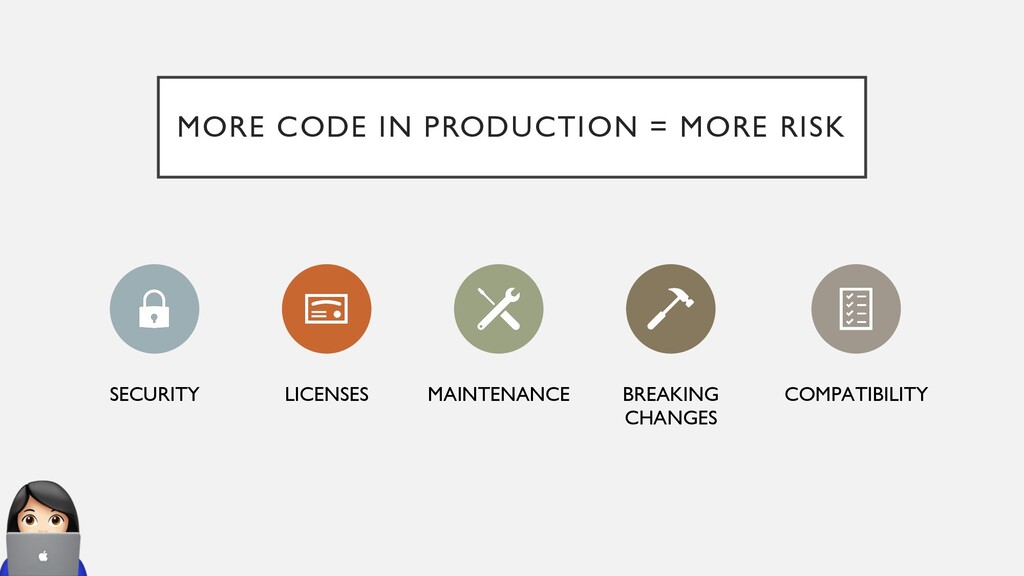
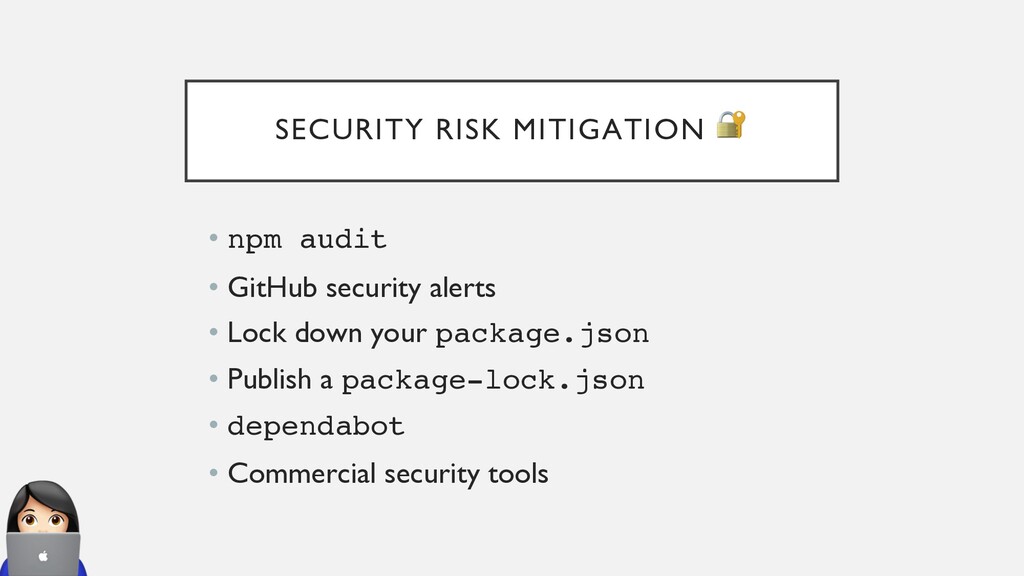
  5. SECURITY RISK MITIGATION • npm audit • GitHub security alerts

    • Lock down your package.json • Publish a package-lock.json • dependabot • Commercial security tools
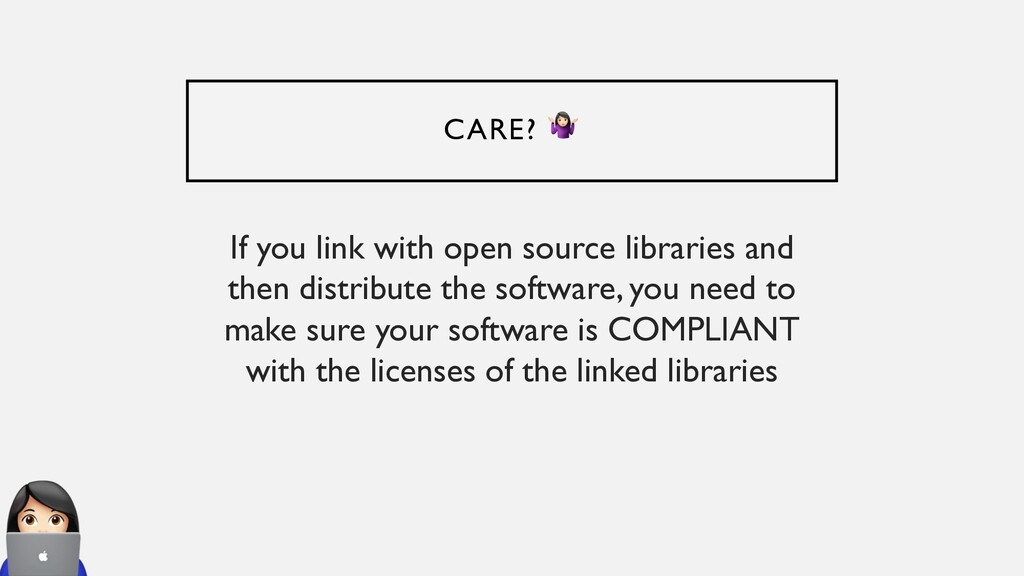
  6. CARE? If you link with open source libraries and then

    distribute the software, you need to make sure your software is COMPLIANT with the licenses of the linked libraries
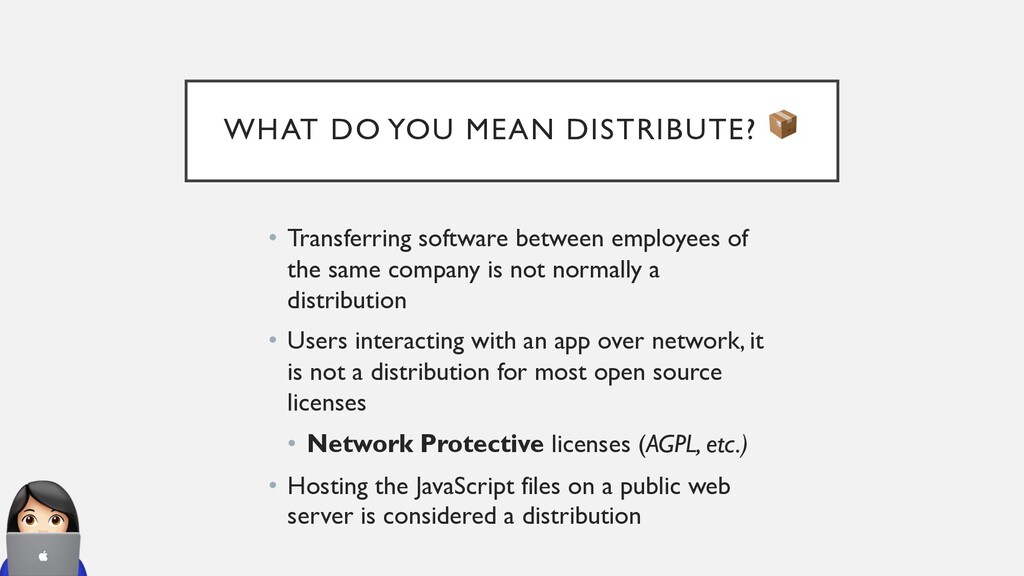
  7. WHAT DO YOU MEAN DISTRIBUTE? • Transferring software between employees

    of the same company is not normally a distribution • Users interacting with an app over network, it is not a distribution for most open source licenses • Network Protective licenses (AGPL, etc.) • Hosting the JavaScript files on a public web server is considered a distribution
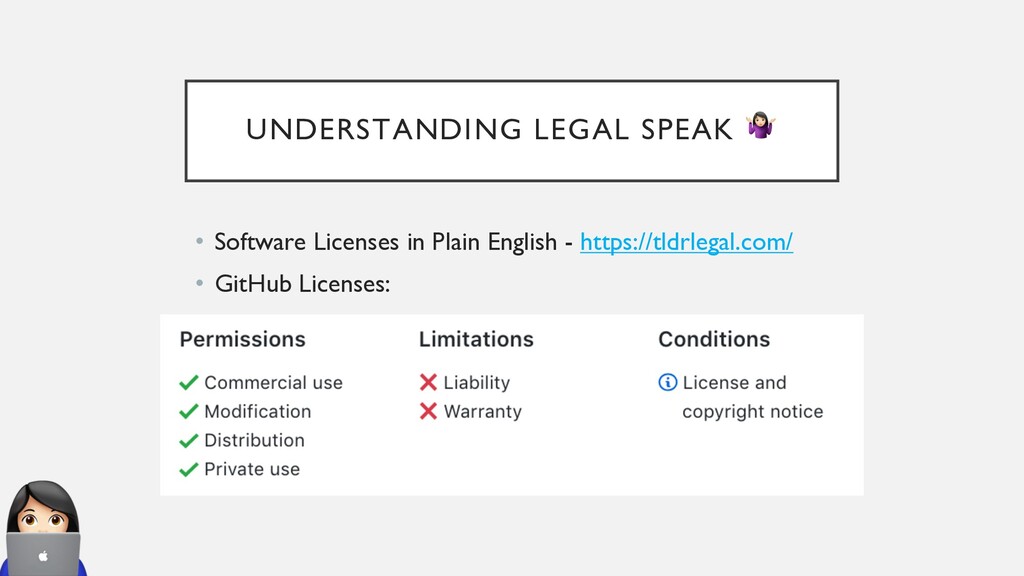
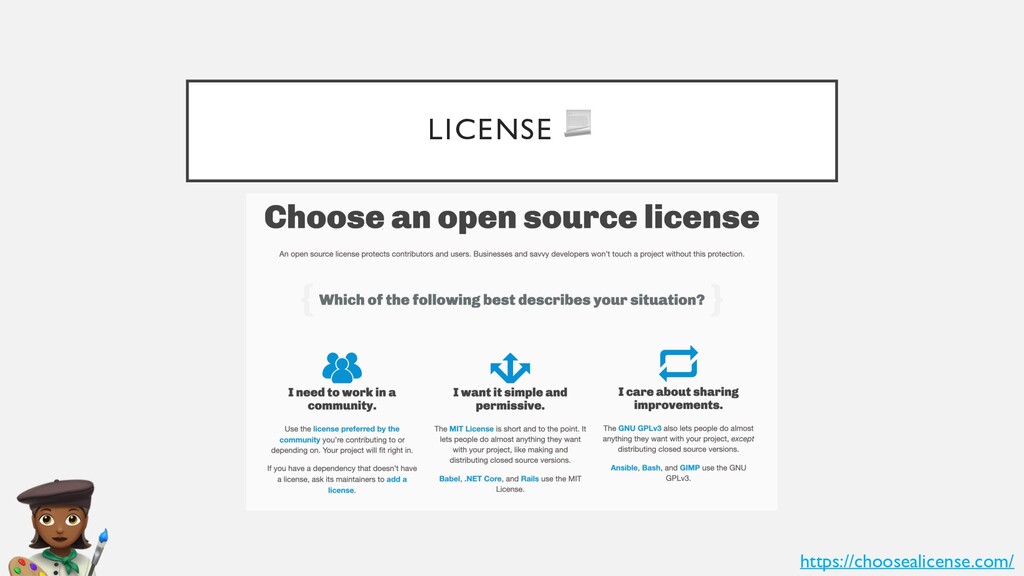
  8. UNDERSTANDING LEGAL SPEAK • Software Licenses in Plain English -

    https://tldrlegal.com/ • GitHub Licenses:
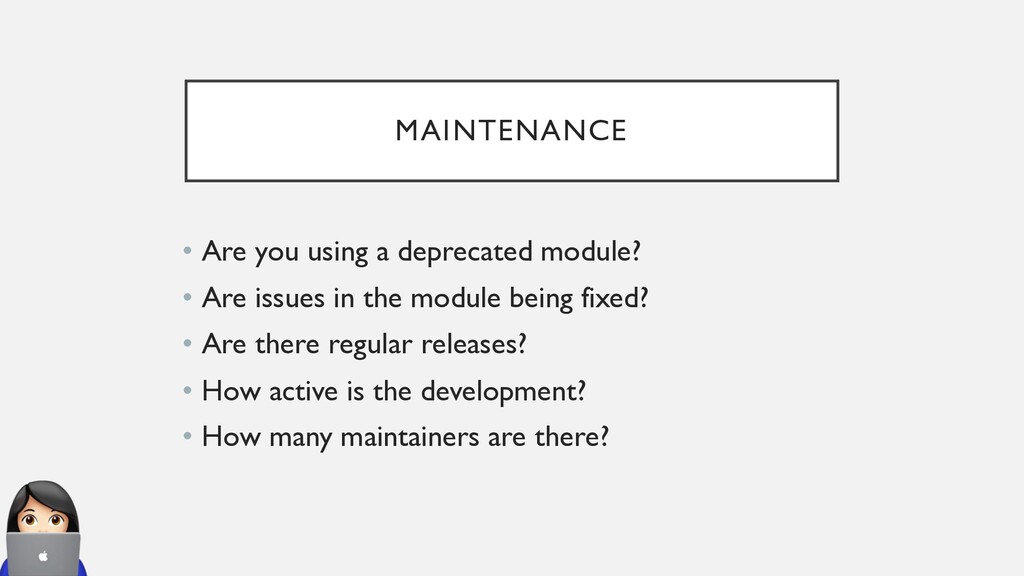
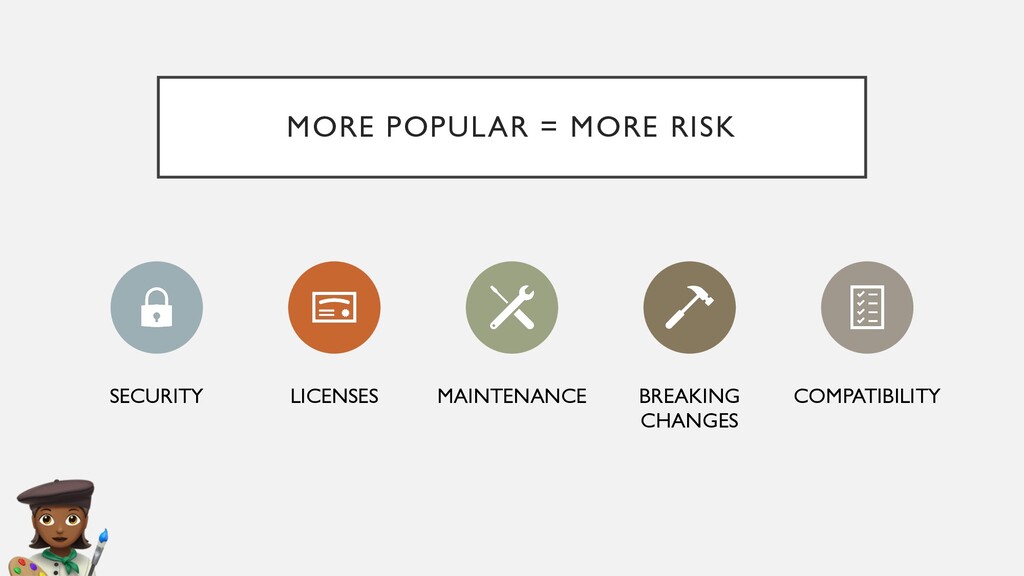
  9. MAINTENANCE • Are you using a deprecated module? • Are

    issues in the module being fixed? • Are there regular releases? • How active is the development? • How many maintainers are there?
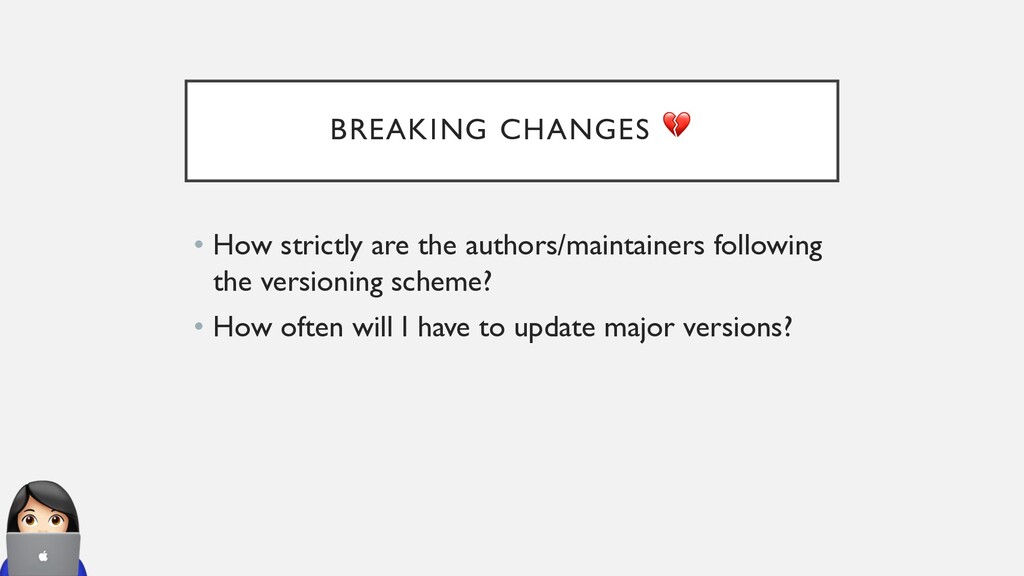
  10. BREAKING CHANGES • How strictly are the authors/maintainers following the

    versioning scheme? • How often will I have to update major versions?
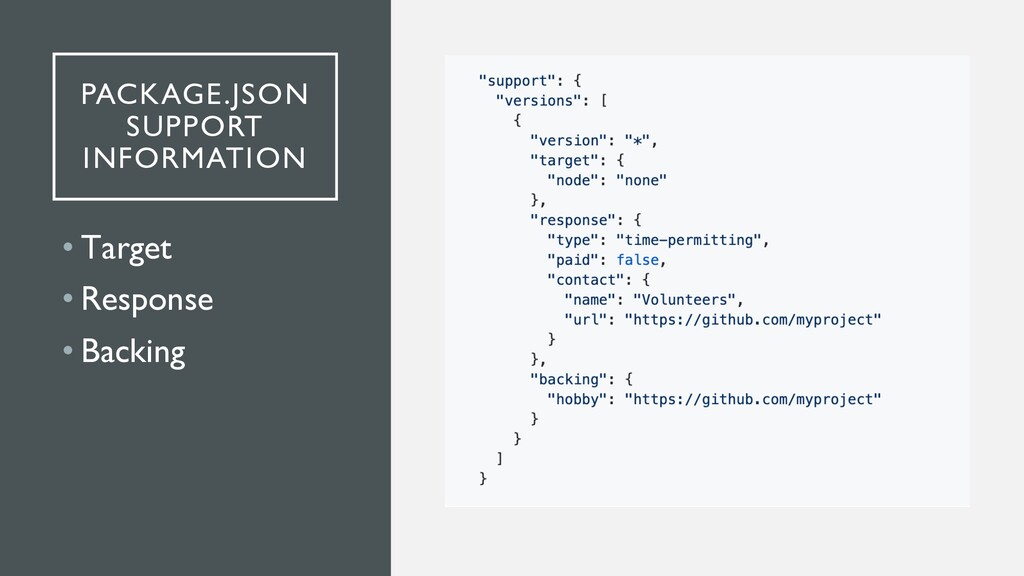
  11. SECURITY • Is there an expectation you will respond and

    fix security vulnerabilities? • Can you commit to fixing them in a timely manner? • Can you cope with the influx of reports?
  12. BREAKING CHANGES • How does the module author know which

    other modules are relying on their module? • A bug for one user might be a feature for another • How can they test the impact of their changes?
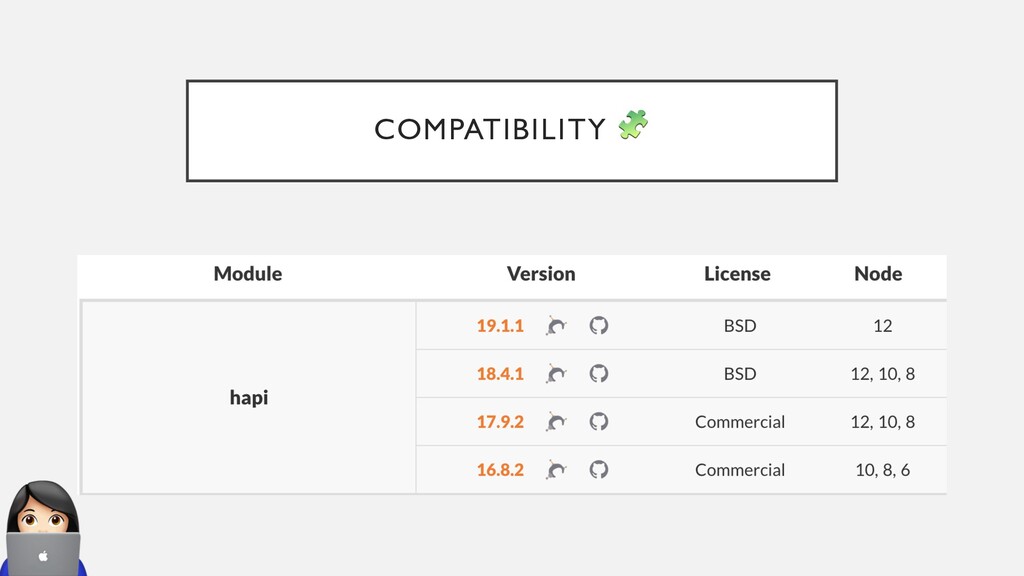
  13. COMPATIBILITY • How to they keep up their module up

    to date with Node.js major releases? • How can they manage the expectation of which release lines they support?
  14. HANDING OVER MODULES • How and who can module authors

    ask for help? • How can they find someone trustworthy to hand the module over to?
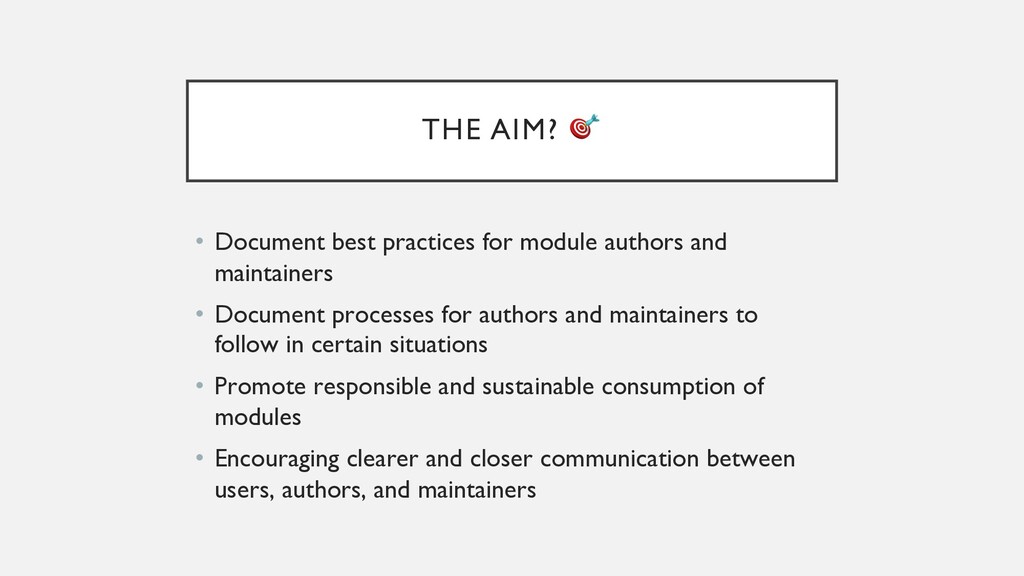
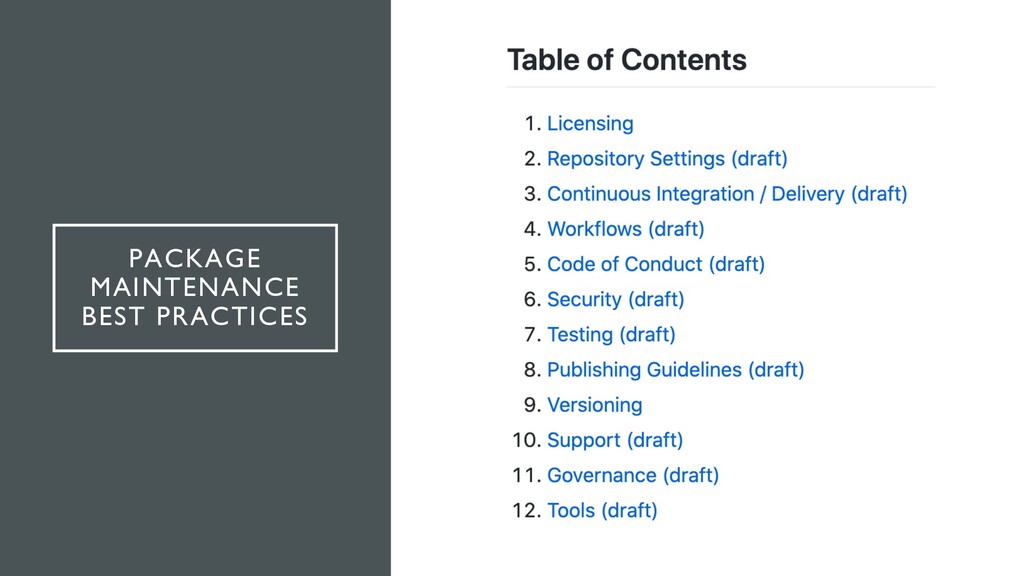
  15. THE AIM? • Document best practices for module authors and

    maintainers • Document processes for authors and maintainers to follow in certain situations • Promote responsible and sustainable consumption of modules • Encouraging clearer and closer communication between users, authors, and maintainers
  16. UNDERSTANDING THE STATE OF THE ECOSYSTEM • Surveying the state

    of the ecosystem • What are the most common problems user, authors, and maintainers are facing? • What are the most time-consuming tasks?
  17. PILOT PACKAGES – EXPRESS ✈ • Key problems identified: •

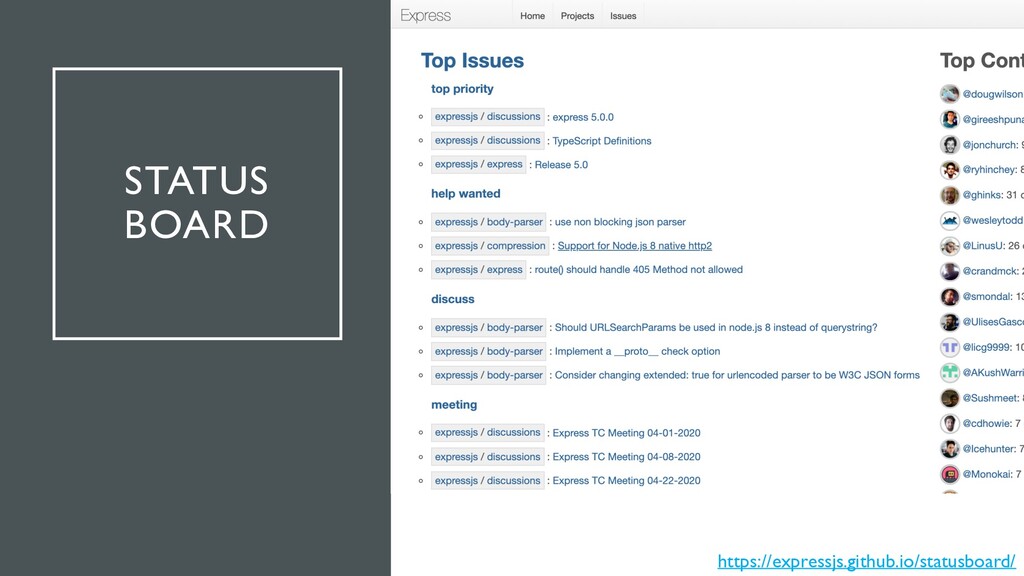
    Status of issues across all the Express modules • Struggling to keep up with the issues raised
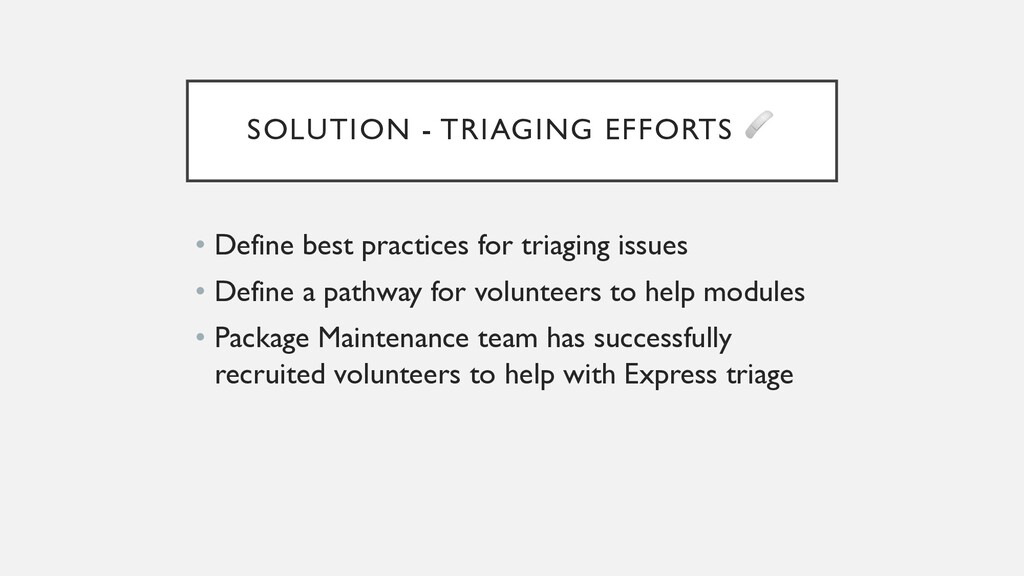
  18. SOLUTION - TRIAGING EFFORTS • Define best practices for triaging

    issues • Define a pathway for volunteers to help modules • Package Maintenance team has successfully recruited volunteers to help with Express triage
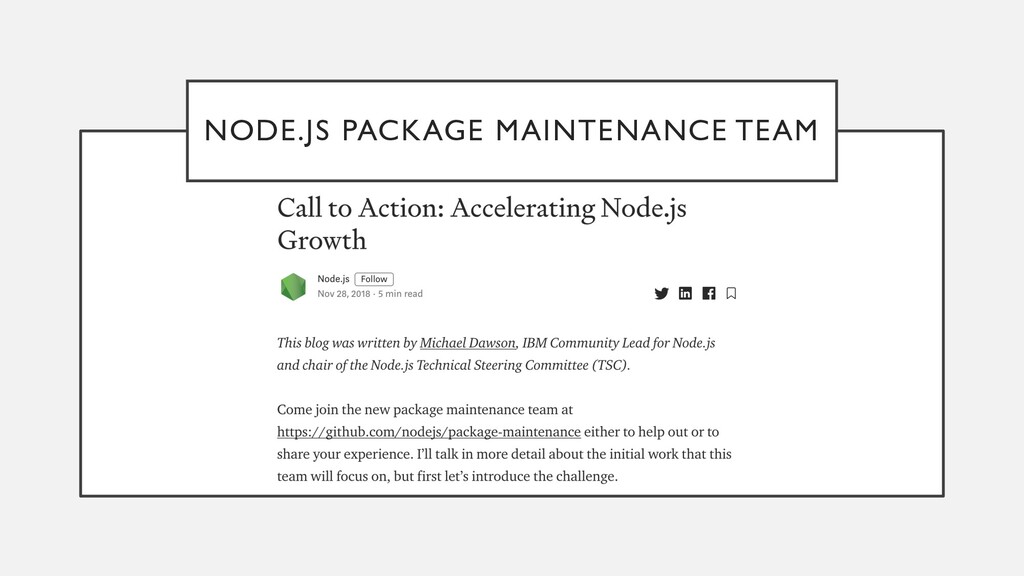
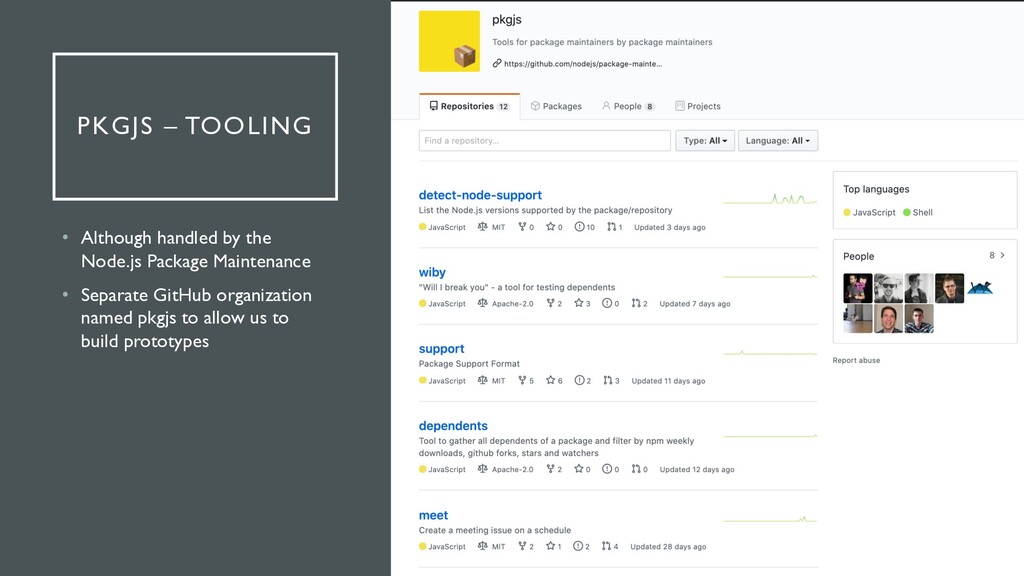
  19. PKGJS – TOOLING • Although handled by the Node.js Package

    Maintenance • Separate GitHub organization named pkgjs to allow us to build prototypes
  20. WIBY – WILL I BREAK YOU? • Help module authors

    test whether changes they are making will impact their downstream modules. • Think dependabot but for testing whether you as an author are breaking the modules depending on you
  21. NEXT STEPS • Continue seek consensus on best practices for

    module consumers, authors, and maintainers • Continue to build tooling to support consumers, authors, and maintainers • Support more modules in need of help by recruiting triagers • node-fetch
  22. GET INVOLVED! • Check out our guidelines – if you

    disagree let us know! • Help build tooling to support module users, authors, and maintainers • Become a maintainer – help triage issues and contribute to popular modules HTTPS://GITHUB.COM/NODEJS/PACKAGE-MAINTENANCE
  23. CHRONICLES OF THE NODE.JS ECOSYSTYEM: THE USER, THE AUTHOR, AND

    THE MAINTAINER @BethGriggs_ @BethGriggs