Share
Embed
Distributed Transaction
Learning note for Distributed System Concepts and Design 5th.
biaobiaoqi
August 26, 2013
Transcript
21 slides
-
Distributed Transactions Note for Distributed Systems Concepts and Design
5th Biaobiaoqi 2013-‐‑08-‐‑25 -
Outline • Flat and Nested Distributed Transactions • Atomic Commit
Protocols • Concurrency Control in Distributed Transaction • Deadlock Detection -
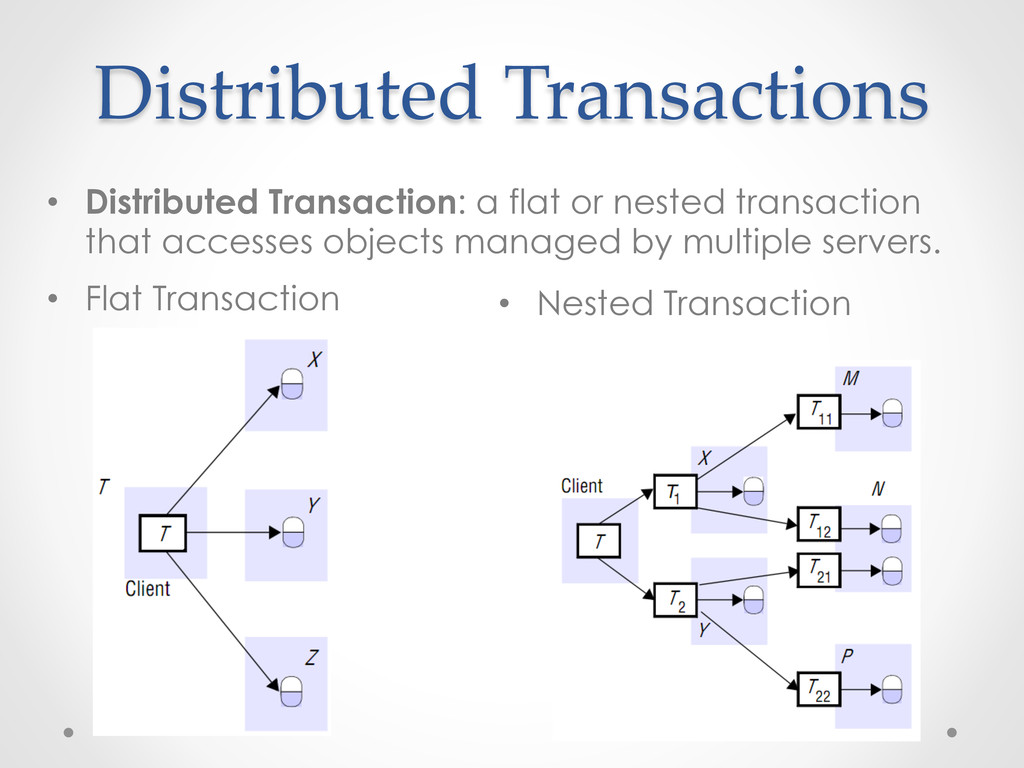
Distributed Transactions • Flat Transaction • Nested Transaction • Distributed
Transaction: a flat or nested transaction that accesses objects managed by multiple servers. -
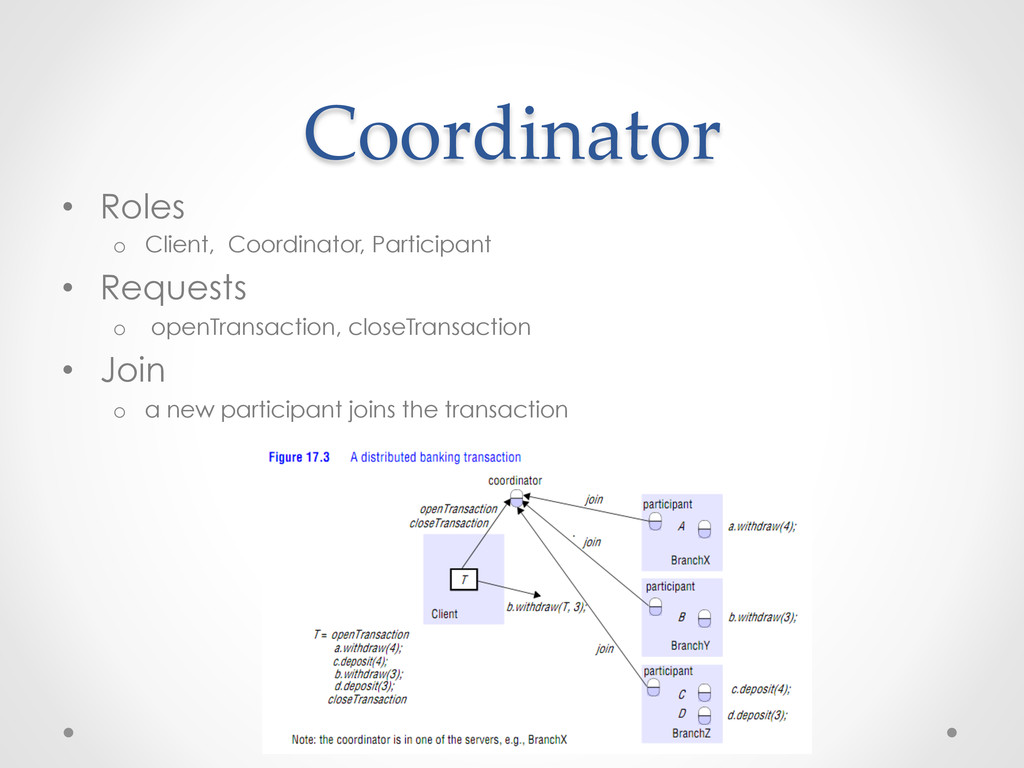
Coordinator • Roles o Client, Coordinator, Participant • Requests o
openTransaction, closeTransaction • Join o a new participant joins the transaction -
Atomic Commit Protocols • Atomicity o It requires that the
servers participating in a distributed transaction either all commit it or all abort it. • One-phase atomic commit protocol o Coordinator to communicate the commit or abort request to all participants in the transaction and to keep on repeating the request until all have carried it out. o It does not allow a server to make a decision to abort a transaction: • Deadlock • Optimistic concurrency control, validation phase failes • Server crash -
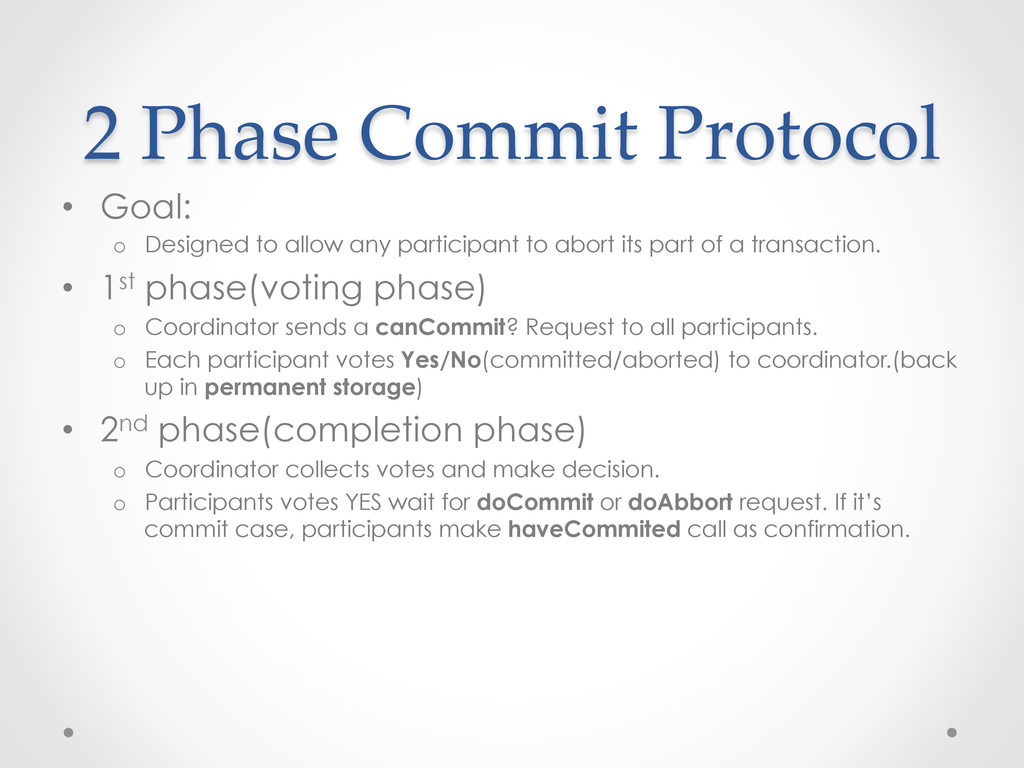
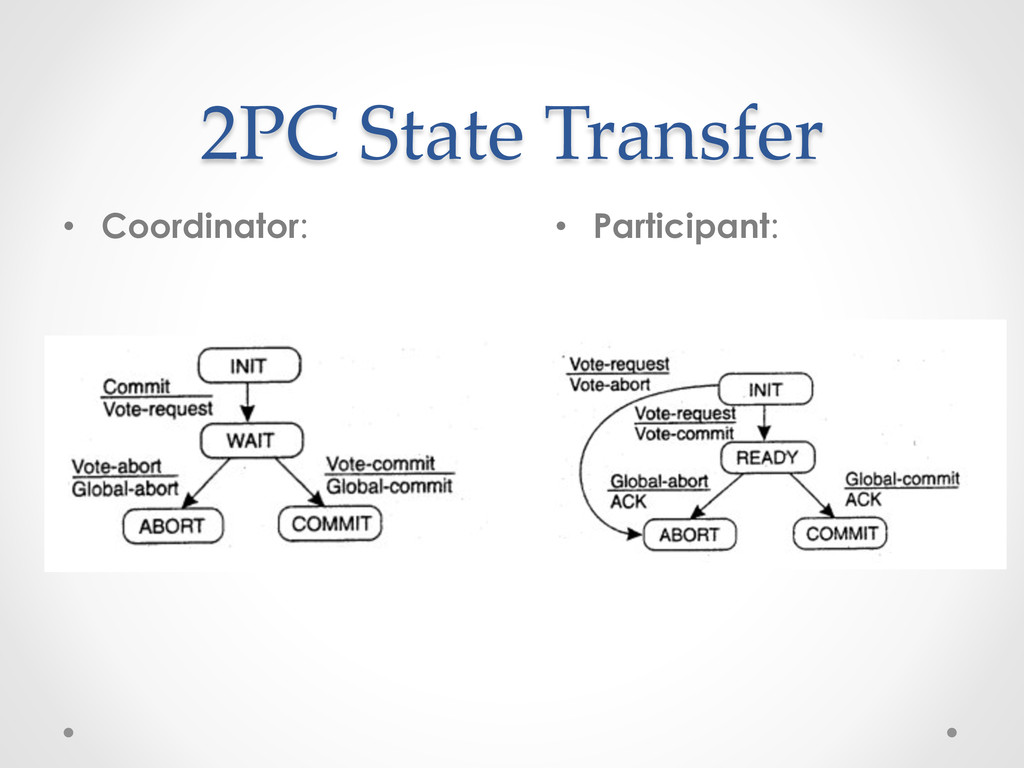
2 Phase Commit Protocol • Goal: o Designed to allow
any participant to abort its part of a transaction. • 1st phase(voting phase) o Coordinator sends a canCommit? Request to all participants. o Each participant votes Yes/No(committed/aborted) to coordinator.(back up in permanent storage) • 2nd phase(completion phase) o Coordinator collects votes and make decision. o Participants votes YES wait for doCommit or doAbbort request. If it’s commit case, participants make haveCommited call as confirmation. -
2PC Failure Model • No Byzantine faults o It’s assumed
that an underlying protocol removes corrupt and duplicated messages • Consensus cannot be reached in an asynchronous system if process sometimes fails. o Process recovery from permanent storage and information held by other processes. -
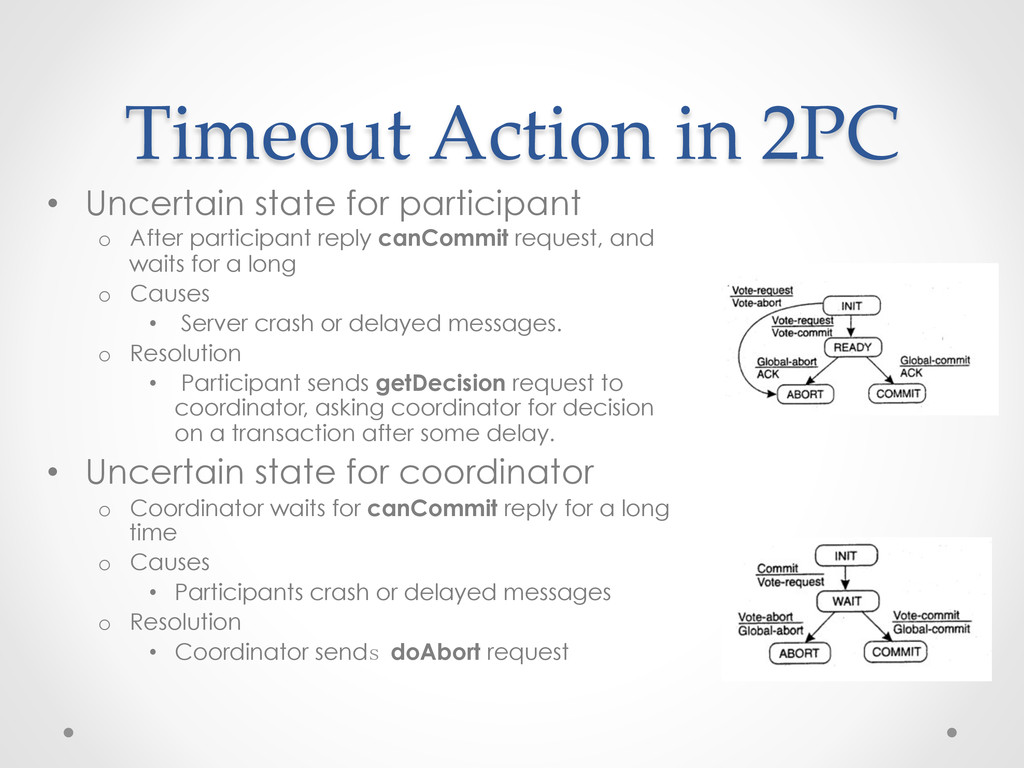
Timeout Action in 2PC • Uncertain state for participant o
After participant reply canCommit request, and waits for a long o Causes • Server crash or delayed messages. o Resolution • Participant sends getDecision request to coordinator, asking coordinator for decision on a transaction after some delay. • Uncertain state for coordinator o Coordinator waits for canCommit reply for a long time o Causes • Participants crash or delayed messages o Resolution • Coordinator sends doAbort request -
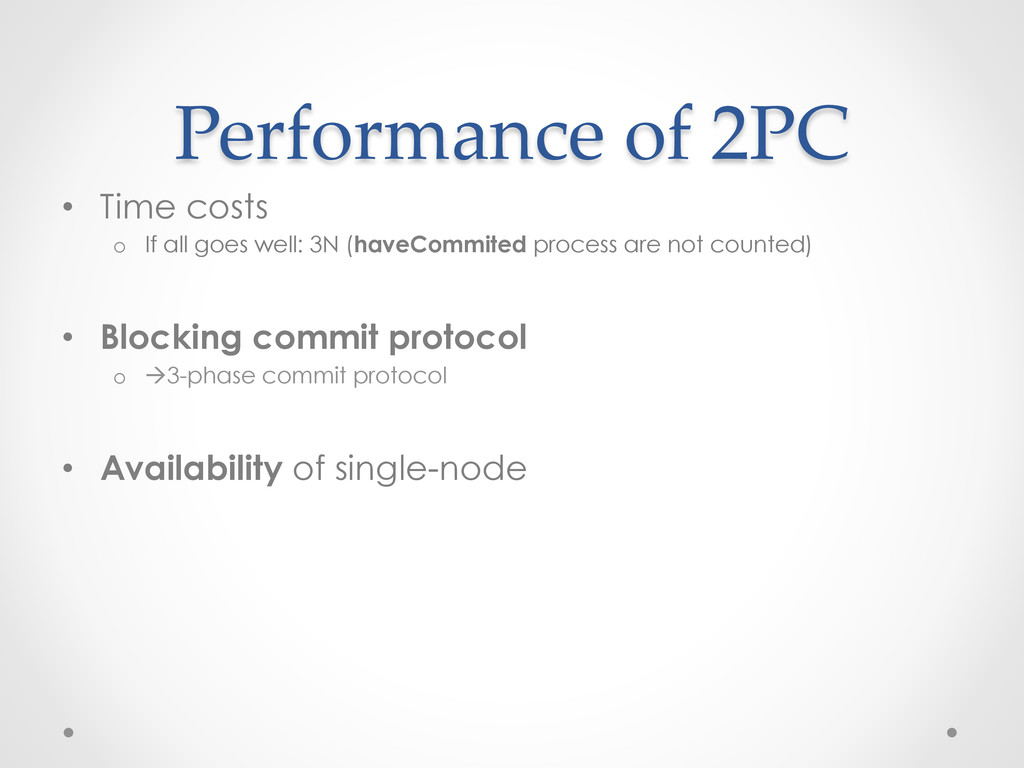
Performance of 2PC • Time costs o If all goes
well: 3N (haveCommited process are not counted) • Blocking commit protocol o à3-phase commit protocol • Availability of single-node -
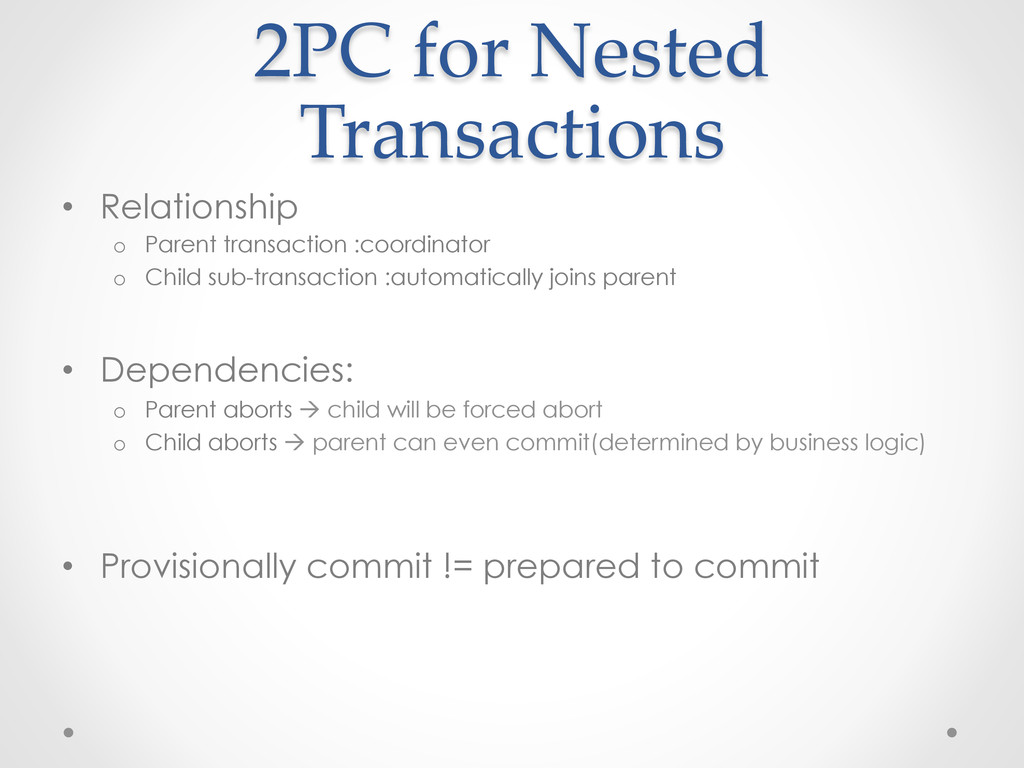
2PC for Nested Transactions • Relationship o Parent transaction
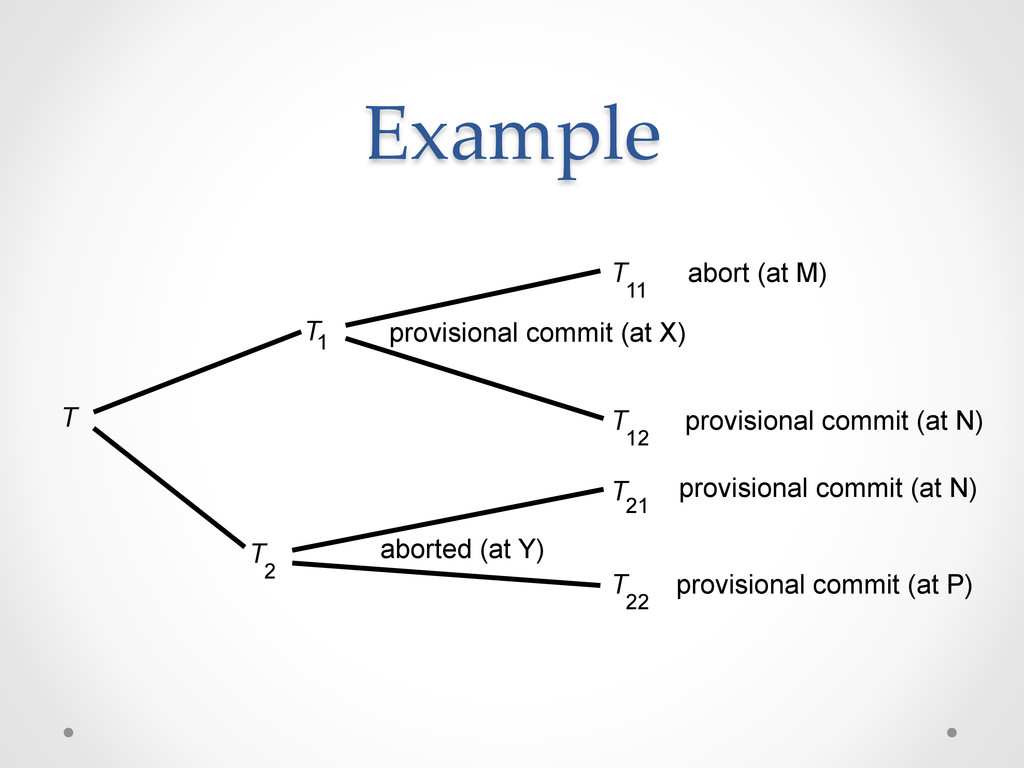
:coordinator o Child sub-transaction :automatically joins parent • Dependencies: o Parent aborts à child will be forced abort o Child aborts à parent can even commit(determined by business logic) • Provisionally commit != prepared to commit -
Example 1 2 T 11 T 12 T 22 T
21 abort (at M) provisional commit (at N) provisional commit (at X) aborted (at Y) provisional commit (at N) provisional commit (at P) T T T -
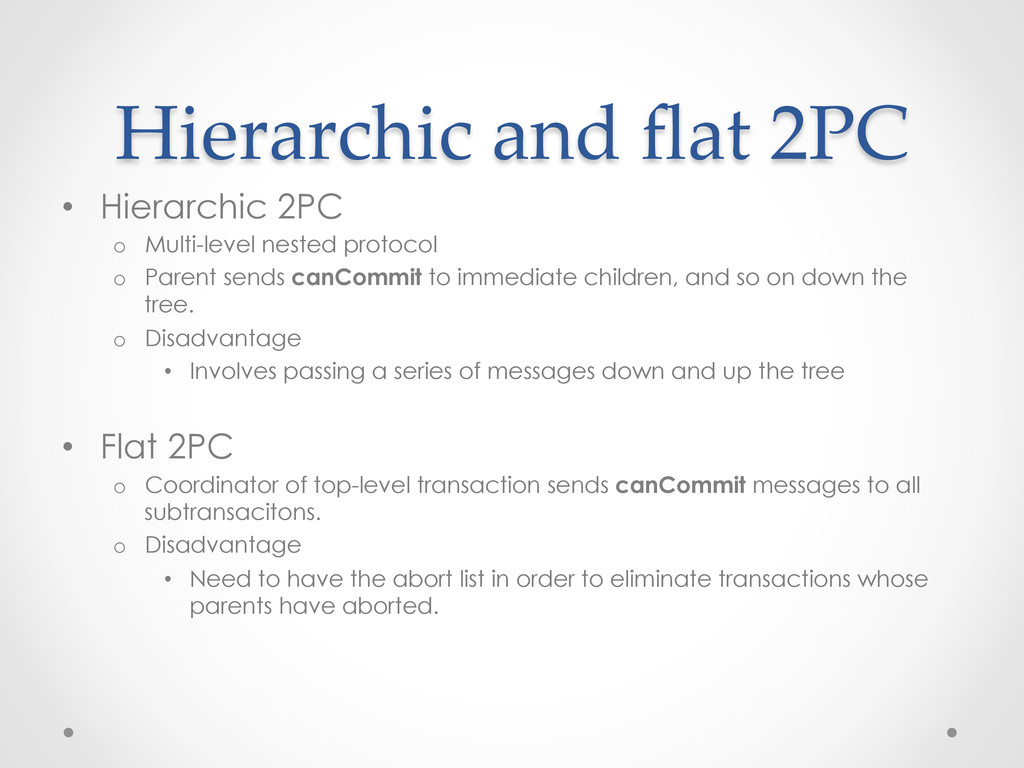
Hierarchic and flat 2PC • Hierarchic 2PC o Multi-level nested
protocol o Parent sends canCommit to immediate children, and so on down the tree. o Disadvantage • Involves passing a series of messages down and up the tree • Flat 2PC o Coordinator of top-level transaction sends canCommit messages to all subtransacitons. o Disadvantage • Need to have the abort list in order to eliminate transactions whose parents have aborted. -
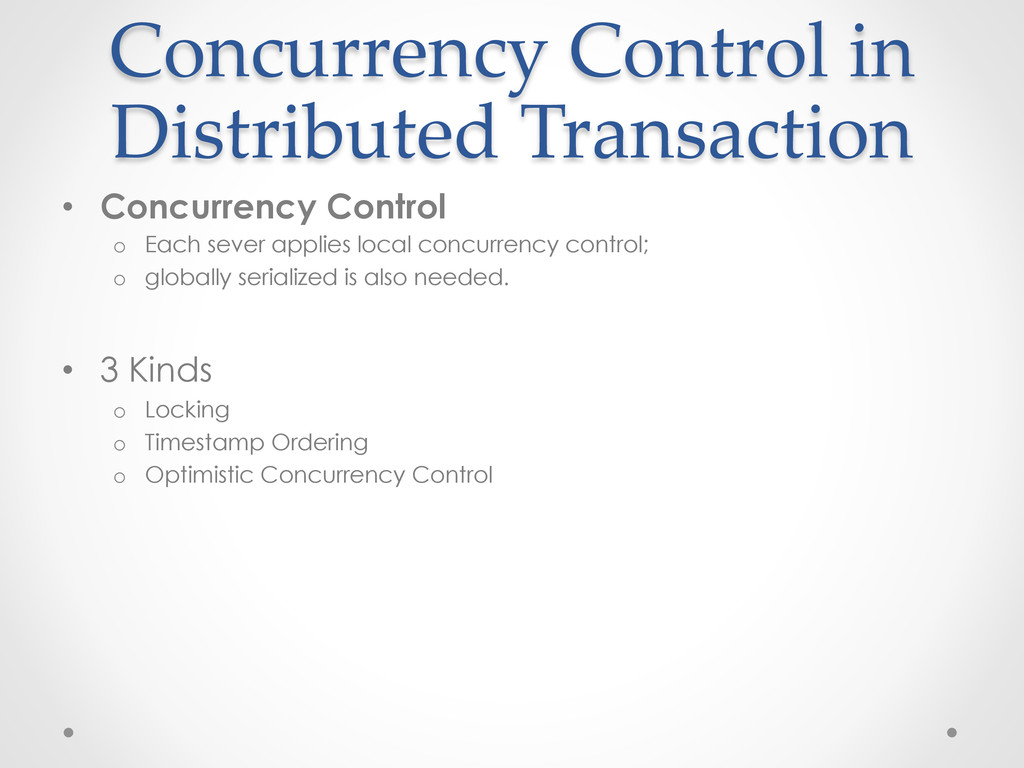
Concurrency Control in Distributed Transaction • Concurrency Control o
Each sever applies local concurrency control; o globally serialized is also needed. • 3 Kinds o Locking o Timestamp Ordering o Optimistic Concurrency Control -
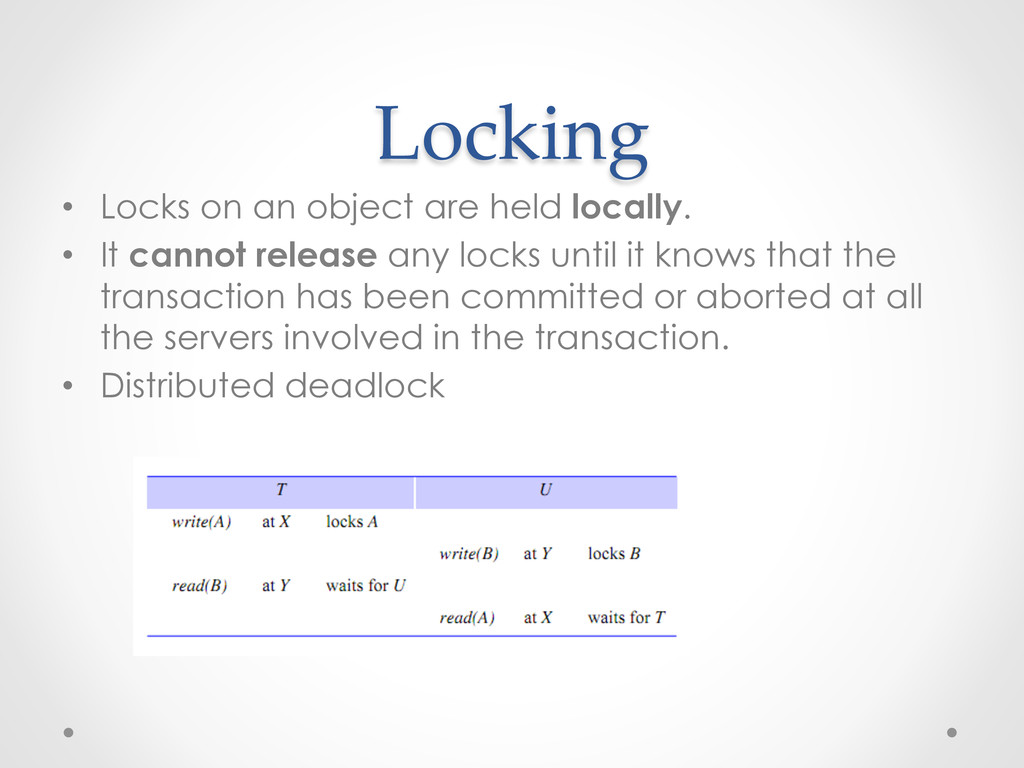
Locking • Locks on an object are held locally. •
It cannot release any locks until it knows that the transaction has been committed or aborted at all the servers involved in the transaction. • Distributed deadlock -
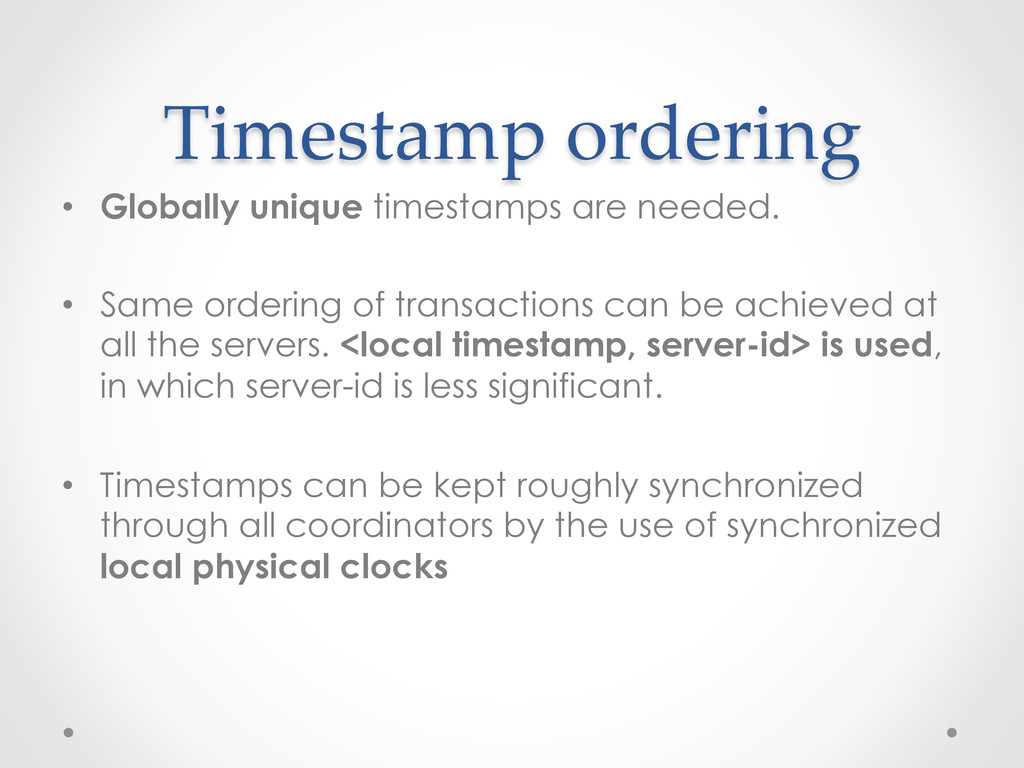
Timestamp ordering • Globally unique timestamps are needed. • Same
ordering of transactions can be achieved at all the servers. <local timestamp, server-id> is used, in which server-id is less significant. • Timestamps can be kept roughly synchronized through all coordinators by the use of synchronized local physical clocks -
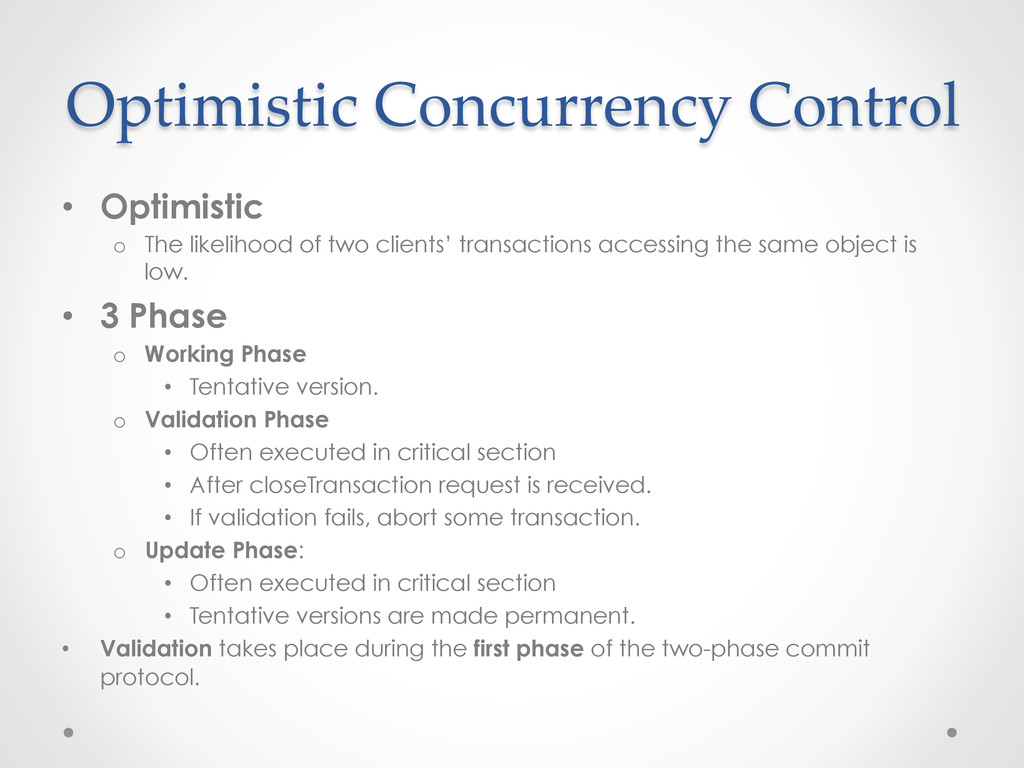
Optimistic Concurrency Control • Optimistic o The likelihood of two
clients’ transactions accessing the same object is low. • 3 Phase o Working Phase • Tentative version. o Validation Phase • Often executed in critical section • After closeTransaction request is received. • If validation fails, abort some transaction. o Update Phase: • Often executed in critical section • Tentative versions are made permanent. • Validation takes place during the first phase of the two-phase commit protocol. -
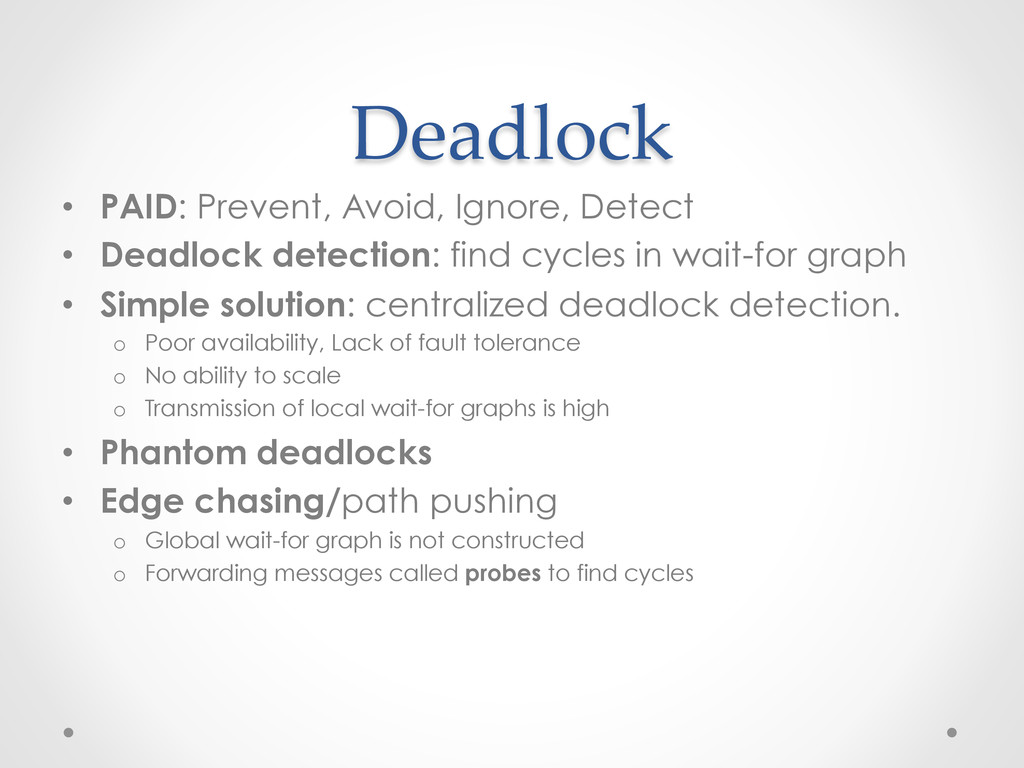
Deadlock • PAID: Prevent, Avoid, Ignore, Detect • Deadlock detection:
find cycles in wait-for graph • Simple solution: centralized deadlock detection. o Poor availability, Lack of fault tolerance o No ability to scale o Transmission of local wait-for graphs is high • Phantom deadlocks • Edge chasing/path pushing o Global wait-for graph is not constructed o Forwarding messages called probes to find cycles -
Edge-‐‑chasing Algorithm • 1.Initiation o When a server notes transaction
T starts waiting for transaction U, where U is waiting to access an object at another server, it sending a probe containing the edge <T à U> to the server of U. • 2.Detection o Detection consists of receiving probes o whether a deadlock has occurred o whether to forward the probes. • 3.Resolution o When a cycle is detected, a transaction in the cycle is aborted to break the deadlock.