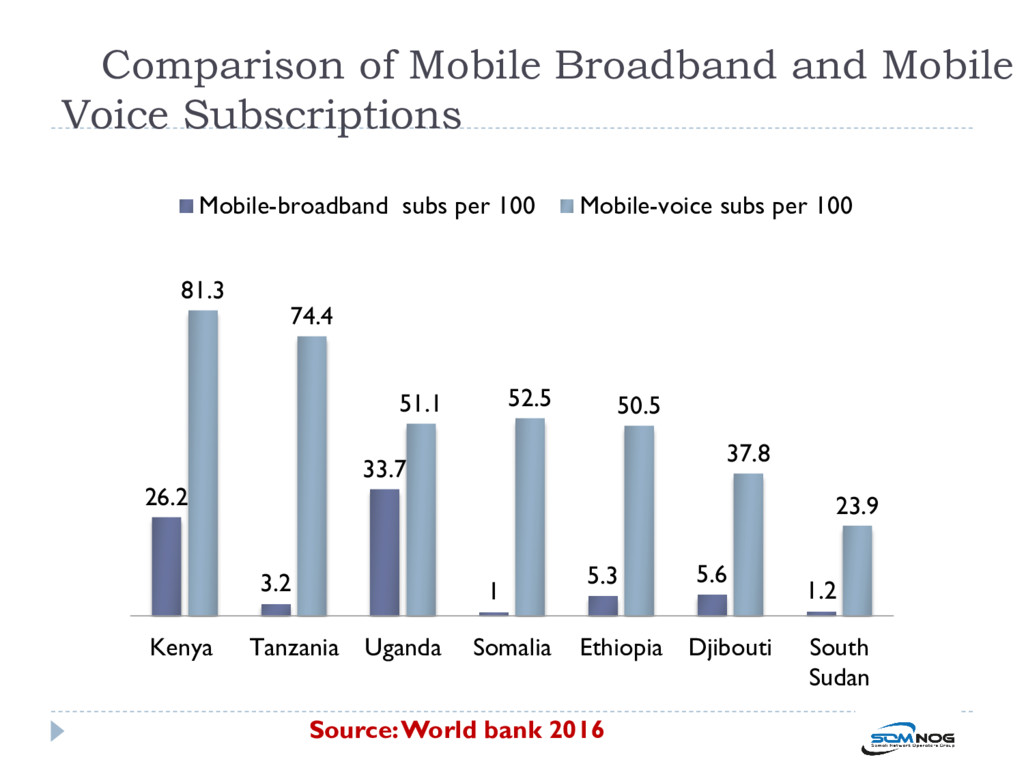
33.7 1 5.3 5.6 1.2 81.3 74.4 51.1 52.5 50.5 37.8 23.9 Kenya Tanzania Uganda Somalia Ethiopia Djibouti South Sudan Mobile-broadband subs per 100 Mobile-voice subs per 100 Source: World bank 2016
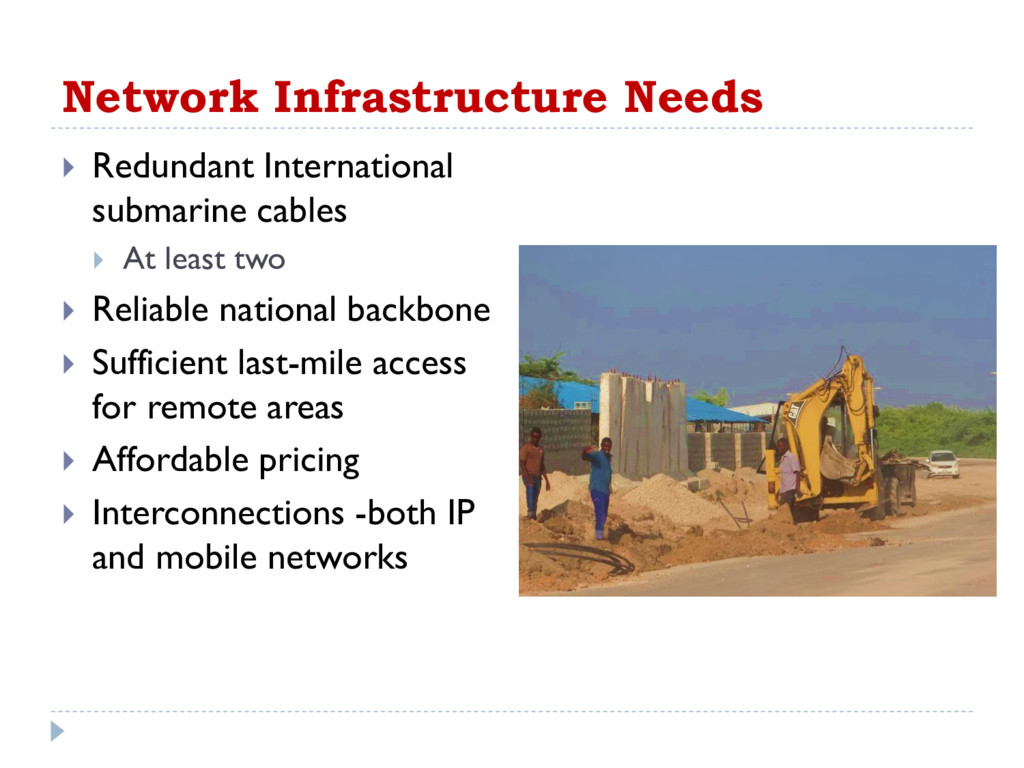
least two Reliable national backbone Sufficient last-mile access for remote areas Affordable pricing Interconnections -both IP and mobile networks
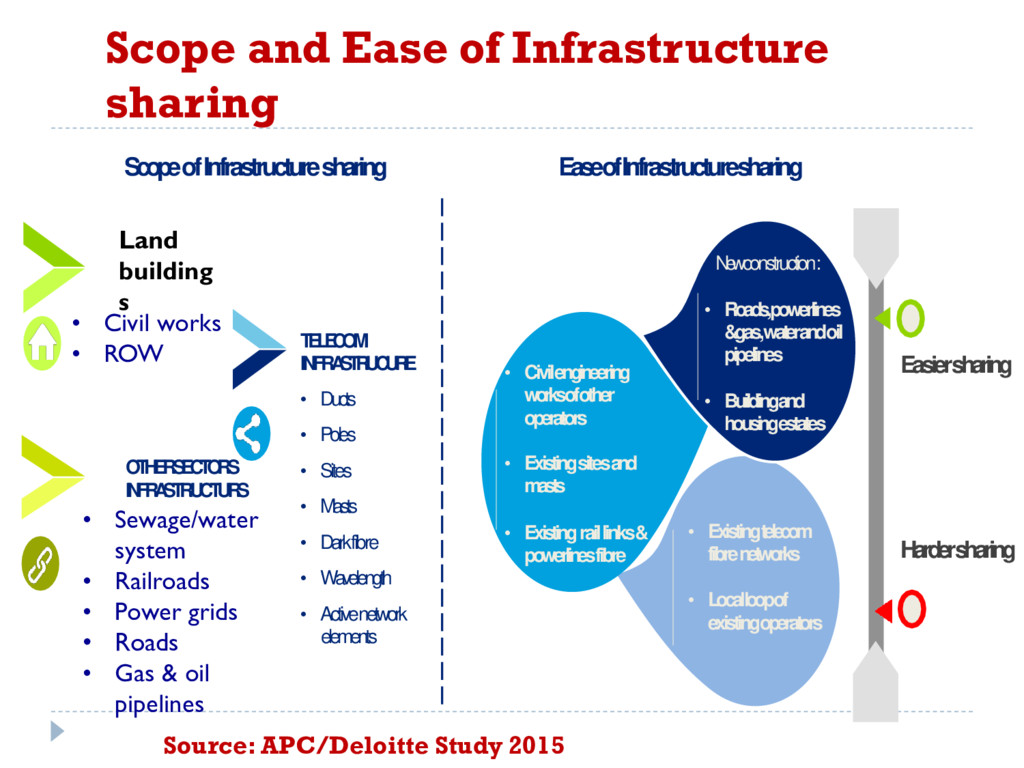
of other operators • Existing sitesand masts • Existingrail links & powerlinesfibre • Existing telecom fibrenetworks • Local loop of existingoperators N e w construction : • Roads, powerlines & gas, water and oil pipelines • Building and housingestates Easiersharing Hardersharing O T H E RS E C T O R S I N F R A S T R U C T U R S T E L E C O M INFRA S T R U C U R E • Ducts • Poles • Sites • Masts • Darkfibre • Wavelength • Activenetwork elements Scope ofInfrastructuresharing Ease of Infrastructuresharing Source: APC/Deloitte Study 2015 Land building s • Civil works • ROW • Sewage/water system • Railroads • Power grids • Roads • Gas & oil pipelines
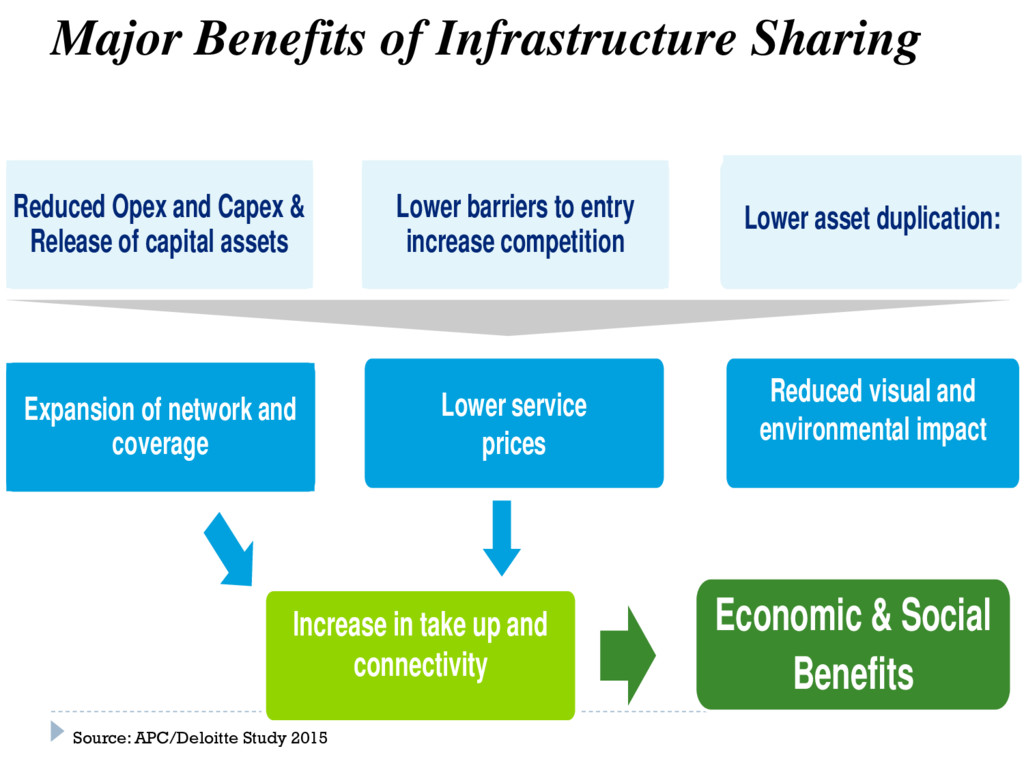
Opex and Capex & Release of capital assets Lower asset duplication: Expansion of network and coverage Increase in take up and connectivity Lower barriers to entry increase competition Reduced visual and environmental impact Economic & Social Benefits Lower service prices
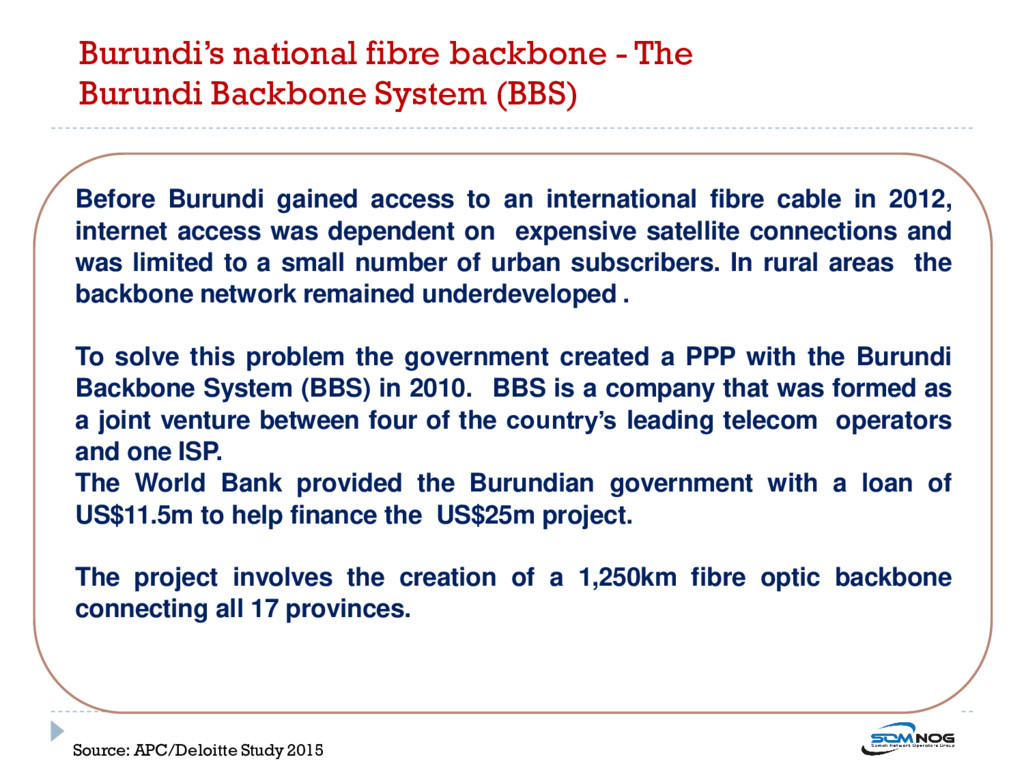
Before Burundi gained access to an international fibre cable in 2012, internet access was dependent on expensive satellite connections and was limited to a small number of urban subscribers. In rural areas the backbone network remained underdeveloped . To solve this problem the government created a PPP with the Burundi Backbone System (BBS) in 2010. BBS is a company that was formed as a joint venture between four of the country’s leading telecom operators and one ISP. The World Bank provided the Burundian government with a loan of US$11.5m to help finance the US$25m project. The project involves the creation of a 1,250km fibre optic backbone connecting all 17 provinces. Source: APC/Deloitte Study 2015
speedy growth and rollout of telecom services especially in developing countries Government has to take initiatives to facilitate proper framework for infrastructure sharing Proper regulatory and policy framework for infrastructure sharing is important to boost this sector.


 yut0naga1_fa
 codatum
 bitkey
 ueponx
 raspython3
 rfdnxbro
 iktakahiro
 oikon48
 ykanoh
 nealle
 codmoninc
 bgpat
 bryan
 garrettdimon
 aarron
 bluesmoon
 jonoalderson
 kimpetersen
 nonsquared
 jonrohan
 baasie
 uxyall
 mclloyd
 tammyeverts